

Multinational enterprises frequently grapple with the looming threat of transfer pricing audits, unpredictable penalties, and the costly reality of double taxation. As tax authorities worldwide tighten compliance enforcement under updated OECD guidelines, establishing defensible intercompany transactions has become a pressing necessity before any operational engagement begins.
Implementing structured transfer pricing consulting agreement templates grants organizations a standardized, legally robust framework that proactively shields cross-border transactions from regulatory scrutiny. However, a key stipulation remains: these templates must not be treated as generic, one-size-fits-all documents, but rather as customizable frameworks that must align with actual economic substance. For instance, clearly documenting specific allocation keys for intercompany management services or IP licensing fees serves as concrete proof of arm's-length transactions.
In this article, we will examine the essential clauses required in these templates, outline common compliance pitfalls to avoid, and provide a roadmap for aligning legal agreements with your global tax strategy.
Transfer Pricing Advisory Services Agreement Template
 Download: .PDF
Intercompany Transfer Pricing Consulting Contract
 Download: .PDF
Transfer Pricing Study Engagement Agreement
 Download: .PDF
Transfer Pricing Documentation Services Agreement
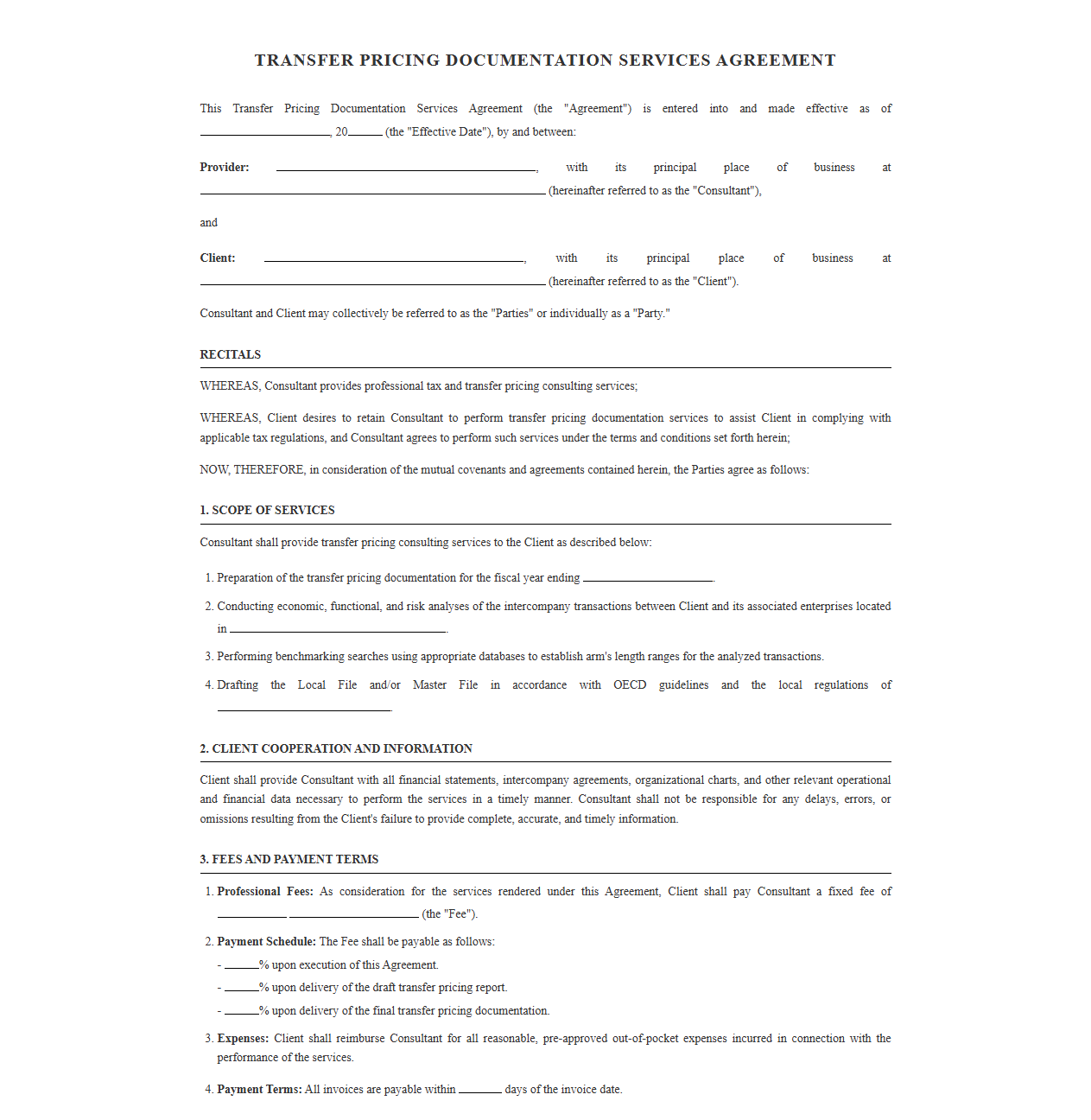 Download: .PDF
Master Services Agreement for Transfer Pricing
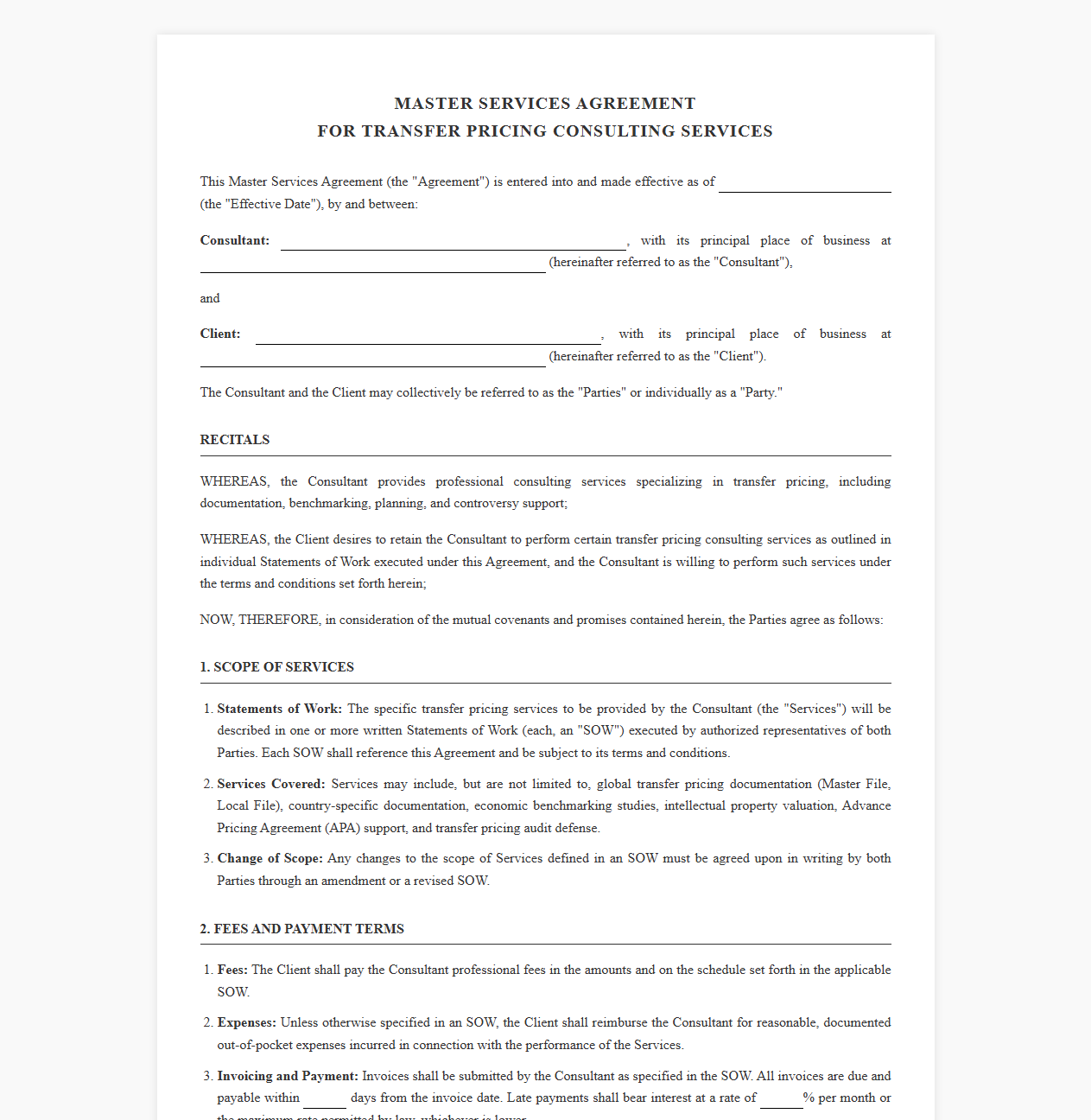 Download: .PDF
Transfer Pricing Consultation and Compliance Contract
 Download: .PDF
Professional Services Agreement for Transfer Pricing
 Download: .PDF
Transfer Pricing Advisory Engagement Letter Template
 Download: .PDF
Introduction to Transfer Pricing and Global Tax Risks
In an era of unprecedented regulatory scrutiny, multinational enterprises face intense pressure from global tax authorities targeting cross-border transactions. As jurisdictions collaborate to close tax loopholes through initiatives like the OECD's BEPS framework, transfer pricing practices have become the primary battleground for tax audits. Implementing robust transfer pricing documentation is no longer a mere compliance exercise; it is a critical defensive shield that protects multinational groups from costly adjustments, double taxation, and severe reputational damage.
Structuring the Transfer Pricing Consulting Agreement
A structured consulting agreement template serves as the bedrock of defense when partnering with external tax advisors. By clearly defining the scope of work, outlining responsibilities, and establishing explicit terms of engagement, parent companies can ensure that tax advisory deliverables directly support their risk-mitigation strategies. This proactive legal framework protects corporate interests, manages service expectations, and ensures that the deliverables produced by advisors are legally and technically robust enough to withstand regulatory challenge.
Essential Clauses for Mitigating Global Tax Risks
To shield an enterprise from cross-border tax exposure, the consulting agreement must incorporate specific, protective legal clauses. These provisions clarify responsibilities and establish the legal standard to which the tax advisors will be held:
- Scope of Services: A detailed breakdown of the specific intercompany transactions, methodologies, and geographic jurisdictions to be analyzed.
- Arm's Length Compliance: Explicit requirements that all economic analyses and benchmarking studies adhere strictly to prevailing global standards.
- Dispute Resolution and Indemnification: Clear protocols for managing disagreements during tax audits and defining liability parameters for the advisory firm.
Aligning Templates with OECD and Local Regulations
Adapting to dynamic international regulations is vital to maintaining tax compliance. While local regulations like the IRS Code Section 482 in the United States or HMRC guidelines in the United Kingdom impose distinct requirements, they all broadly align with the core principles of the OECD transfer pricing guidelines. A highly functional consulting agreement template must contain flexible provisions that allow advisors to adjust their economic analyses based on the specific local laws of the jurisdictions involved, ensuring total compliance at both regional and global levels.
Operationalizing the Arm's Length Principle
A well-drafted consulting agreement must go beyond theoretical compliance; it must explicitly define how the arm's length principle will be operationalized within the advisory scope. The agreement should instruct advisors to utilize the most appropriate economic transfer pricing methods-such as the Transactional Net Margin Method (TNMM) or the Comparable Uncontrolled Price (CUP) method-supported by robust benchmarking data to substantiate intercompany pricing policies during potential audits.
"Transactions between related parties must be structured under terms and pricing that closely mirror those that would have been agreed upon by independent enterprises operating in the open market."
Document Management and Audit Preparedness
A structured consulting agreement establishes clear rules for document management and the retention of economic analyses. By standardizing how documentation is compiled, stored, and updated, international tax teams can maintain continuous audit readiness. When a tax authority launches a spontaneous inquiry, having a centralized, legally backed repository of transfer pricing studies enables the enterprise to respond swiftly and confidently, significantly reducing the likelihood of prolonged disputes.
Securing Your Enterprise with Standardized Templates
Standardizing your transfer pricing consulting agreements is an essential step in protecting your business from global tax volatility. By using structured templates, you establish consistent standards of evidence, clarify the legal obligations of your advisors, and secure the defensibility of your international tax positions. Corporate tax leaders should proactively audit and update their legal frameworks today to ensure their transfer pricing practices remain fully aligned with modern global standards.

Leave a comment