

For corporate buyers and sellers, discovering a retroactive tax assessment after a transaction closes is a highly disruptive financial shock that can instantly erode deal ROI. Before addressing these liabilities, dealmakers must navigate an increasingly aggressive regulatory landscape characterized by shifting jurisdictional rules and unpredictable audit timelines.
Utilizing structured tax indemnity agreements grants transaction partners crucial fiscal certainty, effectively isolating pre-closing liabilities and protecting post-deal balance sheets. However, these protective frameworks must not be viewed as generic, one-size-fits-all solutions; their efficacy depends on precise tailoring. For instance, addressing multi-year lookback periods or retroactive state-level sales tax nexus liabilities requires highly specific allocation clauses rather than standard boilerplate language.
This article provides essential, downloadable indemnity templates, examines critical survival period clauses, and outlines strategic negotiation pathways to safeguard your next business transaction.
Retroactive Tax Indemnification Agreement
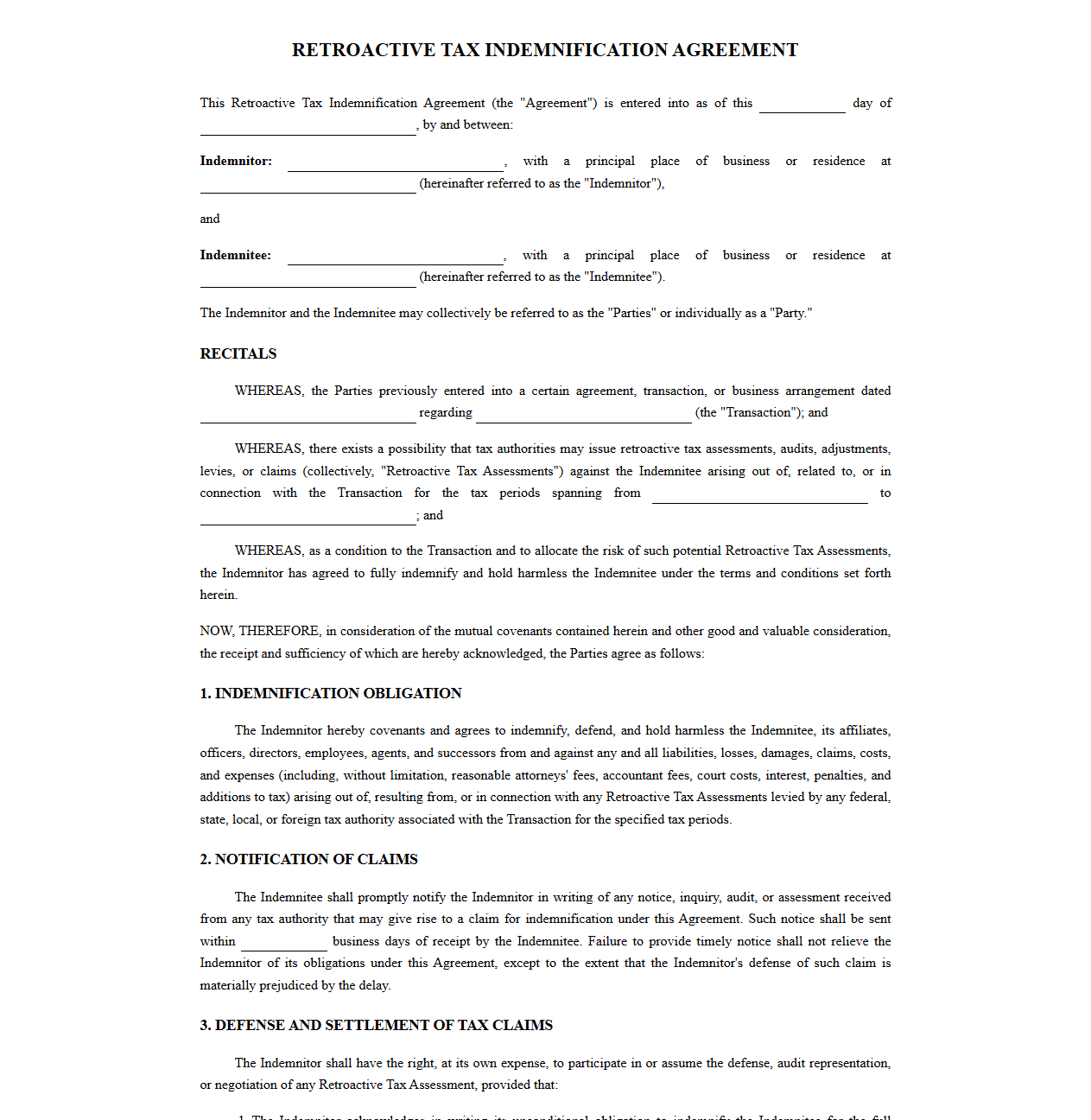 Download: .PDF
Back Tax Liability Indemnity Contract
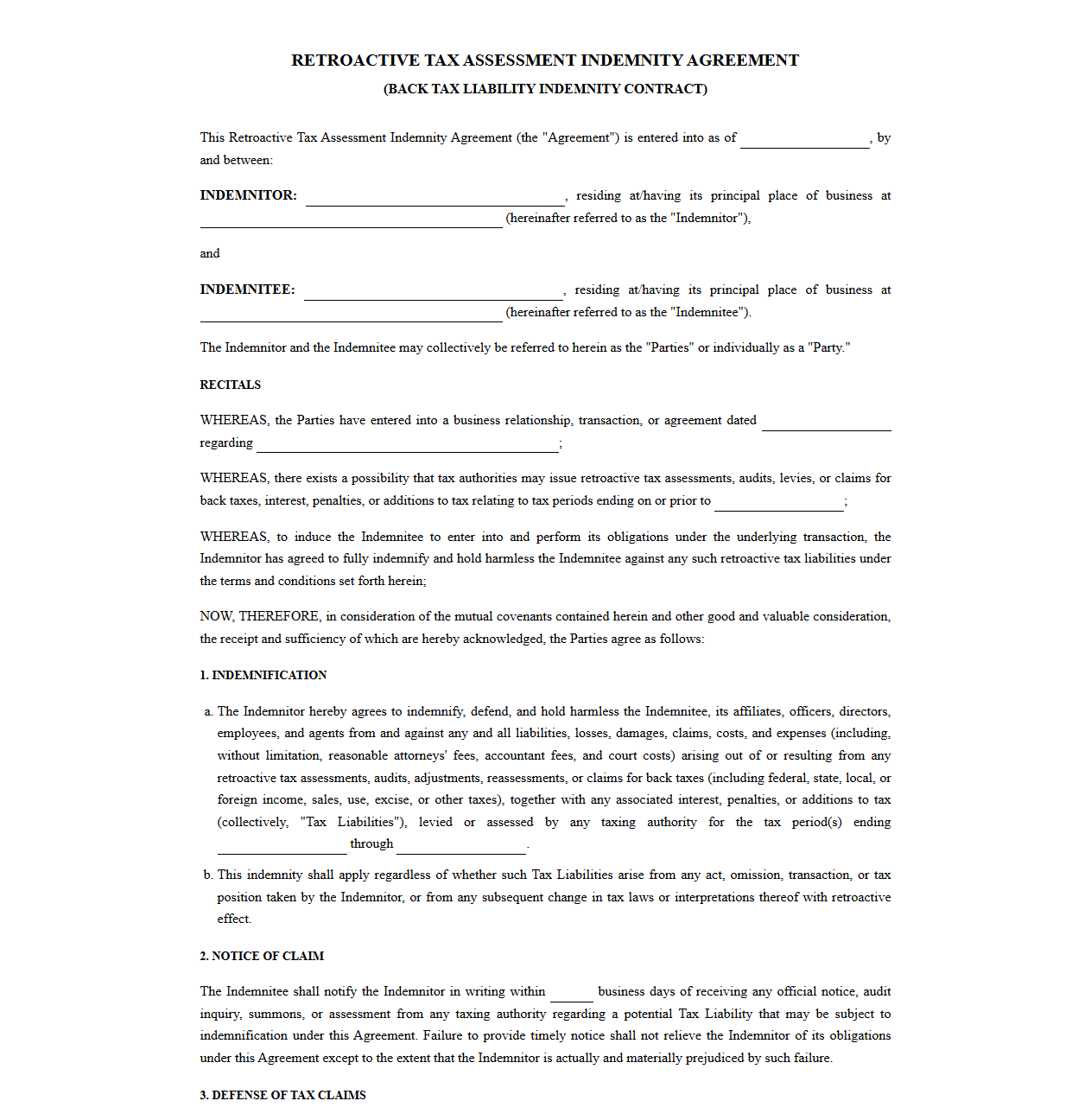 Download: .PDF
Deed of Indemnity for Past Tax Assessments
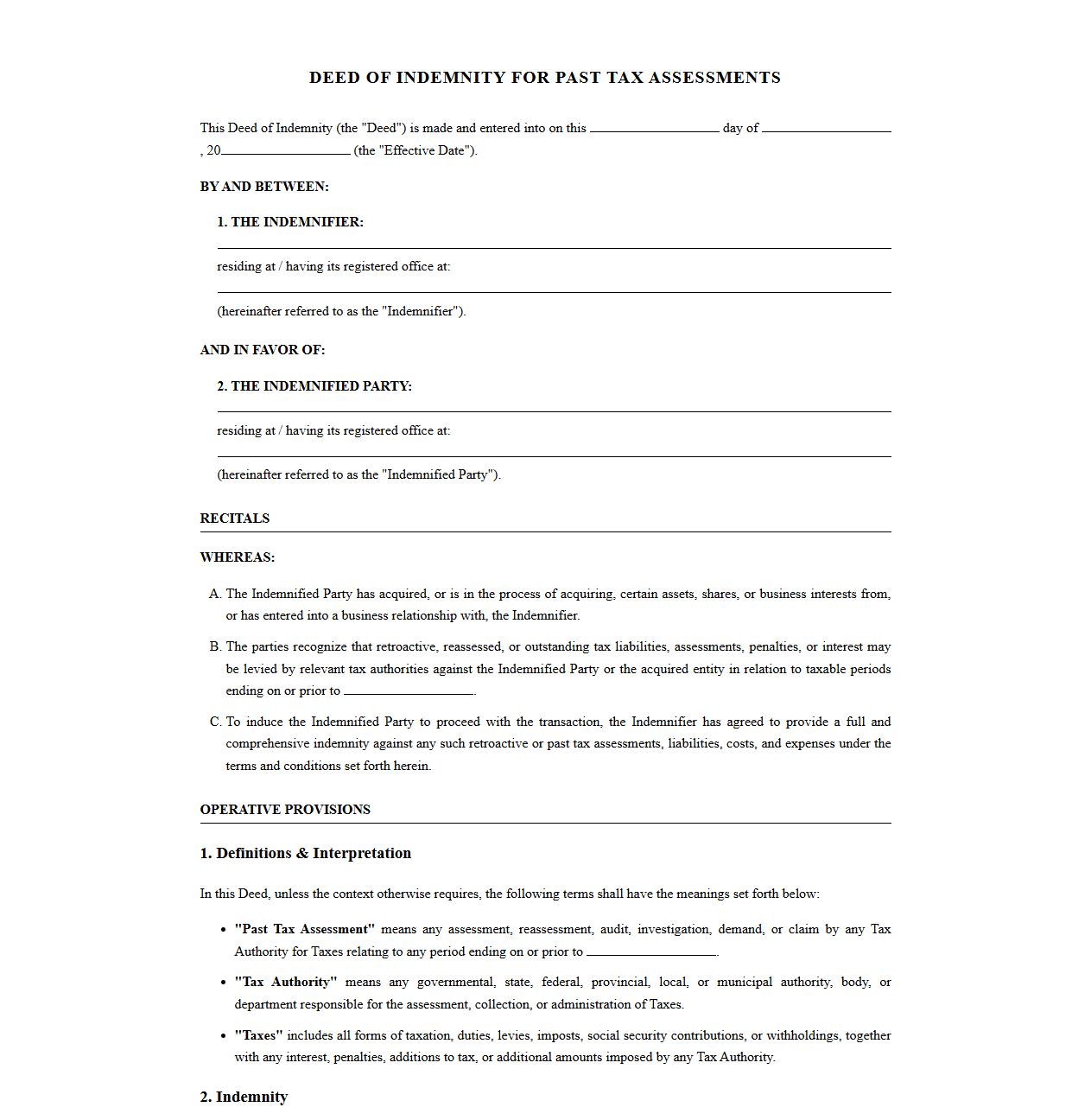 Download: .PDF
Retroactive Tax Assessment Hold Harmless Agreement
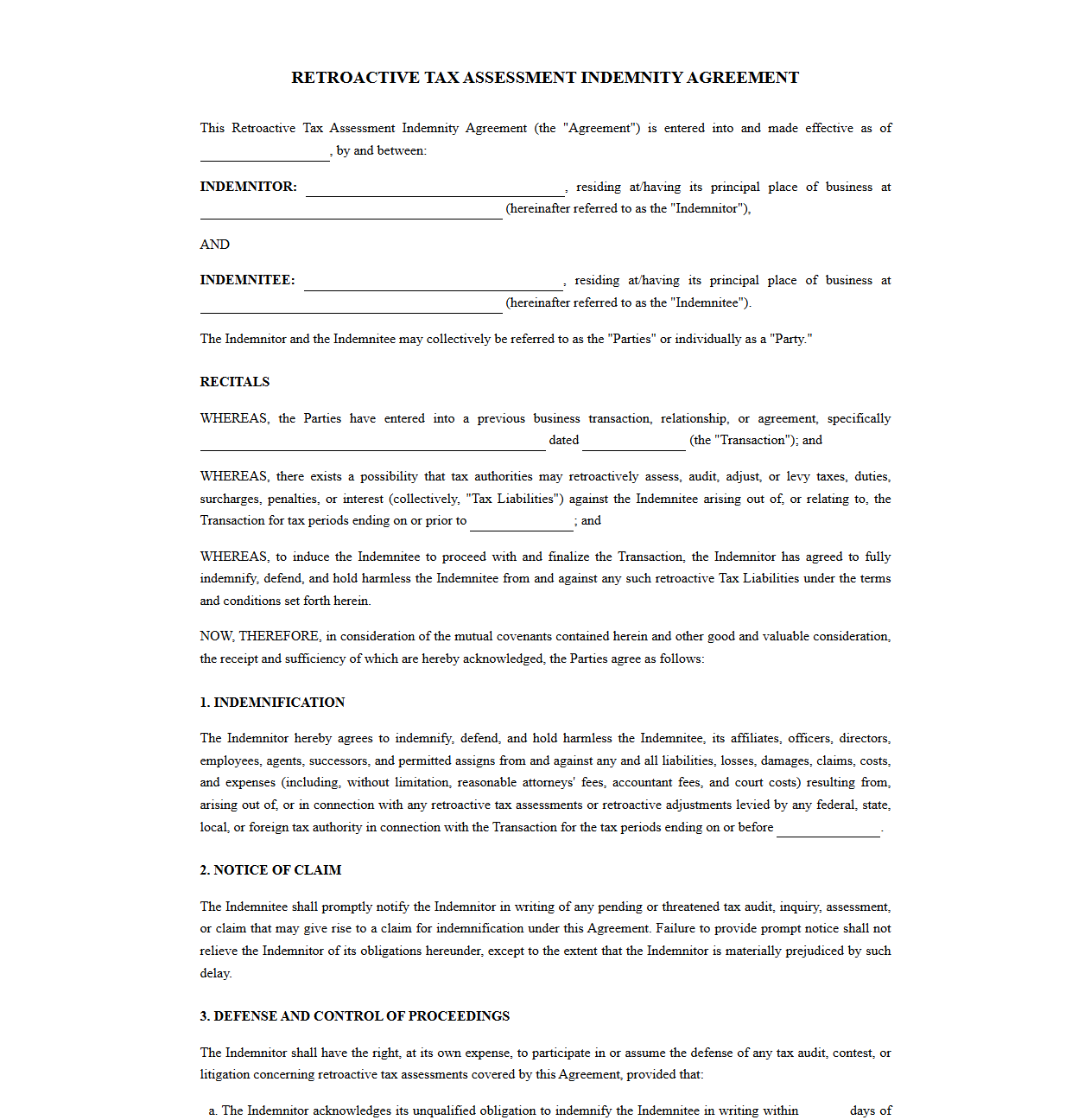 Download: .PDF
Tax Indemnity Agreement for Historical Liabilities
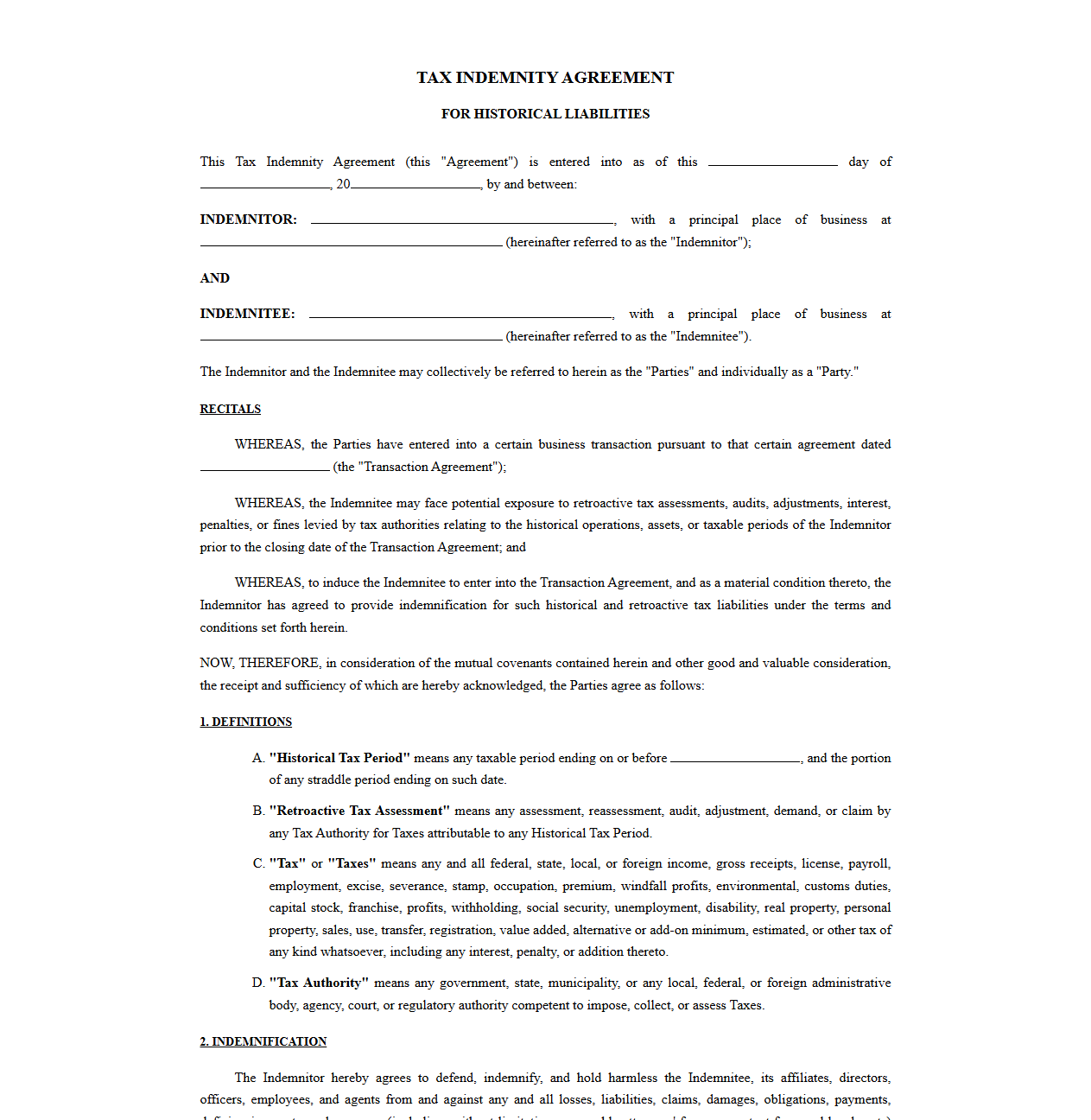 Download: .PDF
Post-Closing Retroactive Tax Indemnity Deed
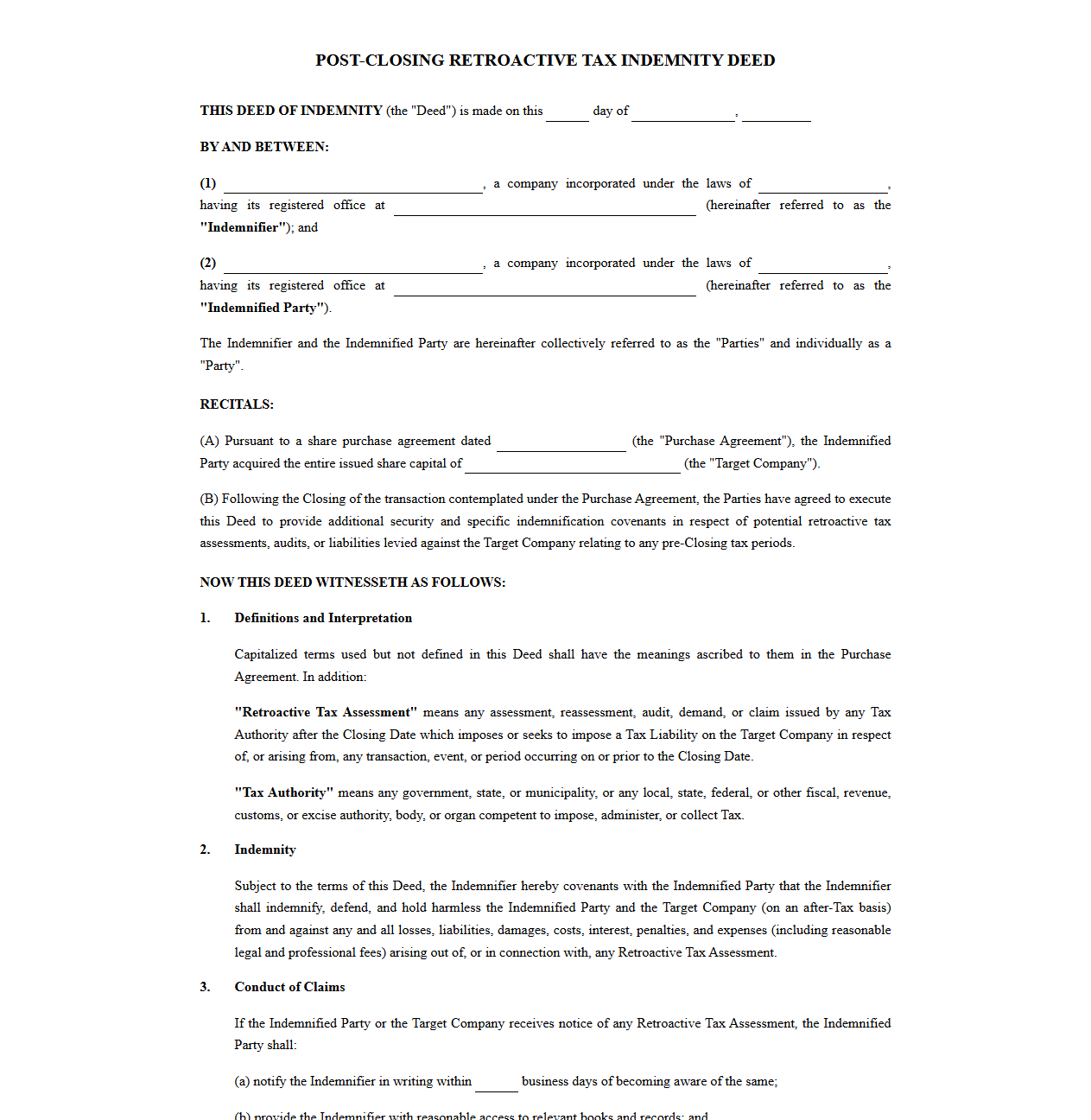 Download: .PDF
Historical Tax Assessment Indemnity Letter
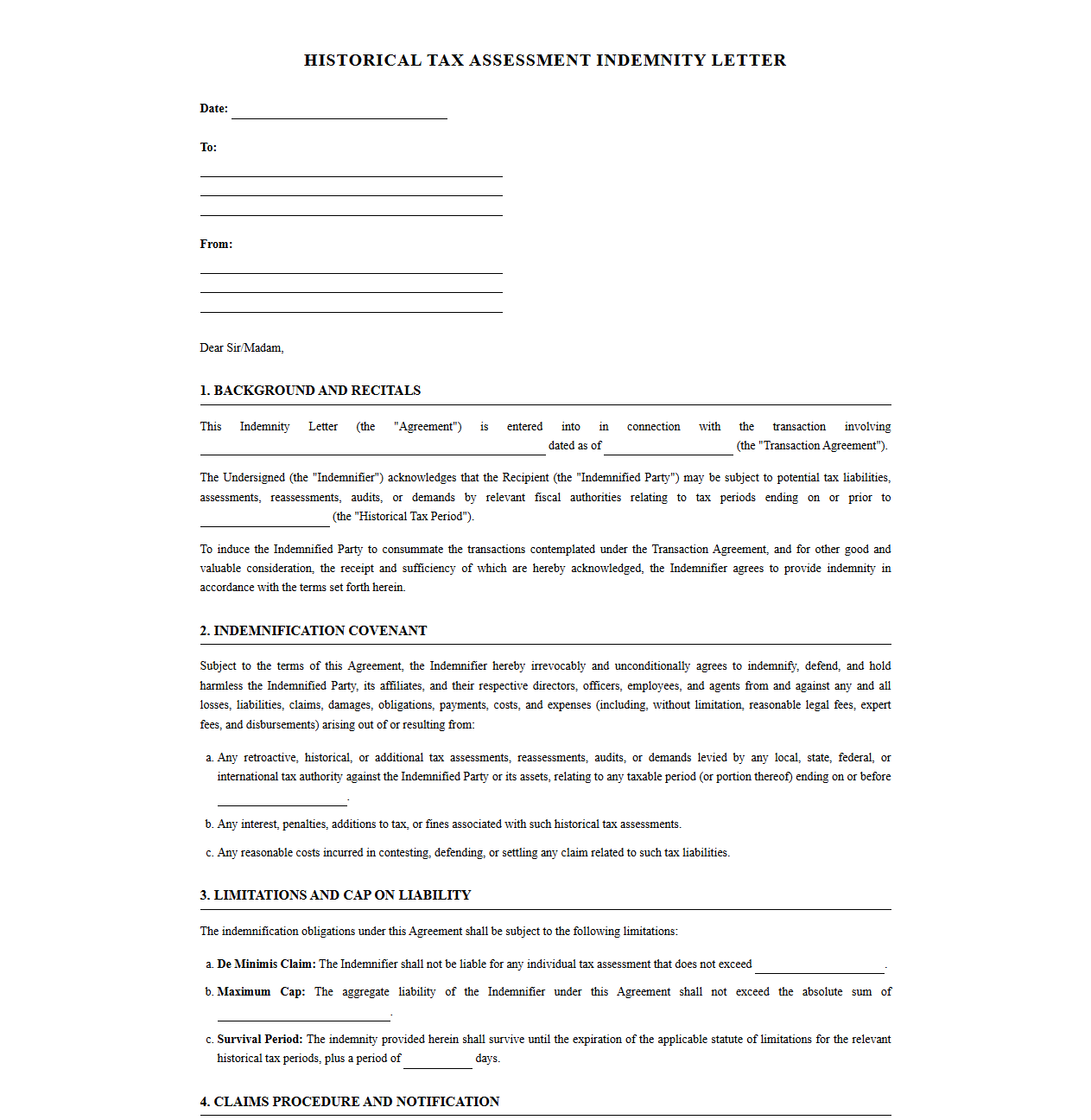 Download: .PDF
Agreement for Indemnification of Prior Tax Assessments
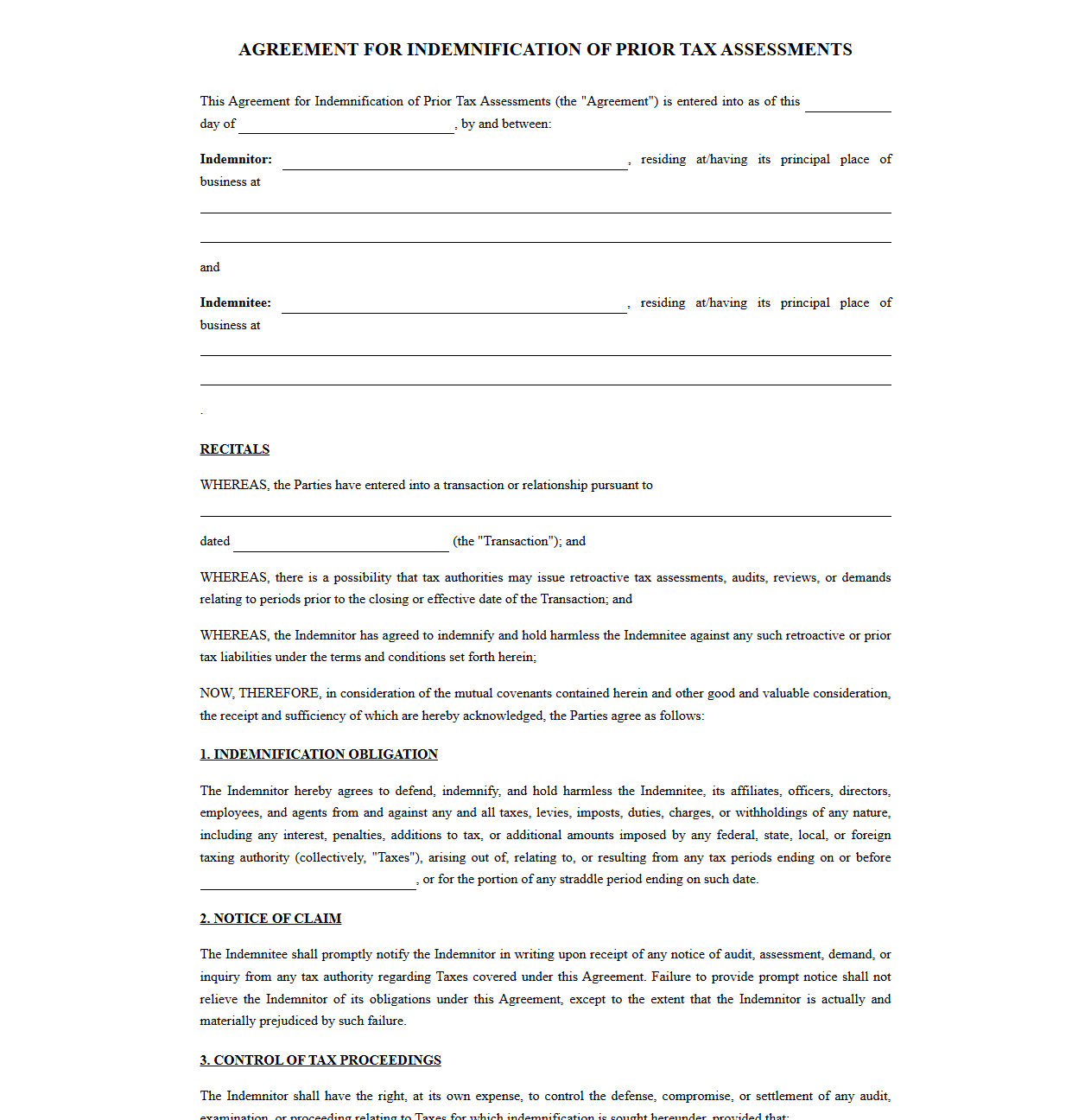 Download: .PDF
Understanding the Threat of Retroactive Tax Assessments in Business Transactions
In the high-stakes arena of mergers and acquisitions (M&A), transaction parties often focus heavily on valuation, market synergies, and immediate operational integration. However, a silent but devastating threat often lurks beneath the surface: retroactive tax assessments. When tax authorities audit a target company post-acquisition and retroactively apply new interpretations or discover historical non-compliance, the resulting financial liabilities can completely erode the deal's projected value. To prevent unexpected levies from destabilizing the newly formed entity, transaction structures must incorporate robust legal safeguards that clearly assign ownership of these hidden liabilities.
The Role of Tax Indemnity Agreements as a Protective Shield
A tax indemnity agreement is a critical contractual provision within a purchase agreement that legally allocates financial responsibility for pre-transaction tax liabilities. When a retroactive tax assessment arises, this mechanism ensures that the responsible party-typically the seller-bears the financial burden. By establishing a clear framework for indemnification, the buyer is shielded from historical tax exposures, allowing both parties to close the transaction with an agreed-upon risk profile. This legal shield protects the indemnified party from unforeseen tax bills, penalties, and interest stemming from the target company's past operations.
Essential Clauses in a Retroactive Tax Indemnity Template
To ensure a tax indemnity is legally enforceable and commercially viable, the drafting template must contain highly specific, non-ambiguous clauses. A vague agreement can lead to protracted litigation, defeating the purpose of the protective covenant. Every robust template should outline the following core components:
- Definition of Indemnified Taxes: A precise description of which taxes (income, sales, employment, excise) are covered under the agreement.
- Scope of Coverage: Explicit terms detailing whether interest, penalties, legal fees, and administrative costs are included in the indemnity.
- Tax Benefits Offset: Clauses addressing whether the indemnity payment should be reduced if the buyer receives a corresponding tax benefit.
- Payment Mechanics: The timeline and procedures governing how and when the indemnifying party must transfer funds once a tax liability is finalized.
Distinguishing Pre-Closing and Post-Closing Tax Liabilities
A fundamental division in any M&A tax indemnity is the temporal line drawn between pre-closing tax periods and post-closing tax periods. Generally, sellers are held liable for all taxes accrued during the pre-closing period, which encompasses all tax years up to the transaction's closing date. Conversely, the buyer assumes full responsibility for the post-closing period. When a retroactive audit targets a straddle period-a tax year that spans across the closing date-the template must utilize a precise apportionment method to allocate the retroactive liabilities fairly between the two parties based on the days elapsed or an interim closing of the books.
Establishing Claims Procedures and Defense Control
When a tax authority initiates a retroactive audit, having a structured claims and defense protocol in place is vital to resolving the dispute efficiently. The indemnity template should outline a step-by-step procedural flow to ensure cooperative action and protect the interests of both parties:
- Notice of Claim: The indemnified party must promptly notify the indemnifying party in writing upon receiving any notice of audit or assessment from a tax authority.
- Determination of Defense Control: The parties must determine who will control the defense; usually, the seller controls disputes regarding pre-closing taxes, provided they acknowledge their indemnification obligation.
- Participation and Consent: The non-controlling party retains the right to participate in the proceedings at their own expense, and the controlling party cannot settle the claim without the other's reasonable consent.
Setting Survival Periods, Caps, and Baskets for Tax Indemnities
Unlike general representations and warranties, which may expire after one to two years, tax indemnities require much longer survival periods. This extended duration is necessary because tax authorities often have statutory look-back periods of three to six years, or even longer in cases of fraud or substantial omissions. Furthermore, commercial negotiations will dictate whether these indemnities are subject to financial limits such as caps-which limit the maximum payout of the indemnifying party-or baskets, which act as a deductible or threshold that must be met before a claim can be made. Often, buyers negotiate for tax indemnities to be exempt from these caps and baskets entirely, treating historical tax compliance as an absolute liability.
Best Practices for Drafting and Negotiating Tax Indemnity Templates
Successfully navigating tax indemnities requires seamless collaboration between M&A legal counsel and specialized tax advisors. Rather than relying on rigid, off-the-shelf templates, dealmakers must customize the language to match the risk profile, sector, and scale of the transaction. Engaging experts early in the due diligence phase ensures that specific historical tax risks are identified and explicitly addressed in the final purchase agreement.
A well-negotiated tax indemnity is not just a boilerplate clause; it is a vital risk-management tool that safeguards transaction value and provides peace of mind long after the deal closes.
Leave a comment