

Managing partner equity and maintaining accurate capital accounts often leads to severe administrative headaches, particularly when year-end adjustments trigger disputes or audit red flags. Before addressing these operational hurdles, partnerships must navigate the complex regulatory maze of IRS Section 704(b) allocations. Standardizing this process with pre-built Capital Account Maintenance Agreement templates grants firms a repeatable blueprint for seamless compliance, ensuring equitable tracking from day one.
However, while these templates accelerate drafting, they are designed as foundational structures rather than a substitute for specialized legal and tax counsel. By standardizing clauses for concrete events like property contributions, cash distributions, and book-up revaluations, partnerships can protect their financial integrity. Below, we break down the essential components of these templates, guide you through tailoring them to your specific partnership structure, and outline best practices for long-term equity management.
Partnership Capital Account Maintenance Agreement
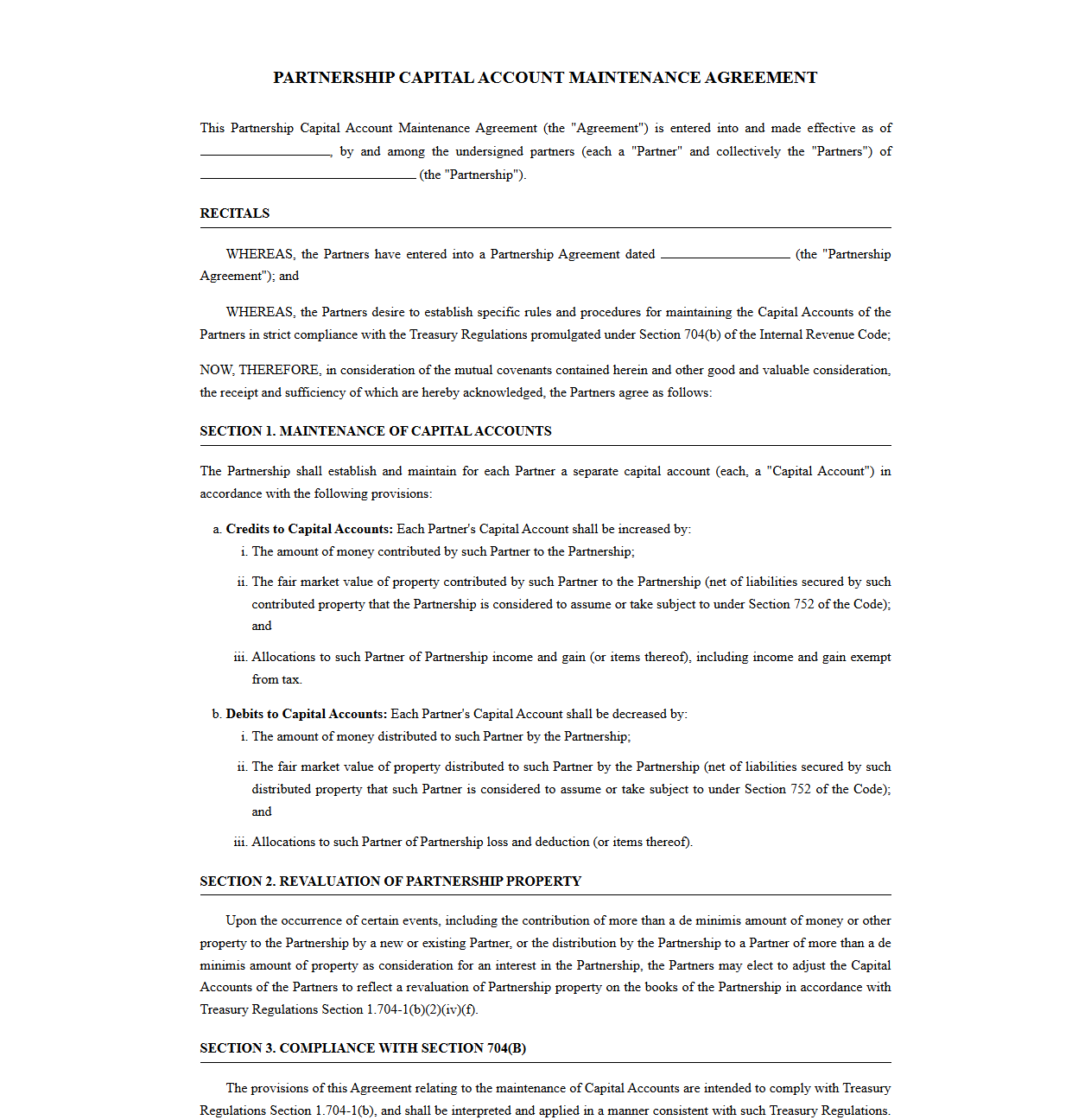 Download: .PDF
Partner Capital Account Management Agreement Template
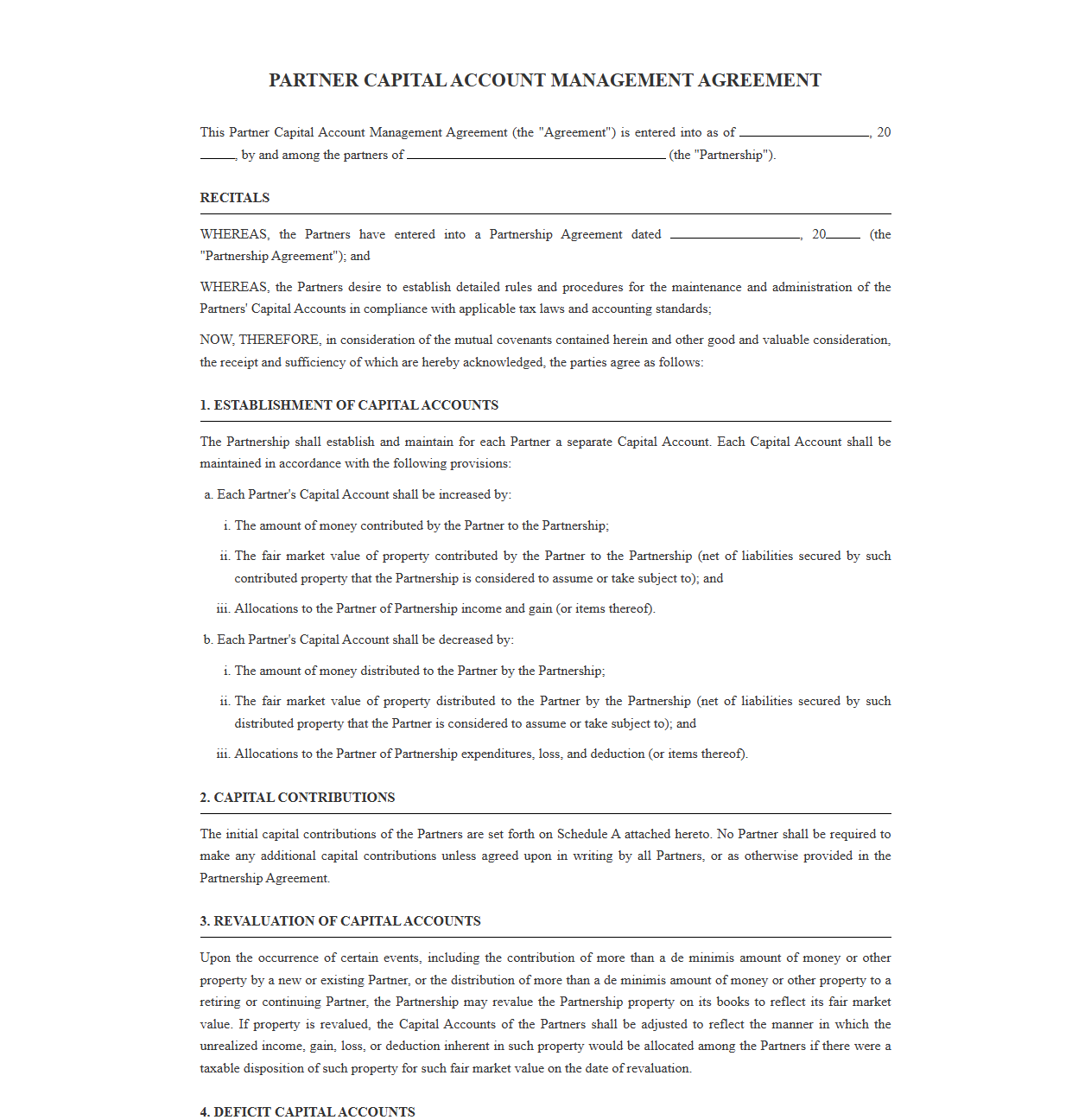 Download: .PDF
Agreement for Maintaining Partnership Capital Accounts
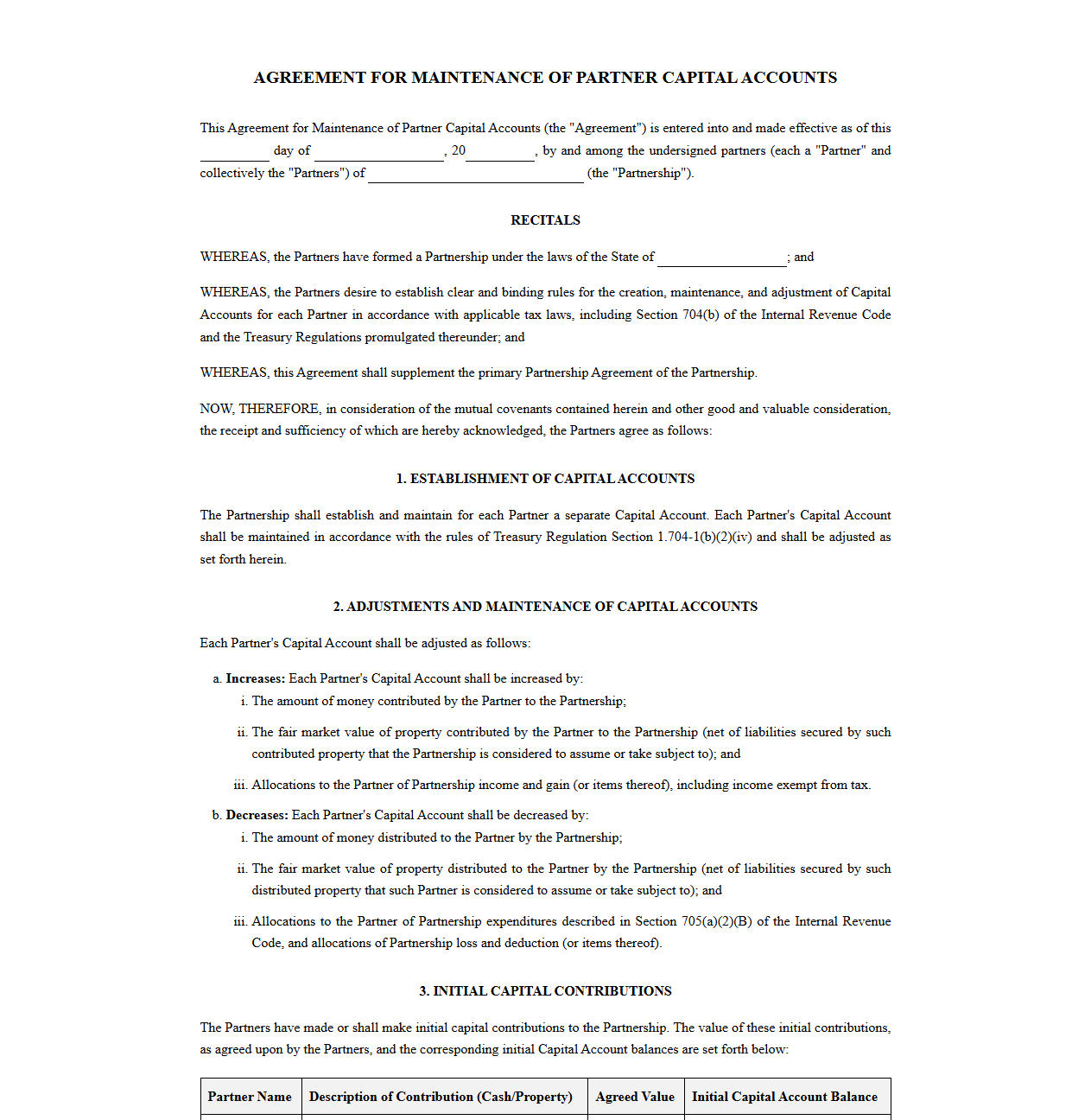 Download: .PDF
Partnership Capital Account Reconciliation Contract
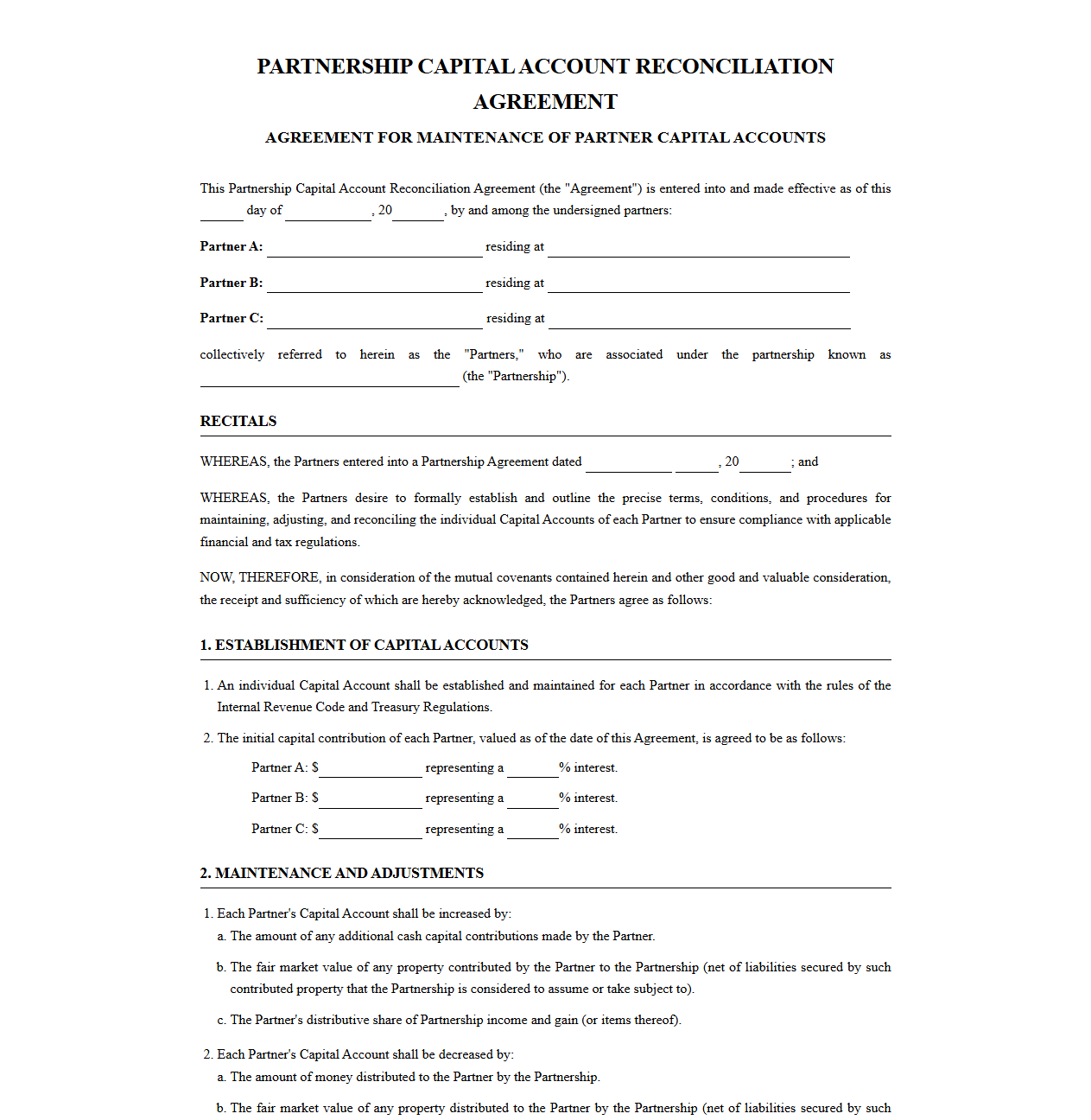 Download: .PDF
Capital Account Maintenance Policy and Agreement
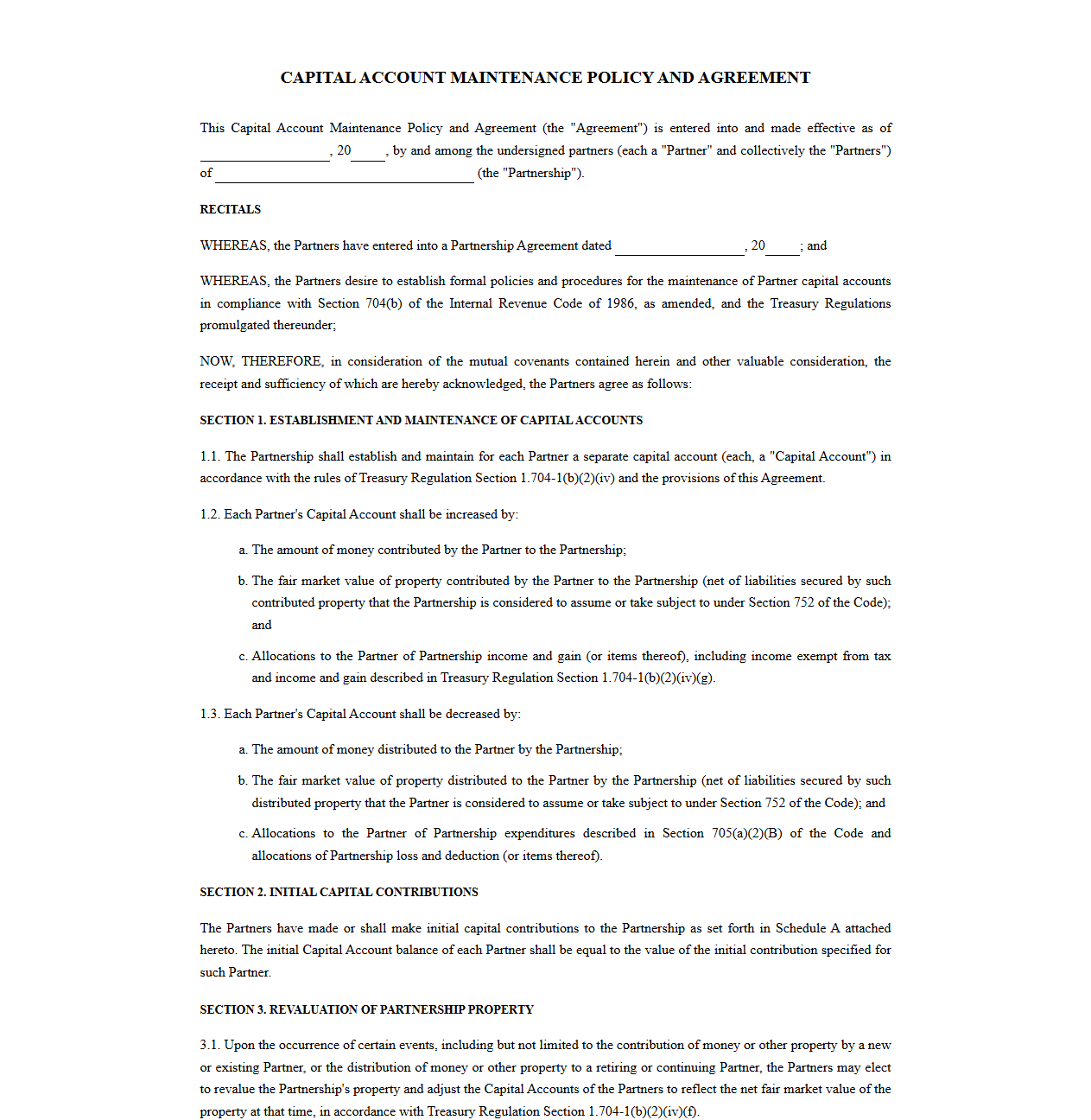 Download: .PDF
Partner Capital Account Administration Agreement
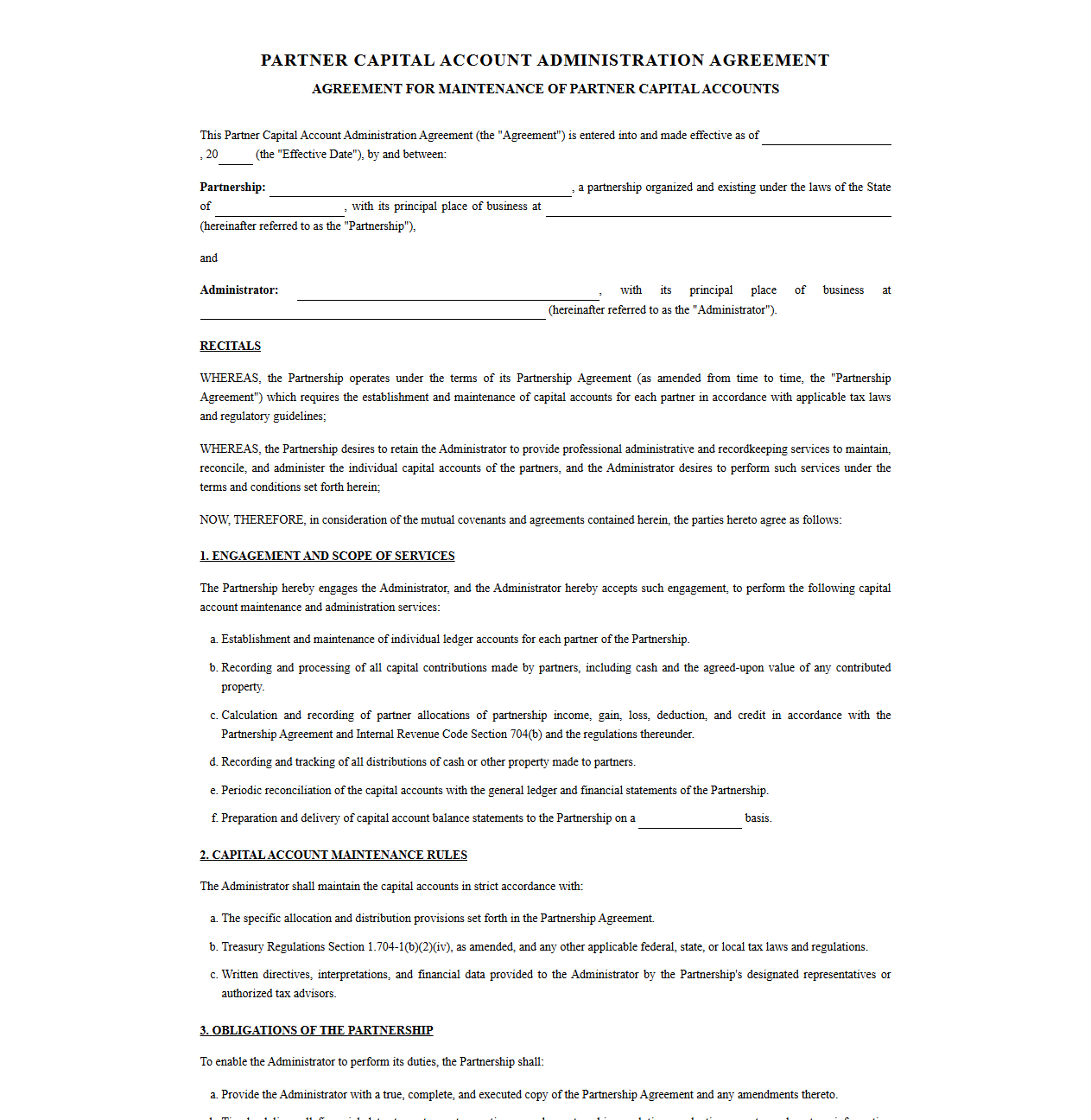 Download: .PDF
Standard Partner Capital Account Maintenance Contract
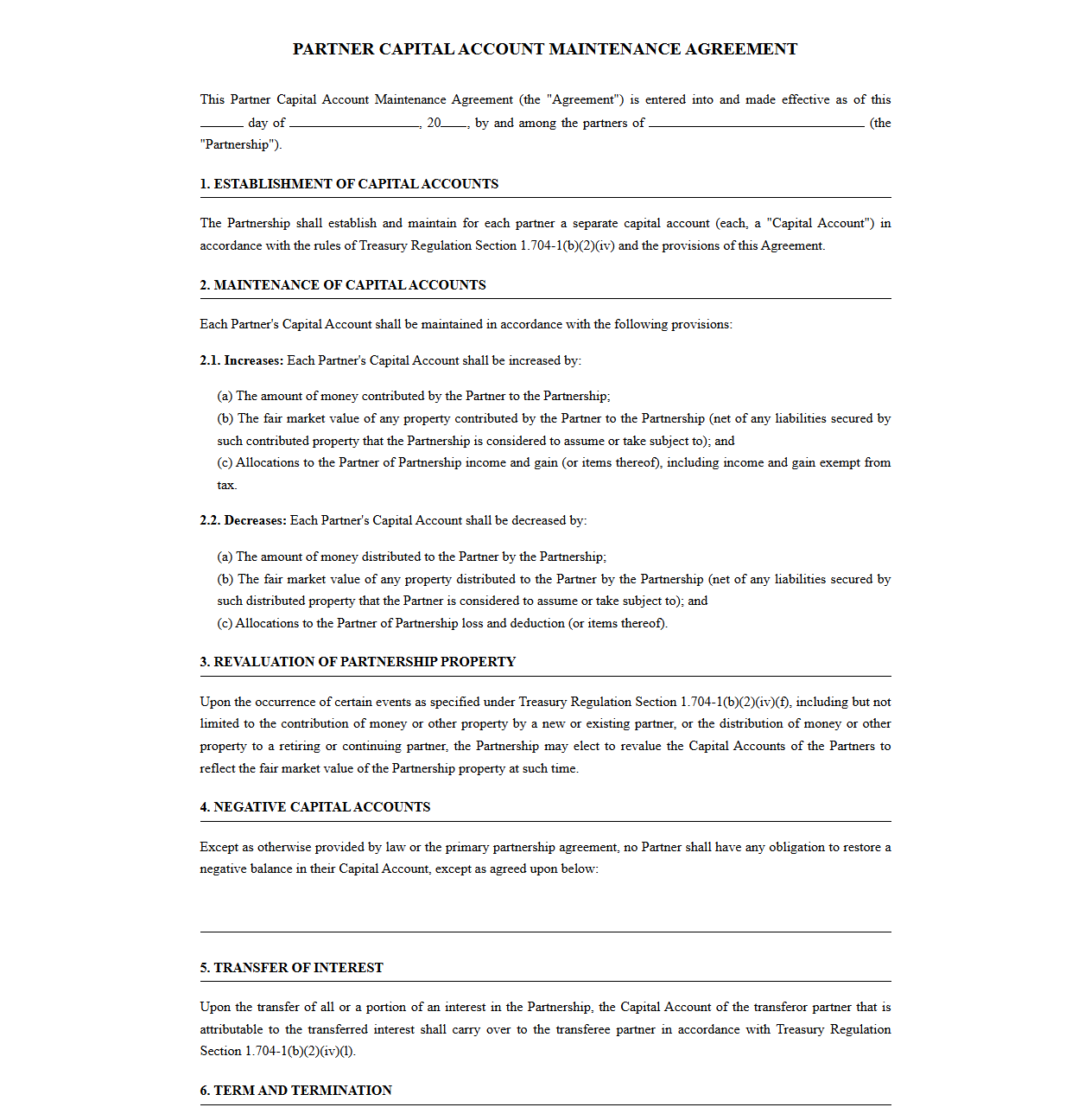 Download: .PDF
LLP Capital Account Maintenance Agreement Template
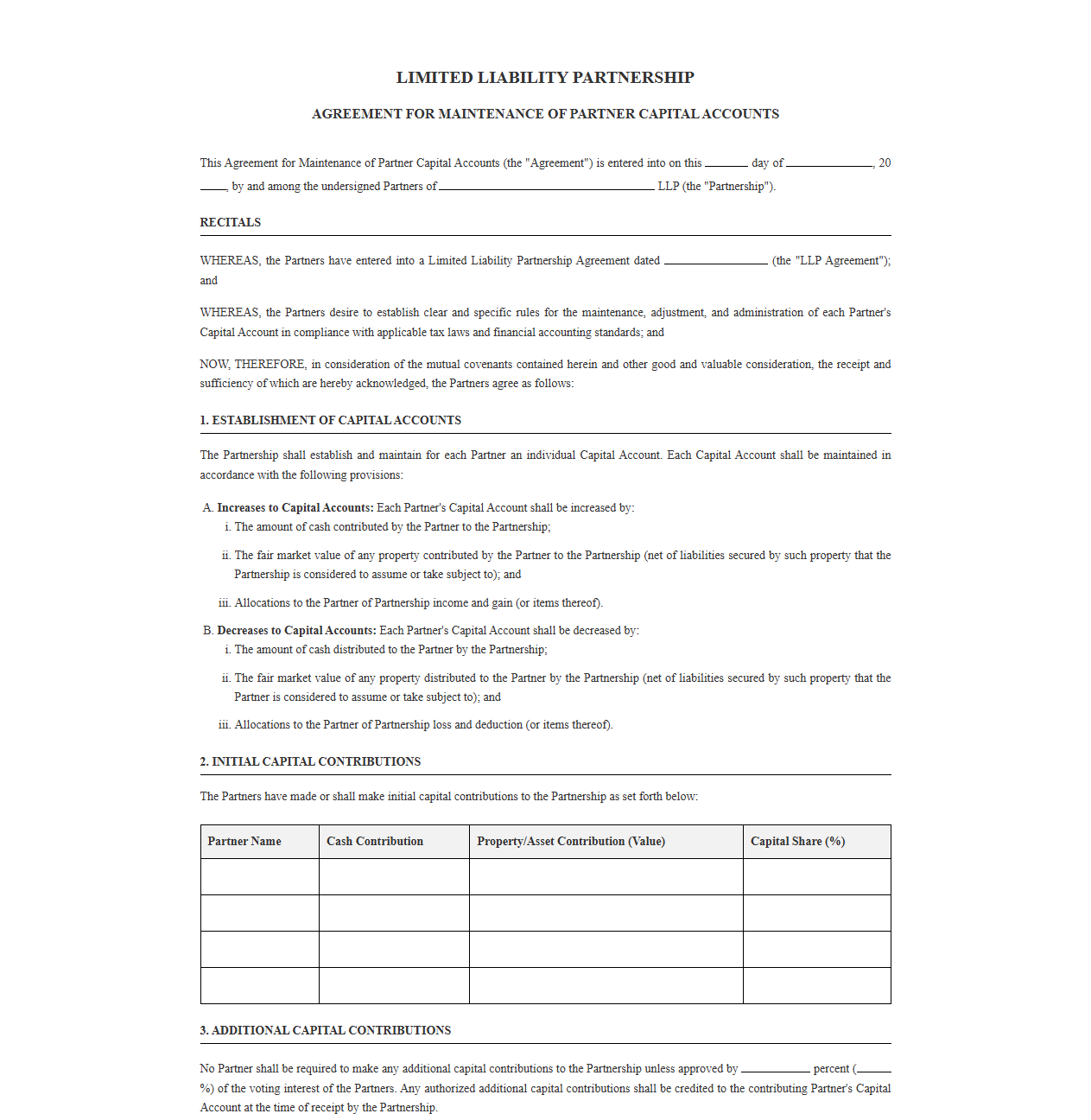 Download: .PDF
The Foundation of Partner Trust: Why Standardizing Capital Accounts Matters
In any partnership, clear financial boundaries are the bedrock of operational success. A standardized Capital Account Maintenance Agreement acts as a preventative shield against partnership disputes by establishing transparent rules for equity ownership and tracking. Without a consistent framework, misunderstandings regarding contributions and distributions can quickly erode trust. By formalizing these processes, partners ensure strict tax compliance and build long-term operational trust that keeps the focus on business growth rather than internal friction.
Anatomy of a Compliant Capital Account Agreement
To ensure absolute clarity and prevent legal vulnerabilities, a robust template must contain several vital structural components. These clauses clearly define how equity is established, preserved, and distributed over time.
- Initial Capital Contributions: Documenting exactly what each partner brings to the table, whether in cash, services, or property, to establish the baseline equity values.
- Capital Maintenance Rules: Outlining how capital accounts will be adjusted for yearly profits, losses, and operational adjustments.
- Distribution Provisions: Setting strict parameters on how and when partners can withdraw funds, protecting the company's operating cash flow.
Aligning with Regulatory Standards: The Role of Section 704(b)
To withstand IRS scrutiny, partnerships must align their agreements with Section 704(b) of the Internal Revenue Code. This regulation requires that allocations of income, gain, loss, and deduction have substantial economic effect. This means that tax allocations must mirror the actual economic benefits or burdens agreed to by the partners. Utilizing compliant 704(b) book capital accounts ensures that the IRS will respect the partnership's chosen distribution methods during an audit.
Step-by-Step Bookkeeping: Maintaining Capital Accounts Accurately
Routine maintenance is critical to keeping capital accounts accurate and compliant. Following a systematic bookkeeping approach prevents cumulative errors that can distort partner equity.
- Record initial and subsequent cash and non-cash capital contributions.
- Track partner draws and distributions precisely as they occur throughout the fiscal year.
- Calculate and allocate the partnership's net profit or loss at the end of each accounting period.
- Adjust individual capital accounts to reflect these allocations prior to closing the books.
Handling Complex Events: Revaluations and Partner Transitions
Standard operations are frequently interrupted by significant milestones, such as admitting new partners, handling partner departures, or receiving non-cash property contributions. Managing these changes requires precise valuation adjustments to protect existing equity.
Crucial Insight: Triggering a book-up or book-down to adjust assets to fair market value during these transitional events ensures that built-in gains or losses are allocated fairly to the historical partners who earned them.
Implementing Your Standardized Template Successfully
Introducing a new capital account agreement to existing partners requires diplomacy and structured communication. Addressing concerns early prevents friction and ensures a smooth operational transition.
- Highlight the mutual benefit of protecting each partner's equity from legal and tax risks.
- Provide clear examples of how the new standardized rules protect capital during partner departures.
- Collaborate with a shared legal professional to review the agreement and address specific partner feedback.
Future-Proofing Partner Equity Through Seamless Compliance
A standardized Capital Account Maintenance Agreement does more than just appease tax authorities; it acts as a strategic driver for business scalability. By establishing clear rules of engagement, you secure your partner equity and establish a solid baseline for onboarding future investors. Mitigating audit risks and resolving disputes before they start allows your leadership team to focus entirely on growth. To explore more about structuring your partnership documents, visit our compliance portal to download industry-standard templates.

Leave a comment