

General contractors and developers frequently struggle with the complex burden of managing subcontractor tax liabilities, constantly facing the threat of severe financial penalties during IRS audits. Before addressing these risks, it is critical to understand how modern tax authorities have intensified their scrutiny of joint-liability relationships. Fortunately, utilizing standardized agreement templates grants organizations immediate legal security and a streamlined path to compliance.
However, as a vital educational stipulation, readers must note that while standard templates offer a robust baseline, they must be tailored to account for localized state regulations. For example, a compliant agreement must explicitly detail procedures for Form W-9 verification failures and the exact mechanisms for executing the standard 24% federal backup withholding rate.
This article will analyze the essential clauses of a compliant withholding agreement, outline risk-mitigation strategies, and provide downloadable templates to safeguard your next project.
Subcontractor Withholding Tax Agreement Template
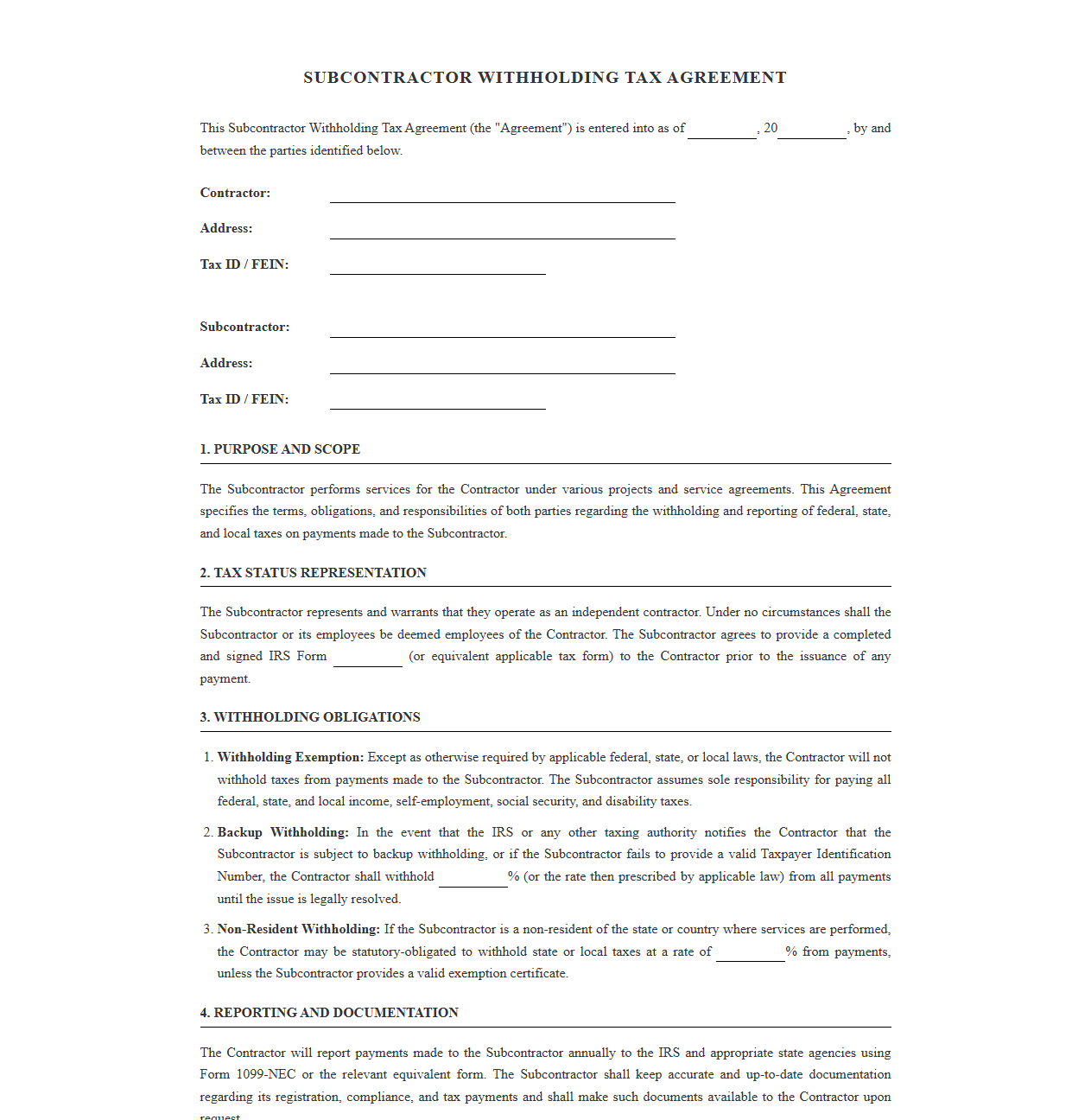 Download: .PDF
Subcontractor Tax Withholding and Compliance Agreement
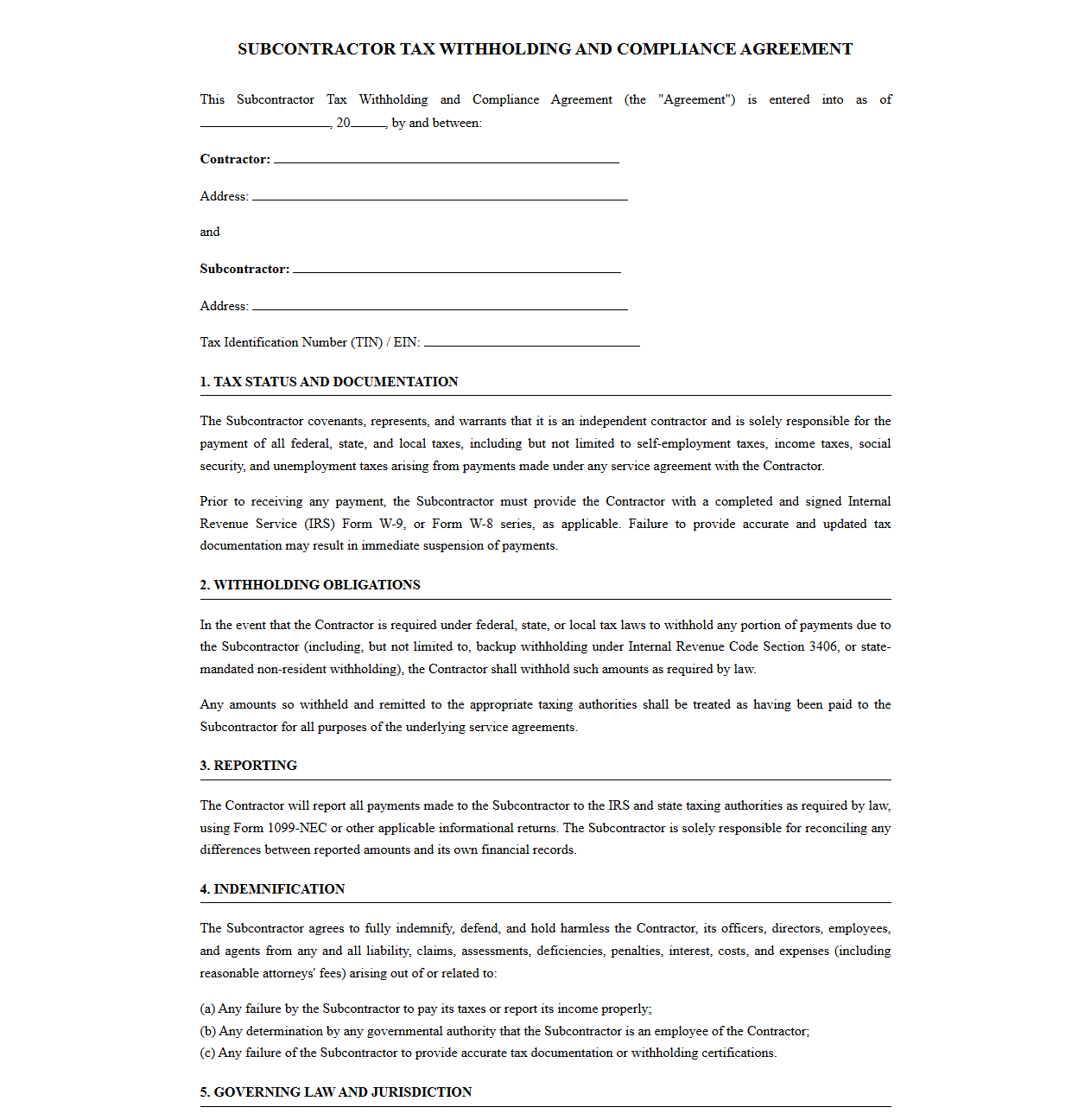 Download: .PDF
Tax Retention Agreement for Independent Subcontractors
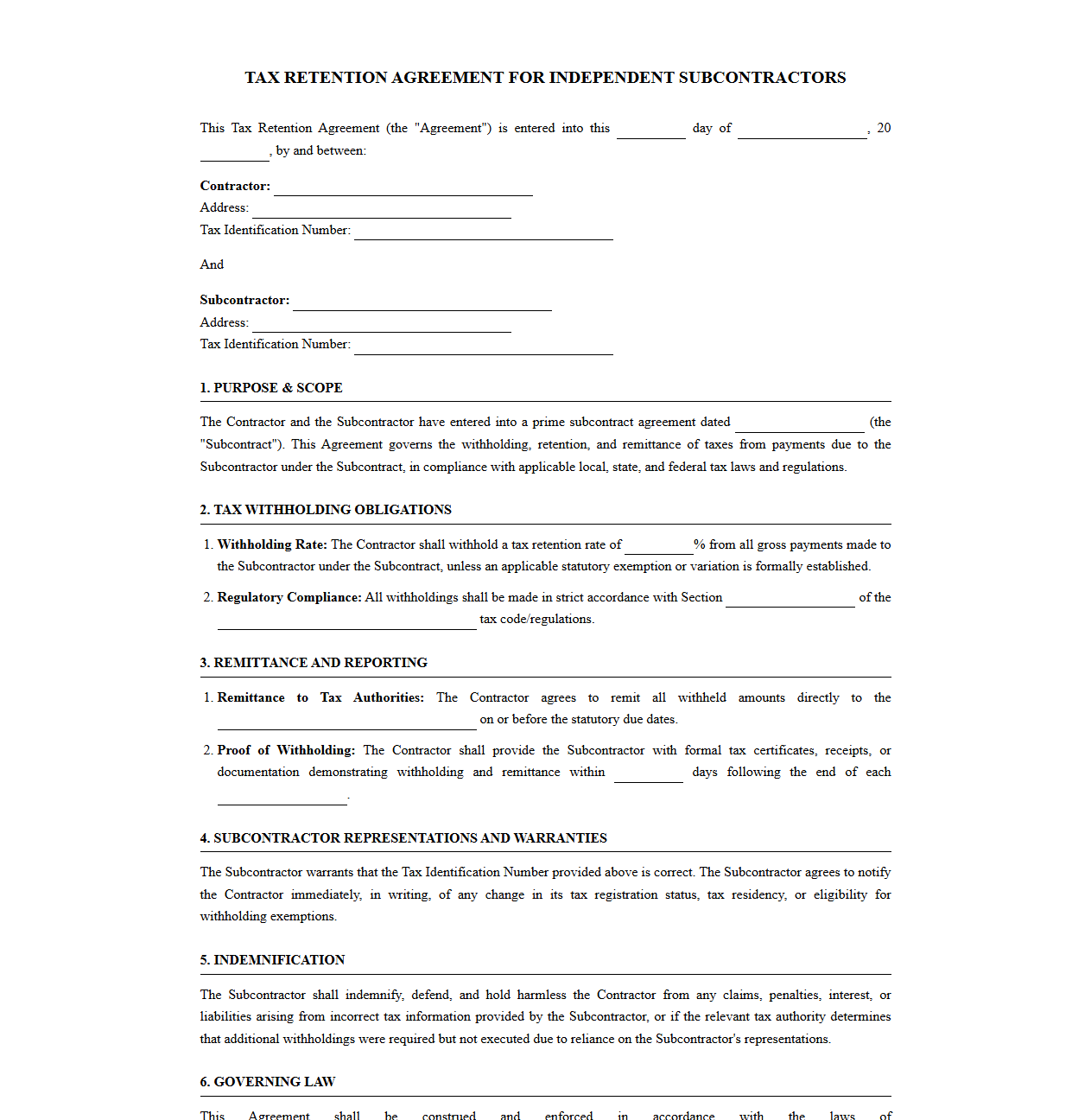 Download: .PDF
Subcontractor Withholding Tax Indemnity and Hold Harmless Agreement
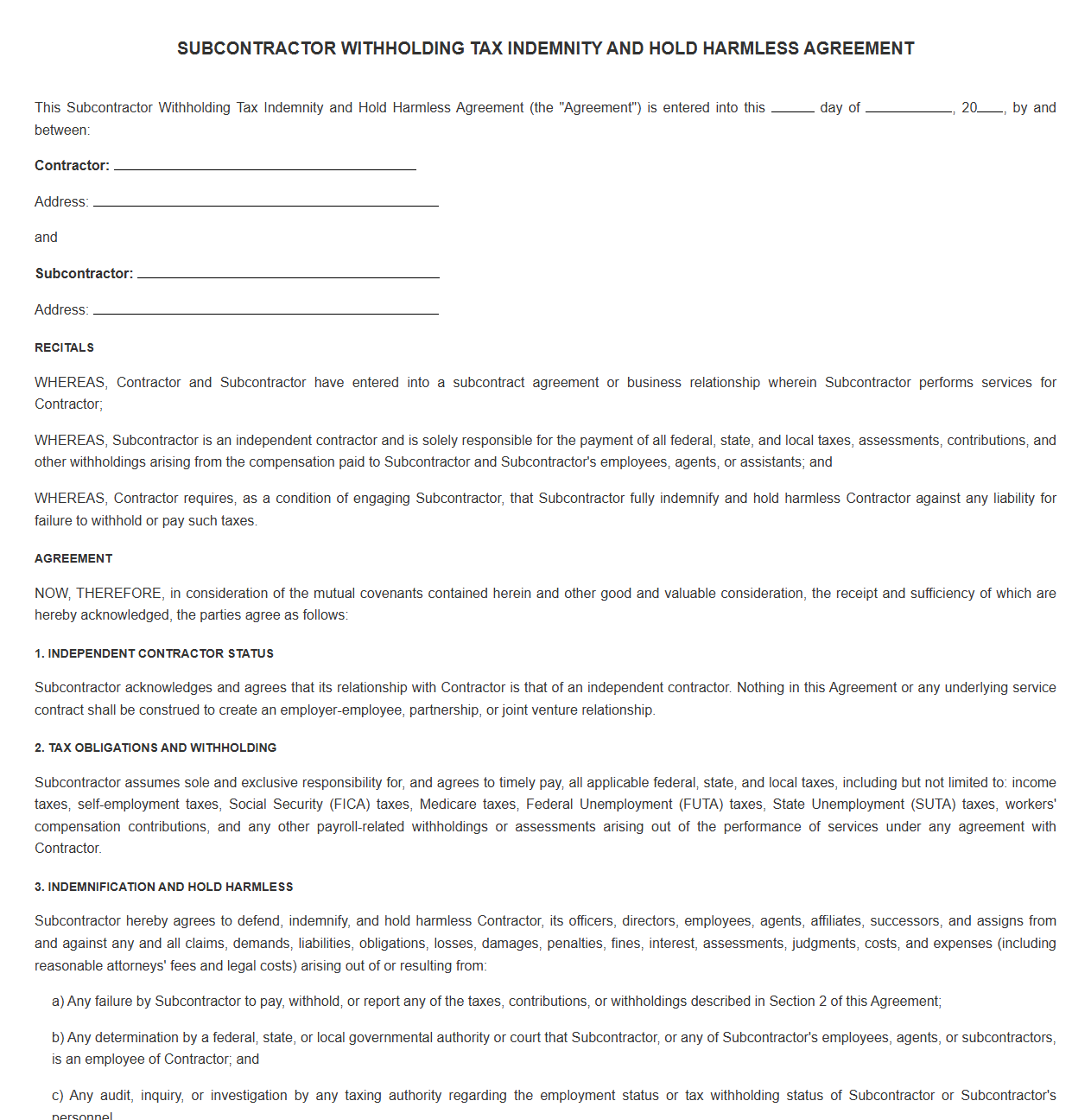 Download: .PDF
Construction Subcontractor Tax Withholding Addendum
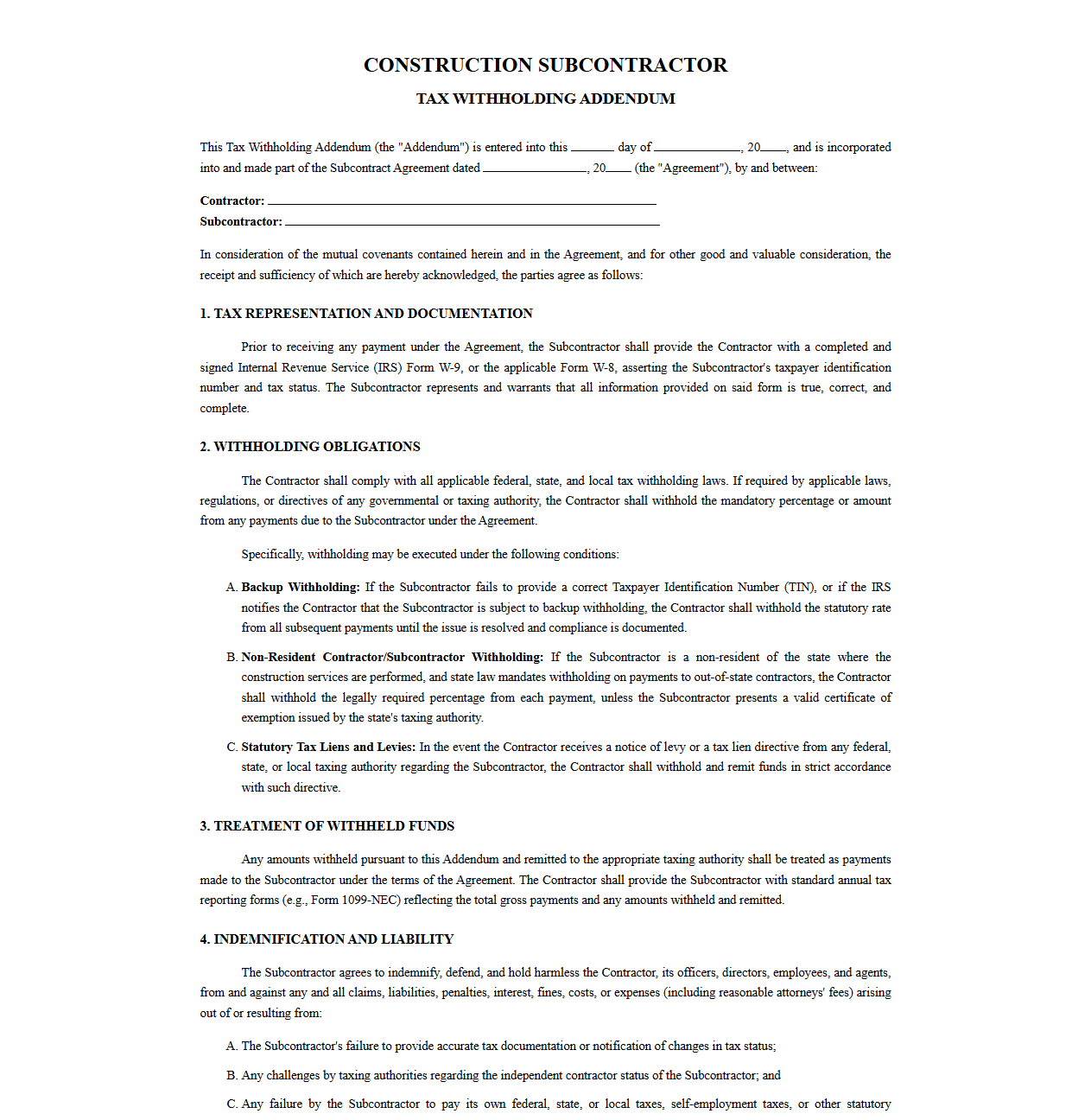 Download: .PDF
Subcontractor Withholding Tax Declaration and Agreement
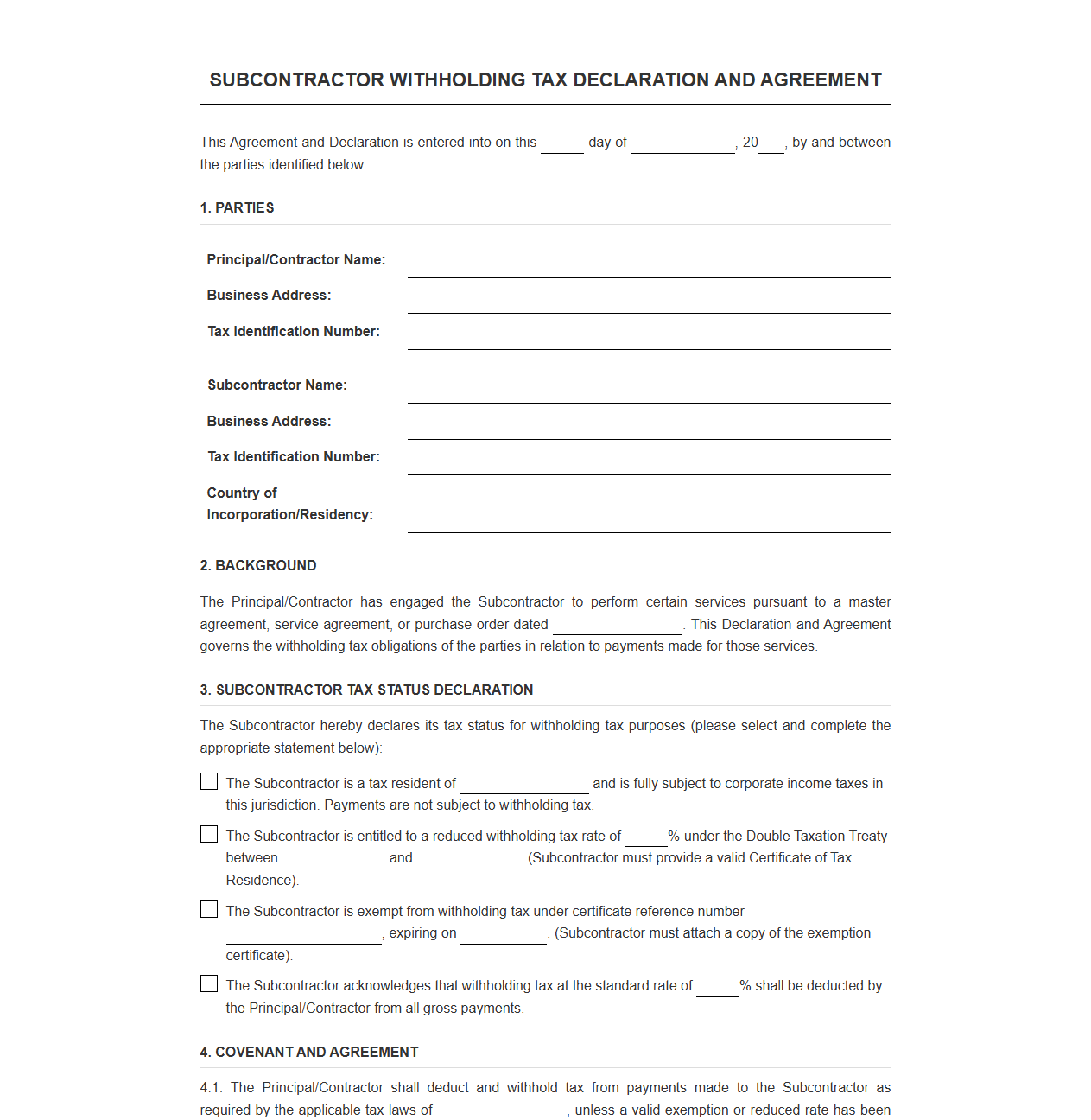 Download: .PDF
Agreement for Subcontractor Tax Compliance and Withholding Obligations
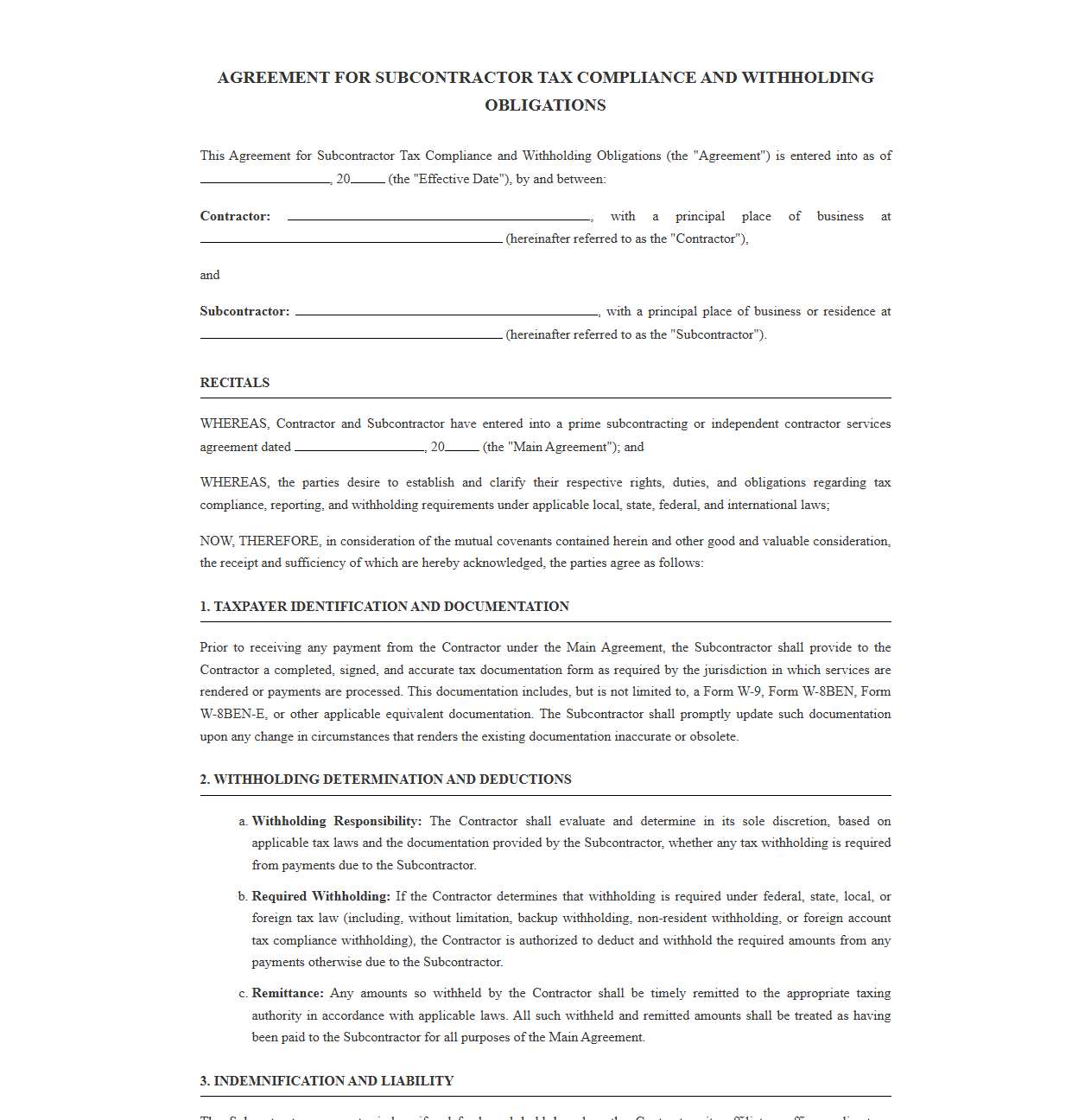 Download: .PDF
Standard Subcontractor Tax Retention and Withholding Deed
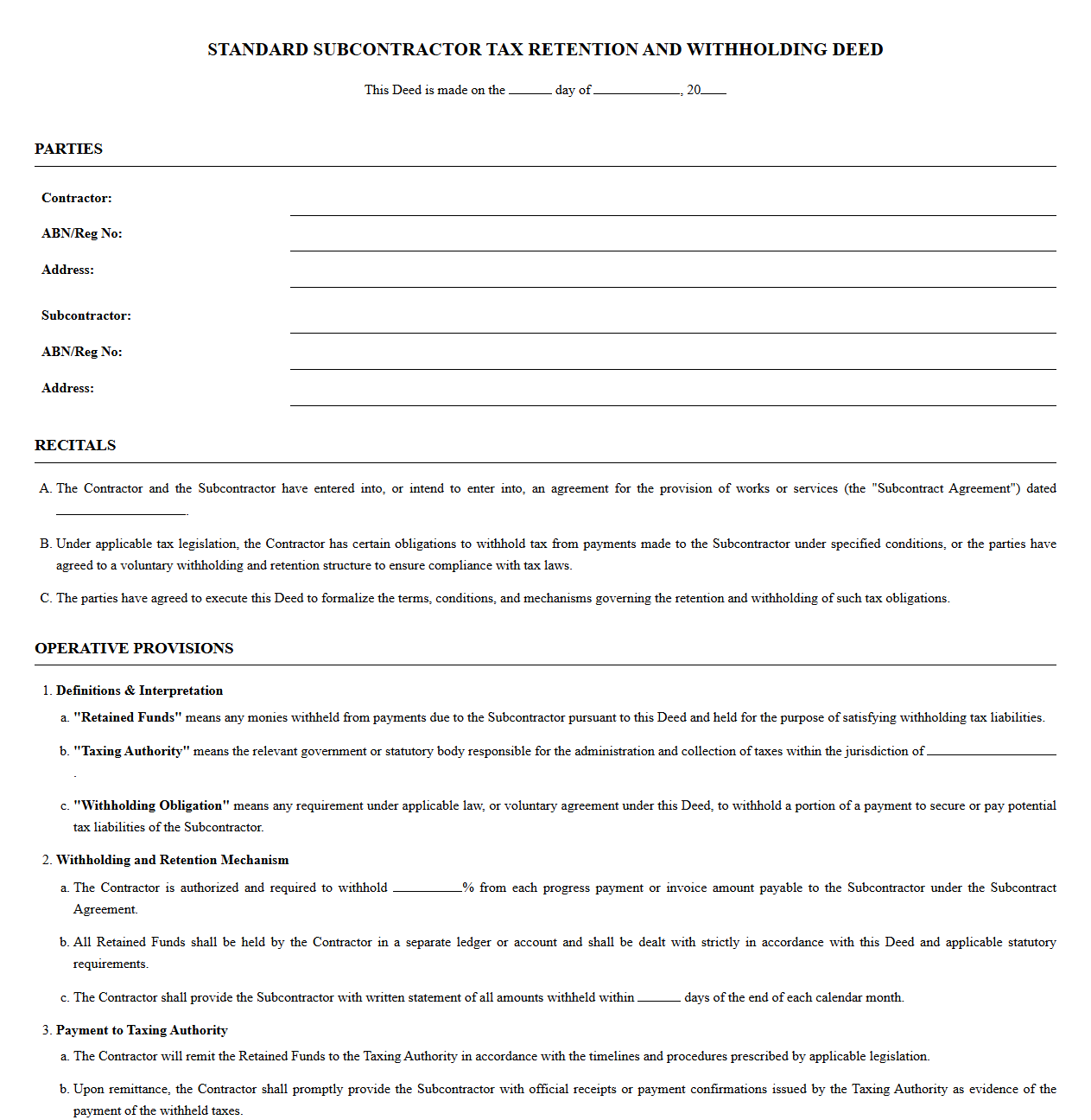 Download: .PDF
Understanding Subcontractor Tax Liability and Compliance Risks
Navigating the complexities of construction and contracting requires a deep understanding of subcontractor tax liability. When a primary contractor hires independent parties, the Internal Revenue Service (IRS) and state tax authorities require strict adherence to reporting and withholding rules to prevent tax evasion and underreporting.
General contractors are often held responsible for uncollected taxes due to joint and several liability doctrines and strict backup withholding regulations. Failing to comply with these tax mandates exposes the primary business to severe financial risks, including back taxes, substantial interest penalties, and potential litigation.
The Strategic Role of Standard Withholding Agreements
Implementing a standardized withholding agreement serves as a proactive defense mechanism for hiring entities. By establishing clear protocols before any work begins, both parties align on tax responsibilities, verification processes, and potential backup withholding actions, mitigating joint tax liabilities before they can manifest during audits.
"A well-drafted withholding agreement shifts the compliance burden back to the subcontractor, serving as primary evidence of a contractor's due diligence during regulatory reviews."
Essential Clauses for a Compliance-Ready Template
To ensure maximum protection, a standard subcontractor withholding agreement must incorporate specific, legally binding clauses that address federal and state tax mandates.
- Backup Withholding Mandates: Explicit instructions on when and how to apply the standard IRS backup withholding rate if a subcontractor fails to provide a valid Taxpayer Identification Number (TIN).
- Form W-9 Verification Timeline: A strict deadline requiring the subcontractor to submit a completed and signed Form W-9 prior to the release of any project payments.
- Reporting and Payment Schedules: Defined timelines detailing when withheld funds will be deposited with tax authorities and when annual Form 1099-NEC statements will be issued.
Drafting Indemnification and Hold Harmless Provisions
Protecting the Primary Contractor from Liability
An effective agreement must contain robust indemnification language. If the subcontractor fails to pay their self-employment taxes or meet income tax obligations, these provisions shield the hiring business from secondary assessments levied by tax agencies.
"The Subcontractor agrees to defend, indemnify, and hold harmless the Contractor from any and all tax liabilities, penalties, interest, or legal fees arising from the Subcontractor's failure to report income or comply with federal and state tax laws."
Step-by-Step Guide to Implementing the Agreement
- Onboarding & Intake: Request and verify a completed Form W-9 and execute the tax withholding agreement prior to project commencement.
- TIN Verification: Run the subcontractor's Taxpayer Identification Number through the IRS TIN Matching system to confirm validity.
- Payment Auditing: Review payment milestones and apply withholding percentages immediately if compliance gaps are identified.
- Escrow Management: Maintain any withheld tax amounts in a dedicated escrow account to prevent mixing operational and tax funds.
- Annual Filing: File Form 1099-NEC and report any withheld amounts to the IRS and state agencies during the standard January tax filing window.
Pitfalls to Avoid in Subcontractor Tax Management
Even well-meaning general contractors often make critical mistakes that can invalidate agreements and trigger regulatory penalties during tax audits.
- Incorrect Classification: Treating workers who function as employees as independent subcontractors, which invalidates tax withholding exemptions.
- Outdated W-9 Forms: Relying on stale or unverified tax documents that contain expired corporate entities or mismatching names.
- Failing to Escrow Funds: Commingling withheld backup tax funds with general operating revenue instead of placing them in secure, dedicated accounts.
Best Practices for Maintaining Long-Term Compliance
Maintaining a proactive compliance posture requires systematic operational oversight. Businesses should audit their subcontractor agreements annually to ensure compliance with updated state and federal tax codes. Leveraging specialized digital compliance tools and automated document tracking software simplifies verification, reducing manual oversight errors and keeping records organized.
Securing a comprehensive paper trail is the most reliable defense during a regulatory audit. By maintaining clear records of executed agreements, verified Form W-9s, and timely tax filings, your organization remains insulated from sudden regulatory shifts and associated financial liabilities.

Leave a comment