

During mergers and acquisitions, safeguarding sensitive financial intelligence while trying to facilitate transparent deal-making is a constant, high-stakes struggle for corporate leaders. Before parties can even begin evaluating potential synergies, they must first establish a secure environment for mutual disclosure-balancing the necessity of deep due diligence with the risk of proprietary exposure.
Utilizing specialized M&A financial non-disclosure agreement (NDA) templates grants transaction teams immediate, legally vetted protection, significantly reducing negotiation friction. However, as an educational stipulation, these templates should be viewed as strategic frameworks rather than rigid, universal documents. They must be tailored to protect highly specific, sensitive assets, such as proprietary EBITDA calculations, intellectual property valuations, and historical tax returns.
Below, we examine the essential M&A NDA templates every dealmaker needs, analyze critical clauses to customize, and outline best practices for maintaining data integrity throughout the transaction lifecycle.
M&A Financial Non-Disclosure Agreement Template
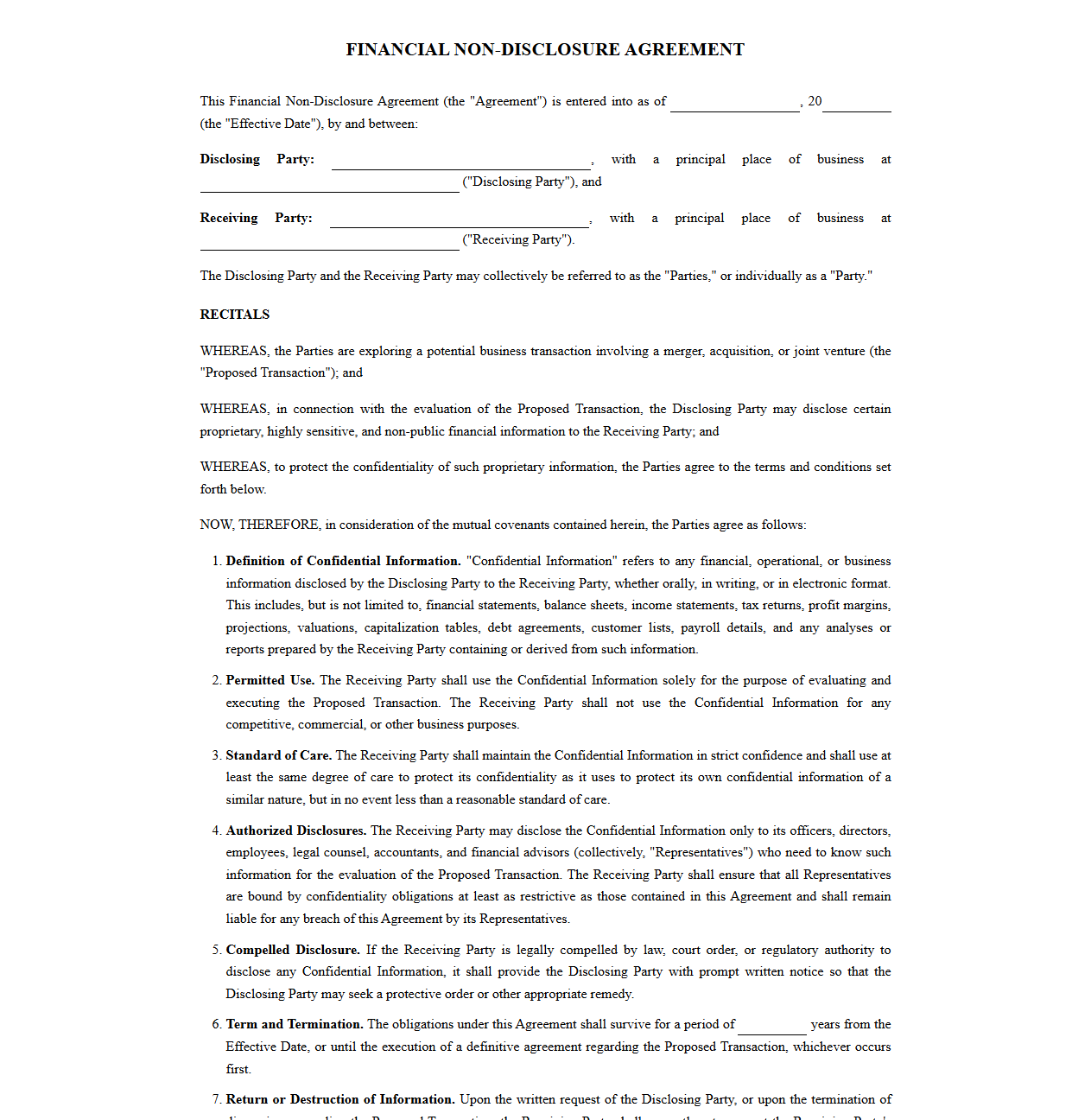 Download: .PDF
Mergers and Acquisitions Proprietary Financial Data NDA
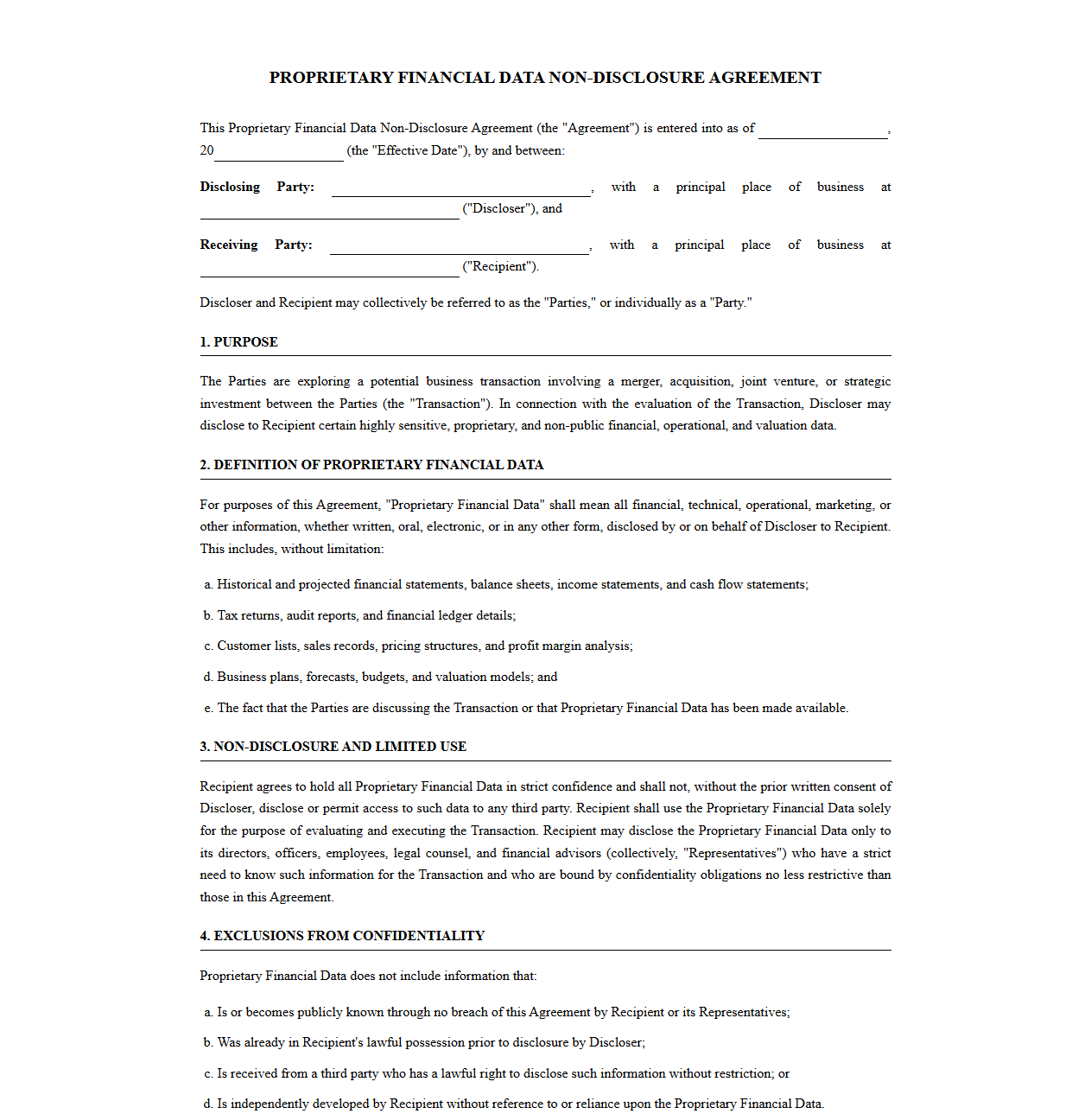 Download: .PDF
Financial Information Confidentiality Agreement for M&A Transactions
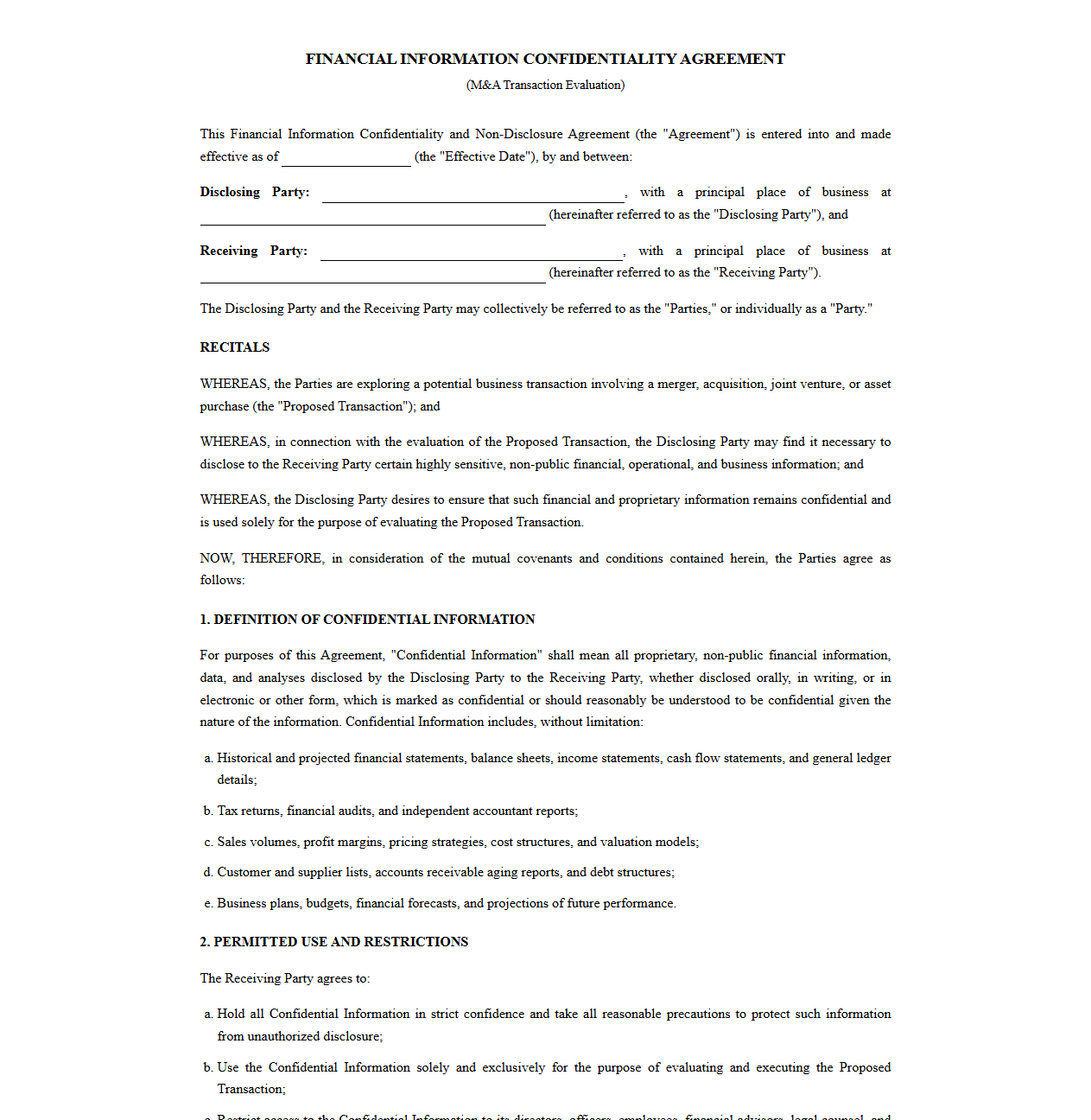 Download: .PDF
M&A Transaction Financial Non-Disclosure Agreement Form
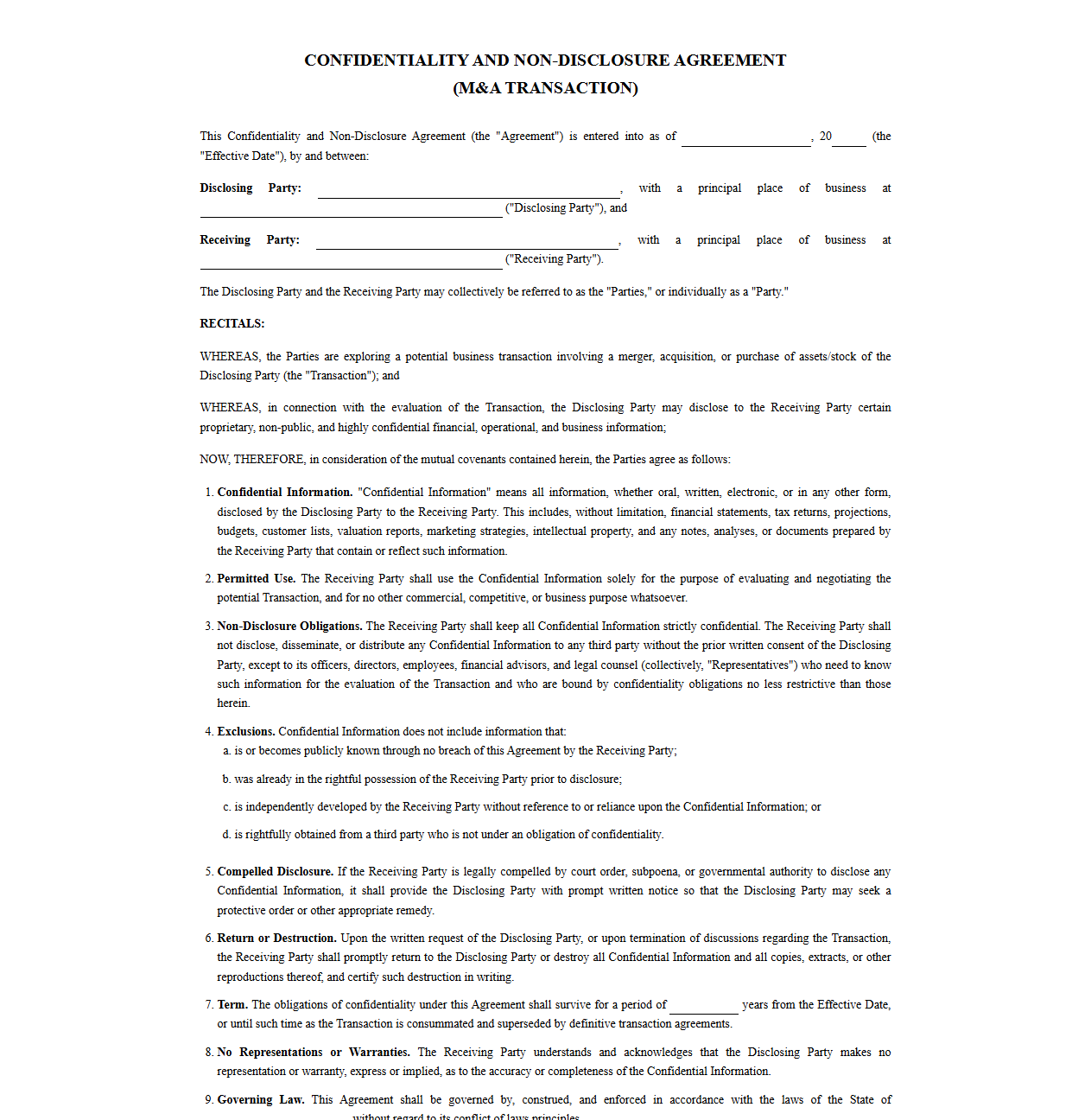 Download: .PDF
Confidentiality Agreement for Merger and Acquisition Financials
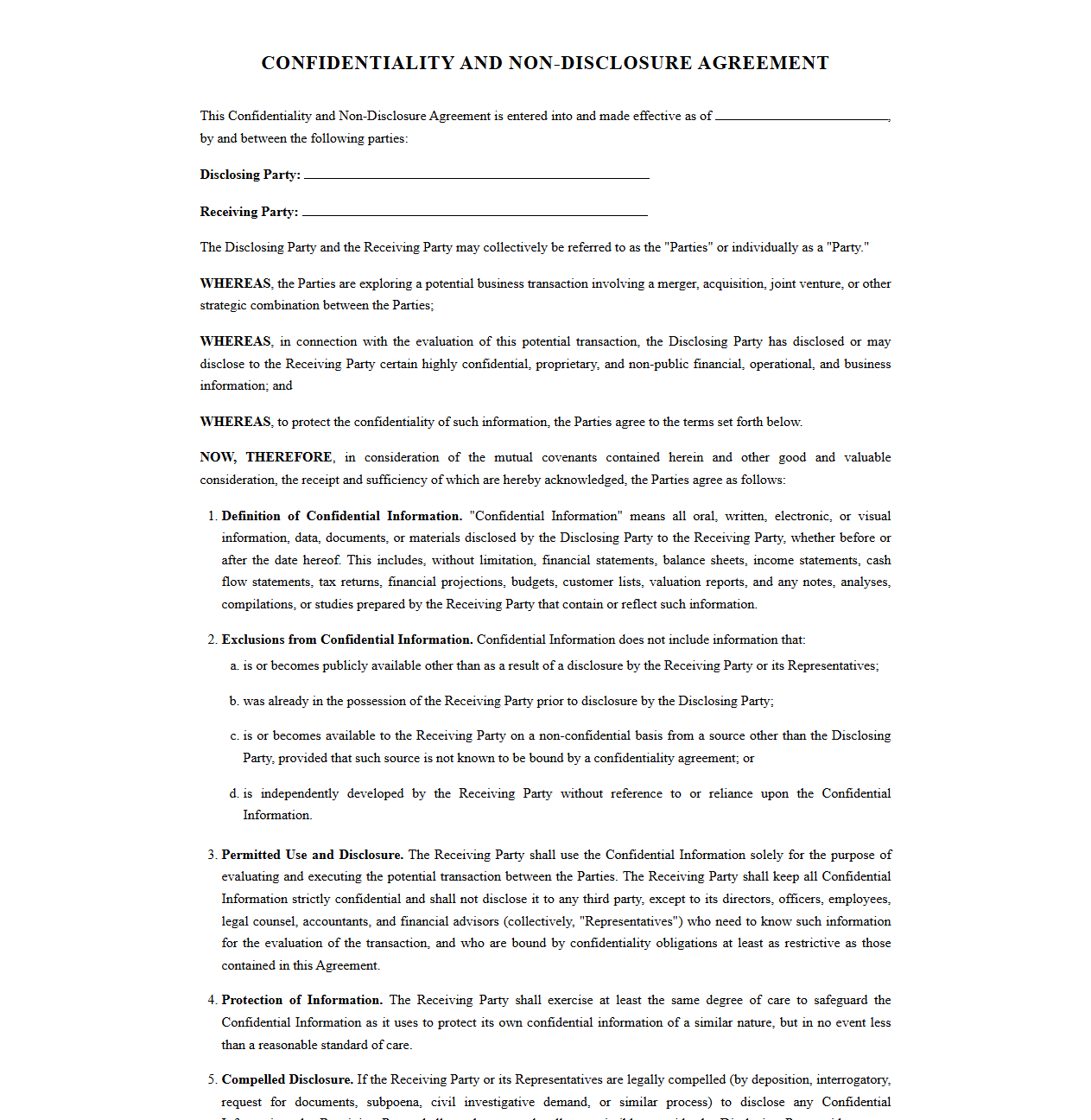 Download: .PDF
M&A Financial Due Diligence Non-Disclosure Agreement
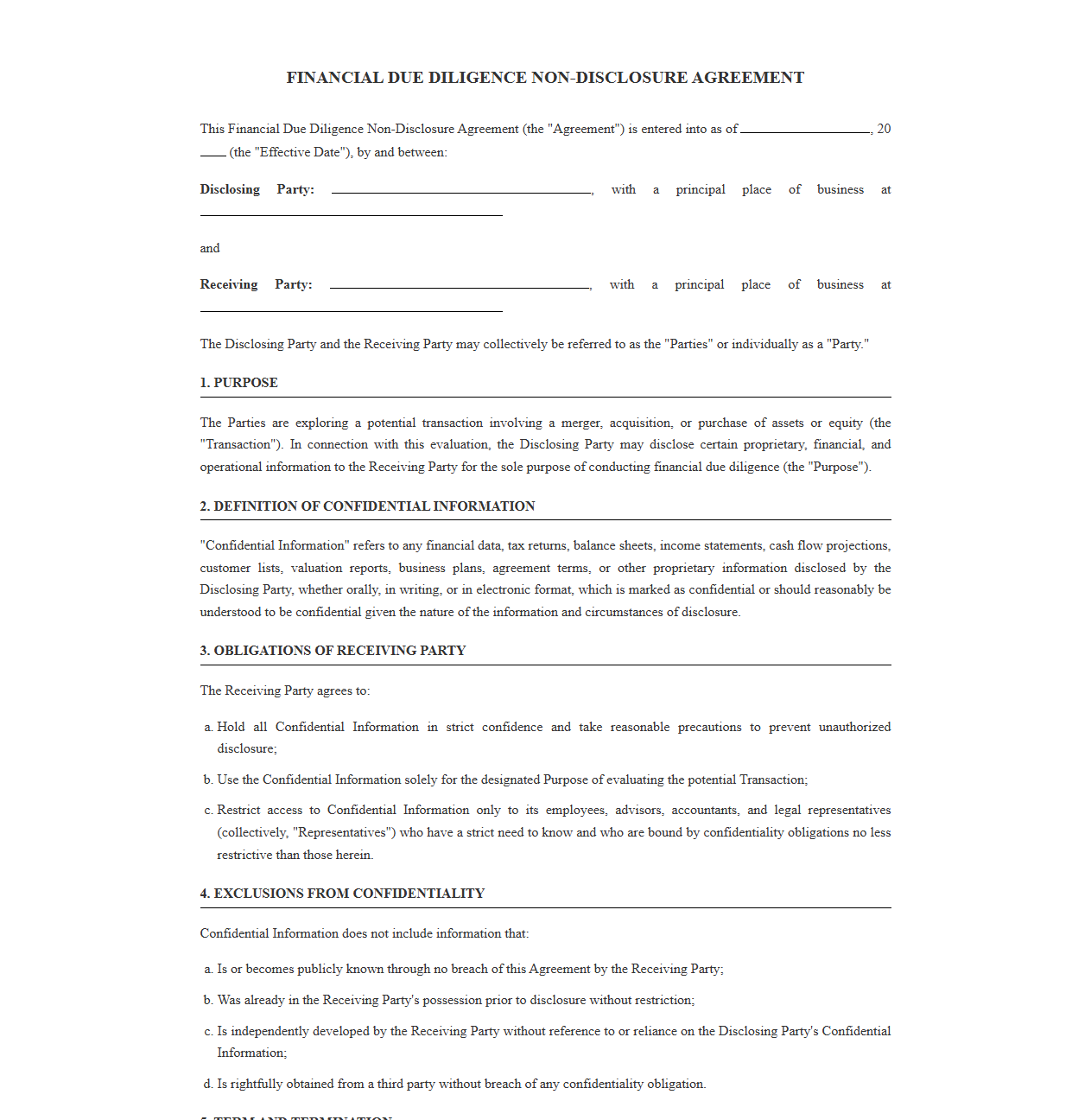 Download: .PDF
Financial NDA Template for Corporate Mergers and Acquisitions
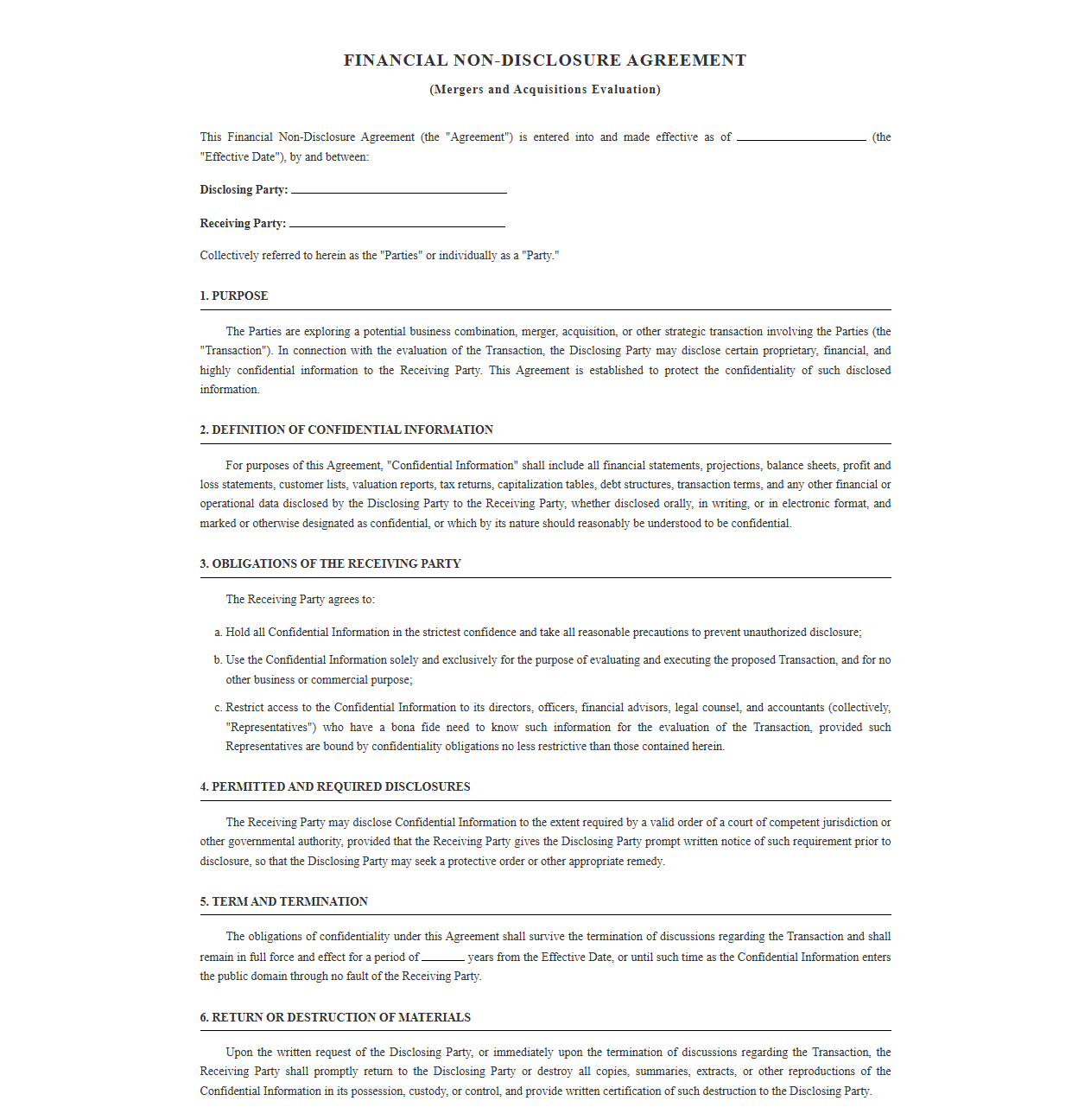 Download: .PDF
Mutual Financial Confidentiality Agreement for M&A Deals
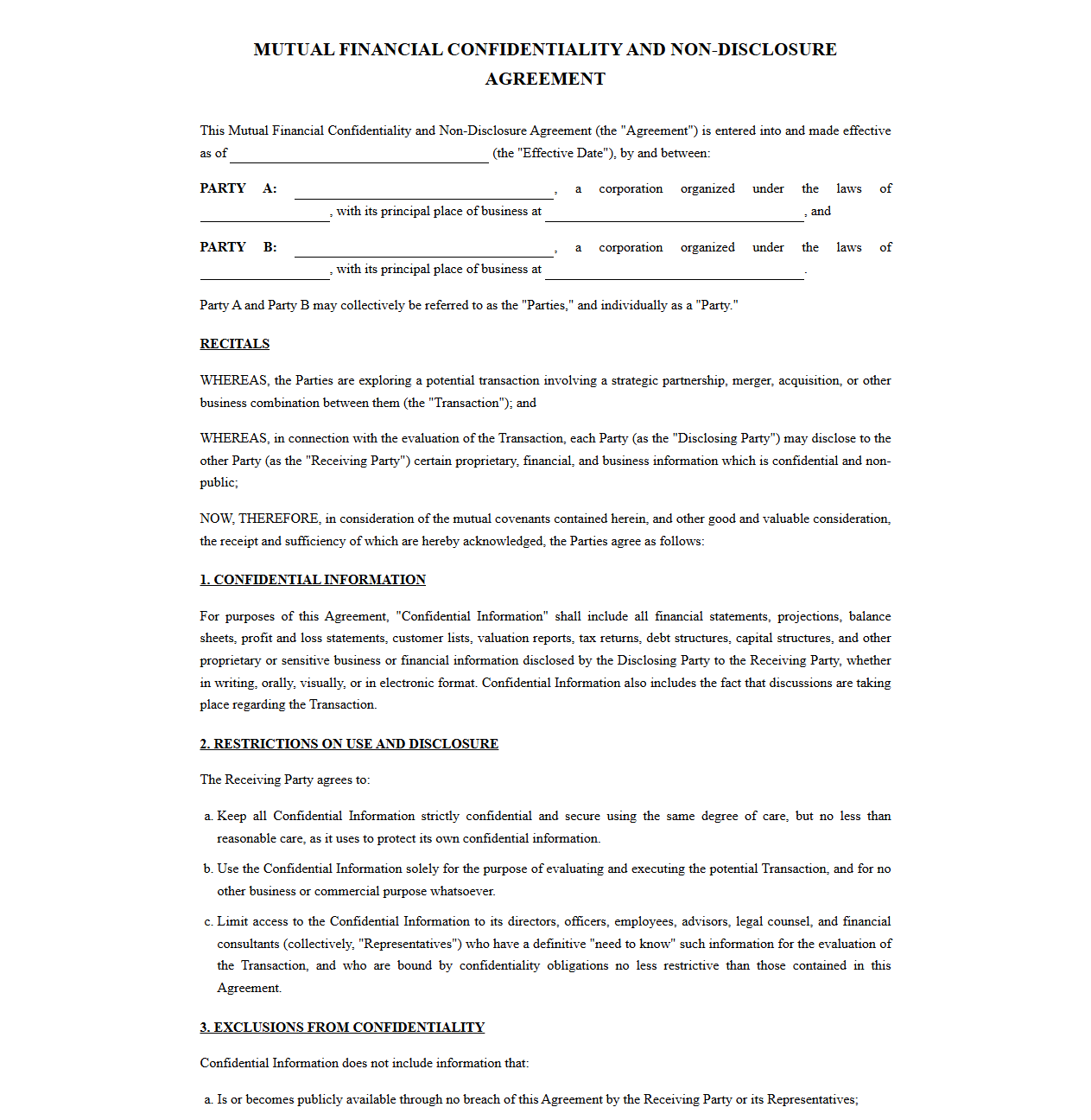 Download: .PDF
Acquisition Financial Data Non-Disclosure Agreement Template
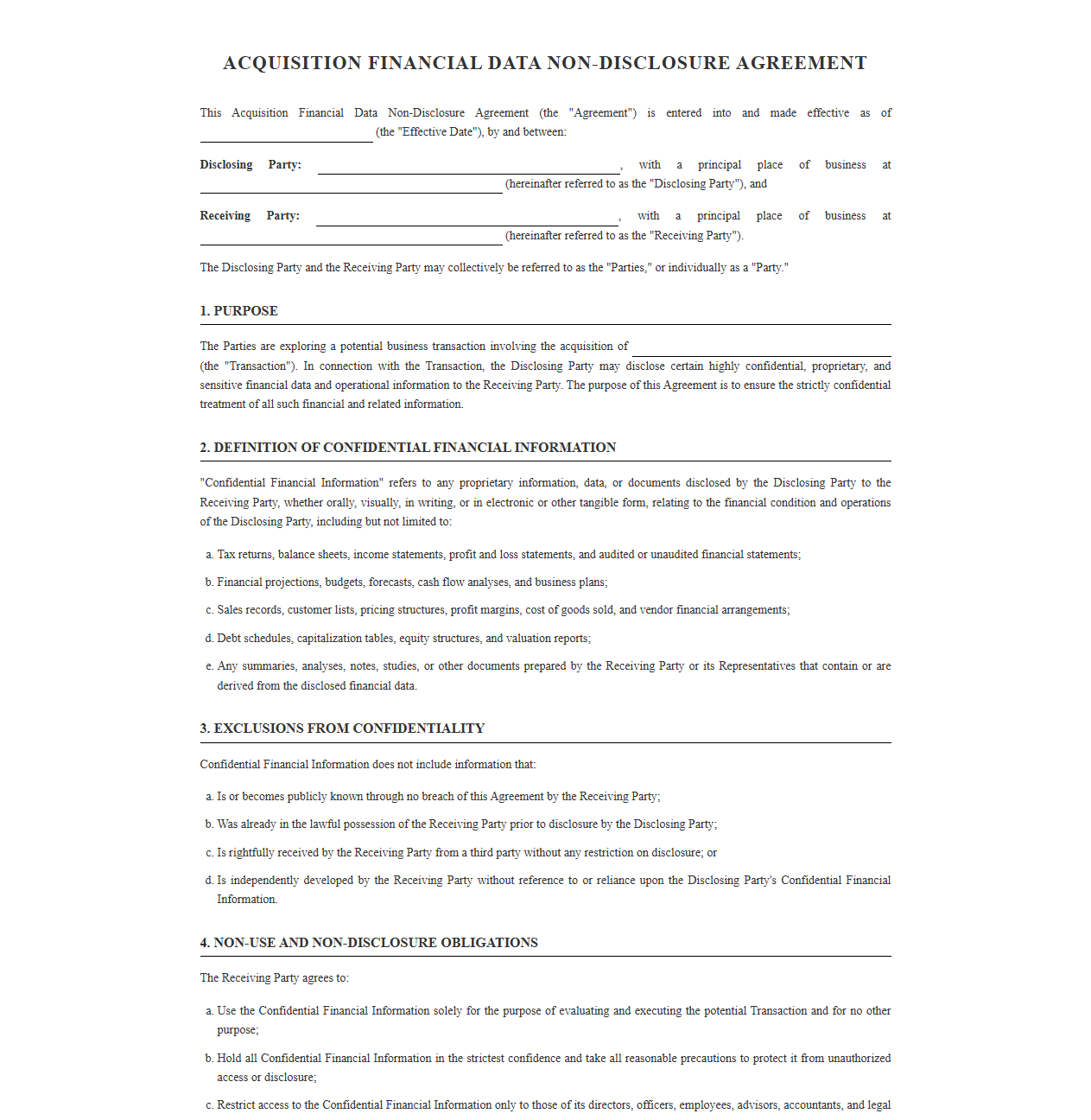 Download: .PDF
The Role of NDAs in Safeguarding M&A Transaction Data
During mergers and acquisitions, the exchange of sensitive corporate intelligence is inevitable. Because revealing pre-deal financials, strategic plans, or intellectual property prematurely can destroy a company's market value, safeguarding proprietary financial data is paramount. A security breach during negotiations can derail months of progress and invite predatory market behavior.
To mitigate these risks, transaction parties rely on standardized Non-Disclosure Agreements (NDAs). These legal instruments establish a secure framework for due diligence, ensuring that both parties understand their boundaries. By streamlining the initial legal hurdles, standardized templates prevent accidental leaks and lay a reliable foundation for M&A success.
Defining Proprietary Information in Financial Templates
A comprehensive M&A NDA must explicitly define what constitutes "confidential information" to avoid costly ambiguities. In the context of financial transactions, the scope must extend beyond basic accounting ledgers to cover all underlying valuation metrics and operational secrets. Financial templates should cleanly specify the following data points:
- Federal, state, and international tax returns and historical filings.
- EBITDA calculations, margin analyses, and internal balance sheets.
- Customer and vendor lists, including pricing structures and purchasing volumes.
- Proprietary software, valuation models, and forward-looking financial projections.
Permitted Use and Non-Disclosure Obligations
Defining "permitted use" restricts how a potential buyer can utilize the shared data. The receiving party must only use the proprietary information to evaluate the potential transaction, rather than leveraging it for competitive advantage. Additionally, access must be limited strictly to the buyer's essential advisory team-such as designated investment bankers, legal counsel, and forensic accountants.
"The Receiving Party shall use the Confidential Information solely for the purpose of evaluating the Proposed Transaction and shall restrict access to such information to those Representatives who have a need to know for such evaluation purposes."
Establishing the Duration and Term of Confidentiality
The lifespan of an M&A NDA depends heavily on the nature of the industry and the shelf life of the proprietary data. While operational strategies and customer lists may remain sensitive indefinitely, basic financial projections might lose relevance after a few years. Parties must negotiate a reasonable term-often coupled with survival clauses that protect specific core assets even after the general agreement expires.
Consequences of Breach and Remedies
When sensitive transaction data is leaked, the financial damage to the target company can be immediate and irreversible. Standard contract law often fails to provide adequate protection after the fact, making it critical for the NDA to outline immediate, actionable remedies. The agreement must empower the damaged party to seek swift legal intervention without having to prove astronomical financial loss first.
To address breaches effectively, templates must incorporate provisions for injunctive relief, which allows the disclosing party to obtain a court order stopping further disclosure. Furthermore, provisions for liquidated damages and the recovery of reasonable attorney fees help ensure that the breaching party bears the financial burden of their misconduct.
Protocols for Return or Destruction of Financial Data
If negotiations break down and the M&A transaction terminates, the receiving party cannot be allowed to retain the target's sensitive financial history. A structured decommissioning process must be initiated immediately to secure all shared files, whether they exist as physical paper or digital copies on secure servers.
- The disclosing party issues a formal written request for the return or destruction of all confidential materials.
- The receiving party purges all physical documents and permanently deletes digital files from local drives and cloud storage.
- An authorized officer of the receiving party signs and delivers a formal certificate of destruction, confirming compliance under penalty of perjury.
Selecting and Customizing Your M&A NDA Template
Choosing the right template is the first step toward securing your transaction. The document must be tailored to the specific jurisdiction governing the deal, as well as the overall deal size. A multi-million dollar cross-border merger requires much more robust regulatory compliance clauses than a localized asset purchase.
Final Execution Checklist
Before executing your customized M&A NDA, ensure the following elements are verified:
- Confirm all legal entities are identified by their exact, registered corporate names.
- Verify that the definition of confidential information covers digital data rooms and email correspondence.
- Ensure appropriate governing law and venue dispute clauses are clearly stated.

Leave a comment