

Navigating the thin line between independent contractors and employees often leaves businesses vulnerable to severe regulatory audits, costly back taxes, and misclassification penalties. As labor departments nationwide intensify their scrutiny of the modern workforce, relying on informal agreements or outdated paperwork is no longer a viable operational strategy.
Implementing robust, legally vetted agreement templates grants organizations the precise liability protection and operational confidence needed to scale safely. While these frameworks serve as invaluable tools, it is critical to stipulate that templates are foundational guidelines rather than absolute substitutes for localized legal counsel. To serve as concrete proof of independent status, these documents must explicitly detail operational realities, such as "Right to Control" boundaries and "Equipment Ownership" terms.
Below, we outline the essential agreement templates and key structural provisions designed to formalize your contractor relationships and safeguard your business against classification disputes.
Independent Contractor Tax Status Agreement Template
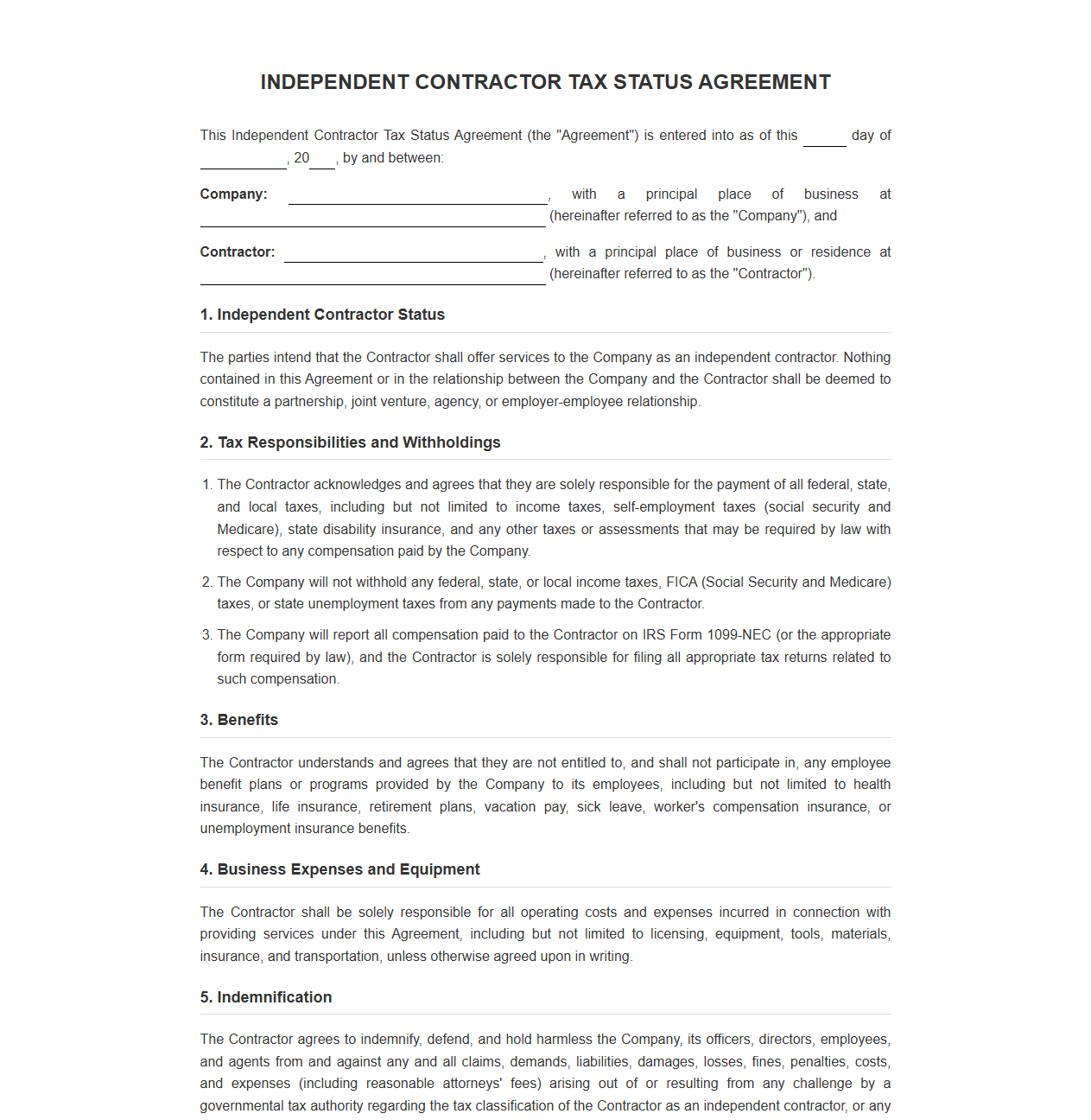 Download: .PDF
Tax Classification Agreement for Freelancers and Contractors
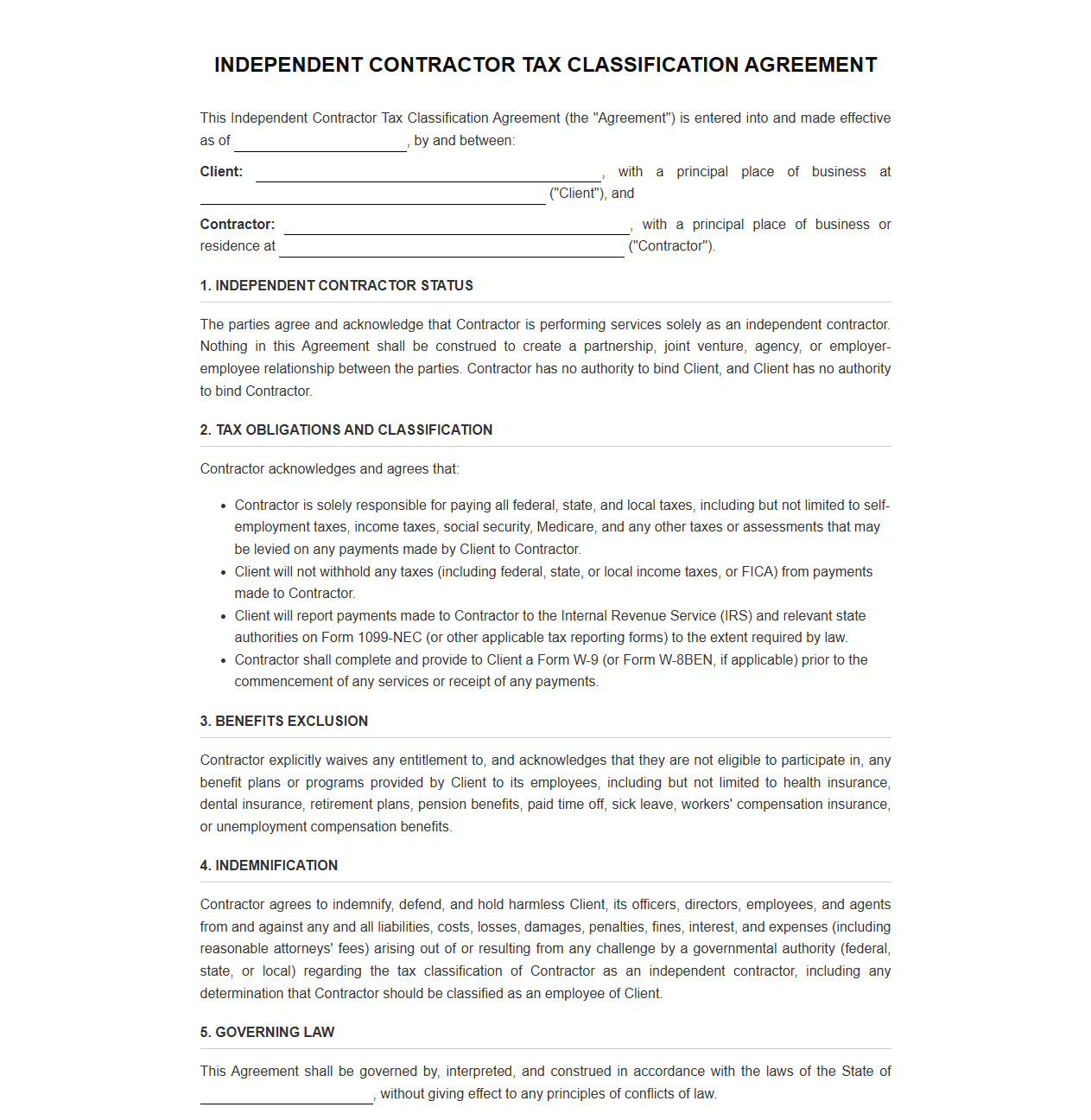 Download: .PDF
Self Employed Tax Status Declaration Agreement
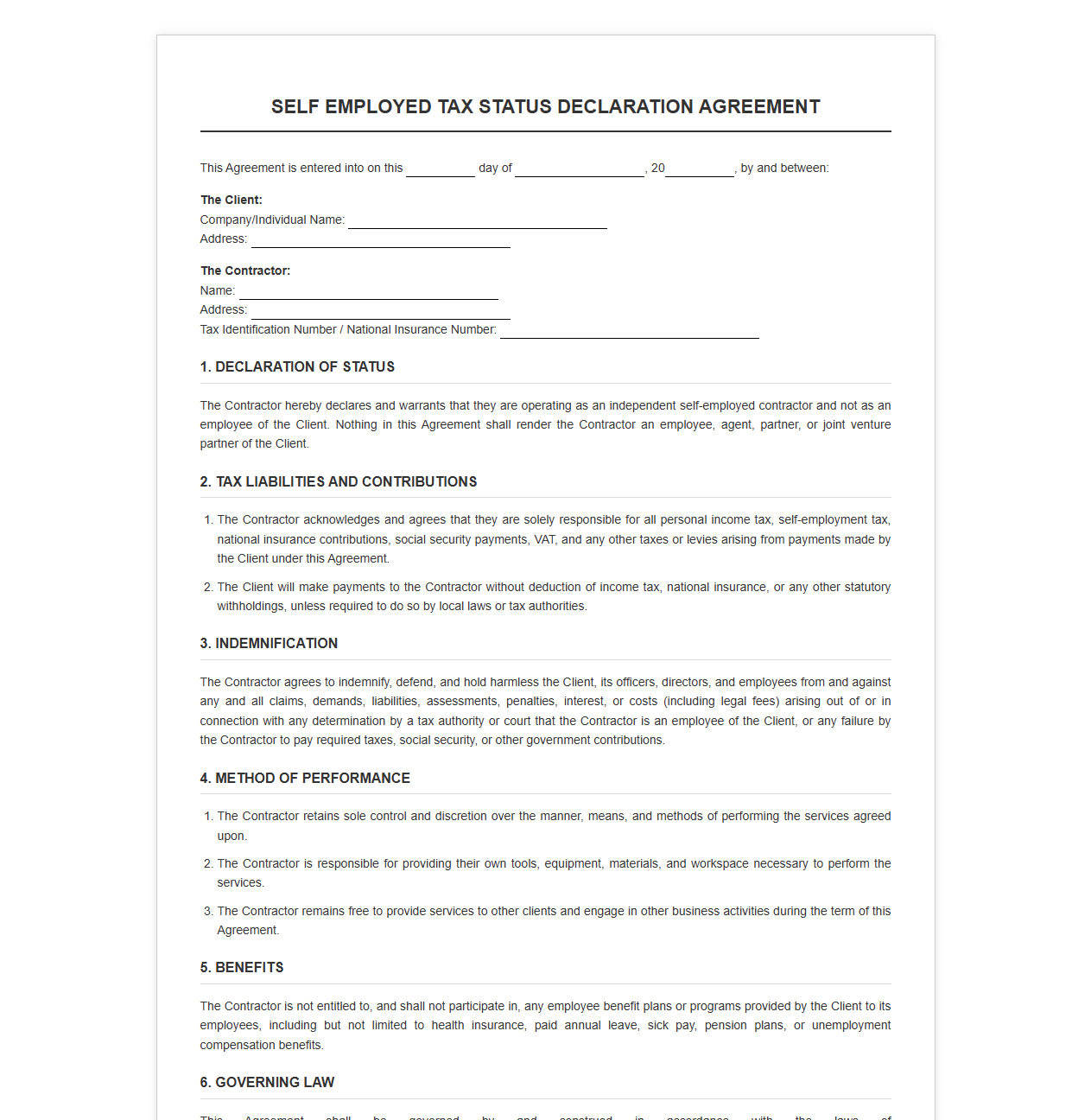 Download: .PDF
Independent Contractor IRS Classification Agreement Form
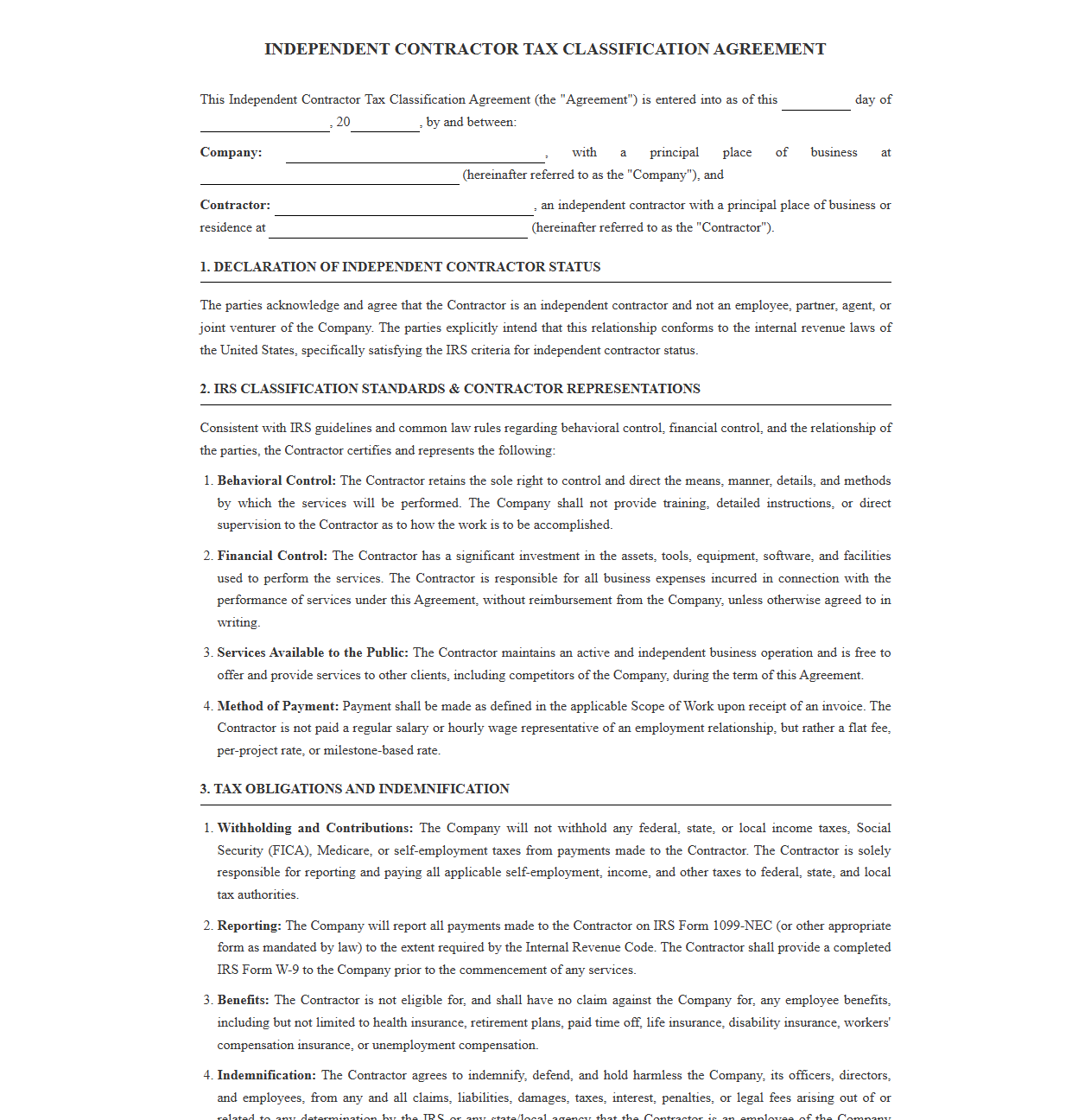 Download: .PDF
Contract Worker Tax Determination Agreement Template
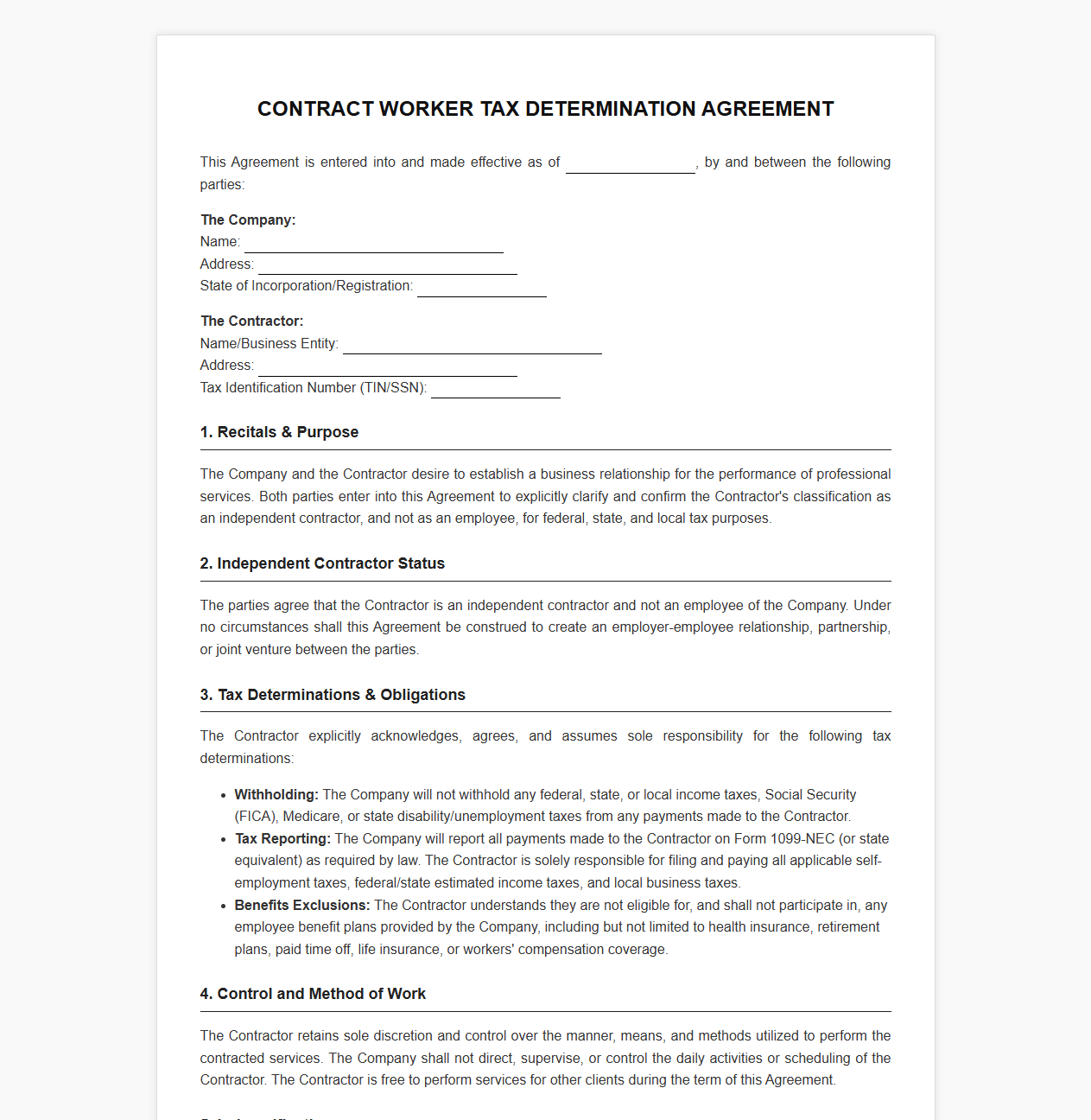 Download: .PDF
1099 Contractor Tax Status Verification Agreement
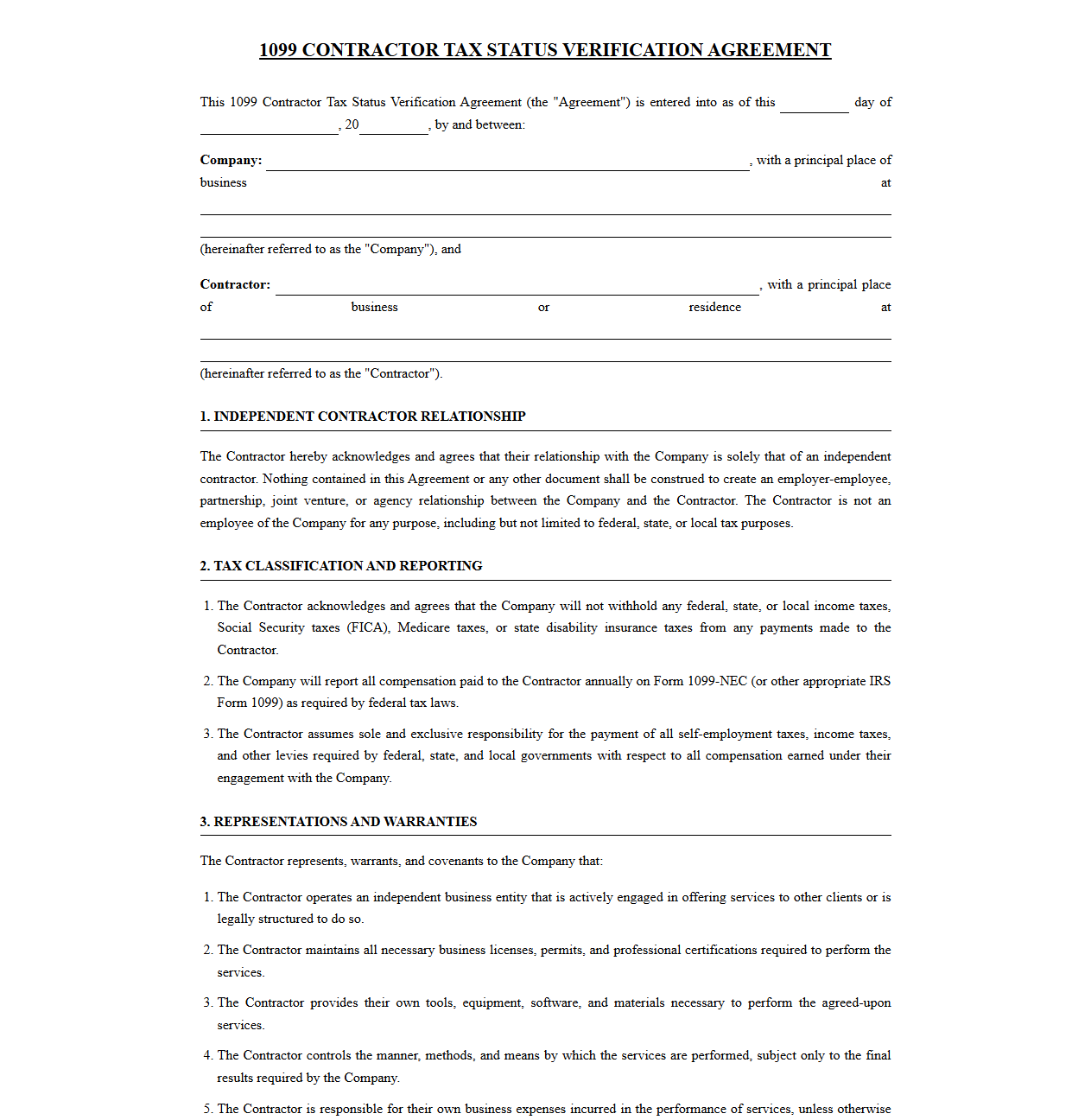 Download: .PDF
Independent Contractor Tax Compliance Agreement Document
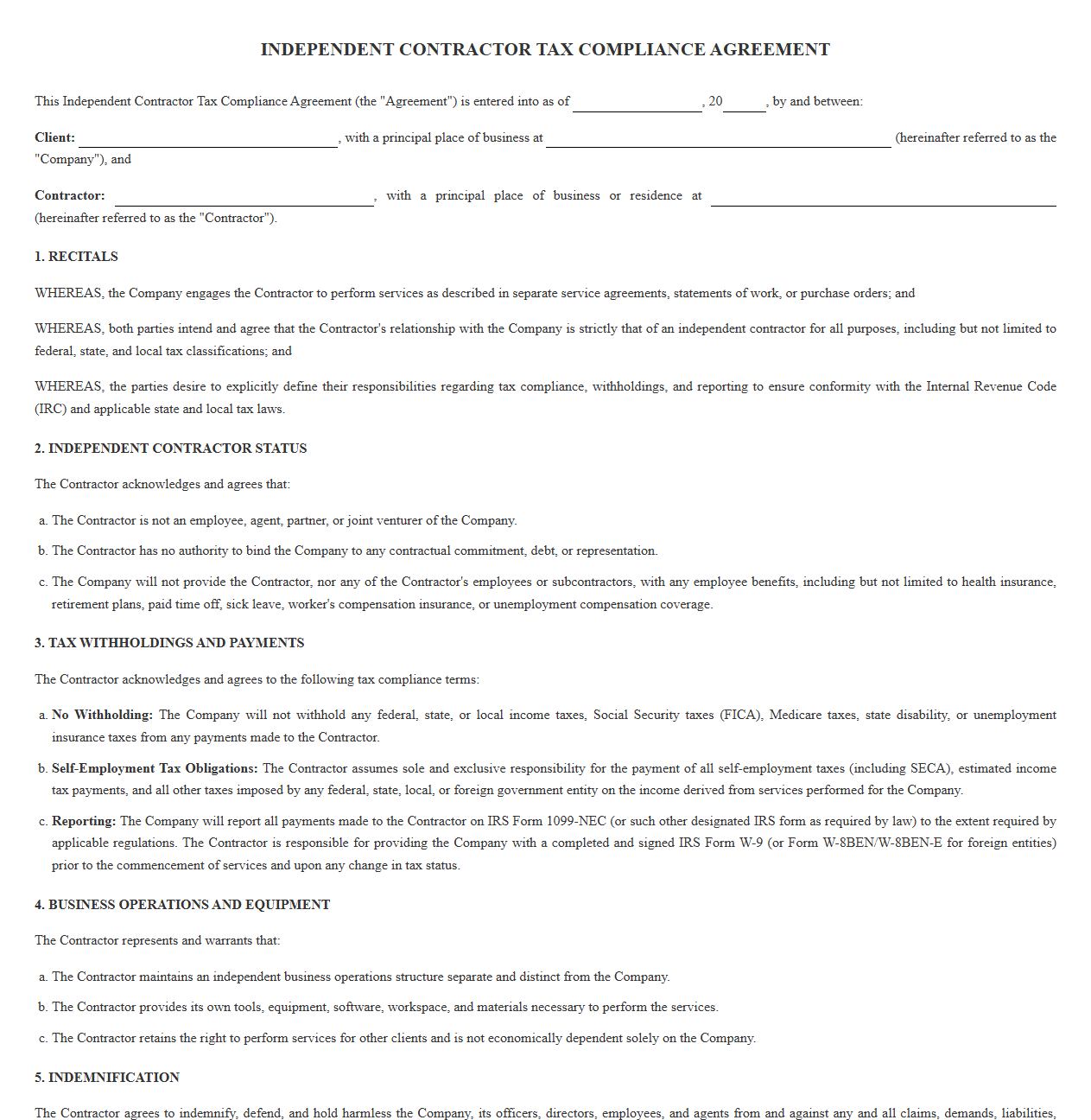 Download: .PDF
Agreement for Determining Independent Contractor Tax Status
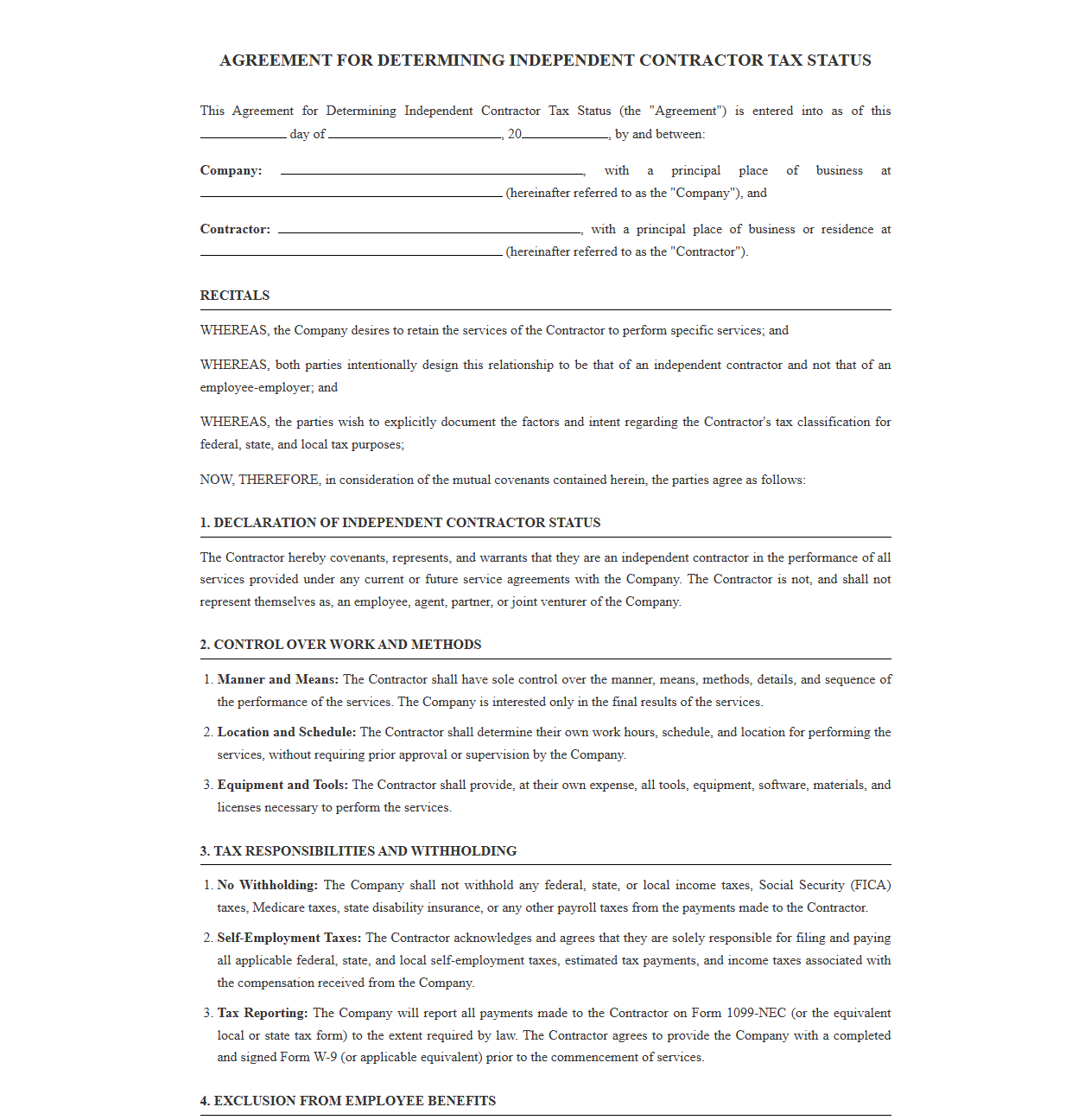 Download: .PDF
Understanding the High Stakes of Worker Misclassification
Tax misclassification occurs when a business improperly labels a worker as an independent contractor instead of an employee. This distinction is critical because it dictates tax withholding, benefits, and labor law protections, carrying heavy legal and financial risks for businesses that fail to define worker status accurately.
The Preventive Shield: Purpose of the Independent Contractor Agreement
A robust, written agreement serves as the primary defense against IRS audits and state labor claims. By clearly establishing the intent of both parties from the outset, it prevents future disputes and demonstrates a mutual understanding of the independent working relationship.
Crucial Section: The Declarative Relationship Clause
Understanding the Relationship Declarations
The agreement must contain an explicit declaration of the worker's status. It specifies that the contractor is not an employee, is solely responsible for their own tax liabilities, and is excluded from company benefits plans.
"The Parties agree that the Contractor is an independent contractor and not an employee of the Client. The Contractor is solely responsible for all federal, state, and local taxes and is not eligible for any company-sponsored benefits."
Establishing Autonomy through the Right of Control Clause
Defining the Scope of Contractor Autonomy
To satisfy IRS guidelines, the agreement must outline the contractor's freedom. The worker must retain control over how, when, and where the services are performed, including:
- The freedom to set their own hours and schedule.
- The right to choose the methods, tools, and equipment used to complete the project.
- The autonomy to perform work from any location of their choosing.
Financial Independence: Structuring Payment and Expense Terms
Key Financial Provisions for Contractors
Properly structured payment terms reinforce the independent nature of the business relationship. Instead of receiving a regular salary, independent contractors should be paid on a flat-fee or project basis, reflecting true business-to-business transactions where the contractor bears the risk of profit or loss and covers their own operational expenses.
Customizable Agreement Templates for Immediate Deployment
To protect your business immediately, utilize customizable templates tailored to your specific industry requirements. Before signing, key variables must be updated to reflect the exact nature of the engagement.
Beyond the Contract: Best Practices for Ongoing Compliance
Maintaining compliance requires that daily operations align perfectly with the written contract. Businesses must avoid treating contractors like employees in practice. Use these operational practices to safeguard your status:
- Do not provide company email addresses, business cards, or internal training.
- Avoid setting rigid daily work schedules or requiring mandatory attendance at internal staff meetings.
- Ensure the contractor invoices the business regularly and manages their own administrative overhead.

Leave a comment