

Safeguarding highly sensitive financial data-such as proprietary trading algorithms, investment portfolios, and private client records-presents a constant, high-stakes vulnerability for modern financial firms. In an era dominated by collaborative fintech integrations and mandatory third-party vendor audits, sharing this proprietary information has become an operational necessity rather than a choice, exposing organizations to unprecedented data leak risks.
Utilizing robust, pre-drafted non-disclosure agreements (NDAs) grants firms immediate legal recourse and operational peace of mind. However, while these templates streamline protection, they must be treated as baseline frameworks rather than generic solutions; effective enforcement requires tailoring to your specific regulatory jurisdiction. For instance, incorporating precise clauses that define "Evaluation Material" or distinguish between unilateral and mutual covenants is critical to ensuring concrete proof of confidentiality.
Below, we review essential privacy templates, break down critical legal clauses, and outline how to customize these instruments to safeguard your firm's most valuable proprietary assets.
Proprietary Financial Data Non-Disclosure Agreement Template
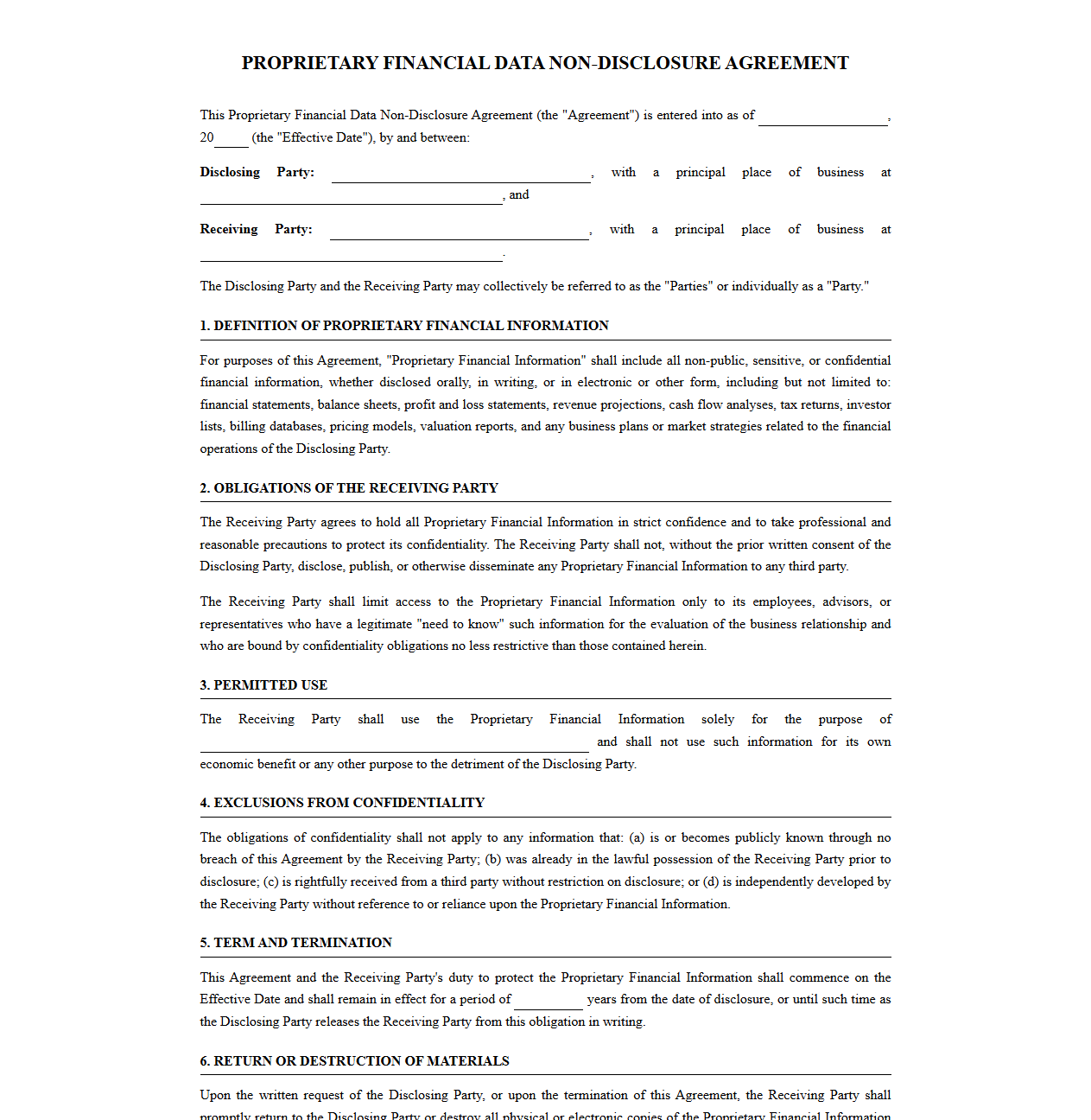 Download: .PDF
Financial Information Confidentiality Agreement Template
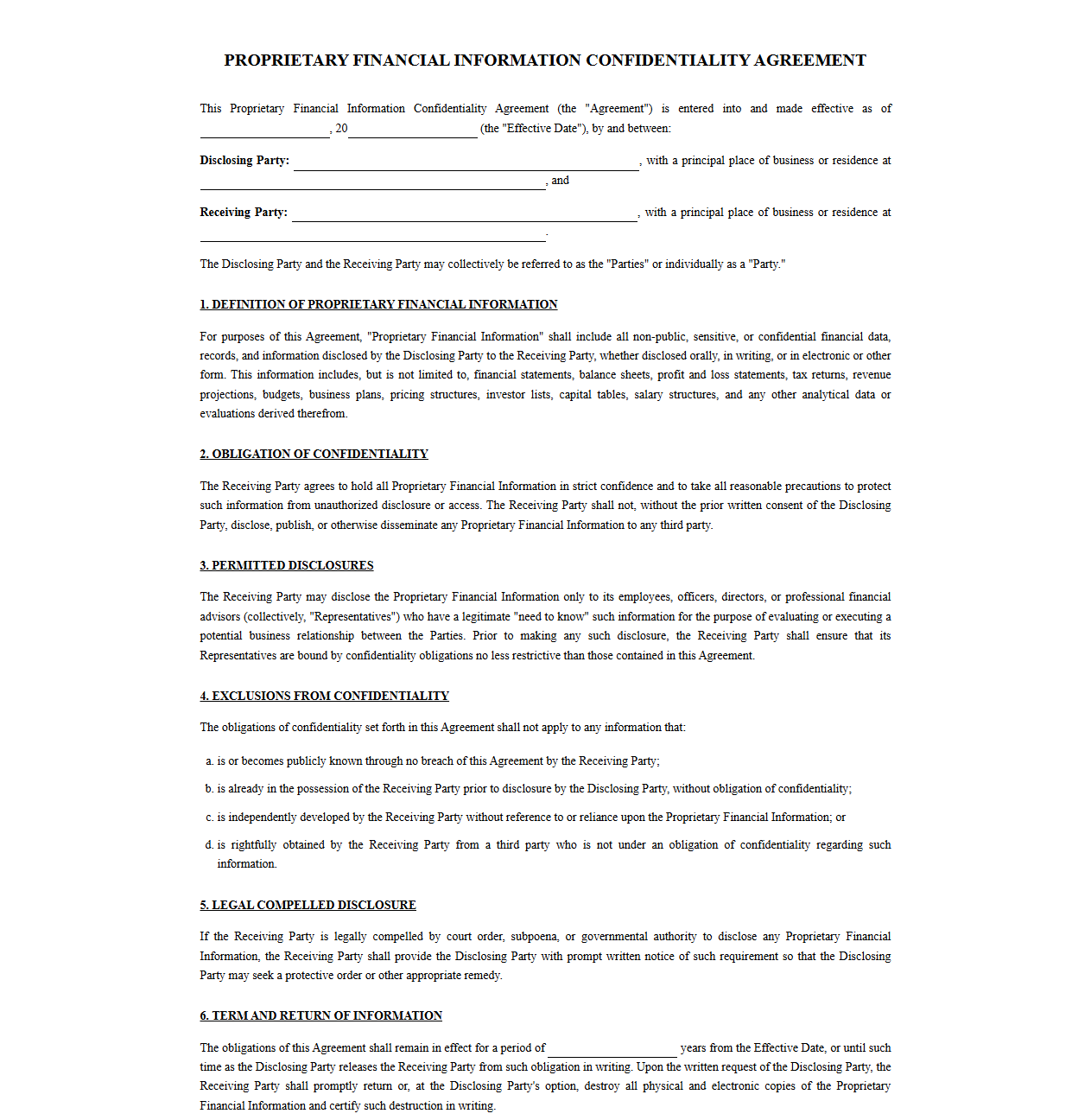 Download: .PDF
Private Financial Records Protection Agreement Template
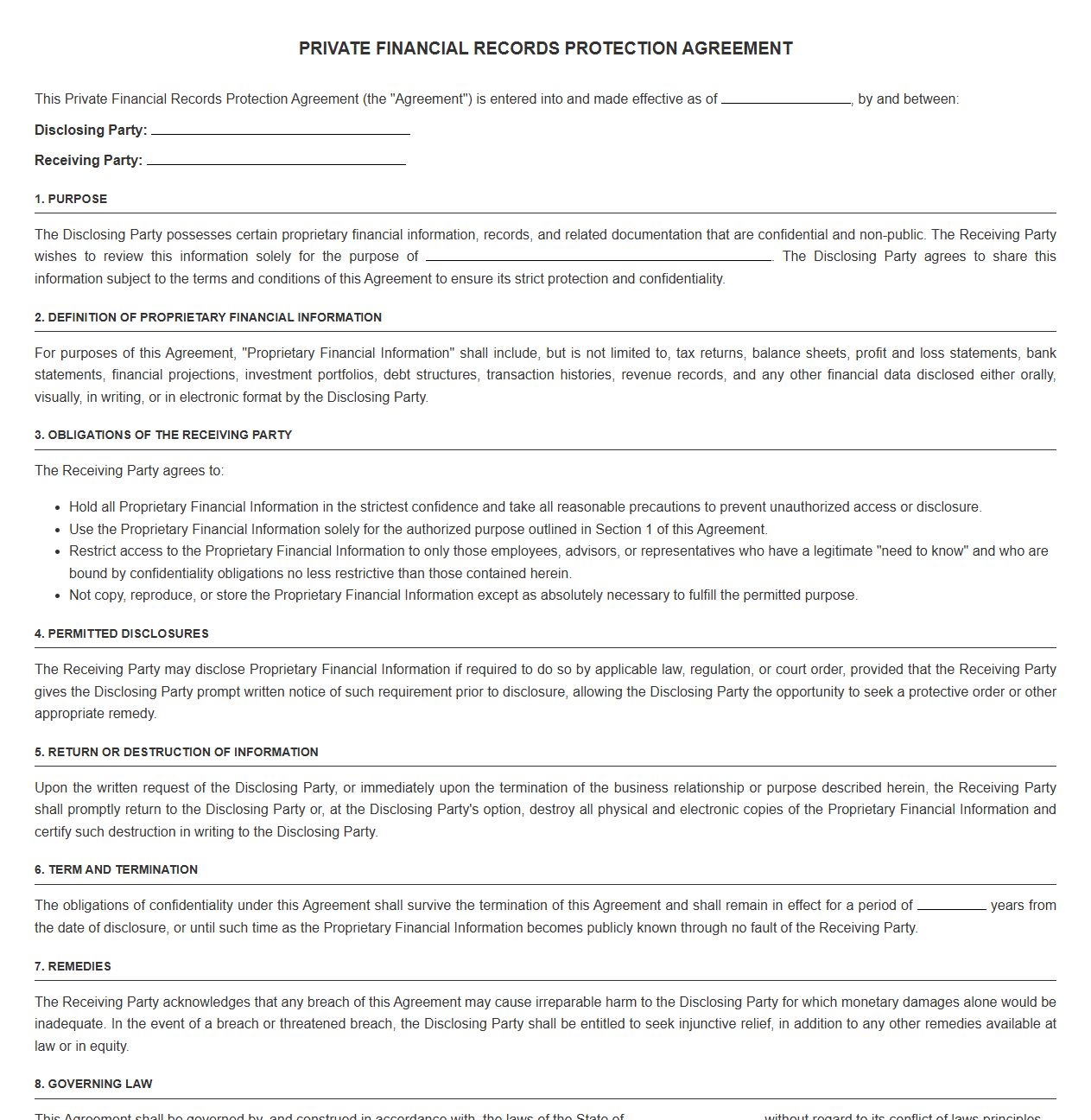 Download: .PDF
Proprietary Financial Information Privacy Agreement
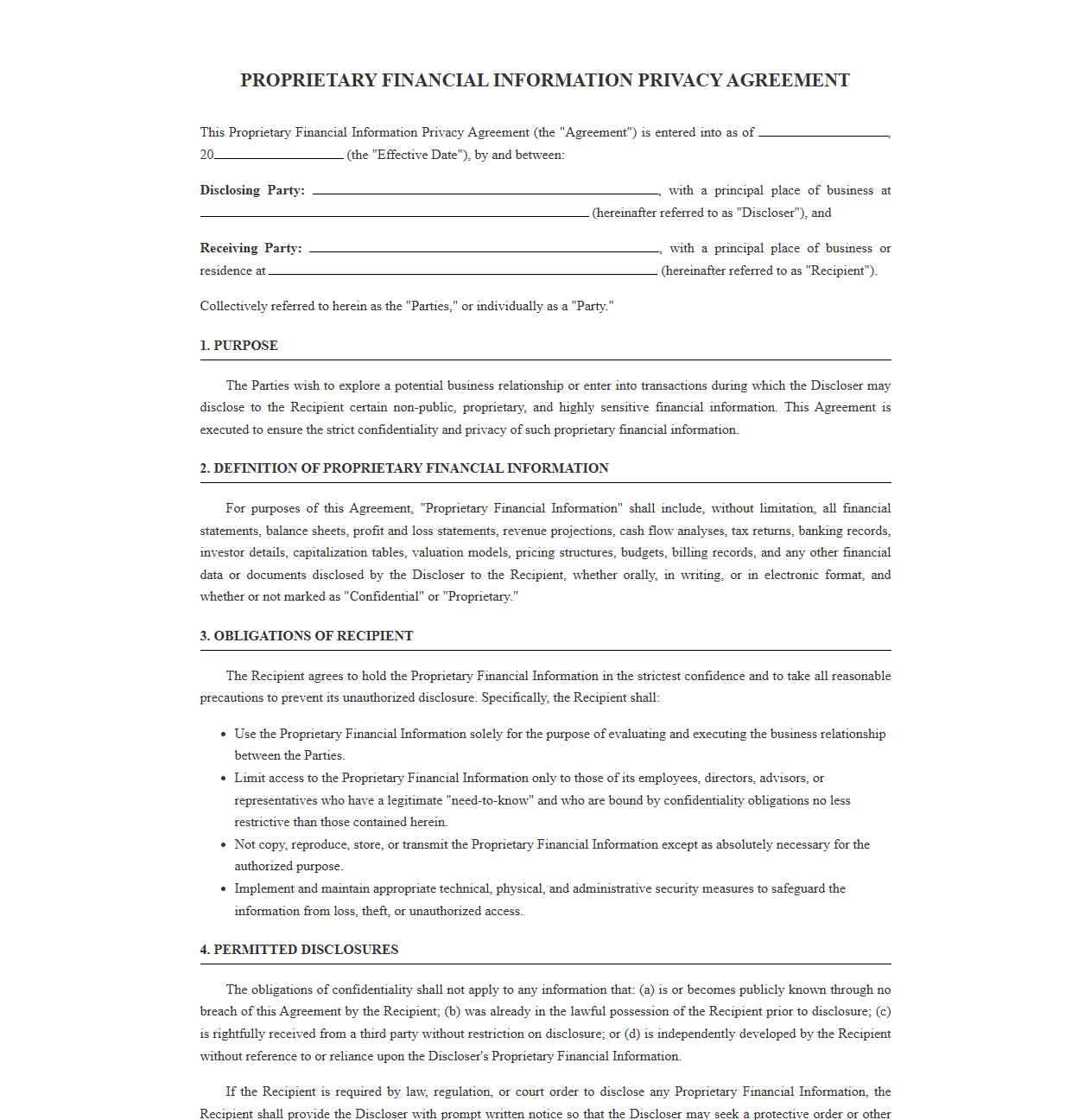 Download: .PDF
Confidential Financial Data Sharing Agreement Template
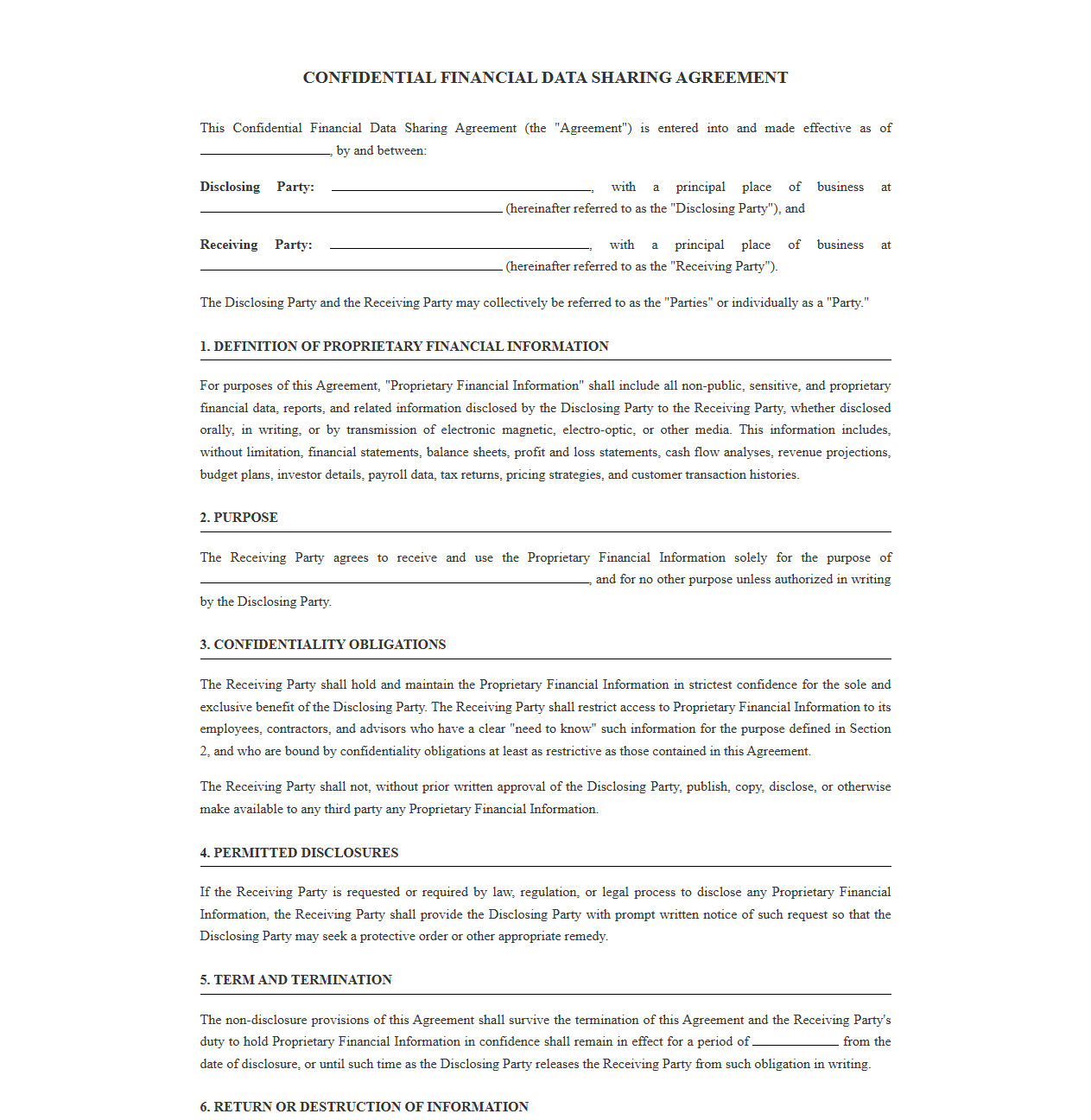 Download: .PDF
Financial Privacy and Non-Disclosure Agreement Template
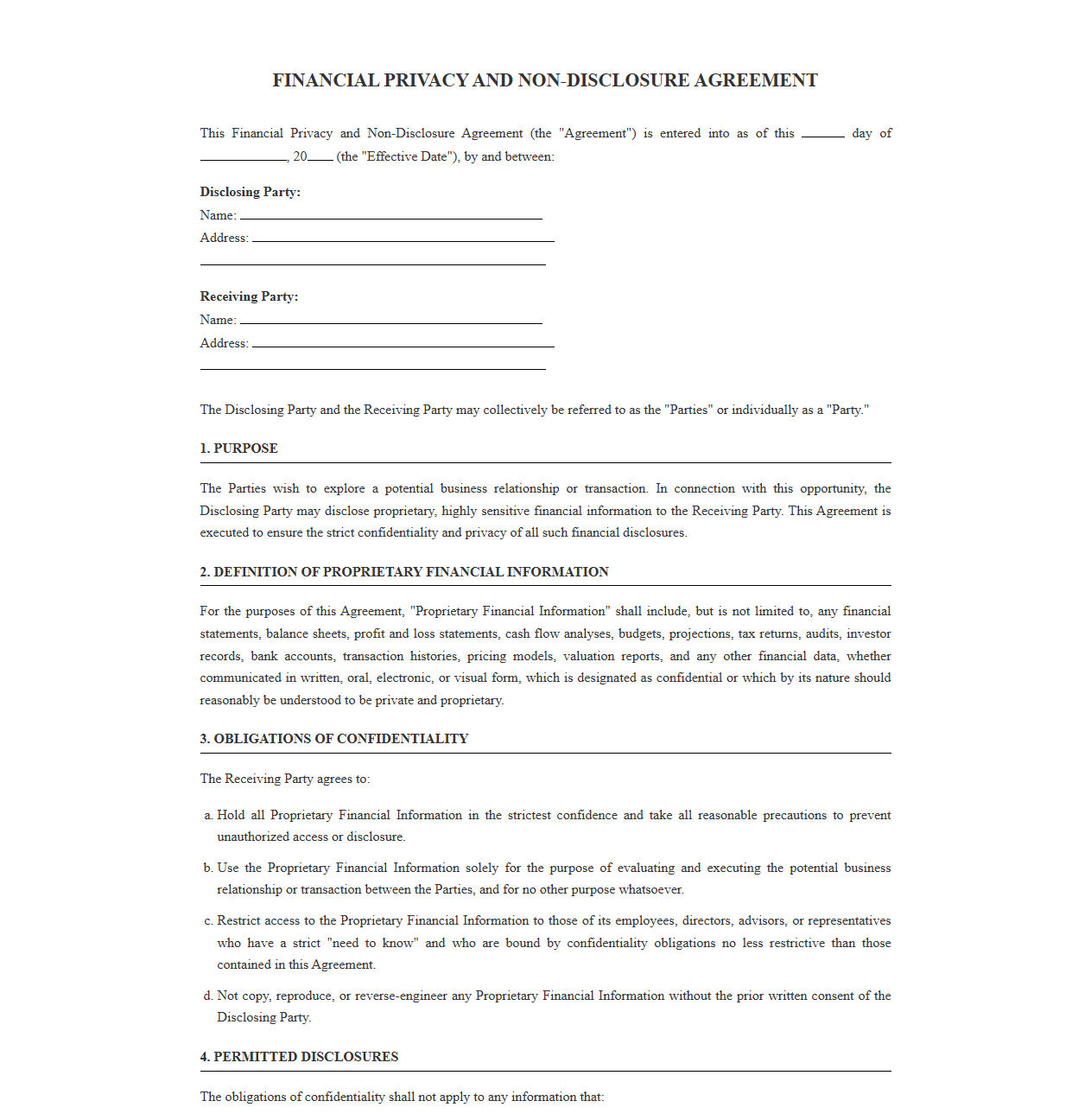 Download: .PDF
Proprietary Financial Intelligence Confidentiality Agreement
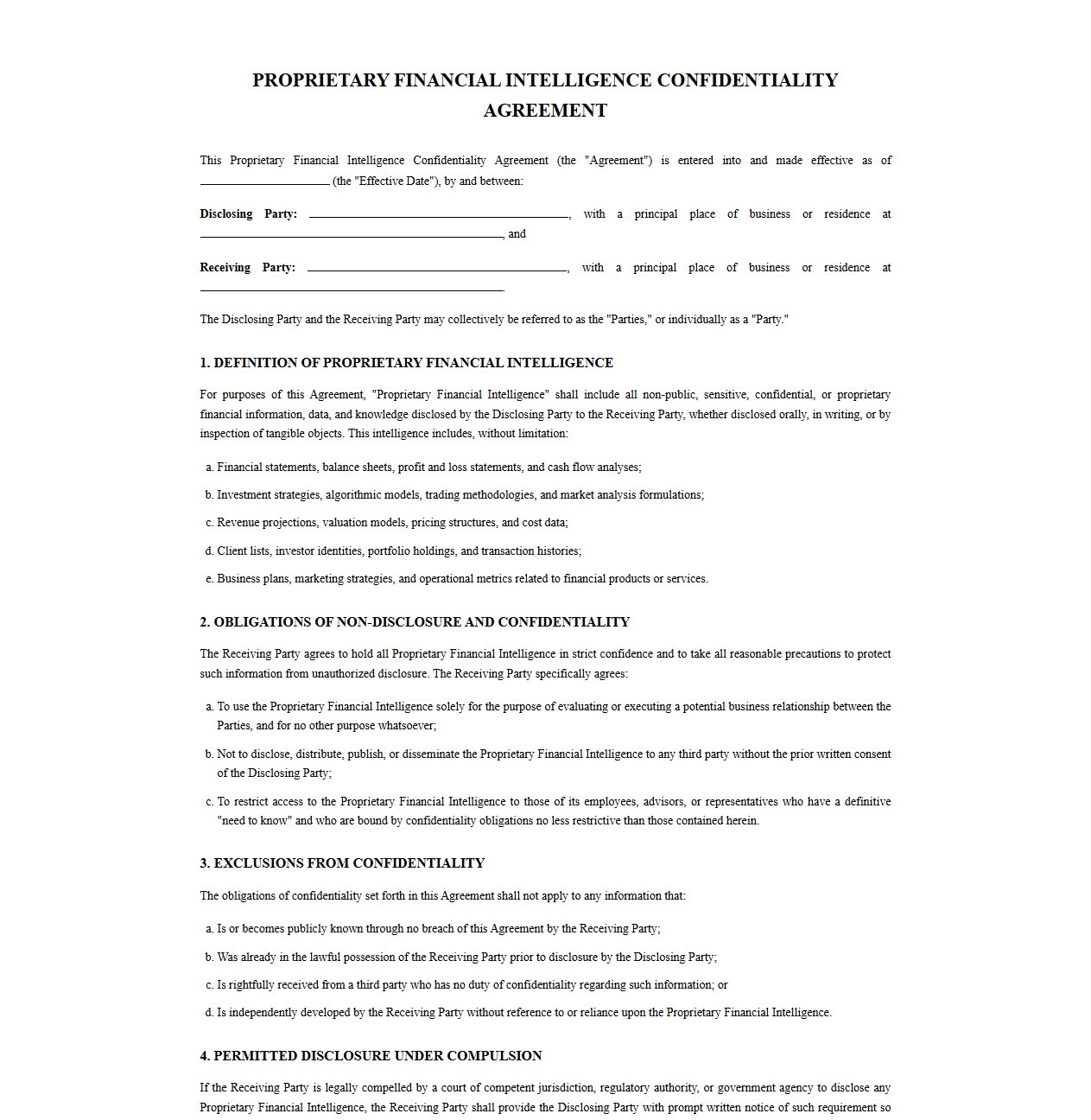 Download: .PDF
Financial Data Security and Privacy Agreement Template
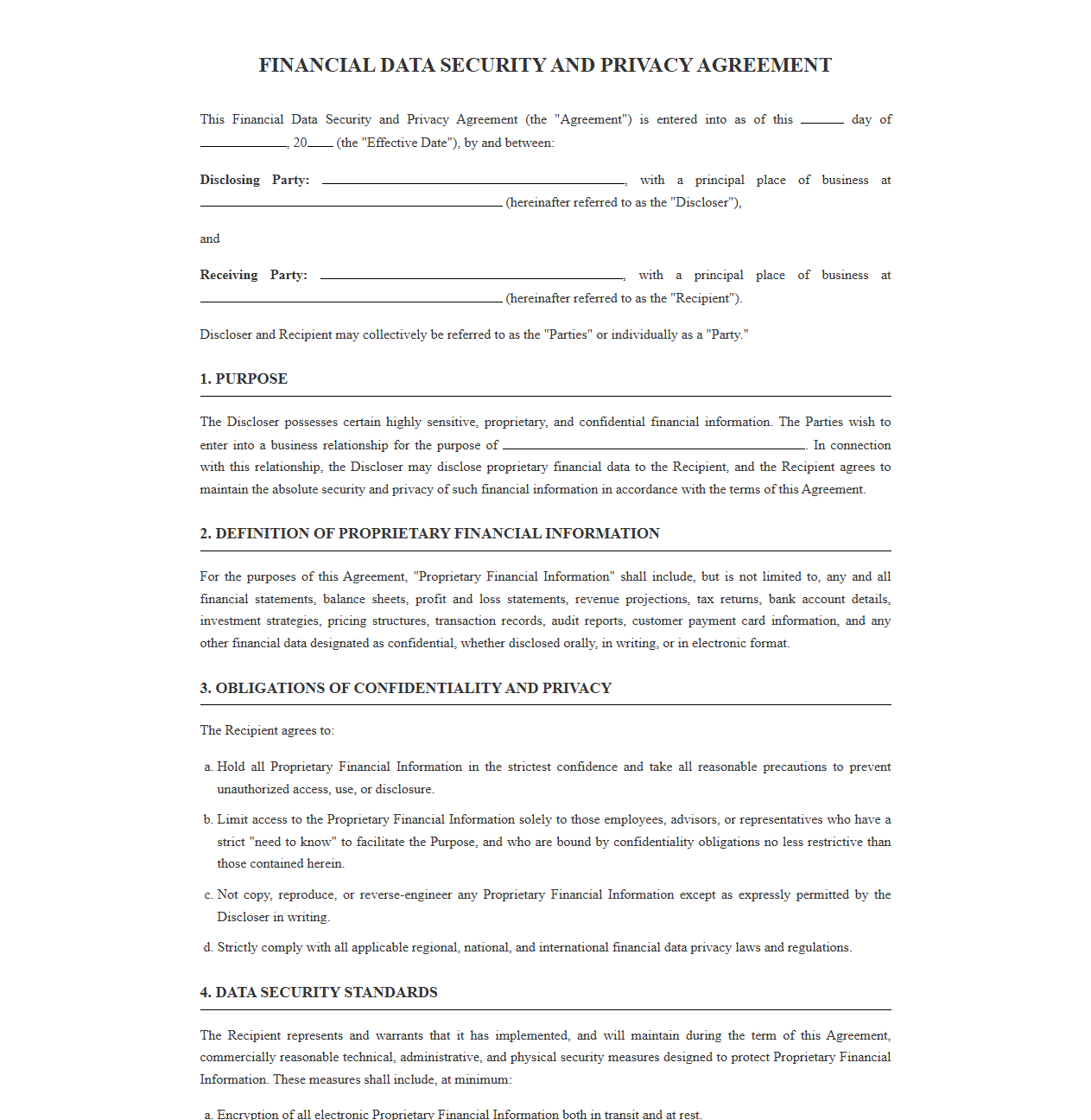 Download: .PDF
The Critical Role of NDAs in Financial Data Security
During high-stakes business transactions, sensitive financial metrics, valuation models, and strategic plans are continuously shared between parties. Without proper safeguards, this proprietary information is highly vulnerable to unauthorized disclosure, competitor exploitation, or market manipulation. A structured Non-Disclosure Agreement (NDA) serves as the first line of defense, establishing a legally binding framework that ensures both parties respect confidentiality before any sensitive data changes hands.
Defining Proprietary Financial Data in Legal Terms
In legal and financial contexts, proprietary financial data encompasses any non-public information that gives a business a competitive advantage or reflects its internal financial health. To ensure comprehensive protection, an NDA must explicitly categorize these assets.
- Detailed audit reports and historical balance sheets.
- Forward-looking revenue projections and growth models.
- Capitalization tables detailing shareholder equity and ownership distribution.
- Sensitive valuations and strategic goals regarding ongoing merger and acquisition discussions.
Core Elements of an Effective Financial NDA Template
Definition of Confidential Information
This clause explicitly outlines what data is protected, leaving no room for ambiguity regarding financial statements, tax records, and proprietary valuation spreadsheets.
Non-Use and Non-Disclosure Covenants
These covenants strictly prohibit the receiving party from using the disclosed financial data for any purpose other than the mutually agreed-upon transaction evaluation.
Duration of the Agreement
This provision defines the specific timeframe during which the confidentiality obligations remain active, often extending several years beyond the termination of the active business discussions.
Permitted Disclosures and Standard Exceptions
A balanced financial NDA must recognize that absolute secrecy is sometimes impossible. Therefore, certain standard exceptions are carved out to allow disclosures that are required by law, ordered by subpoena, or mandated by financial regulatory bodies. Additionally, parties are typically permitted to share confidential information with authorized legal and financial advisors, provided those representatives are also bound by equivalent confidentiality obligations.
Remedies and Consequences for Breaches of Trust
When a breach of confidentiality occurs, the disclosing party must have clear legal avenues to mitigate damage and seek restitution. A robust NDA outlines specific remedies designed to deter unauthorized leaks and hold the breaching party accountable.
- Injunctions: Immediate court orders to stop ongoing or threatened unauthorized disclosures of financial secrets.
- Monetary Damages: Compensation for financial losses directly resulting from the unauthorized data exposure.
- Recovery of Attorney Fees: Provisions requiring the breaching party to cover all legal costs incurred during enforcement.
Implementation Strategies for Financial Firms
To maximize protection, financial institutions must systematically integrate standardized NDA templates into their daily business operations. Legal departments should establish strict protocols to ensure these agreements are executed seamlessly before any initial pitch or preliminary due diligence begins.
"Maintaining strict version control and conducting annual legal reviews of NDA templates is essential to ensure compliance with evolving state and federal financial privacy laws."
Fortifying Legal Agreements with Cybersecurity
A signed NDA provides an essential legal safety net and a clear path for recourse, but it cannot physically prevent a data breach from occurring. To achieve comprehensive security, organizations must reinforce their legal agreements with robust technical defenses.
Read More

Leave a comment