

Navigating the complexities of IRS audits under the Centralized Partnership Audit Regime is a constant source of anxiety for partners who fear losing control over critical tax decisions. Before rushing to assign representation, partnerships must first understand the immense, unilateral authority the IRS bestows upon the designated "Partnership Representative."
Establishing a formal Audit Representative Appointment Agreement grants partners vital protective oversight, shifting the balance of power back to the collective ownership. To manage expectations and mitigate risks, this contract must stipulate clear operating boundaries and notice requirements. For instance, the agreement should explicitly require majority consent before the representative can settle high-stakes disputes, such as transfer pricing adjustments or research credit valuations.
Below, we outline the essential clauses your appointment agreement must include, how to structure veto powers, and best practices for safeguarding your partnership's financial interests during an audit.
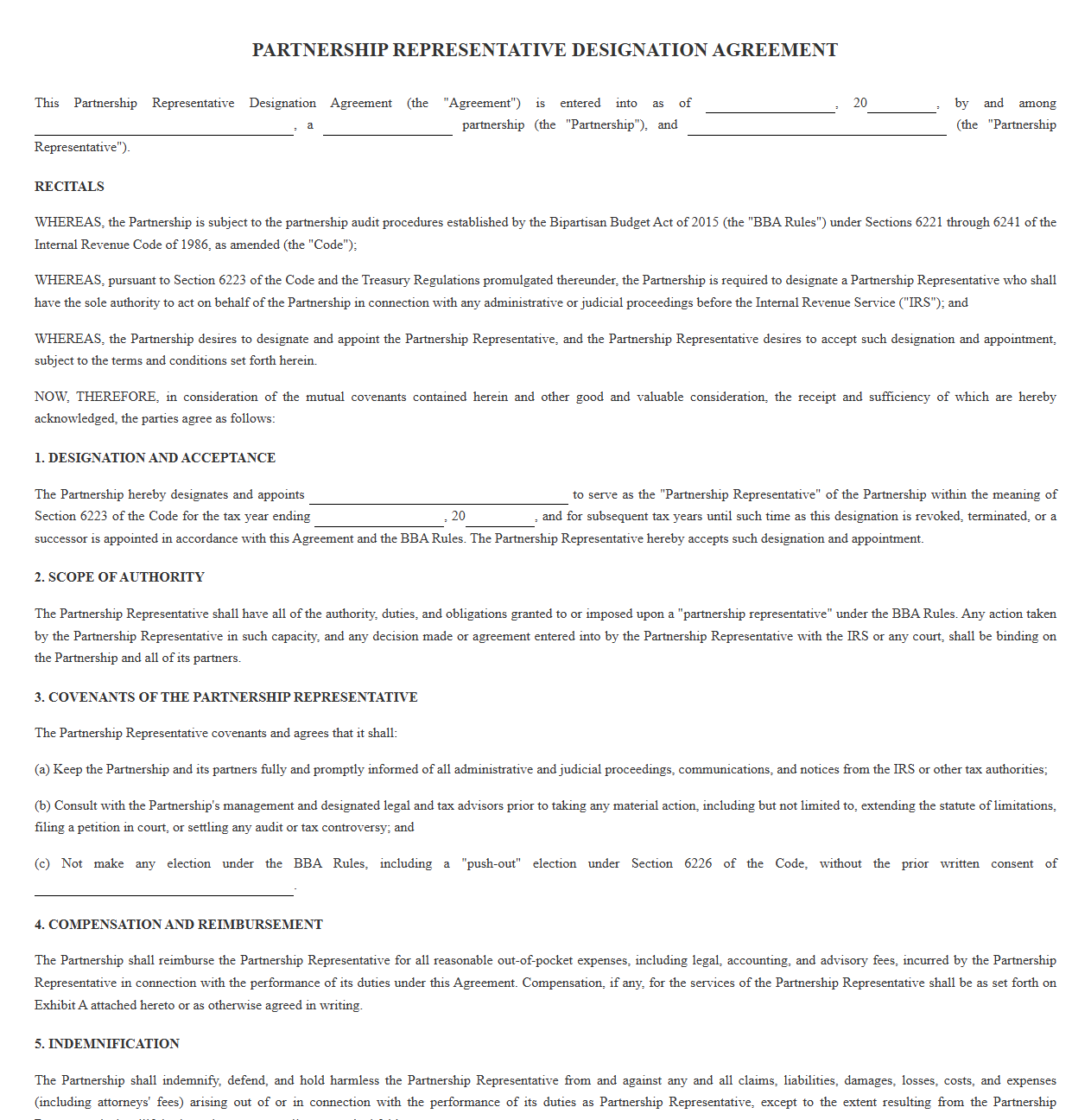
Partnership Representative Designation Agreement
 Download: .PDF
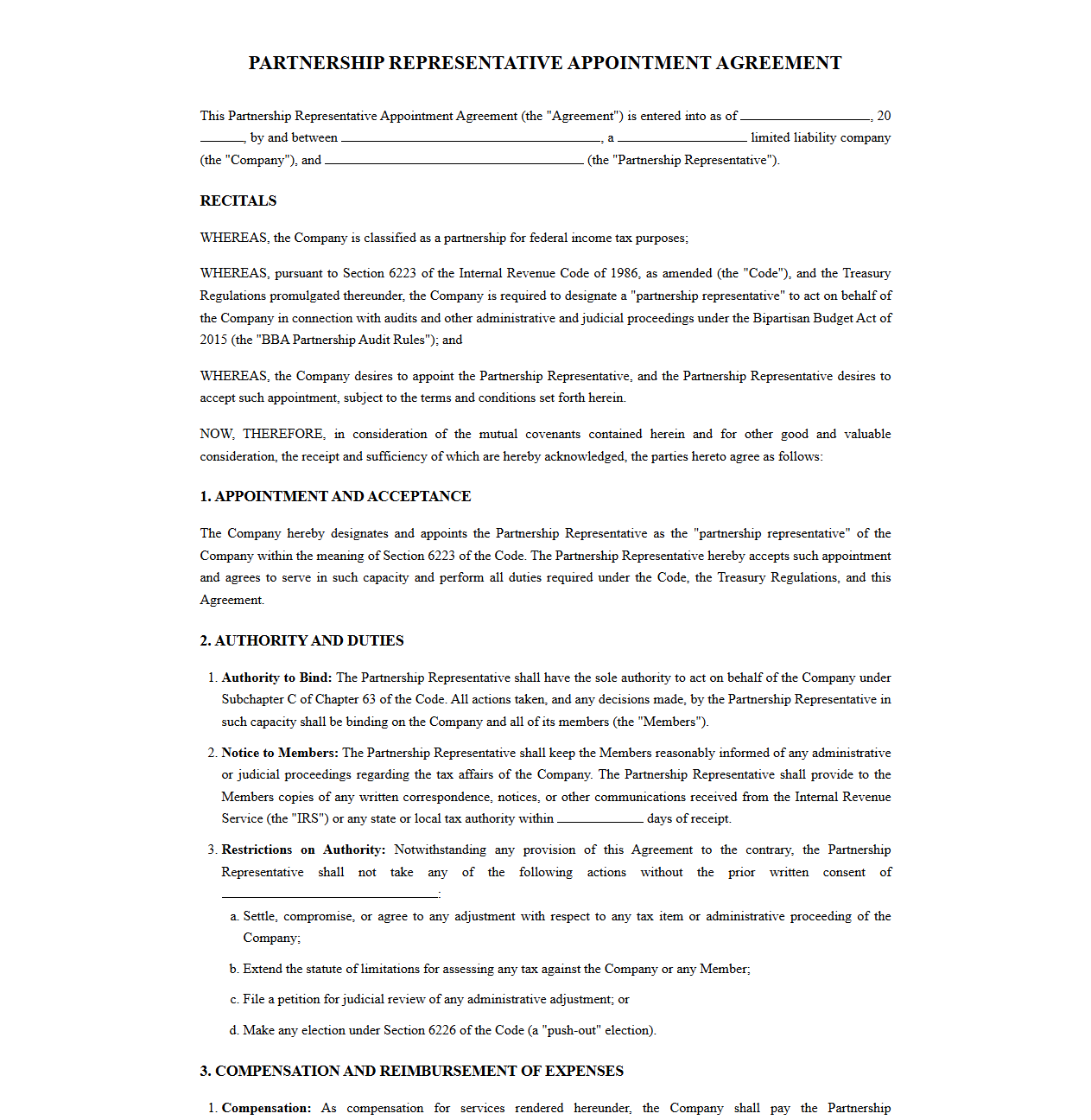
LLC Partnership Representative Appointment Contract
 Download: .PDF
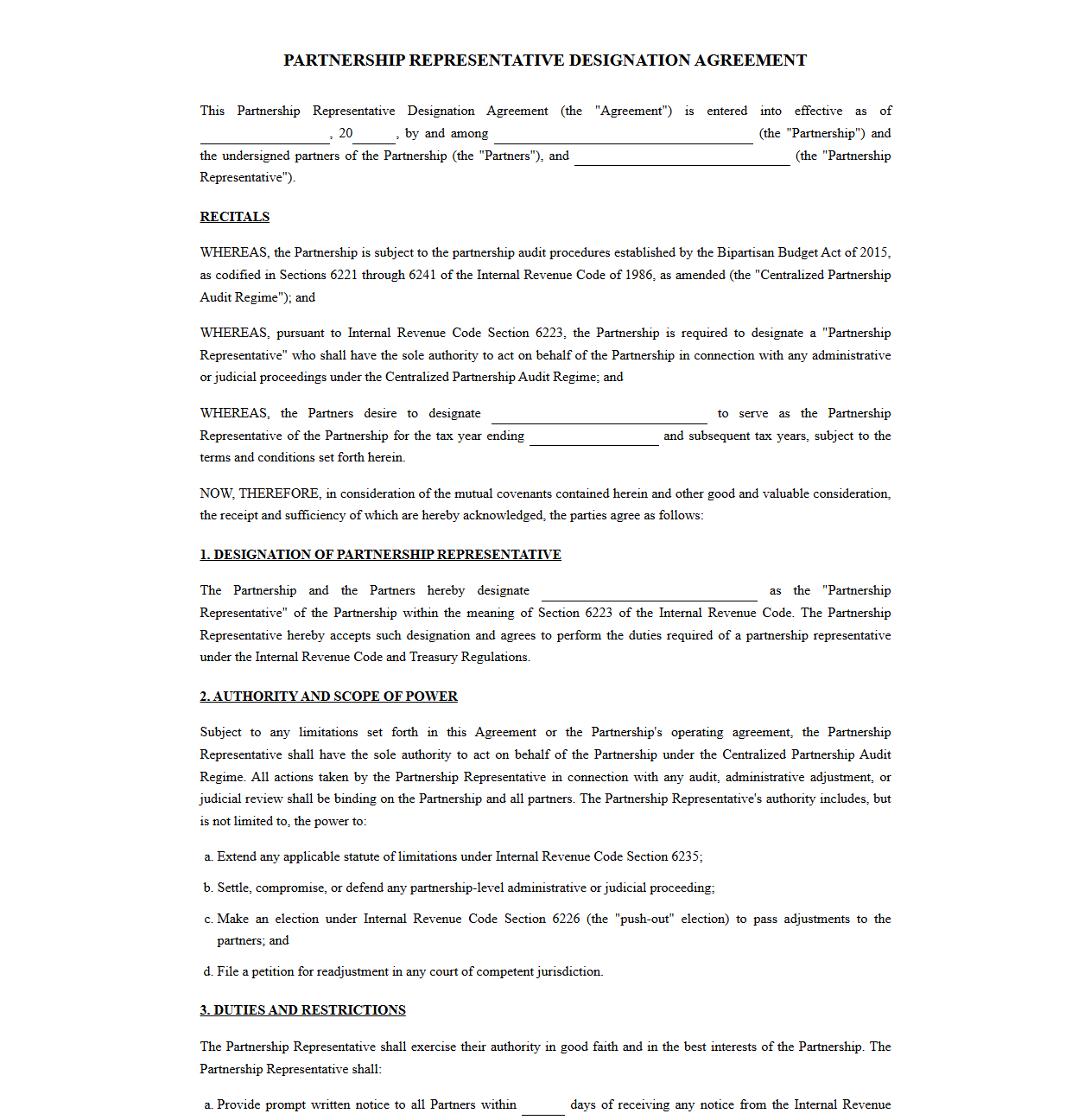
Tax Partnership Representative Designation Template
 Download: .PDF
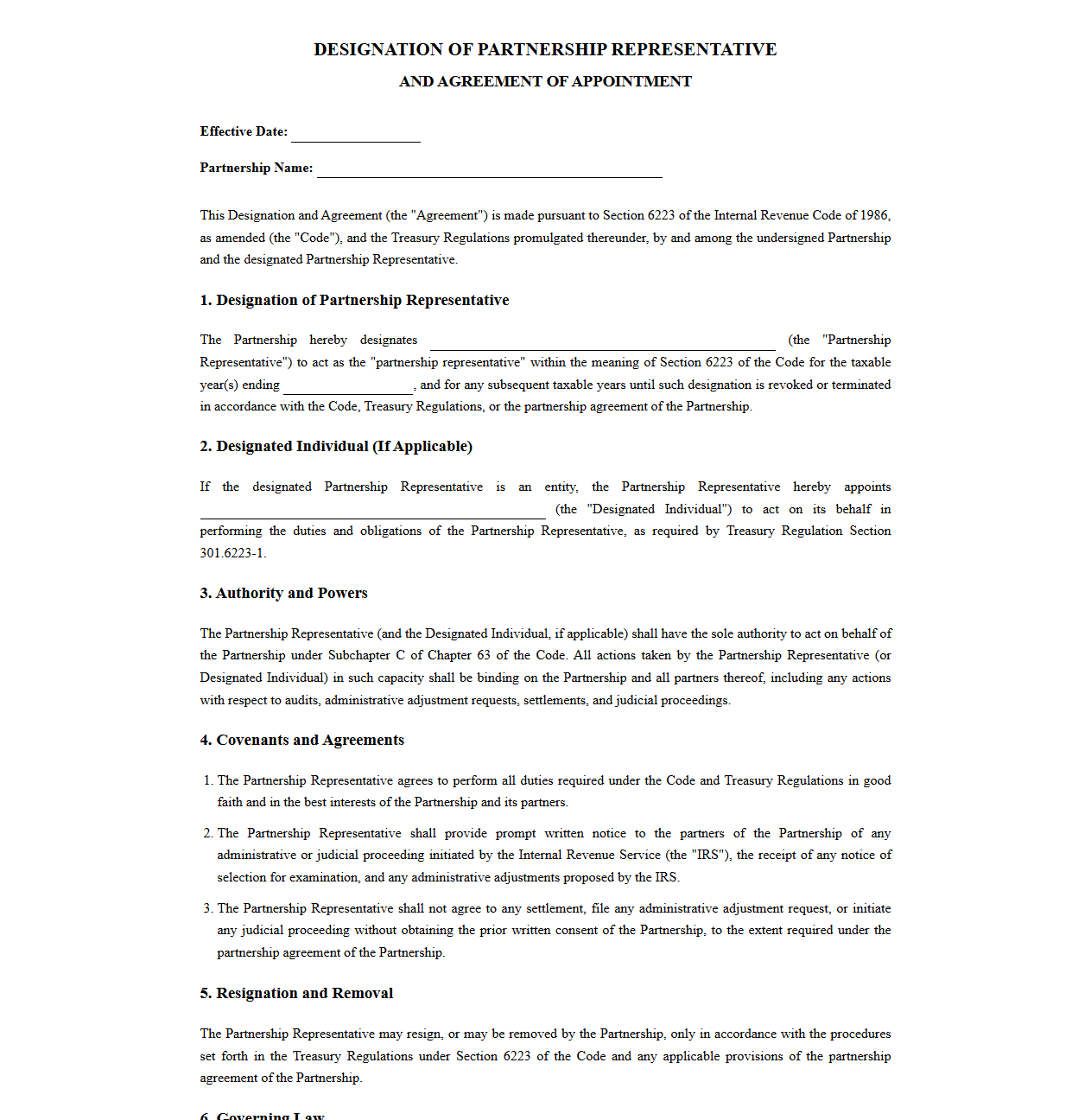
Partnership Audit Representative Designation Letter
 Download: .PDF
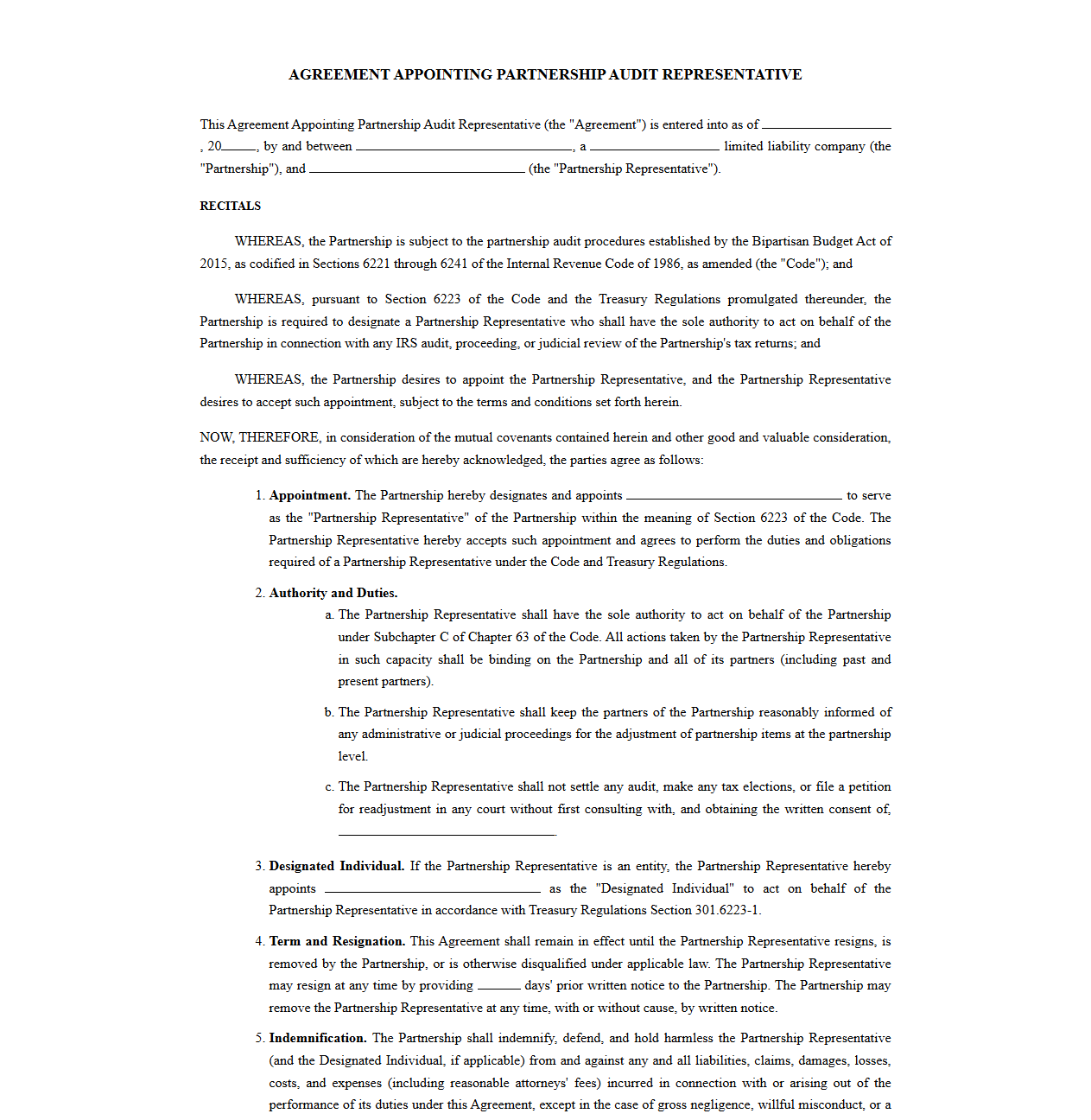
Agreement Appointing Partnership Audit Representative
 Download: .PDF
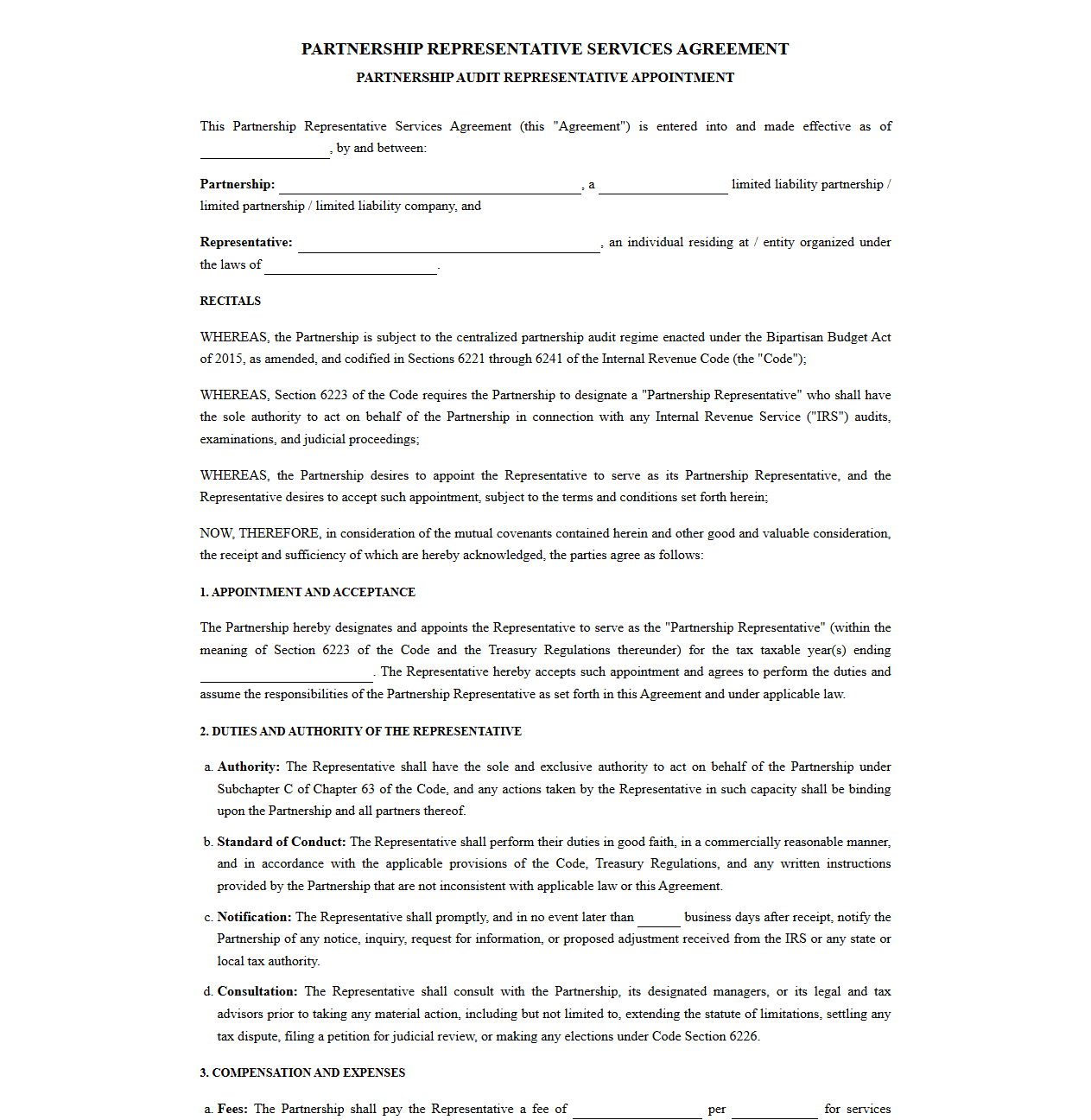
Partnership Representative Services Agreement Template
 Download: .PDF
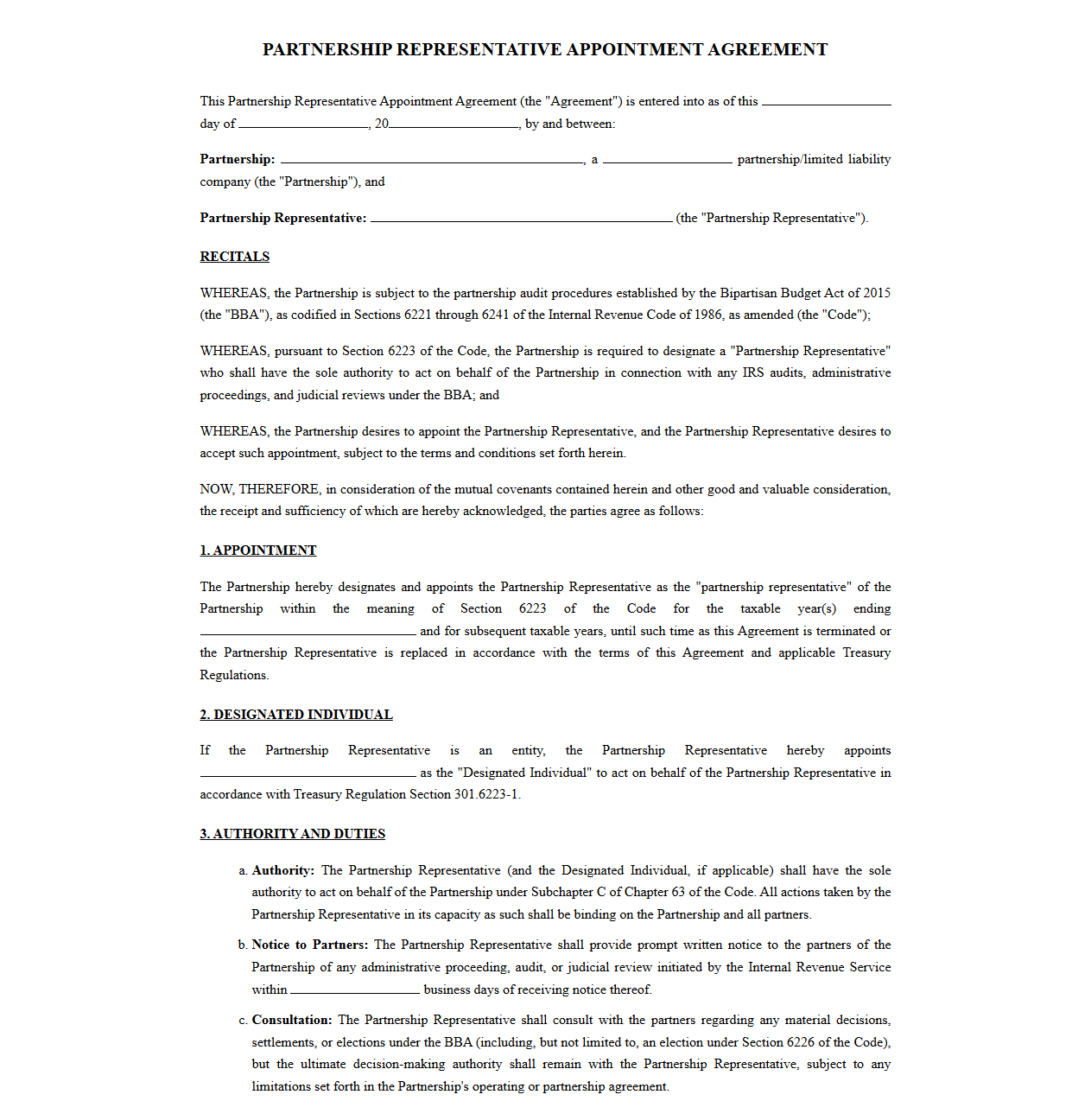
BBA Partnership Representative Appointment Agreement
 Download: .PDF
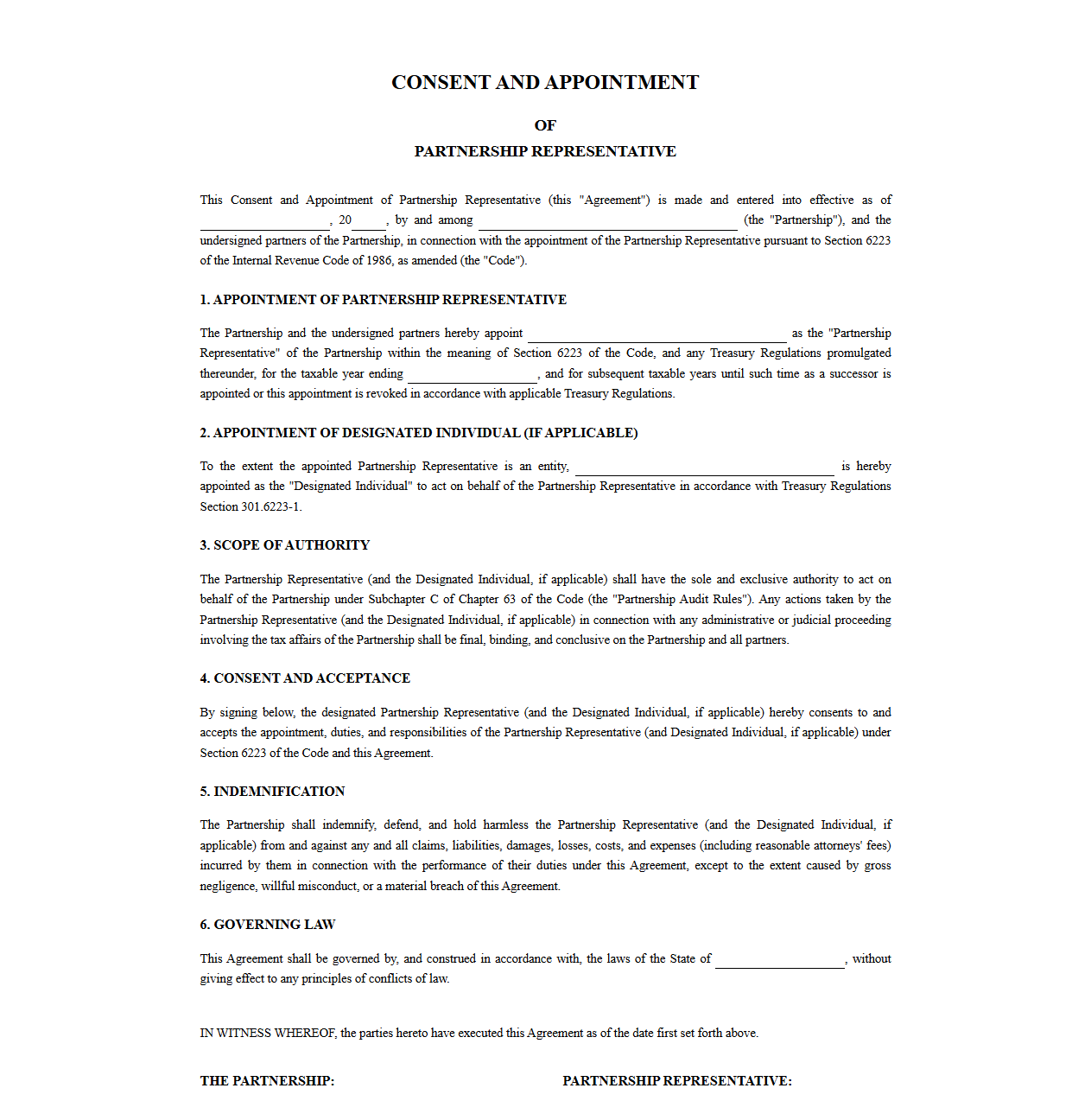
Consent and Appointment of Partnership Representative
 Download: .PDF
The Critical Role of the Partnership Representative under Modern Tax Law
Under the Bipartisan Budget Act of 2015 (BBA), the landscape of IRS partnership audits underwent a fundamental transformation. The transition from the traditional Tax Matters Partner (TMP) to the newly defined Partnership Representative represents one of the most significant shifts in modern tax administration. Unlike the legacy TMP, who had limited authority and was required to keep partners informed, the modern Partnership Representative has sole authority to act on behalf of the partnership.
During an IRS audit, this individual holds immense power. The decisions made by the Partnership Representative are completely binding on the partnership and all its partners. The IRS will no longer negotiate with individual partners; instead, it deals exclusively with the designated representative, whose actions can dictate the financial destiny of the entire enterprise.
The Hidden Risks of an Inadequate Appointment Agreement
Operating without a robust, written Audit Representative Appointment Agreement exposes partners to severe financial and legal dangers. Because the IRS recognizes the representative's actions as final and binding, a representative could theoretically settle an audit, agree to substantial tax adjustments, or waive the statute of limitations without ever consulting the other partners.
Without contractual guardrails, partners may find themselves legally obligated to pay unanticipated tax liabilities, interest, and penalties resulting from decisions they had no part in making. The lack of a formal agreement leaves partners with virtually no legal recourse against a representative who acted in good faith but made financially devastating decisions during the audit process.
Defining the Scope of Authority and Restrictive Covenants
To mitigate these risks, a well-drafted partnership or operating agreement must explicitly define the boundaries of the representative's authority. By implementing restrictive covenants, the partners can convert what is legally a unilateral power under IRS rules into a contractually restricted role that requires internal consensus.
The agreement should clearly stipulate that the Partnership Representative cannot take certain critical actions without obtaining the prior written consent of a majority or supermajority of the partners. Key restricted actions include:
- Agreeing to any settlement or tax adjustment with the IRS.
- Filing a petition in tax court or appealing an audit determination.
- Extending the statute of limitations for assessing partnership taxes.
- Making or revoking significant tax elections during the audit process.
Establishing Mandatory Information-Sharing and Communication Protocols
Because the IRS is not legally obligated to communicate with anyone other than the designated Partnership Representative, partners can easily be left in the dark during an ongoing audit. To prevent this informational asymmetry, the appointment agreement must mandate strict notification timelines and open communication channels.
Partners must receive timely copies of all incoming and outgoing IRS correspondences to assess potential liabilities. A standard notice clause should be incorporated to legally bind the representative to this duty:
"The Partnership Representative shall provide all partners with written notice and copies of any communication received from, or sent to, the Internal Revenue Service within three (3) business days of receipt or transmission."
Navigating Safe Harbors and the Push-Out Election Strategy
Under the BBA audit rules, any imputed underpayment of tax is assessed and collected at the partnership level rather than from the individual partners. This can unfairly penalize current partners for liabilities associated with prior tax years or previous partners. To address this, the partnership agreement must govern the strategic use of safe harbors and tax elections.
The most crucial strategy to address this imbalance is the push-out election under Internal Revenue Code Section 6226. By making a push-out election, the partnership shifts the tax liability from the partnership level directly to the specific partners who held ownership during the reviewed tax year. The agreement should clearly define whether and when the Partnership Representative is required to make this election to protect current investors from historic liabilities.
Balancing Indemnification with Standard of Care Obligations
Acting as a Partnership Representative carries substantial risk and administrative burden, meaning qualified individuals or entities may refuse the role without proper indemnification. However, partners must balance this protection with provisions that hold the representative accountable for their performance and decisions.
Drafting this clause requires careful negotiation to ensure the representative is indemnified against personal liability, but only if they adhere to a strict fiduciary standard of care, acting in good faith, with reasonable business judgment, and in the best interests of the partnership. The agreement must explicitly exclude indemnification in cases of gross negligence, willful misconduct, or a direct breach of the contractual limitations established in the operating agreement.
Key Takeaways for Selecting and Structuring Your Agreement
Securing your partnership against the sweeping powers of the Partnership Representative requires proactive legal drafting. Ensuring your operating agreement addresses these points protects both the collective entity and individual investment assets.
- Formally designate a qualified Partnership Representative and specify a clear successor.
- Establish strict limitations on unilateral authority, requiring majority partner approval for settlements.
- Implement mandatory information-sharing protocols with tight notification deadlines.
- Define clear guidelines for executing the Section 6226 push-out election.
- Structure balanced indemnification clauses tied to a fiduciary standard of care.

Leave a comment