

Chief compliance officers and IT auditors constantly struggle to protect sensitive corporate assets while satisfying rigorous third-party evaluation requirements. Before addressing specific protocols, we must recognize that modern assurance audits demand unprecedented, high-risk data sharing across diverse external environments.
Implementing robust Data Security Agreements (DSAs) grants organizations both airtight liability protection and a repeatable framework for swift, stress-free certifications. However, as an essential stipulation, these templates must be treated as highly adaptable baselines rather than static, one-size-fits-all legal documents.
Utilizing targeted provisions for rigorous frameworks like SOC 2, ISO 27001, and HIPAA ensures every audit-related data transmission is legally safeguarded. In this article, we will dissect essential DSA templates, analyze critical clauses for audit readiness, and outline best practices for seamless compliance integration.
Audit and Assurance Data Security Agreement Template
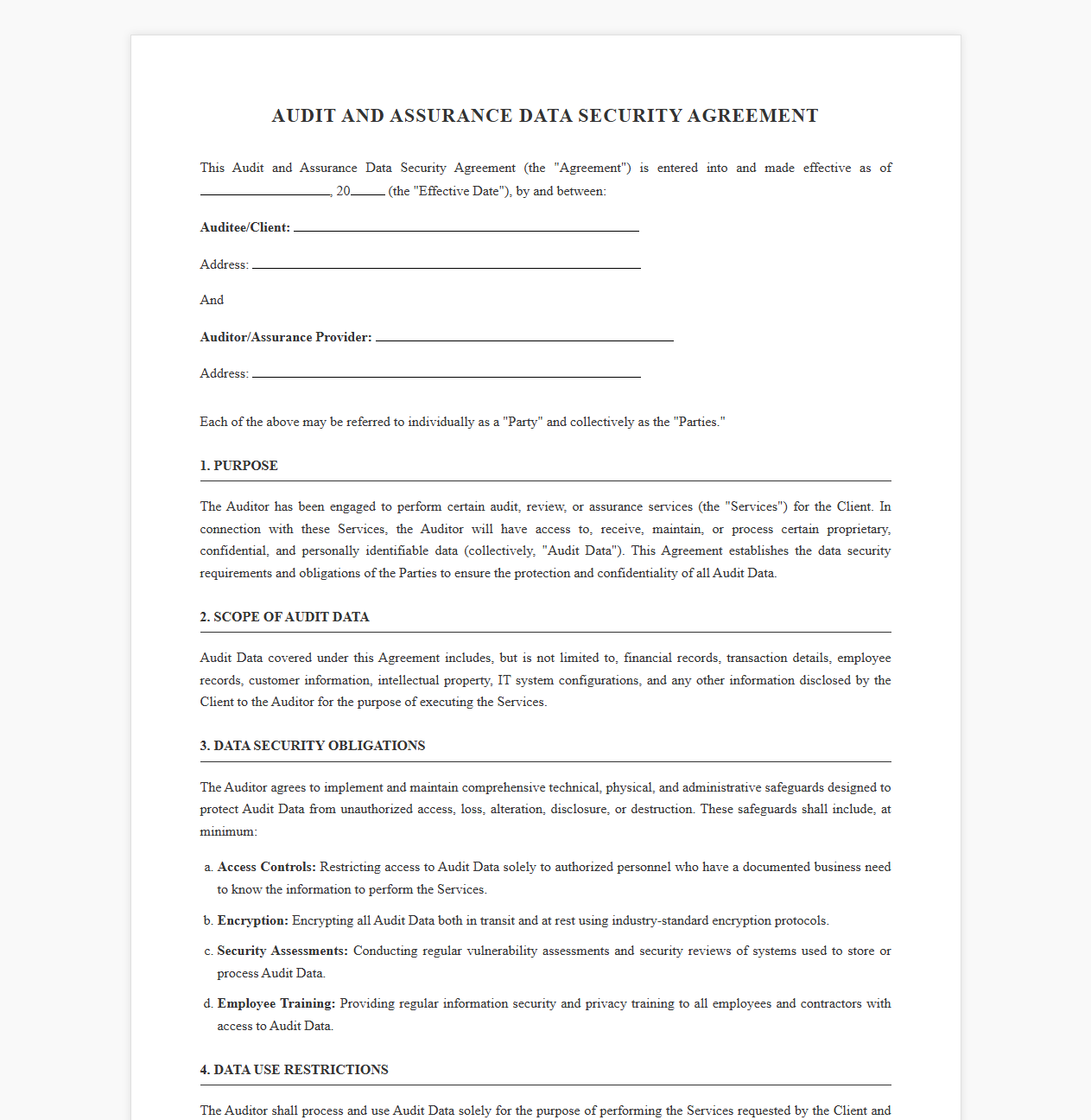 Download: .PDF
Financial Audit Information Security Agreement Form
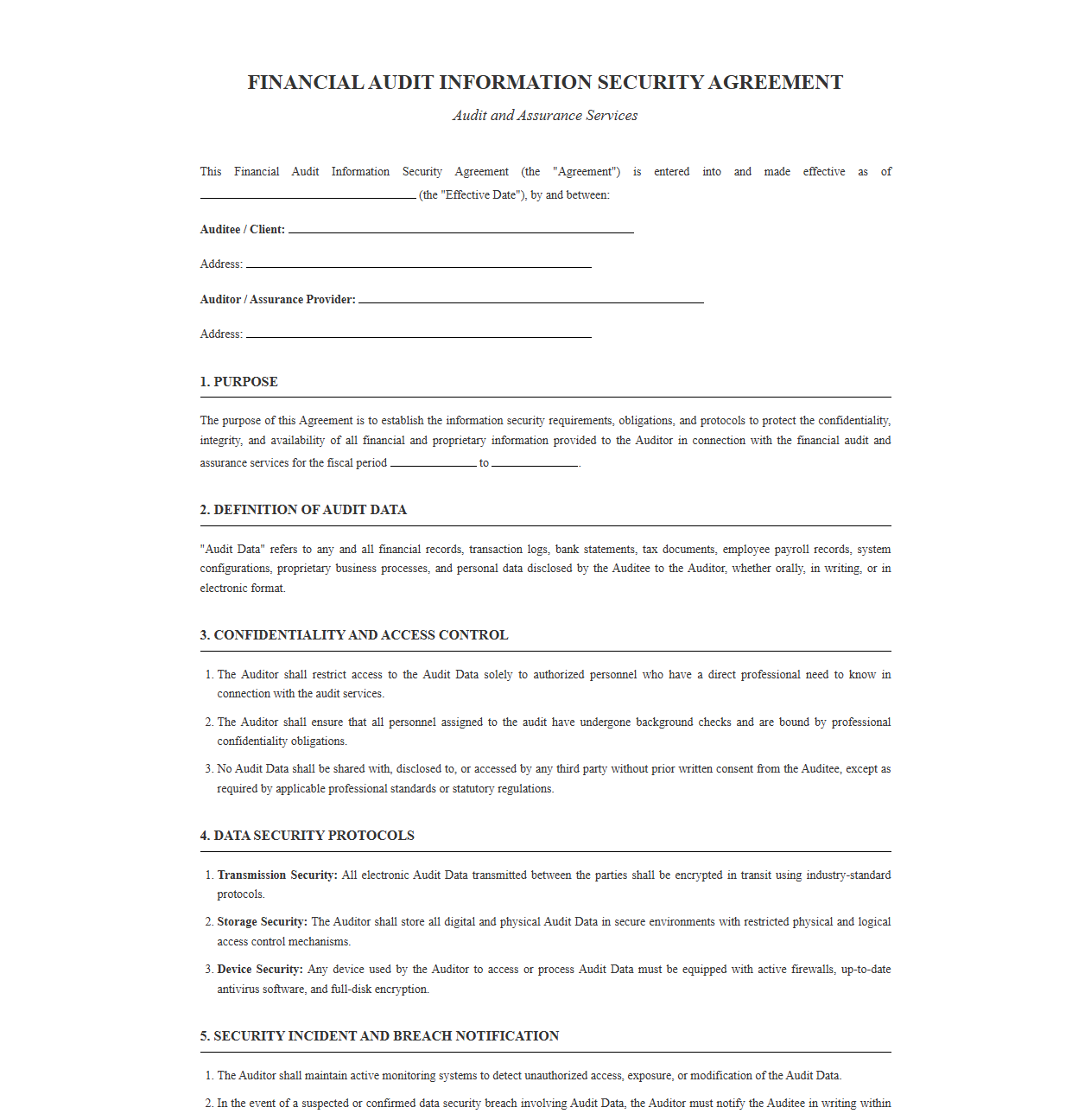 Download: .PDF
Assurance Services Data Protection Contract Template
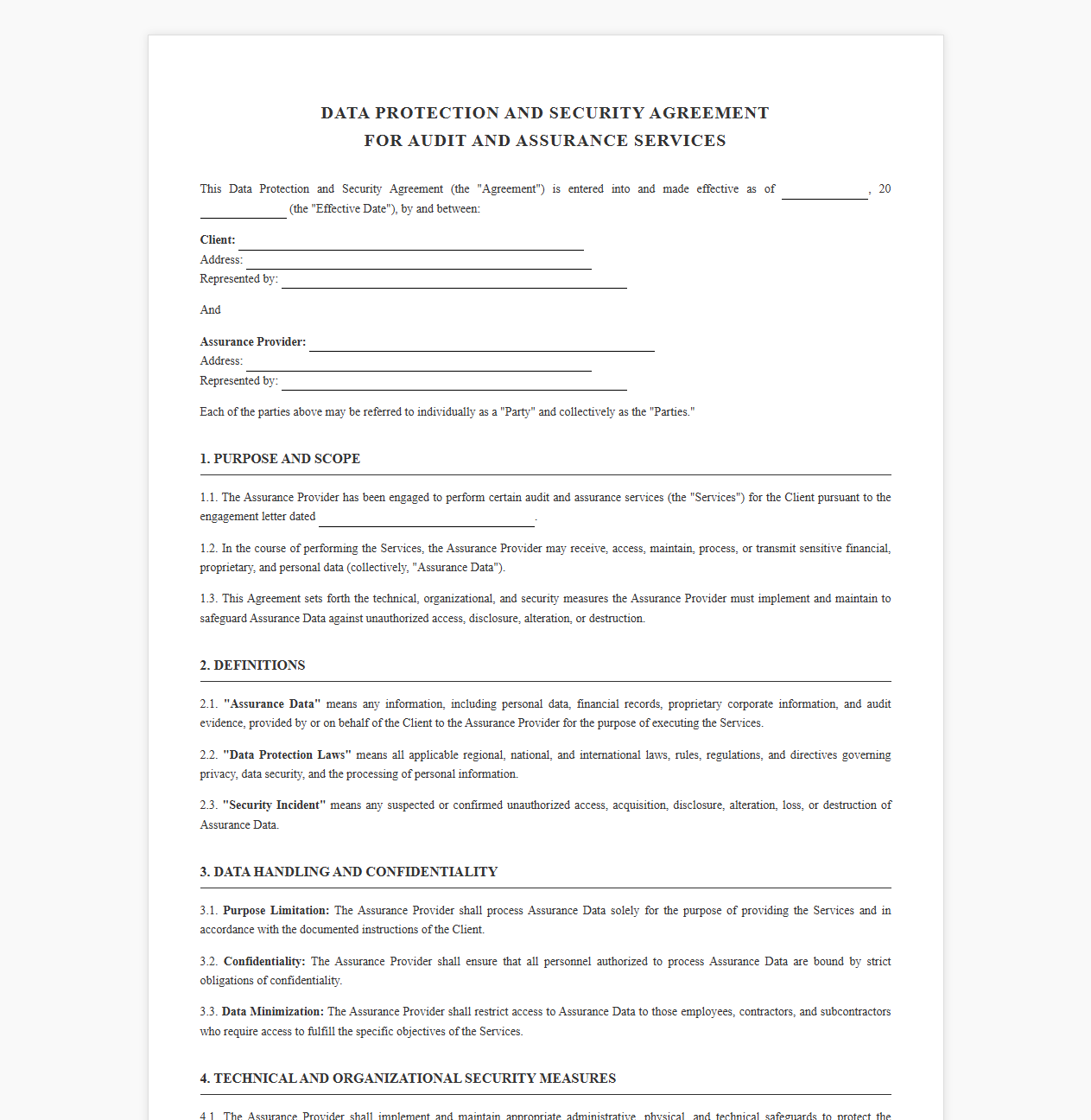 Download: .PDF
External Audit Confidentiality and Data Security Agreement
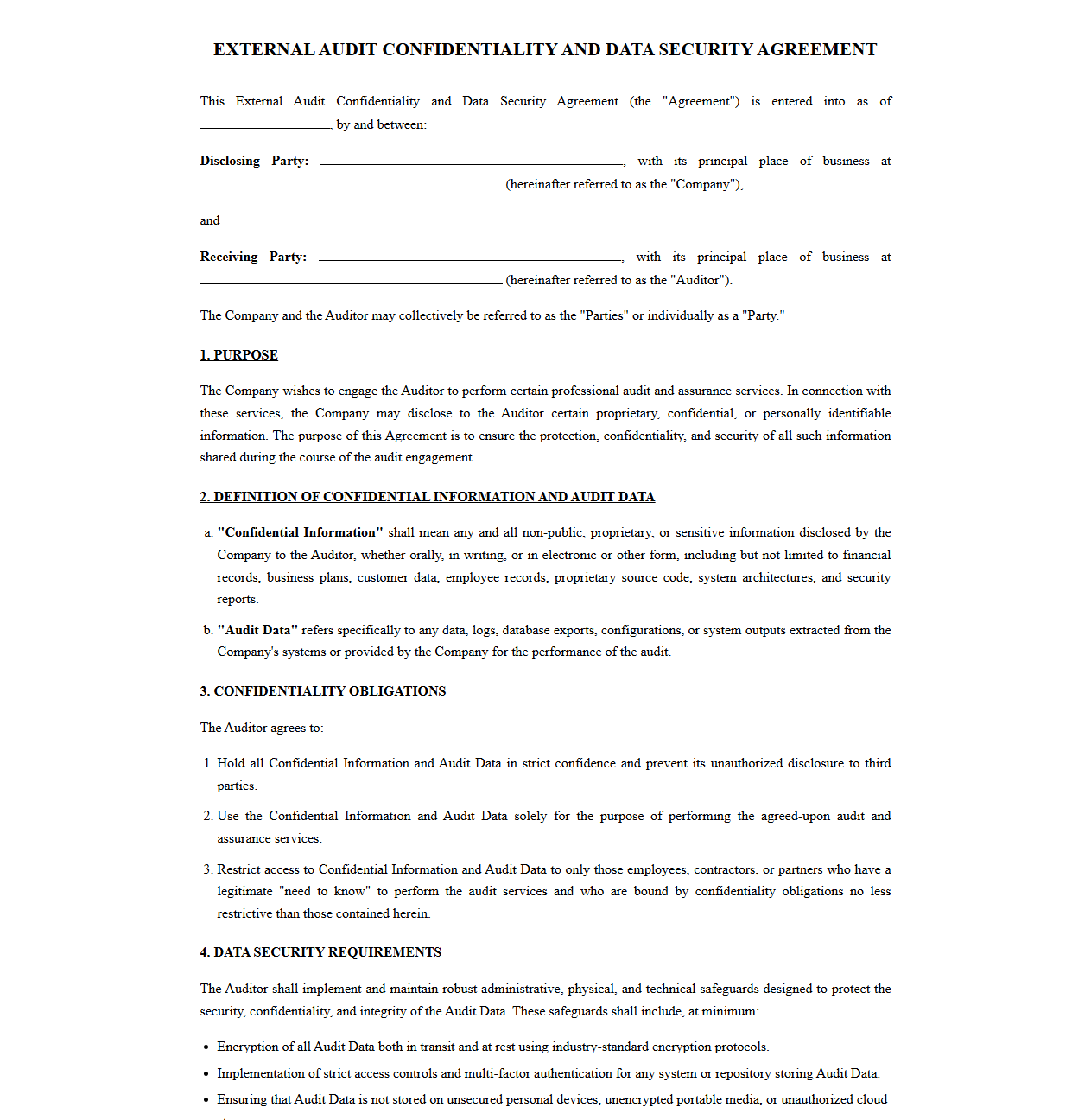 Download: .PDF
Information Security Agreement for Auditing Services
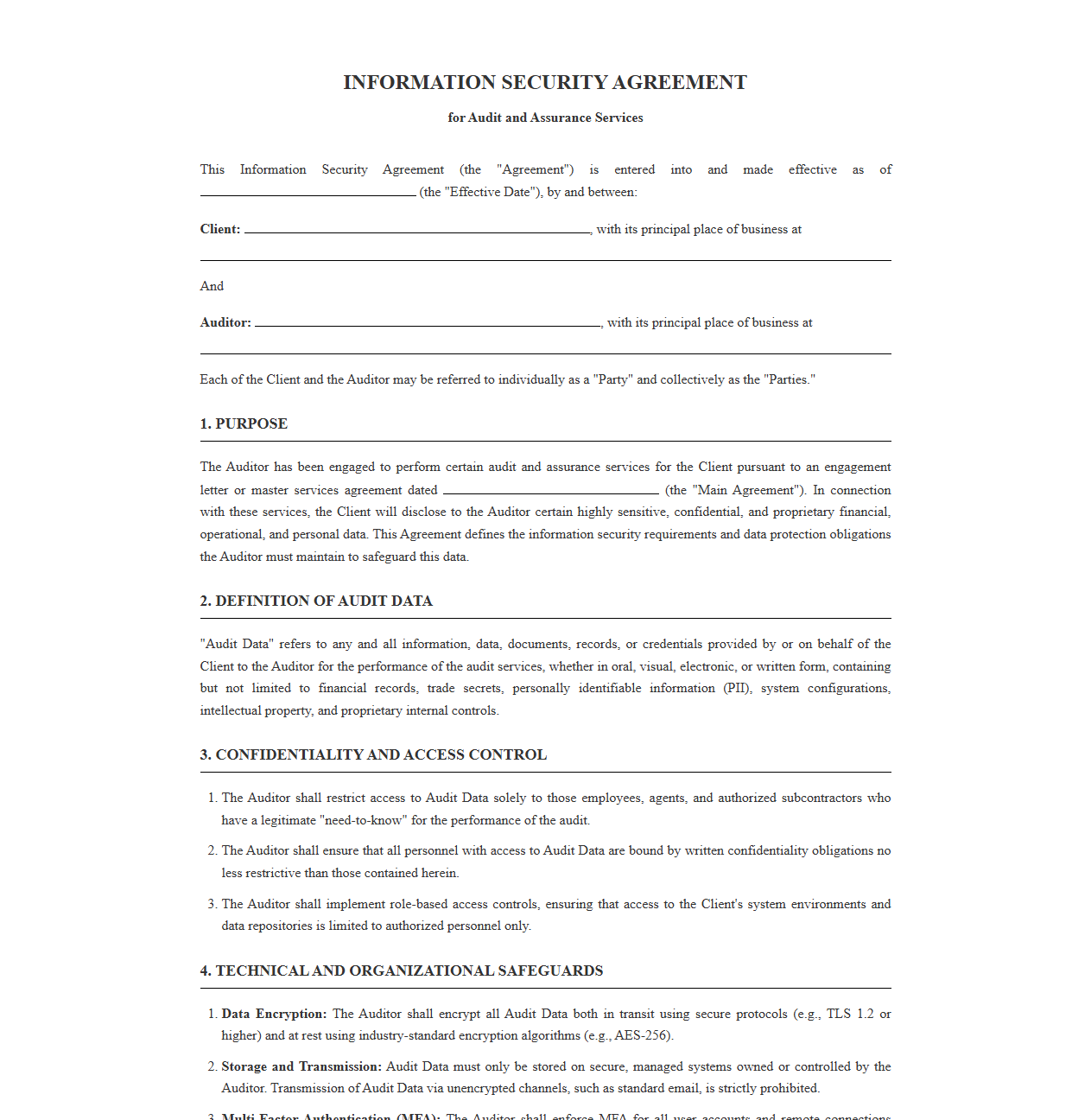 Download: .PDF
Audit Data Security and Non-Disclosure Agreement
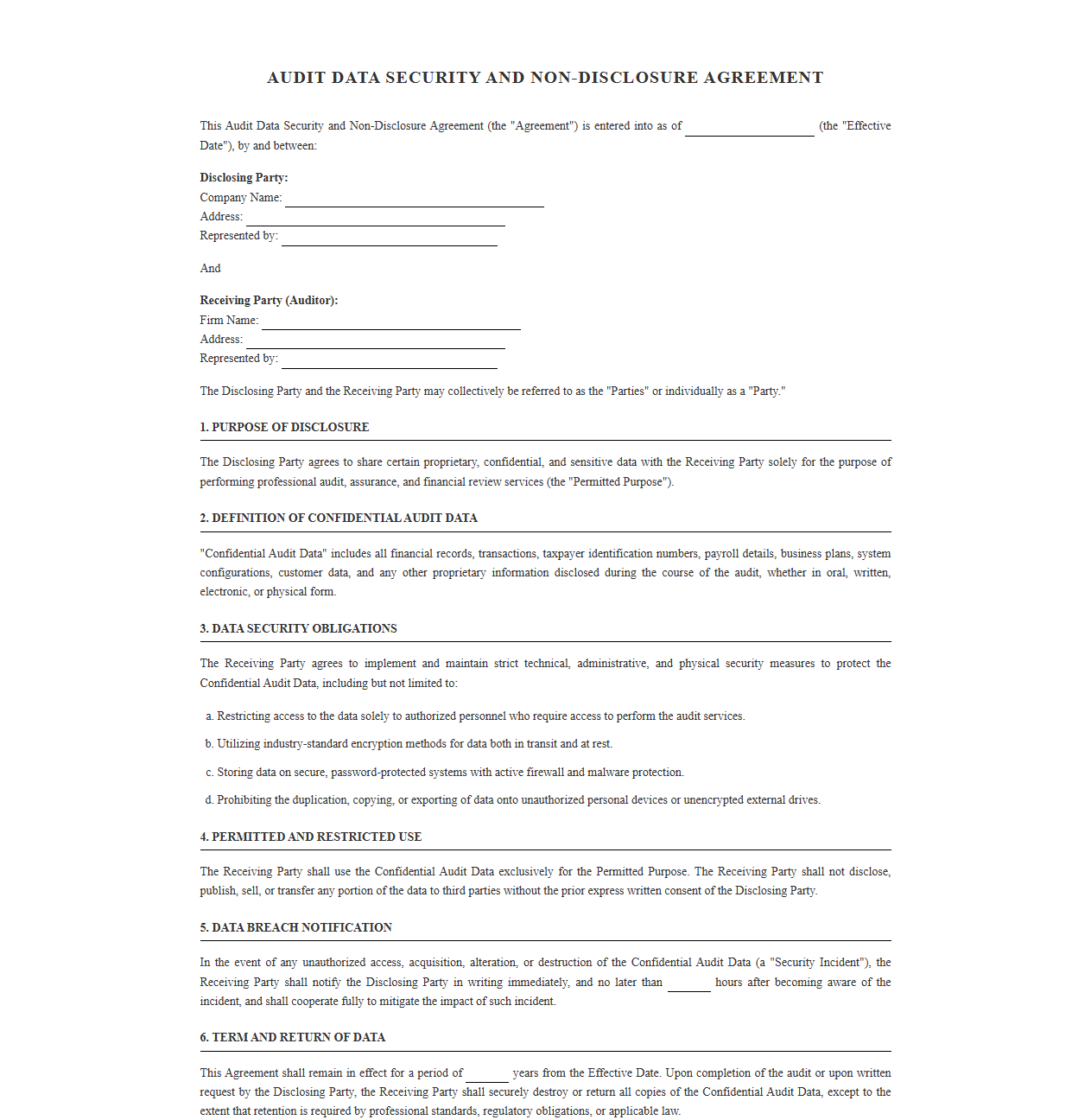 Download: .PDF
Security and Confidentiality Agreement for Assurance Providers
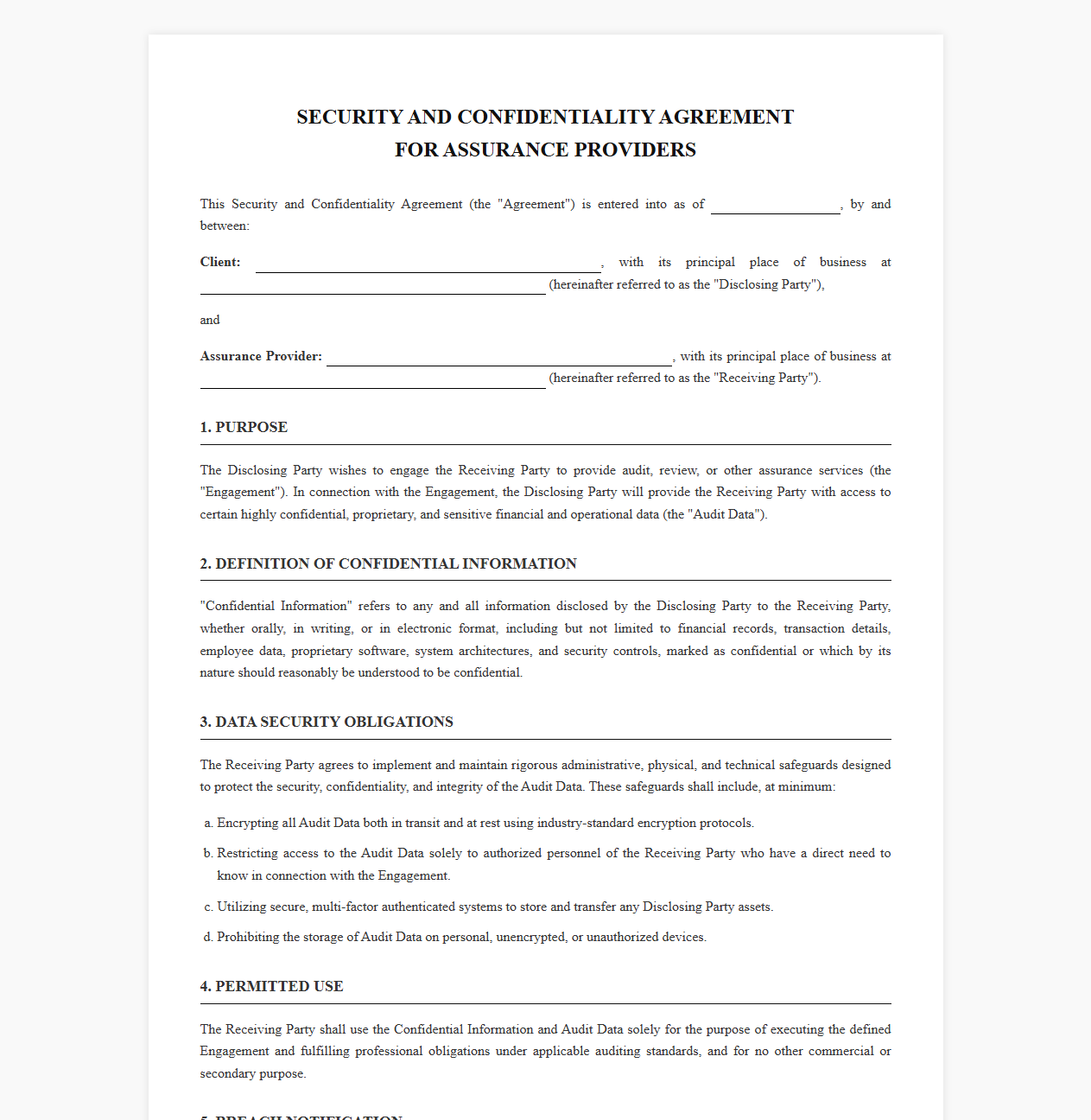 Download: .PDF
Data Processing Agreement for Audit and Assurance
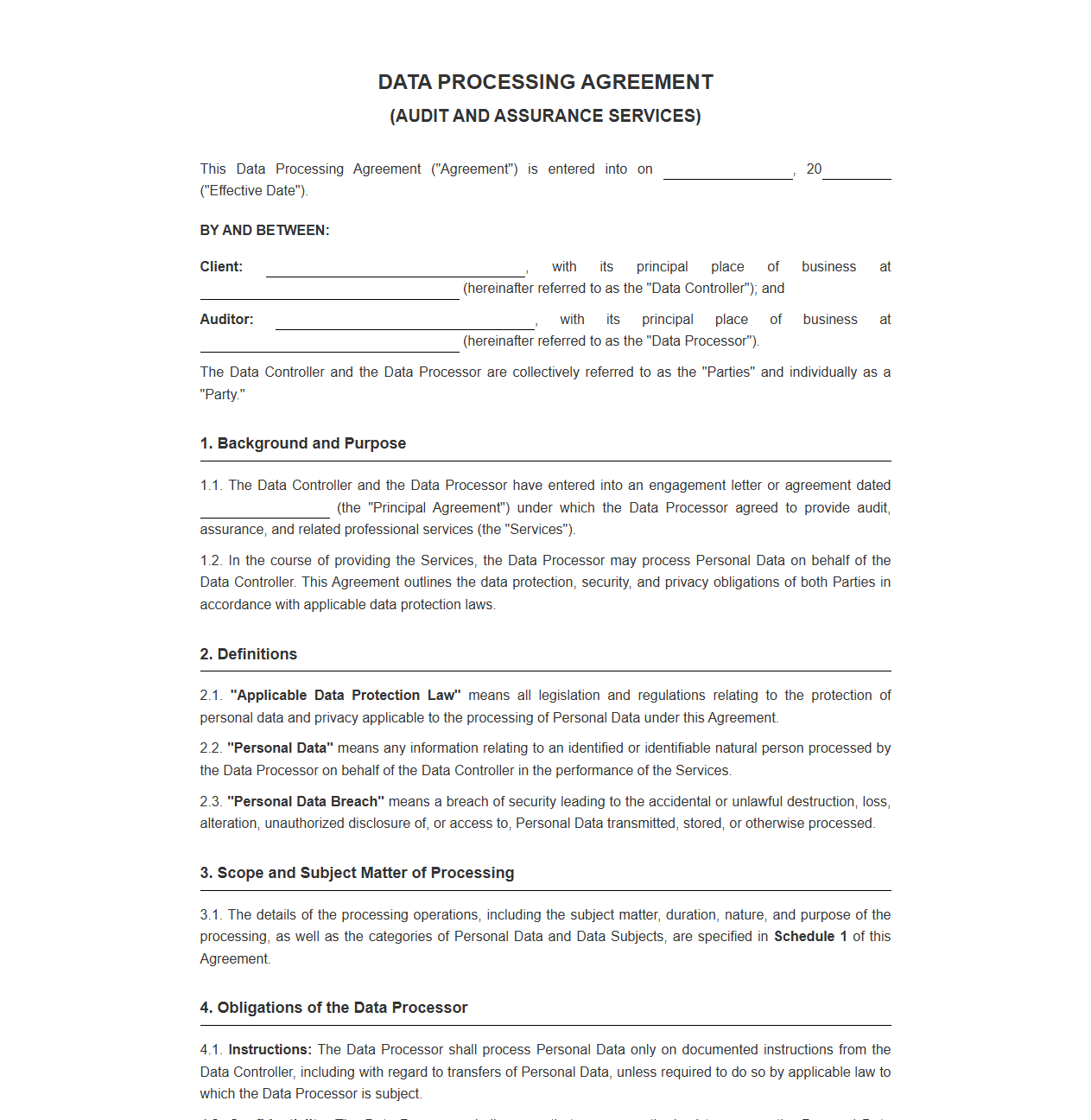 Download: .PDF
Audit Engagement Data Security Protocol Template
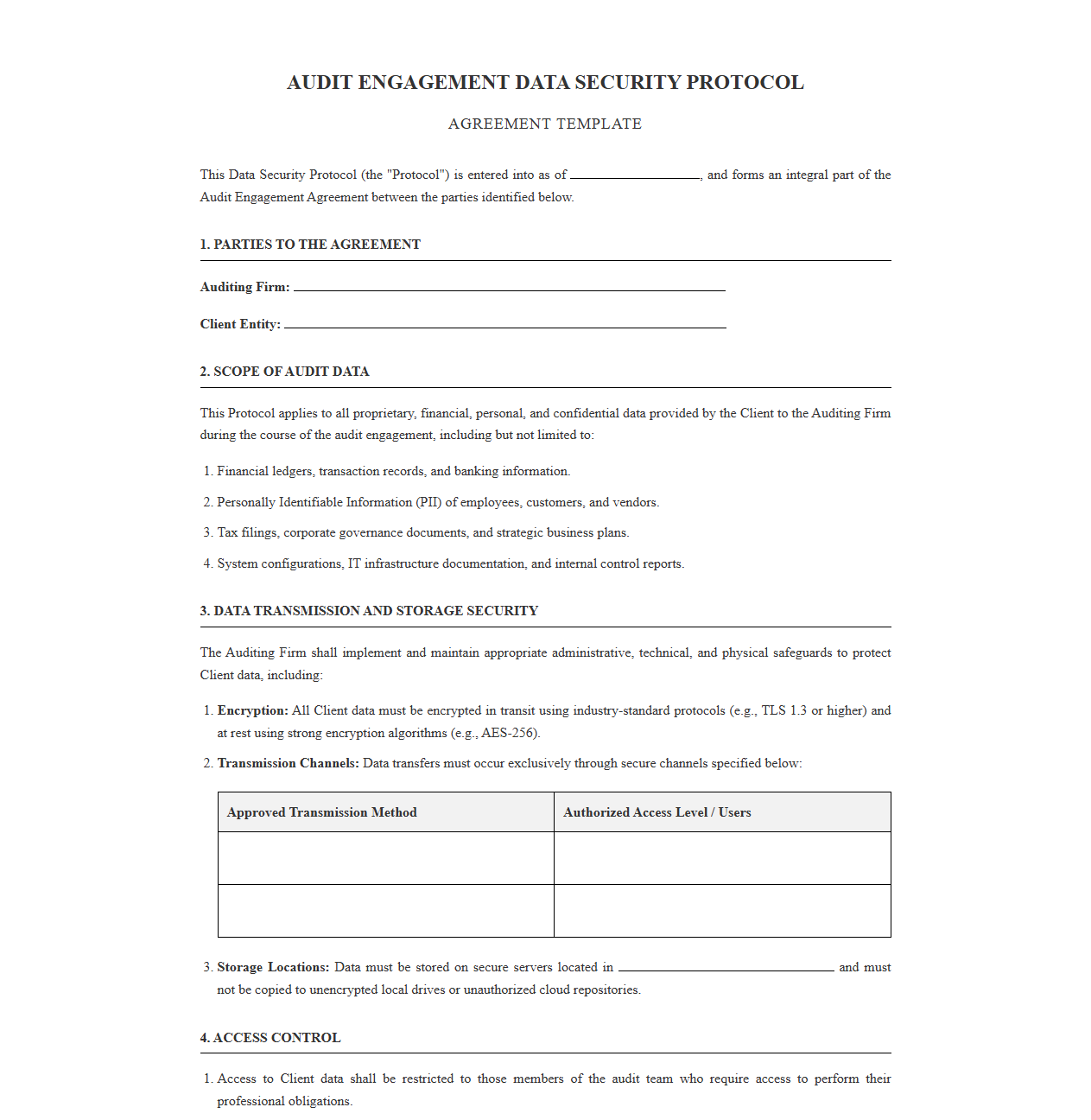 Download: .PDF
Introduction to Secure Audit Protocols and DSAs
In an era of sophisticated cyber threats and stringent regulatory mandates, establishing verifiable trust between business partners is paramount. Data Security Agreements (DSAs) serve as the foundational framework for this trust, setting explicit, legally binding expectations for safeguarding sensitive information. By integrating robust secure audit protocols directly into these agreements, organizations can move beyond mere contractual promises to achieve continuous, verifiable compliance assurance.
Core Pillars of a Data Security Agreement Template
A comprehensive DSA template must translate abstract security principles into enforceable operational mandates. To establish a legally sound and technically viable posture, compliance teams should ensure their standardized templates feature these core clauses:
- Data Classification and Ownership: Explicitly defines what constitutes sensitive data and affirms the delegating party's ownership rights.
- Permitted Use and Prohibitions: Restricts data processing strictly to authorized operational bounds.
- Audit and Inspection Rights: Grants the explicit authority to verify security controls through scheduled or event-driven assessments.
- Subprocessor Liability: Extends all security and audit obligations to any third-party vendors utilized by the partner.
For further regulatory alignment, organizations should consult the latest NIST Cybersecurity Framework guidelines to map their templates against globally recognized standards.
Defining Audit Scope and Authorized Access Limits
To prevent operational disruption while ensuring thorough security verification, DSAs must clearly demarcate the boundaries of audit activities. This involves specifying the exact systems, networks, and physical locations subject to review. Establishing strict access controls within the agreement ensures that auditors only interact with designated environments, typically segregated using identity-defined perimeters. For example, access during a system review might be limited to a specific read-only service account, represented logically in deployment structures as audit-reader-role, ensuring the integrity of the live production environment is maintained.
Standardizing Encryption and Data Transmission Protocols
Security assurance mandates that sensitive data must remain protected across its entire lifecycle. Standardizing technical requirements within the DSA ensures that partners do not rely on outdated security measures during transport or storage.
"All sensitive data covered under this agreement must be encrypted both in transit and at rest using industry-accepted cryptographic algorithms."
Assurance teams must mandate Advanced Encryption Standard (AES) with a 256-bit key length for data at rest, and Transport Layer Security (TLS) version 1.3 or higher for all external network communications to mitigate interception risks.
Incident Response and Breach Notification Mandates
When a security incident occurs, clear communication channels and predetermined timelines are vital to limiting downstream damage. DSAs must establish unambiguous protocols detailing when and how a partner must report a suspected or confirmed compromise.
| Severity Level | Notification Window | Required Documentation |
|---|---|---|
| Critical / Data Breach | Within 24 hours | Impact assessment, affected systems, mitigation steps taken. |
| High / System Compromise | Within 72 hours | Scope of exposure, forensic logs, ongoing containment actions. |
| Medium / Policy Deviation | Within 5 business days | Root cause analysis, corrective action plan. |
Templates for Log Management and Compliance Verification
Verifiable compliance relies heavily on immutable evidence. To facilitate seamless audits, DSAs should outline structured log management protocols that force partners to retain comprehensive audit trails of system access and administrative actions.
Below is a standardized JSON-based structural template for compliance teams to mandate when logging administrative access events within the system:
{
  "event_id": "aud-990182-x",
  "timestamp": "2026-03-30T10:14:00Z",
  "actor": "admin@partner-domain.com",
  "action": "ACCESS_SENSITIVE_RECORDS",
  "source_ip": "192.0.2.45",
  "status": "SUCCESS",
  "signature_verification": "sha256-hash-value"
}
Best Practices for Continuous Assurance and Policy Evolution
Cybersecurity is not a static state, but a continuous process of adaptation. Organizations must treat their DSAs as living documents, scheduling periodic reviews to align with updated regulations and emerging exploit methodologies.
Maintaining a disciplined cycle of reviews ensures that both legal protections and technical controls remain resilient against modern threat vectors, safeguarding organizational reputation and corporate assets over the long term.

Leave a comment