

For many financial professionals, managing client relationships is often overshadowed by the constant threat of scope creep and misaligned expectations that quietly erode profitability. Before drafting a single line of a contract, however, firm owners must first establish clear operational boundaries that reflect their unique service delivery models.
Utilizing structured, standardized templates grants firms the essential legal protection and professional confidence needed to scale seamlessly. Crucially, these agreements serve as an educational tool, stipulating precise boundaries around service limitations and client responsibilities. For instance, clearly defining the parameters for intensive clean-up projects, weekly payroll administration, or seasonal tax-prep add-ons ensures that out-of-scope work is always billed appropriately.
In this article, we will examine customizable bookkeeping services agreement templates tailored to every engagement type, helping you secure profitable, long-term client partnerships with absolute clarity.
Bookkeeping Services Agreement Template
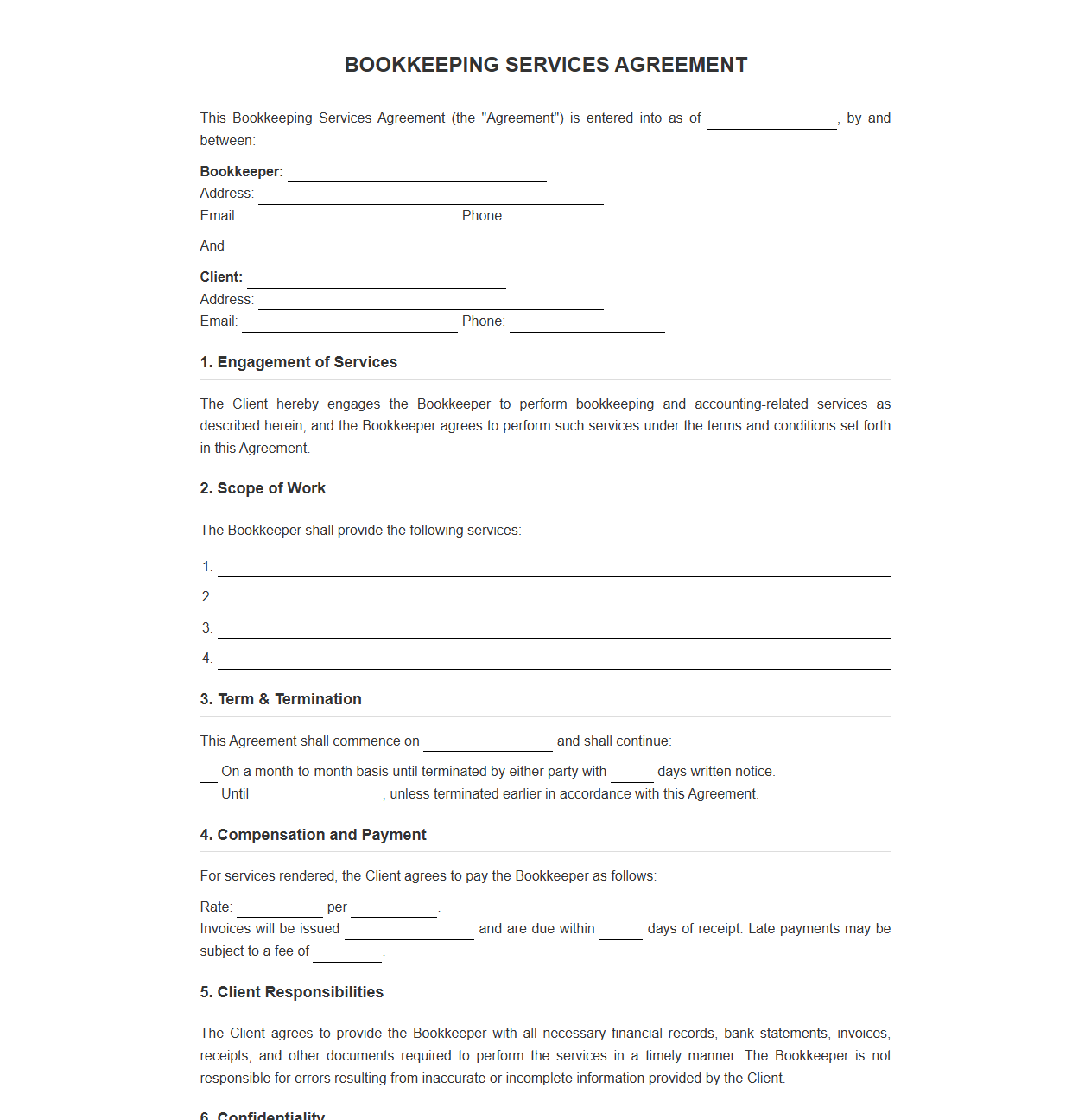 Download: .PDF
Standard Bookkeeping Contract Template
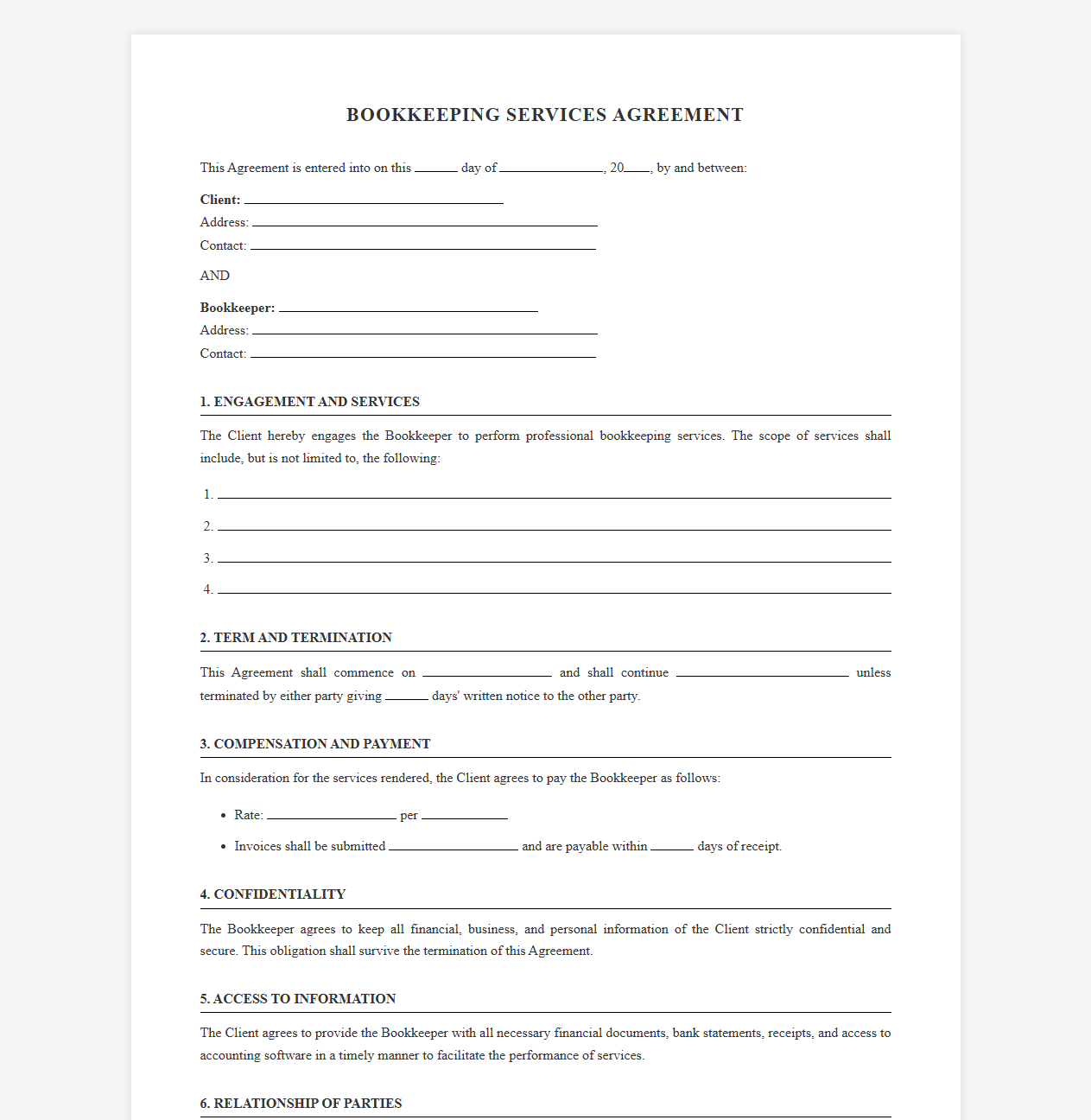 Download: .PDF
Monthly Bookkeeping Services Contract Template
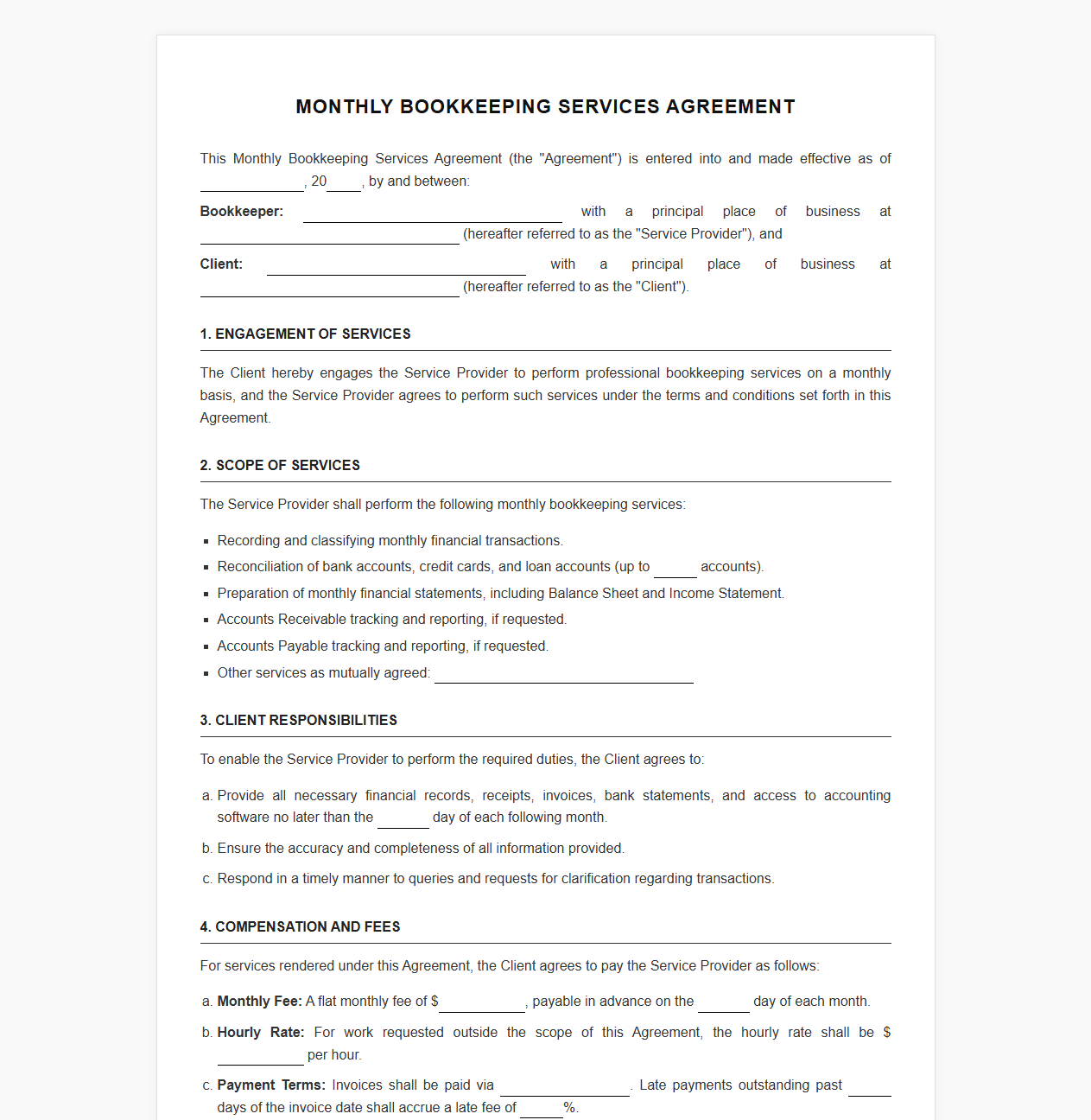 Download: .PDF
Freelance Bookkeeper Service Agreement Template
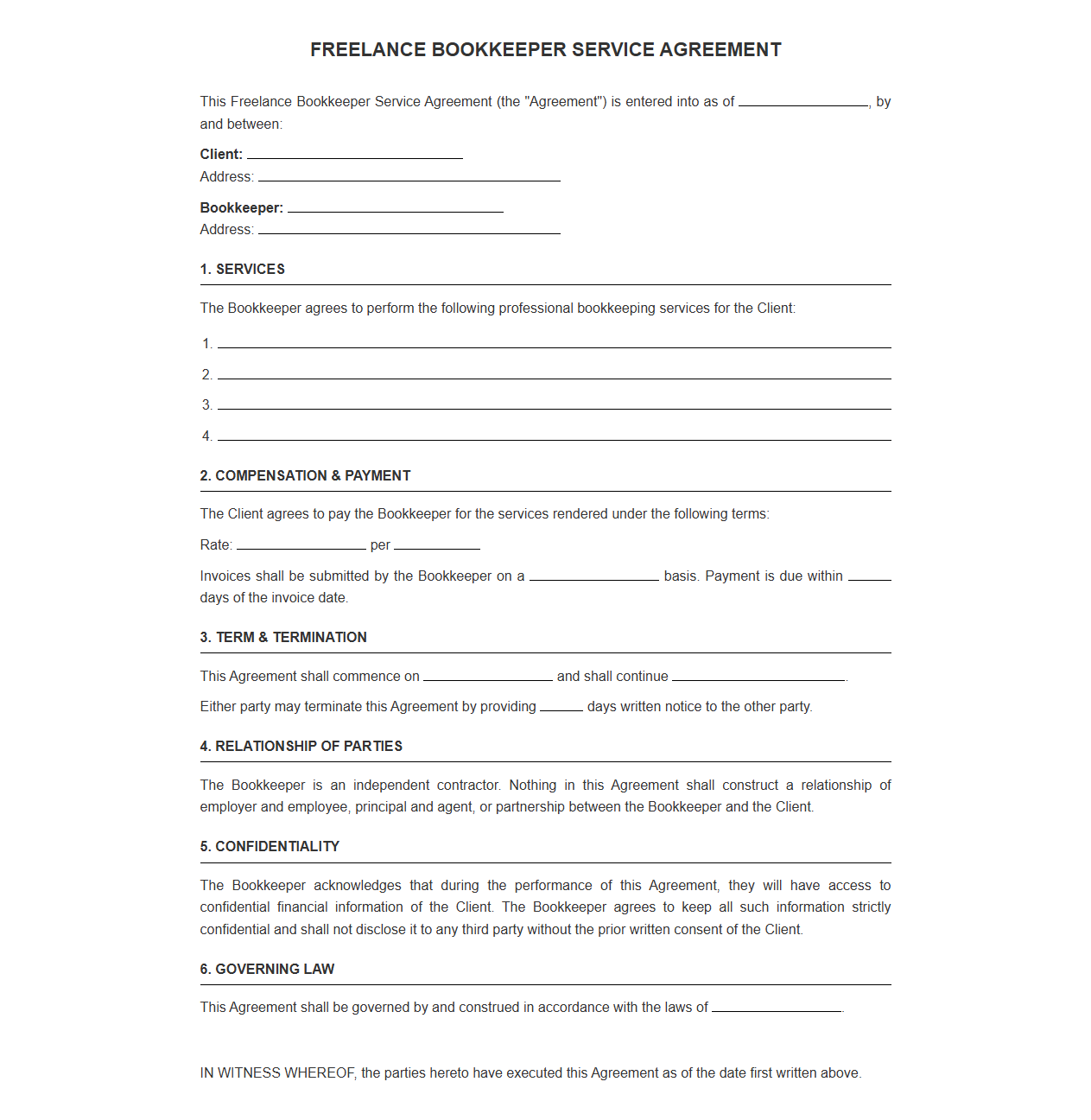 Download: .PDF
Professional Bookkeeping Engagement Letter Template
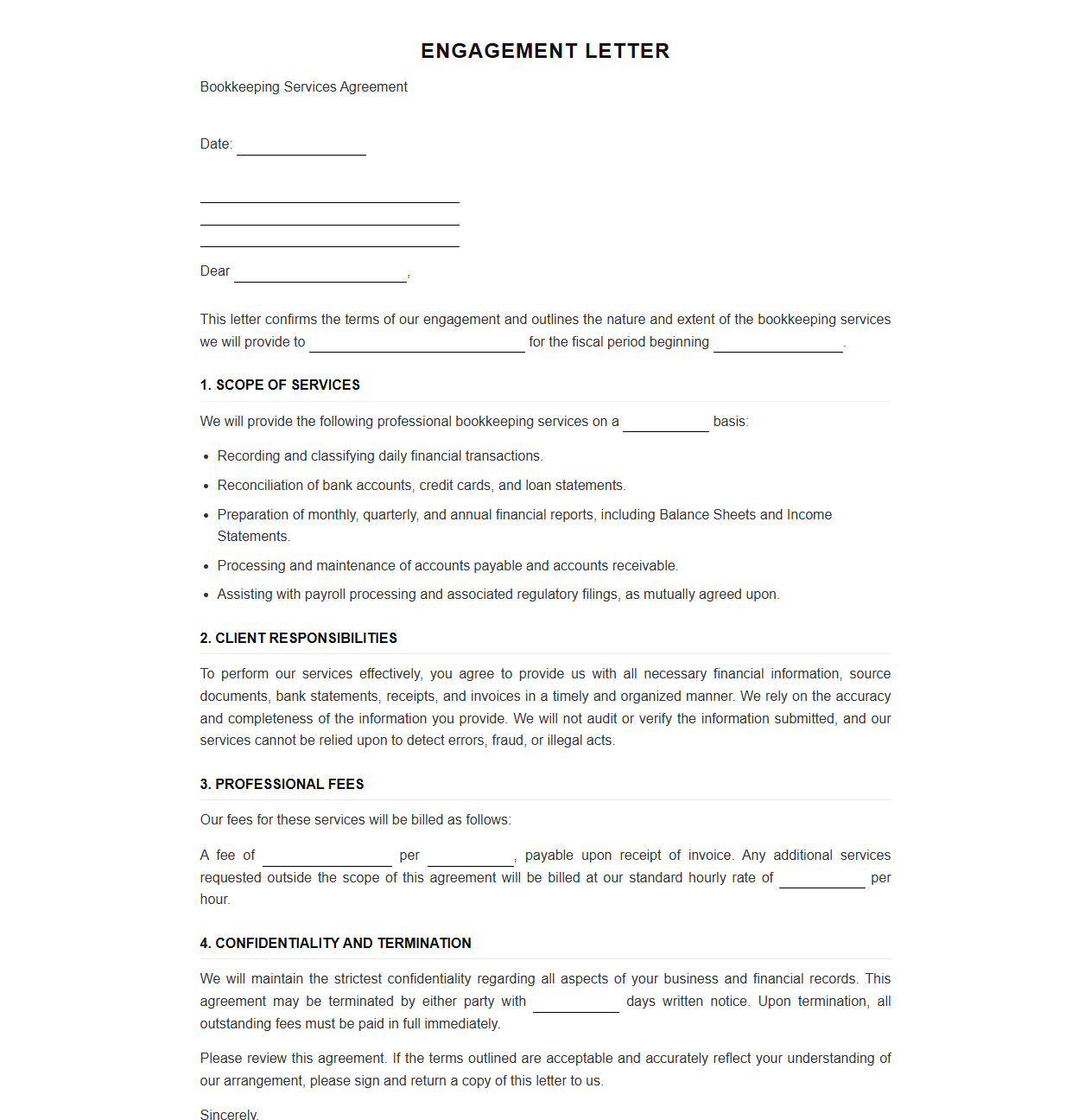 Download: .PDF
Small Business Bookkeeping Service Agreement
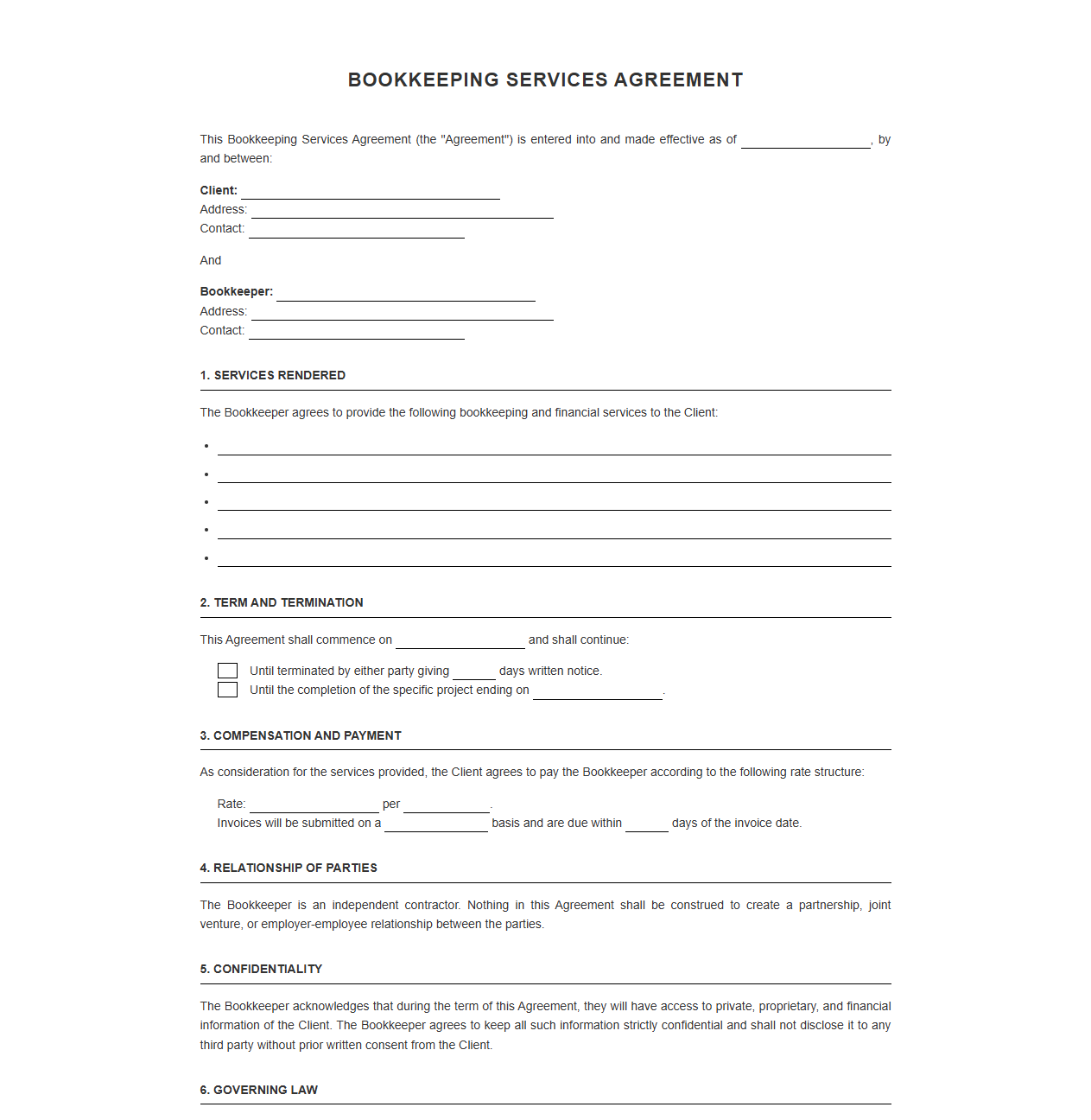 Download: .PDF
Outsourced Bookkeeping Services Contract Template
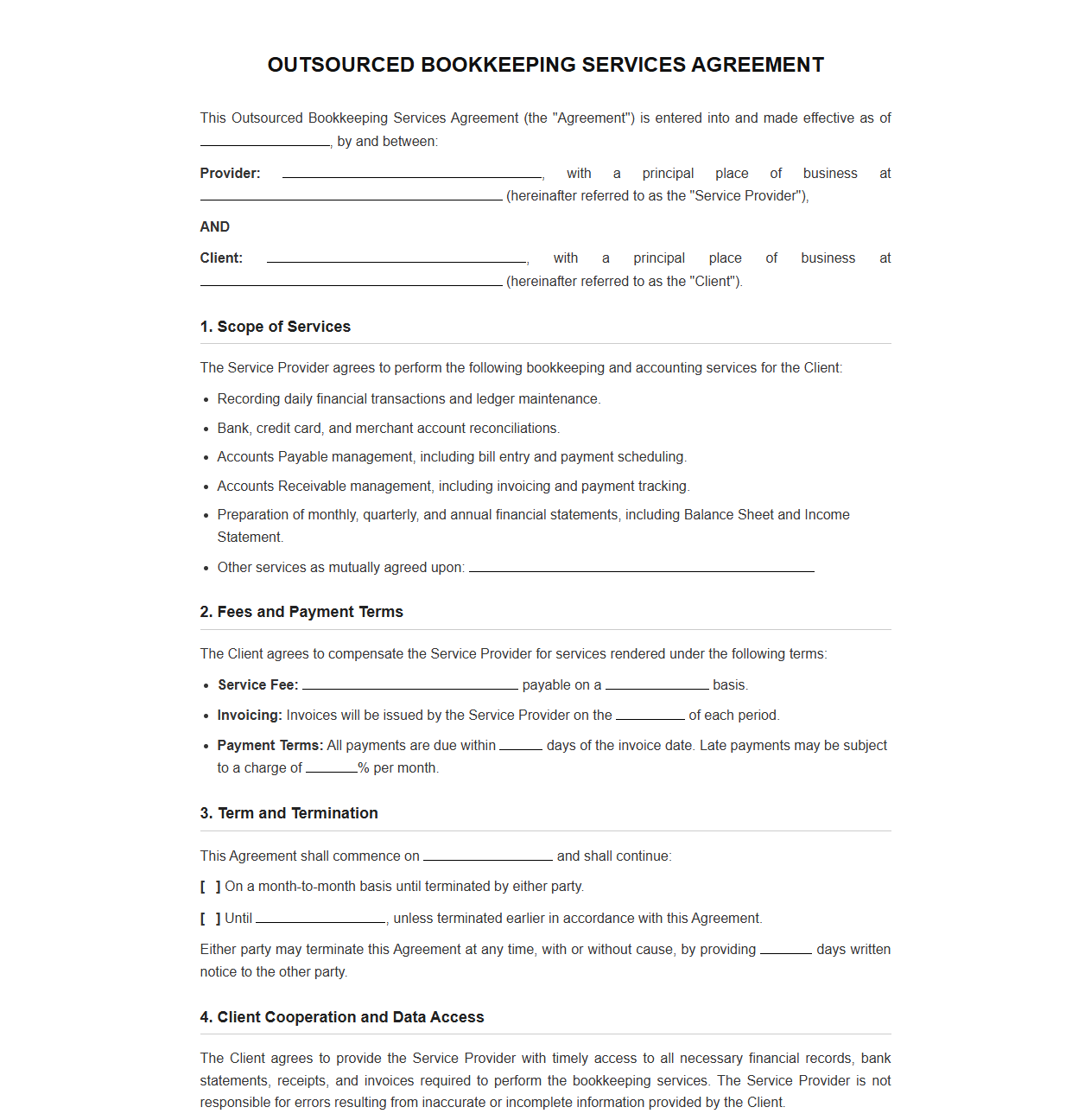 Download: .PDF
Virtual Bookkeeping Services Agreement Template
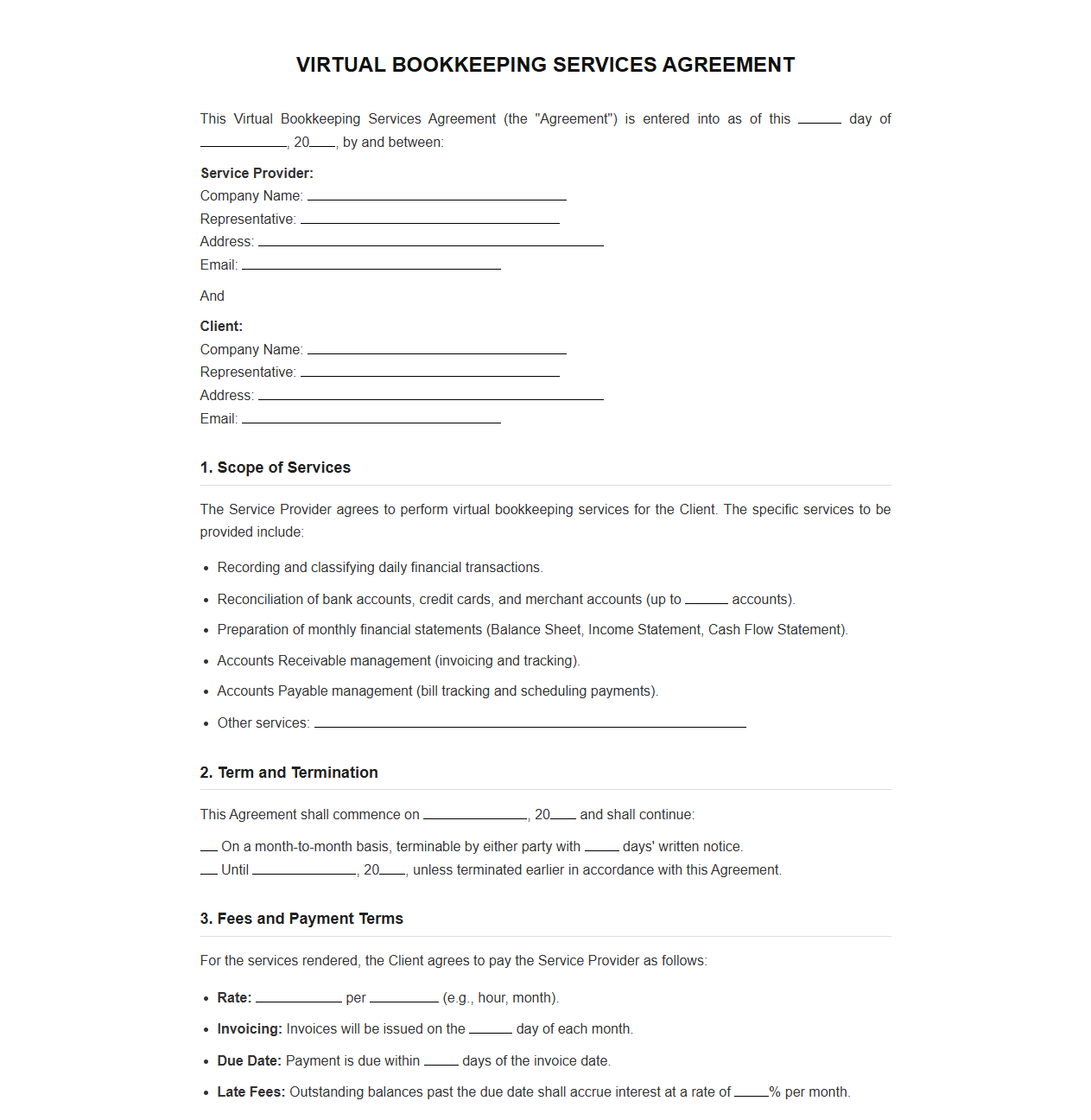 Download: .PDF
The Foundation of Trust: Why Bookkeeping Agreements Are Essential
A professional partnership thrives on clarity and mutual respect. For financial professionals and their clients, establishing this relationship requires more than a handshake; it demands a comprehensive contract. A solid bookkeeping agreement protects both the accountant and the client by clearly defining responsibilities, securing sensitive data, and mitigating financial risks. By setting clear expectations from day one, you build a professional foundation that prevents scope creep and fosters long-term business success.
Essential Clauses for Every Bookkeeping Agreement
To ensure your contract is legally robust and highly effective, certain terms must be clearly articulated. These clauses establish the operational boundaries and financial expectations for the engagement:
- Scope of Services: A detailed list of the exact tasks to be performed, such as bank reconciliations, accounts payable processing, or sales tax filing.
- Payment Terms and Fees: Details on billing frequency, acceptable payment methods, and when payments are due.
- Late Fees and Suspended Services: Consequences for overdue invoices, including interest charges and the temporary halt of bookkeeping work.
- Data Confidentiality: Strict assurances that sensitive financial documents, banking credentials, and business performance metrics remain secure.
- Termination Procedures: The specific steps and notice periods required by either party to end the contract.
Template Type 1: The Monthly Retainer Agreement
Ongoing bookkeeping requires a predictable structure. The monthly retainer agreement outlines the routine activities and regular interactions necessary to keep a business's daily finances in order.
"The Bookkeeper shall perform recurring bank reconciliations, monthly financial reporting, and standard ledger maintenance on a monthly basis, in exchange for a fixed recurring fee payable on the first business day of each billing cycle."
Template Type 2: The Clean-Up and Catch-Up Project Agreement
Unlike ongoing engagements, clean-up projects tackle historical accounting backlogs. This contract structure focuses on bringing messy books up to date within a strictly defined timeframe.
This agreement must specify the exact fiscal periods to be addressed, as well as an upfront deposit to cover the intensive labor required. Any transactional issues discovered outside the agreed-upon date range will be billed separately as out-of-scope work.
Template Type 3: Specialized Advisory and Fractional CFO Engagements
When services transition from basic data entry to high-level strategic guidance, the contract must reflect this elevated value. This agreement governs advisory work, budgeting, and performance forecasting.
Deliverables in this tier are strategic rather than purely transactional, focusing on financial planning, cash flow analysis, and executive decision support.
Customizing Templates for Client-Specific Needs
While standardized templates save time, they must be tailored to address the unique variables of each business relationship:
- Modify software access clauses to specify which accounting platforms and third-party integrations will be used.
- Establish communication response-time expectations so clients know how quickly to expect answers to their questions.
- Adjust document submission deadlines to hold clients accountable for providing receipts and bank statements on time.
Streamlining the Signing Process to Close Deals Faster
Securing a new client relies heavily on momentum. Once verbal terms are reached, sending the bookkeeping agreement promptly helps maintain momentum and begins the professional relationship on a strong note.
Leveraging modern e-signature tools and integrated onboarding workflows allows clients to review, sign, and pay their initial deposit in a single, seamless digital experience. This professional efficiency builds immediate trust and allows you to begin the actual bookkeeping work without delay.

Leave a comment