

Determining fair partner compensation is a frequent source of friction in professional partnerships, often leading to internal disputes and complex tax liabilities. Before addressing these conflicts, partners must first establish a shared understanding of how federal regulatory frameworks govern equity distributions versus service-based compensation.
Implementing structured agreements for guaranteed payments grants firms both financial predictability and tax compliance under IRS Section 707(c). However, as a crucial educational stipulation, these templates must serve as foundational frameworks rather than one-size-fits-all solutions, requiring customization to align with your specific state laws.
For example, documenting a fixed $5,000 monthly payment for managing partner services-separate from profit-share distributions-ensures clean accounting and prevents IRS reclassification. Below, we examine the legal mechanics of guaranteed payments, provide customizable agreement templates, and outline best practices for seamless integration into your partnership structure.
Guaranteed Payment Agreement for Partners
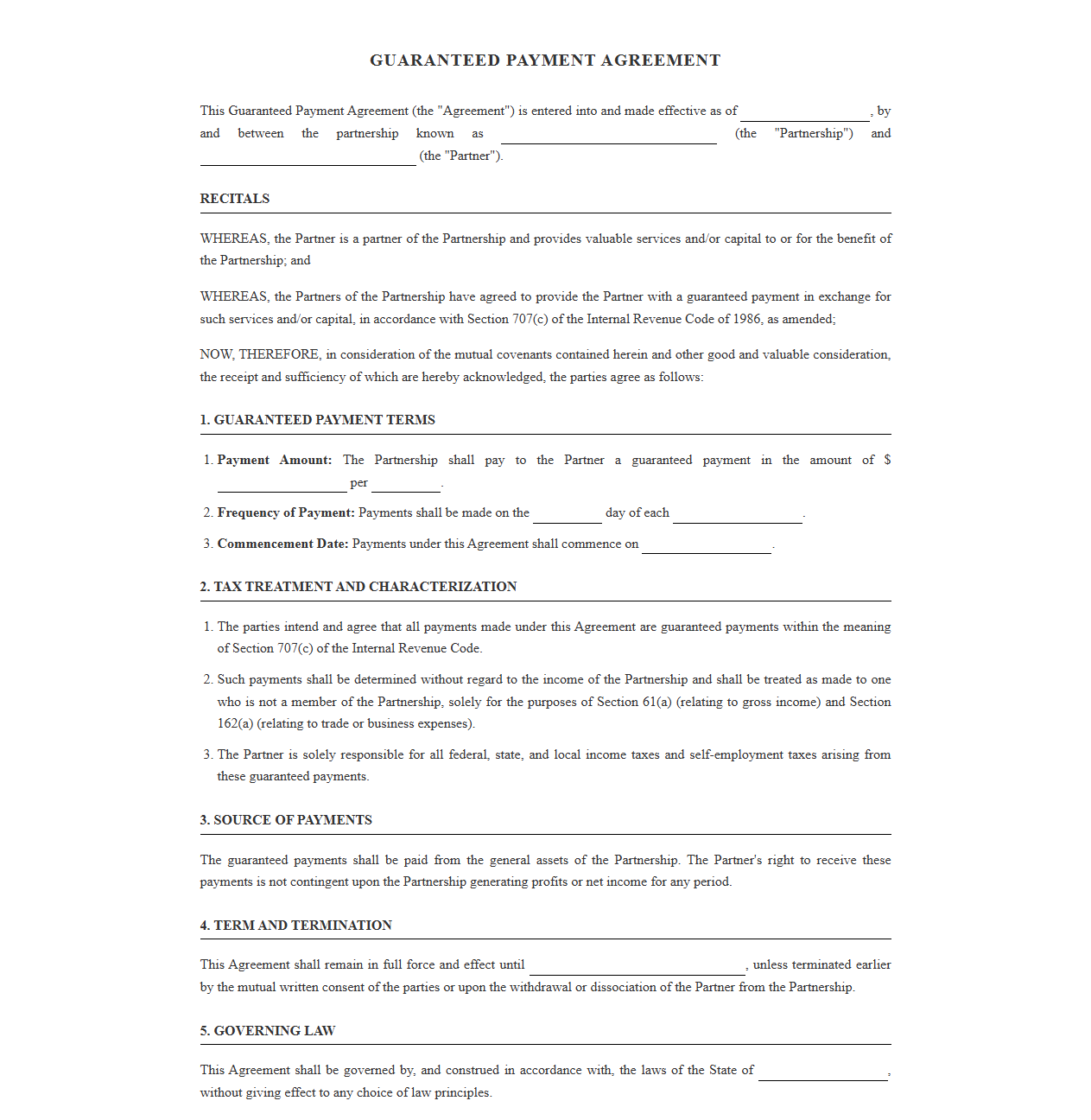 Download: .PDF
Partnership Guaranteed Payments Contract Template
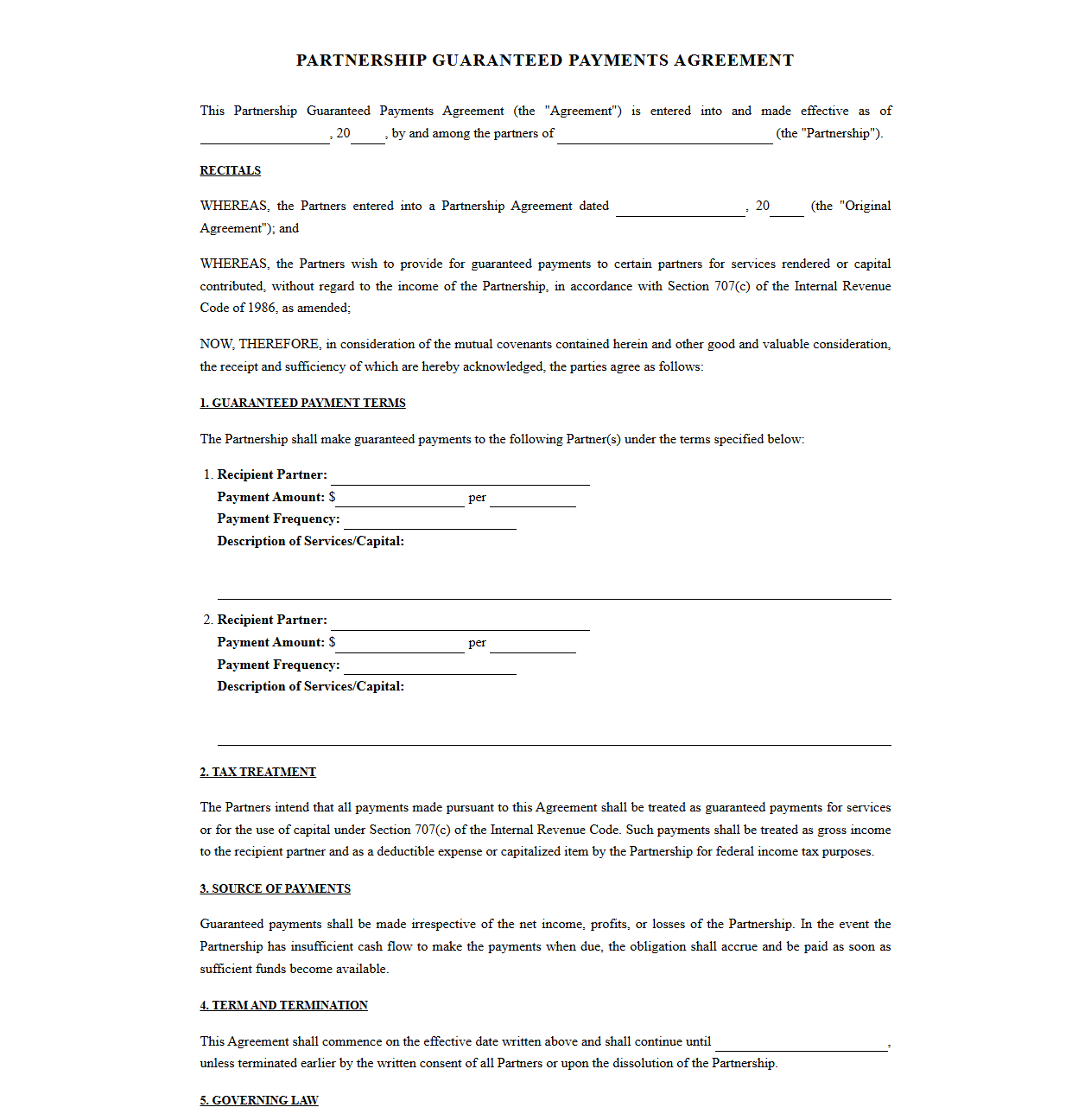 Download: .PDF
Partner Guaranteed Distribution Agreement Form
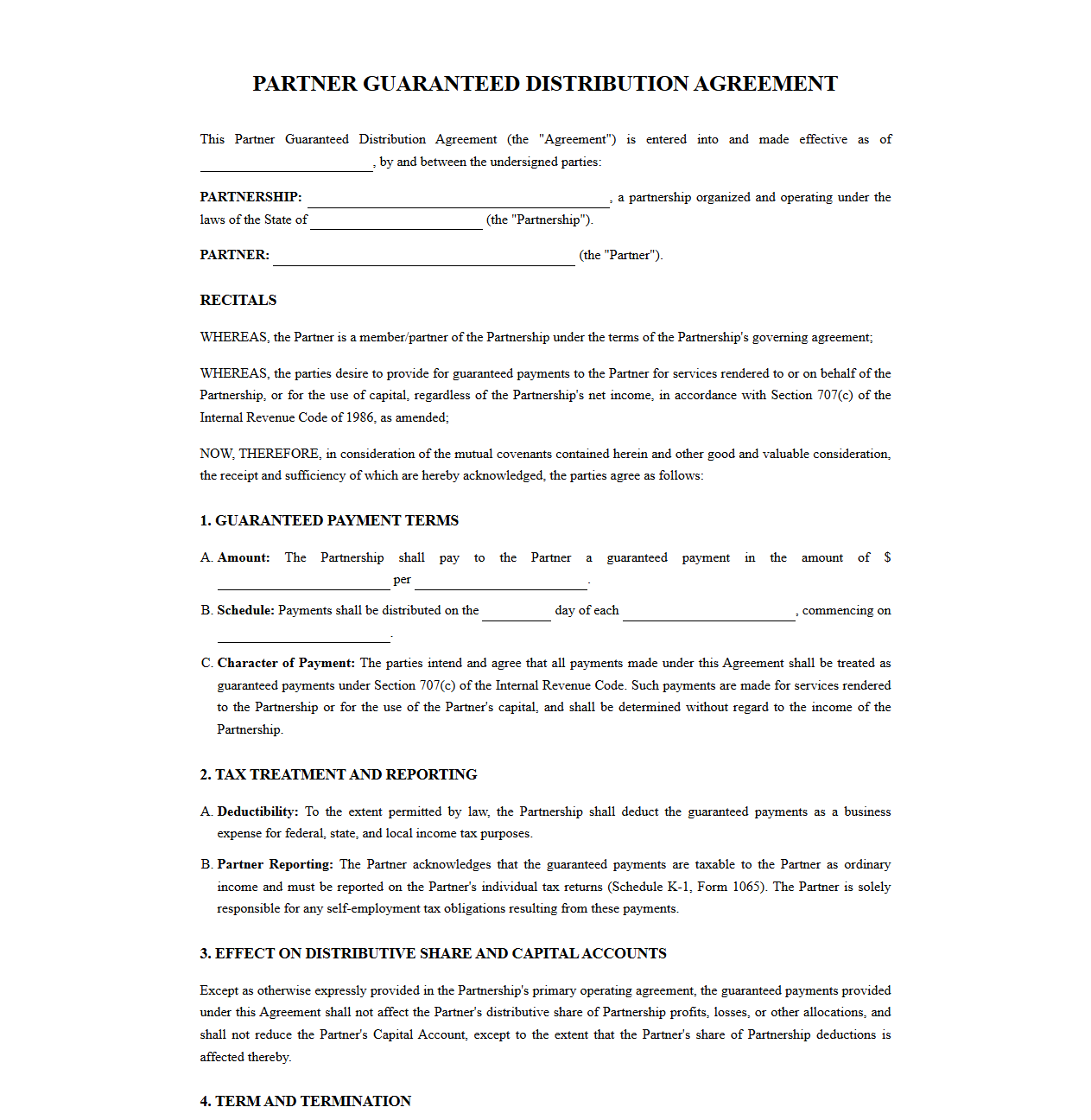 Download: .PDF
Agreement for Guaranteed Partner Compensation
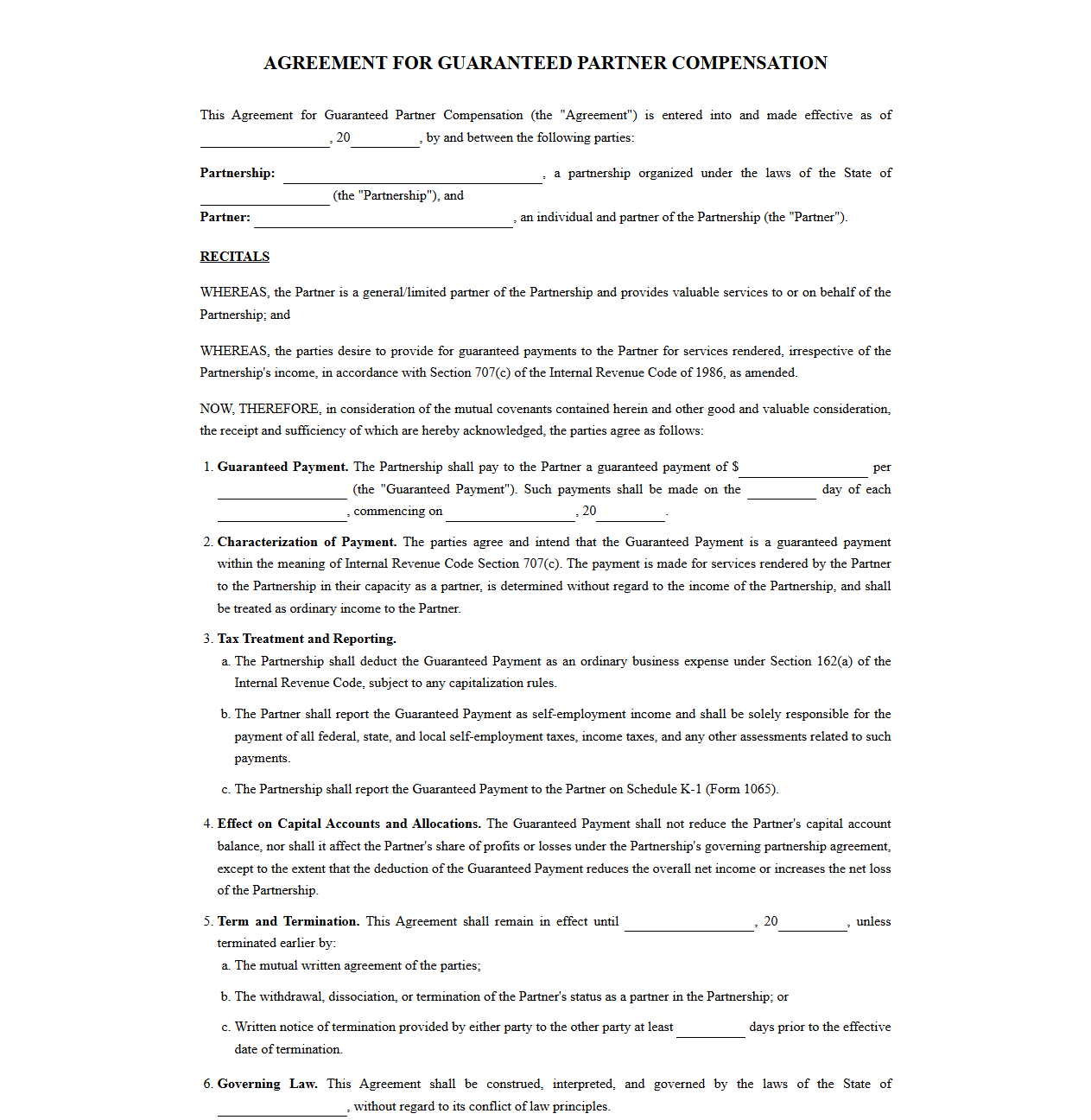 Download: .PDF
Partnership Agreement Addendum for Guaranteed Payments
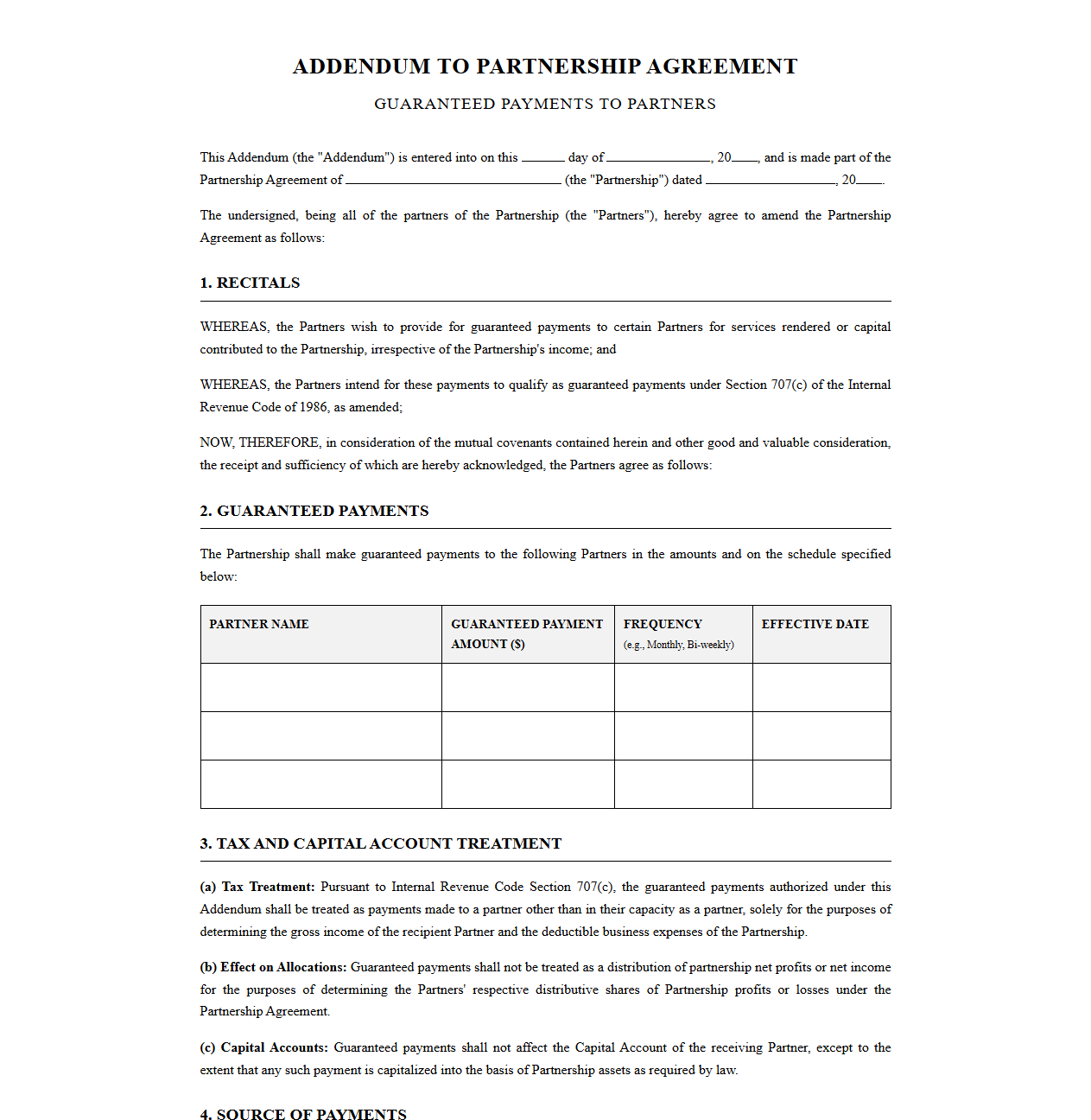 Download: .PDF
LLC Member Guaranteed Payment Agreement
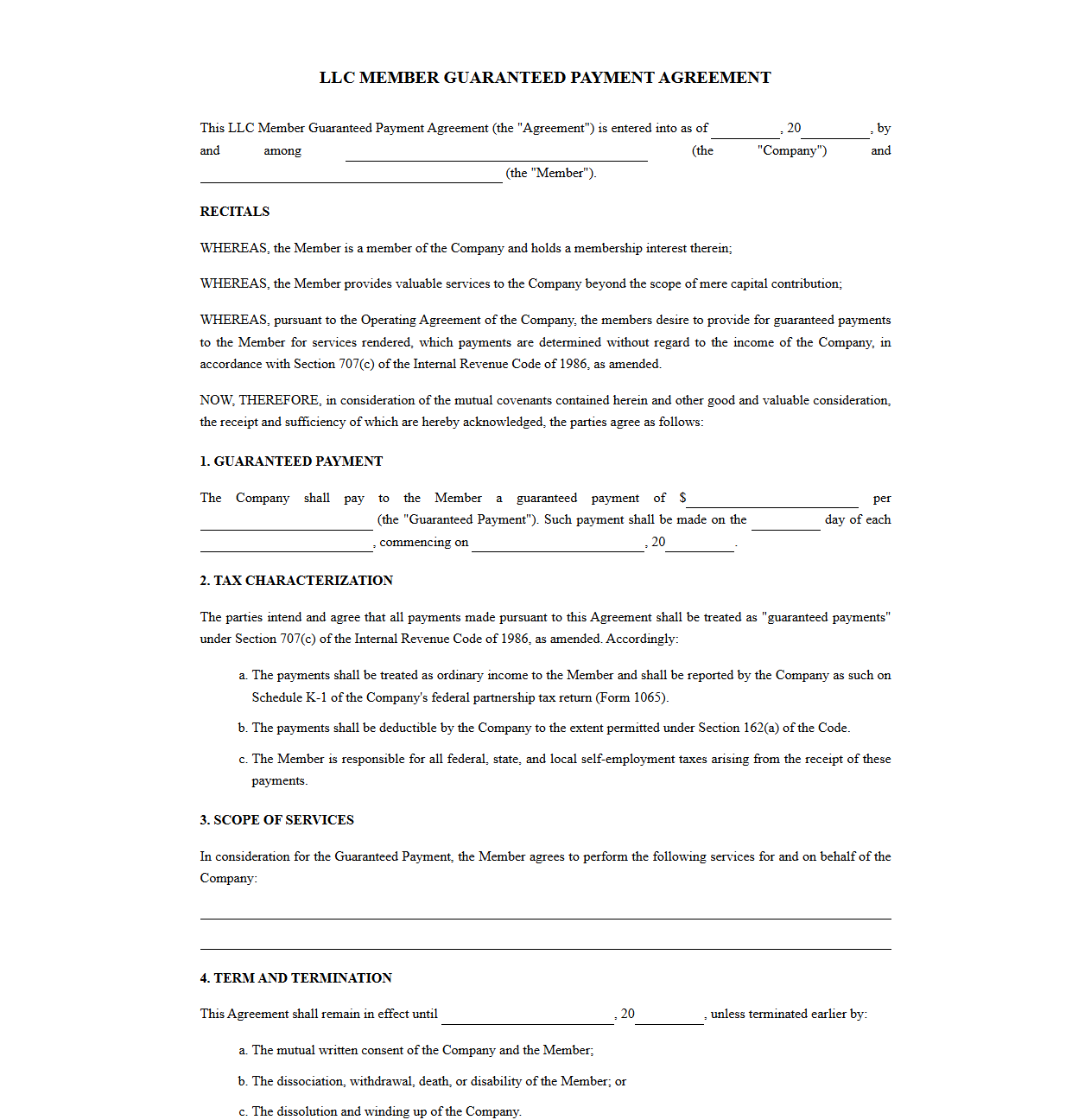 Download: .PDF
Guaranteed Payments to Partners Agreement Template
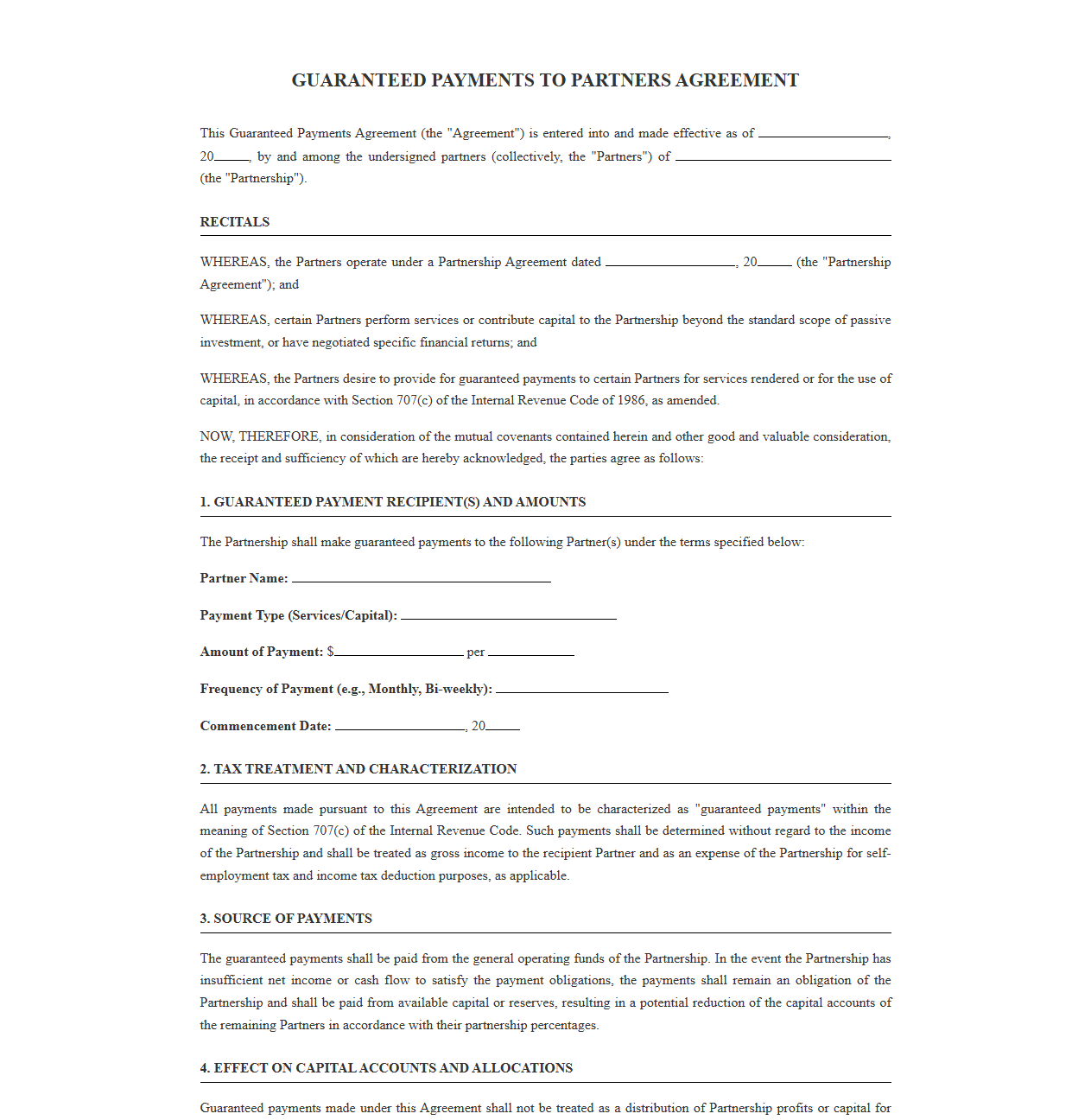 Download: .PDF
Partner Guaranteed Payment Provisions Template
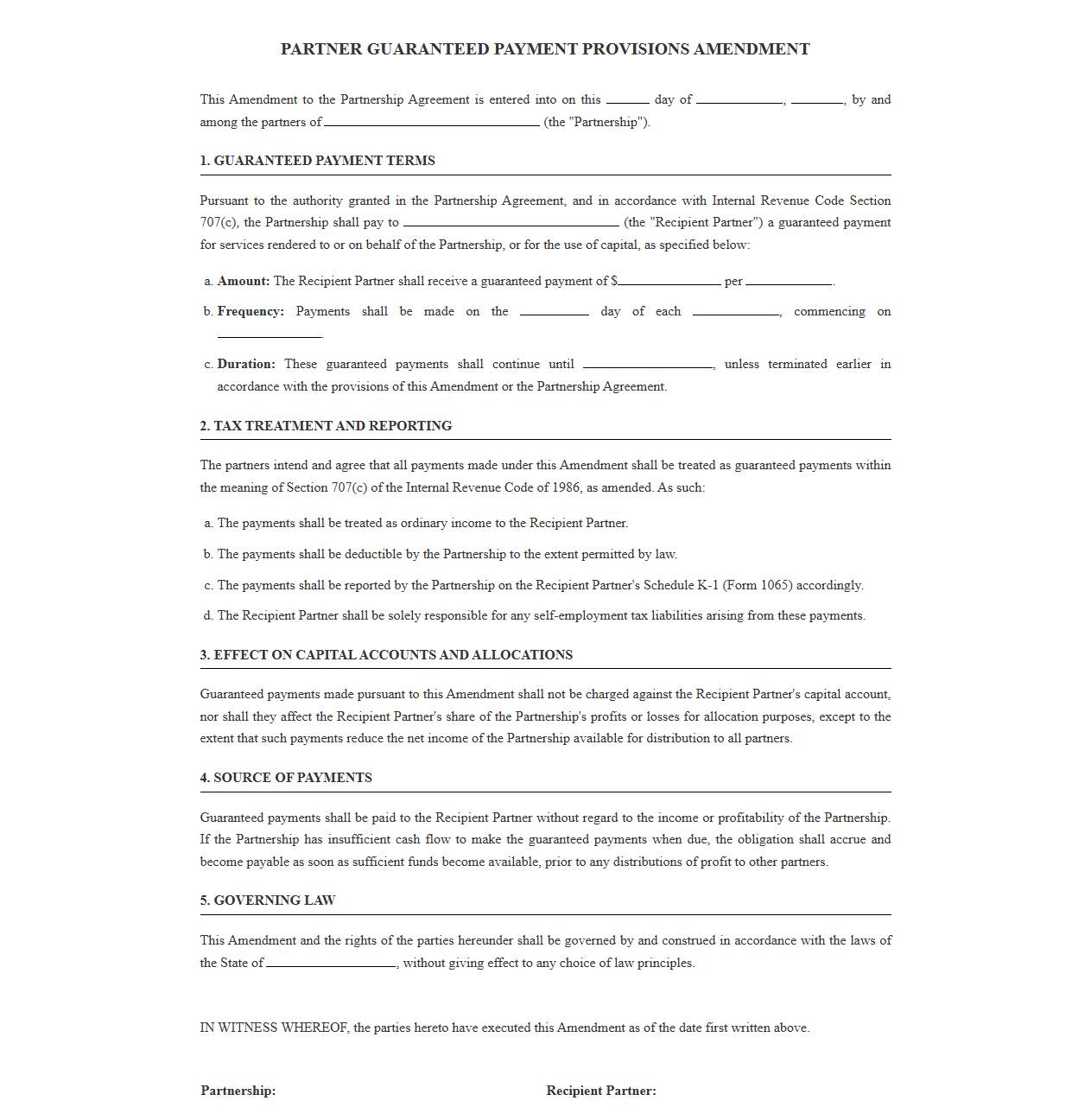 Download: .PDF
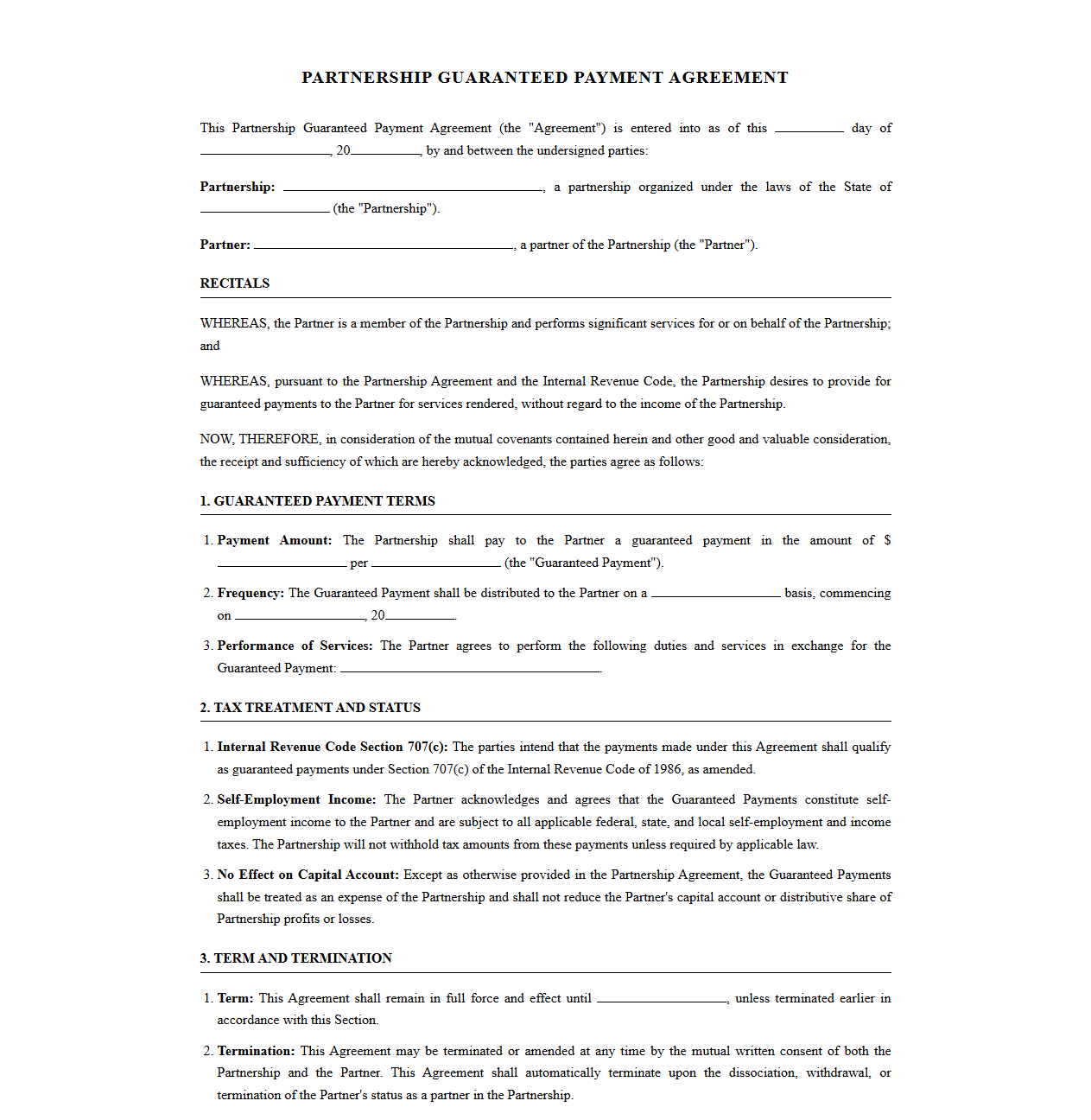
Standard Partnership Guaranteed Payment Contract
 Download: .PDF
Navigating Partnership Compensation Obstacles
Partnerships often begin with a shared vision and high enthusiasm, but financial disagreements can quickly strain even the most solid professional relationships. Disagreements over equity, workload disparities, and profit-sharing models are among the most common sources of friction. When one partner contributes more daily operational effort than another, standard profit splits can feel inherently unfair. To resolve these challenges, partners need a reliable, structured mechanism. Guaranteed payments offer a proven solution, establishing clear financial ground rules that reward active contribution regardless of fluctuating company profits.
Understanding Guaranteed Payments in Partnerships
To understand how these payments resolve disputes, it is crucial to distinguish them from standard profit distributions. While typical distributions depend entirely on the business generating profit, guaranteed payments are paid regardless of the partnership's net income. In practice, they function similarly to a salary for performing partners. This structure ensures that partners who manage day-to-day operations receive reliable, consistent compensation for their labor, independent of the company's overall financial performance during a given month or quarter.
Strategic Advantages of Implementing Guaranteed Payments
Implementing a structured payment system provides significant benefits for both the individual partners and the collective business entity. These advantages help stabilize operations and align financial incentives.
- Financial Predictability: Active partners can rely on a steady cash flow to cover personal living expenses, removing the anxiety of seasonal revenue dips.
- Tax Deductions: The partnership entity can generally deduct guaranteed payments as ordinary business expenses, reducing the overall taxable net income of the partnership.
- Fair Resource Allocation: It ensures partners who dedicate full-time hours are compensated fairly compared to silent or investing partners.
Essential Elements of a Guaranteed Payment Agreement Template
To ensure legal clarity and avoid future misunderstandings, partners should formalize this arrangement within a written agreement. A robust template must include several critical clauses to define the scope of the payments.
- Description of Services Rendered: Clearly outline the specific roles, duties, and time commitments expected from the partner receiving the payment.
- Payment Terms and Frequency: Specify the exact dollar amount to be paid and the schedule of distribution, whether weekly, bi-weekly, or monthly.
- Adjustment Conditions: Define the criteria and timeline for reviewing and adjusting payment amounts based on performance or market changes.
- Impact on Capital Accounts: Detail how these payments affect the partner's capital account and overall equity structure.
Navigating Tax Implications and Compliance
While guaranteed payments offer financial stability, they also carry specific tax consequences that partners must navigate carefully. Because partners are not classified as employees, these payments are not subject to standard W-2 payroll withholding. Instead, the receiving partner is fully responsible for self-employment tax obligations, covering both the employer and employee portions of Social Security and Medicare taxes.
The partnership reports these transactions on Schedule K-1 of Form 1065, distinguishing them clearly from ordinary business income. To ensure full compliance with internal revenue codes, partners should consult official guidelines from the Internal Revenue Service before finalizing their agreements.
Customizing Your Agreement Template to Fit Your Business
Every business operates under unique circumstances, meaning a generic contract template will rarely suffice. Partners must actively adapt any template to reflect their specific contribution levels, day-to-day roles, and overall partnership structure. It is essential to balance the guaranteed compensation with the long-term growth objectives of the firm.
"The most successful partnerships customize their compensation structures to reflect actual operational value, ensuring that active contributors are rewarded while maintaining the financial health of the collective enterprise."
Fostering Long-Term Partnership Harmony
Formalizing compensation mechanisms through a written, mutually agreed-upon template is a cornerstone of business longevity. By addressing potential income disparities proactively, partners prevent future litigation and eliminate underlying resentment. Clear financial agreements build deep professional trust, allowing co-owners to focus their energy on scaling the business rather than disputing financial contributions. Implementing these structured payments ensures a fair, transparent, and sustainable path forward for all parties involved.

Leave a comment