

Navigating the complexities of shared tax responsibilities often leaves corporate partners and co-filers vulnerable to unexpected tax assessments and devastating financial disputes. Under the strict doctrine of joint and several liability, taxing authorities can legally pursue any single party for the entirety of a shared tax debt, regardless of prior informal agreements. Understanding this systemic exposure is the first step toward safeguarding your balance sheet.
Our professionally drafted indemnification templates grant organizations the precise legal mechanism needed to allocate these liabilities equitably. However, it is important to stipulate that these frameworks must be tailored to align with specific state jurisdictions and unique corporate structures. For instance, in high-stakes corporate mergers or joint ventures, a robust indemnification clause ensures a buyer is not held financially responsible for a seller's historical tax discrepancies.
In this article, we will dissect the essential clauses of these templates, explore key risk-allocation strategies, and provide customizable drafts to secure your next transaction.
Joint and Several Tax Liability Indemnity Agreement
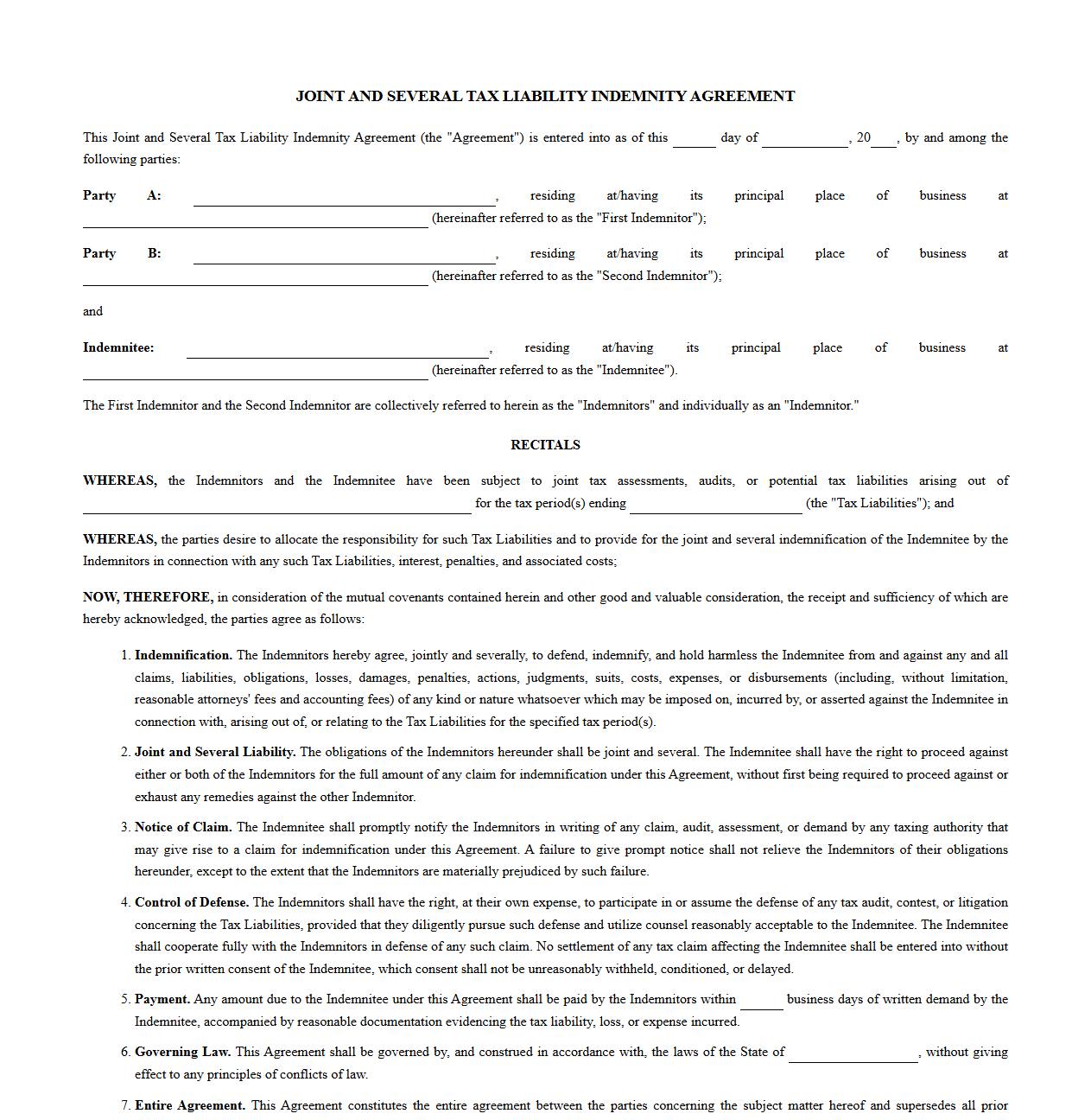 Download: .PDF
Mutual Tax Indemnification and Hold Harmless Agreement
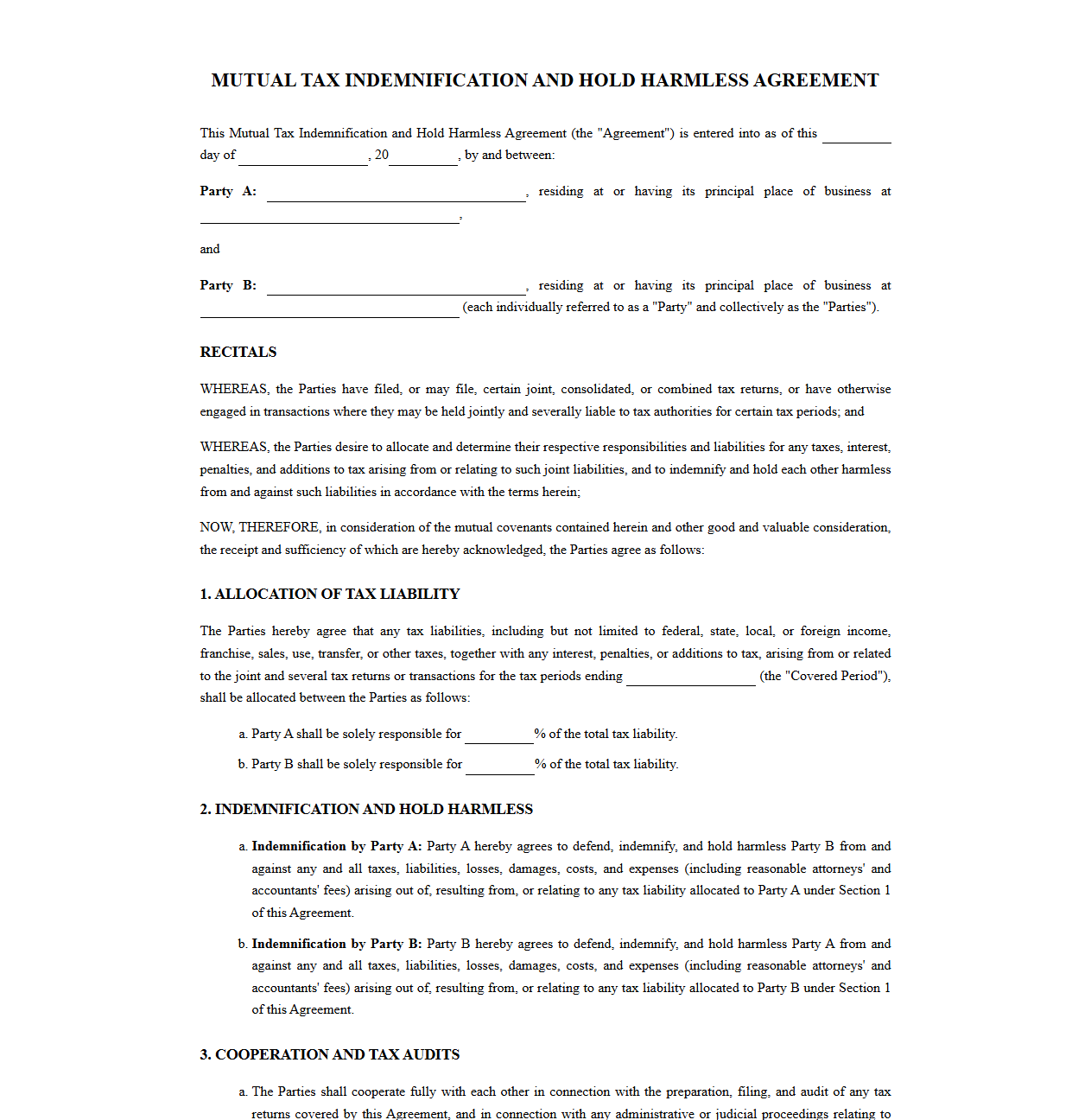 Download: .PDF
Co-Obligor Tax Liability Indemnity Deed
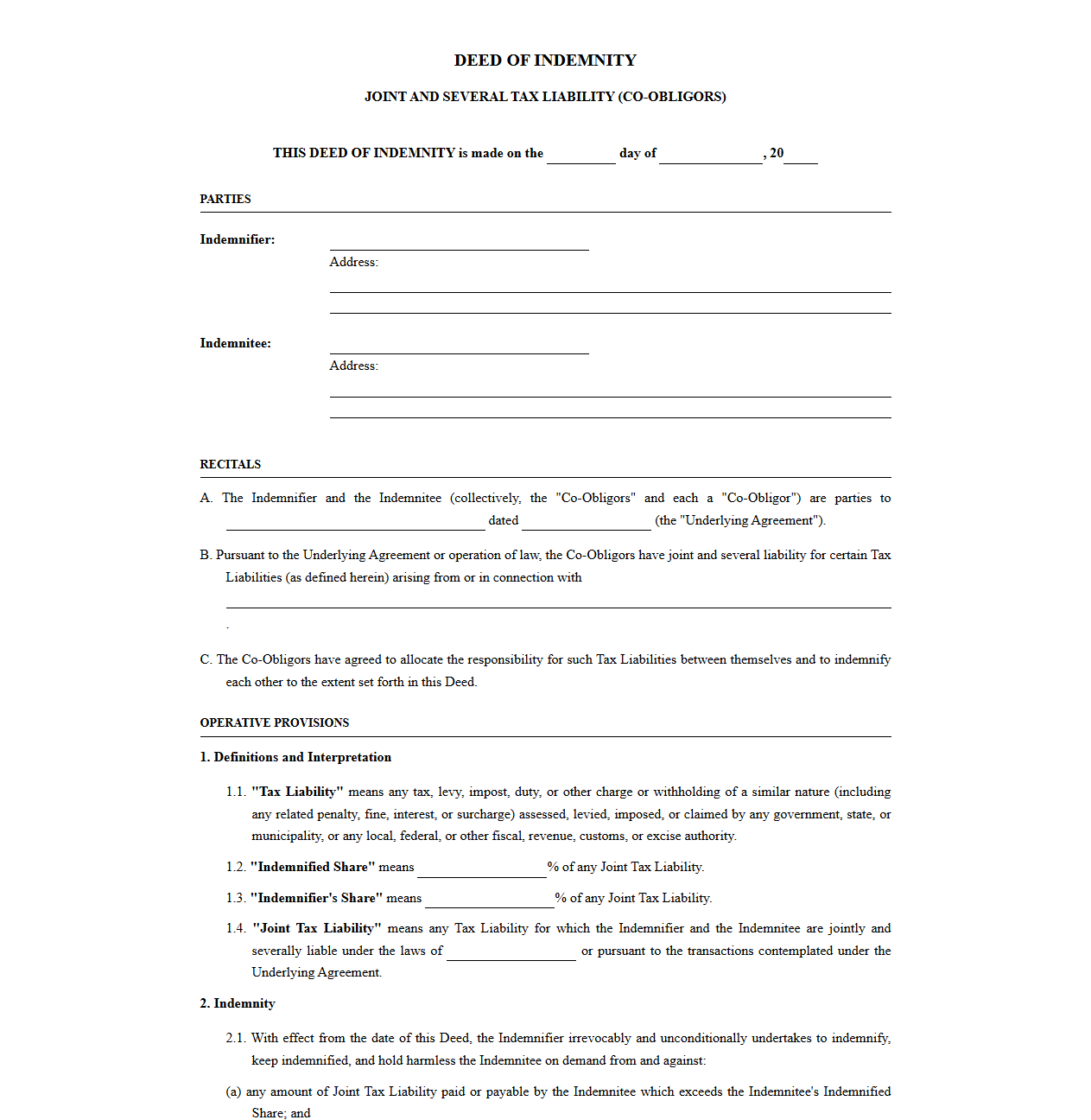 Download: .PDF
Joint Tax Liability Allocation and Indemnity Agreement
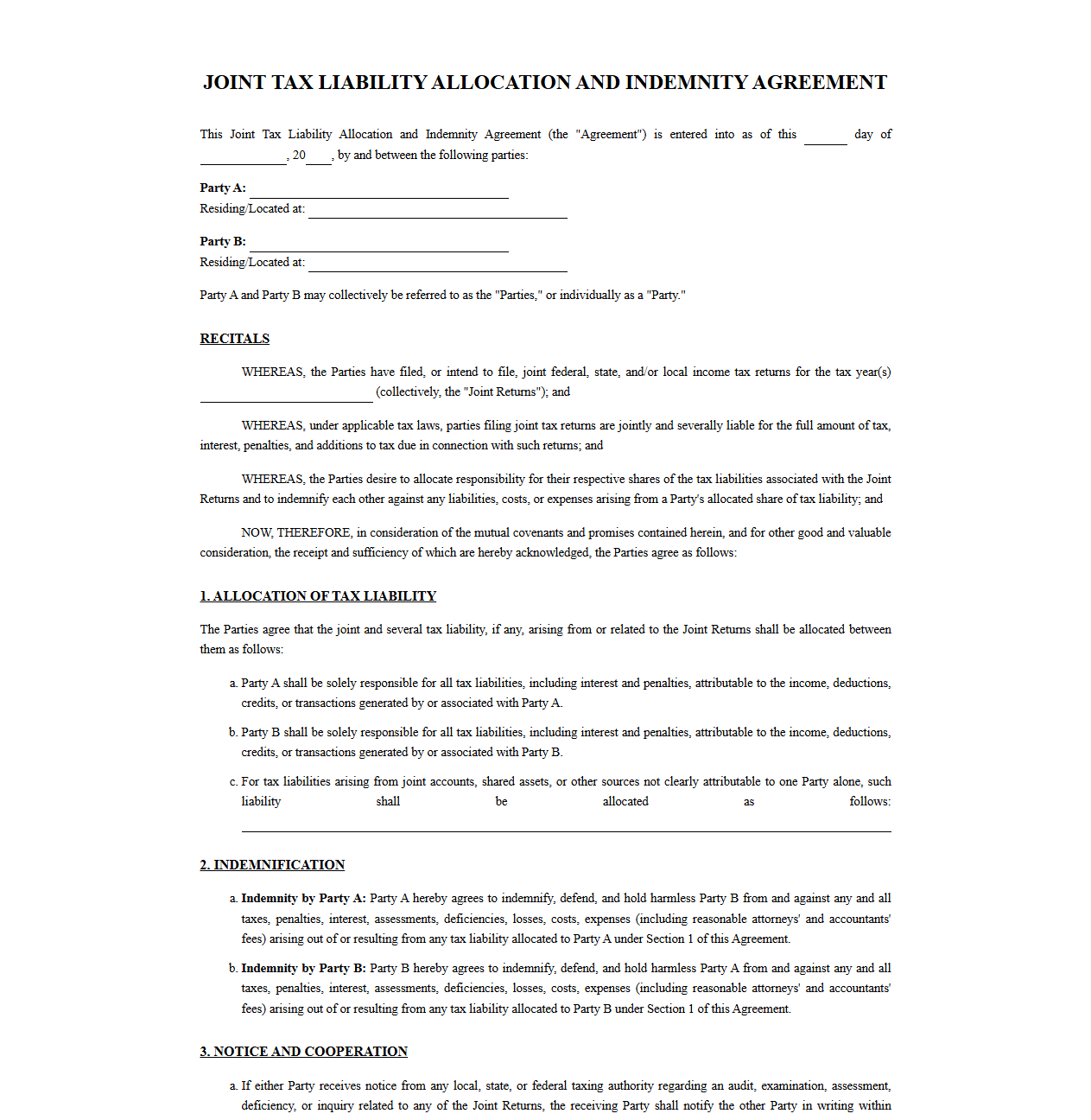 Download: .PDF
Tax Indemnity Agreement for Joint and Several Liabilities
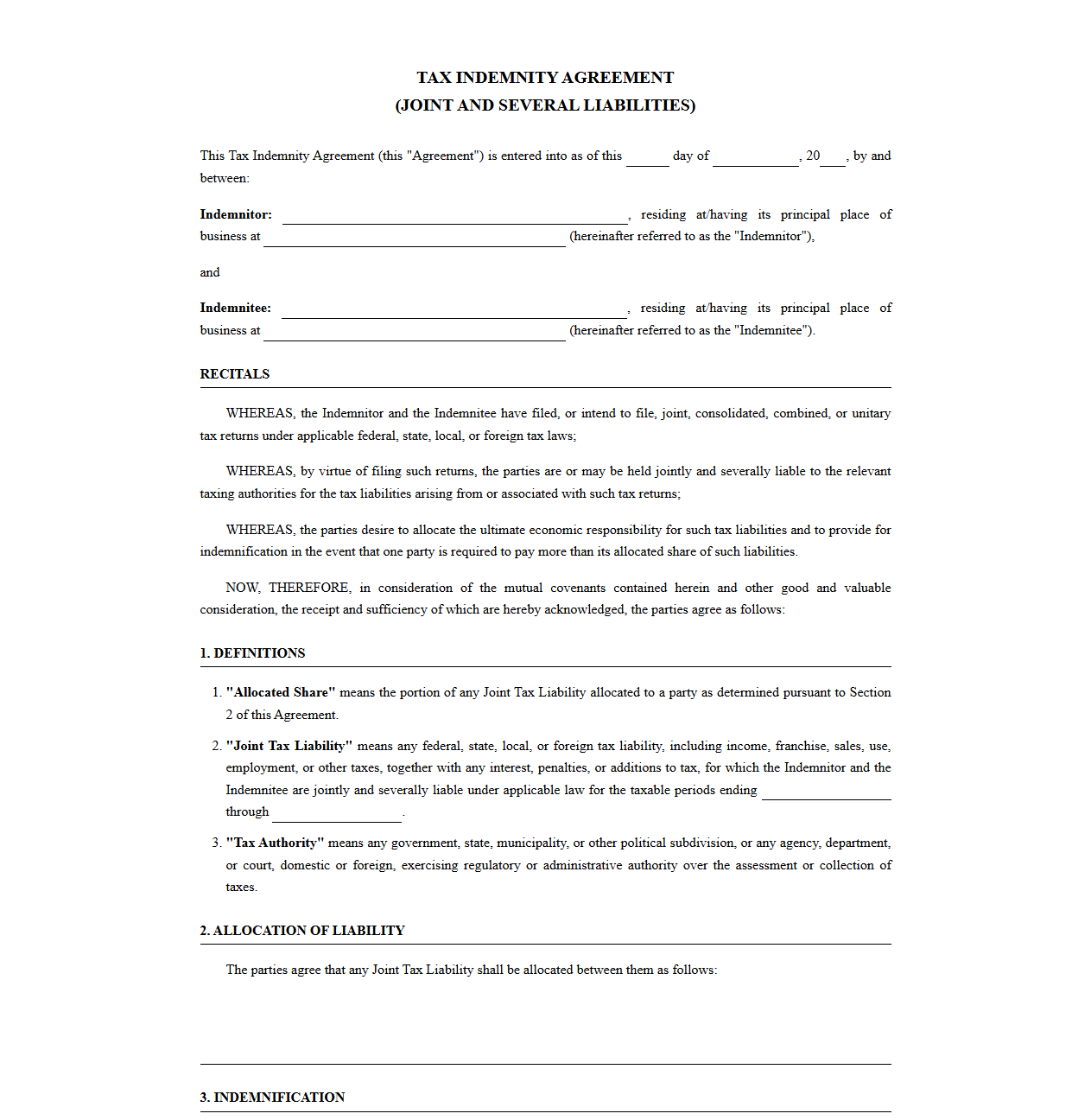 Download: .PDF
Corporate Joint and Several Tax Indemnification Agreement
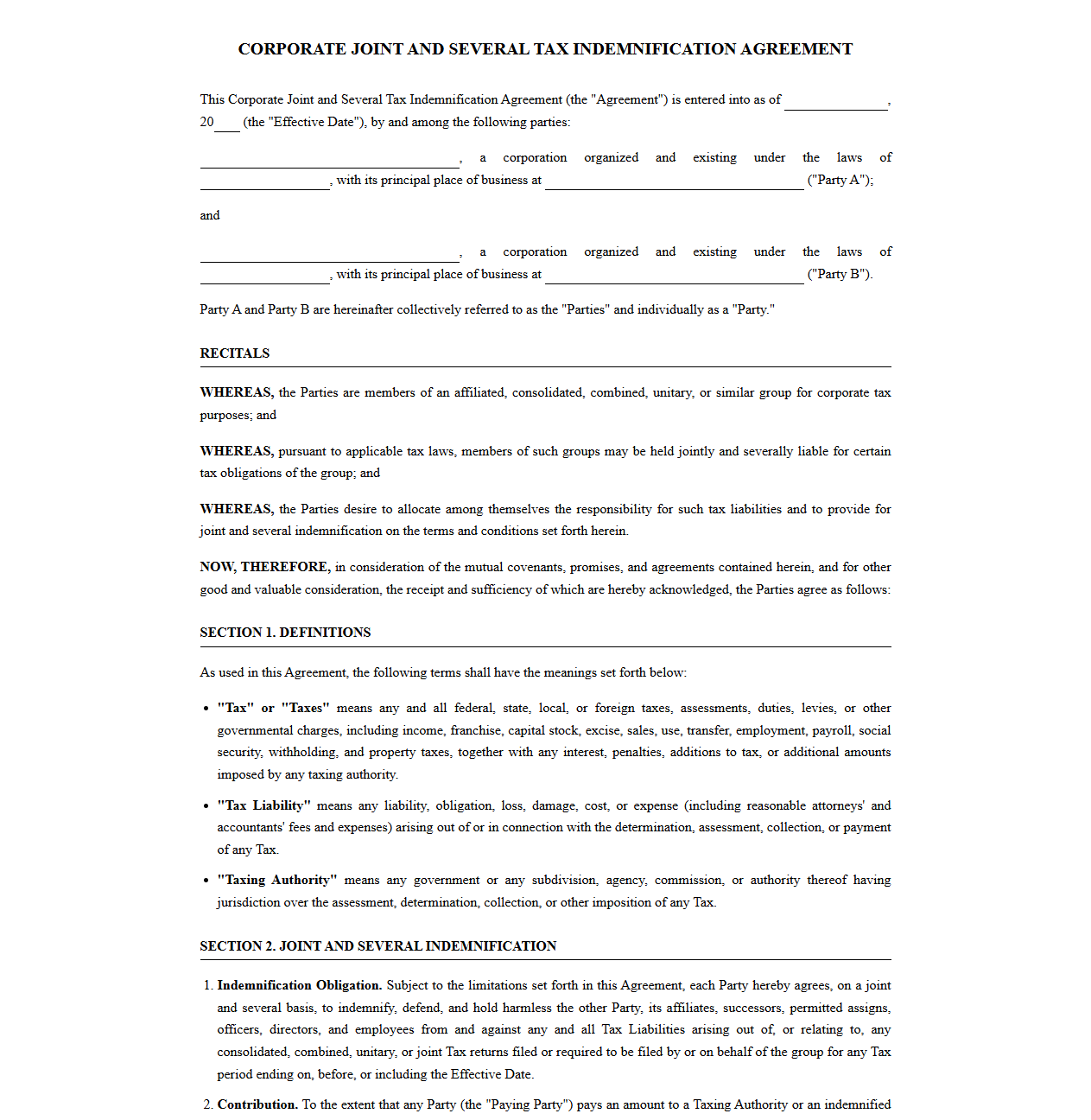 Download: .PDF
Shareholder Joint and Several Tax Indemnity Template
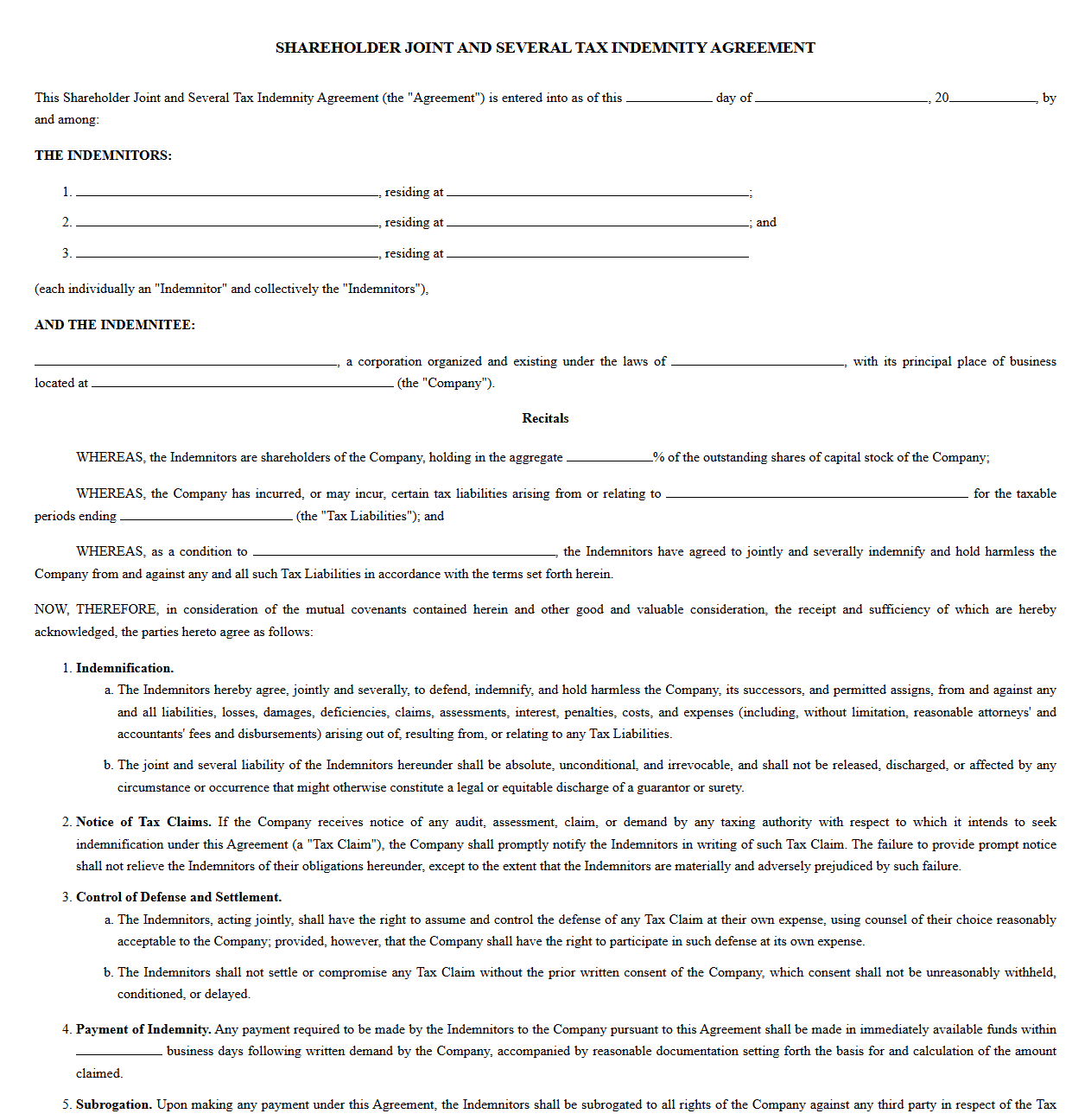 Download: .PDF
Joint Venture Tax Liability Indemnification Agreement
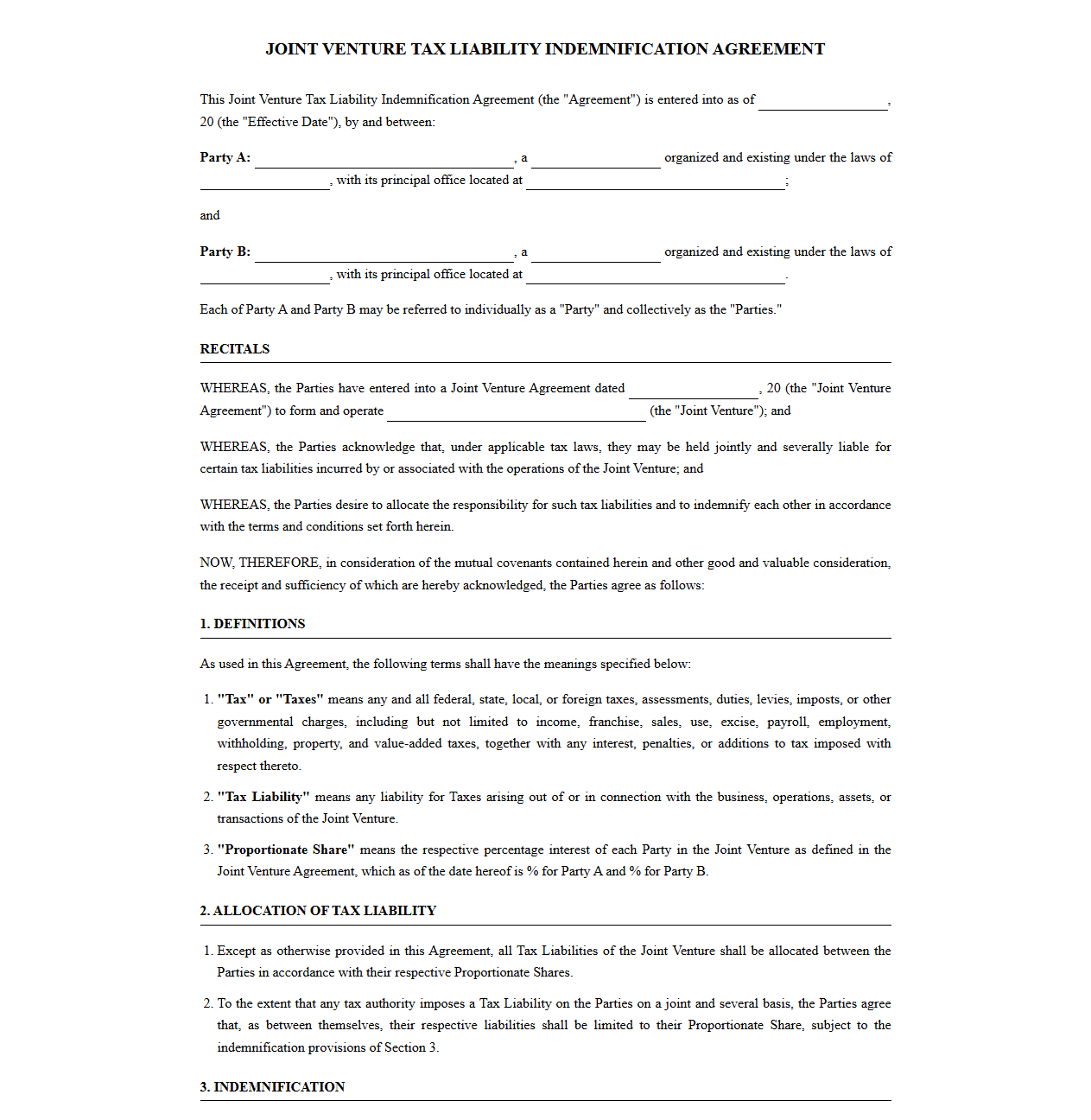 Download: .PDF
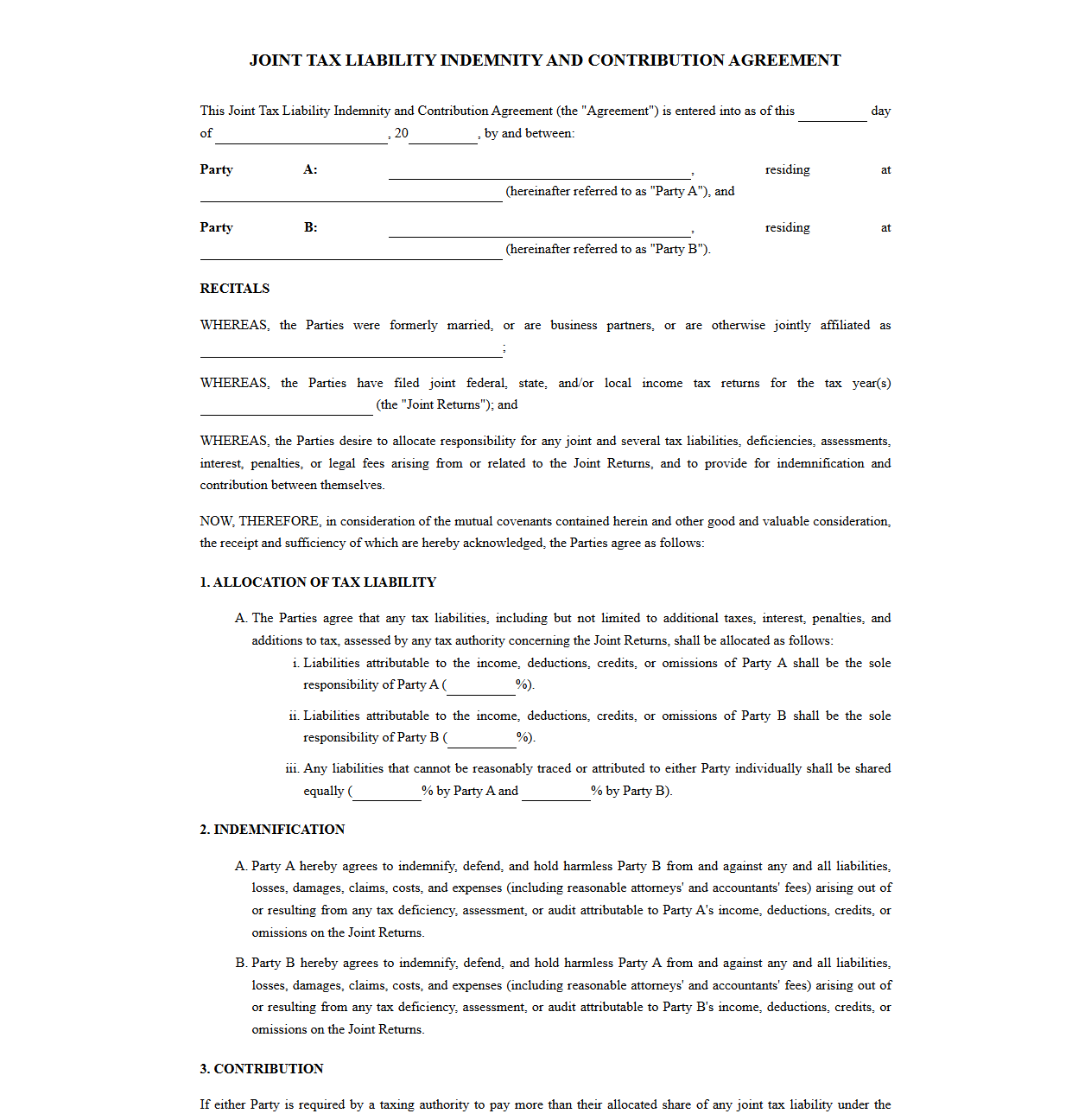
Joint Tax Liability Indemnity and Contribution Agreement
 Download: .PDF
Understanding Joint and Several Liability in Shared Tax Risks
In the corporate world, business transactions, mergers, and consolidated group structures often bring hidden financial dangers. One of the most significant hazards is joint and several liability. Under this legal doctrine, tax authorities can hold any single member of a consolidated group responsible for the entire tax liability of the whole group. This means your business could be forced to pay outstanding taxes incurred by an affiliate or a former subsidiary, regardless of your actual share of the liability.
This collective exposure poses a severe threat to cash flow, corporate valuations, and investor relations. When entering joint ventures or acquisitions, understanding how these liabilities transfer and attach is critical to protecting corporate assets from unexpected government collections. Managing this risk proactively is vital for corporate survival.
The Strategic Role of Indemnification Agreements
To shield themselves from the devastating financial impact of shared tax liabilities, businesses utilize a Joint and Several Liability Indemnification Agreement. This contract acts as a powerful shield during corporate transactions, reorganizations, or partnerships. By establishing clear legal boundaries, the agreement ensures that the party responsible for generating a tax liability is the one who bears the financial burden. This shifts the risk away from innocent buyers or affiliates, allowing transactions to proceed with confidence.
Without such an agreement, a company remains at the mercy of tax authorities who prefer the path of least resistance when collecting unpaid revenue. A well-drafted indemnification agreement transforms a vague, collective threat into a manageable, contractually allocated risk. It provides the transactional parties with the predictability necessary to secure financing and finalize high-stakes deals.
Essential Clauses in a Tax Indemnification Template
A robust tax indemnification template must contain precise language to prevent future disputes. To ensure comprehensive coverage, several foundational clauses must be embedded into the core structure of the document.
- Scope of Indemnity: Clearly defines which specific taxes, penalties, interest, and legal fees are covered under the agreement.
- Survival Periods: Establishes the timeframe during which a party can bring an indemnity claim, typically aligned with the statute of limitations for the relevant tax authorities.
- Payment Mechanics: Outlines the exact process, timeline, and gross-up provisions for making indemnity payments once a liability is finalized.
Methods for Fair Allocation of Tax Liabilities
A fair allocation methodology is the cornerstone of any tax indemnification agreement, particularly during business acquisitions. Parties must agree on how to divide tax responsibilities for periods overlapping the transaction date. This prevents overlapping claims and establishes a clear timeline for accountability.
- Pre-Closing Tax Period: The seller assumes full responsibility for all taxes accrued up to the closing date of the transaction.
- Post-Closing Tax Period: The buyer assumes responsibility for all taxes generated by the operations of the acquired entity after the closing date.
- Straddle Period Allocation: For tax years that span both pre- and post-closing dates, liabilities are allocated chronologically or based on an interim closing of the books.
Managing Tax Audits and Dispute Resolution
When tax authorities initiate an audit, conflicts can quickly arise between the buyer and the seller regarding who should defend the position. An effective agreement must establish clear ground rules for audit control. Generally, the party that bears the ultimate financial risk of the adjustment should maintain control over the defense, but they must keep the other party informed and obtain consent for any settlements that impact them.
In the event of a disagreement regarding tax filings or audit strategies, the parties shall submit the matter to an independent, nationally recognized accounting firm for binding arbitration, ensuring a swift and expert resolution without resorting to costly litigation.
Best Practices for Drafting Tax Indemnity Templates
To construct a reliable defense against shared tax liabilities, legal and financial teams must pay close attention to the structural details of their templates. Standard templates should be treated as living documents that require regular updates to reflect changing regulatory environments.
- Avoid ambiguous language regarding the definition of taxes to prevent the exclusion of municipal or foreign levies.
- Coordinate closely with specialized tax counsel to ensure alignment with local tax codes and international regulations.
- Incorporate net-of-tax provisions that account for any tax benefits the indemnified party might receive as a result of the loss.
- Establish secure escrow accounts or holdbacks to guarantee funds are available if an indemnity event occurs.
Securing Your Business Against Collective Tax Liabilities
Navigating joint and several tax liabilities requires strategic foresight and rigorous legal planning. Businesses cannot afford to rely on verbal agreements or weak contractual clauses when dealing with aggressive tax authorities. By implementing a customized, robust tax indemnification agreement, companies can insulate themselves from the financial mistakes of their affiliates and business partners.
Proactive planning and routine updates to your indemnification templates ensure your business remains secure against unexpected financial exposure. Safeguarding your organization's future begins with establishing clear boundaries of liability today.

Leave a comment