

In the high-stakes arena of mergers and acquisitions, dealmakers frequently struggle with hidden financial liabilities, where a single overlooked balance sheet discrepancy can derail an entire transaction. Navigating these complexities requires rigorous financial due diligence; however, drafting comprehensive oversight frameworks from scratch for every transaction often delays critical deal momentum.
Implementing standardized M&A financial due diligence agreement templates bridges this gap, granting acquisition teams immediate operational efficiency and a repeatable mechanism for risk mitigation. While these templates must be viewed as strategic baselines rather than rigid substitutes for bespoke legal counsel, they ensure that critical variables-such as historical EBITDA quality, working capital pegs, and debt-like items-are systematically scrutinized.
Ultimately, utilizing these structured resources safeguards buyer interests and ensures transaction integrity. In this article, we will examine how to leverage these templates to streamline buyer-seller alignment, establish clear investigative boundaries, and significantly reduce post-closing transaction risks.
M&A Financial Due Diligence Agreement Template
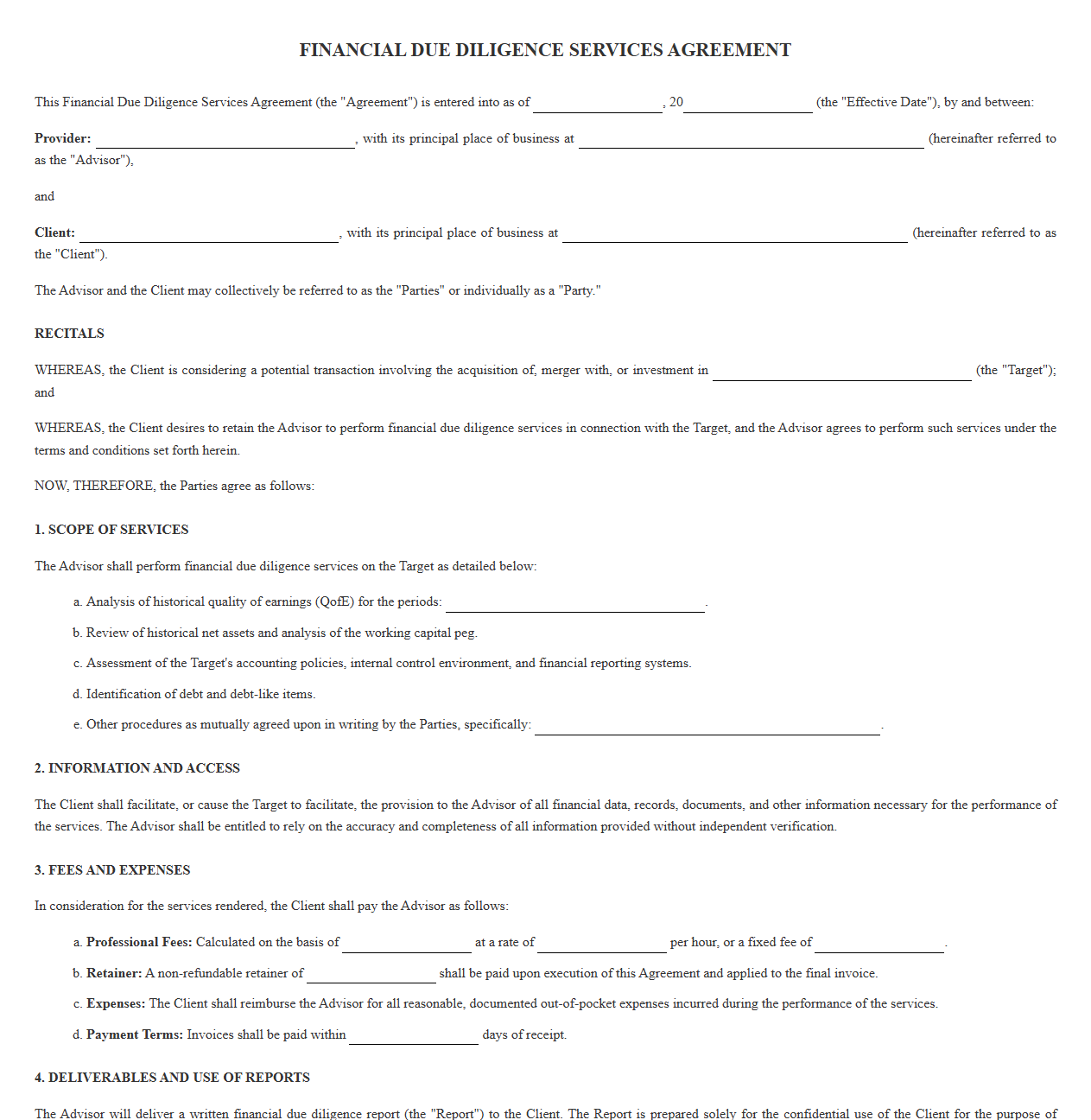 Download: .PDF
Mergers and Acquisitions Financial Due Diligence Engagement Letter
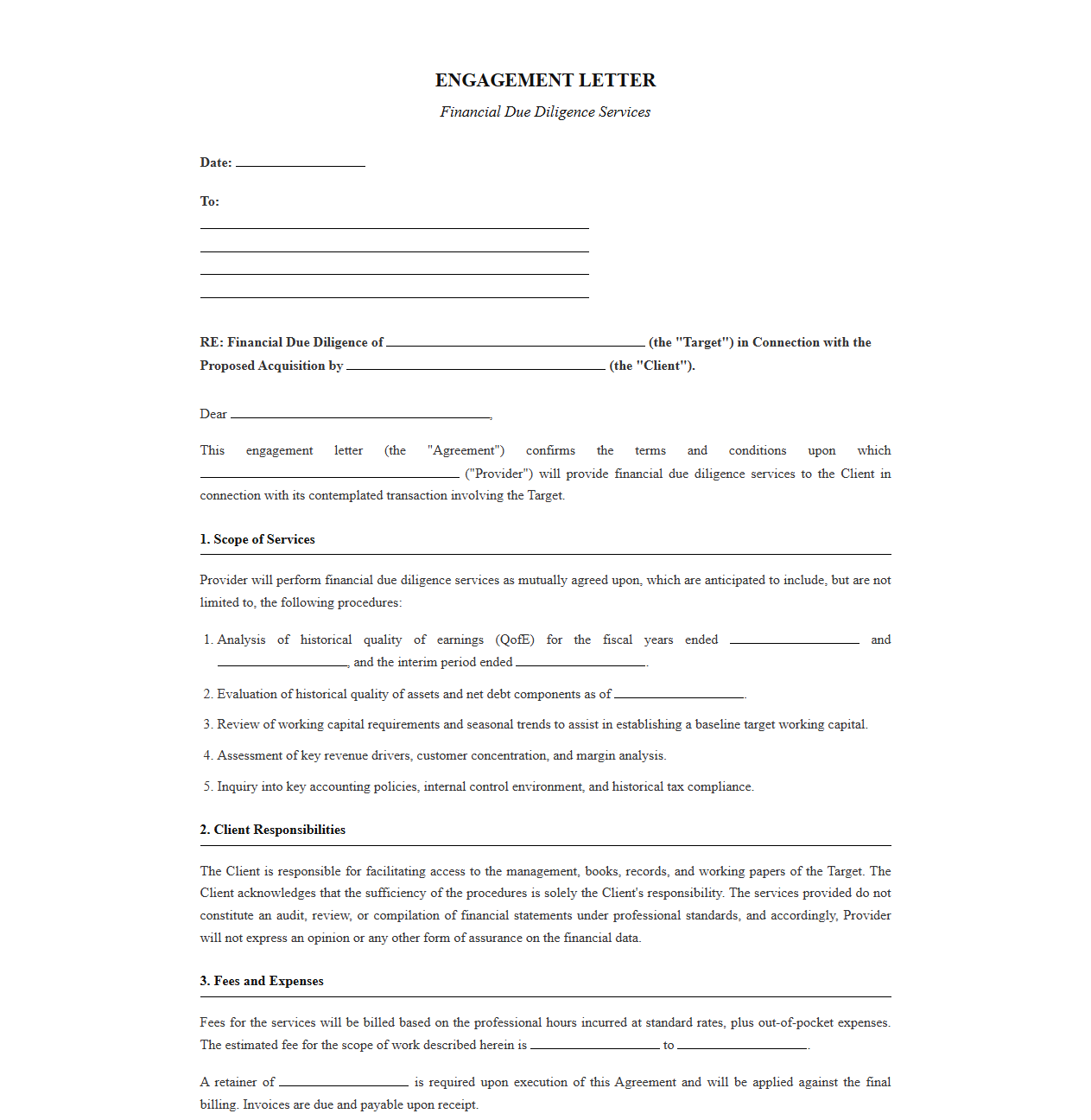 Download: .PDF
Financial Due Diligence Services Agreement for M&A Transactions
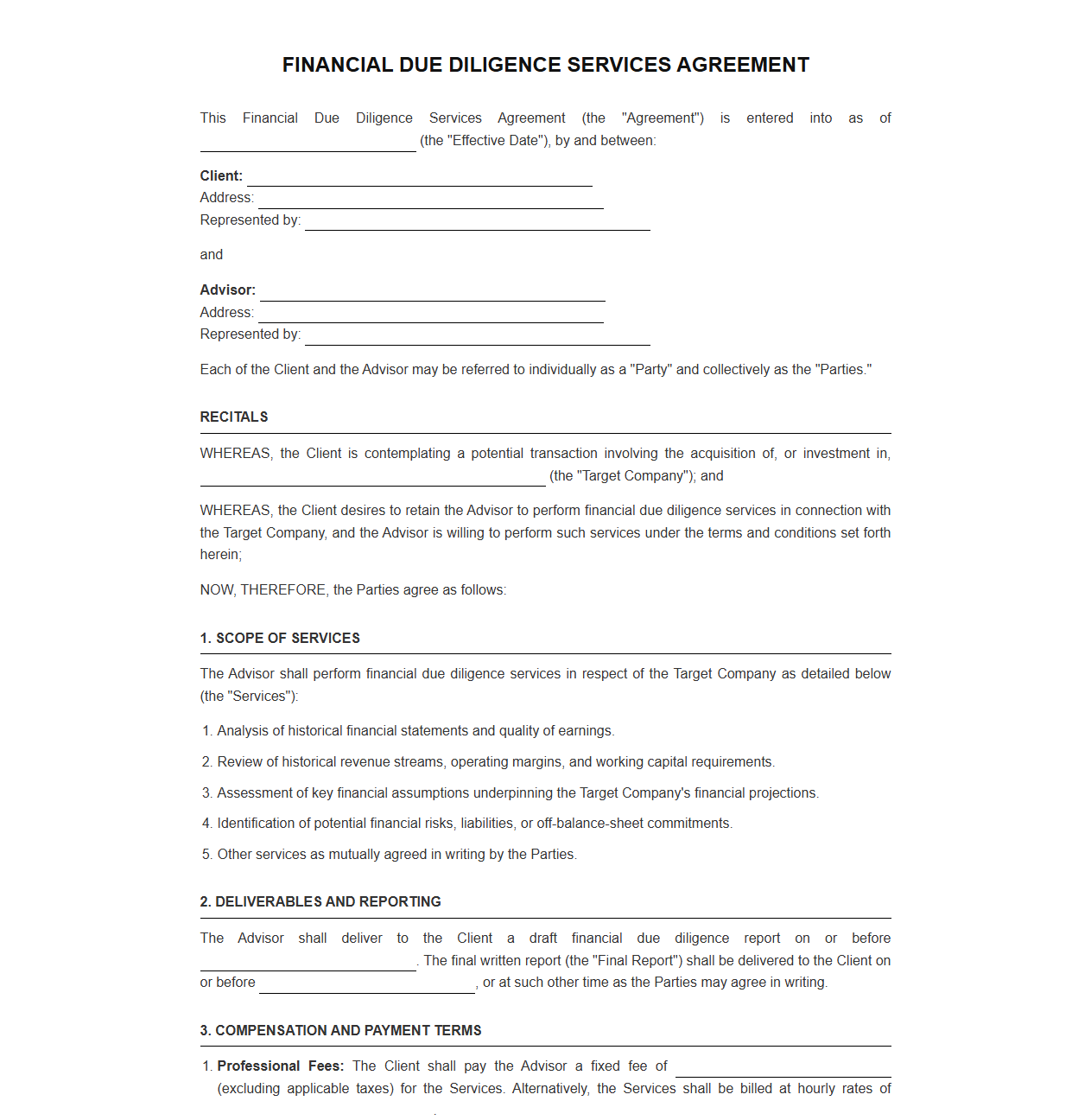 Download: .PDF
Buy-Side Financial Due Diligence Agreement for Mergers
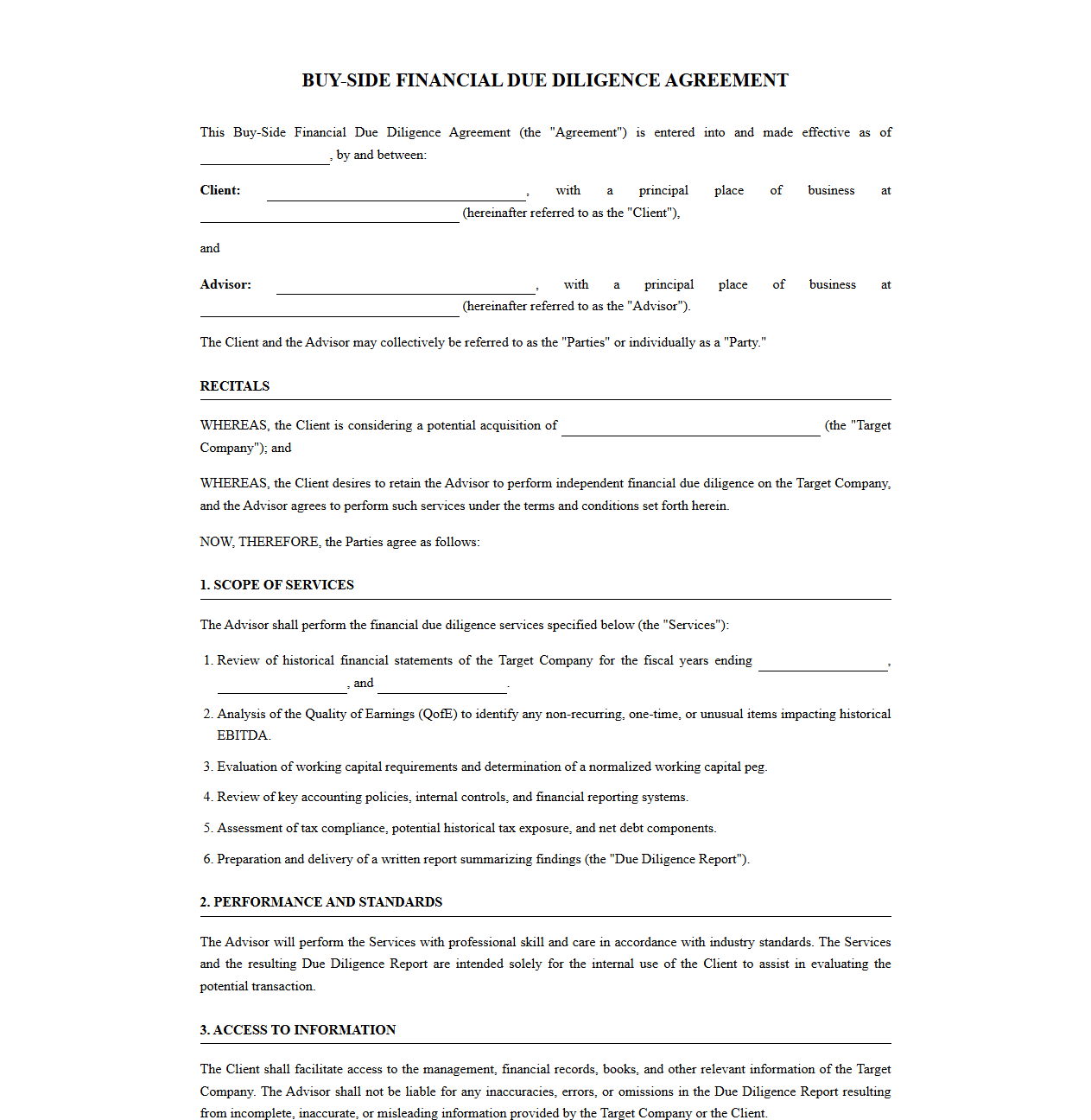 Download: .PDF
Sell-Side M&A Financial Due Diligence Contract Template
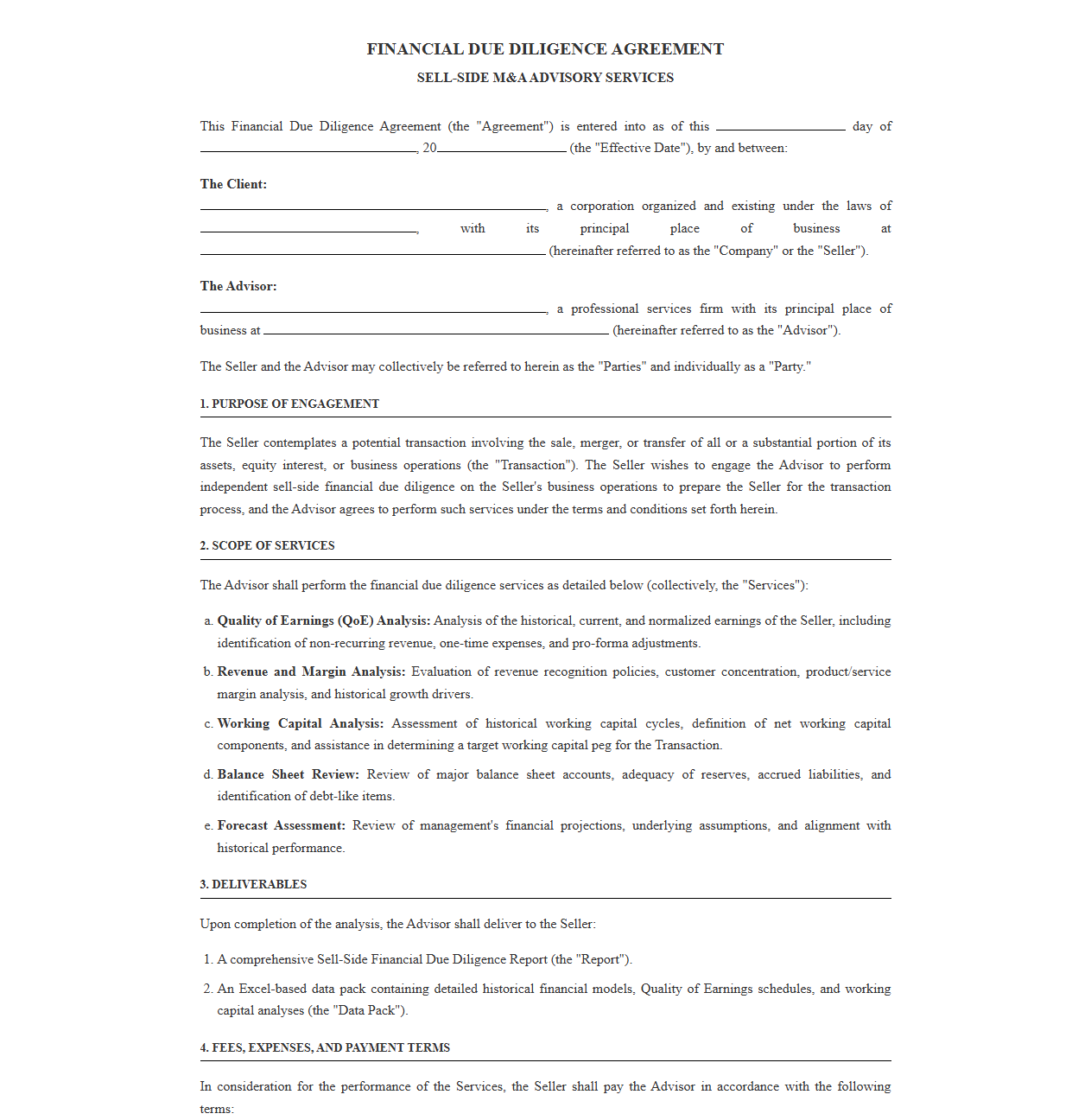 Download: .PDF
M&A Financial Records Investigation and Due Diligence Agreement
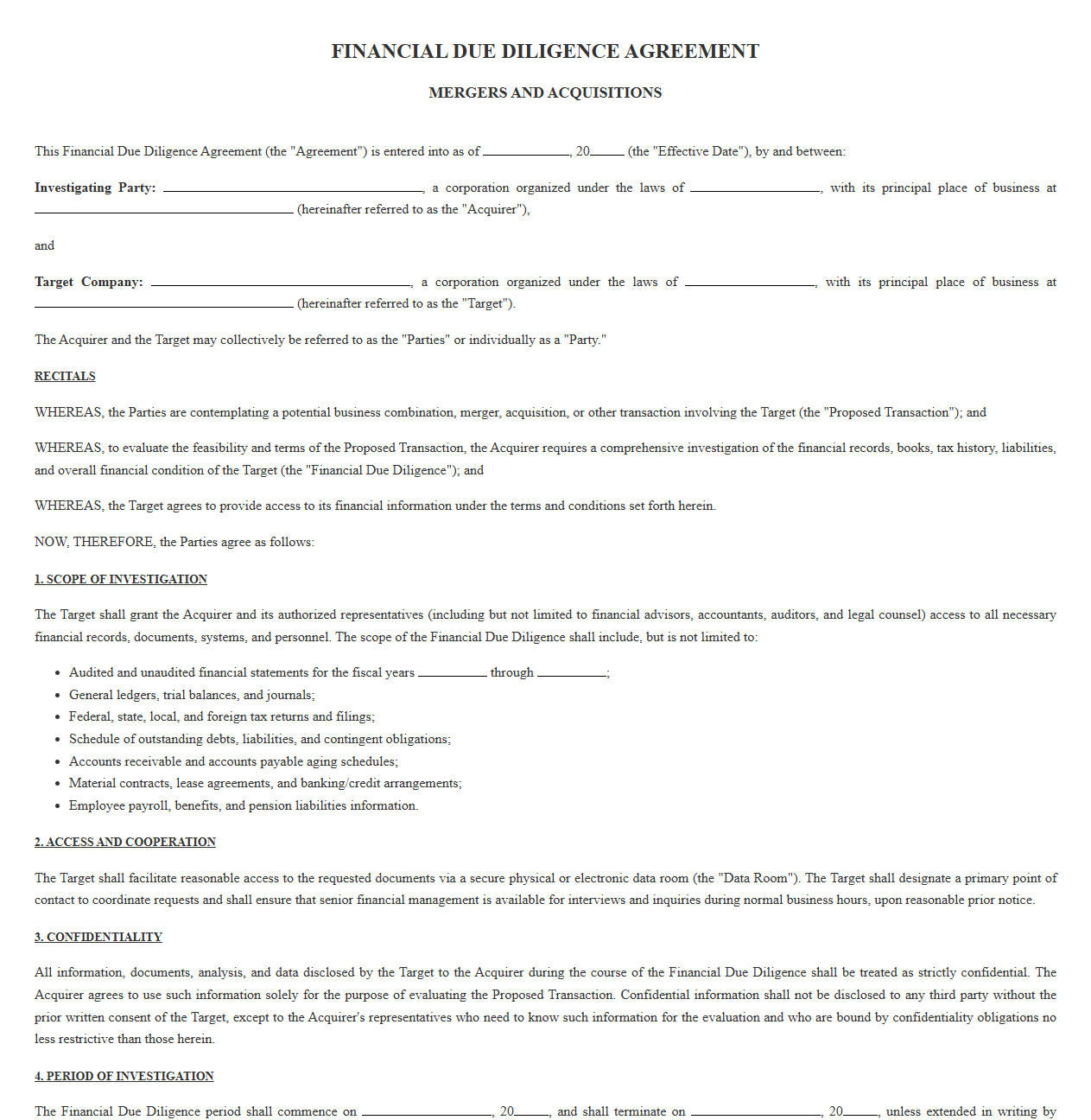 Download: .PDF
Pre-Acquisition Financial Due Diligence Consultation Agreement
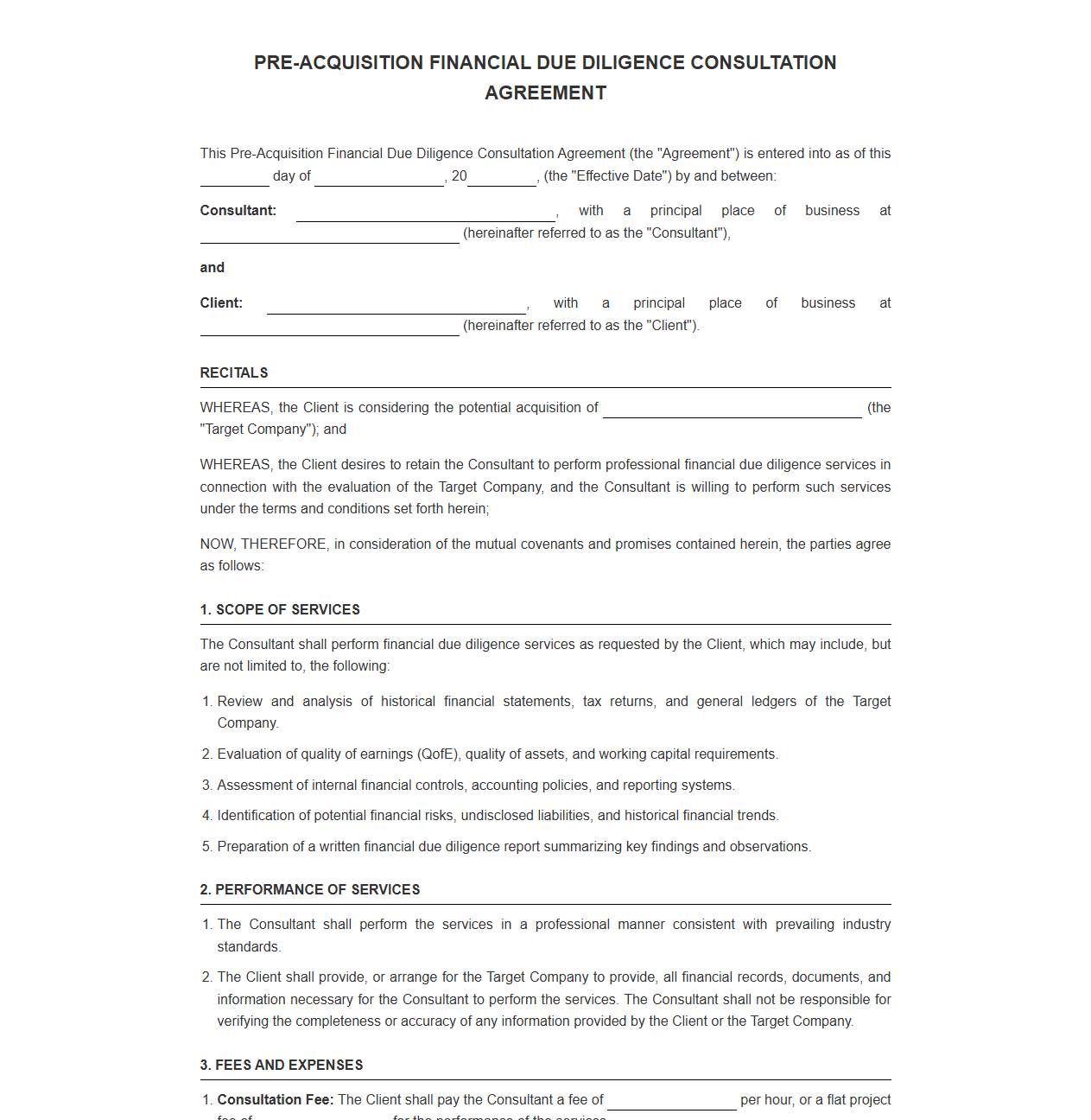 Download: .PDF
Joint Venture and Merger Financial Due Diligence Contract
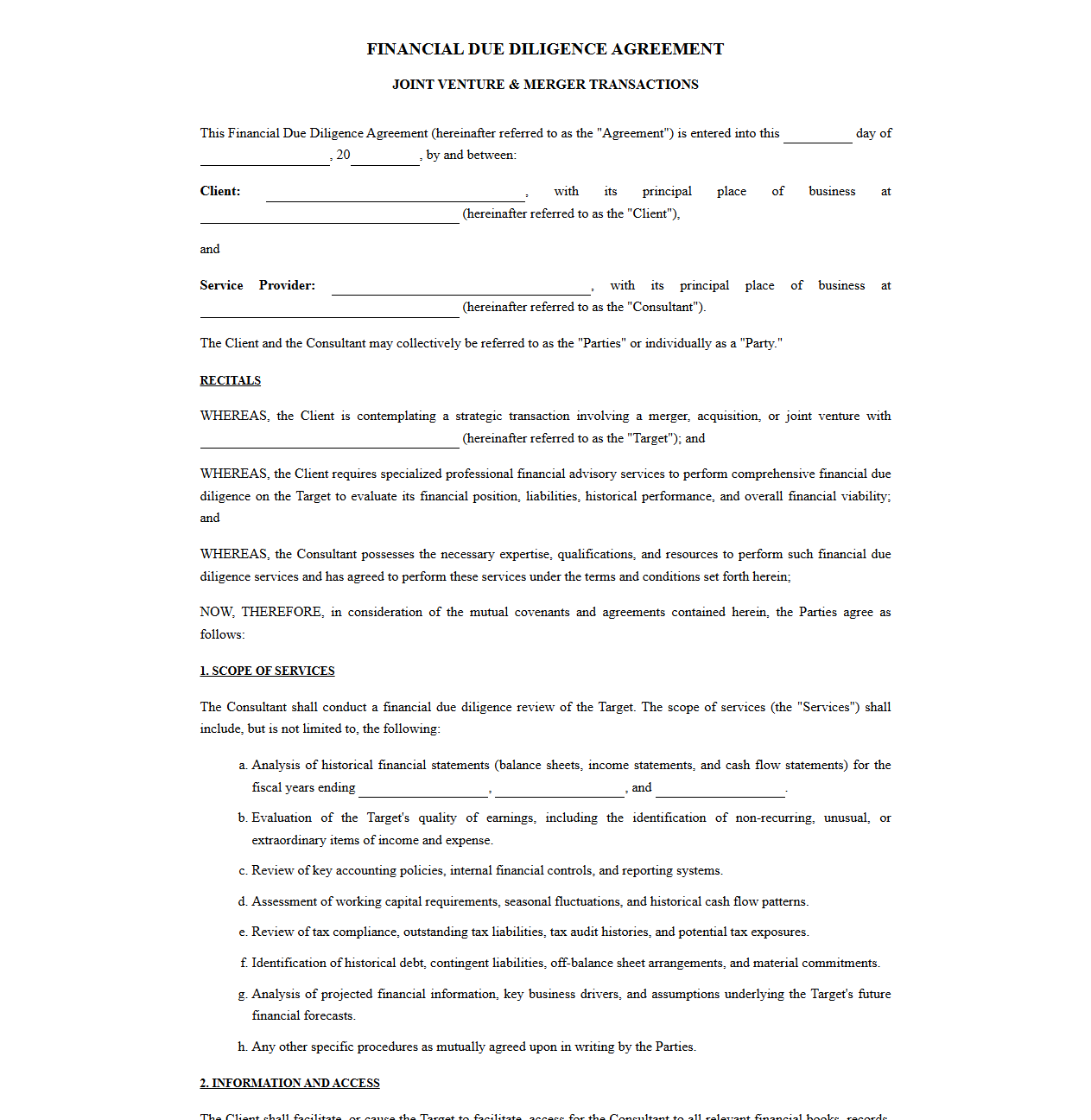 Download: .PDF
Understanding M&A Financial Due Diligence
In the high-stakes arena of mergers and acquisitions, financial due diligence (FDD) serves as the critical investigative process that validates the financial health of a target company. Before capital changes hands, buyers must look beyond high-level financial statements to uncover hidden liabilities, assess earnings quality, and verify asset valuations. Implementing a rigorous inquiry acts as a shield, protecting buyer interests and establishing a foundation for strategic risk mitigation, informed valuation adjustments, and transaction security.
Primary Transaction Risks in M&A
M&A transactions are inherently fraught with financial uncertainties that can quickly erode deal value post-acquisition. Without formal mitigation strategies, buyers risk inherited exposures that can jeopardize the entire investment. The most common financial risks include:
- Overstated Assets: Overvalued inventory, uncollectible accounts receivable, or inflated intellectual property valuations that distort the target company's true net worth.
- Undisclosed Liabilities: Hidden tax exposures, pending litigation costs, off-balance-sheet debt, or underfunded employee benefits that emerge after the deal closes.
- Volatile Cash Flows: Unstable revenue streams, high customer concentration, or normalized earnings adjustments (EBITDA) that do not reflect sustainable operational performance.
The Role of Financial Due Diligence Agreement Templates
To systematically navigate these risks, dealmakers rely on a structured legal framework before exchanging sensitive information. A financial due diligence agreement template defines the operational ground rules of the investigation, ensuring both buyer and seller are aligned on timeline, access, and security.
A financial due diligence agreement is a legally binding contract that establishes the parameters of the financial investigation, securing the safe exchange of proprietary data while protecting both parties from unauthorized disclosures and unauthorized use of sensitive transaction information.
Key Clauses Every Template Must Contain
A well-drafted template must feature specific, highly structured clauses to ensure legal enforceability and operational clarity. The essential clauses include:
- Scope of Work: Clearly defines the financial records, timeframes, and business units subject to audit.
- Information Access Rights: Specifies how, when, and by whom the target's financial databases, virtual data rooms, and personnel can be accessed.
- Confidentiality and Non-Disclosure: Legally binds the receiving party to protect proprietary financial data, proprietary algorithms, and trade secrets.
- Limitation of Liability: Restricts the legal exposure of advisors and parties during the exploratory phase should the transaction fail to materialize.
How Templates Actively Mitigate Financial Risks
Standardized templates do not merely sit in a file; they actively shape the behavior of both parties during negotiations. By establishing explicit boundaries, these documents prevent scope creep, ensuring that auditors remain focused on high-priority financial metrics rather than pursuing irrelevant inquiries.
Furthermore, they legally bind the seller to provide complete, accurate, and transparent financial disclosures. This legal accountability ensures the buyer's investigative team has unfettered access to primary ledgers, preventing the target from withholding critical underperforming metrics. By leveraging a formal agreement, dealmakers ensure that the process is efficient, exhaustive, and legally defensible.
Best Practices for Customizing Your Template
While standard templates provide an excellent baseline, they should never be treated as one-size-fits-all documents. Dealmakers must customize the framework to reflect the specific realities of the transaction:
- Align with Industry Regulations: Incorporate specific compliance protocols for highly regulated sectors like healthcare (HIPAA) or finance (SEC compliance).
- Scale to Deal Size: Adjust the depth of information access and the representation guarantees based on whether the deal is a mid-market acquisition or a multi-billion-dollar corporate merger.
- Define Materiality Thresholds: Set clear monetary limits on what constitutes a material financial discrepancy to avoid stalling negotiations over negligible accounting variances.
Securing the Deal with Robust Documentation
An optimized financial due diligence agreement template is far more than a routine administrative step; it is the cornerstone of professional risk management. By establishing clear expectations and legal safeguards from day one, buyers can proceed with the confidence needed to make strategic investment decisions. Download a professionally drafted due diligence template today to protect your capital and secure your next transaction.

Leave a comment