

Handing over proprietary financial ledgers to external vendors often keeps business leaders awake at night, as the persistent threat of data leaks and regulatory non-compliance looms large. While outsourcing accounting functions has become a vital strategy for scaling modern enterprises, transitioning these sensitive workflows requires a rigorous operational framework to mitigate security risks before collaboration begins.
Utilizing structured confidentiality agreement templates grants organizations immediate legal recourse and operational peace of mind. However, these frameworks must not be treated as mere formalities; they require a strict stipulation that limits data access to a "need-to-know" basis. For example, effective templates must explicitly define protocols for handling high-risk information, such as employee payroll details, bank routing numbers, and corporate tax IDs.
In this guide, we will examine the essential legal clauses required for robust financial NDAs, review customizable templates, and outline best practices to ensure your external partners uphold the highest standards of data integrity.
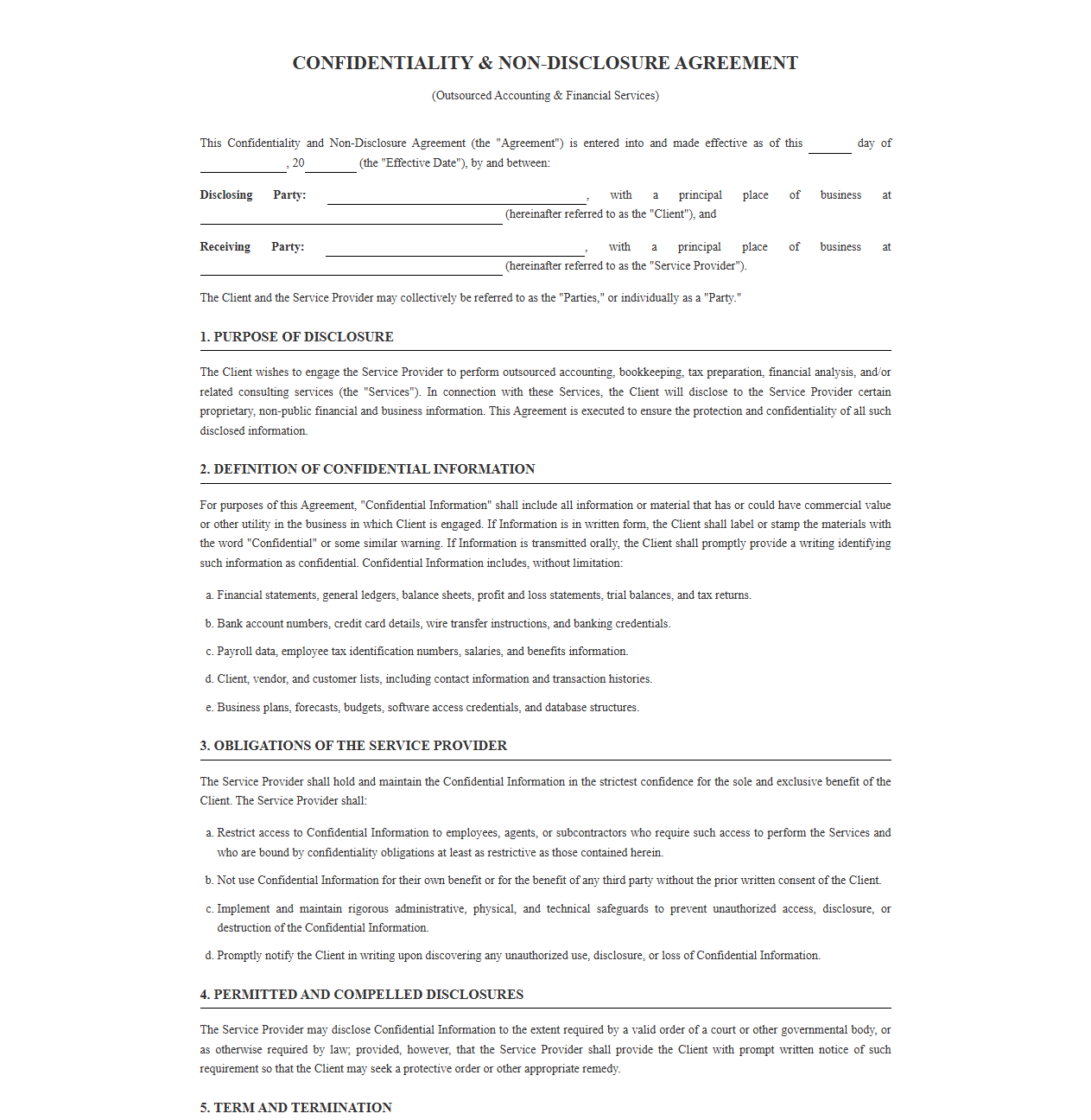
Outsourced Accounting Non-Disclosure Agreement Template
 Download: .PDF
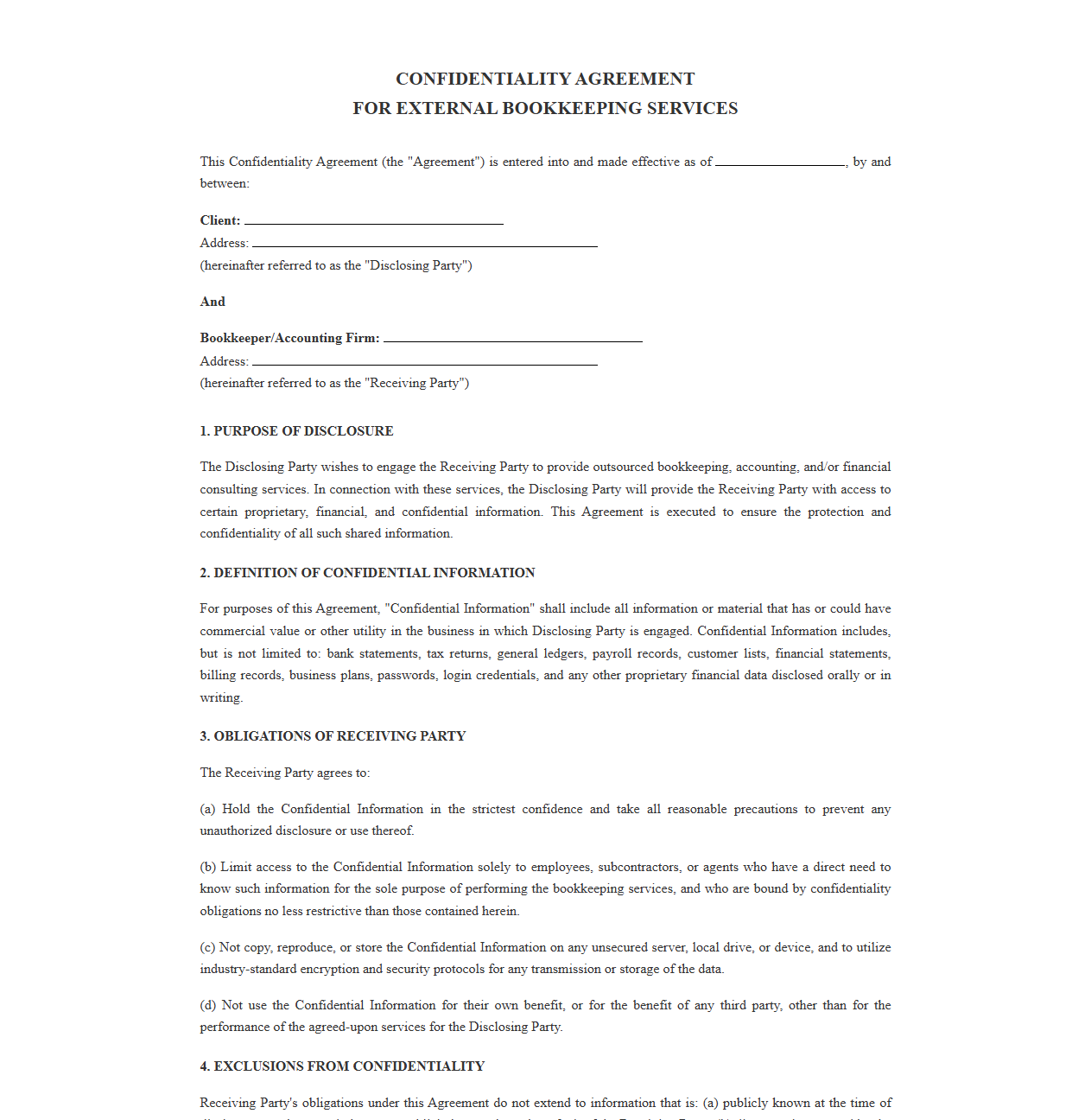
Confidentiality Agreement for External Bookkeeping Services
 Download: .PDF
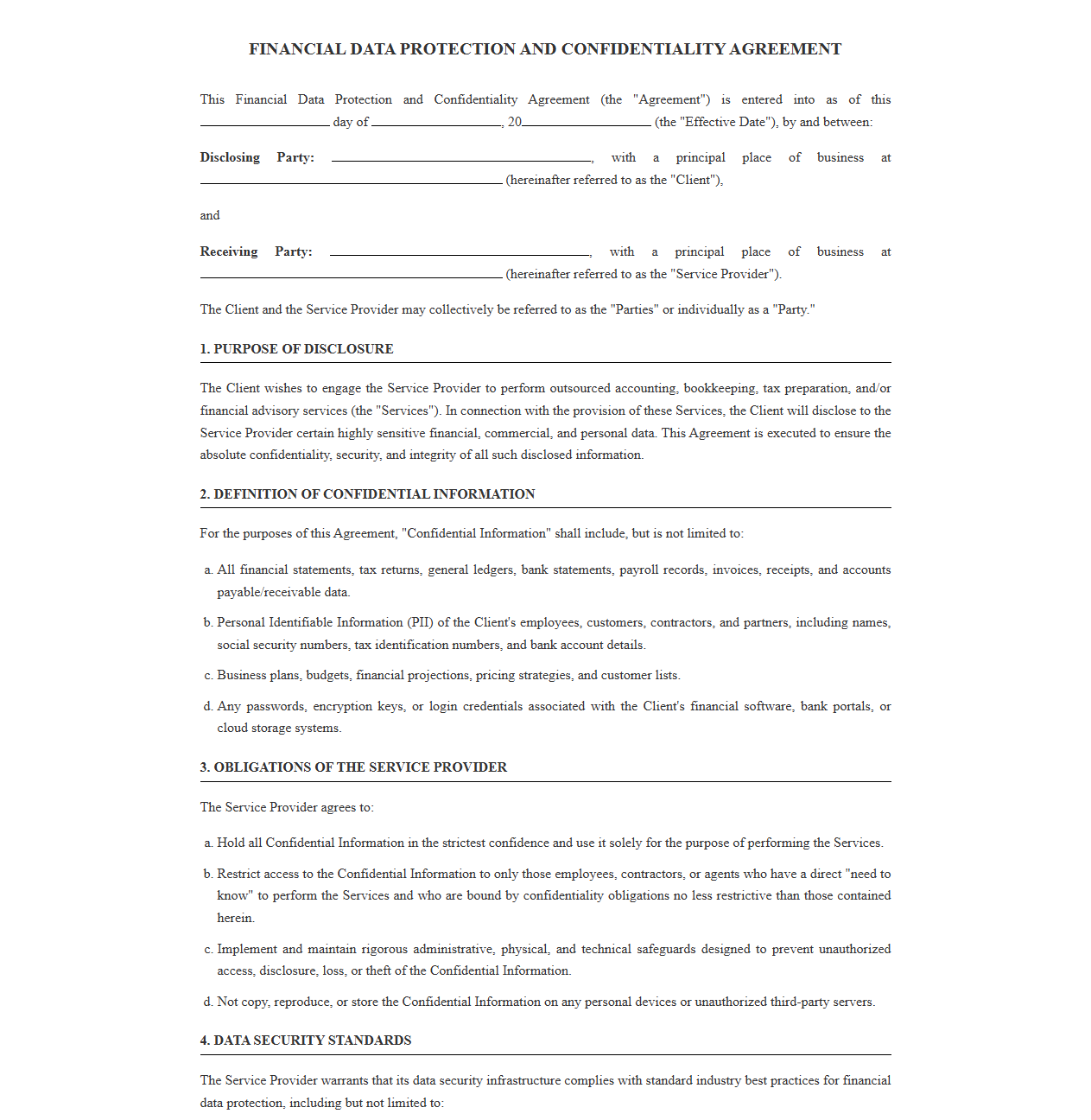
Financial Data Protection Agreement for Outsourced Accounting
 Download: .PDF
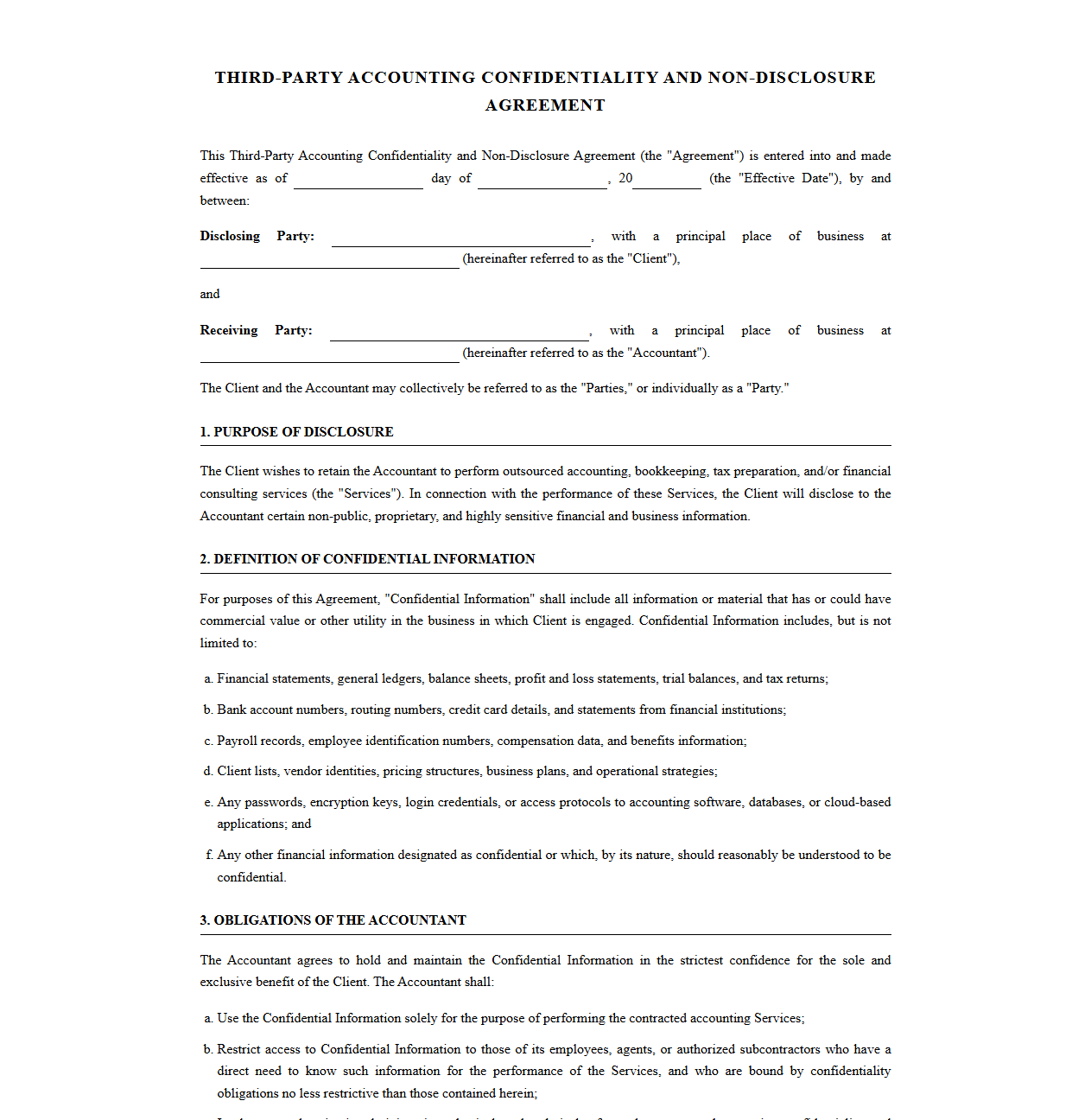
Third-Party Accounting Confidentiality and Non-Disclosure Contract
 Download: .PDF
Accounting Services Non-Disclosure and Data Security Agreement
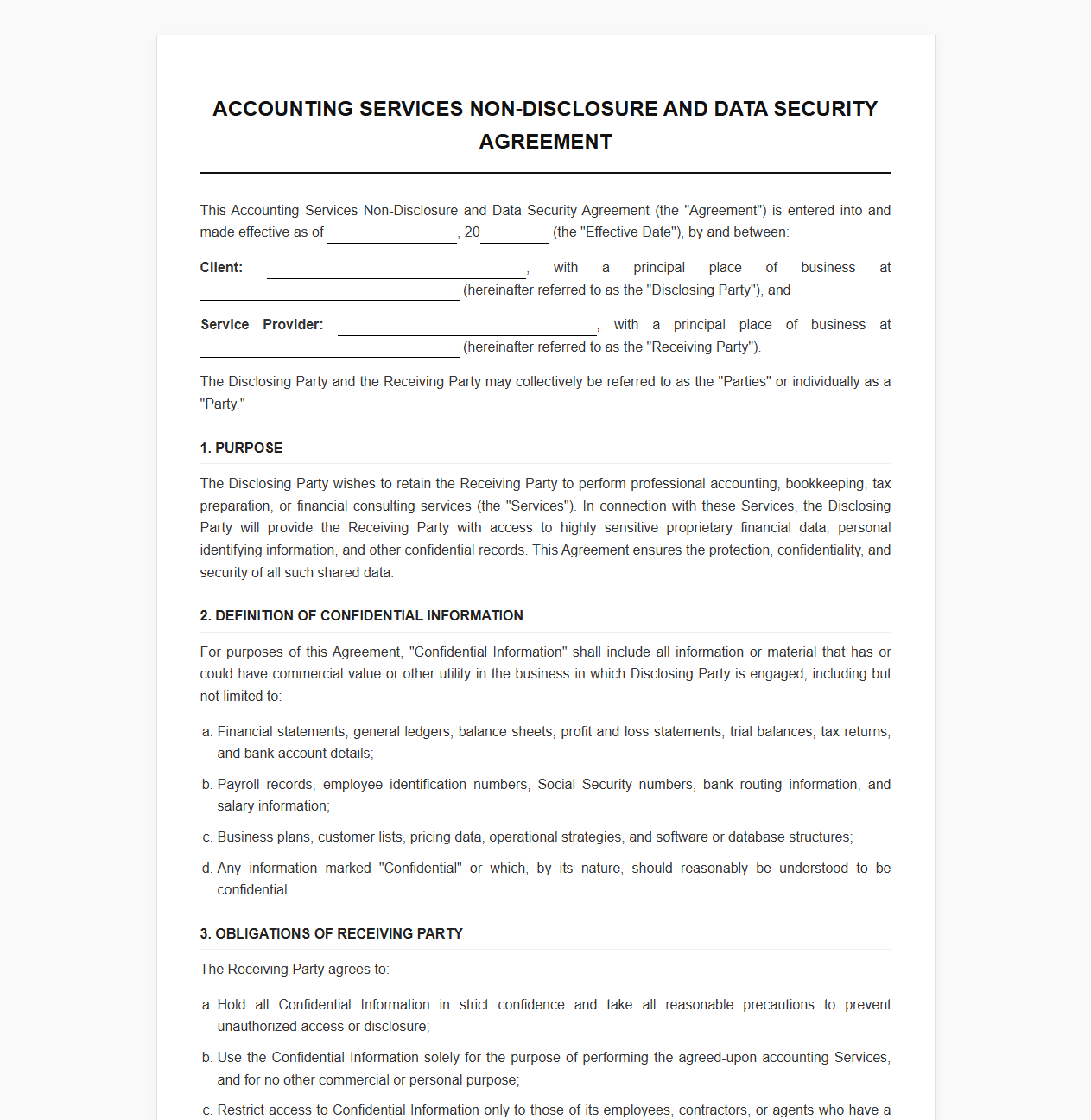 Download: .PDF
Confidentiality Agreement for Outsourced Financial and Bookkeeping Services
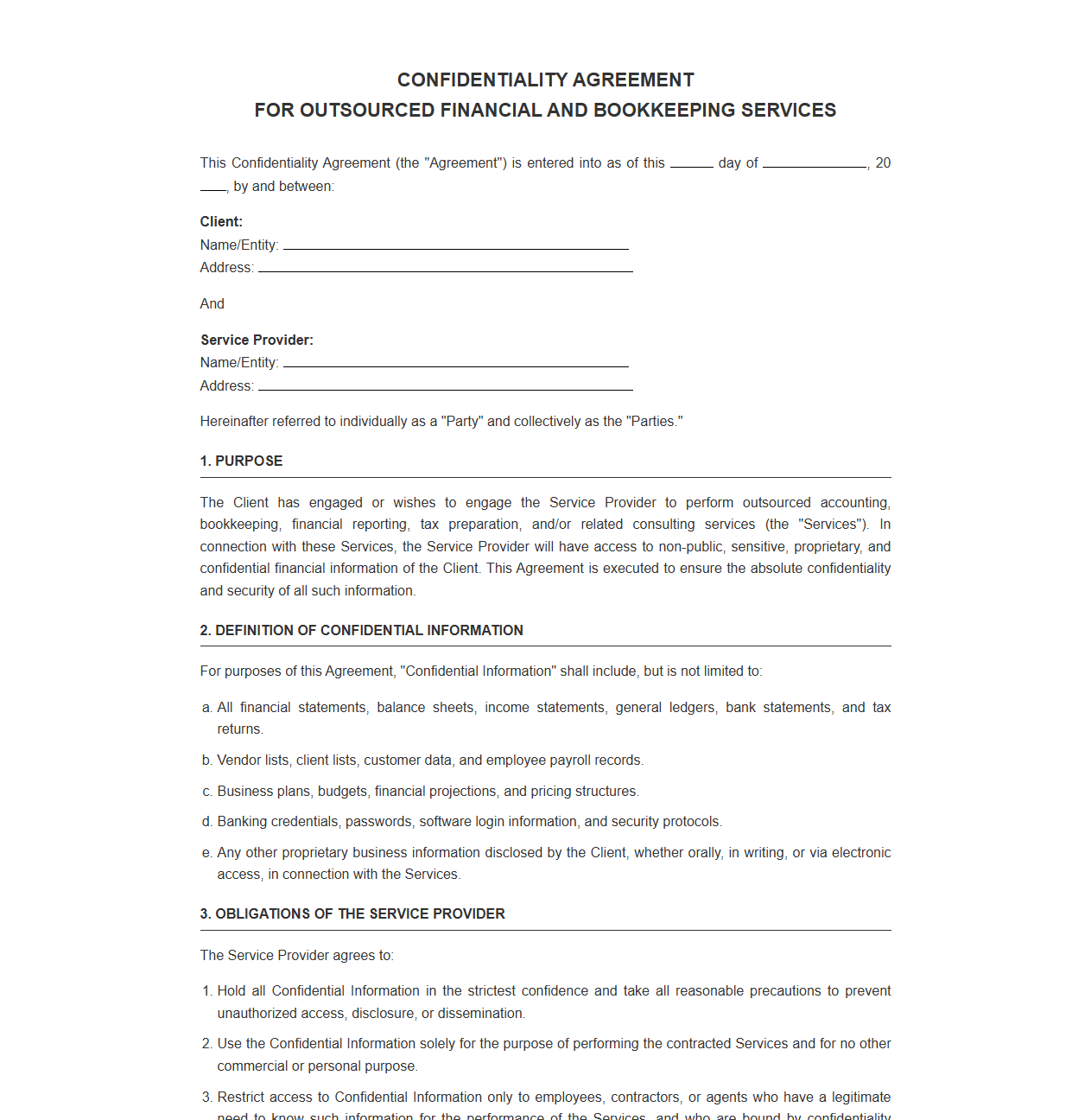 Download: .PDF
External Accountant Confidentiality and Proprietary Information Agreement
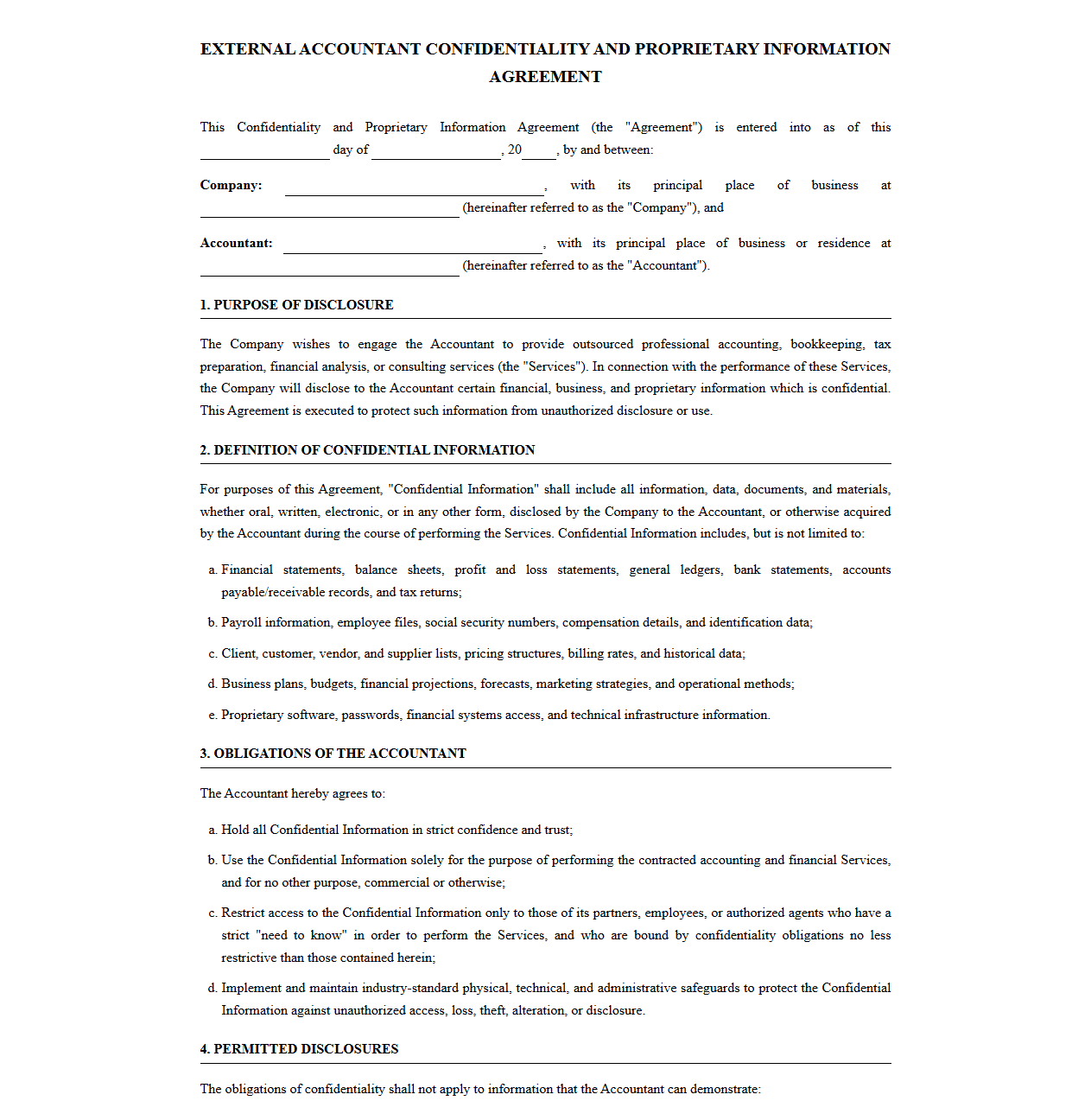 Download: .PDF
Non-Disclosure Agreement for Freelance Accounting and Bookkeeping
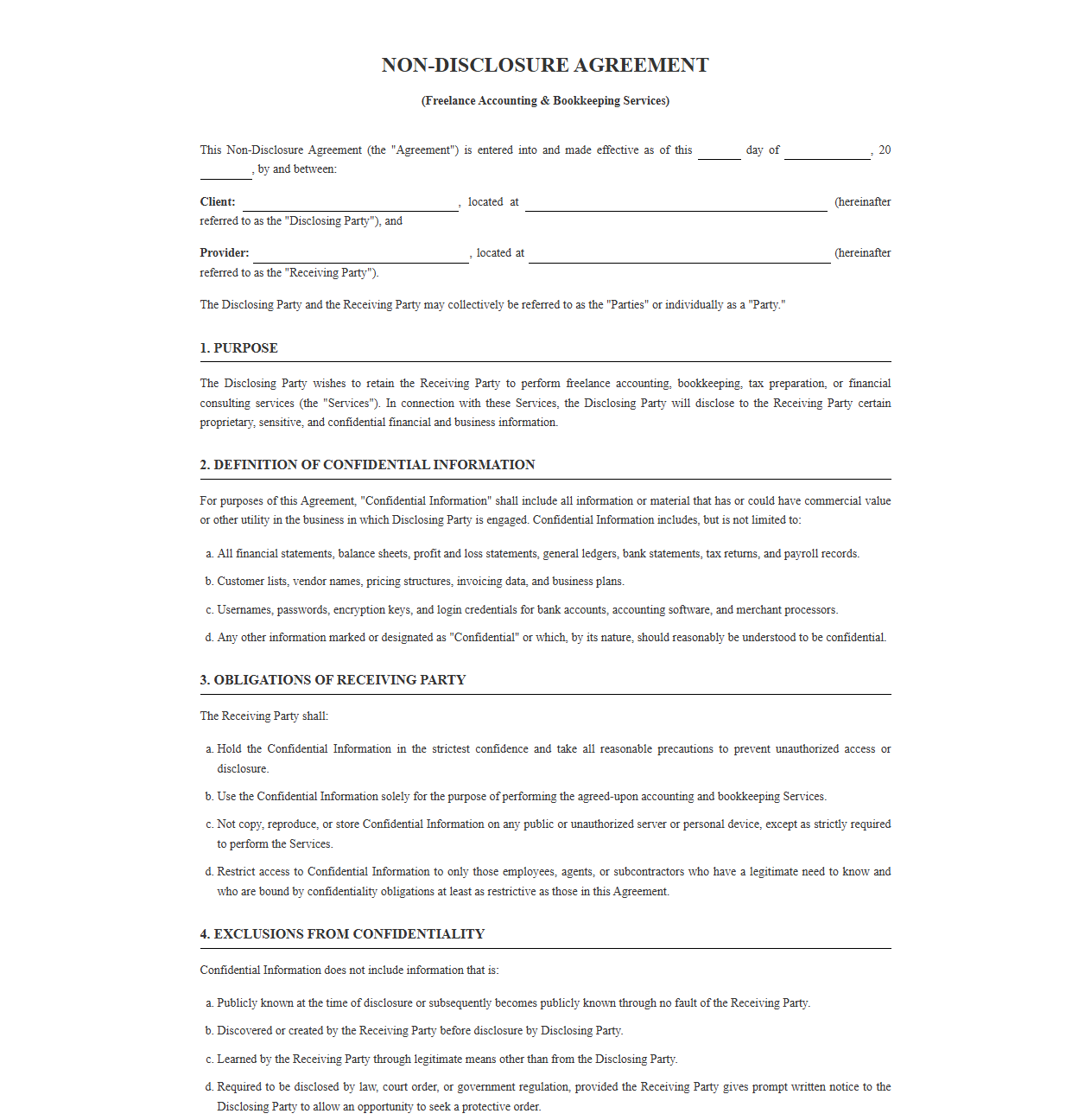 Download: .PDF
Introduction: The Stakes of Financial Data Sharing in Outsourcing
The global shift toward outsourced accounting has enabled businesses to streamline their financial operations, leverage specialized expertise, and reduce overhead costs. However, sharing highly sensitive financial records with external providers introduces significant vulnerability. Without rigorous legal protections, businesses risk exposing their core financial health to competitive threats or regulatory penalties. Establishing a robust non-disclosure agreement (NDA) is a critical safeguard that ensures external accountants treat proprietary financial data with the highest level of confidentiality and care.
Defining Sensitive Financial Data in NDA Templates
To ensure comprehensive legal protection, an outsourced accounting agreement template must define confidential information with absolute clarity. Ambiguity in this section can leave critical records unprotected. The template should explicitly cover the following data categories:
- Tax records, including corporate filings, historical returns, and audit documentation.
- Payroll data, containing employee identification details, salary structures, and compensation history.
- Bank statements, general ledgers, credit card records, and transaction history.
- Proprietary business plans, cash flow projections, budget forecasts, and strategic financial objectives.
Core Confidentiality Clauses Every Template Must Include
A resilient financial NDA relies on core clauses that restrict how a third-party accounting provider interacts with your data. These clauses set clear boundaries and establish legal accountability.
The Non-Disclosure Obligation
This foundational clause mandates that the outsourcing provider cannot share, publish, or reveal any financial information to unauthorized third parties. This obligation remains absolute during and after the contractual term.
Non-Use Restrictions
This clause ensures that the accountant or agency cannot utilize your financial records for any purpose other than executing the agreed-upon accounting and bookkeeping services. It prevents the unauthorized use of financial insights for competitive advantage.
Permitted Disclosures
Templates must account for scenarios where disclosure is legally required, such as a court order or regulatory audit. This clause defines the exact procedure, requiring the provider to give immediate notice so the business can seek protective orders if necessary.
Technical Safeguards and Data Security Requirements
A legal promise of confidentiality is only as strong as the physical and digital security infrastructure backing it. The NDA template should mandate that the outsourcing provider implements industry-standard data protection protocols, including:
- Implementation of end-to-end encryption using protocols like
AES-256for data both at rest and in transit. - Strict user access controls, ensuring only authorized accounting personnel have credentials to view the financial records.
- The exclusive use of secure cloud portals and multi-factor authentication (MFA) rather than sending sensitive files via standard, unencrypted email.
Addressing Breaches, Indemnification, and Liability
Despite best efforts, data breaches can occur. Your agreement template must contain a rigorous breach response protocol that dictates how the provider handles a security compromise. Immediate notification is paramount, requiring the provider to report any suspected or confirmed breach within a strict timeline, such as 24 or 48 hours.
Furthermore, the template must address financial liability and indemnification. It should outline how the provider will cover costs associated with credit monitoring, legal fees, regulatory fines, and data recovery. Clear liability limits must be established to balance fair compensation with realistic risk management for the outsourcing provider.
Post-Agreement Protocols: Return or Destruction of Records
When the professional relationship with an outsourced accountant ends, the security of your financial data remains a priority. The agreement must outline a structured sunset protocol to prevent lingering data vulnerabilities.
Secure Return of Financial Information
This clause requires the provider to promptly deliver all digital and physical copies of financial statements, tax records, and client files back to the originating business, ensuring no unauthorized backups are retained.
Certified Destruction and Digital Wiping
Any remaining digital data must be permanently erased using secure software wiping standards, and physical files must undergo secure shredding. The provider should supply a formal certificate of destruction to verify compliance.
Best Practices for Customizing and Executing Your NDA Templates
To ensure your NDA provides maximum legal protection, it is vital to customize the standard template to your specific business environment. Always consult with local legal counsel to ensure the document conforms to the precise jurisdictions where both your business and the outsourcing provider operate, especially when dealing with cross-border regulations.
Additionally, maintain strict version control over your legal templates to ensure the most current security standards are always utilized. When executing the agreement, leverage secure digital signature platforms to create legally binding, time-stamped records of consent. Proactive customization and professional execution transform a generic template into an ironclad shield for your financial data.

Leave a comment