

For accounts payable departments and compliance officers, managing subcontractor tax information is a constant, high-stakes battle against IRS penalties. Navigating the administrative burden of missing or incorrect Taxpayer Identification Numbers (TINs) often leads to costly, unexpected backup withholding audits.
Before addressing these penalties, organizations must first establish a rigorous verification workflow that bridges the gap between IRS Form W-9 collection and active payment cycles. Implementing a standardized Backup Withholding Agreement template grants your enterprise immediate legal protection, effectively insulating you from the financial liabilities of uncollected taxes.
However, under the stipulation that tax laws vary, these templates must be carefully customized to address specific triggers, such as federal "B-Notices" or localized state-level withholding rates. Below, we explore the essential clauses required for these agreements, provide concrete implementation strategies, and deliver customizable templates to secure your organization's compliance posture.
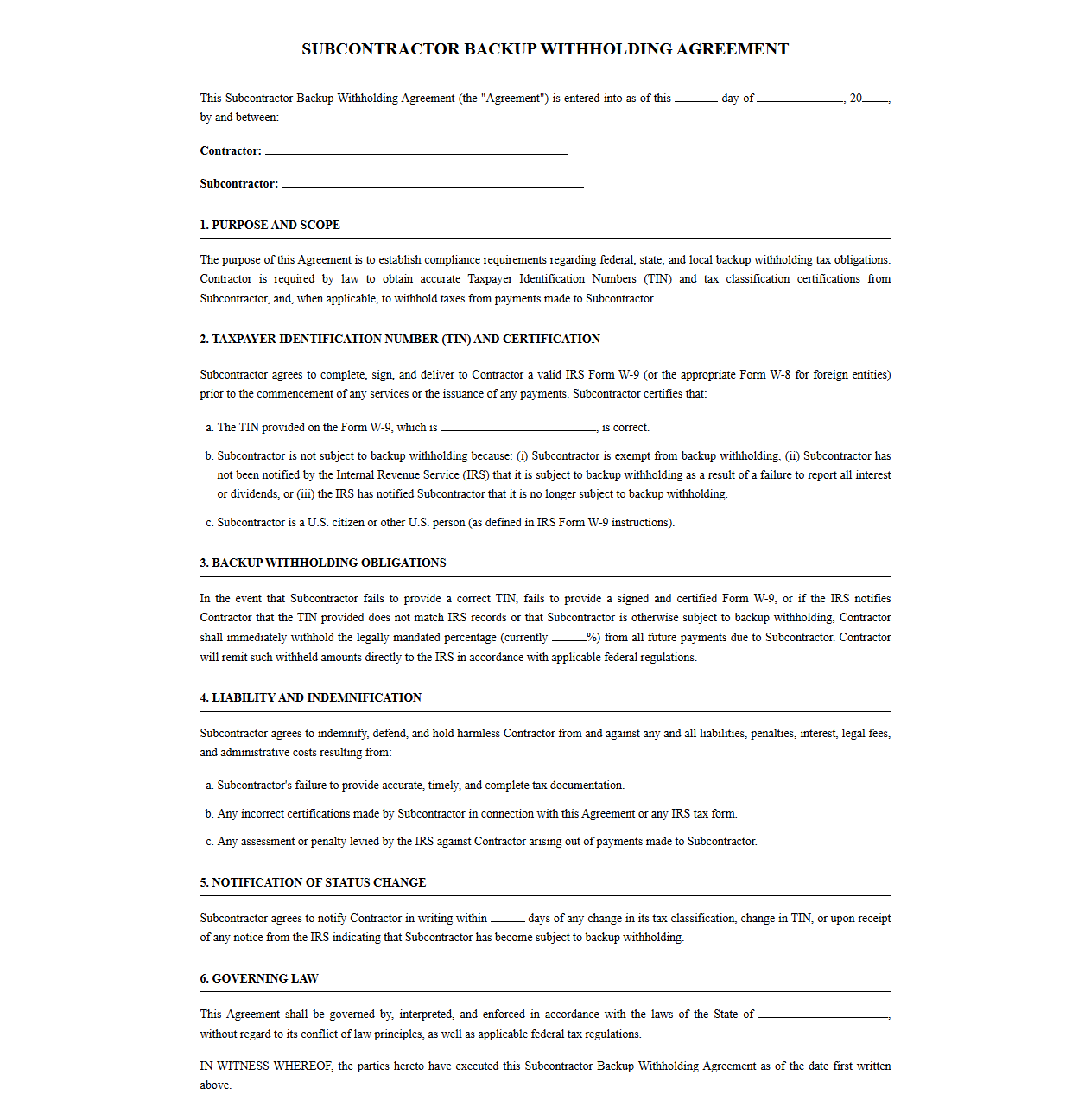
Subcontractor Backup Withholding Agreement Template
 Download: .PDF
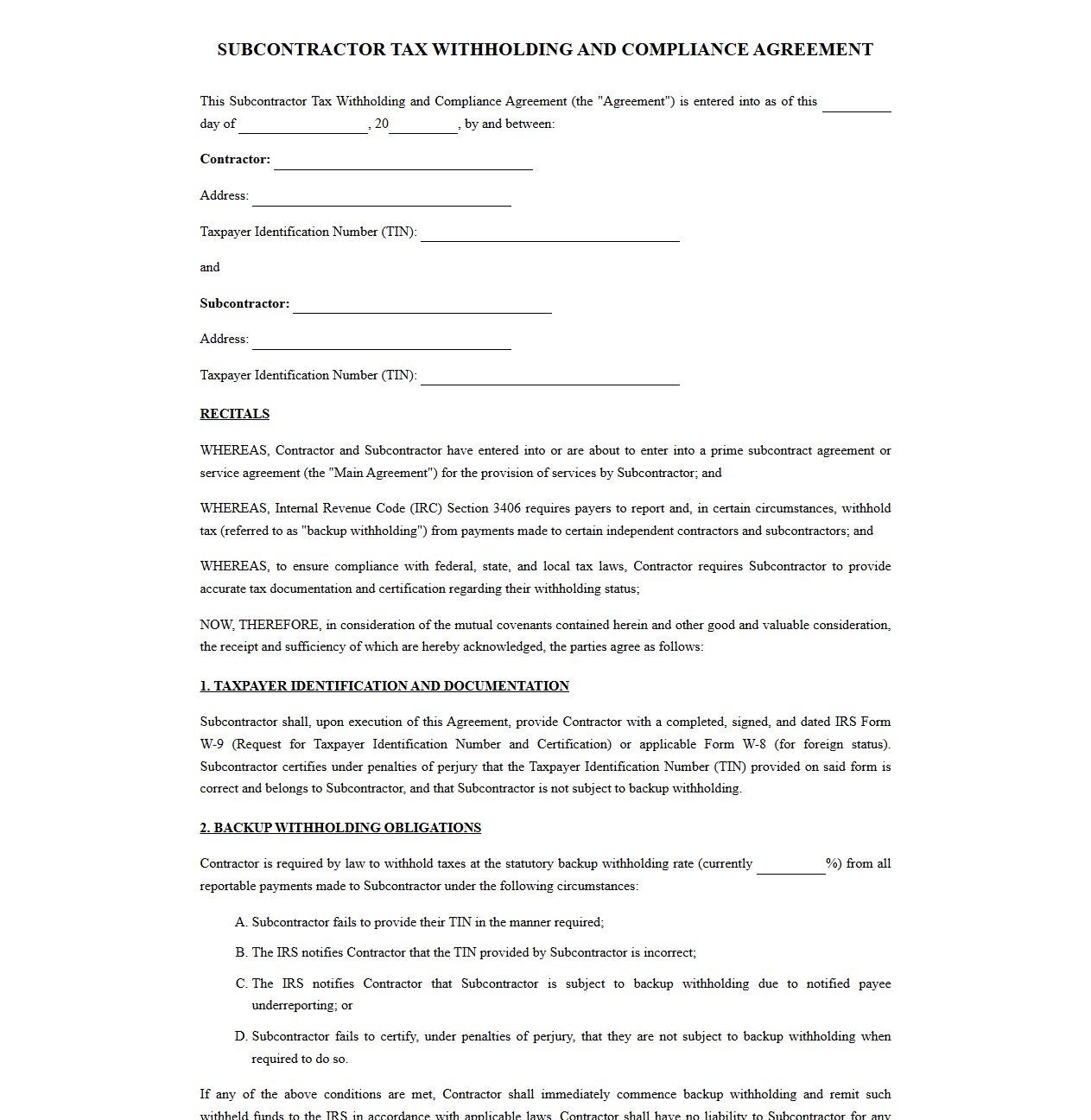
Subcontractor Tax Withholding and Compliance Agreement
 Download: .PDF
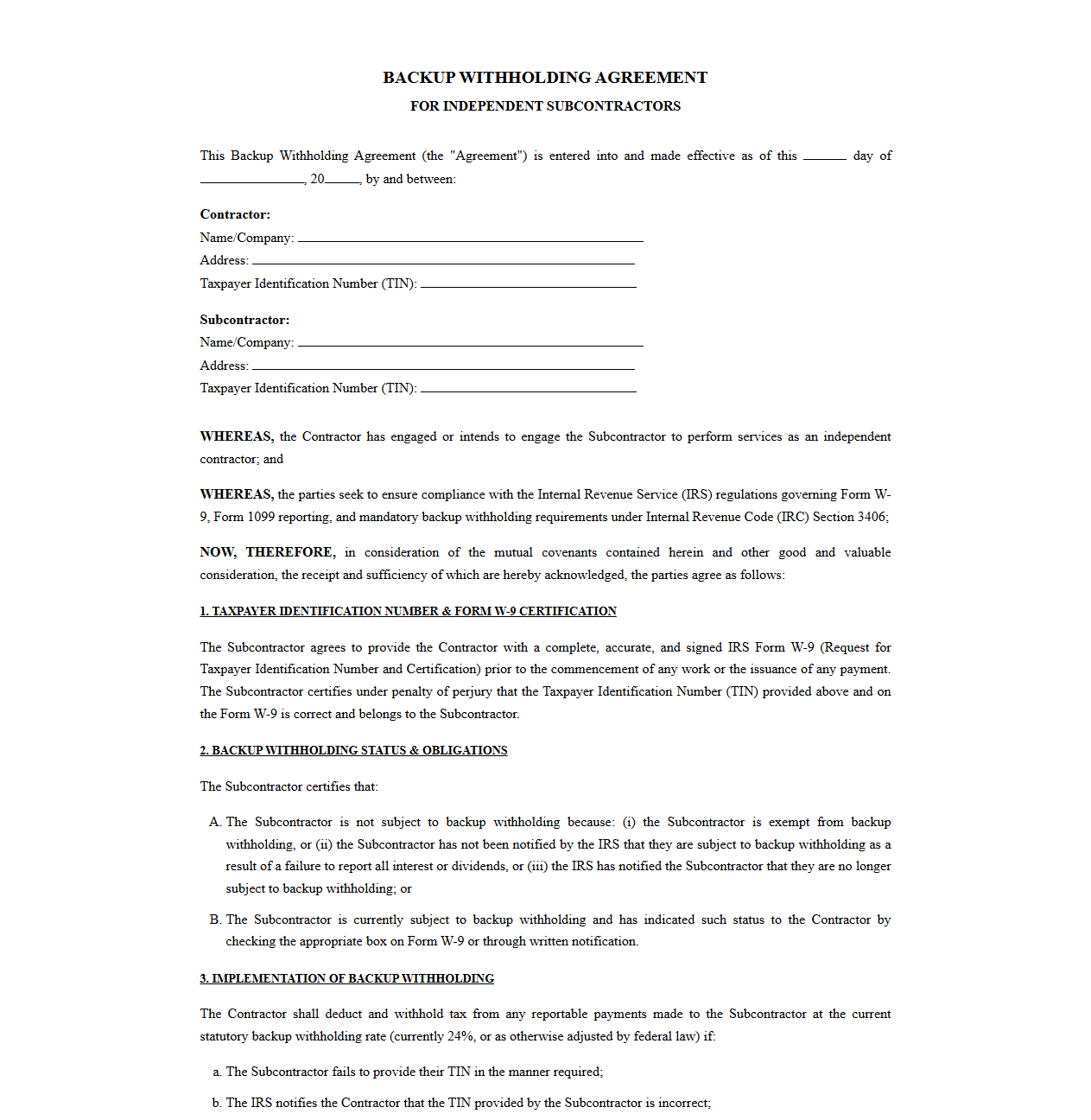
Backup Withholding Agreement for Independent Subcontractors
 Download: .PDF
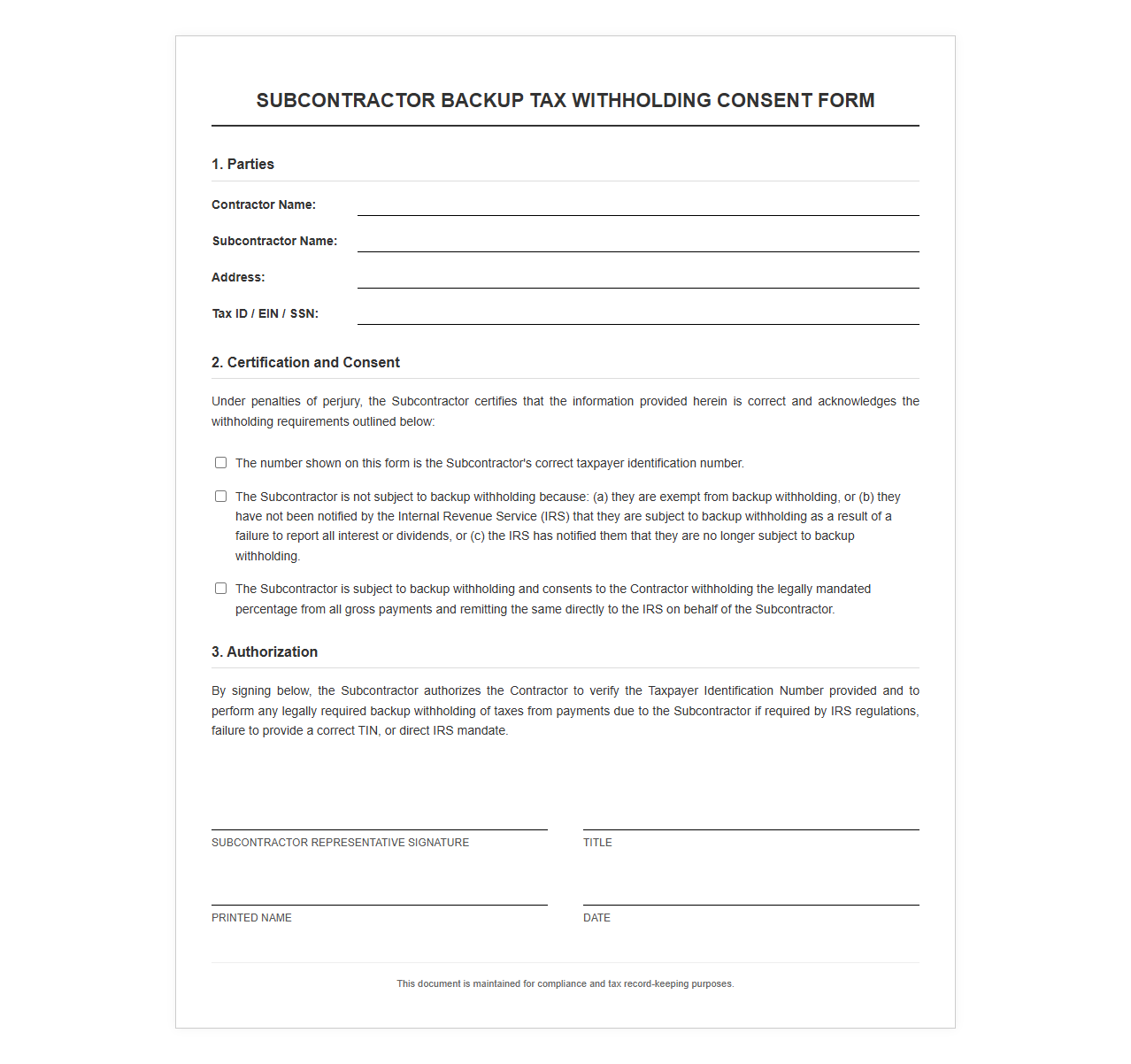
Subcontractor Backup Tax Withholding Consent Form
 Download: .PDF
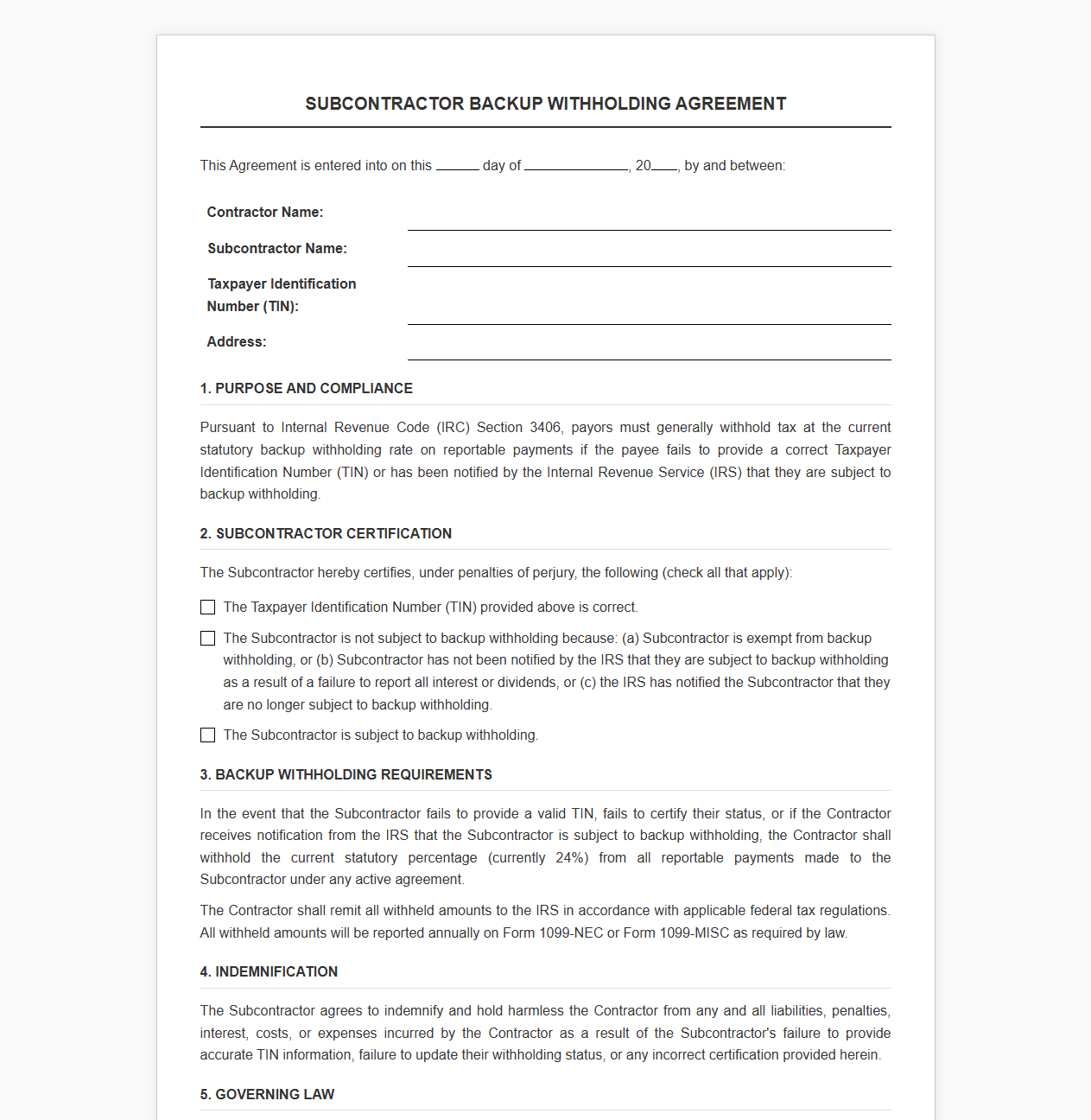
IRS Backup Withholding Agreement for Subcontractors
 Download: .PDF
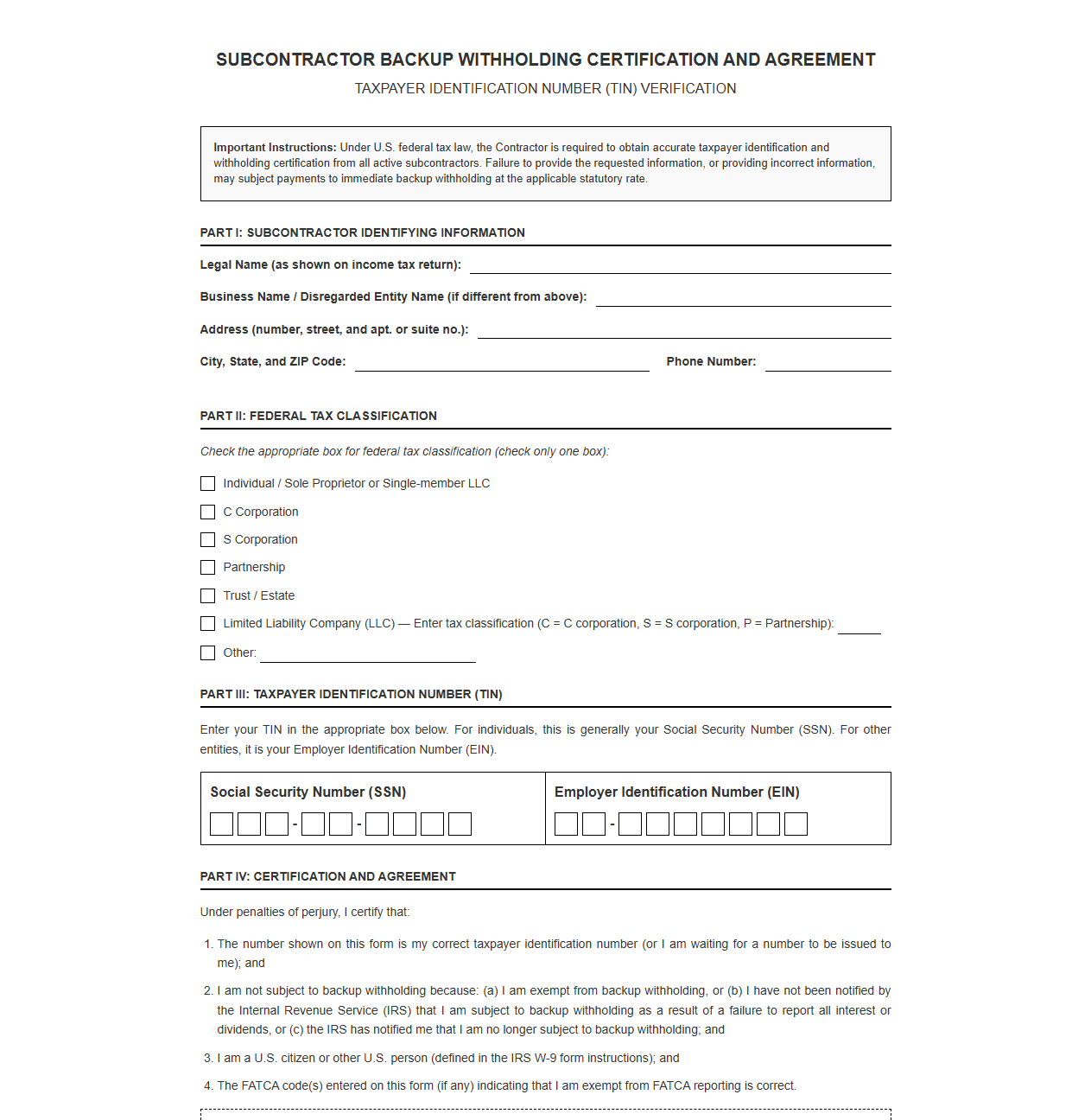
Subcontractor Backup Withholding Certification and Agreement
 Download: .PDF
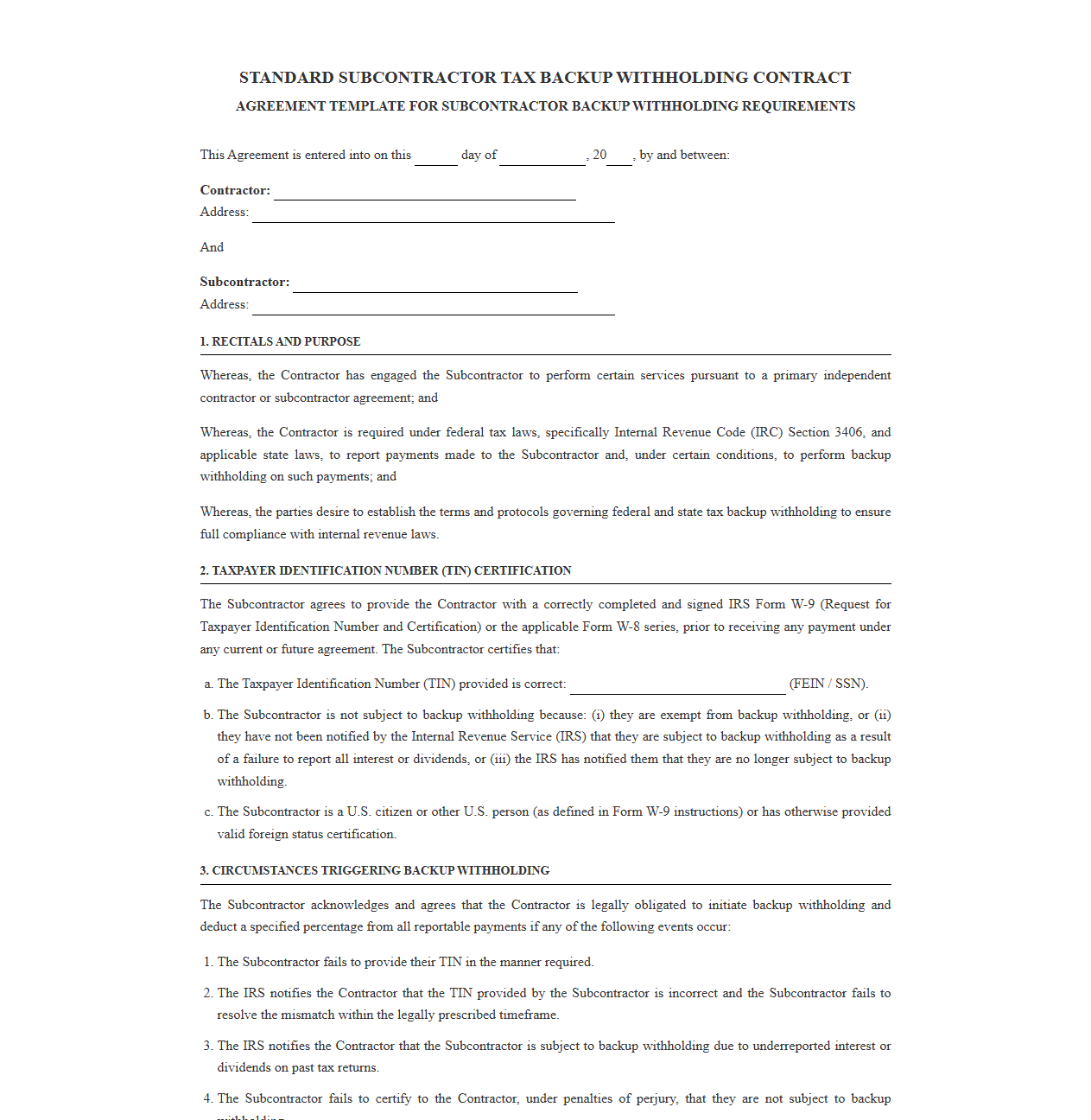
Standard Subcontractor Tax Backup Withholding Contract
 Download: .PDF
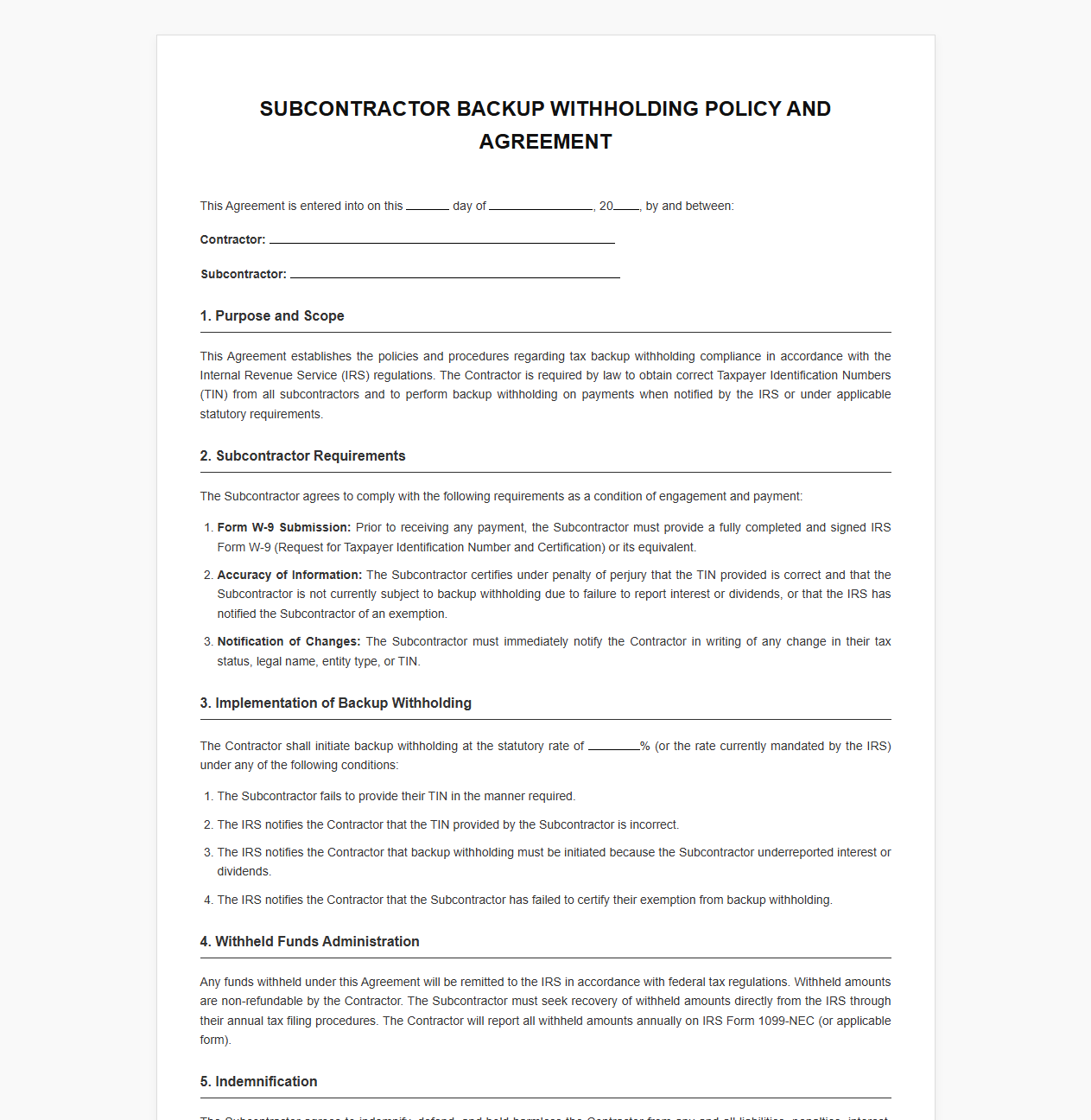
Subcontractor Backup Withholding Policy and Agreement
 Download: .PDF
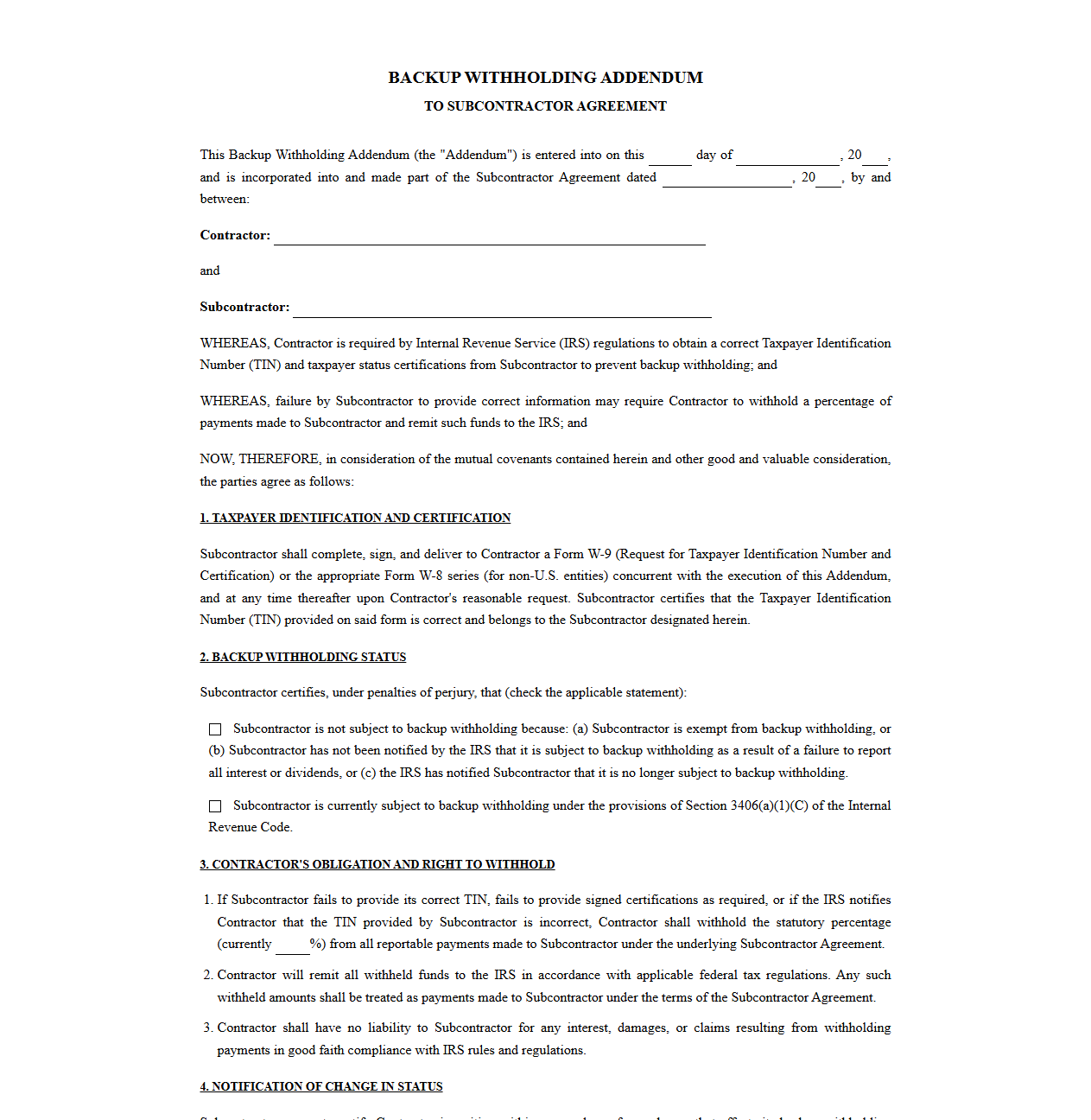
Backup Withholding Addendum for Subcontractor Agreements
 Download: .PDF
Understanding the Compliance Stakes of Subcontractor Backup Withholding
Managing independent contractors and subcontractors introduces unique operational flexibility, but it also exposes businesses to complex tax liabilities. When the Internal Revenue Service (IRS) identifies mismatches in subcontractor information, the paying organization is often held liable for unpaid taxes. Navigating these requirements demands a strict commitment to compliance to avoid severe financial repercussions.
To mitigate these risks, organizations must leverage backup withholding as a critical defense mechanism. By proactively establishing tax protocols, businesses can prevent unexpected IRS penalties, safeguard their cash flow, and maintain seamless operational alignment with federal tax authorities.
What is Backup Withholding and When Does It Apply?
Backup withholding is a tax compliance mechanism that requires payers to withhold tax from payments made to service providers who are not otherwise subject to withholding. This process is directly tied to IRS Form W-9, which subcontractors use to certify their Taxpayer Identification Number (TIN).
The Role of Form W-9
When a subcontractor is onboarded, they must provide a completed and signed Form W-9. This form provides the legal name and TIN (or Social Security Number) associated with the entity. If the information provided is deficient or unverified, backup withholding rules are triggered immediately.
Triggers for Backup Withholding
Payers are legally obligated to initiate backup withholding under specific circumstances. The most common triggers include:
- Missing TIN: The subcontractor fails to provide a TIN on Form W-9.
- Incorrect TIN: The IRS notifies the payer that the TIN and name combination provided does not match official database records.
- Underreporting Notification: The IRS issues a formal directive to begin withholding due to the subcontractor's prior underreporting of interest or dividends.
- Failing to Certify Payee Status: The subcontractor fails to certify that they are exempt from backup withholding when required.
The Strategic Value of a Backup Withholding Agreement Template
Relying solely on informal communications during onboarding exposes your business to regulatory vulnerabilities. A formalized backup withholding agreement establishes a legally binding framework that protects both the hiring organization and the subcontractor, ensuring that tax obligations are transparent from day one.
This agreement outlines exactly when and why taxes may be withheld from payments, eliminating surprises when invoices are processed. By standardizing this communication, businesses protect their vendor relationships and build an auditable paper trail for tax examiners.
"A structured backup withholding agreement serves as an essential liability shield, transforming reactive tax management into a proactive legal safeguard that clarifies payment terms before any funds change hands."
Essential Clauses for Your Subcontractor Agreement Template
To ensure maximum legal efficacy, your backup withholding agreement template should contain specific, well-defined clauses that outline the responsibilities of both parties.
TIN Verification and Accuracy Terms
This clause obligates the subcontractor to provide a valid, matching TIN within a specified timeframe. It should explicitly state that payments will be withheld if the provided information fails IRS database matching tools.
Withholding Rate Specifications
The agreement must explicitly reference the current federal backup withholding rate. Under current tax law, specifically IRC Section 3406, payers must withhold at a flat rate of 24% on reportable payments until the tax discrepancy is officially resolved.
IRS Notice Compliance and Indemnification
This section outlines how the business will handle direct IRS notifications, such as B-Notices. It should state that the business will comply immediately with IRS mandates and includes an indemnification clause protecting the payer from claims regarding withheld funds deposited with the government.
Dispute Resolution Procedures
Should a subcontractor dispute a withholding action, this clause details the steps required to resolve the issue. It specifies that withholding will continue uninterrupted until the subcontractor provides verified IRS documentation, such as a newly validated Form W-9.
How to Implement the Agreement in Your Onboarding Workflow
Integrating a backup withholding agreement into your standard onboarding procedures ensures that tax compliance is treated as a prerequisite rather than an afterthought.
- Collect Form W-9 and the Agreement Concurrently: Send the backup withholding agreement along with the standard IRS Form W-9 as part of the initial onboarding packet before any contract work begins.
- Verify TINs Instantly: Run the provided name and TIN combination through the official IRS TIN Matching Program to verify authenticity before processing the first invoice.
- Flag Accounts in the ERP System: If the TIN match fails or is missing, configure your accounting software to automatically apply the
24%withholding rate to all incoming invoices from that vendor. - Issue Immediate Notification: Send an automated notification to the subcontractor explaining that backup withholding has been activated due to information discrepancies, outlining the steps required to remediate their file.
- Deposit Withheld Funds Regularly: Ensure your finance team deposits all withheld funds to the IRS in accordance with federal deposit schedules, reporting them annually on Form 1099-NEC.
Common Compliance Pitfalls to Avoid in Subcontractor Management
Even minor oversights in tax administration can lead to substantial financial liabilities for your organization. Understanding where other businesses fail can help you safeguard your operations.
Many organizations make the mistake of waiting until year-end reporting to verify subcontractor data. By the time Form 1099-NEC filing season arrives, the contractor may be unreachable, leaving the payer liable for uncollected withholding amounts.
Securing Long-Term Tax Compliance and Risk Mitigation
A proactive compliance posture is the strongest defense against regulatory friction and costly IRS audits. Establishing a standardized backup withholding protocol ensures your business remains protected while fostering professional, transparent relationships with your subcontractor network.
To maintain peak operational integrity, companies should conduct periodic internal audits of their subcontractor files, verifying that signed agreements and active W-9 forms are on file for all active vendors. Moving away from manual processes to automated digital template management systems simplifies this upkeep, tracking document expiration dates and streamlining verification pipelines.
Take control of your tax exposure today by integrating formalized backup withholding agreements into your onboarding workflows, ensuring your business remains protected against evolving regulatory demands.

Leave a comment