

Managing subcontractor compliance across various state and local jurisdictions is a persistent administrative burden for general contractors, often leaving firms vulnerable to devastating, unforeseen tax liabilities during audits. This exposure has intensified with the complex web of shifting economic nexus laws and localized tax mandates, where a single non-compliant partner can trigger joint audit liabilities for the hiring entity.
Implementing structured Subcontractor State and Local Tax (SALT) Compliance Agreement Templates grants your organization immediate operational protection and safeguards your hard-earned profit margins. However, it is important to stipulate that while standardized templates offer a robust defensive framework, they must be adapted to specific regional regulations-such as Washington's Business and Occupation (B&O) tax or localized withholding certificates-rather than treated as a one-size-fits-all cure.
This article outlines the essential clauses your templates must contain, strategies for allocating tax indemnity, and practical steps for establishing a bulletproof compliance verification workflow.
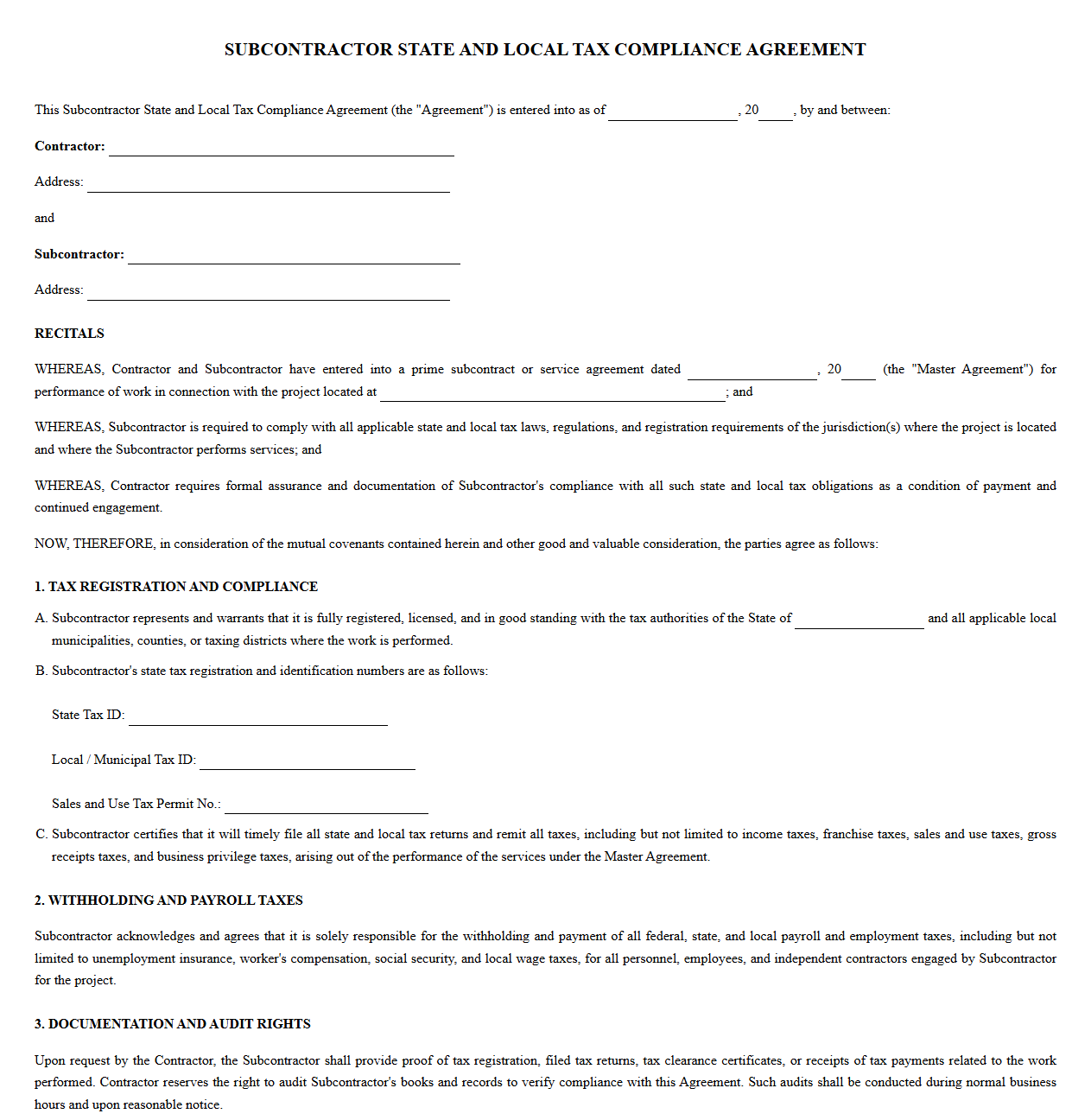
Subcontractor State and Local Tax Compliance Agreement
 Download: .PDF
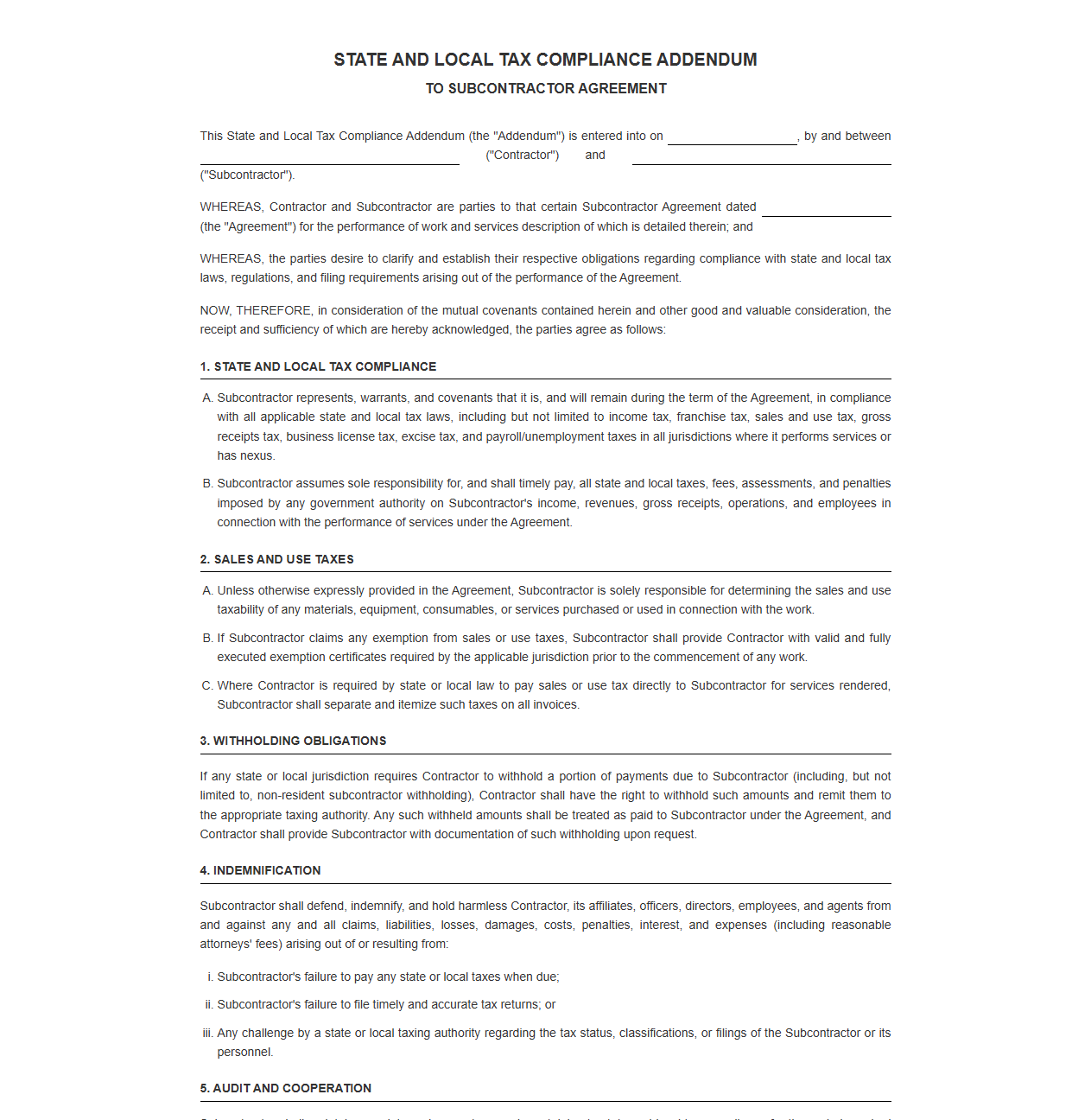
State and Local Tax Compliance Addendum for Subcontractors
 Download: .PDF
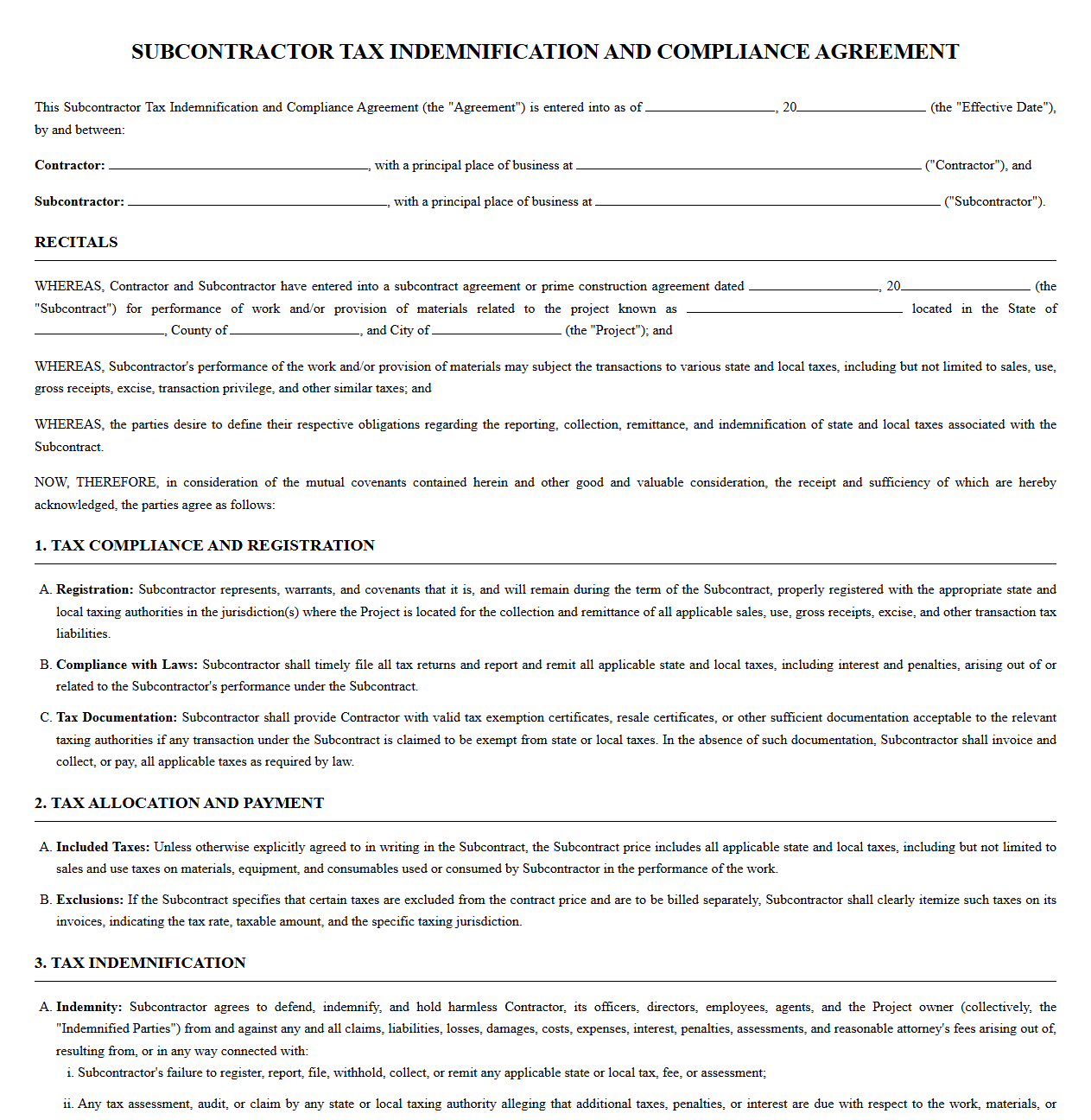
Subcontractor Tax Indemnification and Compliance Agreement
 Download: .PDF
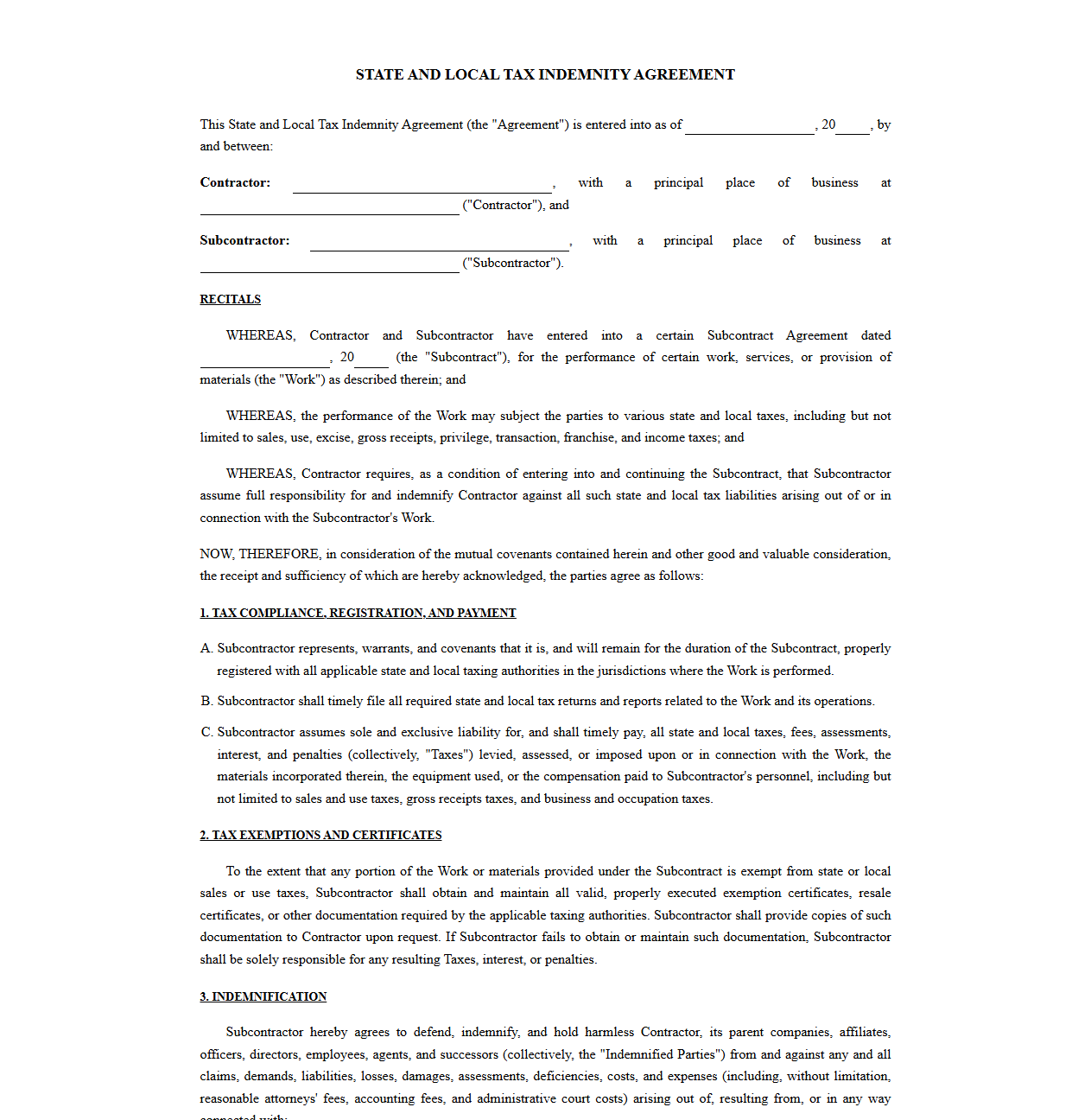
State and Local Tax Indemnity Agreement for Subcontractors
 Download: .PDF
Subcontractor Agreement for Multi-State Tax Compliance
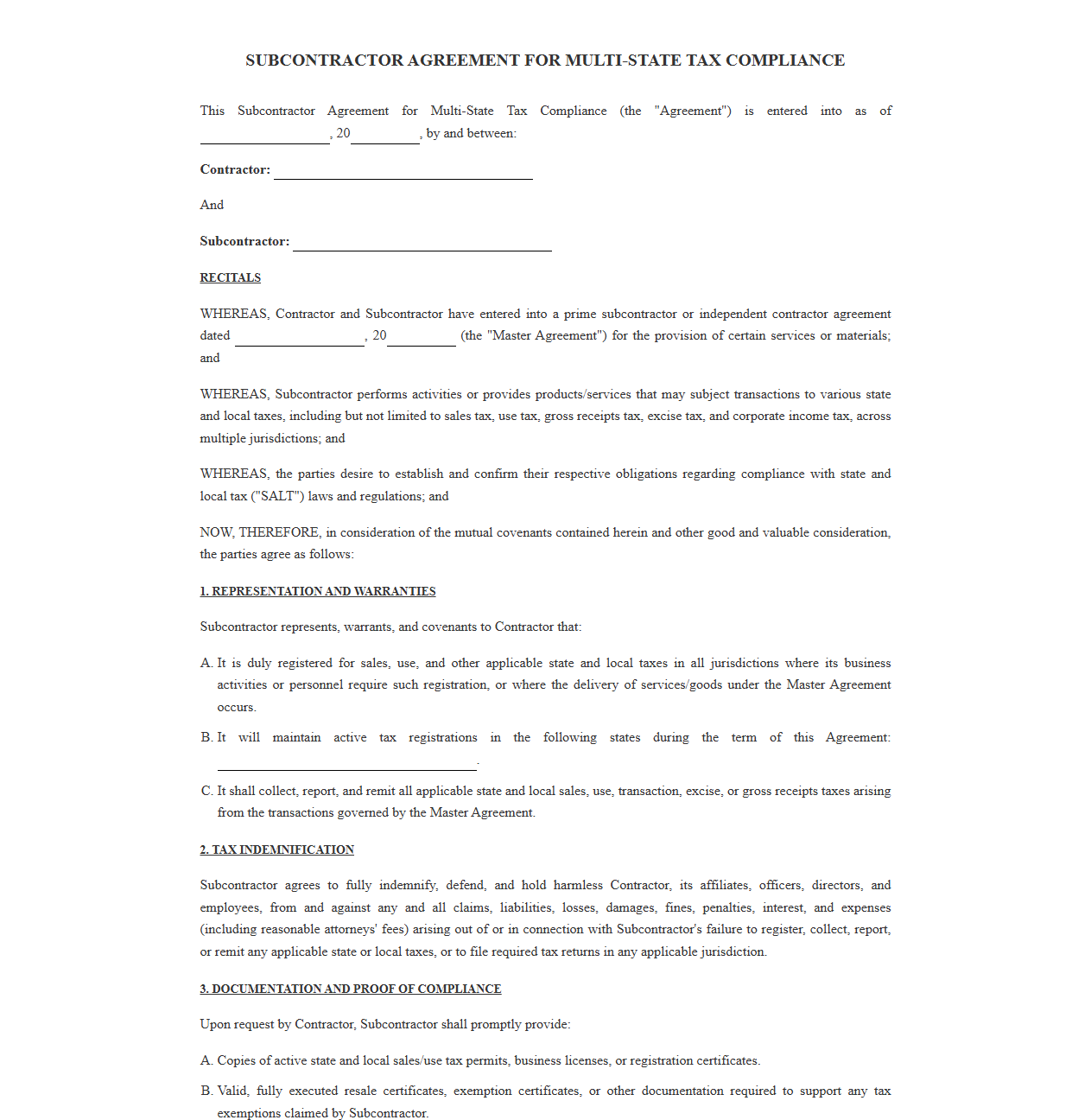 Download: .PDF
Subcontractor SALT Compliance Certificate and Agreement
 Download: .PDF
Standard Subcontractor State and Local Tax Covenant
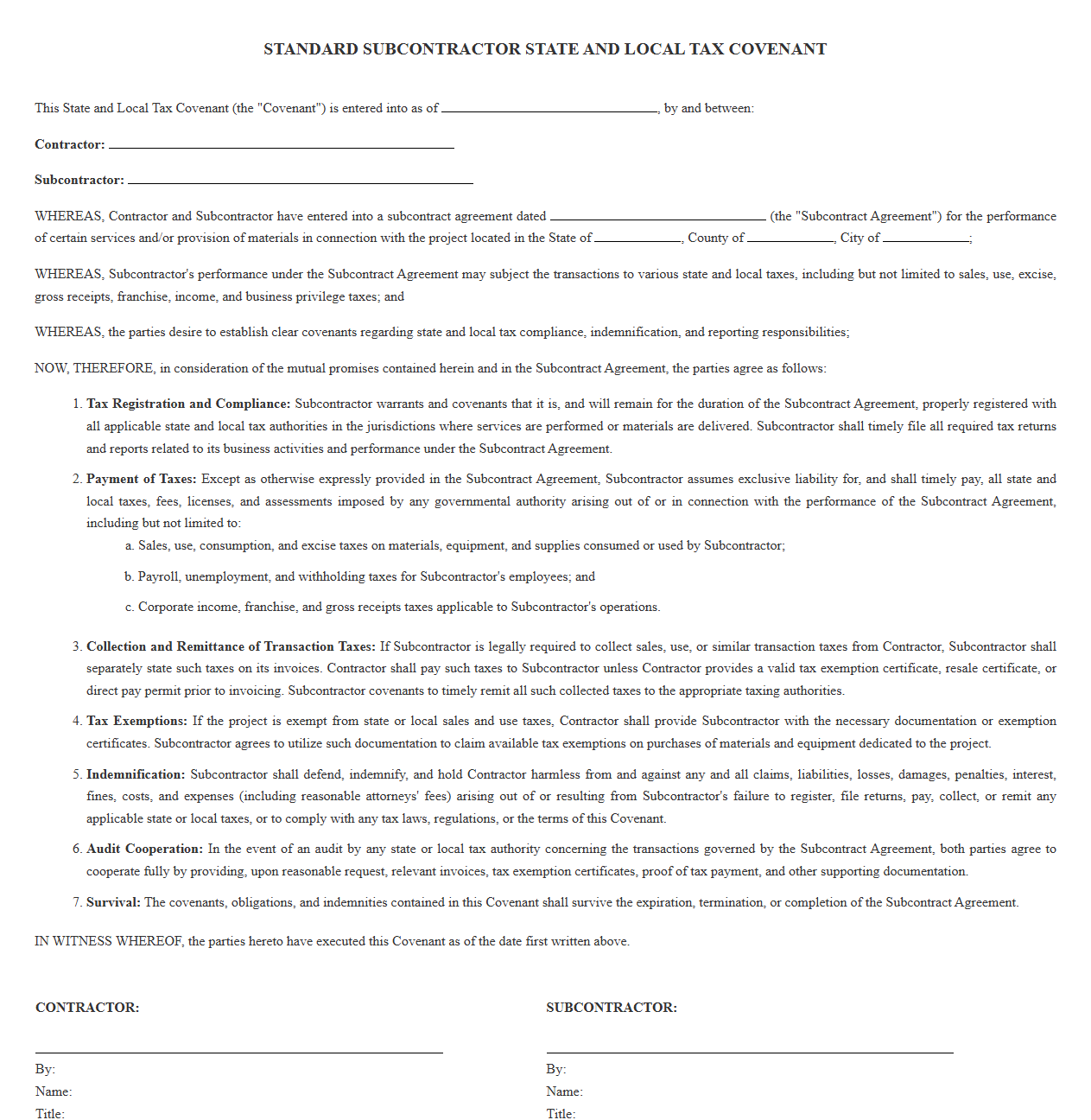 Download: .PDF
Subcontractor Agreement for Local Tax Regulation Compliance
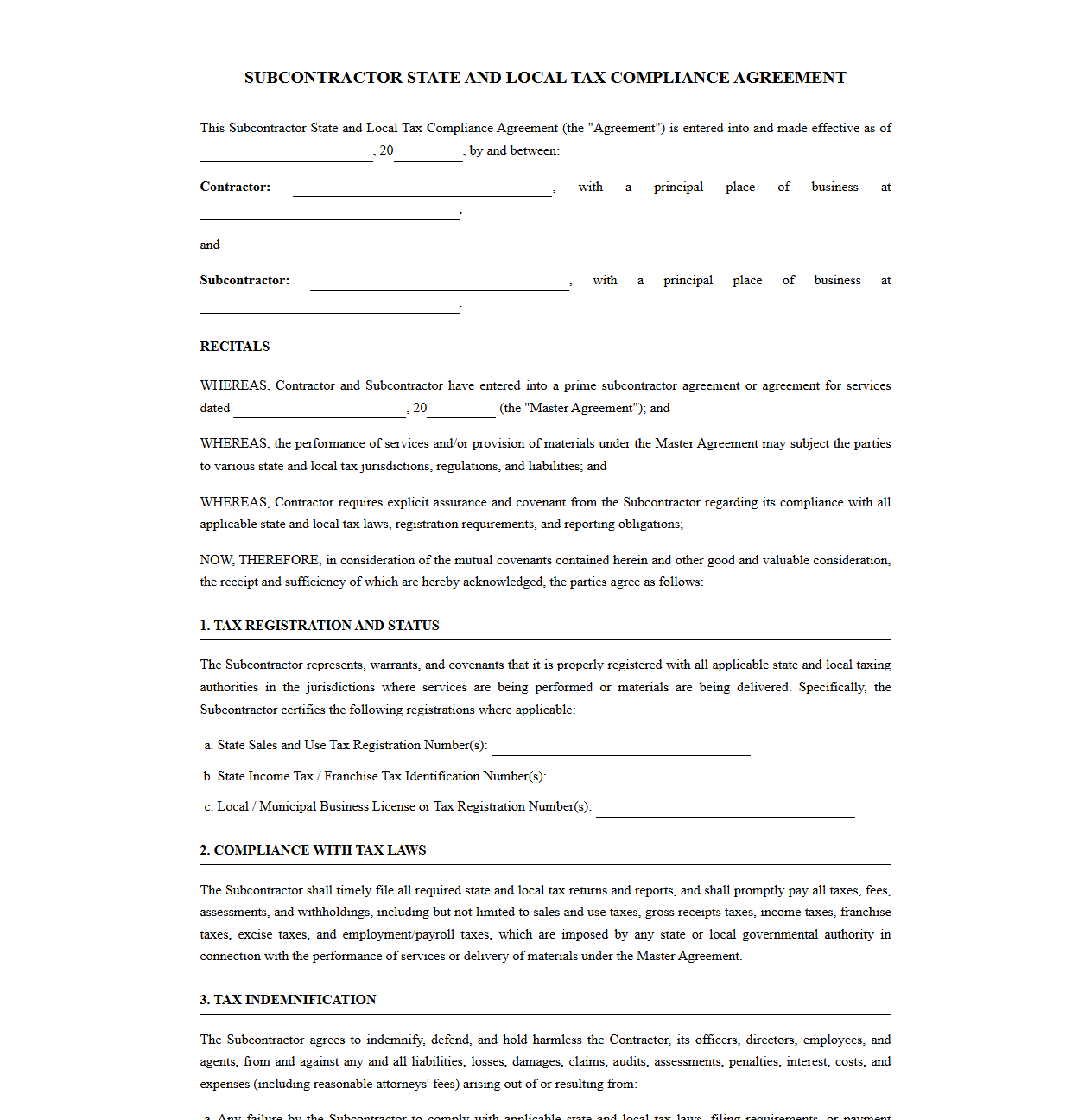 Download: .PDF
Subcontractor State Tax Compliance Declaration and Agreement
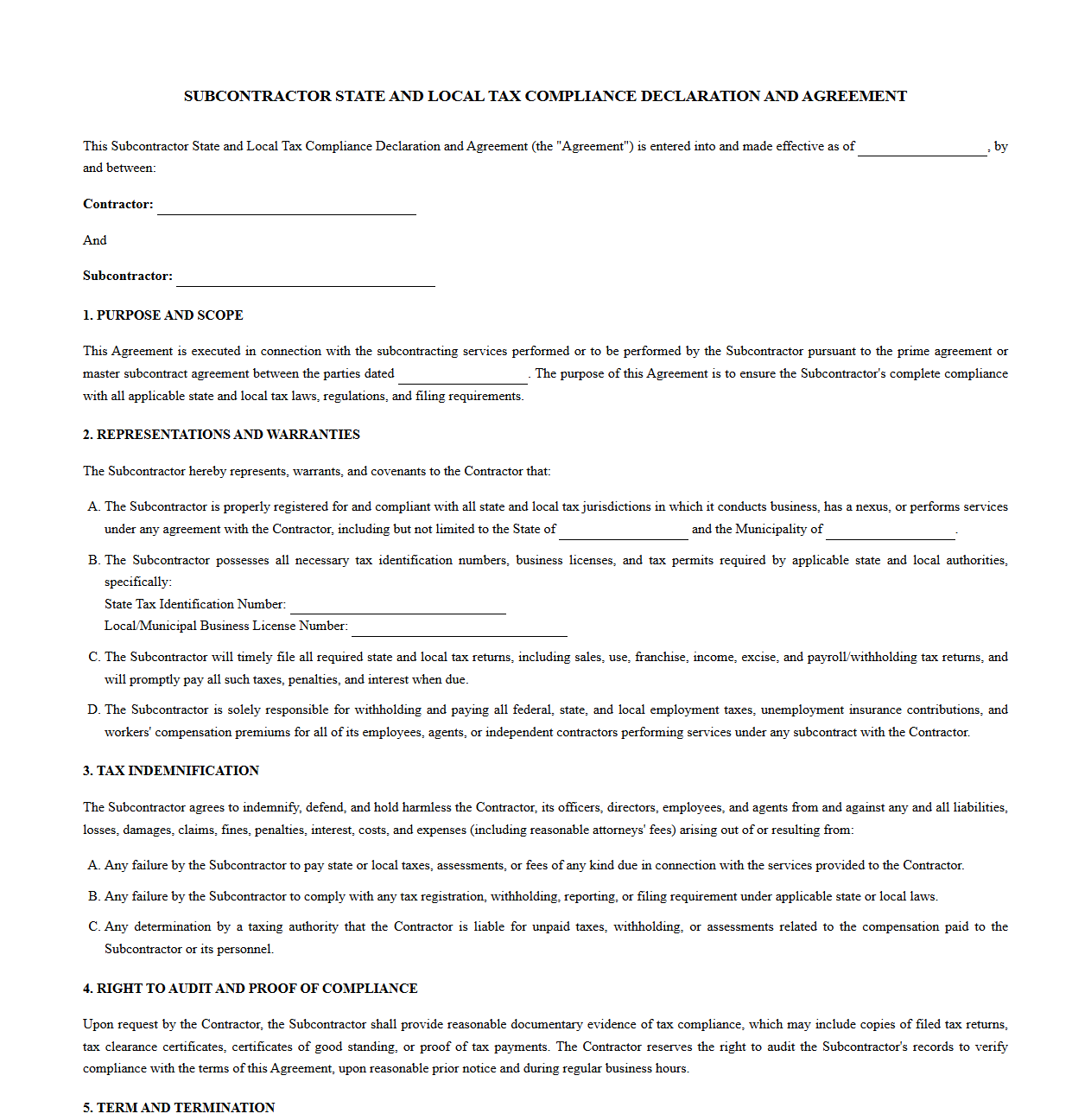 Download: .PDF
The Growing Risk of Subcontractor State and Local Tax Non-Compliance
General contractors operate in a high-stakes environment where financial exposure extends far capital boundaries. During state and local tax (SALT) audits, revenue authorities increasingly target general contractors under joint liability and successor liability doctrines. When a subcontractor fails to remit sales, use, or payroll taxes, state agencies often hold the primary contractor responsible for the unpaid debt. This joint liability elevates the risk of devastating financial penalties during an audit, making subcontractor compliance a critical operational priority.
What is a Subcontractor SALT Compliance Agreement?
A Subcontractor SALT Compliance Agreement is a specialized legal contract executed before any project operations begin. This agreement serves as a proactive safeguard, clearly defining the subcontractor's responsibility to manage, collect, and remit all applicable state and local taxes. By establishing explicit accountability upfront, general contractors protect their operational margins and establish a clear legal boundary against joint tax liabilities.
Crucial Clause: Indemnification and Liability Shifting
The cornerstone of any robust tax compliance template is a comprehensive indemnification clause. This legal mechanism shifts the financial burden of tax non-compliance directly back to the responsible party.
The subcontractor agrees to indemnify, defend, and hold harmless the general contractor from any liabilities, damages, penalties, interest, or legal fees arising from the subcontractor's failure to pay state and local taxes.
Verification Protocols: Proof of Registration and Tax Filing
Trust must be verified with hard evidence before work commences. General contractors should enforce strict document submission requirements to ensure subcontractor legitimacy.
- Mandatory submission of active state tax identification numbers for all jurisdictions where work will be performed.
- Provision of a current Certificate of Good Standing from the state department of revenue.
- Validation of certificate authenticity through official state online databases.
Safeguarding Against Audits: Cooperation and Record Retention Clauses
When a state tax authority initiates an audit, access to historical project data is vital for a swift defense. Compliance templates must feature dedicated audit cooperation and record-keeping mandates. Subcontractors must be contractually obligated to assist during audits and retain all relevant financial records for the full statutory lookback period, typically matching or exceeding state statute of limitations.
Best Practices for Implementing Compliance Templates Across Multiple States
Managing compliance across state lines requires a flexible framework that accounts for varying state laws and local tax jurisdictions.
- Identify unique physical or economic nexus triggers in each operational state.
- Customize the base agreement to address specific local gross receipts taxes and municipal levies.
- Conduct annual reviews of the templates to align with changing state tax legislation.
Securing Your Business with Proactive Tax Compliance
Standardizing subcontractor tax compliance agreements safeguards your business against unforeseen state and local liabilities. By proactively managing tax obligations, contractors secure their cash flow, protect their corporate reputation, and ensure audit readiness.

Leave a comment