

Navigating the volatile landscape of corporate transactions often leaves dealmakers exposed to unforeseen, high-stakes tax liabilities that can quickly erode transaction value. While rigorous due diligence attempts to uncover these financial landmines, the sheer complexity of historical corporate tax compliance means certain liabilities inevitably slip through the cracks.
To bridge this gap, utilizing structured tax indemnification agreement templates grants transactional teams immediate risk-allocation frameworks and peace of mind. However, as a crucial stipulation, these templates must be viewed as highly adaptable foundations rather than rigid solutions. They must be tailored to address concrete exposures, such as pre-closing income tax audits or transfer pricing disputes.
Below, we examine the essential clauses of robust tax indemnification agreements, provide downloadable templates, and outline best practices for integrating these protections into your next corporate transaction.
Tax Indemnity Agreement
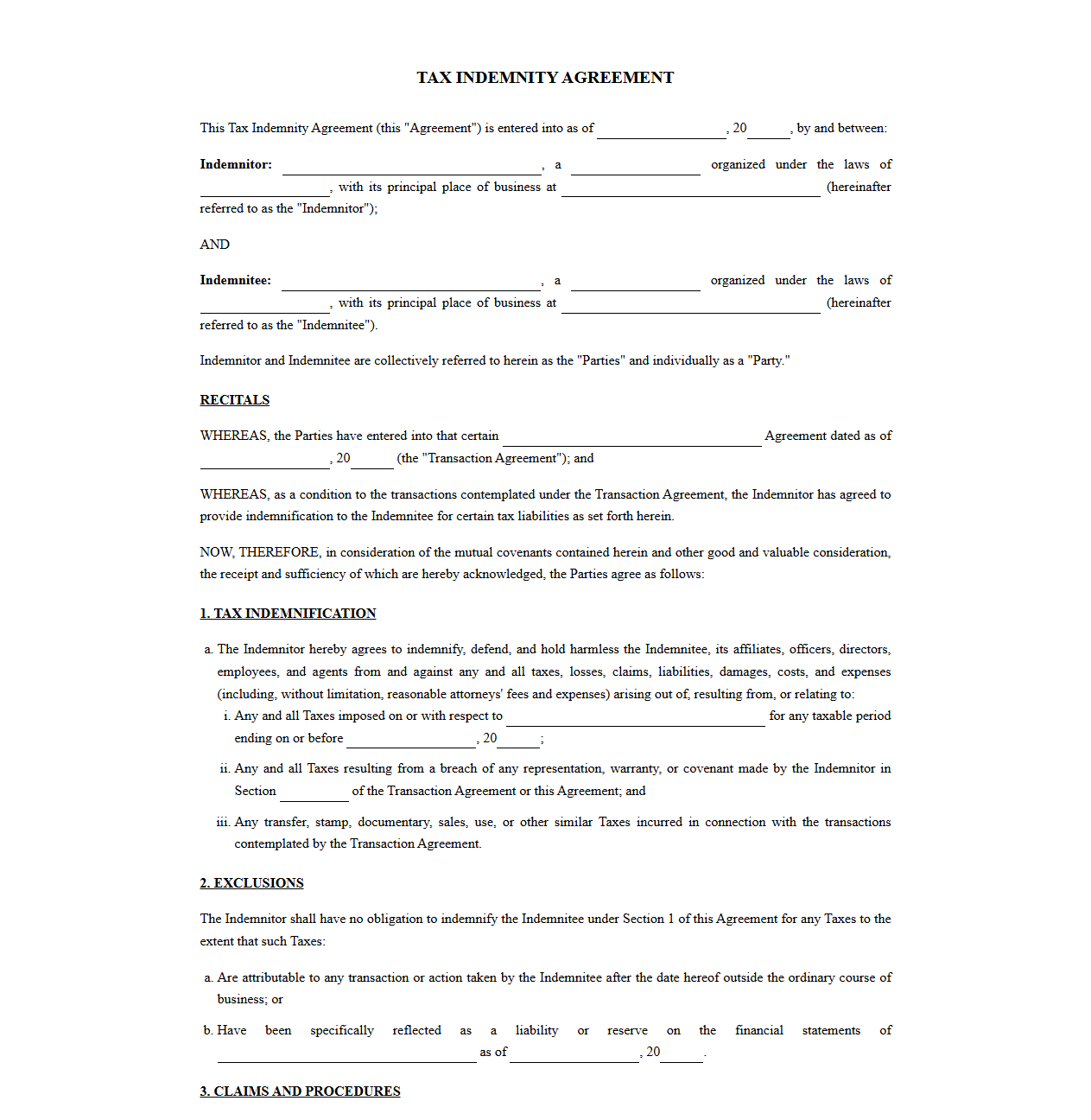 Download: .PDF
Deed of Tax Indemnification
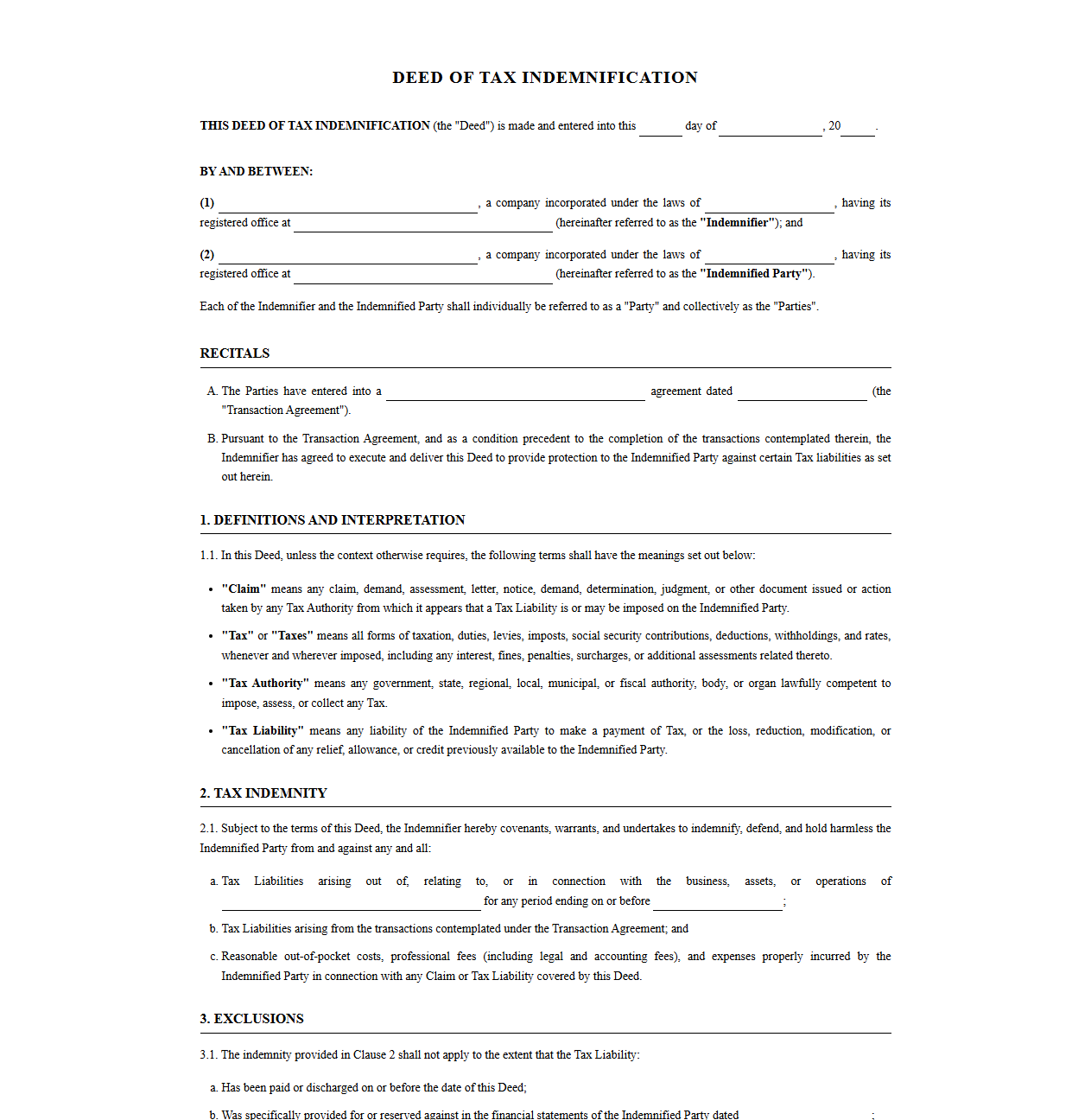 Download: .PDF
Tax Indemnity and Hold Harmless Agreement
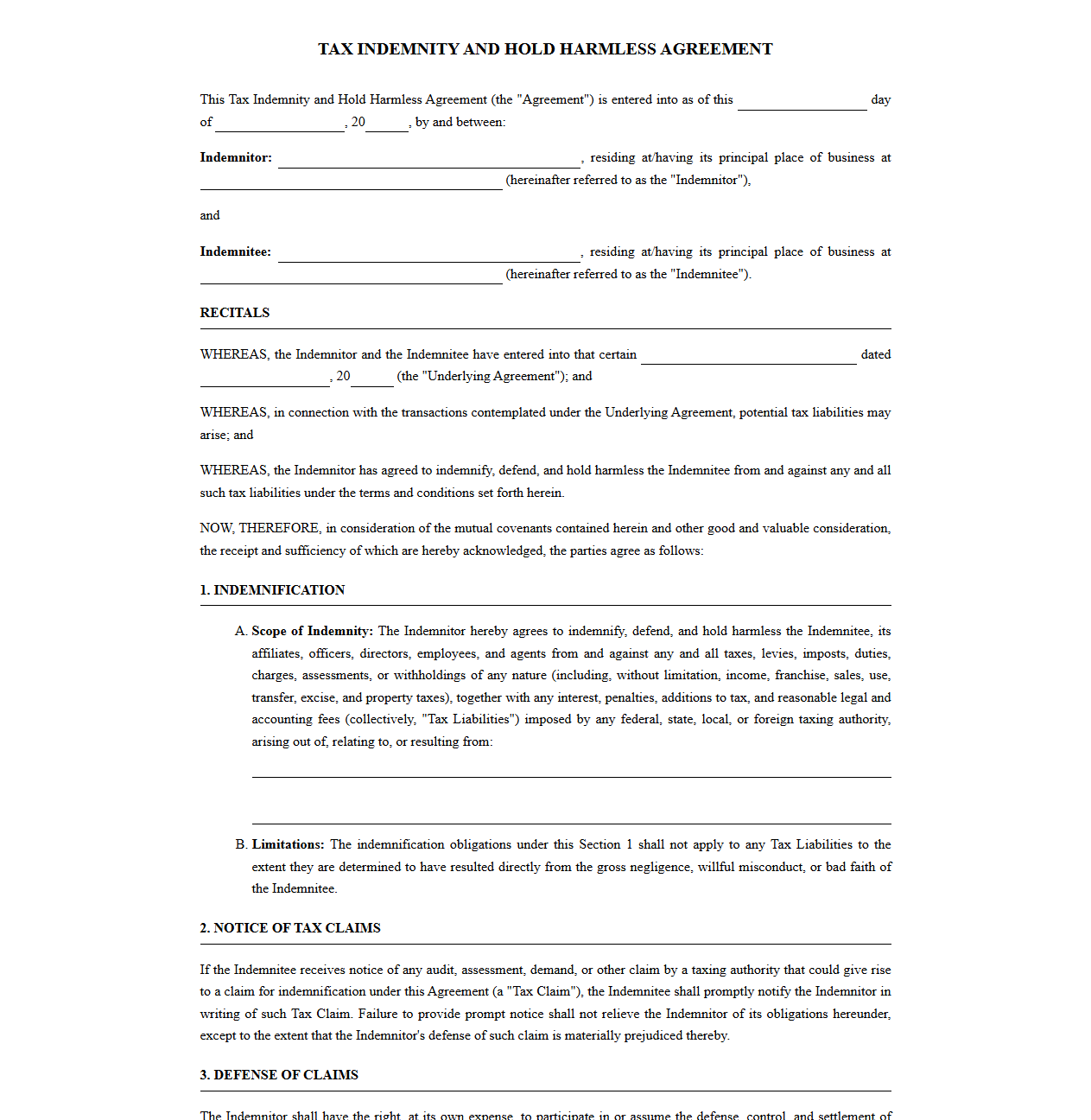 Download: .PDF
Corporate Tax Indemnification Deed
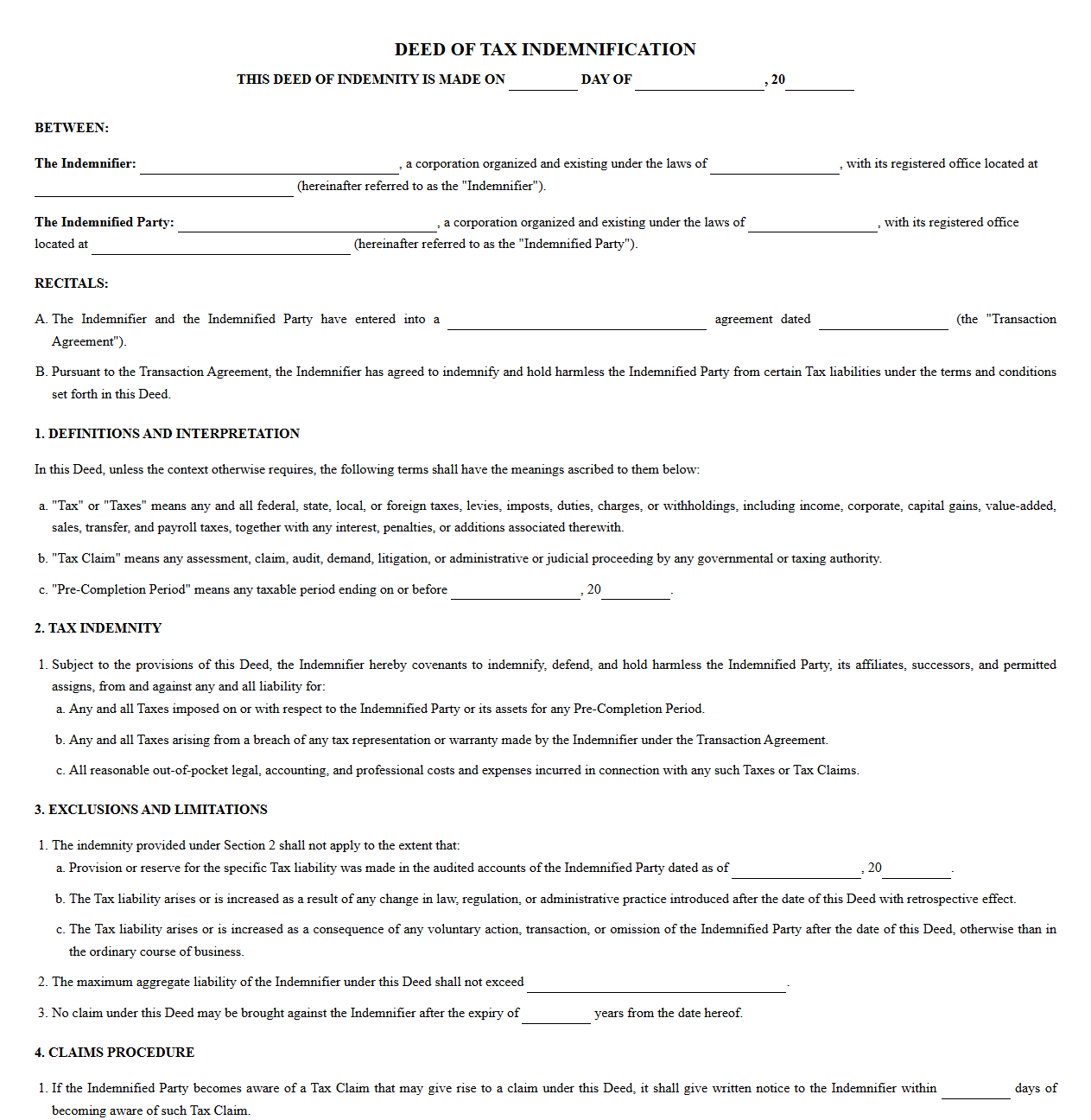 Download: .PDF
Tax Liability Indemnity Agreement
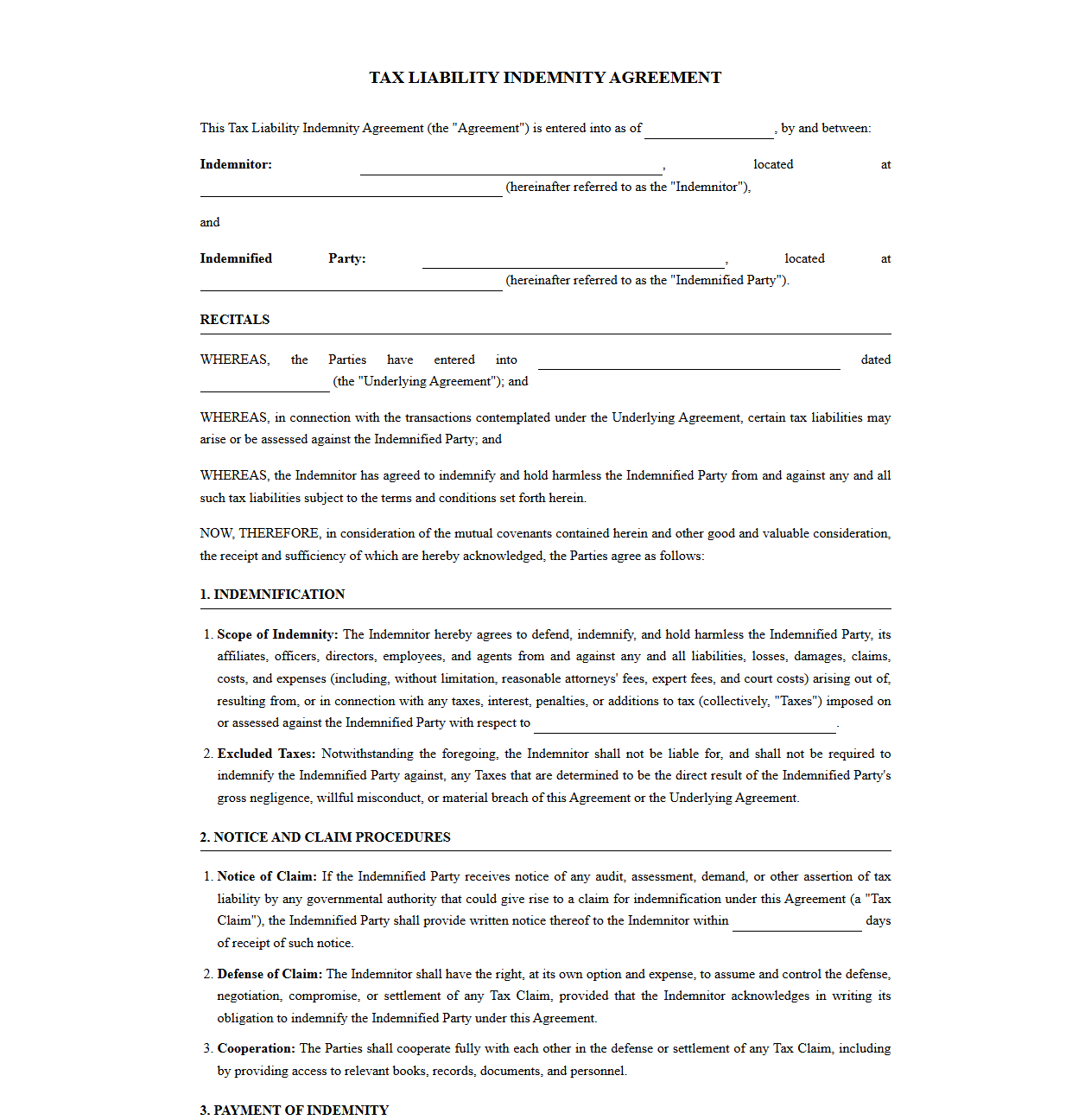 Download: .PDF
Share Purchase Tax Indemnity Agreement
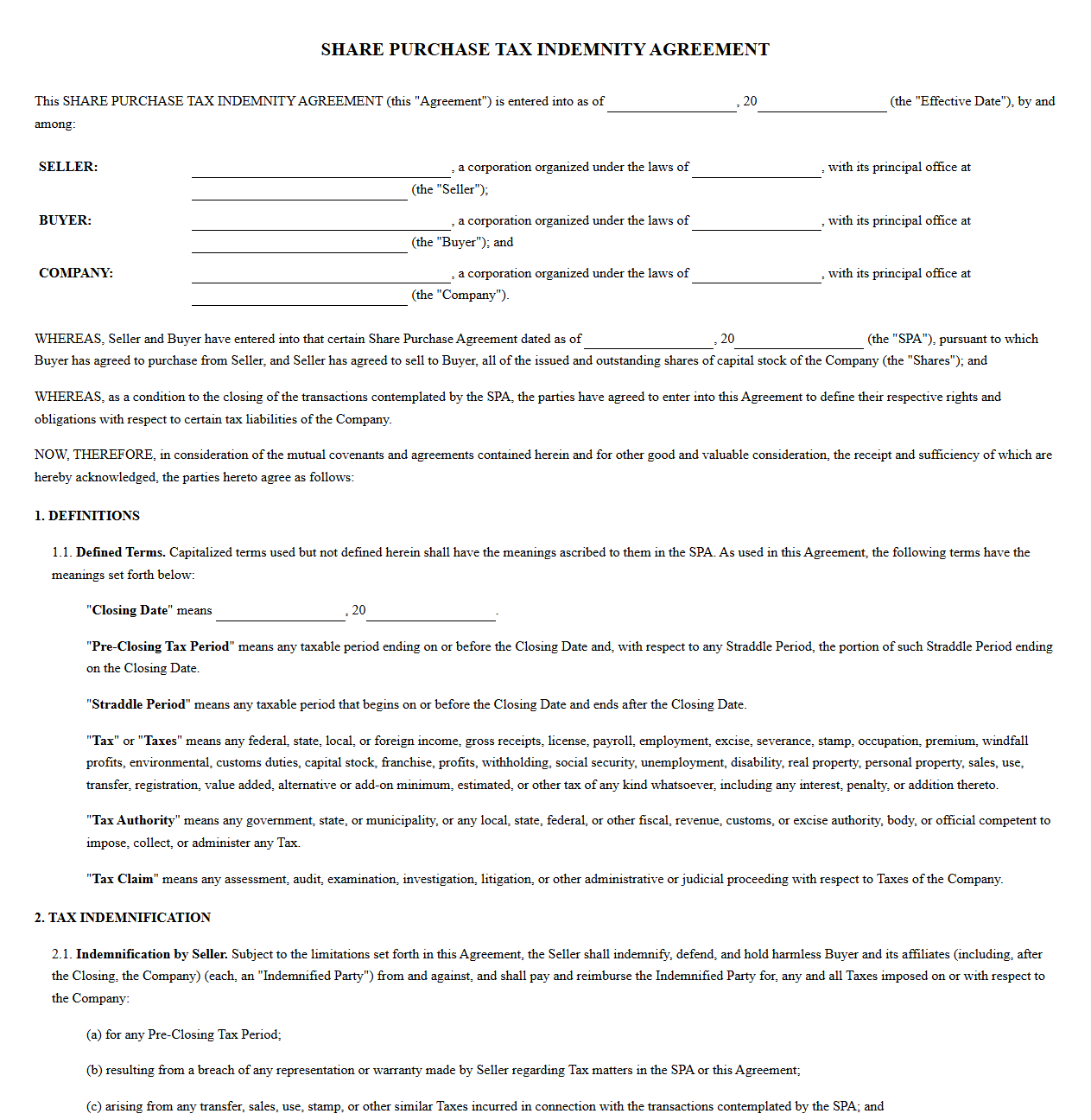 Download: .PDF
Mutual Tax Indemnification Agreement
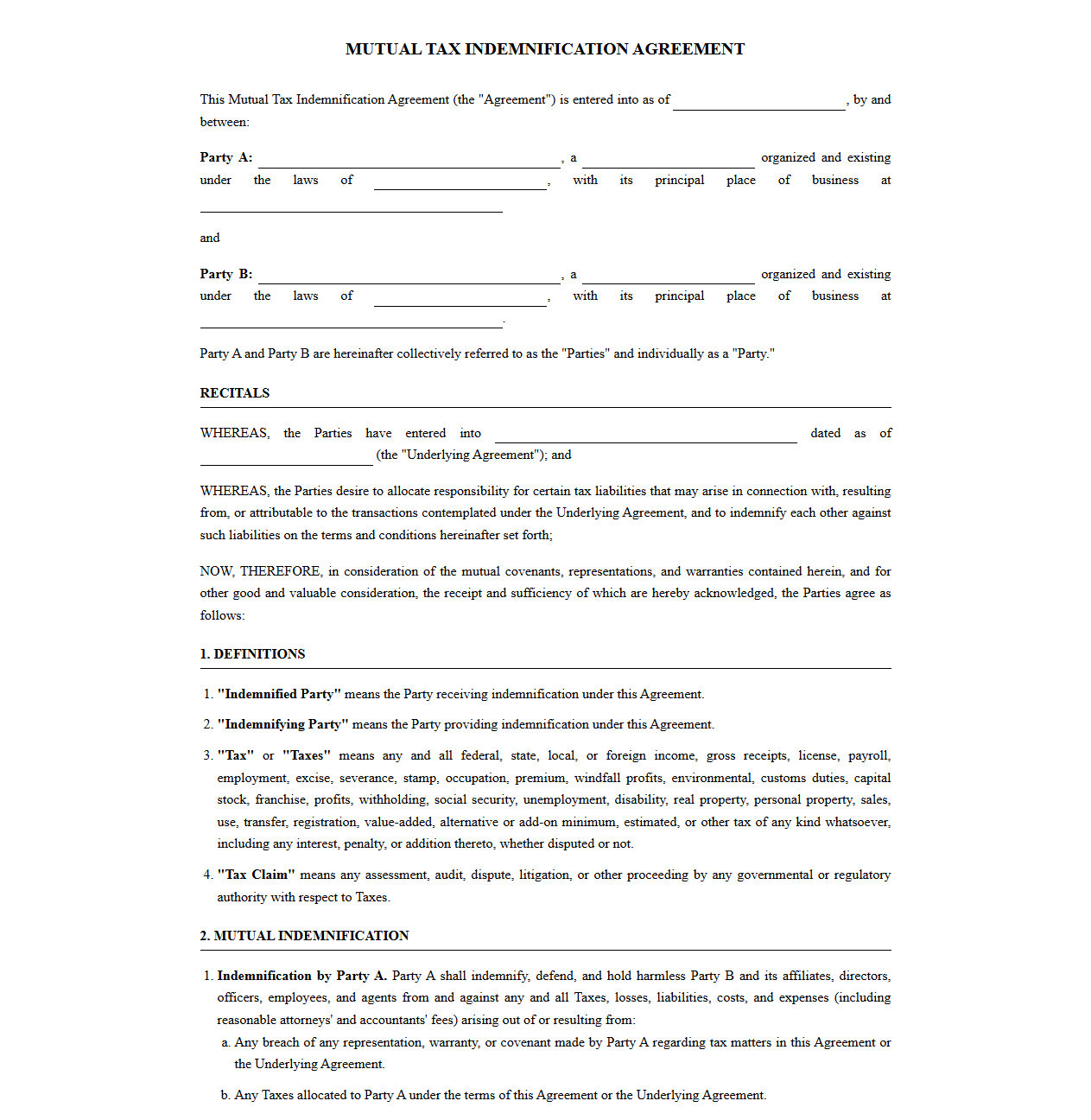 Download: .PDF
Mergers and Acquisitions Tax Indemnity Agreement
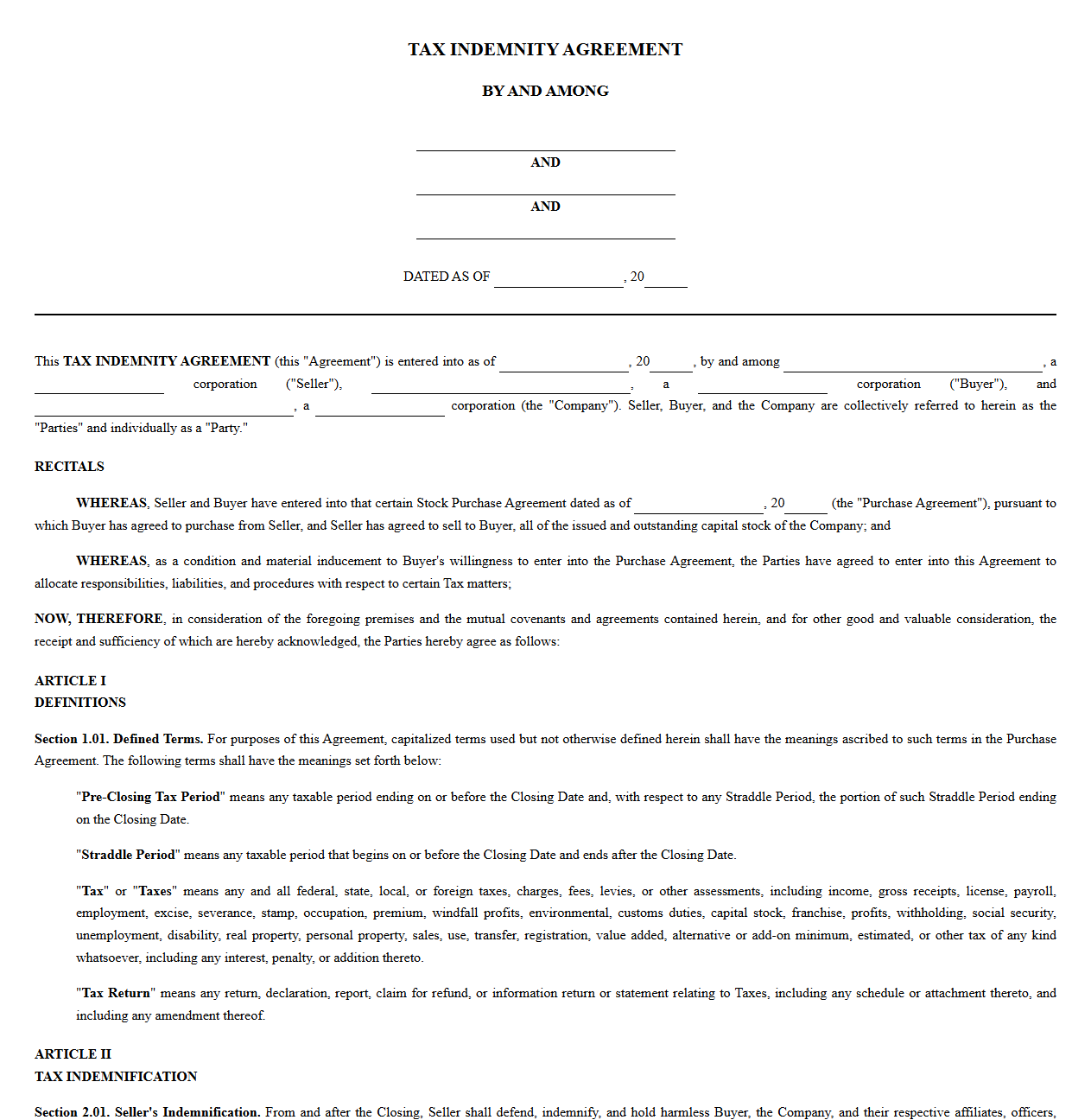 Download: .PDF
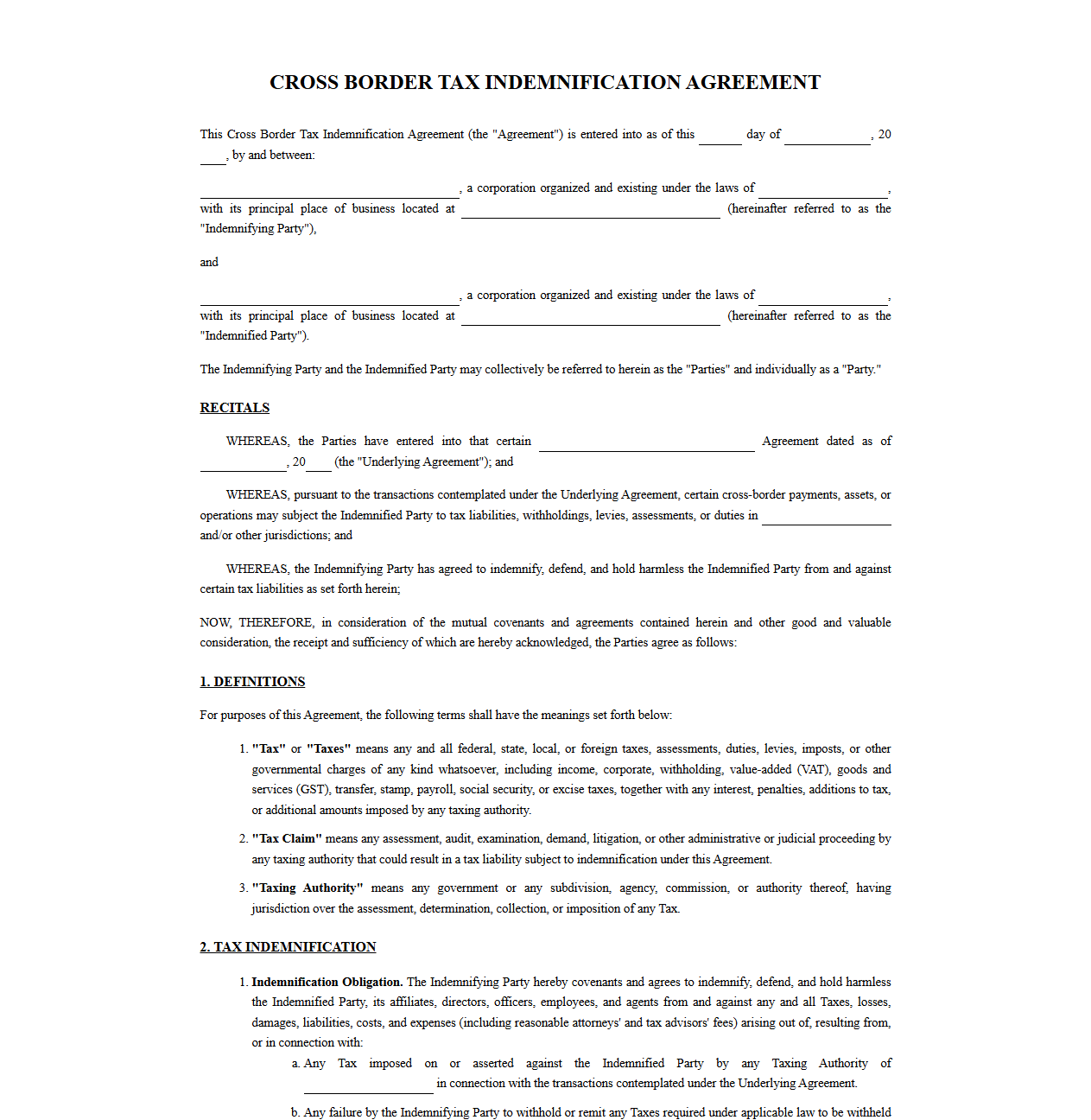
Cross Border Tax Indemnification Agreement
 Download: .PDF
Understanding Tax Indemnification in M&A Transactions
In the high-stakes arena of mergers and acquisitions (M&A), undisclosed historical tax liabilities represent a significant threat to the projected value of an acquisition. A tax indemnification agreement serves as a vital risk-allocation mechanism, designed to protect the buyer from pre-closing tax exposures that were either unknown or poorly quantified during the due diligence phase. Without these provisions, a buyer could inherit substantial burdens, including unpaid income taxes, payroll discrepancies, or outstanding state and local tax assessments.
By establishing clear parameters of accountability, these agreements mitigate unforeseen financial risks and ensure that the seller remains responsible for the financial consequences of their operational history. This contractual safeguard guarantees that the purchase price reflects the true economic value of the target company, protecting the buyer's return on investment from being eroded by historical non-compliance. Effectively managing this transactional exposure is crucial for maintaining post-acquisition financial stability.
Defining Pre-Closing vs. Post-Closing Tax Liabilities
A fundamental step in drafting a tax indemnification agreement is drawing a clear line between pre-closing and post-closing tax liabilities. This allocation ensures that each party is responsible for the taxes associated with the periods during which they controlled the target company. Special attention must be paid to "straddle periods"-taxable periods that begin before and end after the closing date.
To establish an equitable division of these obligations, transaction agreements typically define responsibilities as follows:
- Pre-Closing Tax Liabilities (Seller's Responsibility): This encompasses all taxes of the target company for any taxable period ending on or before the closing date. It also includes the portion of straddle period taxes allocated to the pre-closing timeframe, typically calculated on a pro-rata basis for property taxes or through an interim closing of the books for income taxes.
- Post-Closing Tax Liabilities (Buyer's Responsibility): The buyer assumes responsibility for all taxes of the target company that arise in taxable periods beginning after the closing date, as well as the post-closing portion of any straddle periods.
- Straddle Period Allocation: For taxes based on income, sales, or payroll, the allocation is determined by performing a hypothetical "closing of the books" as of the end of the closing date. For periodic taxes like real property taxes, the liability is allocated based on the number of days elapsed in the period prior to vs. after the closing date.
Establishing Procedures for Tax Contests and Audits
When a taxing authority initiates an audit or contest regarding pre-closing tax periods, conflict can easily arise between the buyer and the seller. Clear procedures must be established to govern how these disputes are managed, who controls the defense, and who has the final authority to settle with the tax authorities.
Generally, the seller will want to control any audit that could result in a tax liability they are required to indemnify. Conversely, the buyer will want participation rights to ensure the defense is handled competently, particularly if the outcome could impact post-closing tax periods. Agreements must clearly outline notice requirements, representation rights, and consent thresholds for settlements.
"The Indemnified Party shall promptly notify the Indemnifying Party in writing upon receipt of any notice of tax audits, assessments, or demands. The Indemnifying Party shall have the right to control the defense of such Tax Contest, provided that the Indemnified Party may participate in such defense at its own expense. Neither party shall settle or compromise any such Tax Contest without the prior written consent of the other party, which consent shall not be unreasonably withheld, conditioned, or delayed."
Incorporating Indemnity Limitations: Caps, Baskets, and Survival Periods
Sellers rarely agree to unlimited indemnification. To balance risk, parties negotiate specific limitations on tax indemnity claims, defining how long the indemnity lasts and the financial thresholds required to trigger a claim. Unlike general commercial representations, tax representations often enjoy longer survival periods and higher liability caps due to the statutory look-back periods of taxing authorities.
The following table outlines the typical structures and comparison points for these negotiated limitations:
| Limitation Category | Standard Commercial Reps | Tax-Specific Reps & Indemnity |
|---|---|---|
| Survival Period | 12 to 24 months post-closing | Expiration of the applicable statute of limitations (plus 30-60 days) |
| Baskets (Deductibles/Thresholds) | 0.5% to 1% of transaction value | Often "first-dollar" coverage (no basket applies to tax claims) |
| Liability Caps | 5% to 15% of the purchase price | Typically capped at the full purchase price or covered by specific tax insurance |
Resolving Post-Closing Tax Refunds and Adjustments
Just as sellers are responsible for pre-closing tax liabilities, they are generally entitled to receive the benefit of any tax refunds that are received post-closing but relate to pre-closing tax periods. Managing these refunds requires a structured coordination process to ensure transparency and accurate calculations.
The standard protocol for handling post-closing tax refunds and subsequent purchase price adjustments follows a strict sequence:
- Identification and Notification: The buyer must notify the seller within a specified timeframe (e.g., 10 business days) of receiving any refund or credit representing taxes paid prior to the transaction closing.
- Exclusion of Buyer-Attributable Refunds: Refunds resulting from post-closing carrybacks of net operating losses or credit carryforwards generated by the buyer's post-closing activities are excluded and remain with the buyer.
- Payment and Netting: The buyer forwards the refund amount, net of any reasonable out-of-pocket expenses or taxes incurred in obtaining that refund, to the seller. This payment is contractually treated as an adjustment to the final purchase price.
Essential Tax Indemnification Agreement Templates and Drafting Checklist
To ensure maximum protection, legal and financial teams must utilize precise drafting standards. Ambiguous phrasing can lead to costly litigation if a tax dispute arises. A robust drafting checklist should verify that all definitions of "Taxes" are sufficiently broad to cover federal, state, local, and foreign jurisdictions, including interest and penalties.
Below is a standard model clause demonstrating the exact representation and warranty language required to protect the buying entity:
/* Section: Tax Representations and Warranties */
"The Target Company has timely filed all Tax Returns required to be filed by it, and all such Tax Returns are true, complete, and correct in all material respects. All Taxes due and owing by the Target Company (whether or not shown on any Tax Return) have been timely paid. There are no encumbrances or liens for Taxes upon any of the assets of the Target Company, other than permitted liens for Taxes not yet due and payable."
Best Practices for Mitigating Long-Term Financial Exposure
Successful risk management in M&A requires proactive collaboration between legal, tax, and financial advisors from the earliest stages of due diligence. Relying solely on boilerplate indemnity language is insufficient when dealing with complex corporate structures or multinational operations. Buying teams must carefully scrutinize the historical filing positions of the target company and structure the transaction to limit successor liability.
To secure optimal protection, dealmakers should consider purchasing Representation and Warranty Insurance (RWI) with specific tax endorsements to cover known or high-risk exposures. Furthermore, establishing a dedicated tax escrow account can guarantee that funds are readily available to satisfy potential indemnification claims, avoiding the need to chase a seller for recovery years after the transaction has closed. Adhering to these disciplined practices preserves deal value and ensures long-term operational harmony.

Leave a comment