

During high-stakes corporate transactions, the sudden discovery of unforeseen tax exposure can instantly jeopardize a deal, leaving buyers and sellers locked in costly disputes over who bears the ultimate financial burden. While thorough due diligence is the standard defense, even the most meticulous financial audits cannot fully eliminate latent fiscal liabilities or retroactive regulatory changes.
Implementing a robust Tax Liability Indemnity Agreement grants transaction parties the precise legal security and financial peace of mind needed to allocate these risks and finalize deals with confidence. However, these templates are not one-size-fits-all shields; to be effective, they require precise customization to address specific historical liabilities-such as outstanding pre-acquisition municipal tax audits or transfer pricing disputes.
This article provides a comprehensive guide to utilizing professional indemnity templates, detailing the essential clauses required to isolate exposure, manage indemnity caps, and structure enforceable indemnification terms that protect your transaction's bottom line.
Tax Indemnity Agreement Template
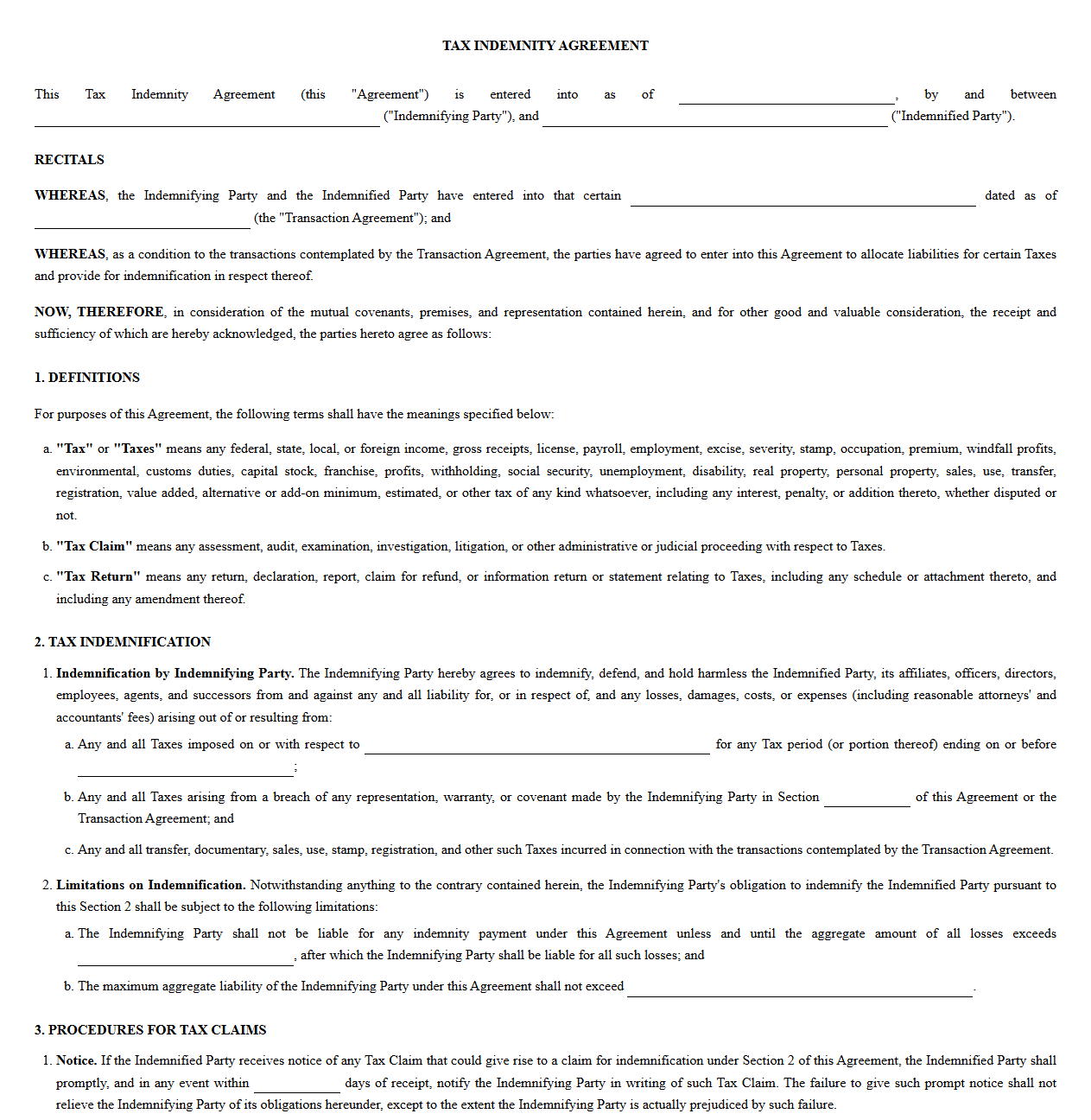 Download: .PDF
Tax Liability Indemnification Deed
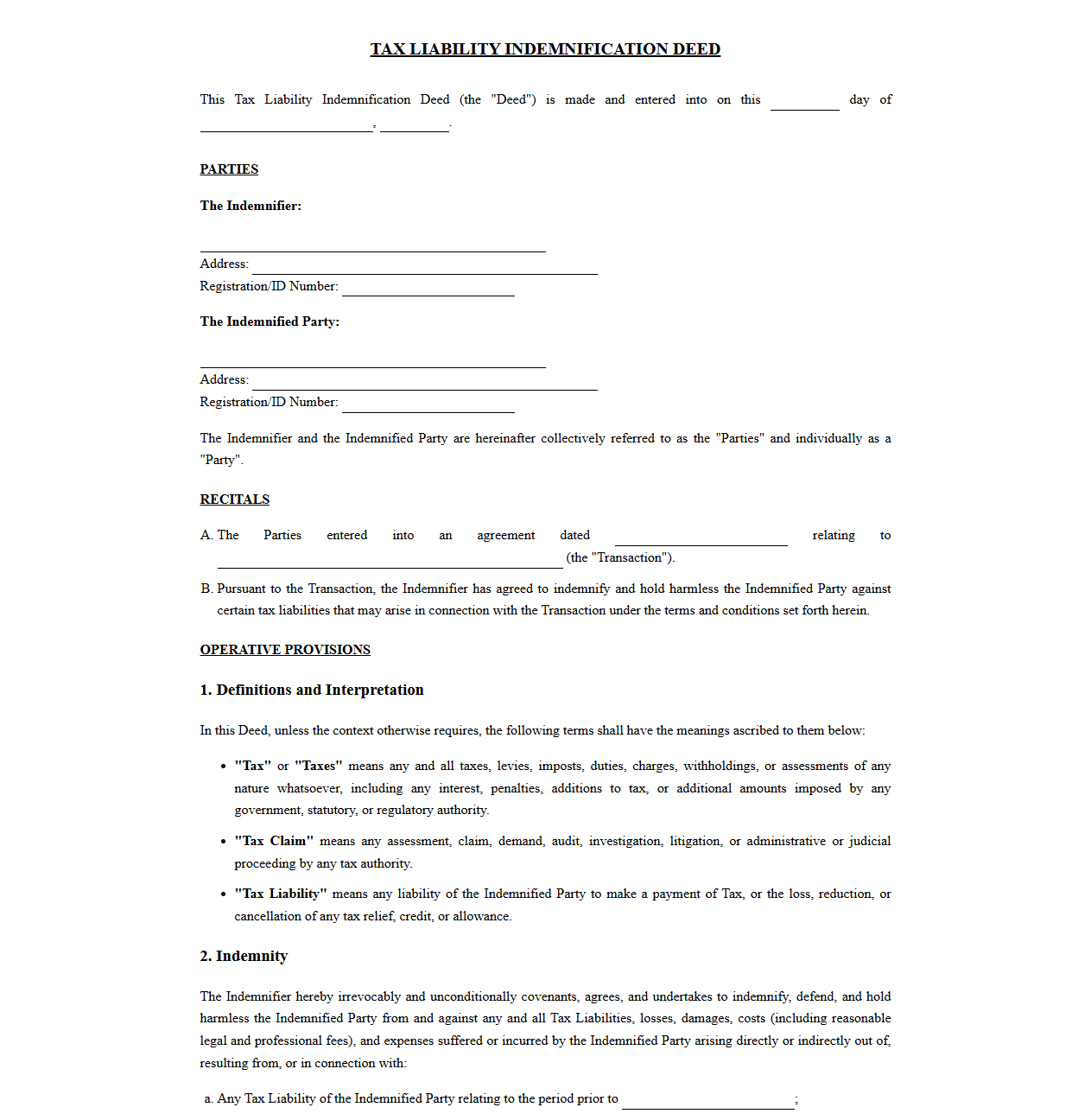 Download: .PDF
Deed of Indemnity for Outstanding Tax Liabilities
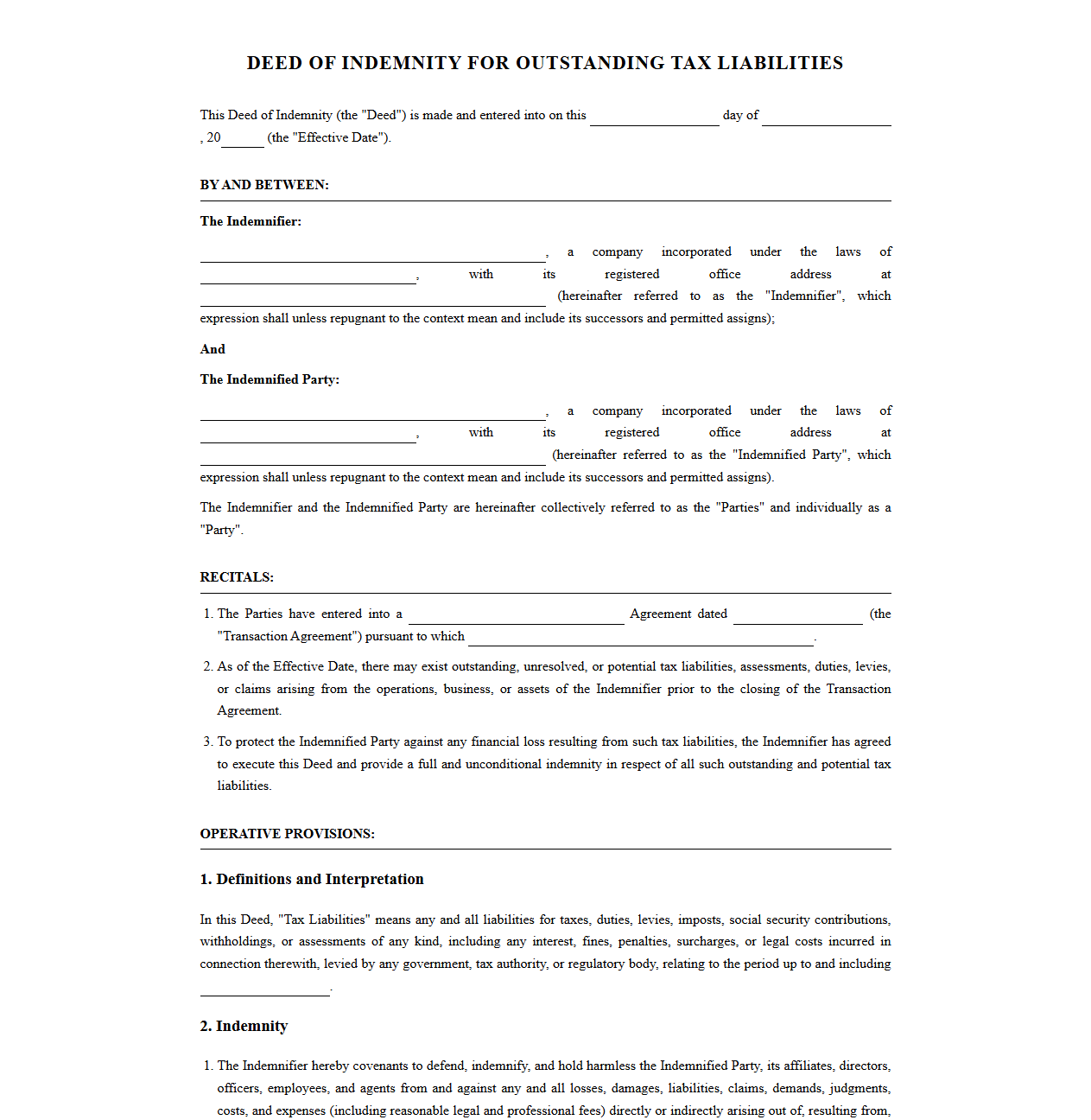 Download: .PDF
Share Purchase Tax Indemnity Agreement
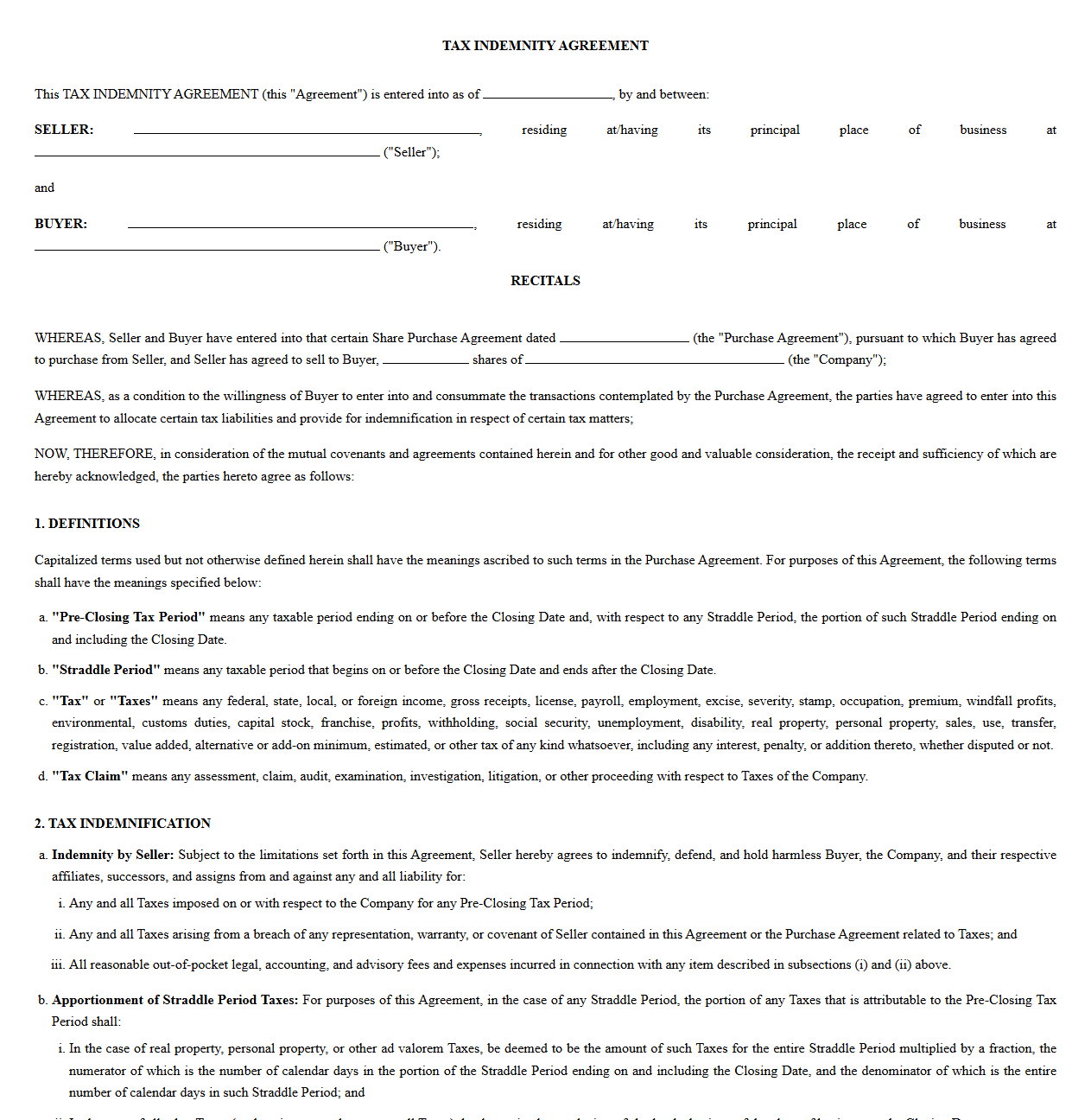 Download: .PDF
Corporate Tax Liability Indemnification Contract
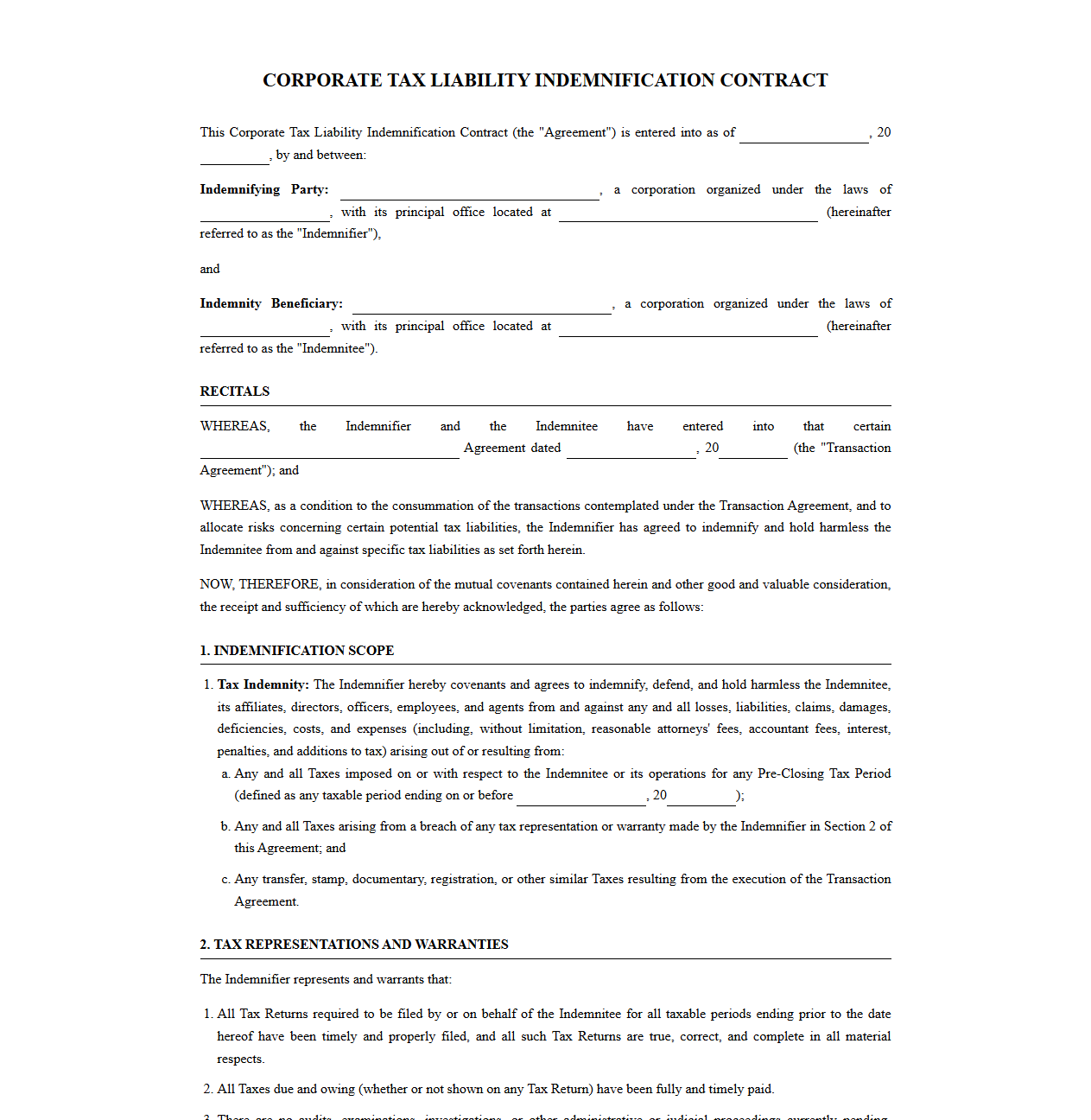 Download: .PDF
Cross Border Tax Indemnity Agreement Form
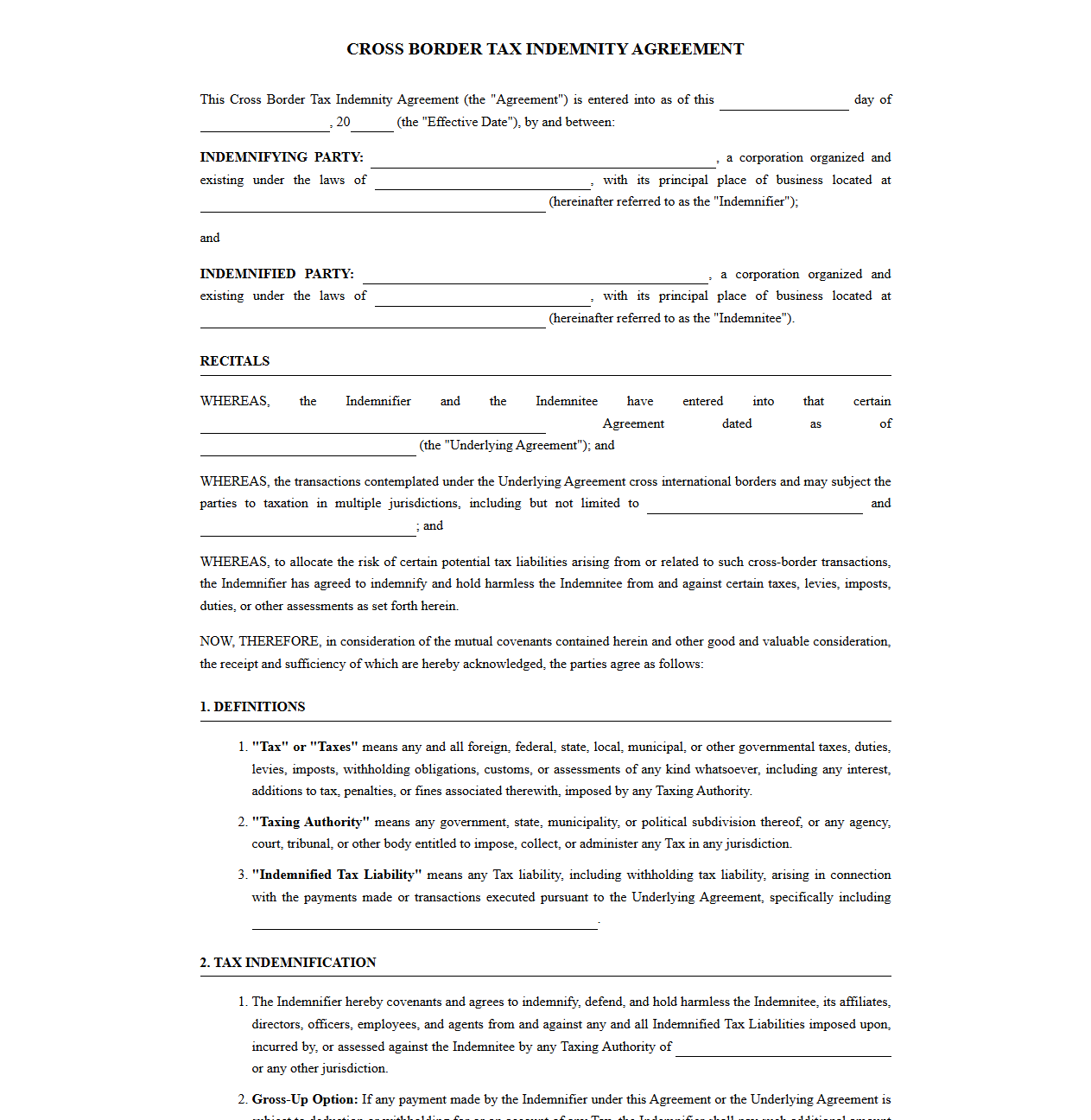 Download: .PDF
Post Closing Tax Liability Indemnity Deed
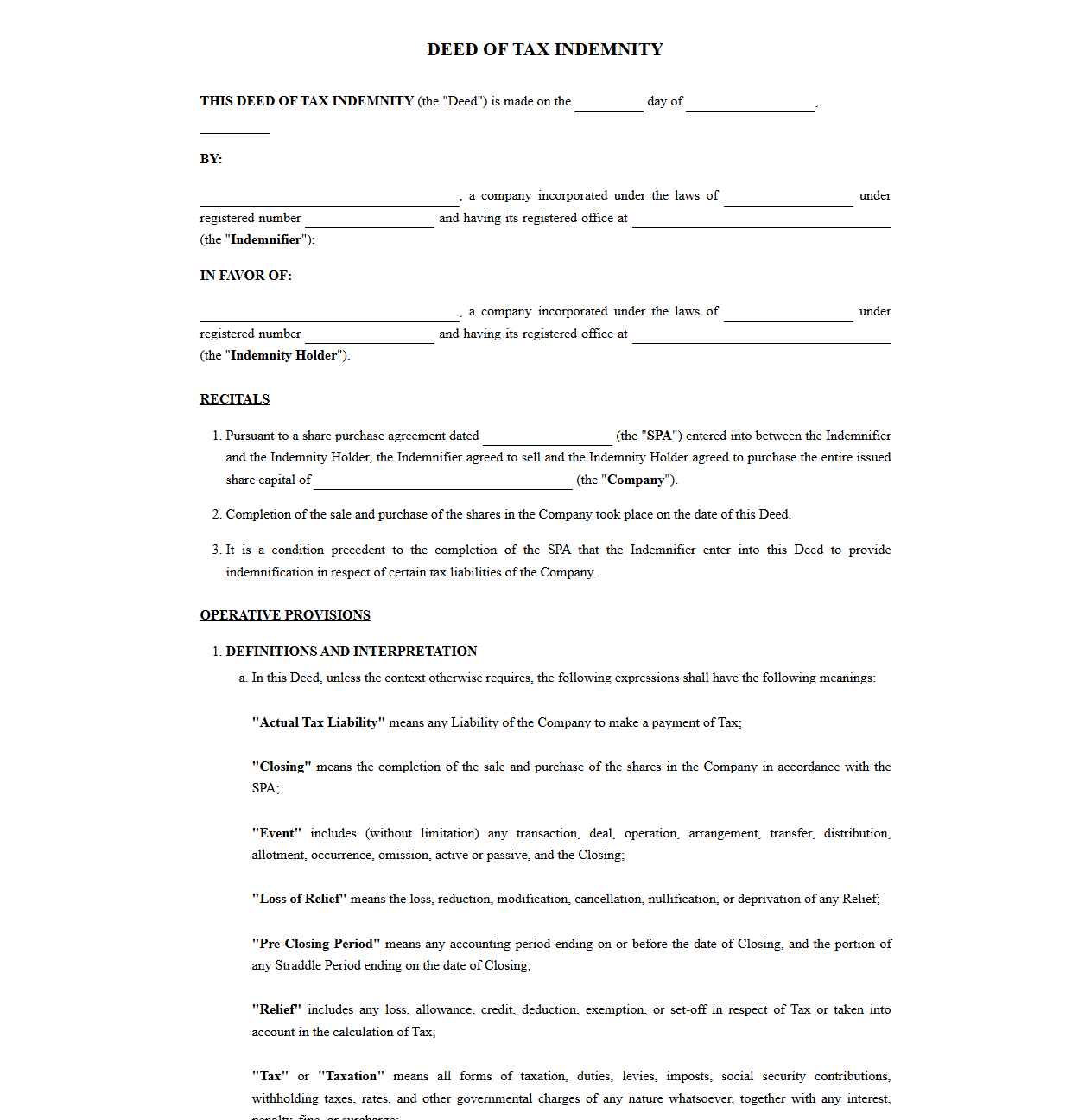 Download: .PDF
Mergers and Acquisitions Tax Indemnity Template
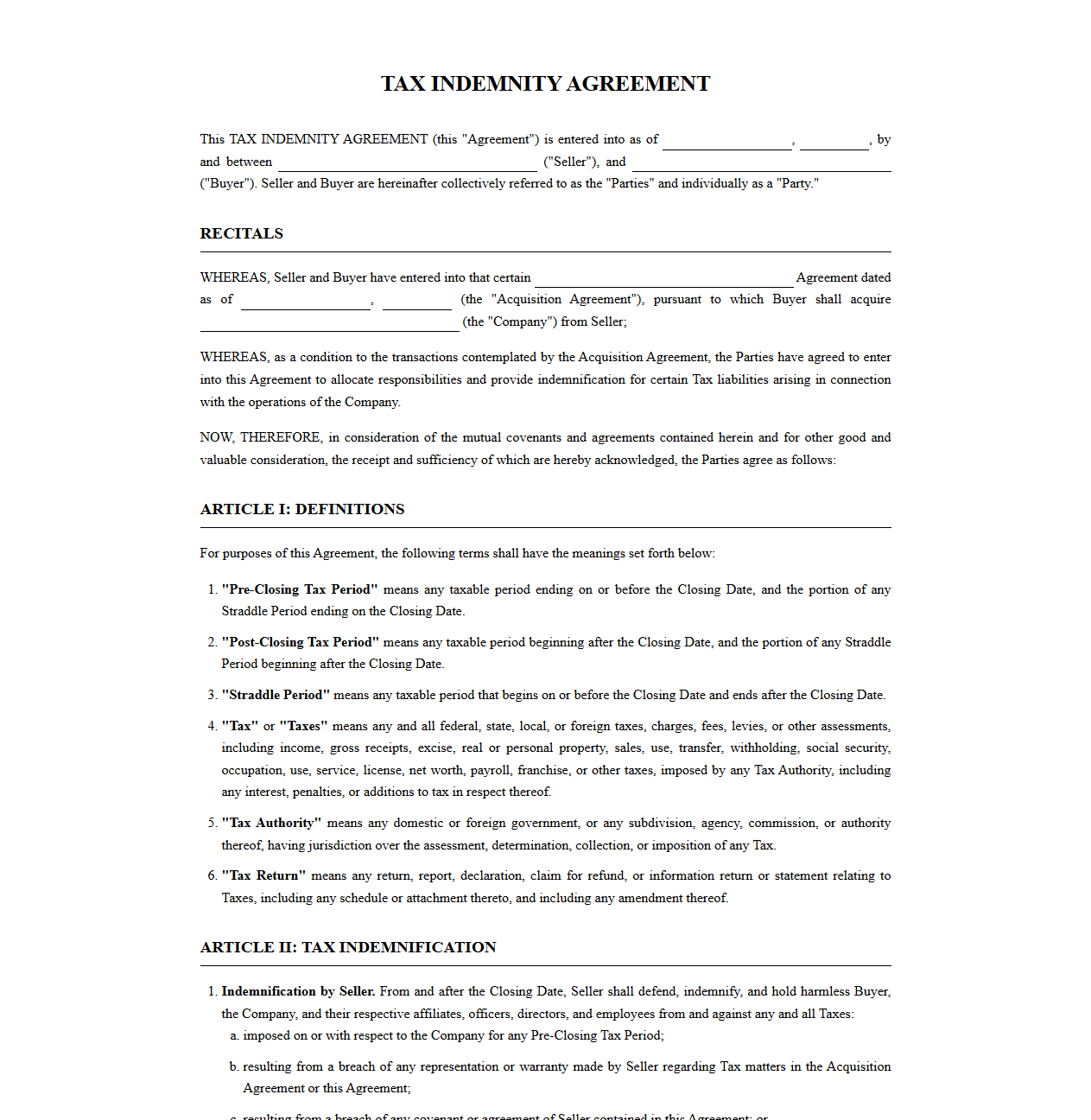 Download: .PDF
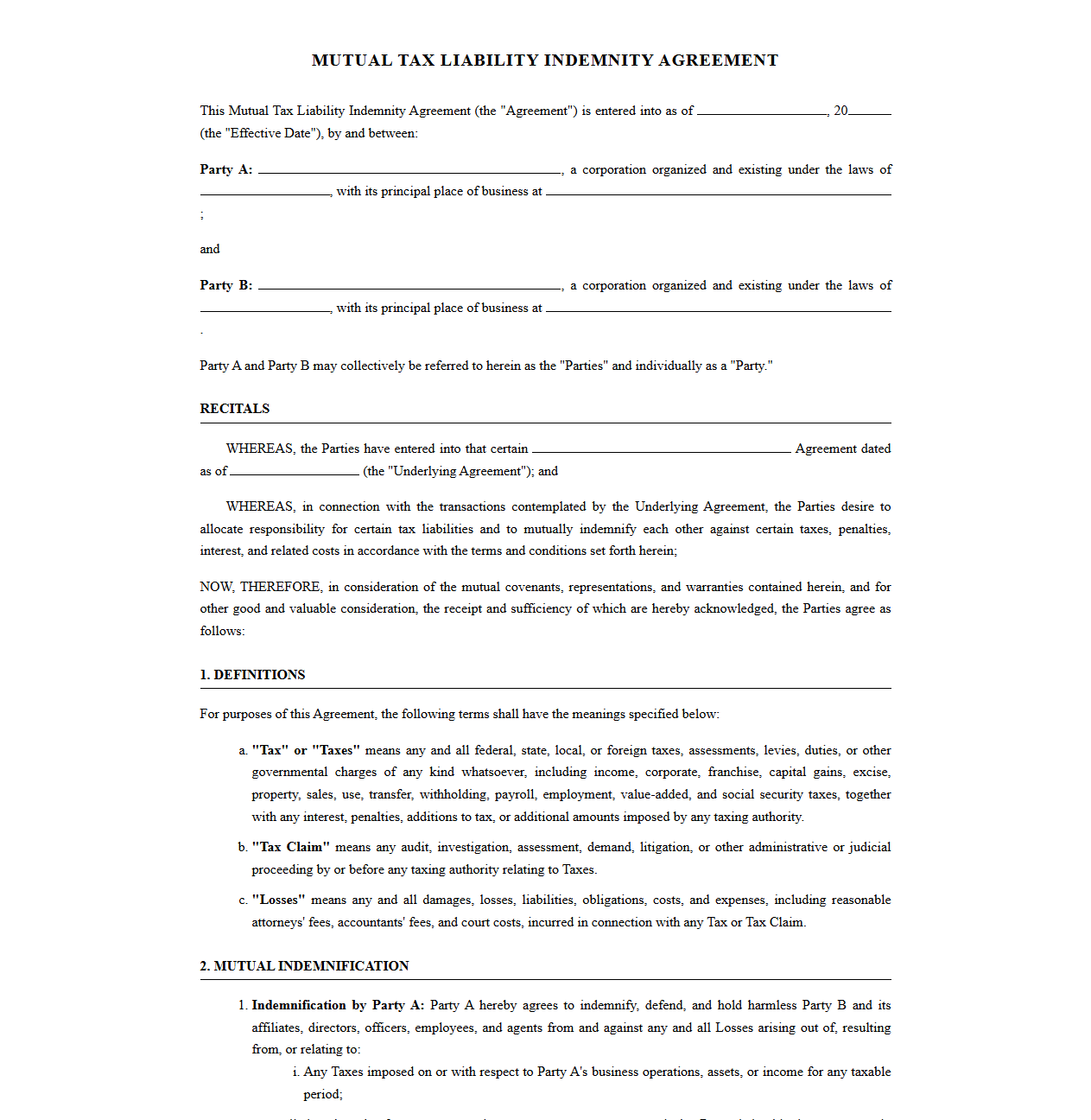
Mutual Tax Liability Indemnity Agreement
 Download: .PDF
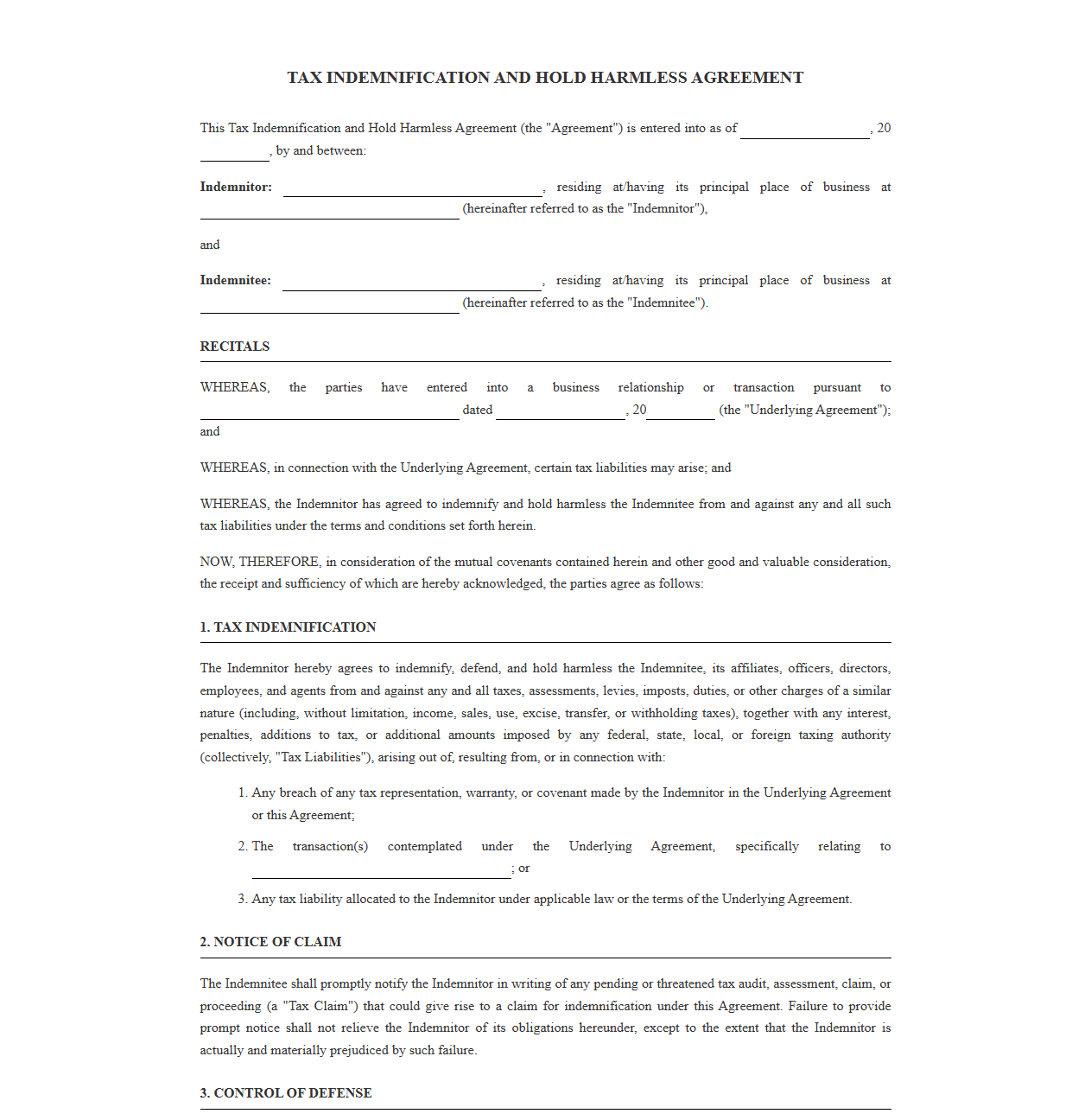
Simplified Tax Indemnification and Hold Harmless Agreement
 Download: .PDF
Understanding Transactional Tax Risks in Corporate Deals
In the high-stakes world of mergers and acquisitions, undisclosed or unidentified tax liabilities represent a silent transaction killer. When a buyer acquires a target company, they risk inheriting historical tax non-compliance, unresolved audits, or miscalculated tax positions. Without a structured mitigation strategy, these latent exposures can quickly erode the projected value of the transaction, turning a promising acquisition into a financial drain. To prevent these costly surprises, dealmakers rely on structured indemnity agreements to formally allocate and mitigate financial exposures arising from pre-closing tax periods.
Defining the Tax Liability Indemnity Agreement
A tax liability indemnity agreement is a specialized legal contract designed to shift identified and unidentified tax risks between transacting parties. In practice, its primary legal function is to serve as a robust risk-shifting mechanism. By utilizing this agreement, the buyer ensures they are legally insulated from financial obligations stemming from the target company's pre-closing tax liabilities. The seller, in turn, covenants to reimburse the buyer for any historical tax deficits that materialize after the transaction is finalized, establishing clear boundaries of financial accountability.
Core Clauses to Include in Your Indemnity Template
A comprehensive tax indemnity template must contain precise contractual provisions to ensure enforceability. These clauses establish the exact boundaries of what is covered and how claims are processed.
- Representations and Warranties: Statements of fact regarding the target's tax history, filing status, and compliance record.
- Pre-Closing Tax Covenants: Obligations governing how taxes are calculated, filed, and paid during the interim period between signing and closing.
- Specific Indemnification Provisions: Express agreements detailing the seller's obligation to indemnify the buyer for any breach of tax representations or pre-closing tax debts.
Establishing Liability Caps, Baskets, and Survival Periods
To achieve a balanced risk allocation, parties negotiate specific financial boundaries and timelines within the indemnity agreement. Unlike general commercial claims, tax claims typically demand highly customized terms due to the extended nature of government audit cycles.
Negotiating parties commonly utilize liability caps to restrict the maximum amount a seller must pay under the indemnity, often aligning this with a percentage of the purchase price or an escrow fund. Additionally, deductible baskets prevent minor claims from disrupting the partnership by requiring a minimum financial threshold to be met before indemnification is triggered. Crucially, the survival periods for tax-related claims are almost always extended beyond standard representation survival timelines, frequently matching the full statute of limitations of the relevant tax jurisdictions plus an additional administrative buffer period.
Managing Tax Audits and Claim Resolution Procedures
When a tax authority initiates an audit or issues an assessment after the transaction has closed, the parties must follow a strict, pre-negotiated roadmap to resolve the dispute. The indemnity agreement outlines these procedural steps to prevent unilateral decisions that could disadvantage either party.
- Prompt notification by the buyer to the seller upon receiving any official communication or inquiry from a tax authority.
- Determination of control rights, establishing which party has the legal authority to direct the defense of the audit or contest the assessment.
- Execution of mutual cooperation covenants, requiring both parties to share relevant tax books, records, and personnel necessary for the defense.
- Application of dispute resolution mechanisms to settle disagreements regarding settlement offers or proposed adjustments by the tax authorities.
Tailoring Templates to Unique Transaction Structures
A standardized indemnity agreement cannot be applied universally without adjustments; it must be carefully customized to match the specific legal and financial realities of the transaction structure.
For asset purchases, the template focuses heavily on successor liability rules and ensuring clear title to acquired assets free of tax liens. In stock acquisitions, where the target entity's complete history transitions to the buyer, the indemnity must cover all historical corporate income tax obligations. For complex cross-border mergers, the agreement must expand to address transfer pricing compliance, foreign withholding taxes, and jurisdictional treaty allocations.
Finalizing the Agreement and Implementation Best Practices
Integrating a tax liability indemnity agreement into your final transaction documents requires systematic planning and execution. Successful integration rests on performing a thorough, multi-jurisdictional due diligence process prior to drafting. This due diligence uncovers the exact risks that the indemnity must address, ensuring that the agreement is not merely generic but targeted to the actual exposures of the target company.
Before executing the final purchase agreement, securing a comprehensive professional legal review from qualified tax counsel is essential to verify that all clauses align with the latest regulatory guidelines. To assist in your preparation, you can consult industry standard templates and tax indemnity guidelines to ensure your contract meets rigorous corporate standards. Consistently executing these best practices ensures that your organization remains secure against unexpected post-closing tax liabilities.

Leave a comment