

Facing unexpected tax penalties and compounding interest can jeopardize an organization's financial stability, leaving executives and legal teams scrambling to mitigate the damage. Before addressing these liabilities directly, it is crucial to understand how modern commercial transactions distribute tax risks through structured contractual agreements. Securing a robust penalty and interest indemnity agreement grants businesses absolute financial predictability, effectively shielding them from costly third-party compliance errors.
Crucially, we must stipulate that while these indemnity clauses shift the financial burden of penalties, they do not absolve the primary taxpayer of their statutory obligations to the tax authorities. For example, during corporate acquisitions or partner buyouts, a precise indemnity clause ensures the responsible party covers any retroactive tax discrepancies. Below, we will examine the essential agreement templates, key legal clauses, and negotiation strategies required to draft airtight tax indemnity provisions.
Tax Penalty and Interest Indemnification Agreement
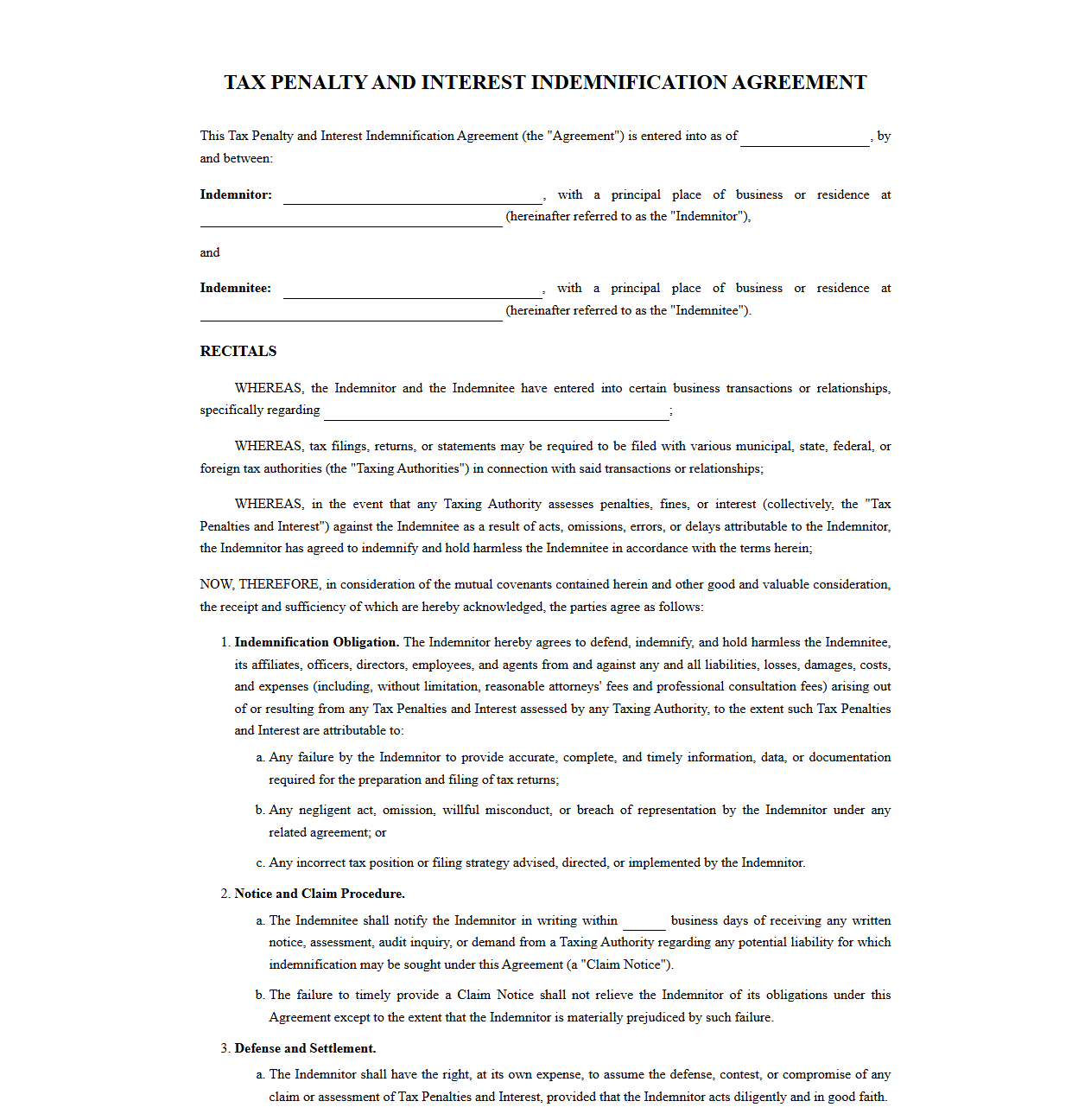 Download: .PDF
Tax Penalty Indemnity and Interest Protection Agreement
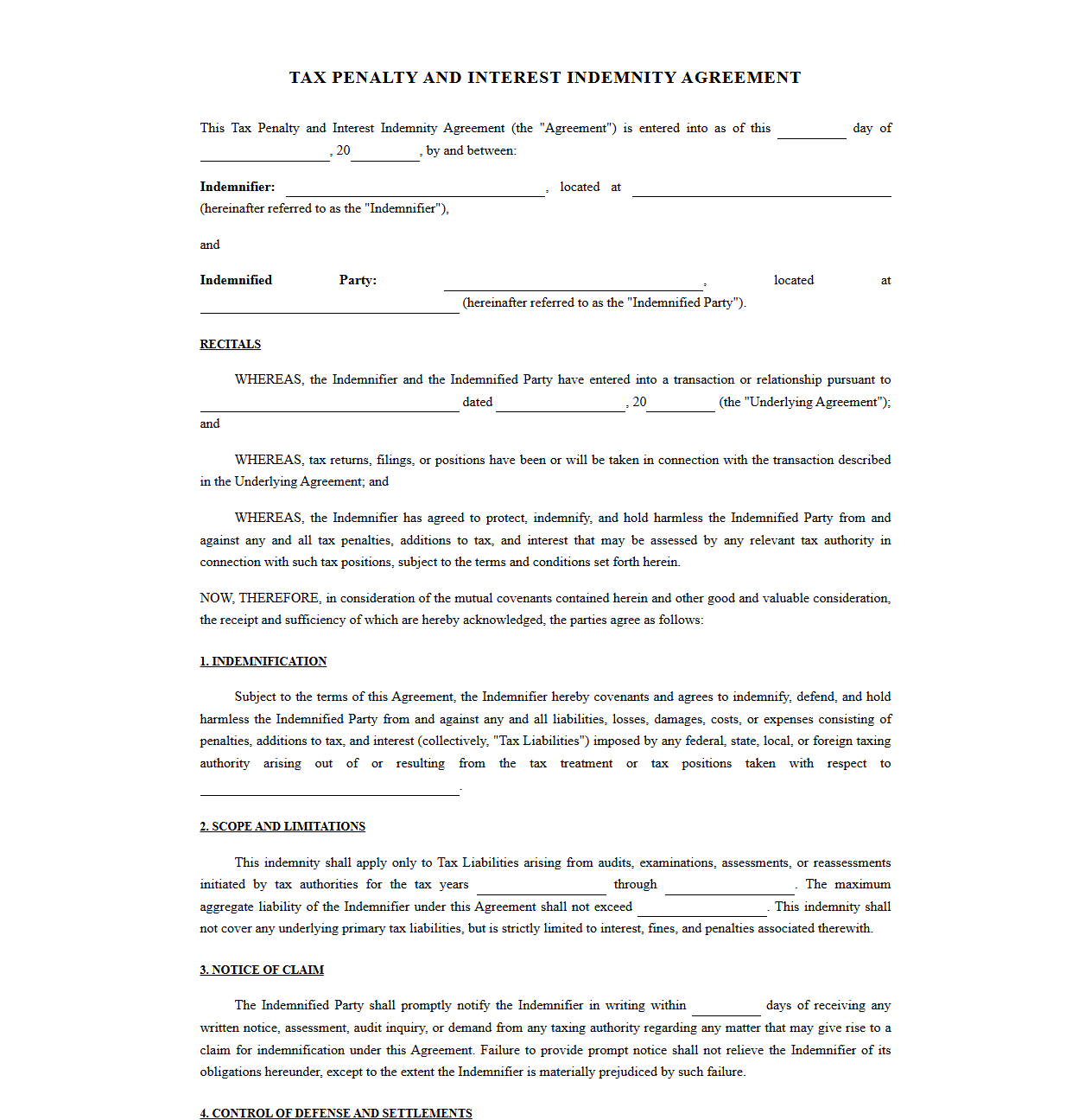 Download: .PDF
Agreement for Indemnity of Tax Penalties and Interest
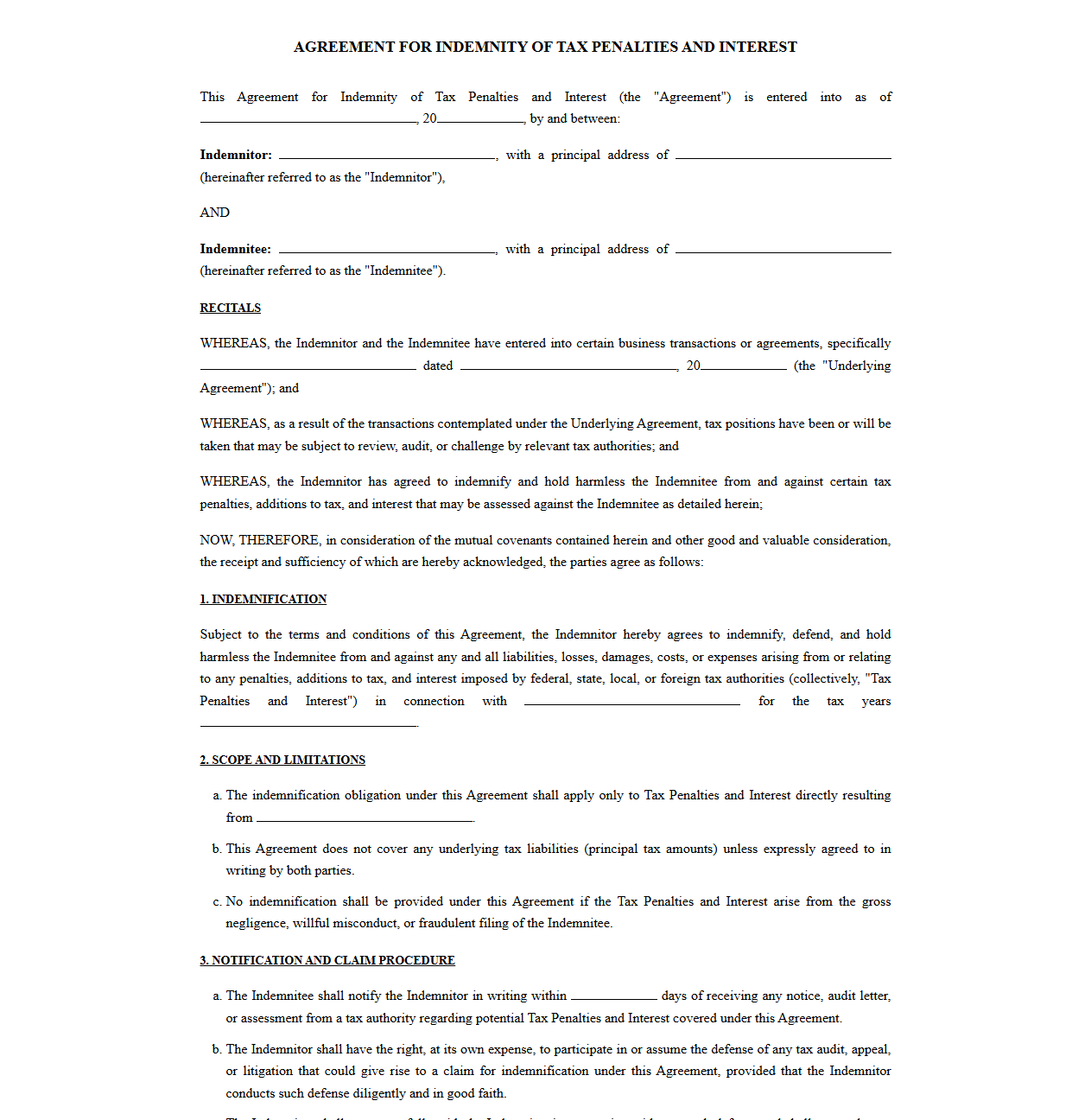 Download: .PDF
Tax Interest and Penalty Hold Harmless Agreement
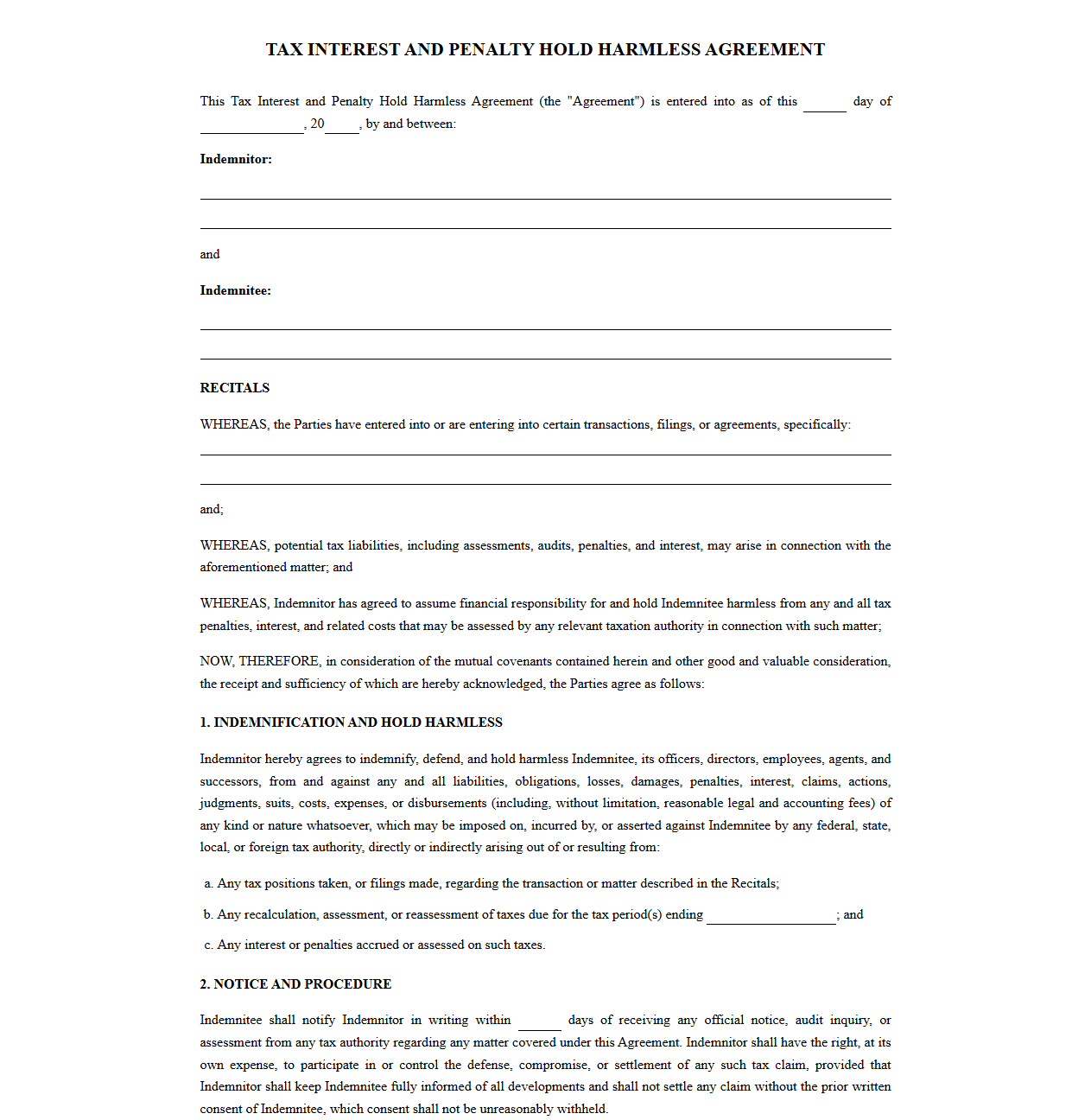 Download: .PDF
Tax Penalty and Interest Indemnity Deed
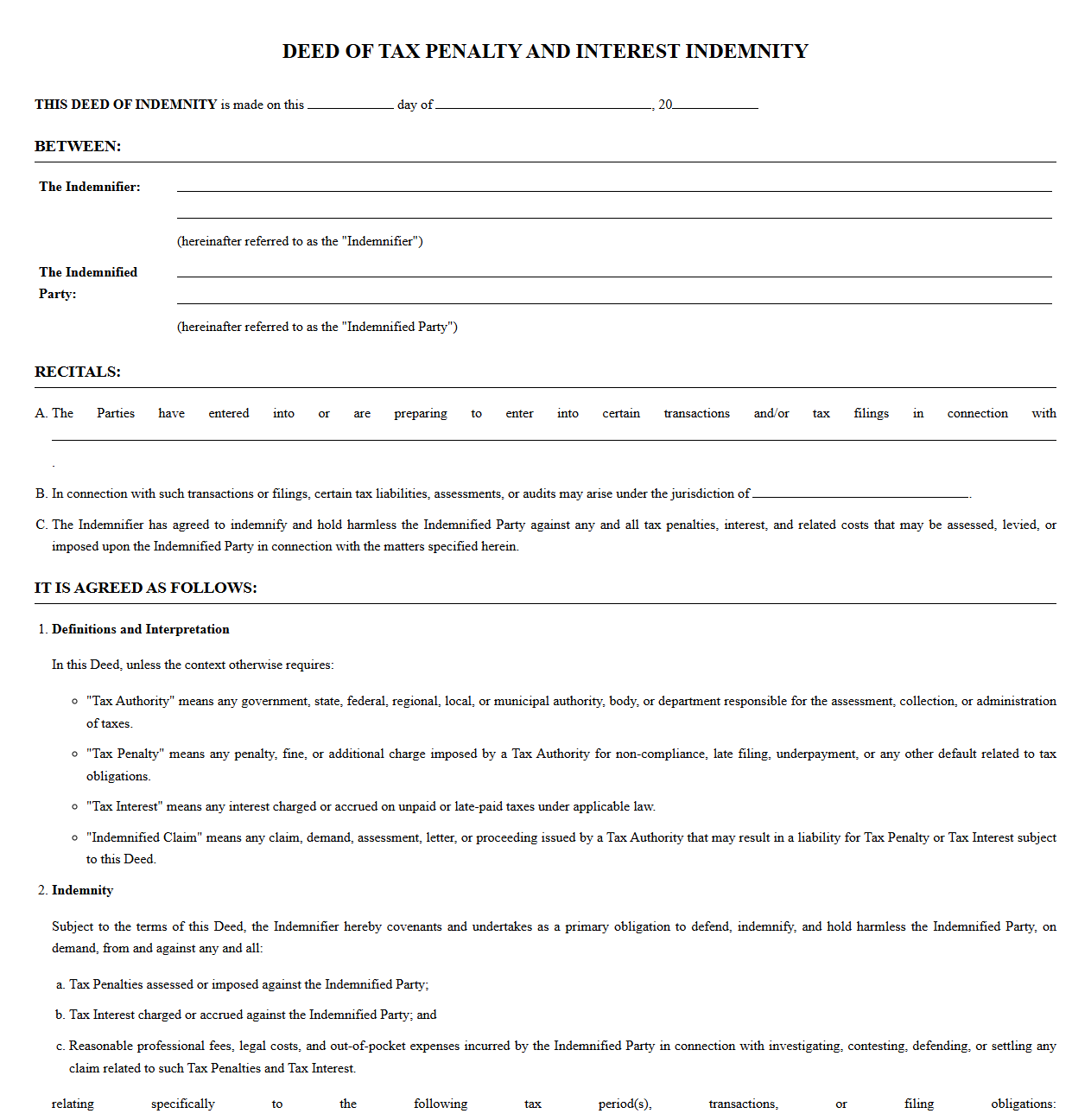 Download: .PDF
Taxation Penalty and Interest Indemnity Agreement Template
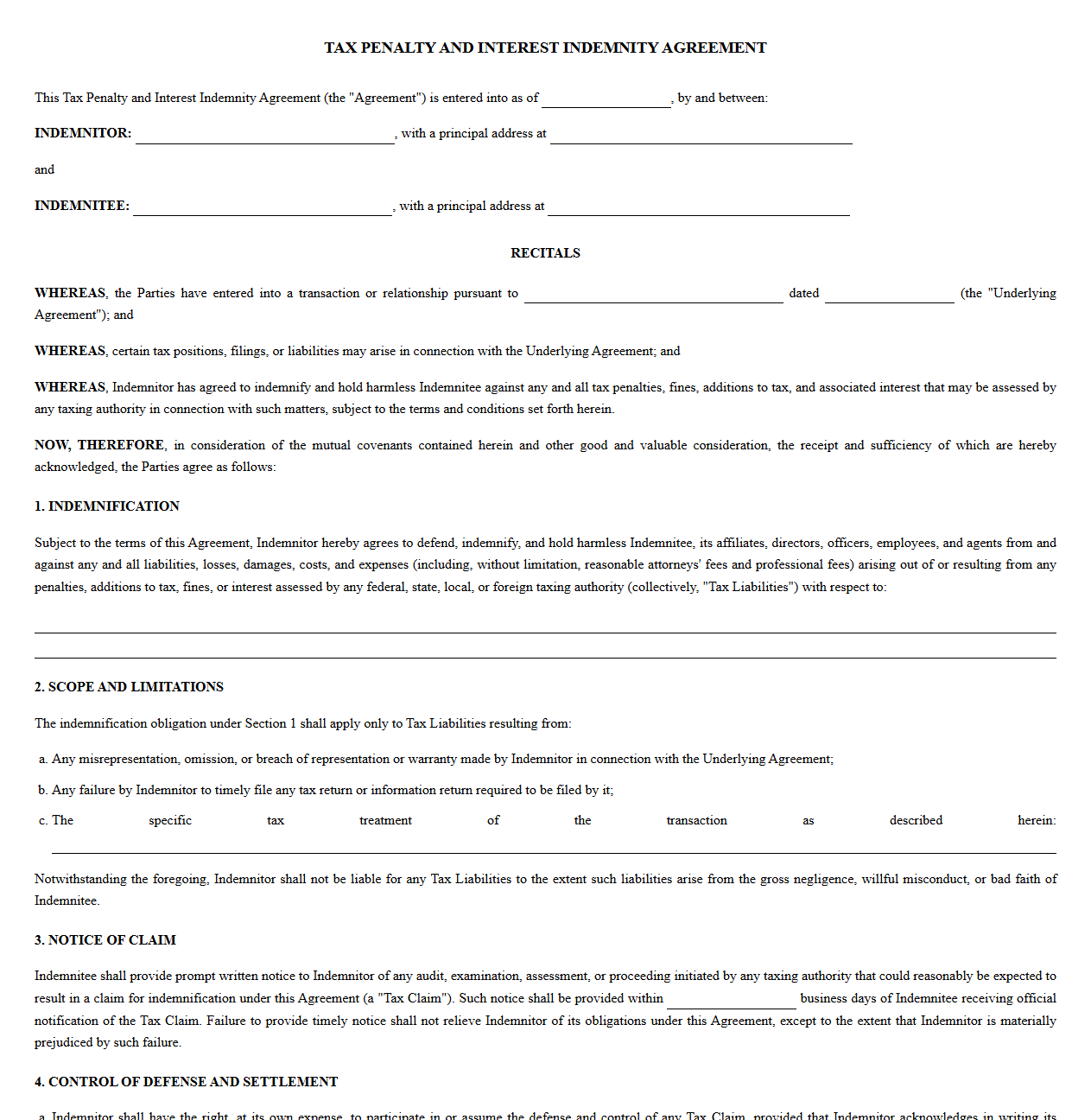 Download: .PDF
Corporate Tax Penalty and Interest Indemnification Deed
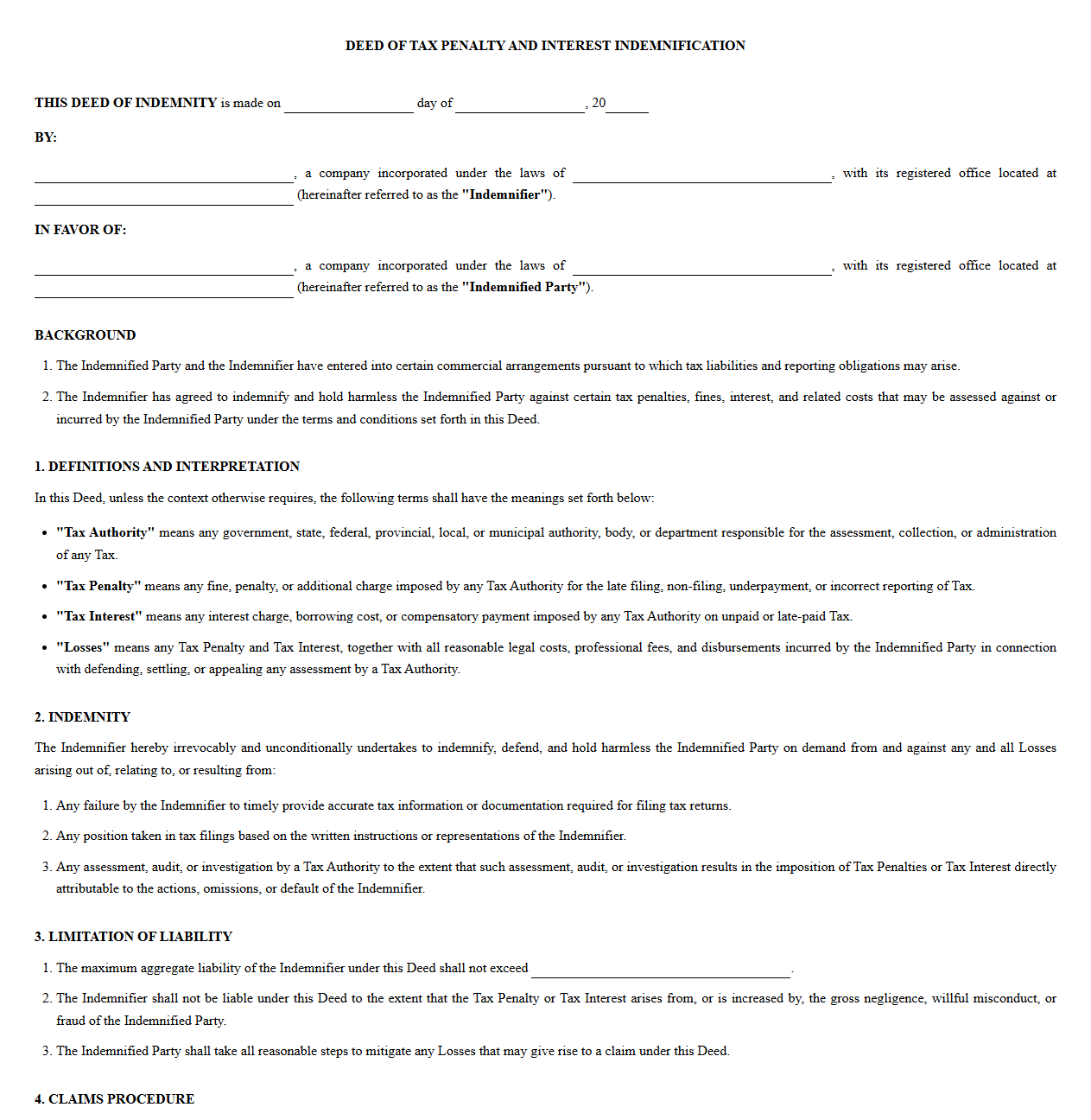 Download: .PDF
Agreement for Reimbursement of Tax Penalties and Interest
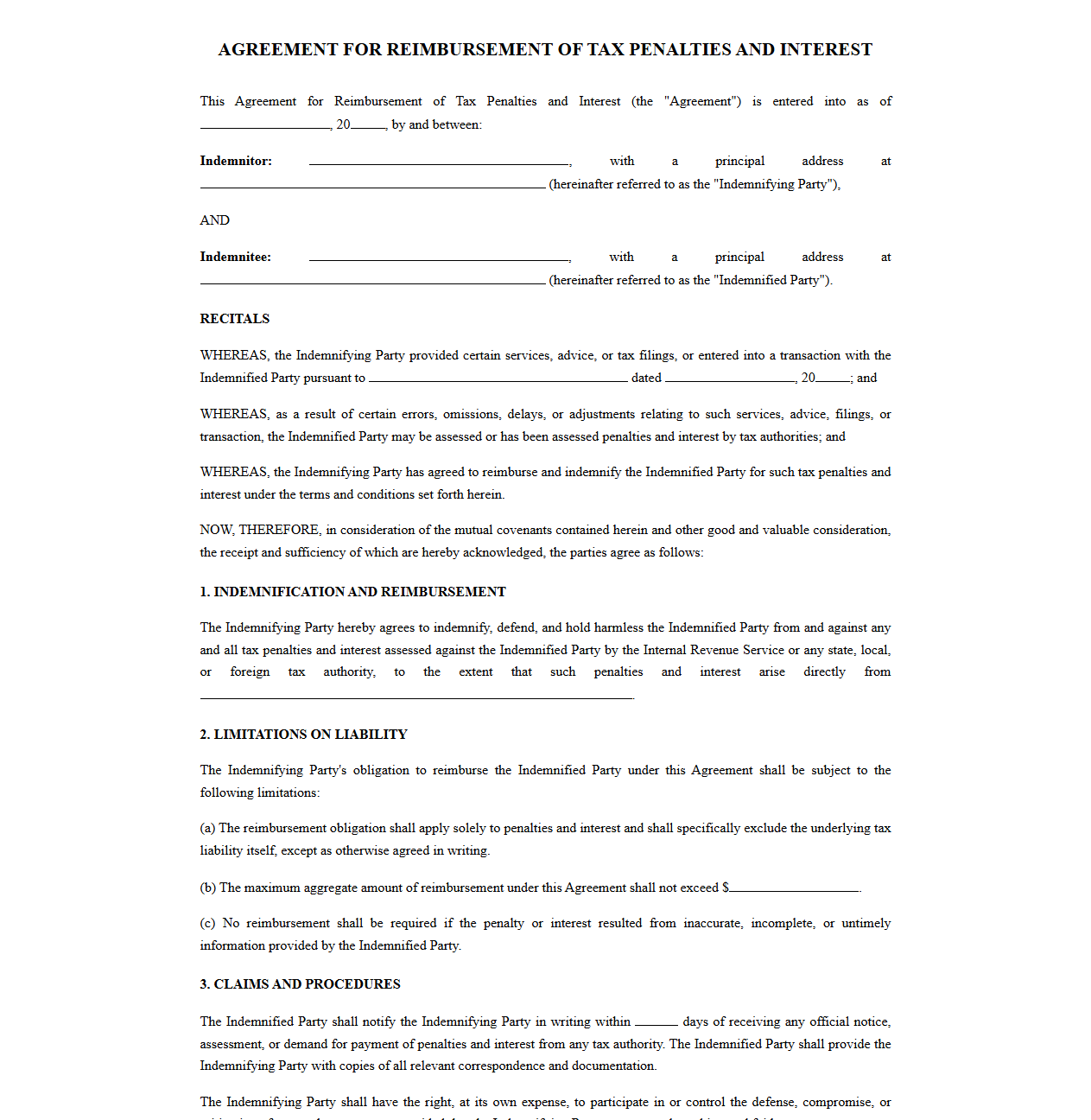 Download: .PDF
Understanding Penalty and Interest Indemnity in Tax Liability
During corporate mergers, acquisitions, and asset transfers, hidden tax liabilities can emerge long after the transaction closes. A tax indemnity agreement serves as a vital risk-allocation tool, protecting transacting parties from unexpected tax assessments. By clearly defining which party bears the financial burden of historical tax discrepancies, these agreements establish commercial certainty and prevent post-closing disputes.
Specifically, a penalty and interest indemnity clause shields the buyer from the punitive accruals that tax authorities impose on overdue taxes. Because tax audits can take years to resolve, interest and penalties can accumulate to exceed the original tax principal. Having a robust indemnity structure ensures that the responsible party pays these secondary costs, preserving the financial integrity of the transaction.
Core Parties and Essential Preliminary Definitions
To ensure a tax indemnity template is legally enforceable, it must precisely identify the contracting entities and establish a standardized vocabulary for key terms. This clarity prevents ambiguity during subsequent claims processes.
- Indemnitor: The party obligated to pay for or reimburse the tax losses, typically the seller or a major shareholder in a transaction.
- Indemnitee: The party protected by the agreement, usually the buyer or the acquired entity, who receives compensation for covered tax liabilities.
- Tax Claim: Any assessment, audit, demand, or official inquiry initiated by a government authority regarding unpaid taxes.
- Losses: The aggregate financial damage, including the base tax amount, accumulated interest, civil penalties, and reasonable legal fees.
Defining the Scope of Covered Tax Liabilities
Pre-Closing Tax Period
The Pre-Closing Tax Period covers all taxable years or portions thereof ending on or before the transaction's closing date. The Indemnitor is generally responsible for all tax liabilities, penalties, and interest originating within this timeframe, regardless of when the tax authority uncovers them.
Post-Closing Tax Period
The Post-Closing Tax Period begins the day after the transaction closes. The Indemnitee assumes responsibility for all taxes generated by the ongoing operations of the business starting from this date forward.
| Covered Liabilities (Indemnitor) | Excluded Liabilities (Indemnitee) |
| Pre-closing income, sales, and employment taxes. | Post-closing operational taxes and filing fees. |
| Penalties and interest stemming from pre-closing periods. | Penalties due to buyer's failure to file post-closing returns. |
| Pre-closing tax return inaccuracies discovered during audit. | Taxes arising from post-closing voluntary disclosures. |
The Indemnification Claim and Notification Process
A well-drafted agreement prevents delayed claims by imposing rigorous procedural requirements on the Indemnitee. Failure to adhere to these notification guidelines can jeopardize the validity of the indemnity claim.
- Receipt of Notice: The Indemnitee receives an official notice of deficiency or audit letter from a tax authority.
- Prompt Notification: The Indemnitee must deliver written notice of the claim to the Indemnitor within a specified timeframe (e.g., 10 business days).
- Information Sharing: The Indemnitee provides copies of all correspondence, relevant tax filings, and supporting documentation received from the government.
- Evaluation: The Indemnitor reviews the claim to verify it falls within the scope of the covered pre-closing liabilities.
- Resolution: The parties execute the payment or begin the defense strategy as dictated by the audit control provisions.
Control of Tax Audits and Defense Strategy
When a tax authority challenges a historical return, control over the audit process is highly contested. Usually, the Indemnitor wants to control the defense to minimize their payout, while the Indemnitee wants control to protect their ongoing business relationships and reputation. Agreements resolve this by allocating control based on the majority financial interest, with cost-sharing mechanisms clearly defined.
"The Indemnitor shall have the sole right to control, defend, and settle any tax audit or contest relating to a Pre-Closing Tax Period, provided that the Indemnitor keeps the Indemnitee reasonably informed of the progress of such proceedings and obtains the Indemnitee's written consent, which shall not be unreasonably withheld, prior to entering any settlement that materially impacts the post-closing operations of the Business."
Limitations, Financial Caps, and Survival Periods
De Minimis Thresholds and Baskets
Indemnities rarely cover every dollar. Parties often establish a basket threshold, meaning the Indemnitor is not liable until the aggregate covered tax losses exceed a specific amount. This prevents costly administrative disputes over immaterial claims.
Liability Caps
A liability cap restricts the Indemnitor's maximum financial exposure under the agreement. This cap is frequently tied to a percentage of the overall purchase price, though tax indemnities sometimes feature higher caps than general representations due to the unpredictable nature of tax penalties.
Survival Periods
Unlike general transaction representations that expire within one to two years, tax representations typically endure for much longer. The survival period for tax representations and the corresponding right to indemnity usually remains valid until 60 days after the expiration of the applicable statute of limitations. This extended period ensures coverage throughout the entire window in which tax authorities can legally assess a deficiency.
Best Practices for Customizing and Executing the Template
To ensure your penalty and interest indemnity agreement stands up to legal scrutiny, follow this checklist during customization and execution:
- Verify Jurisdictional Language: Tailor definitions to align with local tax codes, ensuring terms like "interest" and "penalties" match regional legal definitions.
- Sync with the Main Purchase Agreement: Ensure the indemnity template operates in harmony with the main transaction documents to avoid conflicting notice periods or liability limits.
- Confirm Signing Authority: Verify that the individuals executing the agreement have the explicit corporate authority to bind their respective organizations.
- Consult Tax Professionals: Always have a specialized tax attorney review the final draft to safeguard against subtle regulatory nuances.

Leave a comment