

Navigating an ownership transition often feels like traversing a legal minefield, leaving partners overwhelmed by the risk of costly disputes and unintended tax consequences. Before rushing to execute a transfer, however, partners must first establish a shared understanding of valuation and entity governance. Laying this groundwork is essential; selecting the right Partnership Interest Transfer Agreement Template grants stakeholders more than just a legal shield-it provides a strategic roadmap for operational continuity and peace of mind.
While these templates offer vital structural frameworks for entities such as multi-member LLCs or professional LLPs, they are not one-size-fits-all solutions. They must be carefully tailored to address specific buy-sell triggers and local regulatory stipulations to be fully effective. In this article, we will analyze the primary template types, examine critical clauses to include, and outline how to execute a seamless transfer that protects all parties involved.
Partnership Interest Transfer Agreement
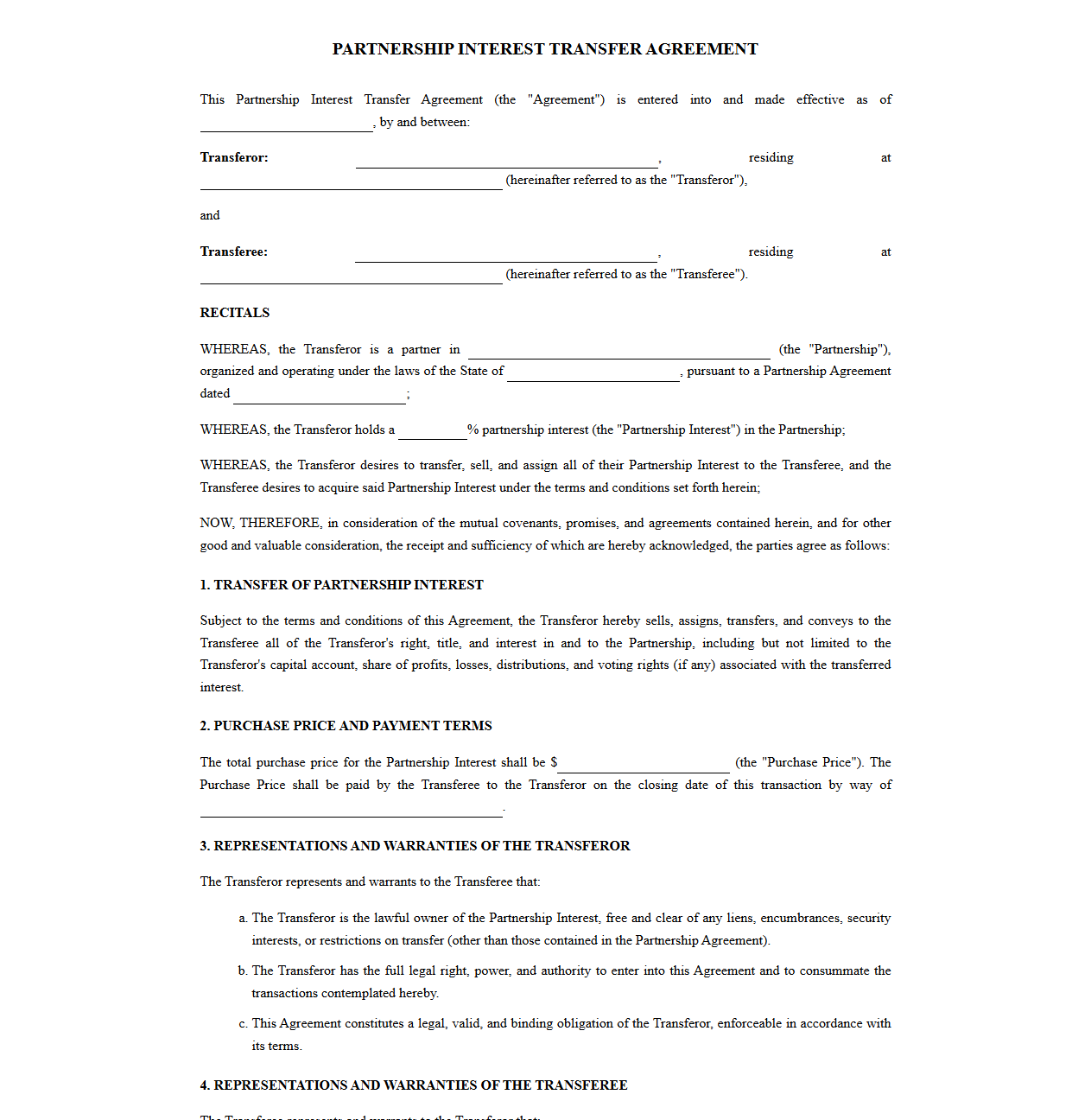 Download: .PDF
Partnership Interest Assignment and Transfer Agreement
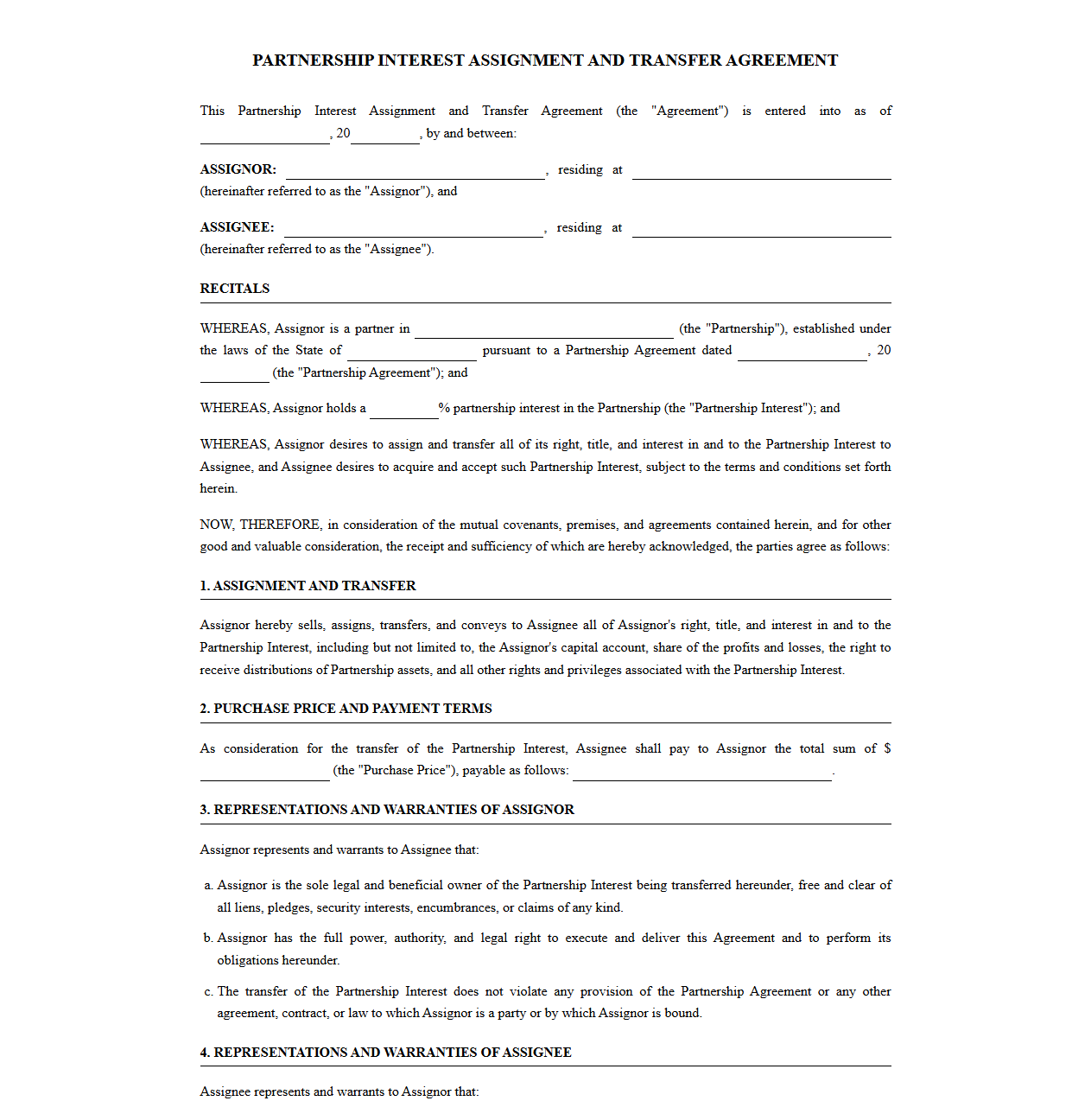 Download: .PDF
Agreement for Sale of Partnership Interest
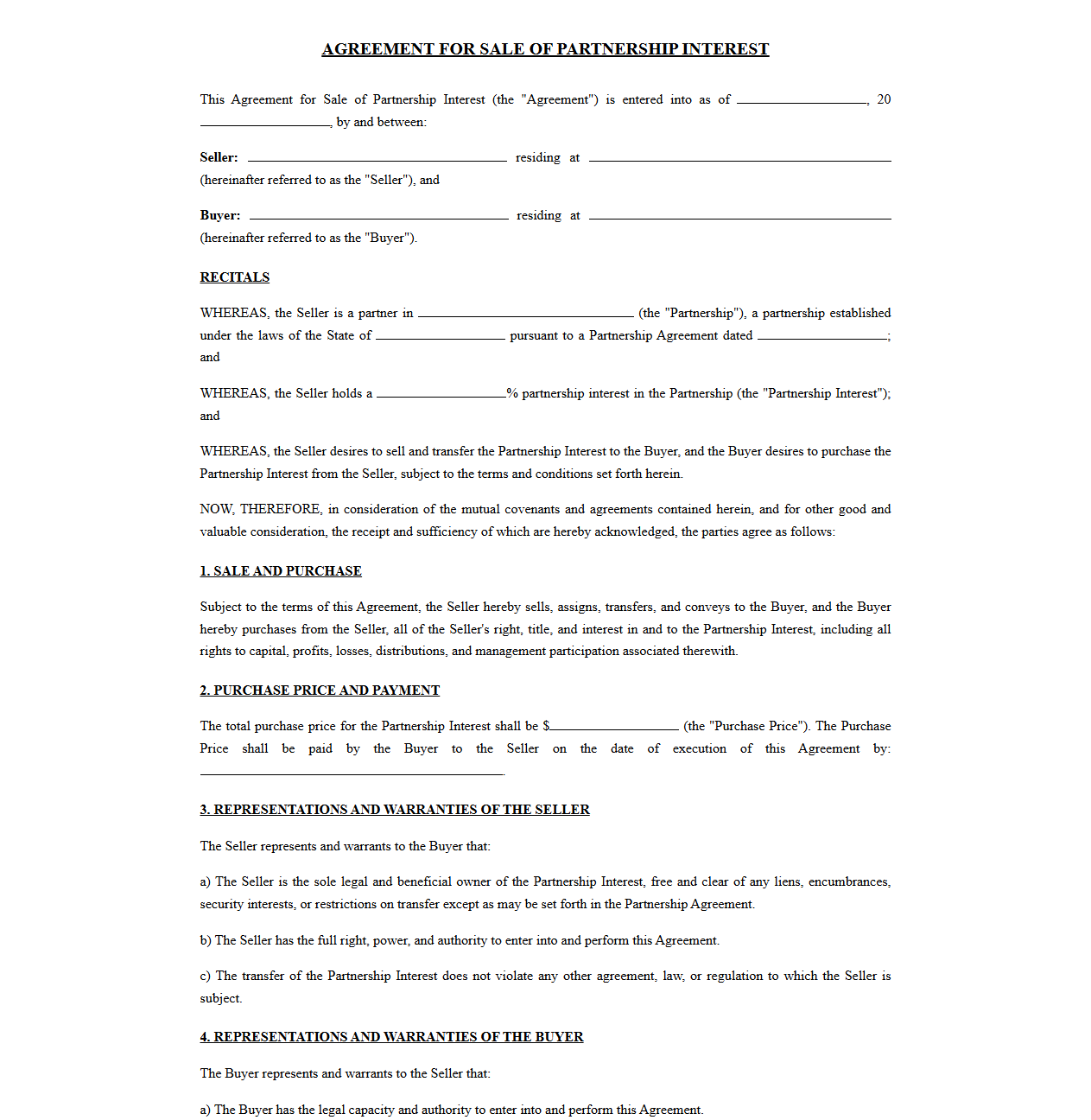 Download: .PDF
Partnership Share Transfer Agreement Template
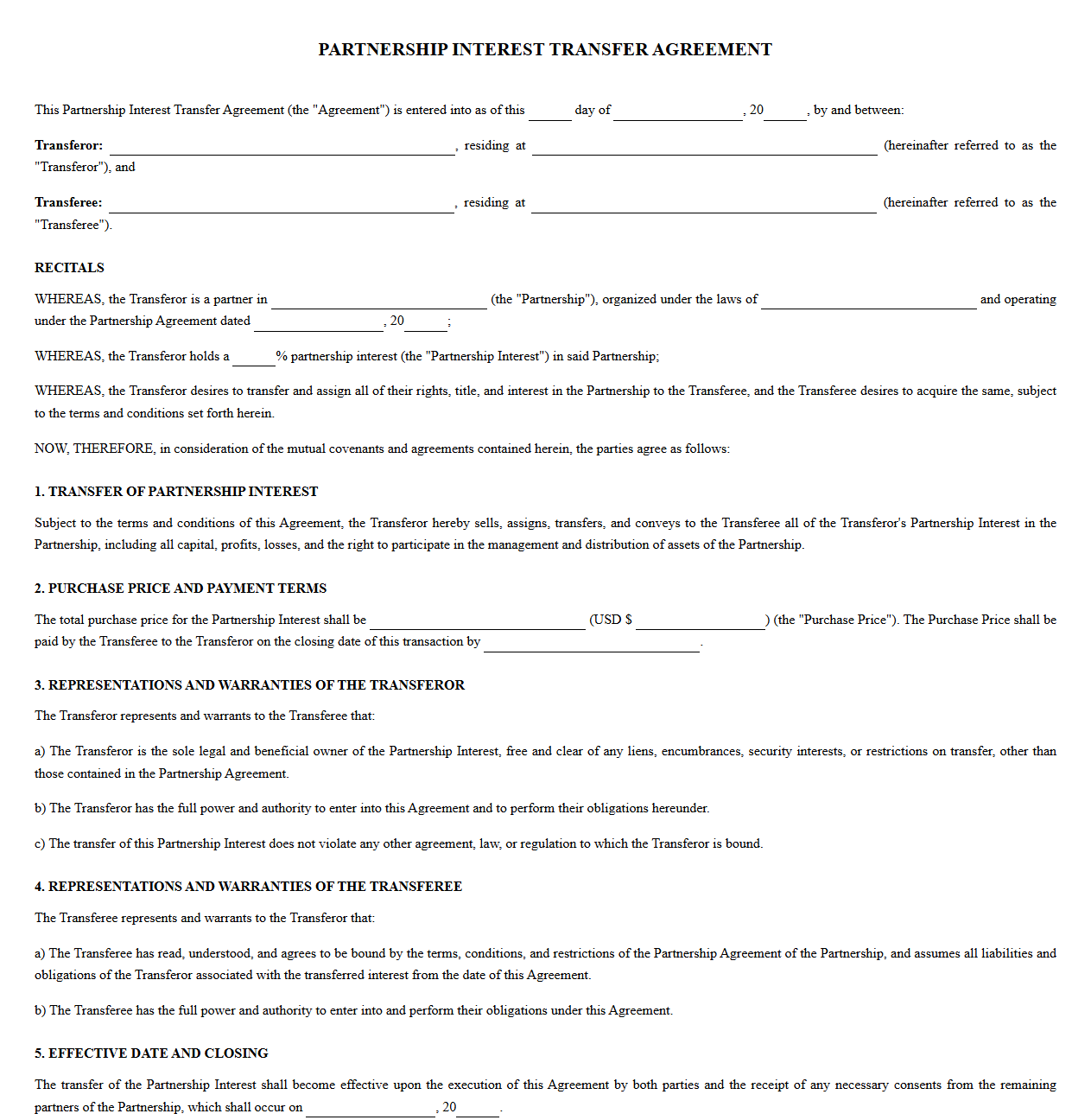 Download: .PDF
Agreement for Transfer of Partnership Share
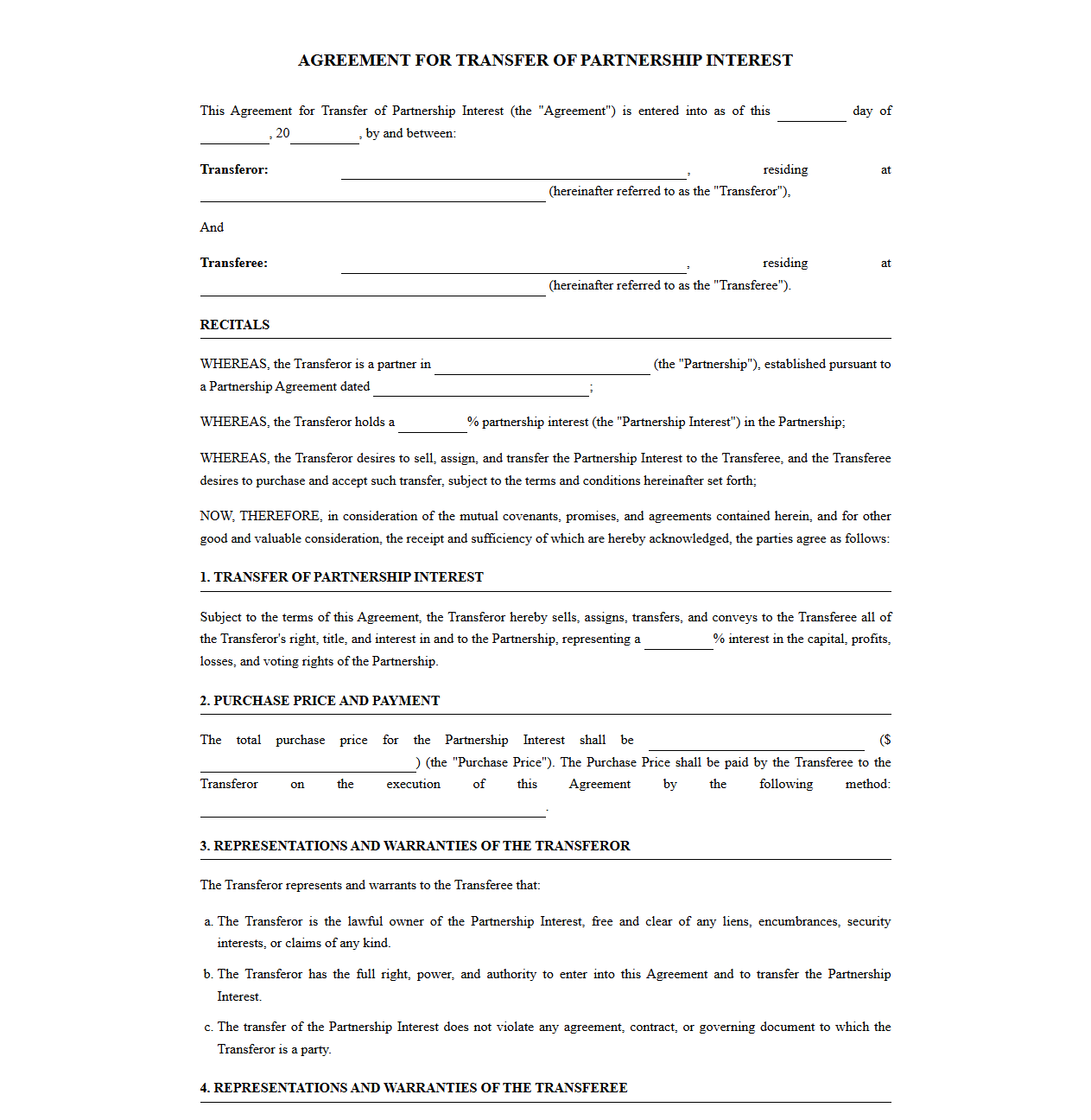 Download: .PDF
Partnership Interest Buyout and Transfer Agreement
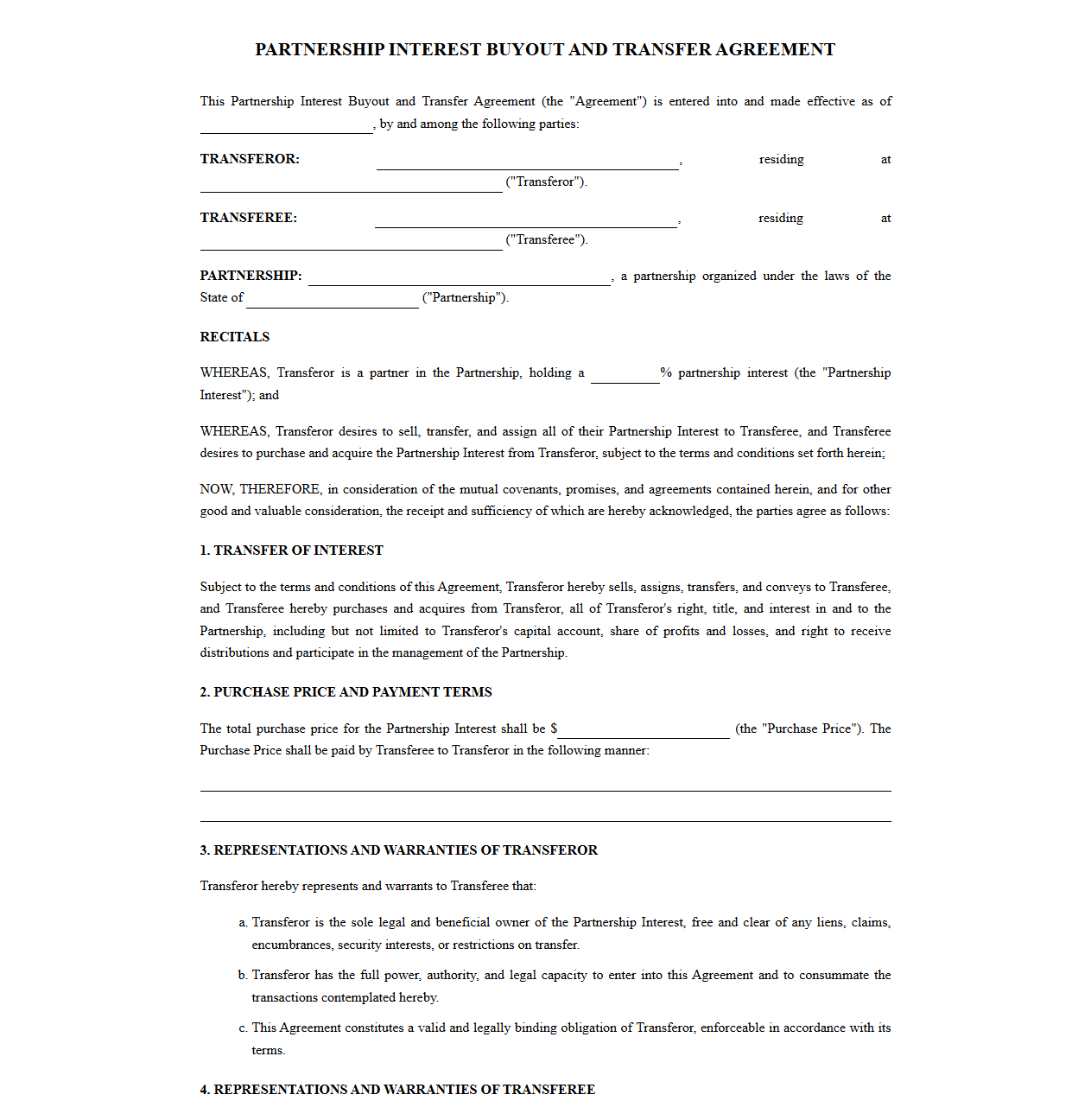 Download: .PDF
Deed of Transfer for Partnership Interests
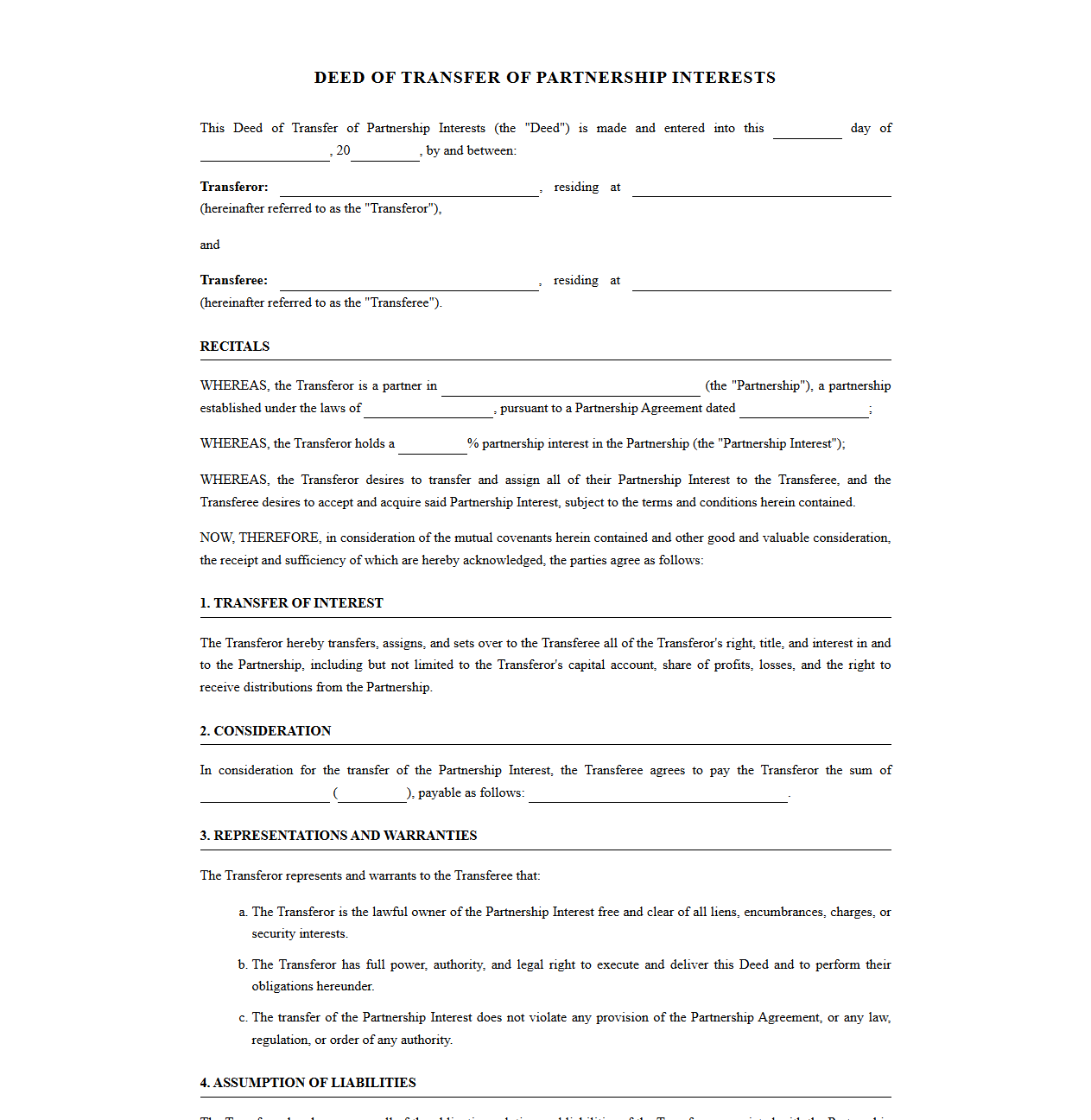 Download: .PDF
Partnership Interest Assignment Agreement
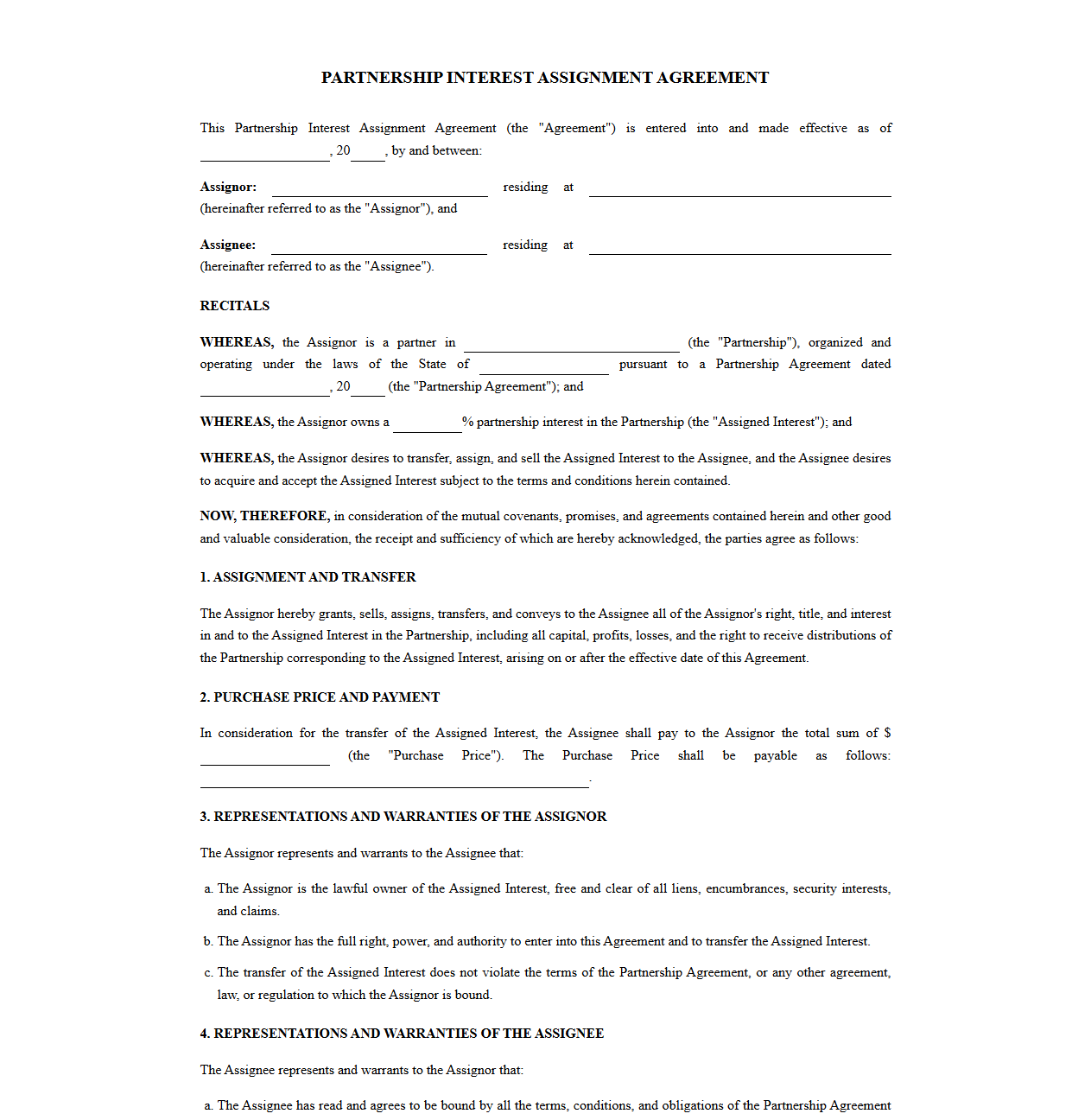 Download: .PDF
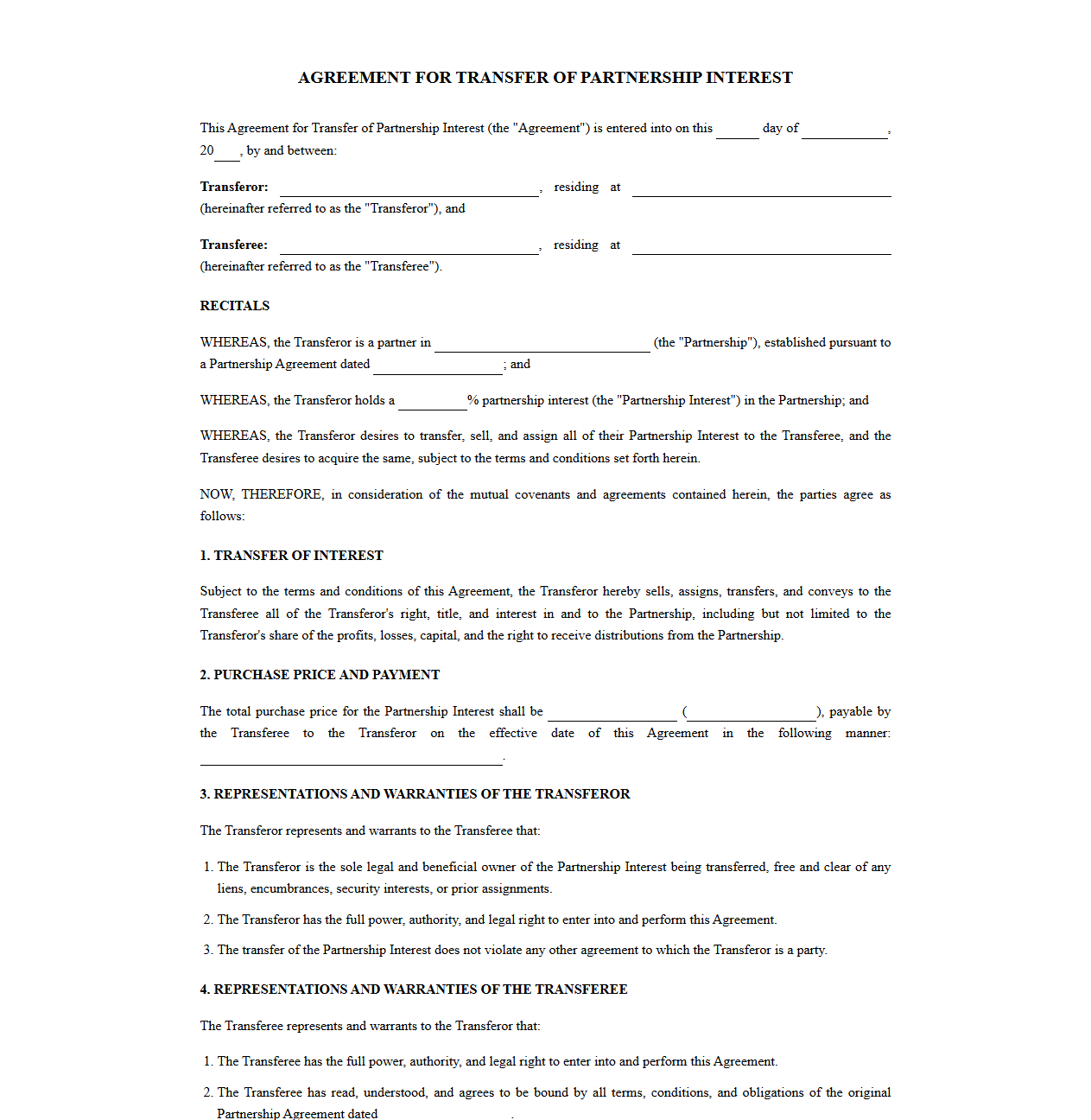
Agreement for Transferring Partnership Ownership Interest
 Download: .PDF
Introduction to Partnership Interest Transfer Agreements
A partnership is a dynamic business relationship, but there inevitably comes a time when ownership interests must shift. Whether due to growth, retirement, or unexpected life changes, a structured ownership transition is vital to preserving the business's operational continuity and value. Utilizing a well-chosen partnership interest transfer agreement template ensures that this transition is handled with legal precision, establishing clear expectations and legally binding terms that prevent bitter disputes, protect minority interests, and keep the business running smoothly.
Common Triggers for Partnership Ownership Transitions
Ownership transitions are rarely sudden; they are typically sparked by specific life or business events. Having a dedicated legal framework for each scenario ensures the business survives the departure of a partner without operational disruption.
- Partner Retirement: Requires a structured wind-down of duties and a clear payout schedule to protect the cash flow of the remaining business.
- Voluntary Exit: Occurs when a partner chooses to pursue other opportunities, requiring precise terms regarding non-compete clauses and the valuation of their departing share.
- Partner Disputes: When irreconcilable differences arise, a pre-negotiated transfer agreement prevents litigation by outlining a clear, objective exit pathway.
- External Buyouts: When a third party offers to purchase a partner's share, a formal framework prevents unauthorized external parties from entering the partnership without consent.
Key Types of Transfer Agreement Templates
Redemption Agreements (Entity Purchase)
In a redemption structure, the partnership entity itself purchases the departing partner's interest. The remaining partners' ownership percentages increase proportionally. This structure is highly efficient for partnerships with multiple members, as it requires only one transaction between the entity and the exiting partner, simplifying the overall administrative burden.
Cross-Purchase Agreements
Under a cross-purchase structure, the remaining partners individually buy the departing partner's interest. This structure is highly beneficial for tax purposes, as it typically allows the purchasing partners to increase their tax basis in the partnership. It is best utilized in smaller partnerships where coordinating individual transactions between a few remaining partners is straightforward.
Essential Clauses Every Template Must Contain
To ensure robust legal protection, any transition template must detail specific operational and financial parameters. It must clearly outline the Valuation Methodology to determine the fair price of the partnership interest, whether through a fixed price, a formula based on book value, or an independent appraisal. Additionally, the agreement must define the Payment Terms, specifying if the payout will be a lump sum or structured via a promissory note over time. To protect the remaining partners, Transfer Restrictions such as a Right of First Refusal must be included to control who can buy into the business. Finally, robust Dispute Resolution Mechanisms, including mediation or binding arbitration, must be established to handle any disagreements during the execution process.
Navigating Tax and Valuation Implications
Financial Tip: Always align your valuation date with a standard accounting period close to minimize tax discrepancies and simplify the calculation of capital gains.
Transferring partnership interest carries significant tax consequences that vary depending on whether you utilize an entity purchase or a cross-purchase structure. The departing partner must account for capital gains taxes, while the remaining partners must understand how the transaction affects their basis in the partnership assets. Establishing an objective, mutually agreed-upon fair market value is critical to satisfying internal revenue guidelines and avoiding costly audits or adjustments.
Step-by-Step Guide to Selecting the Right Template
- Analyze your current entity structure and review your existing partnership agreement for any pre-existing transfer restrictions.
- Evaluate the financial capacity of the business versus the individual partners to determine if an entity redemption or cross-purchase is more viable.
- Select a valuation model that matches your industry standards, ensuring the appraisal method is objective and easily calculated.
- Draft the payment structure, choosing between immediate cash settlement or a structured installment plan to protect ongoing cash flow.
- Review the chosen template against state laws to ensure all jurisdiction-specific clauses are fully compliant.
Executing the Agreement and Next Steps
Once the appropriate transfer agreement template is selected and customized, the partners must execute the document to finalize the transition. This process requires obtaining formal, written consent from all existing partners in accordance with the original partnership agreement. Following execution, corporate records, tax registries, and state business filings must be updated immediately to reflect the new ownership percentages. Before signing, it is critical to submit the final draft to qualified legal counsel to ensure the document is fully enforceable and tailored to your specific business needs.

Leave a comment