
Managing a workplace pantry often feels like an endless cycle of overspending, expiring inventory, and sudden beverage shortages. While providing complimentary refreshments is vital for boosting employee morale and fostering a collaborative culture, office managers frequently struggle to balance diverse dietary preferences with rigid fiscal constraints.
Implementing structured expense templates grants procurement teams the exact financial visibility needed to curb waste without sacrificing team satisfaction. However, these tools are not passive solutions; their success depends on a disciplined approach to tracking consumption variables. For instance, analyzing the cost-per-serving of premium bulk cold brew versus single-serve sodas can instantly reveal hidden budget leaks.
In this article, we will break down the essential pantry expense templates, explore key optimization metrics, and outline a consultative framework for sustainable office budgeting.
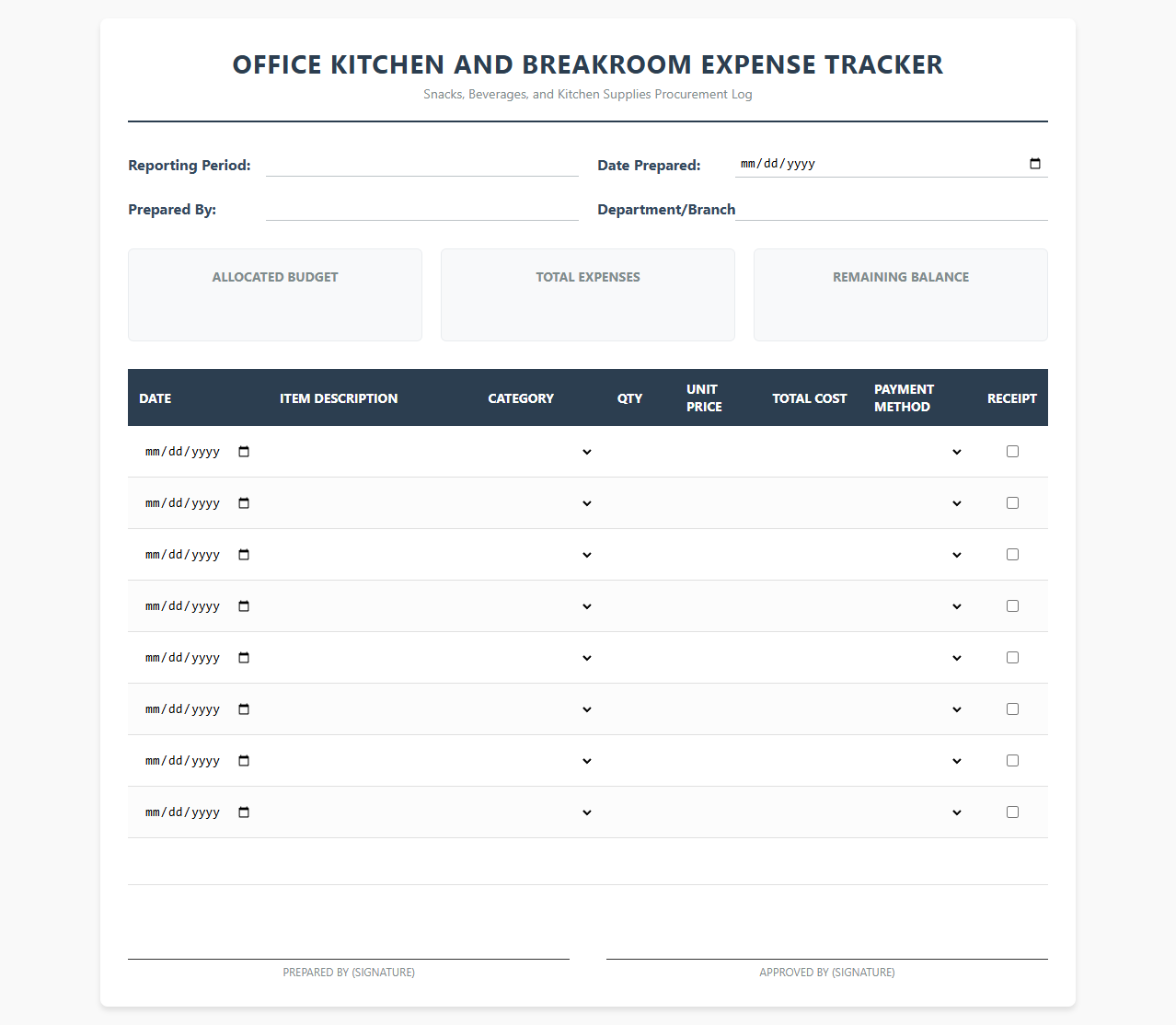
Office Kitchen and Breakroom Expense Tracker
 Download: .PDF
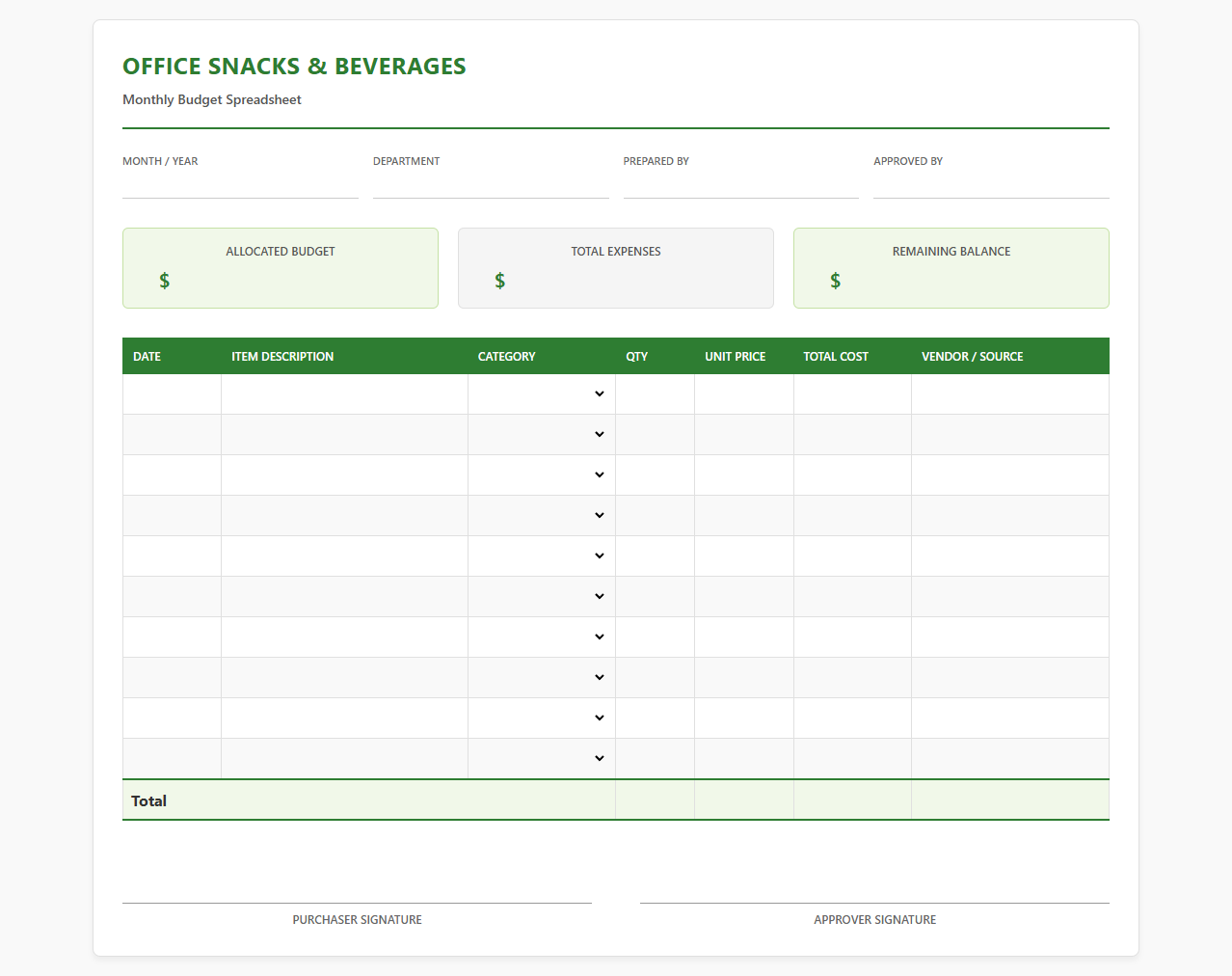
Snack and Beverage Monthly Budget Spreadsheet
 Download: .PDF
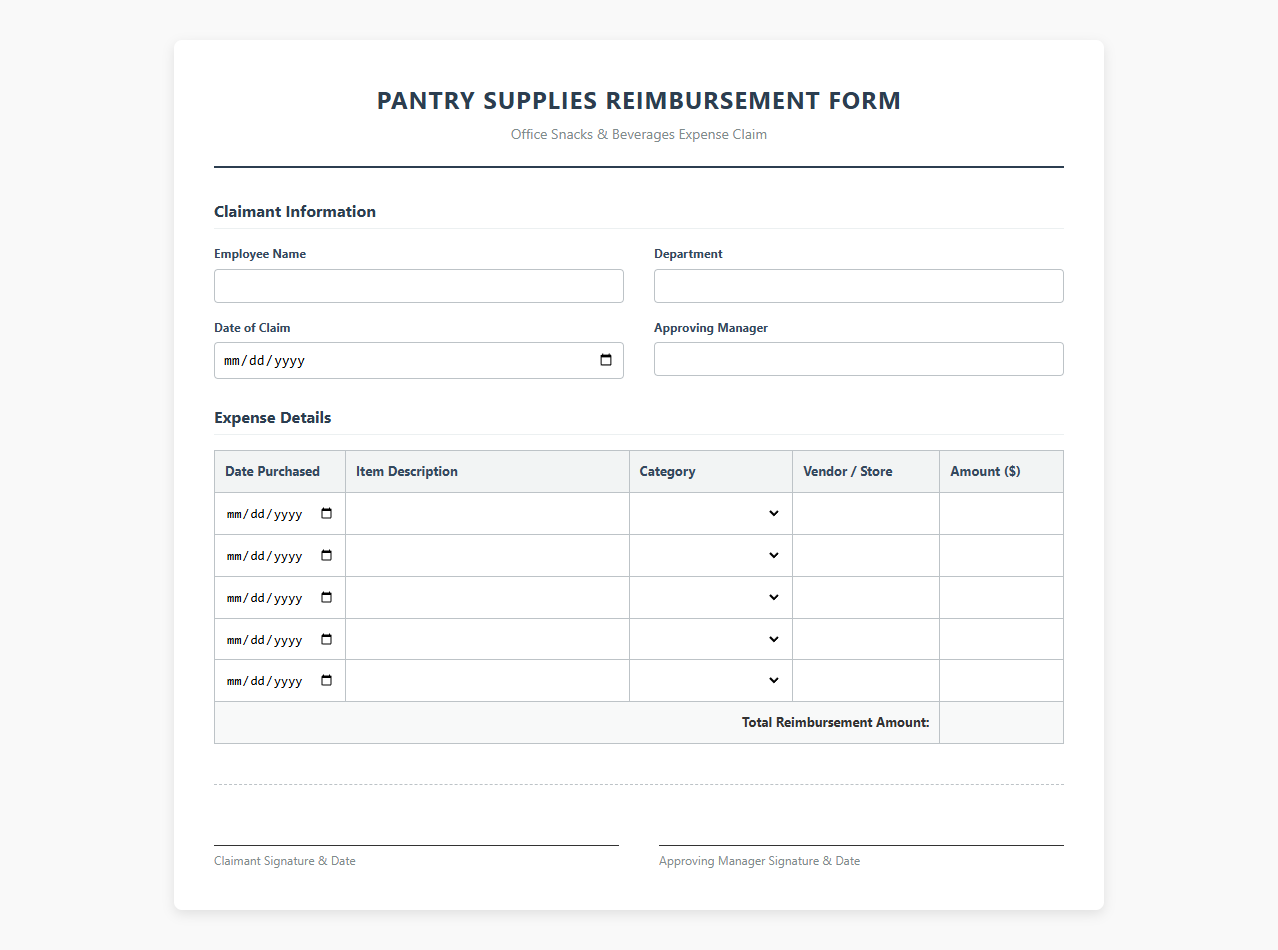
Pantry Supplies Reimbursement Form
 Download: .PDF
Corporate Refreshment Expense Logging Template
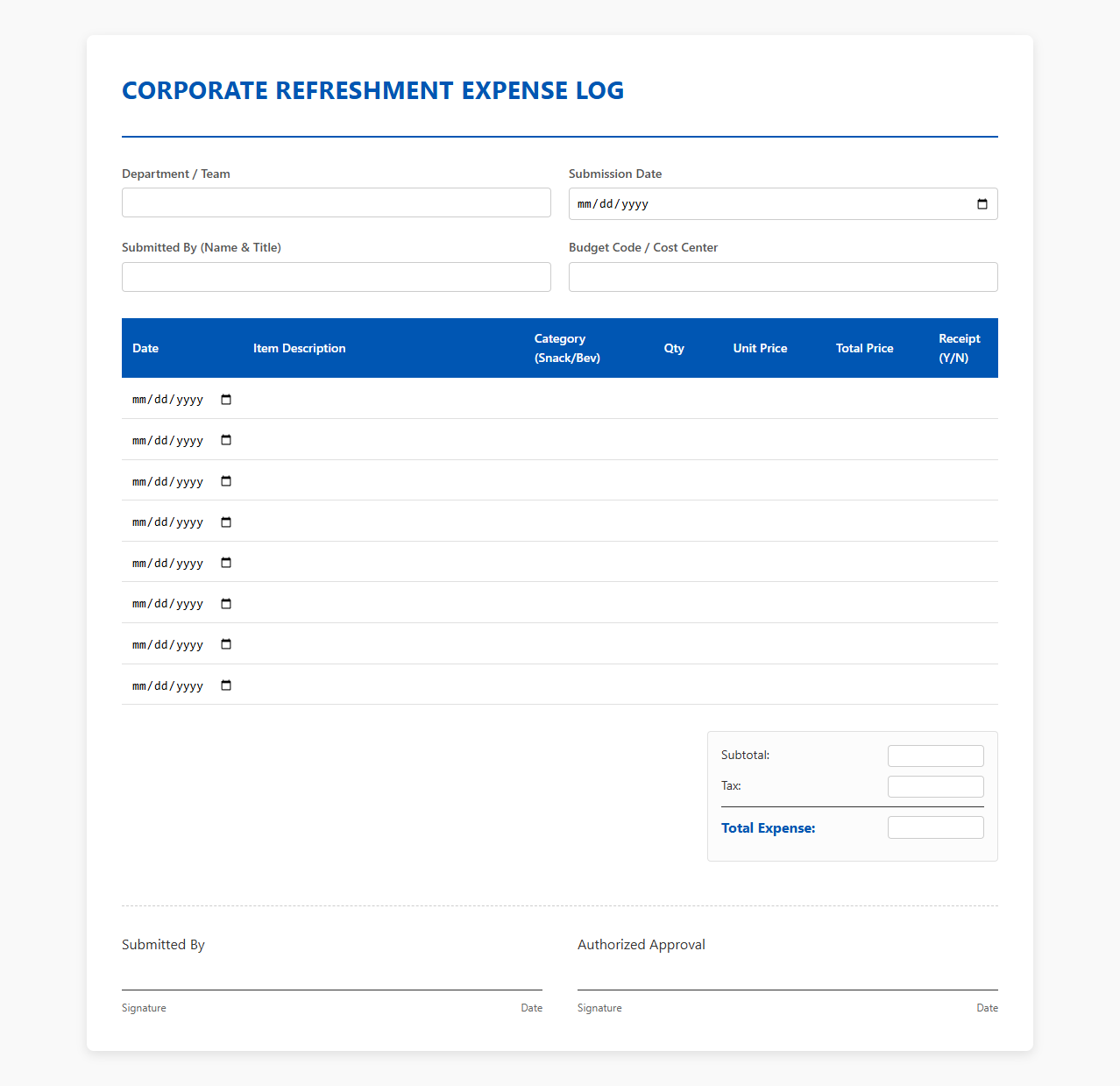 Download: .PDF
Office Snack and Drink Purchase Log
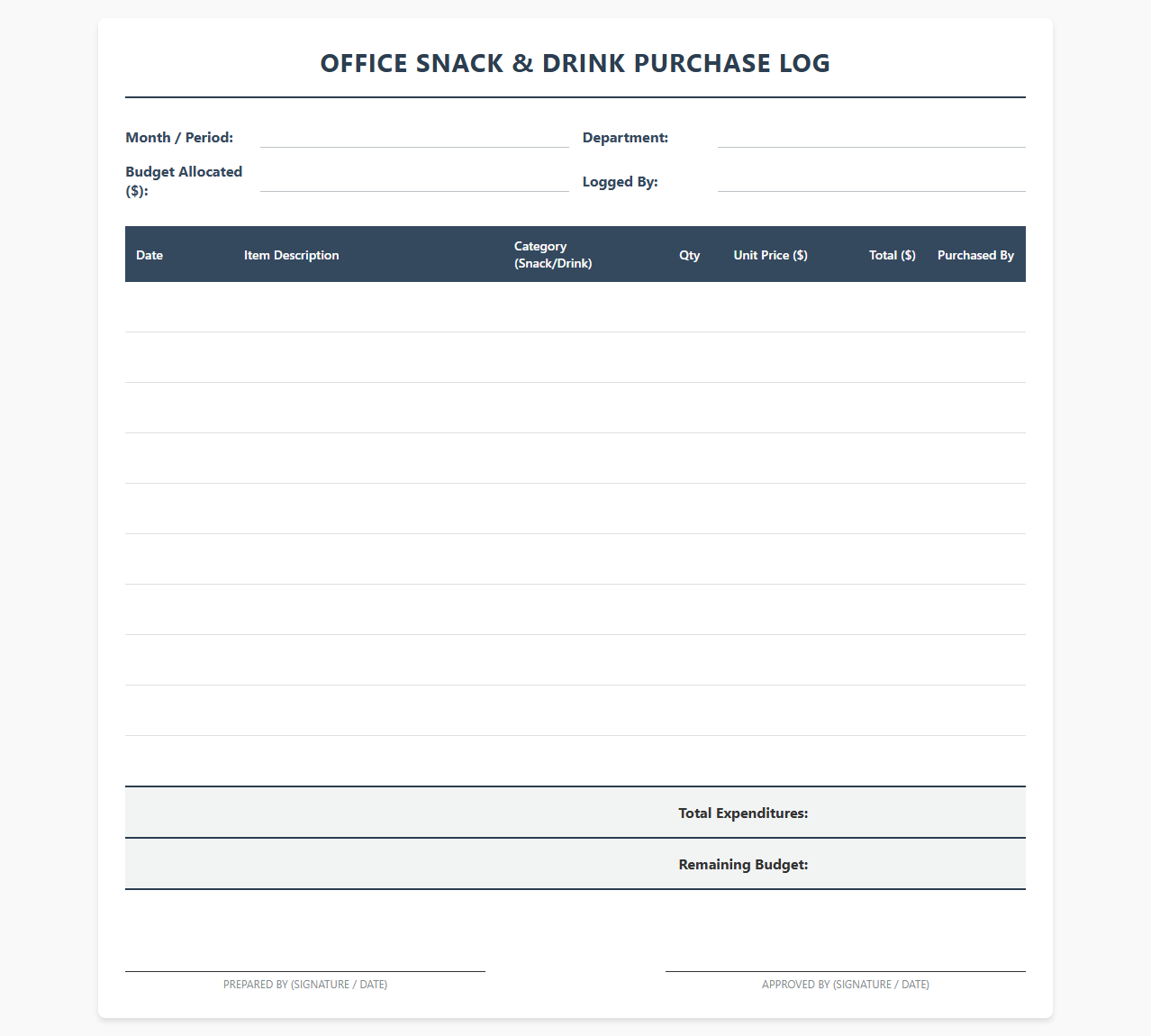 Download: .PDF
Weekly Breakroom Inventory and Expense Sheet
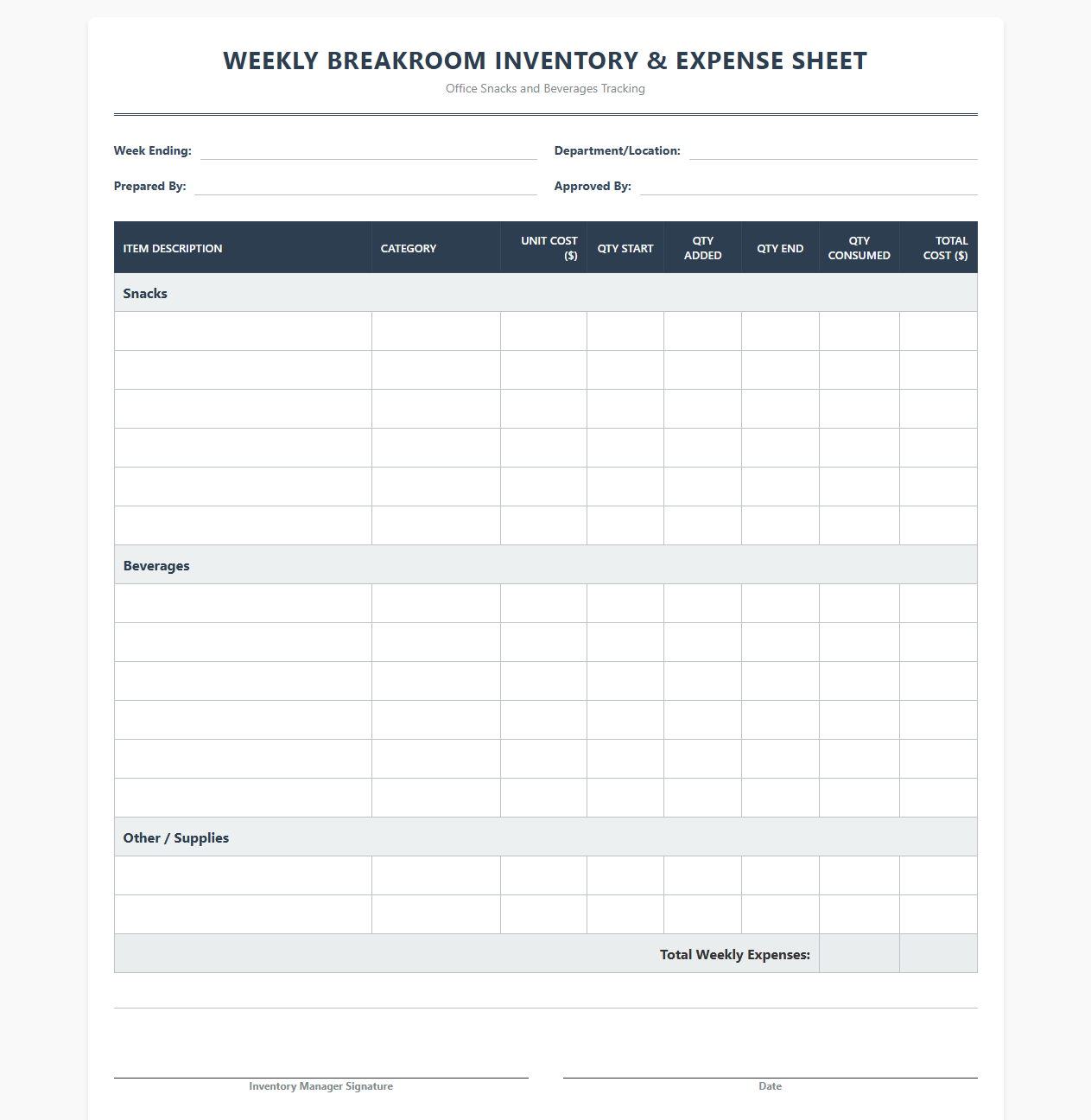 Download: .PDF
Coffee and Snack Petty Cash Template
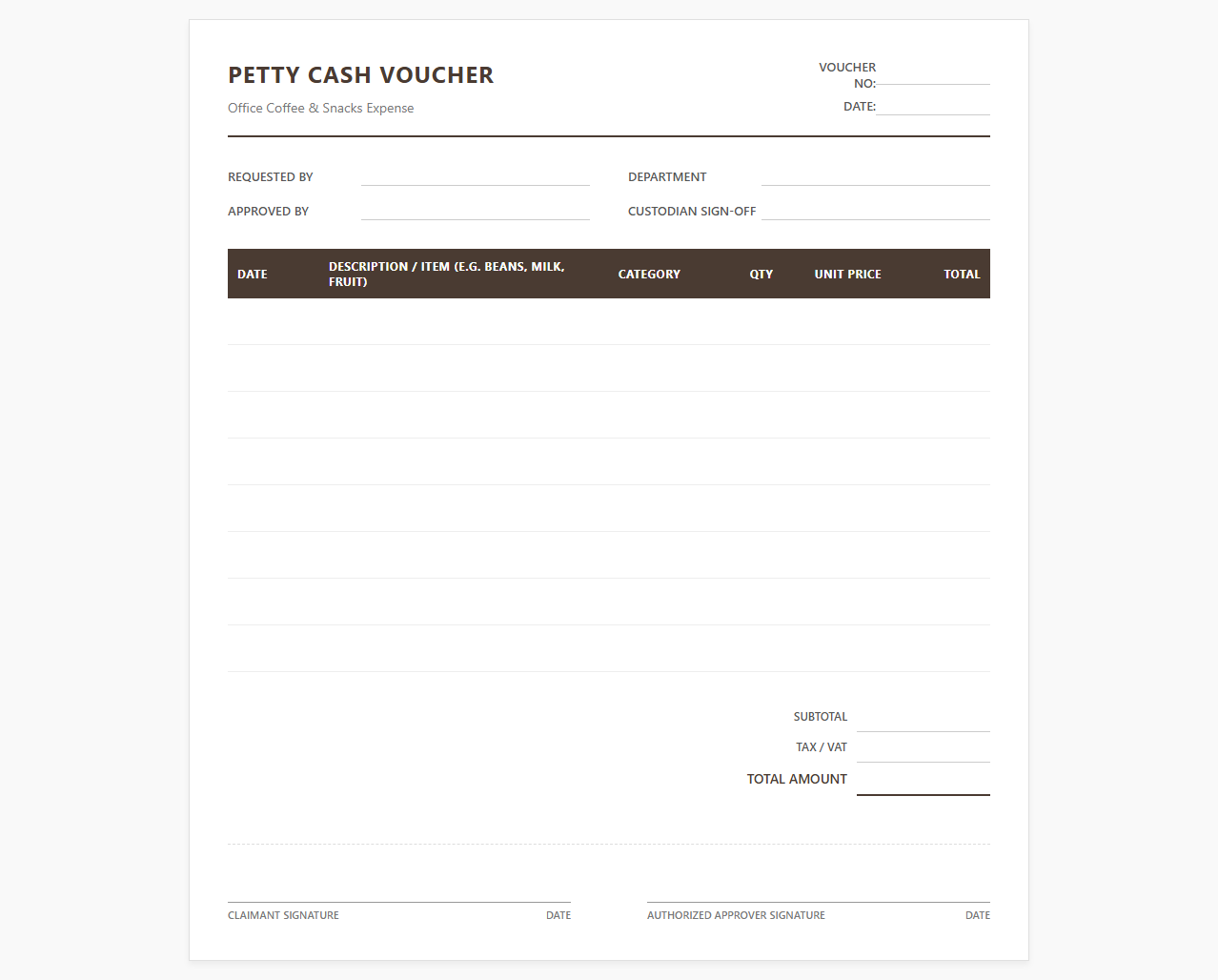 Download: .PDF
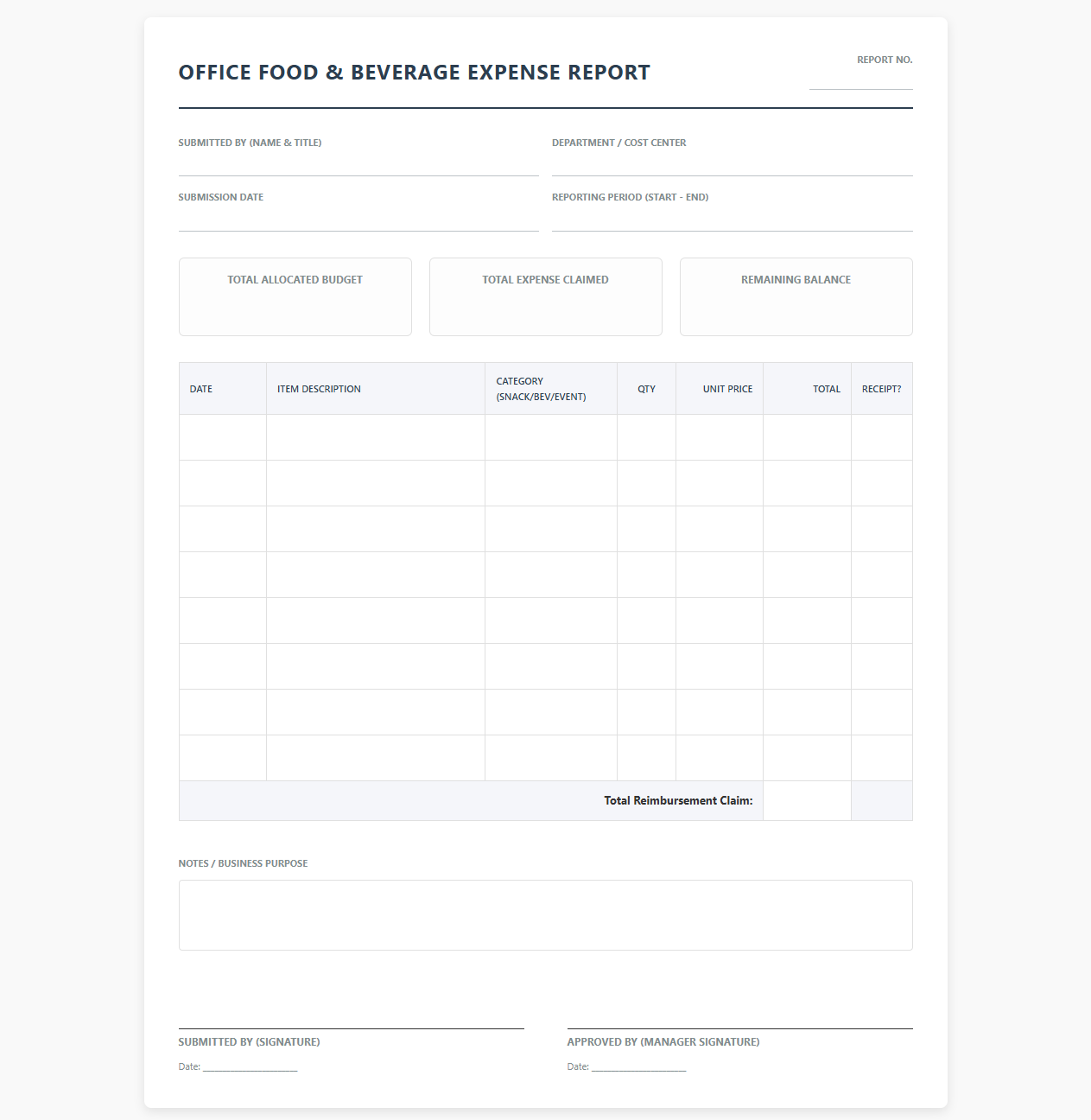
Workplace Food and Beverage Expense Report
 Download: .PDF
The Cost of Office Comforts: Why Pantry Budgets Need Optimization
While free coffee, sparkling water, and premium snacks are excellent tools for boosting workplace morale, their unmonitored accumulation can quietly drain operational budgets. Many organizations treat office kitchen supplies as a minor operational expense, only to discover that unchecked ordering leads to significant financial leak. By introducing a structured pantry budget template, companies can transform this chaotic expense into a predictable, well-managed line item. Implementing structured controls yields major financial benefits, including direct reduction in food waste, optimized capital allocation for core business needs, and transparent oversight over monthly operational costs.
Auditing Current Consumption: Tracking Your Team's Favorites
Before building a budget template, you must understand your office's actual consumption patterns. Auditing your existing pantry inventory helps identify which items vanish within hours and which slow-moving snacks sit on shelves until they expire. This baseline data prevents over-ordering and ensures your budget allocation aligns with actual team preferences rather than guesswork.
- Inventory Count: Document every item currently in the pantry, recording quantity, expiration dates, and purchase costs.
- Velocity Tracking: Monitor how quickly specific items disappear over a two-week period to identify high-demand goods.
- Waste Inspection: Check trash and recycling areas to note partially consumed or discarded products, highlighting wasted spend.
- Feedback Collection: Run a brief survey to gather input on preferred snack choices, preventing future spend on unpopular items.
Categorizing Snacks and Beverages for Structured Tracking
To avoid a cluttered spreadsheet, organize your pantry items into logical groups. Categorization simplifies data entry, highlights where the majority of your budget is spent, and allows for easier substitution when costs rise.
- Daily Essentials: Bulk coffee, tea, milk, dairy alternatives, and sugar that keep the office running daily.
- Healthy Grab-and-Go: Fresh fruit, nuts, yogurt, and granola bars that support sustained physical energy.
- Premium Beverages: Sparkling waters, cold brews, sodas, and energy drinks that carry higher per-unit costs.
- Bulk Dry Goods: Pretzels, chips, crackers, and cereal purchased in large quantities for cost efficiency.
Anatomy of an Effective Pantry Expense Template
An actionable tracking sheet must capture both quantity and cost metrics. By structuring your Excel or Google Sheets template with these foundational columns, you can automate calculations and spot price fluctuations immediately.
| Category | Item Name | Pack Size (Qty) | Unit Cost ($) | Monthly Demand | Total Projected Cost ($) |
|---|---|---|---|---|---|
| Daily Essentials | Whole Bean Coffee (1lb) | 10 | 14.50 | 10 bags | 145.00 |
| Premium Beverages | Sparkling Water (24-pack) | 8 | 12.00 | 8 cases | 96.00 |
| Healthy Grab-and-Go | Mixed Nuts (Individual Packs) | 100 | 0.85 | 100 packs | 85.00 |
Establishing Spending Thresholds and Departmental Allocations
Setting a flat pantry budget without considering headcount shifts leads to either unnecessary scarcity or excessive waste. Successful office managers anchor their spending limits to actual employee numbers, adjusting the total monthly allocation based on seasonal attendance or specific departmental requirements.
Optimal Monthly Pantry Budget Formula:
Total Budget = (Active On-Site Headcount × $25.00 Base Allocation) × 1.10 Buffer Factor
Sourcing Strategies: Integrating Vendor Costs into Your Template
A major benefit of a pantry budget template is the ability to compare pricing across different procurement channels. By inputting costs from bulk wholesale distributors side-by-side with local retail delivery options, you can visually identify where delivery fees or retail markups are eating into your savings.
By regularly updating these vendor options inside your template, you maintain a dynamic purchasing guide that adapts to seasonal price shifts and promotional discounts.
Reviewing Progress: Monthly Audits for Long-Term Savings
The final step in managing office kitchen expenditures is the monthly variance analysis. At the end of every billing cycle, compare your actual credit card charges or vendor invoices against the projections established in your template. Documenting this variance helps you spot budget leaks, adjust to changing hybrid work schedules, and ensure that your workplace comfort remains both satisfying for employees and sustainable for the bottom line.
Leave a comment