
Managing Board of Directors' meal reimbursements often introduces administrative friction, inconsistent reporting, and compliance vulnerabilities that strain corporate finance departments. As regulatory scrutiny and governance standards intensify, organizations can no longer rely on informal receipt collection or loosely defined expense policies to justify board expenditures.
Establishing a standardized reimbursement framework grants financial officers peace of mind and ensures flawless audit-readiness. However, achieving this level of accuracy requires a fundamental stipulation: organizations must clearly delineate acceptable business conduct from personal expenditures. For instance, an itemized working dinner during an annual strategic retreat requires distinct documentation compared to a simple travel per diem.
This article outlines the essential components of a robust reimbursement policy, offering the practical templates, compliance checklists, and structural workflows required to standardize your board's expense reporting seamlessly.
Board of Directors Meeting Meal Expense Form
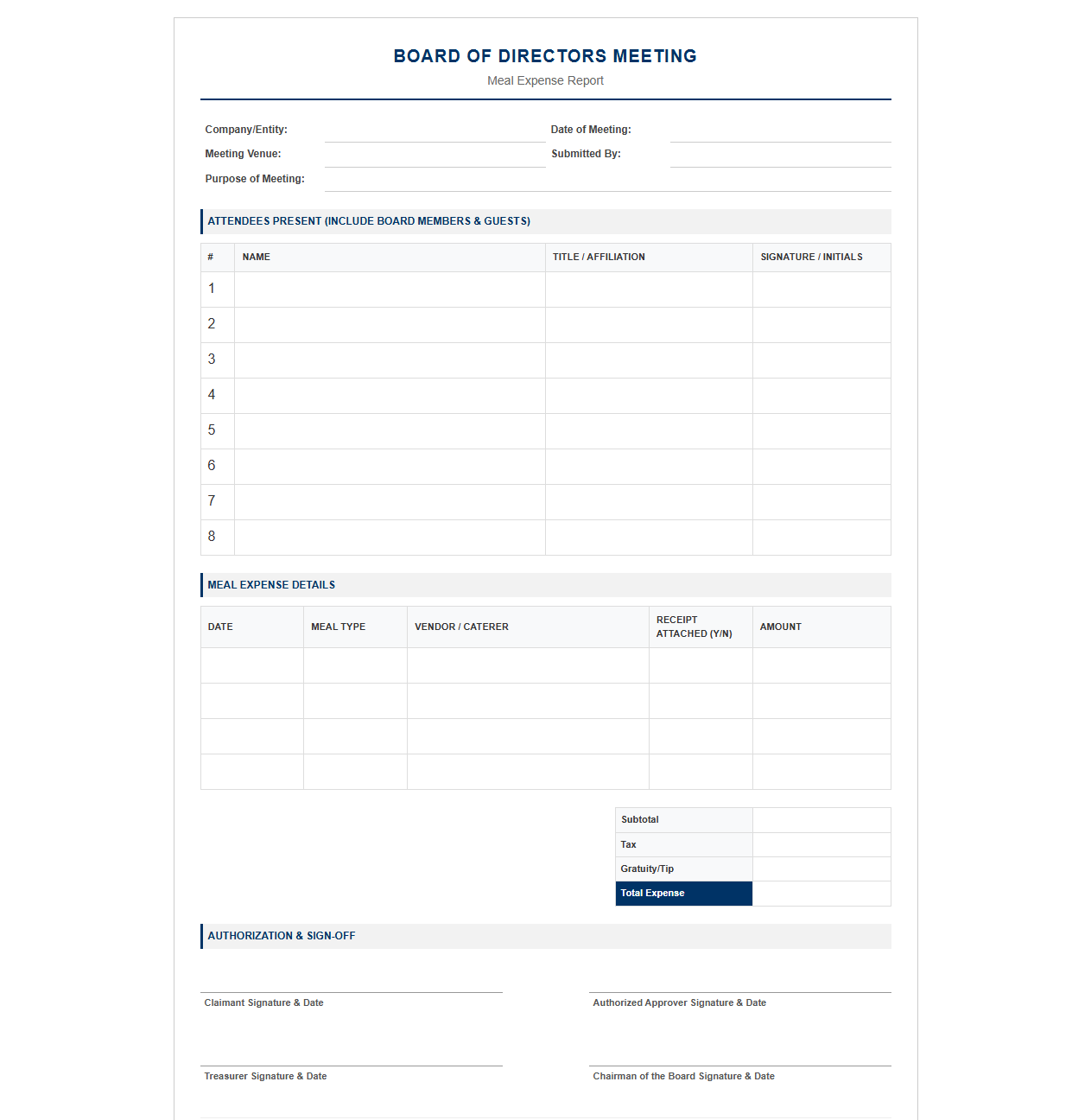 Download: .PDF
Board Meal Expense Reimbursement Template
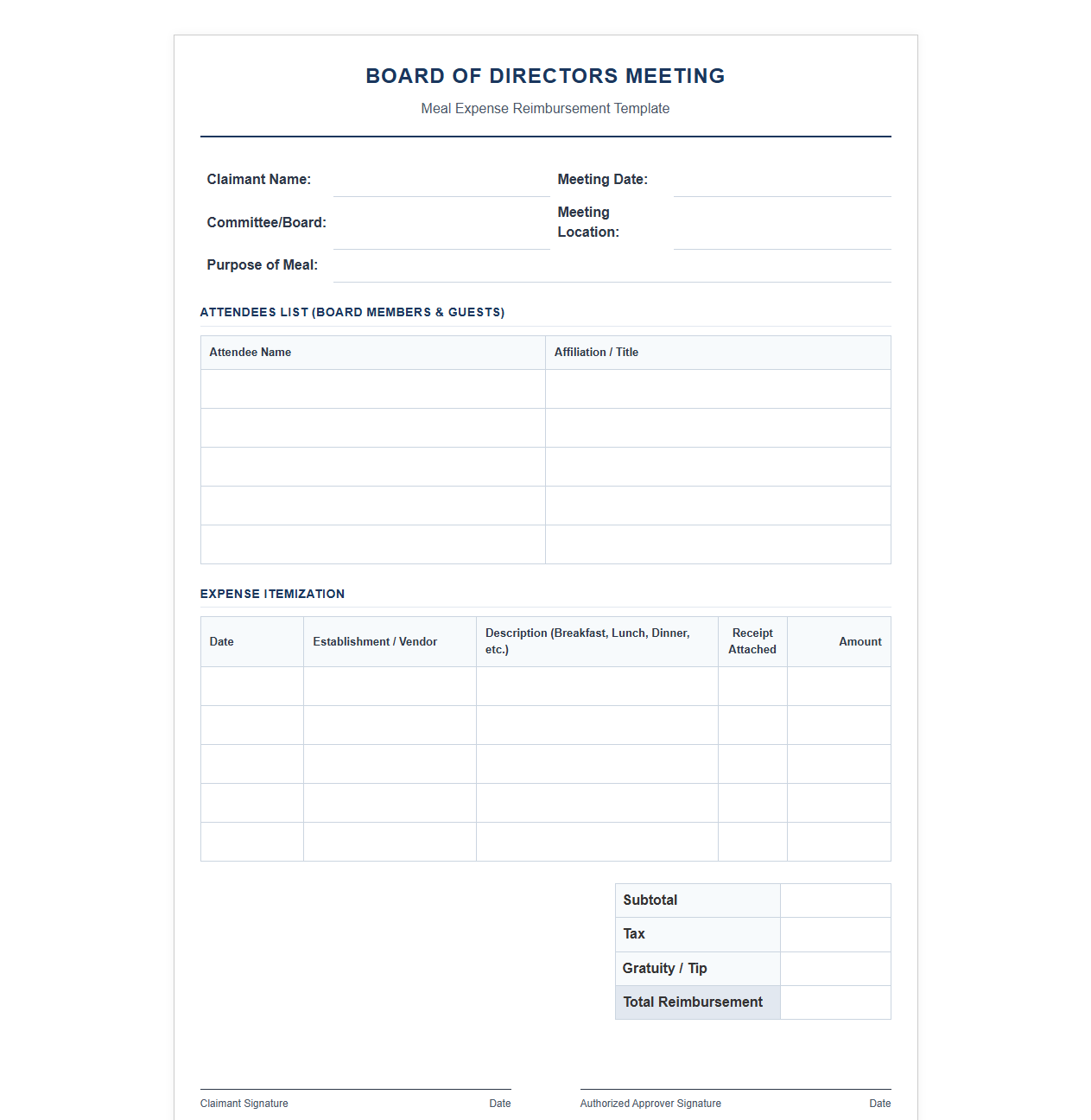 Download: .PDF
Director Catering and Dining Expense Sheet
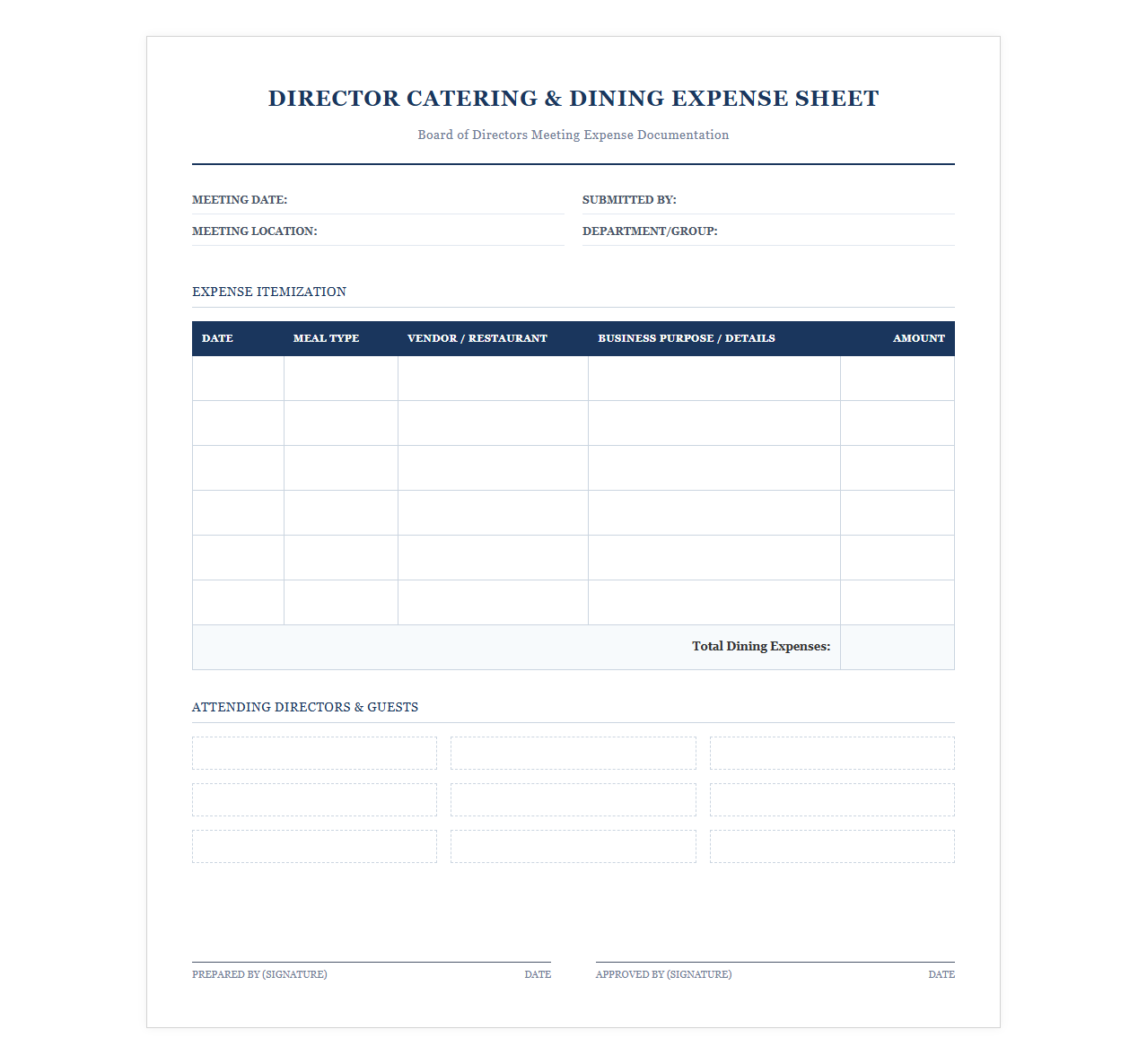 Download: .PDF
Board Meeting Food and Beverage Expense Tracker
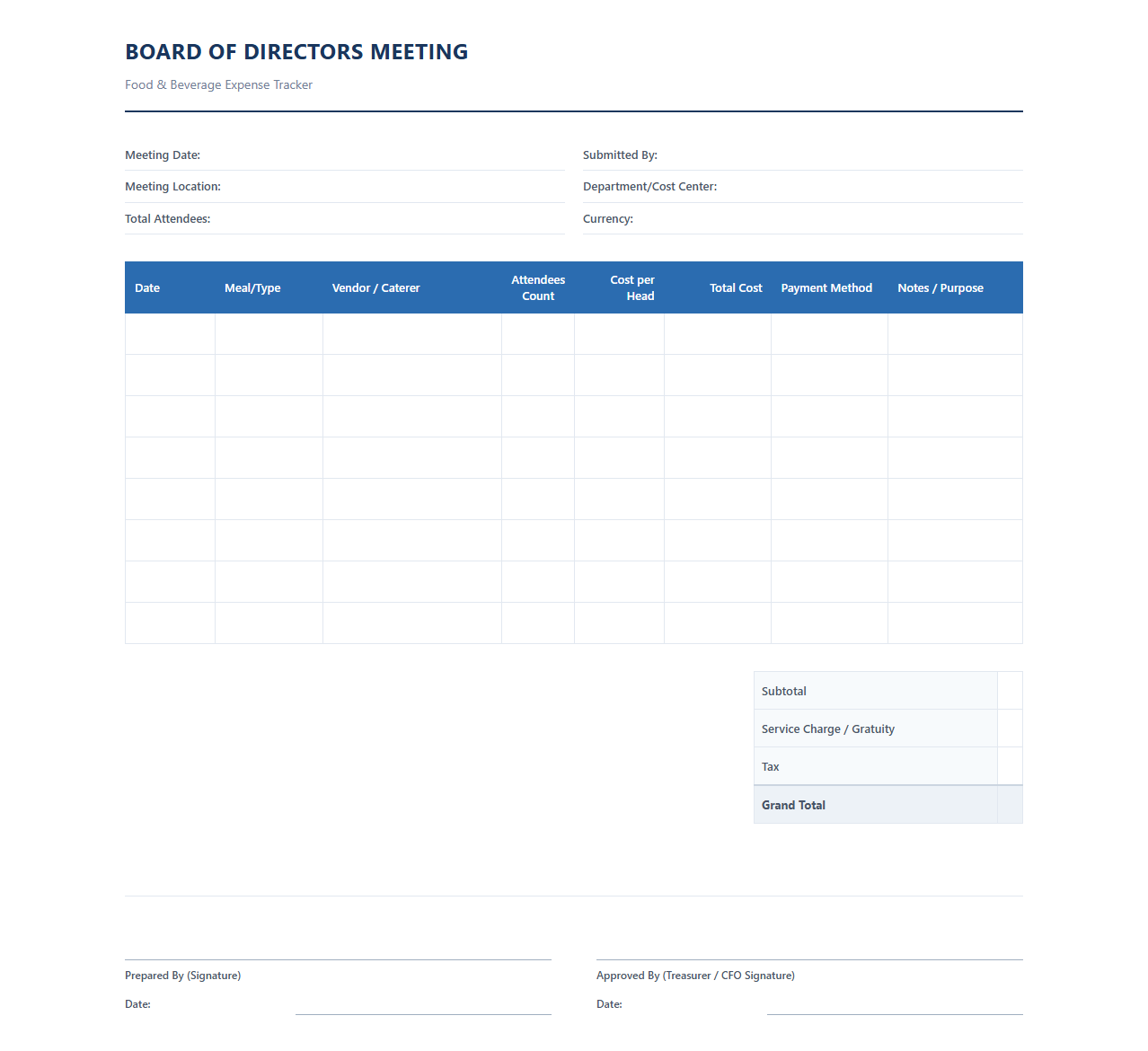 Download: .PDF
Expense Report Template for Board Member Meals
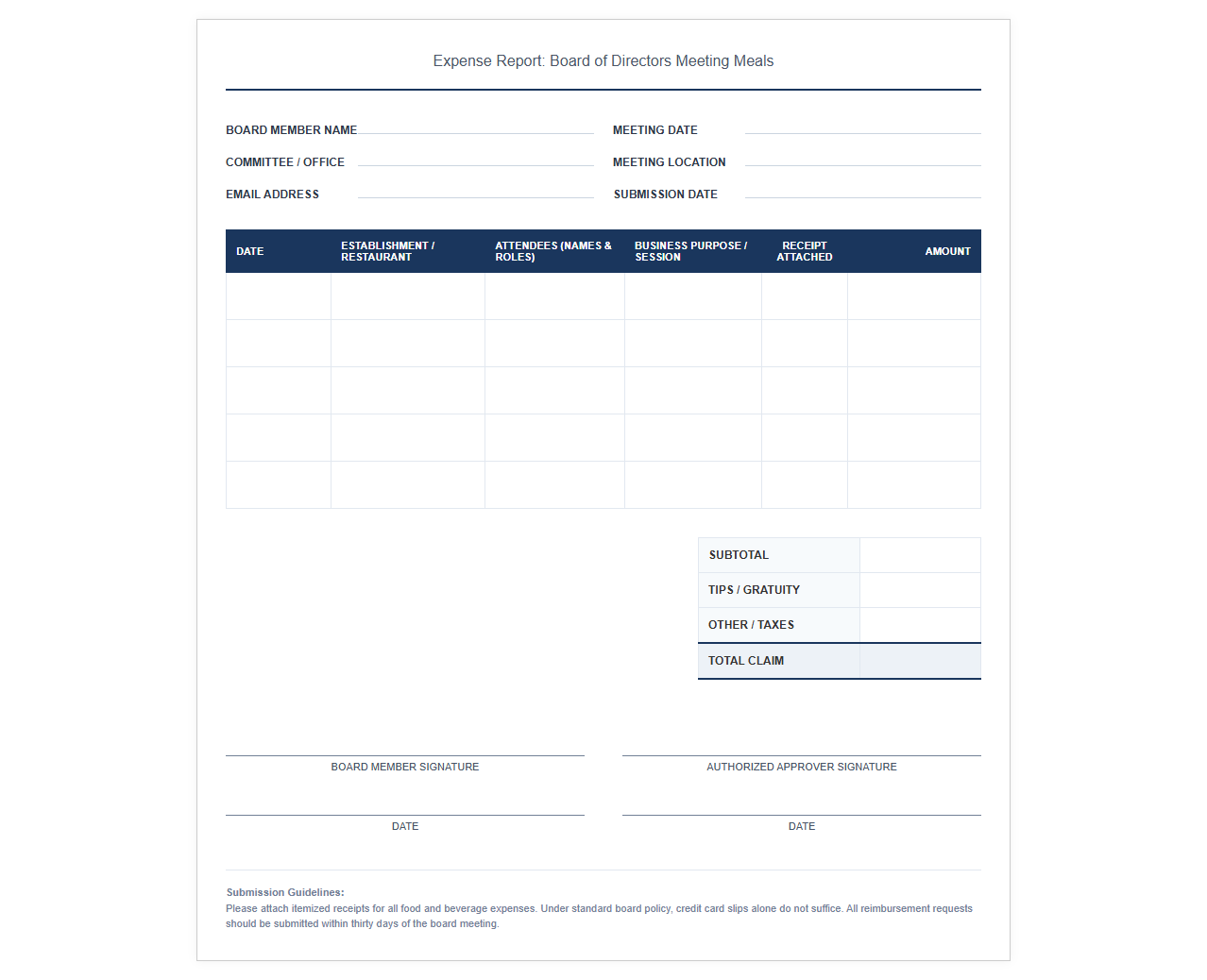 Download: .PDF
Board of Directors Dining Expense Claim Form
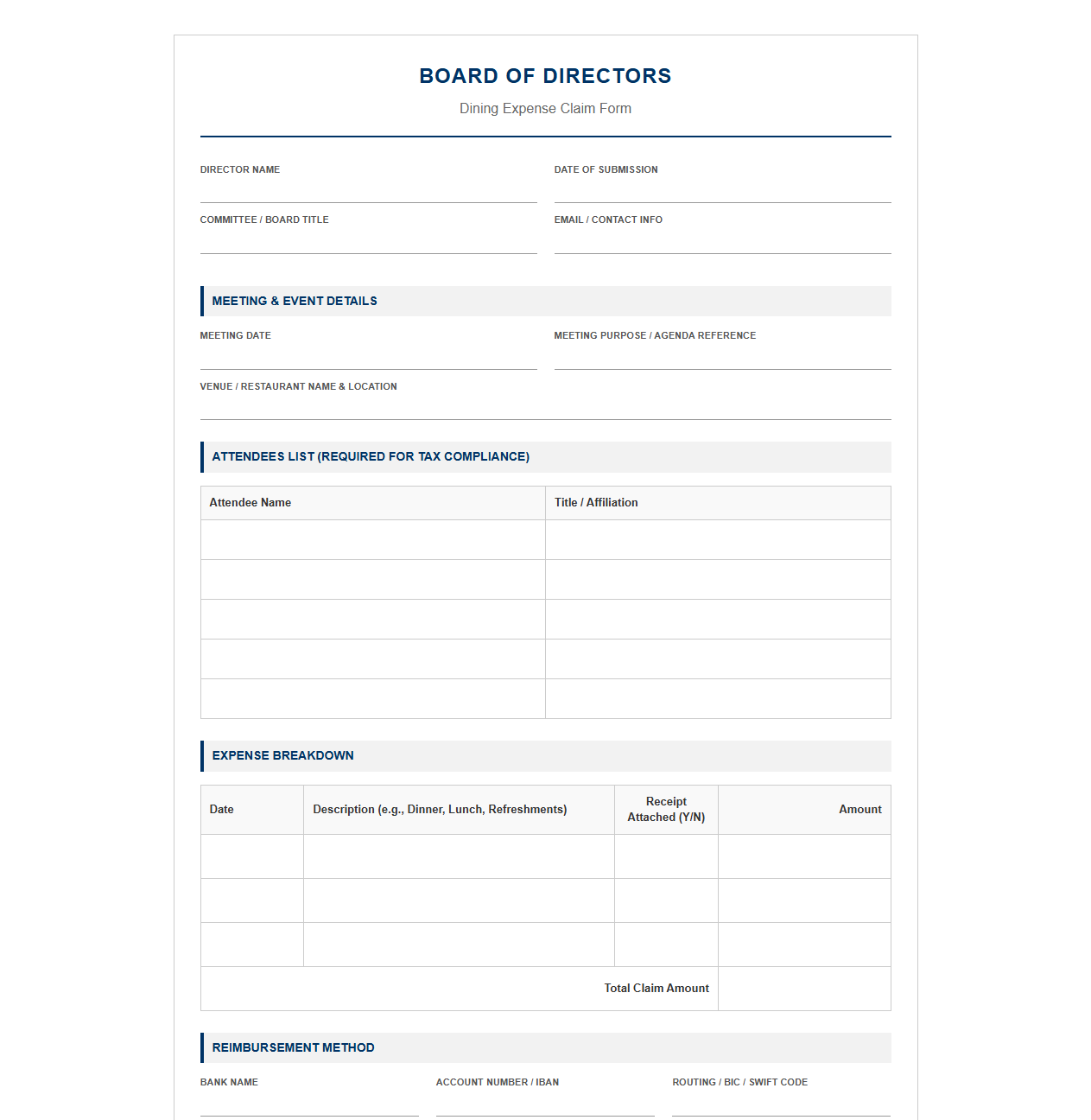 Download: .PDF
Executive Board Meeting Meal Expense Template
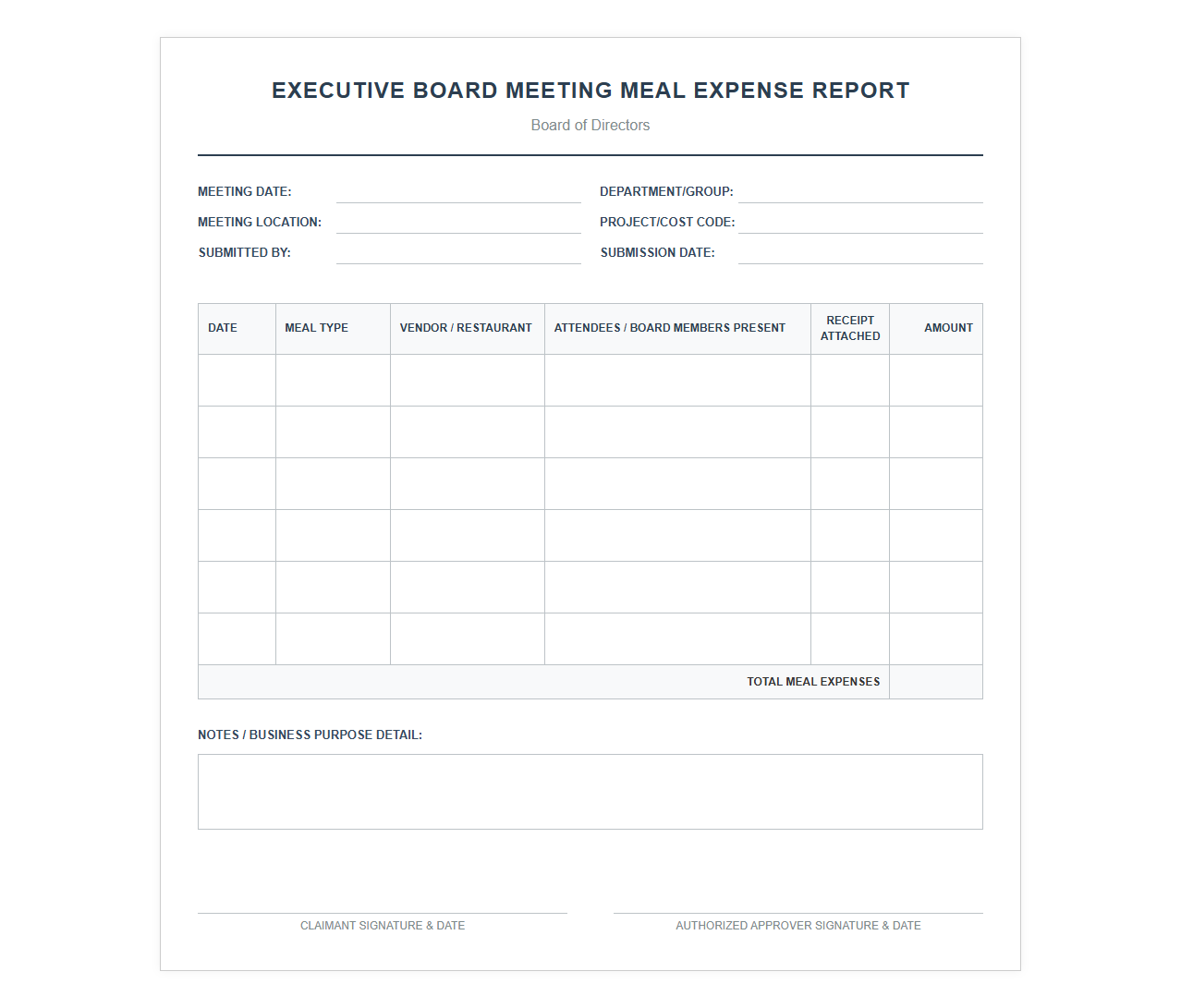 Download: .PDF
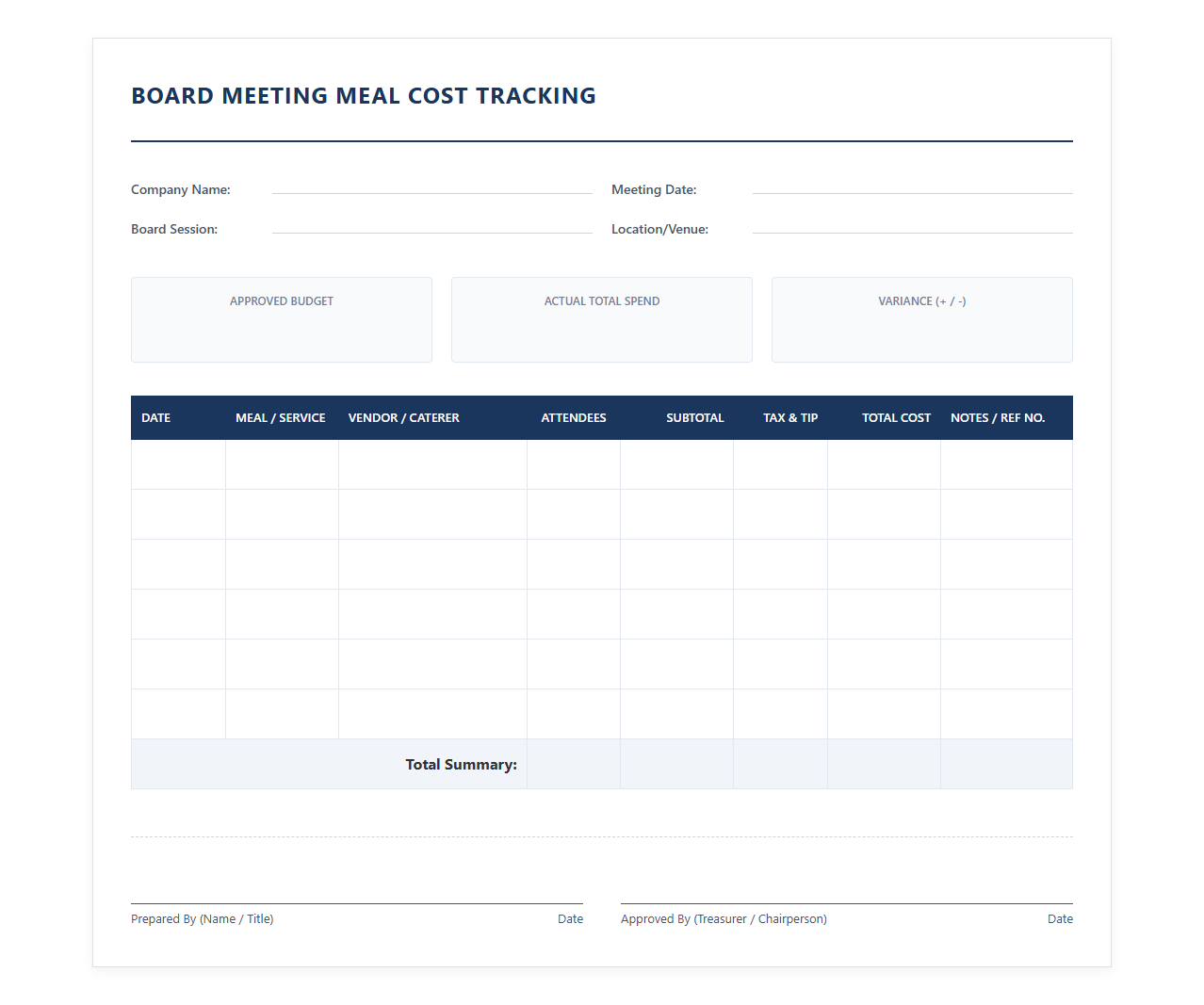
Board Meeting Meal Cost Tracking Template
 Download: .PDF
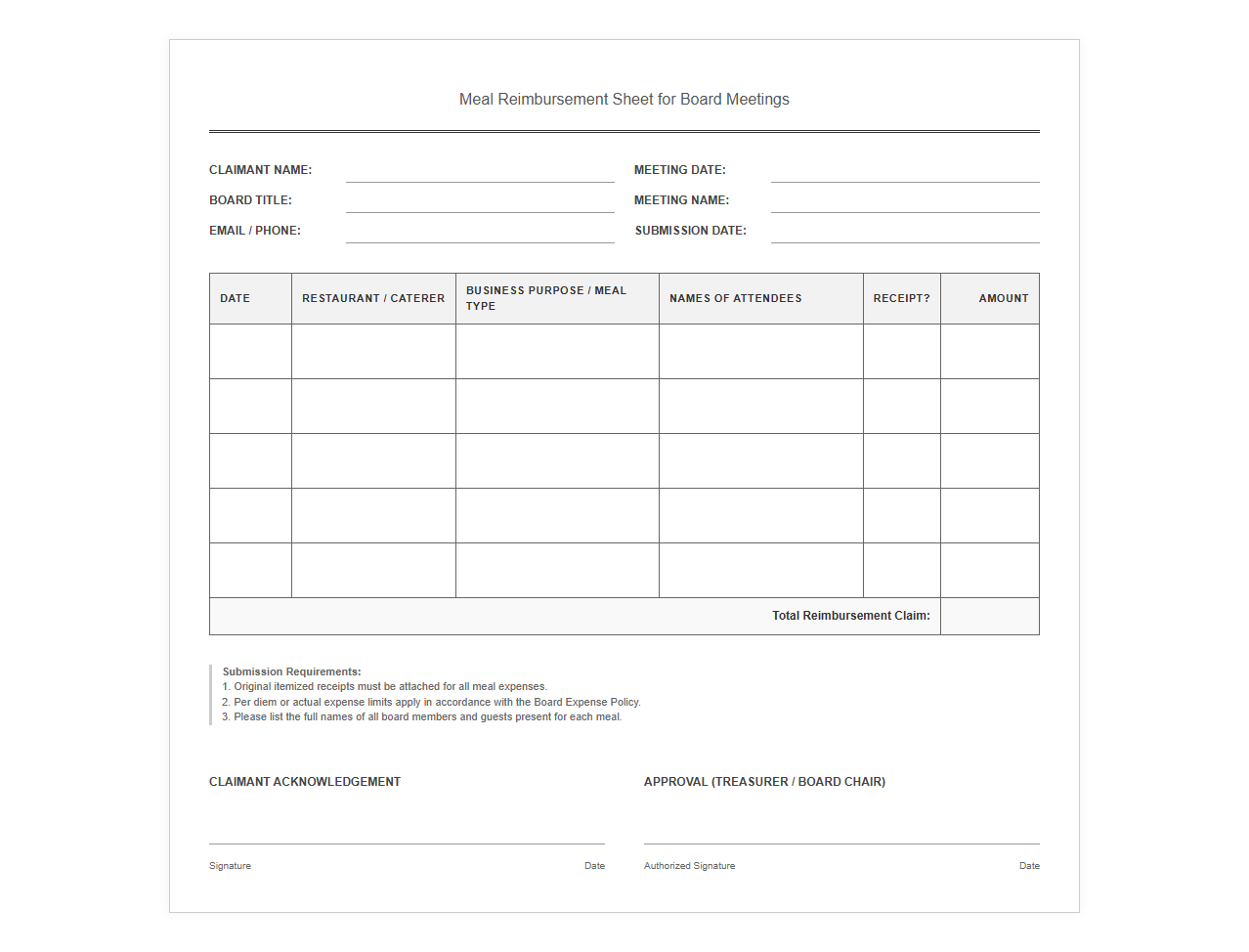
Meal Reimbursement Sheet for Board Meetings
 Download: .PDF
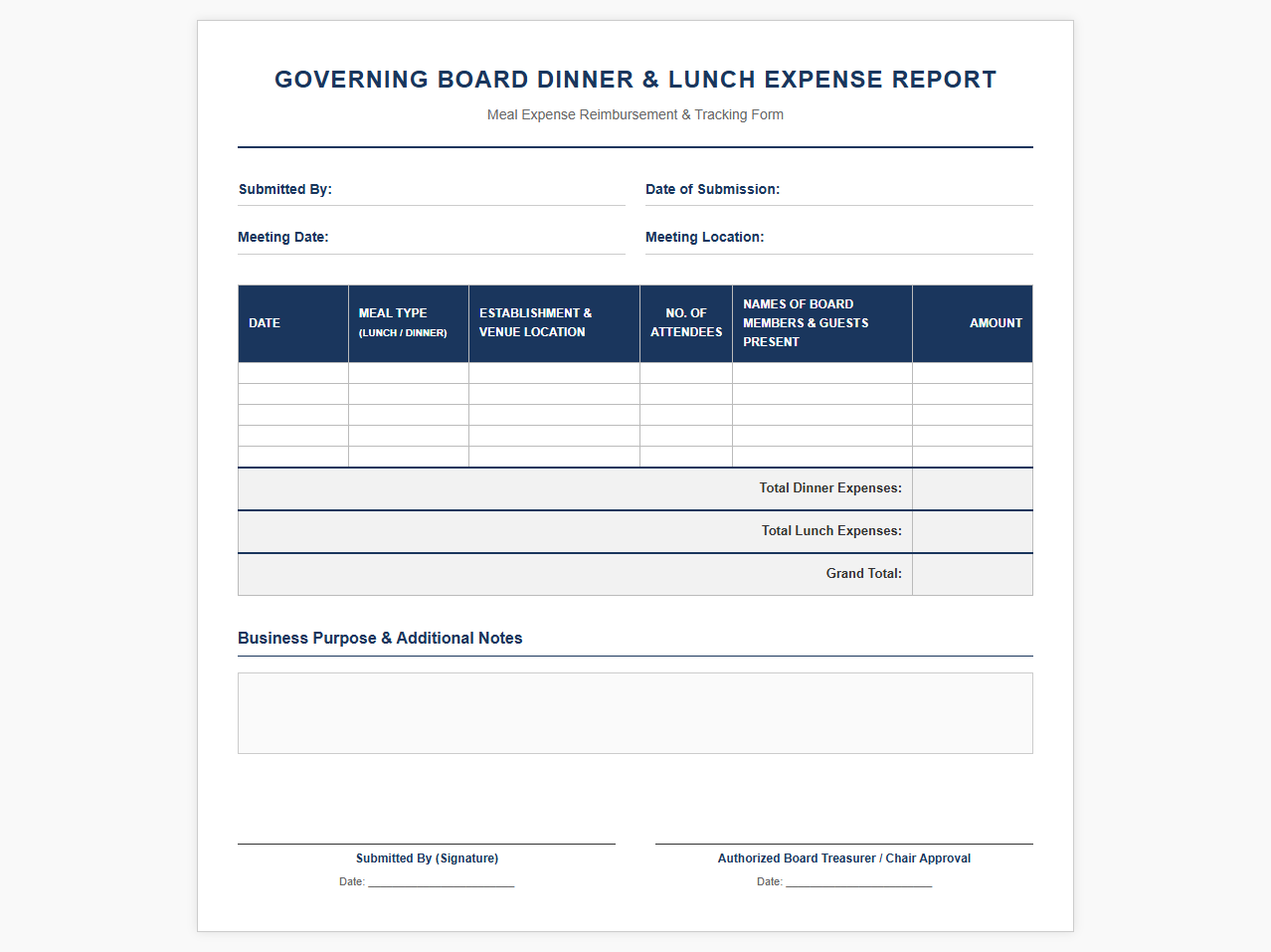
Governing Board Dinner and Lunch Expense Template
 Download: .PDF
Introduction to Standardized Board Meal Reimbursements
Managing executive expenditures presents unique challenges, particularly when balancing the hospitality expected by a board of directors with the rigorous demands of fiscal oversight. Board members frequently travel, convene for intensive strategic sessions, and host key stakeholders over working meals. Without a clear framework, these expenses can quickly become inconsistent, creating administrative bottlenecks and exposing the organization to reputational risks. Establishing a standardized, compliant reimbursement process is absolutely critical for maintaining robust corporate governance and demonstrating unwavering financial transparency to shareholders, auditors, and regulatory bodies.
Compliance and Regulatory Standards for Board Expenses
Board of directors' travel and entertainment expenses are subject to rigorous scrutiny from tax authorities. To remain compliant, organizations must align their practices with official tax guidelines, which distinguish clearly between legitimate business expenses and taxable compensation. Under most regulatory frameworks, a meal is only deductible if there is a clear, documented business purpose directly related to the active conduct of the organization's affairs.
"To meet the standard of a deductible business meal, the expense must not be lavish or extravagant under the circumstances, and the taxpayer (or an employee/director) must be present at the furnishing of the food or beverages."
Failure to adequately document the business context of these meals can result in tax authorities reclassifying the reimbursements as taxable income for the individual board members, leading to unexpected tax liabilities and compliance penalties for both the individual and the enterprise.
Core Components of a Standardized Meal Reimbursement Policy
A robust board meal reimbursement policy serves as the foundation for financial control and clarity. By outlining clear boundaries, organizations can prevent misunderstandings and streamline the approval process.
Every comprehensive board expense policy must incorporate the following core elements:
- Daily Reimbursement Caps (Per Diems): Defined maximum limits for breakfast, lunch, and dinner to prevent excessive spending.
- Itemized Receipt Requirements: Mandatory submission of detailed, itemized receipts for all transactions exceeding a specific baseline threshold.
- Pre-Approval Workflows: Clear protocols requiring prior authorization for high-value group dining events or non-standard banquet services.
- Non-Reimbursable Items: Explicit exclusions, such as top-shelf alcohol, personal guest meals, and late-night room service charges outside of working hours.
Template 1: Standard Board Meeting Meal Reimbursement Form
This template is designed to capture itemized expenses for single-day board meetings or local working dinners. It ensures all necessary details are recorded for accounting and tax verification.
| Date of Event | Attendee Names & Titles | Business Purpose / Agenda | Establishment & Location | Total Amount (USD) |
|---|---|---|---|---|
| 2026-10-15 | Jane Doe (Chair), John Smith (Director) | Q3 Financial Performance Review | The Bistro, New York | $245.50 |
| 2026-10-16 | Full Board of Directors | Post-Meeting Working Lunch | Catering Services, Boardroom | $450.00 |
Template 2: Board Travel and Multi-Day Event Expense Sheet
Multi-day board retreats and international travel require a more detailed breakdown. This template accounts for daily travel allowances, per diems, and foreign currency conversions to maintain absolute financial precision.
| Travel Date | Destination City | Daily Per Diem Rate | Actual Meal Expenses | Currency & Conversion Rate | Reimbursable Total (USD) |
|---|---|---|---|---|---|
| 2026-11-02 | London, UK | $120.00 | £95.00 | 1.28 GBP/USD | $121.60 |
| 2026-11-03 | London, UK | $120.00 | £78.00 | 1.28 GBP/USD | $99.84 |
Best Practices for Policy Implementation and Board Adoption
Introducing a new expense policy to high-level board members requires a balance of diplomacy, clarity, and convenience. To minimize friction and ensure rapid adoption, management should focus on streamlining the administrative burden.
- Conduct a brief orientation: Provide board members with a concise, high-level summary highlighting the regulatory necessity of the new guidelines.
- Provide mobile-friendly submission tools: Integrate digital receipt-scanning applications so directors can upload expenses instantly from their smartphones.
- Designate a dedicated liaison: Assign a specific administrative assistant or corporate secretary to handle questions and facilitate quick reimbursement processing.
- Establish direct deposit pathways: Ensure approved expenses are reimbursed swiftly to demonstrate respect for the board members' time and cooperation.
Ensuring Long-Term Financial Accuracy and Audit Readiness
Maintaining a standardized reimbursement process is not a one-time initiative, but an ongoing operational commitment. Regular internal reviews and structured record-keeping are vital to protect the organization from potential compliance failures.
Implementing secure, digital repositories for all board-related transactions ensures that the organization remains consistently audit-ready. Systematic record retention, paired with transparent policies, provides peace of mind to stakeholders and solidifies the company's commitment to ethical corporate governance.

Leave a comment