

Navigating the complexities of business meal deductions often leaves finance teams buried in mismatched receipts and facing the persistent anxiety of IRS audits. Before implementing a quick-fix solution, however, organizations must recognize that tax authorities demand rigorous, systematic substantiation rather than retroactive estimations.
Transitioning to structured expense templates grants businesses absolute regulatory peace of mind while reclaiming thousands of dollars in legitimate, overlooked write-offs. Crucially, these tools are only effective if teams understand the stipulation that data must be recorded contemporaneously and accurately. For example, capturing the exact business relationship of attendees, the specific project discussed, and the precise venue serves as non-negotiable proof during an audit.
This article will examine how to construct compliant templates, identify common filing pitfalls, and establish seamless workflows for your organization.
Client Dining Expense Reimbursement Form
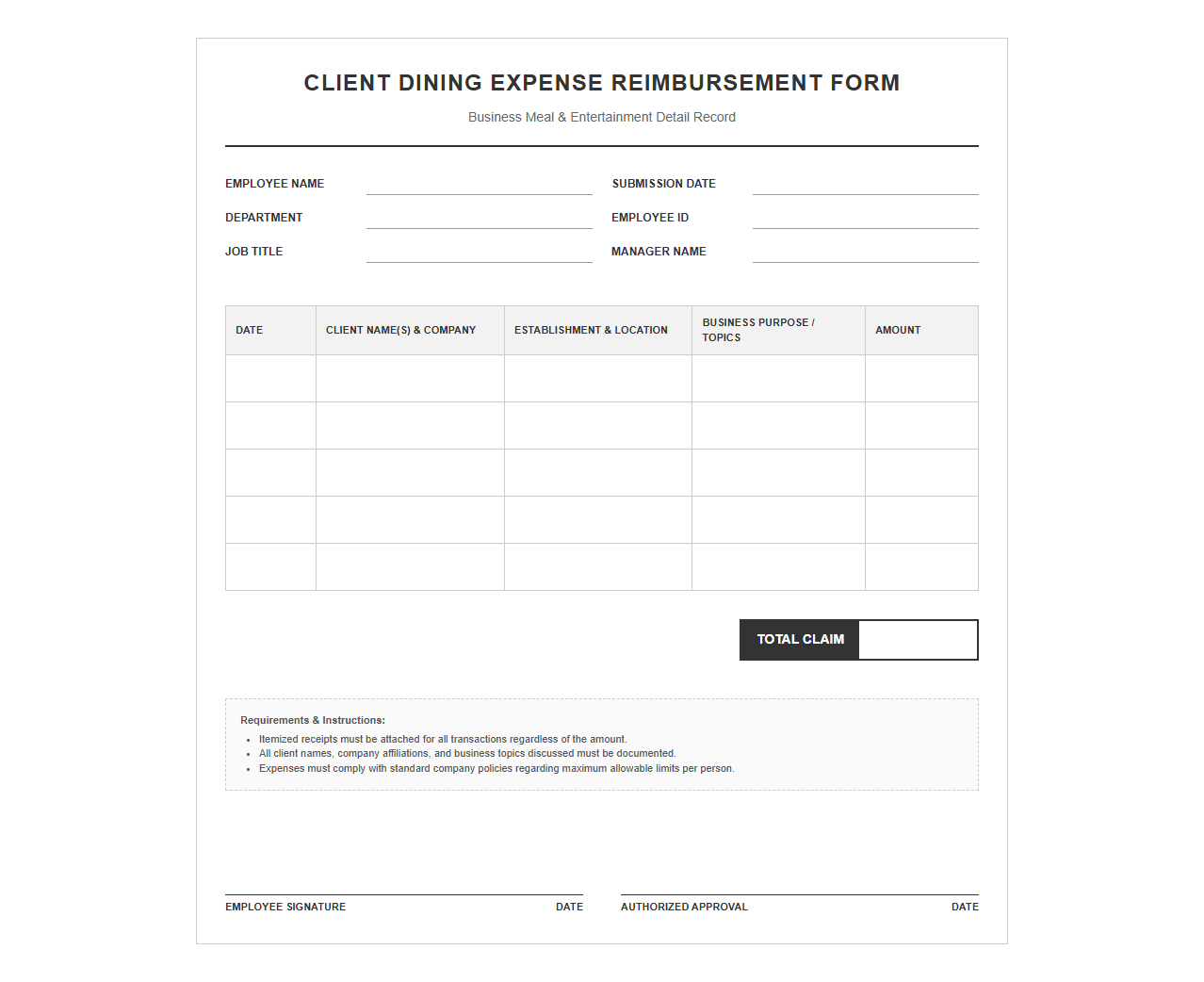 Download: .PDF
Business Lunch and Entertainment Expense Tracker
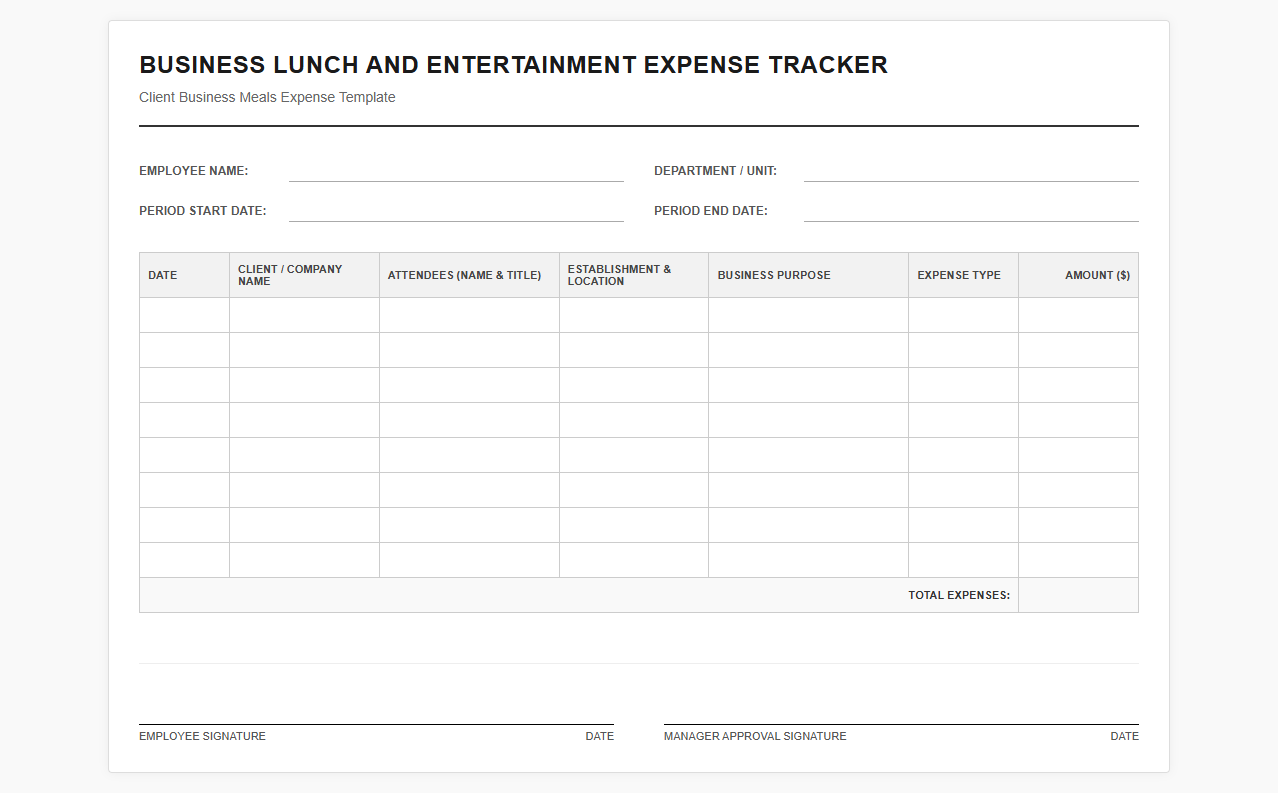 Download: .PDF
Client Dinner Expense Report Template
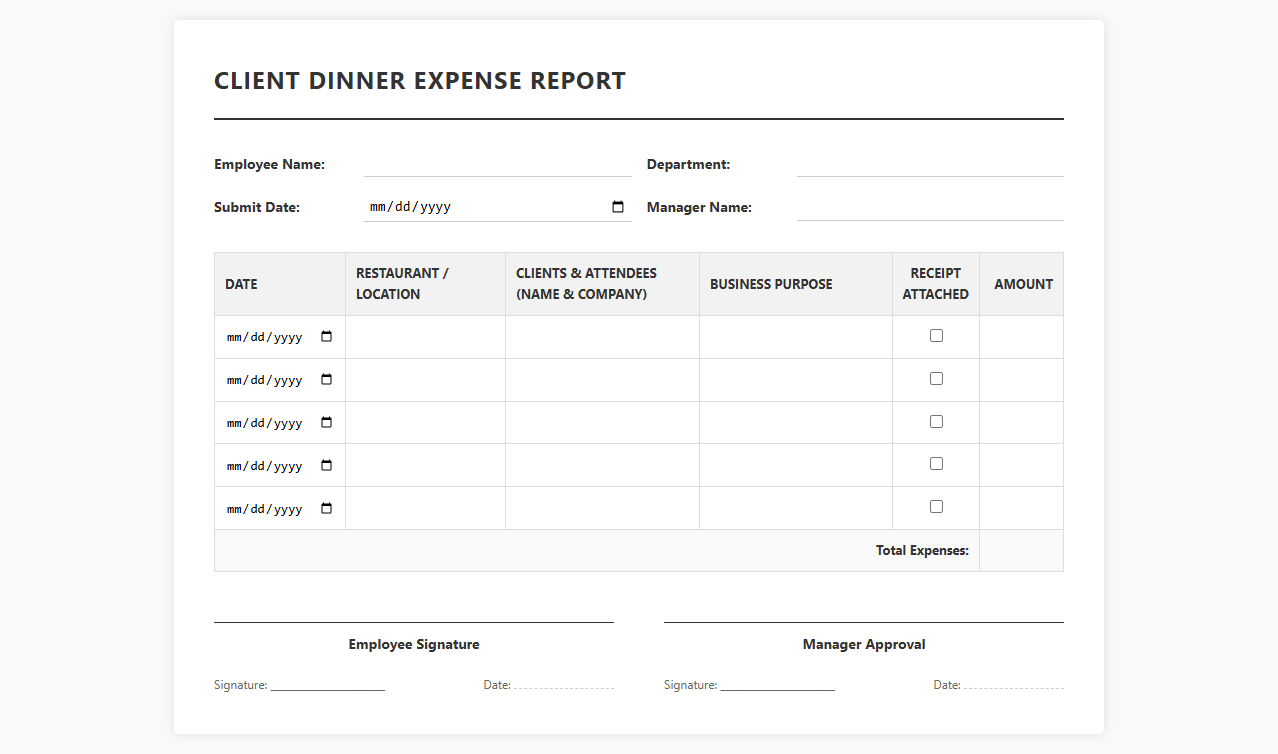 Download: .PDF
Corporate Client Meal Receipt Log
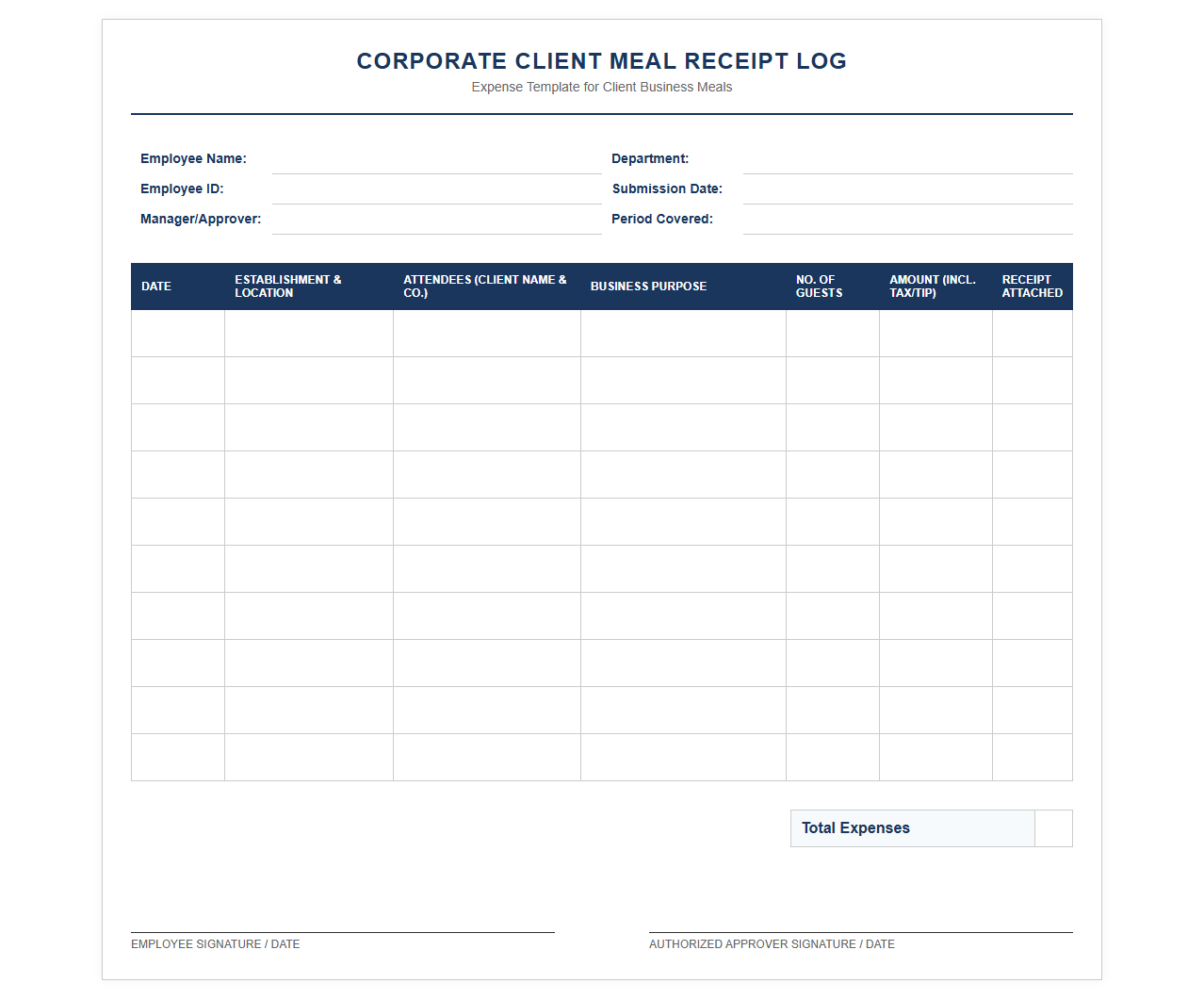 Download: .PDF
Professional Client Dining Expense Sheet
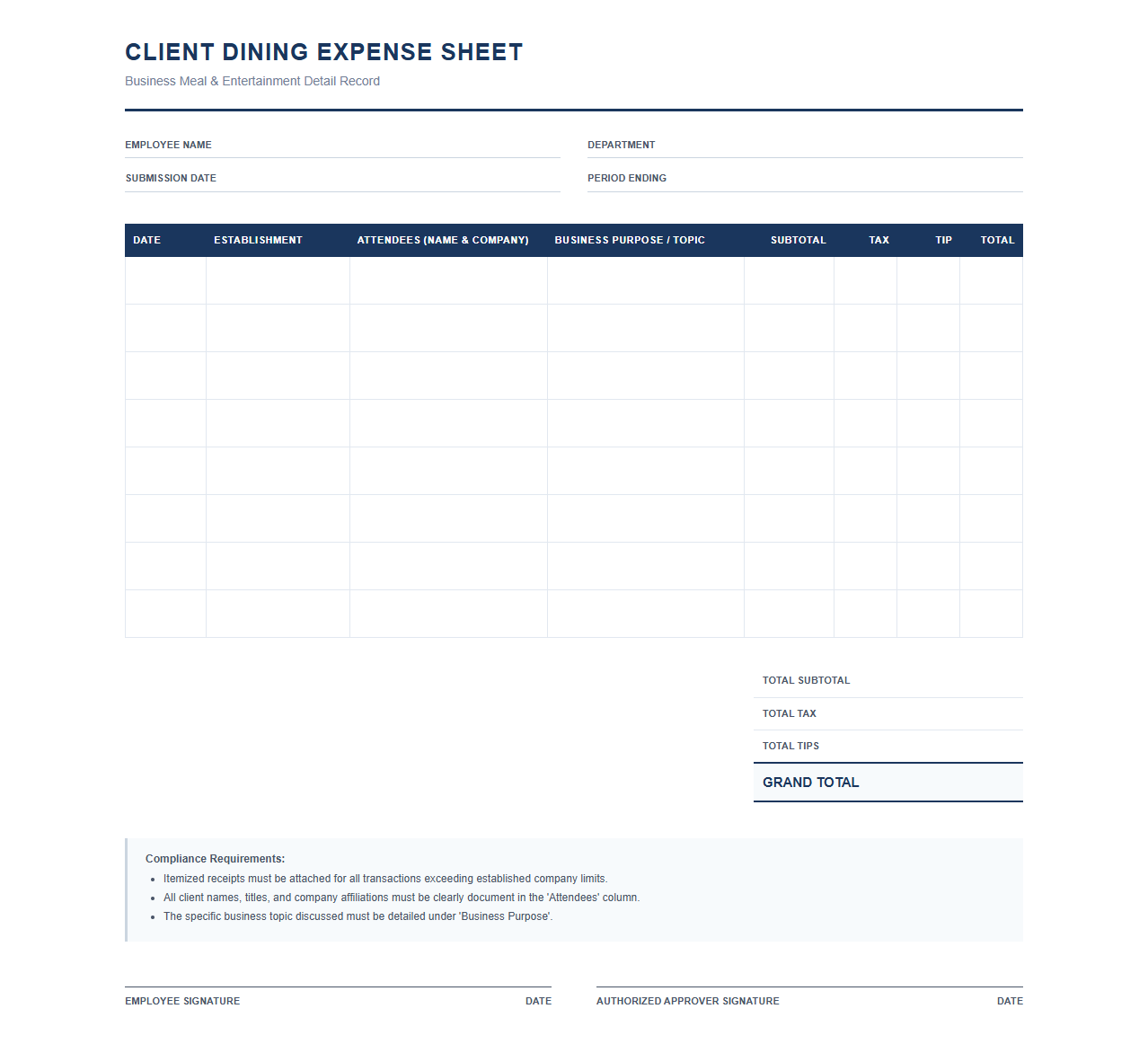 Download: .PDF
Client Meeting Meal Reimbursement Template
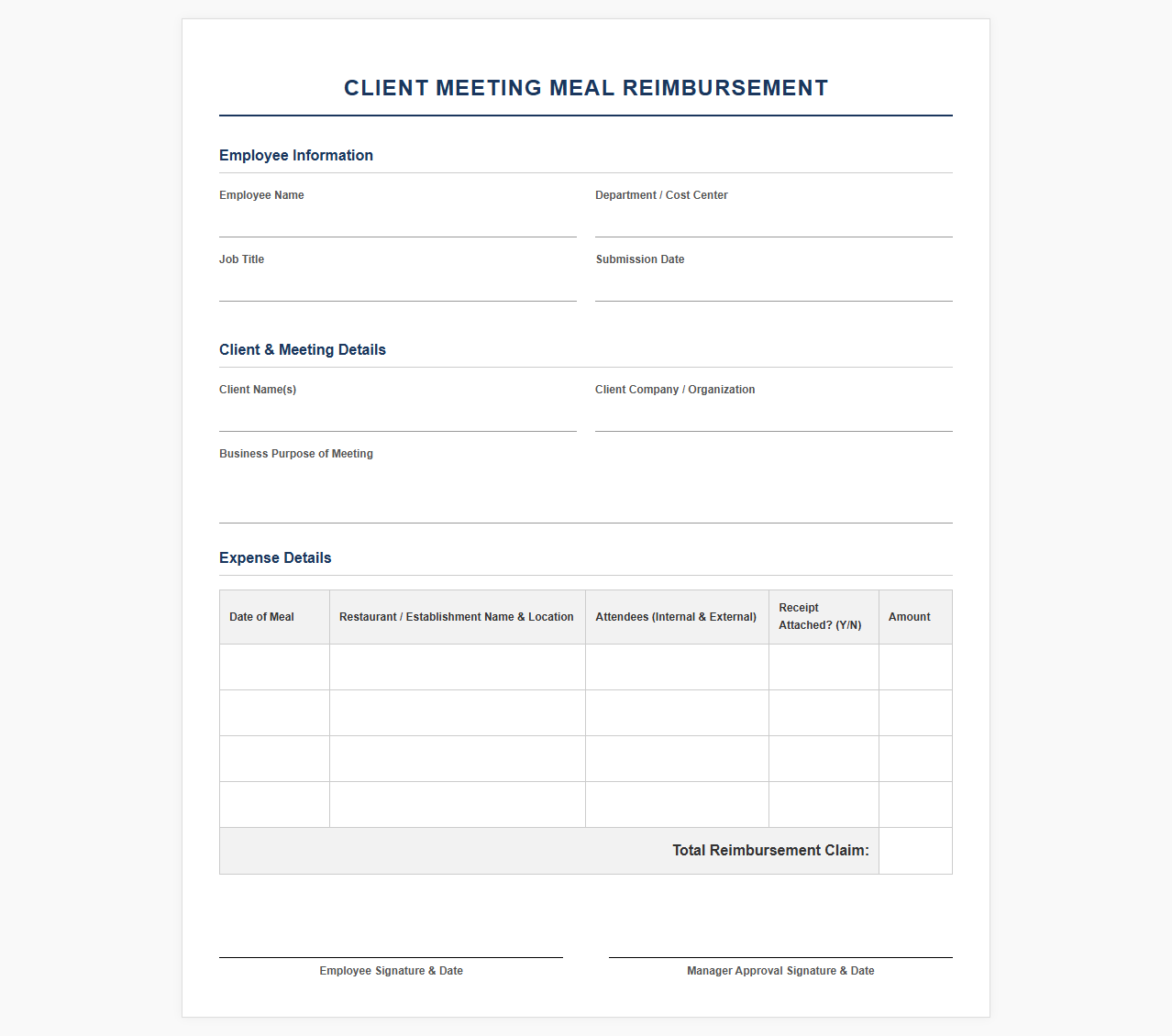 Download: .PDF
Business Meal and Entertainment Claim Form
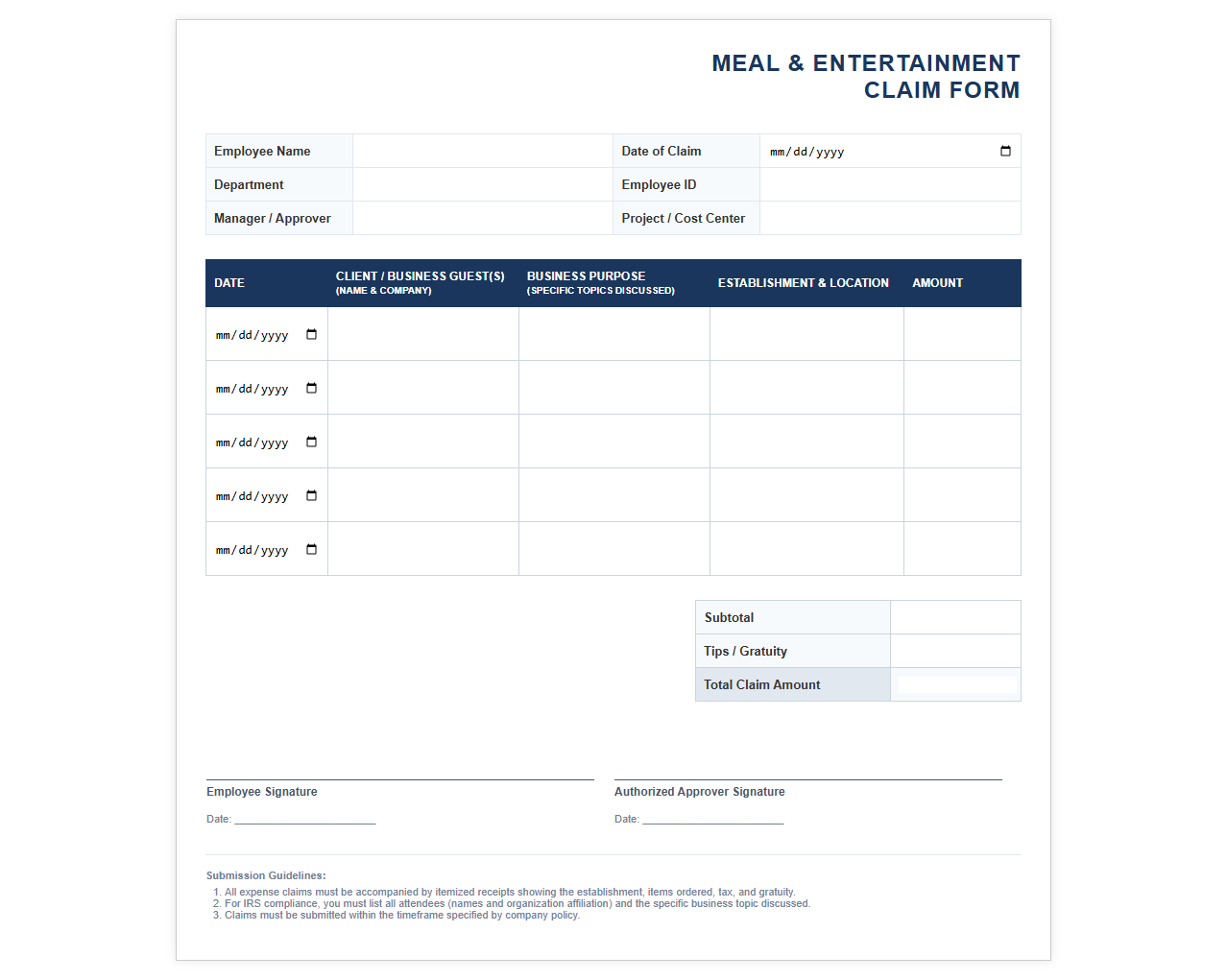 Download: .PDF
Client Hospitality Dining Expense Spreadsheet
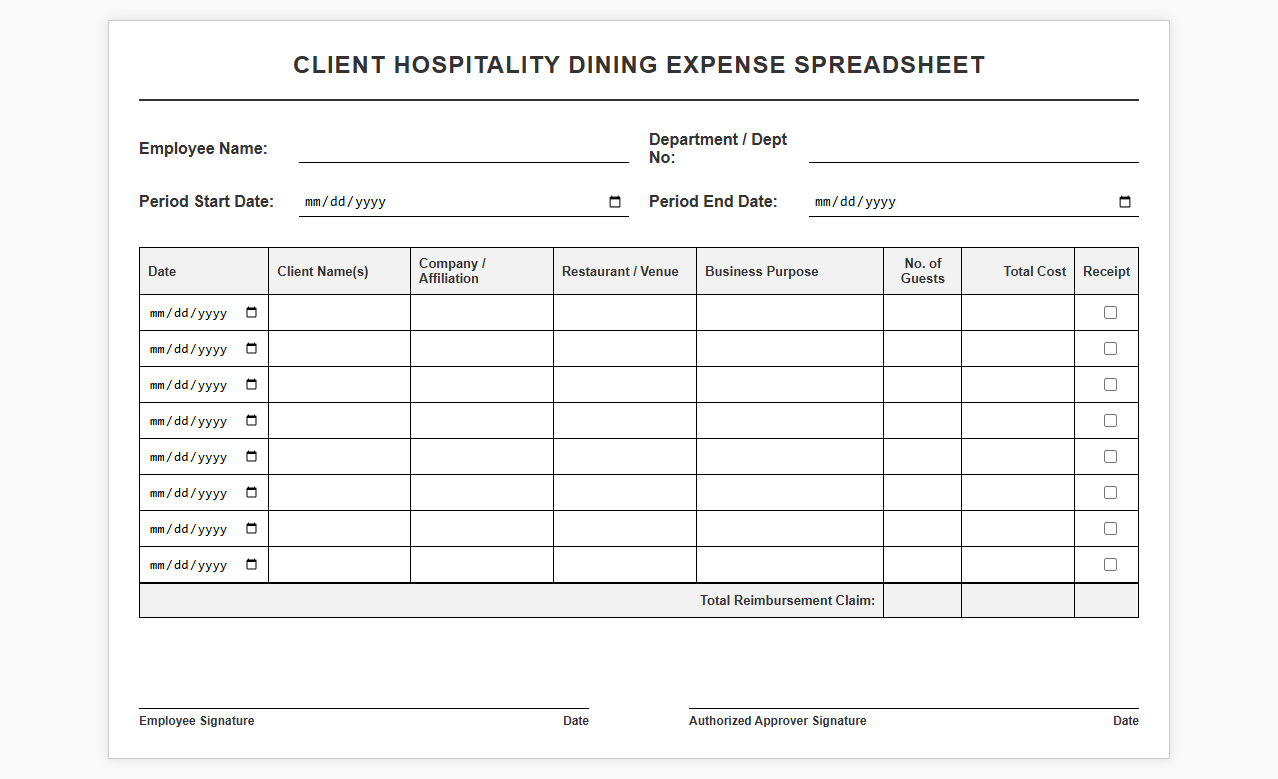 Download: .PDF
Understanding the Business Meal Deduction Trap
Navigating the labyrinth of IRS tax codes can feel like walking through a financial minefield, especially when it comes to write-offs. The business meal deduction is one of the most heavily scrutinized areas during an audit, yet many companies treat it as an afterthought. Relying on manual spreadsheets and faded paper slips is a recipe for disaster.
When employees haphazardly log food expenses without context, they expose the organization to significant financial risk. The IRS requires strict substantiation for every dollar claimed. Without a standardized process, manual tracking inevitably leads to costly auditing errors, missed deductions, and potential penalties that could have easily been avoided.
The Most Common Meal Deduction Mistakes
Without clear guidelines, employees and accountants alike frequently miscategorize dining expenses. These errors can trigger red flags during tax season. Here are the most prevalent mistakes businesses make:
- Misclassifying Deductions: Confusing standard fifty percent client entertainment meals with one hundred percent deductible office events.
- Incomplete Receipt Data: Failing to document who attended the meal and the specific business topics discussed.
- Combining Personal and Business Travel: Improperly allocating meal costs during trips that serve dual purposes.
- Vague Descriptions: Logging expenses under generic terms without providing the mandatory context required by tax authorities.
Why Structured Expense Templates Are the Solution
Standardized templates remove the guesswork from expense tracking. By establishing a rigid framework for reporting, businesses ensure that every entry meets IRS compliance standards before the money is even spent. This proactive approach streamlines the approval process, saving valuable time for both managers and accounting teams.
Implementing structured templates transforms tax compliance from a year-end panic into a seamless, automated daily habit.
Key Fields Your Meal Expense Template Must Include
To survive an audit, your documentation must tell a complete story. Capturing specific data points at the time of the transaction is vital.
- Date and Time of the Meal
- The exact date the expense occurred, verifying it matches the merchant receipt.
- Total Cost
- The full monetary amount, including tax and tip, broken down by individual spend.
- Business Purpose
- A detailed description of the business discussion, deal negotiated, or professional benefit sought.
- Attendees and Relationships
- The names, titles, and company affiliations of everyone present at the table to prove the business connection.
Step-by-Step: Implementing Templates in Your Workflow
Transitioning to a structured tracking system requires a methodical approach to ensure widespread adoption across your organization.
- Design a simple, user-friendly template that highlights the mandatory IRS fields.
- Integrate the digital template directly into your existing accounting and expense management software.
- Conduct a brief training session for all employees to explain the importance of accurate data entry.
- Establish a strict review process where managers reject incomplete expense submissions.
- Audit your internal records quarterly to identify and correct compliance bottlenecks.
Digital Receipt Storage and Record-Keeping Best Practices
Paper receipts fade, tear, and easily get lost. Transitioning to a secure digital storage system is critical for long-term protection. The IRS accepts digital images of receipts, provided they are highly legible and systematically organized.
It is crucial to understand that tax authorities recommend keeping these records for at least three years from the date you file your original return. For maximum safety, many financial experts advise holding onto files for up to seven years to protect against potential future audits.
Bulletproofing Your Next Tax Filing
Establishing structured meal tracking transforms a tedious administrative chore into a powerful shield against tax penalties. By enforcing consistency and capturing the necessary details, your business can claim its rightful deductions with absolute confidence.
Do not wait for tax season to fix your accounting workflow. Start optimizing your compliance strategy today by downloading our compliance-focused expense templates to protect your bottom line.

Leave a comment