

For corporate tax teams and financial controllers, reconciling disparate invoice formats from global vendors to claim lucrative tax credits is a persistent administrative nightmare. As tax authorities worldwide intensify audit scrutiny, inconsistent documentation increasingly leads to rejected claims and costly compliance penalties.
Transitioning to a standardized invoicing framework grants organizations complete audit-readiness and secures entitled incentives; however, this strategy stipulates a disciplined restructuring of procurement data workflows. Ensuring that every transaction document contains concrete elements-such as precise line-item tax classifications and verified vendor registration numbers-serves as indisputable proof during regulatory reviews.
In this article, we will examine the critical components of compliant invoice standardization, outline step-by-step integration strategies for accounts payable departments, and share industry best practices to permanently safeguard your organization's tax credit eligibility.
Research and Development Tax Credit Invoice Template
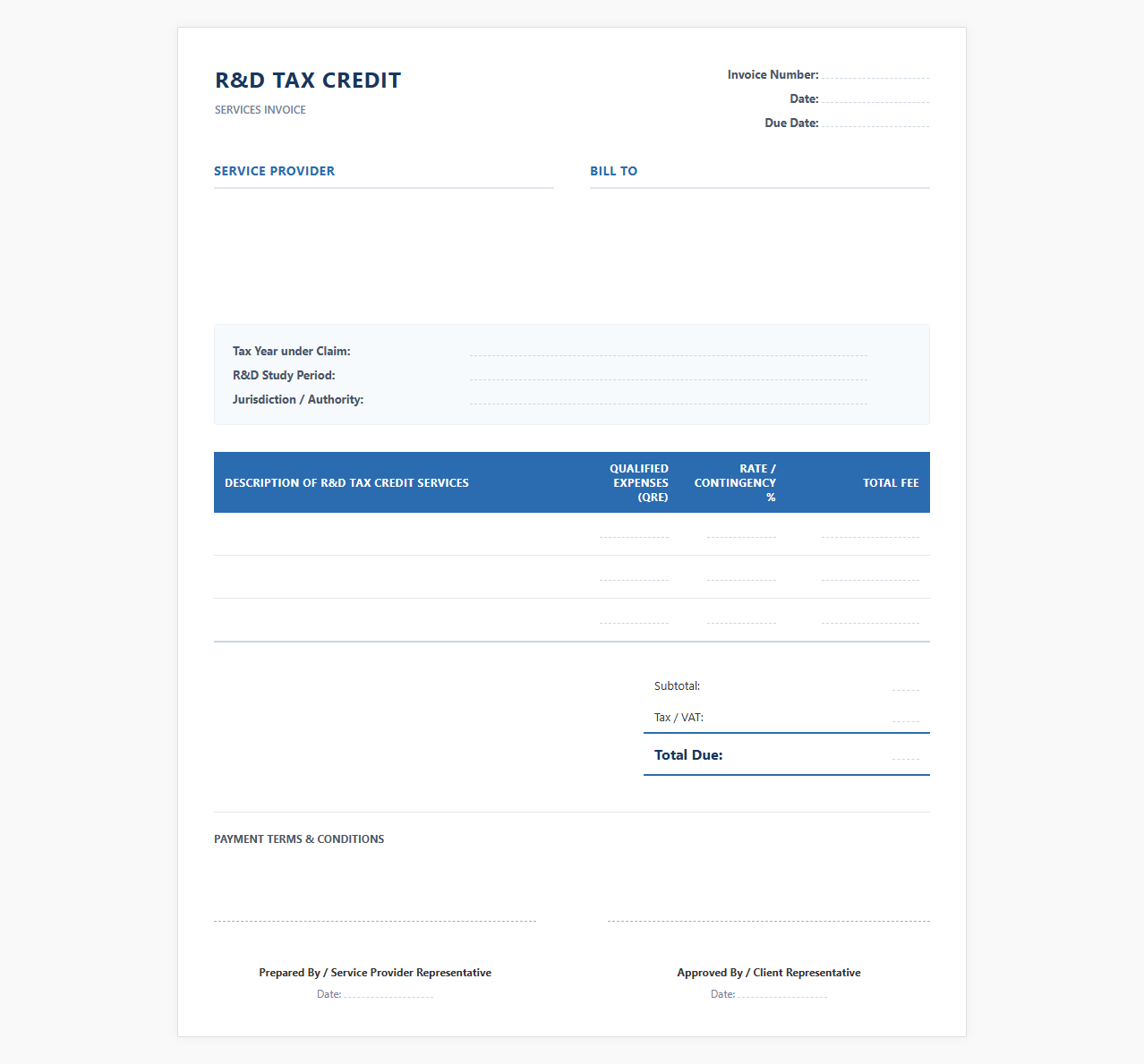 Download: .PDF
Investment Tax Credit Billing Statement Template
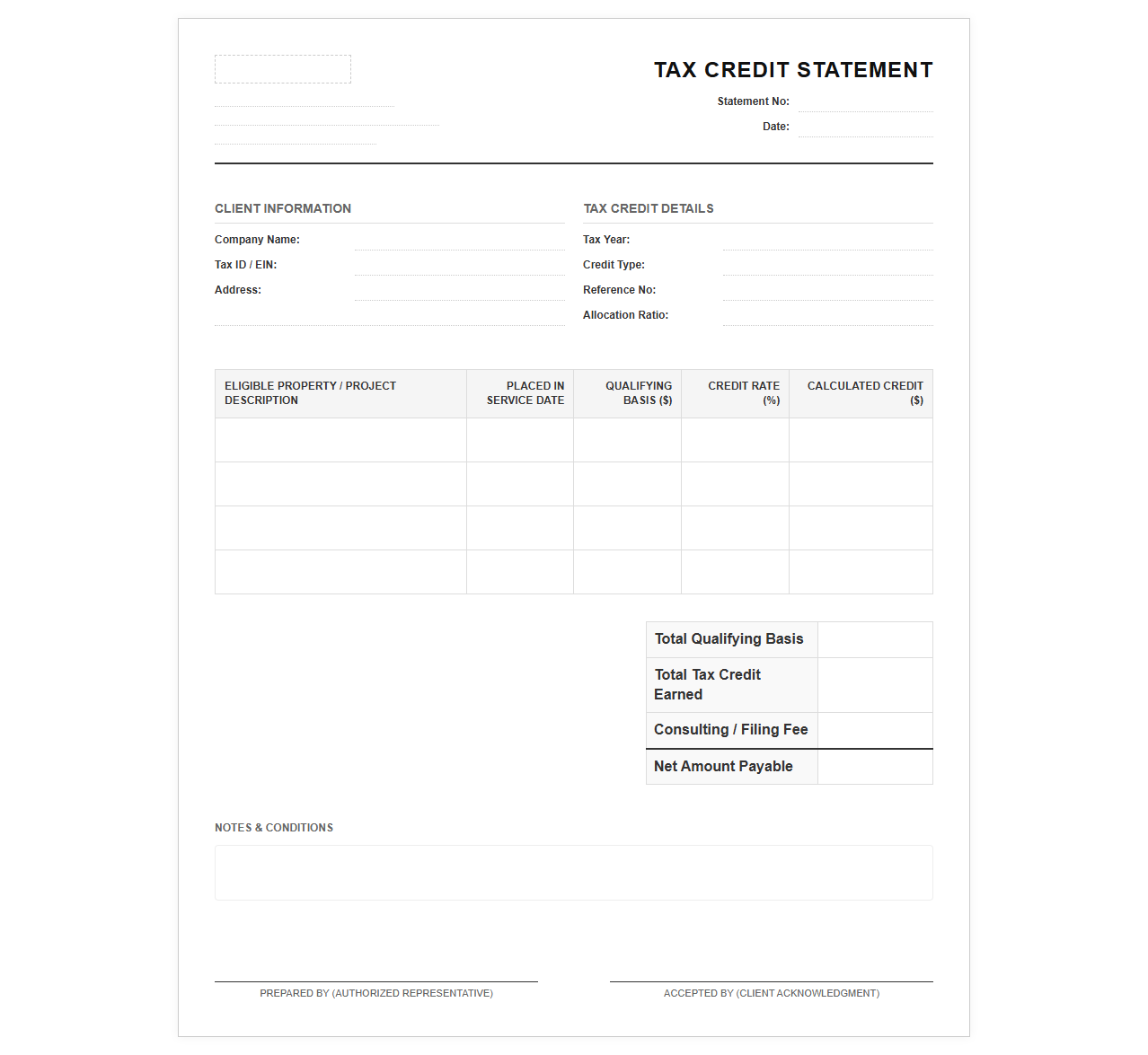 Download: .PDF
Clean Energy Tax Credit Invoice Format
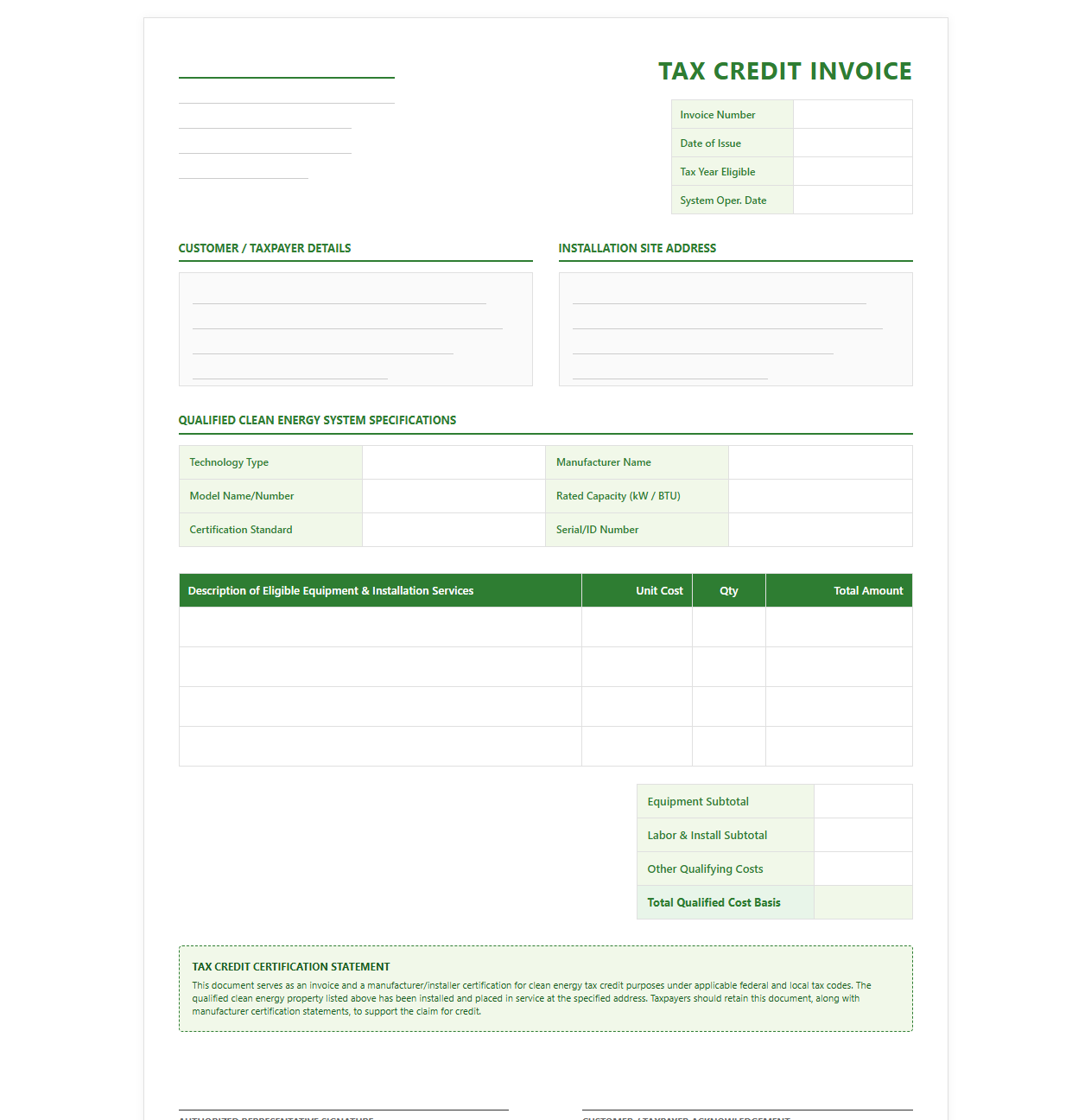 Download: .PDF
Work Opportunity Tax Credit Eligible Invoice Document
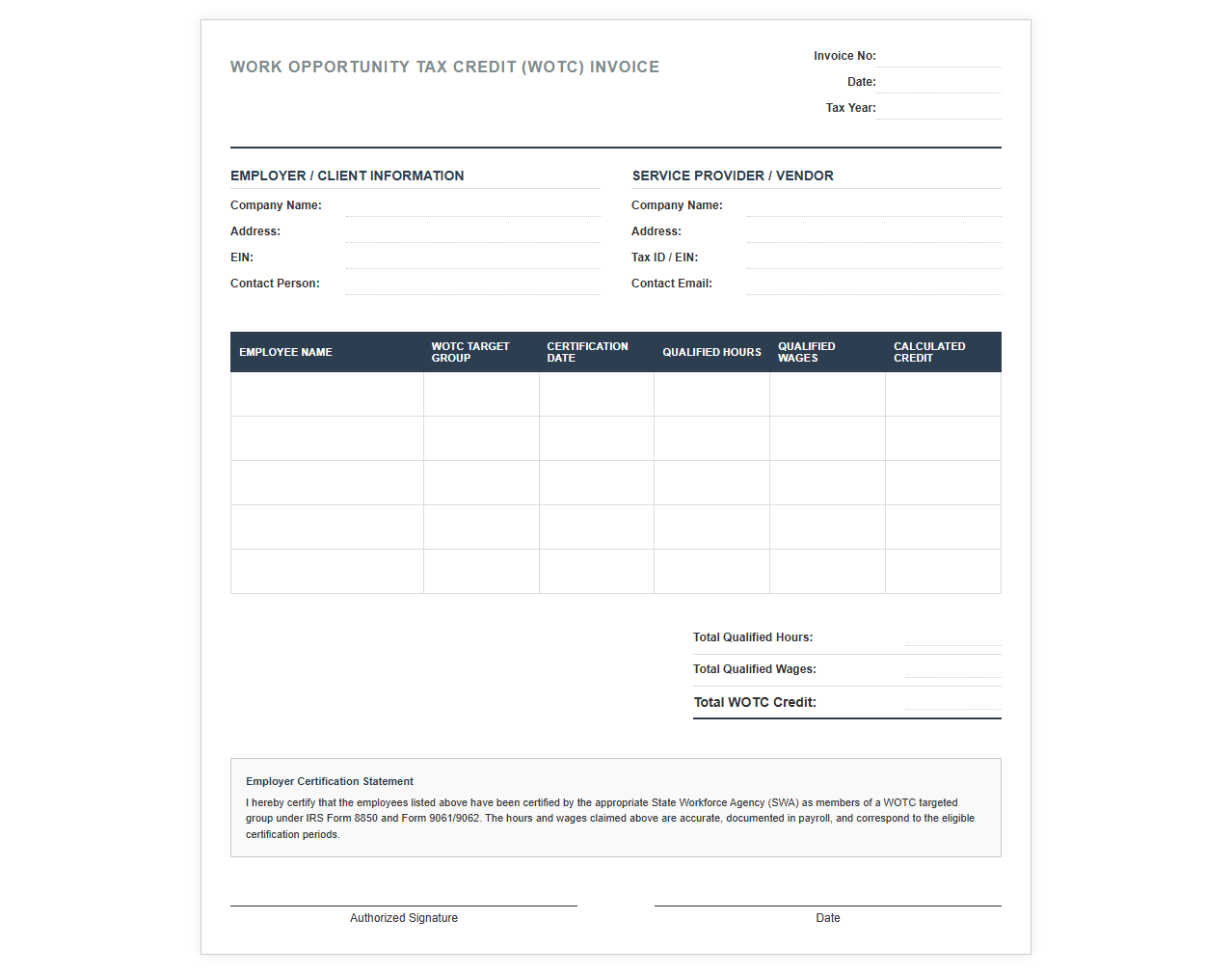 Download: .PDF
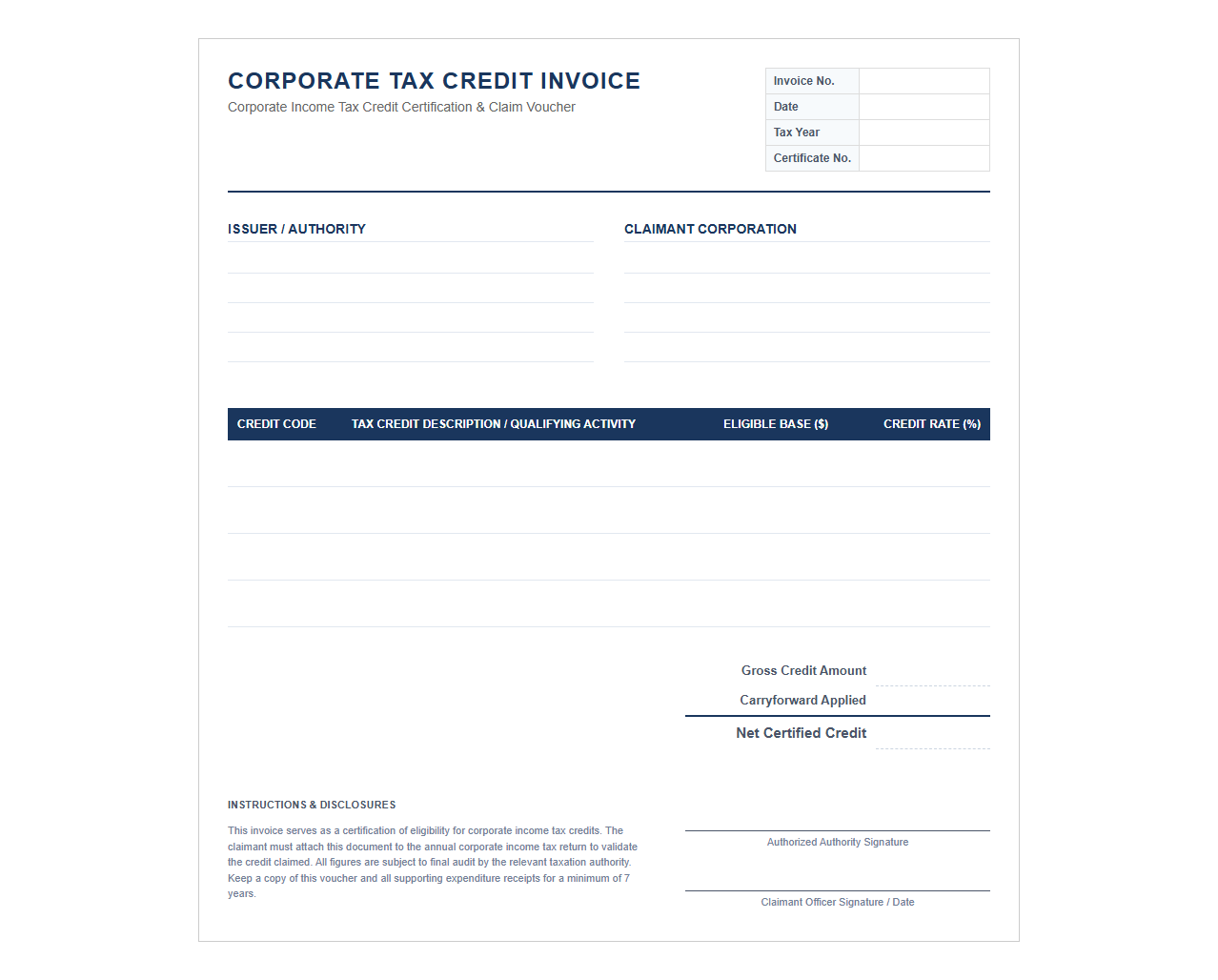
Corporate Income Tax Credit Invoice Template
 Download: .PDF
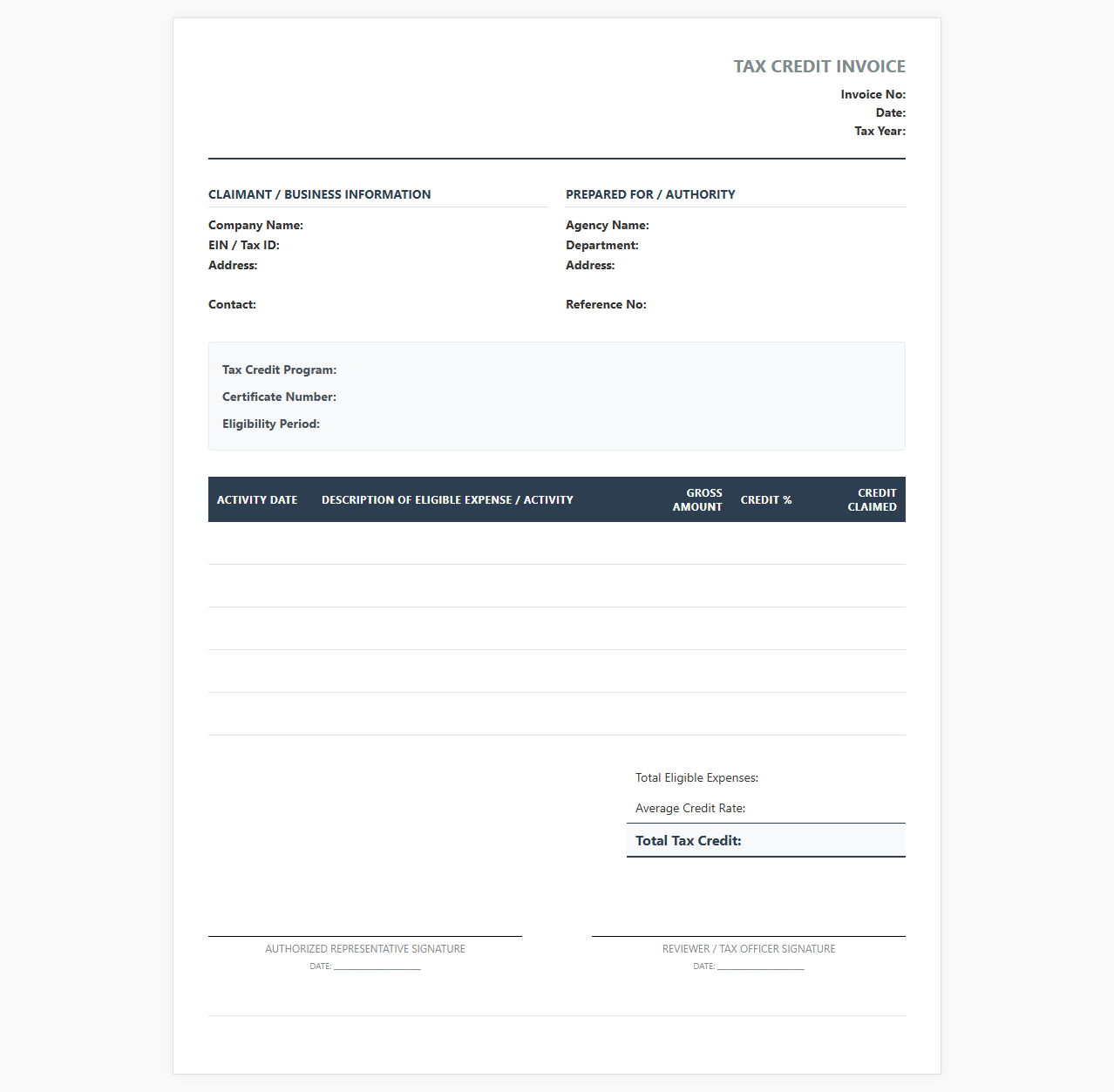
Small Business Tax Credit Invoice Sheet
 Download: .PDF
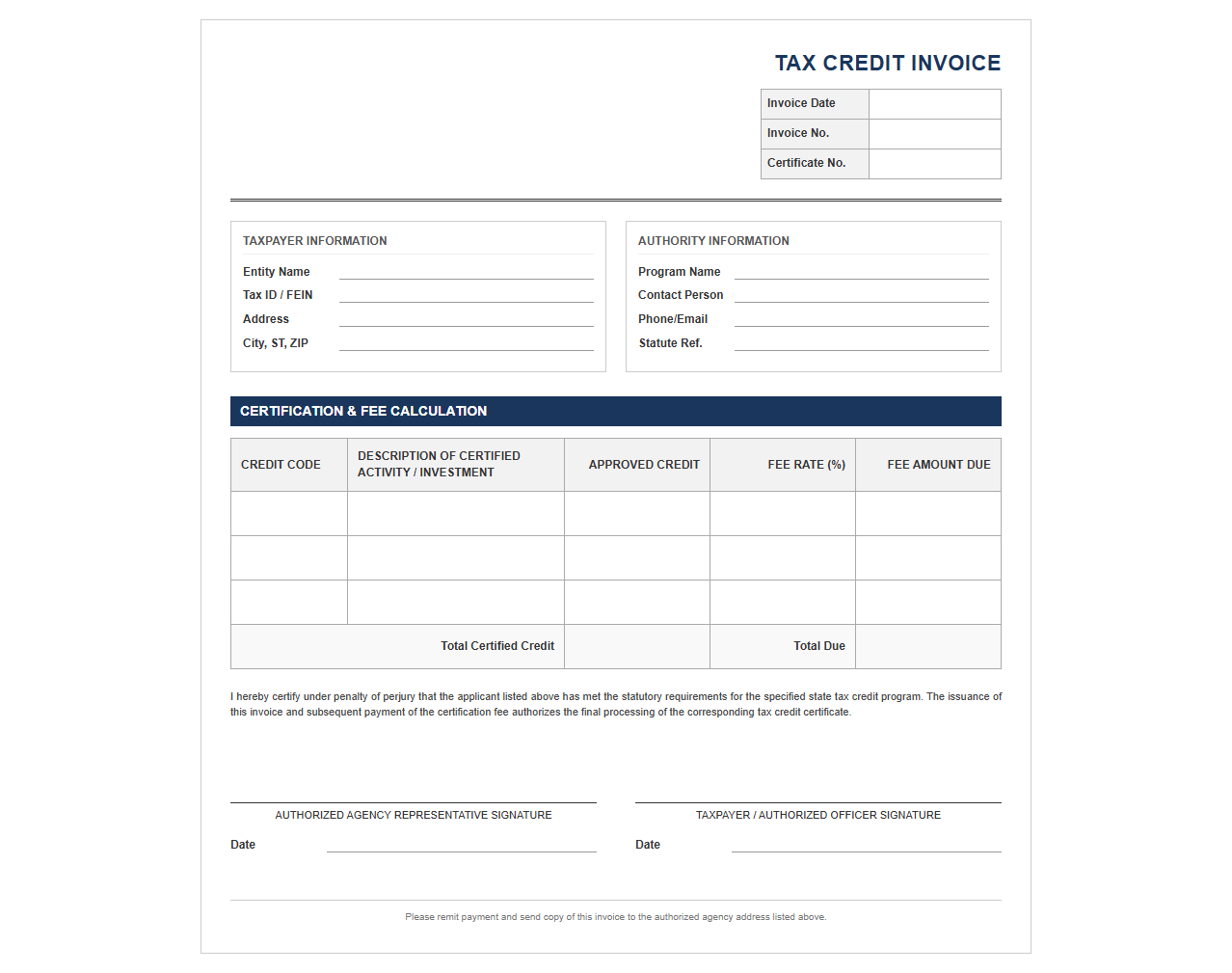
State Tax Credit Certification Invoice Form
 Download: .PDF
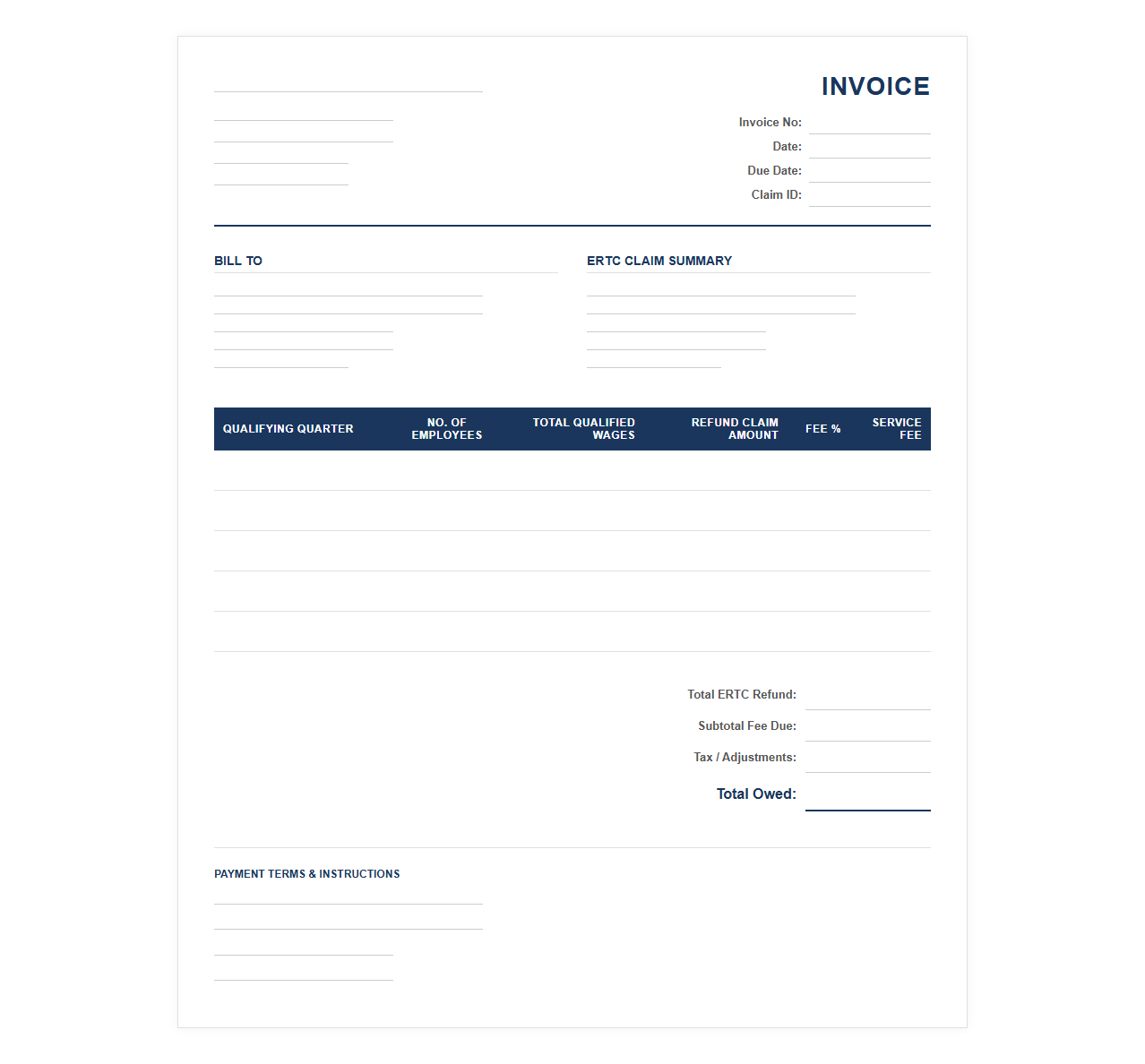
Employee Retention Tax Credit Claim Invoice Template
 Download: .PDF
The Critical Link Between Invoice Standardization and Tax Compliance
In an increasingly complex global regulatory landscape, the standardization of invoice formats has transitioned from a backend operational preference to a core strategic necessity. For modern enterprises, maintaining fragmented billing templates poses severe financial threats. Failing to align billing records with standardized requirements can lead to the immediate rejection of input tax credits, resulting in unnecessary cash flow strains and inflated tax liabilities.
Furthermore, inconsistent documentation serves as a primary trigger for corporate audits. Implementing a rigorous invoice standardization protocol mitigates compliance risks such as transactional discrepancies, unrecognized VAT/GST deductions, and regulatory penalties. By establishing a uniform structure for all financial transactions, organizations secure an authoritative audit posture while streamlining their reporting practices.
Essential Data Fields for Tax-Compliant Invoices
To qualify for tax deductions and withstand regulatory scrutiny, invoices must contain precise, structured data points. Tax authorities require specific fields to verify the legitimacy of transactions before granting tax credits. Missing or incorrectly formatted information can invalidate an entire transaction in the eyes of tax inspectors.
- Unique Invoice Identifier: A sequential, non-repeating numbering system to prevent duplicate claims.
- Seller and Buyer Tax Registration Numbers: Explicit inclusion of valid VAT, GST, or local Tax ID numbers for both parties.
- Detailed Line-Item Breakdowns: Individual descriptions of goods or services, unit prices, quantities, and applicable tax rates per item.
- Explicit Currency Specifications: The clear definition of the currency code used, alongside exchange rates if a foreign currency is applied.
- Tax Breakdown by Rate: Clear categorization of taxable amounts, tax rates applied, and total tax payable per jurisdiction.
Adopting Universal Digital Invoice Standards
The reliance on proprietary or legacy billing formats frequently results in processing delays and data loss. To resolve this, modern enterprises are migrating to universal electronic invoicing standards that guarantee interoperability across diverse billing platforms and government clearinghouses. These standards rely on highly structured, machine-readable syntax.
Utilizing formats like XML allows enterprise resource planning (ERP) systems to parse and validate incoming transaction data instantly without human intervention. Similarly, for archiving and human review, the secure PDF/A format ensures long-term preservation of the visual layout. Frameworks such as the Peppol e-delivery network provide a standardized routing infrastructure, enabling businesses to exchange electronic invoices securely across international borders, eliminating format fragmentation entirely.
Implementing Automated Validation Workflows
Manual verification of incoming and outgoing invoices is highly susceptible to human error, which directly translates to tax reporting discrepancies. To eliminate these vulnerabilities, organizations deploy automated validation systems that evaluate invoice data in real-time. These workflows intercept billing files before they are posted to the ledger, verifying the mathematical accuracy of tax calculations and cross-referencing registration numbers against public databases.
Seamless Integration with Government Tax Portals
Global tax authorities are increasingly shifting toward Continuous Transaction Control (CTC) models, which require immediate reporting of transaction details. Standardized invoices serve as the foundational building block for this real-time reporting mechanism. By utilizing standardized schemas, ERP systems can communicate directly with government tax portals via secure Application Programming Interfaces (APIs).
"The future of global tax compliance lies in the seamless, real-time exchange of standardized transactional data between businesses and revenue authorities, making manual, retrospective tax returns obsolete."
This automated interaction ensures that every transaction is validated, cleared, and registered by the tax authority concurrently with the delivery of the invoice to the customer, dramatically lowering the margin for reporting errors.
Long-Term Archiving and Audit Trail Integrity
The duty of tax compliance extends far beyond the point of transaction clearance. Enterprises must guarantee that historical financial records remain accessible, legible, and completely untampered with over time. Standardized digital archiving methods utilize cryptographic signatures and secure metadata to preserve the absolute integrity of billing data throughout its regulatory lifecycle.
During an audit, tax inspectors require swift access to transaction records, and any inability to produce legible invoices can result in the retro-active denial of tax credits. Depending on the jurisdiction, organizations must store these records in a secure environment for a legally mandated period of at least 7 to 10 years, depending on local statutory requirements.
Steps to Execute an Invoice Standardization Roadmap
Transitioning to a fully compliant, standardized billing infrastructure requires a structured approach. Organizations should systematically evaluate their existing legacy systems, align their processes with regional compliance mandates, and phase out outdated manual practices.
- Audit Current Billing Systems: Identify all channels through which invoices are generated, received, and processed within the organization.
- Map Data Fields to Regulatory Requirements: Align existing internal invoice templates with the mandatory tax fields required by local and international tax authorities.
- Select an E-Invoicing Standard: Choose a universal format, such as XML, and implement network integrations like Peppol to support automated exchanges.
- Integrate Automated Validation Engines: Deploy software that automatically checks tax rates, math, and registration numbers prior to submission.
- Establish Secure Digital Archiving: Implement a long-term storage solution that features cryptographic hashing, digital signatures, and metadata indexing for audit readiness.

Leave a comment