

Managing cash flow on complex, long-term projects is a constant struggle for service providers, often plagued by delayed payments, scope creep, and client disputes over incomplete work. Before addressing these cash flow bottlenecks, however, it is essential to analyze how outdated, lump-sum billing methods fail to reflect modern, incremental project workflows. Transitioning to structured progress billing grants your organization immediate financial predictability and fosters stronger client relationships by aligning payment schedules directly with tangible project achievements.
Please note: while standardized templates streamline the invoicing process, their administrative success depends entirely on pre-established, legally binding contract milestones.
For example, a development agency might trigger a 25% payment upon completing the wireframing phase, while a construction firm bills specifically after pouring a foundation. In this article, we will examine how to construct objective milestone billing schedules, explore best practices to minimize payment friction, and provide downloadable templates to optimize your invoicing workflow.
Progress Billing Invoice Template
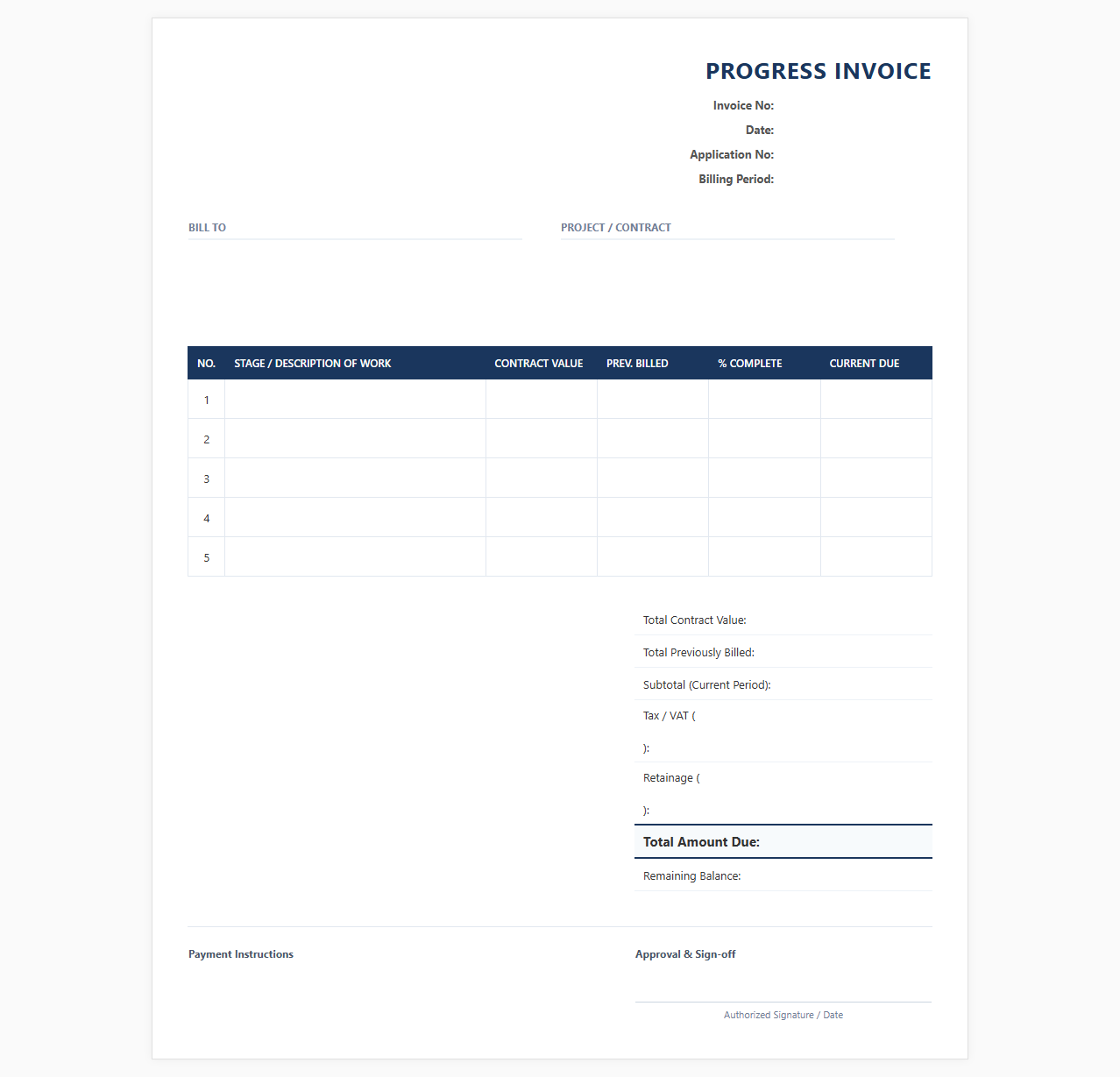 Download: .PDF
Milestone Payment Invoice Template
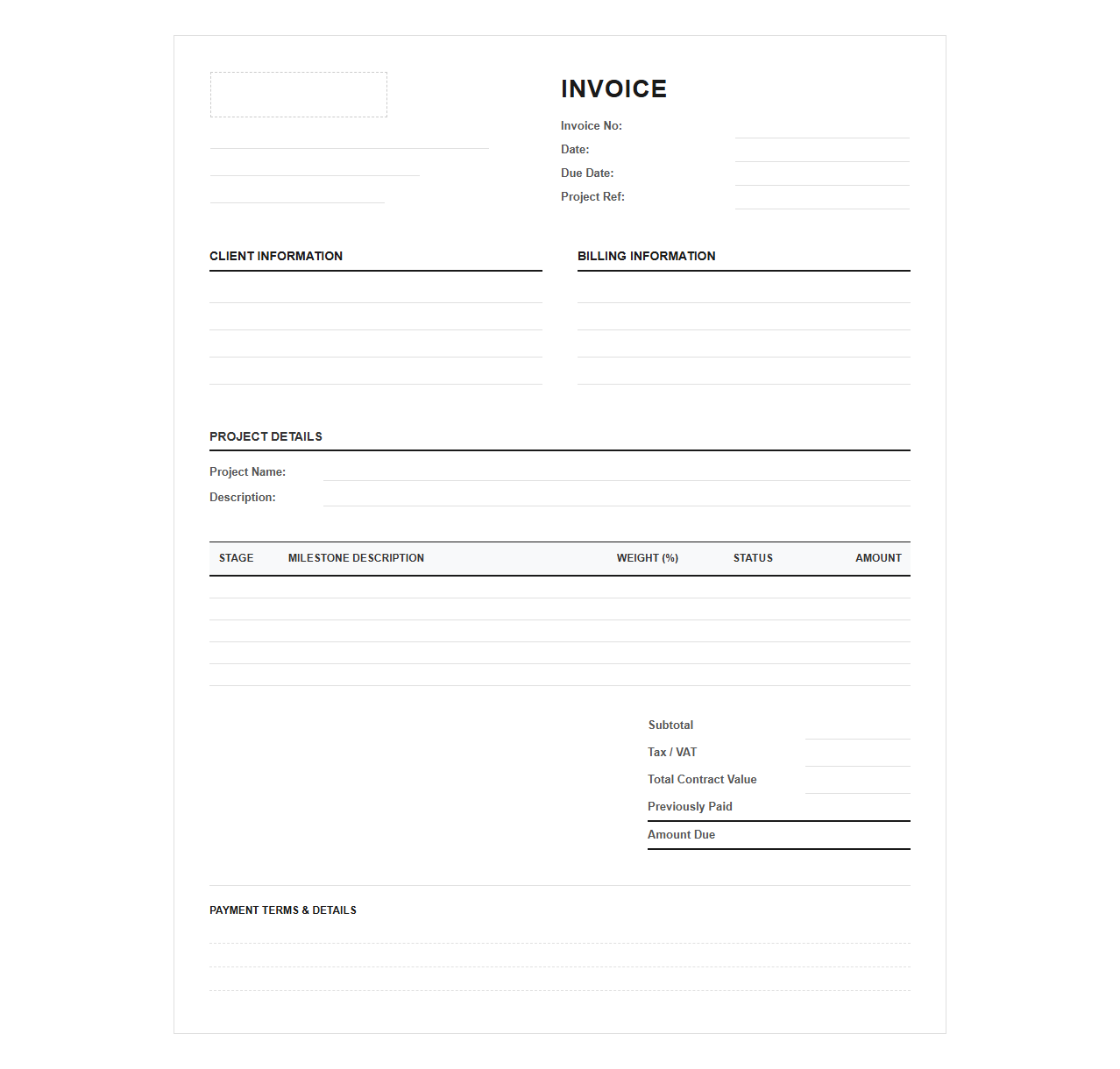 Download: .PDF
Phased Project Invoice Template
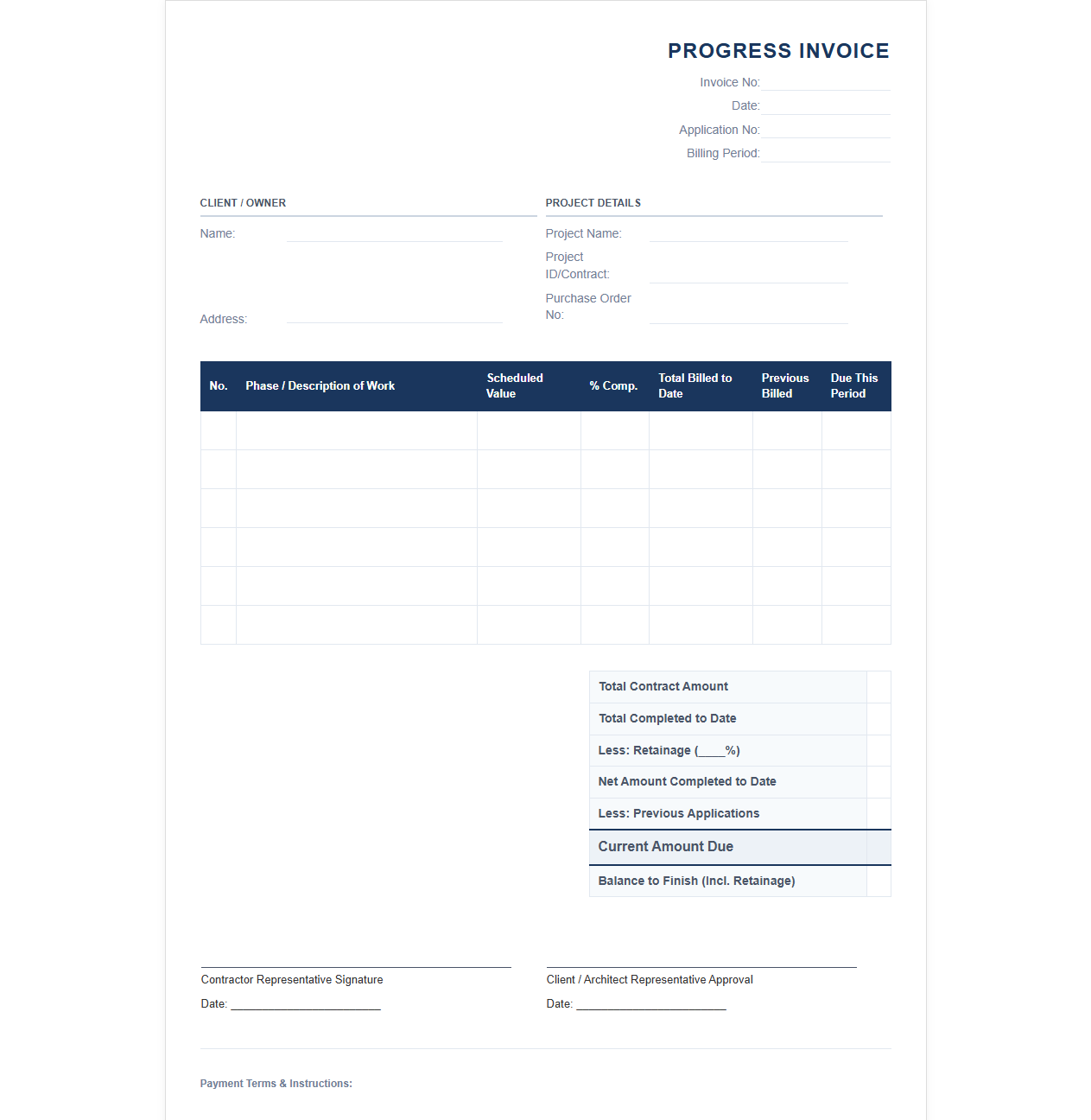 Download: .PDF
Construction Stage Payment Invoice Template
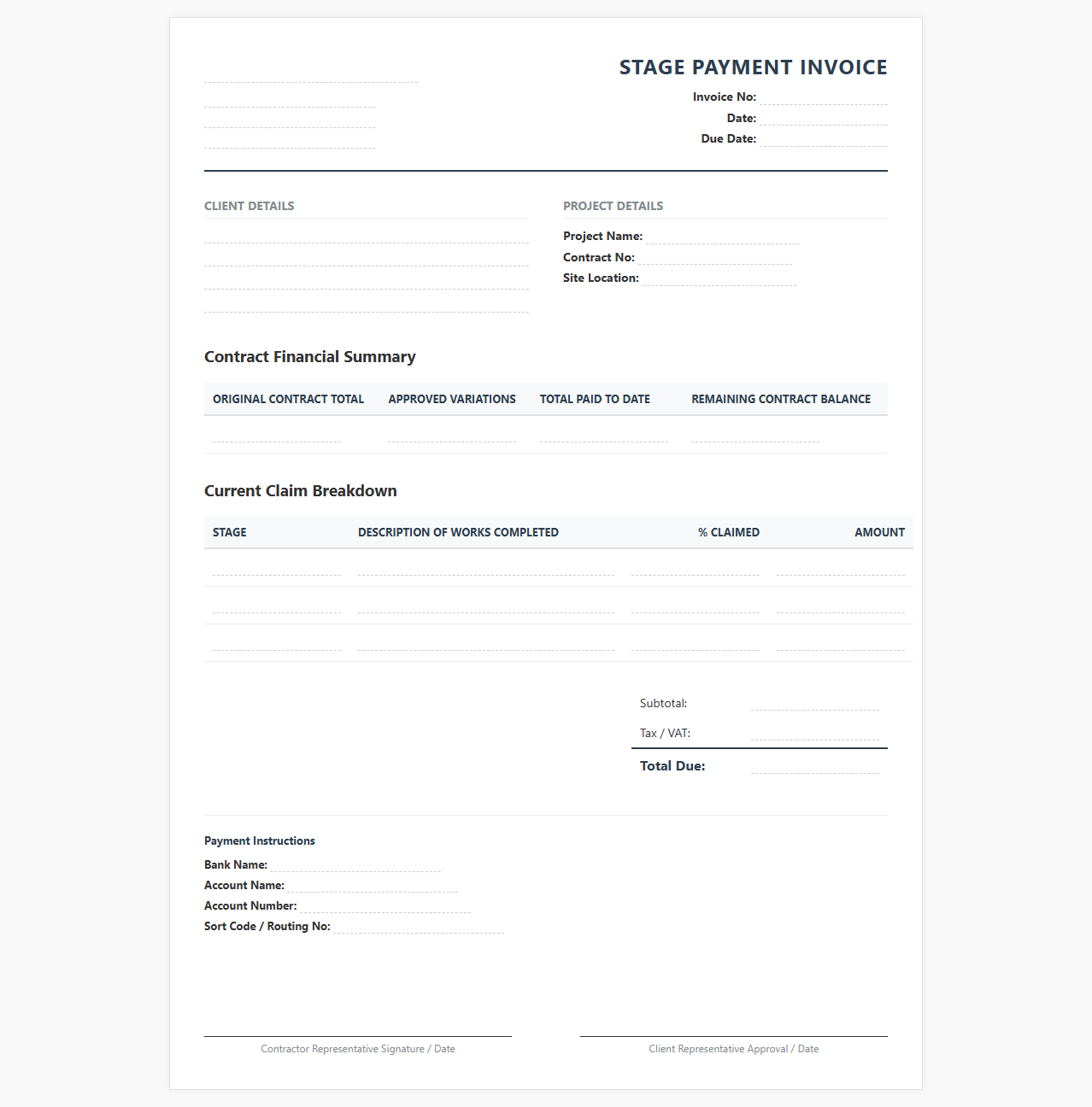 Download: .PDF
Installment Billing Invoice Template
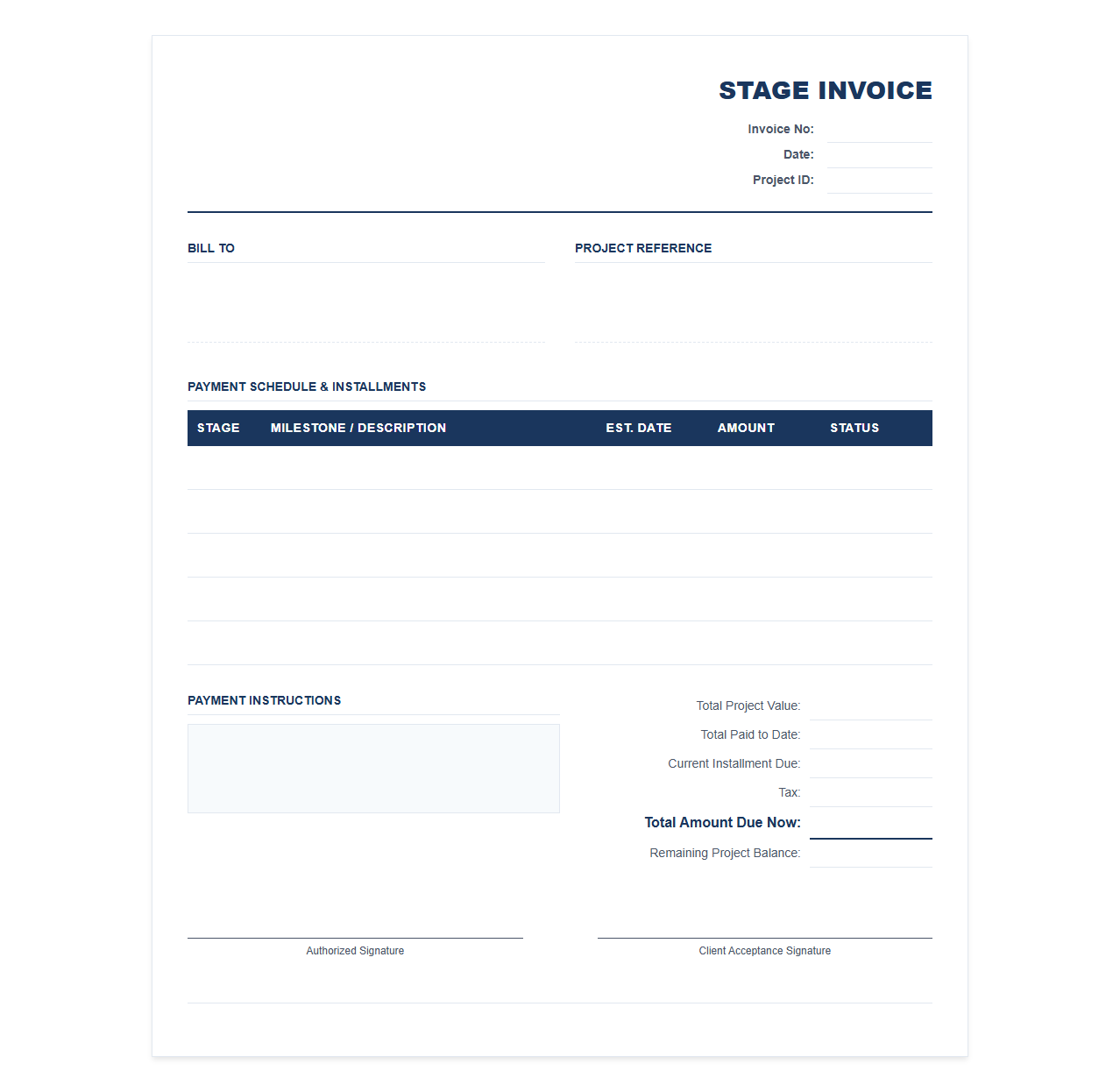 Download: .PDF
Multi-Stage Project Invoice Template
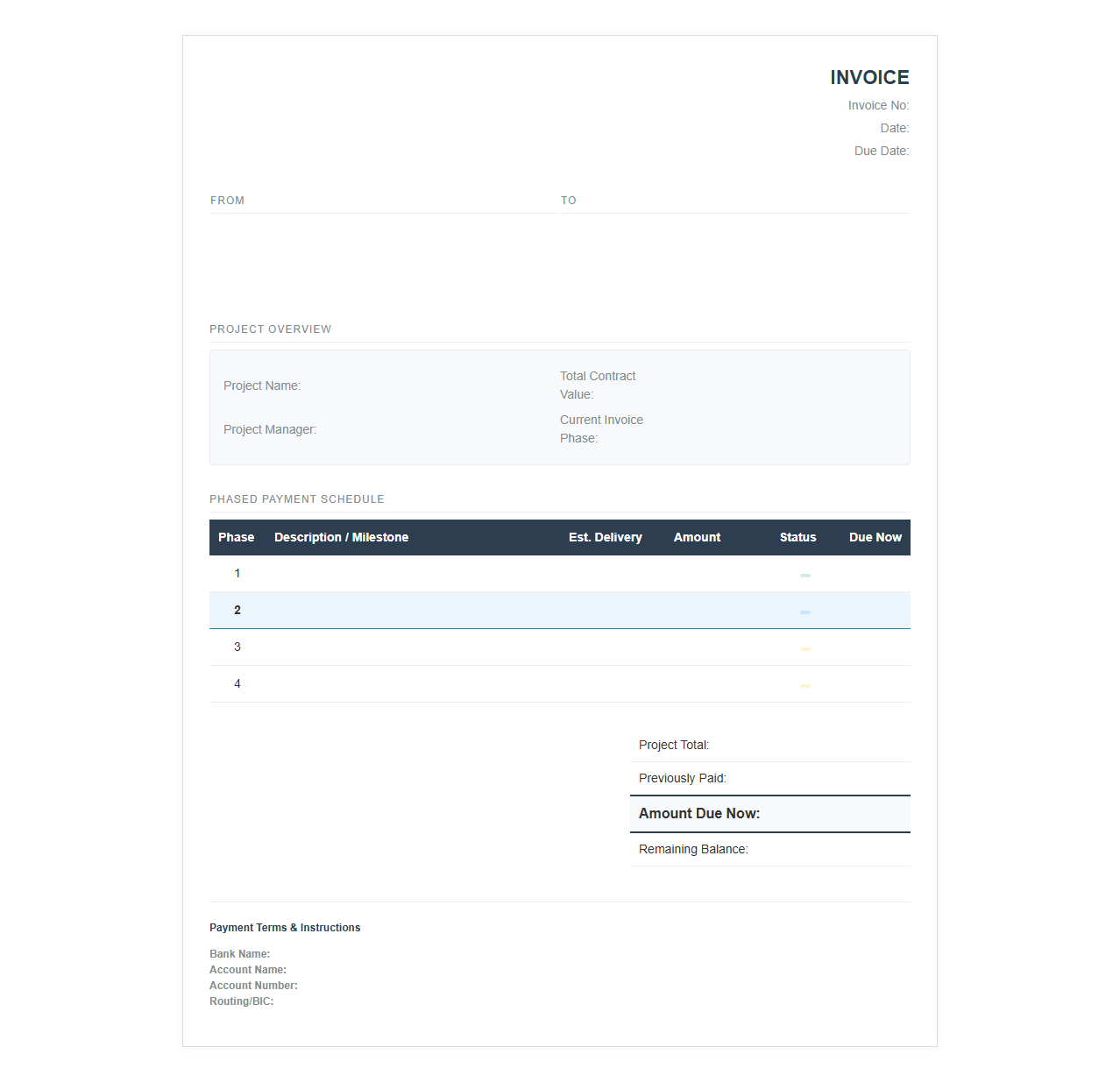 Download: .PDF
Segmented Contract Billing Invoice Template
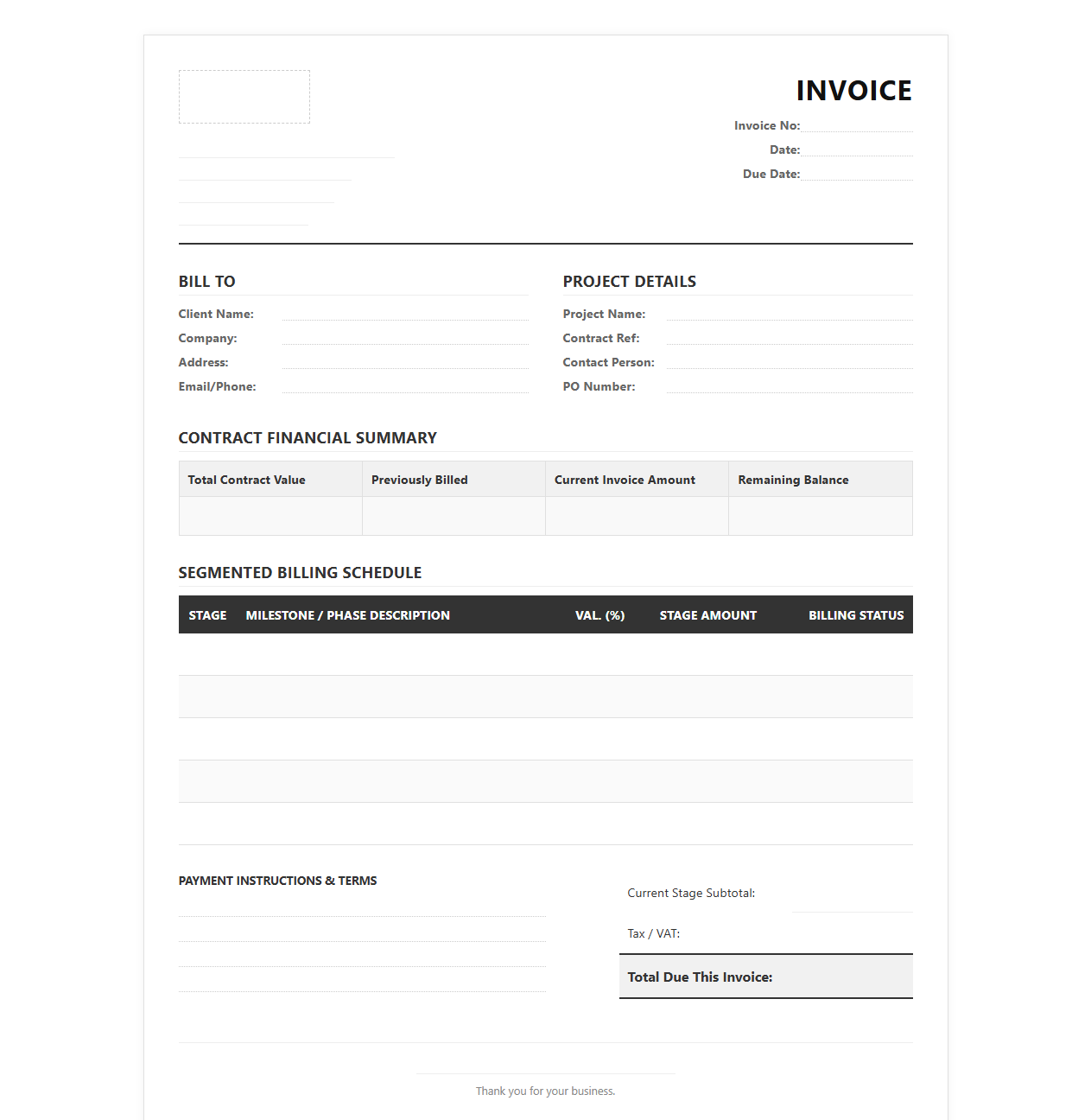 Download: .PDF
Step-by-Step Progress Invoice Template
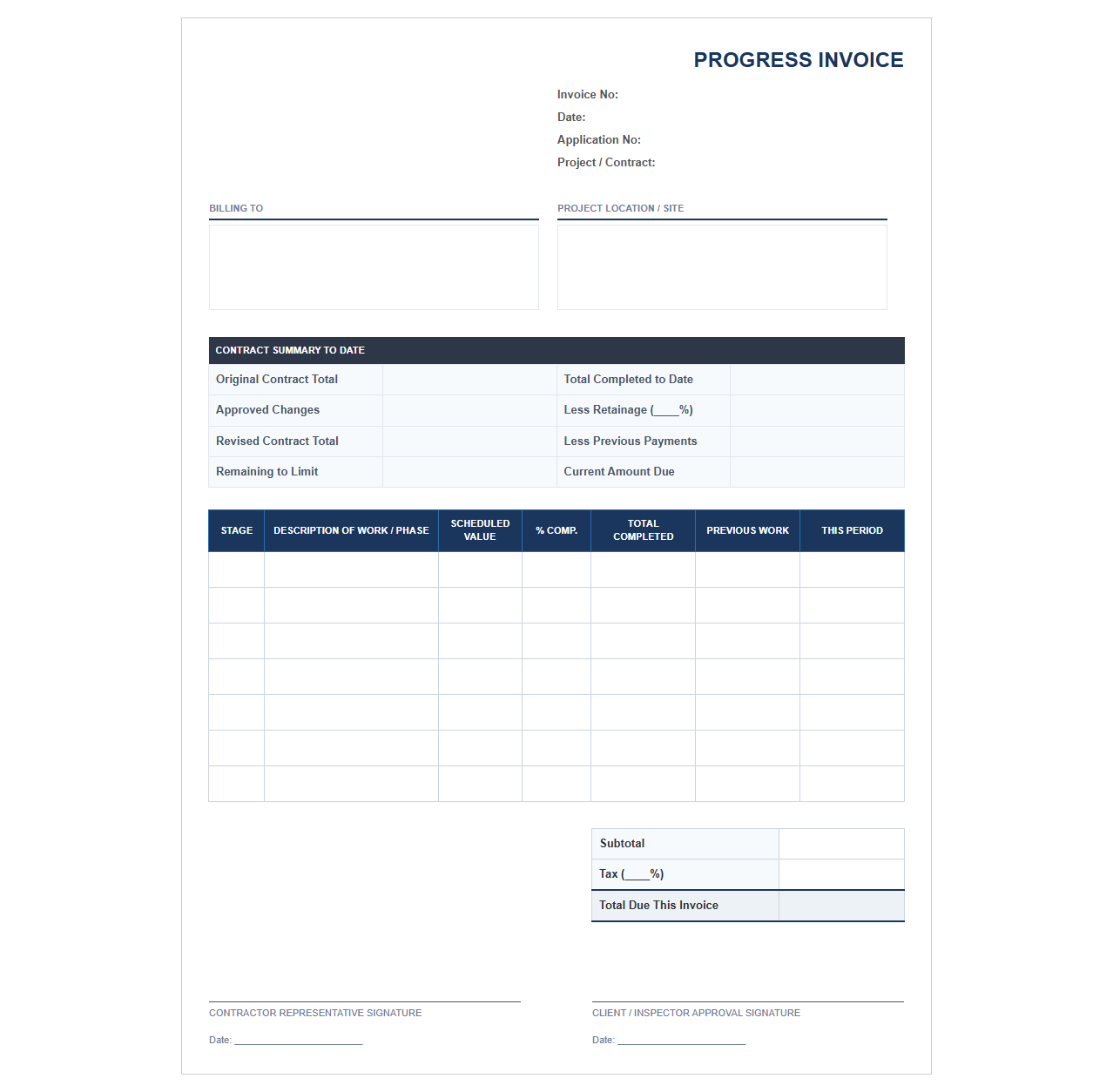 Download: .PDF
Introduction: The Complexity of Progress Billing in Project Management
Managing the financial health of long-term projects is one of the most demanding aspects of project management. Standard invoicing models often fail when projects span several months or years, leading to severe cash flow bottlenecks and fractured client communication. When clients are left in the dark about how their money is being spent, or when contractors run out of working capital mid-cycle, the entire project faces existential risk. To bridge this gap, modern project managers rely on structured progress billing templates. These tools offer a clear, predictable framework that aligns physical progress with financial transactions, ensuring that both parties remain in perfect alignment throughout the lifecycle of the initiative.
Understanding Progress Billing: Milestones vs. Stage Payments
Progress billing is an invoicing method where a contractor or service provider bills a client incrementally based on the progress of the work rather than waiting until the final delivery. This approach mitigates risk and ensures steady operational liquidity. However, to implement this successfully, organizations must choose between two primary methodologies:
- Milestone-Based Payments: These are achievement-driven payment terms. Invoicing is triggered only when a specific, predefined deliverable or event is completed and approved (e.g., completing the foundation of a building or delivering a beta version of software).
- Stage Payments: These are time or percentage-driven billing intervals. Invoices are generated at regular periods (e.g., monthly) or when the project reaches specific percentage-of-completion thresholds, regardless of whether a major physical milestone is fully finalized.
Essential Anatomy of a Structured Milestone Invoice Template
To ensure clarity and prevent payment delays, a milestone invoice template must go beyond standard billing layouts. It requires specific data fields that prove work validation.
Critical Data Fields for Milestones
A highly functional template includes the following structured elements:
Project Phase Identifier: Clearly specifies which phase of the project charter the milestone belongs to.Verification of Completion Reference: A dedicated field linking to sign-off documents, inspection reports, or client approval emails.Cumulative Billing Summary: A running ledger showing the total contract value, amount billed to date, and the remaining balance.
Key Elements of a Stage Payment Invoice Template
Stage billing requires calculations that represent the proportion of work completed during a specific timeframe. This template needs structured tables to break down complex mathematical calculations for client review.
Percentage-of-Completion Calculations
These documents must clearly display work progress, retention fees, and previous balances paid to ensure total transparency.
| Line Item Description | Contract Value | % Completed | Total Earned | Retainage (10%) | Previously Billed | Current Due |
|---|---|---|---|---|---|---|
| Phase 1: Foundation | $50,000 | 100% | $50,000 | $5,000 | $40,000 | $5,000 |
| Phase 2: Framing | $80,000 | 50% | $40,000 | $4,000 | $0 | $36,000 |
Resolving Common Billing Disputes with Structured Data
Disputes are common in long-term contracts, but structured data fields serve as a neutral truth source. By pre-defining the parameters of completion and tracking cumulative payments, both parties avoid the pitfalls of miscommunication. Scope creep is easily identified and isolated from the main contract billing, preventing the entire payment flow from stalling over minor disagreements.
Best Practices for Implementing Progress Billing Templates
Transitioning from manual invoicing to structured progress templates requires deliberate integration into your existing operational ecosystem.
- Integrate templates directly with your ERP or accounting software to pull real-time project metrics automatically.
- Establish standardized communication workflows where automated notifications alert clients when a milestone is approaching completion.
- Implement digital client approval portals directly linked to the billing software to accelerate sign-offs and trigger instant invoice generation.
Streamlining Cash Flow Through Standardized Invoicing
Adopting standardized milestone and stage payment billing templates is a fundamental shift toward operational excellence. By bringing clarity, mathematical precision, and mutual accountability to the invoicing process, organizations can maintain healthy cash reserves and foster stronger partner relationships. The financial stability of your next major project depends on the billing structures you establish today.

Leave a comment