

Managing cash flow on multi-month projects is a constant source of friction for contractors and project managers, who often face severe capital deficits while waiting for final project delivery. To bridge this financial gap, businesses must transition from traditional invoicing to a structured progress billing framework.
Embracing Percentage of Completion (PoC) invoice templates grants organizations immediate cash flow predictability, ensuring that incoming revenue aligns precisely with active project milestones. However, this method requires a disciplined approach, necessitating highly accurate cost-to-complete estimations to prevent over-billing or disputes.
Utilizing established tools, such as the industry-standard AIA-style G702/G703 progress sheets, serves as concrete proof of work completed, fostering trust with clients and financial institutions alike. In this article, we will examine how to implement these specialized templates, navigate regulatory compliance, and establish a seamless invoicing workflow that secures your working capital from kick-off to closeout.
Progress Billing Invoice Template
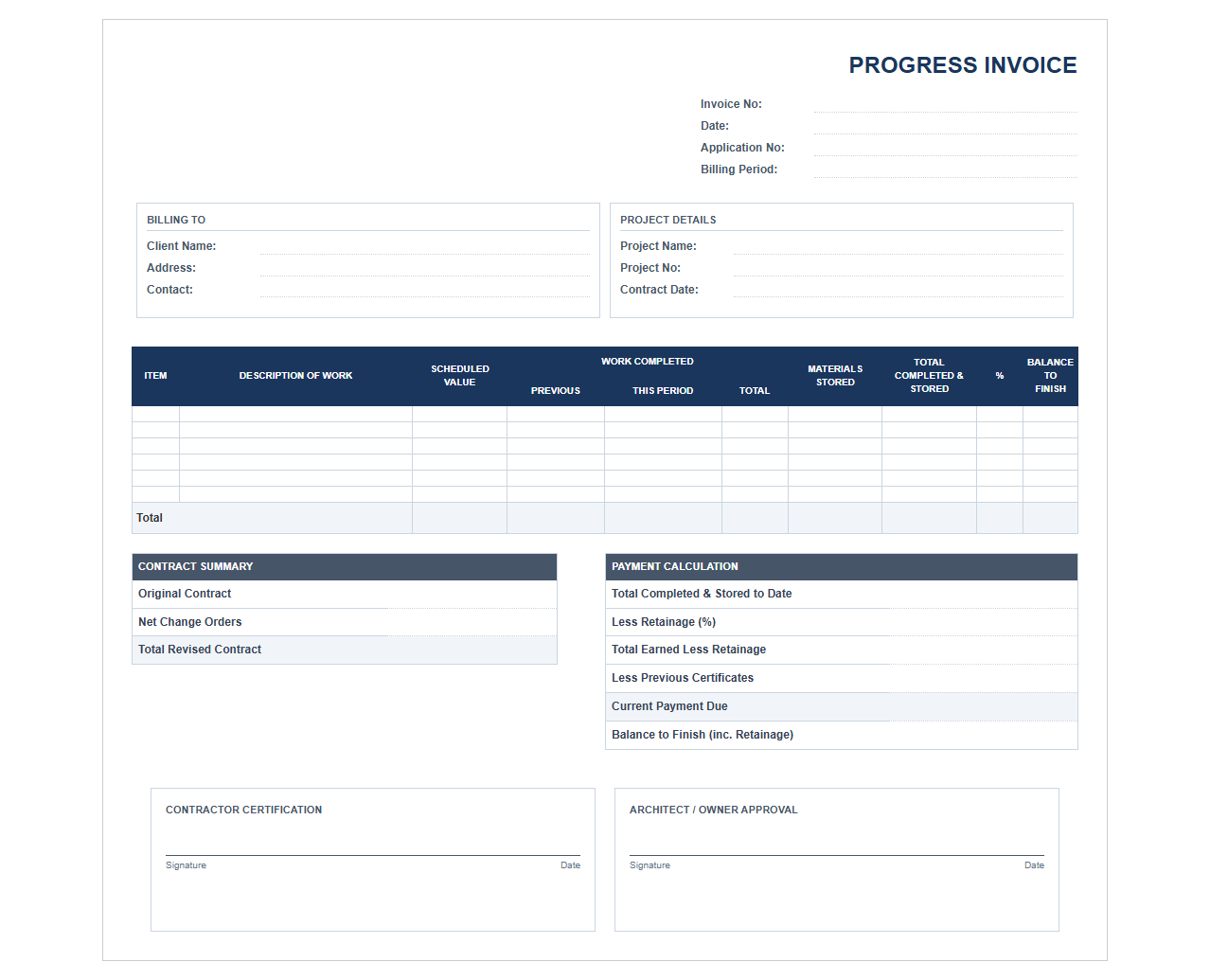 Download: .PDF
Construction Percentage of Completion Invoice
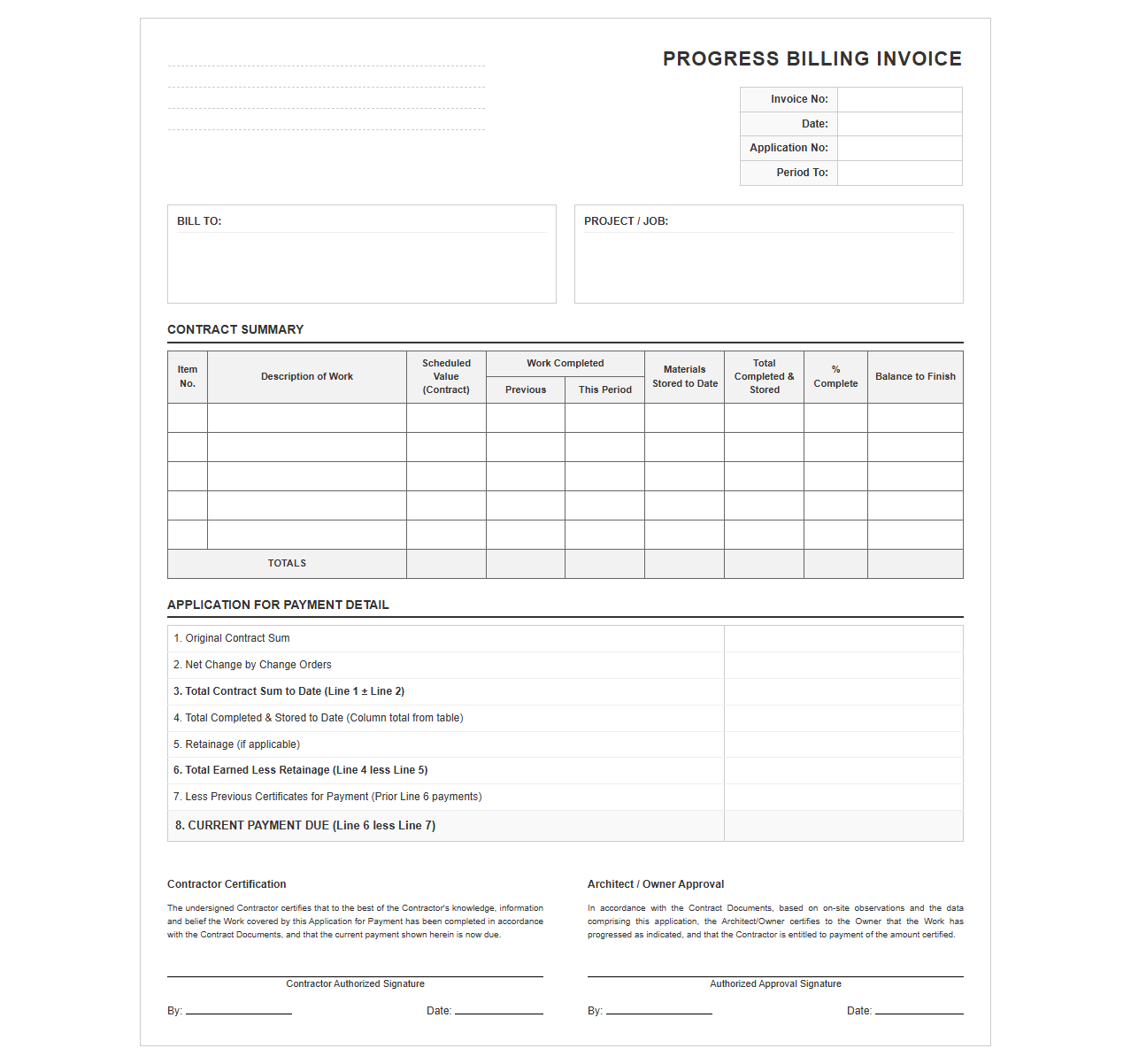 Download: .PDF
Milestone Percentage Billing Invoice
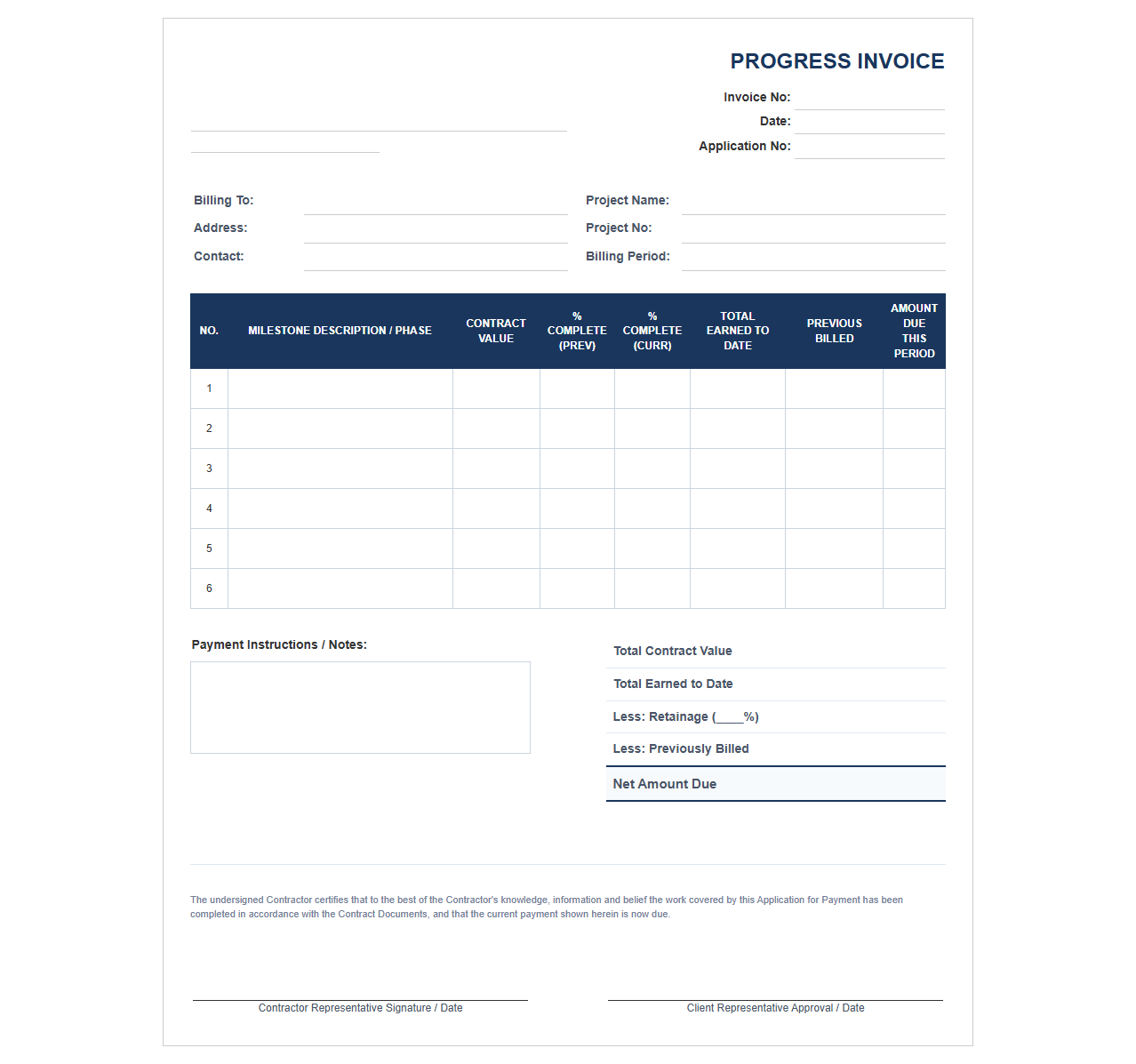 Download: .PDF
Percent Complete Project Invoice Template
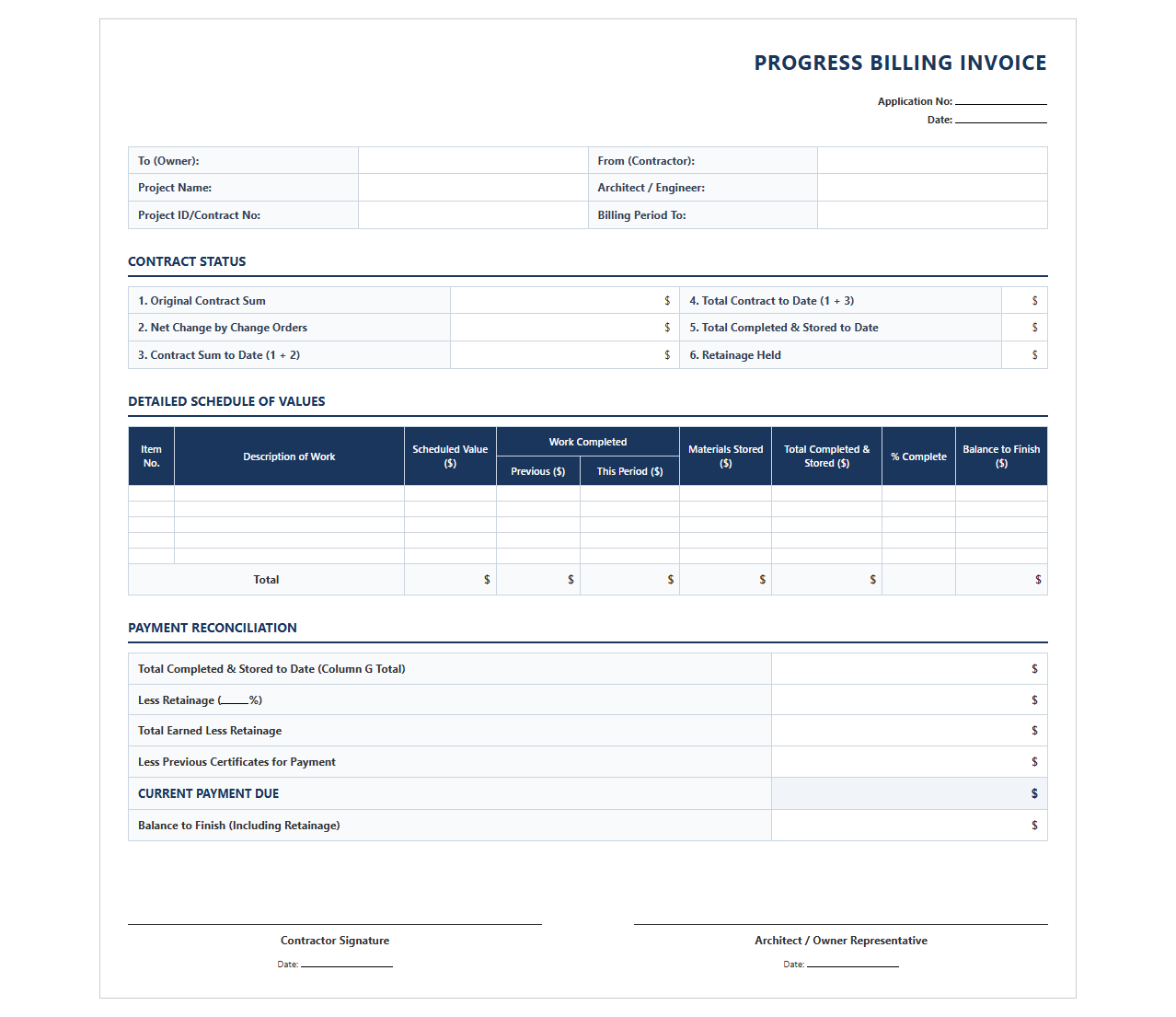 Download: .PDF
Phase Completion Progress Invoice Form
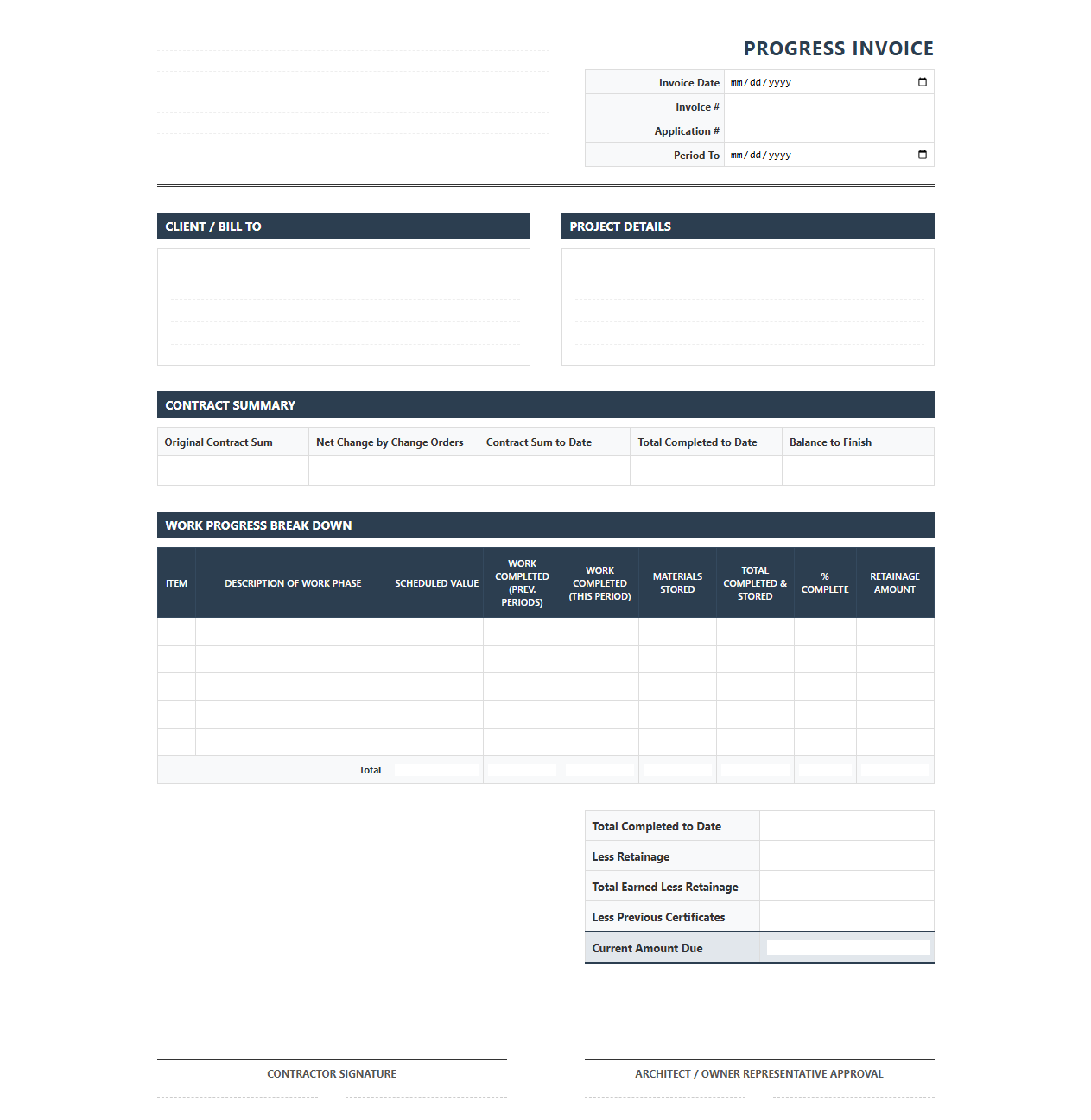 Download: .PDF
Schedule of Values Progress Invoice
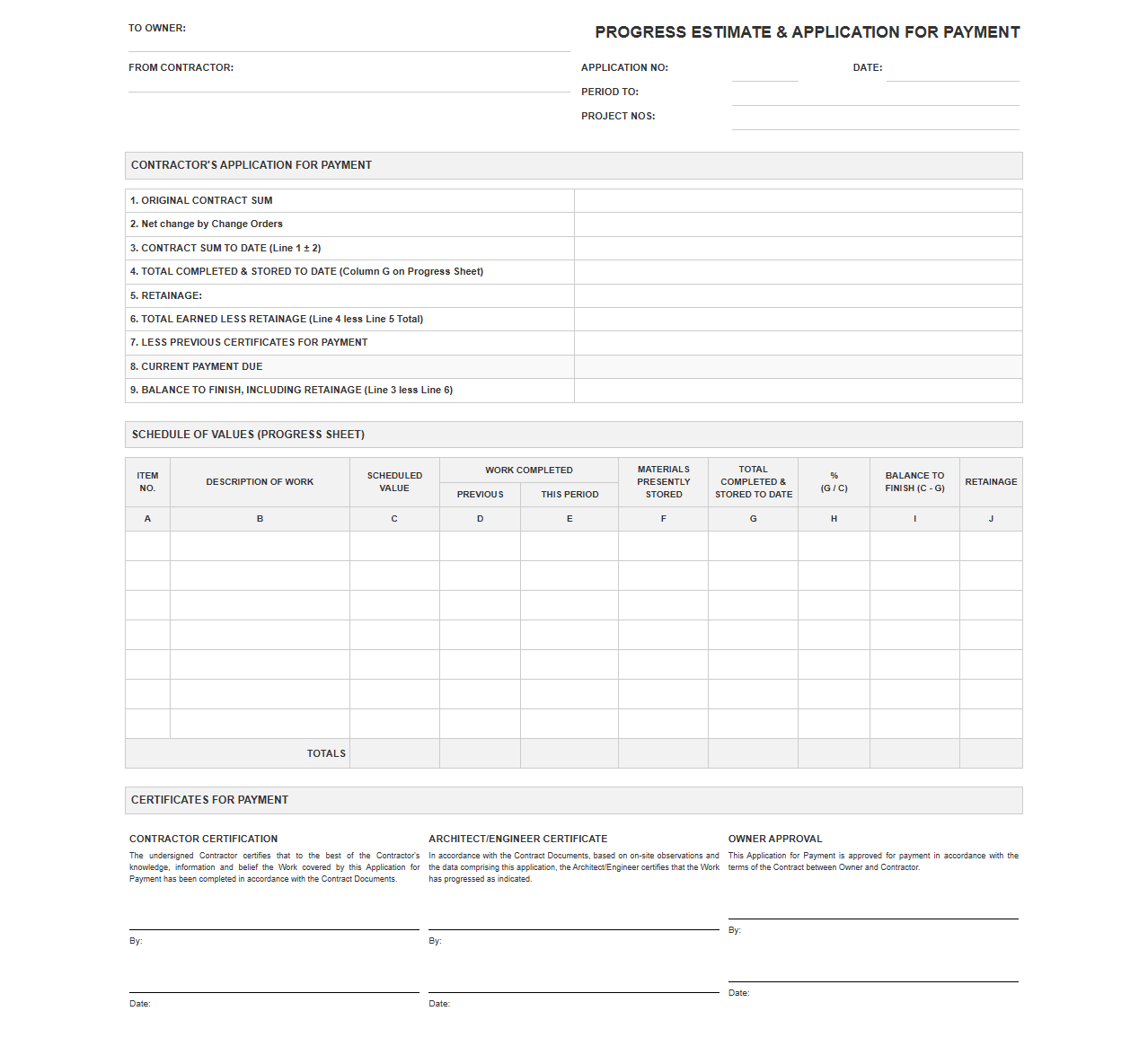 Download: .PDF
Work in Progress Percentage Invoice
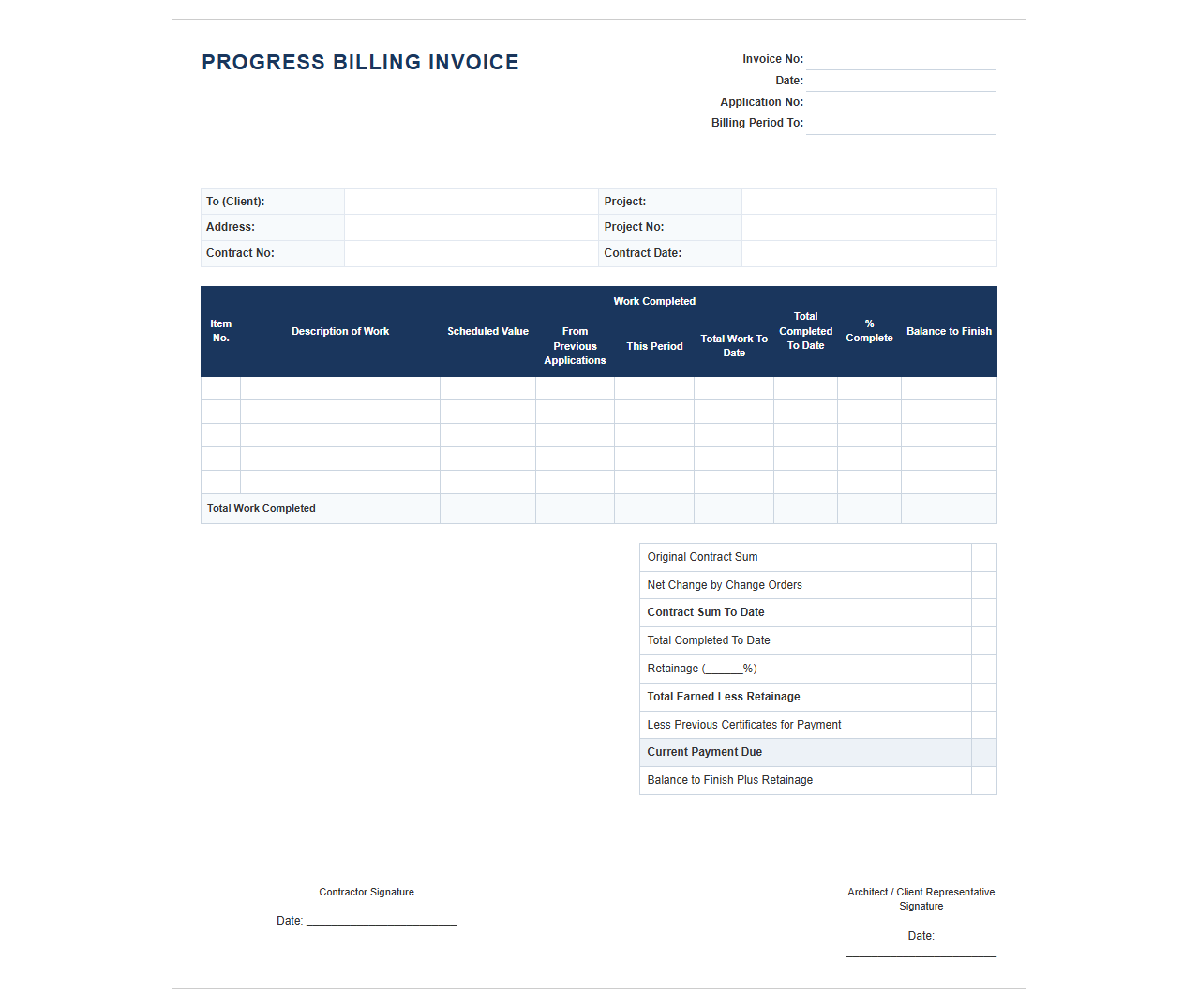 Download: .PDF
Retainage and Percentage Completion Invoice
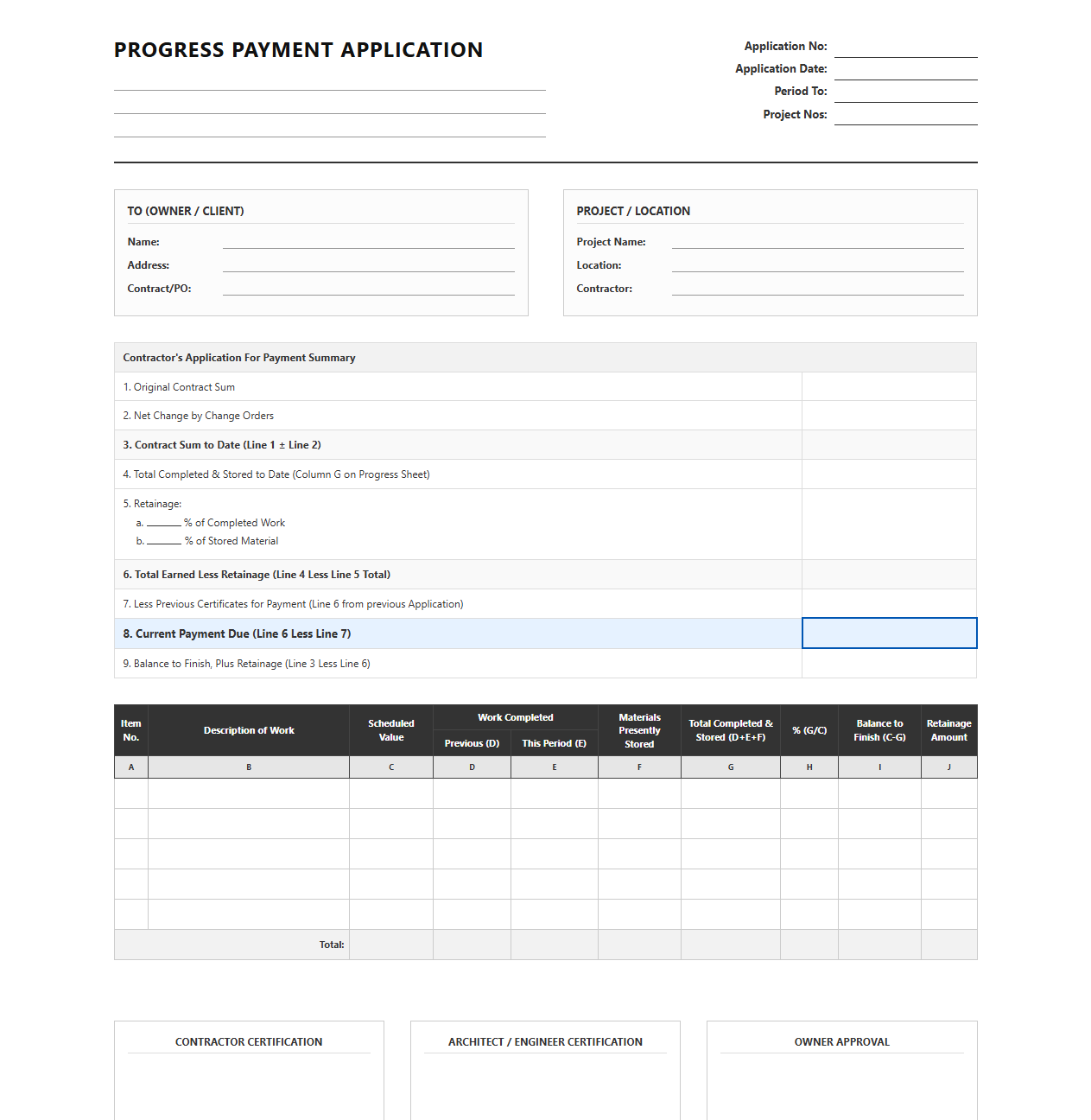 Download: .PDF
Demystifying Progress Billing for Healthier Cash Flow
Managing cash flow in long-term projects can be an uphill battle. Waiting until a major project is entirely finished to receive payment puts immense financial strain on your business, making it difficult to cover ongoing labor, materials, and overhead costs. This is where progress billing and the percentage of completion method become invaluable assets for your financial strategy.
By billing clients incrementally based on the actual progress made, you establish a steady, predictable inflow of capital. This approach ensures that your project remains self-funding, significantly reducing the risk of cash shortages and allowing you to maintain healthier cash flow from initiation to final delivery.
Understanding the Percentage of Completion (PoC) Method
The Percentage of Completion (PoC) method is a highly recognized accounting standard where revenues and expenses are recognized progressively as work is performed. Unlike the completed-contract method, which recognizes financial transactions only at the very end, PoC aligns financial reporting directly with real-time operational progress.
This method is essential for construction, engineering, and large-scale project-based industries because it provides a more accurate, transparent picture of ongoing financial health. It prevents massive fluctuations in revenue reporting and ensures that both the service provider and the client remain aligned on the true value delivered during every phase of the contract.
Must-Have Elements of a PoC Invoice Template
To avoid misunderstandings and ensure rapid processing, your percentage of completion invoice must be detailed, structured, and easy to read. A professional template must clearly break down the financial history and current status of the project.
Every standard PoC invoice template should include these critical components:
- Total Contract Value: The original agreed-upon contract sum, including any officially approved change orders.
- Total Billing to Date: The cumulative amount billed to the client from the start of the project up to the current billing cycle.
- Current Percentage of Completion: The exact mathematical fraction of the project completed during this specific period.
- Current Amount Due: The specific dollar amount calculated for the current phase, minus previous payments and retentions.
- Remaining Balance: The outstanding contract value that is left to be billed in future cycles.
How to Calculate Percentage of Completion for Invoicing
Calculating the percentage of completion accurately ensures your invoicing is grounded in verifiable data rather than guesswork. The cost-to-cost method is the most common mathematical approach used to determine this figure.
- Determine the total estimated cost of the entire project:
Total Estimated Cost - Track the total cumulative costs incurred up to the current date:
Cumulative Costs Incurred - Divide the incurred costs by the total estimated costs to find the completion ratio:
Completion % = (Cumulative Costs Incurred / Total Estimated Cost) * 100 - Multiply this percentage by the total contract value to find the total earned revenue:
Earned Revenue = Completion % * Total Contract Value - Subtract any previously billed amounts from the earned revenue to calculate your current invoice amount.
Best Practices to Accelerate Client Approvals and Payments
Even with accurate calculations, progress invoices can face delays if clients do not understand or agree with the reported progress. Implementing strategic communication practices can drastically shorten your payment cycles.
- Provide Granular Documentation: Always attach progress photos, daily logs, or material receipts to validate your completion claims.
- Establish Consistent Communication: Set up brief milestone reviews with clients before sending the official invoice to pre-emptively resolve questions.
- Use Standardized Templates: Download and utilize structured professional invoicing templates to ensure your clients receive familiar, easy-to-digest billing documents every month.
Navigating Common Pitfalls in Progress Billing
Progress billing is not without its hurdles. If not managed carefully, issues like scope creep, unexpected material delays, and administrative mistakes can quickly stall your cash flow.
"Under-billing can quietly drain your working capital, while over-billing can damage client trust and lead to severe contract disputes."
To navigate these challenges, establish a rigorous change-order process. Never perform extra work without a signed amendment that updates the total contract value. Additionally, perform bi-weekly internal audits of your incurred costs against your original estimates to ensure your percentage calculations remain perfectly aligned with reality.
Streamlining Your Cash Flow with the Right Invoicing Tools
Manually tracking percentages, costs, and change orders in basic spreadsheets is highly susceptible to human error. Transitioning to dedicated software or utilizing robust, customizable HTML and Excel billing templates simplifies the administrative burden. These digital tools ensure your calculations remain precise, your records stay organized, and your clients receive professional, transparent invoices. Selecting the right invoicing solutions secures your business's financial stability and fosters stronger, more trusting relationships with your clients.

Leave a comment