

Agencies and consultants often struggle with chronic invoice disputes and delayed client payments, even when operating under a seemingly predictable retainer model. While transitioning from hourly billing to fixed-fee monthly services promises financial stability, managing the actual billing cycle requires strict operational discipline. Standardizing your invoice templates grants immediate billing clarity to clients, which drastically reduces administrative overhead and accelerates your payment cycles. However, these templates only succeed if they strictly delineate the boundaries of your monthly flat-fee agreement. For example, dividing a monthly marketing retainer invoice into explicit, structured categories like "Monthly Strategy Execution" versus "Out-of-Scope Ad-Hoc Deliverables" provides indisputable proof of value.
In this guide, we will explore how to design these standardized templates, streamline your monthly invoicing workflow, and maintain healthy client boundaries to secure recurring revenue.
Monthly Fixed Fee Retainer Invoice
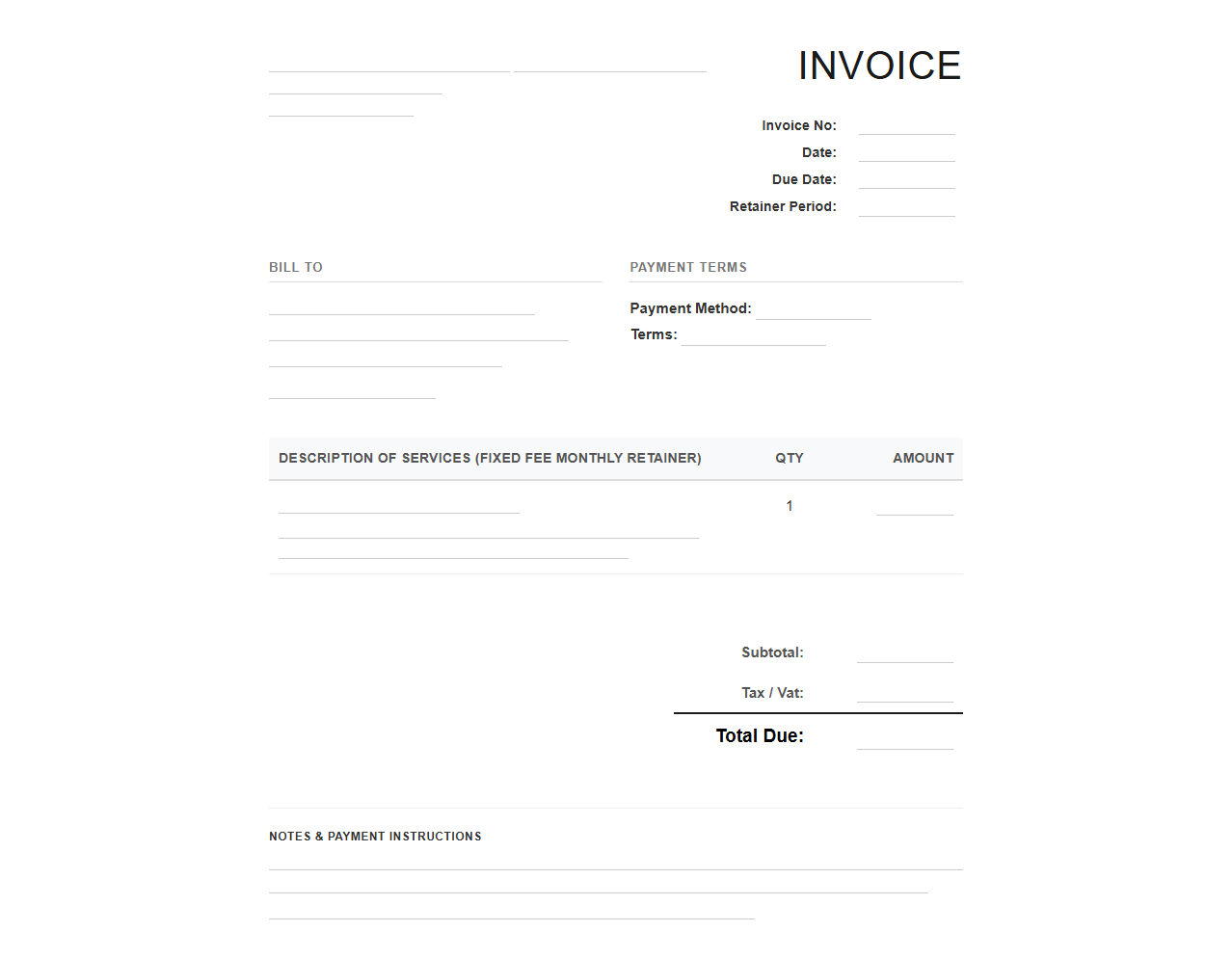 Download: .PDF
Professional Services Monthly Retainer Billing Template
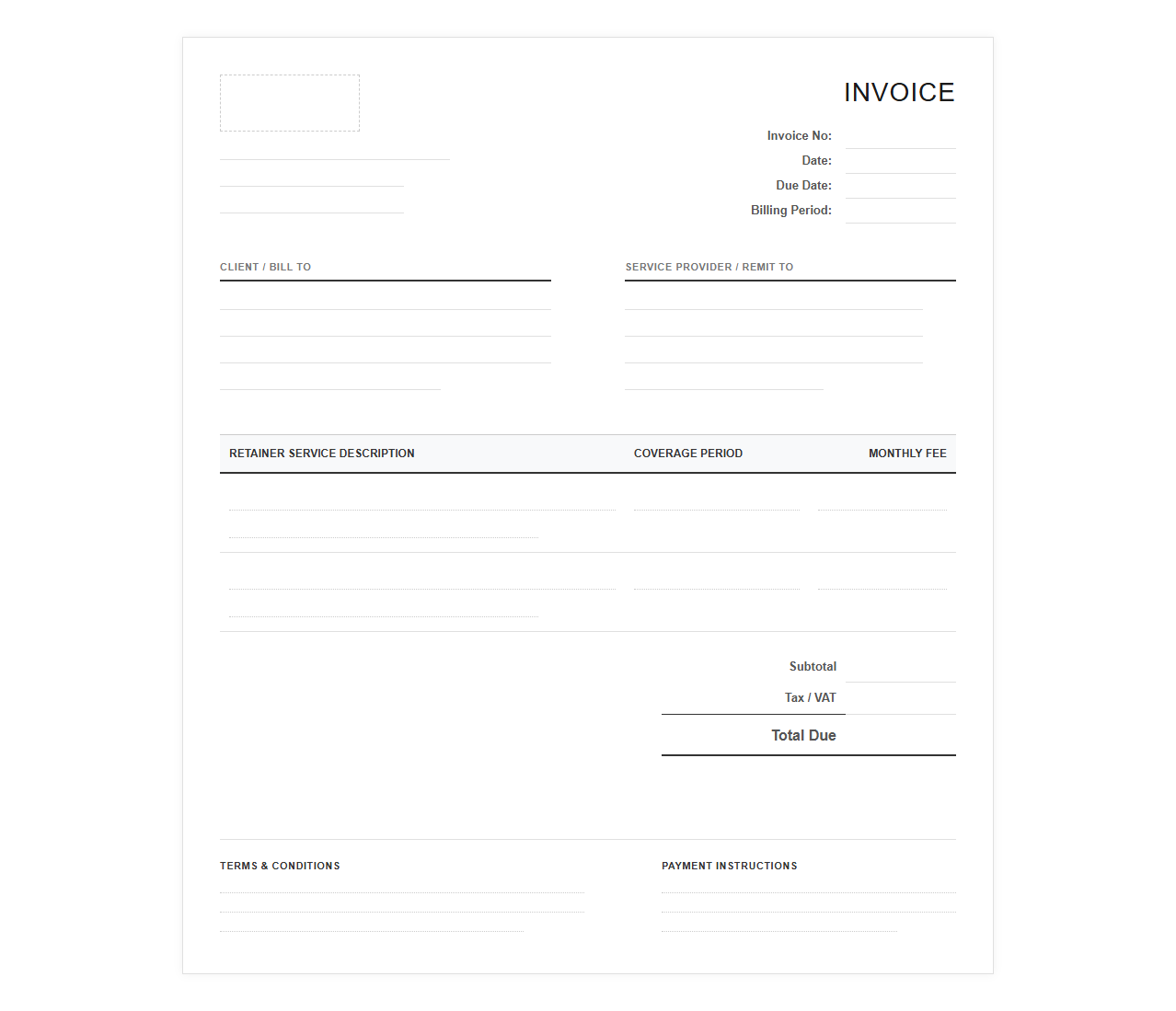 Download: .PDF
Flat Rate Monthly Retainer Invoice Template
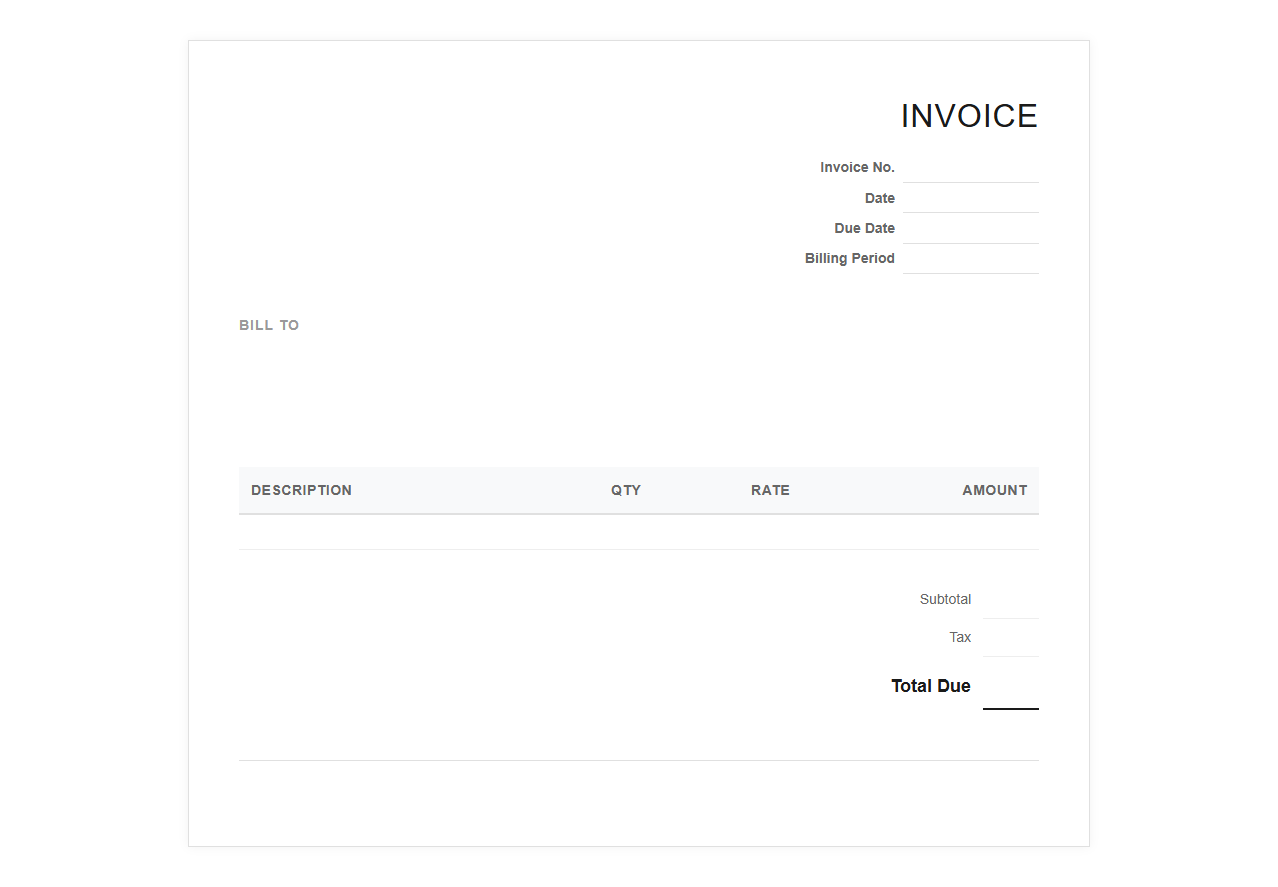 Download: .PDF
Recurring Monthly Retainer Invoice for Clients
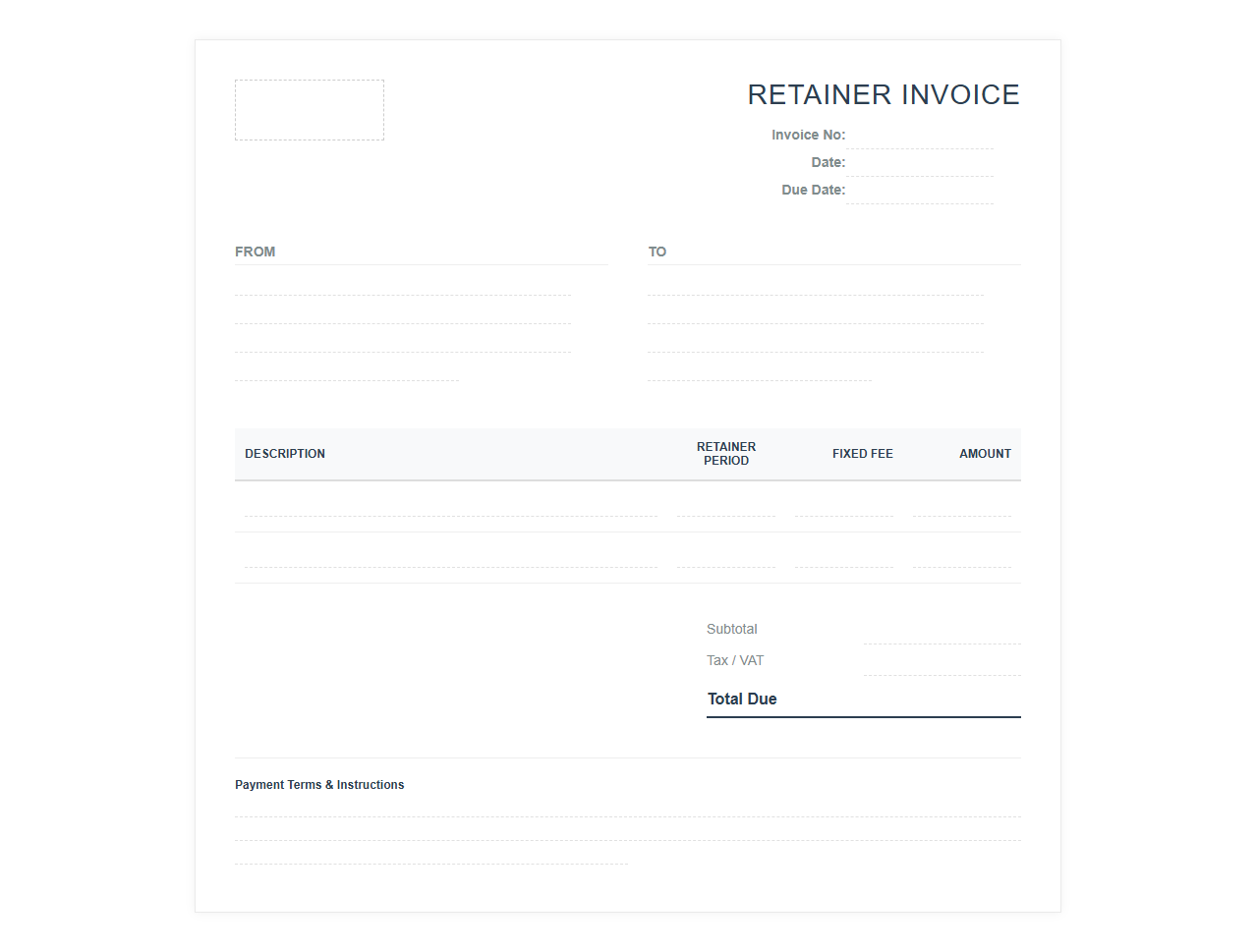 Download: .PDF
Subscription Based Fixed Fee Monthly Invoice
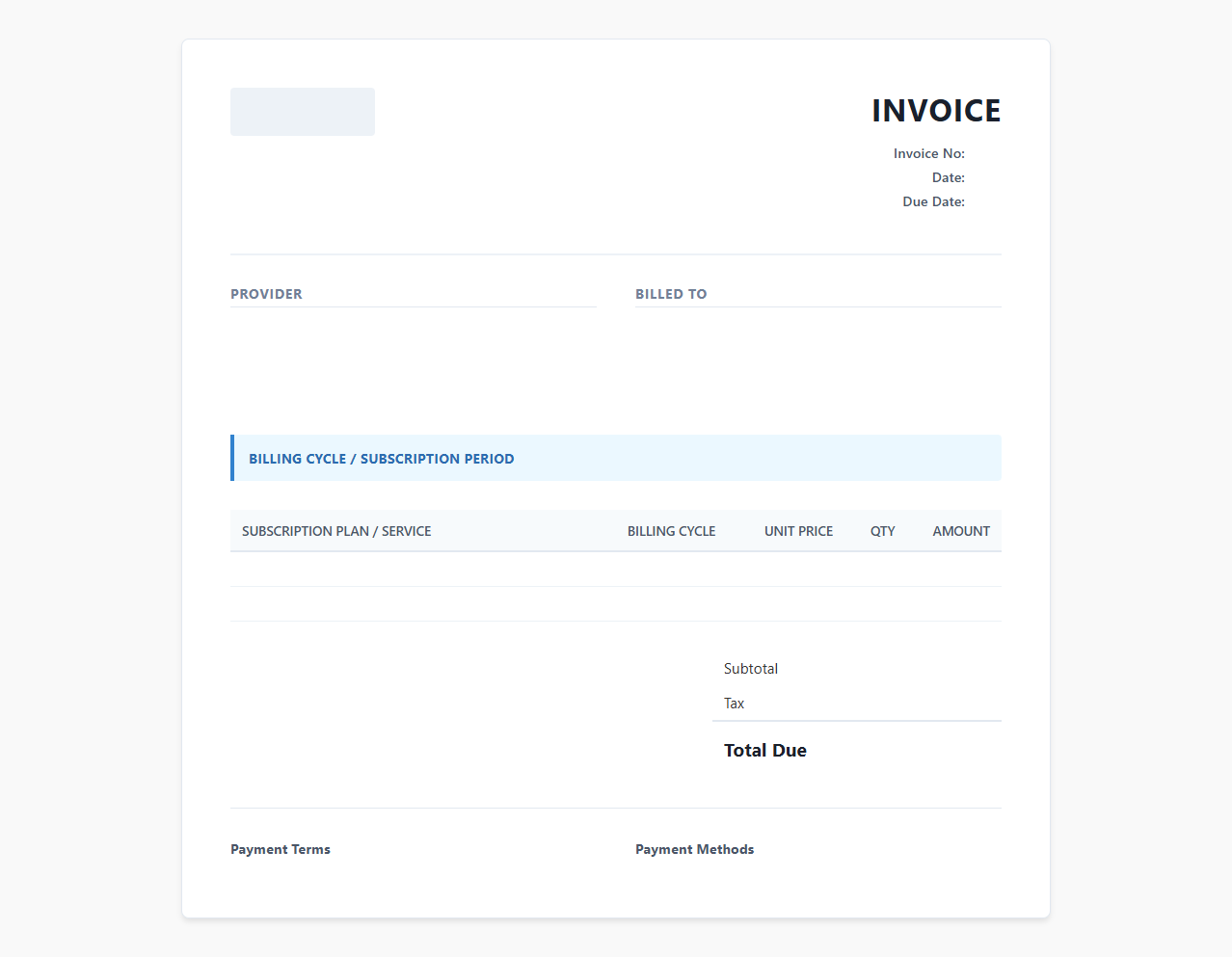 Download: .PDF
Monthly Retainer Agreement Invoice Document
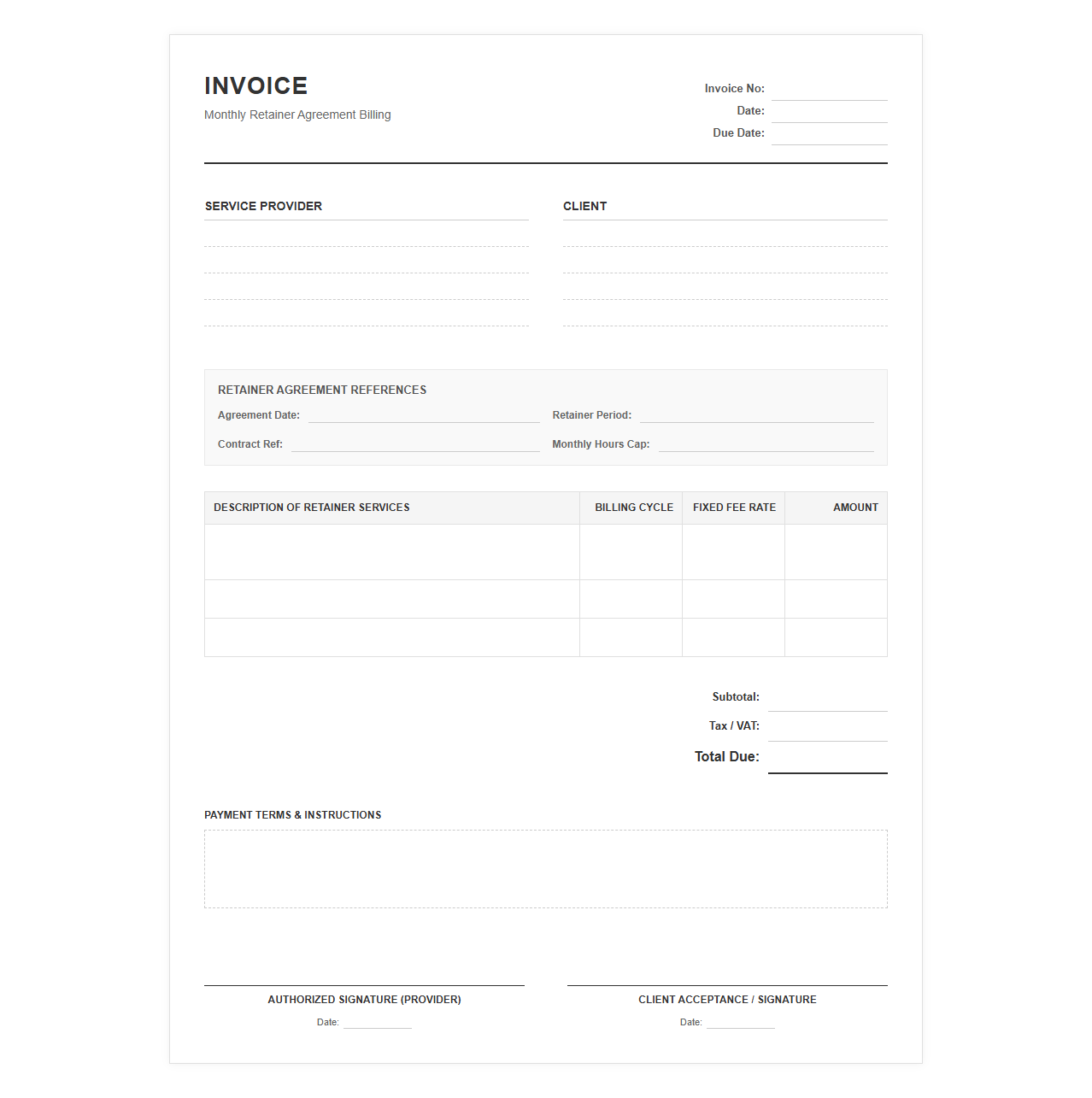 Download: .PDF
Fixed Price Monthly Service Retainer Statement
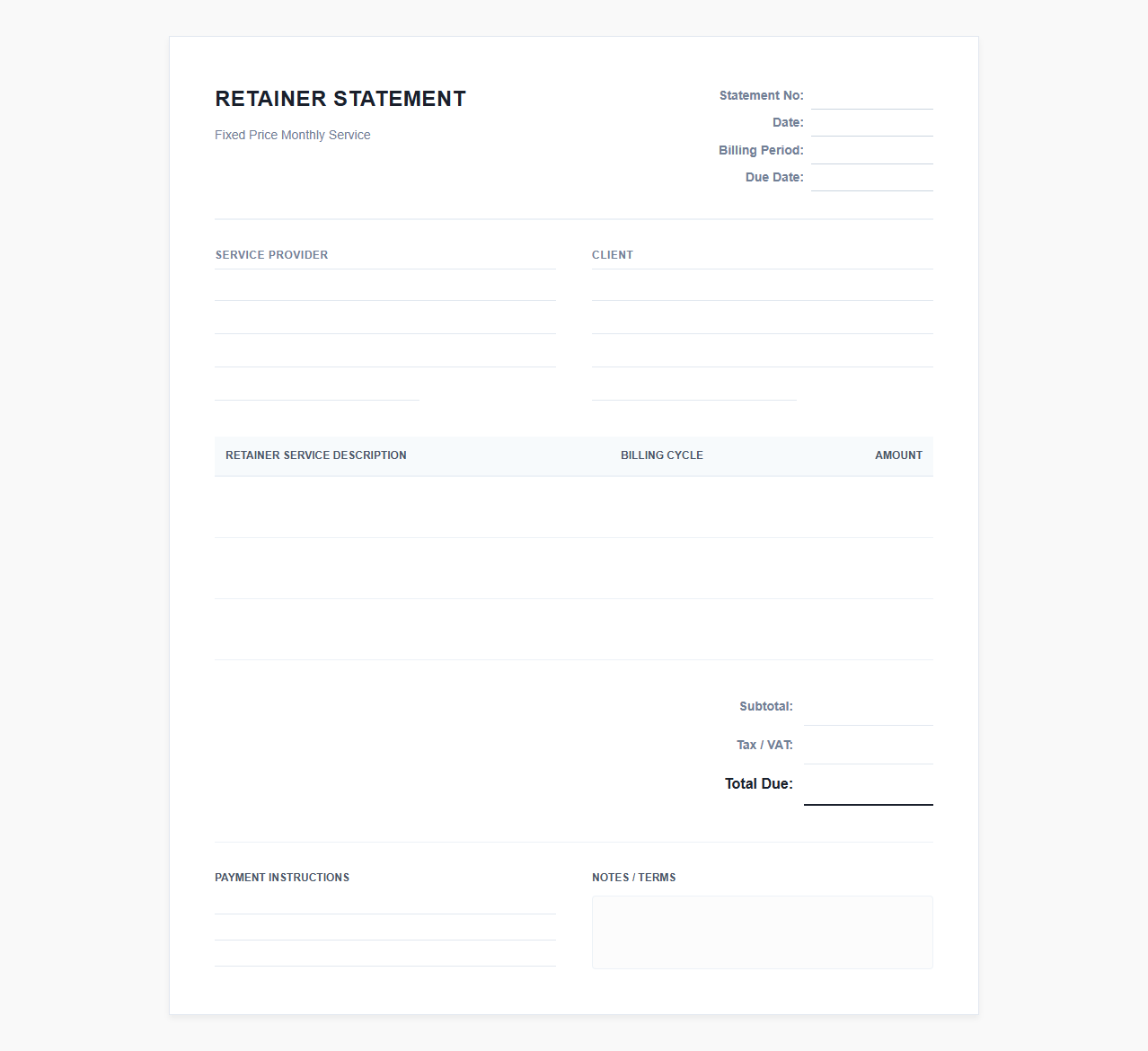 Download: .PDF
Consultant Monthly Fixed Fee Retainer Invoice
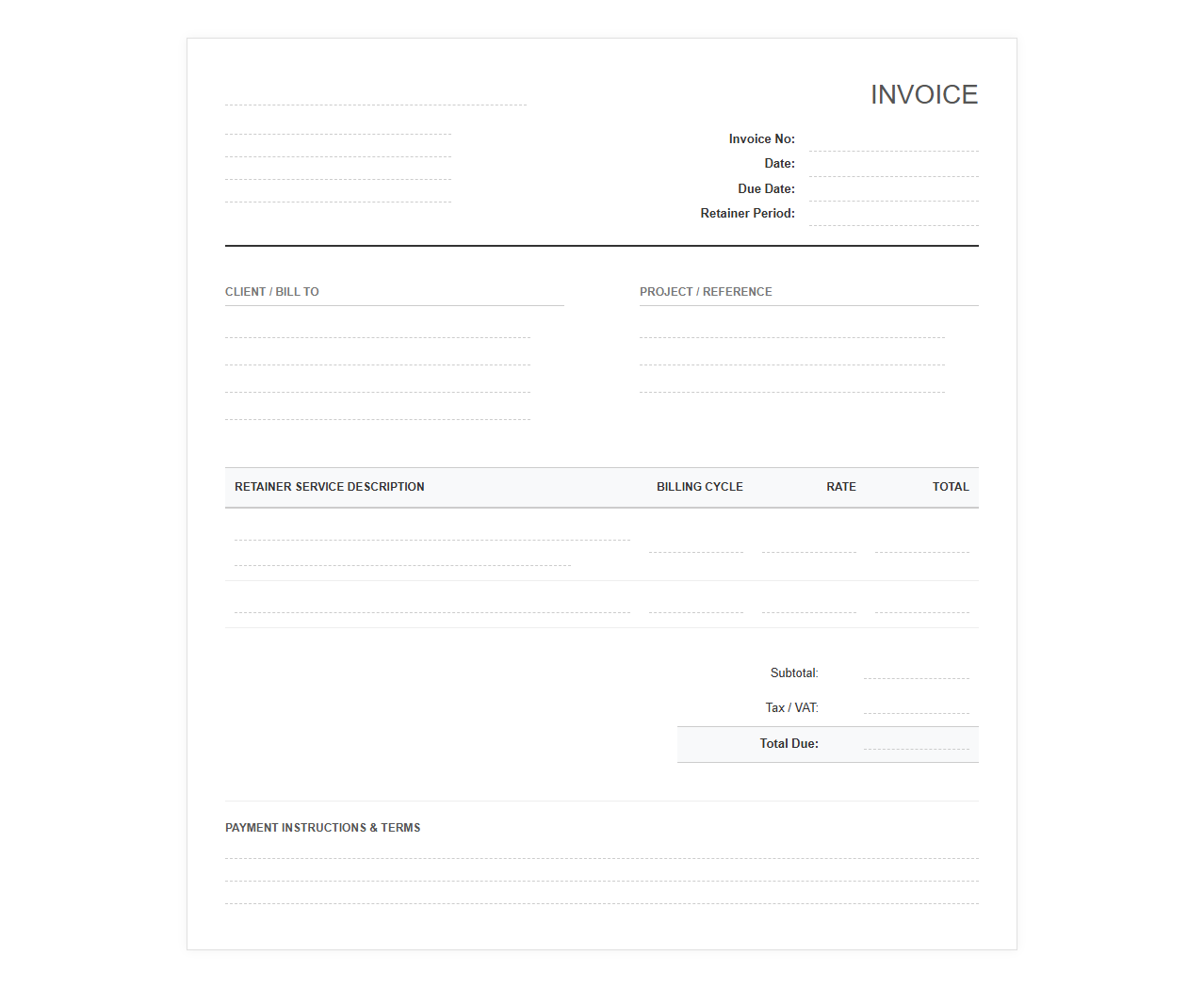 Download: .PDF
The Retainer Dilemma: Why Manual Invoicing Fails
For creative agencies and professional service firms, secure monthly retainer agreements represent the holy grail of financial stability. However, the manual creation of monthly invoices threatens this security. When finance teams manually draft bills every month, they introduce human error, inconsistent formatting, and administrative delays that directly stall your accounts receivable cycle. Instead of enjoying predictable cash flow, agencies find themselves chasing late payments, correcting clerical errors, and defending vague line items, which drains productive hours and damages client relationships.
The Strategic Benefits of Standardized Invoice Templates
Adopting a standardized invoice template transforms your billing from a chaotic administrative chore into a streamlined, repeatable asset. Standardizing your approach delivers significant operational advantages:
- Reduced Administrative Burden: Eliminating the need to rebuild invoices from scratch saves your operations team dozens of hours each month.
- Enhanced Brand Consistency: A polished, uniform layout reinforces your agency's professionalism at every touchpoint.
- Minimized Invoice Disputes: Predictable structures help clients understand precisely what they are paying for, accelerating approval times.
Anatomical Blueprint of a Professional Fixed-Fee Invoice
A highly functional retainer invoice must contain specific information to ensure fast payment processing and complete clarity for the client's accounting department.
Every successful retainer invoice must feature these core components:
- Distinct Billing Period: Clearly state the exact month or timeframe the retainer covers to avoid duplicate payment confusion.
- Unique Invoice Numbering: Use a sequential numbering system designed specifically for recurring contracts.
- The Fixed-Fee Summary: A single, prominent line item highlighting the agreed-upon monthly package fee.
- Transparent Payment Terms: Explicitly state the due date and acceptable payment methods to avoid administrative delays.
Defining Scope Without Inviting Scope Creep
One of the greatest dangers of a recurring retainer is scope creep-where clients assume the fixed fee covers unlimited ad-hoc requests. Your monthly invoice should serve as a subtle but firm reminder of agreed-upon boundaries.
By listing high-level deliverables within your monthly description, you reinforce the exact limits of your partnership.
"Monthly Retainer Service: Includes up to 20 hours of dedicated design support and strategic consultation as outlined in the Q3 Service Level Agreement. Additional deliverables outside this scope will be billed at our standard hourly rate."
Integrating Automation into Your Retainer Billing Cycle
The true power of a standardized invoice template is unlocked when you integrate it with modern accounting software to handle recurring billing automatically.
By mapping your standard template fields to accounting tools like QuickBooks, Xero, or Stripe, you can schedule invoices to generate and send on a strict recurring cadence. For example, setting up a cron job or utilizing automated software rules like invoice.created_automatically ensures your client receives their bill on the first of every month at 9:00 AM without a single manual click. This predictable delivery builds immediate payment momentum.
Fostering Trust Through Billing Transparency
Invoicing is not just a financial transaction; it is a critical communication channel. When clients receive invoices that are clean, predictable, and perfectly structured, it builds deep professional trust.
By eliminating confusing industry jargon and presenting clear payment terms, you remove the friction that often occurs during the internal review process. Clients appreciate knowing exactly what to expect each month, which transforms the billing cycle from an annoying expense into a routine validation of your agency's ongoing value.
Implementation Guide: Transitioning Clients to the New Template
Transitioning existing clients to your new, standardized invoice template requires careful communication to avoid confusion or pushback.
Follow these practical steps to roll out your new billing standard seamlessly:
- Send a Pre-Notification Email: Inform clients two weeks in advance that you are upgrading your financial systems to serve them better.
- Highlight the Benefits: Emphasize that the new format is cleaner, easier to read, and optimized for their accounts payable software.
- Confirm Payment Details: Reassure them that payment terms, bank details, and pricing agreements remain exactly as agreed in their contract.

Leave a comment