

Law firms frequently grapple with chronic billing bottlenecks, where manual invoicing drains valuable administrative energy and leads to friction with clients. Before seeking complex software overhauls, firms must recognize that clear, compliant communication is the foundation of client trust and financial health.
Adopting specialized legal invoice templates grants firms immediate relief by accelerating payment cycles and reducing billing disputes. It is important to stipulate, however, that while optimized templates establish a standardized presentation, they are a structural framework rather than a complete substitute for diligent daily time-tracking habits.
By incorporating specific industry standards-such as UTBMS task codes and dedicated trust account ledgers-these templates ensure absolute clarity and regulatory compliance. In the following sections, we will examine how to select, customize, and implement these specialized templates to transform your firm's invoicing from an administrative hurdle into a streamlined professional asset.
Hourly Rate Attorney Invoice Template
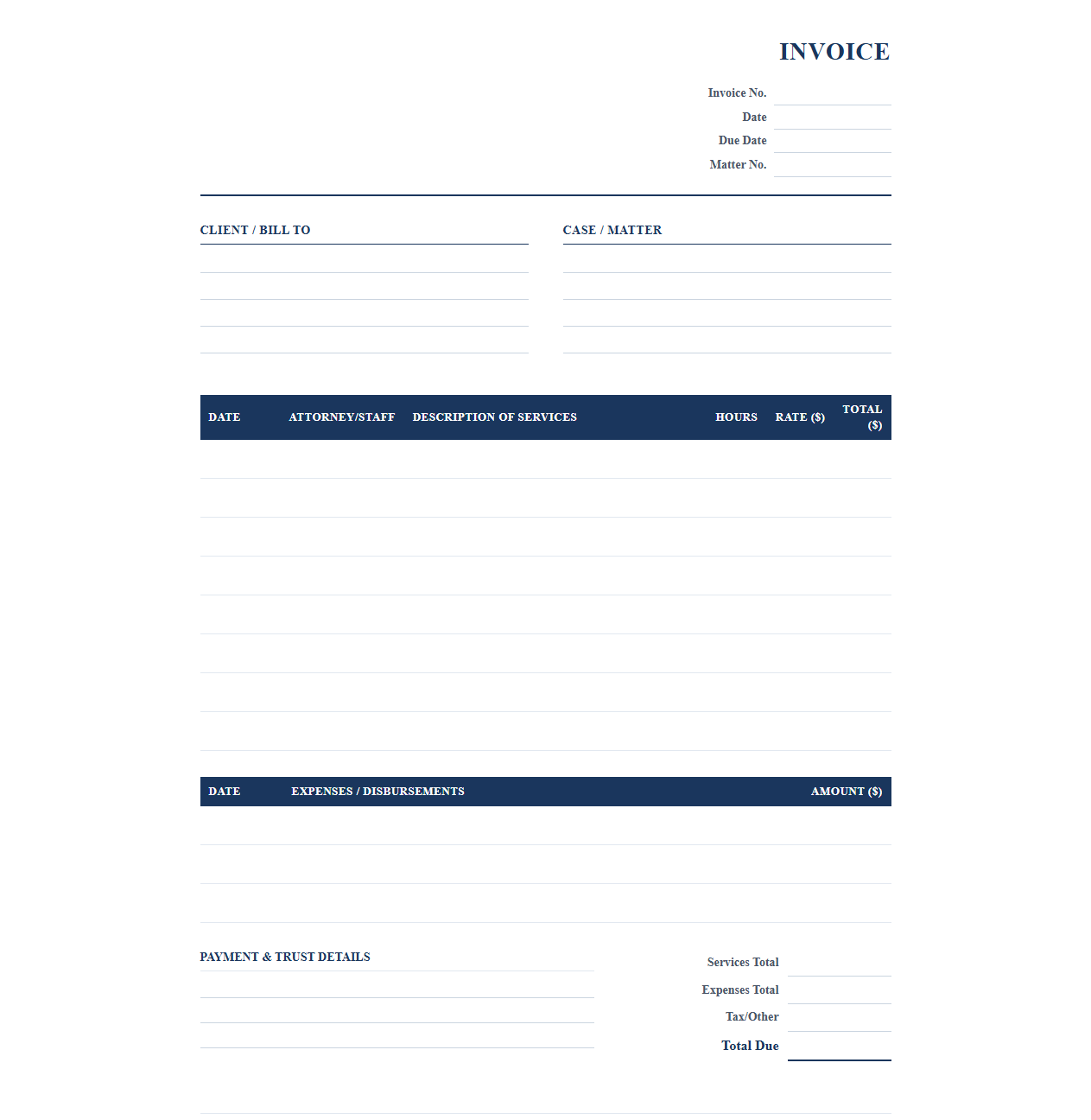 Download: .PDF
Flat Fee Legal Services Bill Template
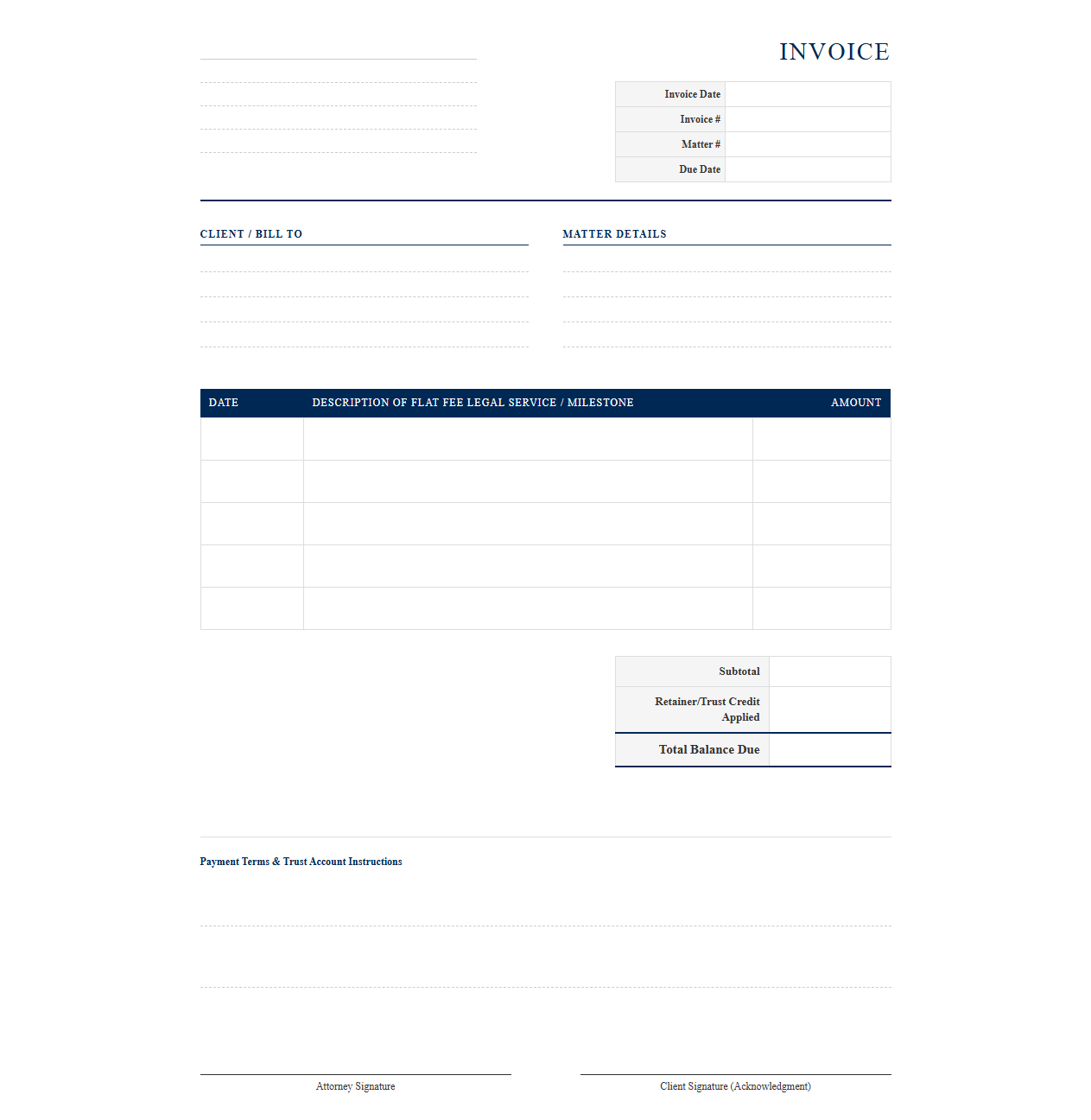 Download: .PDF
Retainer Agreement Legal Invoice Format
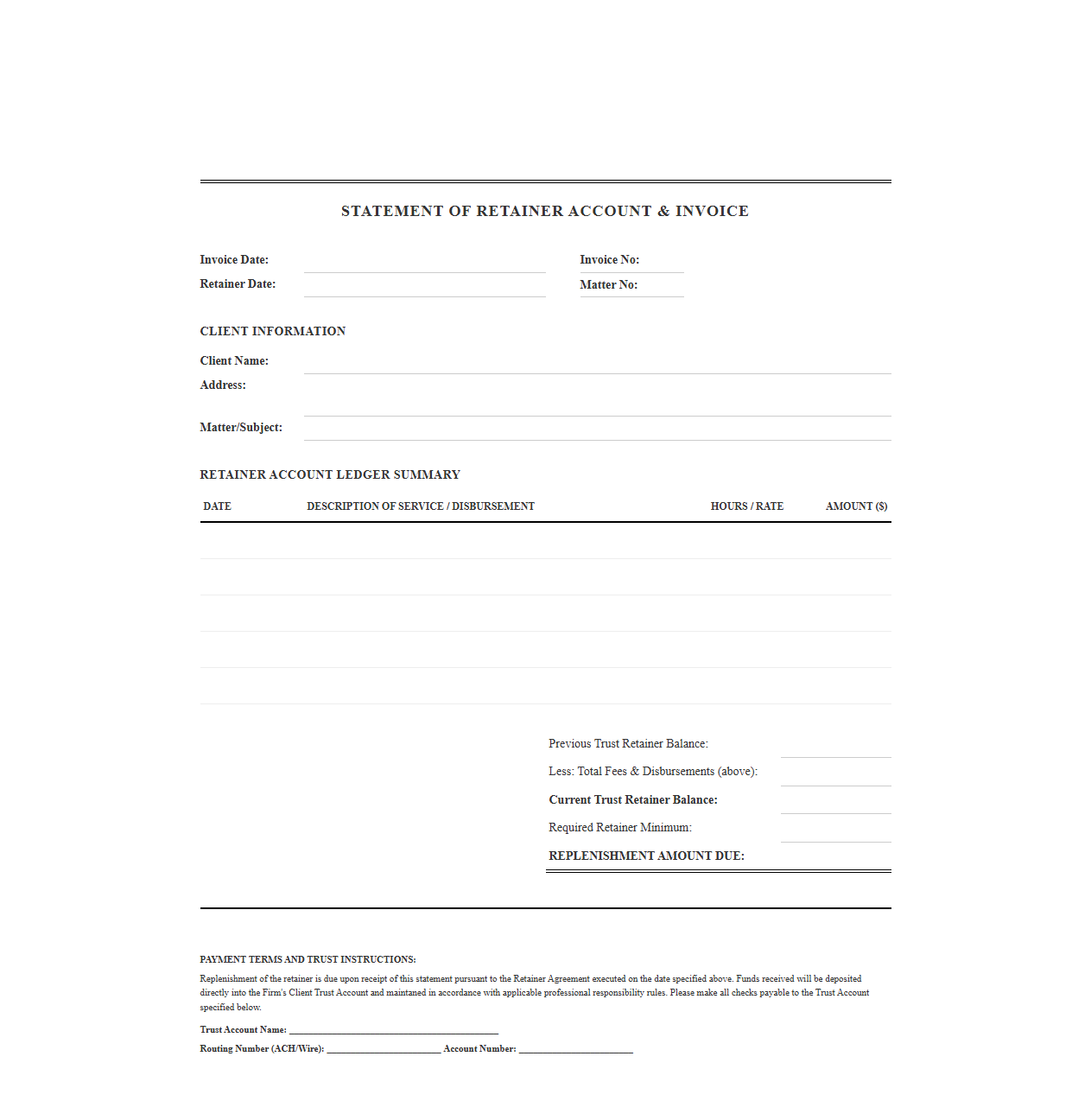 Download: .PDF
Corporate Law Firm Billing Statement Template
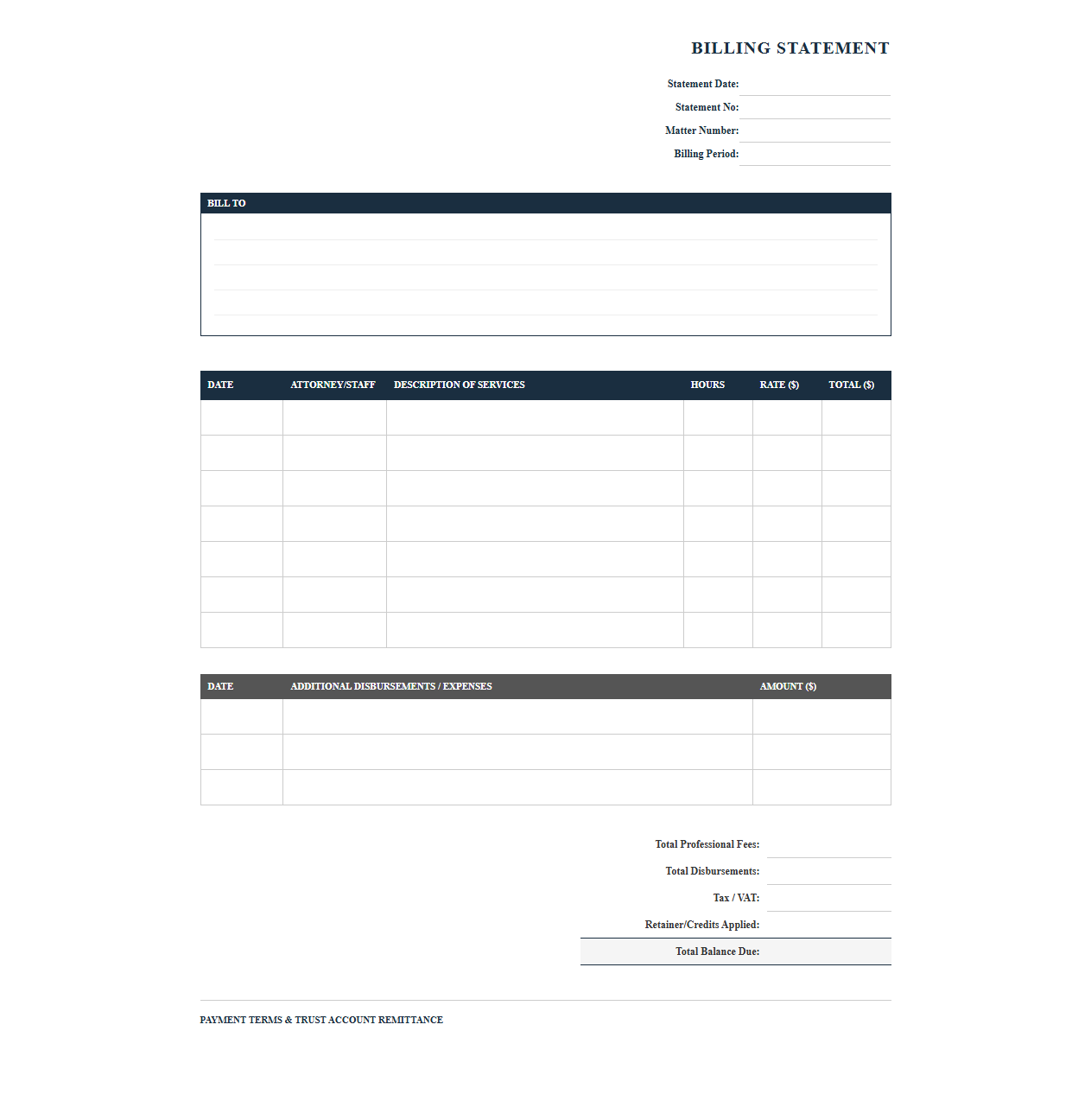 Download: .PDF
Legal Consultant Professional Services Invoice
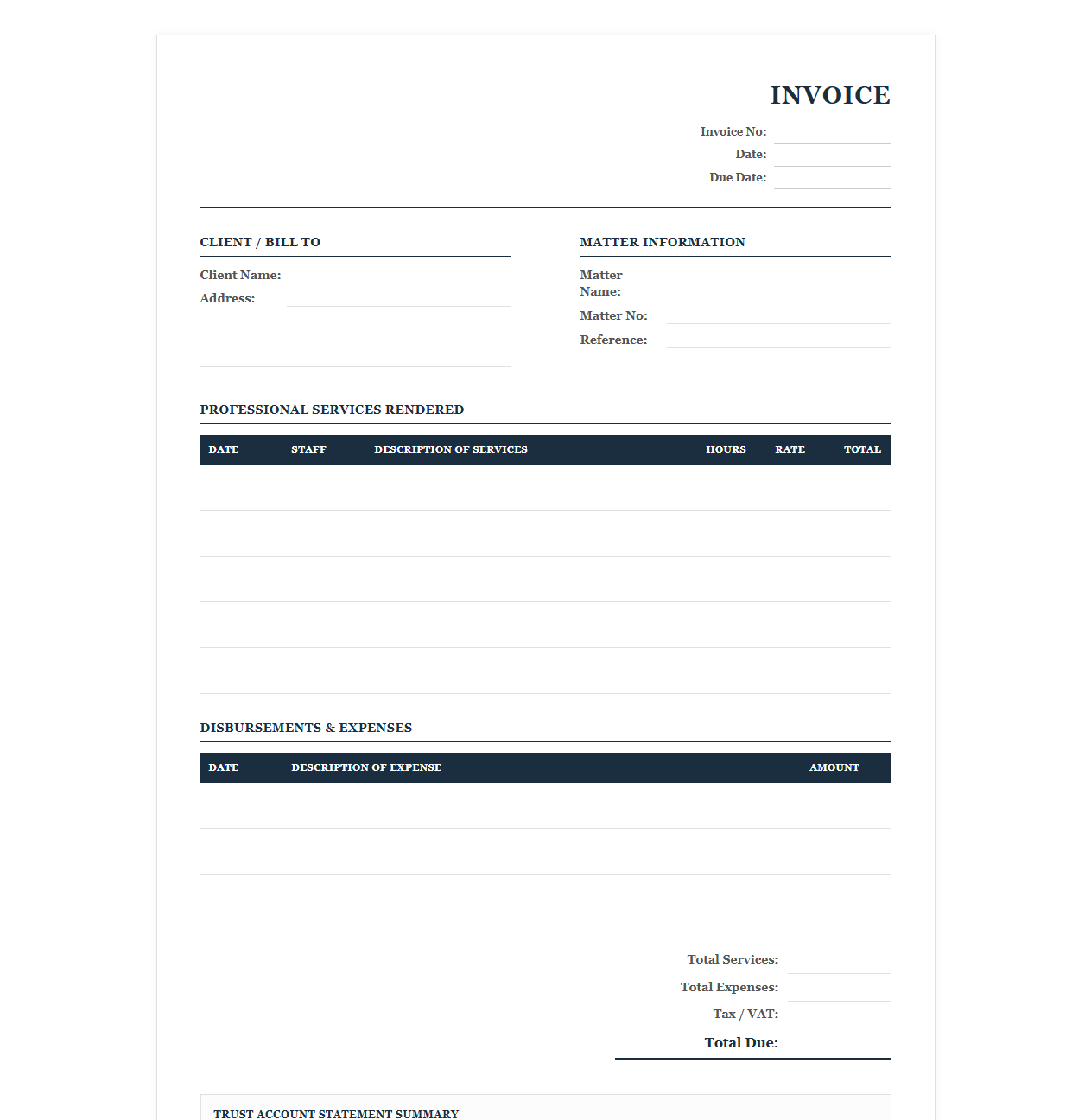 Download: .PDF
Court Representation Fee Invoice Template
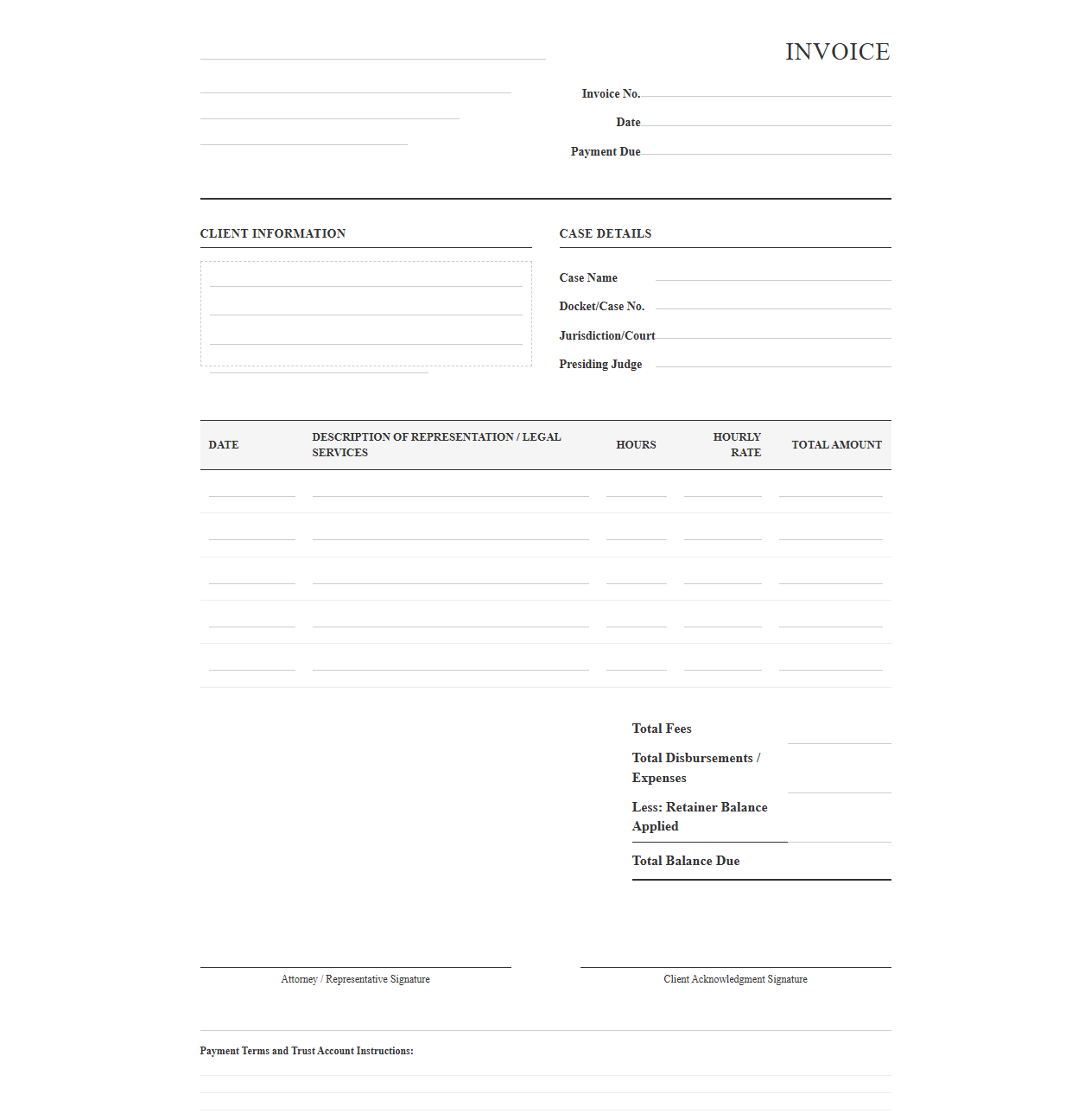 Download: .PDF
Notary and Legal Services Billing Template
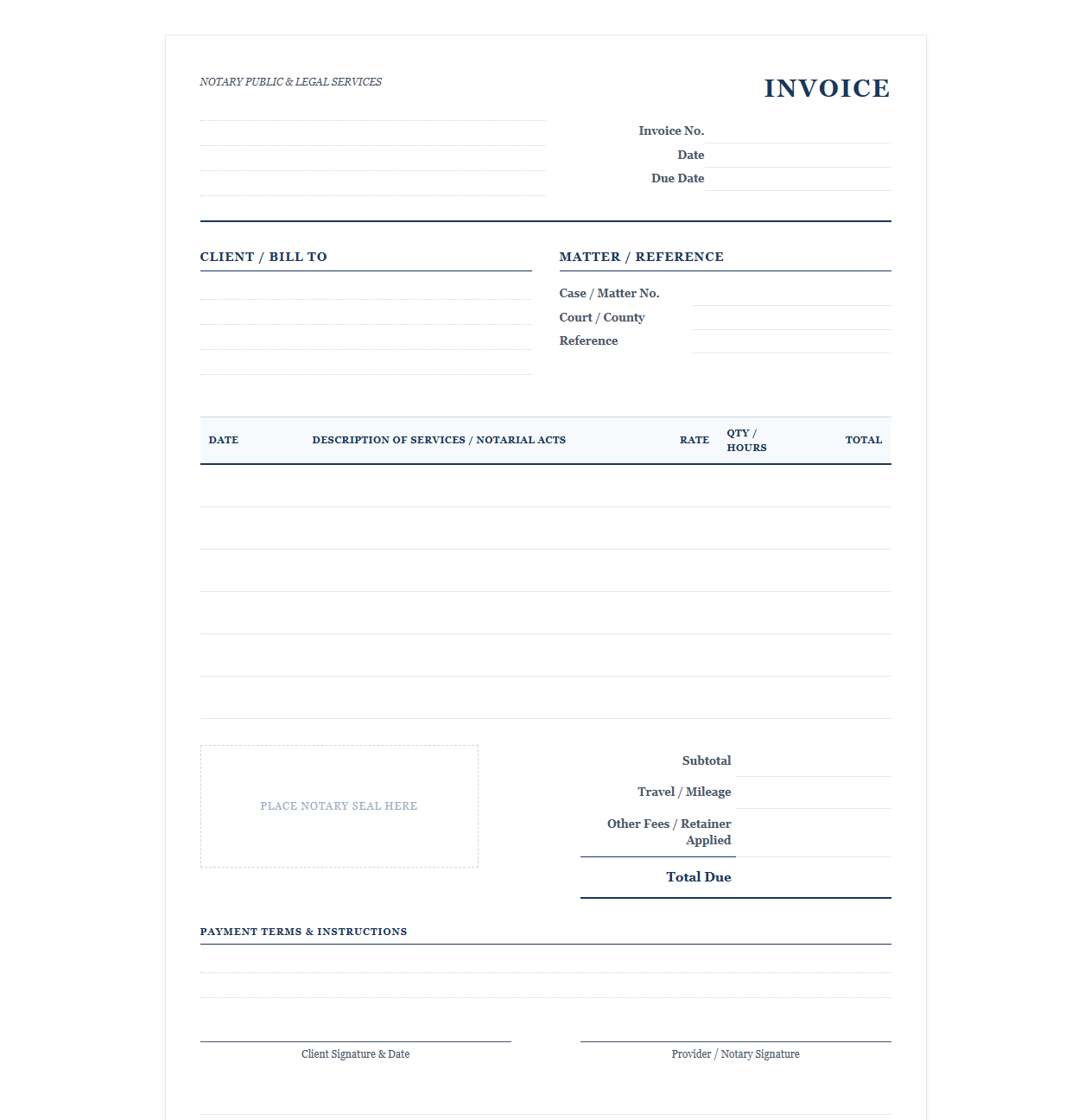 Download: .PDF
Itemized Solicitor Services Invoice Template
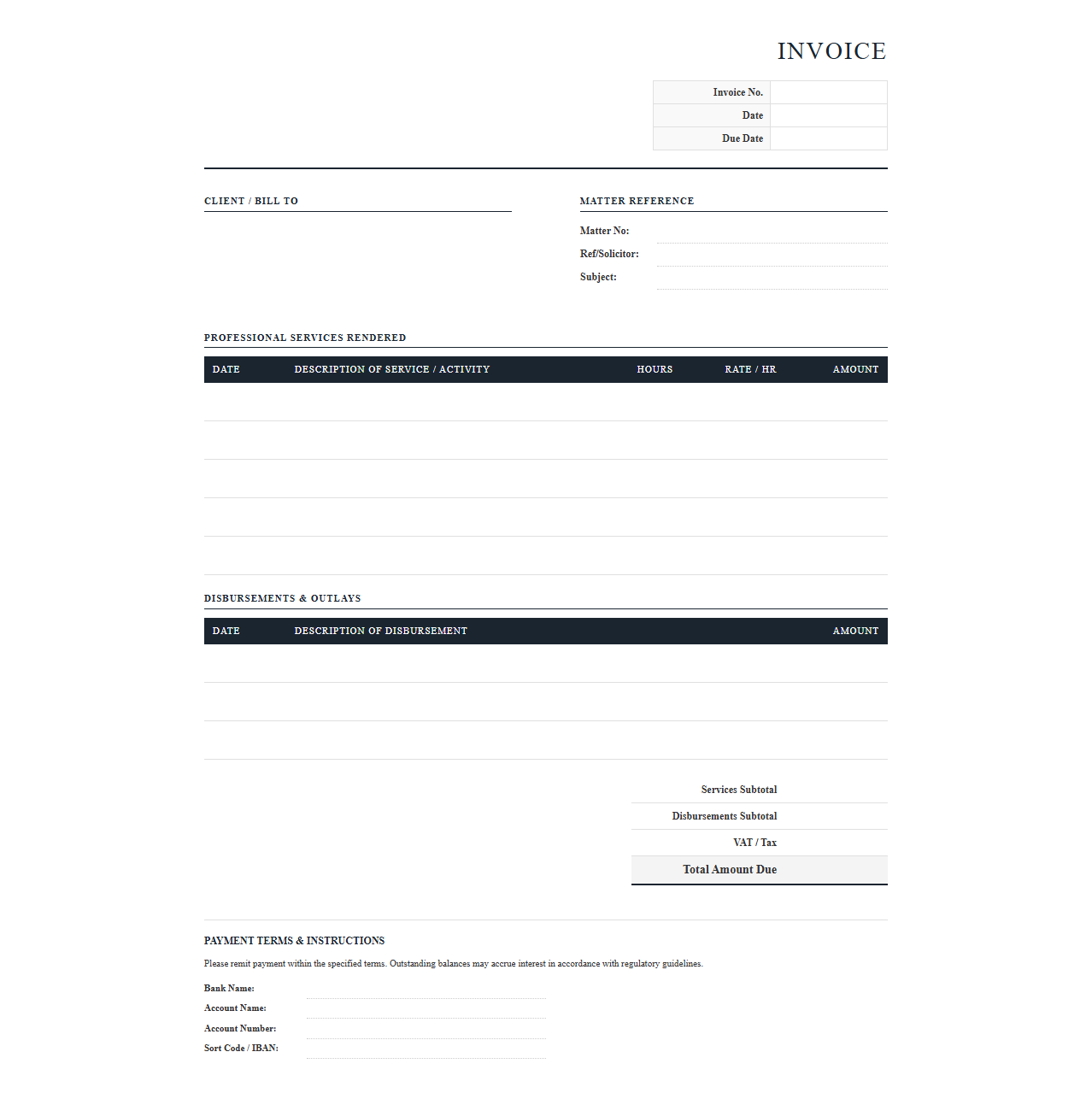 Download: .PDF
Overcoming the Friction in Law Firm Billing
For many law firms, the end of the billing cycle brings a wave of operational friction rather than a celebration of hard work. Attorneys frequently struggle with inaccurate time tracking, capturing billable hours long after the actual work has been completed. This delay leads to major administrative bottlenecks, forcing support staff to chase down timesheets before they can even begin drafting invoices.
When bills finally reach clients, lack of clarity often sparks immediate client disputes. Resolving these misunderstandings consumes valuable non-billable hours, stalling firm operations and delaying necessary revenue.
The Hidden Costs of Inefficient Invoicing
Inconsistent or delayed billing processes do more than just slow down daily operations; they introduce significant financial and reputational vulnerabilities to a firm.
- Delayed Cash Flow: When invoices are sent weeks or months late, the time-to-collection stretches significantly, restricting the firm's working capital.
- Administrative Overhead: Manual entry, tedious corrections, and constant back-and-forth communication demand excessive staff hours that could be spent on higher-value tasks.
- Damaged Client Relationships: Surprising clients with vague, delayed, or poorly formatted bills erodes trust and diminishes their perception of professional service.
Introducing Specialized Legal Invoice Templates
Specialized legal invoice templates are purpose-built billing documents designed specifically to meet the rigorous accounting and ethical compliance requirements of the legal industry. Unlike generic business invoices, which offer basic line items for goods or services, legal-specific templates accommodate the intricate nuances of attorney-client billing relationships.
These templates incorporate structured formatting that ensures compliance with interest calculations, trust accounting regulations, and specific judicial formatting guidelines. By utilizing a standardized layout tailored to legal rules, firms maintain a high level of professionalism while ensuring all billing practices remain compliant with industry standards.
Essential Features of a High-Performing Legal Invoice
To ensure clarity, prompt payment, and compliance, a high-quality legal invoice template must go beyond basic contact information and totals. It must integrate structural elements tailored to legal billing standards.
- Itemized Fee Structures
- Detailed breakdowns of tasks, including the hourly rate of each attorney or paralegal, time spent down to the tenth of an hour, and precise activity descriptions.
- Trust Account Balances
- Clear reporting of retainer funds, including current trust balances, funds applied to the current invoice, and any remaining retainer requirements.
- LEDES Coding Compatibility
- Standardized formats like LEDES 98B that allow electronic billing systems used by corporate clients to easily parse and approve the invoice automatically.
How Specialized Templates Streamline Client Communication
Clear communication is the foundation of any successful attorney-client relationship, and the invoice serves as a critical touchpoint. When clients receive transparent, easy-to-understand breakdowns of the work performed, they rarely feel the need to question or contest the charges.
"A transparent invoice is not just a demand for payment, but a documentation of value delivered, transforming the billing process from a potential conflict into a trust-building exercise."
By explicitly mapping out the correlation between legal activity and billable time, firms demystify their services. This level of transparency protects both parties and builds long-term client loyalty.
Best Practices for Integrating Invoice Templates
Adopting specialized templates requires a strategic approach to ensure they complement your team's day-to-day operations rather than complicating them.
- Assess your existing billing or practice management software to confirm compatibility with customizable templates and LEDES exports.
- Standardize time-entry descriptions across all attorneys and staff to maintain consistency on every outgoing document.
- Configure automatic trust account reconciliation so that retainer balances update dynamically on the invoice layout.
- Train administrative staff on template guidelines to streamline the review and approval process before dispatching bills to clients.
Elevating Your Firm's Financial Health
Optimizing your firm's billing workflow is a direct investment in your bottom line. By transitioning to specialized legal invoice templates, you remove the unnecessary friction that leads to administrative delays and client friction. Firms that prioritize structured, transparent invoicing enjoy faster payment cycles and significantly reduced overhead.
Take the step today to audit your current invoicing methods. Implementing the right templates will secure your cash flow, protect your valuable client relationships, and position your firm for sustained financial success.

Leave a comment