

For modern service providers, waiting on net-30 payouts often leads to stressful cash flow gaps and unpaid administrative hours. While traditional billing models rely on hindsight and completed milestones, securing upfront commitment requires a more proactive financial framework. Transitioning to a retainer model grants businesses immediate financial predictability and safeguards operational resources before work even begins.
However, successfully implementing this structure requires clear upfront stipulations regarding project scope, rollover hours, and replenishment triggers to prevent scope creep. Whether you are managing legal retainers, creative agency recurring fees, or IT consulting deposits, having the right documentation is essential for maintaining professional boundaries.
In this guide, we will explore customizable retainer invoice templates tailored for diverse billing structures and outline the best practices for integrating them seamlessly into your existing client onboarding workflow.
Monthly Retainer Fee Invoice Template
 Download: .PDF
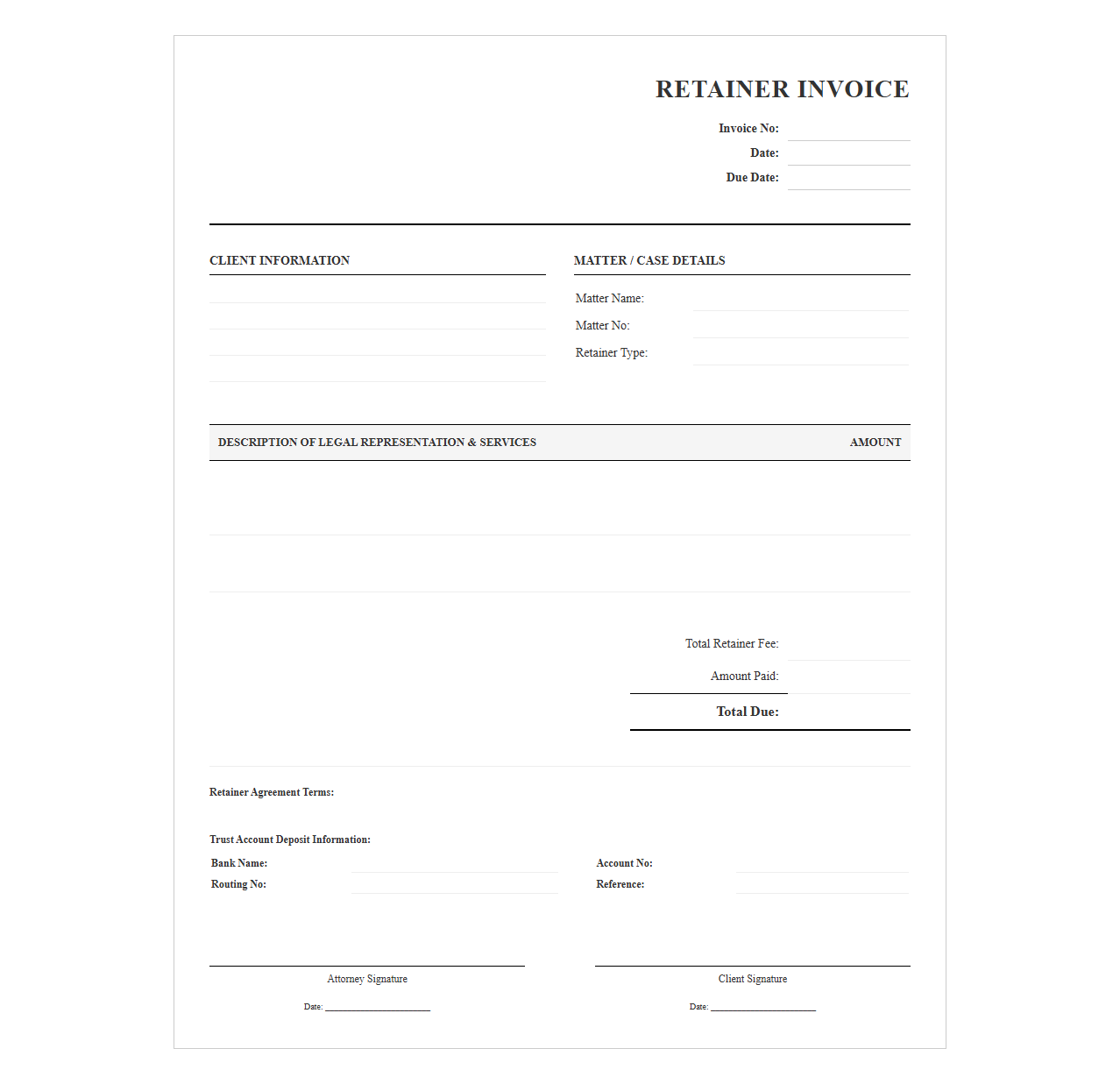
Legal Retainer Agreement Invoice Template
 Download: .PDF
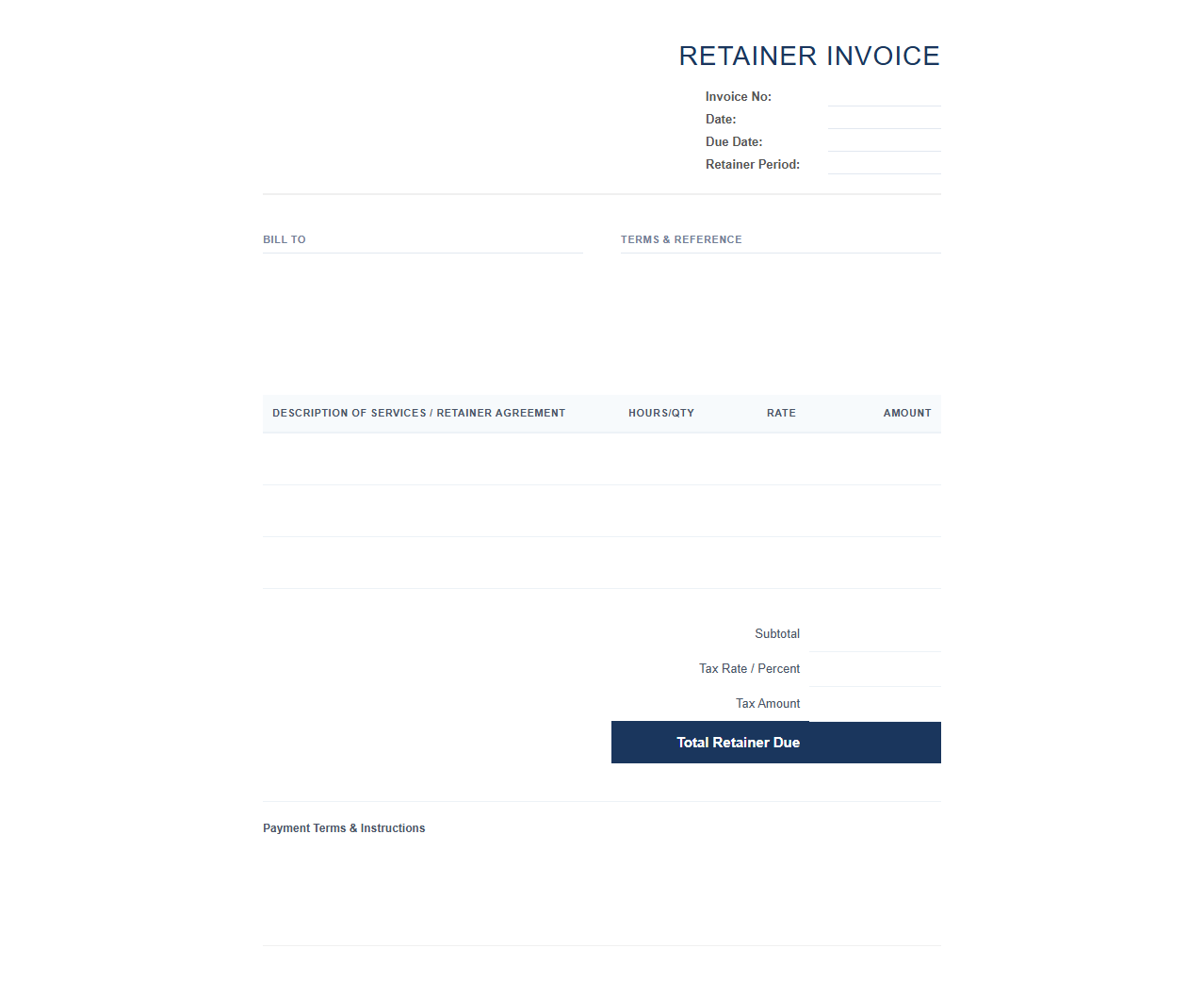
Professional Services Retainer Invoice Template
 Download: .PDF
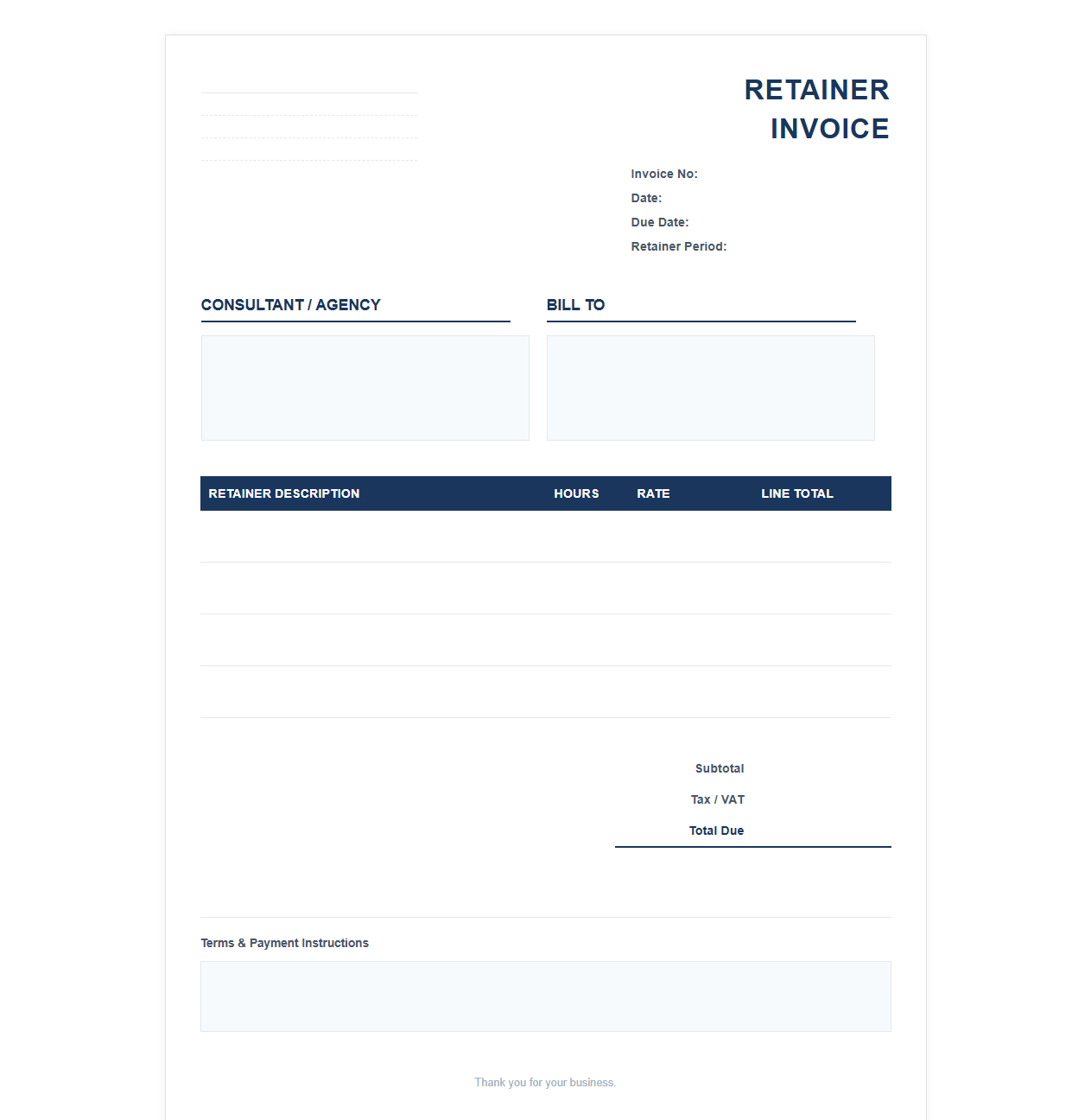
Consulting Retainer Fee Invoice Template
 Download: .PDF
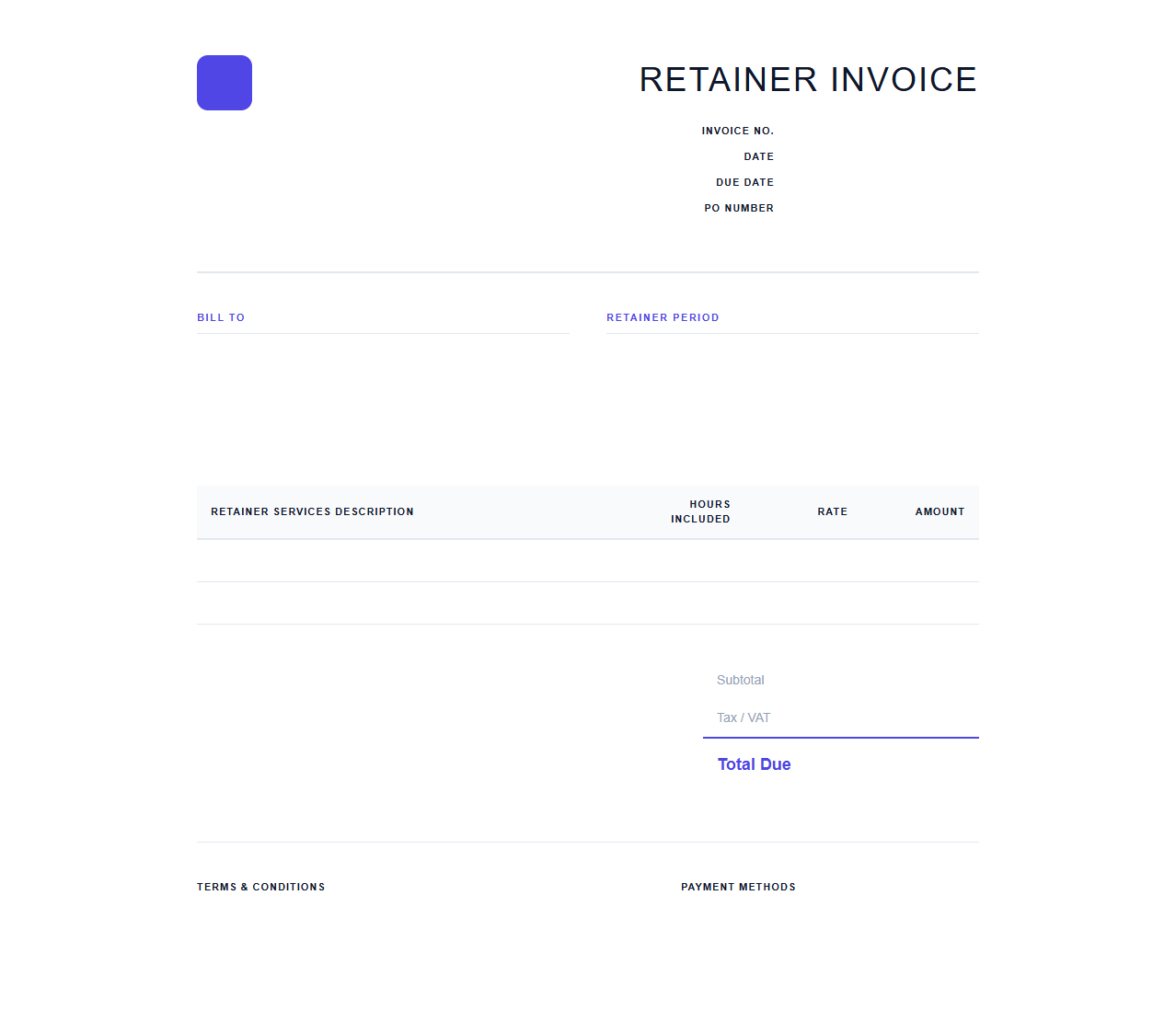
Creative Agency Retainer Invoice Template
 Download: .PDF
Freelancer Retainer Billing Statement Template
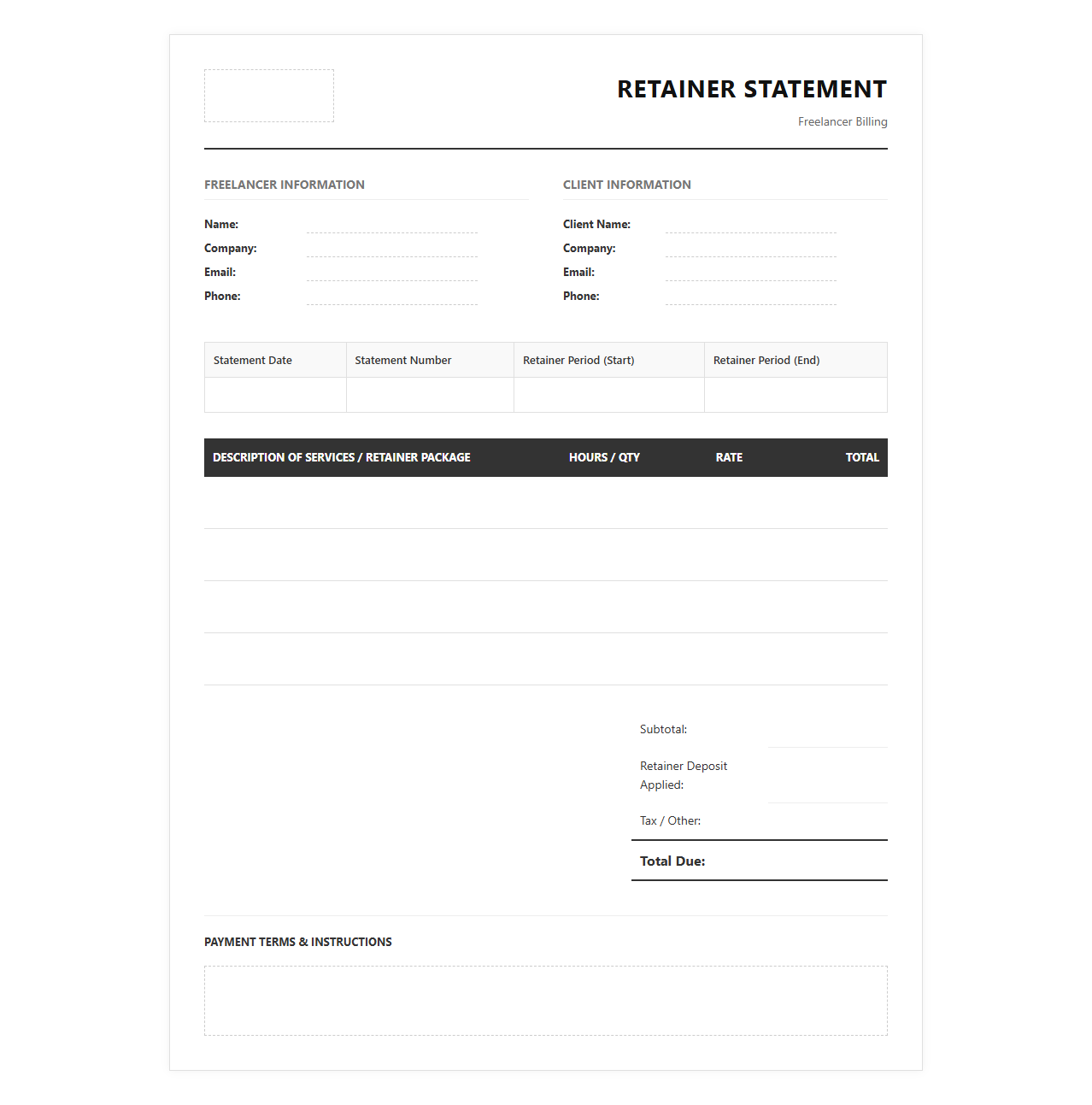 Download: .PDF
Advance Retainer Deposit Invoice Template
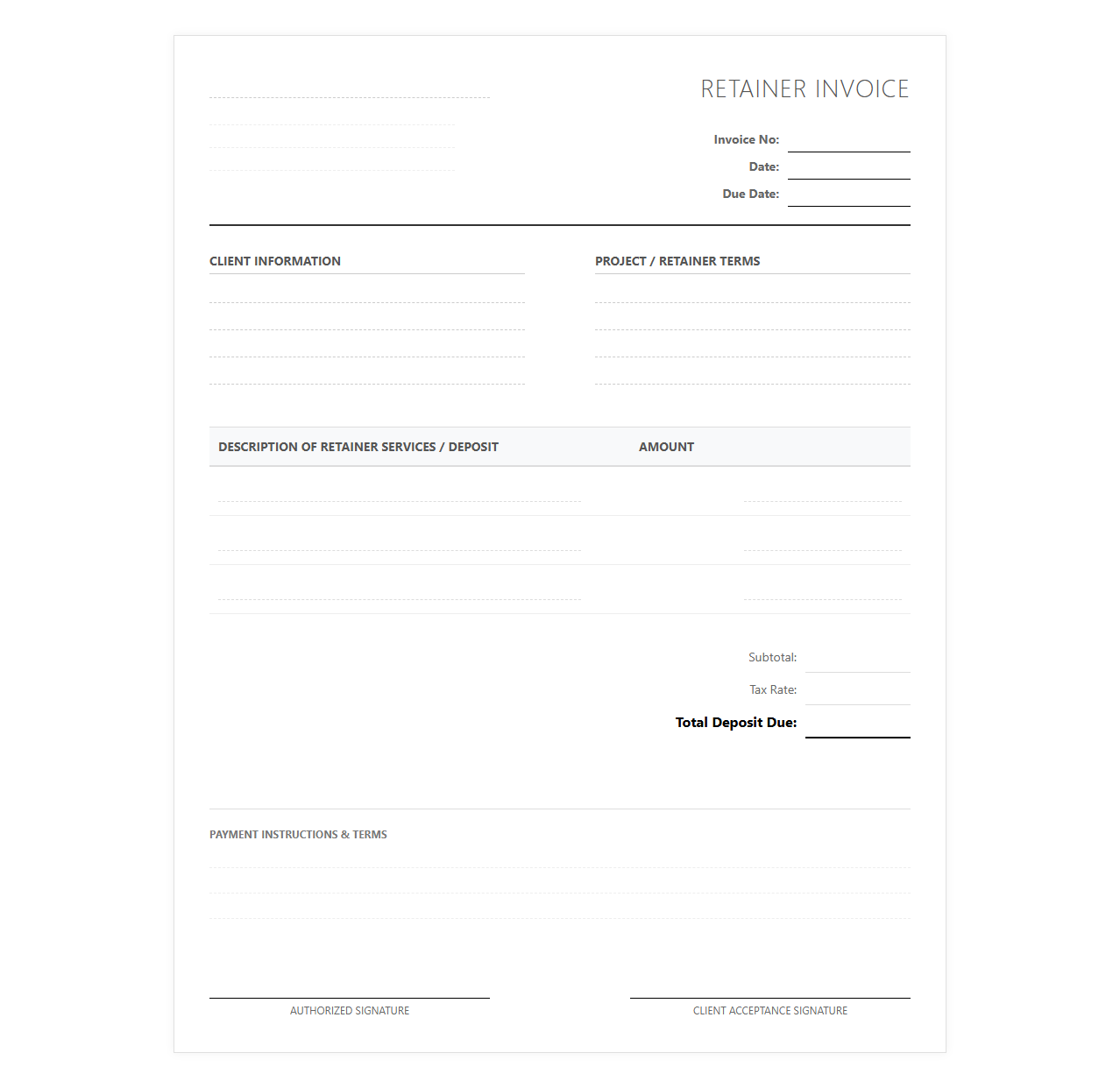 Download: .PDF
Recurring Retainer Fee Invoice Template
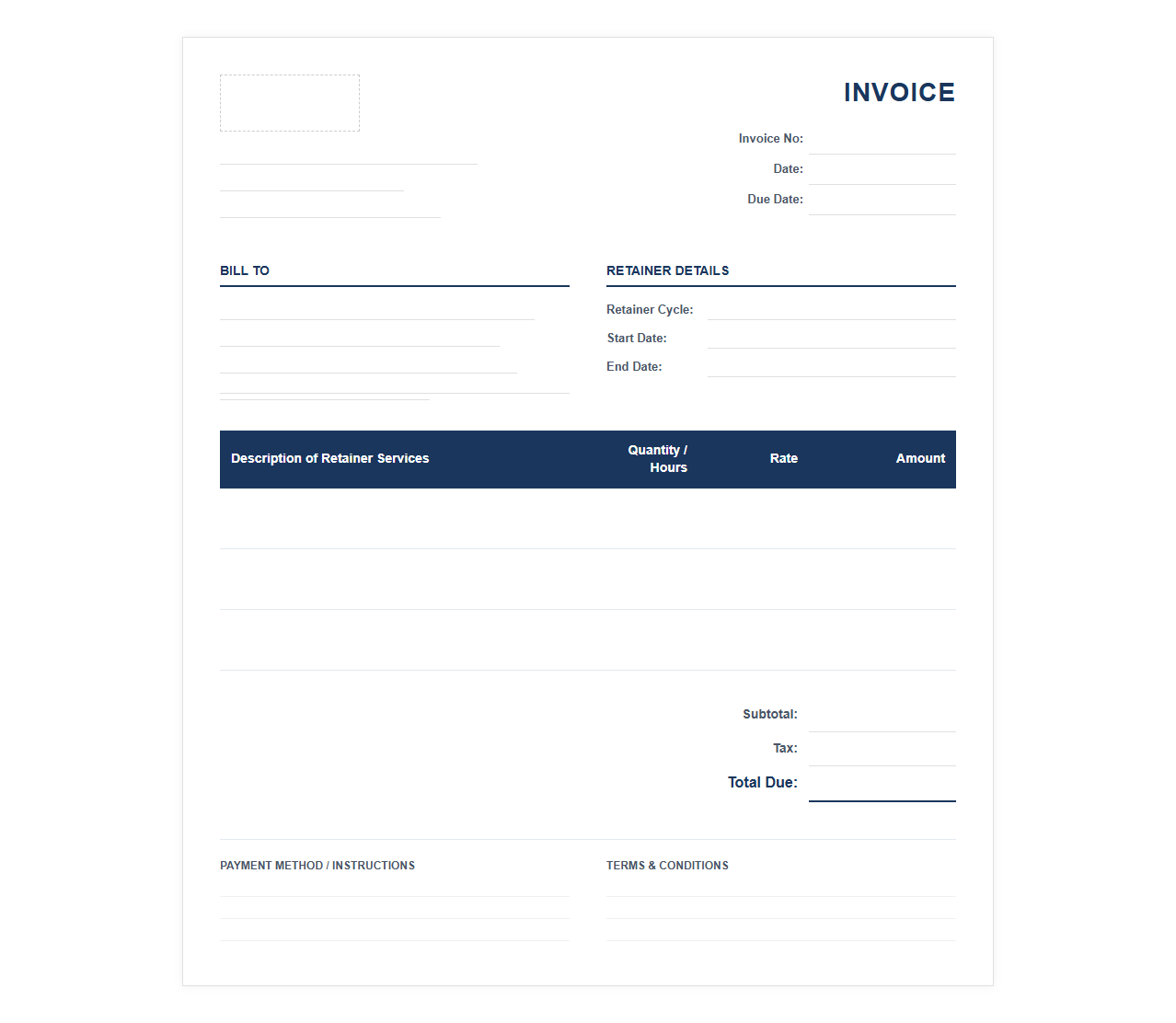 Download: .PDF
Annual Retainer Service Invoice Template
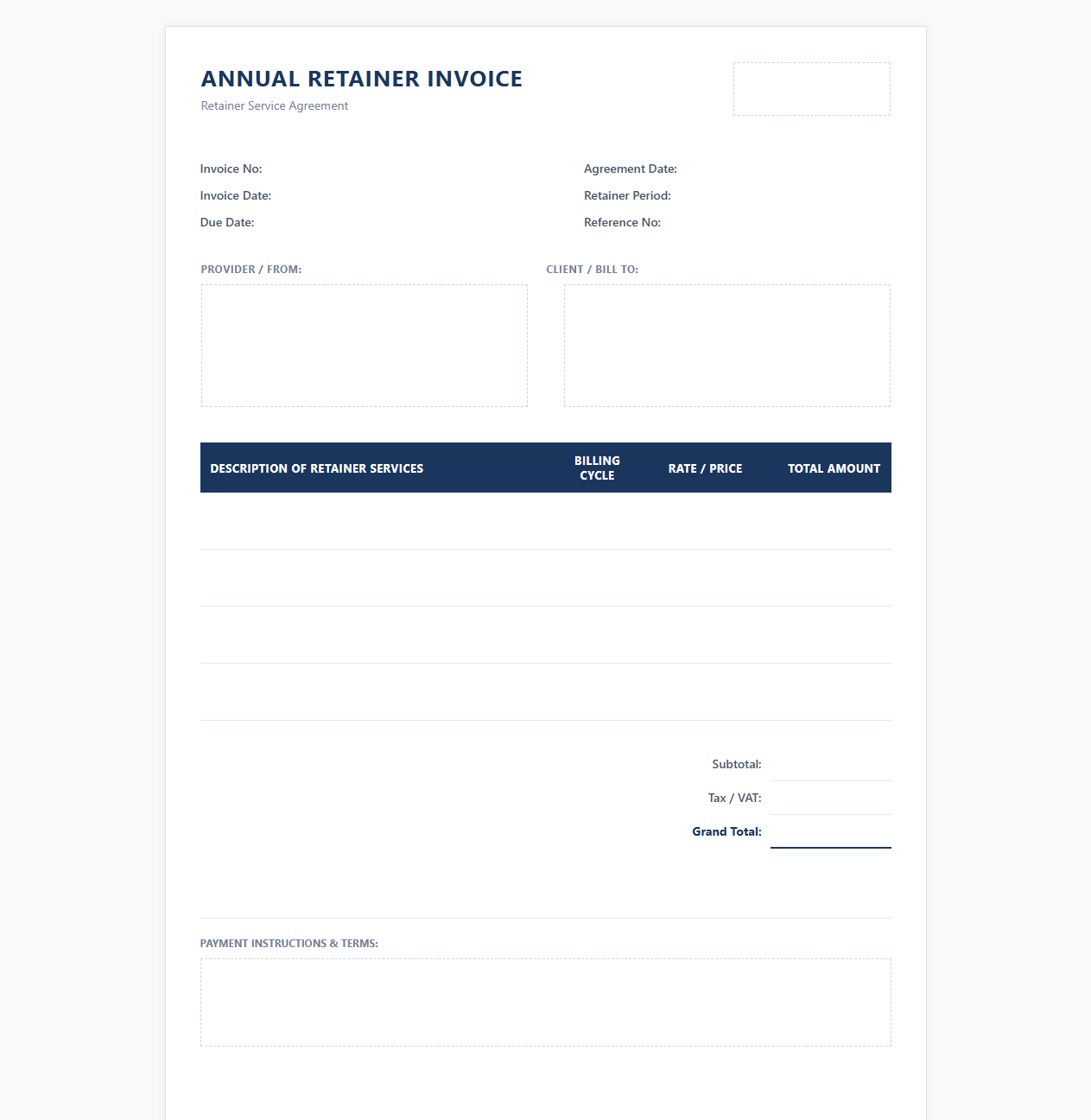 Download: .PDF
The Power of Upfront Payments: Why Retainers Rule Freelance and Agency Billing
In the modern freelance and agency landscape, cash flow volatility is one of the greatest threats to business sustainability. Relying on post-service payments often leads to the dreaded "feast or famine" cycle, leaving professionals vulnerable to delayed payments or outright non-payment. Incorporating a retainer invoice model secures consistent cash flow by requiring clients to pay for services before the work begins. By securing funds upfront, you minimize the risk of unpaid invoices and establish clear, professional boundaries with your clients. This professional structure shifts the dynamic from a reactive, transactional relationship to a proactive partnership where your time and expertise are respected and guaranteed. Securing upfront commitment ensures that your business remains liquid, predictable, and resilient.
Demystifying the Retainer Invoice: How It Works
A retainer invoice is a billing statement issued to a client to secure payment in advance of services being rendered. Unlike standard post-service invoicing-where a client is billed after milestones are completed or hours are tracked-retainer invoicing requires the client to pay a set fee upfront to reserve your dedicated time or a specific package of deliverables.
When the invoice is paid, the funds are often held in reserve and drawn down as work is completed, or they are treated as a flat recurring fee for ongoing monthly availability. This fundamental shift from retroactive billing to advance billing ensures you are never left funding a client's project out of your own pocket.
Template 1: The Monthly Fixed-Fee Retainer Model
The fixed-fee monthly retainer model is ideal for ongoing, predictable services such as social media management, SEO maintenance, or routine consulting. Under this agreement, the client pays a set monthly fee for a defined scope of work, guaranteeing continuous support without the friction of constant renegotiations.
- Clear definition of monthly deliverables (e.g., 4 blog posts, 10 social media graphics).
- Specified monthly billing date (typically the 1st of each month).
- A flat fee rate that remains constant regardless of the exact hours spent.
- Explicit terms regarding out-of-scope requests and how they will be billed.
Template 2: Hour-Based Retainer Billing for Flexible Projects
For projects where the scope of work fluctuates, an hour-based retainer model offers the perfect balance of flexibility and security. Clients prepay for a set block of hours each month, and you deduct your active working hours from this prepaid balance as you go.
To keep this billing model transparent, your invoice template should clearly display the breakdown of hours purchased, hours consumed, and any remaining balance. For example, your invoice might track consumption using a basic calculation: Prepaid Hours (20) - Consumed Hours (15) = Rollover/Remaining Hours (5).
- Total prepaid hours secured at the start of the billing cycle.
- An hourly rate breakdown mapped directly to the upfront payment.
- Rollover policy guidelines specifying if unused hours expire or carry over to the next month.
- A system for notifying the client when their prepaid hour threshold is running low.
Template 3: Milestone Deposits for Large-Scale Projects
Large-scale projects with extended timelines, such as website developments or complete brand overhauls, require a structured financial commitment before launch. The milestone deposit template secures an upfront payment to cover discovery and initial phases, followed by scheduled payments triggered by specific project phases.
"An upfront deposit is more than just secure cash flow; it is a formal declaration of mutual commitment to the project's success."
This structure guarantees that your team is compensated for the initial setup and research, preventing project abandonment or sudden halts from draining your resources.
Anatomy of a High-Converting Retainer Invoice Template
An effective retainer invoice template must do more than simply ask for money; it must clearly communicate the value of the reserved capacity and eliminate any ambiguity. To ensure prompt payment and avoid misunderstandings, every professional retainer invoice should feature a highly structured checklist of core components.
- Detailed Payment Terms: Clearly define the due date, acceptable payment methods, and any late payment fees.
- Explicit Scope of Work: List exactly what is included in the retainer period to prevent scope creep.
- Billing Cycle Dates: Specify the exact timeframe (e.g., October 1st to October 31st) that this upfront payment covers.
- Depletion and Rollover Terms: Clearly state whether unused hours or deliverables expire at the end of the month.
By keeping these elements prominent and transparent, you reduce administrative friction and encourage rapid, hassle-free payments.
Best Practices: How to Pitch and Transition Clients to Retainers
Transitioning existing clients from an hourly, post-paid model to an upfront retainer model requires a gentle, value-first approach. Instead of positioning the change as a benefit to your cash flow, focus entirely on how the retainer structure improves their experience and guarantees results.
Clients are often happy to pay upfront when they understand that a retainer secures their priority access to your schedule, preventing delays in project execution.
- Highlight guaranteed availability and priority scheduling over ad-hoc clients.
- Offer a minor incentive, such as a locked-in discounted rate, for a multi-month retainer commitment.
- Frame the transition around simplified, highly predictable budgeting for their internal finance team.
- Start with a trial period to let the client experience the ease of seamless, continuous delivery.
Why Retainers Benefit the Client Experience
While retainers are incredibly beneficial for service providers, they also offer massive advantages to clients. By securing a retainer, clients eliminate the administrative burden of reviewing and approving individual invoices for every small task. It streamlines their accounting processes, provides predictable monthly expenses, and guarantees that their projects receive dedicated attention from a trusted partner who understands their brand deeply.
Managing Retainer Scope Creep Efficiently
The success of a retainer agreement relies heavily on maintaining strict boundaries around the agreed-upon scope of work. Without clear boundaries, clients may assume that your ongoing availability translates to unlimited revisions or extra deliverables. Establishing automated tracking systems and sending regular usage updates ensures that both parties stay aligned on consumption, preventing misunderstandings and maintaining a healthy working relationship.
Scaling Your Business with Predictable Revenue
Transitioning your business to a retainer-first billing model is the fastest way to build predictable, recurring revenue. When you know exactly how much income is guaranteed at the start of every month, you gain the financial freedom to make long-term business decisions. This stability allows you to invest in better tools, hire talented team members, and scale your operations with absolute confidence.

Leave a comment