

Managing trust accounts demands meticulous precision, yet fiduciaries frequently struggle with the administrative burden of complex, manual billing. Untangling multi-tiered fee schedules and court-approved accounting standards often consumes valuable hours that should be dedicated to wealth preservation. Before implementing any billing tool, however, professionals must navigate a modern landscape of heightened regulatory scrutiny and demand for absolute transparency.
Transitioning to standardized, professional invoice templates grants firms immediate operational relief while reinforcing beneficiary trust. It is important to note that these templates serve as customizable structural frameworks rather than a substitute for jurisdiction-specific legal and accounting counsel. By utilizing concrete invoice layouts-such as those featuring dedicated sections for principal-income splits and corpus-based commission calculations-trust officers can eliminate ambiguity. In this guide, we will examine the essential components of fiduciary invoices and provide customizable templates designed to streamline your firm's billing workflow.
Trust Administration Invoice Template
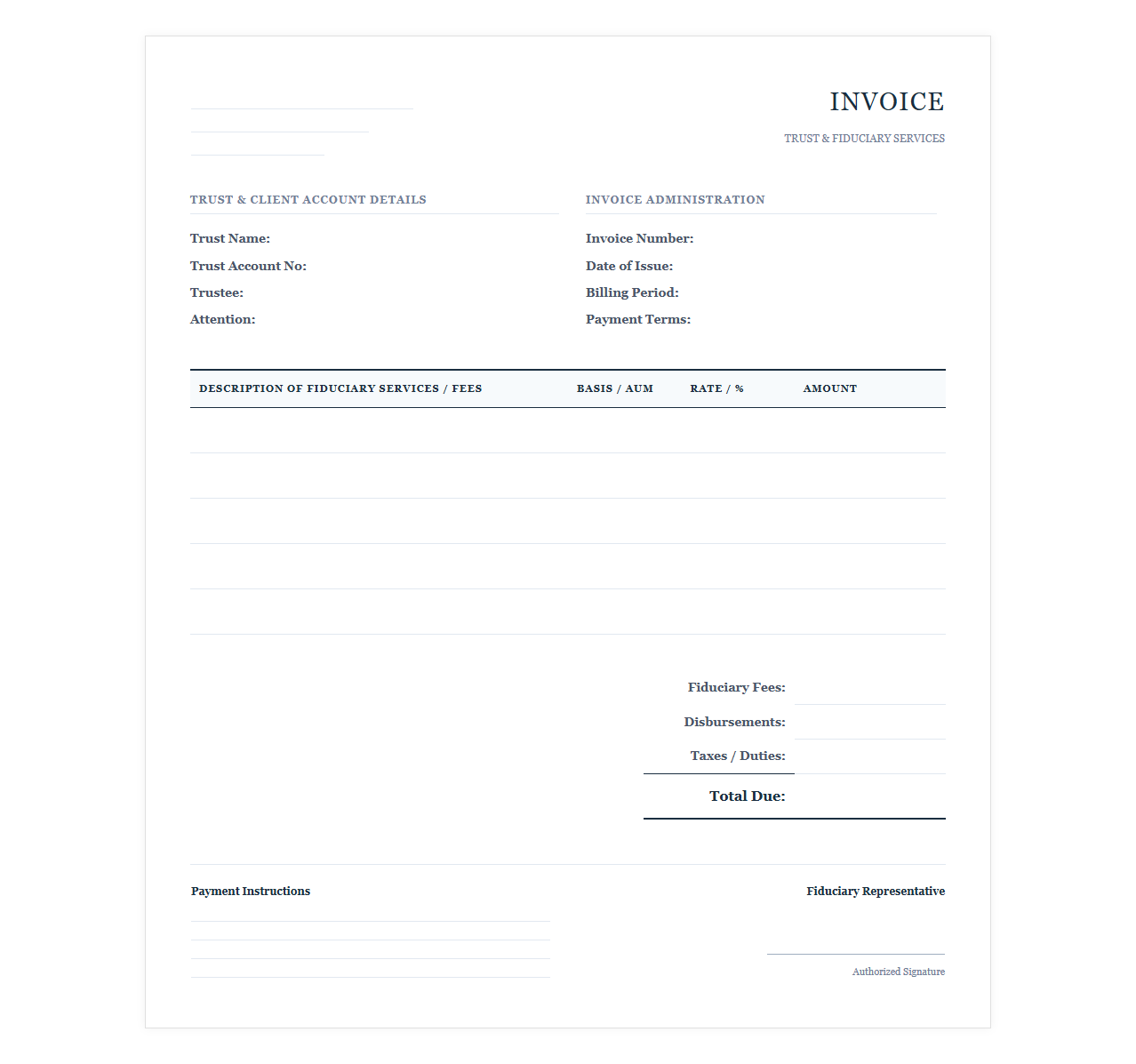 Download: .PDF
Fiduciary Services Billing Statement Template
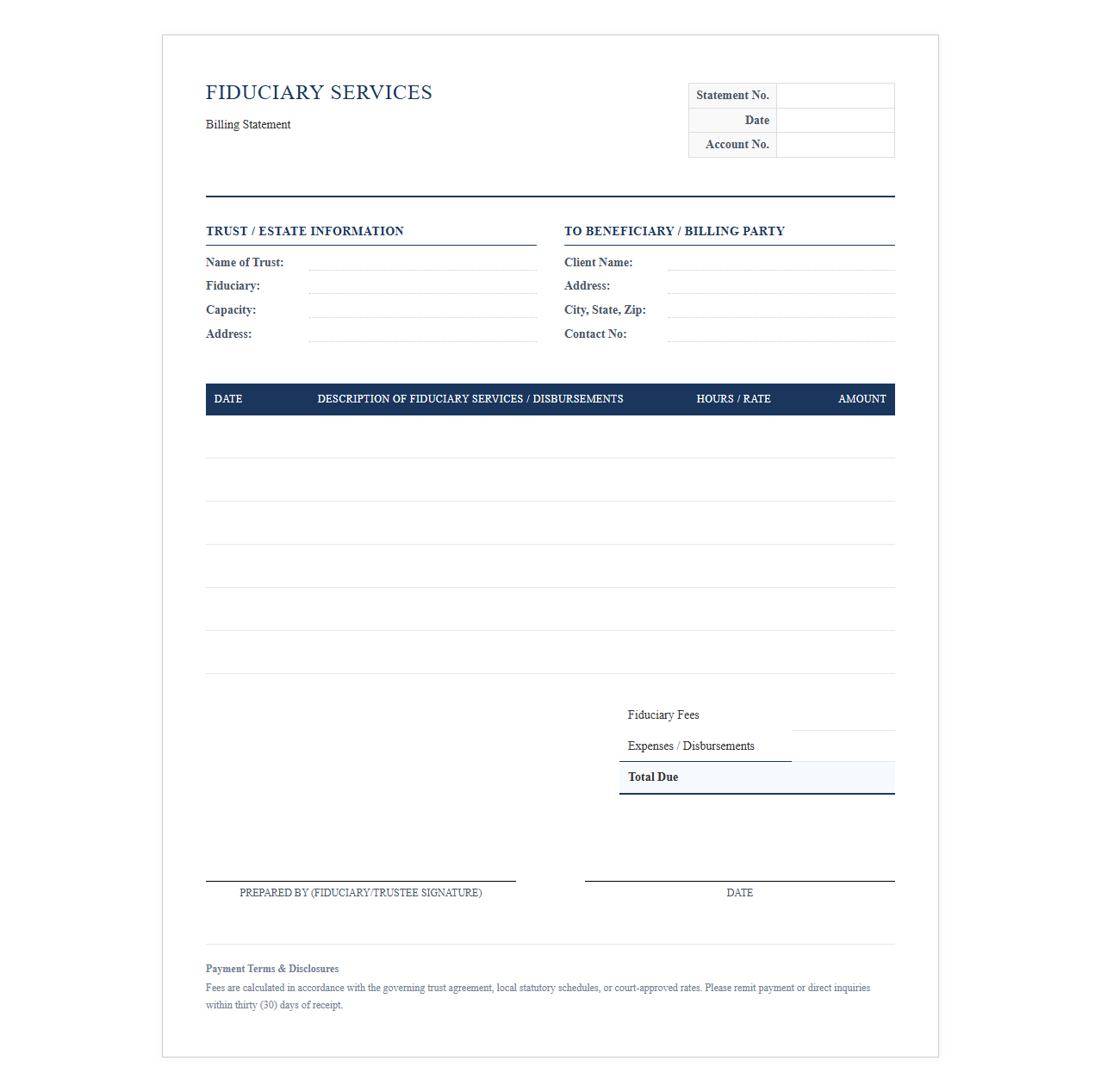 Download: .PDF
Corporate Trustee Services Billing Template
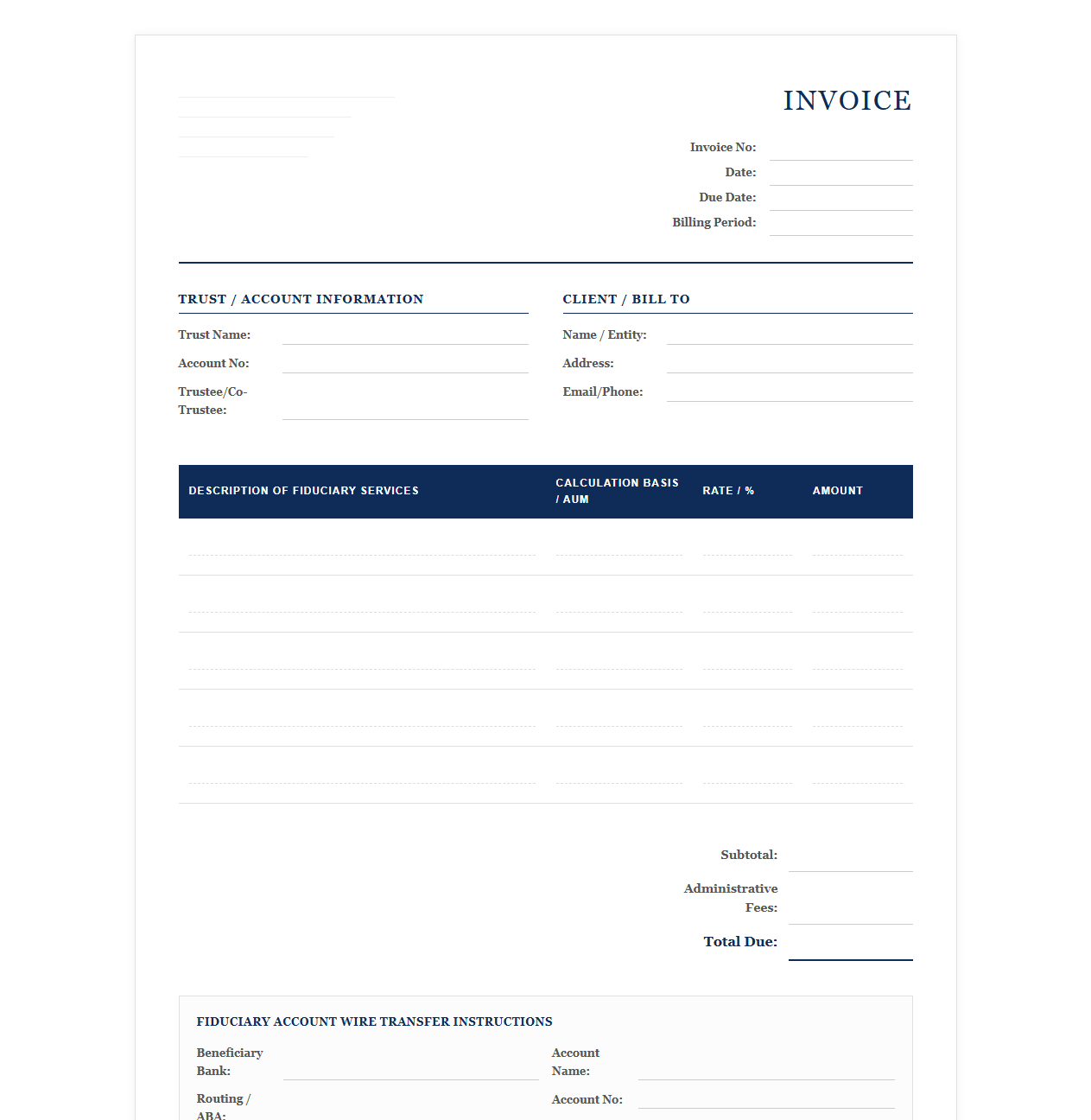 Download: .PDF
Wealth and Trust Management Invoice
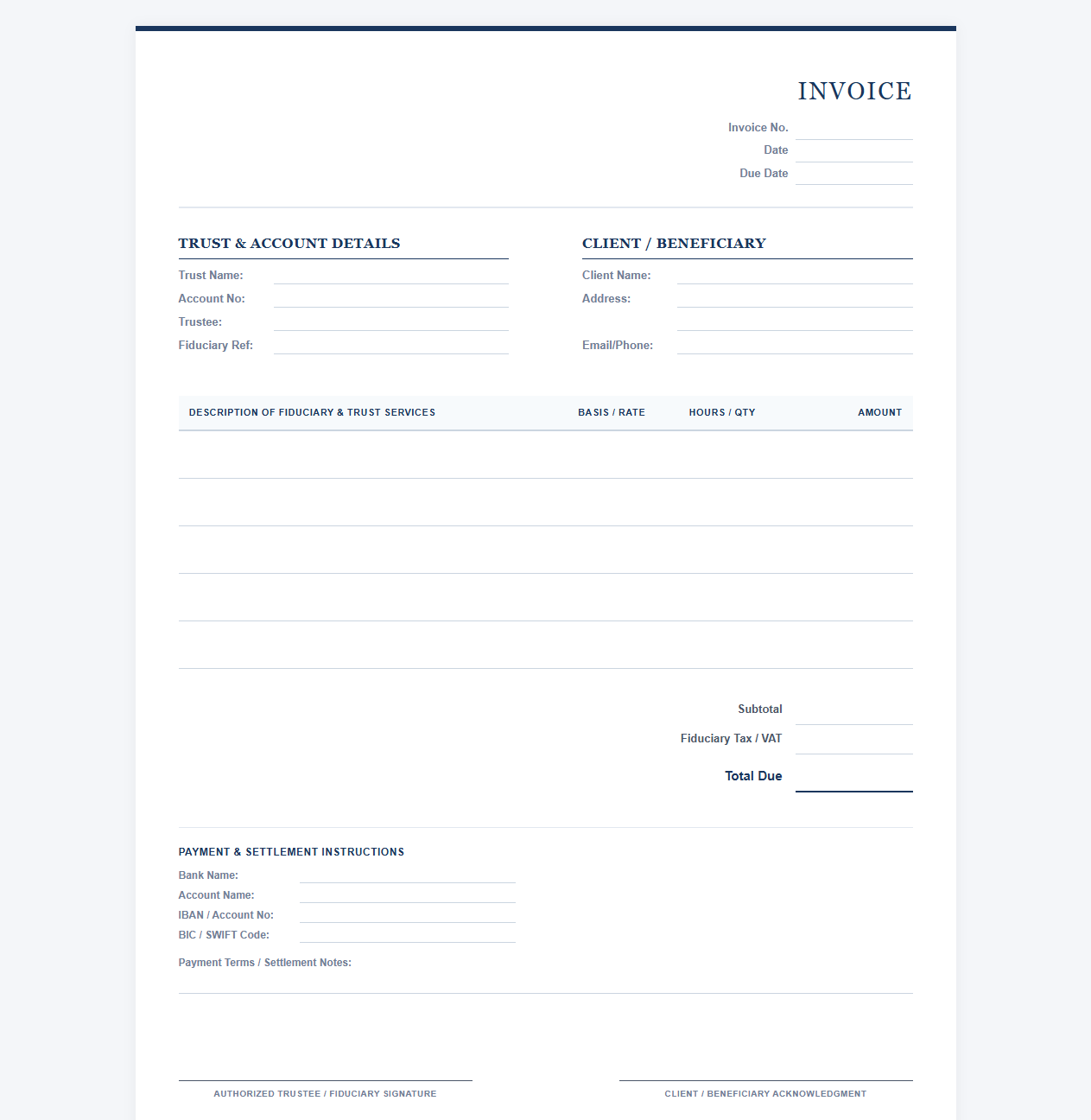 Download: .PDF
Estate and Trust Fiduciary Invoice
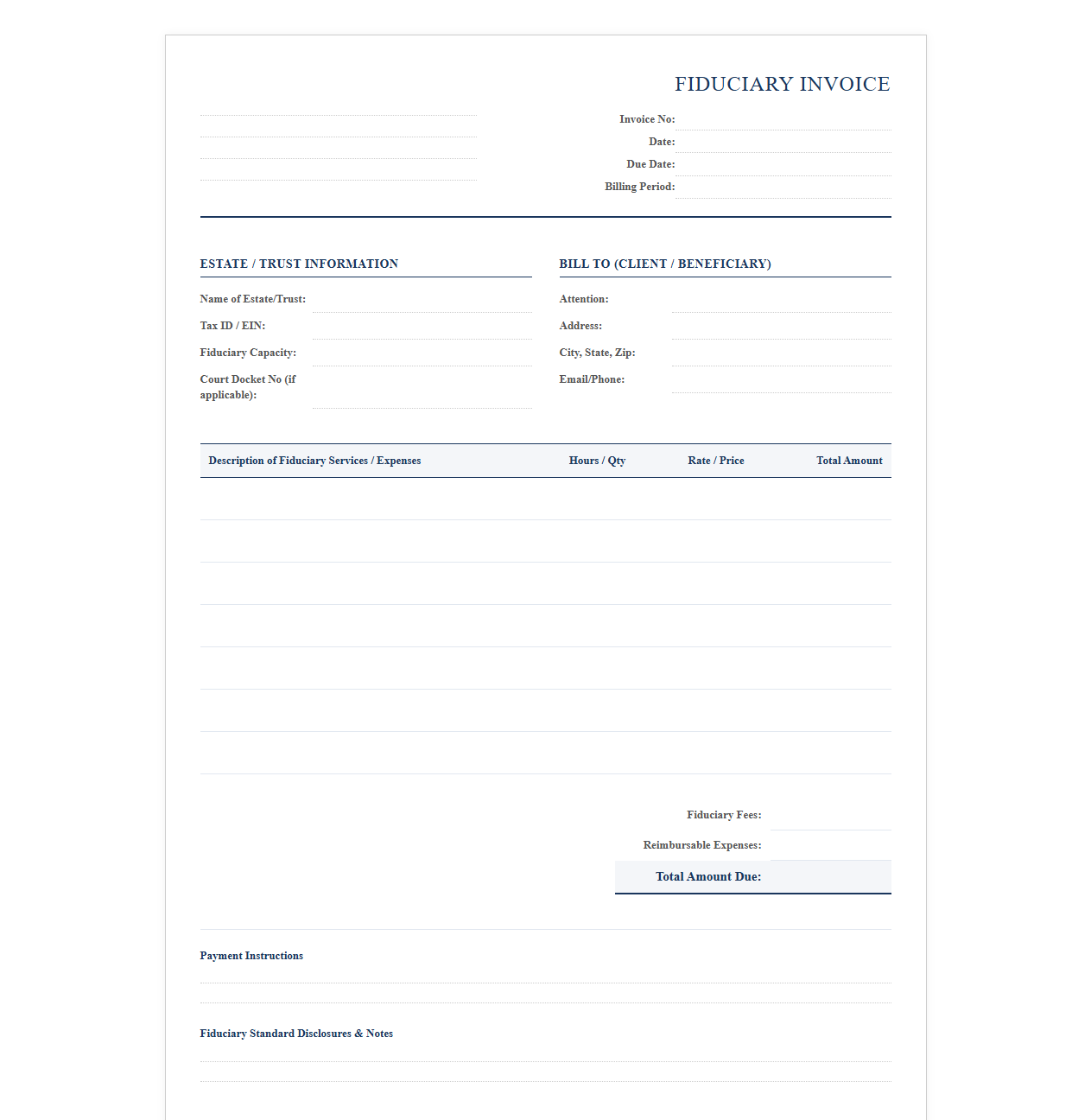 Download: .PDF
Hourly Trust Advisory Billing Template
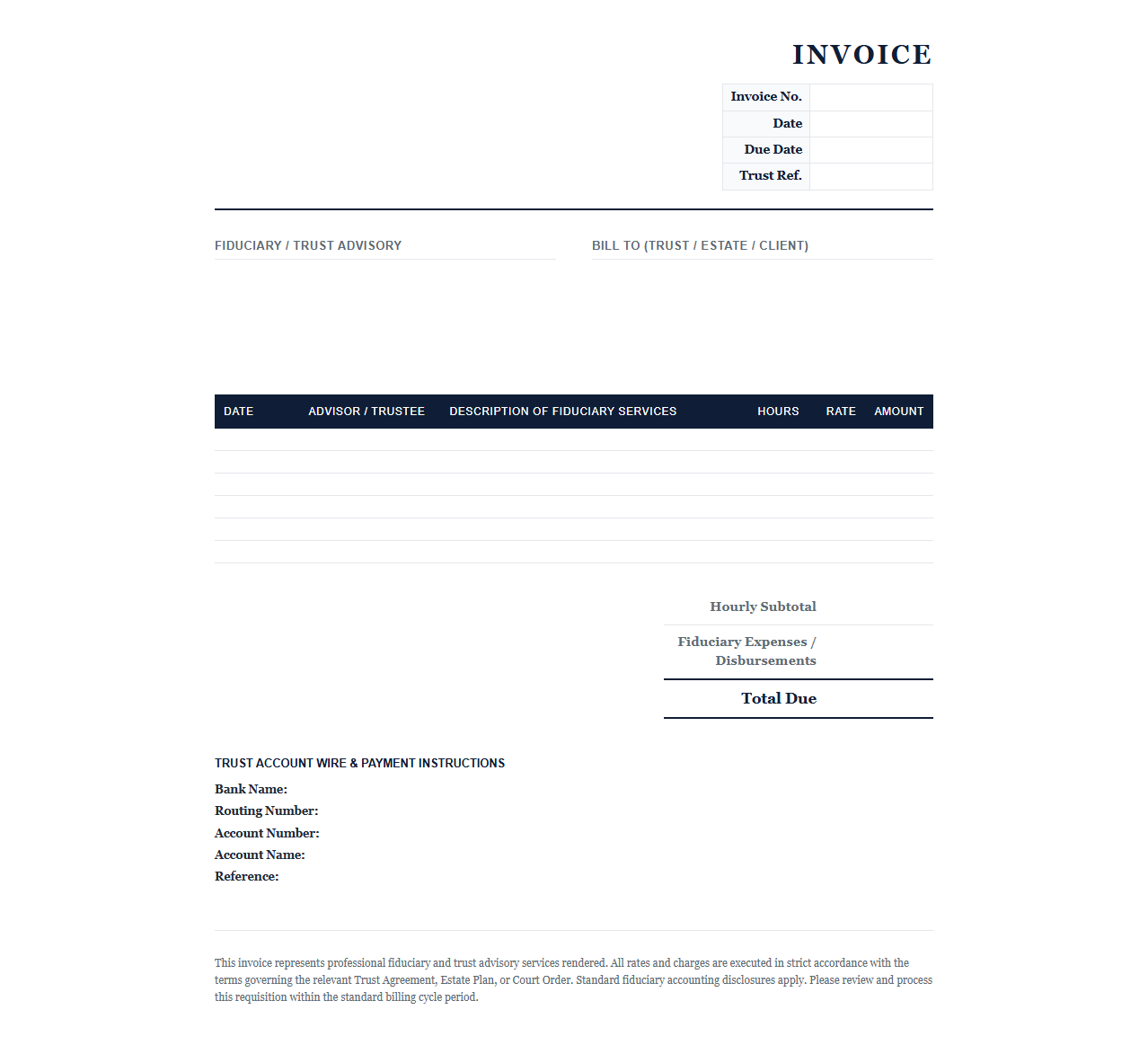 Download: .PDF
Fiduciary Fees and Expenses Invoice
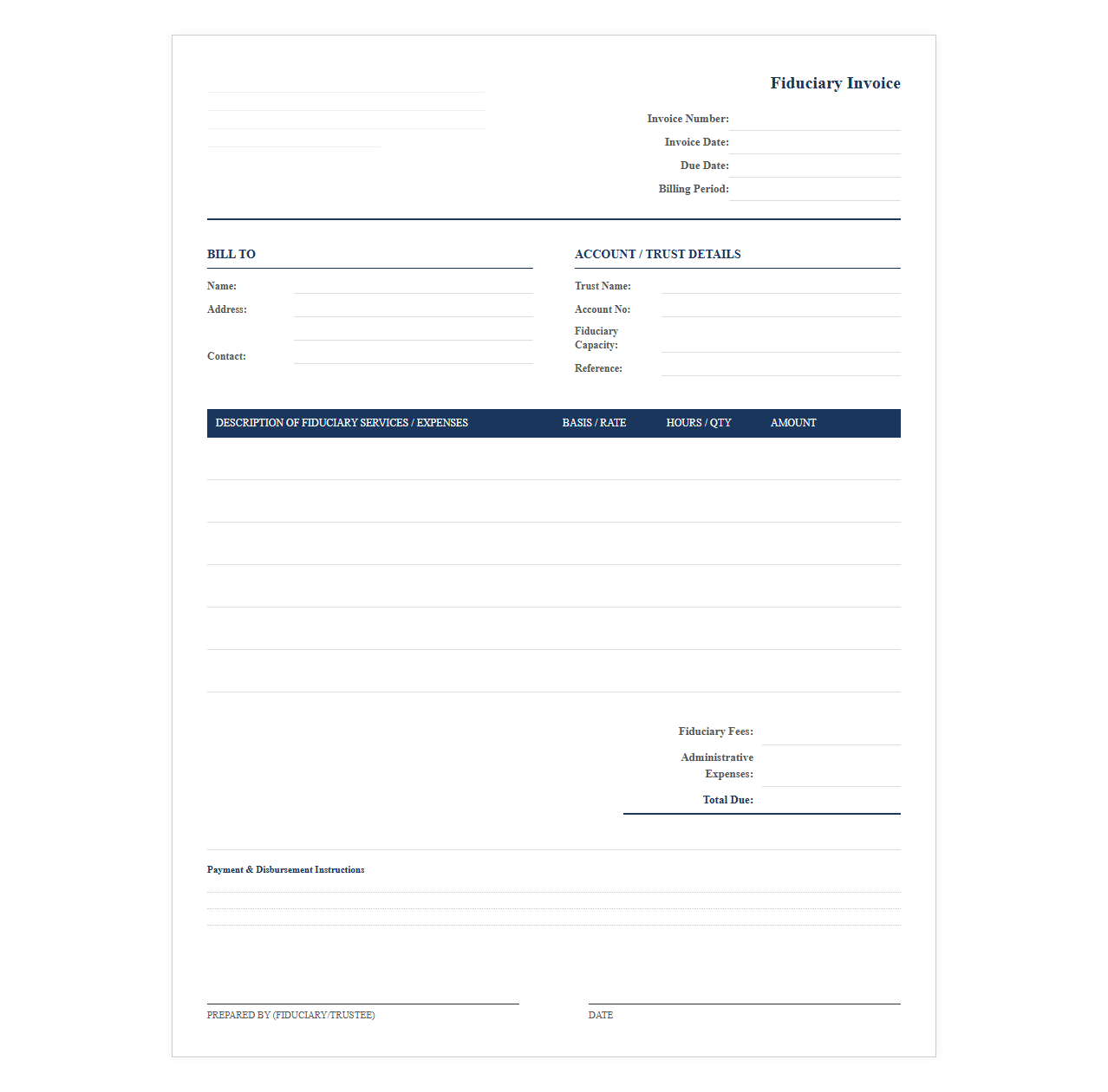 Download: .PDF
Asset Protection Trust Invoice Template
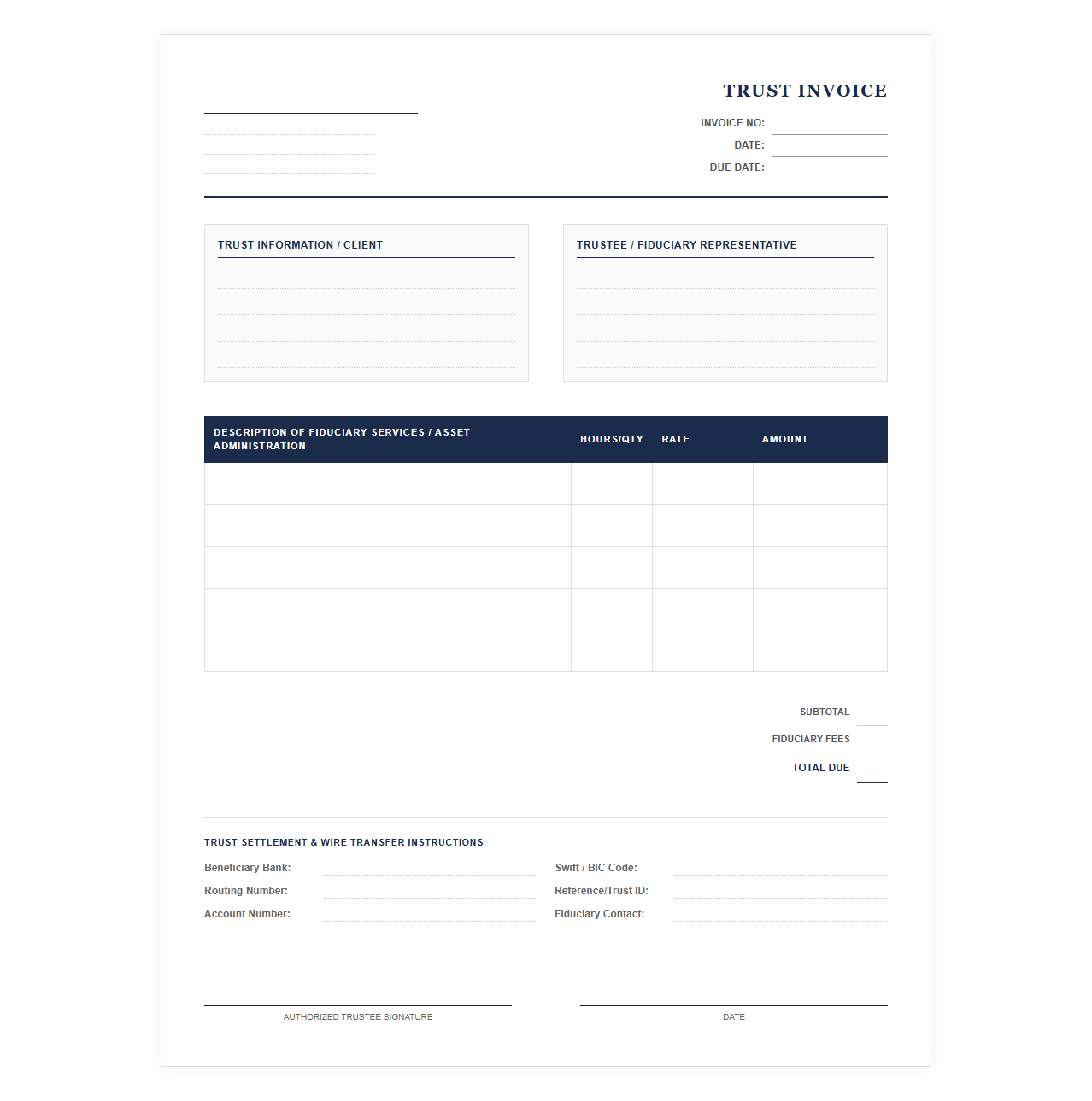 Download: .PDF
Annual Trustee Services Invoice
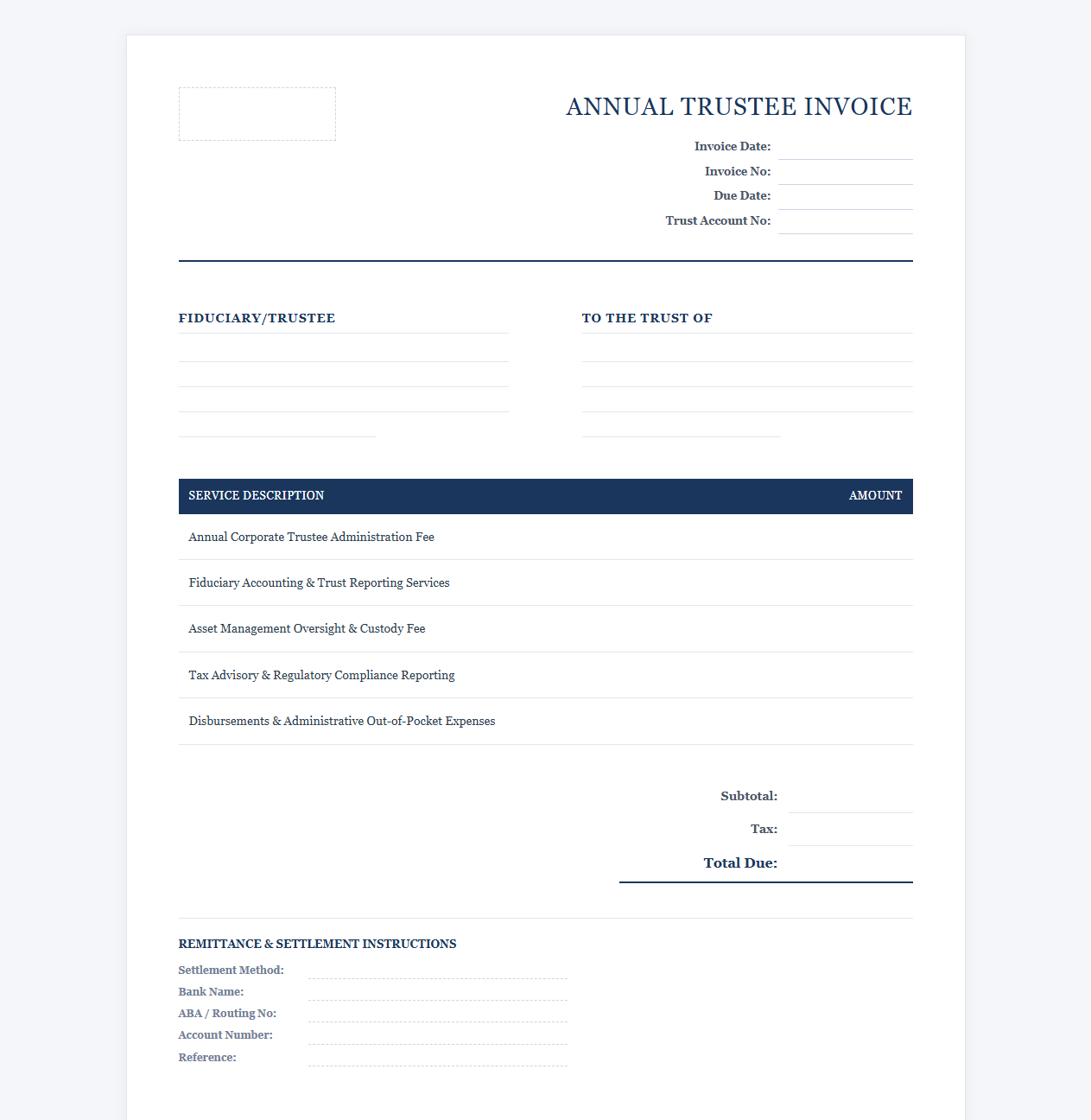 Download: .PDF
The Unique Challenges of Fiduciary Billing
Fiduciary billing operates under a level of scrutiny unmatched by standard business practices. Managing trust assets demands absolute precision, as trustees are held to the highest legal and ethical standards. Any oversight or lack of clarity in billing can lead to severe legal consequences, strained relationships with beneficiaries, and potential personal liability.
To maintain absolute transparency and accuracy in trust administration, every financial transaction and administrative fee must be documented meticulously. This rigorous standard of care ensures that the fiduciary's actions align with the creator's intent and legal mandates, transforming billing from a routine administrative chore into a critical component of legal compliance.
Why Generic Invoice Templates Fail Trust Services
Standard business invoice templates are designed for straightforward transactions-usually a simple exchange of goods or services for a set price. However, trust services involve multifaceted relationships and strict regulatory oversight. A generic template lacks the capability to detail the nuances of court accounting standards and fiduciary expectations.
Without specialized fields, these basic forms fail to show the exact nature of the work performed, leaving beneficiaries and legal professionals in the dark. Trust administration requires a granular approach that ordinary invoicing software simply cannot support, often leading to confusion and costly delays during formal audits.
Essential Elements of a Professional Fiduciary Invoice
A professional fiduciary invoice must serve as a comprehensive legal record. It should clearly outline who is performing the work, on whose behalf, and under what authority. To meet these rigorous standards, every invoice must include key components.
- Trust Identifying Details: The formal, legal name of the trust to ensure proper record mapping.
- Trustee Capacity: A clear statement of the fiduciary's role, whether as a corporate trustee, co-trustee, or successor.
- Billing Period Dates: Precise start and end dates for the active service period to prevent overlapping charges.
- Payment Instructions: Clear guidelines on how and from which trust accounts the fees will be paid.
Structuring Complex Trust Fees and Disbursements
Trustees often utilize various billing structures depending on the complexity of the trust and the specific duties performed. Presenting these diverse fees clearly helps maintain trust with beneficiaries and simplifies court reviews.
| Fee Type | Description | Calculation Method |
|---|---|---|
| Hourly Administration | Active management, communication, and legal coordination. | Actual hours multiplied by the agreed professional rate. |
| Assets Under Management (AUM) | Overall portfolio oversight and wealth management services. | An annualized percentage calculated and charged periodically. |
| Reimbursable Disbursements | Out-of-pocket expenses such as filing fees, travel, or postage. | Direct pass-through of the actual cost incurred. |
Designing for Transparency to Prevent Beneficiary Disputes
The physical layout of your billing document plays a significant role in how the information is received. A cluttered, disorganized invoice invites suspicion, whereas a clean, structured document fosters confidence.
Establishing a Clear Visual Hierarchy
Using a balanced layout with a professional color scheme, such as deep navy or slate grey, establishes a sense of authority and calm. Highlighting key figures with bold typography ensures that beneficiaries do not feel that critical financial information is being hidden in fine print.
Automating Your Billing Workflow with Customizable Templates
Manually generating invoices for multiple trusts is not only time-consuming but also opens the door to human error. Utilizing customizable digital templates allows fiduciaries to streamline their workflows while maintaining high professional standards.
- Reduces manual entry errors by utilizing pre-configured mathematical fields.
- Ensures a consistent visual identity and brand professionalism across all client accounts.
- Speeds up the invoicing process, allowing more time to focus on active trust management.
Fiduciary Compliance and Record-Keeping Best Practices
Fiduciaries must remain audit-ready at all times. This means that every issued invoice must be archived securely and associated with the proper accounting period. Aligning billing cycles directly with the trust's fiscal calendar ensures accurate annual reports.

Leave a comment