

Reconciling inventory valuation discrepancies between physical stock counts and the general ledger is a persistent, high-stakes headache for financial controllers. Before these variances can be permanently resolved, organizations must first bridge the gap between raw operational warehouse logs and formal corporate accounting frameworks. Utilizing robust, multi-format ledger templates grants finance teams immediate analytical clarity, safeguarding balance-sheet integrity while drastically reducing audit preparation timelines. It is important to stipulate, however, that these templates are not a substitute for rigorous internal controls; their ultimate success depends entirely on accurate underlying data categorization. Whether your team is executing complex FIFO cost layer adjustments, LIFO liquidations, or weighted-average write-downs, having a structured, adaptable ledger format is critical for regulatory compliance. In the following guide, we will examine how to deploy these multi-format templates, address common valuation errors, and establish a repeatable workflow for seamless adjustments.
Inventory Valuation Adjustment Ledger Sheet
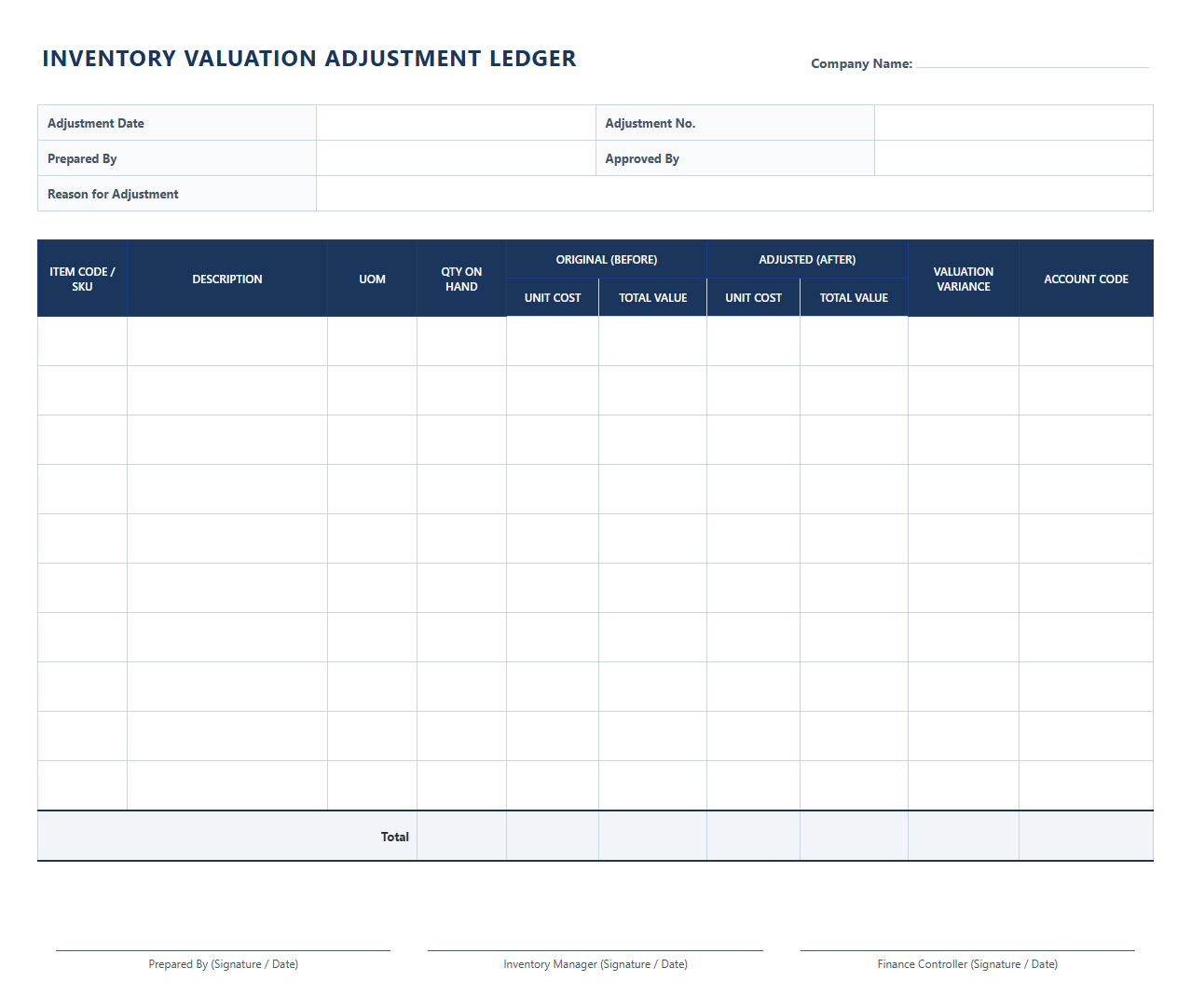 Download: .PDF
Stock Write-Down and Valuation Adjustment Journal
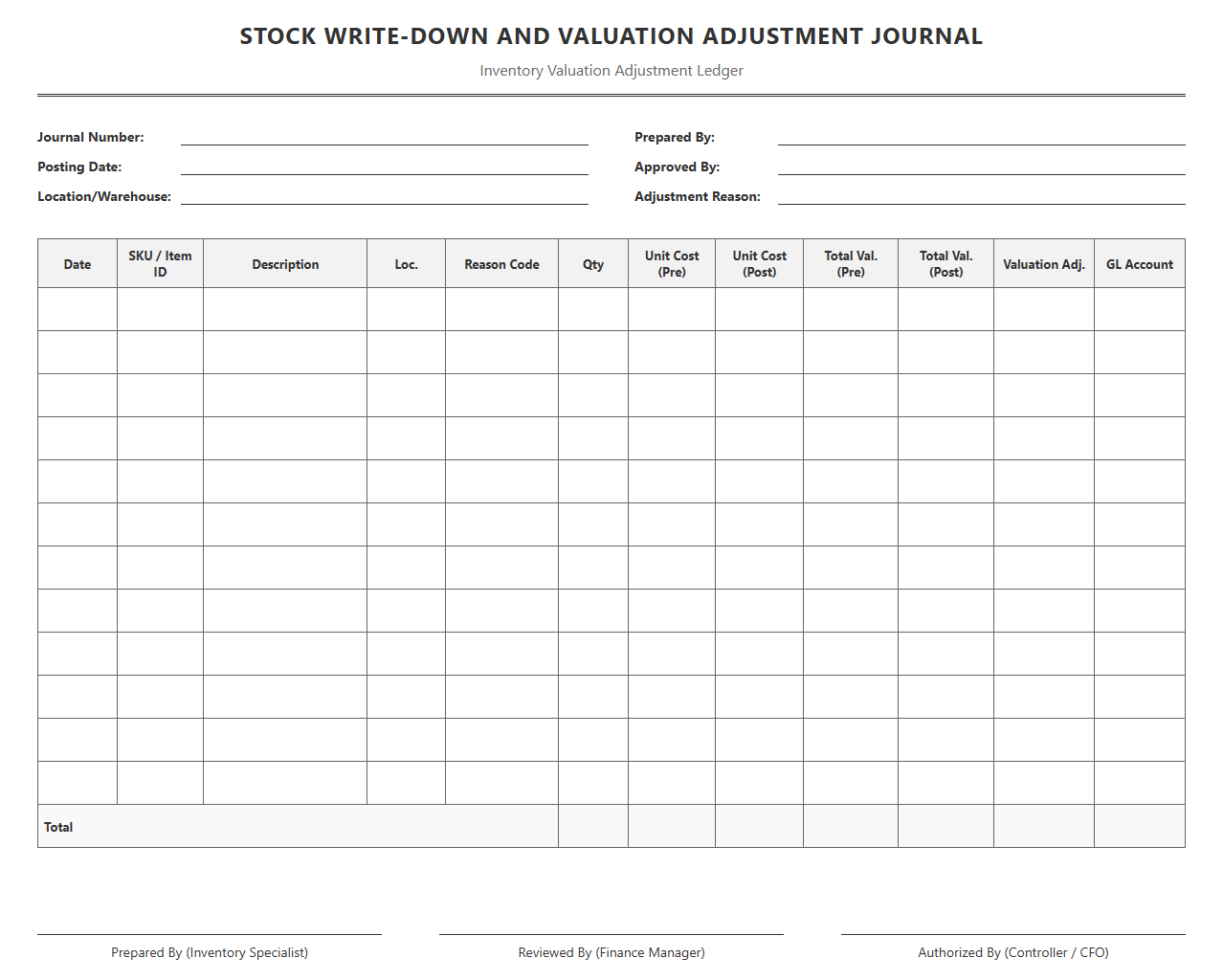 Download: .PDF
Lower of Cost or Market Inventory Ledger
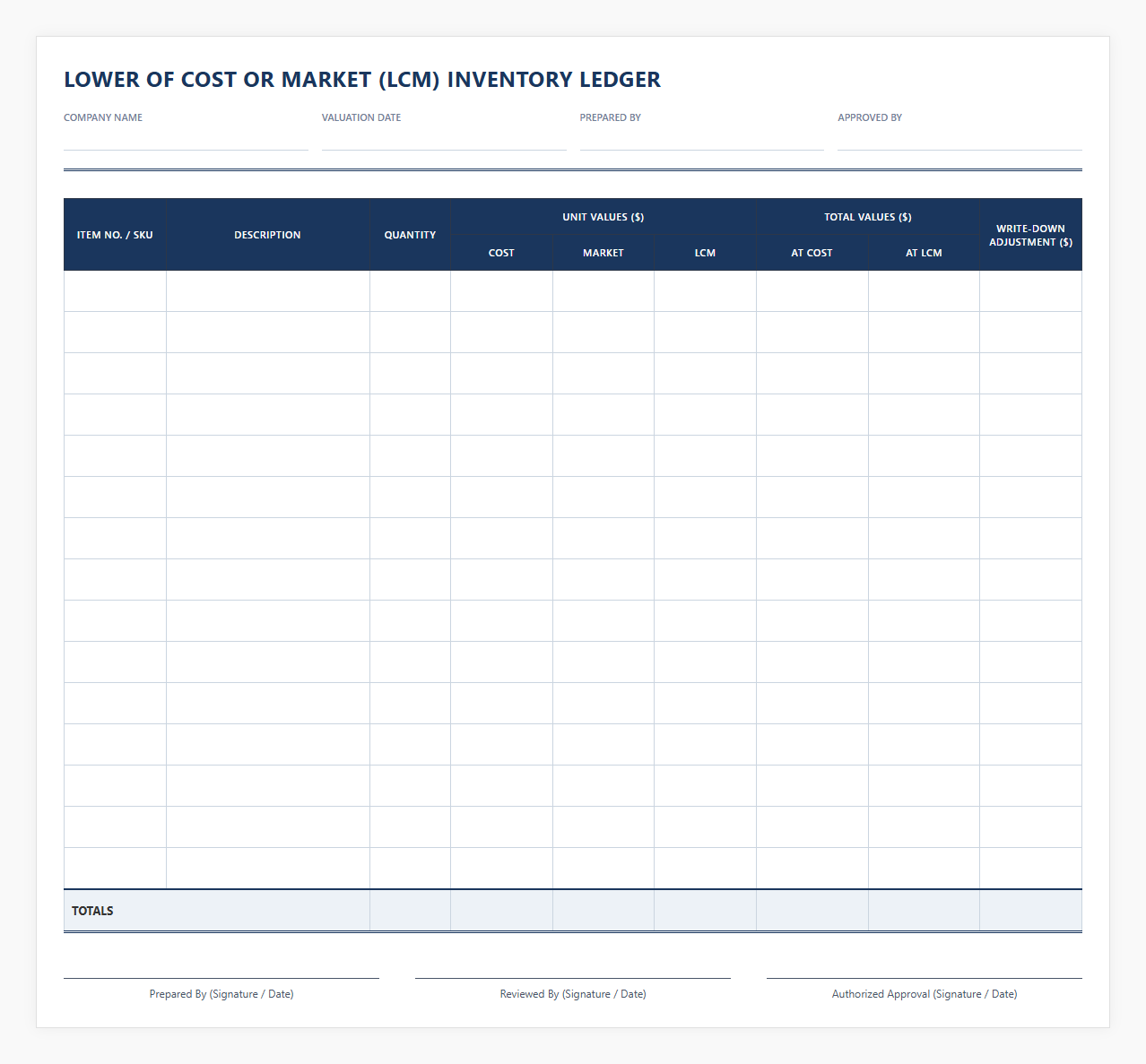 Download: .PDF
FIFO to LIFO Inventory Valuation Adjustment Record
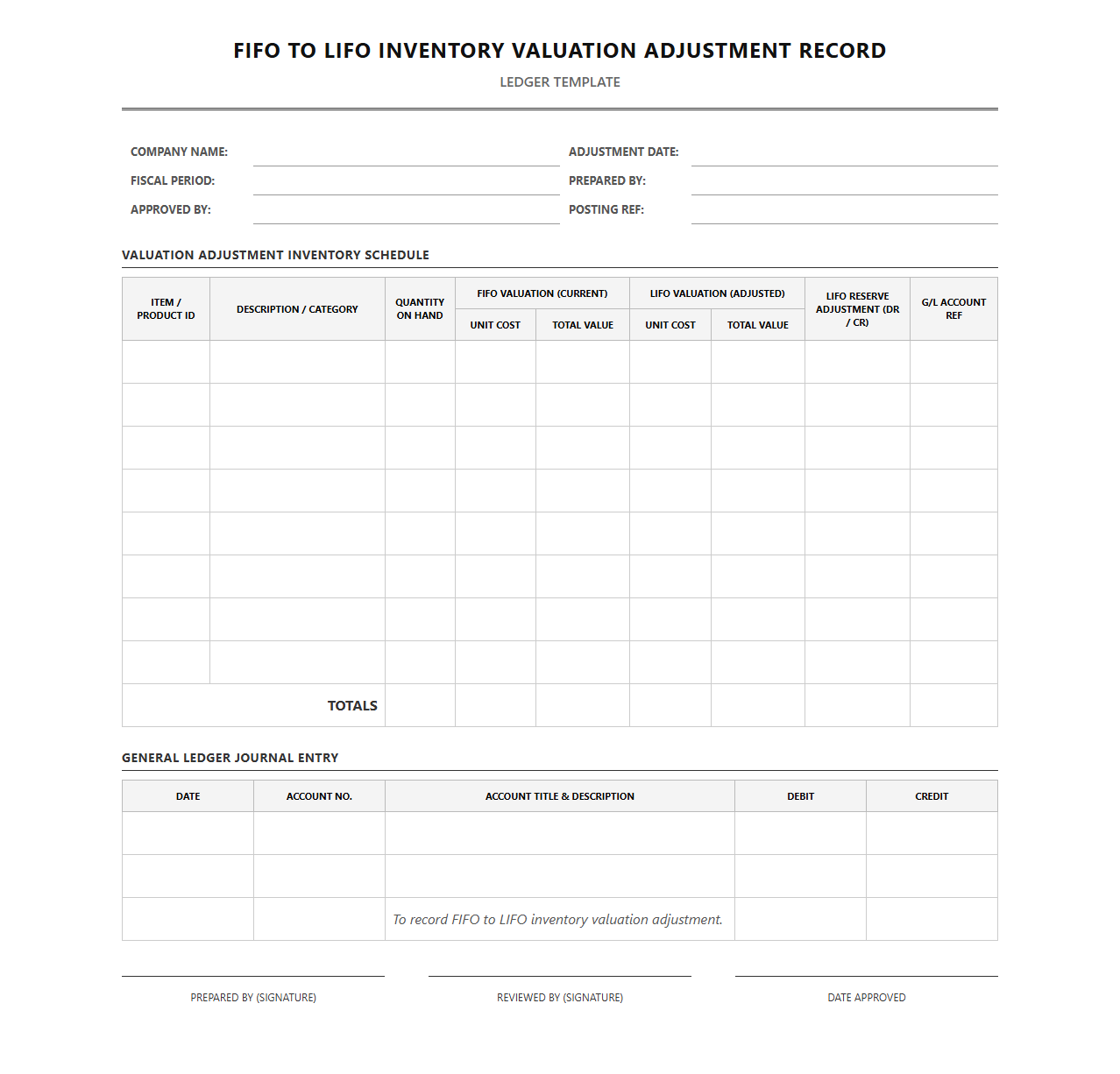 Download: .PDF
Monthly Inventory Valuation Adjustment Ledger Template
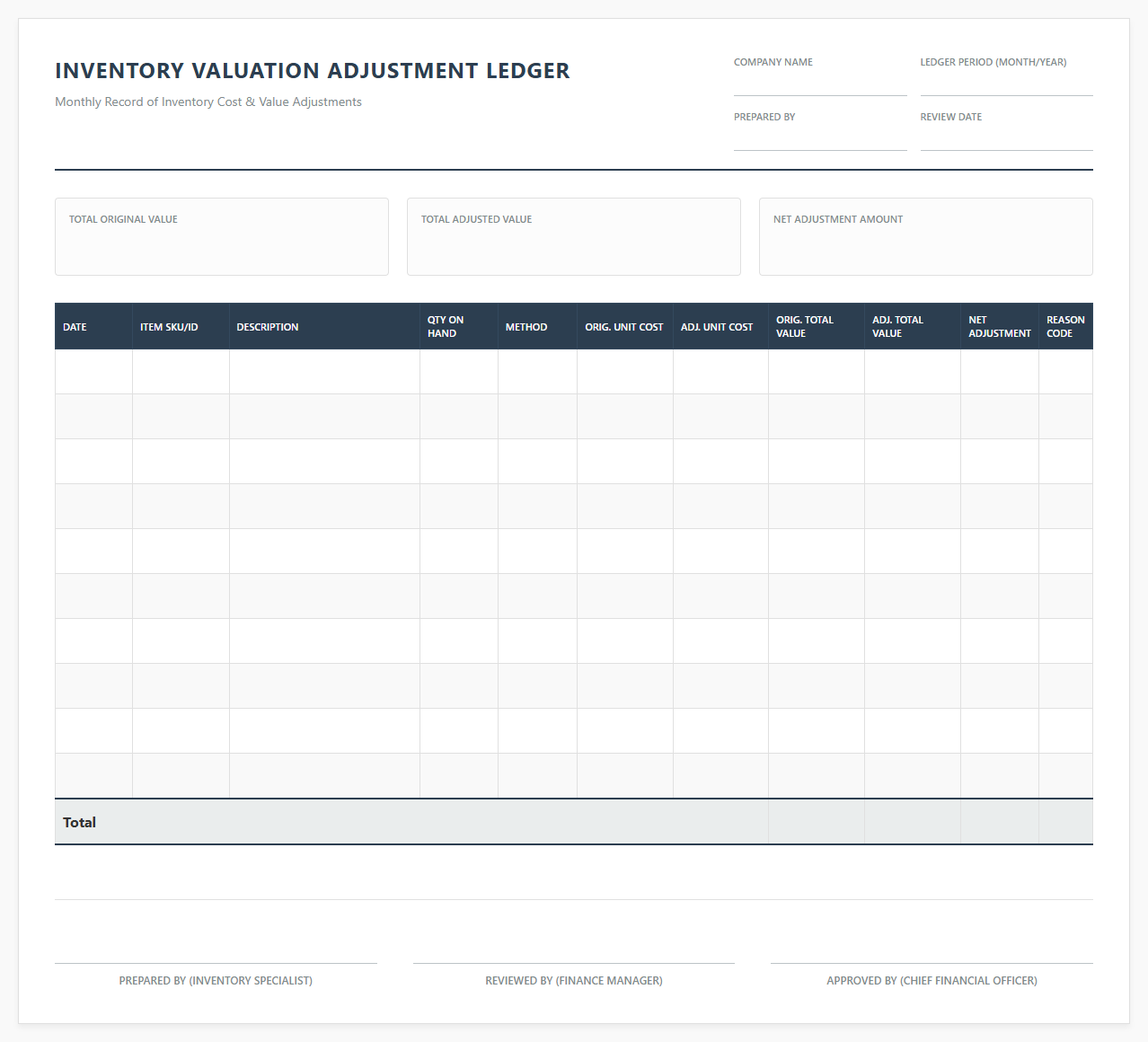 Download: .PDF
Year-End Stock Valuation Correction Journal
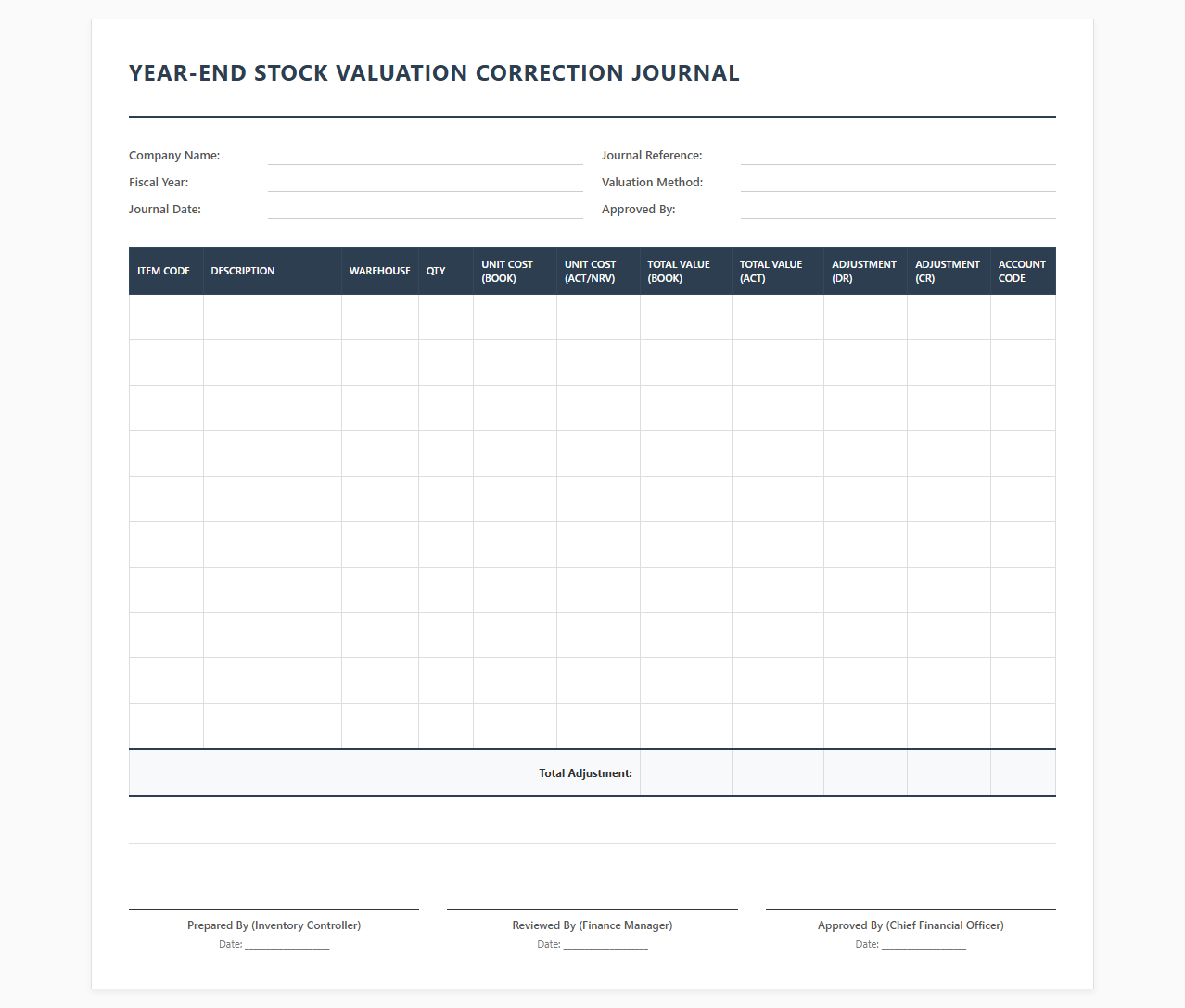 Download: .PDF
Obsolete and Damaged Inventory Adjustment Ledger
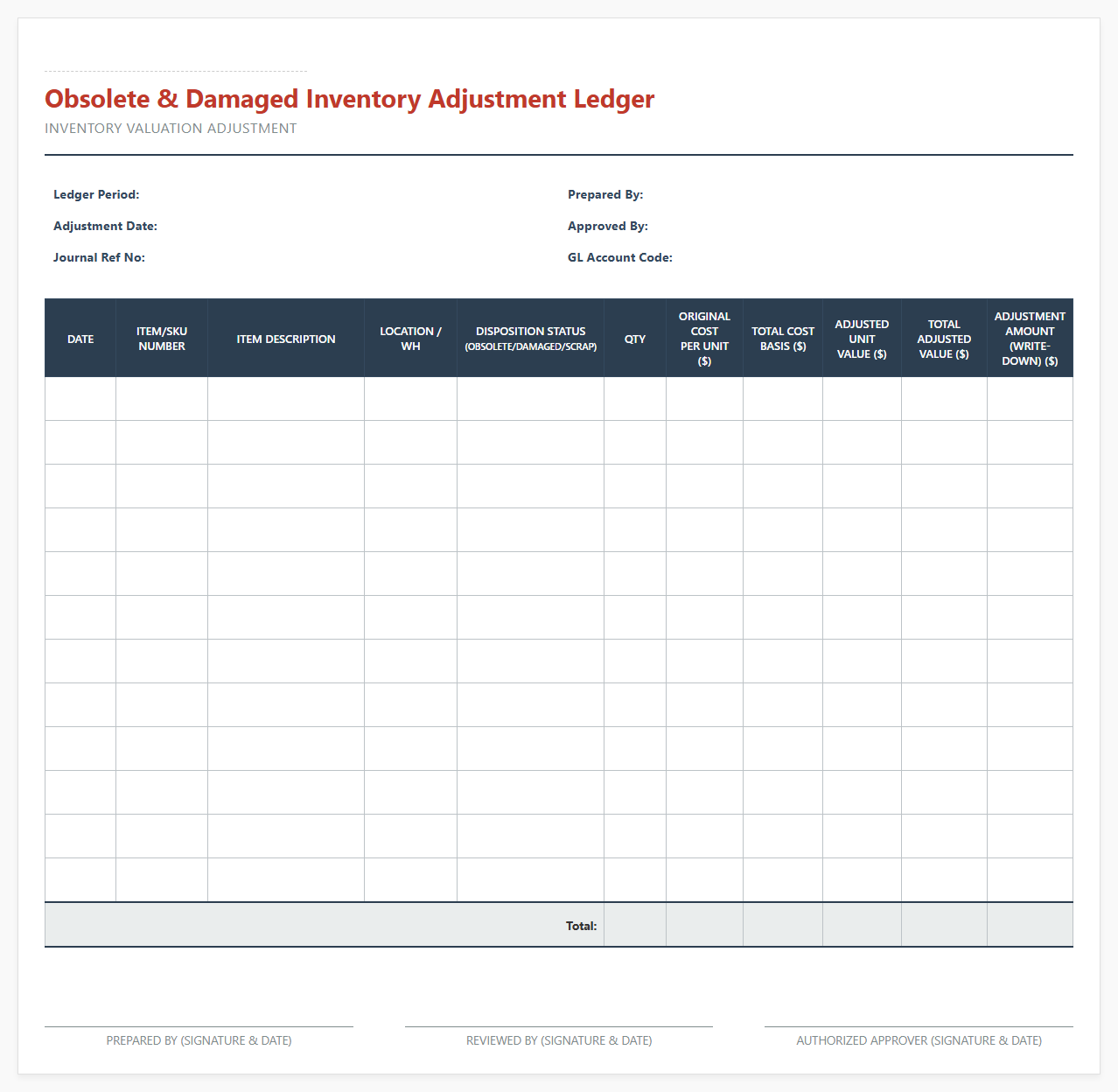 Download: .PDF
Periodic Inventory Cost Adjustment Ledger Sheet
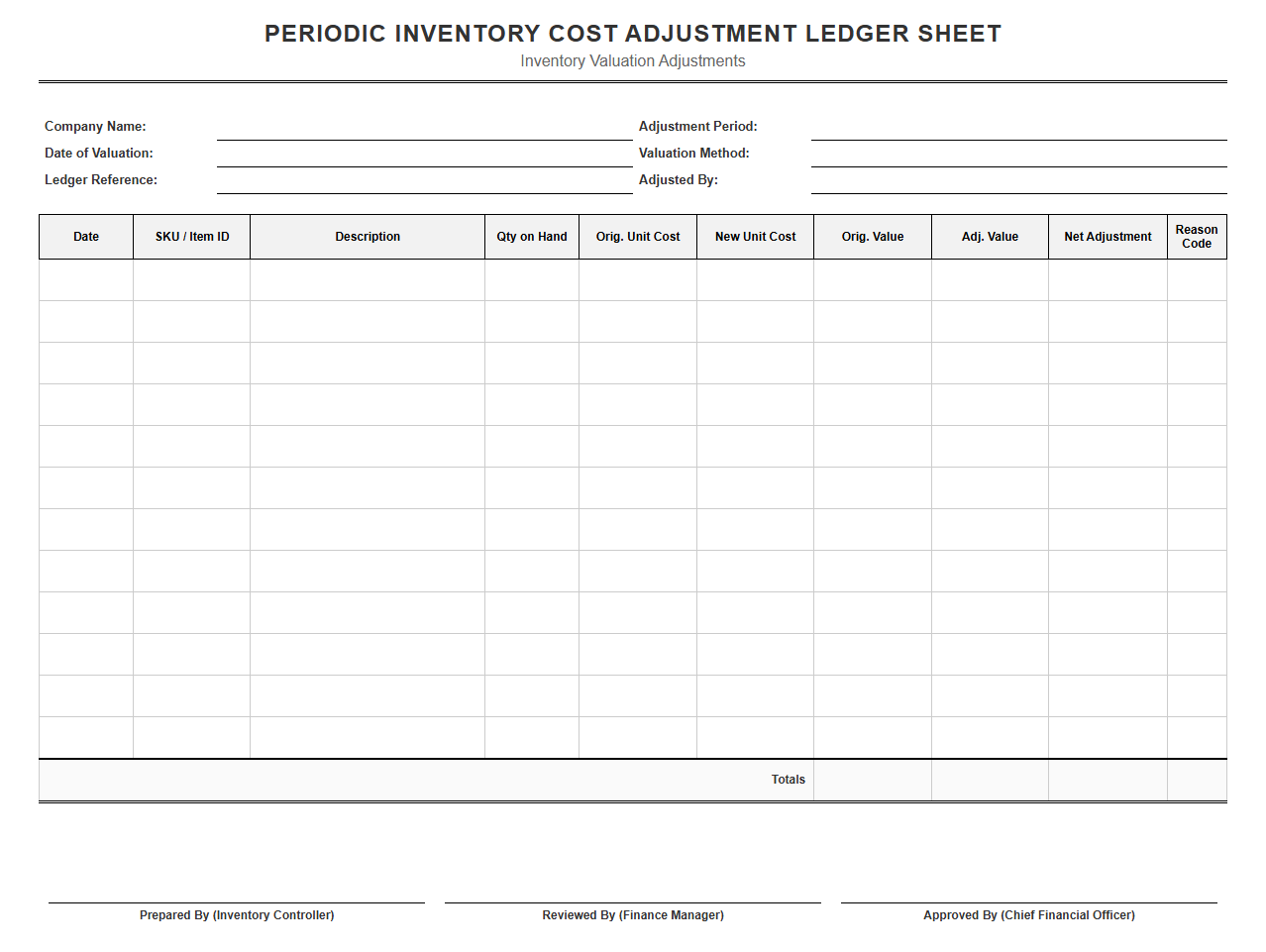 Download: .PDF
Identifying the Root Causes of Inventory Balance Discrepancies
Discrepancies between physical counts and the general ledger present a persistent challenge for financial and operations teams. These variances often stem from transaction timing issues, where a delay in recording goods received or shipped creates a temporary mismatch between what is physically present in the warehouse and what is reflected on the balance sheet. Furthermore, inventory shrinkage caused by theft, damage, or administrative errors introduces permanent losses that go undetected until a manual count is conducted. Finally, system integration errors between independent warehouse management systems (WMS) and the enterprise resource planning (ERP) platform can lead to failed data synchronization, leaving the general ledger disconnected from real-time physical realities.
Core Valuation Methods and Their Impact on Ledger Adjustments
Selecting and applying an inventory valuation method dictates how costs flow from the balance sheet to the cost of goods sold (COGS). When organizations fail to apply these methods consistently, significant ledger valuation variances emerge.
- First-In, First-Out (FIFO): Assumes that the oldest inventory items are sold first. In inflationary environments, this method results in higher ending inventory values and lower COGS, closely matching current market replacement costs on the ledger.
- Last-In, First-Out (LIFO): Assumes that the most recently acquired items are sold first. This matches current costs against current revenues, which can minimize tax liabilities during inflation but leaves older, undervalued costs on the balance sheet.
- Weighted Average Cost: Calculates a mean cost for all inventory items available for sale during a period. While it smooths out price fluctuations, it can obscure specific cost trends and lead to minor discrepancies when unit costs shift rapidly.
Choosing an inappropriate method or failing to configure the ERP system to calculate these flows accurately results in ledger balances that do not reflect actual physical asset values.
The Utility of Multi-Format Ledger Templates
To bridge the operational gap between departments, finance teams require access to ledger templates in multiple digital formats. Excel spreadsheets remain the preferred tool for financial analysts who need to perform complex formulas, ad-hoc calculations, and pivot table analyses during reconciliation.
Conversely, CSV files are critical for system administrators and database managers, as they provide a lightweight, plain-text structure optimized for seamless data import and export operations between distinct ERP environments. Finally, PDF documents serve as the immutable standard for executive reporting and external auditing, ensuring that historical ledger records cannot be altered once finalized.
Step-by-Step Workflow for Executing Valuation Adjustments
Financial analysts must follow a structured and standardized process to correct identified inventory variances in the general ledger safely.
- Retrieve the finalized physical count report and locate the approved variance list.
- Identify the unit cost associated with the discrepant items using the active valuation method, such as
FIFOorWeighted Average Cost. - Calculate the total financial impact by multiplying the physical variance quantity by the unit cost.
- Prepare the adjusting journal entry, debiting or crediting the
Inventory Assetaccount and offsetting it to theInventory VarianceorCOGSaccount. - Submit the adjustment journal entry along with the supporting physical count documentation to the controller for authorization and posting.
Standard Schema and Layout for Reconciliation Ledgers
A structured ledger template ensures consistency across reconciliation cycles. Below is the standard schema utilized to log and evaluate inventory balance adjustments.
| Item ID | Description | Book Value ($) | Physical Value ($) | Variance ($) |
|---|---|---|---|---|
| INV-001 | Raw Steel Sheets | 15,000 | 14,500 | -500 |
| INV-002 | Copper Wiring Roll | 8,200 | 8,200 | 0 |
| INV-003 | Industrial Adhesive | 3,400 | 3,800 | +400 |
Auditing Protocols and Verifying Adjusted Balances
Internal and external auditors must verify that ledger adjustments represent genuine corrections of physical realities rather than attempts to manipulate financial results. To maintain ledger integrity, organizations must enforce a strict division of labor and maintain solid documentation trails.
Segregation of Duties: The personnel responsible for managing physical inventory must never be authorized to write off ledger balances or approve adjusting journal entries. This control prevents unauthorized write-offs of stolen or mismanaged goods.
Auditors rely on system-generated change logs to trace every inventory ledger adjustment back to its source, matching the transaction details directly to physical count sheets signed by warehouse supervisors.
Establishing Preventive Controls for Ongoing Balance Accuracy
Maintaining long-term synchronization between physical inventory and the general ledger requires shifting from reactive corrections to proactive prevention.
- Cycle Counting Programs: Implement a continuous schedule where a subset of inventory is counted daily, ensuring all high-value items are verified multiple times a year without stopping operations.
- Automated ERP Reconciliation: Set up automated validation rules within the ERP system to flag mismatched transactions between purchasing, receiving, and accounts payable in real time.
- Continuous Staff Training: Train warehouse and accounting personnel on the direct financial impact of receiving delays, transactional timing errors, and data entry mistakes.

Leave a comment