

Managing bonded warehouse inventory is a high-stakes balancing act. For logistics coordinators, a single discrepancy in tracking duty-deferred stock can trigger severe customs penalties, frozen operations, and grueling regulatory audits.
Before investing in complex enterprise software, operations must first establish robust manual tracking frameworks that align directly with national customs authorities. Adopting structured inventory ledger templates grants organizations immediate operational clarity and audit-readiness, protecting the bottom line from avoidable compliance infractions.
Note on compliance: While standardized templates streamline data entry, they must be continuously updated to match your specific local jurisdiction's legal stipulations.
For instance, a compliant ledger must meticulously capture specialized data points, such as Harmonized System (HS) codes, customs entry numbers, and precise country-of-origin details. In this guide, we will break down the essential anatomy of a compliant bonded ledger, share customizable templates, and outline best practices to ensure your stock records remain flawless under regulatory scrutiny.
Customs Bonded Warehouse Inventory Ledger
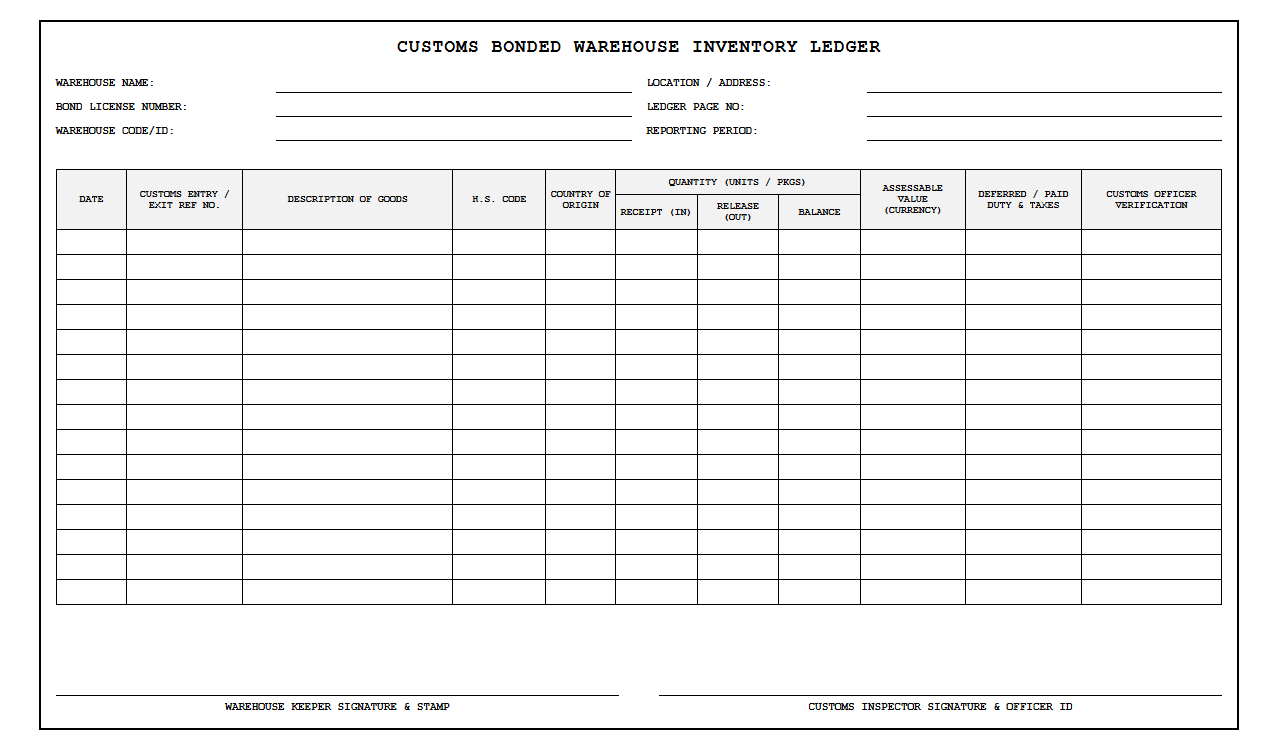 Download: .PDF
Duty-Free Warehouse Stock Control Ledger
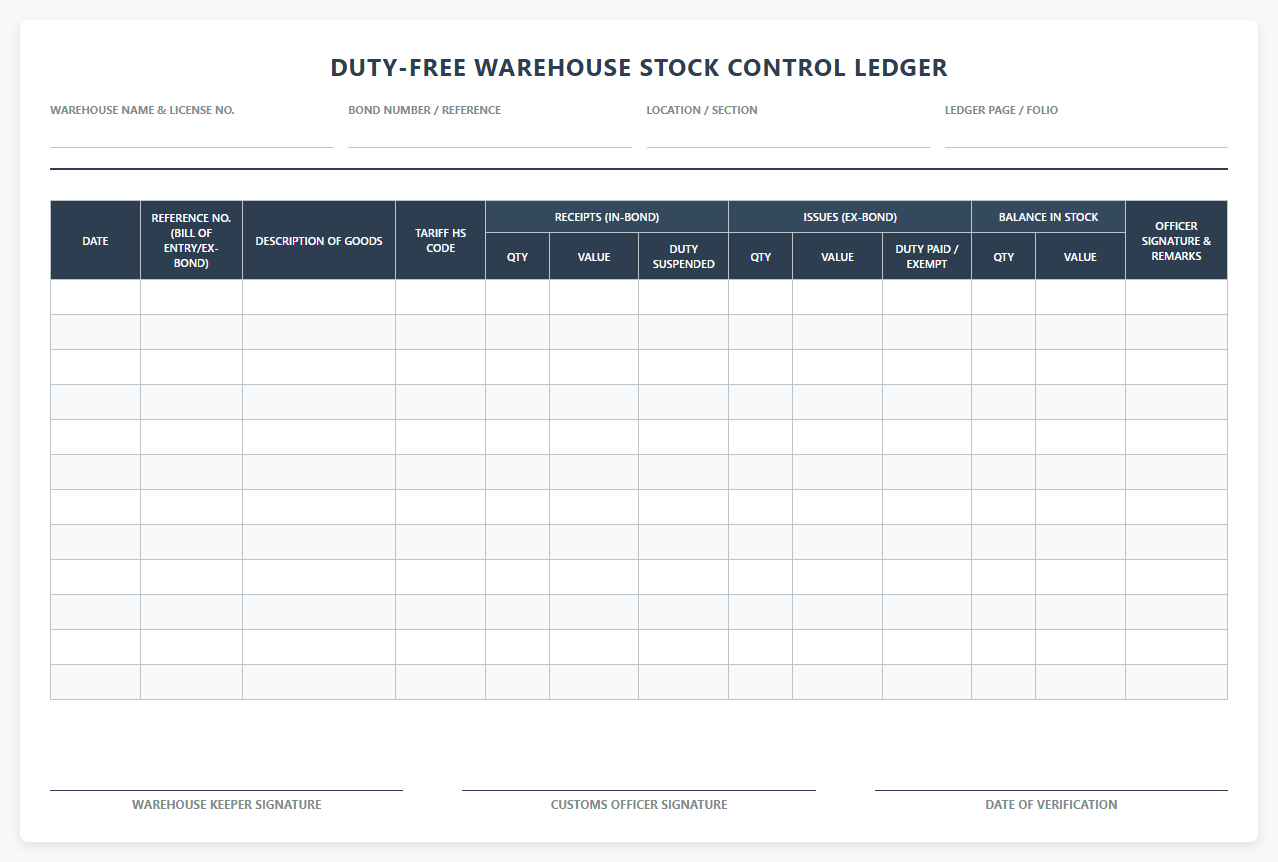 Download: .PDF
Bonded Cargo Inventory Tracking Sheet
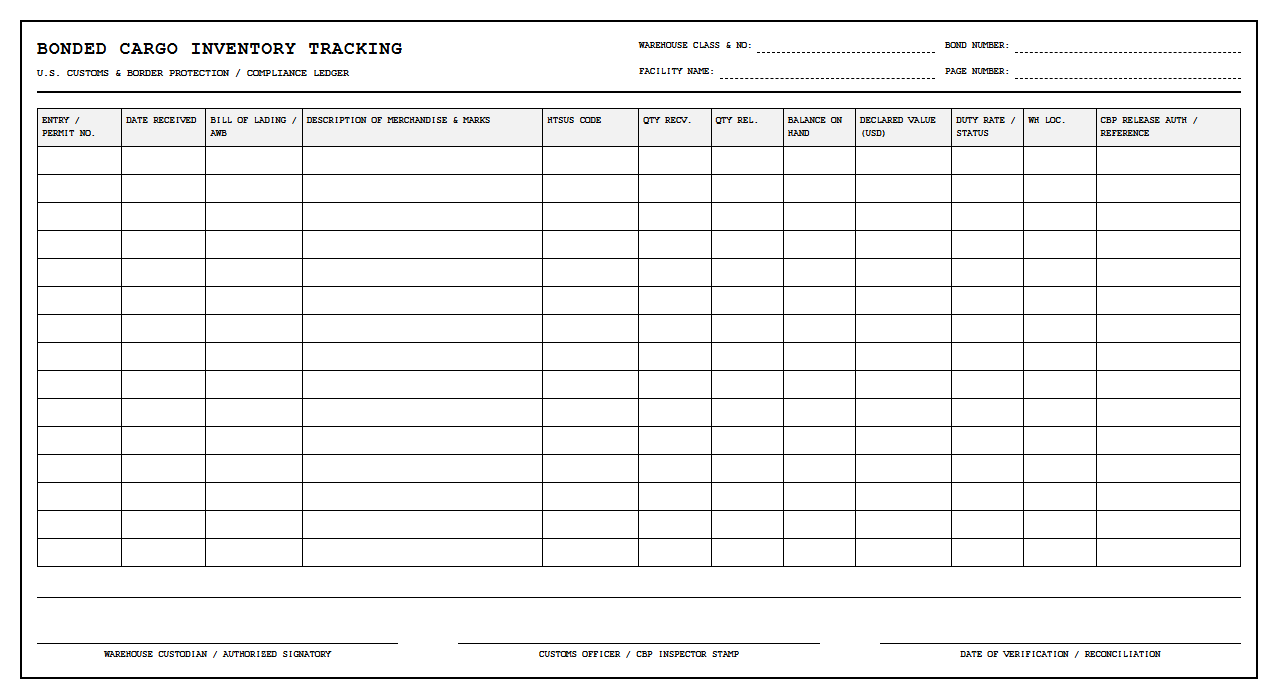 Download: .PDF
Excise Bonded Goods Inventory Ledger
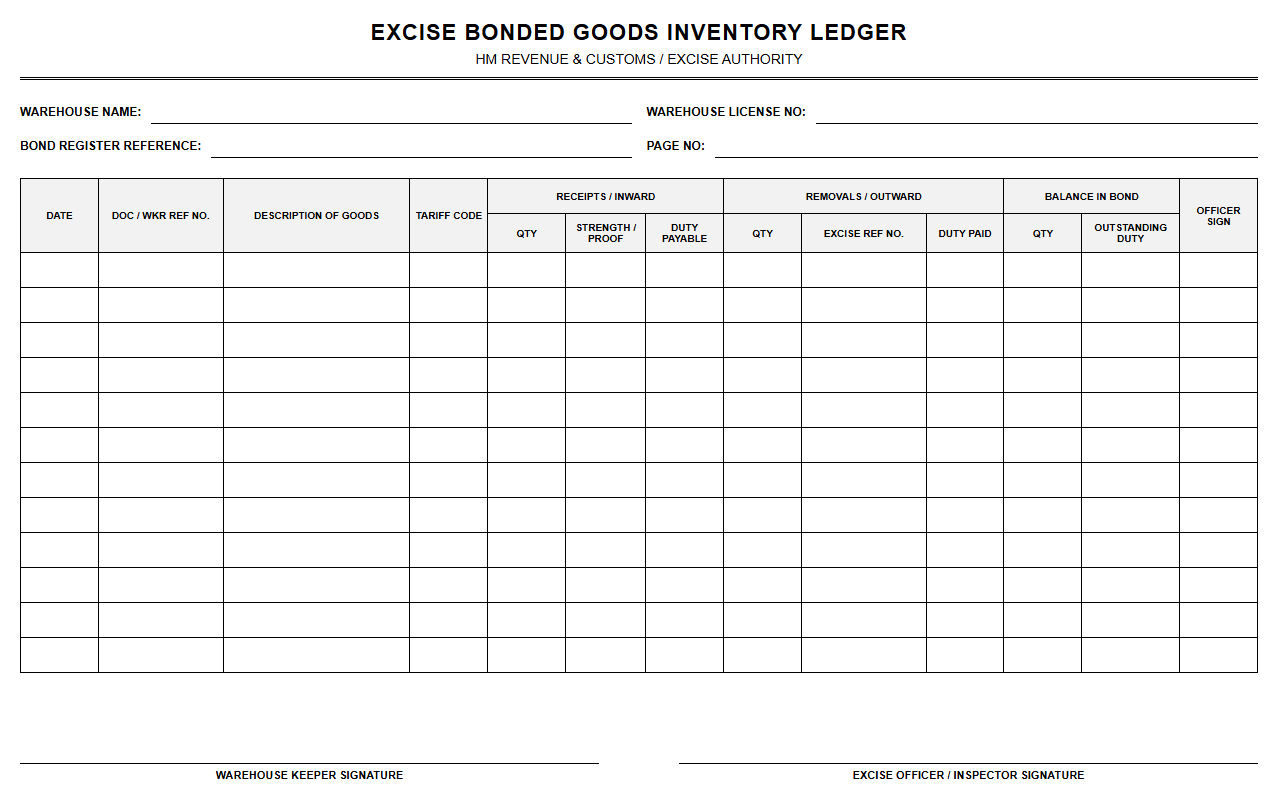 Download: .PDF
Import Export Bonded Warehouse Log
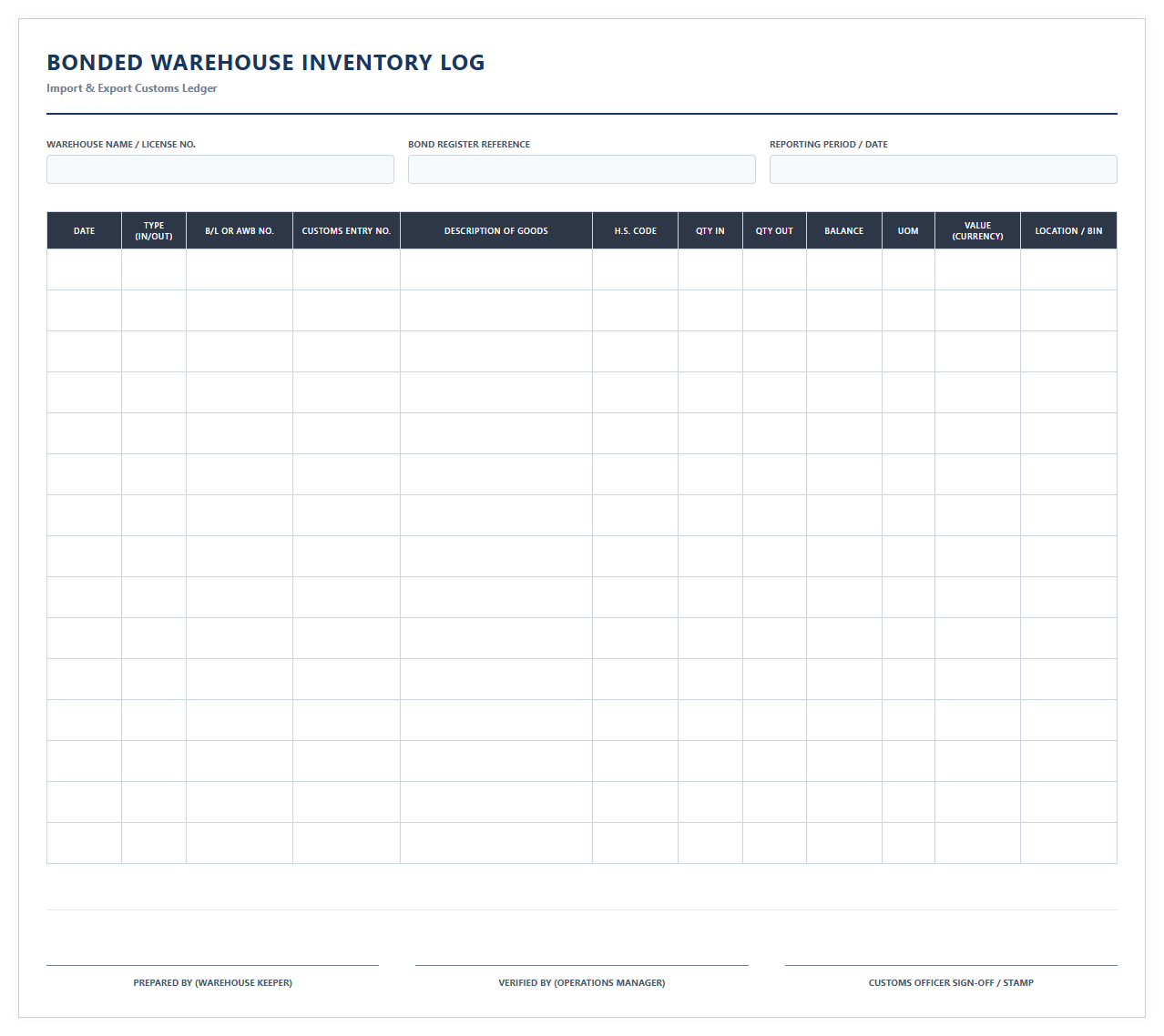 Download: .PDF
Bonded Warehouse Stock Balance Ledger
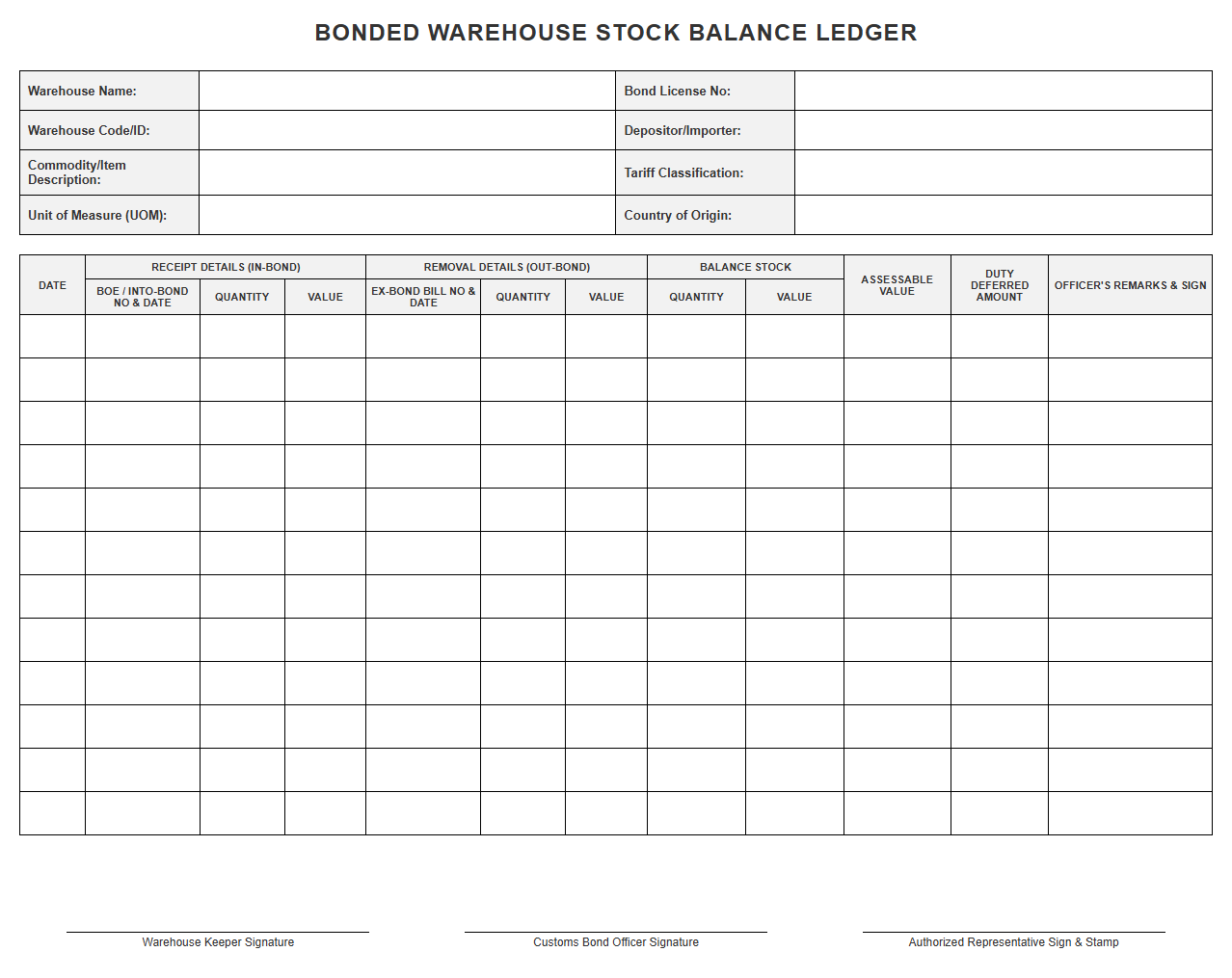 Download: .PDF
Customs Stock Reconciliation Ledger Template
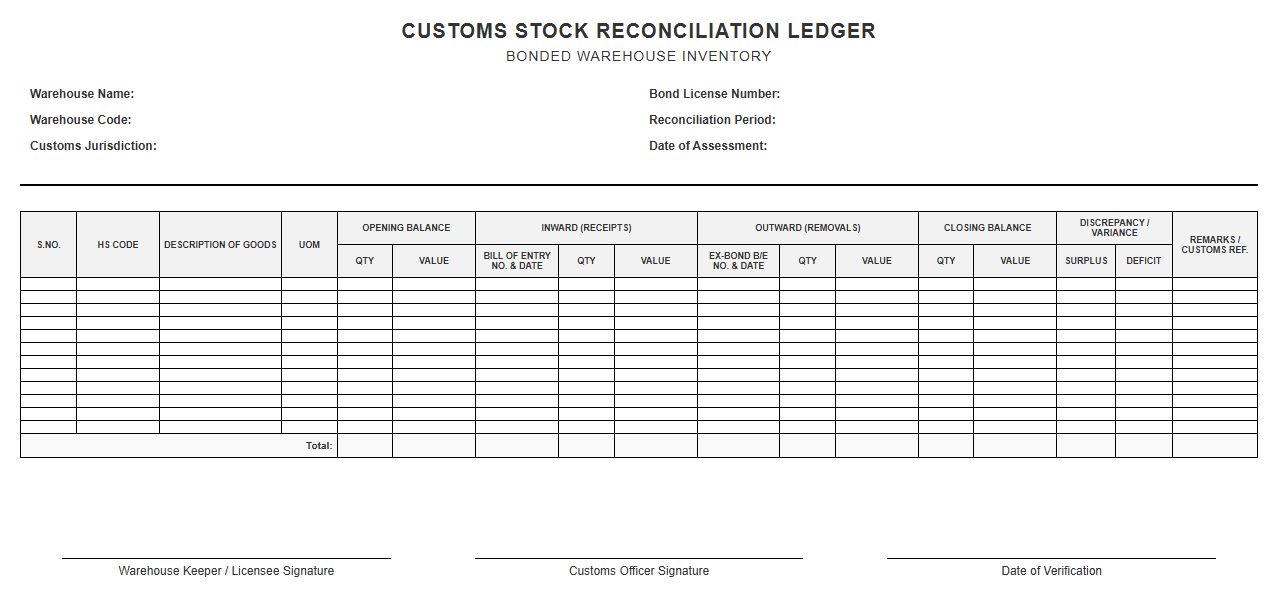 Download: .PDF
Bonded Storage Inventory Audit Ledger
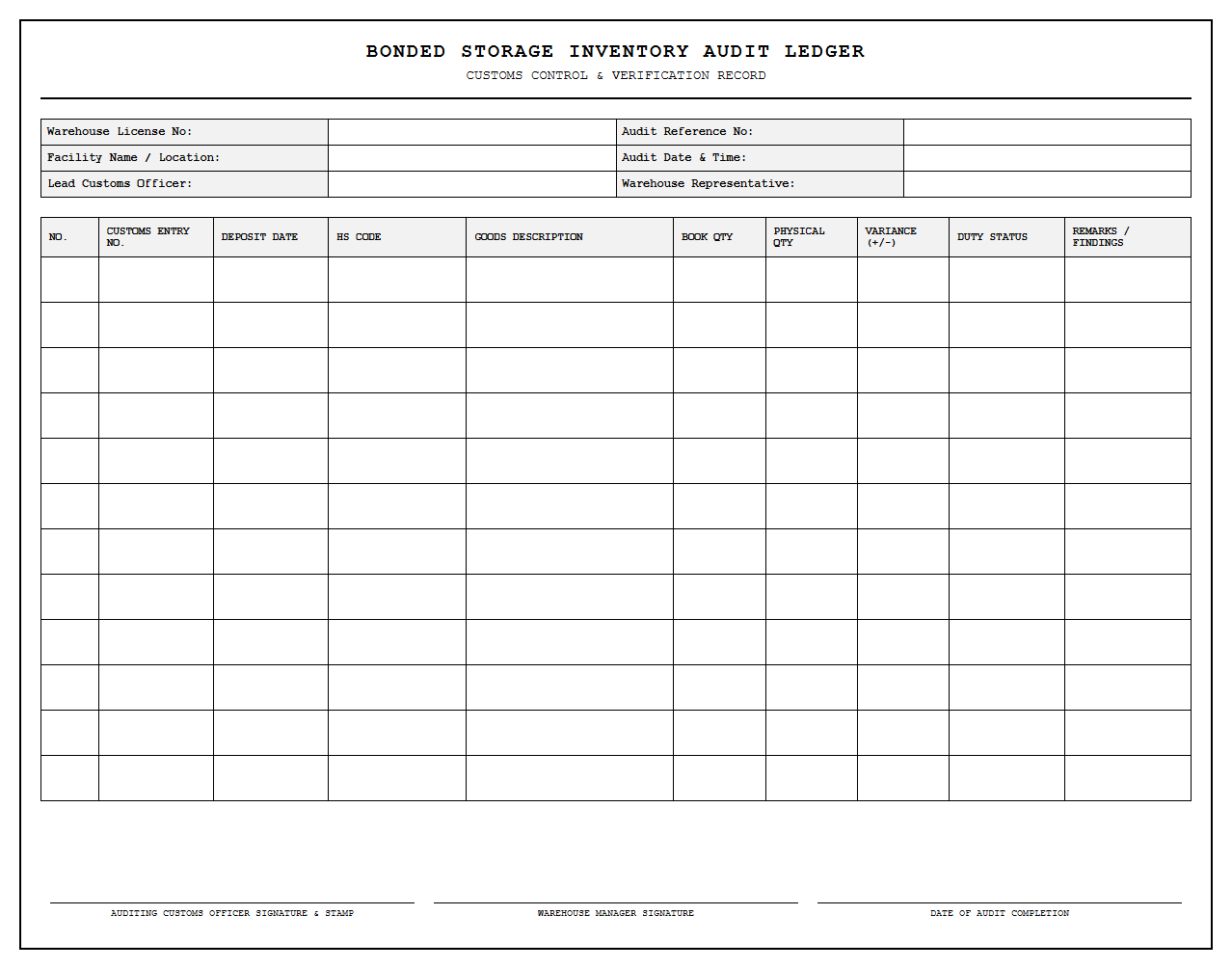 Download: .PDF
The Critical Role of Inventory Ledgers in Bonded Warehousing
Bonded warehouses serve as secure zones where imported goods can be stored, manipulated, or undergo manufacturing operations without the immediate payment of duties and taxes. Because these facilities operate under direct government supervision, maintaining an accurate, customs-compliant ledger is vital. Failing to track inventory with precision can lead to heavy financial penalties, seizure of goods, and the revocation of the warehouse's operating license. A robust ledger is the primary defense against operational delays, ensuring that every piece of cargo is accounted for from the moment it crosses the threshold until its final clearance.
Key Data Fields Required for Customs Compliance
To satisfy regulatory requirements, your ledger must capture granular details for every shipment. Standard warehouse management fields are insufficient on their own; specific regulatory data points must be permanently logged. Every customs-compliant ledger should contain the following fields:
Entry Number: The unique identification number assigned by customs when the goods arrived.HTS Code: The Harmonized Tariff Schedule classification code determining duty rates.Country of Origin: The nation where the goods were manufactured or produced.Duty Status: Current financial standing of the goods, such as "Duty-Suspended" or "Duty-Paid".Quantity and Unit of Measure: Precise physical count aligned with import documentation.Value: Declared customs value of the cargo.
Managing Inbound Logistics and Bonded Stock Intake
The process of receiving goods into a bonded area requires meticulous documentation verification to prevent discrepancies before the physical stock is stored.
Step 1: Documentation Verification
Before cargo enters the physical storage area, check the commercial invoice, packing list, and customs entry documents (e.g., CBP Form 7501 in the United States) against the physical shipment.
Step 2: Discrepancy Reporting
Note any shortages, overages, or damages immediately. Any deviation from the customs entry paperwork must be flagged and reported to customs authorities to avoid accusations of illegal diversion.
Step 3: Initial Ledger Logging
Assign a unique internal tracking number, link it to the customs entry number, and log the initial receipt details in the bonded inventory ledger.
- Verify customs entry authorization documentation.
- Conduct a physical inspection and count of the arriving cargo.
- Log the exact quantities, HTS codes, and warehouse locations into the system.
- Generate a unique receipt ID to link the physical goods to the digital record.
Real-Time Stock Tracking and Internal Warehouse Movements
Goods stored within a bonded facility must be continuously tracked, even during minor internal relocations, repackaging, or temporary removal for inspections. If customs officials perform an unannounced inspection, the physical location of any item must match your ledger exactly.
The table below demonstrates how to format and maintain an internal tracking ledger to capture movement history:
| Entry Number | Product SKU | Previous Location | Current Location | Movement Reason | Authorized By |
|---|---|---|---|---|---|
| ENT-2023-8891 | EL-MICRO-09 | Aisle 4, Shelf B | Aisle 12, Shelf A | Internal Relocation | J. Smith (Supervisor) |
| ENT-2023-9042 | TX-ROLL-404 | Aisle 2, Shelf D | Inspection Zone B | Customs Sampling | A. Garcia (Officer) |
Outbound Reconciliation and Duty Payment Procedures
When goods leave the bonded warehouse, they must be recorded with extreme care to ensure duties are paid or legally bypassed. If goods are released for domestic consumption, the suspended duties must be calculated and paid using the appropriate customs declaration forms. If cargo is destined for re-exportation or transferred to another bonded facility, duty remains suspended, but proof of transit must be filed. Never release cargo without a confirmed customs release authorization to avoid severe compliance infractions and immediate duty assessment.
Audit Readiness and Continuous Stock Reconciliation
Continuous stock reconciliation is the best way to prepare for unannounced customs audits. Rather than waiting for an official inquiry, warehouse managers should implement proactive internal checks.
Cycle Counting and Physical Audits
Perform regular, blind cycle counts of high-value and high-tariff items. Compare physical counts directly against active ledger entries to identify differences.
Discrepancy Resolution Protocol
When discrepancies arise, document the investigation thoroughly. Keep records of clerical errors, damaged goods write-offs, or physical theft to present to auditors as proof of systemic integrity.
- Conduct weekly blind cycle counts on a rotating selection of inventory zones.
- Reconcile digital ledger balances with physical stock counts immediately.
- Maintain a secure archive of all customs release approvals for at least five years.
- Train warehouse personnel to understand that unrecorded movement is treated as an illegal diversion by customs.
Implementing Your Bonded Warehouse Ledger Template
Deploying a structured template is the fastest way to align your operations with international customs standards. Whether you use a dedicated Warehouse Management System (WMS) or a secure spreadsheet system, consistency is paramount. Ensure your team receives continuous training on the regulatory importance of every data field, and restrict editing permissions to authorized personnel to maintain data integrity. You can streamline your compliance journey today by downloading our optimized ledger structures.
To establish an accurate compliance framework, download our professional Bonded Warehouse Ledger Templates and start standardizing your inventory tracking processes immediately.

Leave a comment