

Finance teams frequently struggle to monitor non-routine outstanding balances, leading to reconciliation bottlenecks, administrative clutter, and preventable write-offs. While standard Accounts Receivable platforms excel at processing routine customer invoicing, they often fail to capture the nuances of miscellaneous financial events. Bridging this operational gap with structured ledger templates grants organizations absolute visibility over non-trade assets, ensuring that irregular cash inflows are systematically recovered.
To be effective, however, these tracking tools must be approached with the understanding that they are only as reliable as the data discipline behind them; they require timely, accurate updates to maintain audit readiness. When managed with this rigor, structured templates successfully organize complex transactions-such as employee advances, security deposits, and pending insurance claims-into clean, actionable records. This article outlines how to implement structured "other receivables" templates, establish robust internal controls, and restore accuracy to your balance sheet.
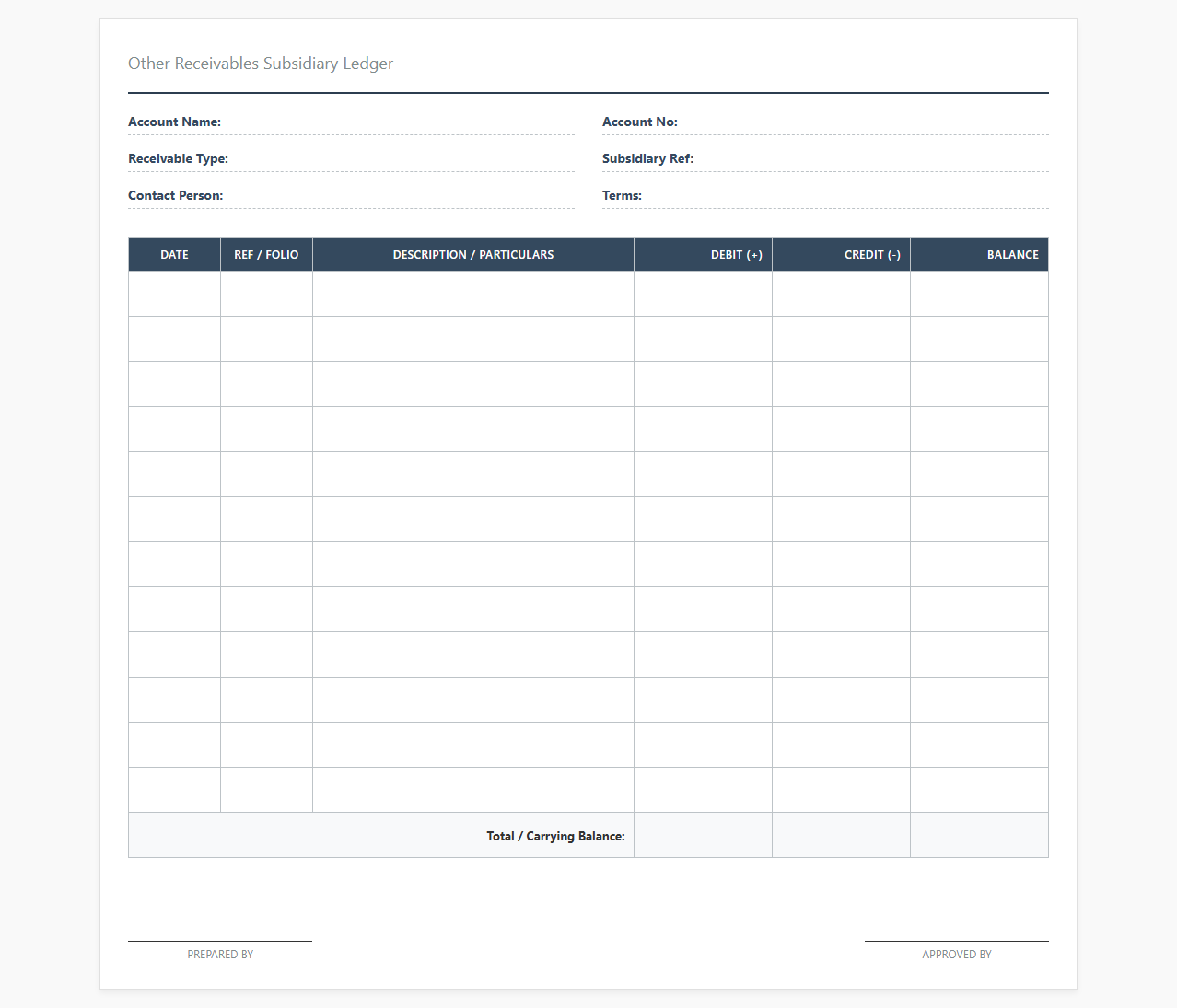
Other Receivables Subsidiary Ledger Template
 Download: .PDF
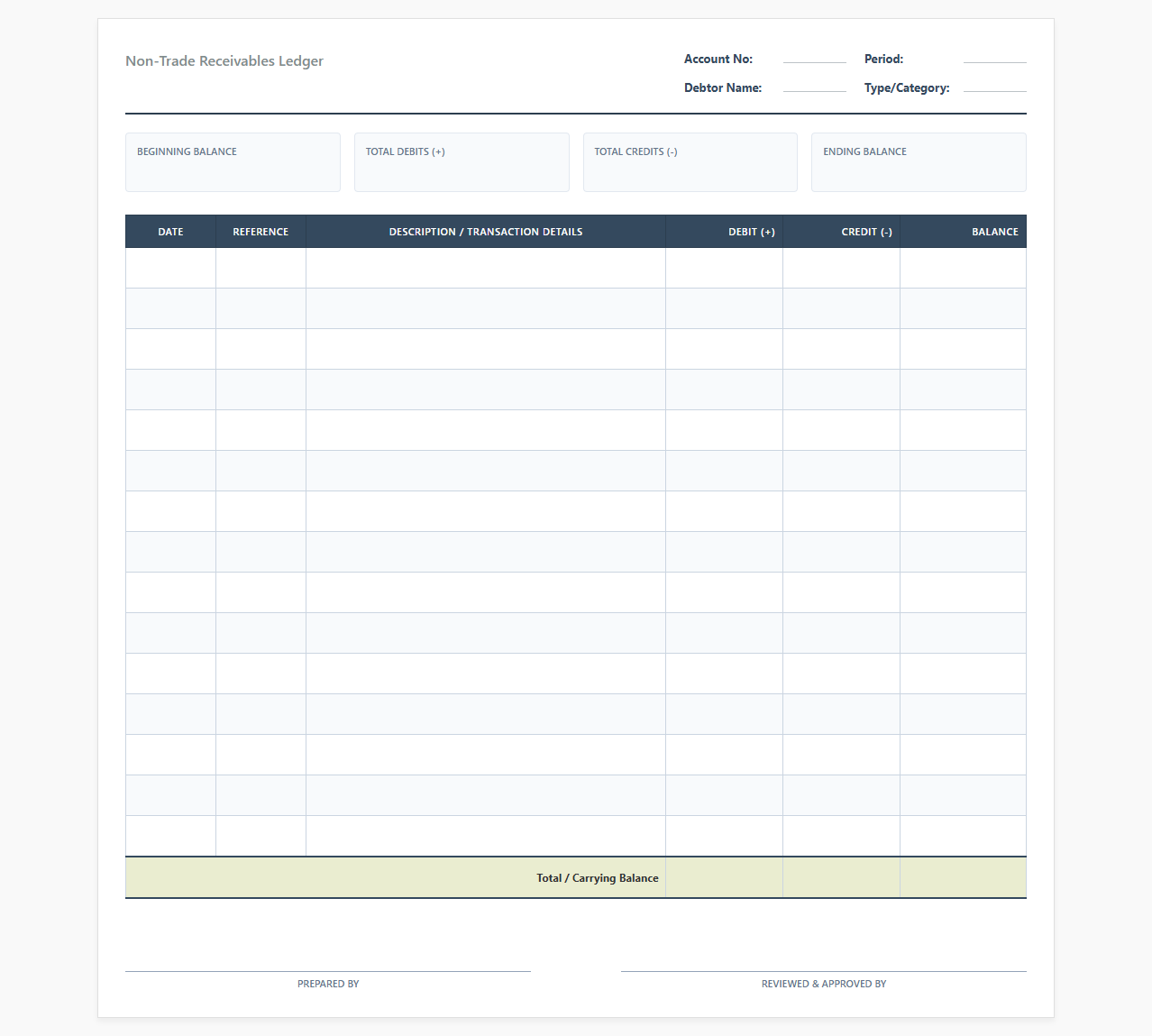
Non-Trade Receivables Ledger Spreadsheet
 Download: .PDF
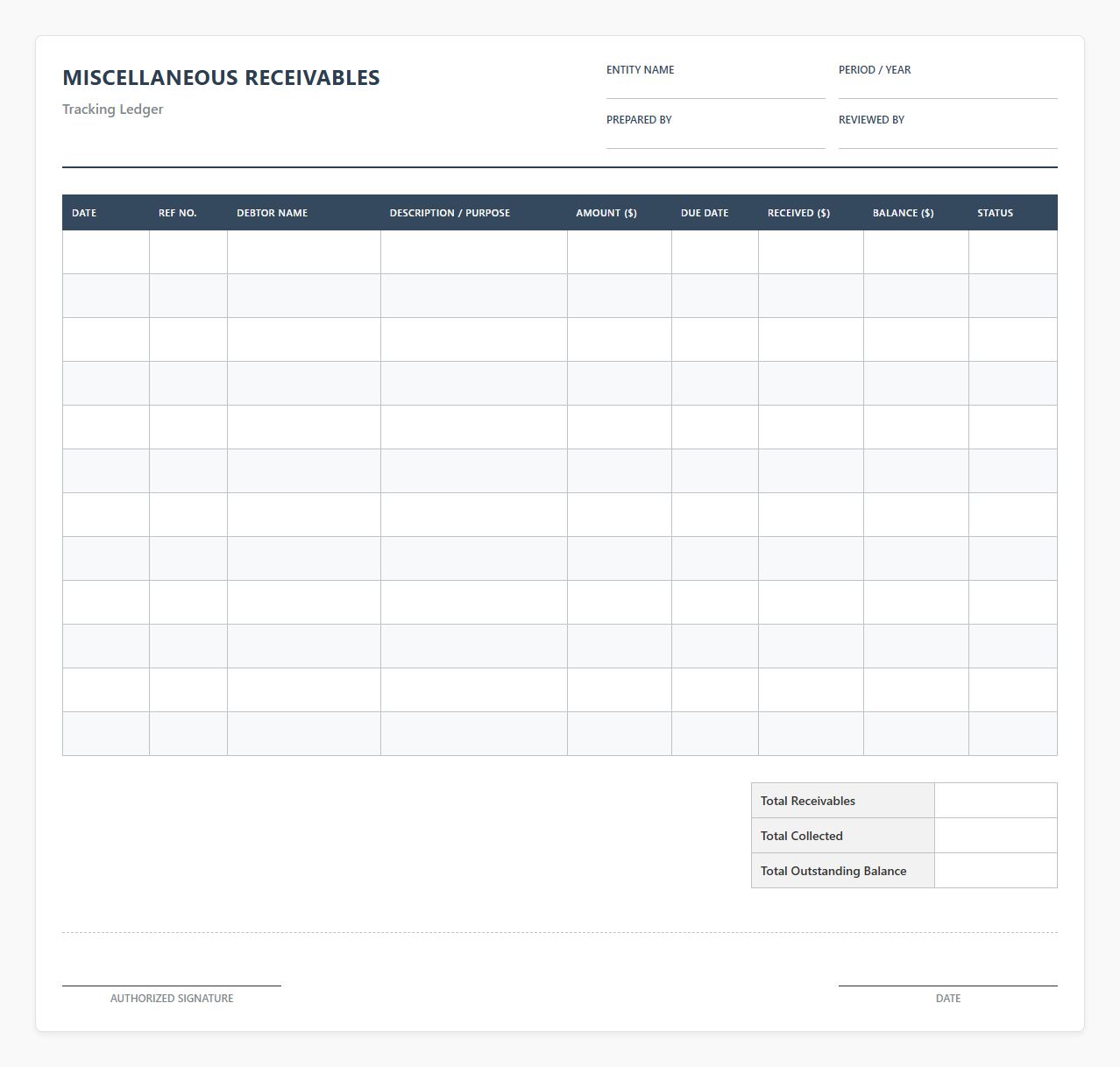
Miscellaneous Receivables Tracking Ledger
 Download: .PDF
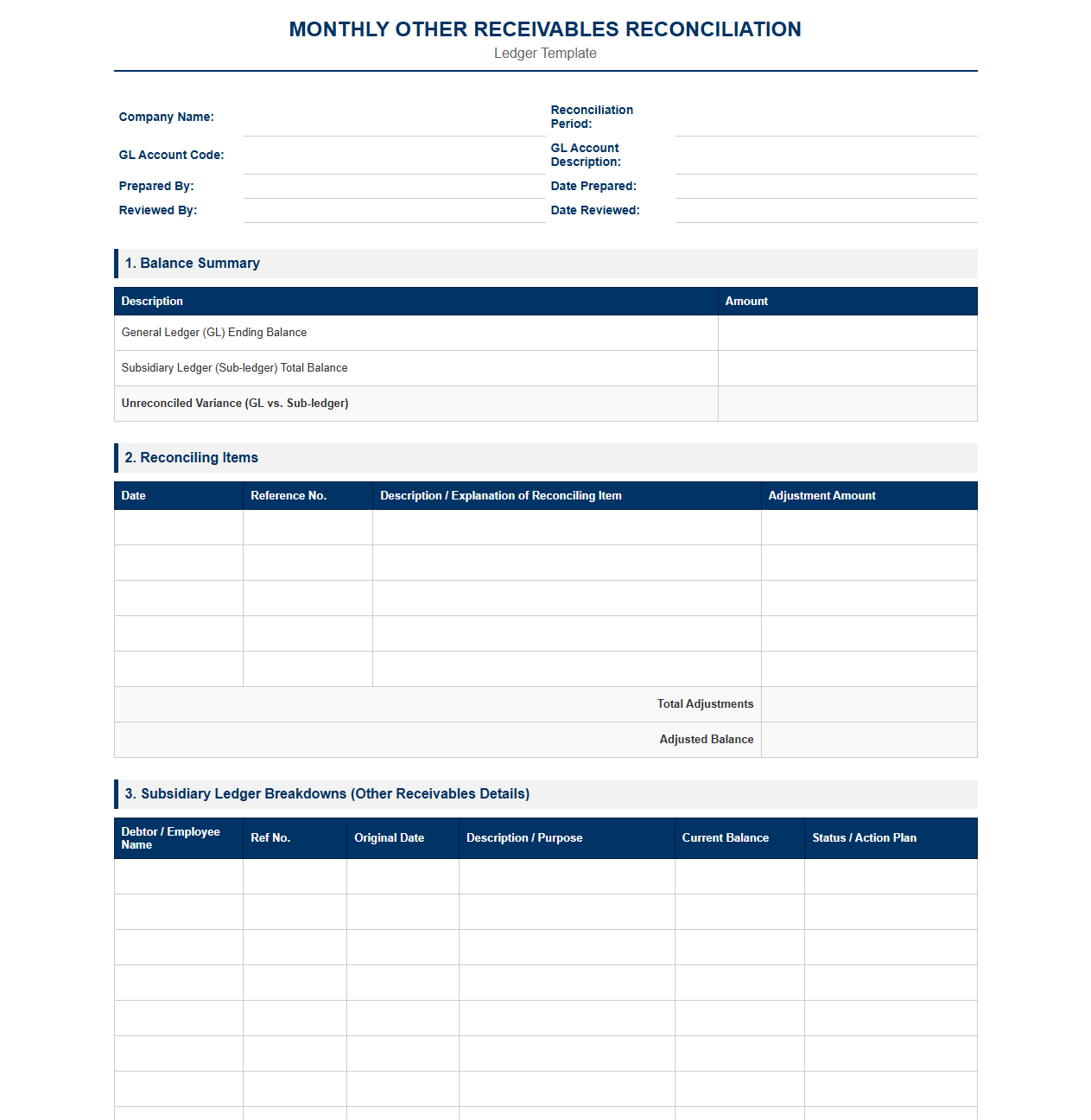
Monthly Other Receivables Reconciliation Template
 Download: .PDF
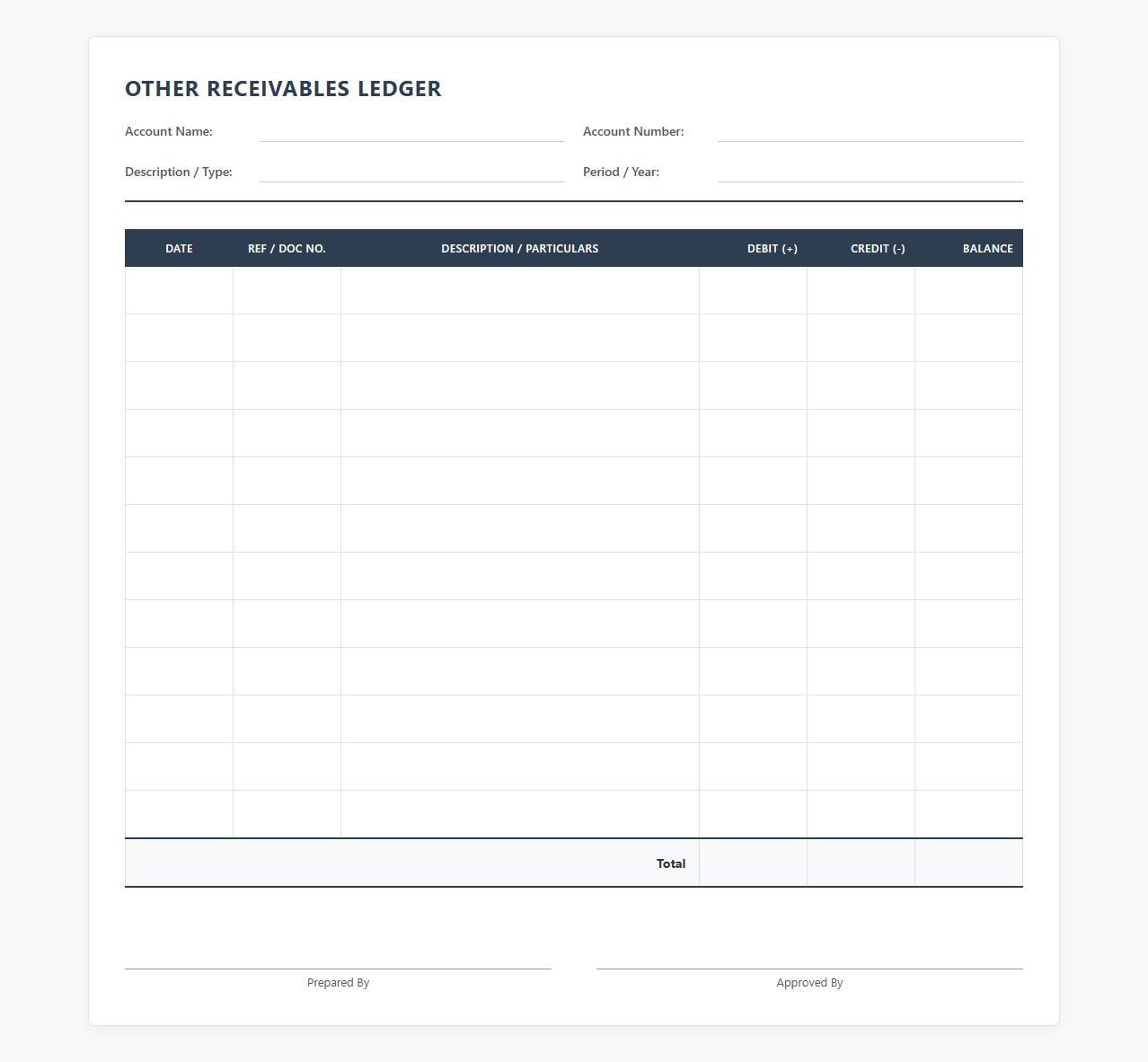
Simple Other Receivables Ledger Sheet
 Download: .PDF
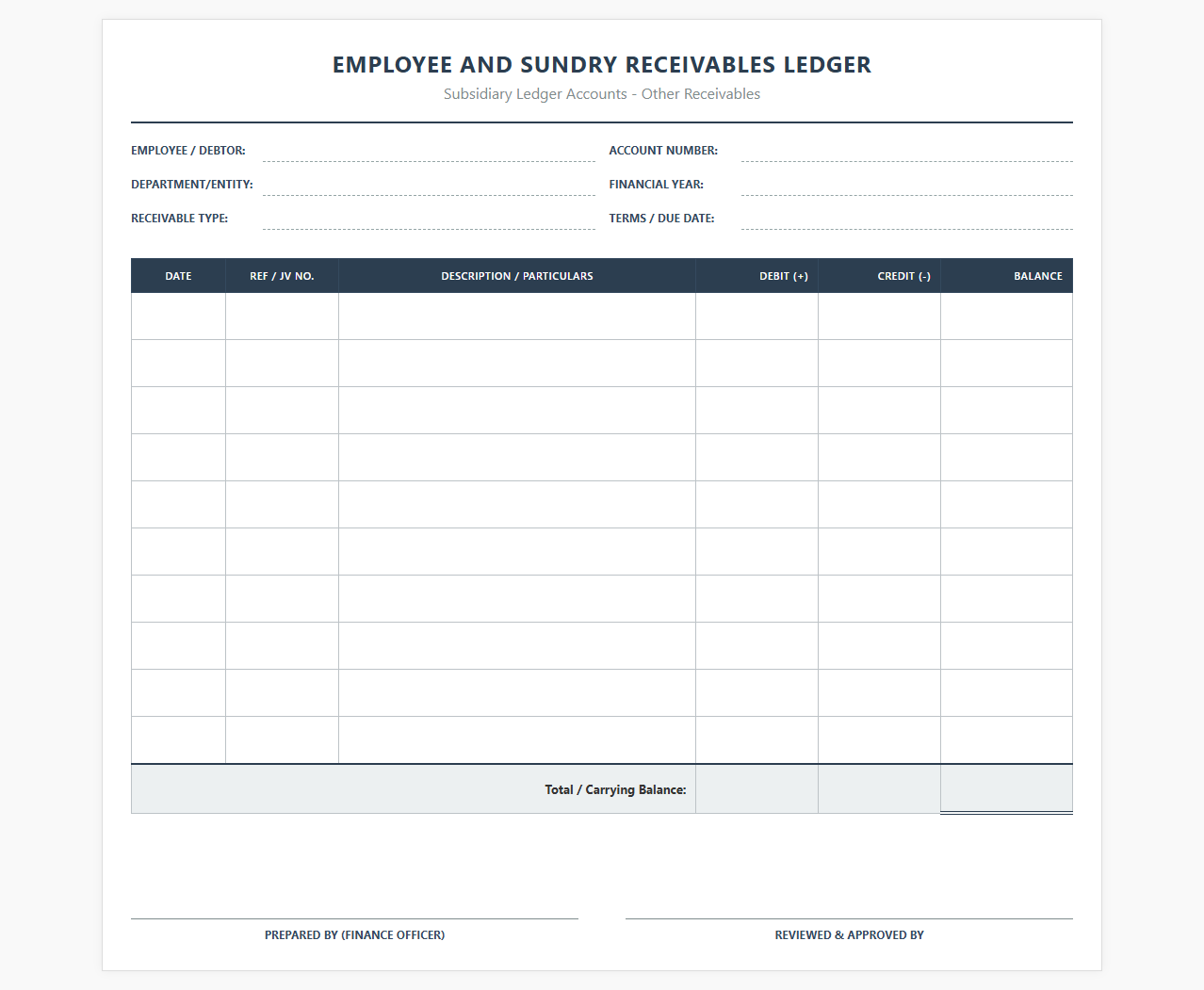
Employee and Sundry Receivables Ledger
 Download: .PDF
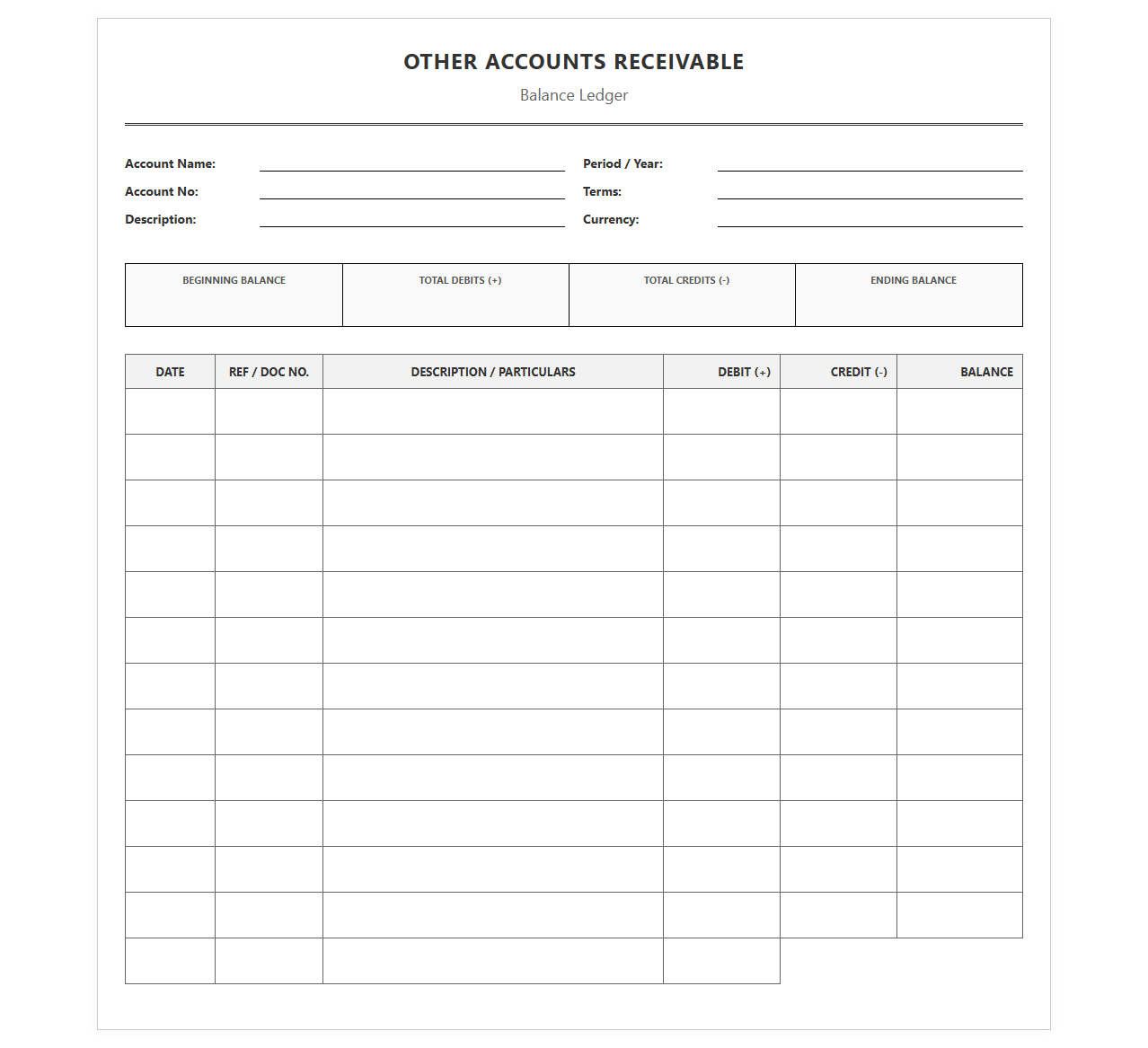
Other Accounts Receivable Balance Ledger Template
 Download: .PDF
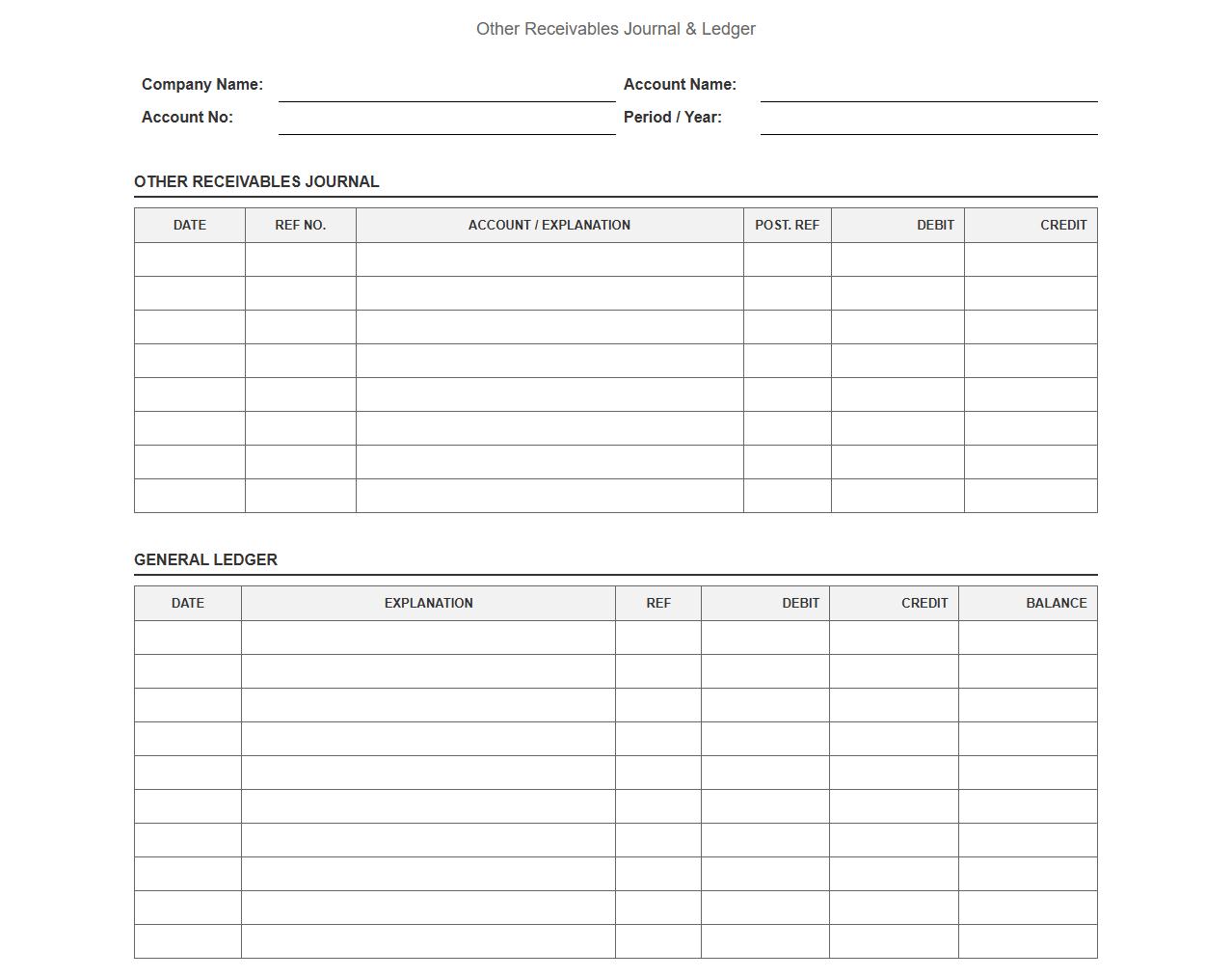
Other Receivables Journal and Ledger Template
 Download: .PDF
Demystifying Other Receivables in Corporate Accounting
In corporate accounting, distinguishing between different types of inflows is critical for accurate reporting. While trade receivables represent amounts owed by customers for goods or services delivered in the ordinary course of business, other receivables encompass non-trade transactions. These may include employee advances, tax refunds, interest receivables, or insurance claims.
On a company's balance sheet, these balances are typically classified as current or non-current assets depending on their expected realization timeframe. Correctly separating these assets ensures that stakeholders have a transparent view of the company's primary operational liquidity versus its secondary financial claims. Proper classification prevents the distortion of key financial ratios, such as the current ratio, which analysts rely on to assess short-term solvency.
The Role of Structured Ledgers in Financial Accuracy
Managing non-trade transactions requires a high degree of precision. Unlike standardized sales transactions, miscellaneous claims can arise from sporadic and diverse sources. Utilizing standardized ledger templates is crucial for maintaining order and ensuring that every unique transaction is documented consistently.
Without structured templates, accounting teams risk facing severe reconciliation errors during month-end or year-end closes. A uniform system allows auditors to quickly trace the origin of a claim, verify its supporting documentation, and confirm that the company is not carrying uncollectible assets on its books. Consistency in recording these miscellaneous items safeguards the integrity of the entire general ledger.
Core Components of a Robust Receivables Ledger Template
To ensure no transaction slips through the cracks, a specialized ledger must capture several critical data points. A comprehensive template serves as a single source of truth for all non-trade claims.
- Debtor Details: Complete identification information of the entity or individual owing the balance, including contact details and corporate relationship.
- Origin and Description: A clear narrative explaining why the receivable exists, such as a security deposit or a vendor rebate.
- Aging Categories: Division of outstanding balances into chronological time buckets, such as 0-30 days, 31-60 days, and over 90 days, to monitor collection urgency.
- Transaction History: A running record of all associated actions, including partial payments, adjustments, and communication logs.
Designing the Ledger: A Visual Data Structure
| Record ID | Debtor Name | Category | Amount Due | Origin Date | Status |
|---|---|---|---|---|---|
| REC-001 | John Doe (Employee) | Travel Advance | $500.00 | 2023-10-15 | Outstanding |
| REC-002 | State Tax Dept | VAT Refund | $12,450.00 | 2023-09-01 | Processing |
| REC-003 | Acme Properties | Security Deposit | $5,000.00 | 2023-01-10 | Active |
Common Pitfalls in Managing Outstanding Balances
Even seasoned finance teams can struggle with miscellaneous claims due to their irregular nature. Recognizing these common administrative errors is the first step toward optimizing recovery rates.
- Poor Categorization: Lumping non-trade receivables into general accounts receivable, which misleads stakeholders about operational cash flows.
- Delayed Follow-ups: Allowing unique claims, like insurance payouts or supplier rebates, to languish without active communication.
- Inadequate Documentation: Failing to attach contract agreements, emails, or receipts that prove the validity of the non-trade claim.
- Neglecting Write-off Policies: Retaining uncollectible balances on the balance sheet for too long, inflating the company's asset valuation.
Proactive Strategies for Resolving Aging Balances
Recovering non-trade balances requires a deliberate, structured approach. Unlike trade partners, debtors in this category may not be subject to routine billing cycles, making active outreach and clear communication channels essential.
Accounting departments should establish automated alerts when a non-trade balance enters a critical aging bracket. Sending polite, formalized inquiries with all supporting documentation attached reduces the friction of resolution. Offering flexible payment terms or structured settlement options can secure collections that would otherwise result in a total write-off, preserving valuable cash reserves.
Achieving Long-Term Financial Health Through Ledger Discipline
Maintaining rigorous practices for non-trade receivables directly impacts a corporation's bottom line. Consistent updates and verification of these accounts ensure that financial reports reflect the true realizable value of all company assets.

Leave a comment