

Reconciling general ledger accounts at month-end often reveals frustrating discrepancies that delay financial reporting and invite compliance risks. Before addressing these errors directly, we must recognize how rapidly shifting local and federal tax jurisdictions complicate modern corporate bookkeeping. Standardizing your tracking process, however, grants absolute clarity over your outstanding liabilities, protecting your cash flow from unexpected penalties.
It is important to stipulate that while structured templates streamline data entry, they function as organizational aids rather than a substitute for certified CPA oversight. Nonetheless, by implementing dedicated frameworks for tracking sales tax, payroll liabilities, and corporate income taxes, finance teams can establish an audit-ready, single source of truth.
In this guide, we will explore the core components of an effective taxes payable ledger, provide downloadable, customizable templates, and outline best practices for seamless monthly reconciliation.
Tax Liability General Ledger Template
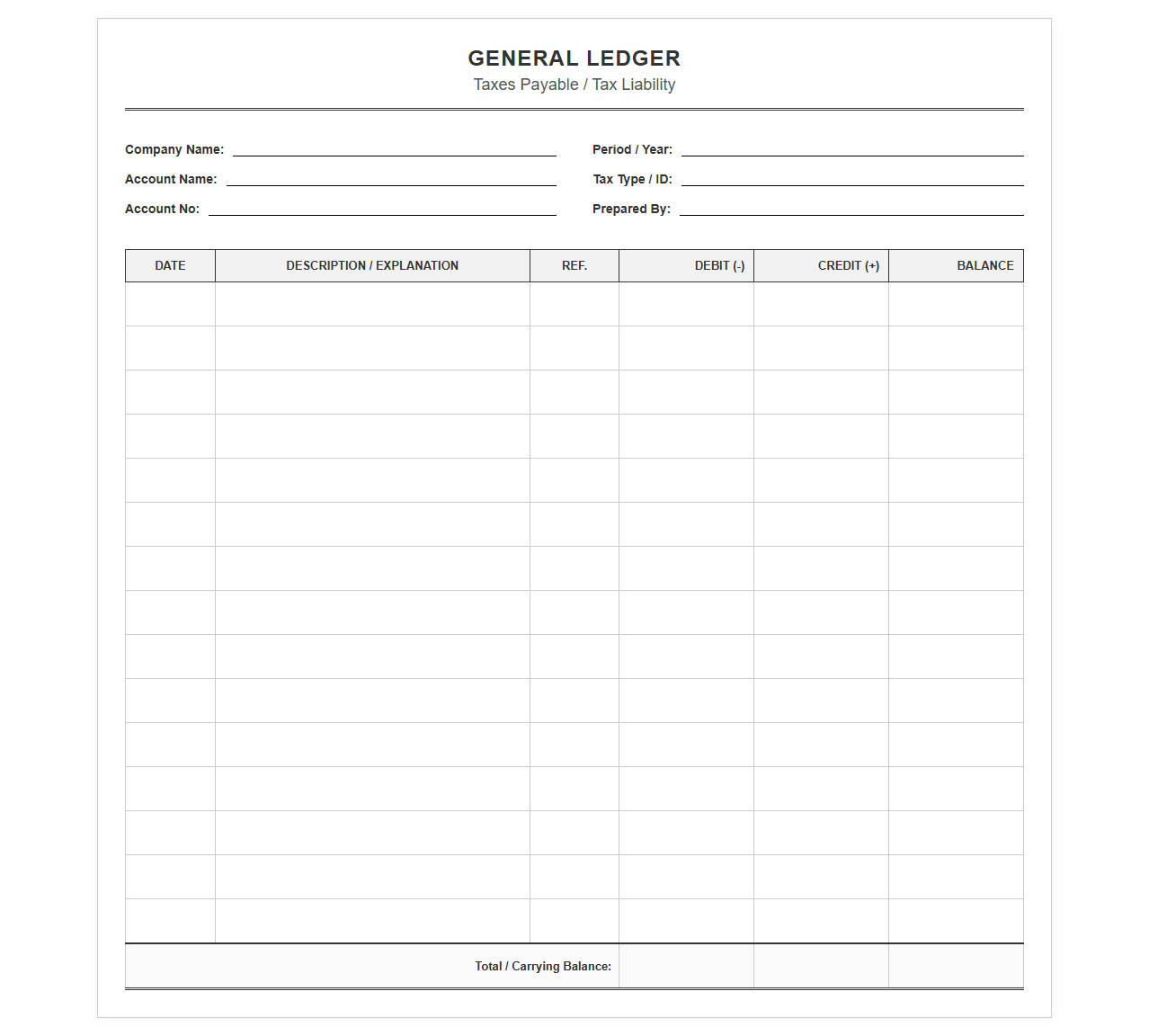 Download: .PDF
Corporate Taxes Payable Ledger Spreadsheet
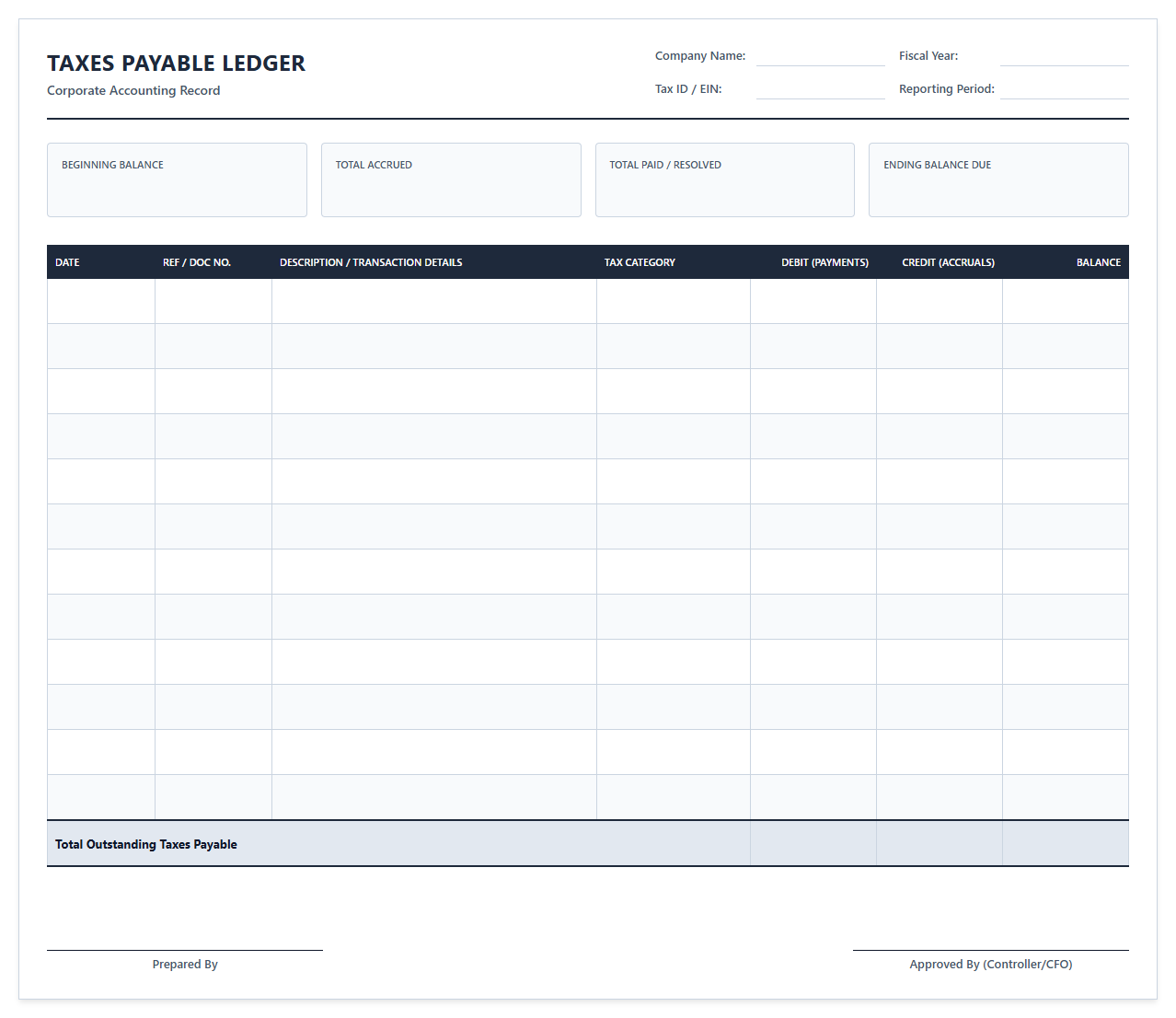 Download: .PDF
Monthly Sales Tax Payable Ledger Template
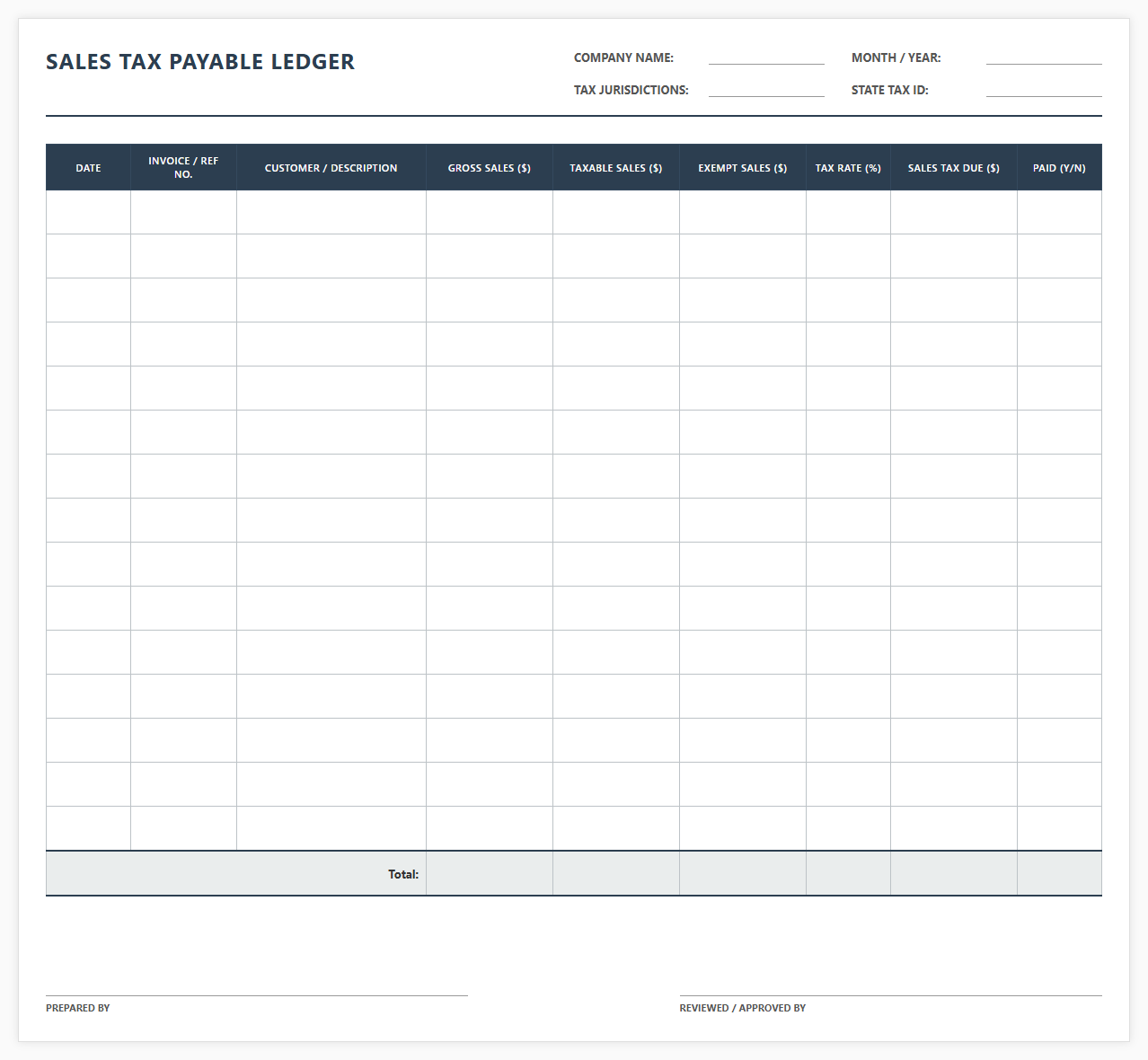 Download: .PDF
Payroll Tax Liabilities Ledger Sheet
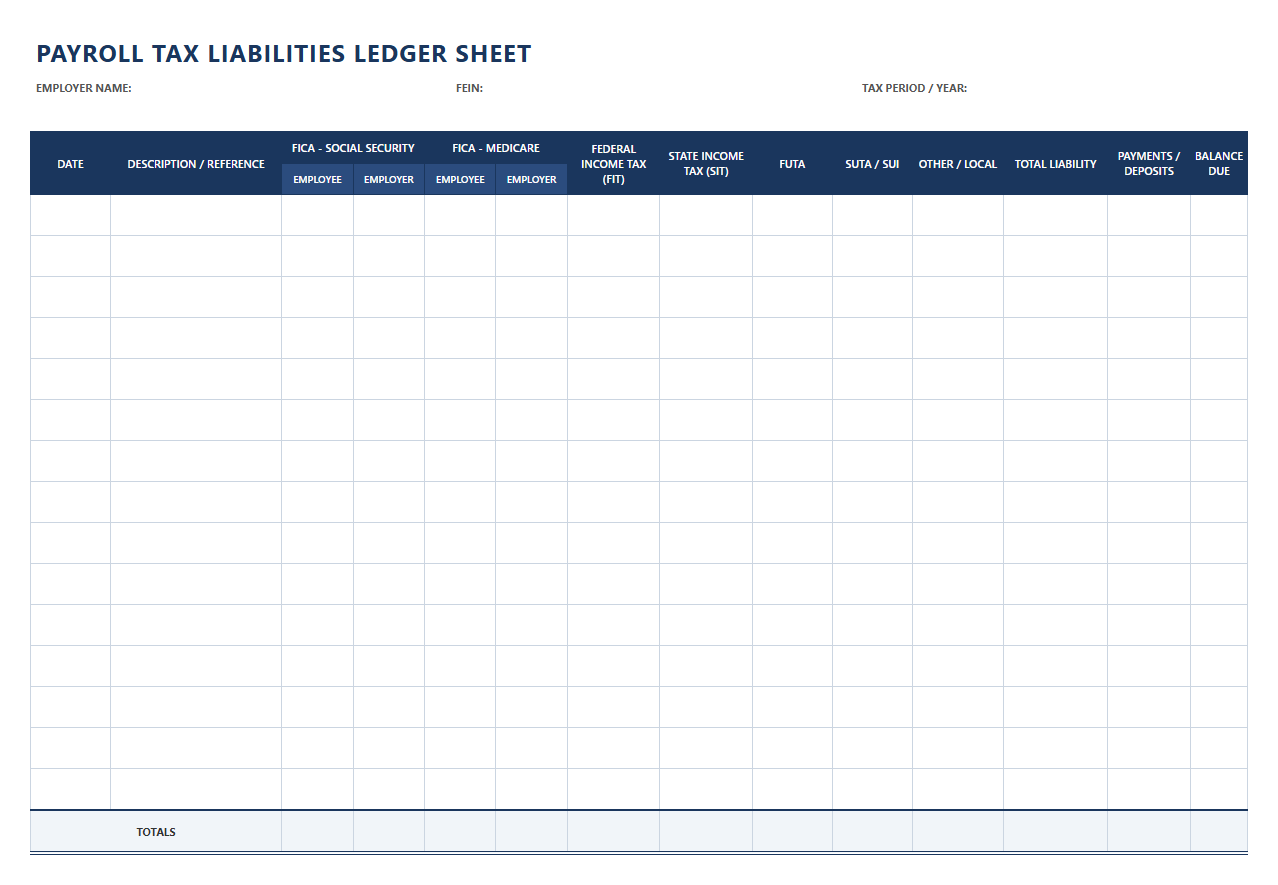 Download: .PDF
Annual Income Tax Payable Ledger
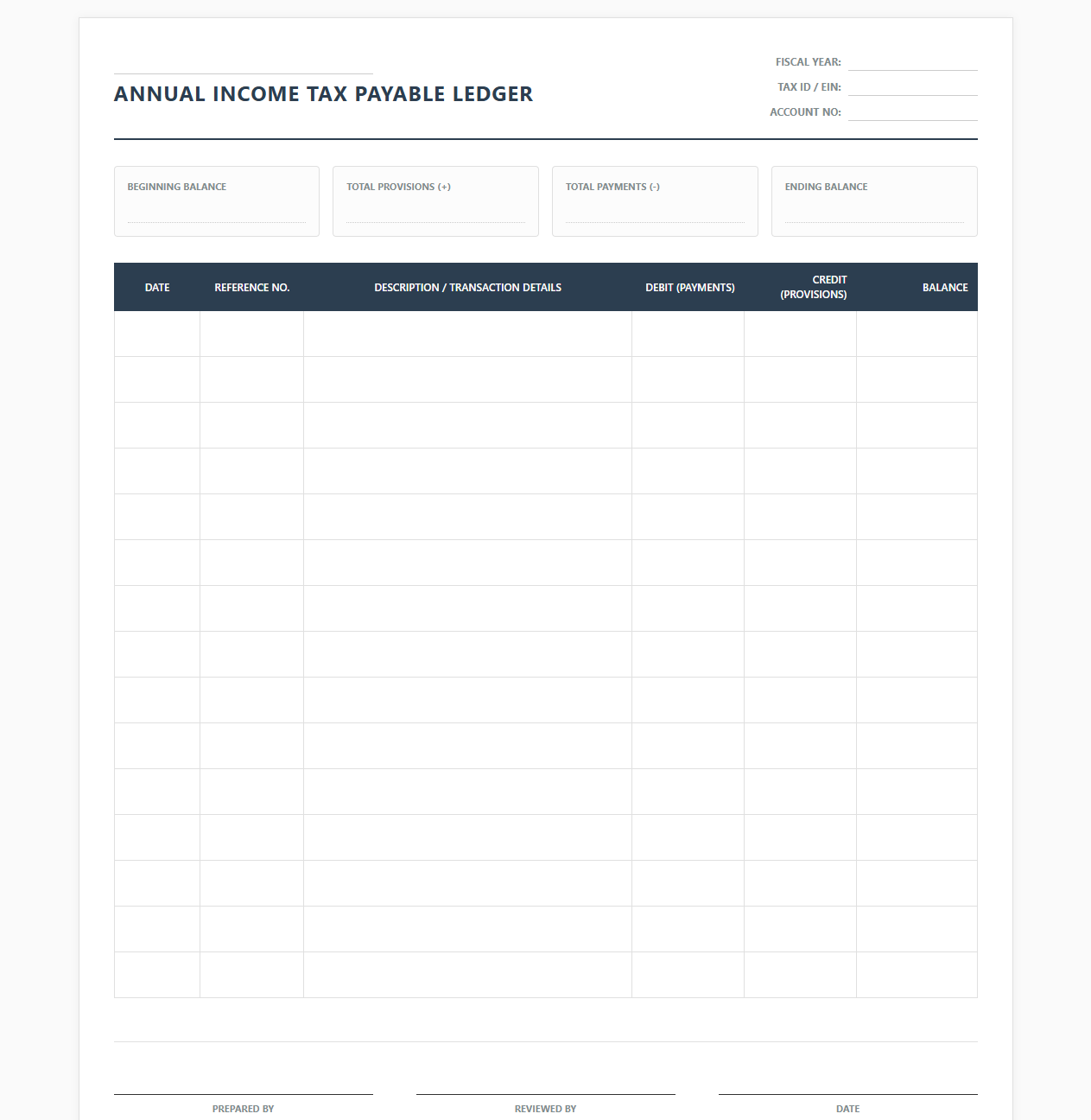 Download: .PDF
State and Local Tax Payable Ledger
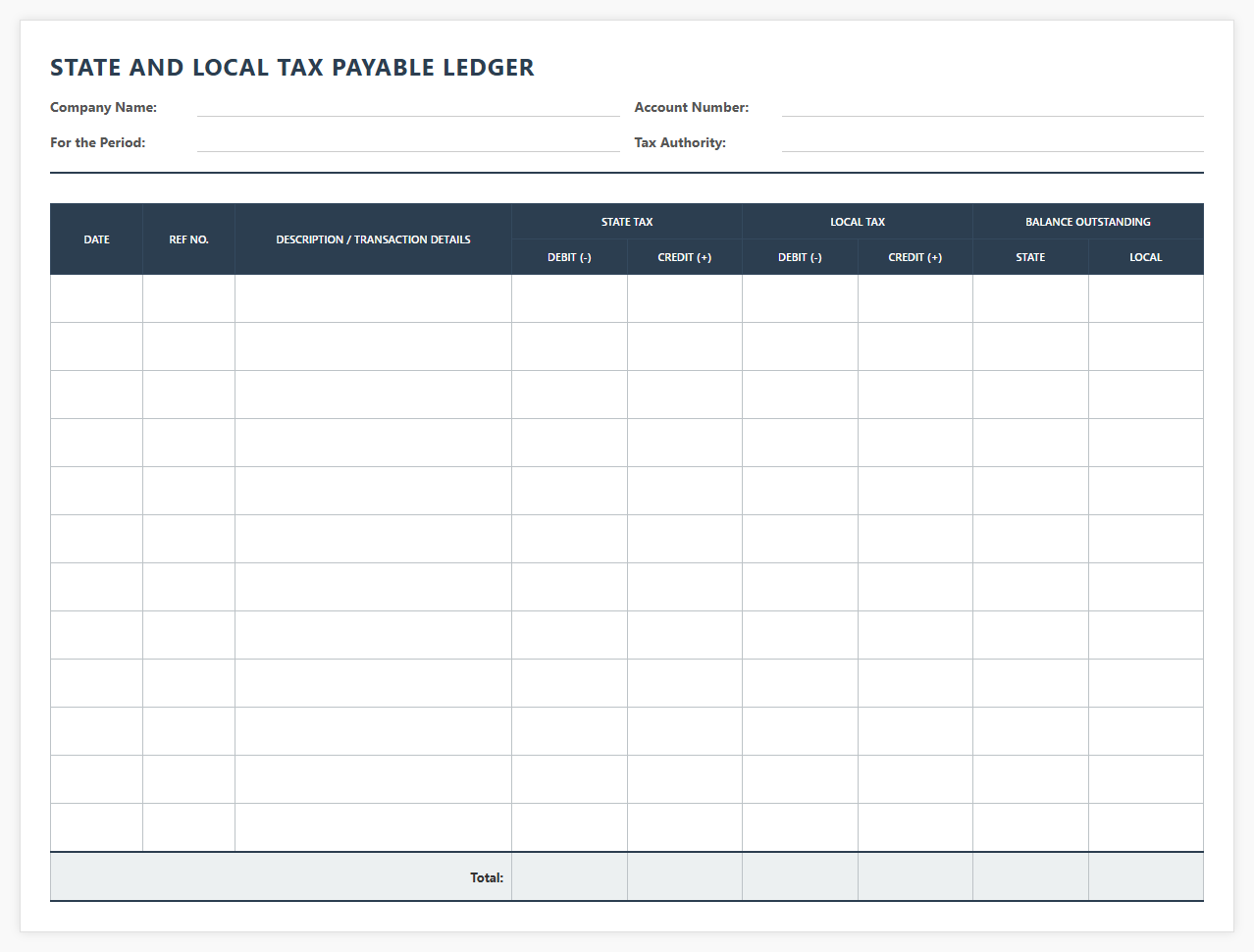 Download: .PDF
Value Added Tax Payable Ledger Template
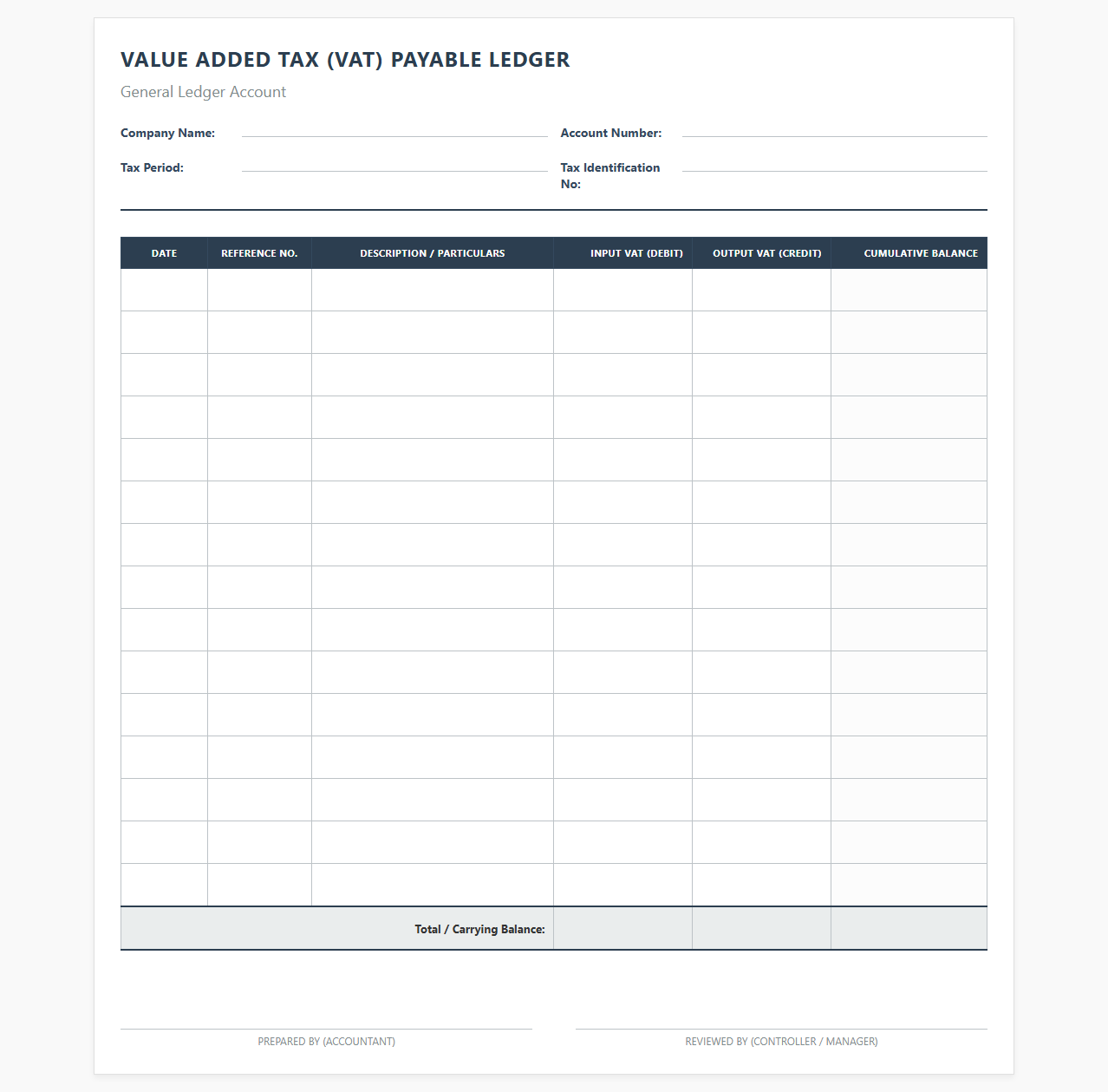 Download: .PDF
Quarterly Estimated Tax Ledger Sheet
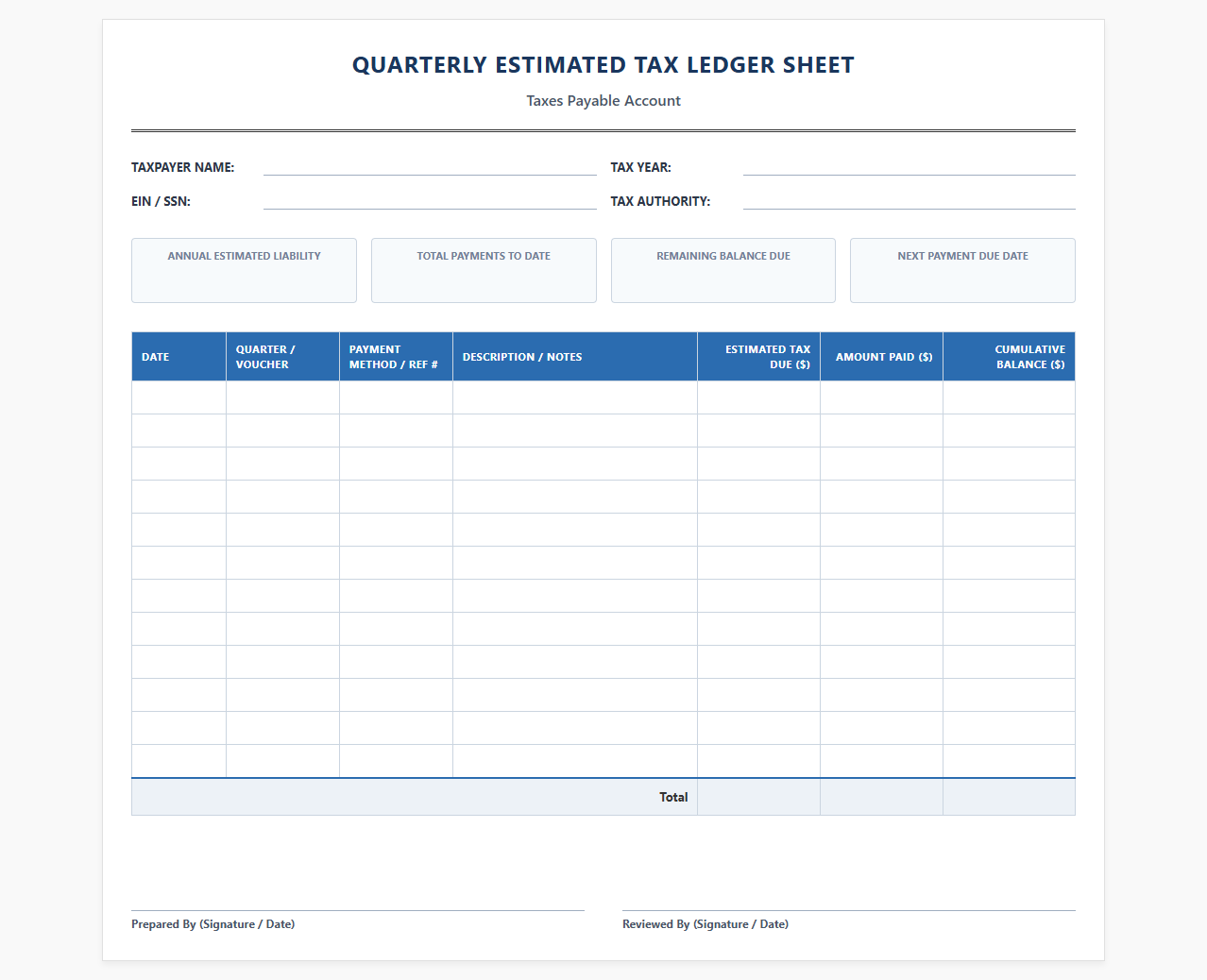 Download: .PDF
The Cost of Calamity: Why Taxes Payable Discrepancies Threaten Your Business
Accounting discrepancies in taxes payable represent a ticking financial time bomb for businesses of any size. When ledger balances fail to align with actual tax liabilities, organizations face severe financial penalties, compounding interest, and highly disruptive regulatory audits. Beyond the direct financial toll, these errors trigger legal risks that can damage corporate reputation and erode investor trust. Standardized ledger templates serve as a critical line of defense, establishing a structured, repeatable framework that eliminates tracking omissions and ensures complete compliance before filings are submitted.
Blueprint for Accuracy: Anatomy of a Comprehensive Ledger Template
A resilient taxes payable ledger must rely on a standardized structure to eliminate guesswork and manual input errors. By organizing data into distinct, dedicated columns, accounting teams can maintain clear visibility over every transaction. A comprehensive template should include the following core components:
- Transaction Date: Establishes a precise timeline for when the liability was incurred.
- Tax Authority / Entity: Identifies the specific agency owed (e.g., IRS, state department of revenue).
- Tax Category: Classifies the obligation to ensure correct accounting treatment.
- Liability Accrued: Tracks the exact amount of tax obligation generated.
- Payment Made: Records the debit transaction when the obligation is settled.
- Ending Balance: Calculates the real-time outstanding balance owed to the authority.
Categorizing Liabilities: Tracking State, Federal, and Local Tax Obligations
Maintaining a single, undifferentiated pool of tax liabilities is a recipe for reconciliation chaos. To ensure clean financial reporting, organizations must segment their federal, state, and local obligations. This granular classification allows teams to isolate specific tax types, such as income, sales, and payroll taxes, and reconcile them against distinct tax authority requirements.
| Tax Level | Obligation Type | Accrual Frequency | Primary Reporting Form |
|---|---|---|---|
| Federal | Corporate Income Tax | Quarterly (Estimated) | Form 1120 |
| Federal & State | Payroll Taxes (FICA / FUTA) | Per Pay Period | Form 941 / State Equivalents |
| State & Local | Sales and Use Tax | Monthly / Quarterly | State Sales Tax Return |
Root Cause Analysis: Pinpointing and Resolving Common Reconciliation Errors
Discrepancies rarely occur without a clear trigger. Typically, ledger mismatches stem from timing differences-such as recognizing an expense in one period while the tax payment occurs in another-or using outdated tax rates. To resolve these issues quickly, accountants should perform systematic checks using structured verification methods.
- Verify that the tax rates applied match current regulatory tables.
- Compare the general ledger balances against bank clearance dates to isolate timing offsets.
- Use reconciliation formulas to isolate the exact discrepancy margin:
Discrepancy = (Beginning Balance + Accrued) - Payments - Ending Balance.
Step-by-Step: Integrating Ledger Templates Into Your Monthly Closing Cycle
Adopting a standardized ledger template is only effective when it is fully integrated into your routine financial workflows. Establishing a disciplined cycle during month-end closes ensures that errors are caught and corrected before they aggregate into year-end reporting nightmares.
- Export all tax-related transaction registries from your primary billing and payroll systems.
- Populate the standardized ledger template with the newly exported accruals and payments.
- Compare the ledger ending balances against the corresponding control accounts in your general ledger.
- Document any variance, research the root cause, and apply adjusting journal entries immediately.
- Archive the finalized ledger sheet alongside supporting bank statements for future audit trails.
From Spreadsheets to Automation: Scaling Your Tax Ledger Workflows
While static spreadsheets are an excellent starting point, growing businesses must migrate toward more resilient systems to minimize human error. Upgrading your workflow to automated Enterprise Resource Planning (ERP) systems or dynamic, cloud-based databases allows for real-time data syncs, automated journal entries, and automated tax calculation engines. Businesses looking to scale should explore modern integrations that connect ledger templates directly to tax compliance engines. By leveraging authoritative tax resources, teams can ensure their software automatically updates state and local tax brackets, turning a vulnerable manual process into a highly secure, fully automated compliance pipeline.
Continuous Compliance: Establishing Regular Audit Safeguards
A reliable ledger template is only as strong as the internal controls surrounding it. To guarantee long-term health, organizations must implement robust operational policies that prevent errors from passing through unnoticed.
"Implementing a strict separation of duties-where the team member who calculates the tax accruals is not the same individual who approves the final payment-creates an essential checks-and-balances system that significantly reduces compliance risk."
Regular internal audits, scheduled at quarterly intervals, ensure that tax codes remain current and that minor discrepancies are resolved swiftly. Proactive maintenance of your ledger templates preserves data integrity, shields your business from penalties, and ensures you are always ready for external regulatory scrutiny.

Leave a comment