
Managing corporate relocation reimbursements is a logistical minefield. HR and payroll teams routinely battle disorganized receipts, inconsistent employee claims, and the looming threat of tax non-compliance. As global mobility increases, understanding the critical intersection between corporate policy and tax authority guidelines is a necessary first step before altering your reimbursement workflows.
Standardizing this process with compliant payroll document templates grants organizations immediate administrative relief, ensuring flawless data capture while protecting against costly audit penalties. However, a key stipulation remains: these templates serve as foundational structures and must always be tailored to address specific local jurisdictional tax codes. Utilizing concrete tools, such as standardized Moving Expense Logs and Relocation Allowance Agreements, provides verifiable proof of compliant expense tracking.
In this article, we will explore key regulatory compliance requirements, share essential template frameworks, and outline best practices for seamlessly integrating these tools into your existing payroll infrastructure.
Employee Relocation Expense Payroll Reimbursement Form
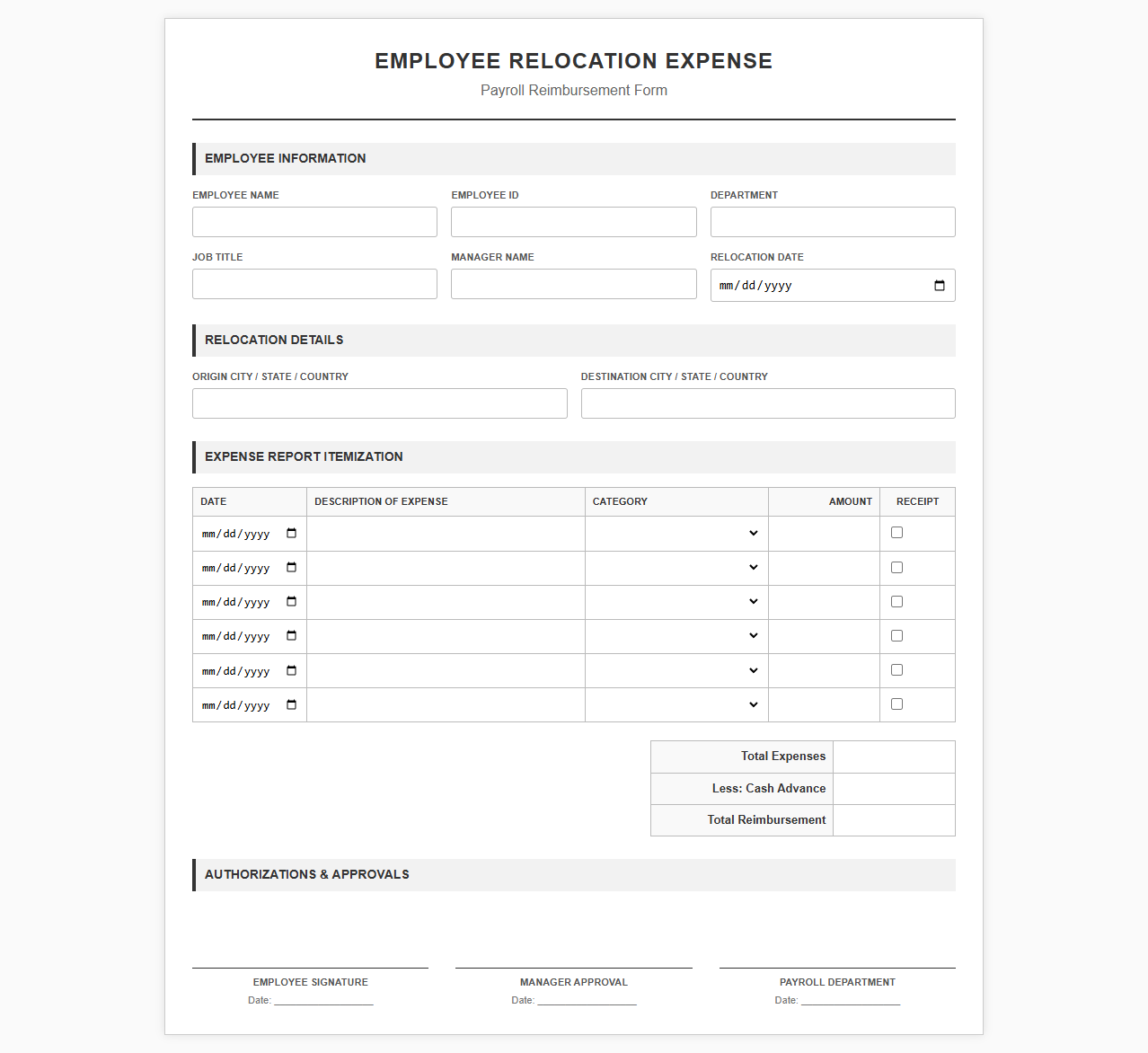 Download: .PDF
Relocation Allowance Payroll Processing Worksheet
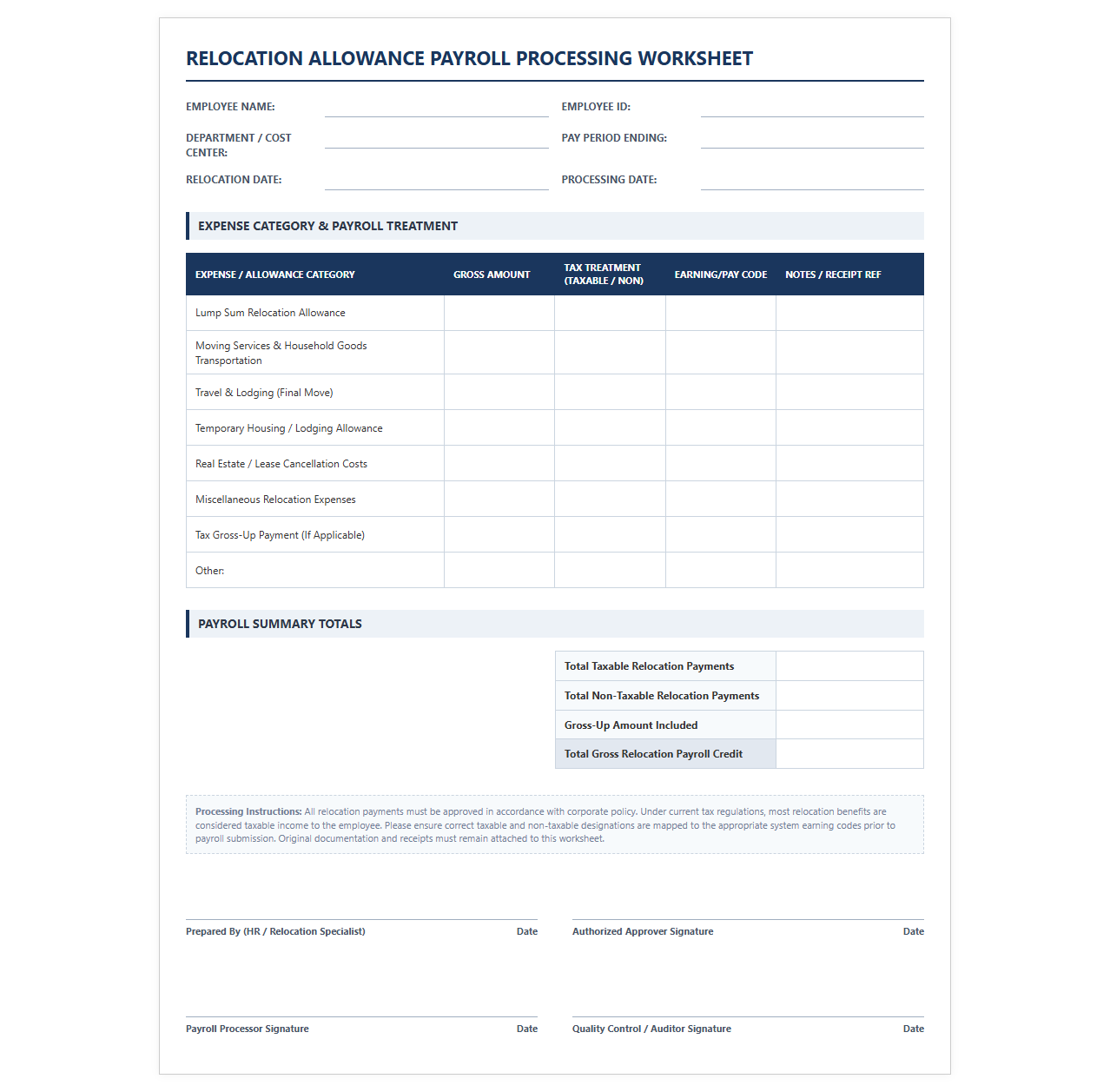 Download: .PDF
Corporate Move Expense Payroll Reporting Template
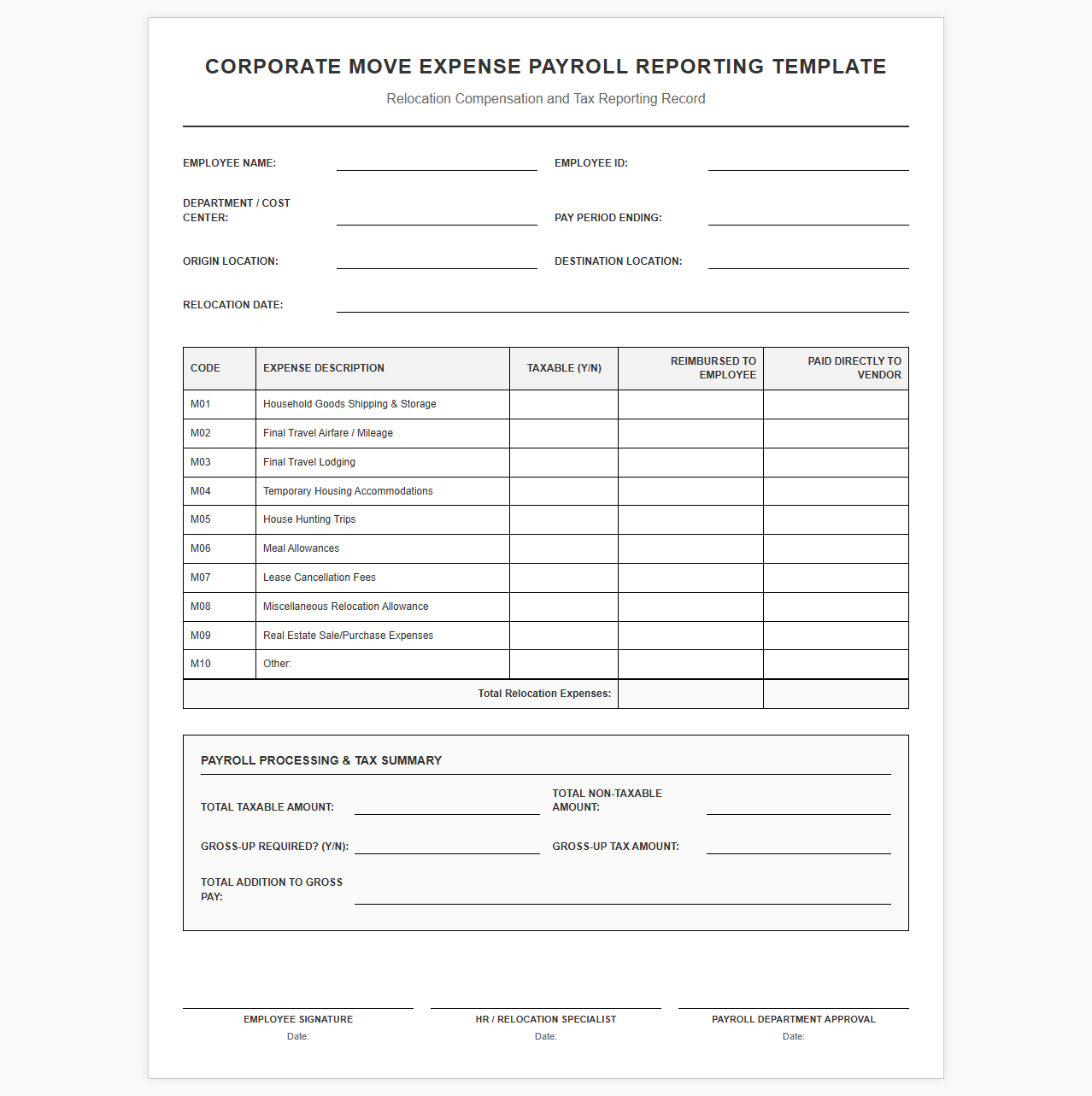 Download: .PDF
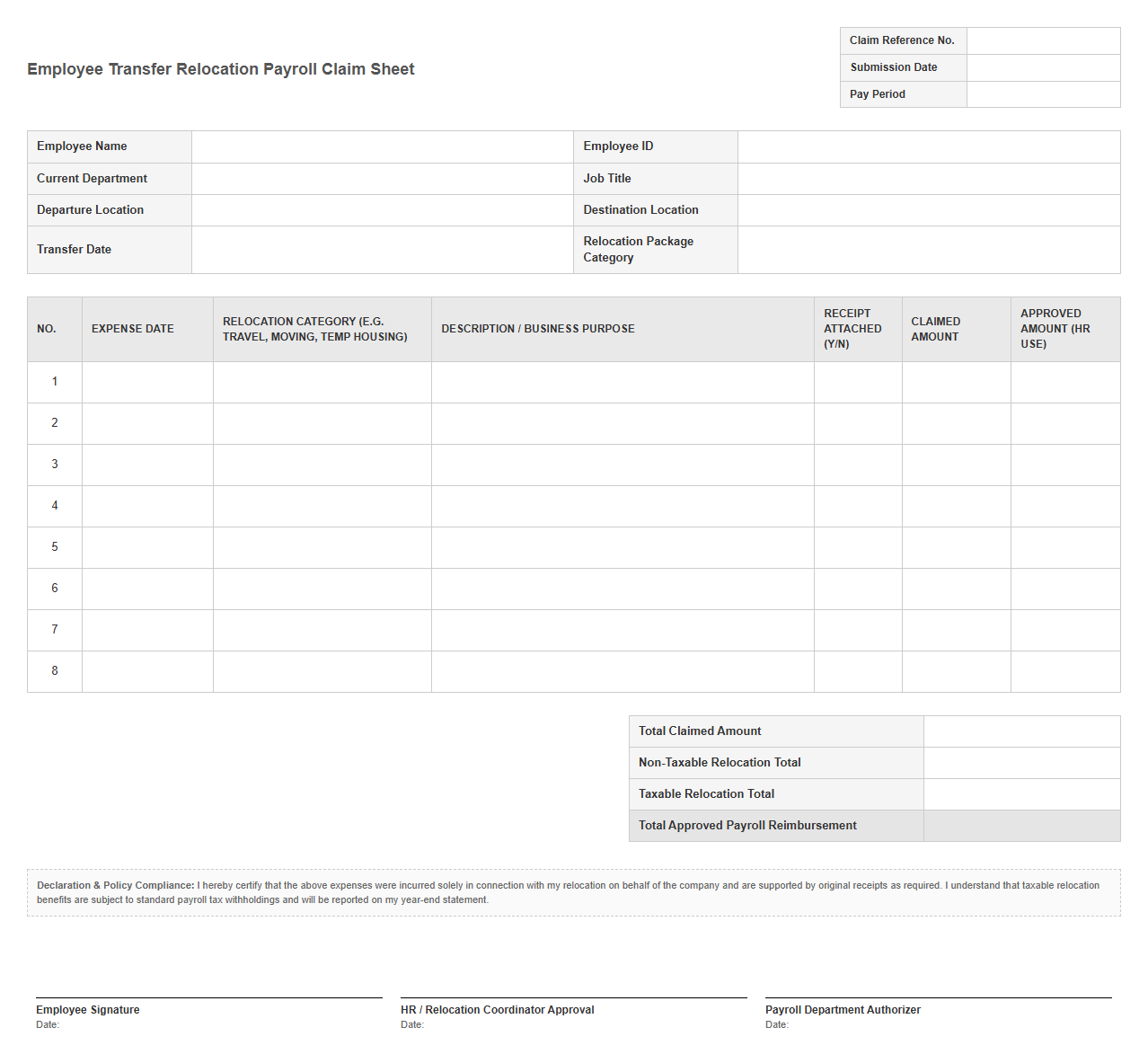
Employee Transfer Relocation Payroll Claim Sheet
 Download: .PDF
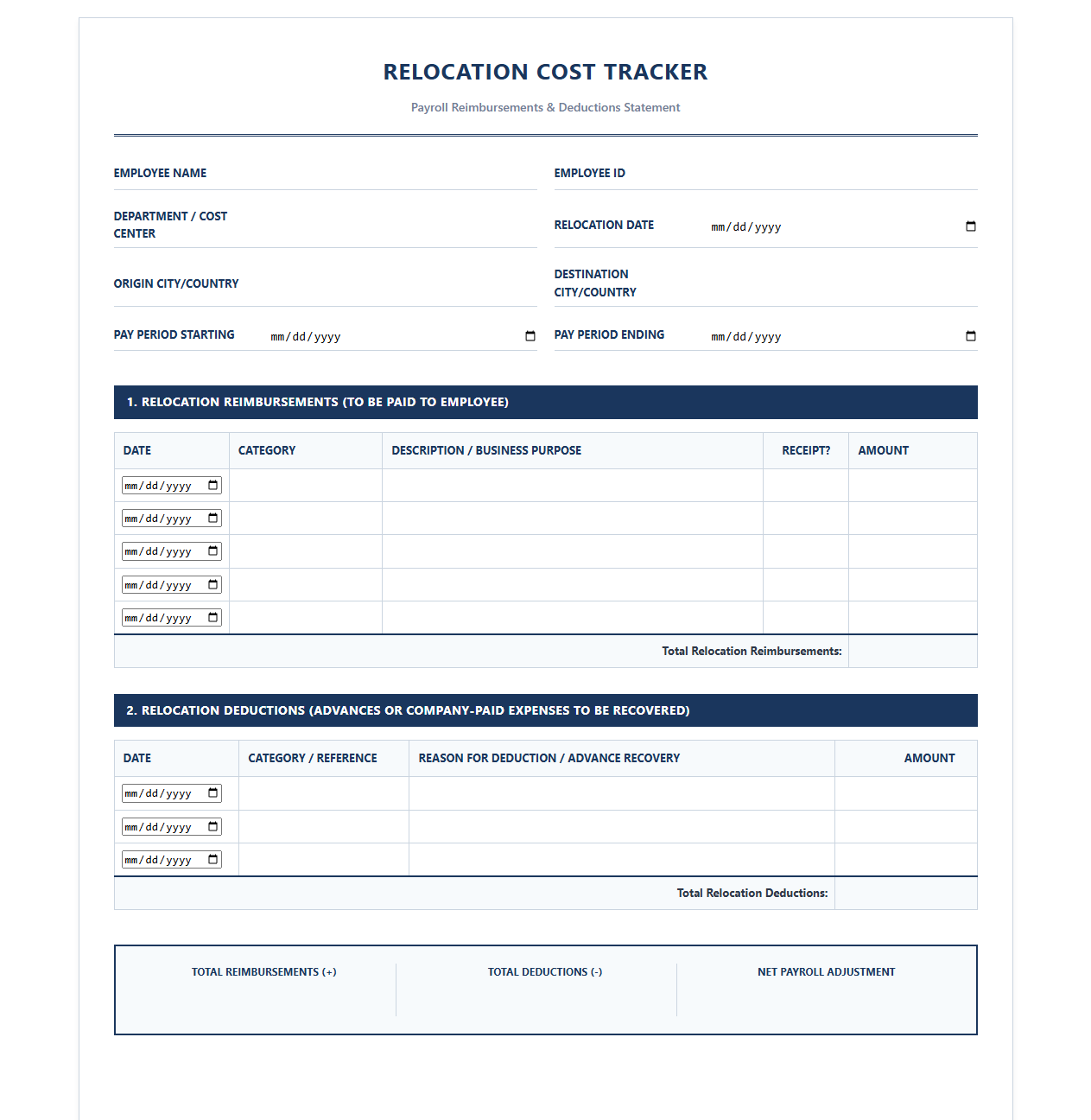
Relocation Cost Payroll Deduction and Reimbursement Tracker
 Download: .PDF
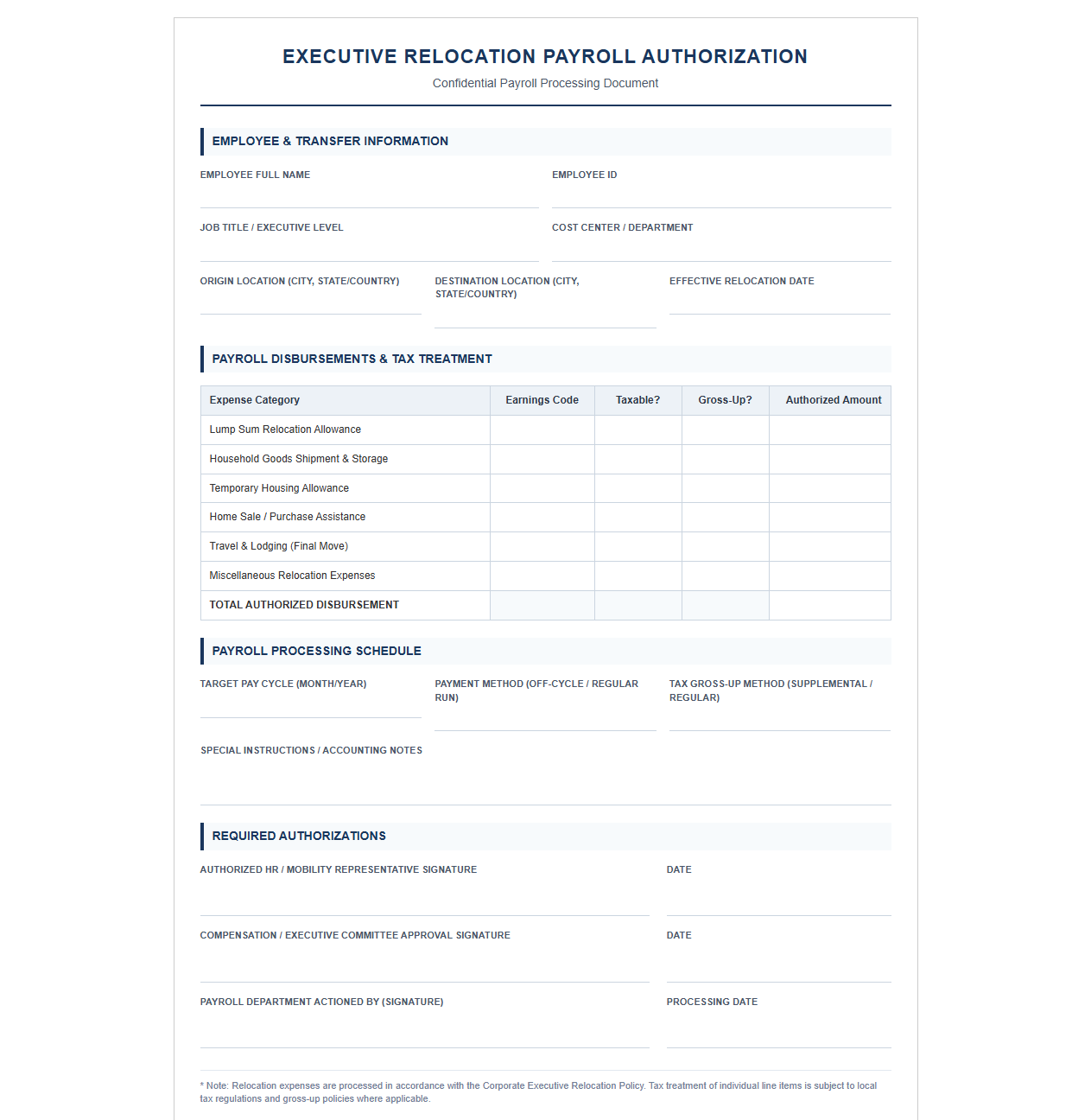
Executive Relocation Payroll Authorization Form
 Download: .PDF
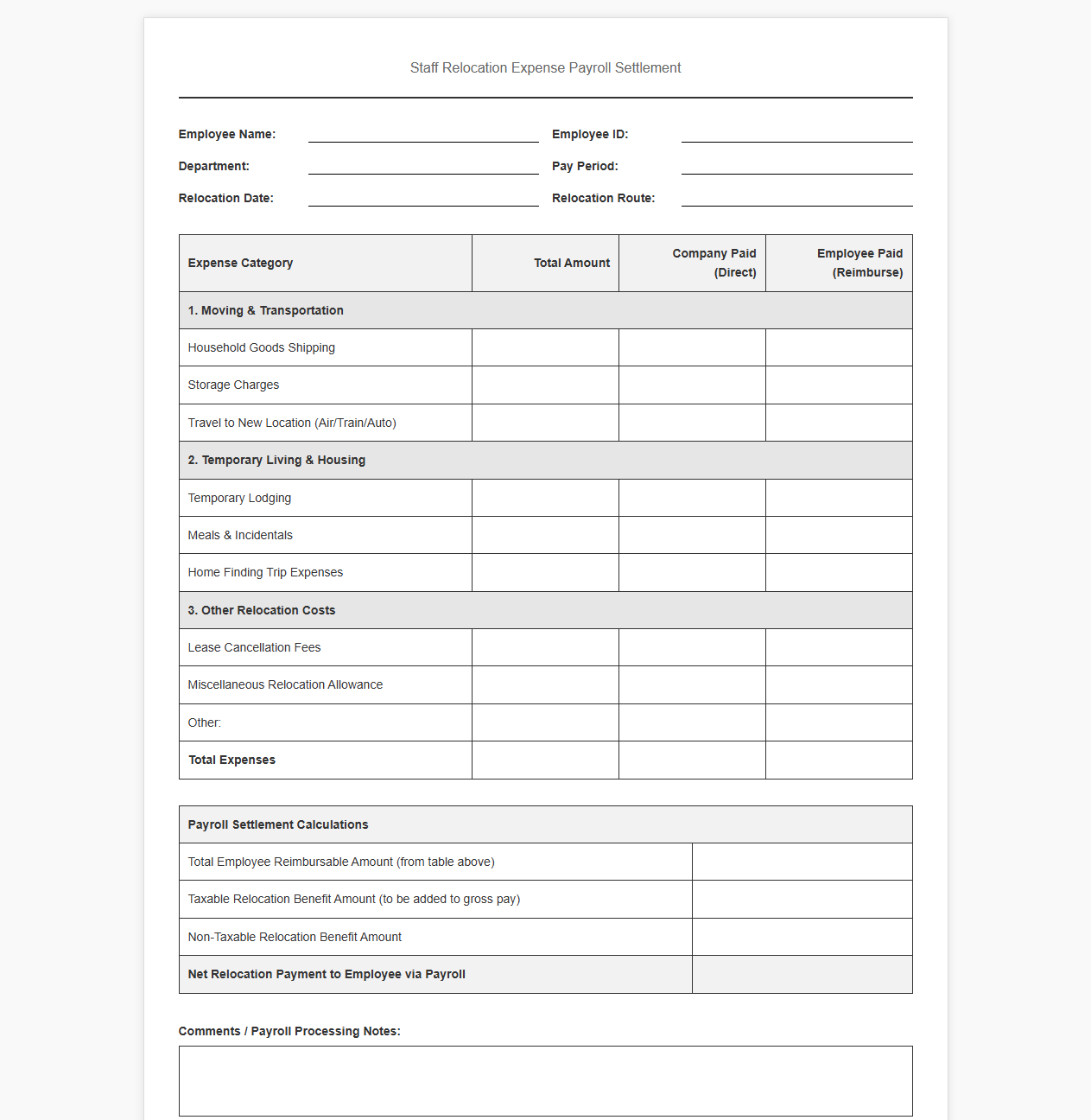
Staff Relocation Expense Payroll Settlement Template
 Download: .PDF
Job Relocation Payroll Benefit Claim Document
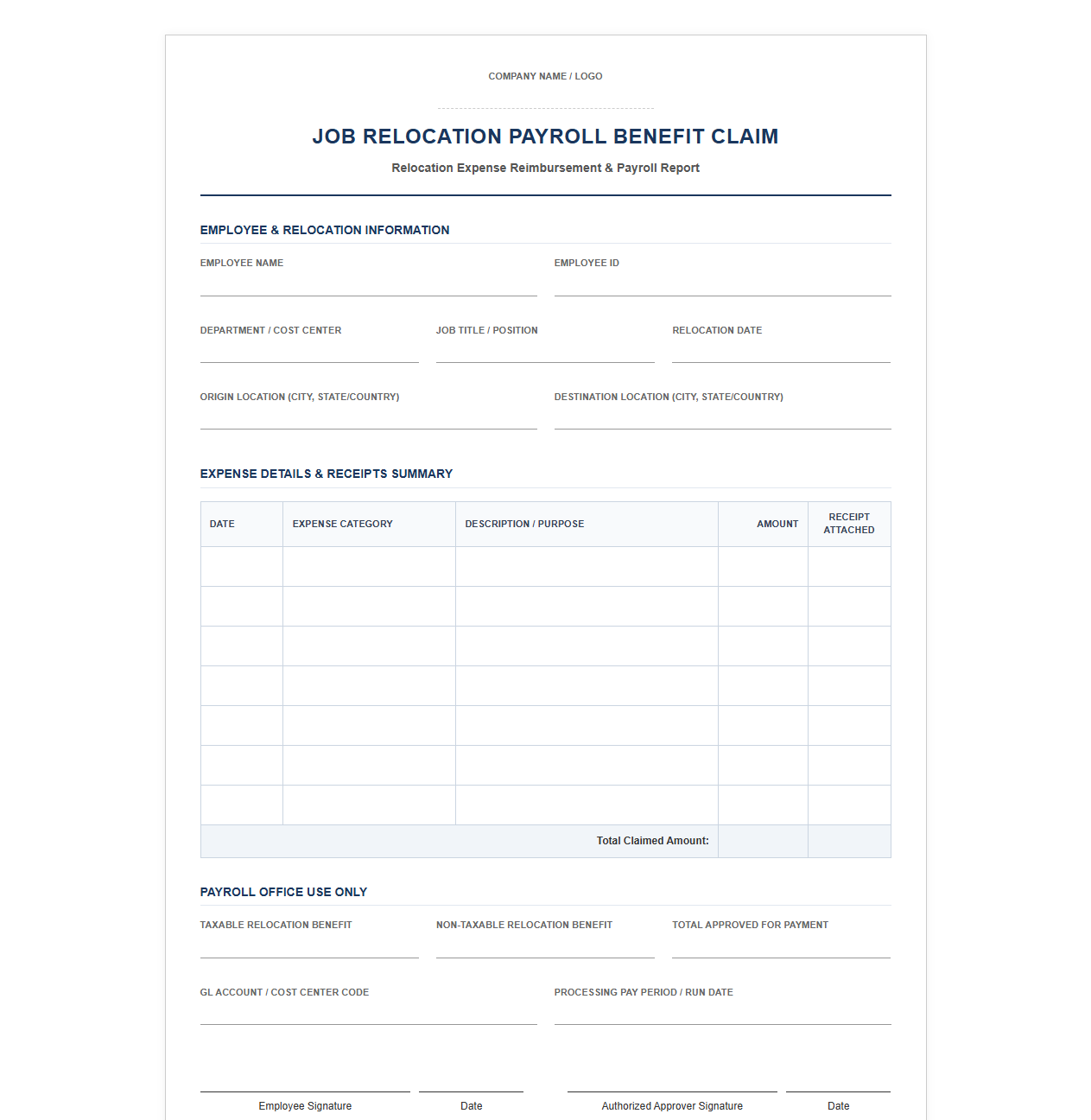 Download: .PDF
The Challenges of Modern Employee Relocation Reimbursement
Relocating talent is a vital strategy for growing organizations, but managing the associated expenses presents a significant administrative burden. HR departments and payroll teams often find themselves buried in a chaotic mix of physical receipts, mismatched spreadsheets, and varying policy exceptions. Without a structured approach, tracking these diverse costs leads to processing delays, calculation errors, and frustrated employees. Implementing standardized payroll templates offers an elegant solution to this operational friction, streamlining data entry and creating a uniform process that ensures accuracy from day one.
Navigating Tax Compliance and IRS Guidelines
One of the most complex aspects of managing relocation payments is ensuring complete alignment with current tax codes. Under current federal tax laws, the vast majority of employer-provided relocation benefits are treated as taxable income for the employee. This shift requires payroll administrators to carefully distinguish between different types of assistance to prevent costly reporting errors.
- Direct Moving Expenses: Costs associated with packing and transporting household goods must be treated as taxable compensation.
- Travel and Lodging: Final move travel and temporary lodging expenses are subject to standard income and payroll tax withholding.
- Tax Gross-Ups: Many organizations choose to provide additional funds to cover the tax burden of the relocation package, which must be precisely calculated and reported.
Essential Components of a Compliant Reimbursement Template
To withstand internal audits and meet federal reporting standards, a payroll relocation template must capture specific data points. Having a structured layout ensures that no critical details are omitted during the submission process.
- Employee Identifiers: Capturing the employee's full legal name, department, employee ID, and both starting and destination locations.
- Expense Itemization: A chronological log where the employee lists the date, vendor, description, and exact cost of each expense.
- Taxability Indicators: Dedicated columns to mark whether an item is taxable, non-taxable, or pre-paid by the company.
- Authorization Signatures: Signature fields for the submitting employee and the approving manager to verify the accuracy of the claim.
Categorizing Reimbursable vs. Non-Reimbursable Expenses
Providing employees and payroll clerks with a clear matrix of what qualifies for reimbursement prevents disputes and speeds up approval times. The table below outlines how common relocation expenses are categorized.
| Expense Category | Reimbursable Status | Payroll Treatment |
|---|---|---|
| Professional Moving Services | Approved | Taxable Income |
| Temporary Housing (Up to 30 days) | Approved | Taxable Income |
| Home Hunting Trips | Approved (Policy Limits Apply) | Taxable Income |
| Lease Breakage Penalties | Case-by-Case Approval | Taxable Income |
| Personal Side-Trips During Transit | Strictly Prohibited | Non-Reimbursable |
Establishing a Seamless Approval and Submission Workflow
A standardized template is only as good as the process supporting it. Organizations must establish a transparent path of custody for relocation claims to avoid processing bottlenecks and delayed payments. Establishing clear deadlines for submission, such as requiring all receipts to be submitted within forty-five days of the move date, helps maintain momentum.
"An optimized workflow routes the verified relocation template from the employee to HR for policy compliance, then directly to the payroll department for final processing and tax calculation."
This sequential approach prevents unauthorized payouts and ensures that every line item aligns perfectly with the company's established relocation guidelines.
Transitioning to Digital and Automated Payroll Templates
Relying on paper forms or basic email attachments often leads to lost documentation and manual transcription errors. Moving to interactive, fillable digital templates allows companies to integrate these documents directly into existing HRIS platforms. Through modern payroll software systems, organizations can auto-populate employee details, attach digital receipts directly to specific line items, and set up automated routing for approvals. This shift to digital forms reduces manual administrative labor and ensures *real-time tracking* of relocation budgets.
Best Practices for Maintaining Up-to-Date Document Templates
Tax regulations and corporate policies are dynamic, meaning your reimbursement templates must be regularly reviewed to remain effective. Failing to update templates can result in compliance violations and incorrect tax withholding.
- Conduct bi-annual reviews of all template fields alongside your legal or tax compliance team.
- Update mileage rates in accordance with the latest annual IRS standard mileage adjustments.
- Gather feedback from relocating employees and payroll staff to continuously improve the template's usability.

Leave a comment