
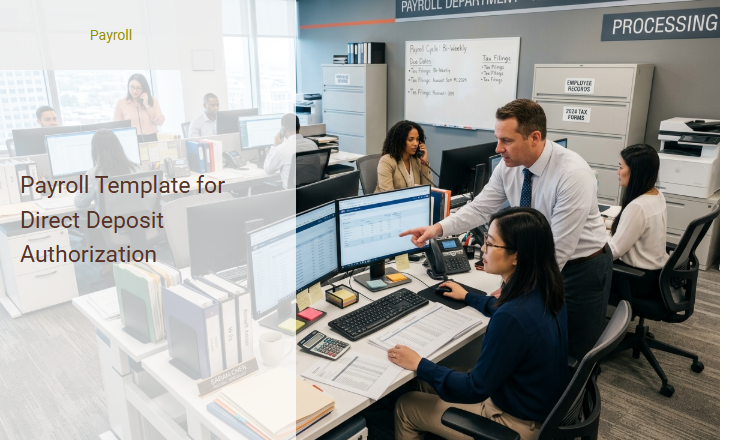
HR and payroll professionals frequently battle the administrative headache of failed transactions, manual correction cycles, and delayed employee payouts. Before rushing to implement complex payroll software, organizations must first establish a reliable, standardized mechanism for capturing financial data at the source.
Implementing a structured direct deposit authorization template grants payroll teams absolute data integrity and peace of mind, virtually eliminating costly entry mistakes. Crucially, this system's success is contingent upon clear employee guidelines, as even the most robust template requires precise user input. Minor mishaps, such as transposing a single digit in a routing number or mischecking account types, serve as costly proof of how easily manual workflows break down without rigid guardrails.
This article explores the anatomy of an error-proof authorization template, examines essential compliance requirements, and outlines actionable strategies to secure seamless, accurate pay cycles.
Direct Deposit Authorization Form
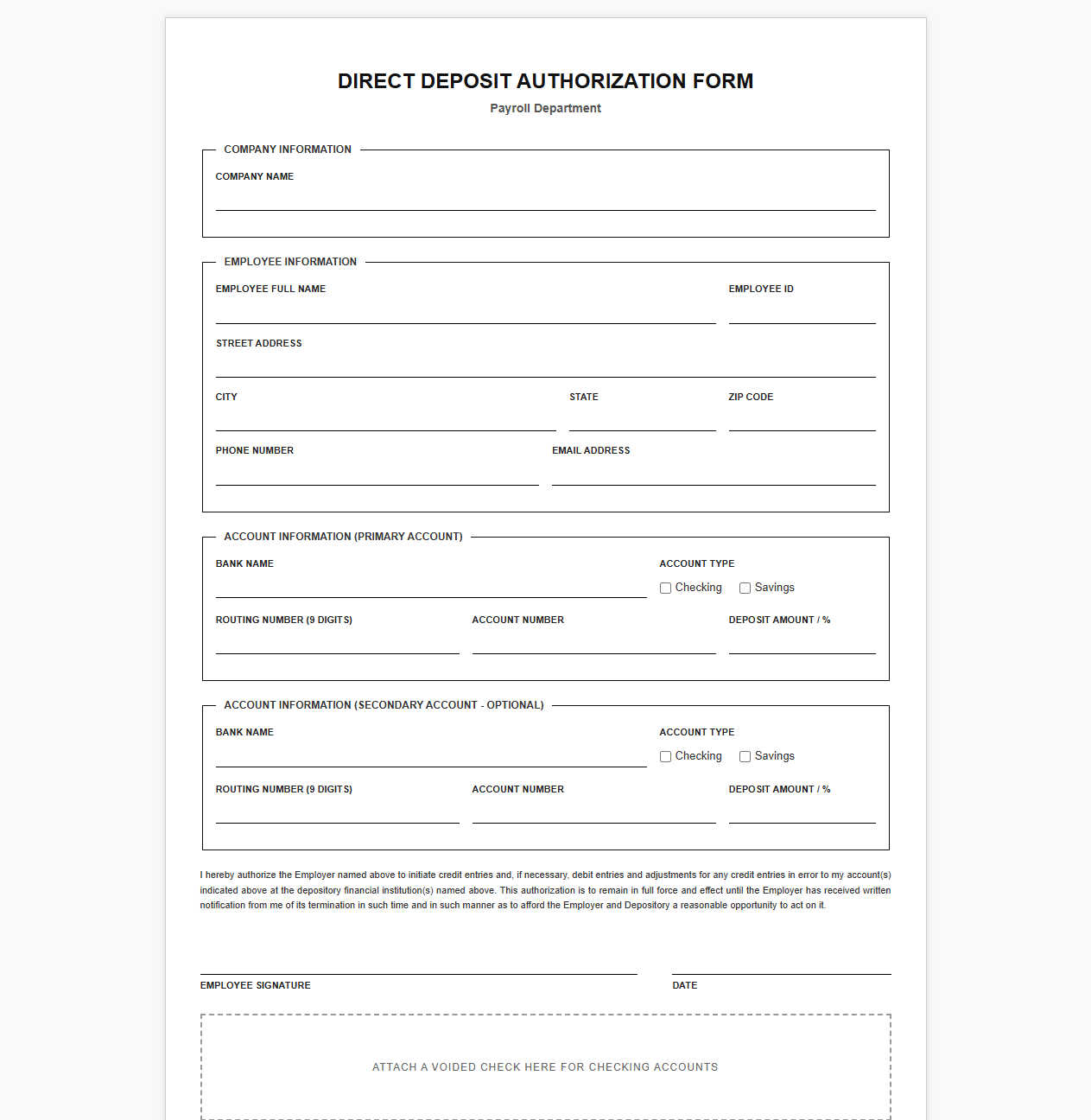 Download: .PDF
Employee Direct Deposit Enrollment Template
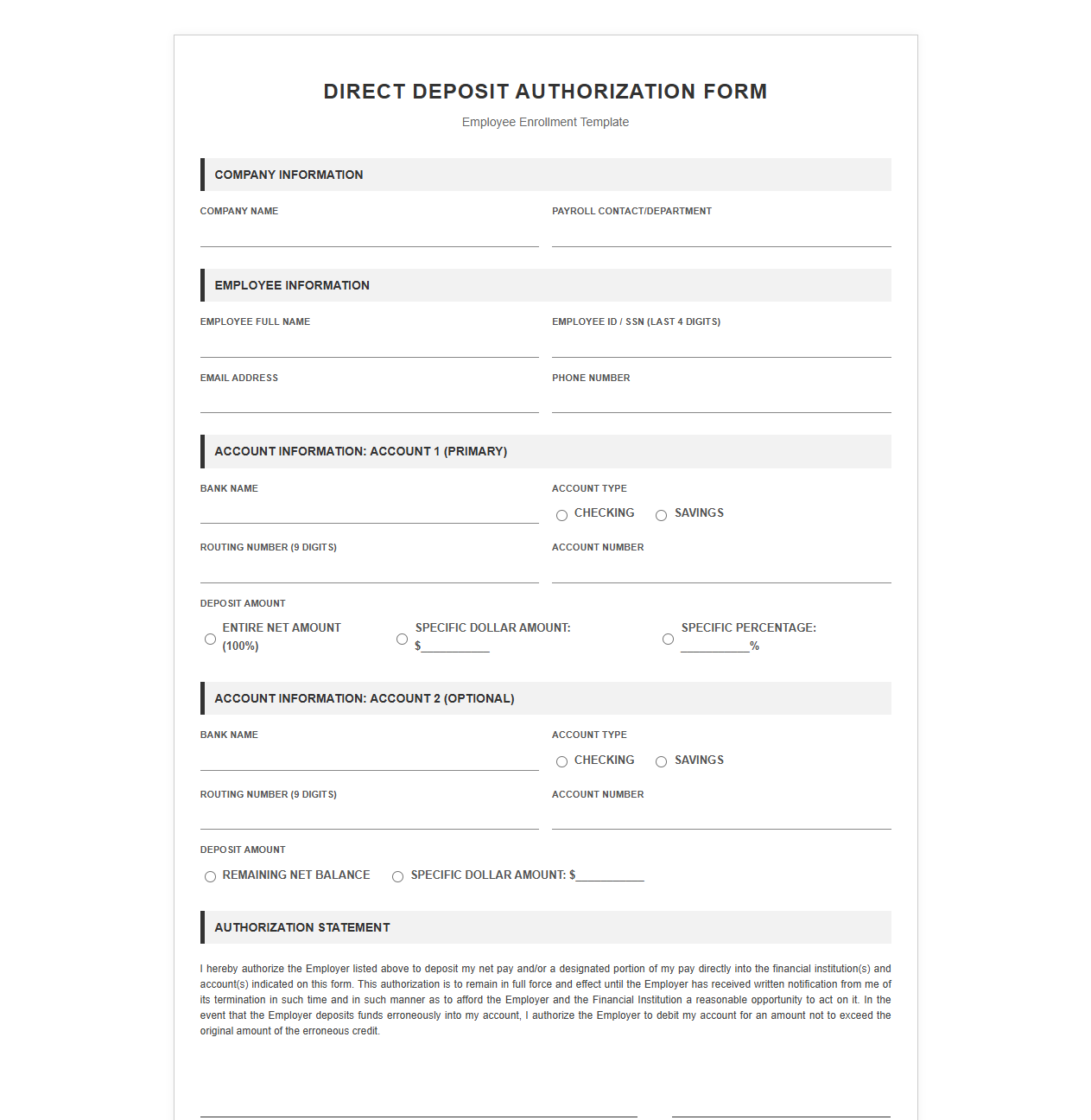 Download: .PDF
Payroll Direct Deposit Sign-Up Form
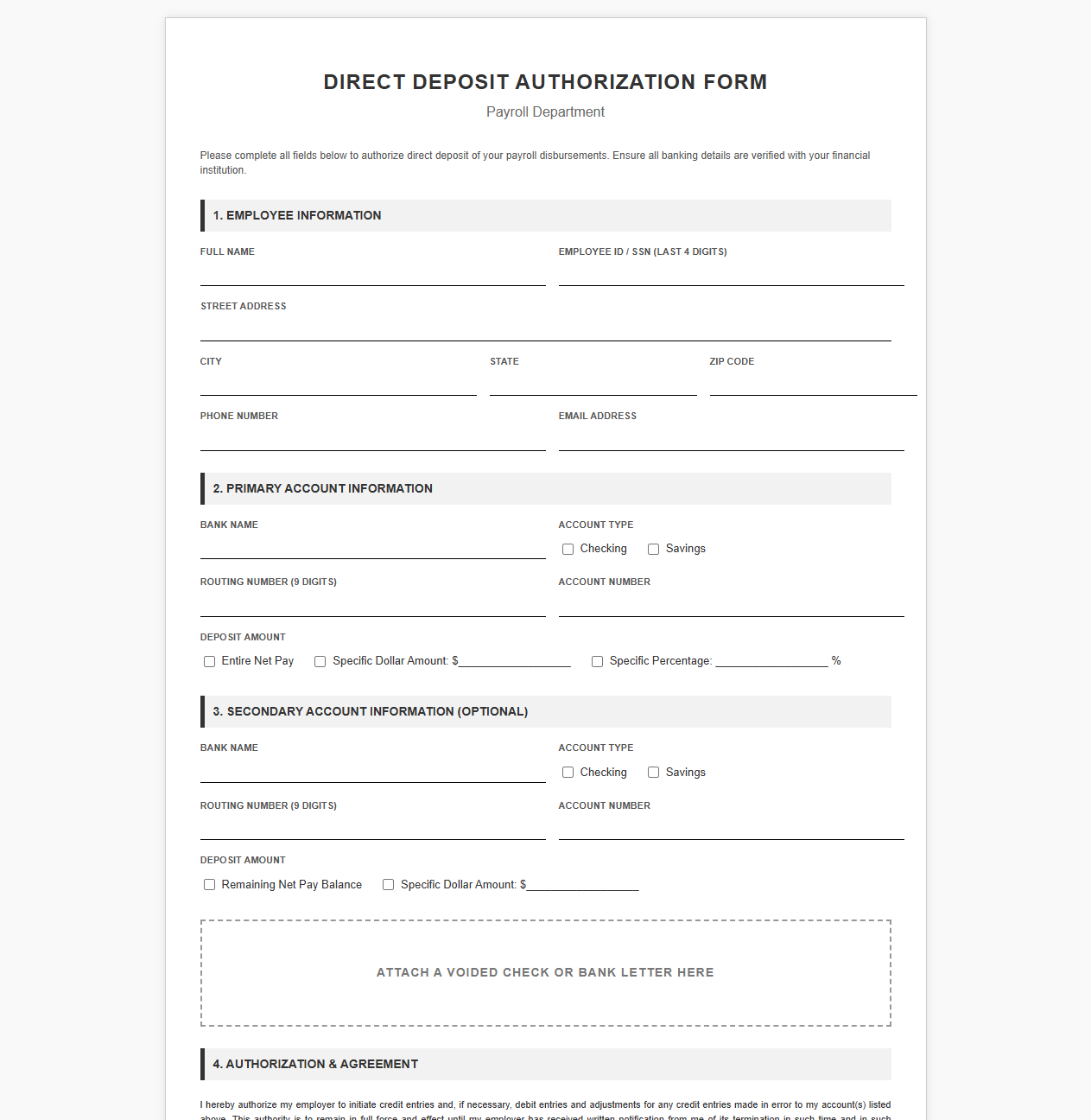 Download: .PDF
Direct Deposit Bank Authorization Form
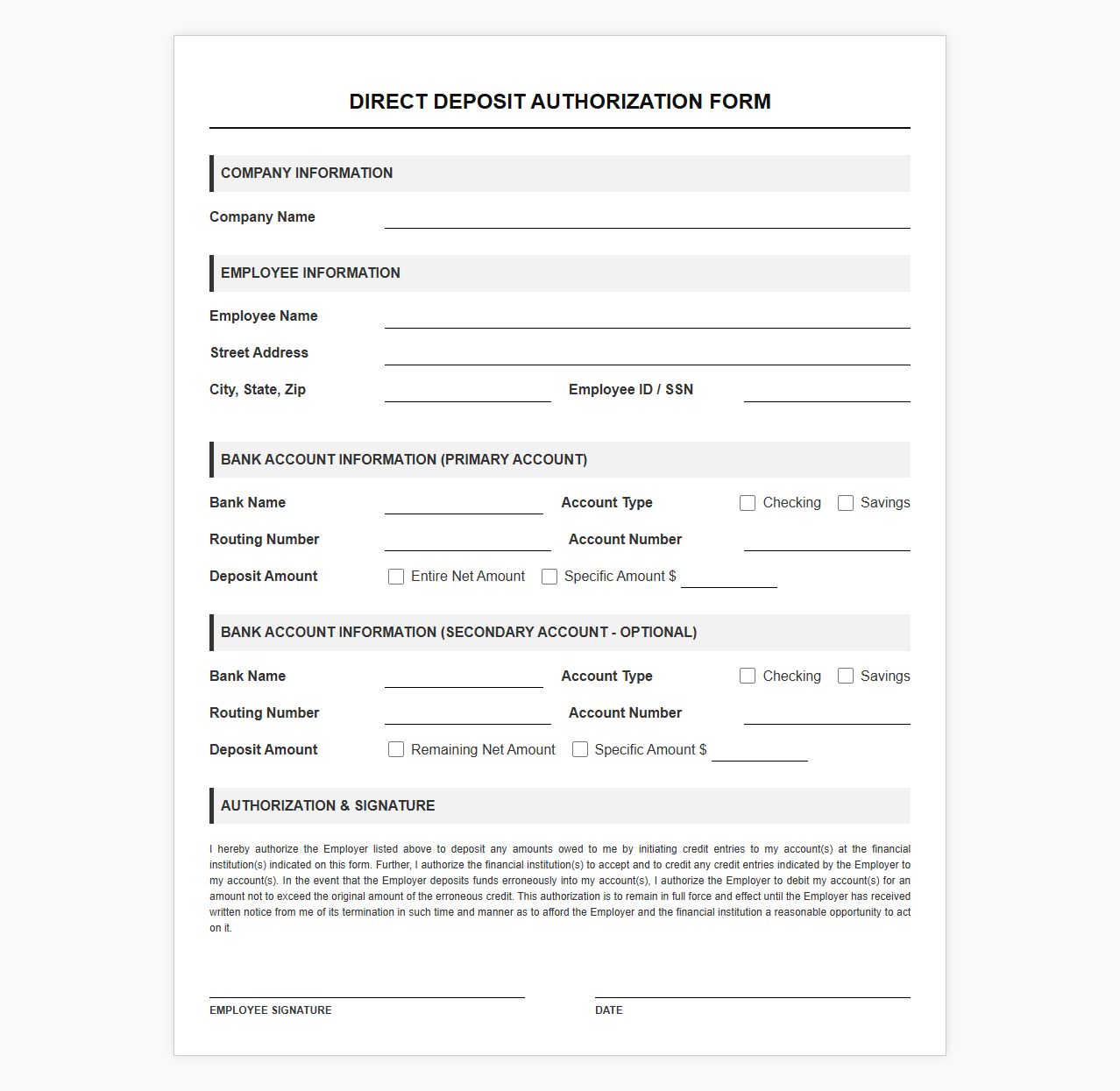 Download: .PDF
ACH Direct Deposit Authorization Template
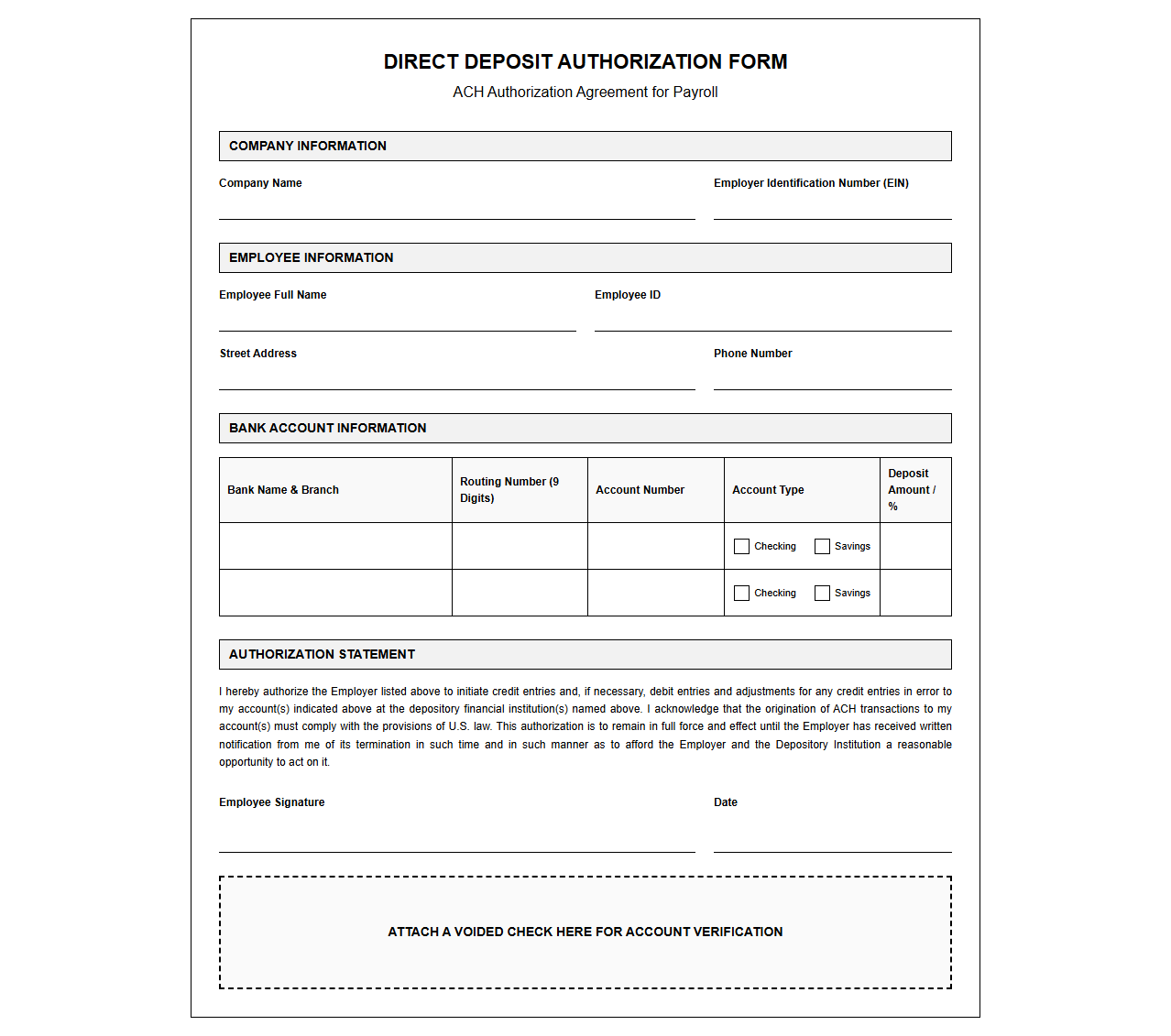 Download: .PDF
Employee Payroll Direct Deposit Agreement
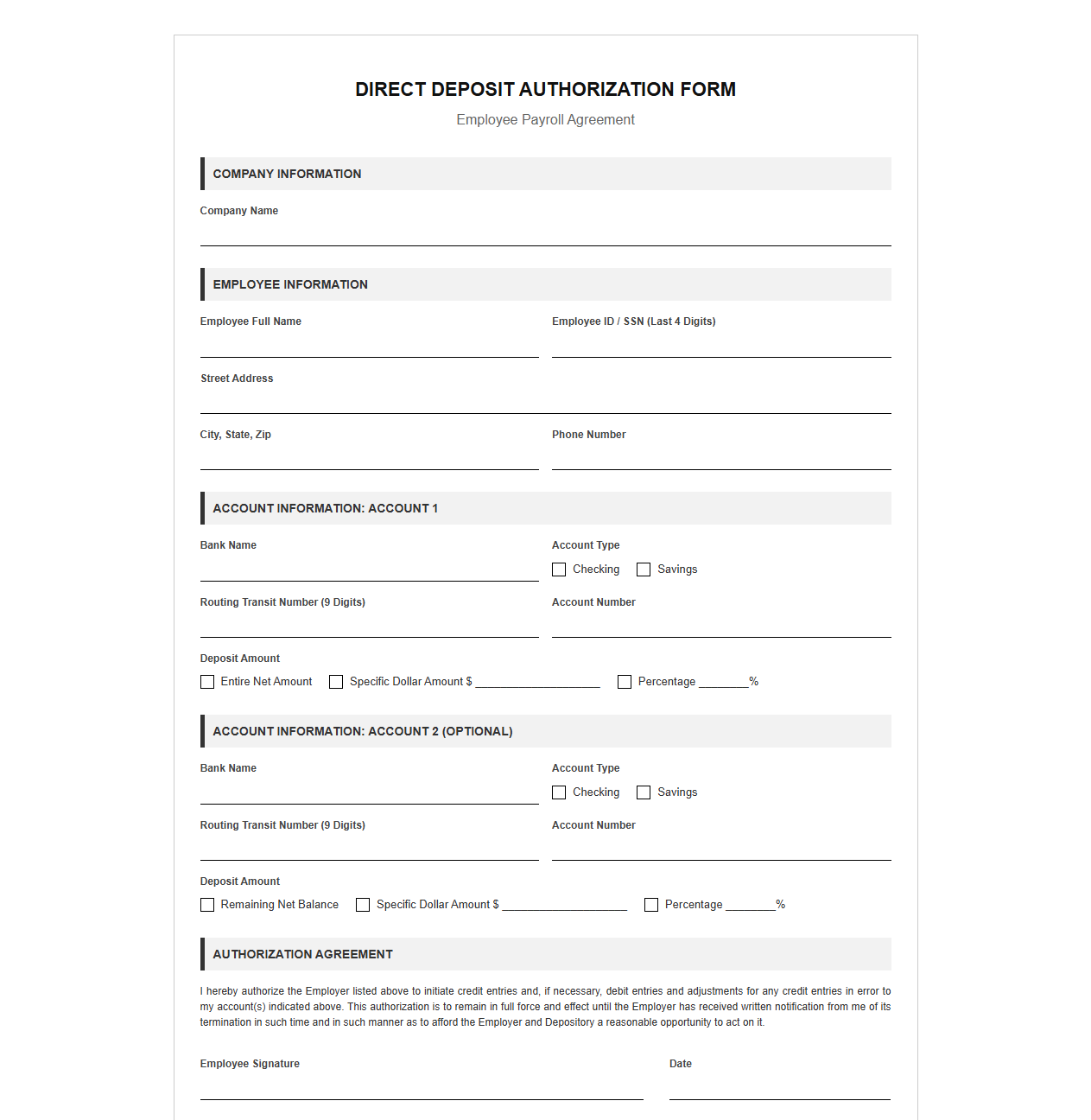 Download: .PDF
Direct Deposit Account Setup Form
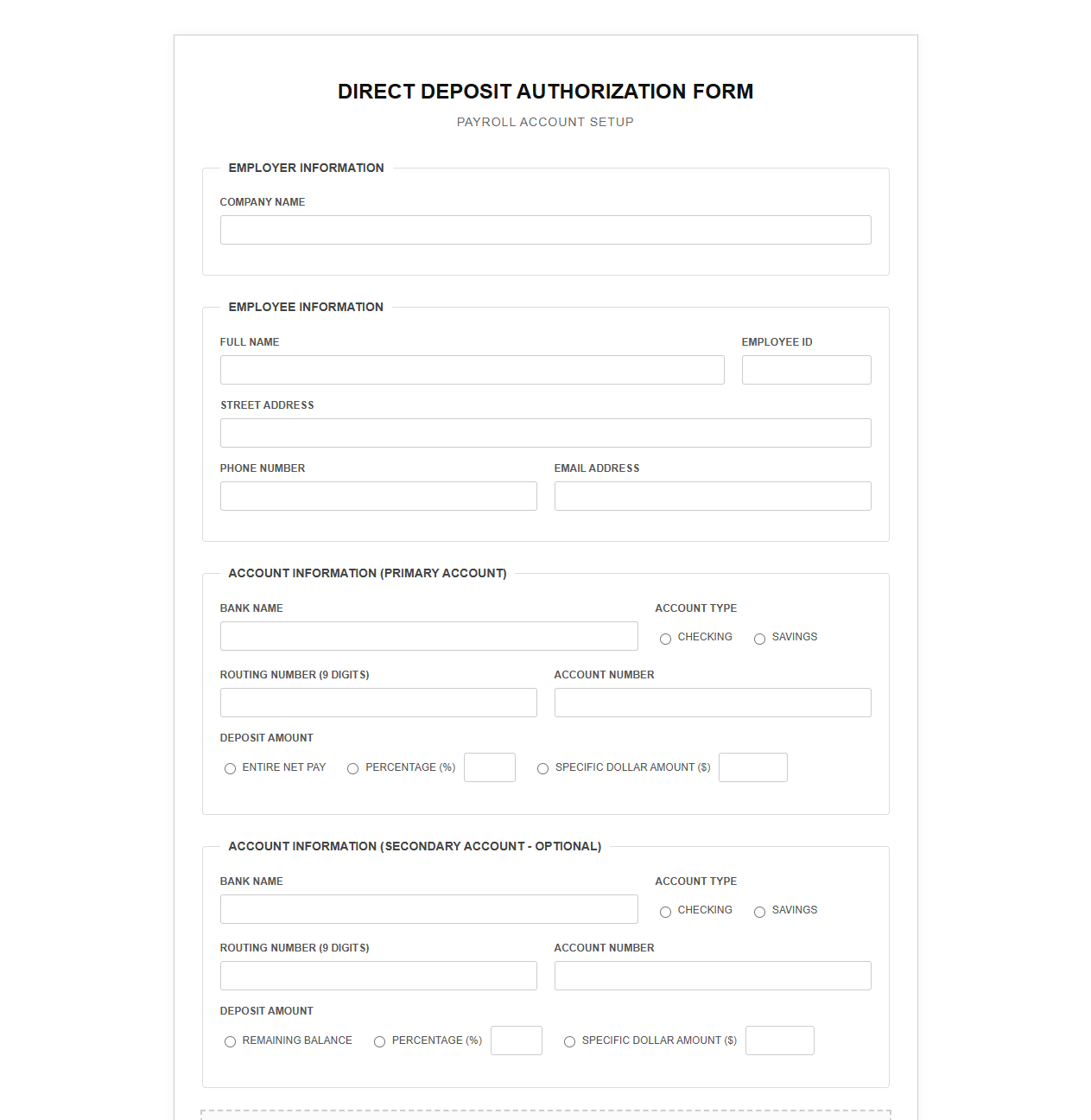 Download: .PDF
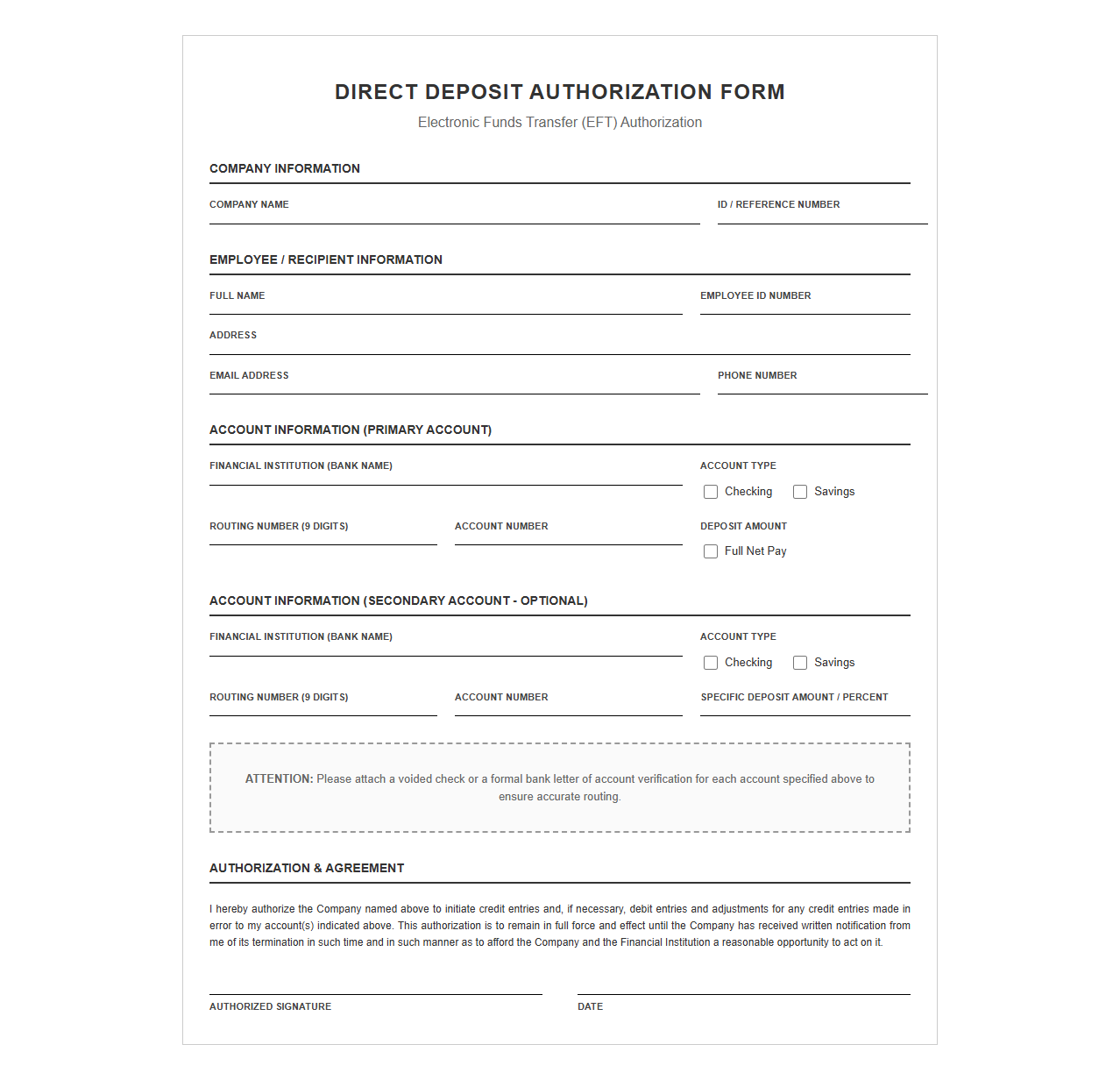
Electronic Funds Transfer Authorization Template
 Download: .PDF
The Cost of Manual Payroll Processing
In the modern business landscape, relying on manual payroll entry and fragmented onboarding processes is a recipe for operational friction. When HR teams must manually transcribe banking details from paper forms into payroll software, the risk of data entry mistakes skyrockets. These administrative inefficiencies lead to costly payment errors, severely delayed employee deposits, and hours of unnecessary troubleshooting. The administrative headache of resolving rejected transactions and issuing physical emergency checks drains valuable HR resources and damages workforce morale.
Common Causes of Direct Deposit Failures
Why Manual Data Entry Often Fails
Direct deposit failures are rarely the result of bank system outages; instead, they usually stem from preventable human errors during the initial onboarding setup. The most frequent culprits include:
- Illegible handwriting: Smudged ink or hurried penmanship on paper forms makes it difficult to distinguish between numbers like 1 and 7, or letters like O and Q.
- Transposed routing numbers: Standard nine-digit bank routing numbers are easily swapped or entered in the wrong sequence during manual transcription.
- Missing account type classifications: Failing to clearly specify whether an account is checking or savings often causes the receiving bank to reject the incoming ACH transfer.
What is a Structured Direct Deposit Authorization Template?
A structured, digital authorization template acts as a standardized gateway that eliminates data entry mistakes directly at the source. Rather than allowing employees to submit banking information via unstructured emails or scribbled paper notes, this template enforces data validation rules. By utilizing automated input masking and digital validation, organizations ensure that every piece of banking data collected is complete, legible, and formatted correctly before it ever reaches the payroll department.
Essential Fields of a Secure Authorization Form
Key Data Points to Collect
To ensure seamless transaction processing and regulatory compliance, a digital authorization template must capture several critical data points:
- Bank Routing Number: The exact nine-digit code identifying the specific financial institution.
- Account Number: The unique number designated for the employee's deposit account.
- Deposit Allocation Percentages: Options for splitting funds across multiple accounts (e.g., 80% to checking, 20% to savings).
- Authorized Employee Signature: A secure digital signature confirming consent to initiate electronic deposits.
Strategic Benefits of Standardized Payroll Workflows
Transitioning from antiquated paper slips to secure, digital templates yields massive organizational benefits. Beyond saving countless hours of manual data entry, digital workflows elevate your entire security posture and ensure strict compliance with NACHA regulations.
"Standardizing our payroll intake process reduced transaction rejections to near zero, while simultaneously protecting sensitive banking credentials from unauthorized internal access."
Integrating Templates into Your HR Portal
System Integration and Configuration
HR teams can easily embed these structured templates directly into their existing payroll systems and employee self-service portals. By utilizing API endpoints and webhooks, data flows securely from the employee's screen to the database.
// Example payload for a secure payroll system integration
{
  "employee_id": "EMP-88492",
  "routing_number": "123456789",
  "account_number": "9876543210",
  "account_type": "Checking",
  "allocation_percentage": 100
}
Eradicating Payroll Errors for Good
Adopting structured, digital direct deposit templates is a fundamental step toward operational excellence. By modernizing your data collection methods, your organization fosters deep employee trust, protects company revenue from administrative waste, and guarantees that every member of your team is paid accurately and on time.

Leave a comment