
Managing meal and entertainment expense claims is a recurring administrative headache for finance departments, often plagued by missing receipts, vague descriptions, and compliance errors. Before organizations can successfully transition to fully automated software, they must first establish a standardized manual framework to capture accurate data.
Utilizing structured payroll document templates grants finance teams immediate operational control, ensuring every submission is audit-ready. However, it is critical to note that these tools are only effective when they enforce strict regulatory definitions. For example, a compliant template must clearly distinguish between a 50% deductible client business meal and fully non-deductible entertainment, prompting employees to input specific attendee names and business purposes.
In this article, we will explore the essential components of effective reimbursement templates, examine key tax compliance stipulations, and provide actionable strategies to streamline your payroll workflow.
Meal and Entertainment Expense Reimbursement Form
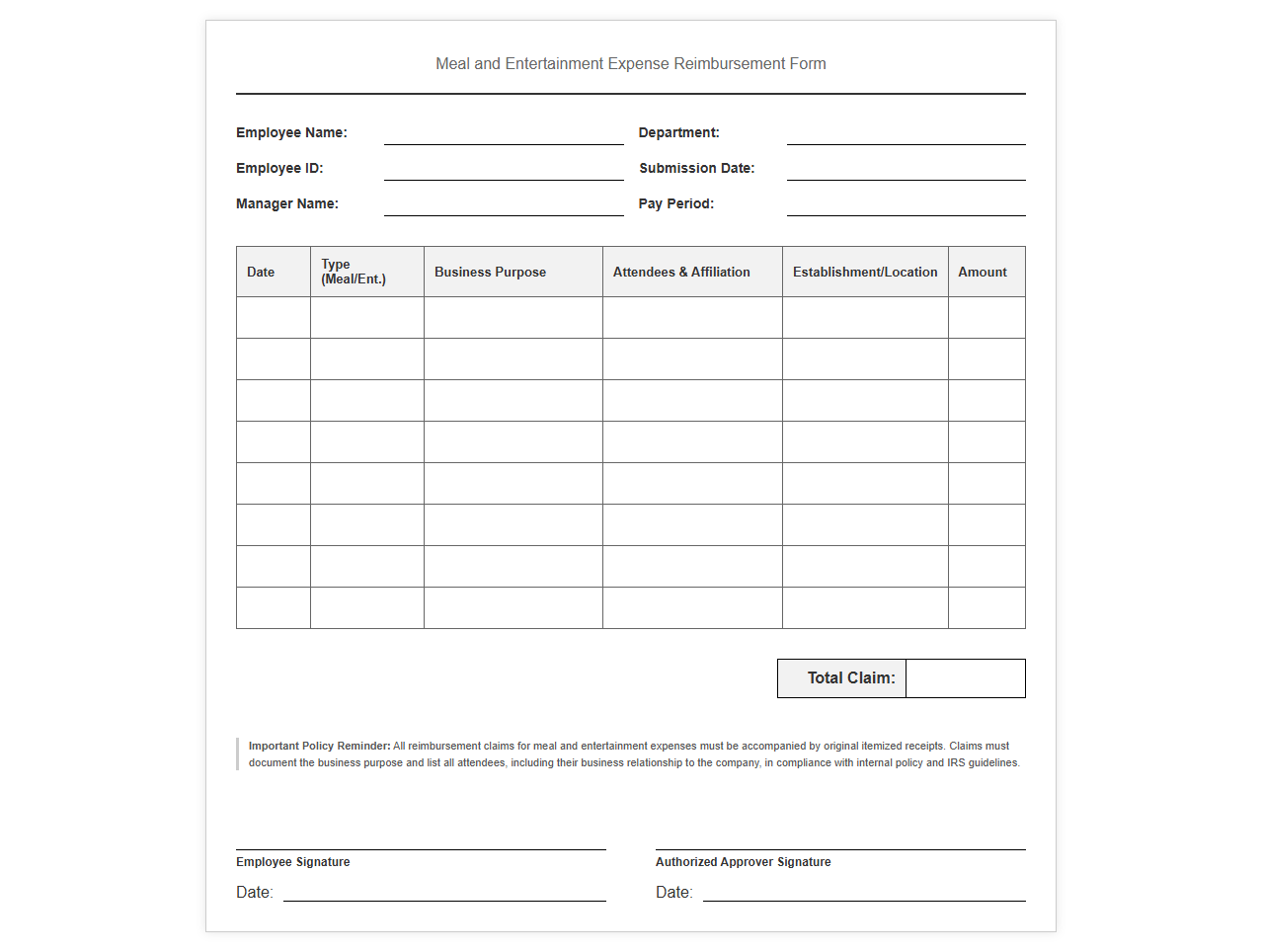 Download: .PDF
Payroll Meal and Entertainment Claim Sheet
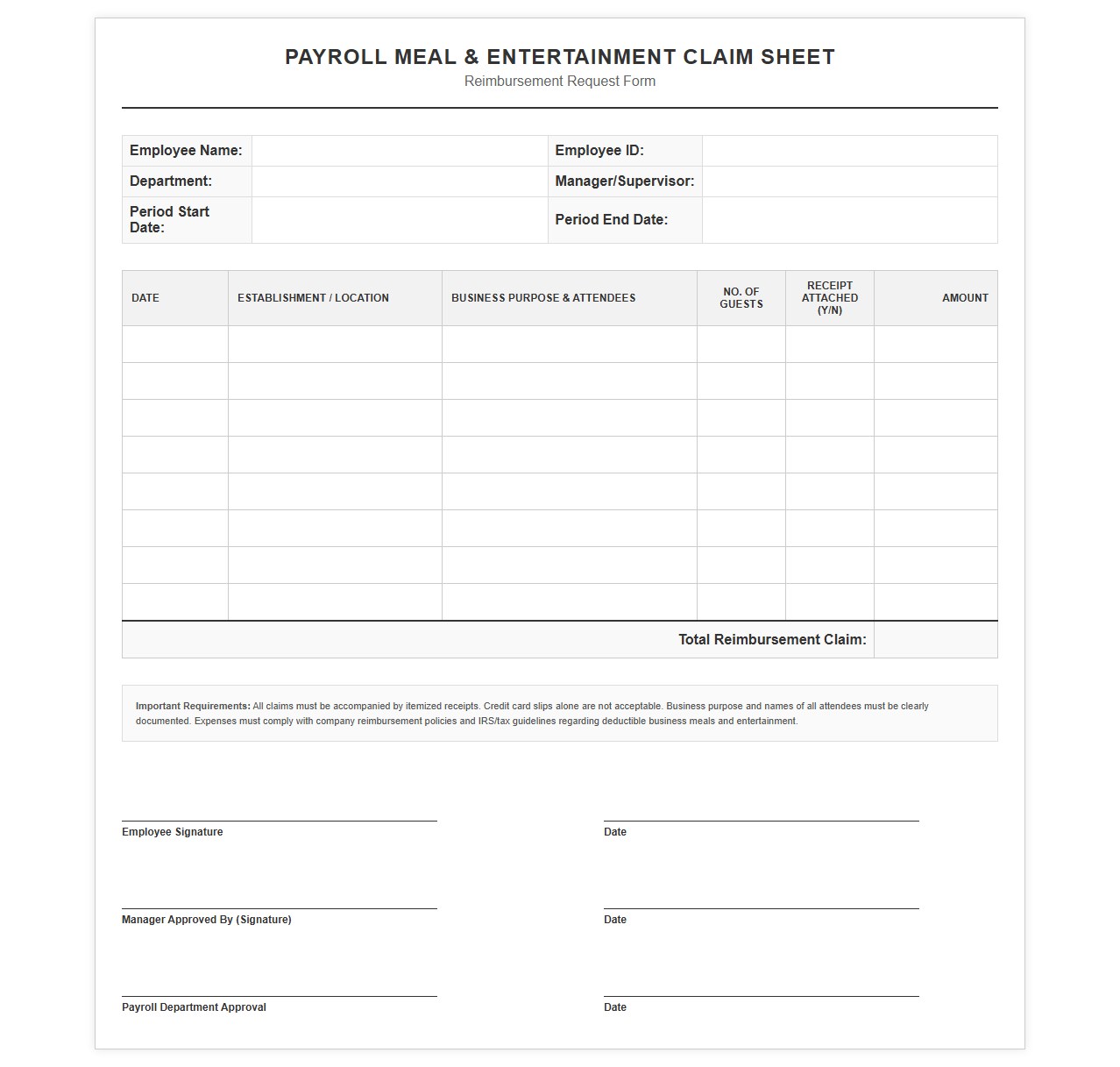 Download: .PDF
Business Meal and Entertainment Expense Template
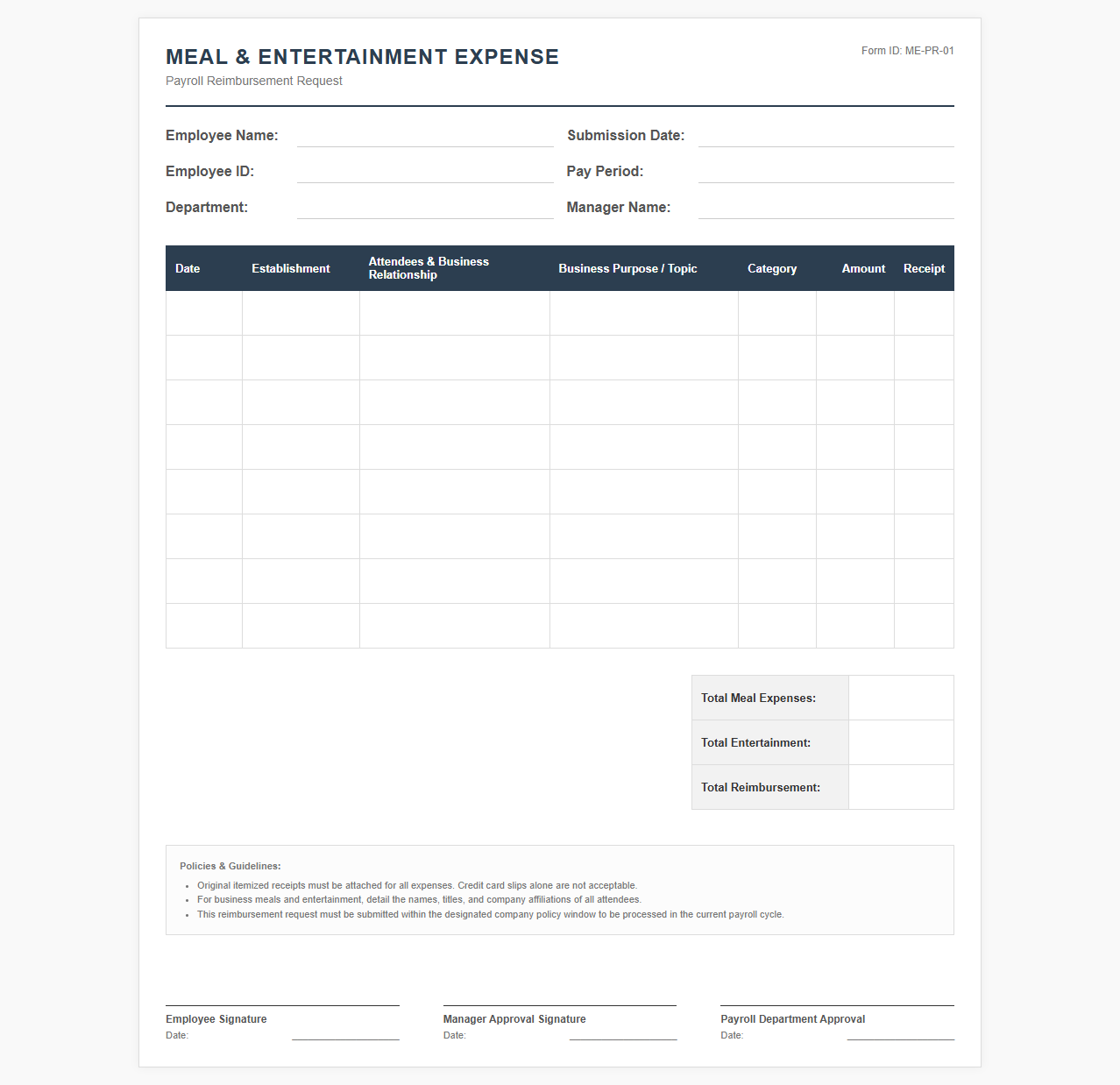 Download: .PDF
Employee Meal and Entertainment Reimbursement Tracker
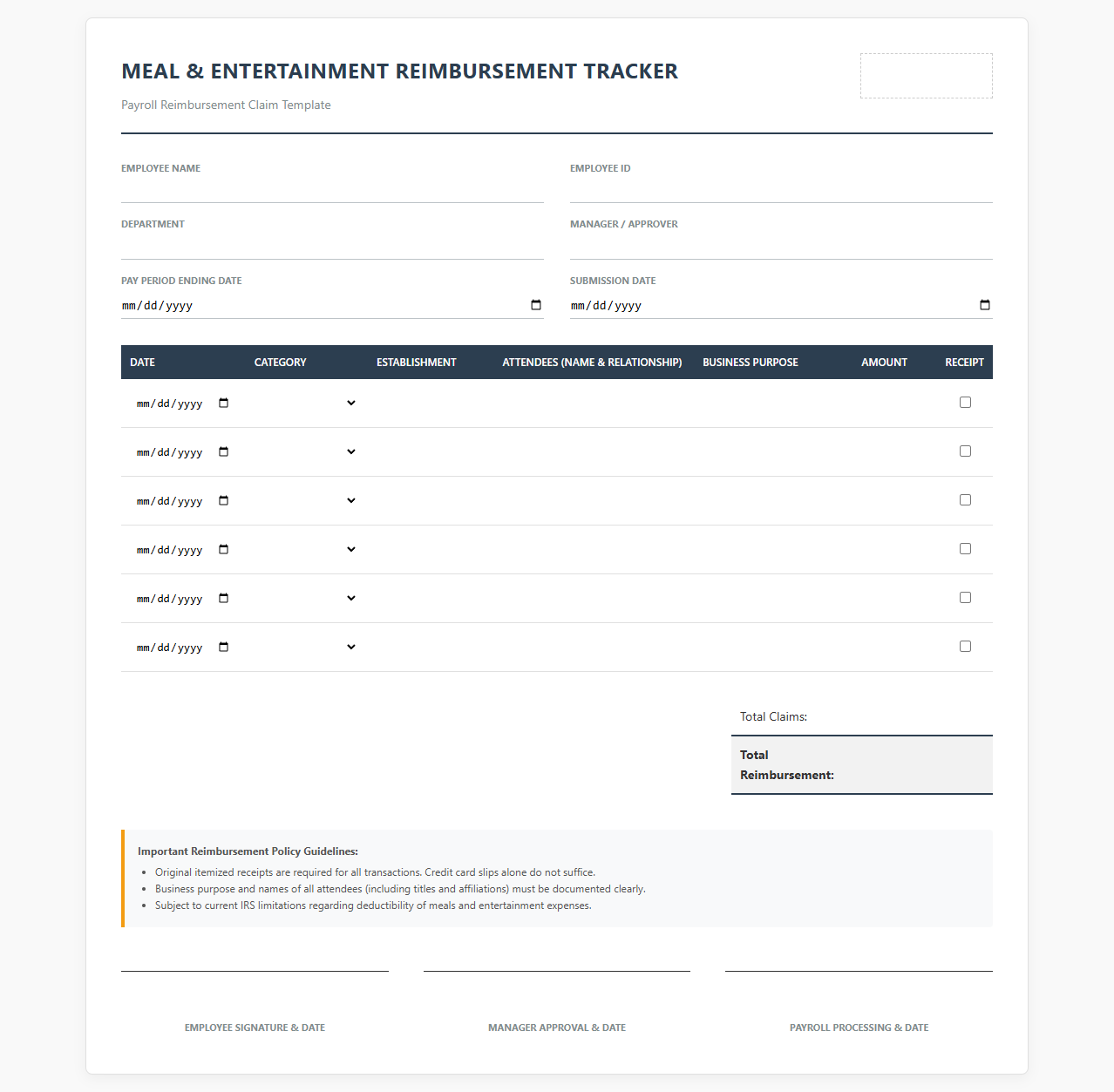 Download: .PDF
Staff Meal and Entertainment Payroll Reimbursement Template
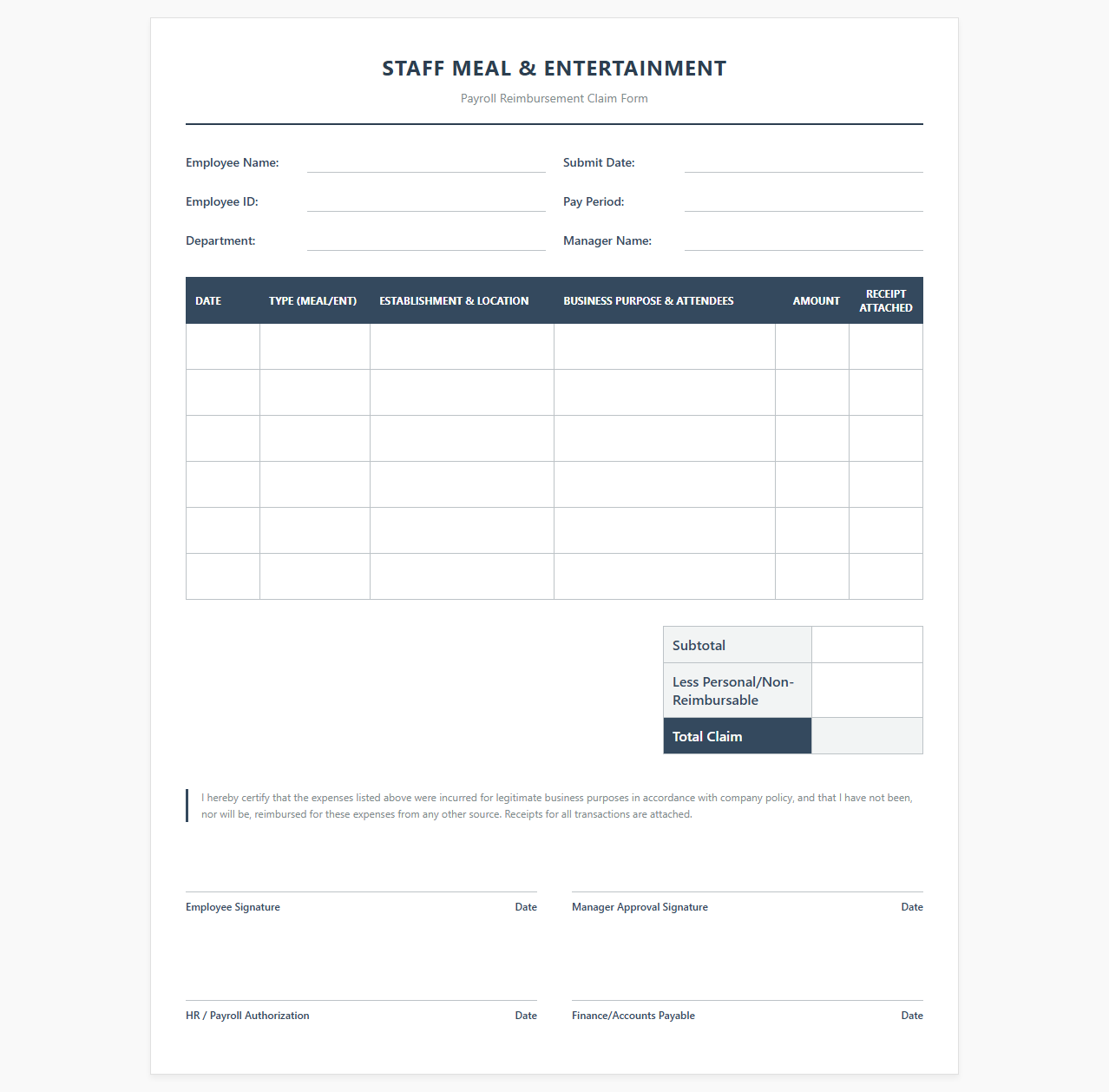 Download: .PDF
Client Entertainment and Dining Expense Claim Form
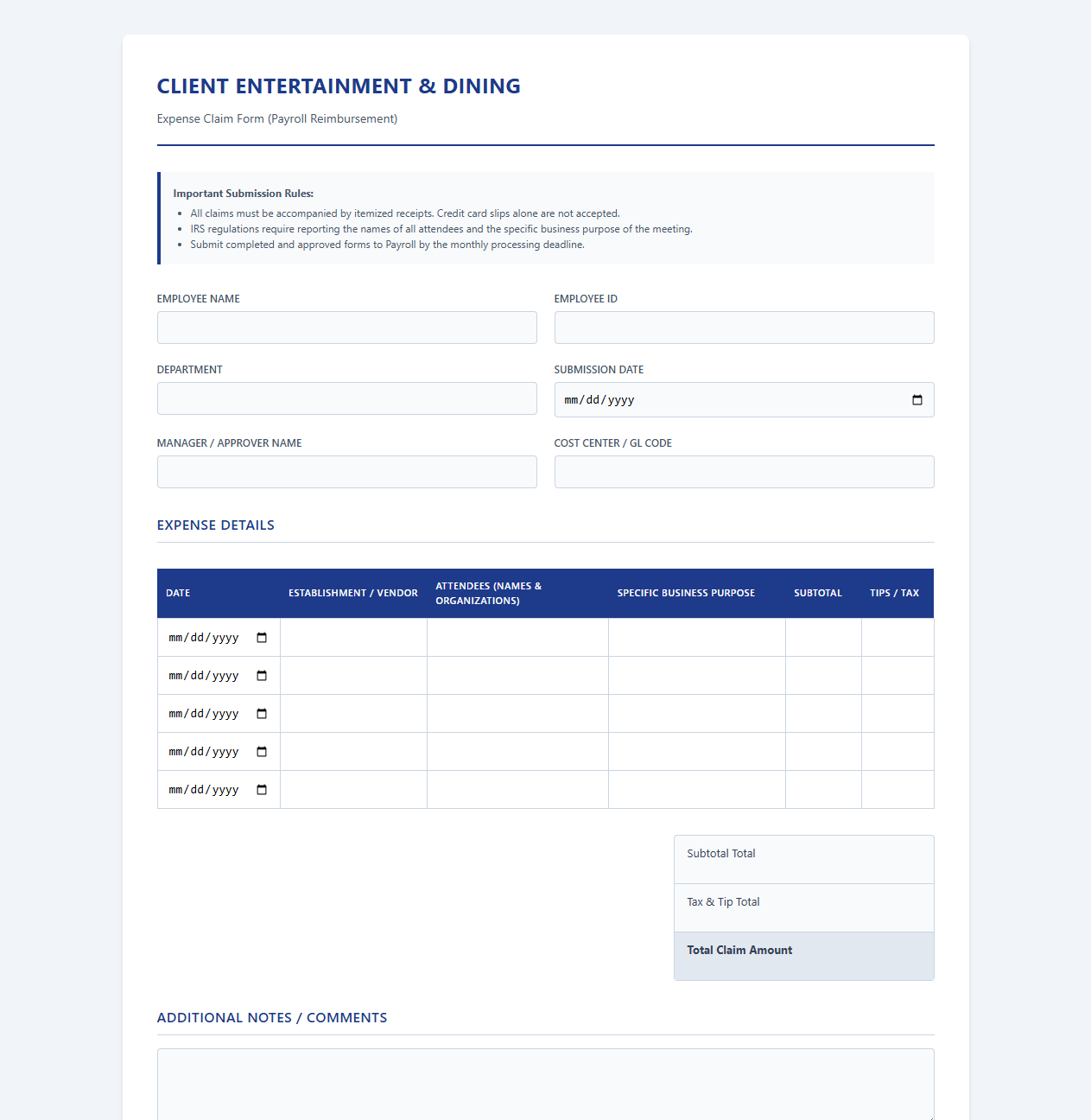 Download: .PDF
Meal and Entertainment Payroll Expense Report Template
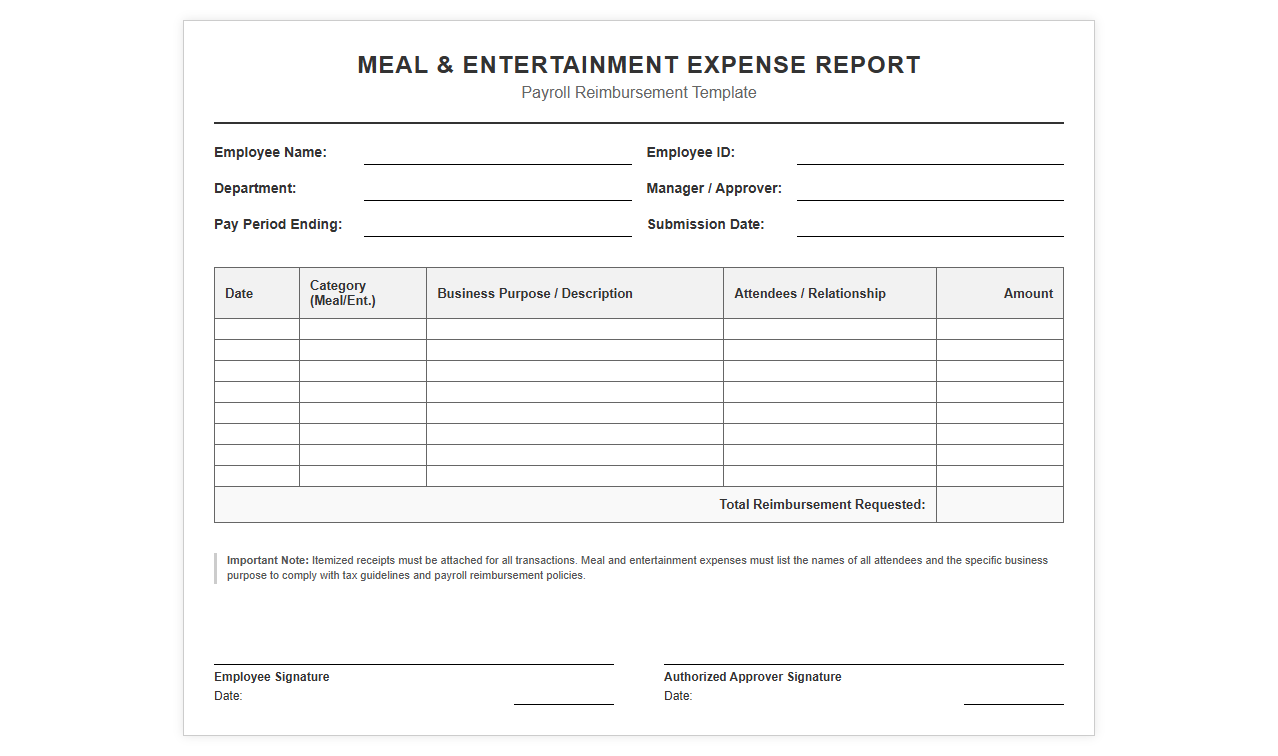 Download: .PDF
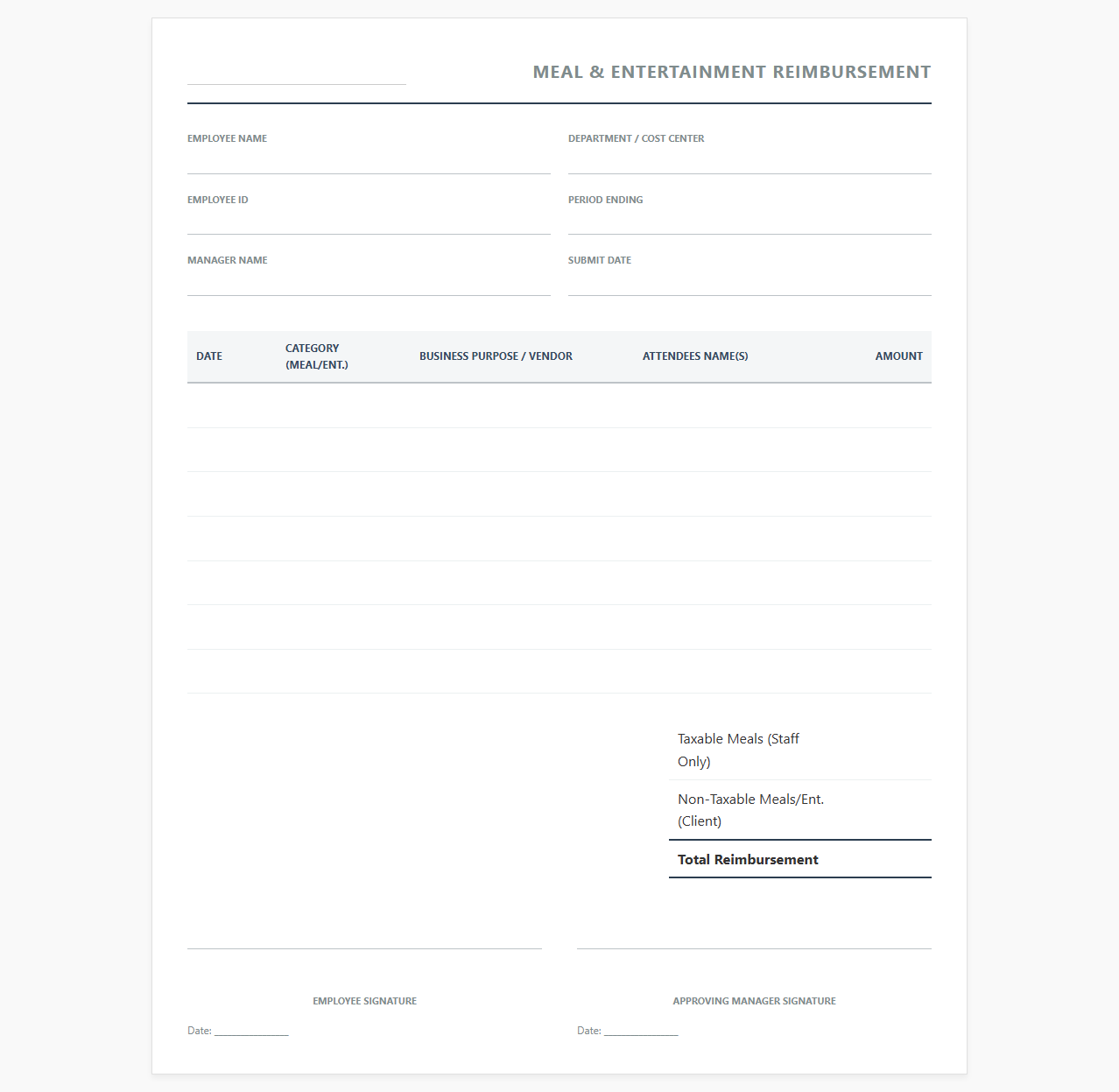
Company Food and Entertainment Reimbursement Template
 Download: .PDF
Section 1: Introduction to Efficient Expense Management
Tracking business expenses manually is a recipe for operational bottlenecks. Missing paper receipts, inaccurate math, and delayed submissions slow down internal workflows and cause unnecessary stress for finance teams. Transitioning to standardized payroll templates simplifies the entire tracking structure, helping businesses process reimbursements quickly and accurately.
Section 2: Understanding Meal vs. Entertainment Rules
Tax regulations treat client meals and client entertainment differently. Under current laws, eligible business meals are generally fifty percent deductible, whereas business entertainment is often entirely non-deductible. Failing to separate these categories can lead to *compliance penalties* and costly errors during annual tax audits.
Section 3: The Role of Standardized Payroll Templates
Standardized templates establish a uniform method for employees to report expenditures. By defining a clear submission structure, these tools eliminate administrative confusion, reduce manual data entry errors, and accelerate internal approval cycles to ensure employees are reimbursed on time.
Section 4: Essential Components of a Reimbursement Template
To withstand scrutiny from tax authorities, every meal and entertainment template must capture specific key details. Ensuring these fields are mandatory guarantees complete data collection:
- Business Purpose: A clear description of the business discussed during the meeting.
- Attendee Names: The names and professional affiliations of all participants.
- Receipt Attachments: Digital or physical copies of the original itemized transaction receipts.
Section 5: Aligning Templates with Company Policy and Tax Compliance
Your templates should act as active guardrails for compliance. Placing explicit spending caps directly within the layout prevents employees from exceeding corporate limits. Hardcoding these rules into the document instructions establishes clear expectations before spending occurs.
Section 6: Transitioning from Paper to Digital Templates
Moving from manual spreadsheets to automated payroll systems is the key to scaling your operations. Start by uploading your templates to a secure, cloud-based document sharing platform. From there, integrate the forms into your core payroll and HR systems so that submitted expenses auto-populate into your ledger, cutting out manual administrative steps entirely.
Section 7: Best Practices for Continuous Expense Optimization
Expense management is not a set-it-and-forget-it task. Organizations should conduct routine internal audits of their filing history to identify recurring bottlenecks and ensure staff compliance.
Consistently reviewing your submission data and updating templates to reflect the latest IRS rules ensures long-term financial accuracy and tax compliance.
Leave a comment