
Managing disparate paid time off (PTO) and sick leave requests often leaves payroll departments drowning in manual spreadsheets and compliance anxieties. As state-level paid leave mandates rapidly evolve, relying on fragmented tracking methods becomes a liability rather than just an administrative headache.
Standardizing this process with structured payroll document templates grants organizations both bulletproof compliance and hundreds of hours returned to strategic operations. While these templates streamline daily tracking-such as calculating complex FMLA accruals or state-specific sick leave caps-they should serve as a foundational framework rather than a substitute for localized legal counsel.
Below, we will explore the essential components of compliant PTO templates, step-by-step methods to automate accrual calculations, and best practices for seamless payroll system integration.
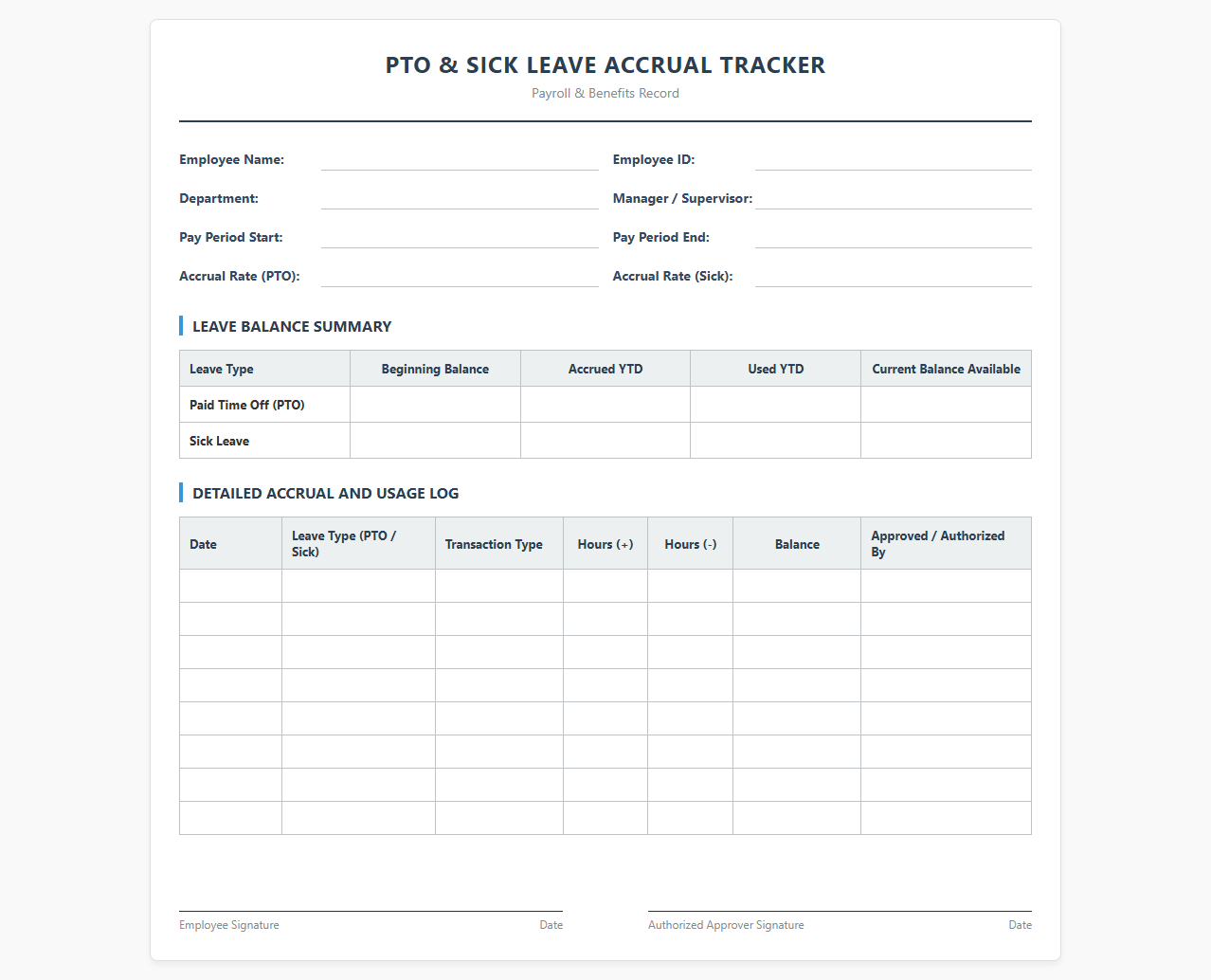
PTO and Sick Leave Accrual Tracker
 Download: .PDF
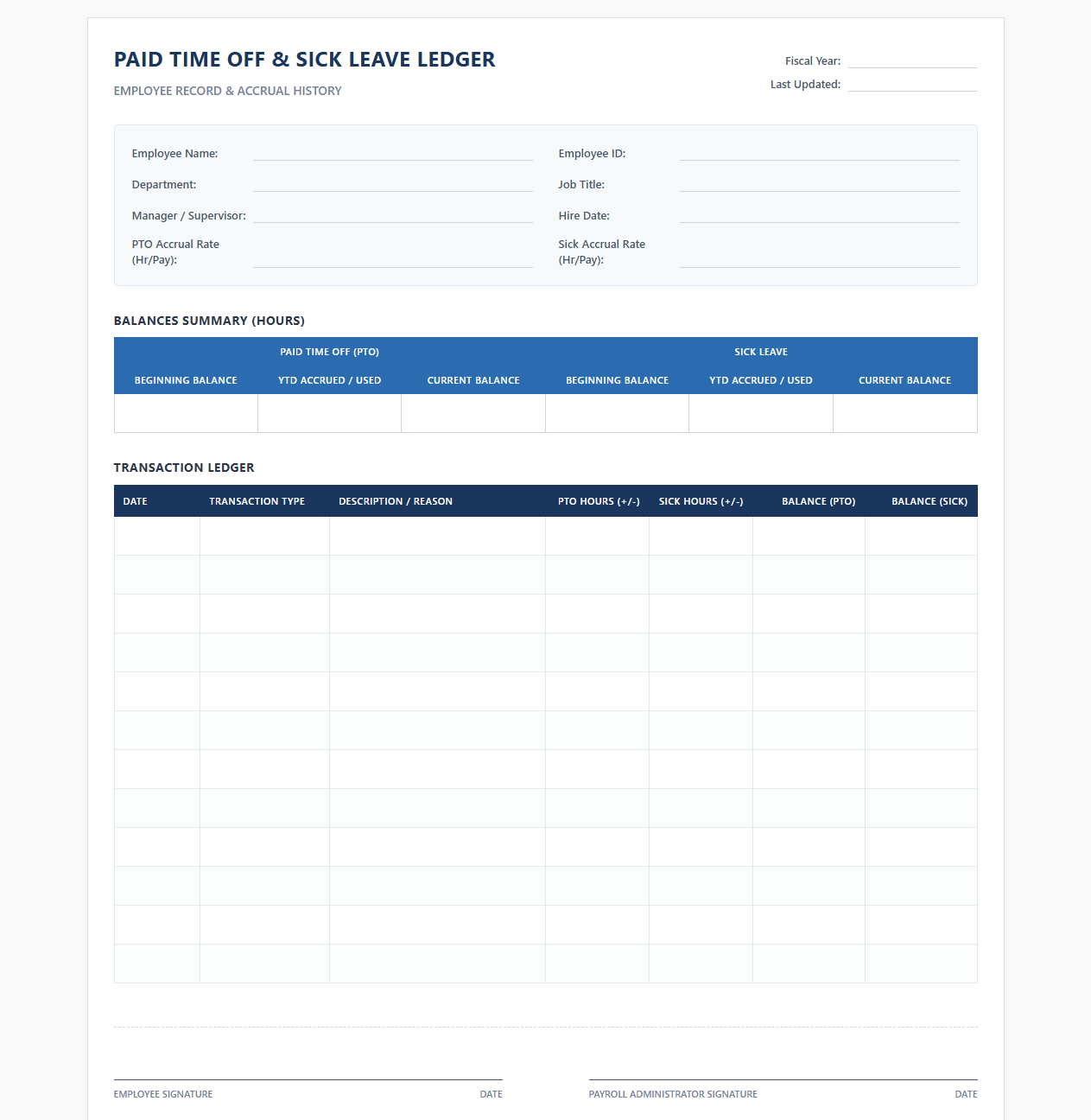
Employee Paid Time Off and Sick Leave Ledger
 Download: .PDF
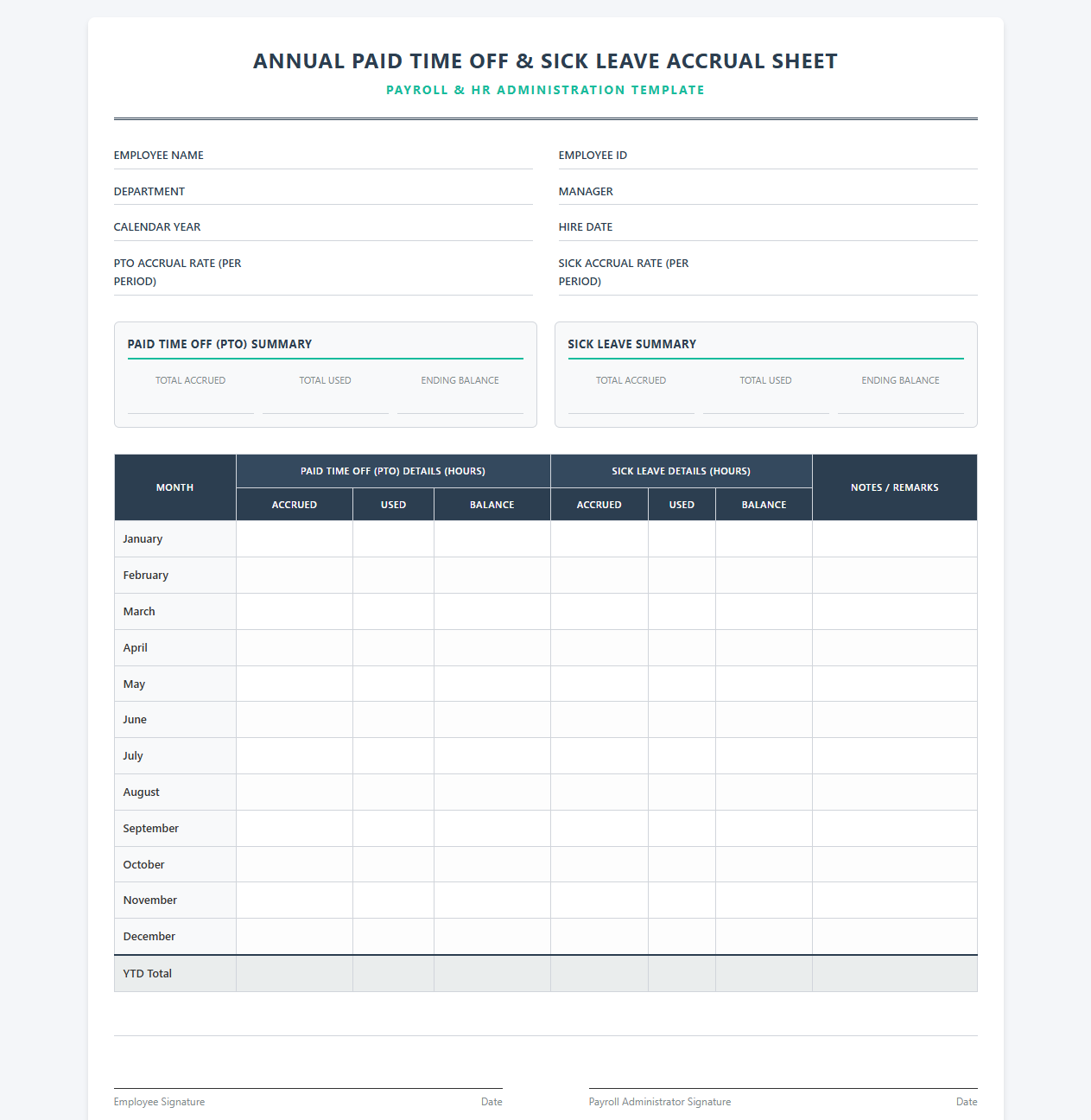
Annual Paid Time Off and Sick Time Accrual Sheet
 Download: .PDF
Paid Leave and Sick Pay Accrual Payroll Calculator
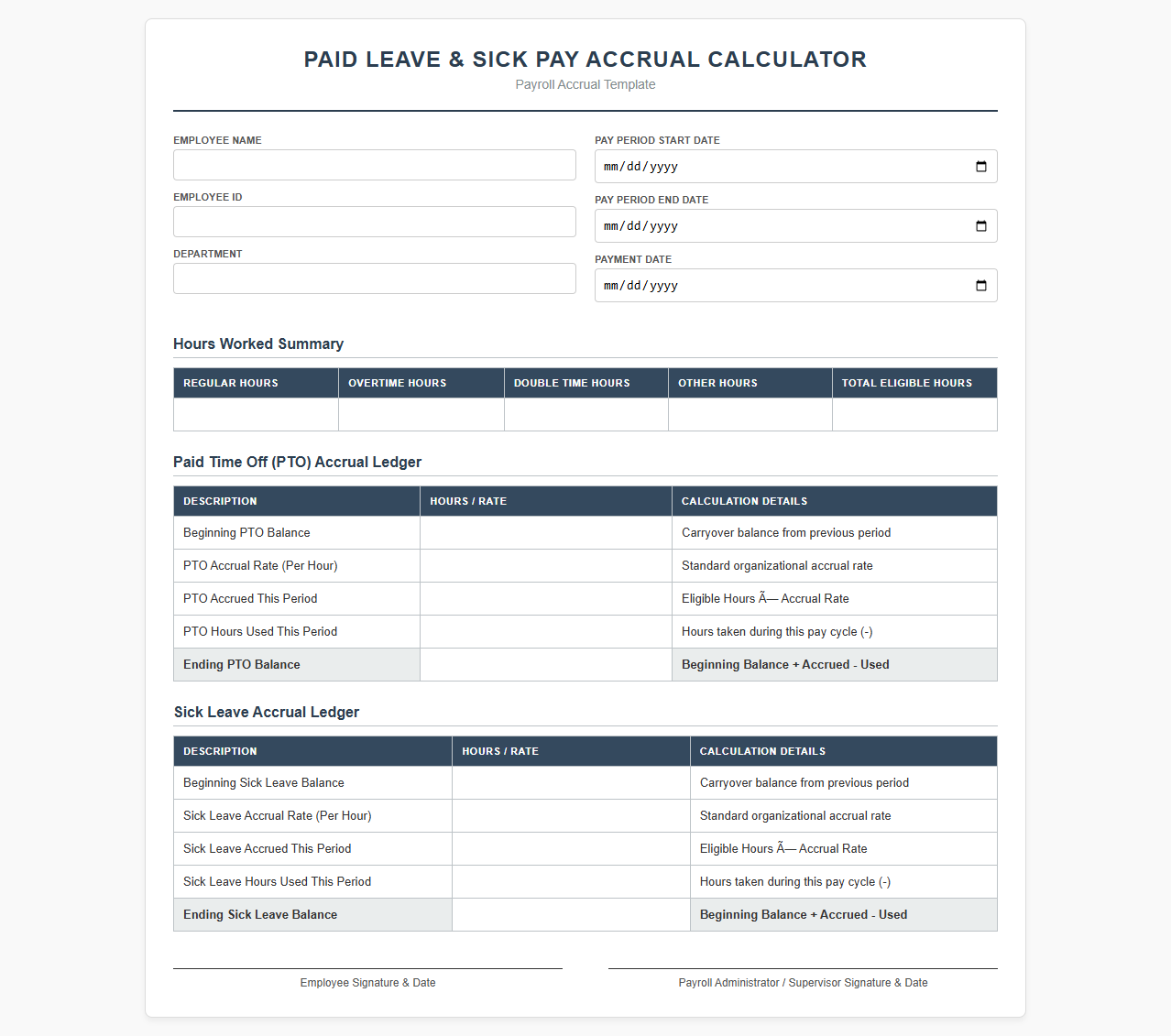 Download: .PDF
Weekly Employee PTO and Sick Leave Balance Sheet
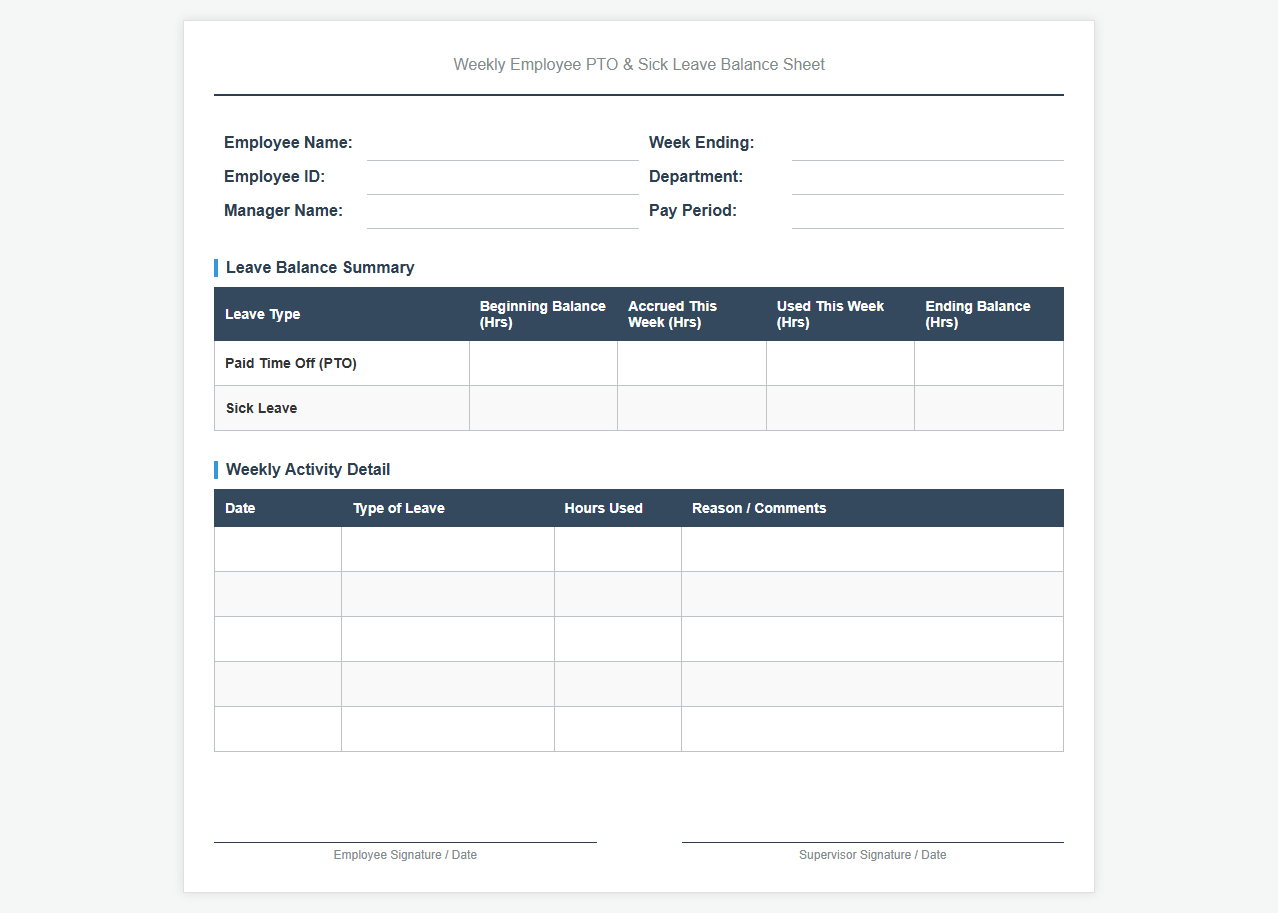 Download: .PDF
Hourly Sick Leave and PTO Accrual Log
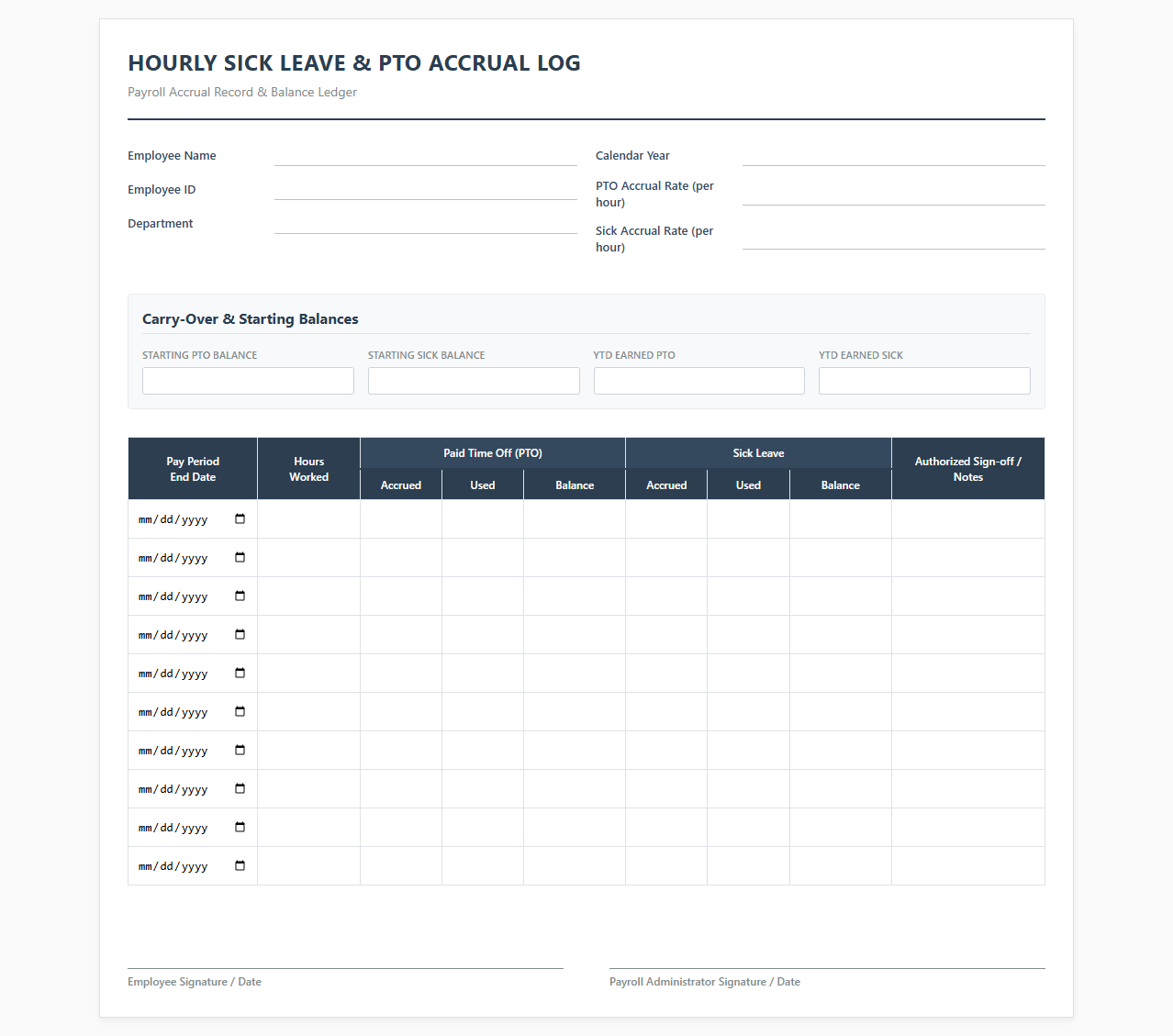 Download: .PDF
Comprehensive Payroll PTO and Sick Time Tracker
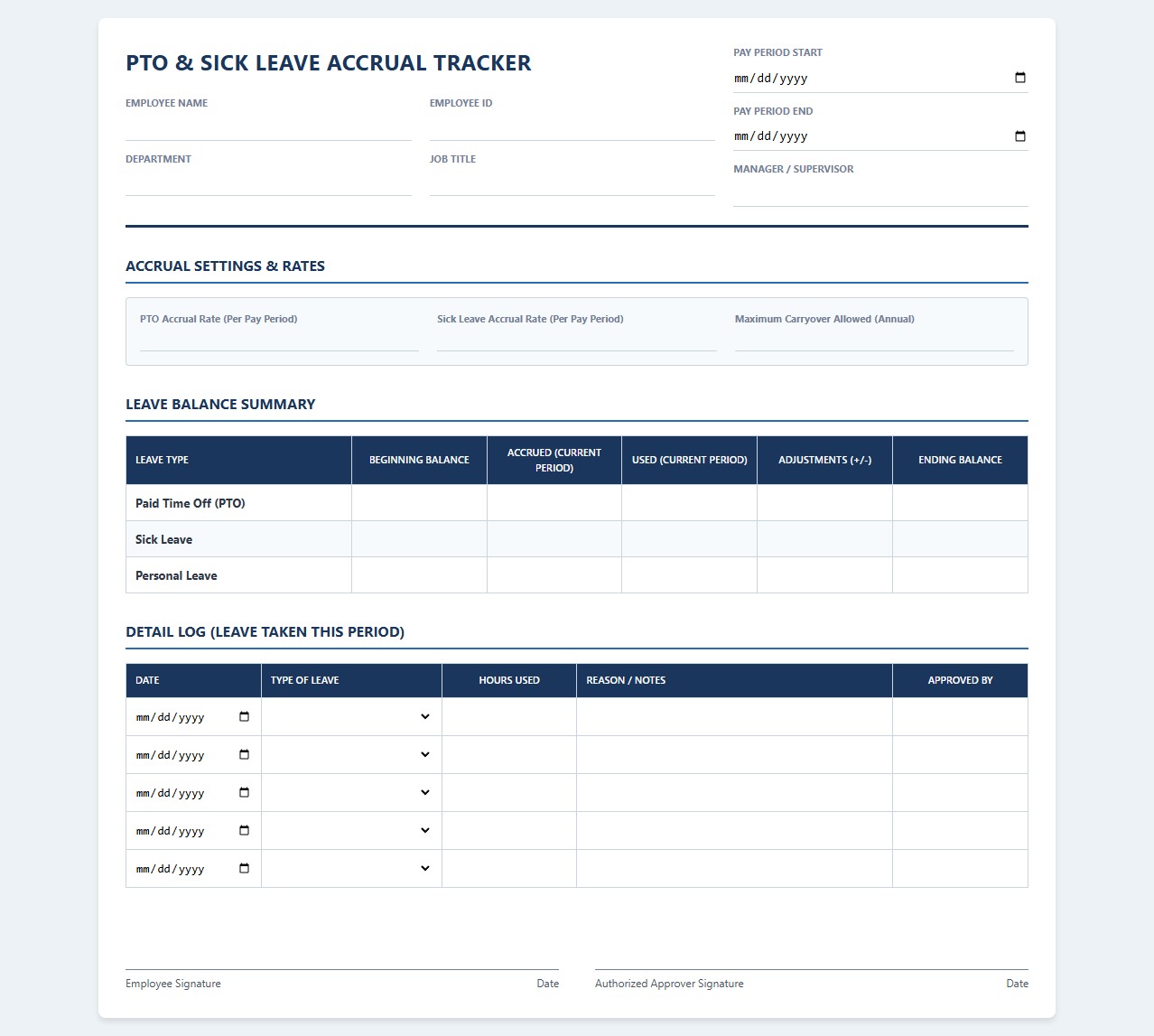 Download: .PDF
Biweekly Paid Time Off and Sick Leave Accrual Template
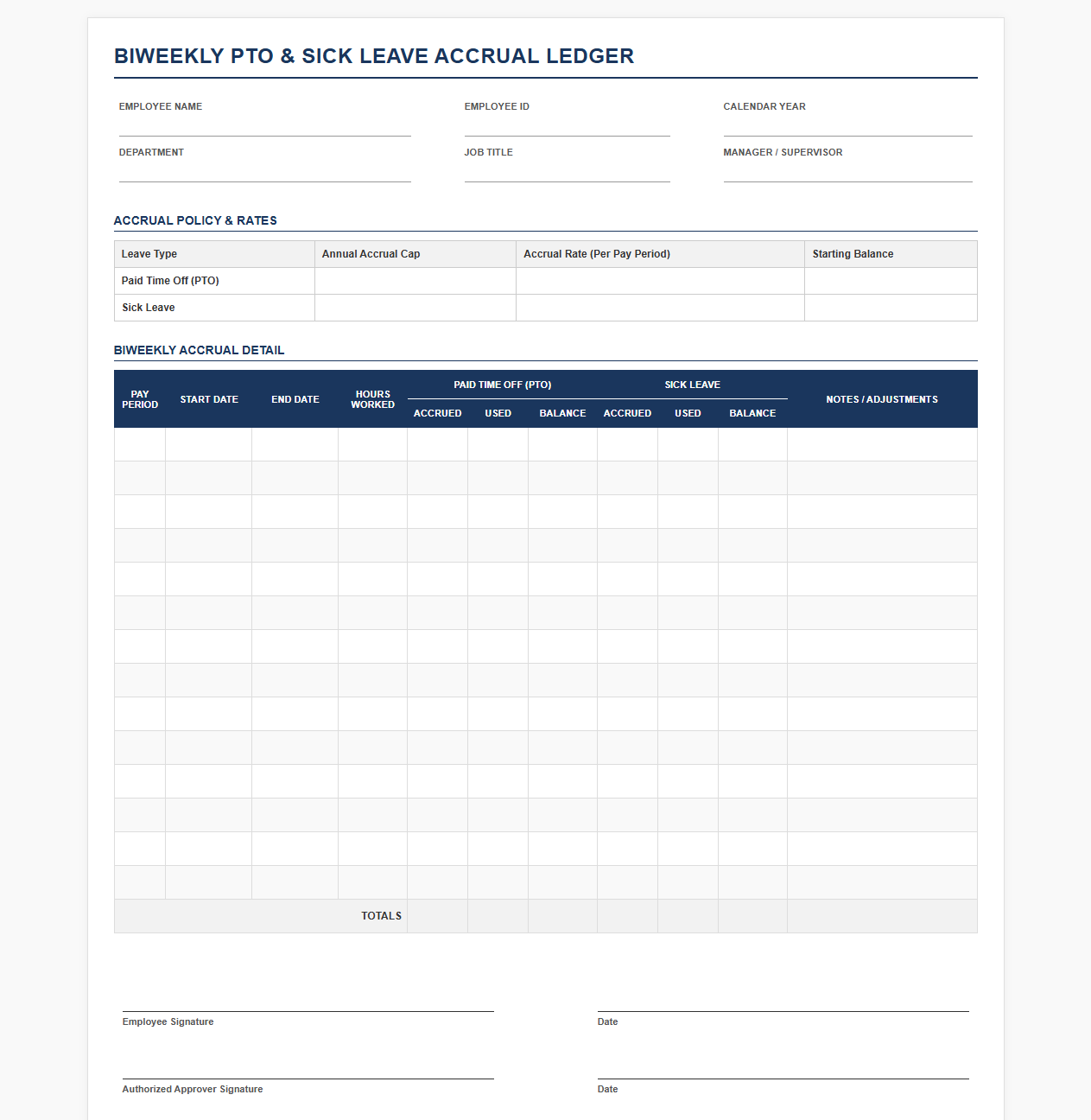 Download: .PDF
Small Business PTO and Sick Leave Accrual Calculator
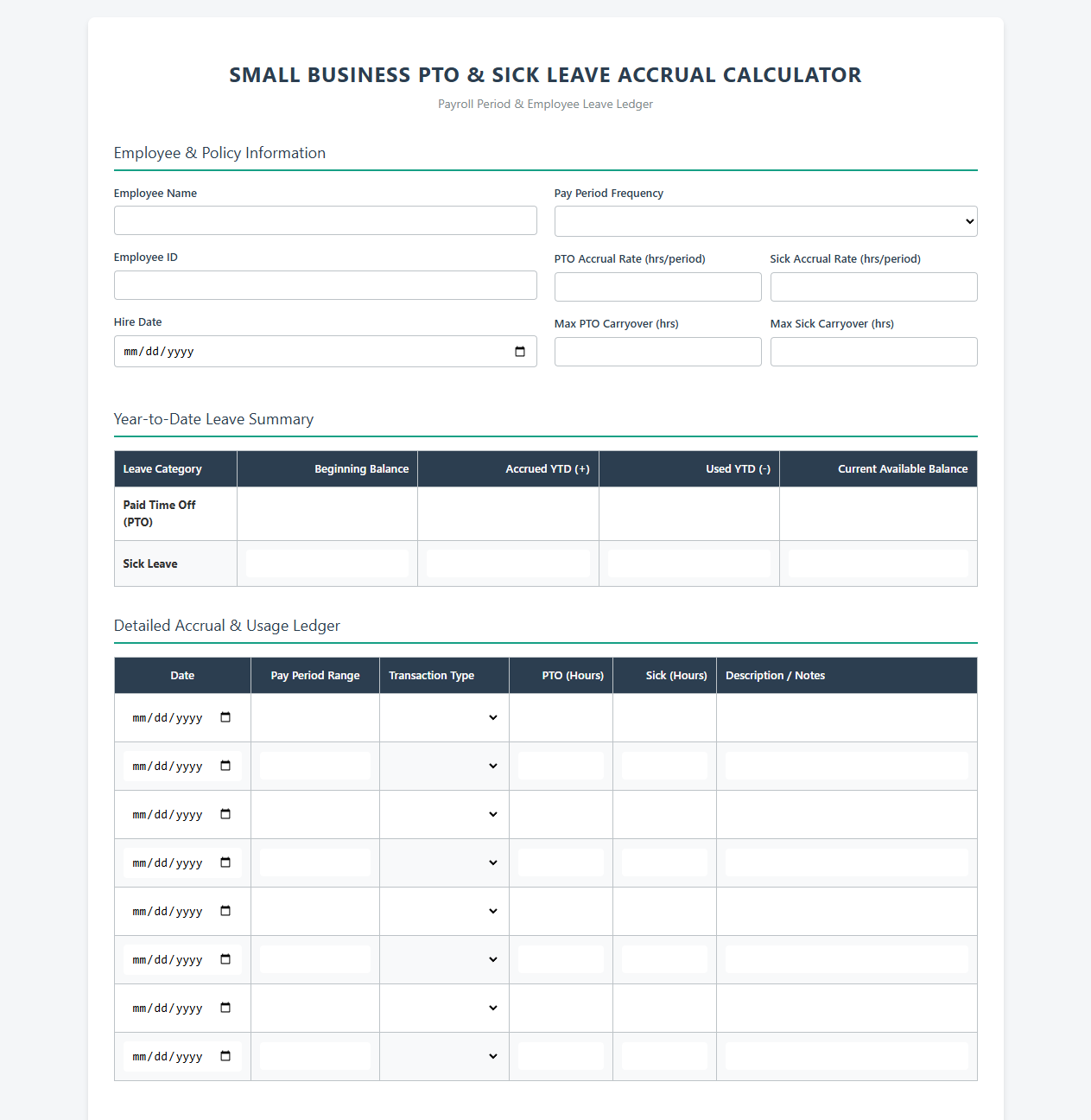 Download: .PDF
Introduction to Standardized Time-Off Tracking
Managing paid time off (PTO) manually is a recipe for operational chaos. For growing organizations, relying on disjointed spreadsheets and paper requests leads to tracking discrepancies, missed calculations, and frustrated employees. Standardized payroll templates offer a reliable solution to these challenges, establishing a unified system that ensures consistency across the entire organization. Adopting a structured framework is essential for modern businesses looking to scale efficiently while maintaining error-free payroll processing.
Understanding PTO vs. Sick Leave Accrual Methods
Different businesses require different methods for calculating time-off balances. Aligning your accrual models with your payroll schedule ensures calculations remain accurate and transparent.
- Lump-Sum Allocation: Granting the entire yearly allotment of PTO or sick leave at the start of the benefit year, simplifying tracking but requiring upfront resource planning.
- Hourly Accrual: Employees earn a specific fraction of an hour for every hour worked, creating a direct correlation between hours on the job and time off accumulated.
- Milestone-Based Systems: Distributing time-off awards on specific dates, such as work anniversaries or the completion of probationary periods.
Key Benefits of Document Standardization in Payroll
Implementing standardized templates brings immediate operational clarity to your human resources department. By unifying how time-off data is collected and recorded, organizations see a dramatic reduction in manual data-entry errors. Faster, stress-free audits become the norm because compliance officers can easily locate and verify historical records without digging through fragmented spreadsheets.
Furthermore, transparent standardization builds increased employee trust. When staff members can easily view how their time-off balances are calculated, questions and disputes regarding payroll discrepancies drop significantly.
Essential Fields for a Compliant Time-Off Template
To ensure regulatory compliance and seamless record-keeping, your tracking template must capture precise payroll variables. Utilizing structured metadata prevents calculation mismatches across pay cycles.
Employee ID- The unique identifier linking the individual's time-off records directly to the master payroll directory.
Accrual Rate- The designated speed at which an employee earns time off, expressed as hours per hour worked or hours per pay cycle.
Beginning Balance- The initial pool of available hours carried over from the previous tracking period or allotment cycle.
Used Hours- The total volume of hours taken by the employee during the current pay period.
Ending Balance- The remaining usable time-off balance calculated by adding accrued hours to the beginning balance and subtracting used hours.
Navigating Legal Compliance and State Mandates
Compliance is a moving target, especially for organizations with remote teams spread across different jurisdictions. Local state mandates strictly dictate how sick leave and general PTO are handled, meaning a single, rigid policy might violate regional laws.
Step-by-Step Integration with Payroll Systems
Transitioning from standalone files to automated systems ensures your records remain accurate without double data-entry.
- Map the Data Fields: Ensure the column headers in your manual Excel template match the precise field requirements of your payroll software database.
- Standardize File Formats: Convert all manual files into clean, universal formats like CSV to facilitate error-free system imports.
- Run a Pilot Test: Import a small batch of historical employee records to verify that formulas translate correctly inside the payroll software.
- Establish Regular Syncs: Schedule weekly or bi-weekly uploads to maintain real-time alignment between tracking templates and payroll engines.
Best Practices for Continuous Maintenance and Audits
An effective time-off tracking system requires active oversight to remain dependable over time. Regular verification schedules prevent software drift and ensure policy updates are properly reflected in daily operations.
"Regular, structured reviews of tracking records ensure minor payroll discrepancies are resolved before they expand into compliance issues."
HR departments should schedule quarterly audits to cross-verify template calculations against physical request logs. Comprehensive staff training on template usage is equally critical, ensuring all payroll personnel understand the internal logic of the system, keeping documentation uniform and legally compliant year-round.
Leave a comment