

For non-profit administrators, tax season often brings the acute dread of compliance errors, administrative bottlenecks, and donor disputes over incomplete documentation. Before addressing how to streamline this process, one must recognize that IRS scrutiny on charitable deductions has intensified, placing the burden of flawless record-keeping squarely on the issuing organization.
Implementing standardized templates grants your organization immediate administrative relief while safeguarding your donors' tax deductions. However, as a crucial stipulation, these templates must be treated as operational frameworks rather than absolute legal substitutes for certified CPA counsel. For instance, omitting the mandatory "no goods or services were provided" disclosure for contributions exceeding $250 can instantly invalidate a donor's deduction during an IRS audit.
This article will dissect the mandatory legal components of contribution receipts, provide customizable standardized templates, and establish a best-practice checklist to ensure your organization remains fully compliant year-round.
501c3 Nonprofit Donation Receipt Template
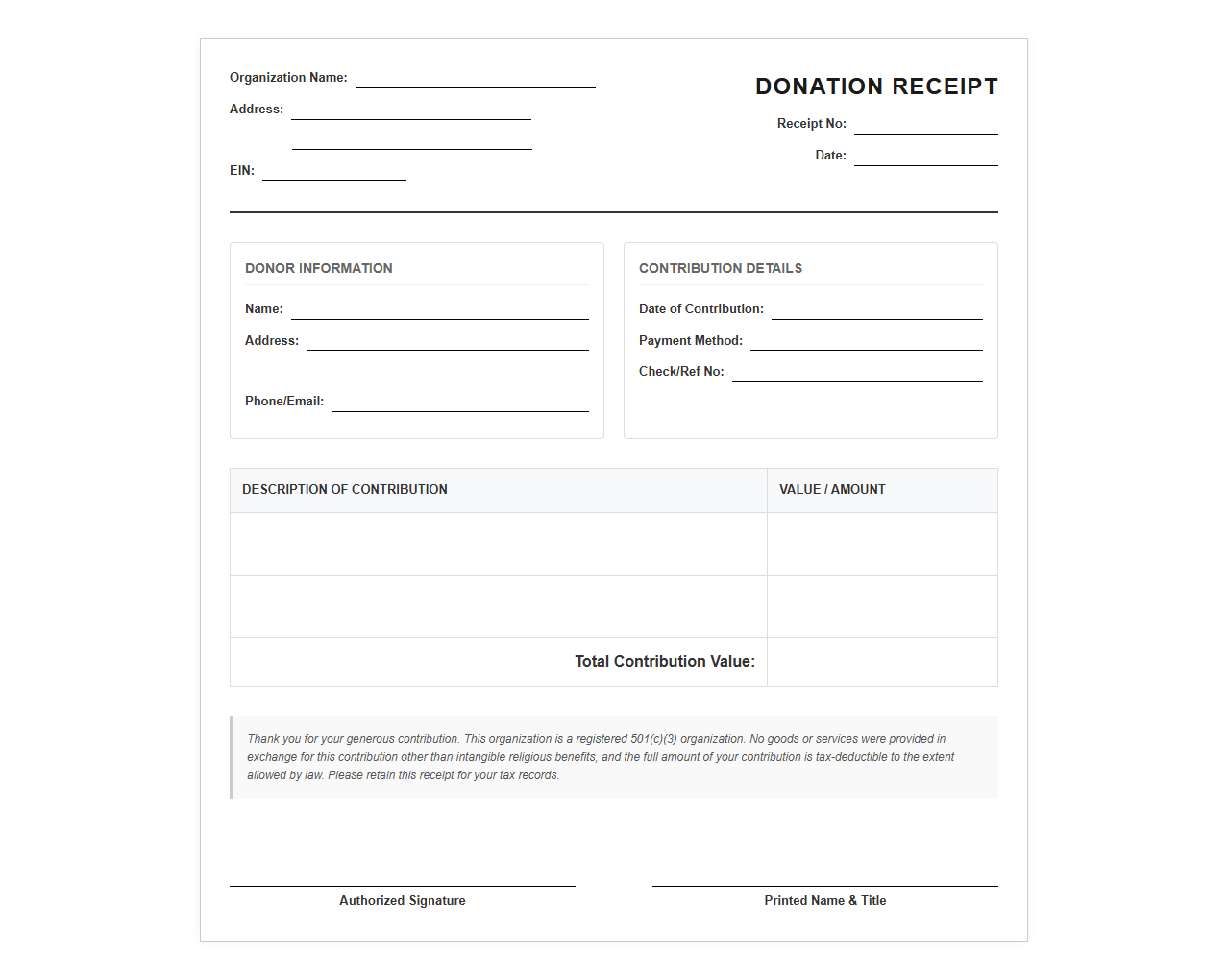 Download: .PDF
Church Tithe and Offering Receipt Template
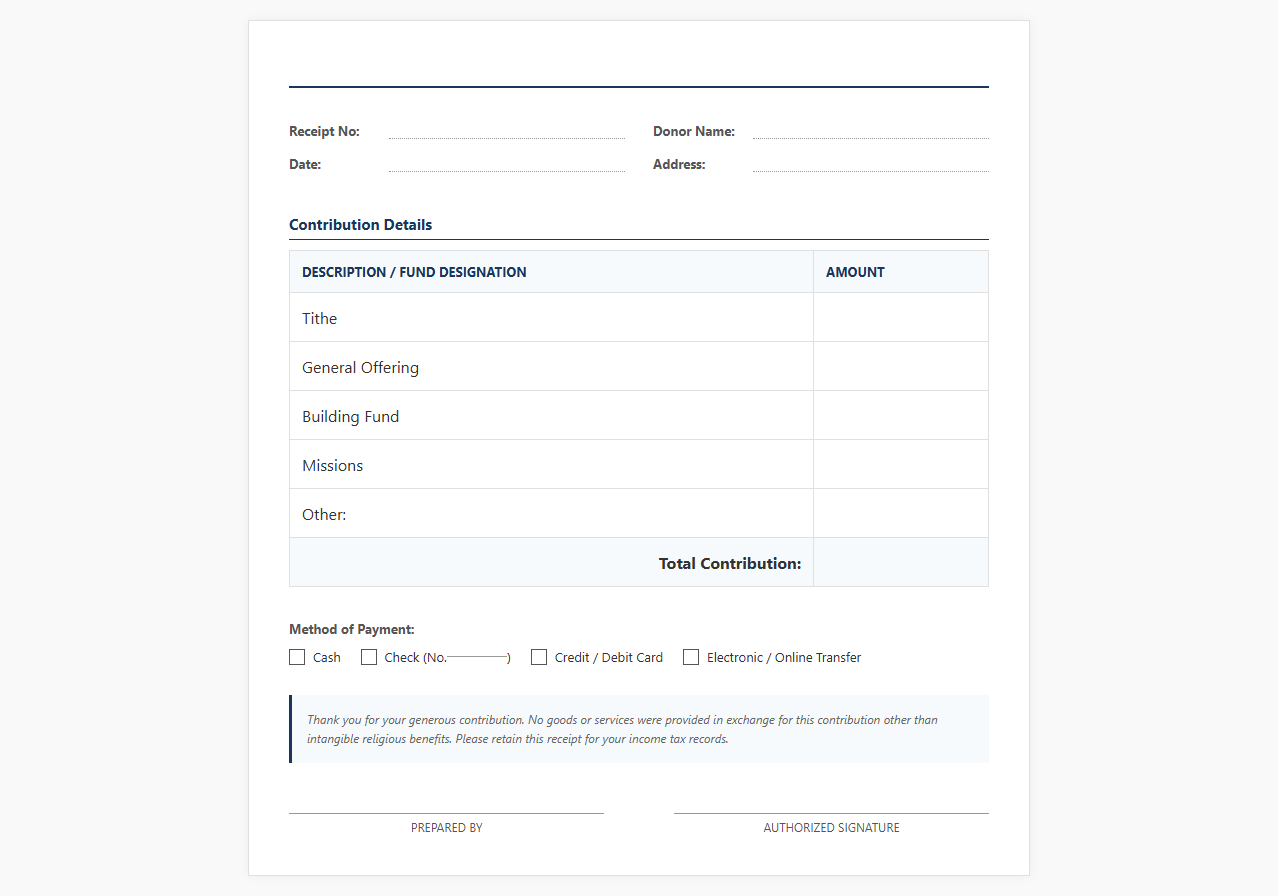 Download: .PDF
In-Kind Charitable Contribution Receipt Template
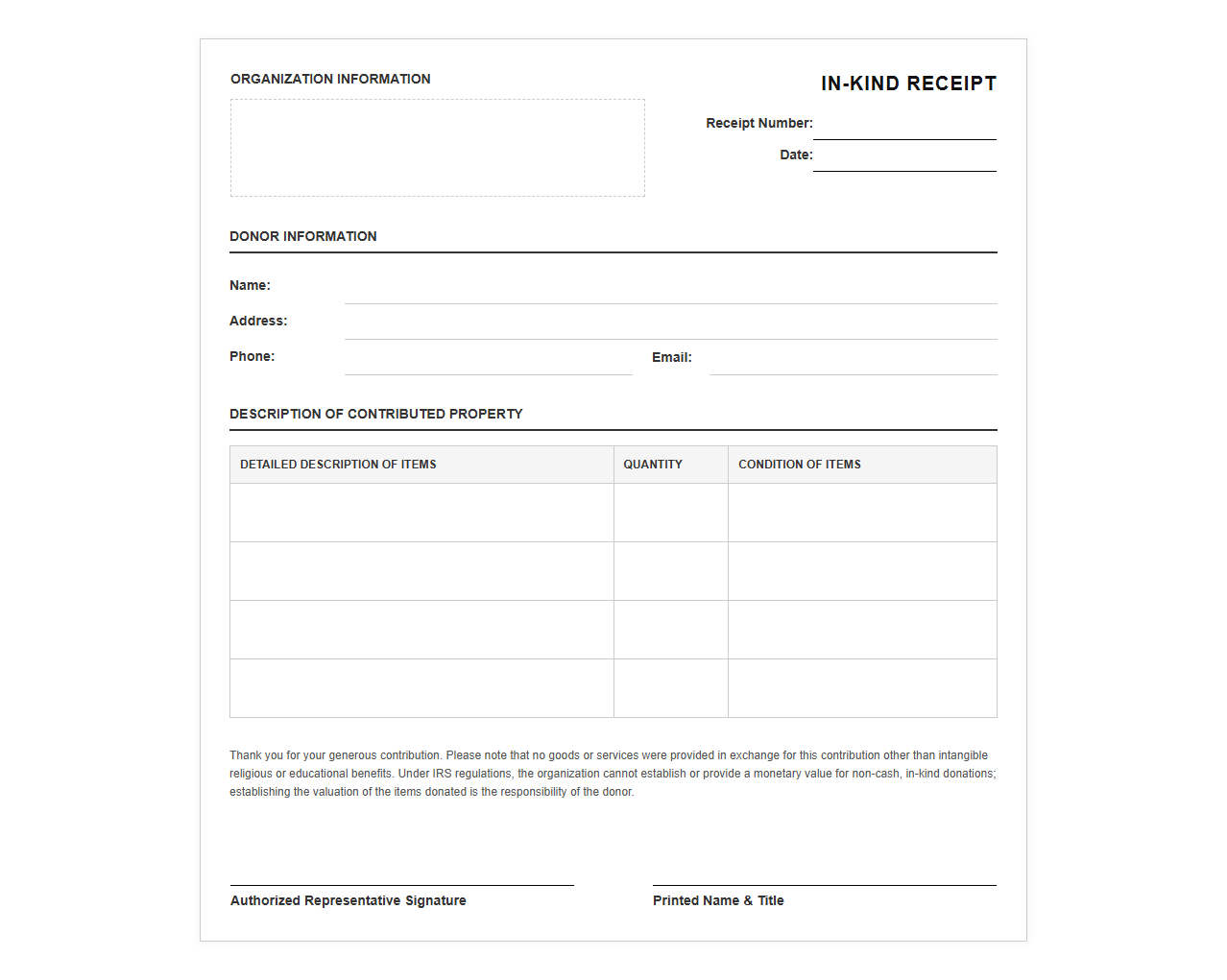 Download: .PDF
Tax-Deductible Charitable Donation Receipt Form
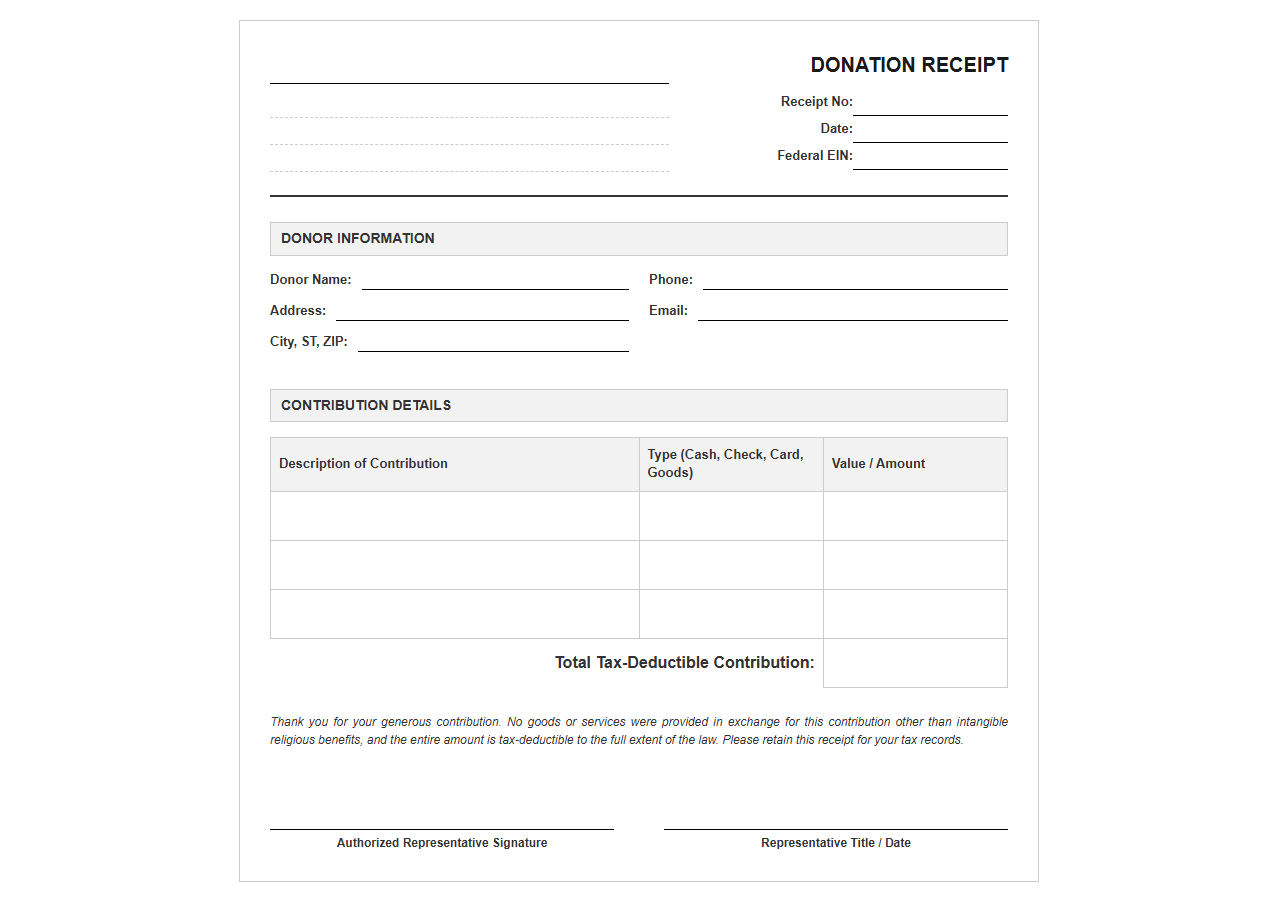 Download: .PDF
Annual Charitable Giving Summary Receipt Template
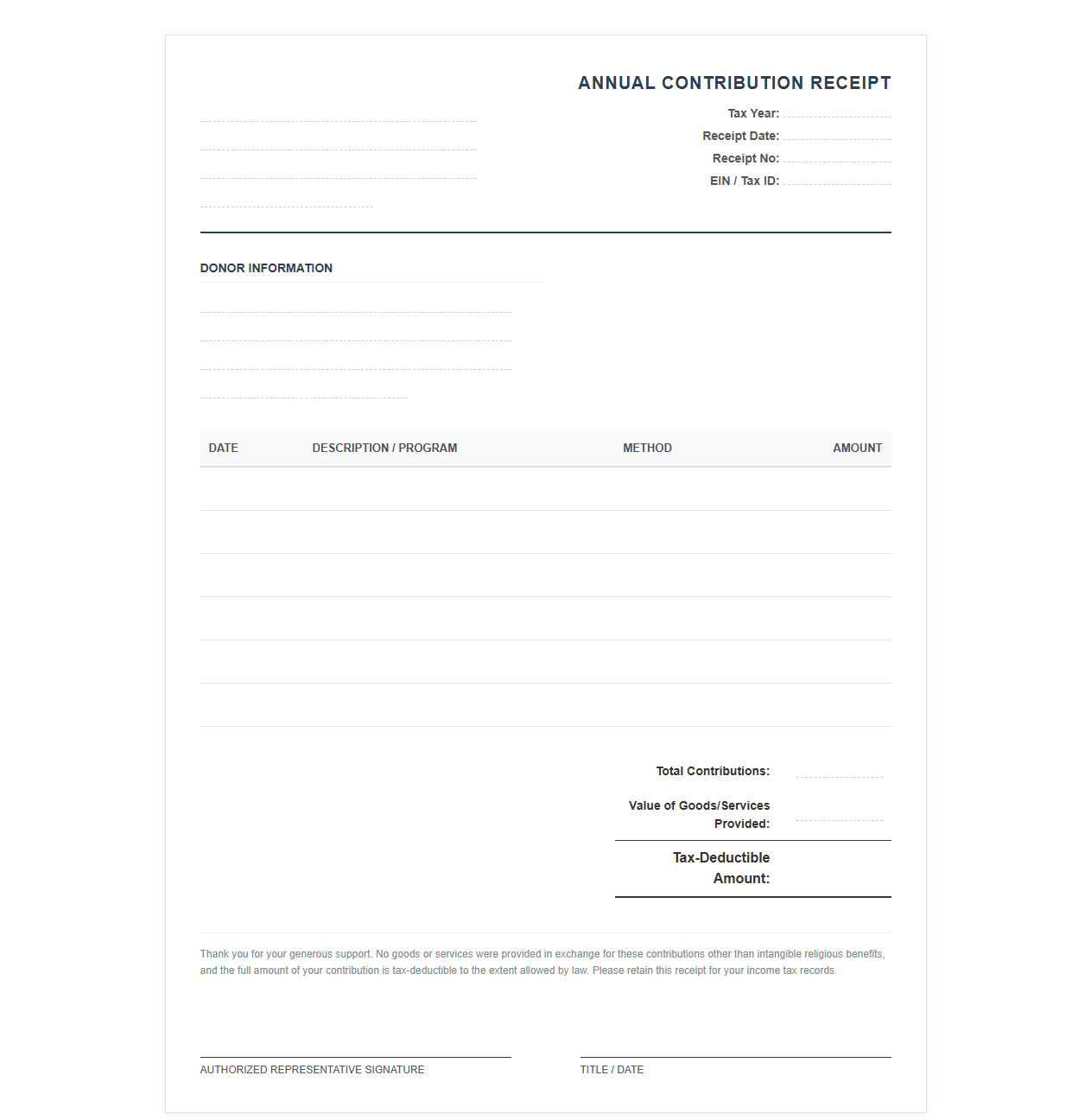 Download: .PDF
Disaster Relief Charitable Contribution Receipt
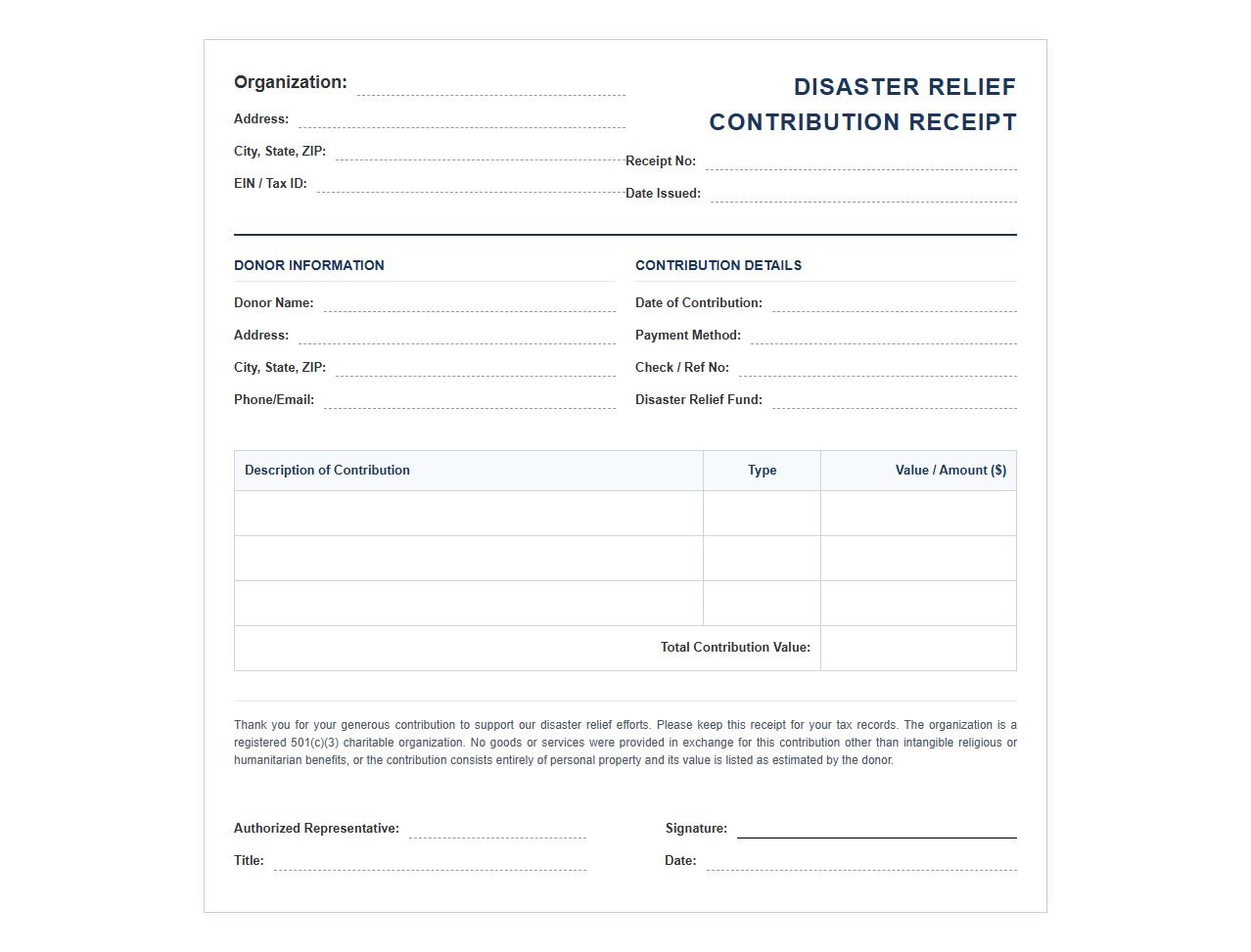 Download: .PDF
School Charity Event Donation Receipt Template
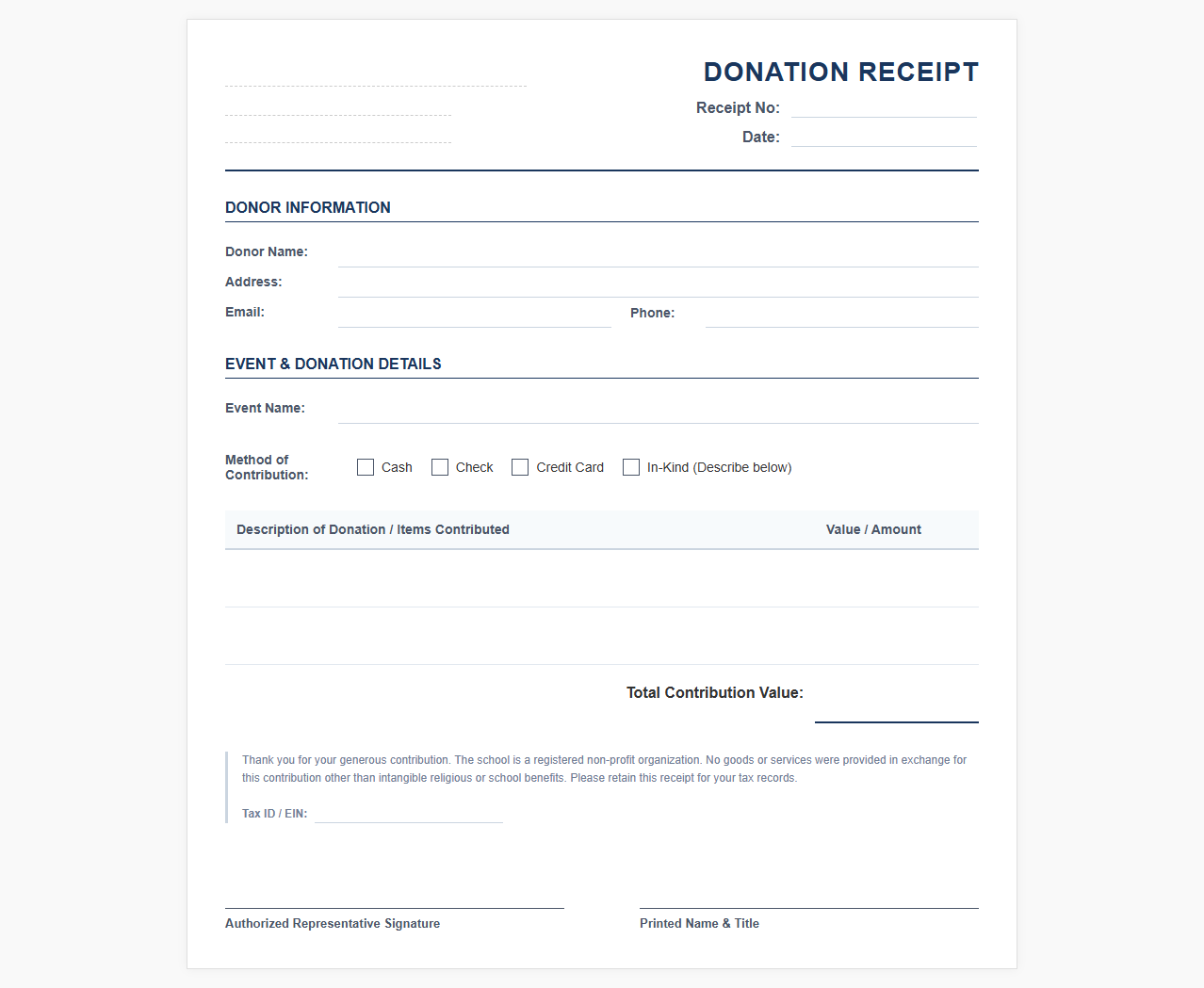 Download: .PDF
Corporate Sponsorship Charitable Receipt Template
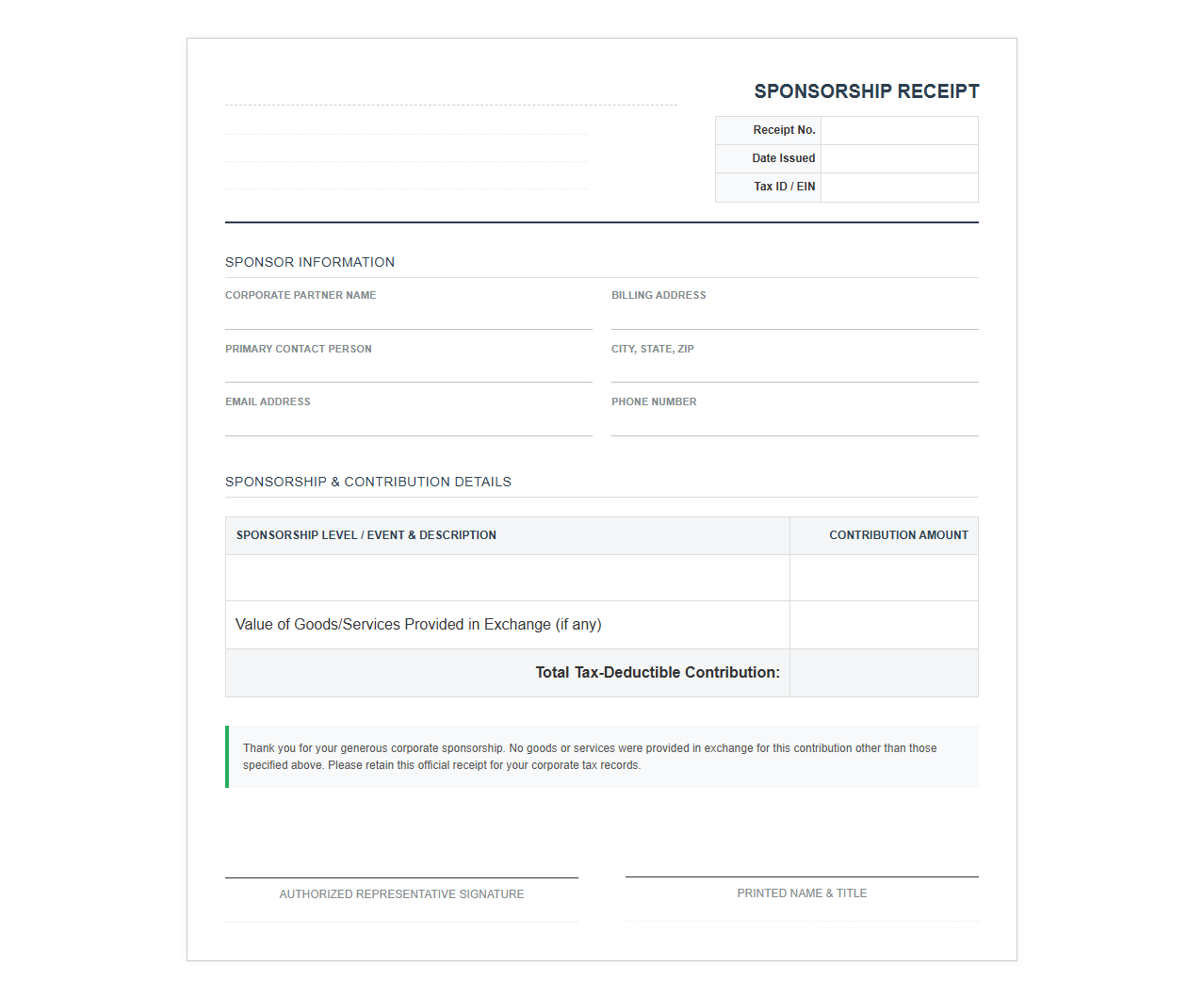 Download: .PDF
The Role of Receipting in Non-Profit Tax Compliance
For charitable organizations and their supporters, the act of giving is only the first step in a larger, regulated ecosystem. Standardized charitable contribution receipts are absolutely essential for both parties to remain aligned with federal guidelines. For donors, a formal receipt is the mandatory legal key needed to claim deserved tax deductions on their annual returns. For non-profit organizations, maintaining a rigorous, standardized receipting process is not merely an administrative chore; it is a critical operational safeguard required to maintain their hard-earned tax-exempt status under federal law.
IRS Requirements for Valid Donation Receipts
The $250 Threshold and Written Acknowledgment
The IRS enforces specific regulations regarding what qualifies as valid proof of a charitable contribution. Specifically, donors must obtain a contemporaneous written acknowledgment from the charity for any single contribution of $250 or more in order to claim a deduction. The receipt must be obtained before the donor files their tax return for the year in which the contribution was made.
- The acknowledgment must state the exact amount of cash contributed.
- It must provide a detailed description (but not necessarily the value) of any non-cash property donated.
- It must explicitly state whether the organization provided any goods or services in exchange for the contribution.
Essential Elements of a Standardized Receipt Template
To guarantee full compliance and streamline the donor experience, organizations should utilize a highly structured, standardized receipt template. This template ensures that no critical piece of regulatory information is omitted during the busy tax season.
- Organization Information: The official legal name of the non-profit organization and its unique Employer Identification Number (EIN).
- Donation Details: The exact date the contribution was received and the total monetary value or description of the property.
- Goods and Services Statement: A clear declaration stating either that "no goods or services were provided in exchange for this contribution" or providing a good faith estimate of the value of any goods or services that were provided.
Financial and Legal Risks of Non-Compliance
Failing to issue precise, timely, and compliant donation receipts can trigger a cascade of severe financial and legal problems for both the non-profit and its supporters. In the event of an IRS audit, poorly drafted receipts can be rejected, leaving donors unable to claim deductions and potentially facing back taxes, interest, and penalties.
Crucial Risk Factor: Non-profit organizations that repeatedly fail to comply with receipting laws face severe penalties, including administrative fines and, in extreme cases, the revocation of their tax-exempt status under Section 501(c)(3) of the Internal Revenue Code.
Efficiency Through Digital Template Automation
Streamlining the Acknowledgment Process
Transitioning from manual paper-based tracking to automated systems dramatically simplifies the receipting lifecycle. By leveraging modern digital templates, non-profits can automatically generate and email compliant receipts the moment a donation is processed. This automation reduces human error, standardizes the layout, and frees up valuable staff time to focus on core mission-driven programs rather than manual data entry.
Best Practices for Archiving and Record-Keeping
Issuing the receipt is only half of the compliance equation; proper archival strategies must be in place to safeguard this data for future reference. Regulatory bodies expect organizations to maintain orderly, secure, and accessible records of all transactions.
- Store copies of all issued receipts in a secure, cloud-based database with restricted access levels to protect donor privacy.
- Retain all donation records and acknowledgment receipts for a minimum of three years from the date the tax return was filed.
- Maintain structured naming conventions and digital tags to ensure records are instantly searchable during an audit.
Securing Donor Trust Through Professional Receipting
Professional receipting processes serve as a tangible reflection of an organization's financial integrity. By prioritizing transparent, accurate, and timely documentation, non-profits demonstrate a deep respect for their donors' financial contributions and legal standing. This level of operational excellence fosters deep trust, reinforces long-term financial support, and secures the essential resources needed to drive lasting community impact.

Leave a comment