
Managing the transition of employees returning from Paid Family and Medical Leave (PFML) often feels like navigating an administrative minefield. HR professionals and managers regularly struggle with fragmented communication, tracking employee readiness, and mitigating legal risks during this delicate reentry phase.
Before resolving these operational friction points, it is essential to understand the increasingly complex web of state-mandated leave laws that govern these transitions. Standardizing this process with structured document templates grants organizations the administrative clarity and peace of mind needed to ensure compliance and support returning staff.
Please note: While standardized templates provide a robust framework, they must be reviewed against local jurisdictions to ensure alignment with specific state statutes.
Utilizing targeted tools-such as formal Medical Clearance Releases and structured Phased Reentry Schedules-serves as concrete proof of a fair, systematic return-to-work program.
In this article, we will examine the essential templates required for a seamless transition, outline legal best practices, and provide actionable steps to integrate these tools into your existing HR workflow.
Paid Family and Medical Leave Return to Work Form
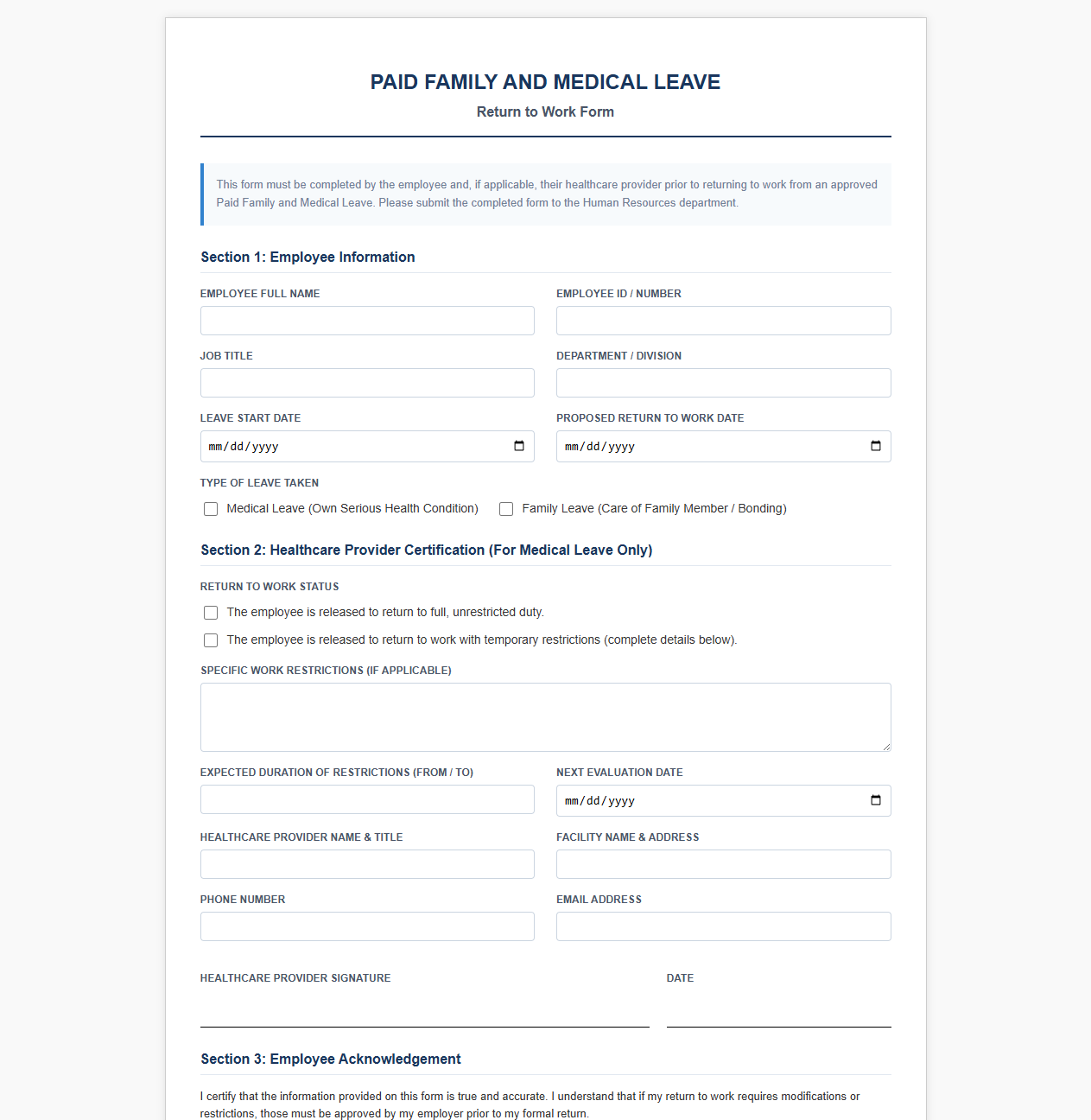 Download: .PDF
PFML Return Template
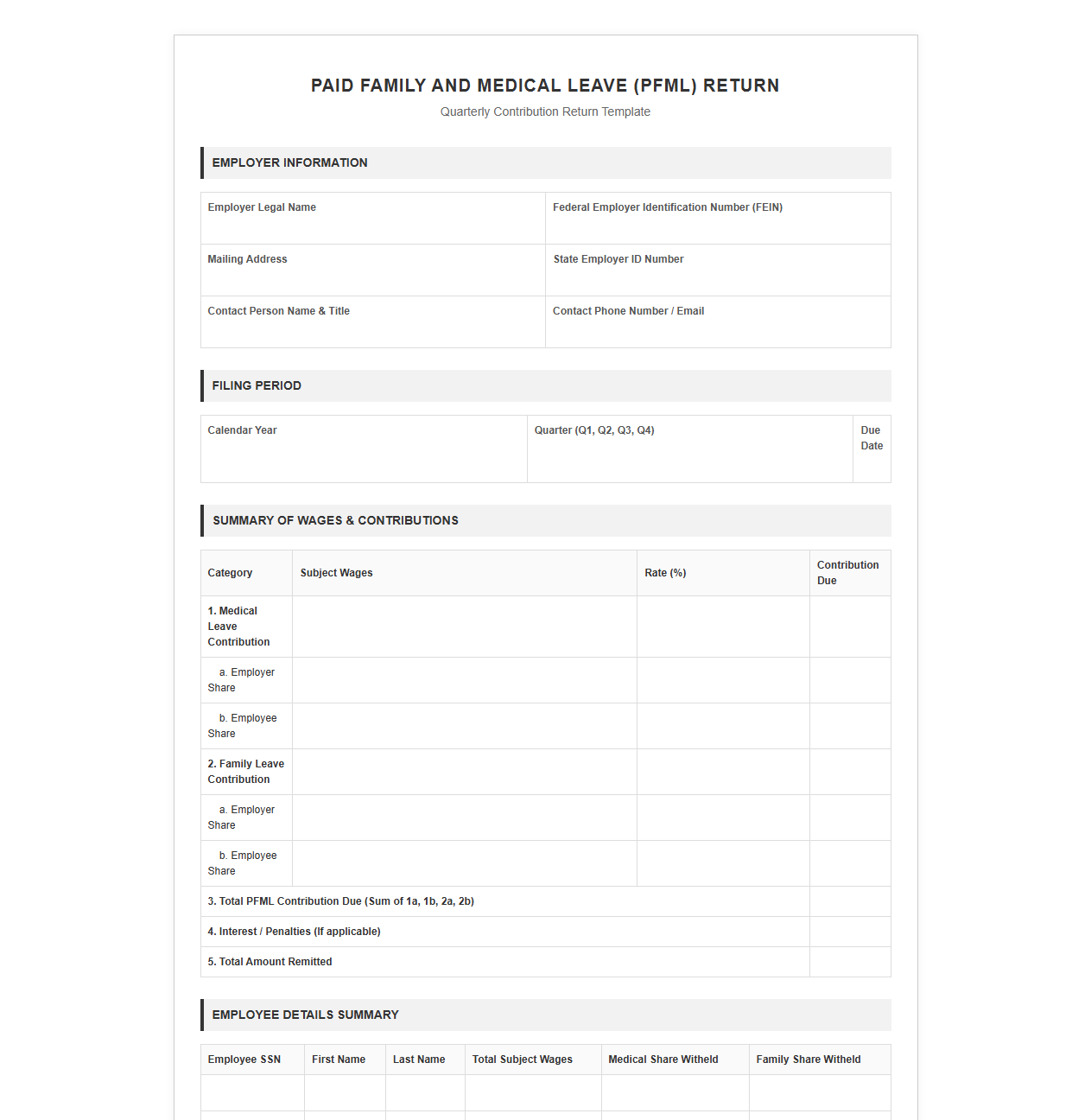 Download: .PDF
Paid Leave Return to Work Authorization Template
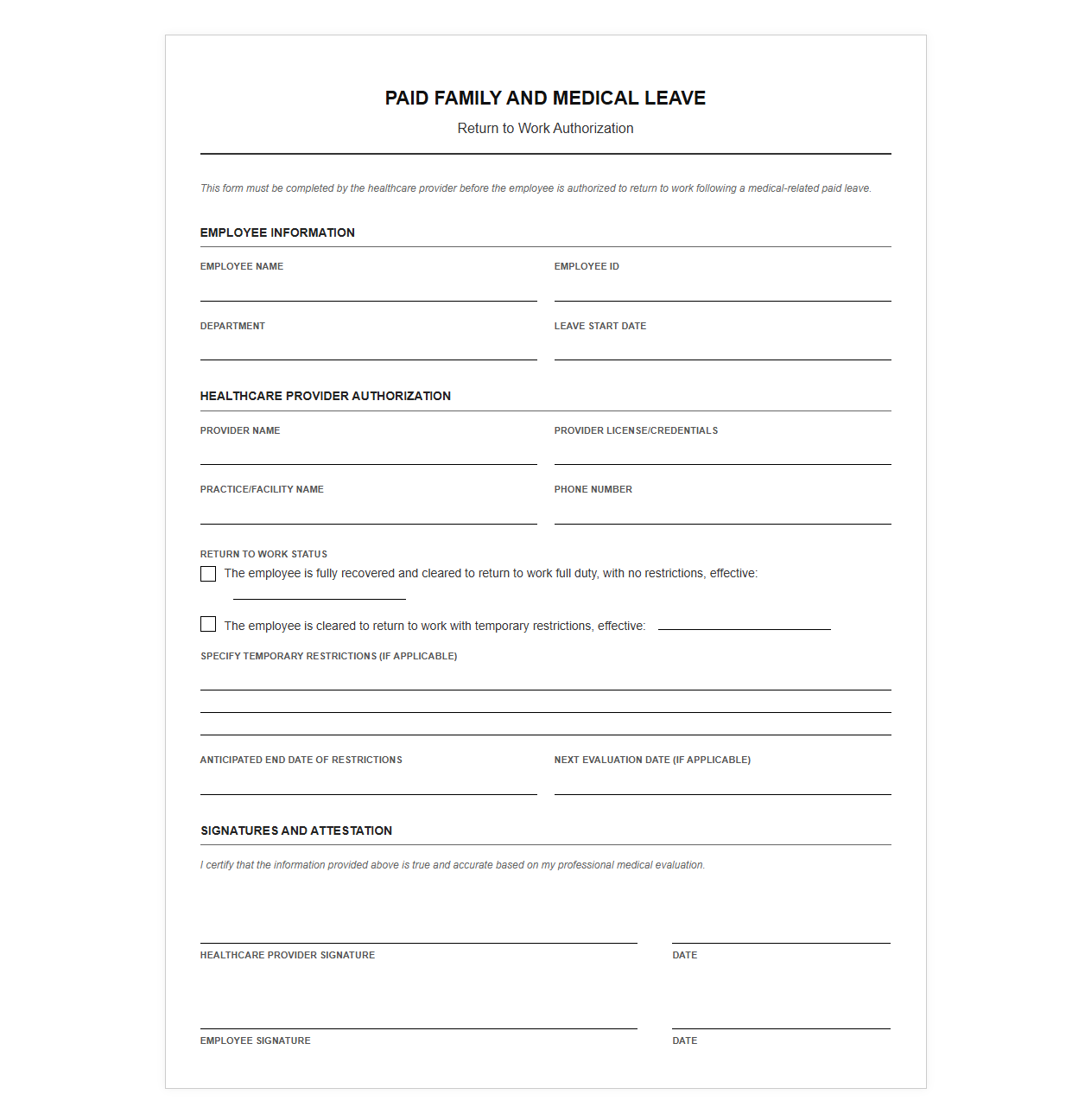 Download: .PDF
Medical and Family Leave Return Agreement
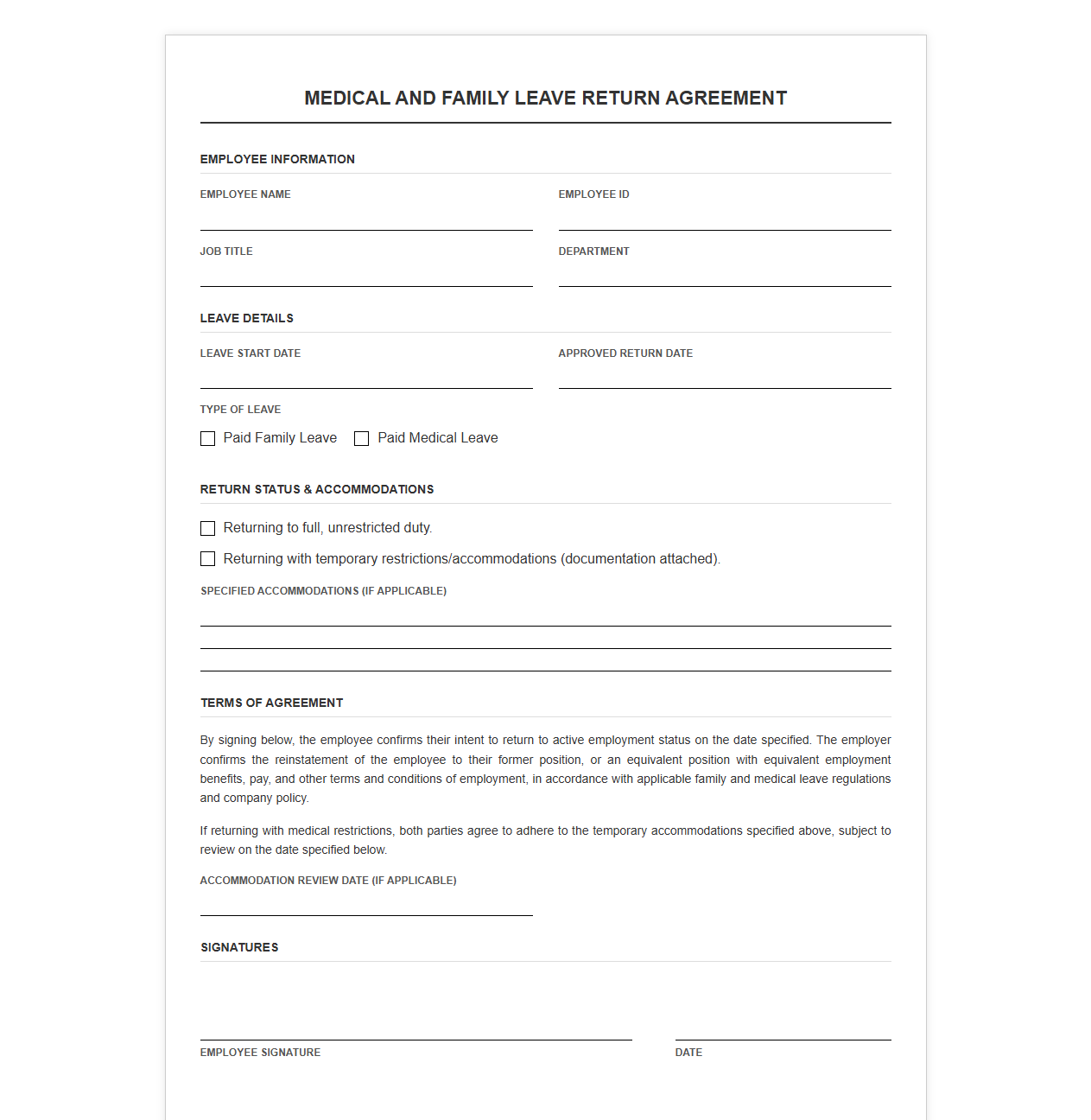 Download: .PDF
Paid Family Leave Reinstatement Form Template
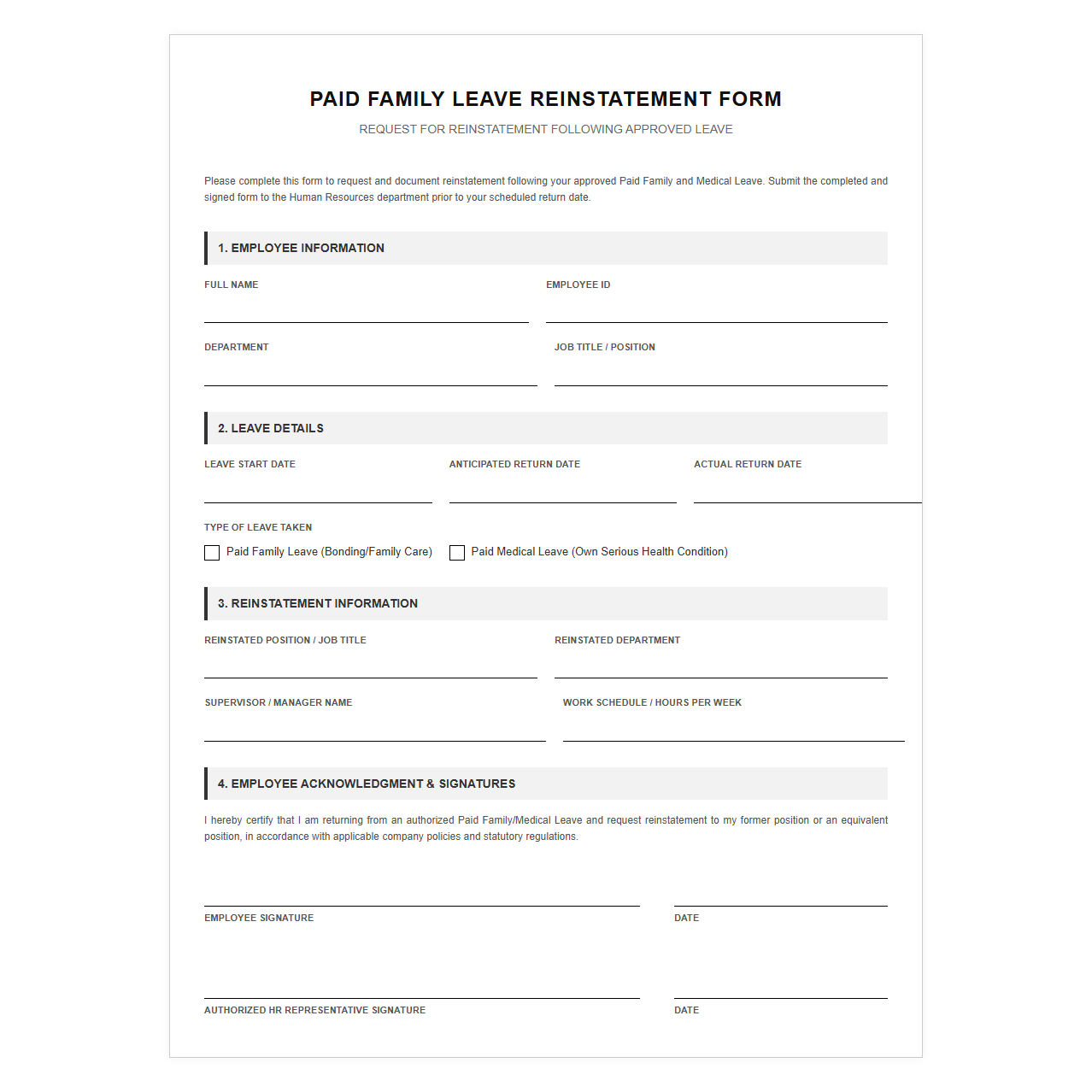 Download: .PDF
Return from Family and Medical Leave Certification
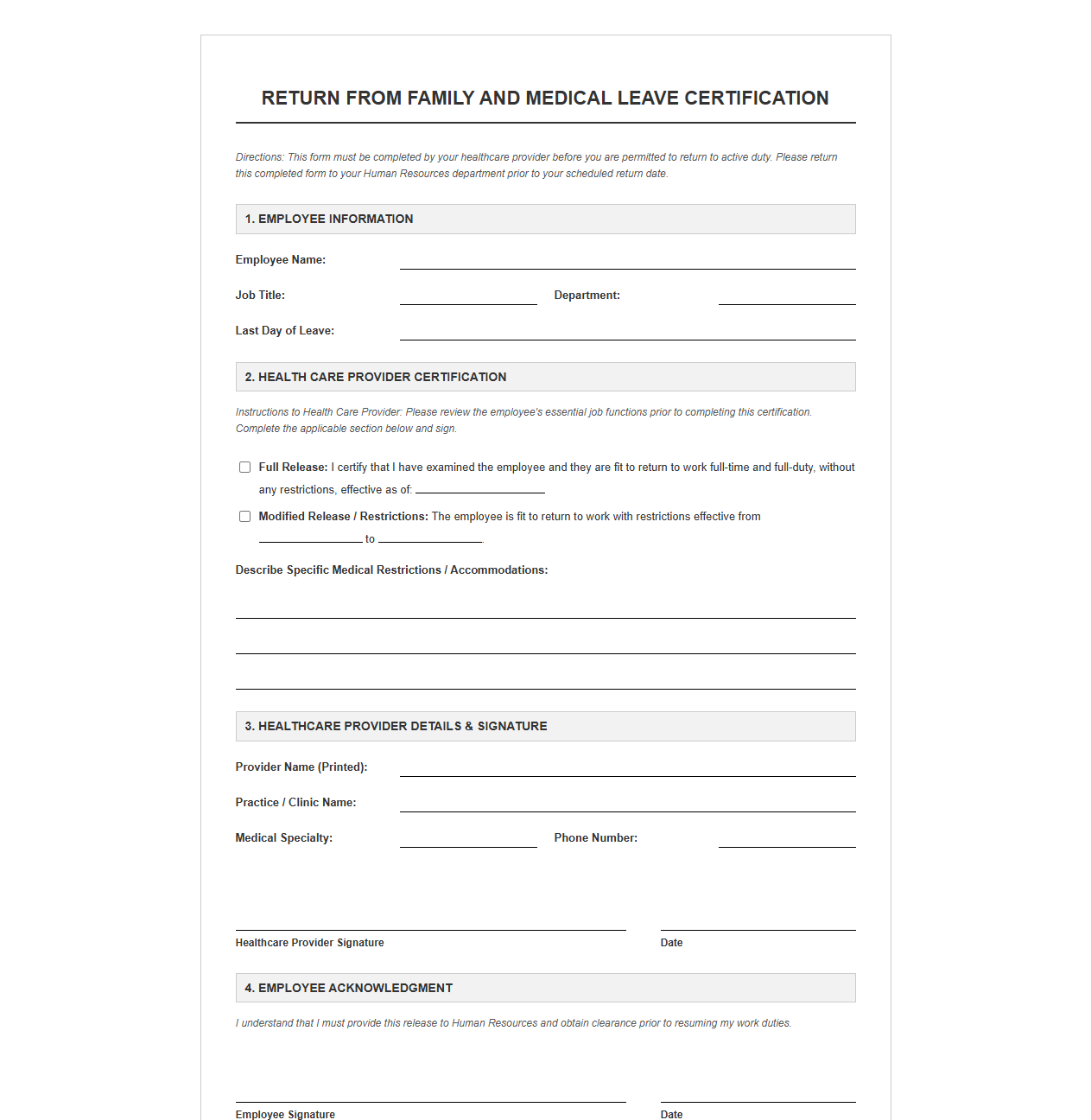 Download: .PDF
PFML Reinstatement and Return to Work Template
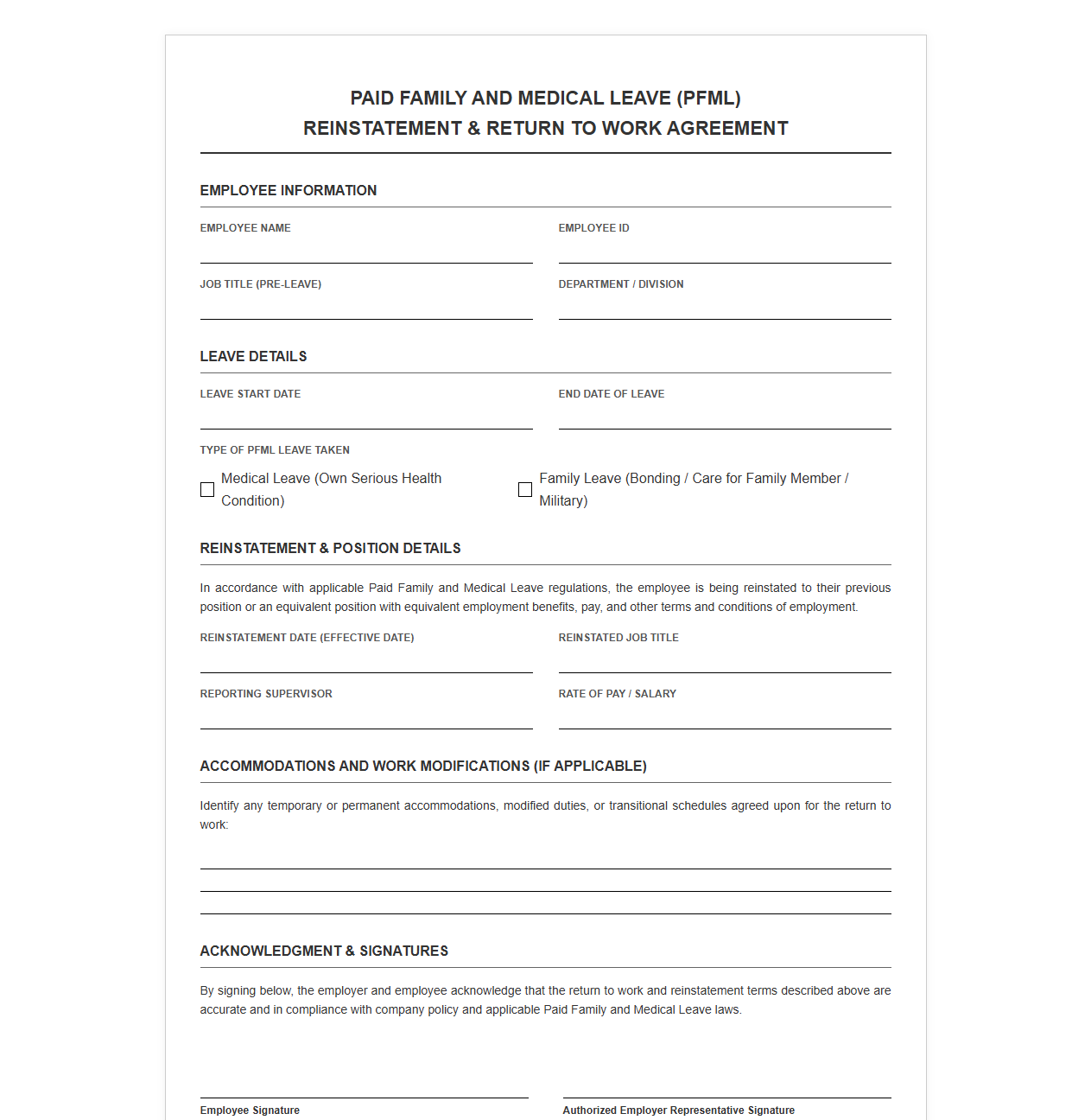 Download: .PDF
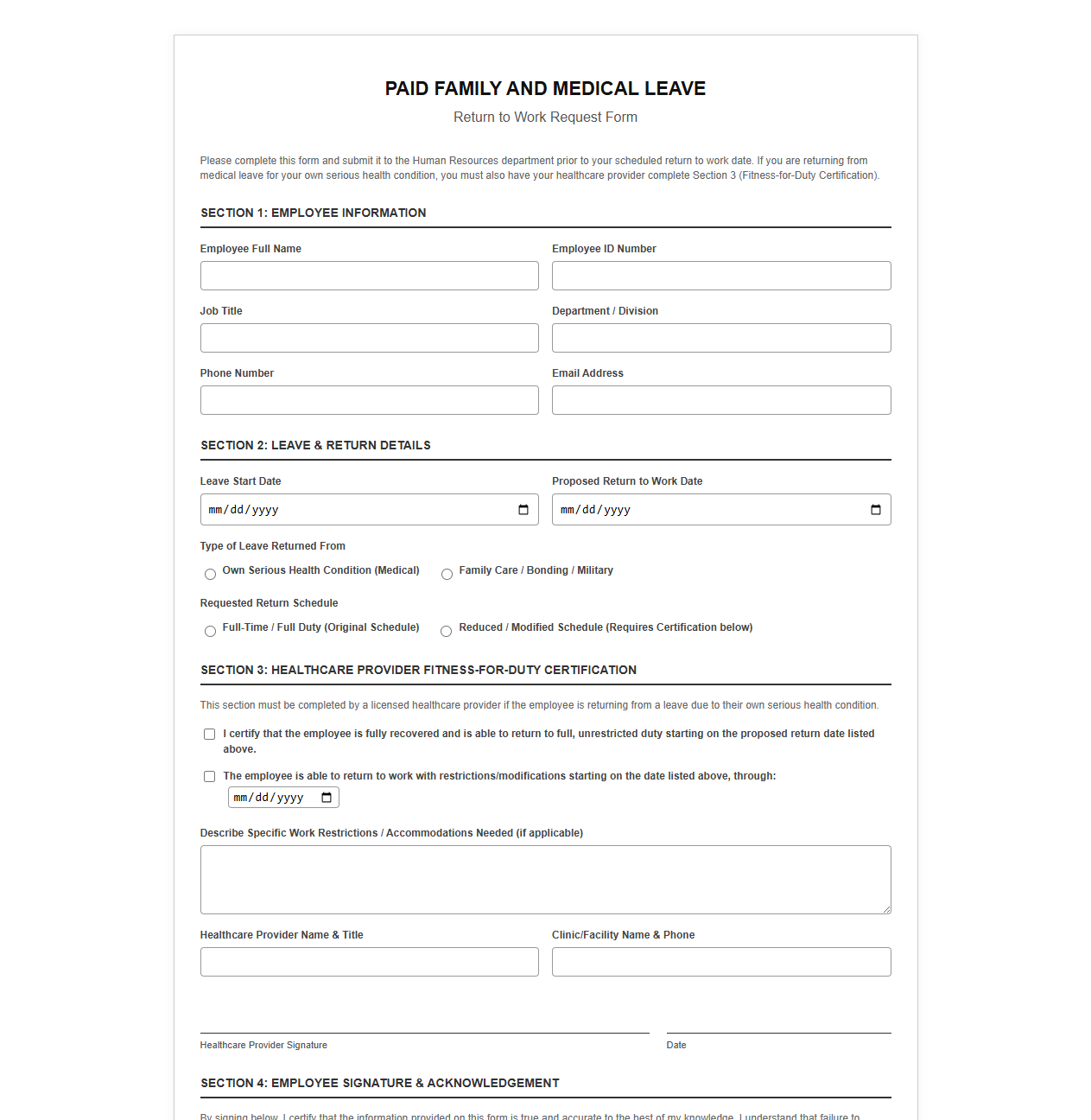
Paid Medical Leave Return Request Form
 Download: .PDF
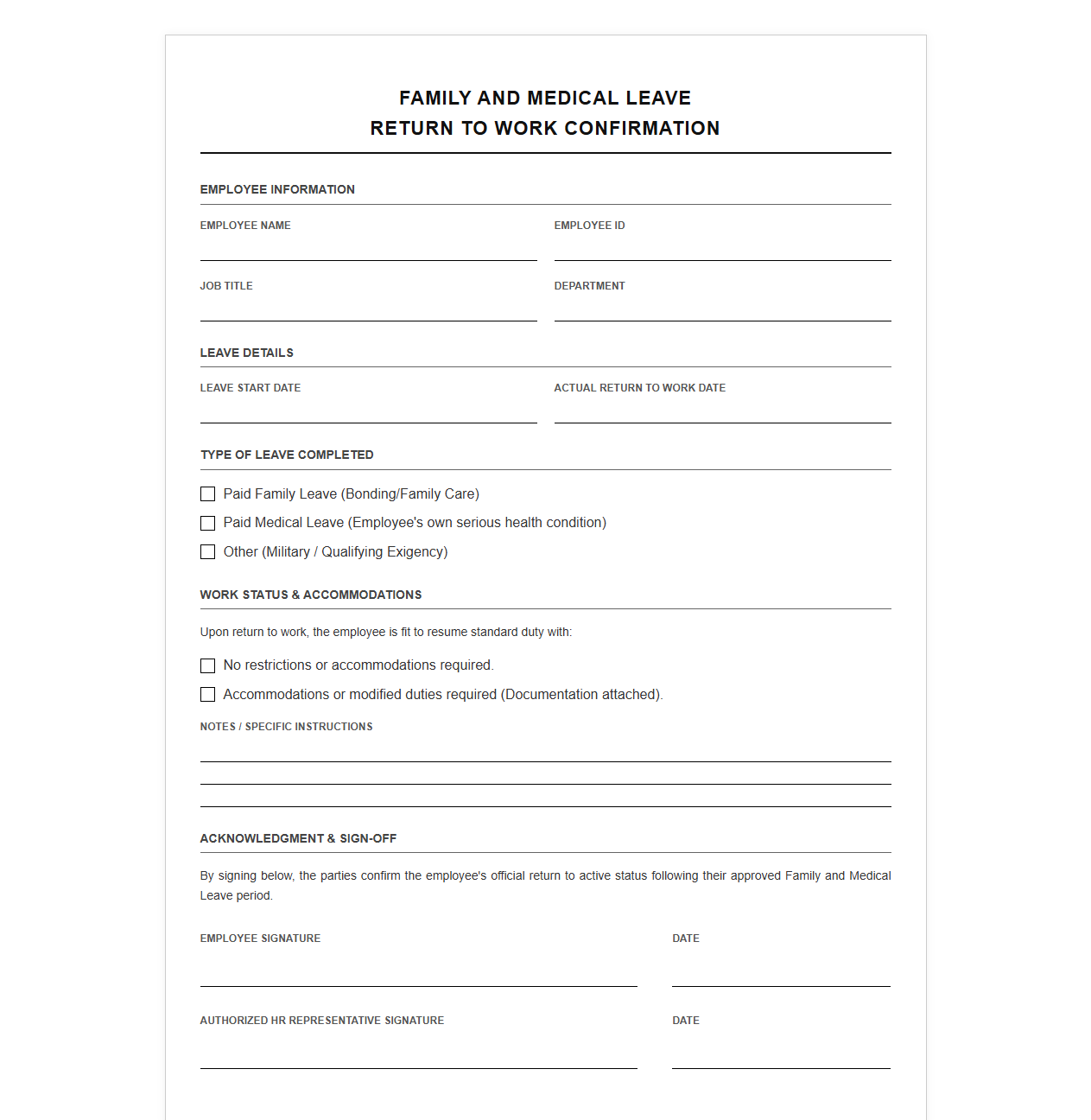
Family Leave Return to Work Confirmation Document
 Download: .PDF
Setting the Stage: The Critical Role of Reentry Planning
Returning to the workplace after a prolonged absence due to paid family or medical leave is a significant life transition. For employees, the shift from managing a personal health crisis or welcoming a new family member to meeting professional demands can be overwhelming. An organized, structured return-to-work process acts as a bridge, reducing anxiety and setting clear expectations. When employers invest in a thoughtful reentry plan, they do not just facilitate a smoother operational transition; they actively demonstrate a culture of care and respect that safeguards employee well-being and boosts long-term retention.
Navigating the Obstacles: Common Reentry Challenges
Employees returning to work often face a complex web of hurdles that can disrupt their reintegration. Without a structured framework, these difficulties can lead to burnout, decreased productivity, or early resignation. Standardized reentry templates help mitigate these issues by establishing clear, manageable guidelines before the employee even logs back in. Returning workers typically encounter several distinct obstacles:
- Emotional Adjustment: Managing the guilt, anxiety, or mental fatigue of separating from family or adjusting after a major health event.
- Logistical Hurdles: Coordinating childcare, medical follow-ups, or transportation while adhering to a rigid work schedule.
- Professional Disconnection: Feeling out of the loop regarding project updates, team restructuring, or new software and system implementations.
- Physical Limitations: Coping with reduced stamina or lingering symptoms that affect performance during standard working hours.
Anatomy of an Effective Return-to-Work Template
A successful reentry document serves as a collaborative roadmap between HR, management, and the returning employee. Rather than relying on informal agreements, a standardized template ensures that every critical detail is documented and actionable. Every effective return-to-work template should include these foundational elements:
- Phased Hours and Gradual Reintegration
- A structured schedule that allows the employee to temporarily work reduced hours or hybrid days, gradually building back up to full-time capacity.
- Reasonable Accommodation Requests
- A dedicated section documenting physical or environmental modifications, such as ergonomic office setups, scheduled medical breaks, or designated lactation spaces.
- Structured Check-In Schedules
- A timeline of brief weekly or bi-weekly meetings during the first month to assess progress, address pain points, and adjust workloads dynamically.
Tailoring Templates to Diverse Leave Scenarios
A one-size-fits-all approach rarely works for reentry planning, as the needs of an employee returning from parental leave differ vastly from those recovering from major surgery or managing caregiving duties. Customizing templates based on the specific type of leave ensures that the support provided is both relevant and respectful. For instance, a parental leave template might prioritize lactation room access and schedule flexibility, while a medical recovery template might focus heavily on physical limitations and cognitive pacing.
"The most successful return-to-work strategies are those that acknowledge the deeply human element of leave. Customizing the reentry pathway is not about creating extra work for HR; it is about building a sustainable environment where employees feel valued and understood as they step back into their roles." - Sarah Jenkins, Senior VP of People & Culture
Ensuring Compliance and Confidentiality
When drafting and executing return-to-work plans, organizations must navigate a complex regulatory landscape. It is imperative that HR teams design templates that protect medical privacy while adhering to local and federal employment laws. Under the Americans with Disabilities Act (ADA) and the Family and Medical Leave Act (FMLA), employers must ensure that any requested accommodations are documented legally and objectively. Furthermore, keeping returning employees' medical details confidential is not just a best practice-it is a strict requirement under HIPAA and related privacy regulations. All medical documentation should be stored in a secure file separate from the standard personnel file, ensuring that sensitive information is shared only on a strict need-to-know basis.
Step-by-Step Implementation Guide for HR Teams
To ensure a consistent and supportive experience, HR managers should follow a standardized workflow when introducing and finalizing reentry templates. This chronological process helps keep all stakeholders aligned and ensures no critical steps are overlooked.
- Initiate Early Contact: Reach out to the employee 2 to 3 weeks before their scheduled return date to express excitement for their return and introduce the reentry planning process.
- Collaborative Drafting: Send the initial template to the employee and their direct supervisor, encouraging both parties to propose schedule adjustments and identify necessary accommodations.
- Conduct the Alignment Meeting: Host a brief virtual or in-person meeting to review the draft, resolve any discrepancies, and finalize the phased transition plan.
- Secure Formal Sign-Off: Have the employee, supervisor, and HR representative sign the completed document to formalize the agreed-upon accommodations and schedule.
- Execute and Monitor: Roll out the plan on day one, and actively participate in the scheduled check-ins to make real-time adjustments as needed.
Empowering a Seamless Transition
A well-executed reentry plan transforms what could be a stressful, disruptive transition into a collaborative success story. By utilizing structured, compliant, and customizable templates, employers can safeguard operational continuity while proving their commitment to employee health and work-life balance. Supporting your workforce through these pivotal moments builds organizational resilience, fosters mutual trust, and drives sustained engagement.
To simplify this process for your team, you can access our comprehensive, customizable resources today. Click here to download our free, compliant return-to-work templates and start building a more supportive workplace culture.
Leave a comment