

Navigating State Unemployment Tax Act (SUTA) compliance is a constant struggle for growing payroll departments. With each state dictating its own filing formats, filing schedules, and fluctuating wage bases, manual reporting is highly prone to costly calculation errors. This operational friction has only intensified with the rise of distributed, multi-state workforces, making centralized tracking a critical business necessity.
Standardized state unemployment tax return templates bridge this operational gap, granting finance teams the ability to eliminate repetitive manual data entry while drastically reducing audit risks. However, while these tools streamline reporting, they must be treated as adaptable frameworks rather than rigid, universal solutions; businesses must still calibrate them to local jurisdictional quirks. For example, a robust template must seamlessly pivot between the specific wage detailing required for California's DE 9C and New York's NYS-45.
Below, we will explore how to implement these standardized templates, align them with diverse state-level requirements, and automate your quarterly compliance workflows.
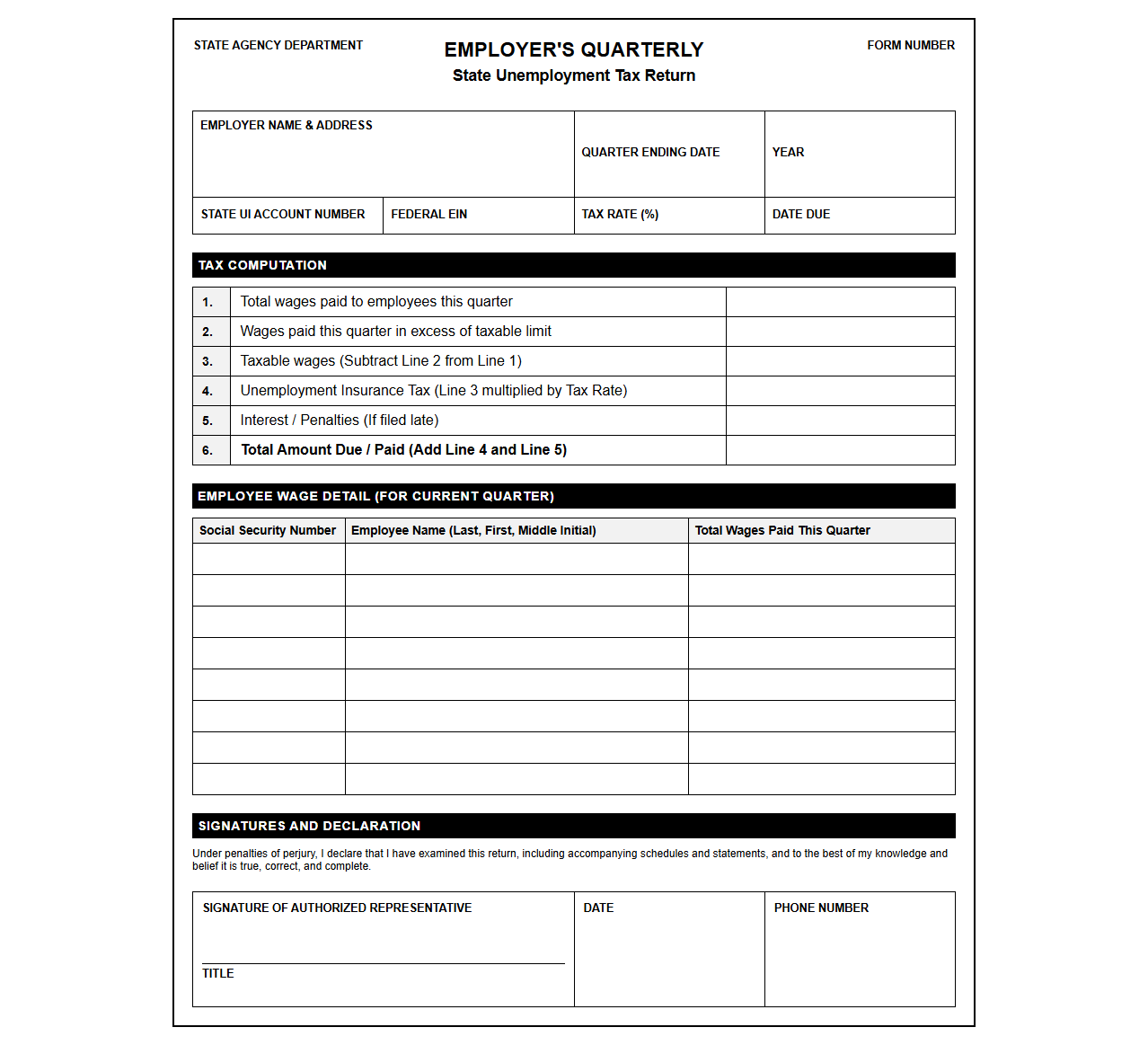
State Unemployment Tax Return Template
 Download: .PDF
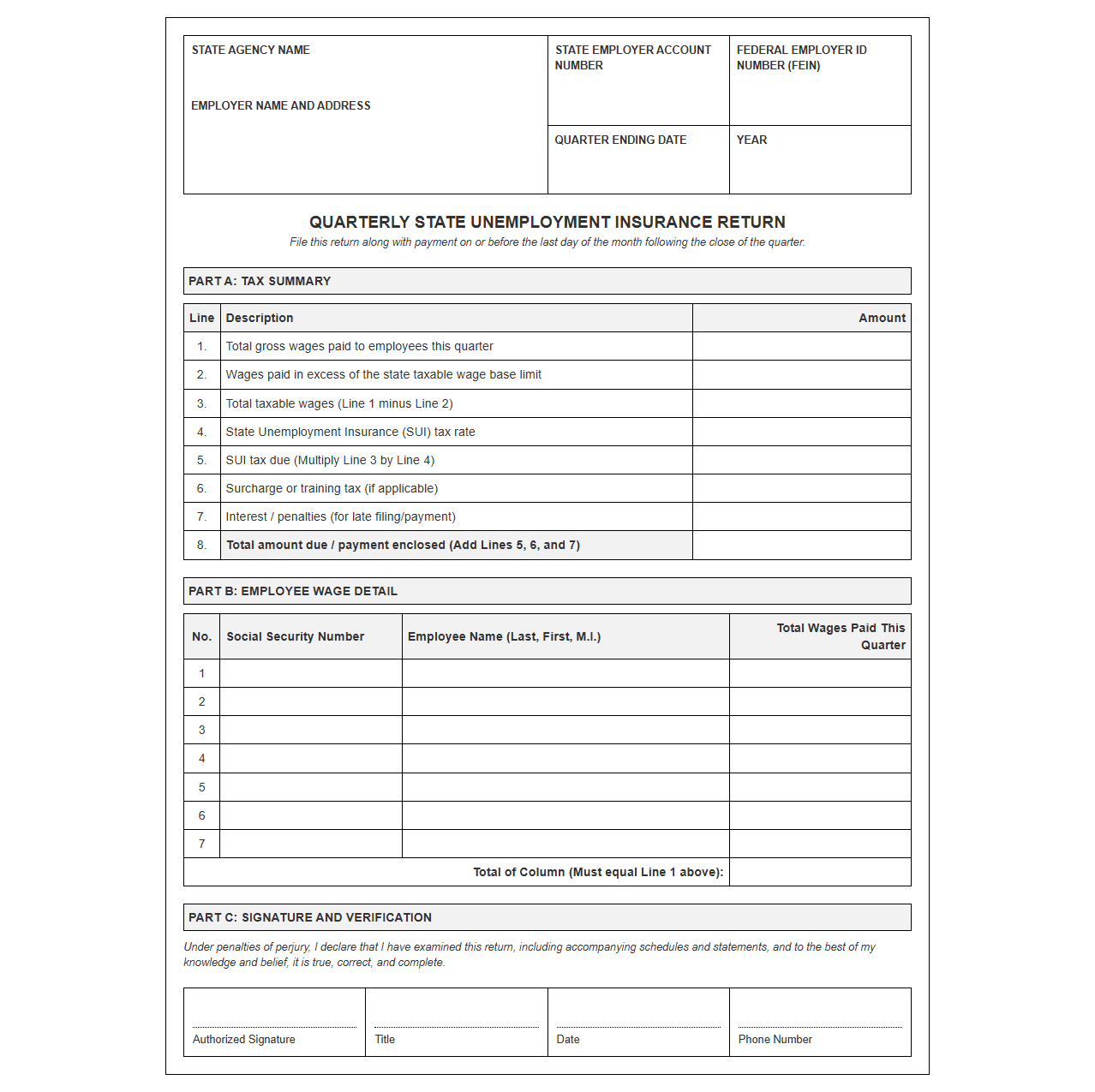
Quarterly State Unemployment Insurance Return Template
 Download: .PDF
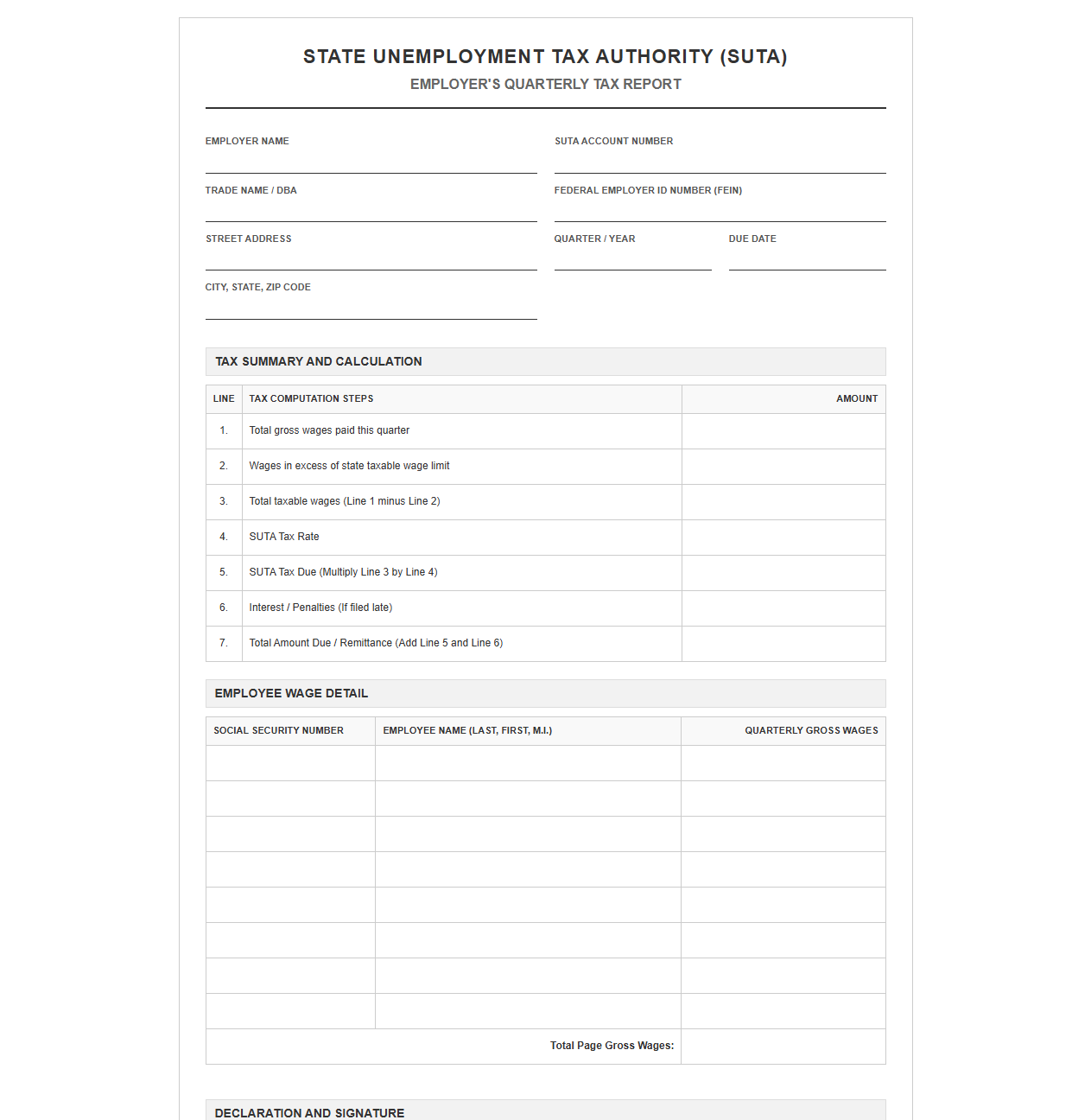
SUTA Tax Filing and Reporting Template
 Download: .PDF
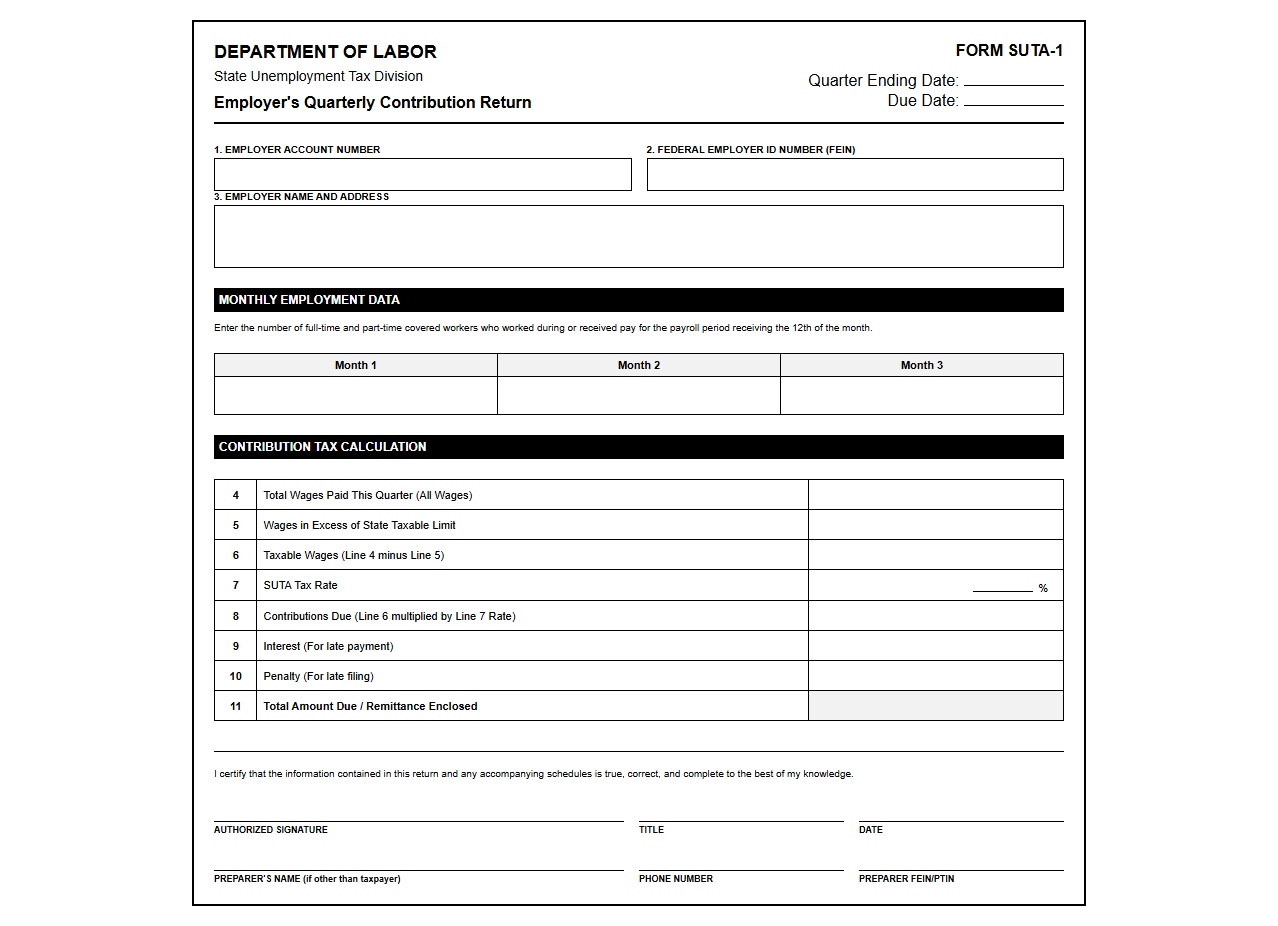
State Unemployment Contribution Return Form Template
 Download: .PDF
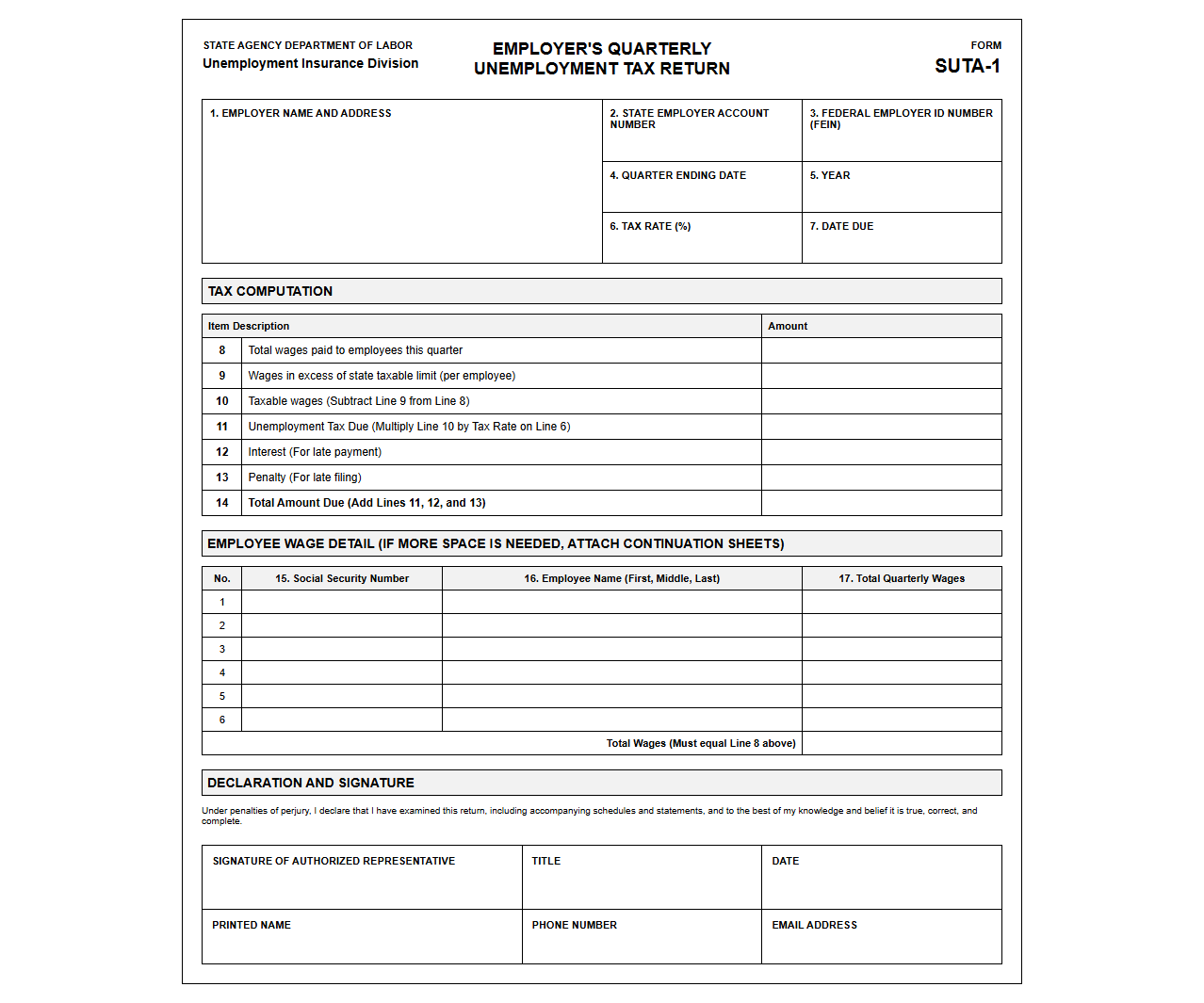
Employer State Unemployment Tax Return Template
 Download: .PDF
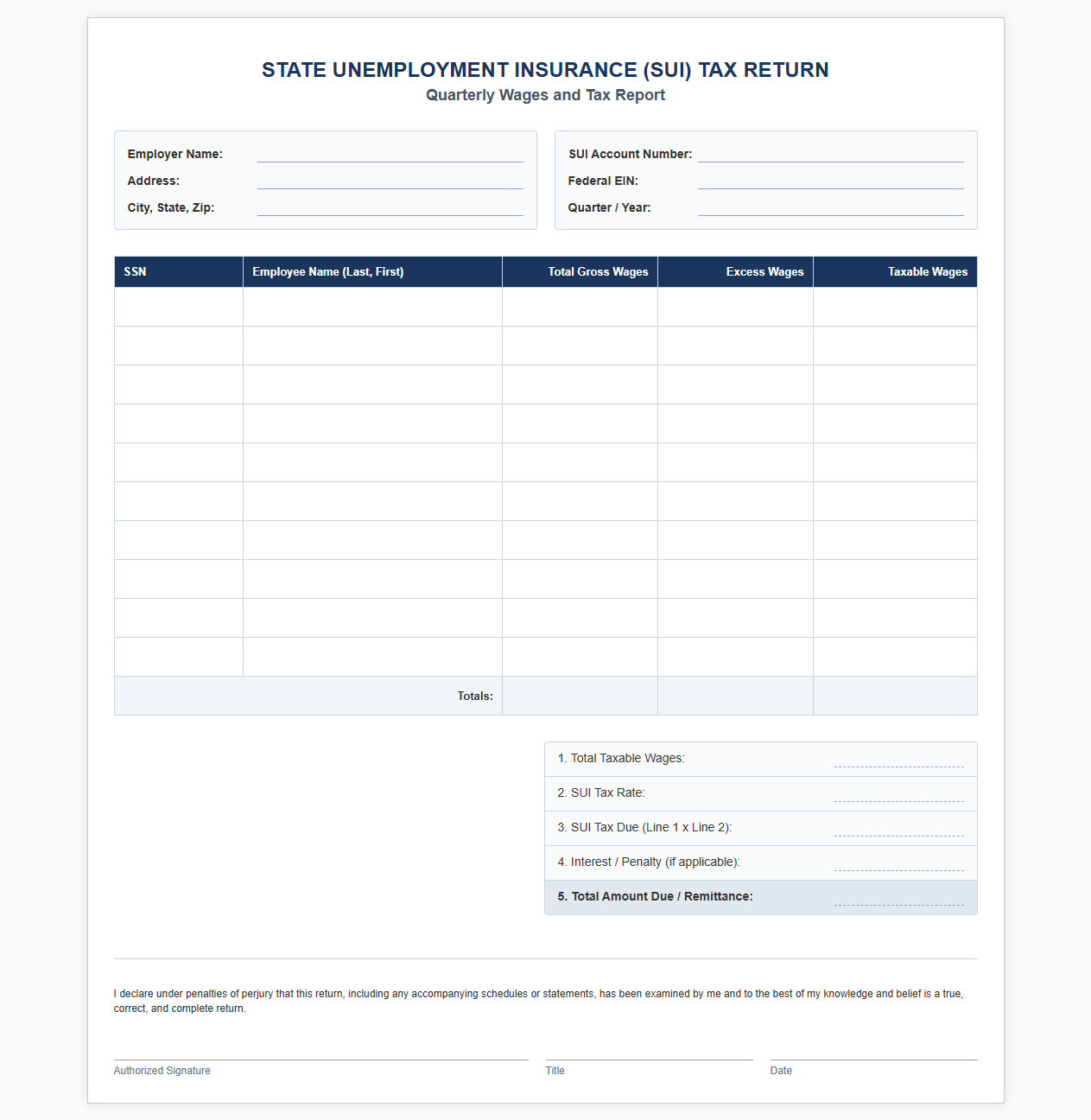
SUI Tax Return Spreadsheet Template
 Download: .PDF
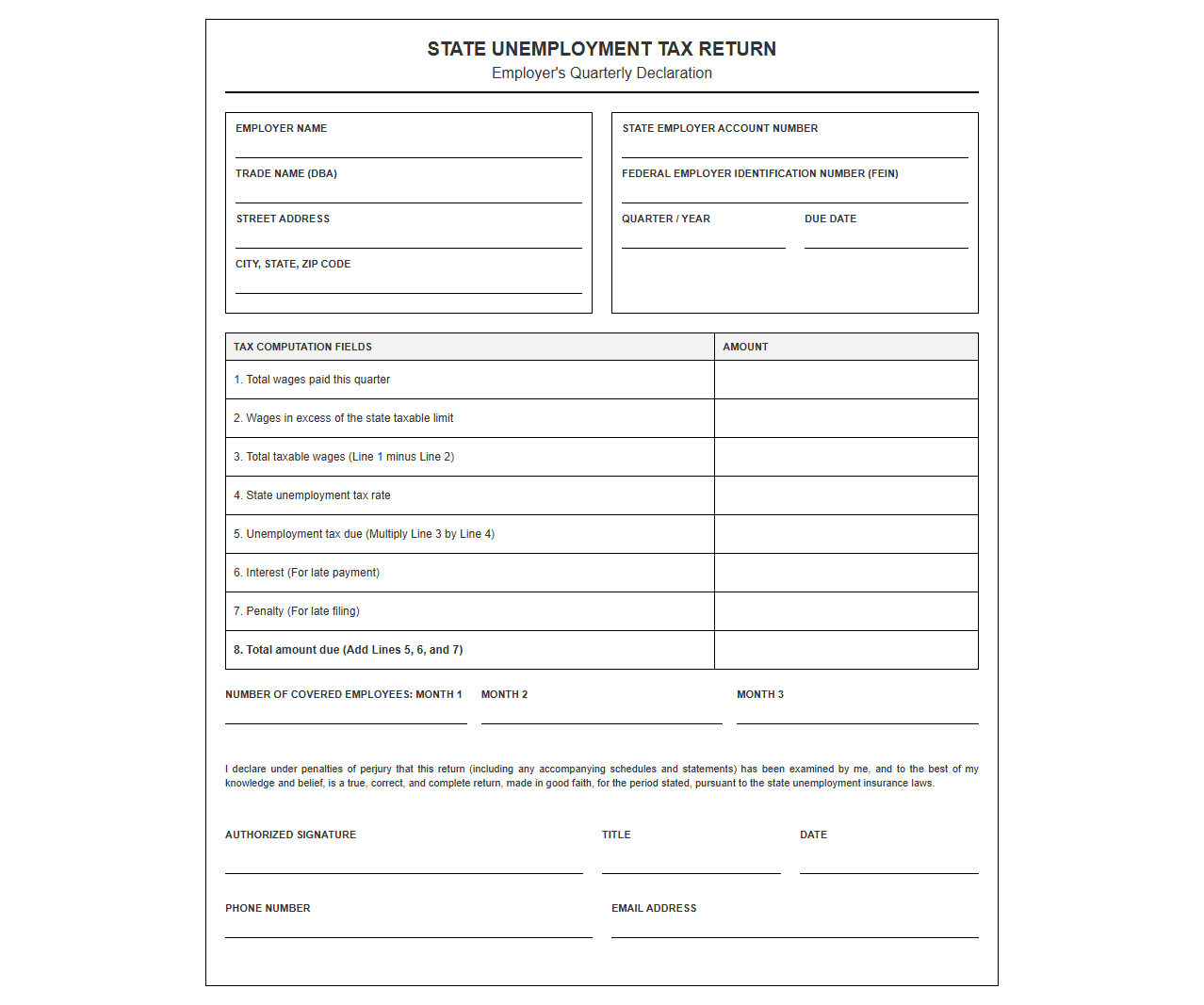
State Unemployment Tax Declaration Template
 Download: .PDF
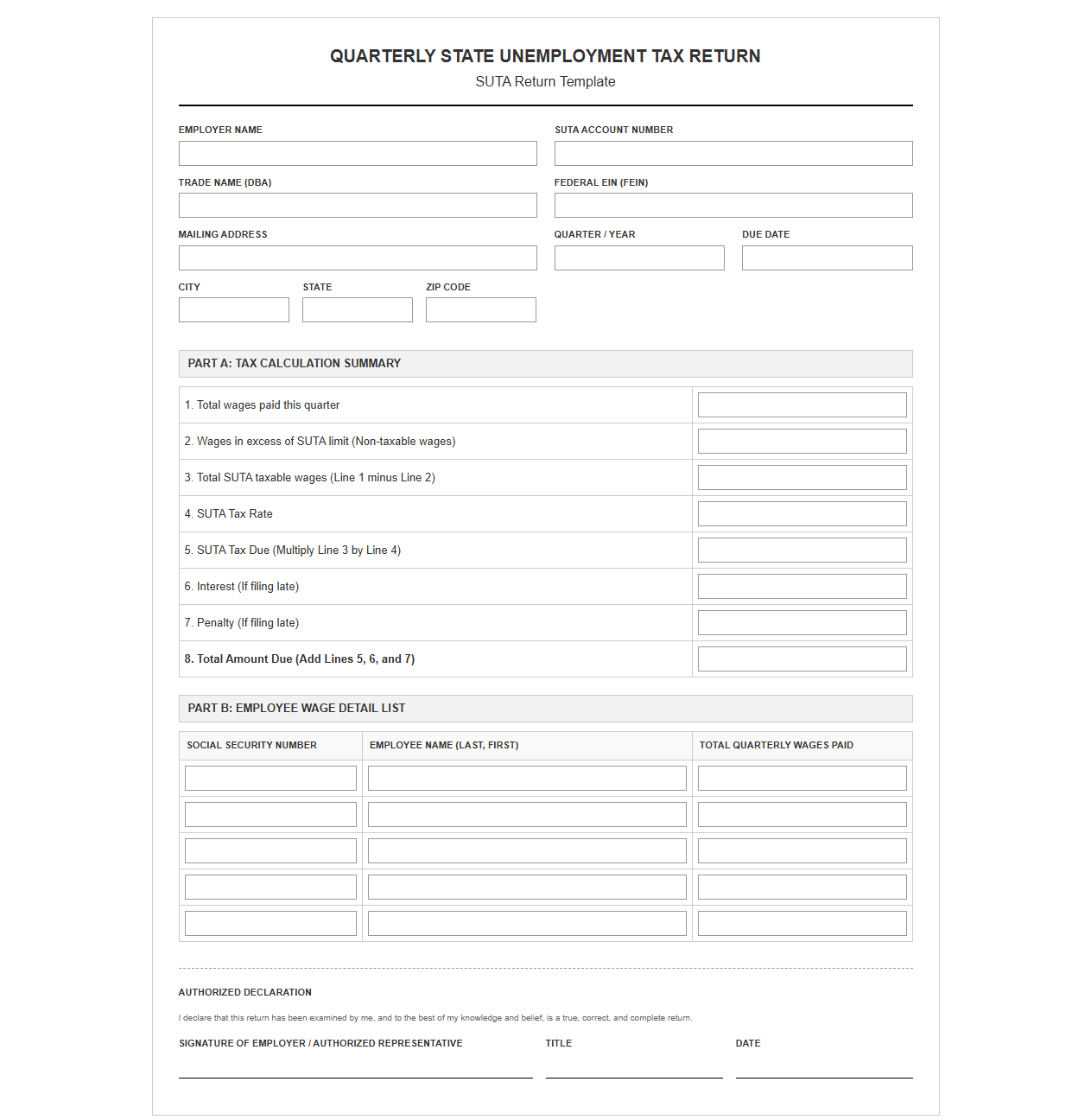
Quarterly SUTA Return Template
 Download: .PDF
Demystifying State Unemployment Tax Act (SUTA) Compliance
The State Unemployment Tax Act (SUTA) is a crucial piece of state-level legislation that requires employers to pay unemployment taxes on behalf of their employees. These taxes fund the state unemployment insurance programs, which provide temporary financial assistance to workers who have lost their jobs through no fault of their own. For employers, maintaining SUTA compliance is not just a legal obligation; it is a fundamental pillar of sound financial management. Failing to comply can result in severe penalties, increased tax rates, and legal action. SUTA compliance directly impacts business operations by influencing overall labor costs, cash flow planning, and corporate reputation.
The Role of Standardized Templates in Tax Filing
Managing tax filings across multiple jurisdictions can quickly become overwhelming for payroll departments. Utilizing standardized templates is a highly effective strategy for simplifying this complex administrative process. By using a uniform structure, businesses can significantly reduce manual data entry mistakes, which are a primary source of filing errors. Furthermore, standardized templates save valuable administrative time by streamlining the preparation phase and ensuring a consistent approach to data organization. This level of consistency is particularly valuable when reconciling payroll data against varying state-specific tax regulations, enabling teams to work with greater speed and confidence.
Essential Data Fields for Accurate SUTA Reporting
To ensure a SUTA filing is accepted without delay, employers must accurately complete several core data fields. Standardized templates must be configured to capture these key metrics in a clear, structured manner. The fundamental reporting requirements typically include:
- Employer Identification Details: This encompasses the legal business name, physical address, and the unique State Employer Account Number (SEAN) assigned by the state agency.
- Total Subject Wages: The gross compensation paid to all employees within the reporting quarter before any deductions or tax exclusions.
- Taxable Wages: The portion of wages subject to the SUTA tax, calculated by applying each state's specific annual taxable wage base limit per employee.
- SUTA Contribution Rate: The unique tax rate assigned to the business by the state, which is determined by the industry standard and the employer's historical experience rating.
Common Pitfalls in State Unemployment Tax Submissions
Despite best intentions, many employers encounter significant roadblocks when preparing their SUTA returns. Knowing where these mistakes occur allows businesses to build preventative measures directly into their filing workflows. Some of the most common pitfalls include:
- Worker Misclassification: Erroneously labeling a regular employee as an independent contractor, which leads to underreported wages and severe state penalties.
- Miscalculating the Taxable Wage Base: Applying the wrong wage cap limit, which often results in overpaying or underpaying taxes since these limits vary drastically by state and change annually.
- Late Submissions: Missing state-specific quarterly deadlines due to inefficient, manual tracking methods.
Utilizing pre-formatted templates acts as an immediate safeguard against these errors by requiring validation checks on employee statuses and automatically separating taxable wages from total gross compensation before submission.
Integrating Templates with Modern Payroll Software
The true power of standardized tax templates is unlocked when they are integrated directly with modern payroll software. Instead of manually copying numbers from one sheet to another, database administrators can map template fields directly to payroll database columns. For example, database queries can target fields like employee_id, quarterly_gross_earnings, and state_tax_id to pull live data into the reporting document automatically. This automated data extraction eliminates human transposition errors and allows payroll teams to generate audit-ready SUTA reports in a fraction of the time.
Managing Multi-State Unemployment Tax Challenges
For organizations with a distributed workforce, managing SUTA across state lines introduces unique challenges. Each state maintains its own tax rates, filing deadlines, and wage bases. To navigate this complexity, employers must adapt their standardized templates to accommodate varying state guidelines. The table below illustrates how key SUTA parameters can differ significantly between states during a tax year:
| State Jurisdiction | Annual Taxable Wage Base | New Employer Minimum Rate | Filing Frequency |
|---|---|---|---|
| State A | $10,000 | 2.7% | Quarterly |
| State B | $34,000 | 1.8% | Quarterly |
| State C | $68,500 | 3.0% | Quarterly |
Best Practices for Continuous SUTA Compliance and Auditing
Proactive management is the most effective defense against compliance issues. Employers should establish a routine schedule to review and update all tax templates, ensuring they reflect current state regulations and newly assigned contribution rates. Conducting regular internal payroll audits helps catch discrepancies in employee classification and wage calculations before official quarterly submissions are made. Keeping ahead of changing state tax laws ensures your business avoids unexpected penalties and enjoys smooth financial operations year-round.

Leave a comment