

Navigating the complexities of multi-state sales tax compliance is a constant source of anxiety for growing businesses, often resulting in costly filing errors, penalties, and audit vulnerabilities. Before addressing how to resolve these mistakes, we must recognize that the shifting landscape of state-by-state tax laws makes manual data entry highly risky. Fortunately, implementing comprehensive sales tax return templates grants your finance team immediate operational control and peace of mind by establishing a standardized, repeatable calculation process.
However, it is important to stipulate that while these templates are highly effective tools for organizing data and reducing human error, they are designed to support-not replace-final professional review. For example, a robust template can quickly flag discrepancies in tricky areas like Colorado's unique retail delivery fees or local-level destination sourcing rules before they reach state portals.
In this article, we will examine the root causes of common filing discrepancies, demonstrate how structured templates mitigate compliance risk, and outline a step-by-step workflow to streamline your monthly return process.
State Sales Tax Return Template
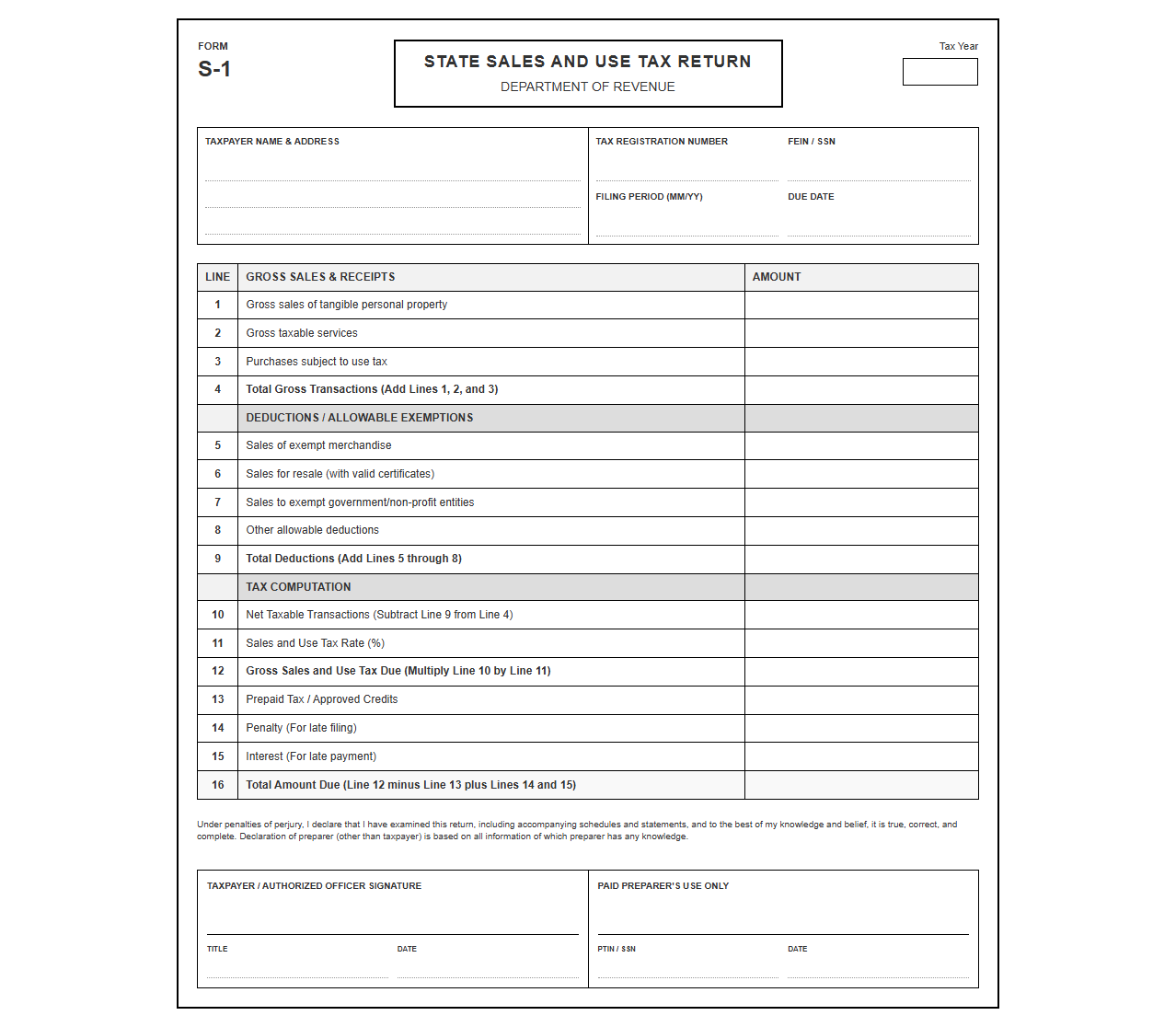 Download: .PDF
Monthly State Sales Tax Filing Form
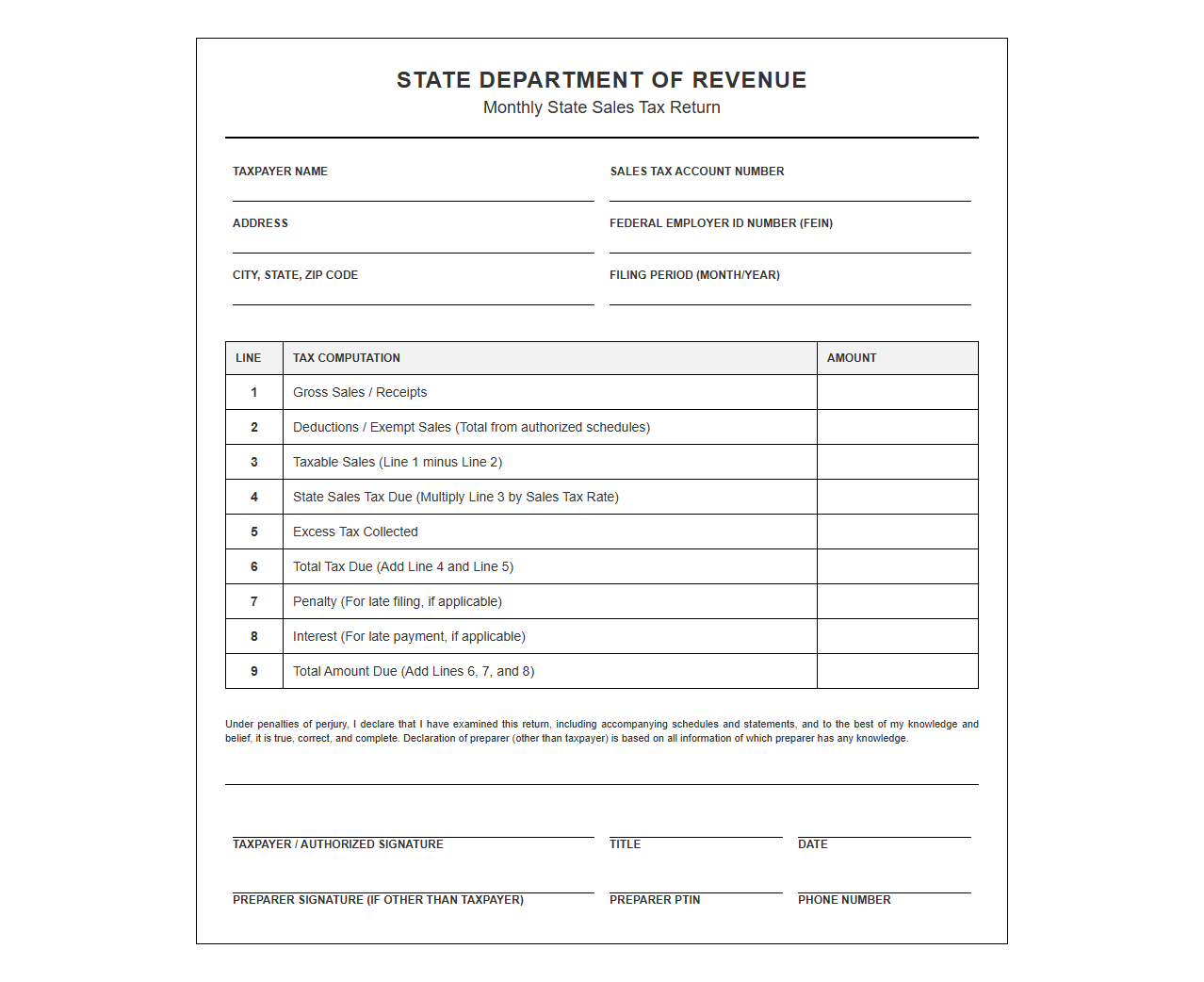 Download: .PDF
Quarterly State Sales Tax Return Worksheet
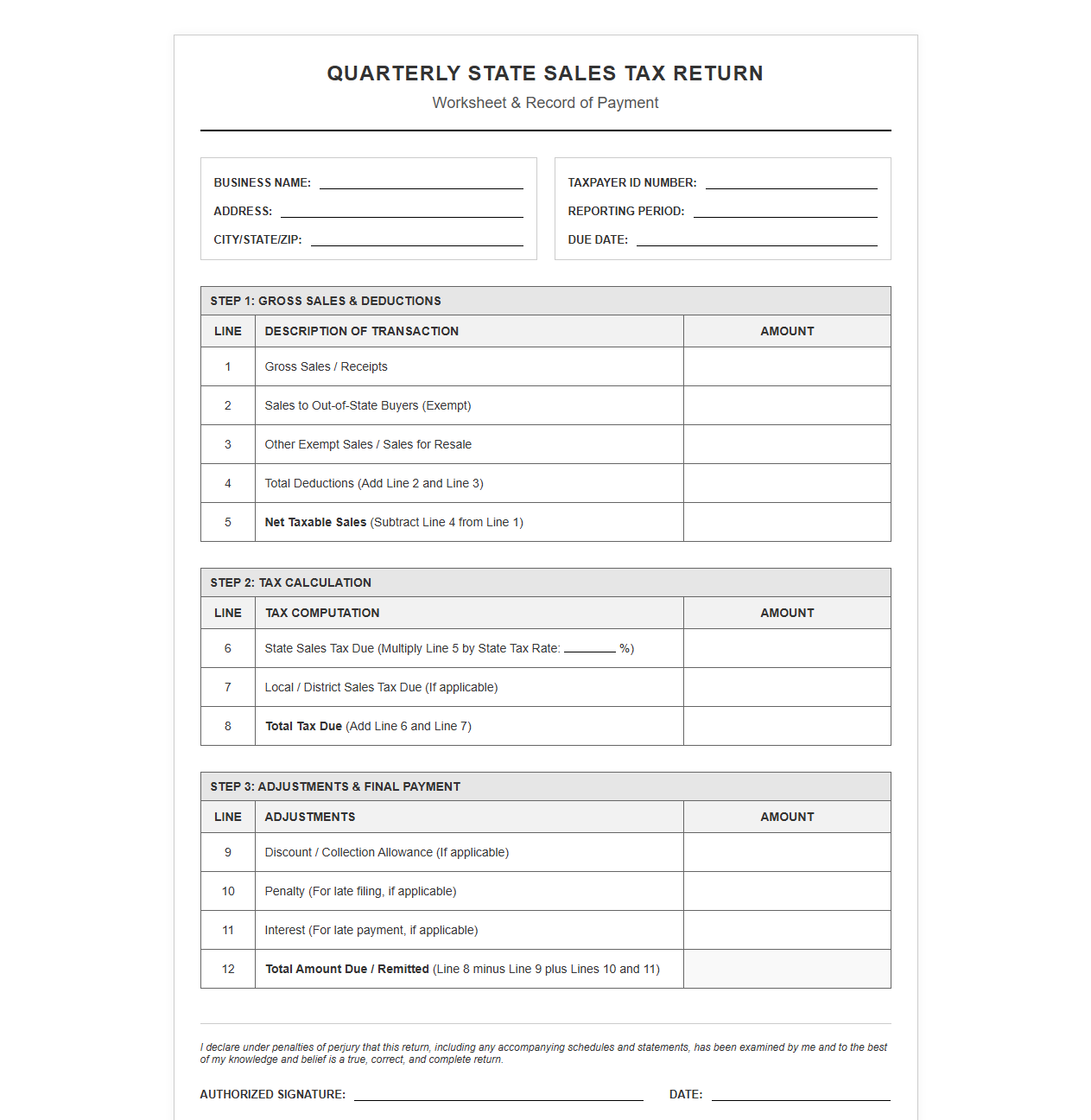 Download: .PDF
State Sales Tax Reporting Template
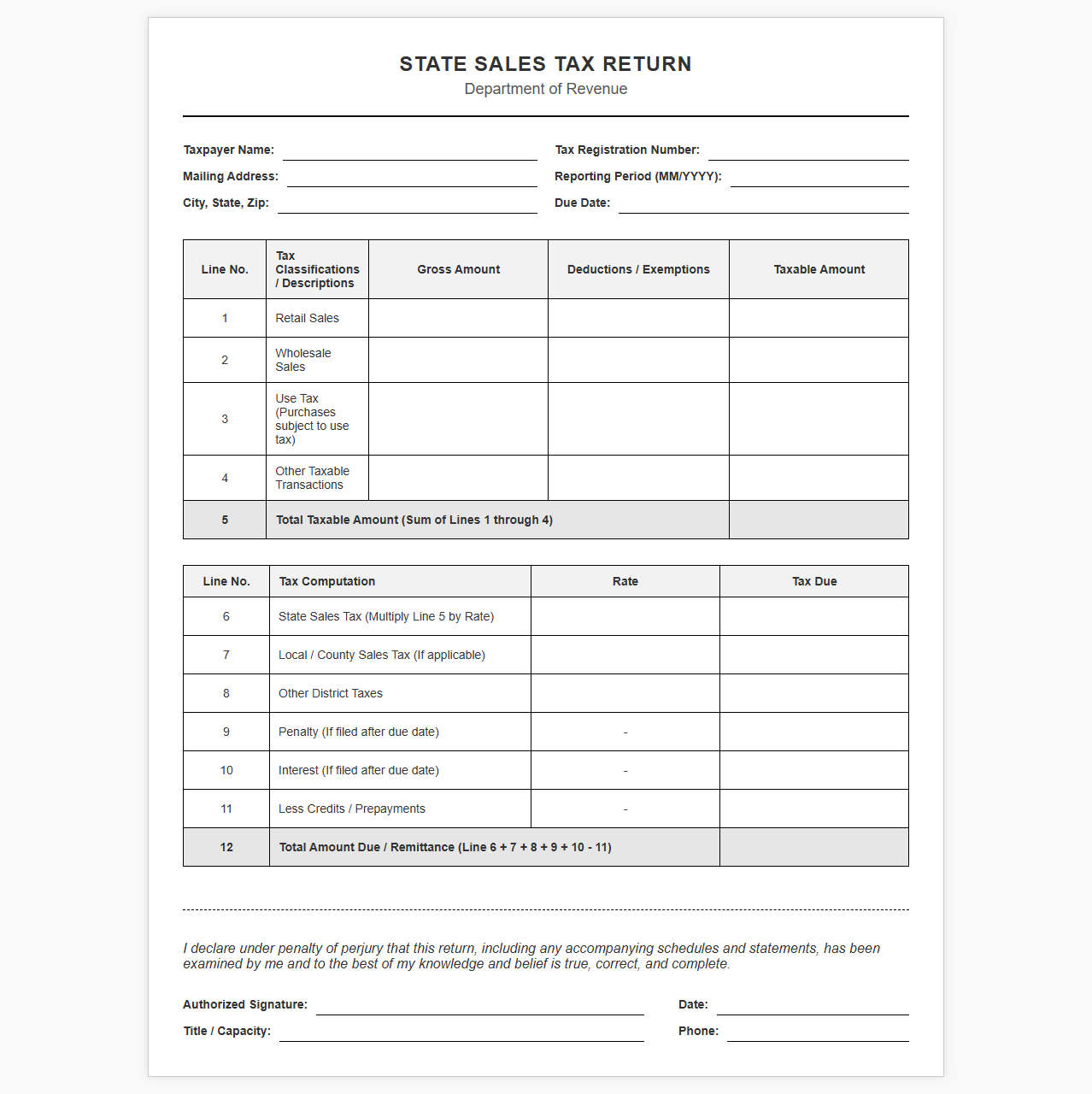 Download: .PDF
Annual Sales Tax Return Template for States
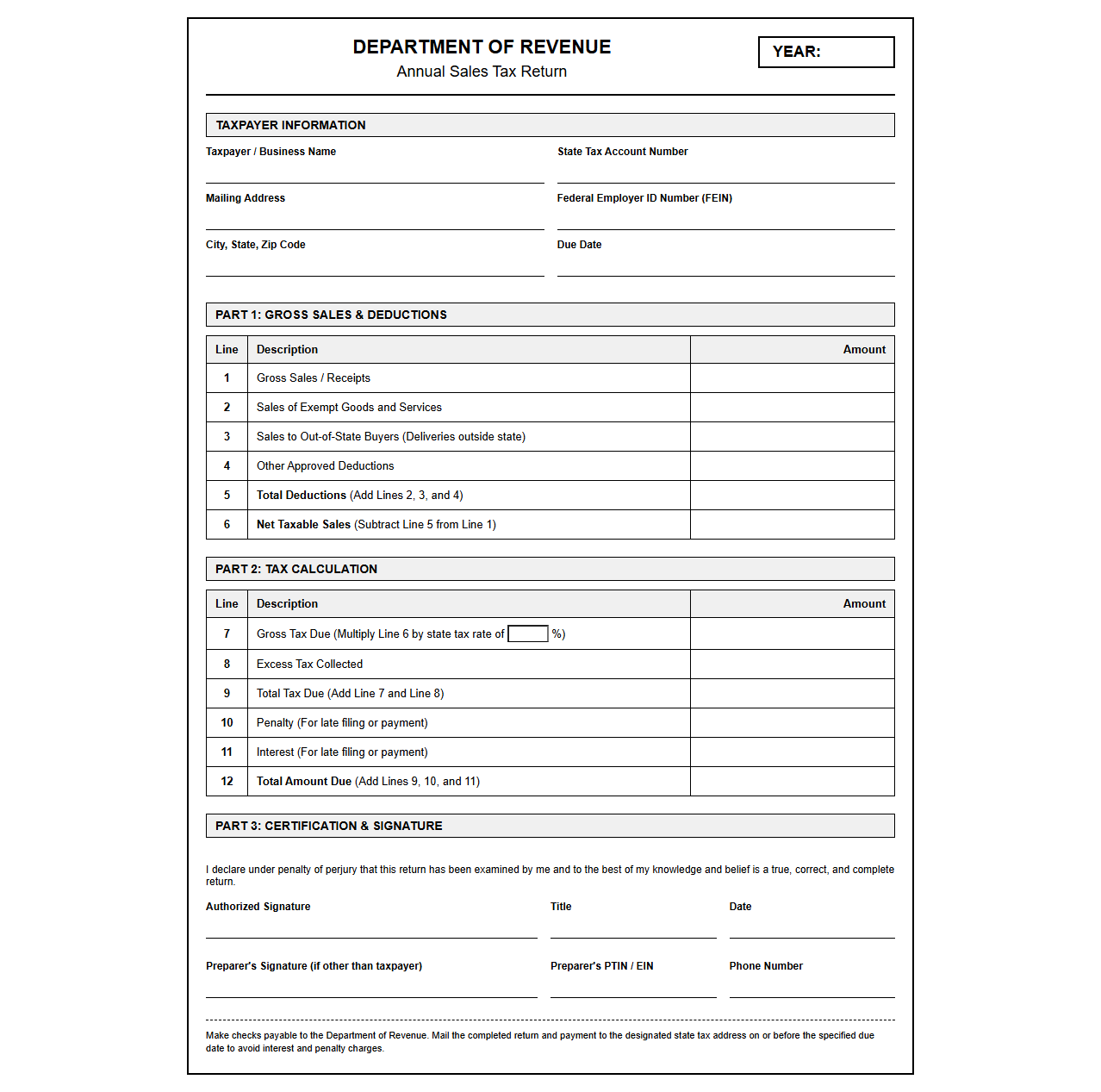 Download: .PDF
State Sales and Use Tax Return Template
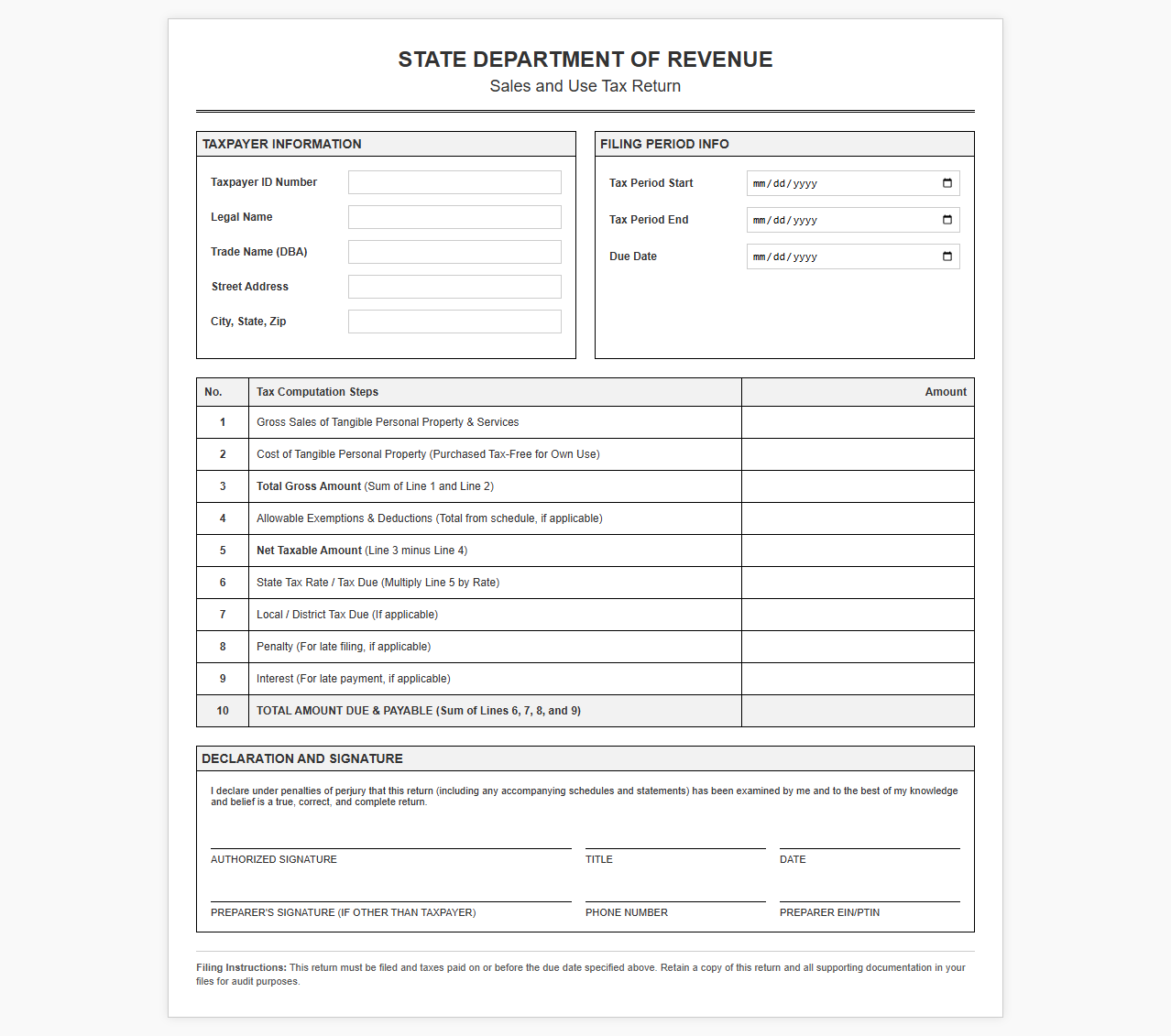 Download: .PDF
Standard State Sales Tax Return Form
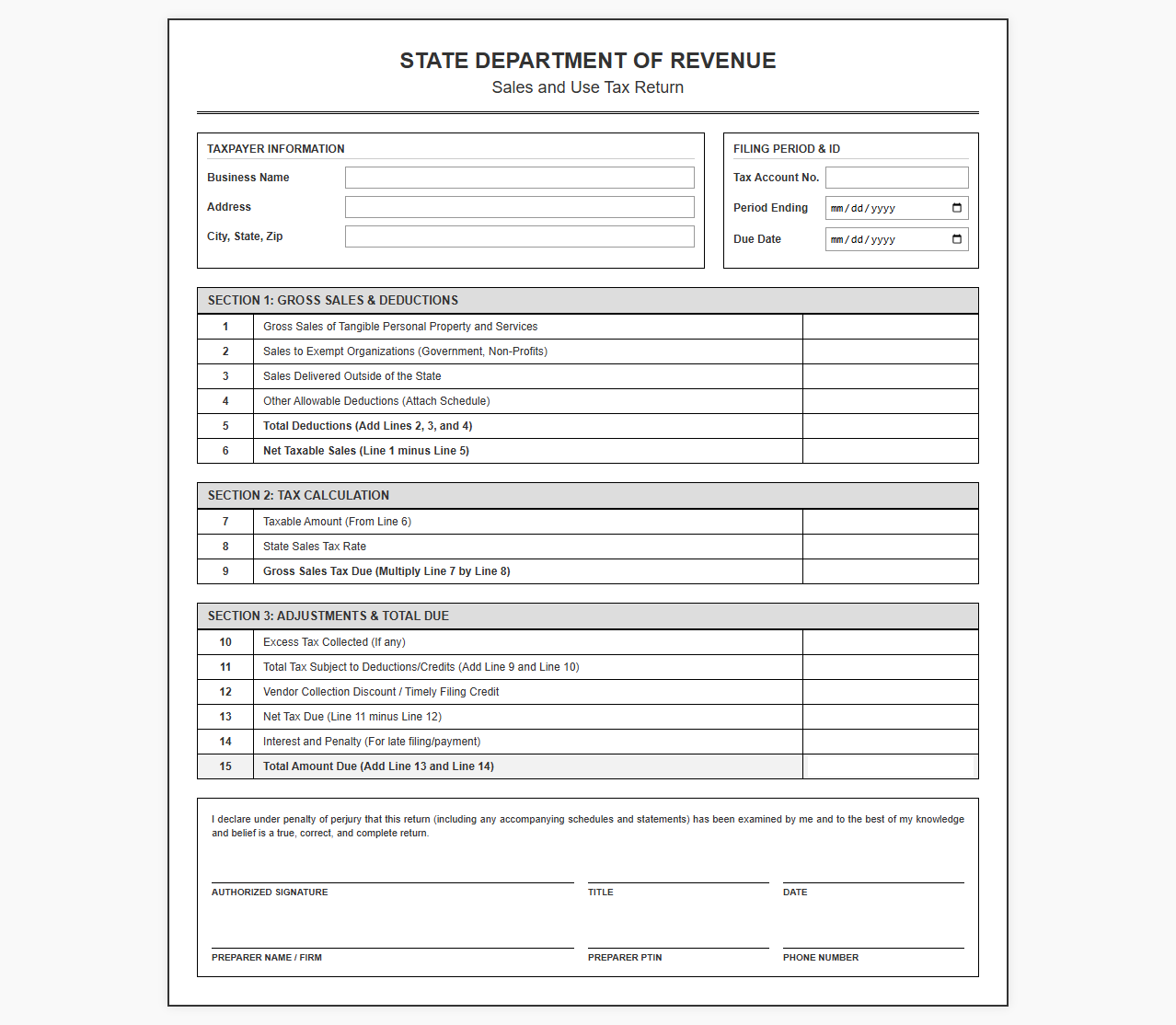 Download: .PDF
Multi-State Sales Tax Return Template
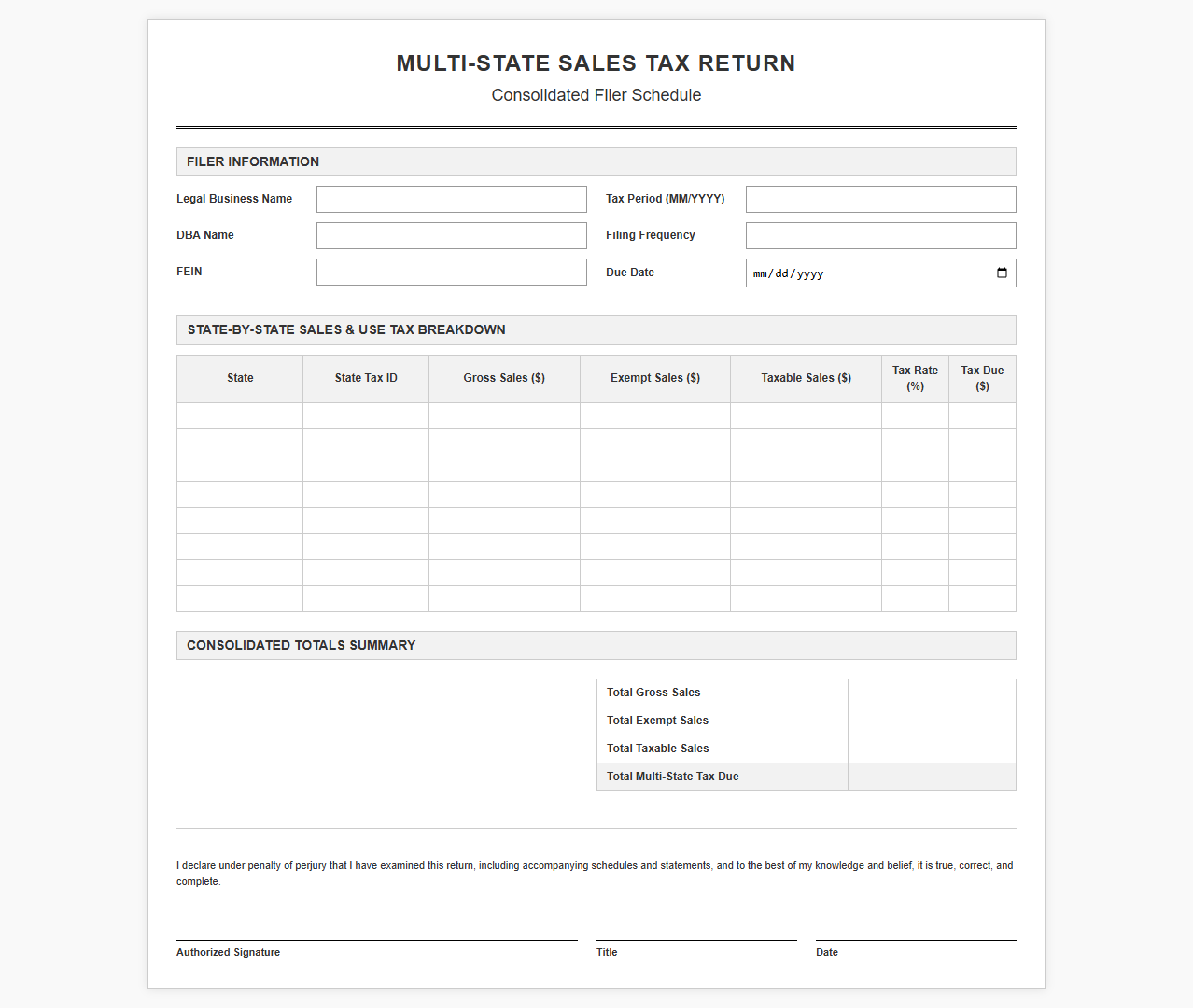 Download: .PDF
State Sales Tax Declaration Template
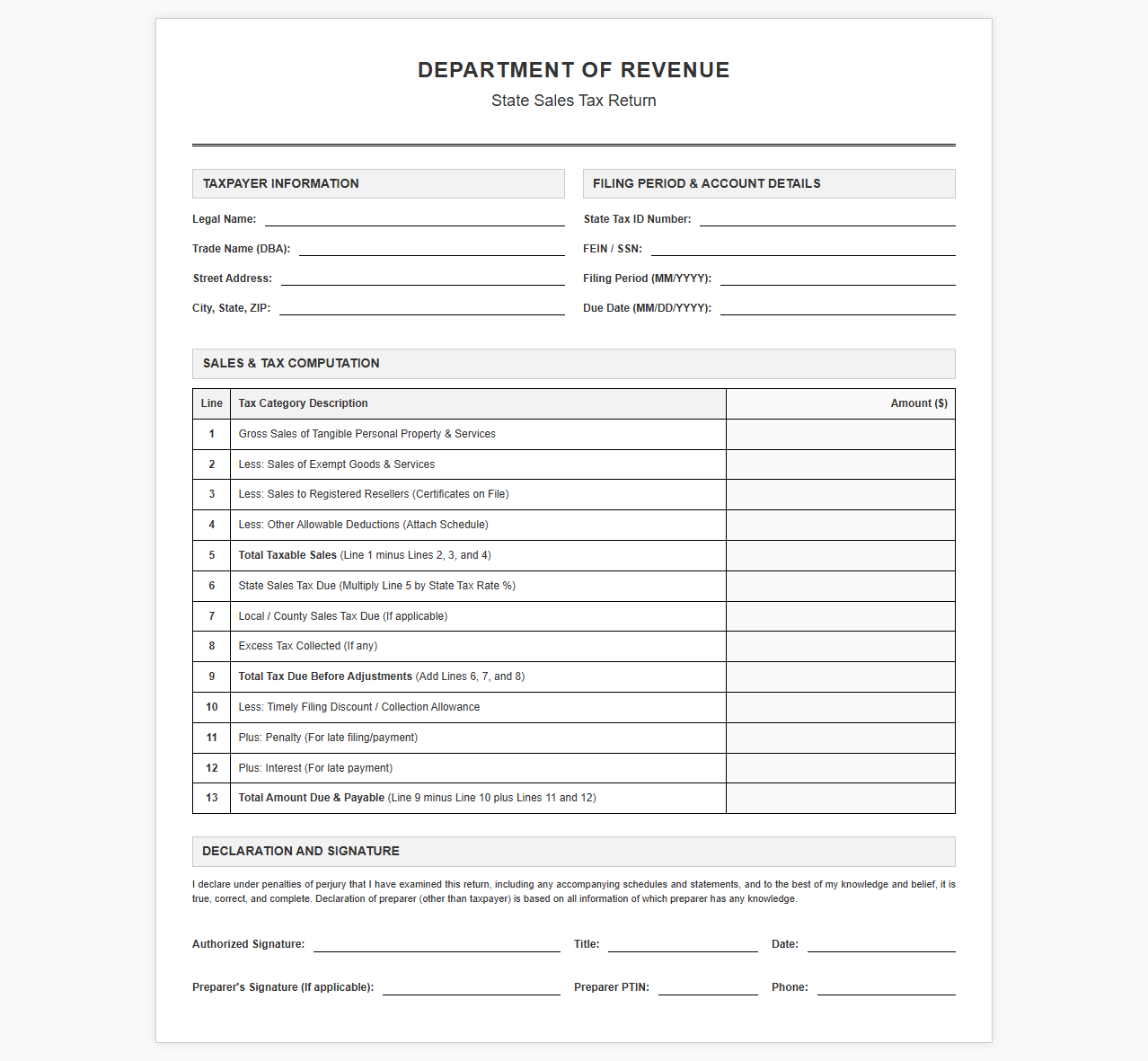 Download: .PDF
The Costly Reality of Sales Tax Filing Errors
For growing businesses, managing transactional compliance can quickly become an administrative nightmare. Simple oversight during the filing process often leads to catastrophic financial consequences. Sales tax filing errors are remarkably common, stemming from manual data entry mistakes, overlooked jurisdiction changes, and miscalculated rates.
These seemingly minor slip-ups carry substantial financial risks. Businesses face severe penalties, compounding interest, and the dreaded prospect of state audits that drain both time and capital. Fortunately, implementing structured templates provides a robust defense system, safeguarding your bottom line by bringing order to chaotic financial data.
Navigating Divergent State Sales Tax Regulations
The Fragmented Landscape of Multi-State Tax Compliance
Operating across state lines exposes businesses to a complex web of conflicting laws. No two states treat sales tax identically, creating a significant hurdle for expanding enterprises. Filing frequencies can range from monthly to annually, often shifting based on a company's sales volume within that specific state.
Deduction Anomalies and Deadlines
Furthermore, deduction rules vary widely. What is exempt in one state may be fully taxable in another. Deadline structures also differ, with some states requiring payment by the 20th of the month, while others extend the grace period to the final day, making synchronization nearly impossible without a centralized tracking mechanism.
Simplifying Compliance with Comprehensive Templates
A comprehensive state sales tax return template is a highly structured, reusable framework designed to organize transactional data into tax-ready formats. By consolidating disparate sales channels into a unified system, these tools eliminate the guesswork associated with multi-state filing.
Effective templates include several key components that streamline the entire process:
- Automated calculation engines that instantly compute tax liabilities based on pre-configured state formulas.
- Standardized data fields that align perfectly with the inputs required by state department of revenue portals.
- Jurisdiction mapping tools that accurately assign transactions to local, county, and state levels.
Diagnostic Check: Common Errors Templates Resolve
Eliminating Math Discrepancies
Manual calculations are highly susceptible to human error. Templates resolve this issue by locking formula fields, ensuring that gross sales, deductions, and taxable sales always reconcile perfectly. This eliminates math discrepancies that instantly trigger automated red flags at state tax agencies.
Resolving Jurisdictional Misallocations
Sellers often struggle with jurisdictional misallocations, assigning tax revenue to the wrong local district. Templates map zip codes to specific taxing districts, ensuring the right municipality receives the correct amount.
Securing Exemption Documentation
Failing to track missing exemption documentation can lead to massive liabilities during an audit. Templates flag non-taxable transactions that lack associated certificates, ensuring compliance is verified prior to submission.
Step-by-Step Guide to Deploying Tax Templates
- Extract Sales Data: Pull raw transactional reports from all your e-commerce platforms, ERPs, and point-of-sale systems.
- Map Fields: Align the extracted columns with the standardized fields in your tax template to ensure seamless data flow.
- Run Automated Checks: Allow the template to process calculations, flag missing exemption certificates, and categorize tax by state.
- Reconcile General Ledger: Match the calculated tax liabilities against the collected tax in your accounting system to catch variances.
- File and Remit: Use the aggregated data from the template to quickly populate state returns and finalize your payments.
Keeping Your Sales Tax Templates Audit-Ready and Updated
Tax regulations are never static. States frequently adjust their tax boundaries, pass new legislative exemptions, and alter economic nexus thresholds. Relying on an outdated template can be just as risky as using no template at all, leading to under-collected or over-collected taxes.
Continuous maintenance of your sales tax templates is essential to ensure they align with the real-time legislative landscape of every state where you have nexus.
Establishing a routine review schedule-ideally on a quarterly basis-guarantees that your automated formulas account for the newest rate changes, keeping your business audit-ready year-round.
Achieving Frictionless Sales Tax Compliance
Transitioning from manual workflows to structured templates transforms sales tax from a recurring headache into a streamlined, predictable process. By reducing errors, ensuring accurate calculations, and minimizing audit exposure, these templates protect your hard-earned revenue.
Embracing a proactive approach to tax management is key to long-term operational success. Taking control of your data today ensures your business remains resilient, compliant, and ready for future growth without the burden of unexpected penalties.

Leave a comment