

Recovering bad debt remains a persistent, resource-draining struggle for finance departments seeking to protect their cash flow. Before collections can begin, however, organizations must bridge the gap between ledger write-offs and enforceable recovery actions. Utilizing standardized impaired account statement templates grants teams the structure needed to accelerate disputations and reclaim lost revenue.
While these templates are not a substitute for formal legal representation in complex insolvency cases, they provide an essential, standardized audit trail. For example, explicitly documenting a 90-day past-due invoice alongside accumulated interest ensures clear, undisputed communication with debtors. In this guide, we will examine how to deploy these templates effectively, streamline your collections workflow, and restore health to your balance sheet.
Impaired Account Statement Template
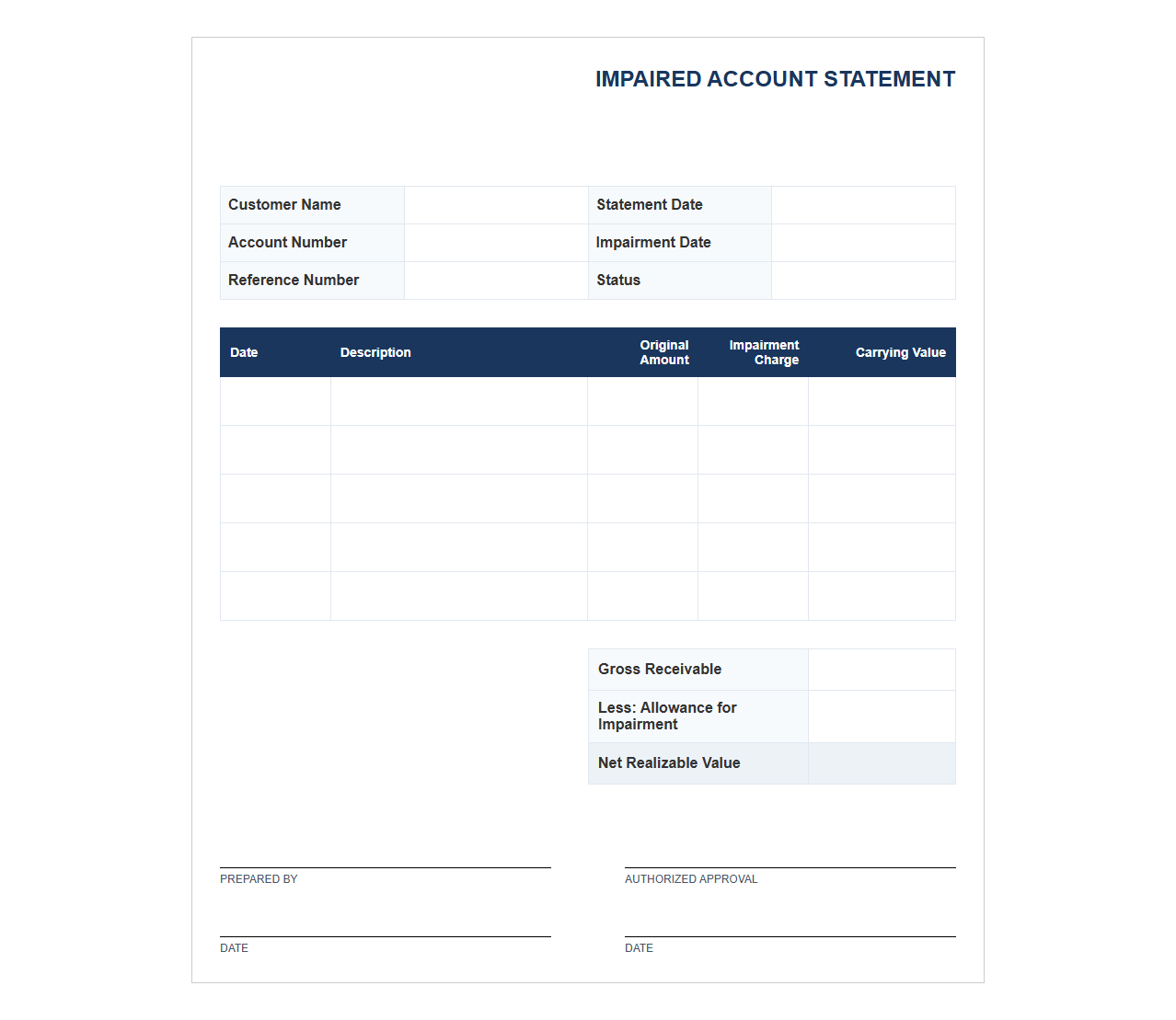 Download: .PDF
Non-Performing Account Balance Statement
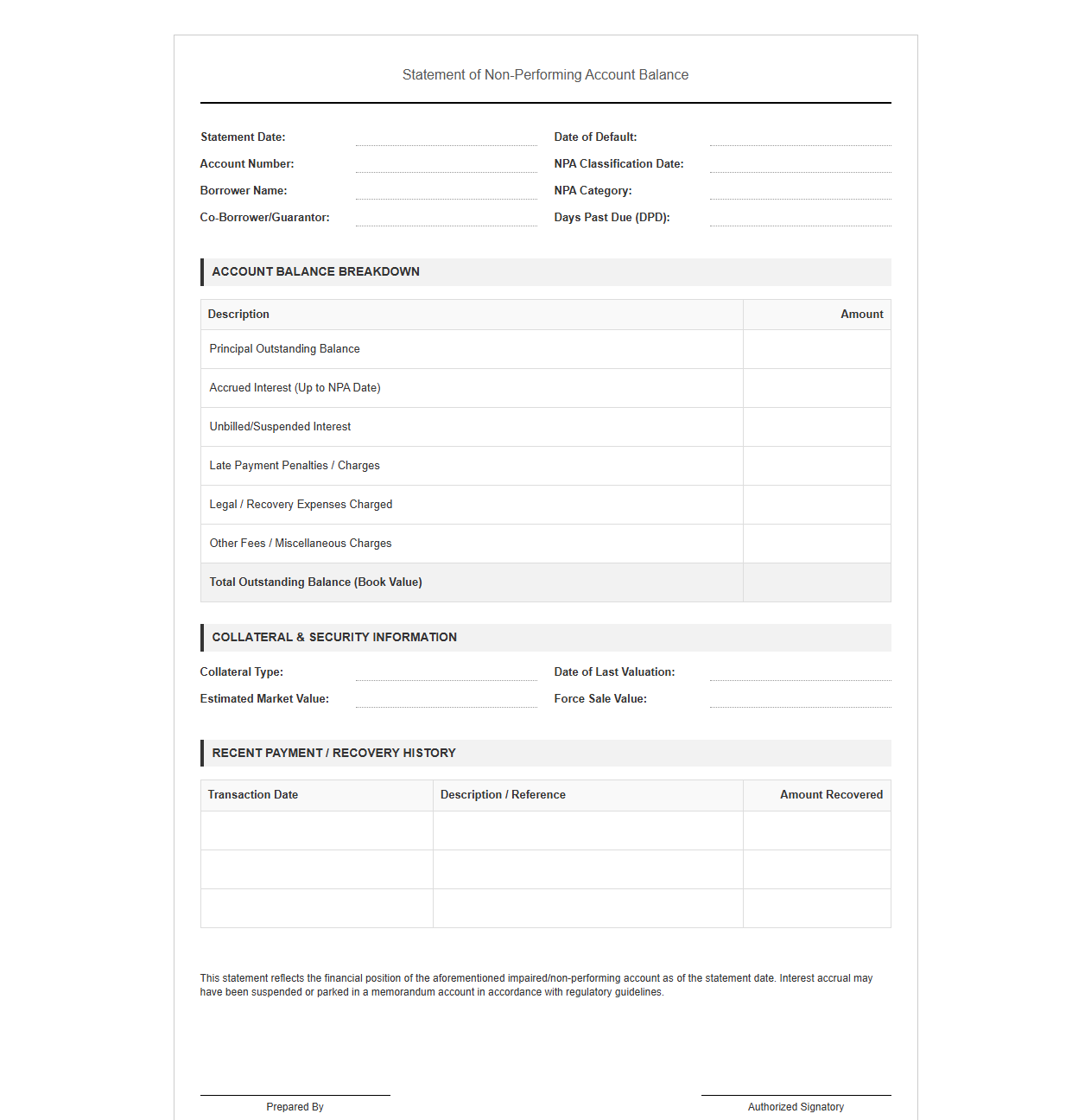 Download: .PDF
Delinquent Account Status Statement Template
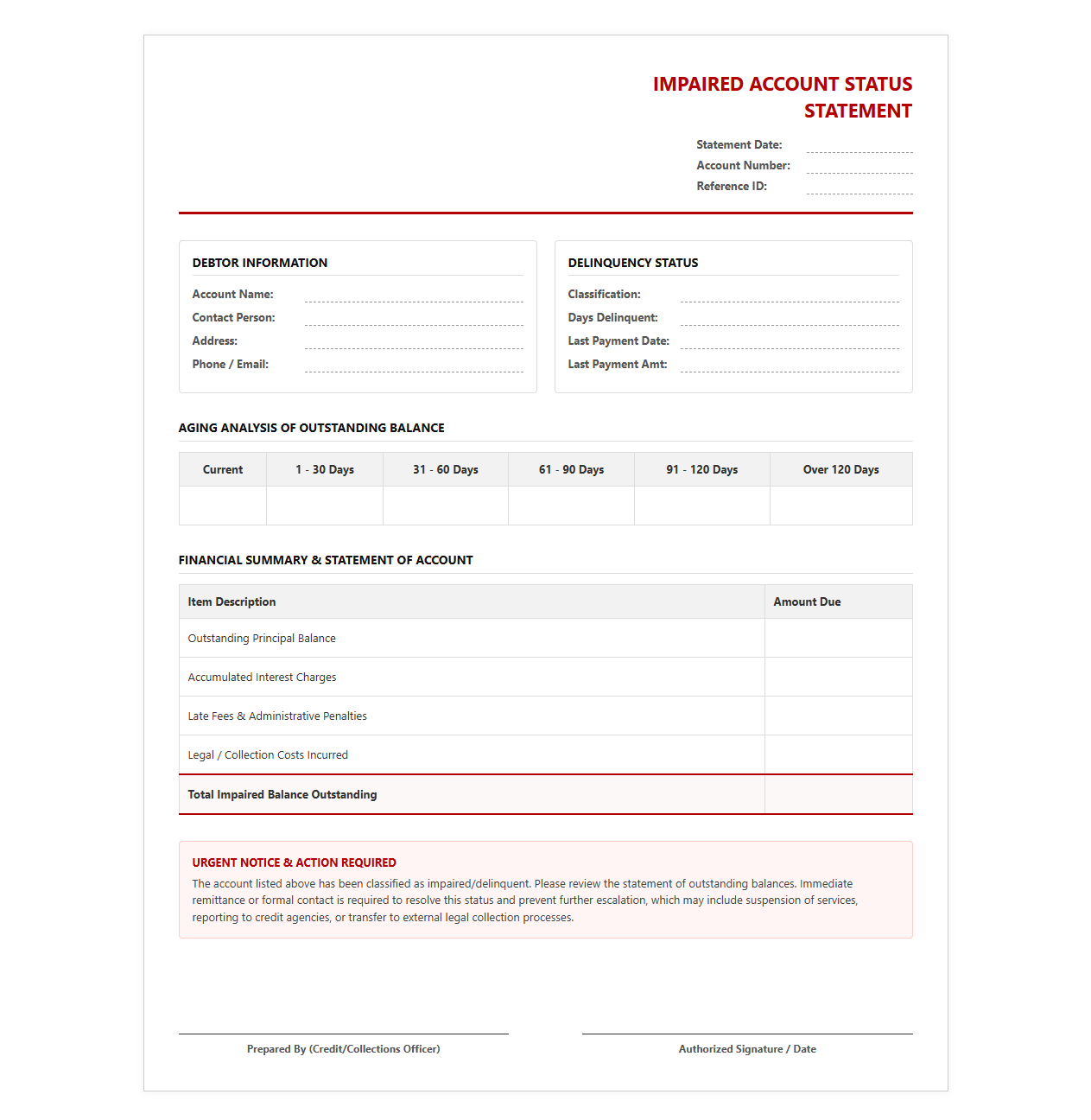 Download: .PDF
Statement of Account for Impaired Assets
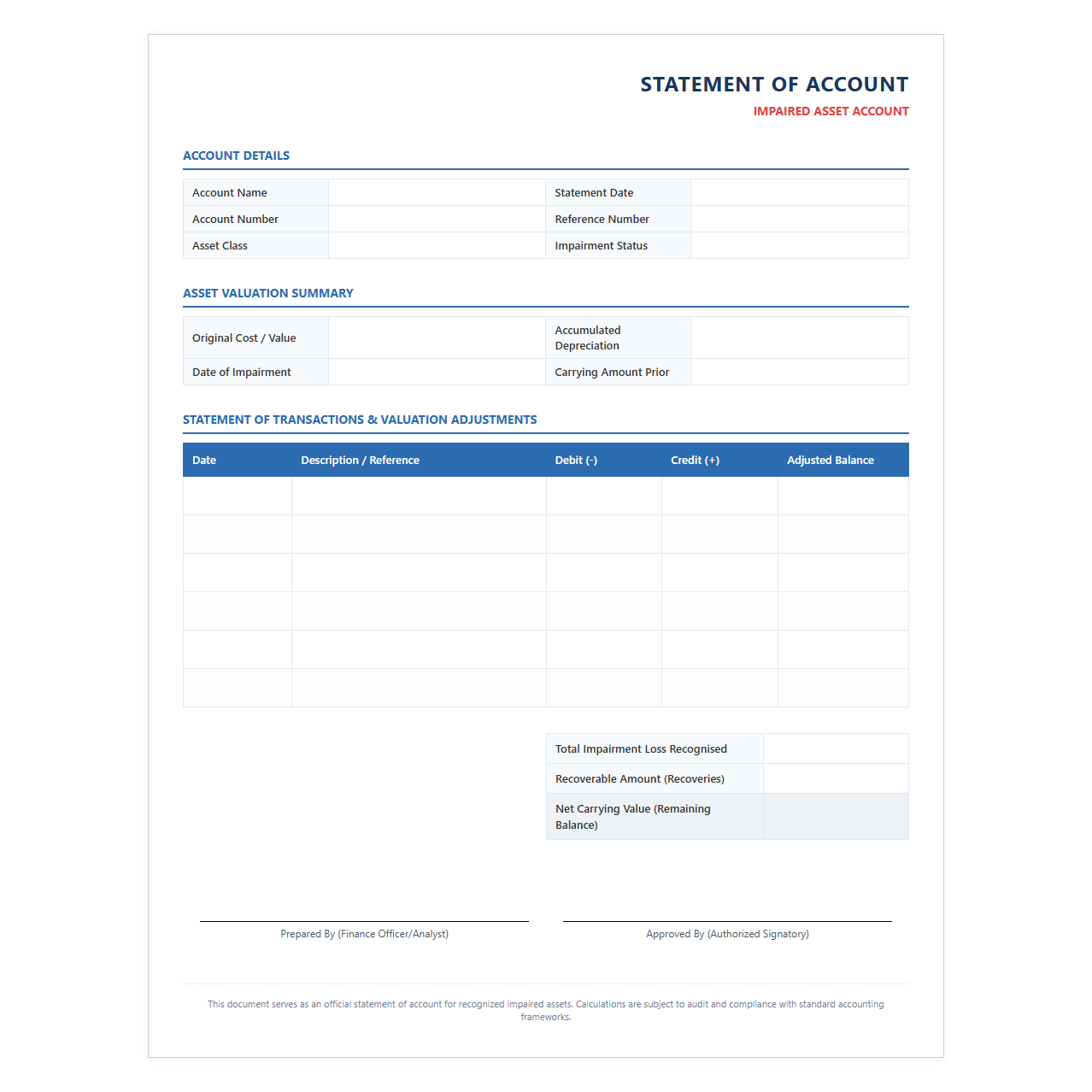 Download: .PDF
Credit Impaired Account Ledger Statement
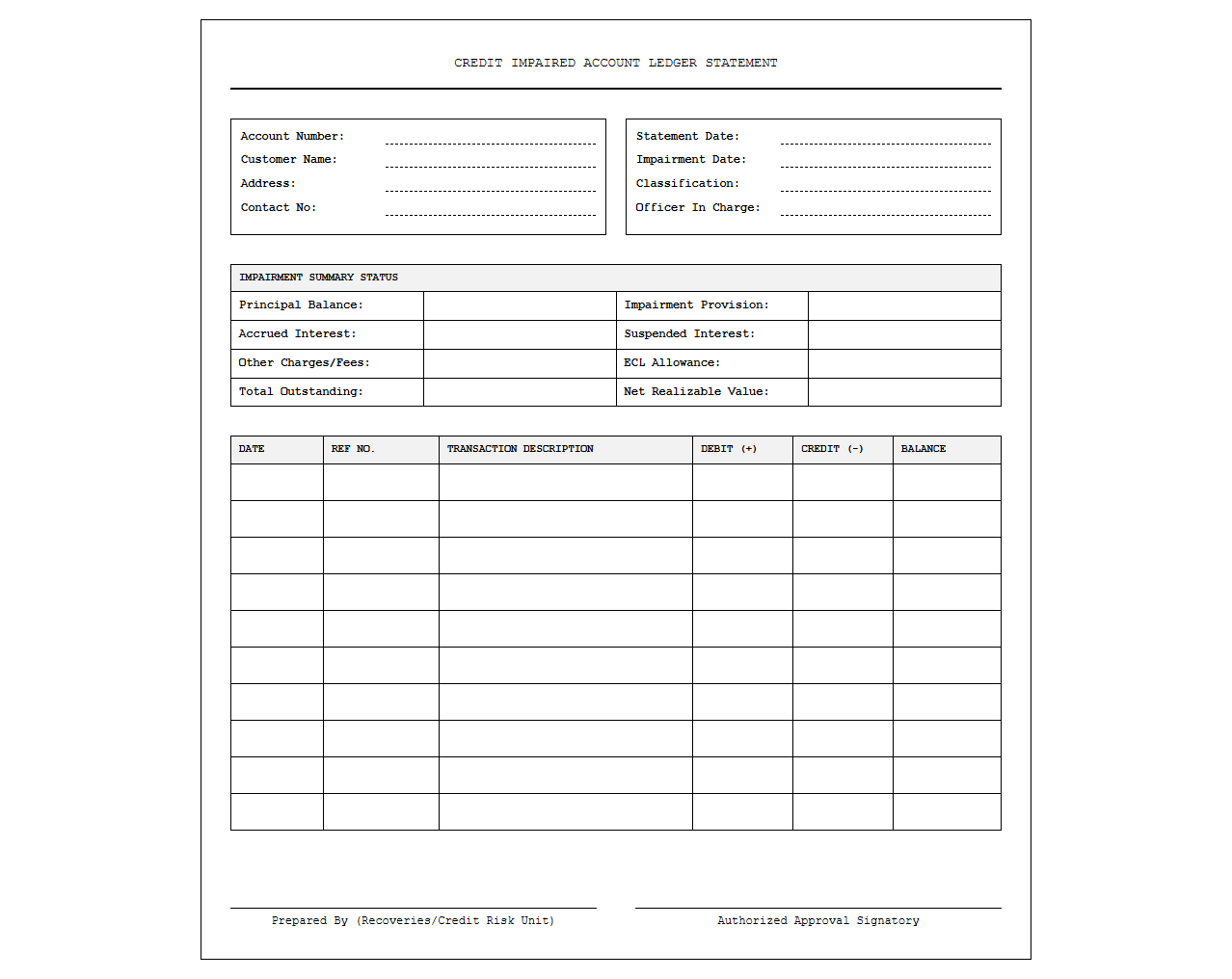 Download: .PDF
Defaulted Account Reconciliation Statement Template
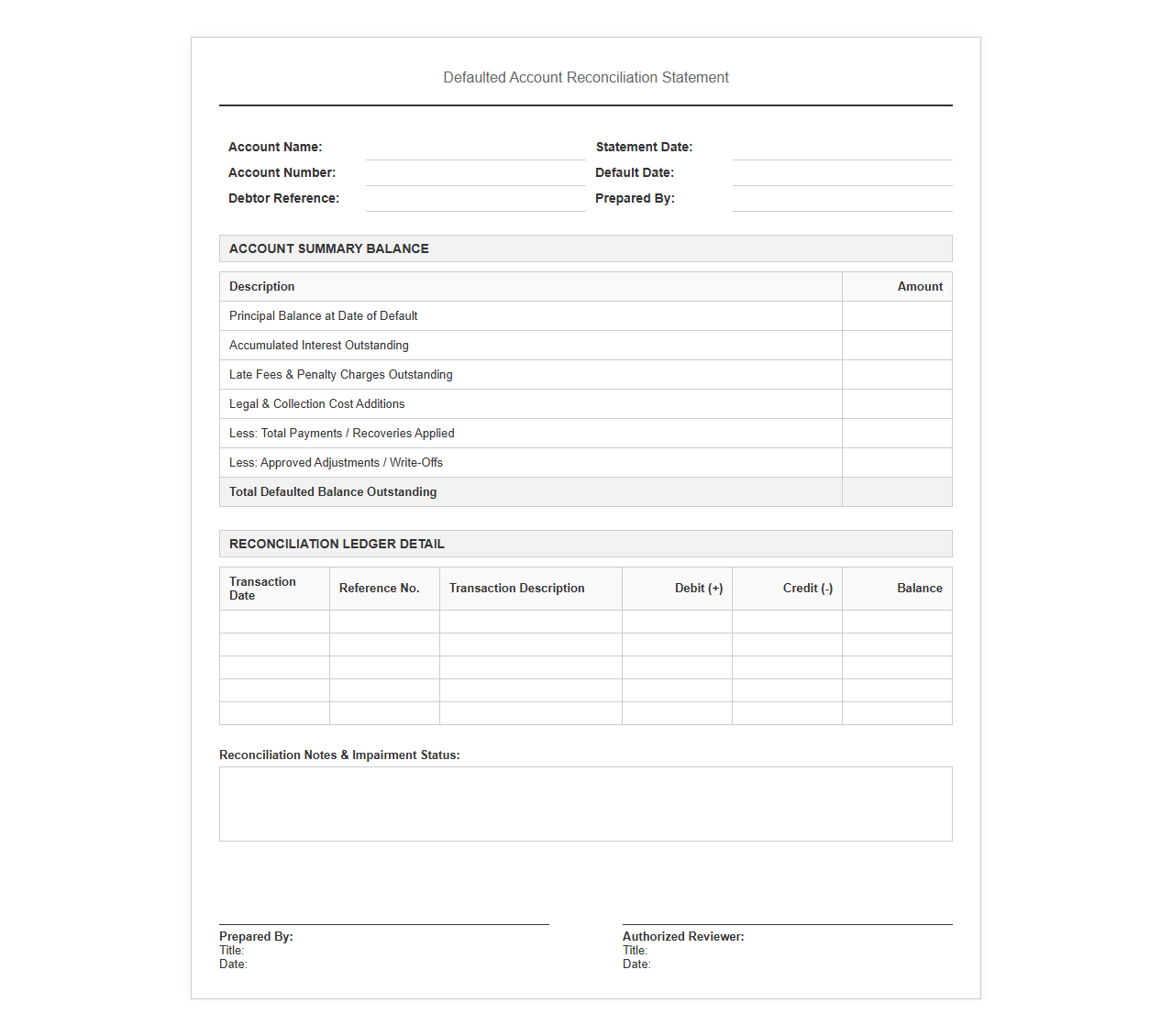 Download: .PDF
Impaired Loan Account Statement Format
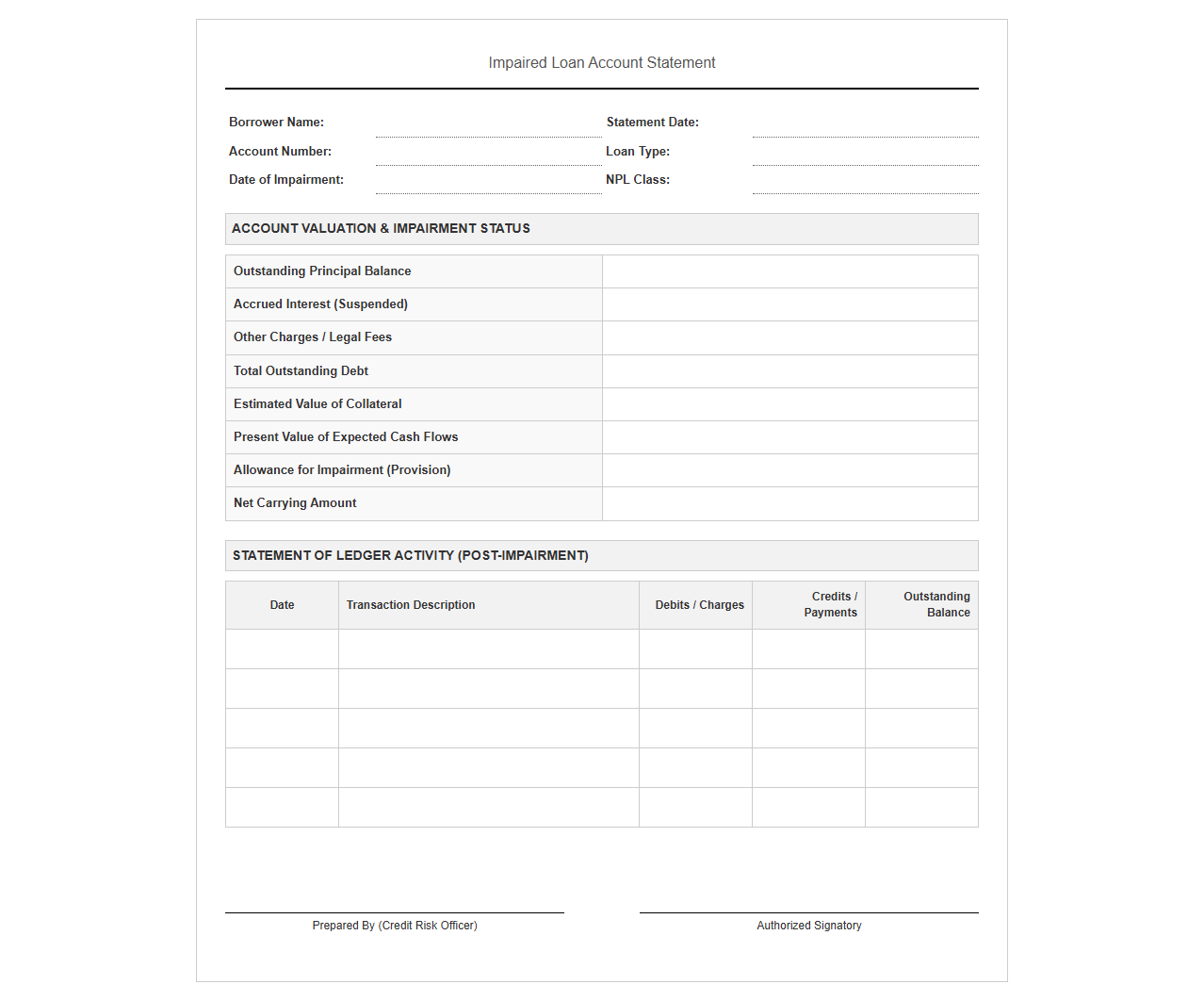 Download: .PDF
Provisioned Account Statement Template
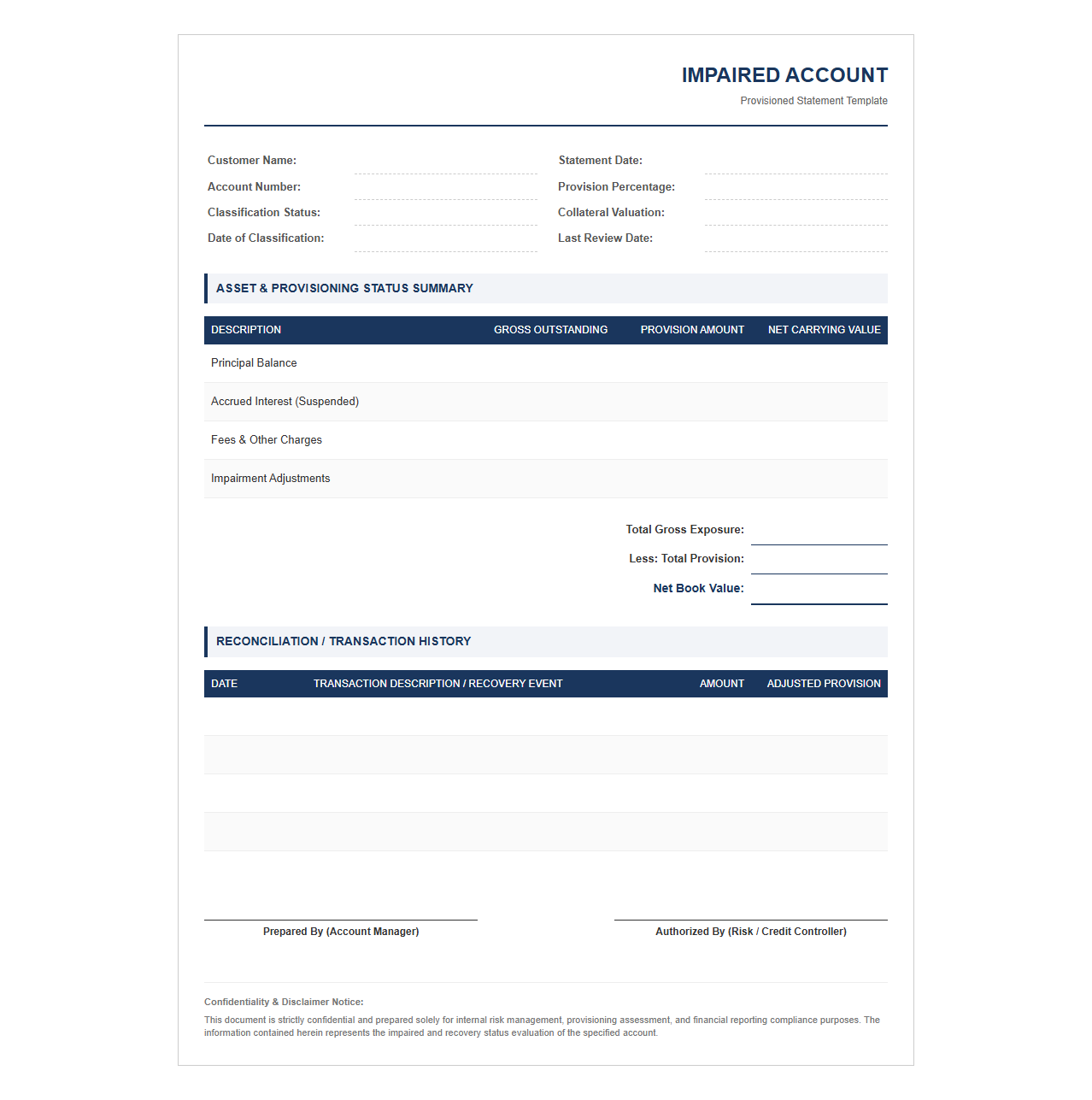 Download: .PDF
Introduction to Modern Bad Debt Recovery
Modern businesses face a constant struggle with cash flow disruption due to non-paying clients. Managing delinquent accounts requires a delicate balance of firmness and professionalism. To streamline this process, smart organizations are turning to impaired account statement templates as a strategic solution to standardize communication and recover outstanding revenue.
Understanding Impaired Accounts and Their Financial Impact
In financial accounting, an impaired account refers to a receivable where the creditor expects that they will be unable to collect all amounts due according to the original contractual terms. When these accounts remain unpaid, they transition into bad debt, directly hitting the company's bottom line. Unresolved impairments degrade liquidity, distort financial reporting, and reduce the capital available for operational growth.
The Power of Structured Statement Templates
Utilizing standardized, professional templates transforms the collections process by establishing a clear, authoritative channel of communication. Standardized formats eliminate ambiguity, reduce human error in billing calculations, and significantly accelerate dispute resolution by providing a clear paper trail.
Essential Components of an Impaired Account Template
An effective impaired account statement must present undeniable facts clearly. To ensure maximum clarity and legal viability, your templates should always include specific critical data points:
- Total outstanding balance and original invoice numbers
- Aging categories detailing the duration of delinquency (e.g., 30, 60, 90+ days)
- Original payment terms, interest calculations, and payment instructions
A Step-by-Step Workflow for Recovery
- Identify the impairment trigger when an invoice passes its due date by a predetermined grace period.
- Generate and dispatch the standardized impaired account statement template via email and certified mail.
- Initiate a courteous follow-up call to confirm receipt of the statement and discuss potential barriers to payment.
- Negotiate a structured settlement or installment plan if the debtor demonstrates genuine financial hardship.
- Escalate the account to a third-party collections agency or initiate legal proceedings if communication fails.
Ensuring Compliance and Legal Accuracy
Debt recovery is heavily regulated, and missteps can lead to severe penalties or the loss of legal recourse. Your templates must integrate strict adherence to fair debt collection practices and international data privacy standards to protect both your business and your clients.
"Compliance is not optional; debt recovery practices must respect consumer rights and maintain strict data security to ensure legal viability."
Best Practices for Long-Term Debt Minimization
Preventing future bad debt is far more cost-effective than recovering it. Businesses should automate template distribution, conduct regular credit checks on new clients, and maintain a rigorous follow-up calendar to keep accounts receivable healthy.
For inquiries on accounts receivable optimization:AR Solutions & Partners Group
100 Financial District, Suite 400
New York, NY 10005

Leave a comment