

Managing unearned revenue often feels like a high-stakes balancing act, where minor manual reporting errors can quickly snowball into significant compliance headaches during audit season. Before rushing to overhaul your accounting software, it is critical to first contextualize this challenge within the rigorous framework of modern revenue recognition standards, such as ASC 606 and IFRS 15.
Deploying structured deferred income statement templates grants finance teams immediate operational clarity, eliminating spreadsheet chaos while ensuring audit-readiness. As an educational stipulation, however, keep in mind that while these templates streamline standard deferrals-such as multi-year SaaS subscriptions or prepaid annual service contracts-they are tools to support, rather than fully replace, professional CPA oversight for complex transactions.
In this guide, we will break down the essential components of robust deferred revenue templates, outline best practices for implementation, and provide customizable frameworks to streamline your monthly closing cycle.
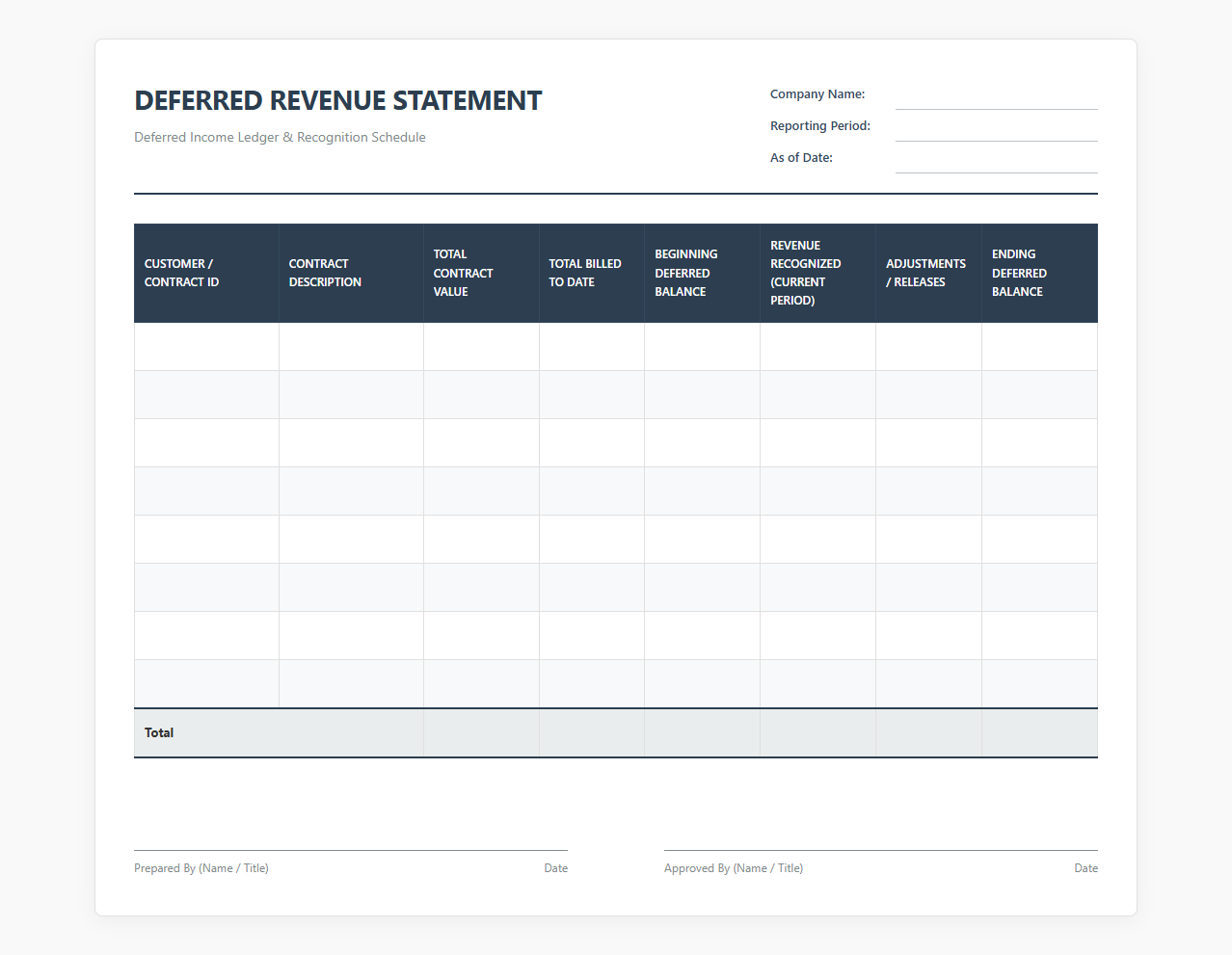
Deferred Revenue Statement Template
 Download: .PDF
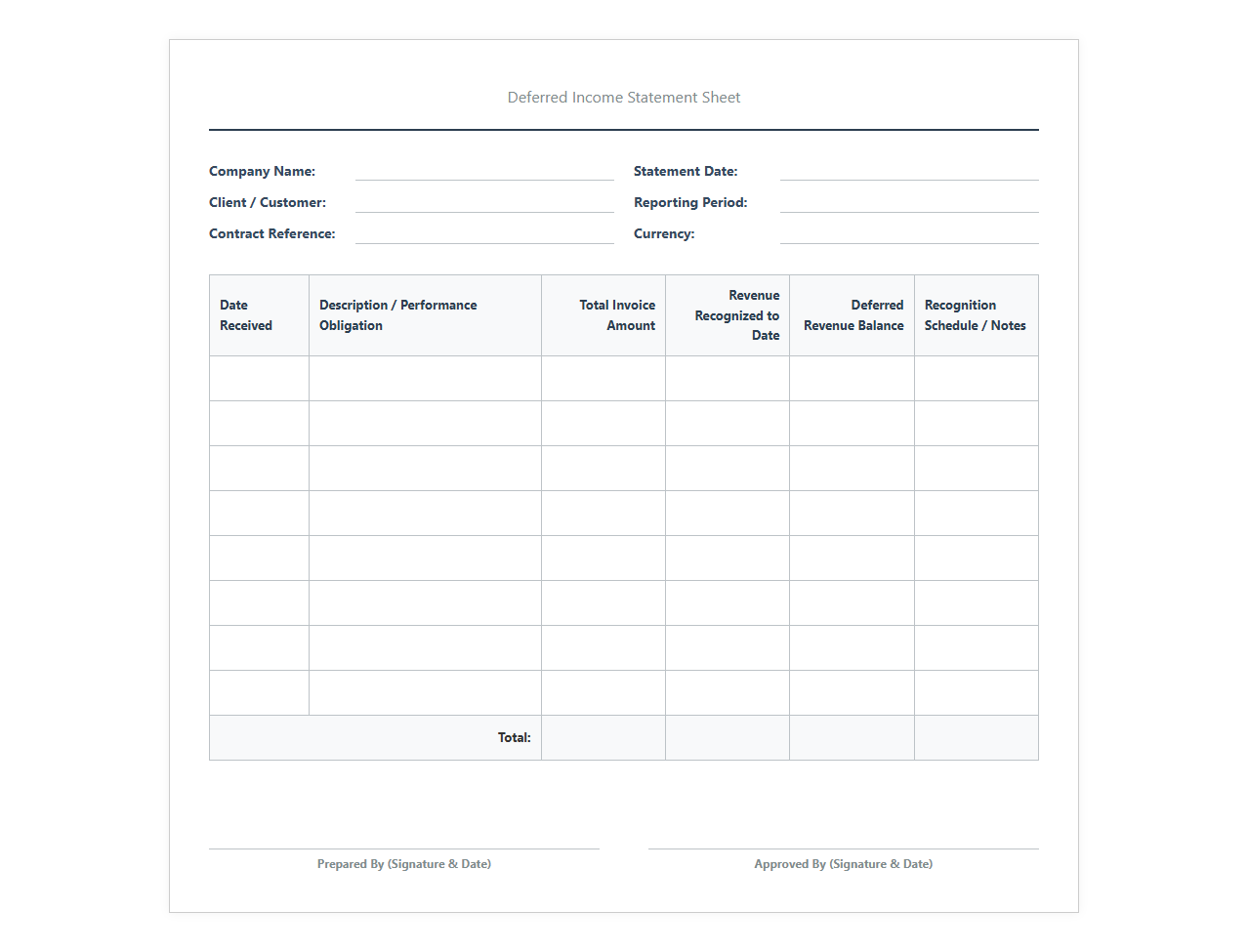
Unearned Income Statement Sheet
 Download: .PDF
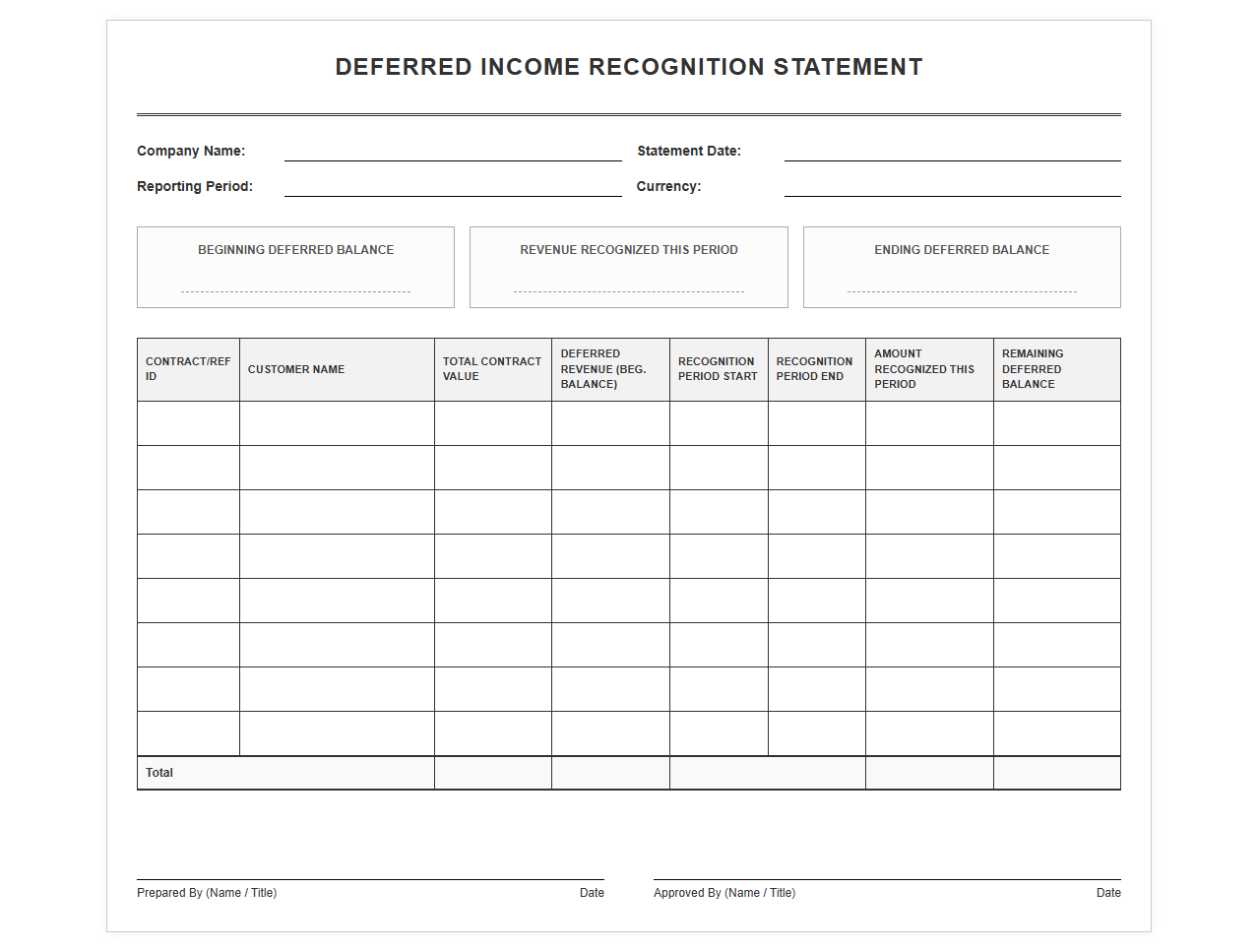
Deferred Income Recognition Template
 Download: .PDF
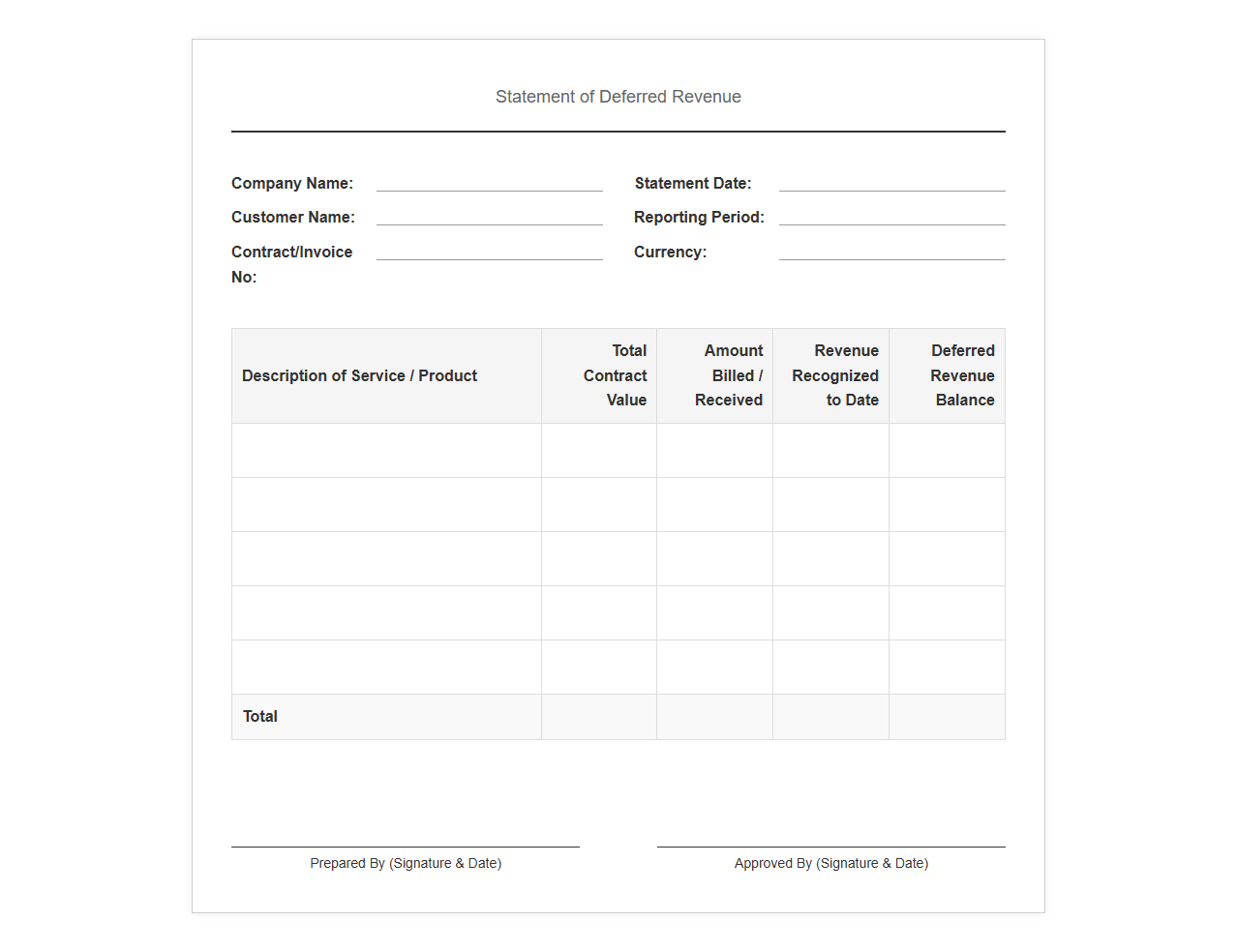
Statement of Deferred Revenue
 Download: .PDF
Unearned Revenue Accounting Statement
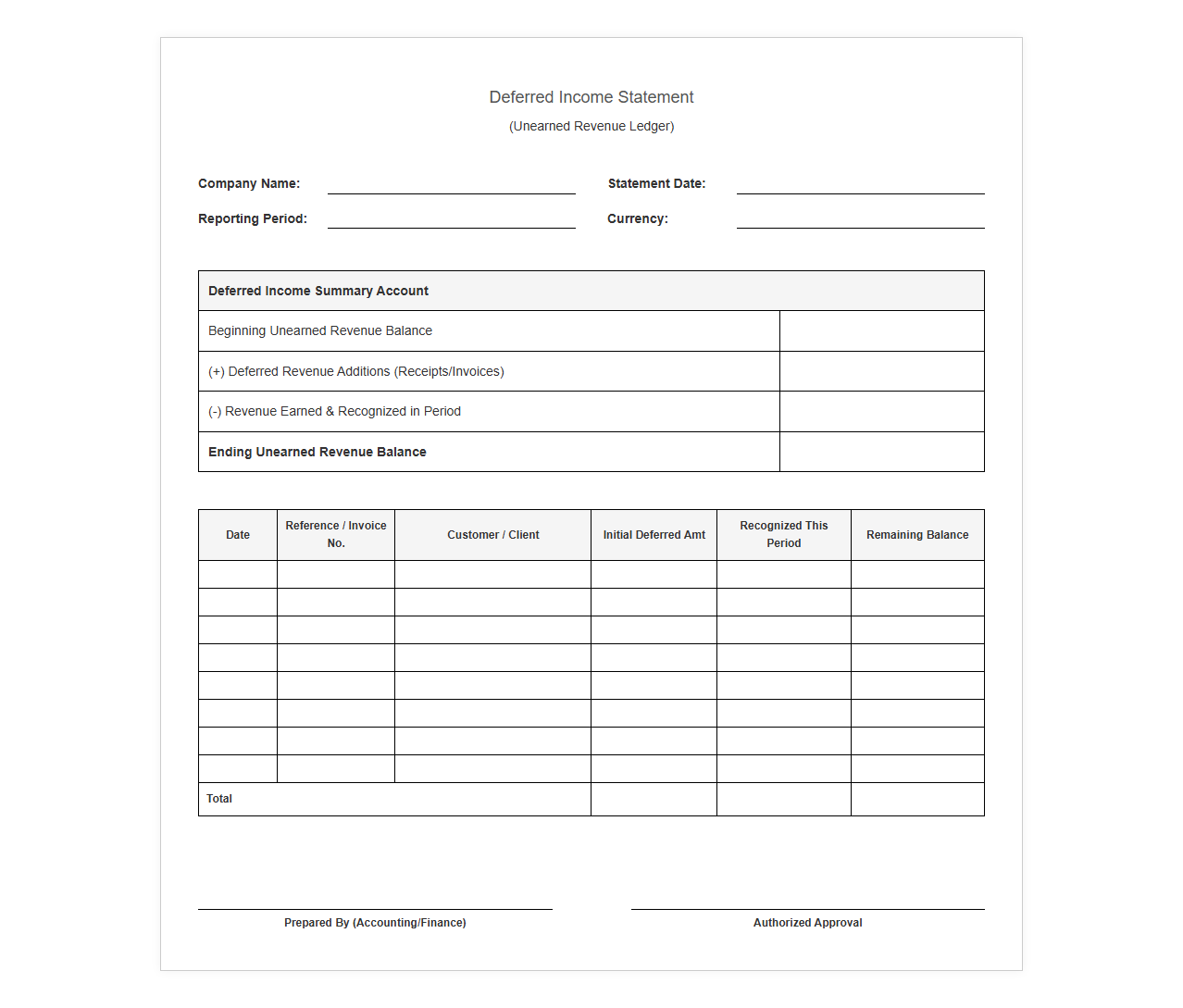 Download: .PDF
Deferred Income Schedule Template
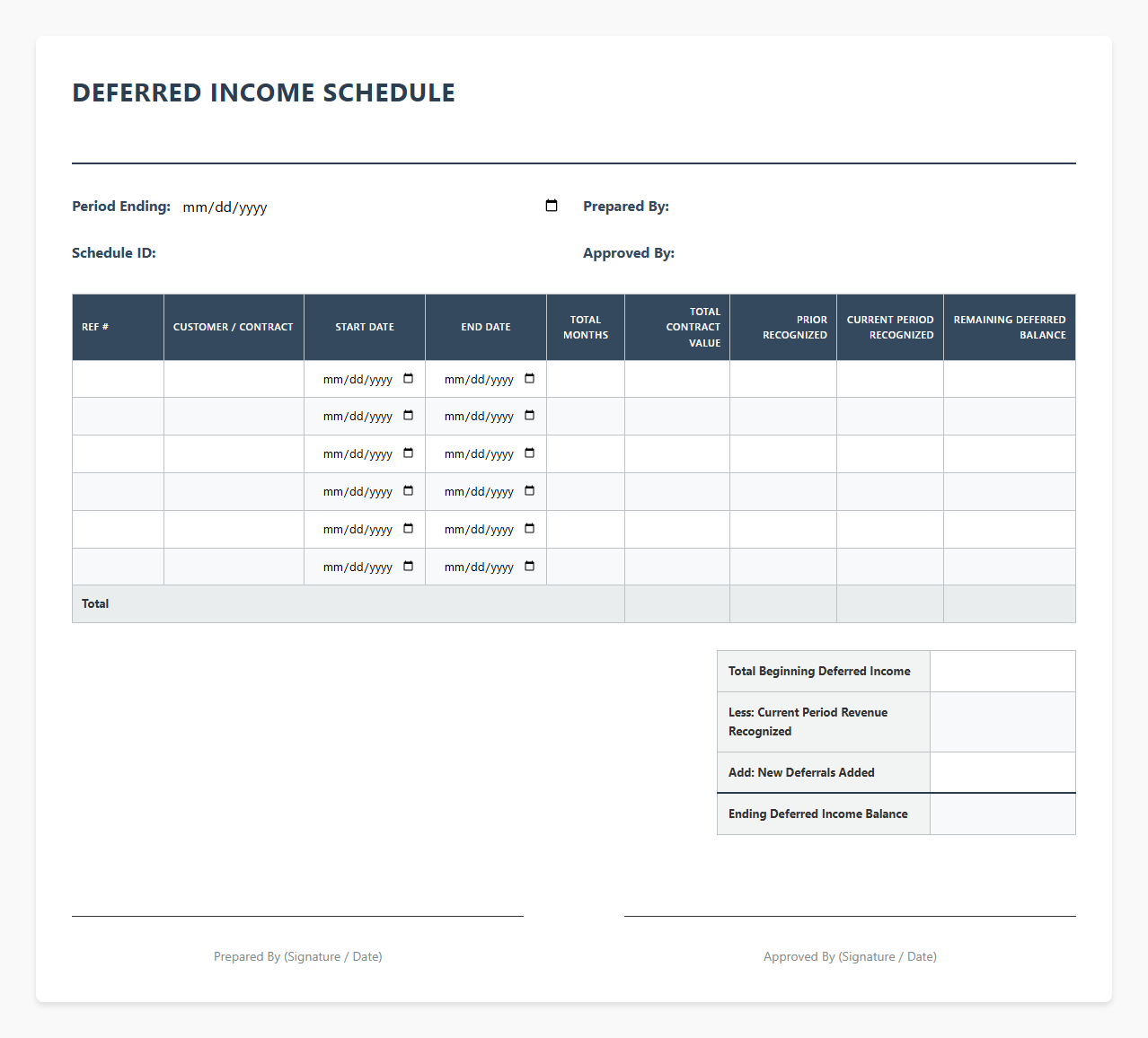 Download: .PDF
Prepaid Revenue Statement Form
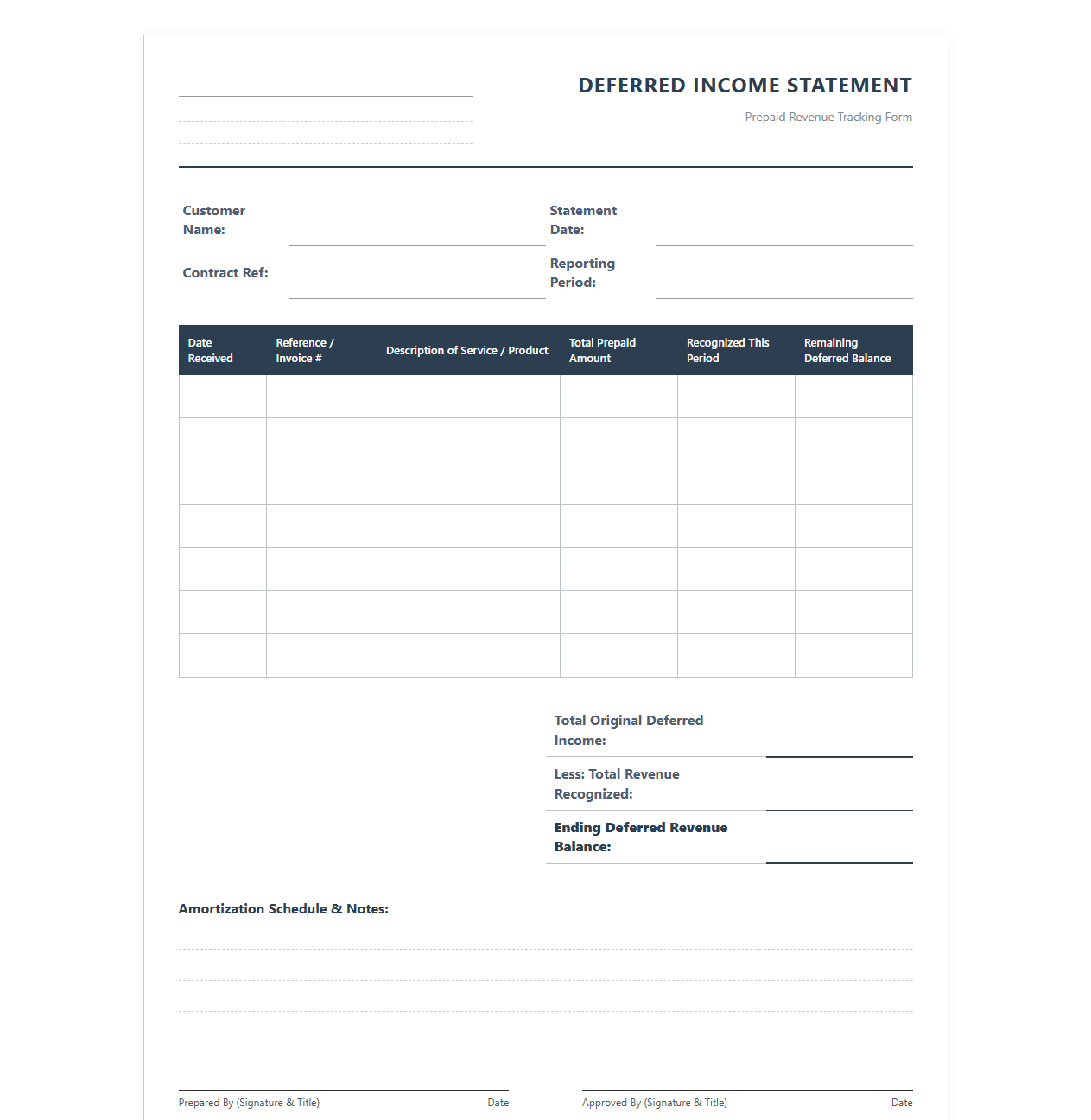 Download: .PDF
Deferred Revenue Reconciliation Template
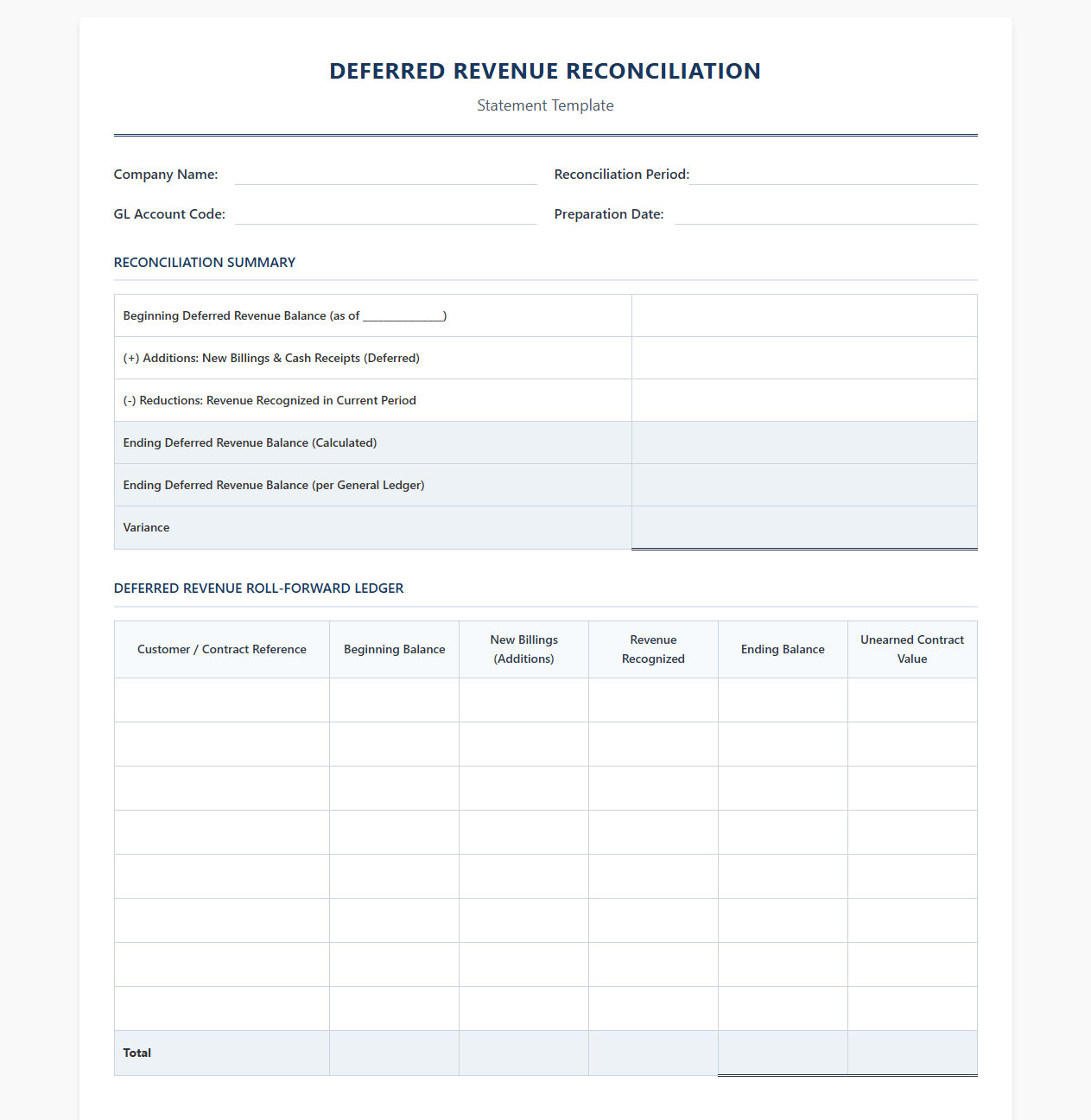 Download: .PDF
Demystifying Unearned Revenue in Financial Accounting
In accrual accounting, unearned revenue (often referred to as deferred revenue) represents money received by an organization before it has provided the corresponding goods or services. Because the company still owes these goods or services to the customer, this inflow is recorded as a liability on the balance sheet rather than immediate income. As the performance obligations are met over time, this liability is systematically reduced and recognized as earned revenue on the income statement, ensuring that financial reporting accurately reflects the period in which the value was actually delivered.
The Challenges of Manual Deferred Income Tracking
While smaller businesses often rely on spreadsheets to manage deferred income, manual tracking quickly becomes unsustainable as transaction volumes grow. Relying on disconnected files introduces significant operational risks that can compromise financial integrity.
- Recognition Errors: Formula mistakes or manual entry typos can lead to premature or delayed revenue recognition.
- Compliance Risks: Keeping up with complex accounting standards manually increases the likelihood of audit failures.
- Administrative Bottlenecks: Finance teams waste hours reconciling discrepancies instead of focusing on strategic analysis.
Essential Components of a Deferred Income Statement Template
To ensure consistency and precision in your accounting, your deferred income statement templates must capture specific data points. A structured layout helps track the lifecycle of each contract from billing to full recognition.
| Customer Name | Contract Value | Billing Date | Recognized Revenue | Remaining Balance |
|---|---|---|---|---|
| Acme Corp | $12,000 | 2023-10-01 | $3,000 | $9,000 |
| Beta Industries | $24,000 | 2023-11-01 | $4,000 | $20,000 |
Step-by-Step Guide to Implementing the Templates
Transitioning to a structured deferred income template requires a systematic approach to ensure data integrity. Follow these steps to implement and maintain your templates effectively:
- Establish the Baseline: Gather all active contracts and outstanding deferred balances from the previous period to set up your opening balances.
- Input New Billings: Record all new invoices issued during the current month, capturing the total contract value and contract start/end dates.
- Calculate Monthly Recognition: Apply the appropriate amortization schedule (e.g., straight-line over the service period) to determine the current month's recognized revenue.
- Reconcile to the General Ledger: Match the ending deferred revenue balance in your template with the balance sheet control account to verify accuracy.
Key Automation Strategies for Revenue Recognition
As businesses scale, manual spreadsheets become a bottleneck. Modern accounting software and ERP integrations can automate deferred revenue calculations by automatically linking invoicing modules to revenue recognition schedules. This reduces human error and ensures real-time visibility into deferred balances.
Ensuring Compliance and Audit Readiness
Adhering to modern accounting standards requires meticulous record-keeping. Both ASC 606 and IFRS 15 require a five-step model for recognizing revenue from contracts with customers, focusing heavily on when control of goods or services is transferred.
"An entity shall recognize revenue when (or as) the entity satisfies a performance obligation by transferring a promised good or service to a customer." - ASC 606 / IFRS 15 Core Principle
Next Steps to Optimize Your Financial Reporting
Optimizing your deferred revenue process starts with selecting the right template and establishing a consistent reconciliation rhythm. By formalizing these steps, your finance team can reduce closing times and prepare the company for scalable growth.
To streamline this process, you can download our Deferred Income Statement Template and establish a robust monthly reconciliation routine starting today.

Leave a comment