
Discovering discrepancies on a vendor invoice can instantly disrupt your accounting workflow, causing administrative friction and delaying necessary payments. Before attempting to correct these errors, organizations must first establish a standardized communication protocol to ensure the issue is formally recognized. Utilizing a structured approach not only accelerates resolution times but also preserves crucial partner relationships by keeping disputes objective and professional.
However, it is important to note that while templates streamline this communication, they serve as administrative frameworks rather than formal legal remedies. Whether you are addressing double-billed line items, incorrect shipping fees, or misapplied tax rates, having a standardized format ensures no critical detail is missed. In this article, we will explore how to effectively draft these statements, outline the essential components of a dispute template, and provide actionable best practices for seamless billing reconciliation.
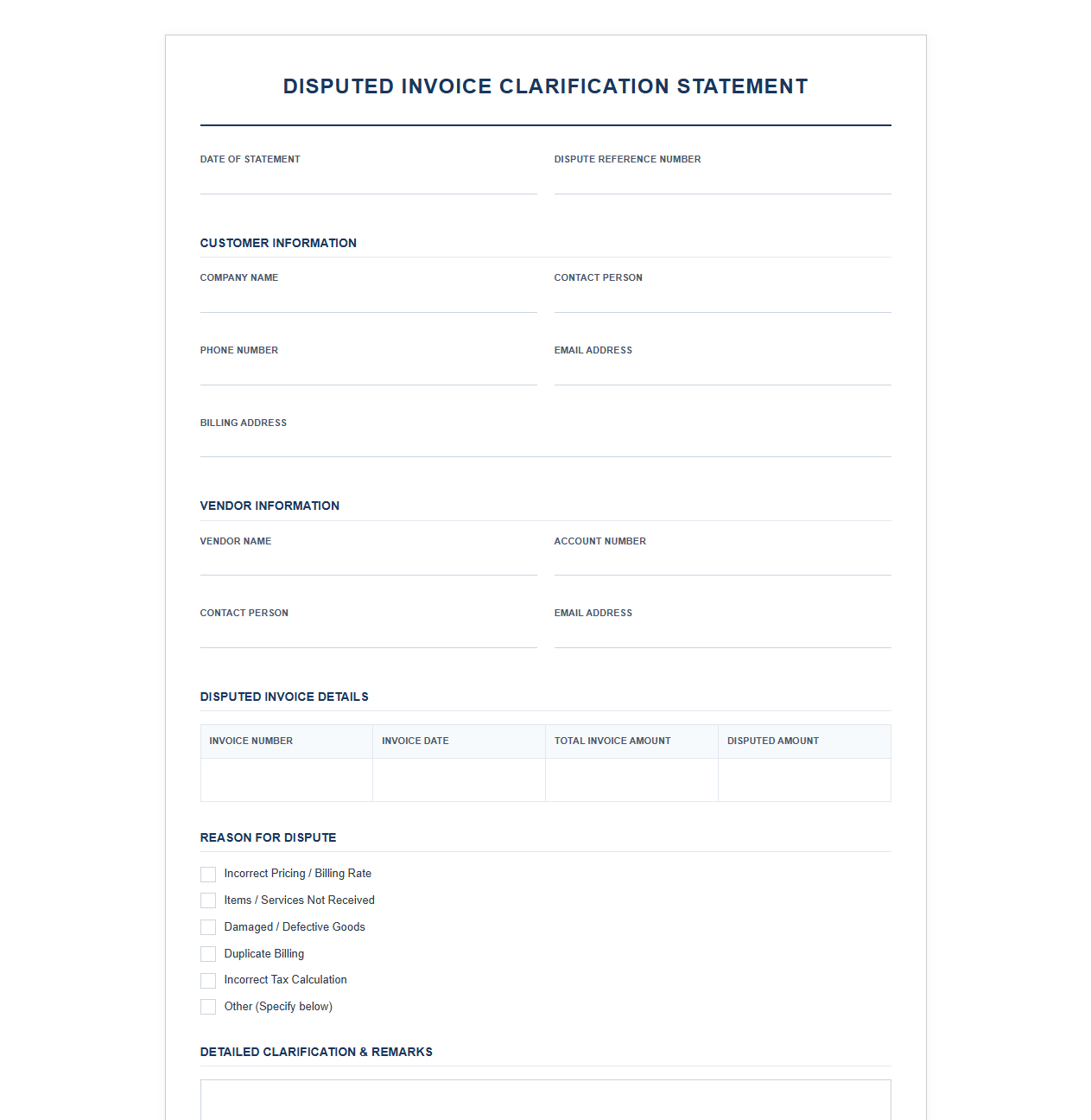
Disputed Invoice Clarification Statement Template
 Download: .PDF
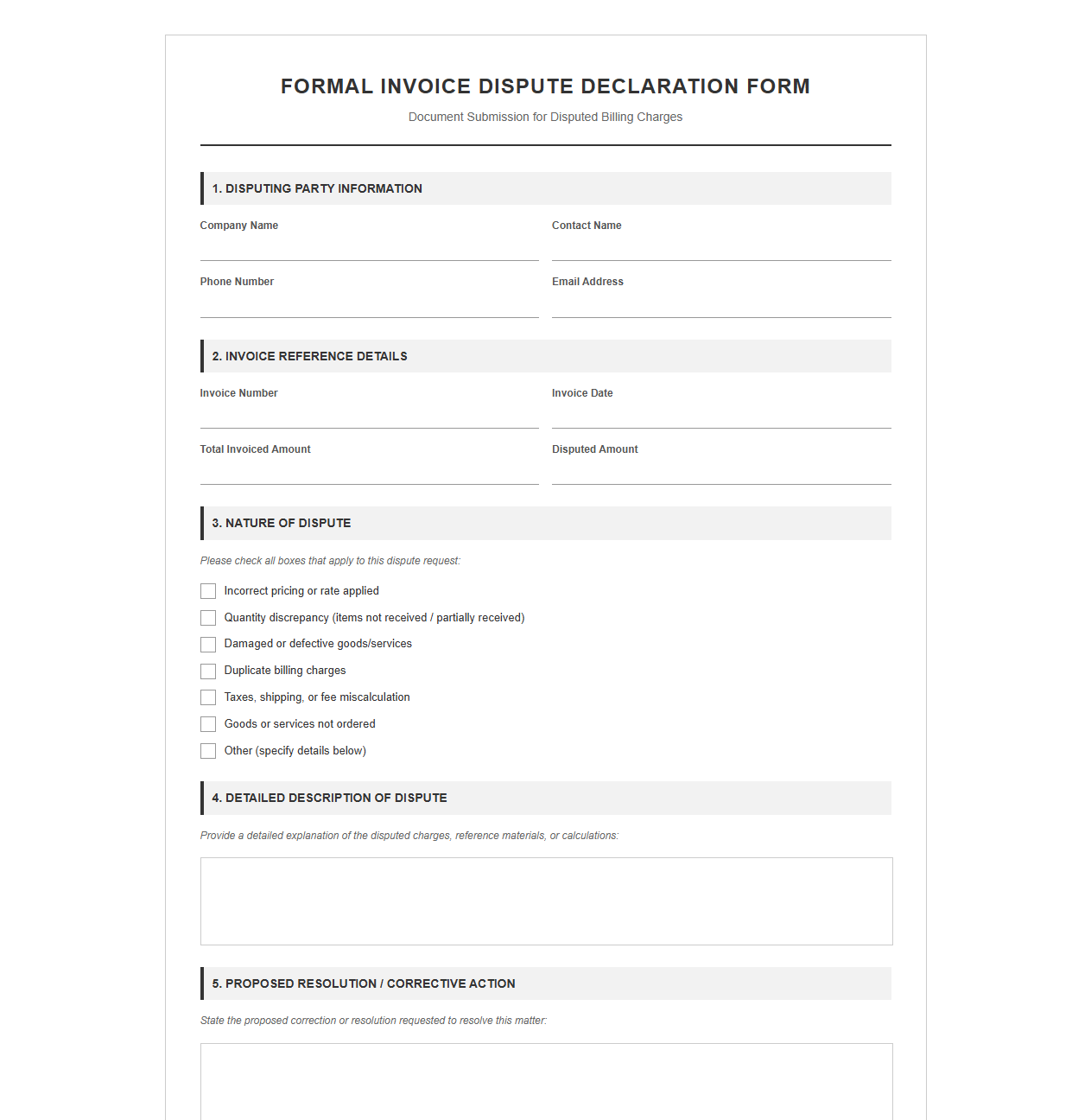
Formal Invoice Dispute Declaration Form
 Download: .PDF
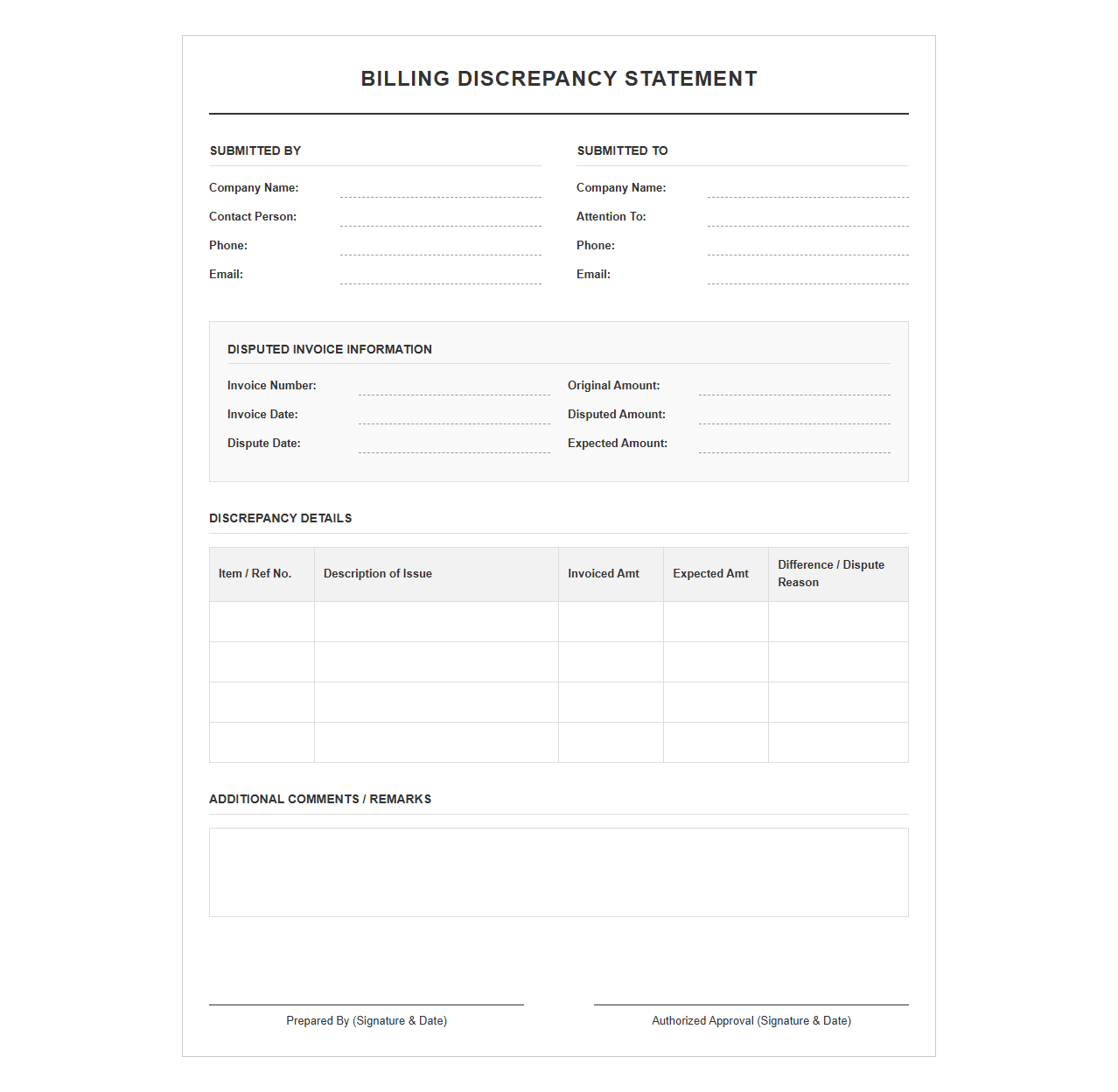
Billing Discrepancy Statement Template
 Download: .PDF
Notice of Disputed Invoice Amount
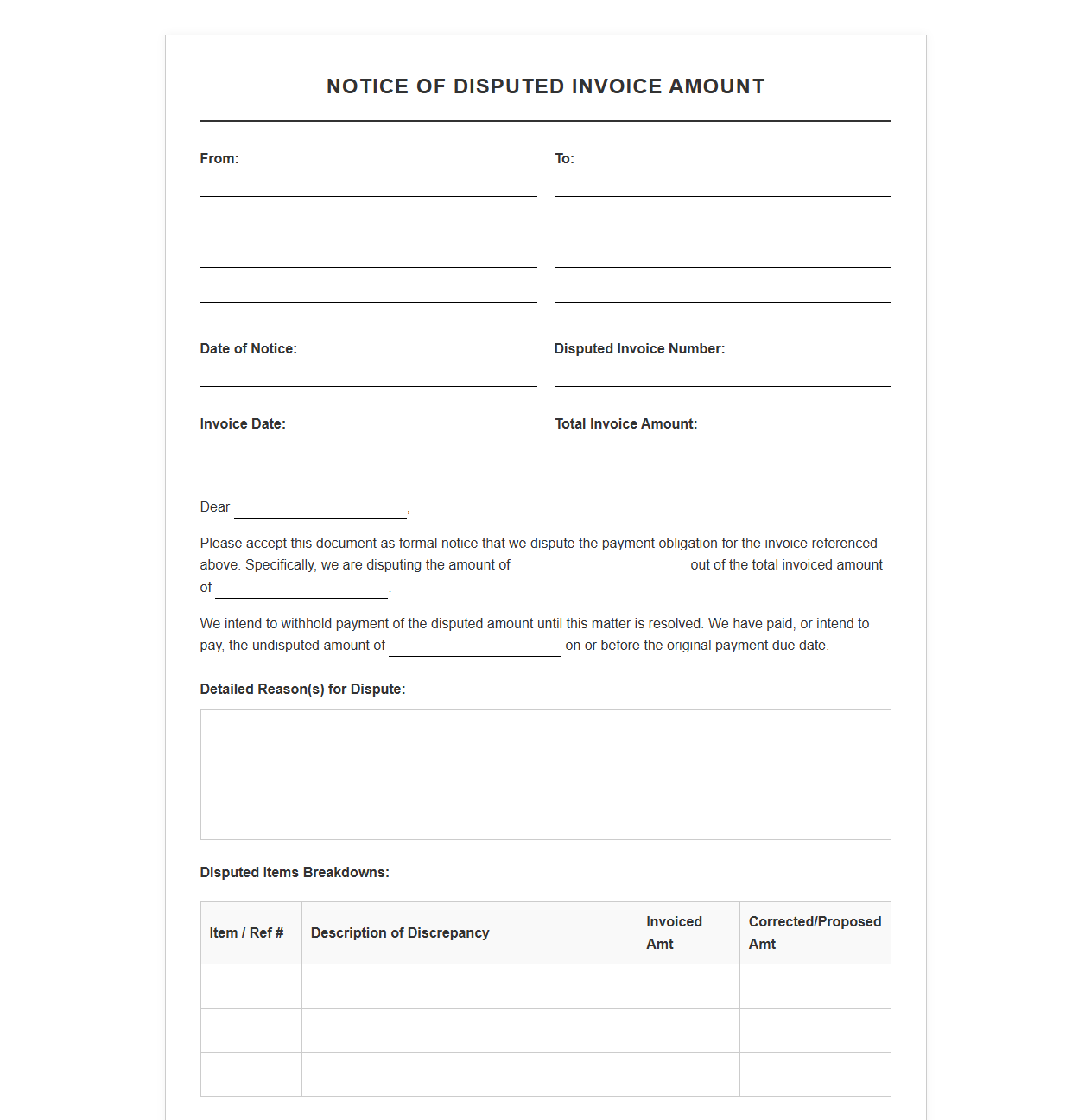 Download: .PDF
Customer Invoice Dispute Resolution Statement
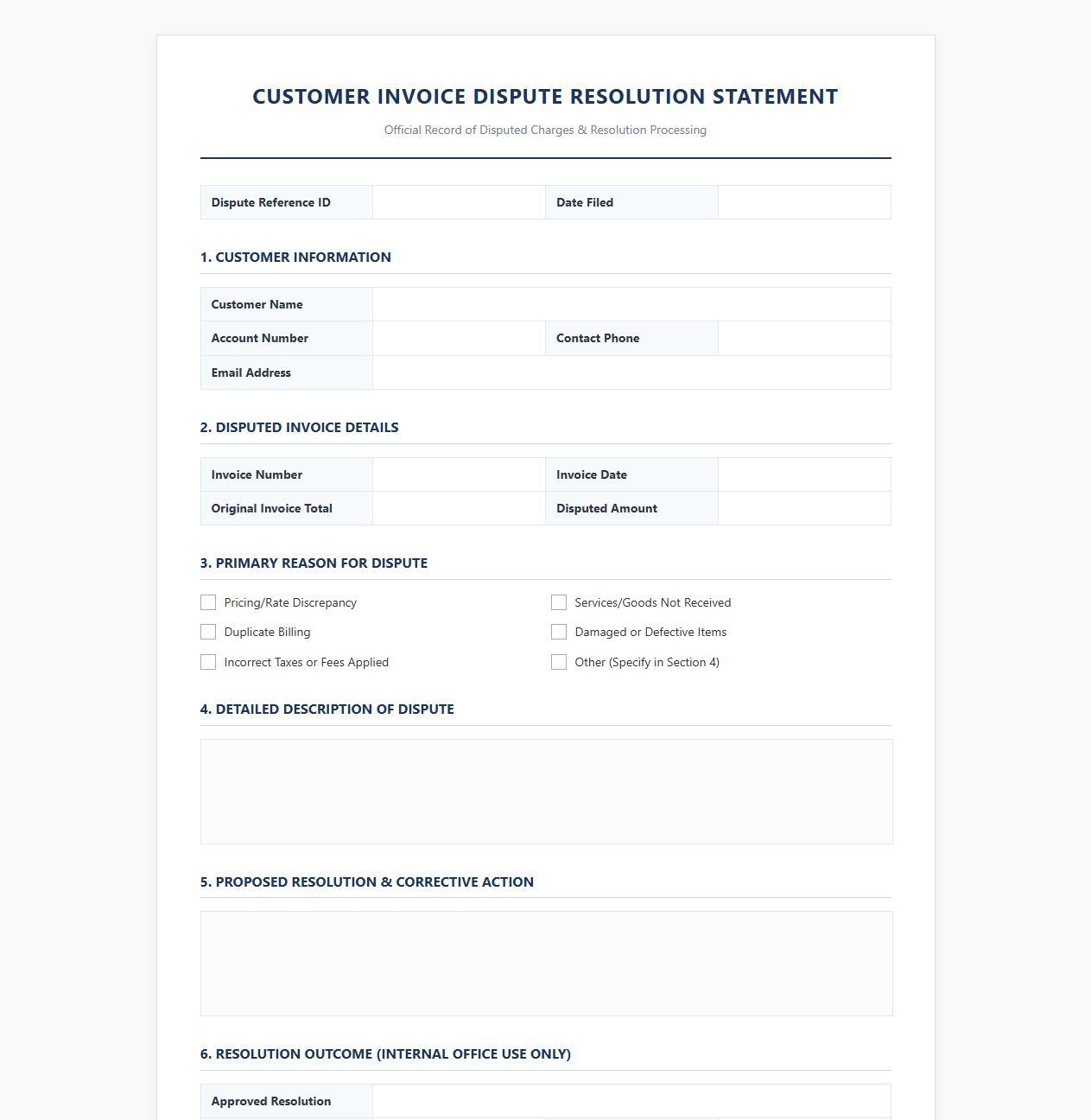 Download: .PDF
Vendor Billing Dispute Statement Letter
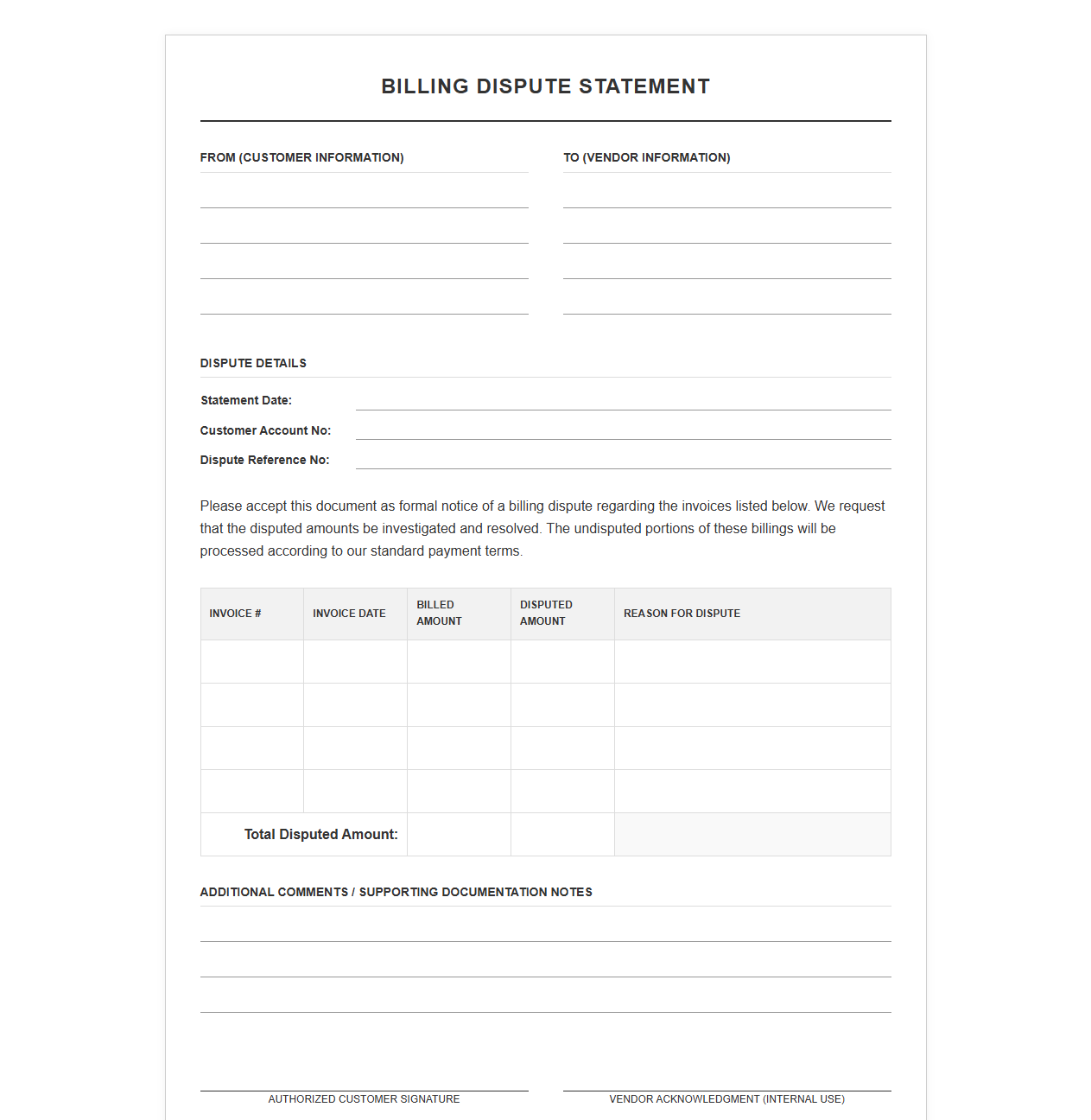 Download: .PDF
Disputed Invoice Notification and Review Template
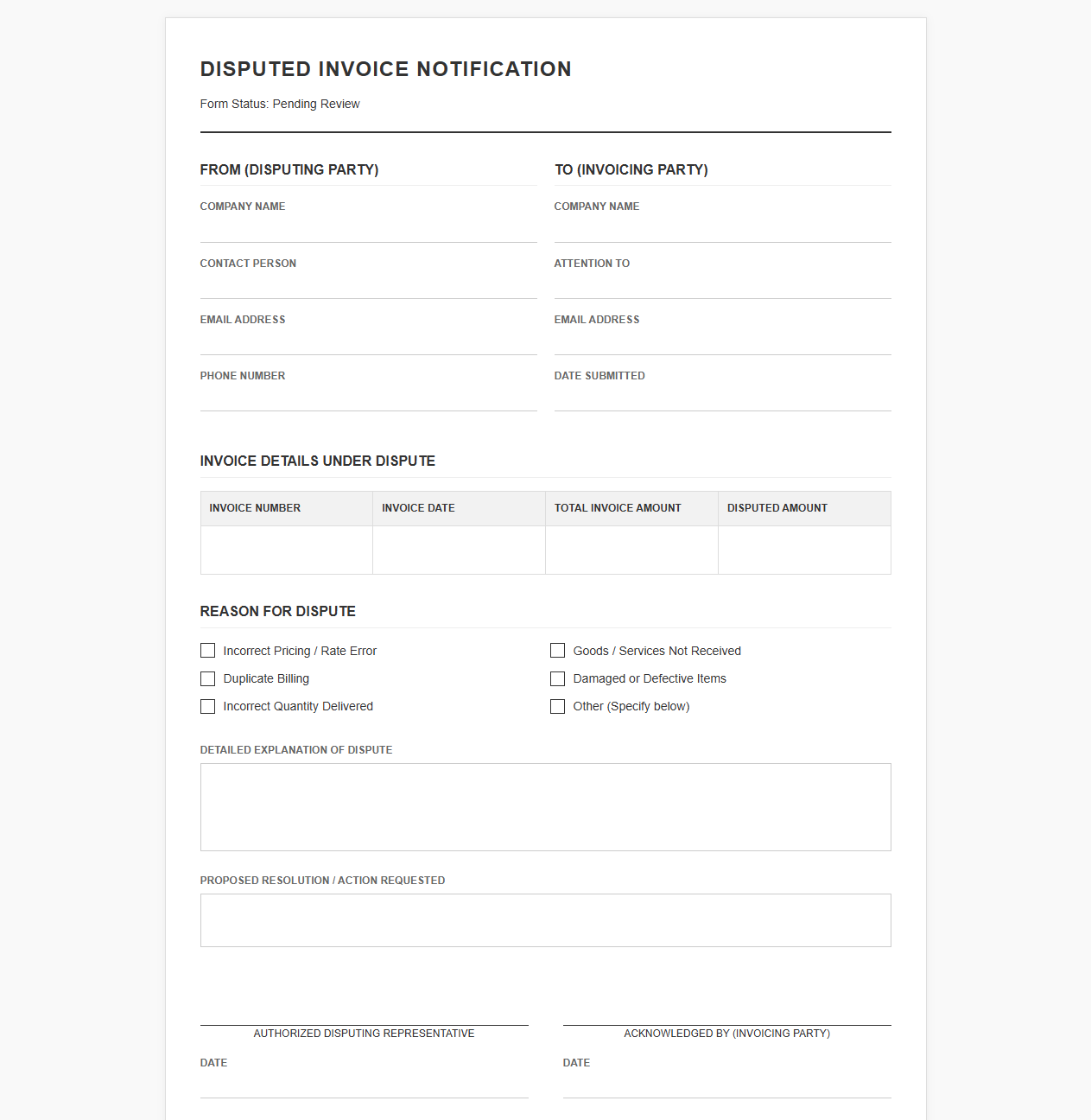 Download: .PDF
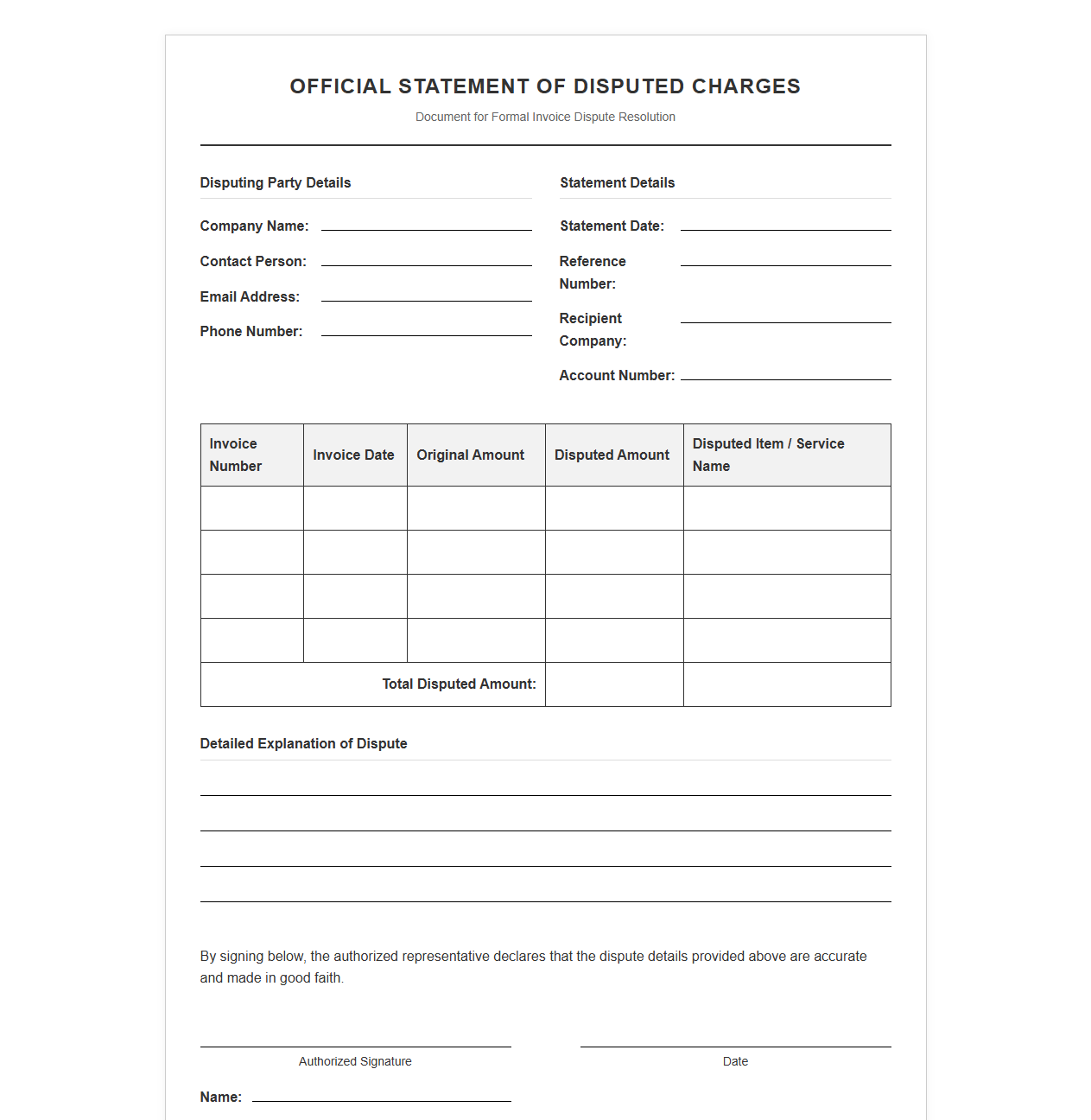
Official Statement of Disputed Charges
 Download: .PDF
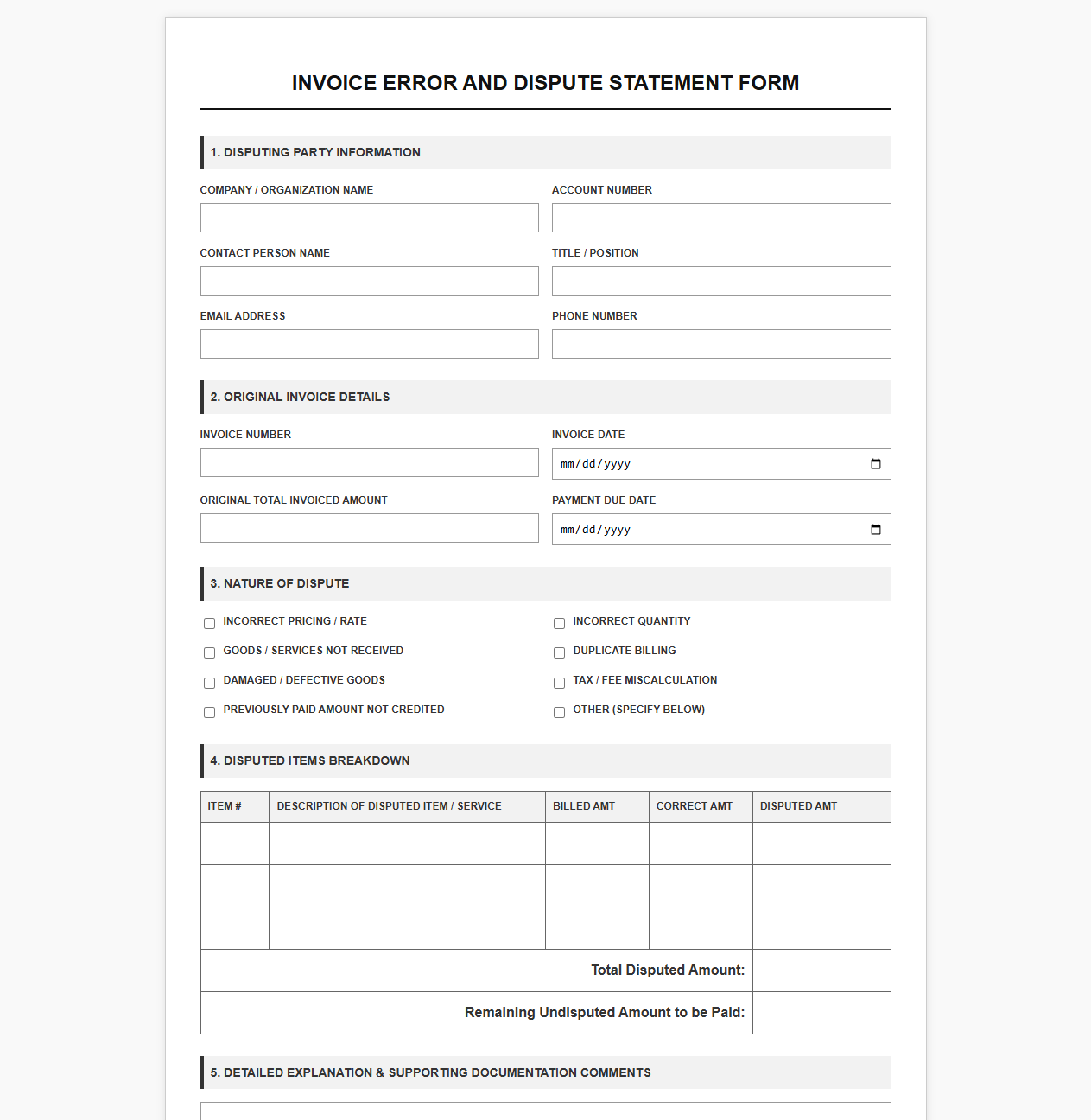
Invoice Error and Dispute Statement Form
 Download: .PDF
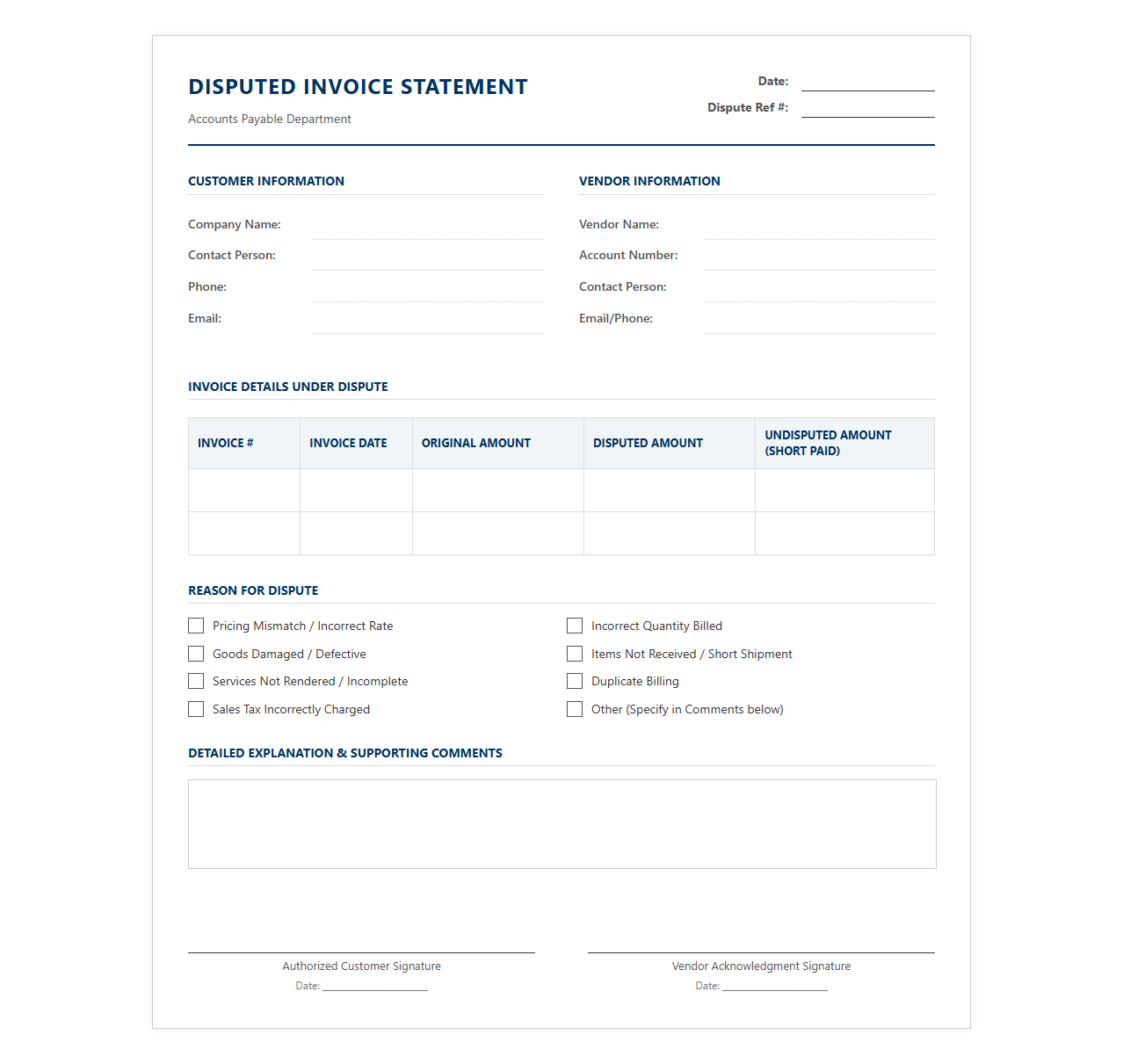
Accounts Payable Disputed Invoice Statement
 Download: .PDF
Understanding Billing Discrepancies and Their Impact on Business
In the fast-paced world of business-to-business transactions, financial accuracy is paramount. However, billing errors occur more frequently than most companies care to admit. When discrepancies arise, they do more than just create administrative headaches; they can disrupt cash flow, cause severe payment delays, and damage vital vendor-client relationships. For organizations to maintain operational stability, addressing these inaccuracies swiftly and professionally is essential.
What is a Disputed Invoice Statement?
A disputed invoice statement is a formal written record that officially documents a disagreement regarding a billed amount, quantity, or service. Rather than relying on informal phone calls, this document establishes a clear paper trail. It communicates to the vendor that while the client acknowledges the overall business relationship, there is a specific, documented issue with the request for payment that must be resolved before the funds can be released.
Key Benefits of Using Standardized Dispute Templates
Managing billing issues on an ad-hoc basis often leads to confusion and delays. Utilizing structured templates offers several clear organizational advantages:
- Time Savings: Teams can quickly fill in standardized fields rather than drafting new correspondence from scratch.
- Consistent Communication: Ensures all vendors receive the same professional and clear layout, protecting the company's brand reputation.
- Legal Compliance: Creates a reliable audit trail that complies with standard financial regulations and contract dispute clauses.
Essential Elements of an Effective Dispute Template
To ensure a speedy resolution, a dispute template must be highly detailed and contain all necessary context. Here are the critical information fields that must be included in every template:
- Original Invoice Number: The exact identifier of the document in question to help the accounts receivable department locate it instantly.
- Specific Errors: A detailed breakdown of the inaccuracies, whether they relate to incorrect pricing, wrong quantities, or double-billing.
- Undisputed Amount: Clarification of the portion of the bill that is accurate and will be paid, showing good faith and preventing total payment holds.
Step-by-Step Guide to Resolving a Billing Conflict
Resolving an invoice disagreement requires a methodical approach to ensure accuracy and maintain mutual respect. Follow this clear guide to navigate the resolution process efficiently:
- Identify the specific billing discrepancy by cross-referencing the invoice with purchase orders and delivery receipts.
- Complete the standardized dispute template by filling in all required fields with factual data.
- Submit the completed document to the vendor's billing department through their designated support channel.
Best Practices for Professional Dispute Communication
The way you communicate a billing issue can either resolve the problem quickly or escalate it into a major conflict. Keep these best practices in mind during your outreach:
- Maintain a professional and collaborative tone throughout all written and verbal exchanges.
- Attach supporting documentation, such as contracts or receipts, to prove your case.
- Track the resolution timeline and establish clear follow-up intervals to prevent the dispute from stalling.
Streamlining Your Accounting Workflow for the Future
Optimizing your accounts payable and receivable operations requires a proactive approach. Adopting pre-made templates and transitioning to automated invoicing tools can drastically reduce human error and speed up resolution times. By standardizing how your business handles and prevents billing friction, you secure your cash flow, save administrative hours, and build stronger, more reliable partnerships across your entire supply chain.
Leave a comment