
Chasing delinquent accounts is one of the most frustrating challenges modern businesses face, routinely disrupting cash flow and consuming valuable administrative resources. Before implementing strict financial penalties, however, organizations must first establish a structured communication framework that balances firm collections with professional diplomacy.
By deploying clearly defined late payment penalty statements, you grant your accounts receivable team the necessary leverage to accelerate recovery times while preserving critical client relationships. Note the important stipulation: any fee structure must strictly align with your original contractual agreements and state usury laws to remain legally enforceable. From gentle grace-period reminders to formal, legally-backed final demands, utilizing pre-structured templates provides concrete proof of consistent, professional policy enforcement.
In this article, we will explore customizable penalty statement templates tailored to various business scenarios, ensuring you can confidently recover outstanding revenue while maintaining vital client partnerships.
Late Payment Penalty Statement Template
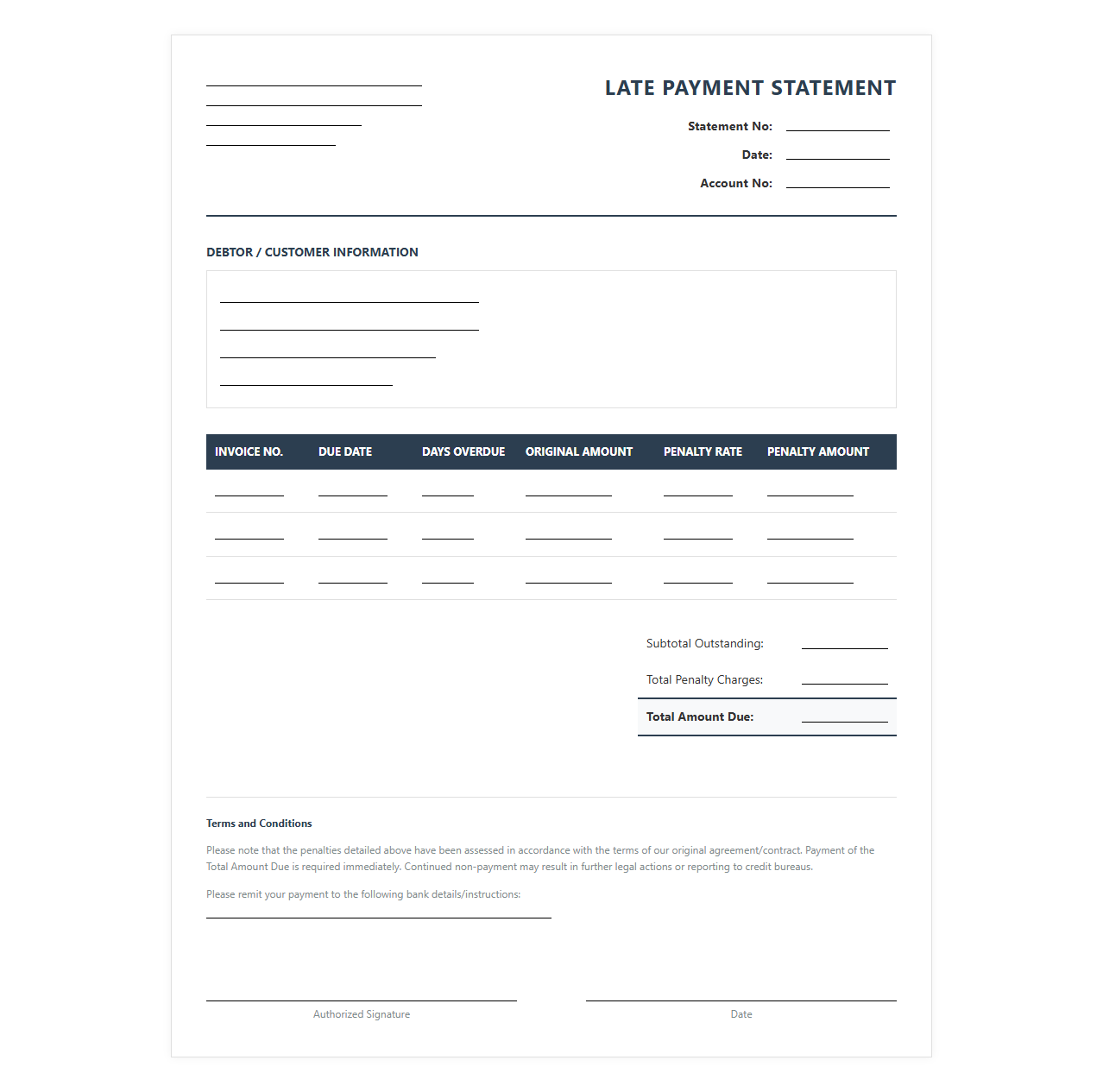 Download: .PDF
Overdue Payment Fee Statement Template
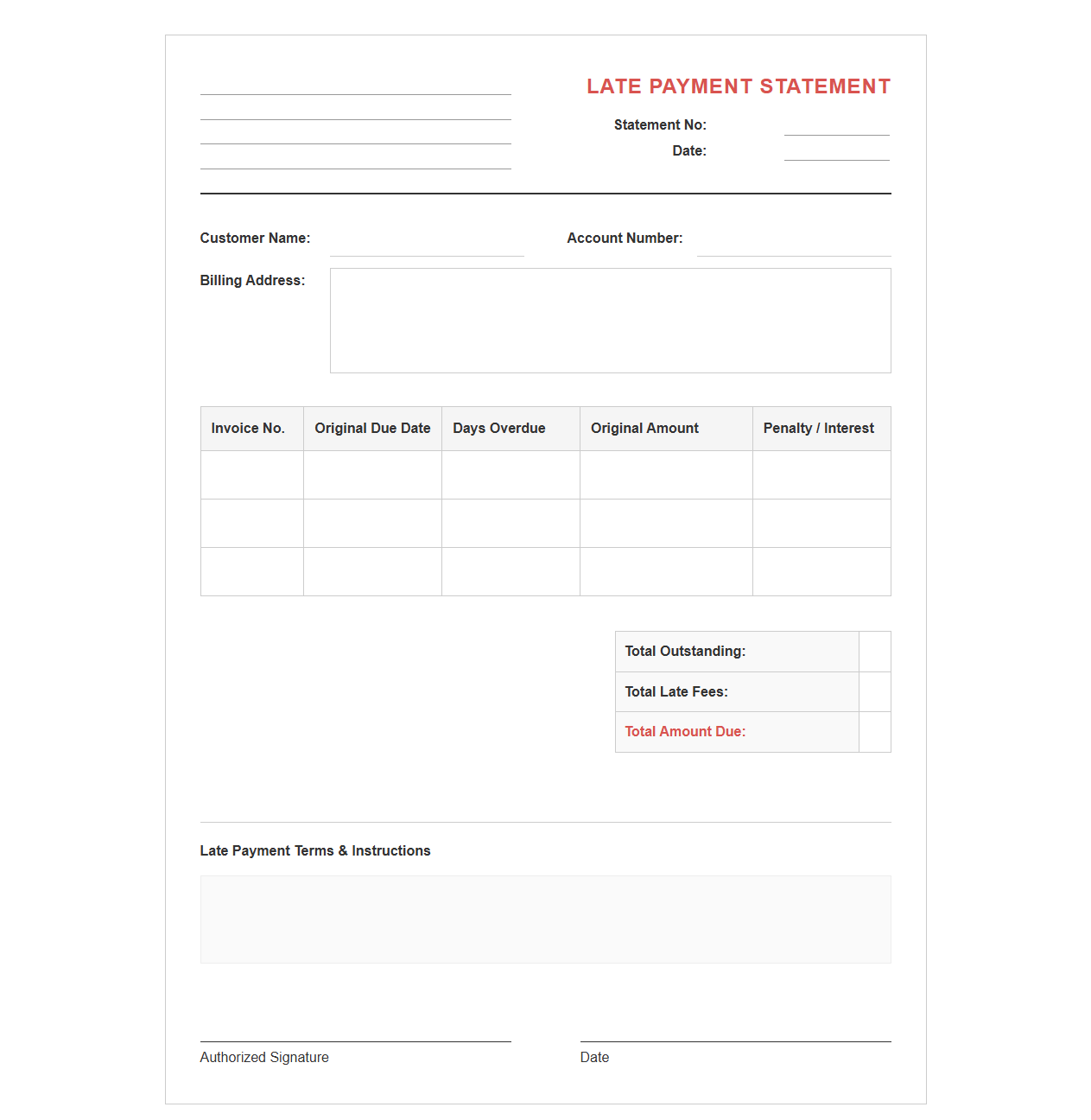 Download: .PDF
Past Due Account Penalty Statement
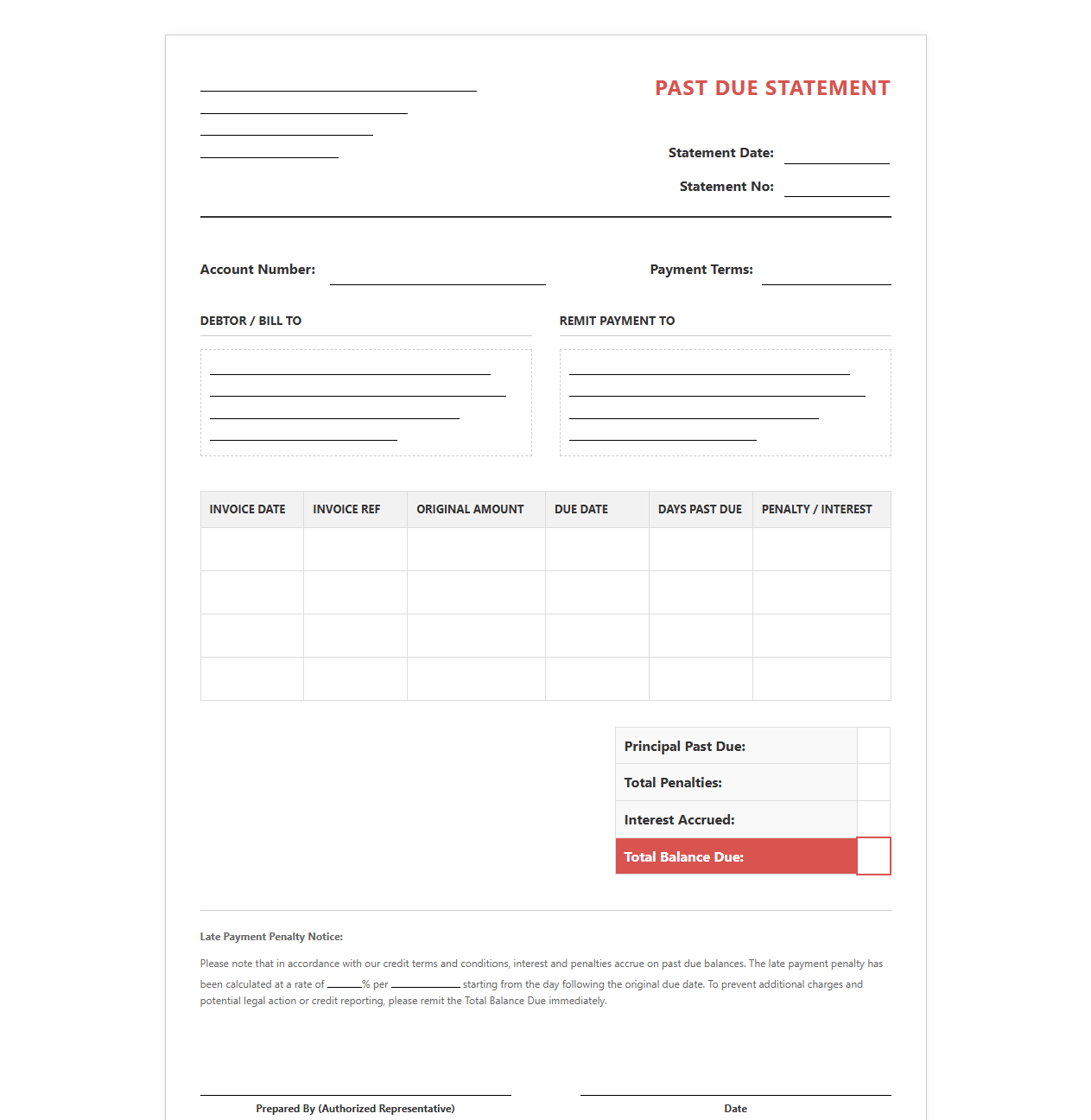 Download: .PDF
Delinquent Invoice Penalty Statement Template
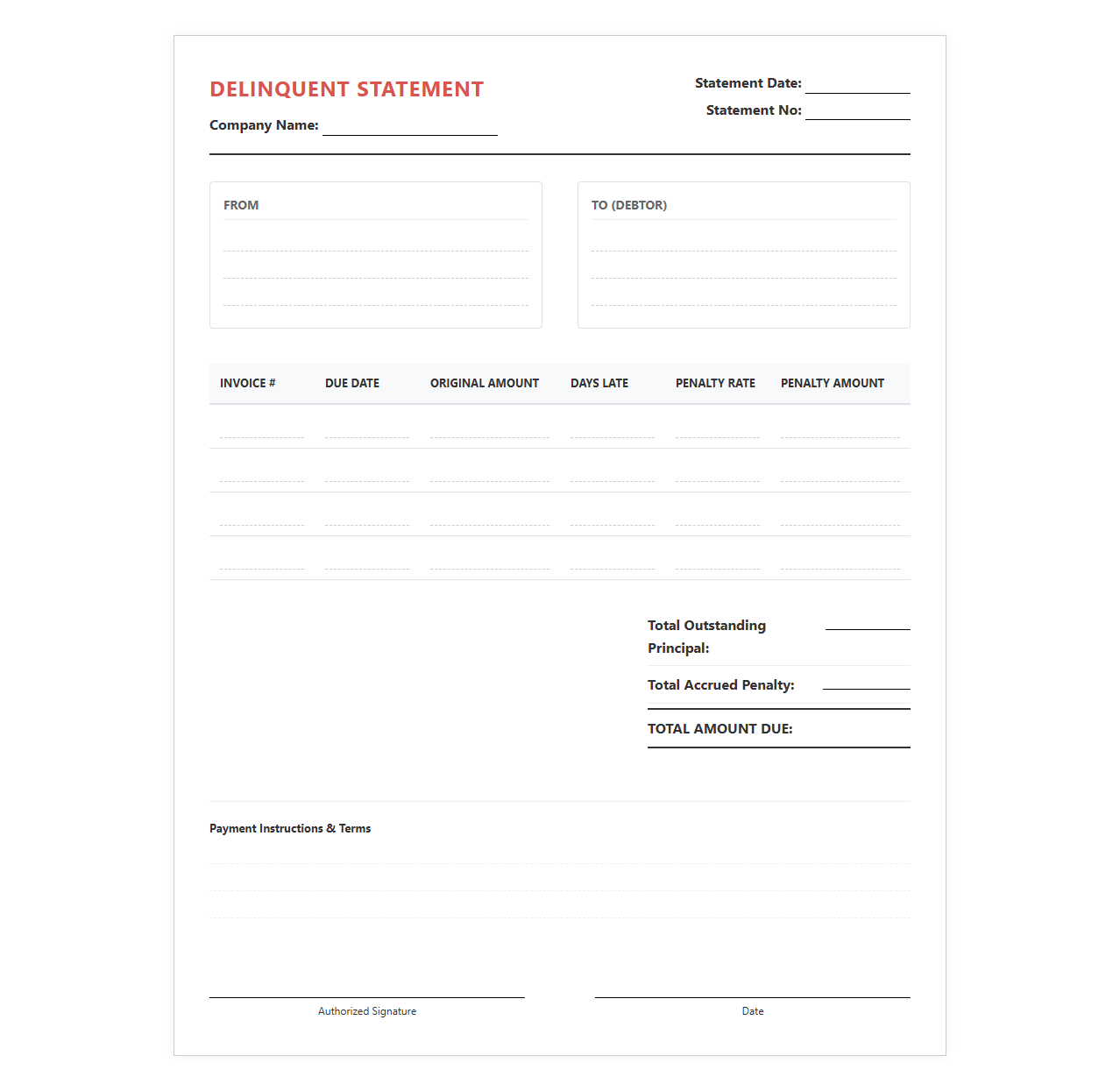 Download: .PDF
Late Fee and Interest Statement Template
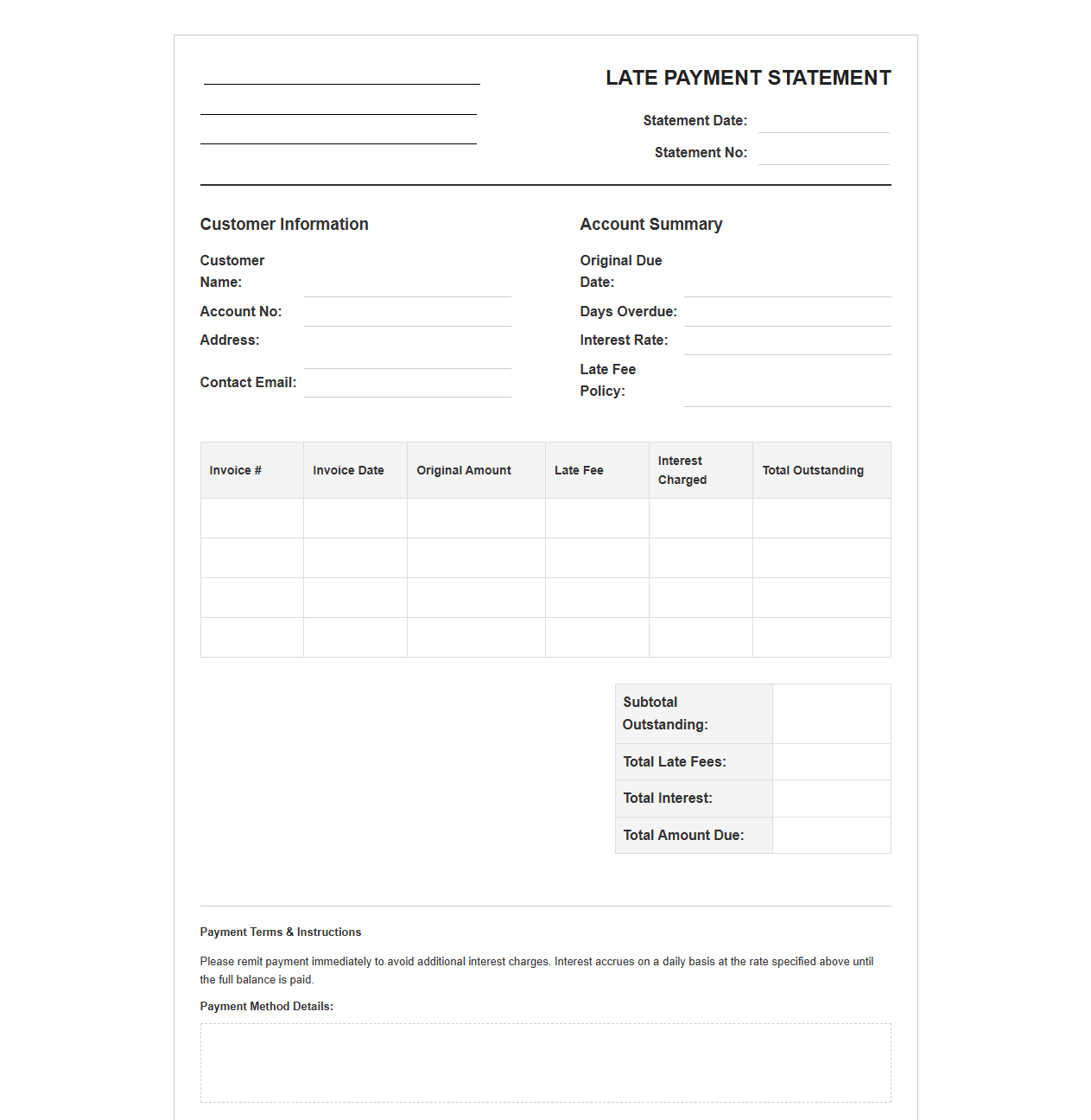 Download: .PDF
Outstanding Balance Late Penalty Statement
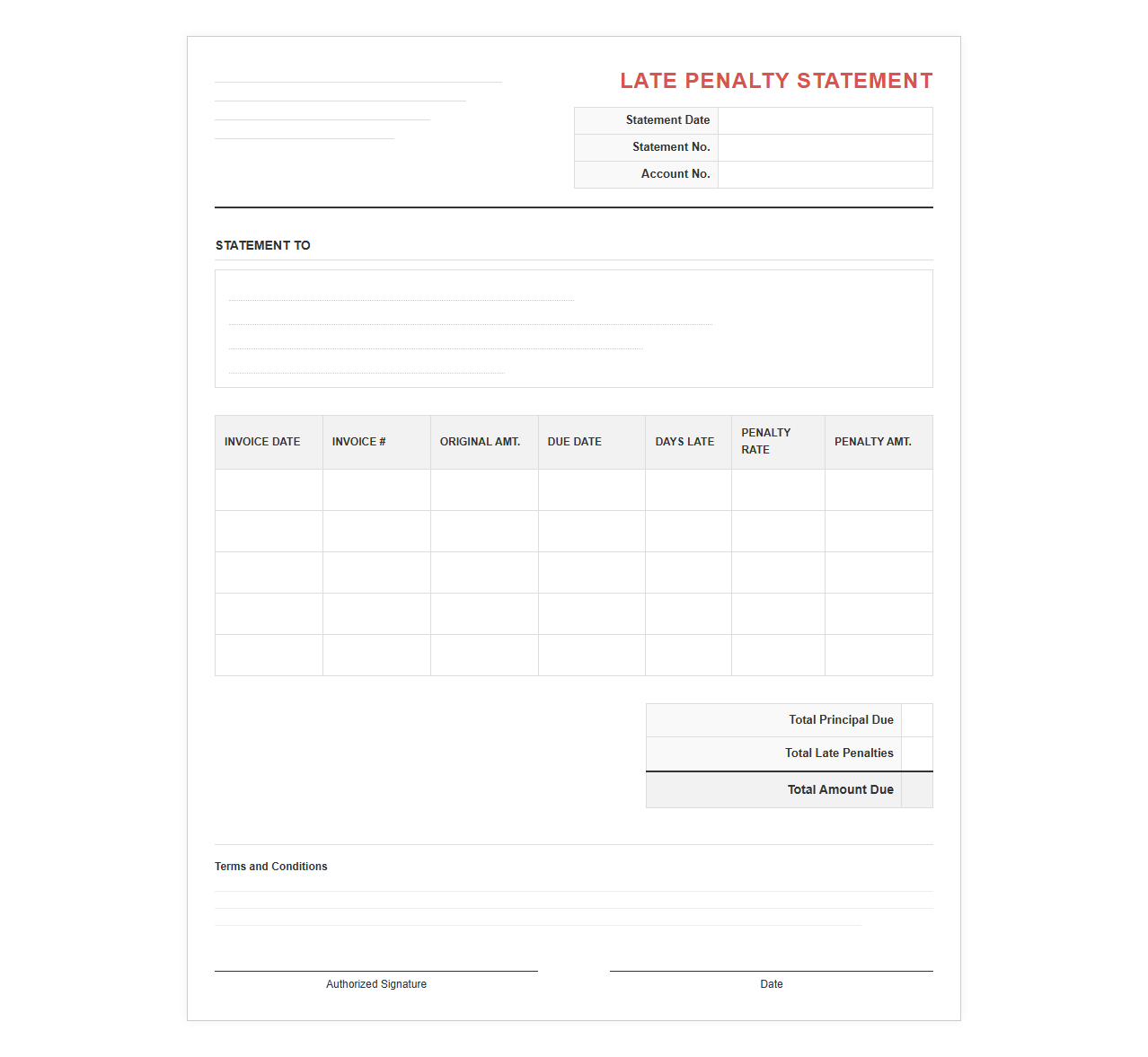 Download: .PDF
Overdue Account Penalty Notification Template
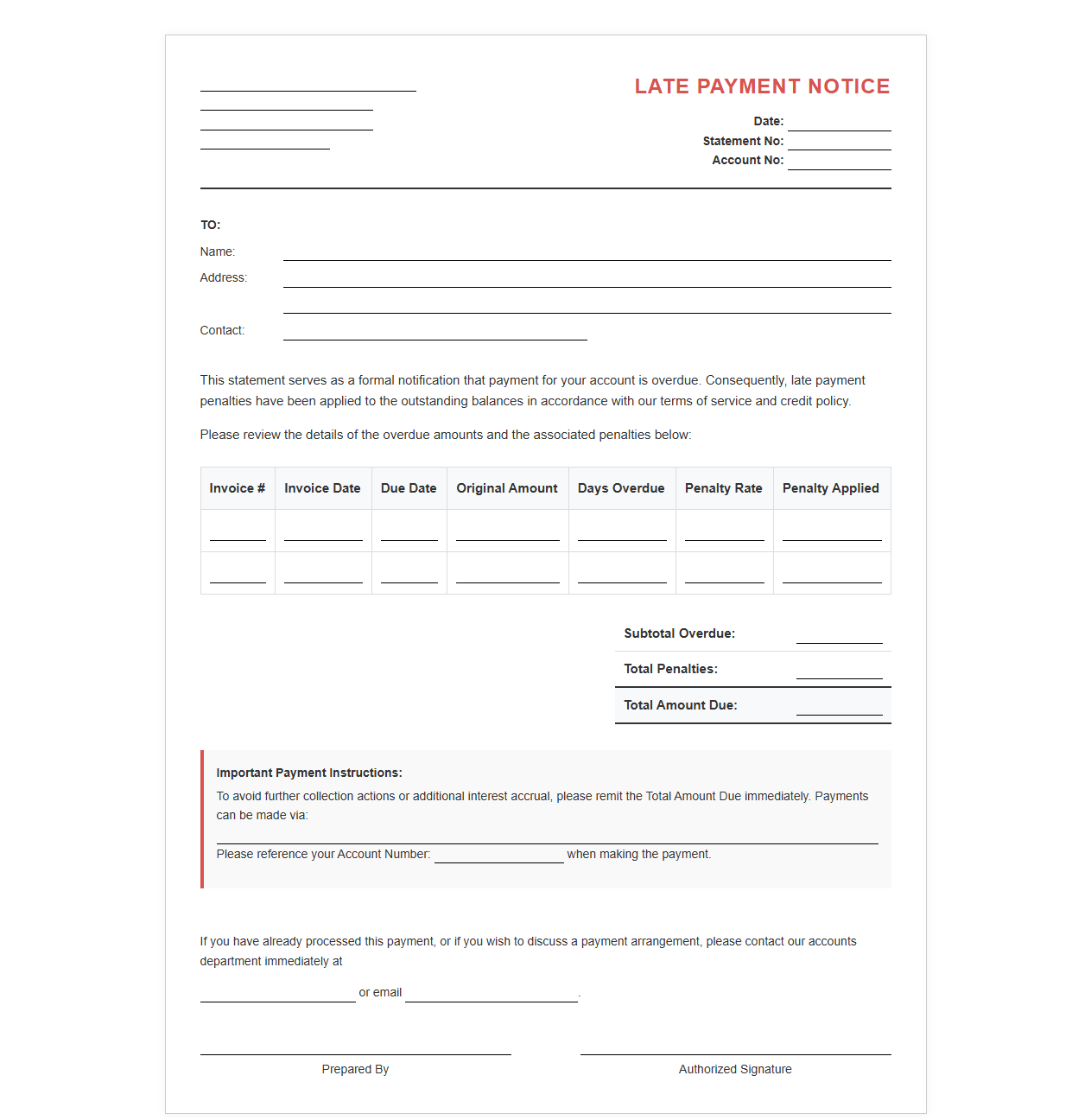 Download: .PDF
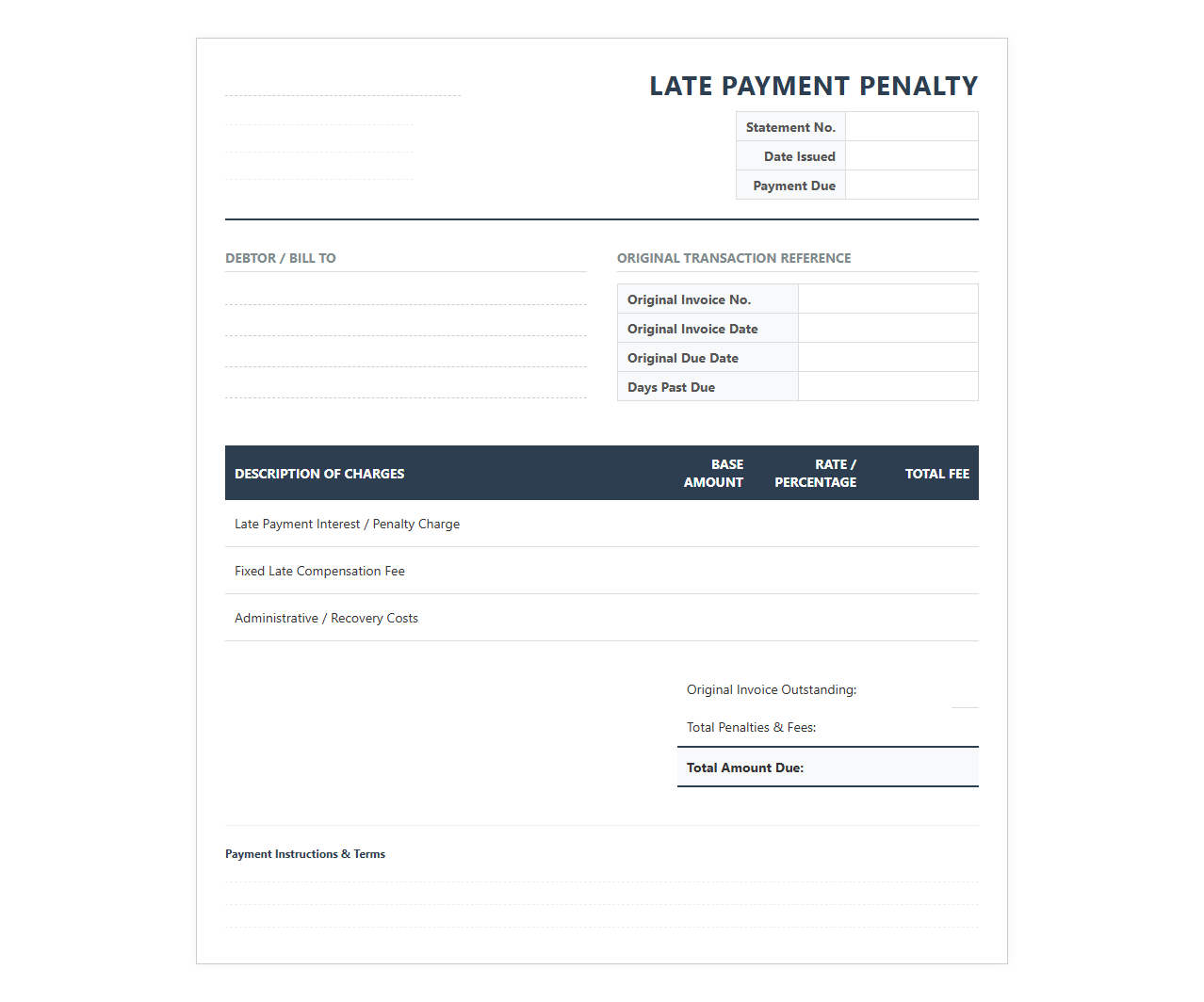
Late Payment Penalty Invoice Template
 Download: .PDF
Understanding the Impact of Delinquent Accounts
In the ecosystem of business operations, cash flow acts as the primary lifeblood keeping daily functions viable. When clients fail to pay on time, it triggers a chain reaction that hampers inventory acquisition, delays payroll, and stalls growth initiatives. Research indicates that over 82% of small businesses fail due to poor cash flow management, often driven by the friction of unpaid invoices. To safeguard financial stability, companies must establish clear, standardized penalty statements. Setting explicit expectations from the beginning ensures predictability, protects operational capital, and encourages timely client behavior.
Legally Compliant Late Payment Terms
Implementing fees on overdue balances requires careful navigation of financial laws. Businesses cannot arbitrarily charge high-interest rates; terms must align with local usury laws and consumer protection acts. To ensure your late payment terms are legally enforceable and transparent, keep the following parameters in mind:
- State Usury Limits: Ensure your interest rates do not exceed the maximum rate permitted by state or regional laws.
- Written Consent: Detail all late fee percentages and grace periods in the initial contract signed by both parties.
- Clear Terminology: Use plain language in your payment terms (e.g., "1.5% monthly interest applied after 30 days") rather than complex legal jargon.
- Reciprocal Transparency: State clearly when the interest begins to accrue and how it is calculated (simple vs. compound interest).
Template 1: The Gentle Grace Period Reminder
Maintaining a collaborative and positive relationship with your clients is vital during the early days of an overdue invoice. The first reminder should assume the oversight was accidental, offering a helpful nudge while gently referencing the payment policies outlined in your contract.
Subject: Reminder: Invoice [Invoice Number] is slightly past due
Dear [Client Name],
We hope this email finds you well.
This is a gentle reminder that invoice [Invoice Number] for [Amount], which was due on [Due Date], is now past due. We understand that things can get busy, and this may have simply slipped through the cracks.
Please review the attached invoice and submit payment at your earliest convenience. As a reminder, our standard terms do include a late payment interest policy for accounts that remain unsettled, though we hope to resolve this before any fees are applied.
If you have already sent payment, please disregard this email. Thank you for your continued partnership!
Best regards,
[Your Name]
[Your Company]
Template 2: The Formal Interest Application Notice
When an invoice remains unpaid for 15 to 30 days, transitioning to a formal tone is necessary. This notice officially informs the client that the agreed-upon late payment interest fee has been applied to their account, emphasizing contract terms without being overly aggressive.
Subject: NOTICE: Application of Late Payment Fee – Invoice [Invoice Number]
Dear [Client Name],
Please be advised that payment for Invoice [Invoice Number] ([Amount]) has not yet been received and is now [Number of Days] days past due.
In accordance with our signed agreement and standard payment terms, a late payment fee of [Interest Percentage]% has been applied to the outstanding balance. A revised statement reflecting the new total of [Updated Amount] is attached to this email.
Please remit payment immediately to prevent further interest accumulation. If you are experiencing technical difficulties with our payment portal, please contact our billing department right away.
Sincerely,
[Your Name]
[Your Company]
Template 3: The Final Demand and Collection Warning
At 45+ days past due, protecting your business's bottom line becomes the top priority. This final notice must communicate the absolute urgency of the situation, outlining the impending transition of their account to a collections agency or the commencement of legal action.
This is the final written warning regarding your seriously overdue account. To avoid external escalations, your payment must be cleared and fully processed no later than [Date - e.g., Friday, November 17th, at 5:00 PM EST]. Failure to settle this outstanding debt by this firm deadline will force us to transfer your account to our third-party collection agency and report the delinquency to relevant credit bureaus, which may negatively impact your business credit rating.
Strategic Tips for Minimizing Delinquent Invoices
Preventing late payments is far more efficient than chasing them after the fact. By optimizing your invoicing workflow, you can drastically reduce the number of accounts that lapse into delinquency.
- Adopt Automated Invoicing: Utilize modern accounting software to automatically send invoices, track delivery, and dispatch recurring reminders.
- Offer Early Payment Incentives: Motivate swift action by offering a small discount, such as 2% off the total bill if paid within 10 days.
- Diversify Payment Methods: Make paying as effortless as possible by accepting credit cards, ACH transfers, and digital wallets.
- Perform Client Credit Checks: Assess the creditworthiness of new business accounts before extending generous payment terms.
Restoring the Client Relationship Post-Payment
Once a delinquent account is settled, the path forward requires a balance of professionalism and proactive communication. Successfully transitioning back to a positive working relationship relies on acknowledging the resolution warmly while establishing clear boundaries for future projects. By discussing payment terms openly and perhaps adjusting future milestones to require upfront deposits, you protect your cash flow without alienating valuable partners. Nurturing client retention while maintaining firm, healthy financial boundaries is the hallmark of a resilient business operation.

Leave a comment