

Managing retainer accounts often leads to awkward friction when billing discrepancies arise, leaving account managers and finance teams struggling to reconcile hours without alienating valued clients. Before addressing these errors, firms must recognize that billing transparency is the ultimate cornerstone of client retention; a single miscommunication can jeopardize years of built trust. Standardizing your dispute-resolution correspondence grants your team the authority to recover lost revenue swiftly while actually strengthening the client relationship. However, written templates only succeed when paired with a commitment to rigorous internal tracking and clear upfront agreements. By utilizing structured language for specific scenarios-such as "unreconciled overages" or "misaligned depletion alerts"-firms can de-escalate tension through objective proof. In this guide, we provide customizable statement templates and strategic communication workflows designed to resolve retainer discrepancies professionally and protect your firm's bottom line.
Retainer Fee Billing Statement Template
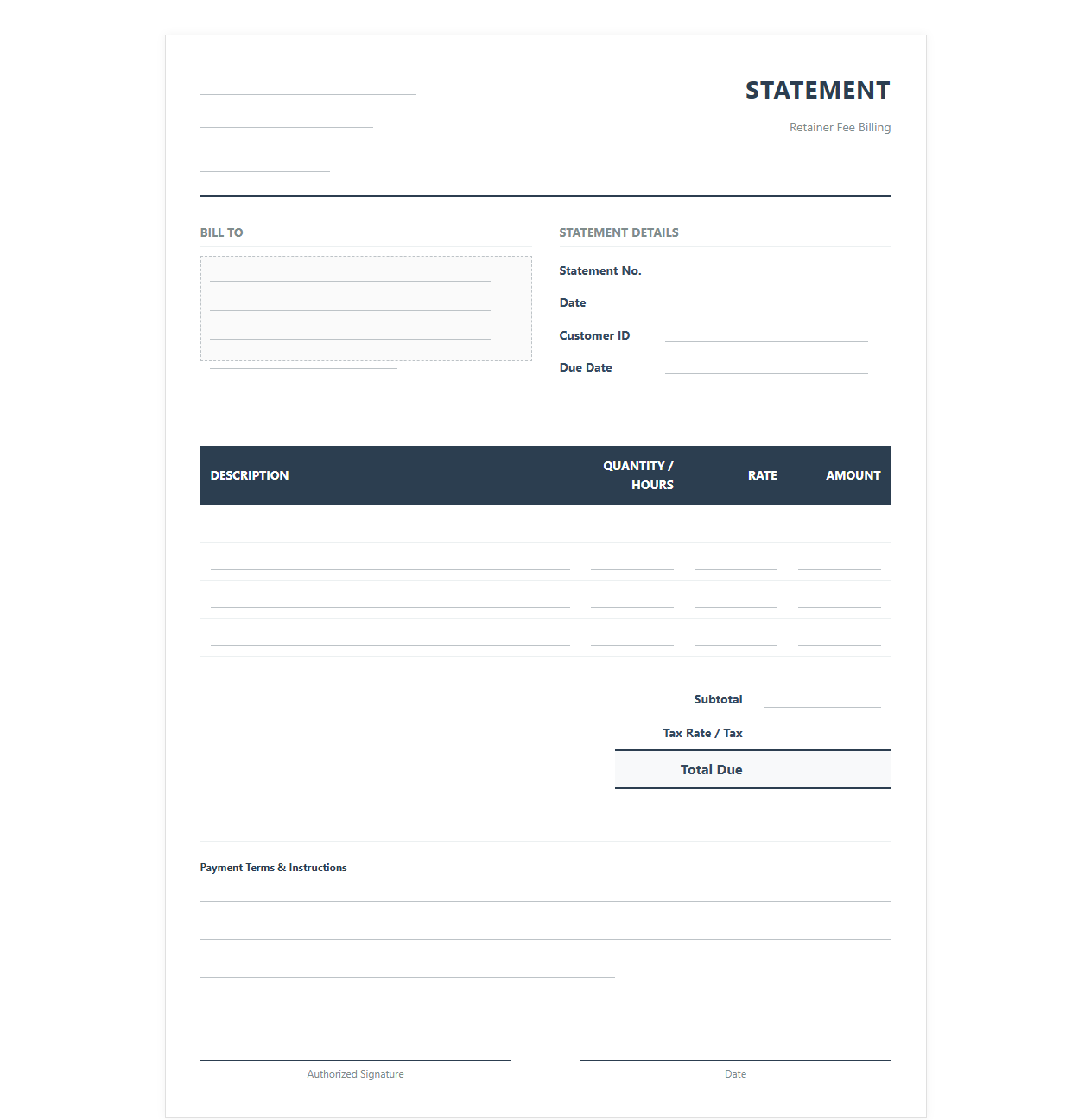 Download: .PDF
Monthly Retainer Account Billing Statement
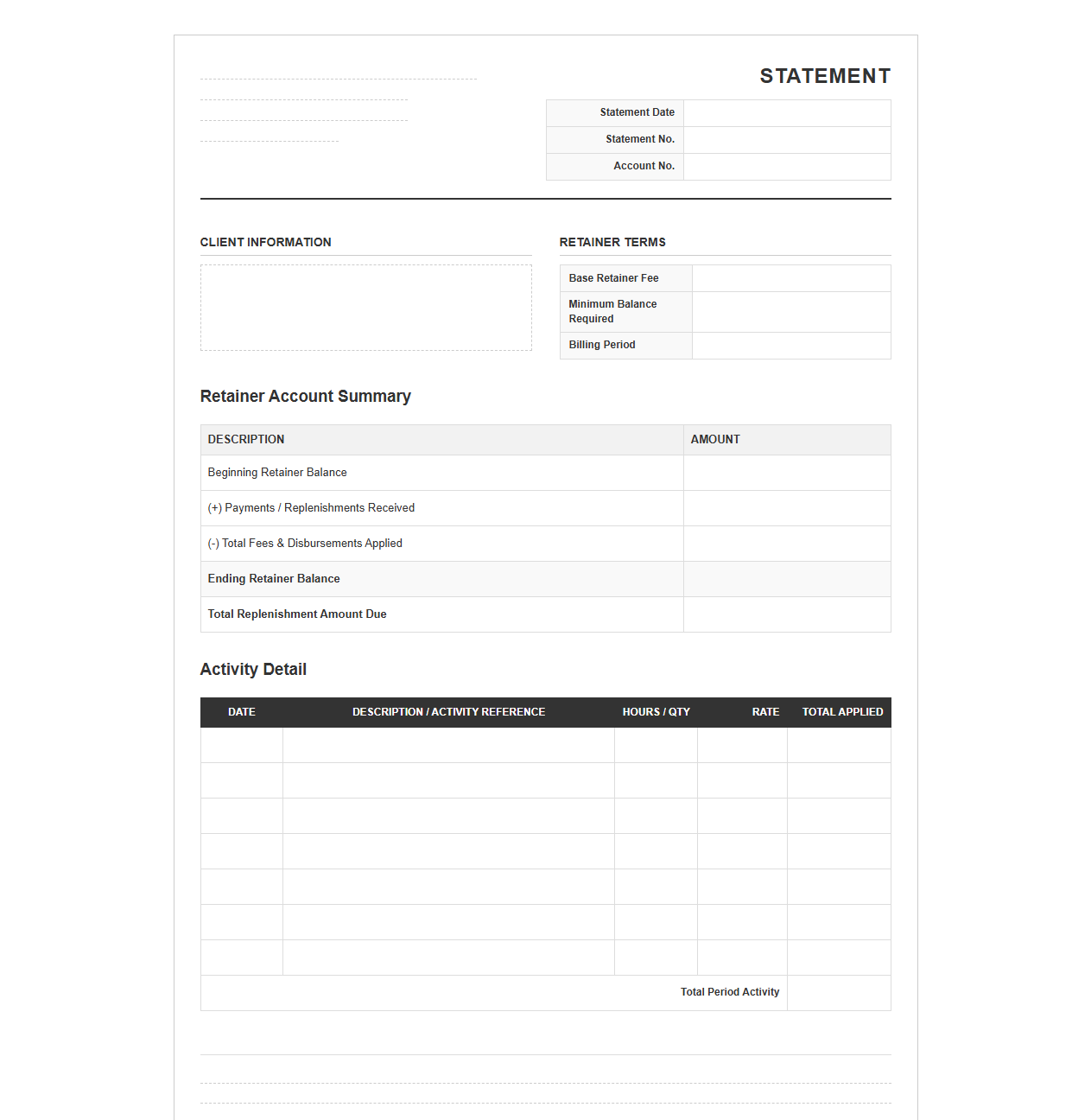 Download: .PDF
Client Retainer Balance and Billing Statement
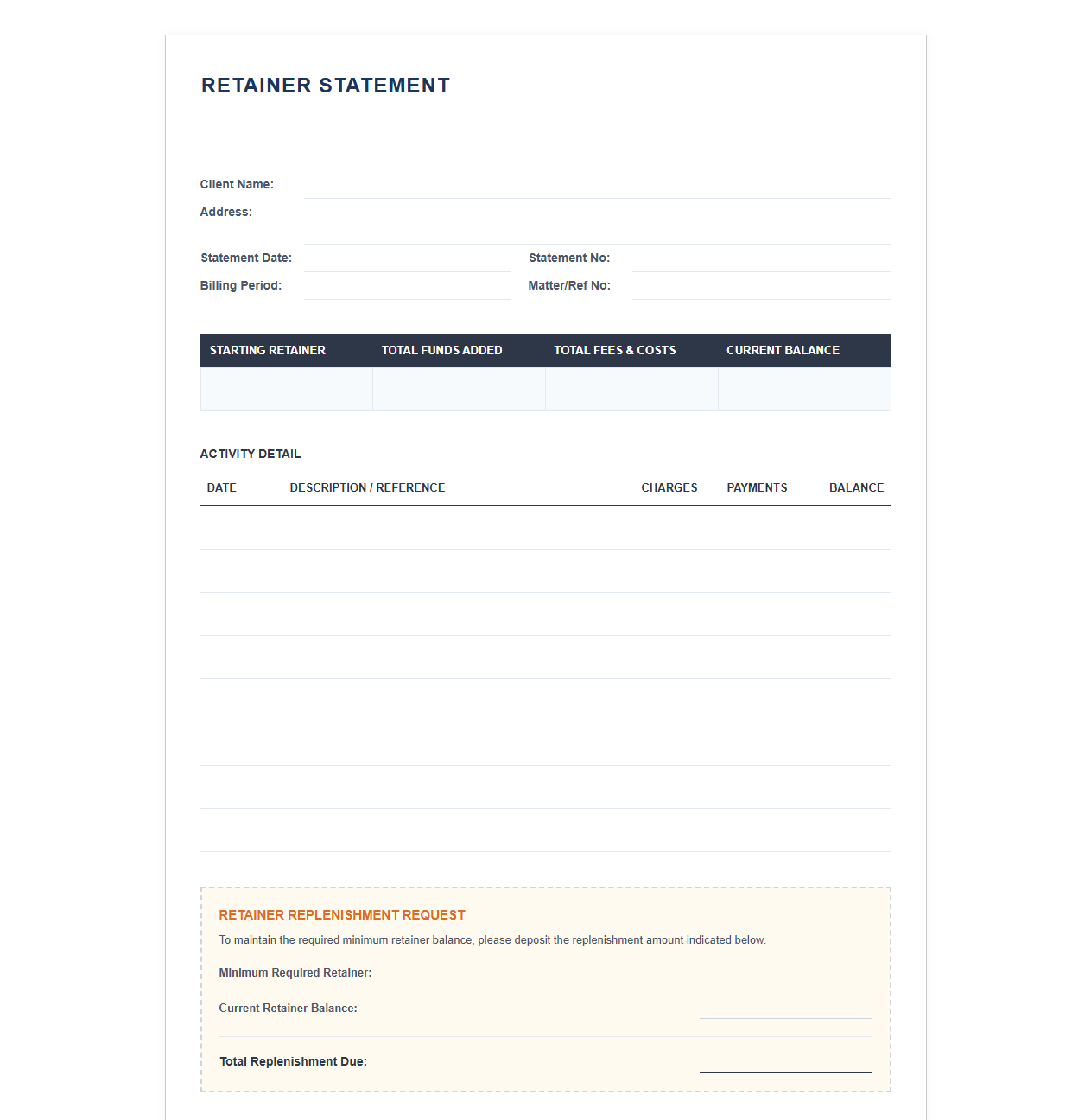 Download: .PDF
Professional Services Retainer Billing Statement
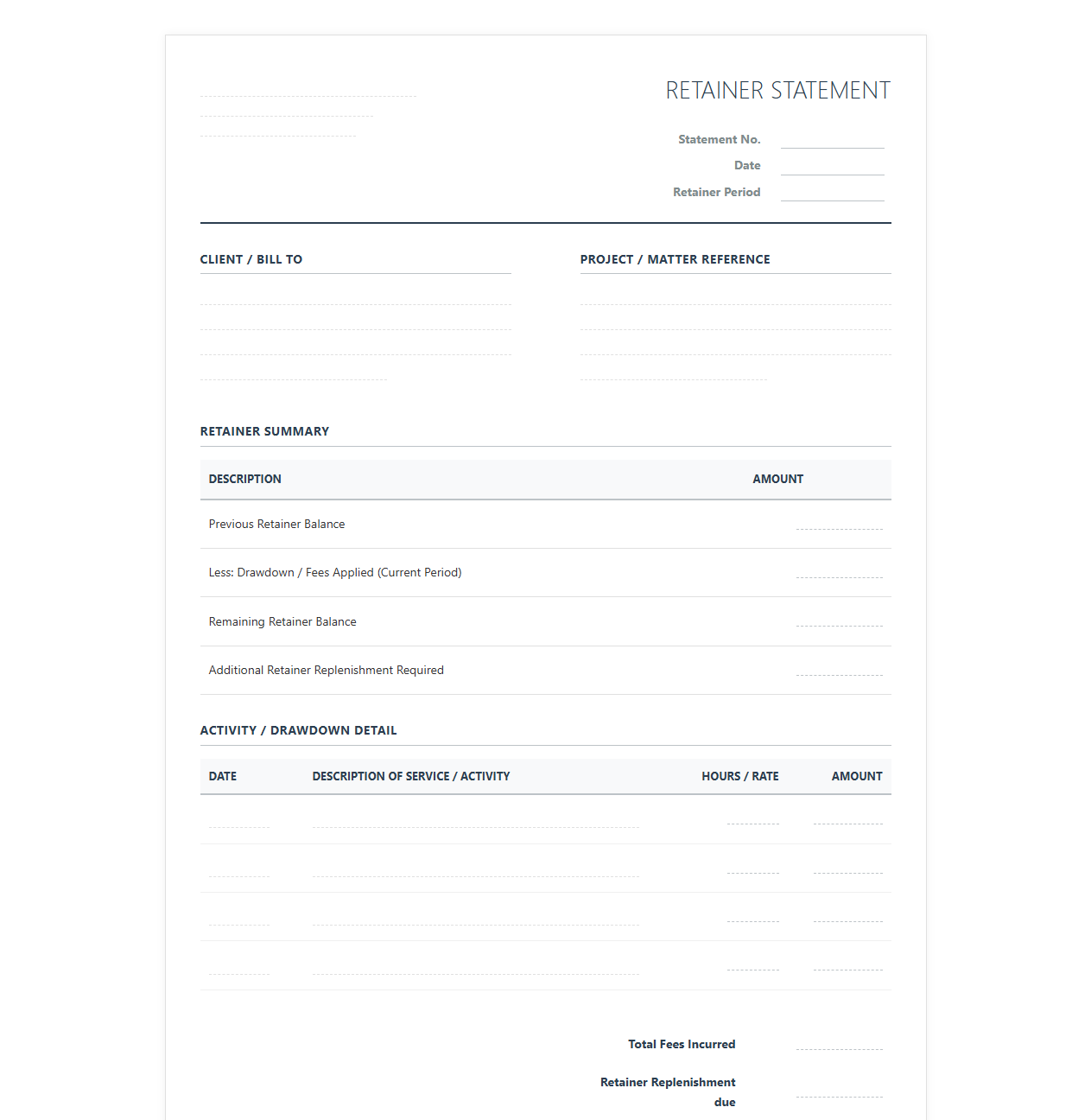 Download: .PDF
Legal Retainer Fees Billing Statement
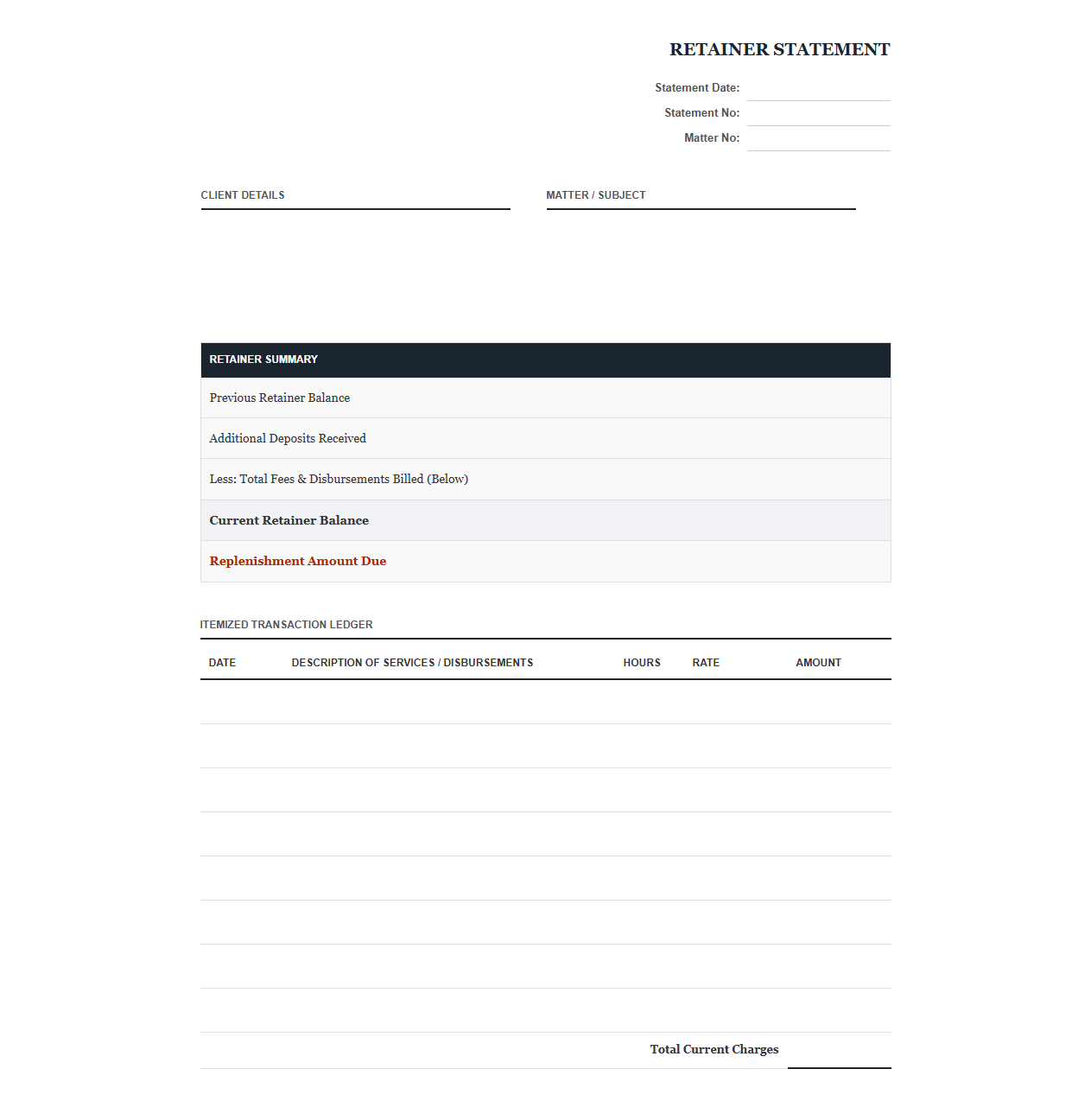 Download: .PDF
Consulting Retainer Activity and Billing Statement
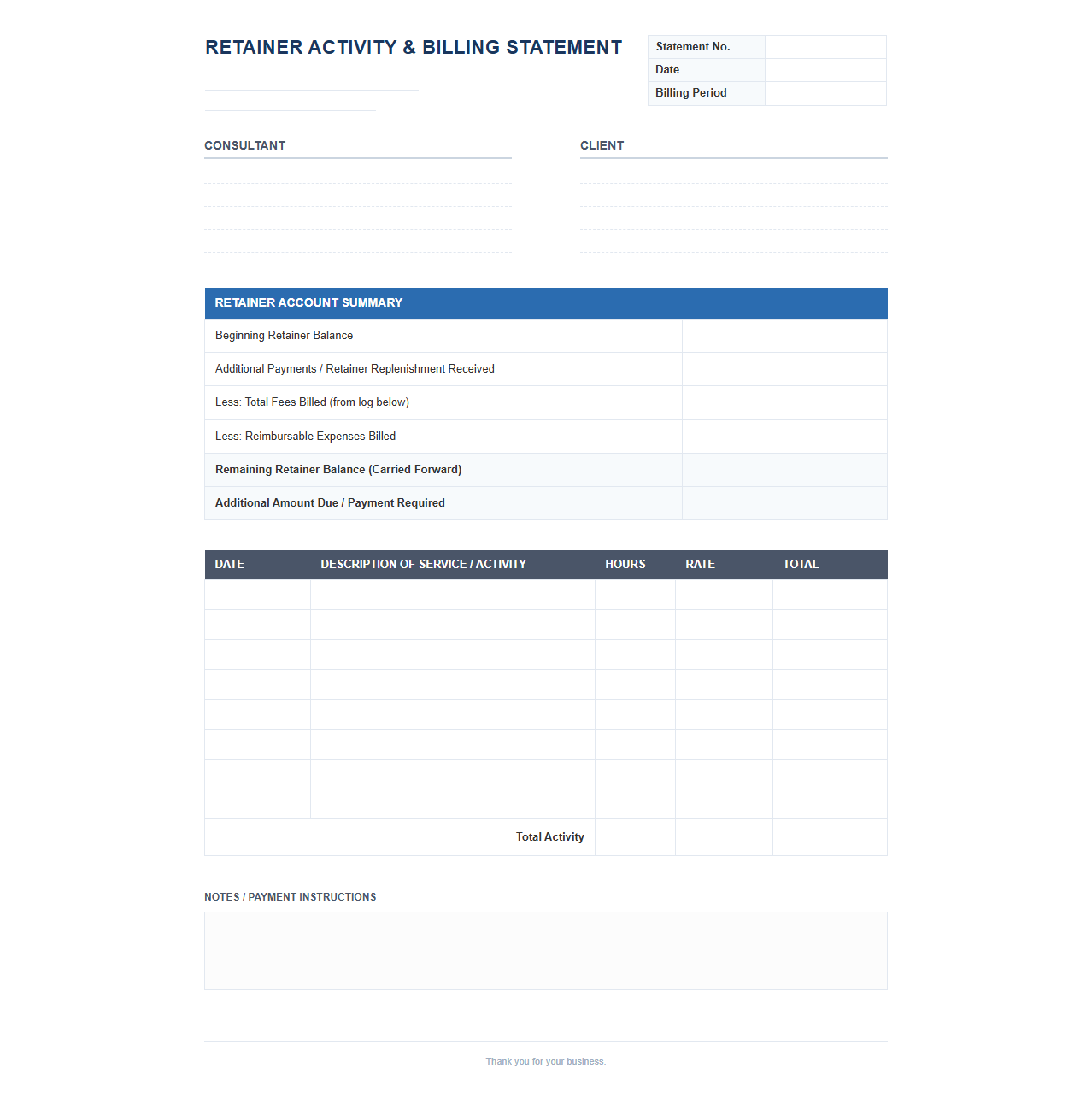 Download: .PDF
Advance Retainer Deposit Billing Statement
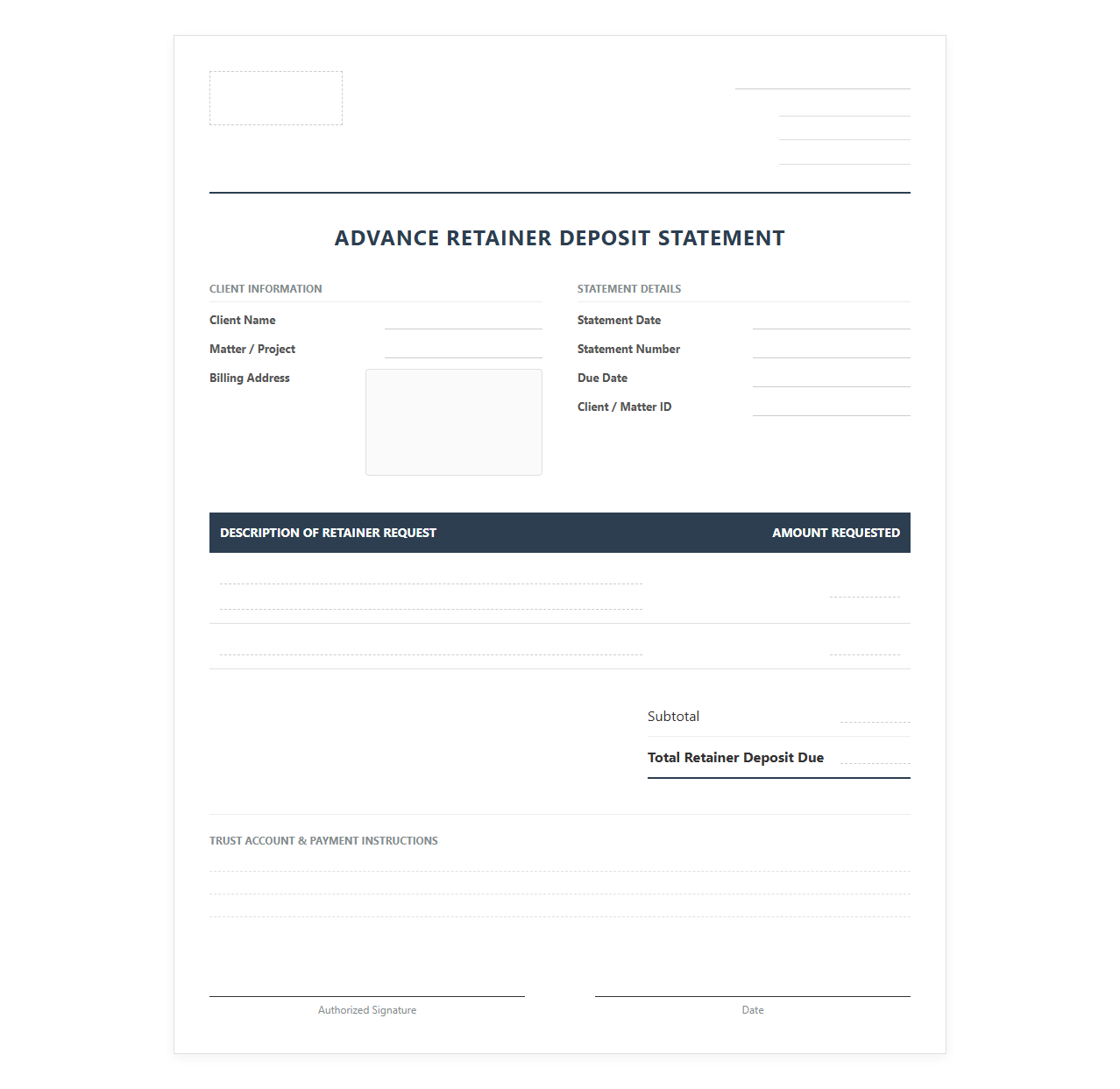 Download: .PDF
Agency Retainer Billing Statement Template
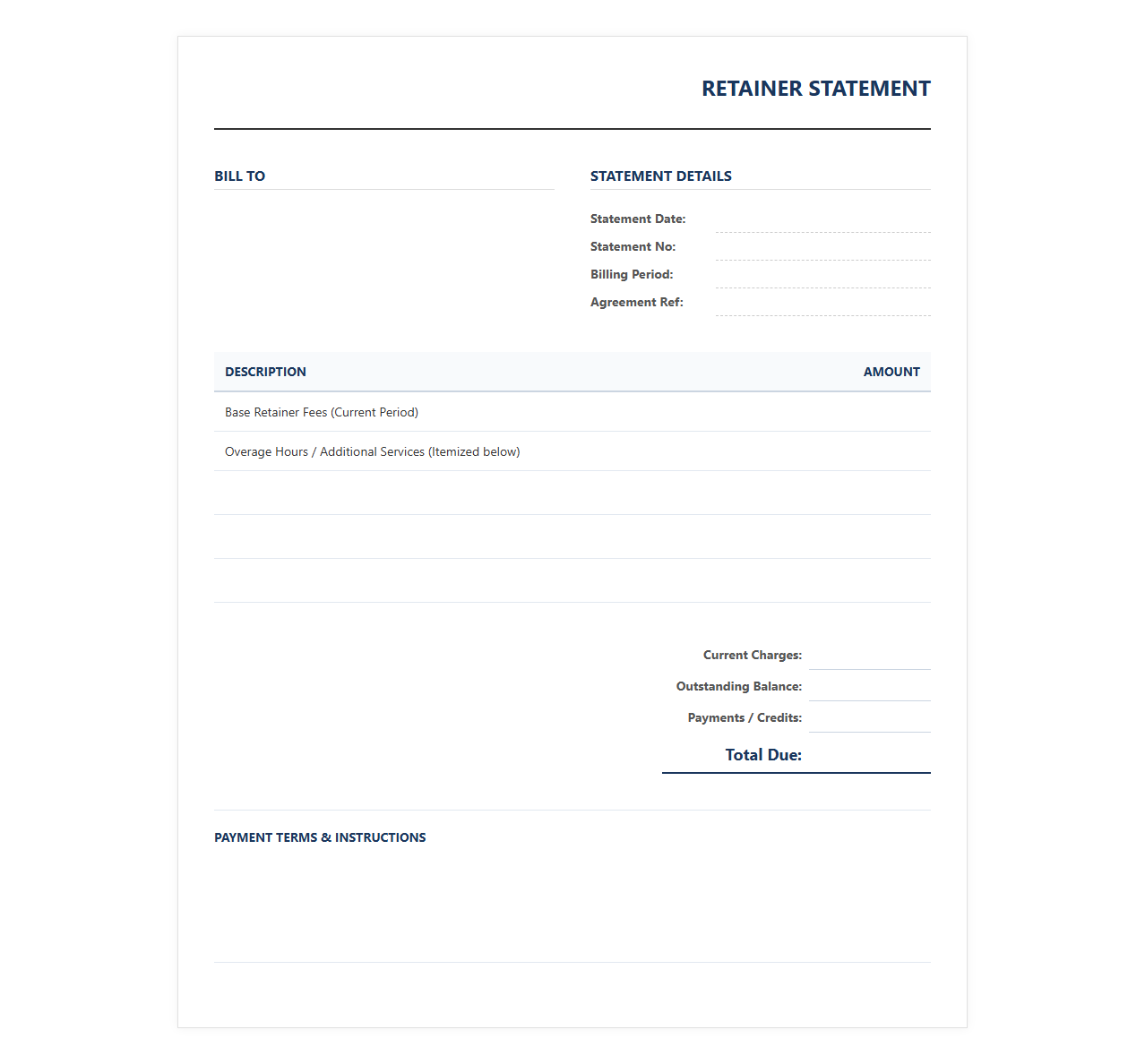 Download: .PDF
Introduction to Retainer Reconciliation
In professional services, retainer billing discrepancies often arise due to timing differences in logging billable hours, administrative lag, or varying software integrations. While these mismatches are usually administrative rather than intentional, addressing them promptly is vital to preserve client trust and ensure financial transparency.
Setting the Tone for Billing Discussions
When discussing financial discrepancies, communication must remain professional, objective, and collaborative. Avoid defensive statements. Instead, use empathetic listening, maintain a collaborative problem-solving approach, and frame the conversation around mutual clarity and accuracy.
Template 1: Gentle Initial Inquiry
Initial Balance Clarification
Use this template for a friendly, preliminary outreach to resolve minor inconsistencies in a retainer balance.
Subject: Inquiry Regarding Retainer Account Balance

Dear [Client Name],

I hope this email finds you well.

We are currently conducting a routine review of our retainer accounts. Our records indicate a slight discrepancy between the logged billable hours and the remaining balance on your retainer.

Could we schedule a brief call this week to ensure our records align perfectly with yours?

Best regards,
[Your Name]
Template 2: Detailed Account Statement Reconciliation
Itemized Retainer Breakdown
This structured statement provides a clear comparison between the hours worked and the retainer funds applied.
| Date | Activity Description | Hours Logged | Amount Drawn |
|---|---|---|---|
| 2023-10-01 | Initial Retainer Deposit | 0.0 | -$5,000.00 |
| 2023-10-05 | Strategic Consulting | 5.0 | $750.00 |
| 2023-10-12 | Technical Implementation | 8.0 | $1,200.00 |
Template 3: Formal Resolution and Agreement
Resolution and Sign-Off Agreement
Below is the formal confirmation framework to finalize the reconciliation process and document the mutual agreement.
By signing below, both parties acknowledge and agree that the adjusted retainer balance of $3,050.00 accurately reflects all services rendered up to October 31, 2023. No further adjustments will be made for this billing period.
Proactive Strategies to Prevent Discrepancies
Implementing systematic checks helps financial teams avoid retainer mismatches before they impact client relationships.
- Perform bi-weekly automated reconciliation checks.
- Utilize integrated real-time time-tracking software.
- Establish clear, upfront billing communication guidelines.
Securing Long-Term Client Relationships
Transparent billing processes and constructive dispute resolutions are foundational pillars of professional partnerships. Resolving balance inquiries with empathy and clarity serves to strengthen the advisor-client connection, proving your commitment to integrity.
Read More

Leave a comment