

For corporate financial officers, the constant dread of undetected tax filing errors and subsequent regulatory audits represents a high-stakes vulnerability. Before addressing specific contractual safeguards, it is vital to recognize that standard internal audits often fail to protect a business when third-party preparers or joint-venture partners misrepresent financial data.
Deploying a structured Tax Return Filing Accuracy Indemnity Agreement grants organizations an essential legal shield, effectively insulating your balance sheet from external negligence. However, an important educational stipulation must be noted: these templates are designed to allocate financial liability between parties; they do not absolve an entity of its primary statutory obligations to revenue authorities.
For instance, if an unauthorized deduction triggers a $100,000 IRS penalty, this indemnity framework ensures the negligent party covers the entire loss. Below, we will examine the critical clauses of these agreement templates, how to customize them, and best practices for mitigating corporate risk.
Tax Filing Accuracy Indemnity Agreement
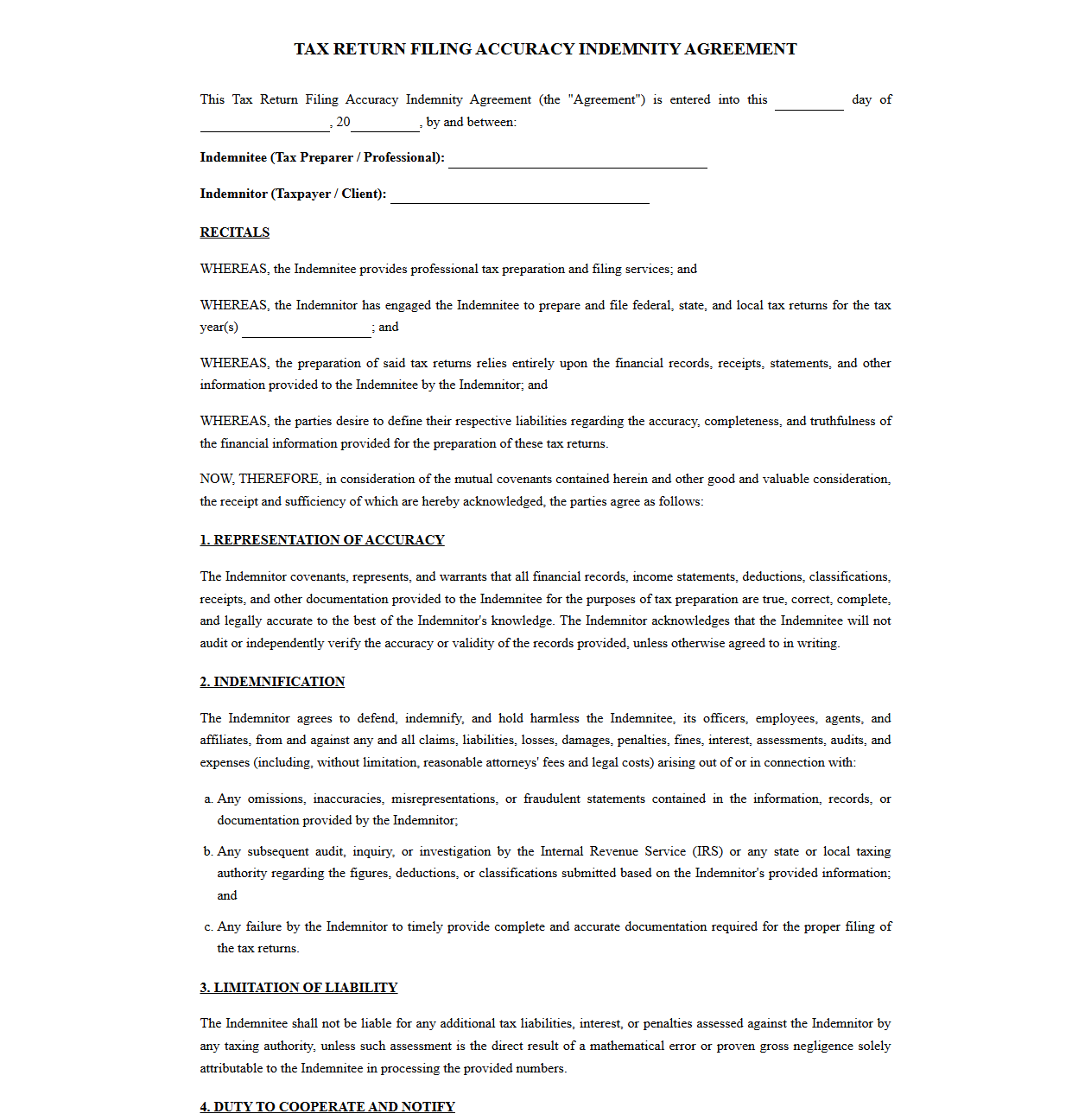 Download: .PDF
Tax Return Accuracy Indemnification Deed
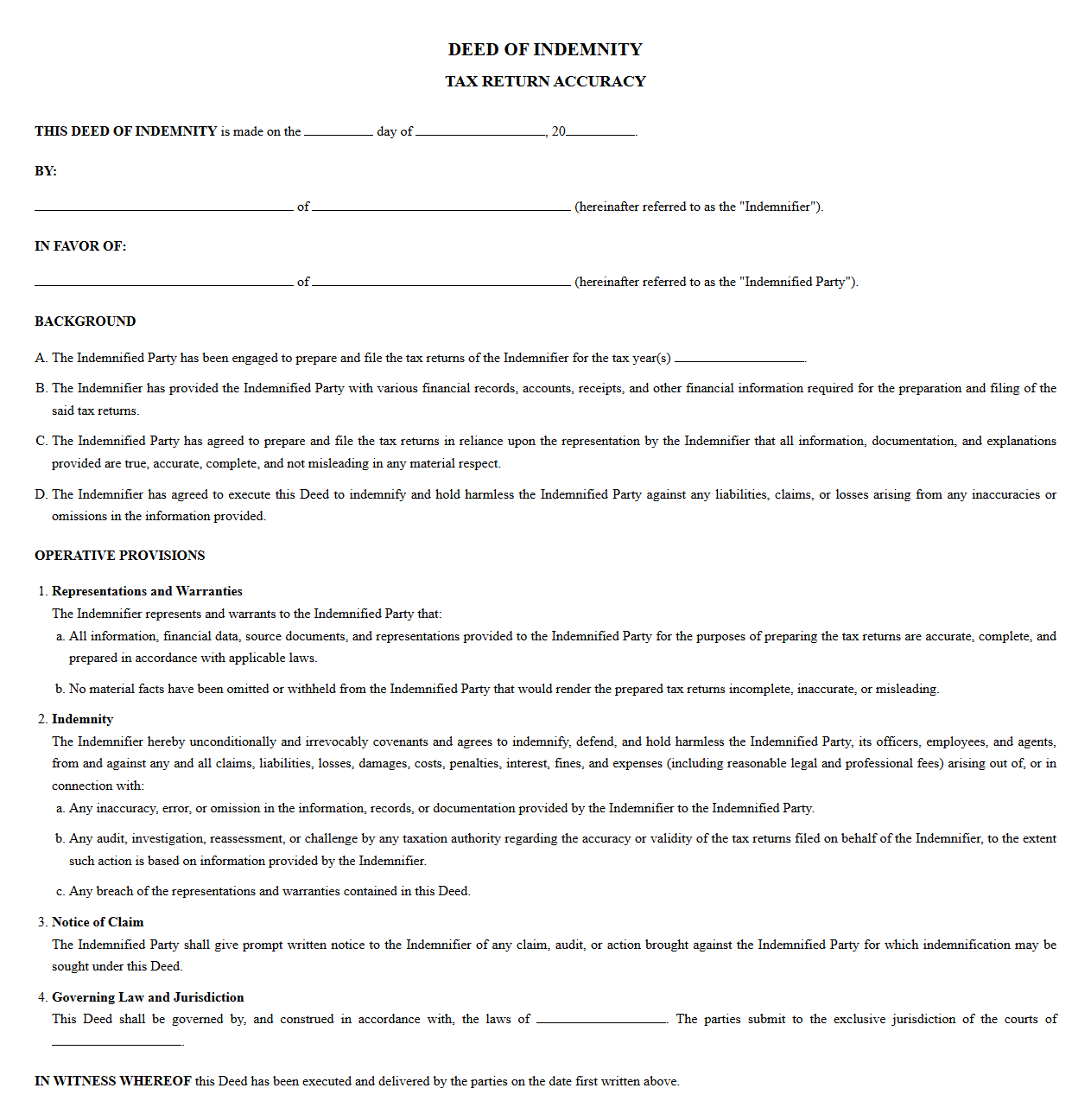 Download: .PDF
Income Tax Filing Indemnity Covenant
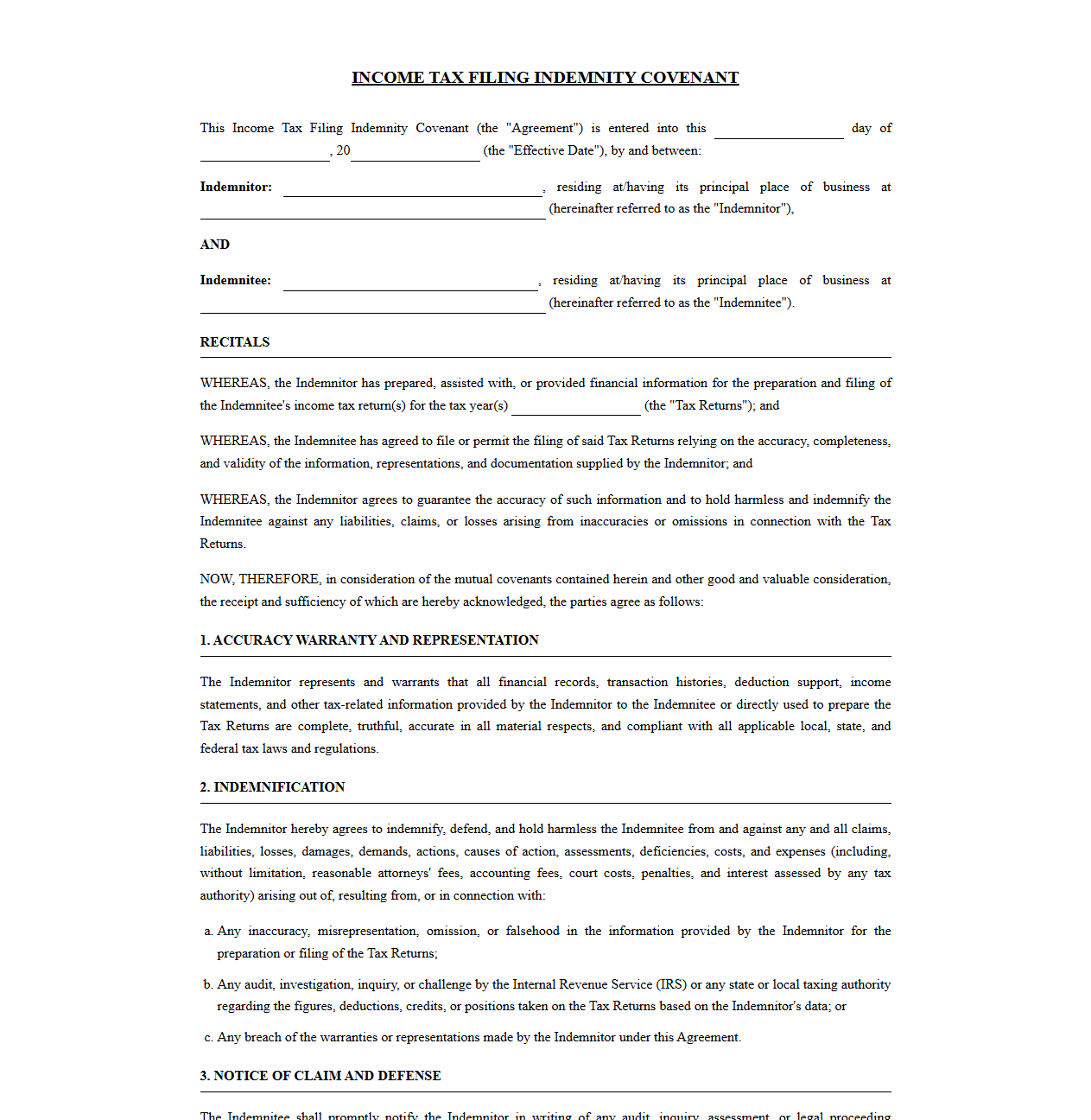 Download: .PDF
Tax Return Filing Guarantee and Indemnity Agreement
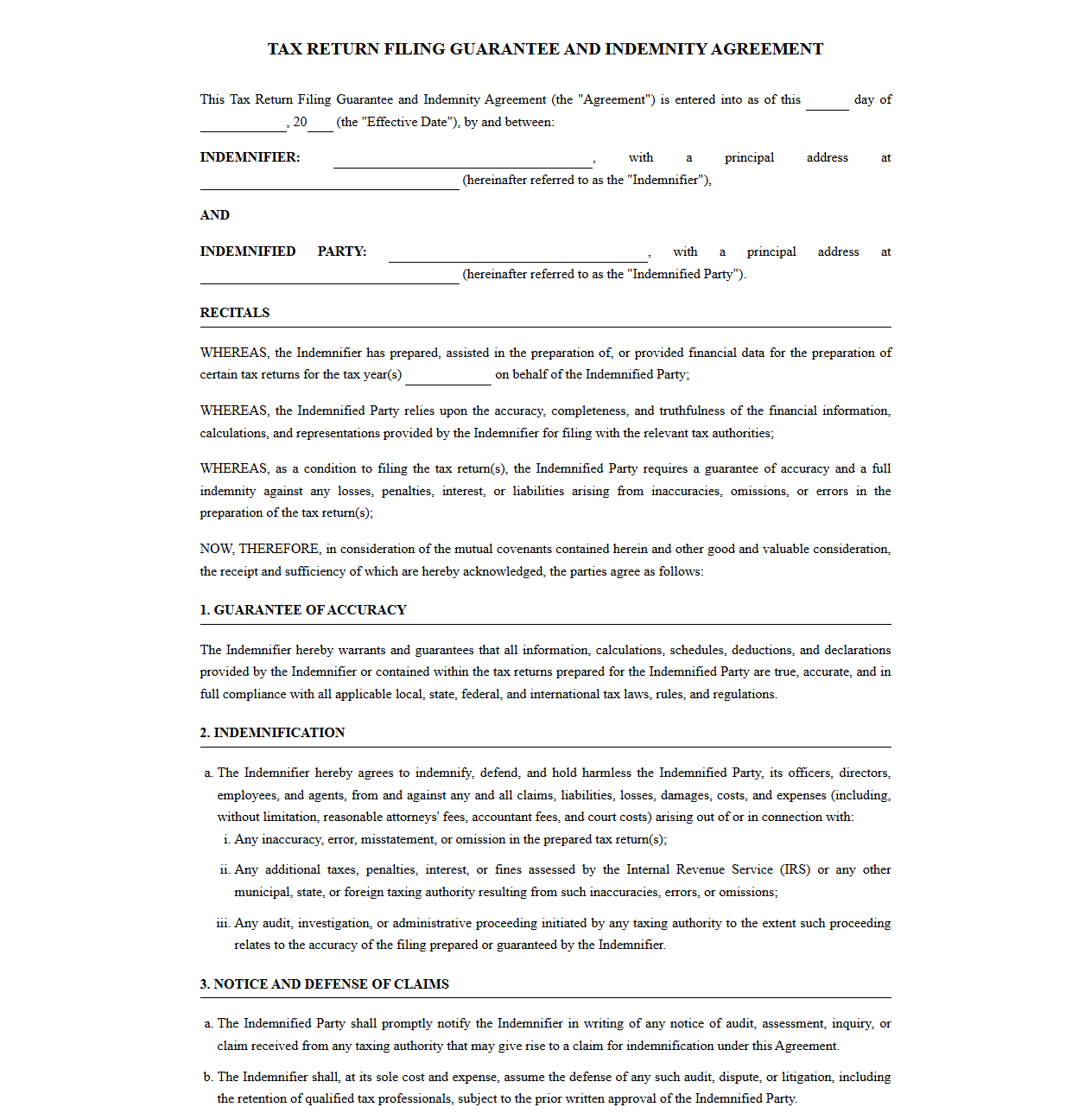 Download: .PDF
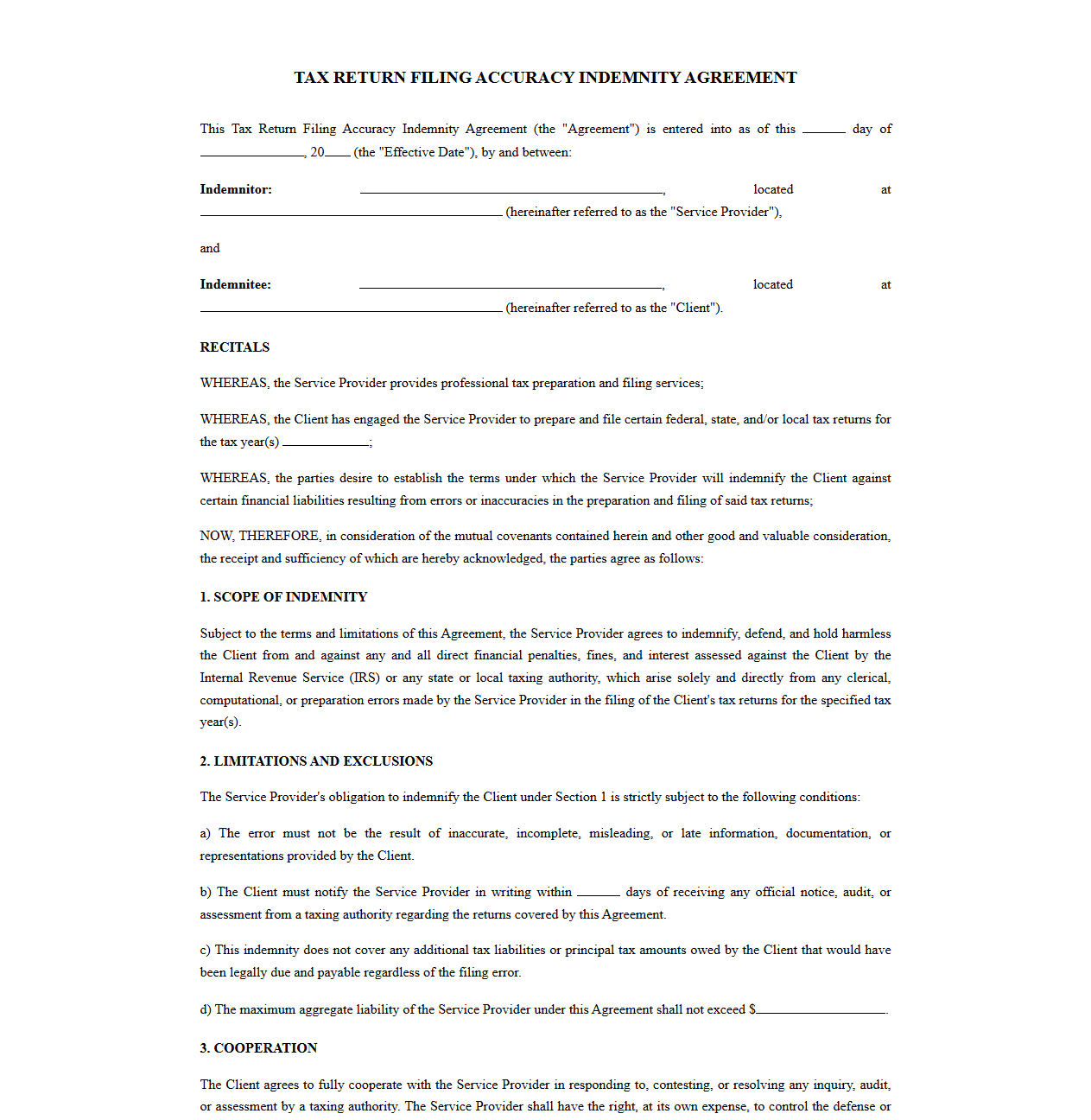
Tax Filing Error Indemnity Agreement
 Download: .PDF
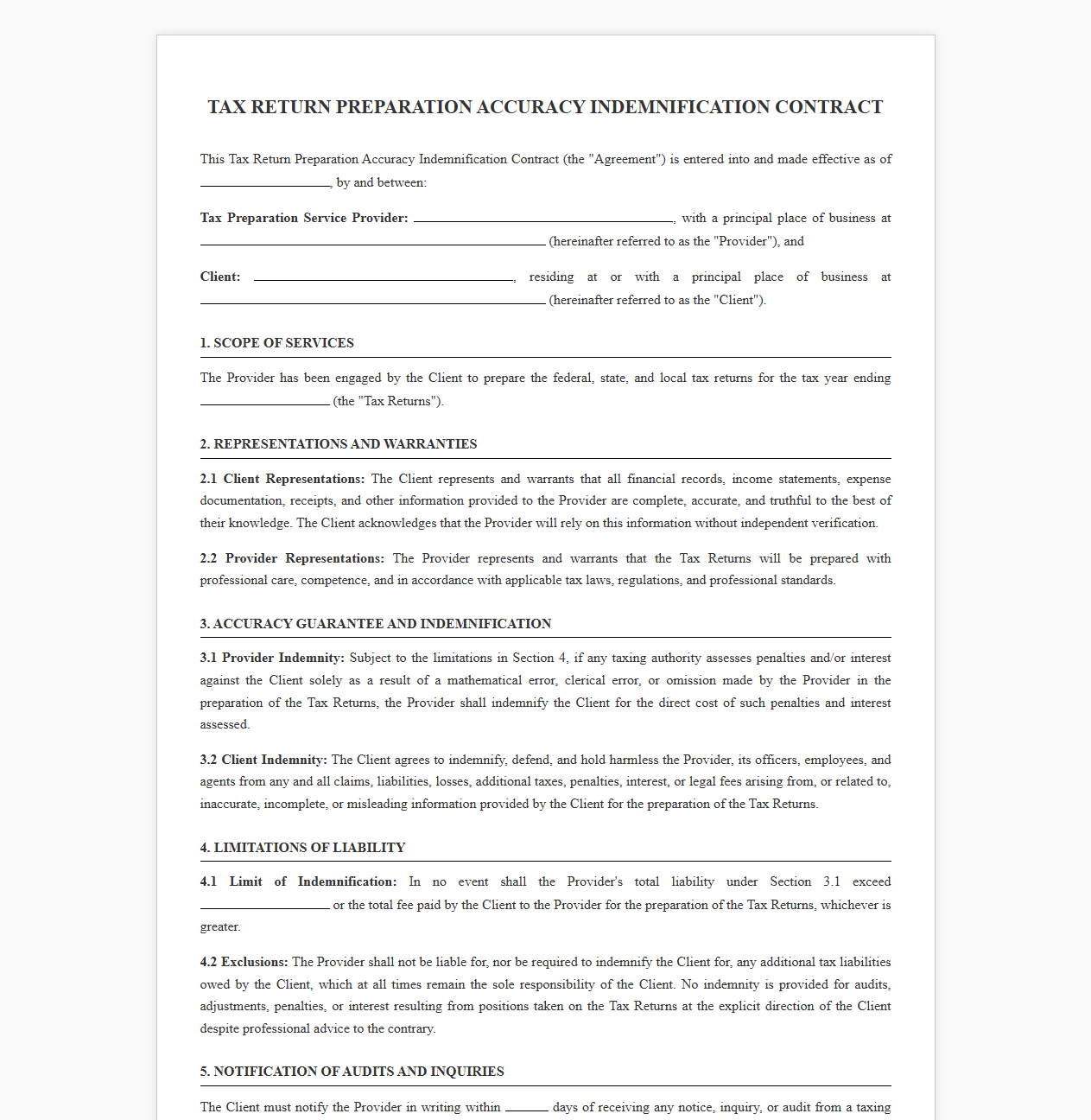
Tax Return Preparation Accuracy Indemnification Contract
 Download: .PDF
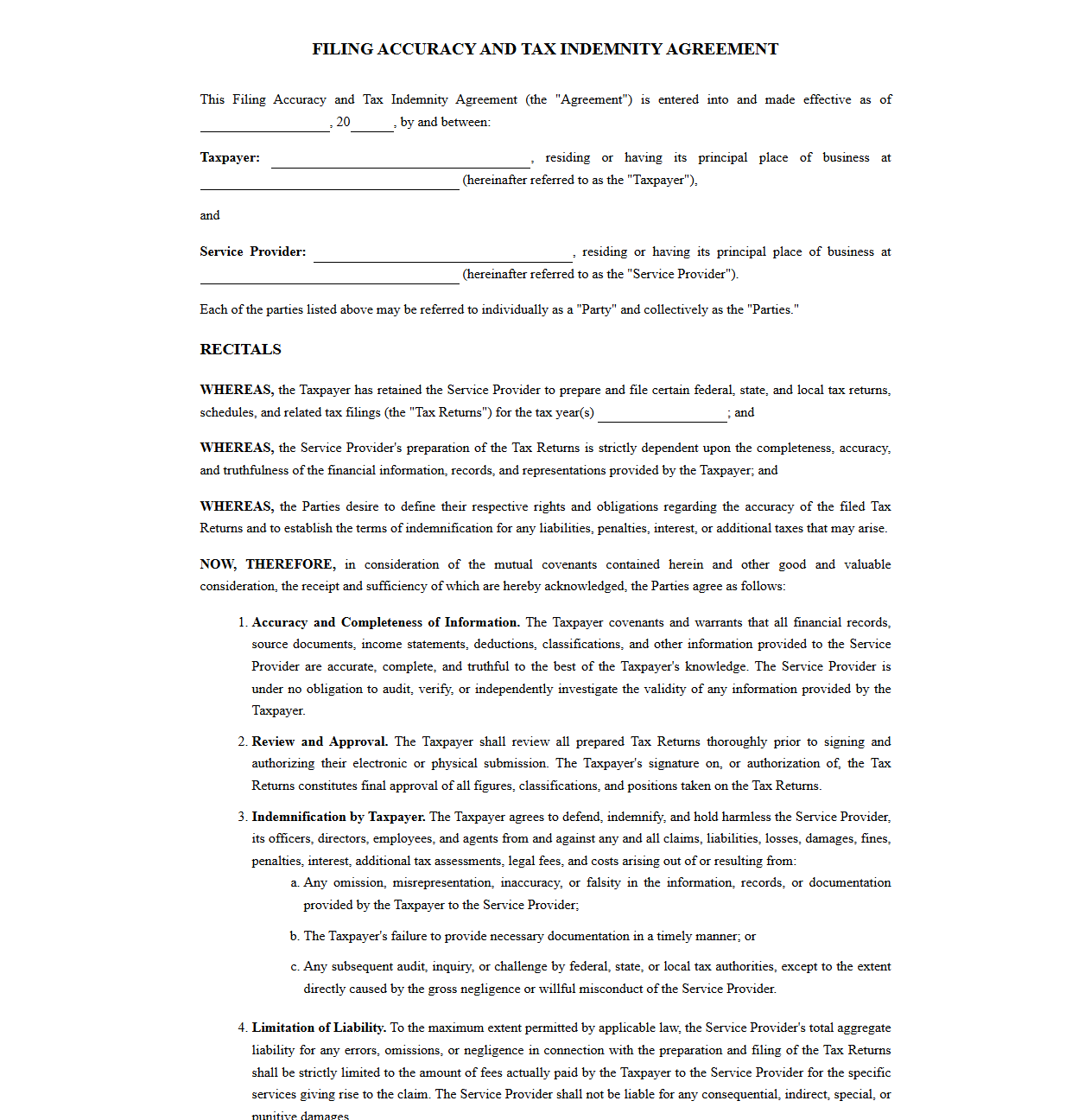
Filing Accuracy and Tax Indemnity Agreement
 Download: .PDF
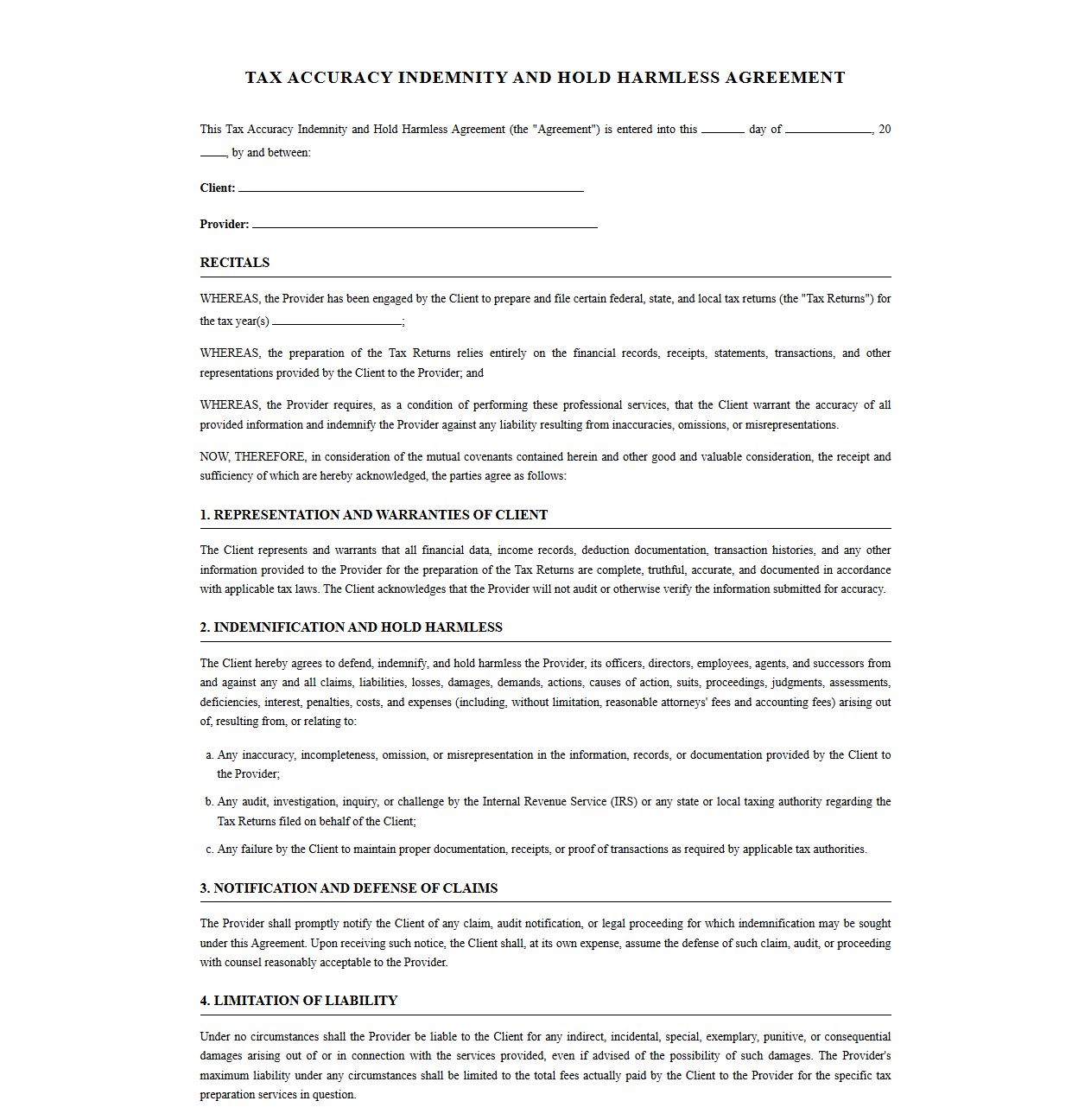
Tax Accuracy Indemnity and Hold Harmless Agreement
 Download: .PDF
Mitigating Financial Risk: The Power of Tax Accuracy Indemnities
In the modern corporate landscape, a single tax filing error can trigger a devastating chain reaction of financial liabilities. Organizations face severe exposure when delegating their tax preparation to external partners, where oversight or miscalculations can lead to crippling consequences. To safeguard their bottom line, forward-thinking businesses utilize Tax Return Filing Accuracy Indemnity Agreements. These legal instruments act as a critical shield, transferring the burden of preparer errors away from the business and ensuring that external service providers remain financially accountable for the accuracy of their work.
The True Cost of Tax Filing Inaccuracies
When a third-party preparer files an incorrect tax return, the primary taxpayer remains responsible in the eyes of tax authorities. The fallout from these inaccuracies extends far beyond the initial errors, often resulting in compounded financial and operational damage that can jeopardize a company's market standing. Businesses face several critical hazards when filing errors occur:
- Severe IRS Penalties and Interest: Tax authorities levy heavy fines and compound interest on unpaid balances, turning minor filing oversights into massive financial liabilities.
- Resource-Intensive Audits: Inaccuracies act as red flags, triggering comprehensive audits that drain internal resources, demand hundreds of billable hours, and disrupt daily business operations.
- Reputational Damage: News of tax non-compliance or public disputes with revenue services can erode investor confidence, damage relationships with stakeholders, and harm brand equity.
Defining the Tax Return Filing Accuracy Indemnity Agreement
A Tax Return Filing Accuracy Indemnity Agreement is a specialized contractual arrangement designed to reallocate financial risk. Under normal circumstances, the taxpayer bears absolute liability for any errors on their return, regardless of who prepared it. This agreement legally shifts the financial consequences of filing mistakes from the taxpayer to the professional tax preparer or third-party vendor responsible for the work.
"Indemnity in this context refers to a contractual obligation where one party (the indemnitor) agrees to compensate the other party (the indemnitee) for certain damages, losses, or liabilities arising from the indemnitor's professional errors, omissions, or failure to meet the standard of care in preparing tax filings."
Essential Clauses in a Tax Indemnity Template
To provide robust protection, a tax indemnity agreement must contain precise, unambiguous language. Using a standardized template helps ensure that all legal bases are covered, but parties must pay close attention to several foundational clauses.
Scope of Coverage
This clause defines exactly which tax returns, jurisdictions, and filing periods are covered under the indemnity. It clarifies whether the protection applies only to federal filings or extends to state, local, and international tax returns.
Cap on Liability
Both parties must agree on the maximum financial exposure of the preparer. This clause establishes a monetary ceiling on the indemnity payouts, balancing the taxpayer's need for security with the preparer's need to manage business risk.
Dispute Resolution Procedures
Should a conflict arise regarding who caused a filing error, this clause outlines the step-by-step process for resolving the disagreement. It typically mandates mediation or binding arbitration before either party can initiate litigation.
How Indemnity Templates Actively Reduce Corporate Liability
Implementing a structured indemnity template serves as an active risk-mitigation tool rather than a passive legal backup. By establishing clear parameters of accountability before any paperwork is filed, businesses create a culture of rigorous compliance and precision. Preparers who sign these agreements are legally bound to exercise the highest standards of professional diligence, knowing they face direct financial consequences for negligence.
Furthermore, these contracts prevent prolonged, costly litigation by pre-determining liability. If an audit reveals a preparer error, the template provides a clear roadmap for financial recourse, allowing the business to recover losses swiftly without spending years in court proving fault. This contractual certainty stabilizes corporate balance sheets and keeps management focused on growth rather than legal defense.
Best Practices for Implementing and Customizing Your Agreement
No two corporate tax profiles are identical, meaning a generic, off-the-shelf contract is rarely sufficient. Legal and financial departments must actively customize their indemnity templates to align with their specific operational realities and industry regulations.
- Assess Your Specific Tax Profile: Evaluate the complexity of your business structure, including cross-border transactions, multi-state operations, and industry-specific tax credits.
- Align with Professional Liability Insurance: Ensure that the indemnification limits in the agreement align with the tax preparer's errors and omissions (E&O) insurance policy limits to guarantee funds are available if a claim arises.
- Define the Triggering Events Clearly: Establish precise definitions for what constitutes a breach of accuracy, distinguishing between minor, easily correctable discrepancies and material errors that result in actual financial harm.
- Establish a Joint Review Process: Create a contractual requirement for a pre-filing review where both internal financial teams and external preparers sign off on the data before submission.
Securing Your Financial Future Through Contractual Precision
Proactive legal planning is the cornerstone of sustainable corporate governance. By establishing a robust Tax Return Filing Accuracy Indemnity Agreement, your organization constructs an impenetrable wall against the financial threats of external preparer errors. Do not wait for an IRS audit to discover the vulnerabilities in your third-party vendor contracts. Protect your business assets and secure peace of mind by downloading our professional Tax Return Filing Accuracy Indemnity Agreement Template today to customize it for your organization's specific needs.

Leave a comment