
Corporate tax executives constantly struggle with fragmented, ad-hoc service agreements that expose multinational enterprises to severe compliance gaps and costly liability disputes. Before addressing remediation, we must recognize that today's aggressive global regulatory climate leaves absolutely no room for ambiguous contractual terms. Standardizing these agreements across your organization grants tax departments immediate operational control and robust risk mitigation.
Crucially, while standardized templates streamline procurement, they must be treated as foundational baselines rather than rigid, one-size-fits-all solutions, requiring localized adjustments for specific jurisdictions. Integrating concrete protections-such as precise transfer pricing clauses and explicit scope-of-work boundaries-safeguards your organization from third-party errors and unexpected audit penalties.
This article examines the essential components of a standardized corporate tax service agreement, analyzes key clauses to mitigate liability, and outlines a practical roadmap to secure your compliance framework.
Corporate Tax Compliance Agreement Template
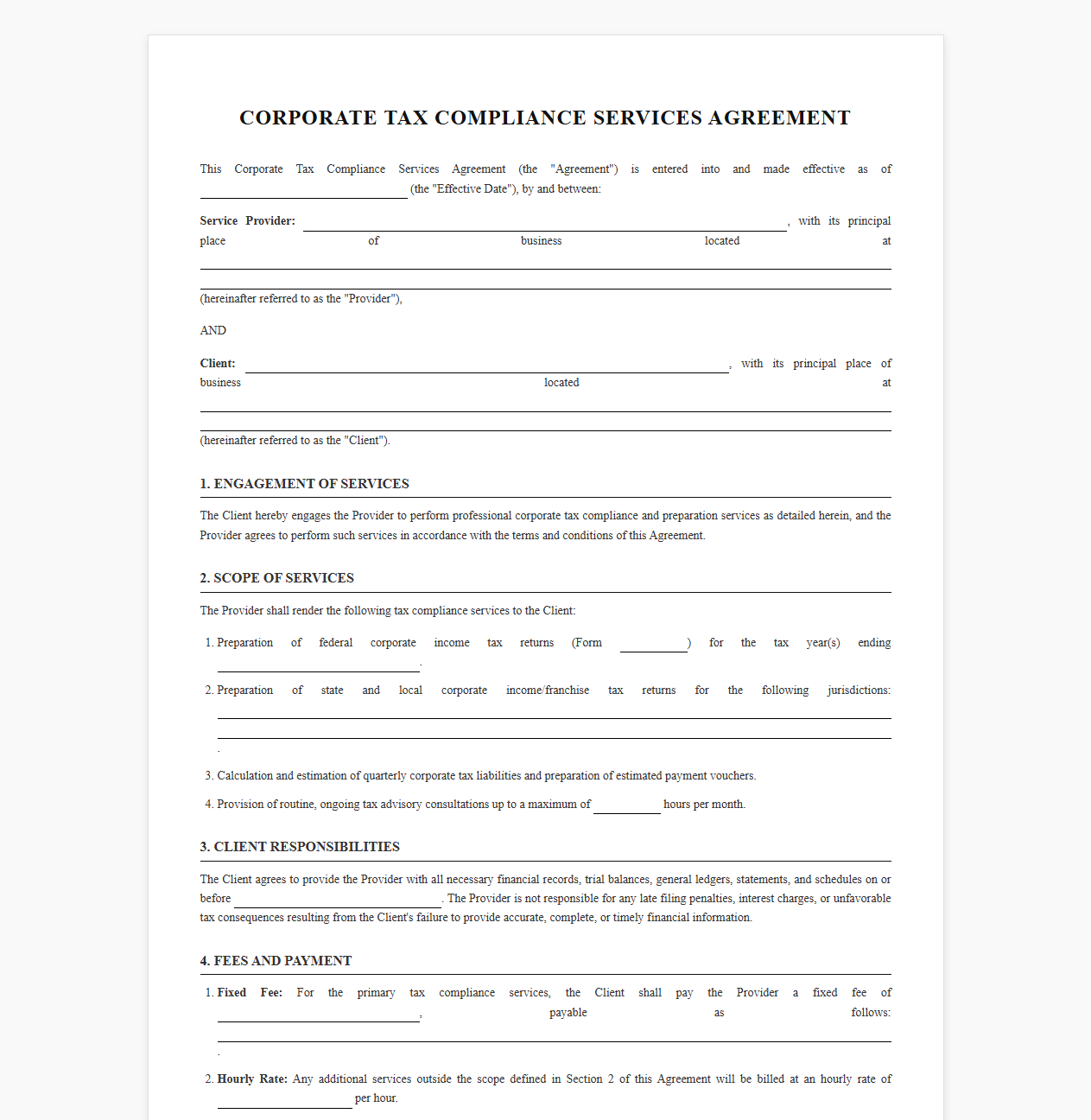 Download: .PDF
Corporate Tax Advisory Services Agreement
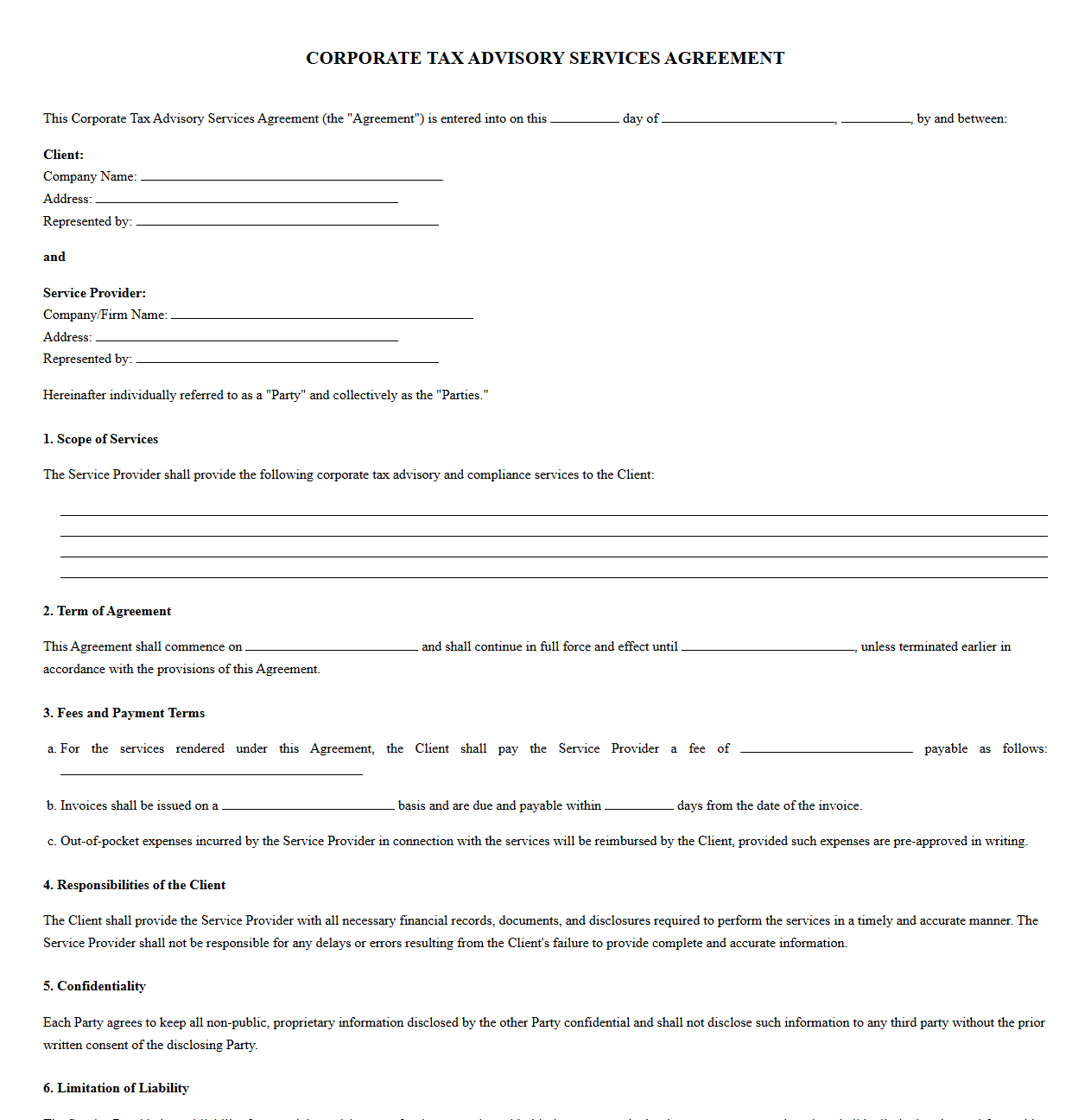 Download: .PDF
Corporate Tax Return Preparation Contract Template
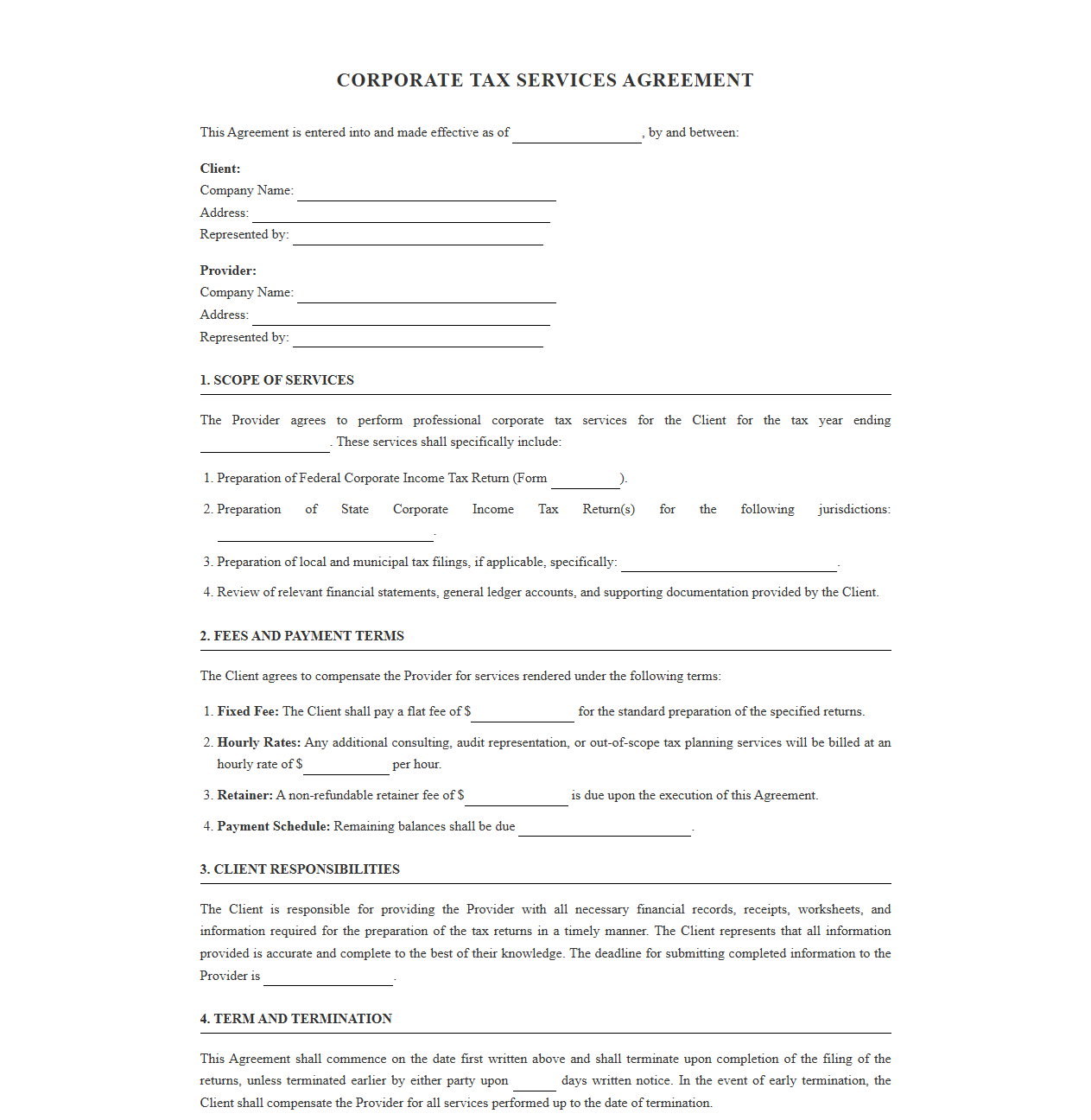 Download: .PDF
Master Agreement for Corporate Tax Services
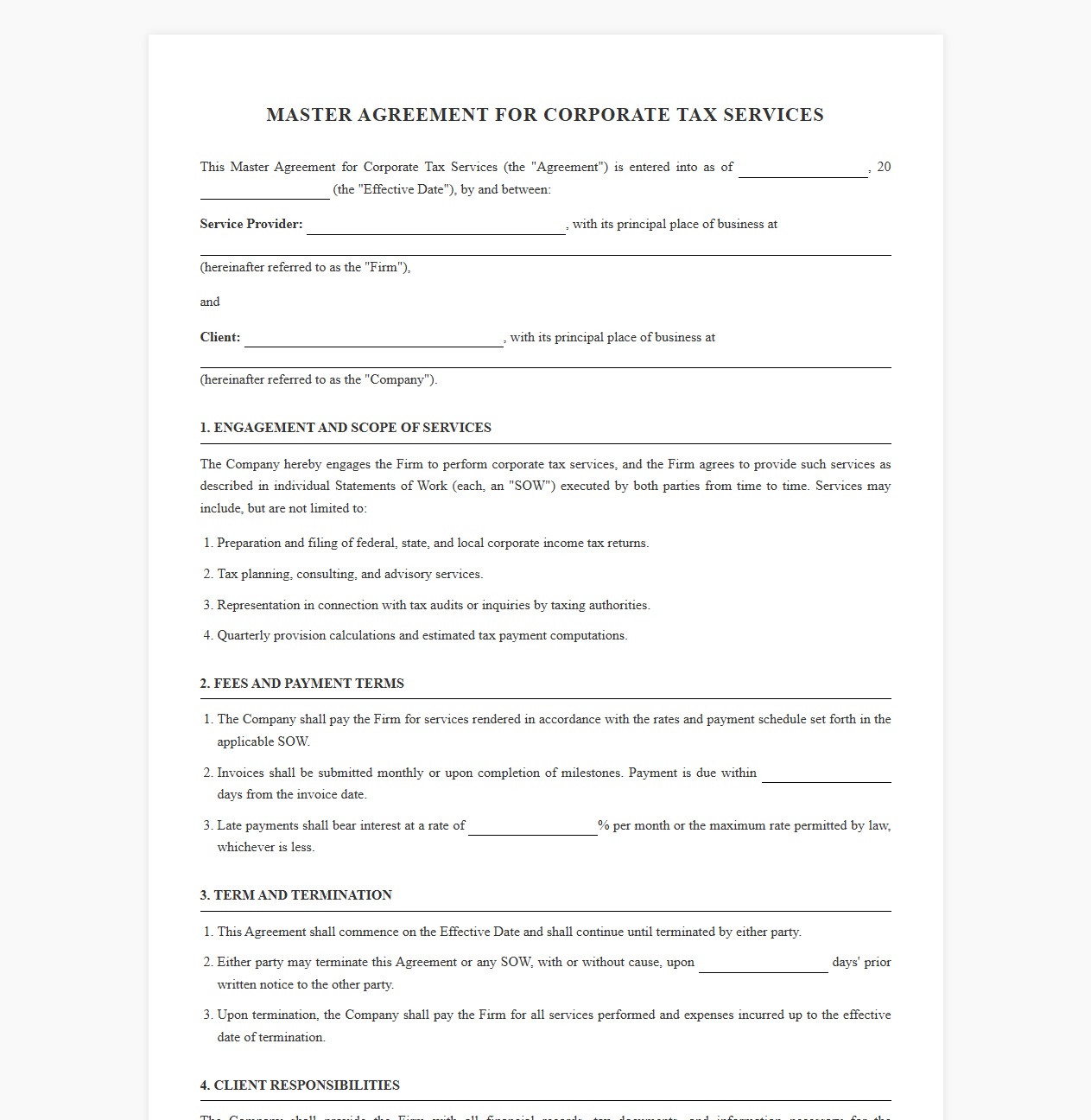 Download: .PDF
Corporate Tax Consulting Engagement Letter Template
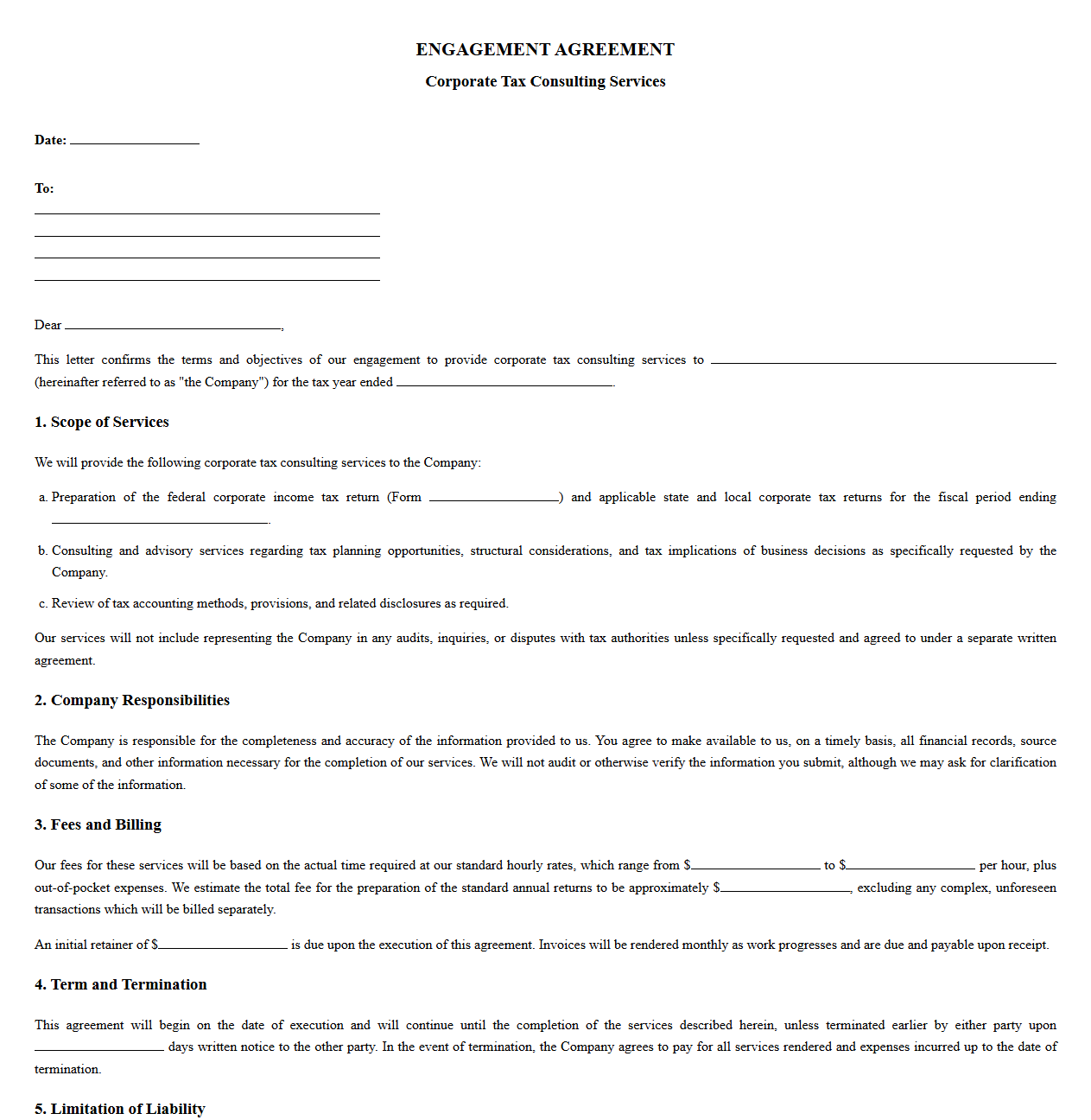 Download: .PDF
Annual Corporate Tax Services Contract
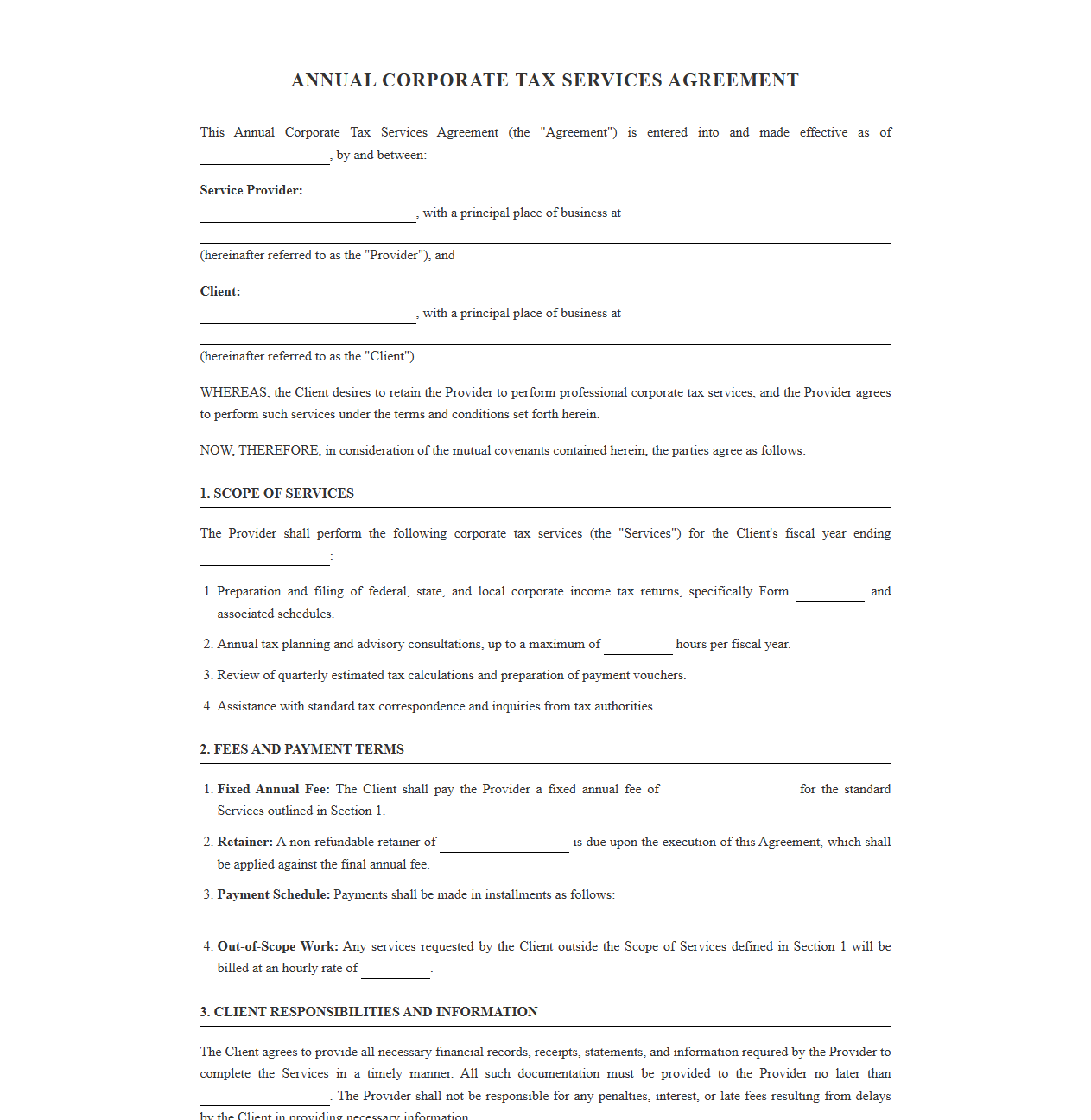 Download: .PDF
Corporate Income Tax Service Agreement Template
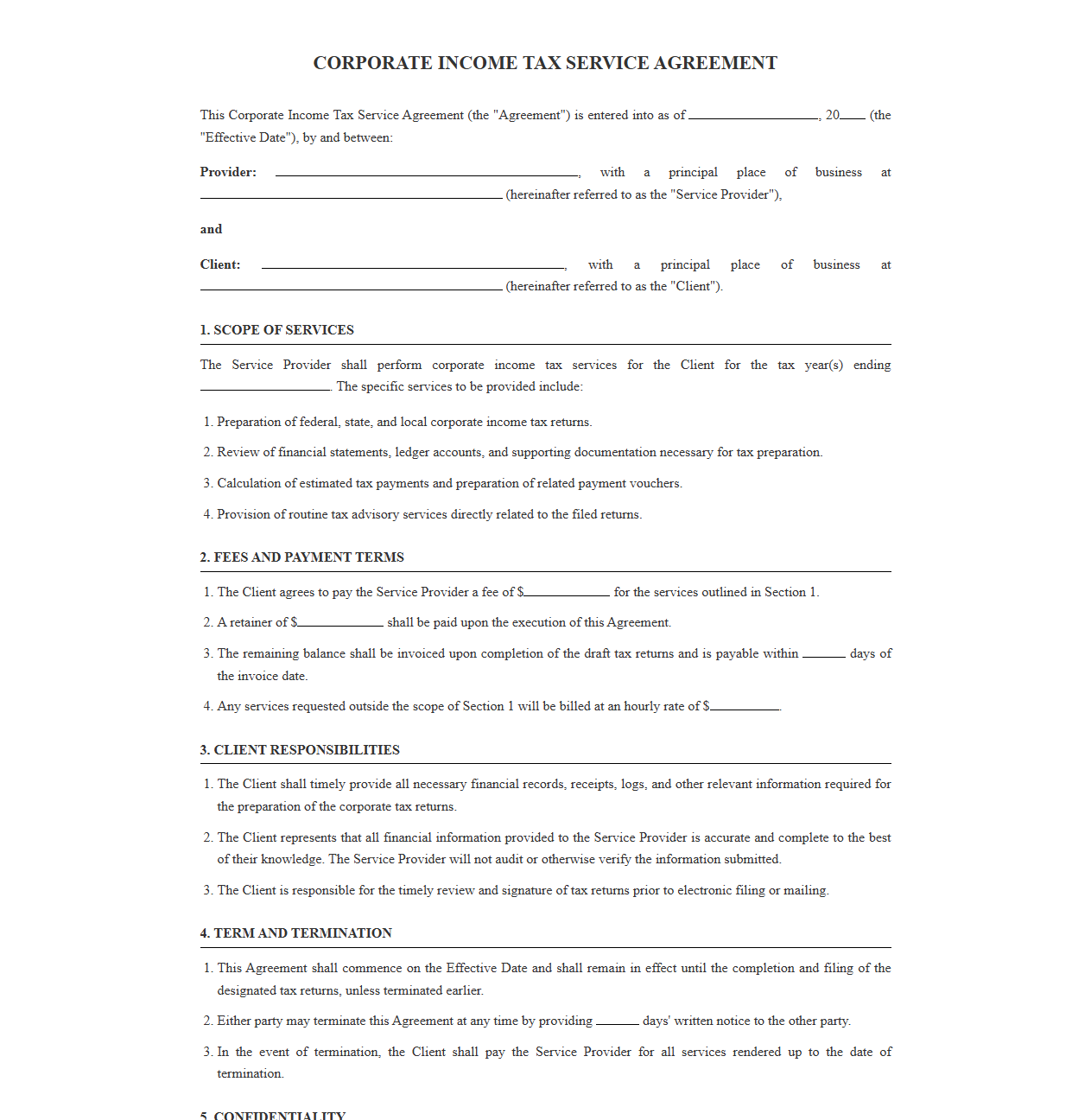 Download: .PDF
Business Tax Filing and Planning Agreement
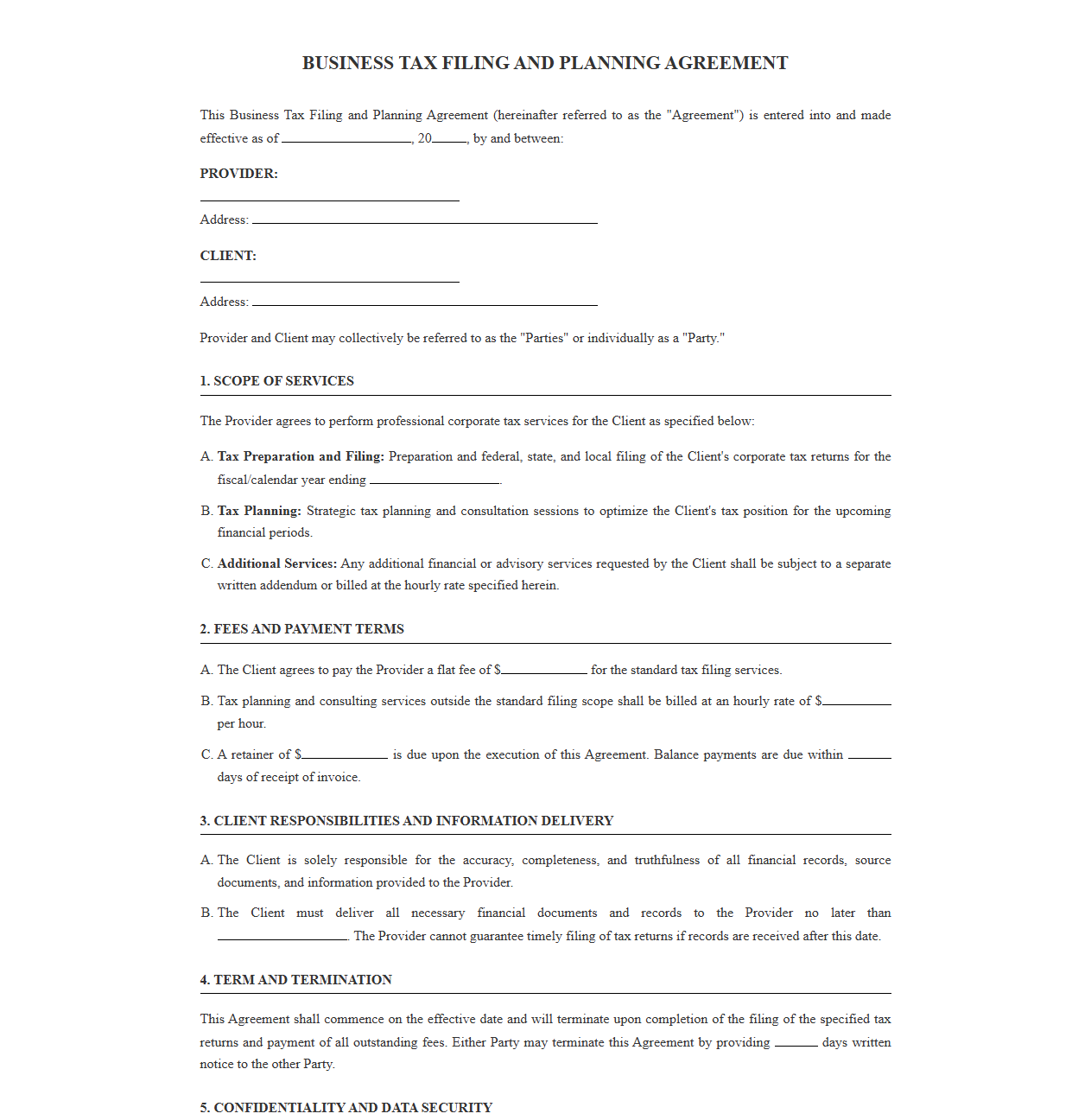 Download: .PDF
Corporate Tax Representation Agreement Template
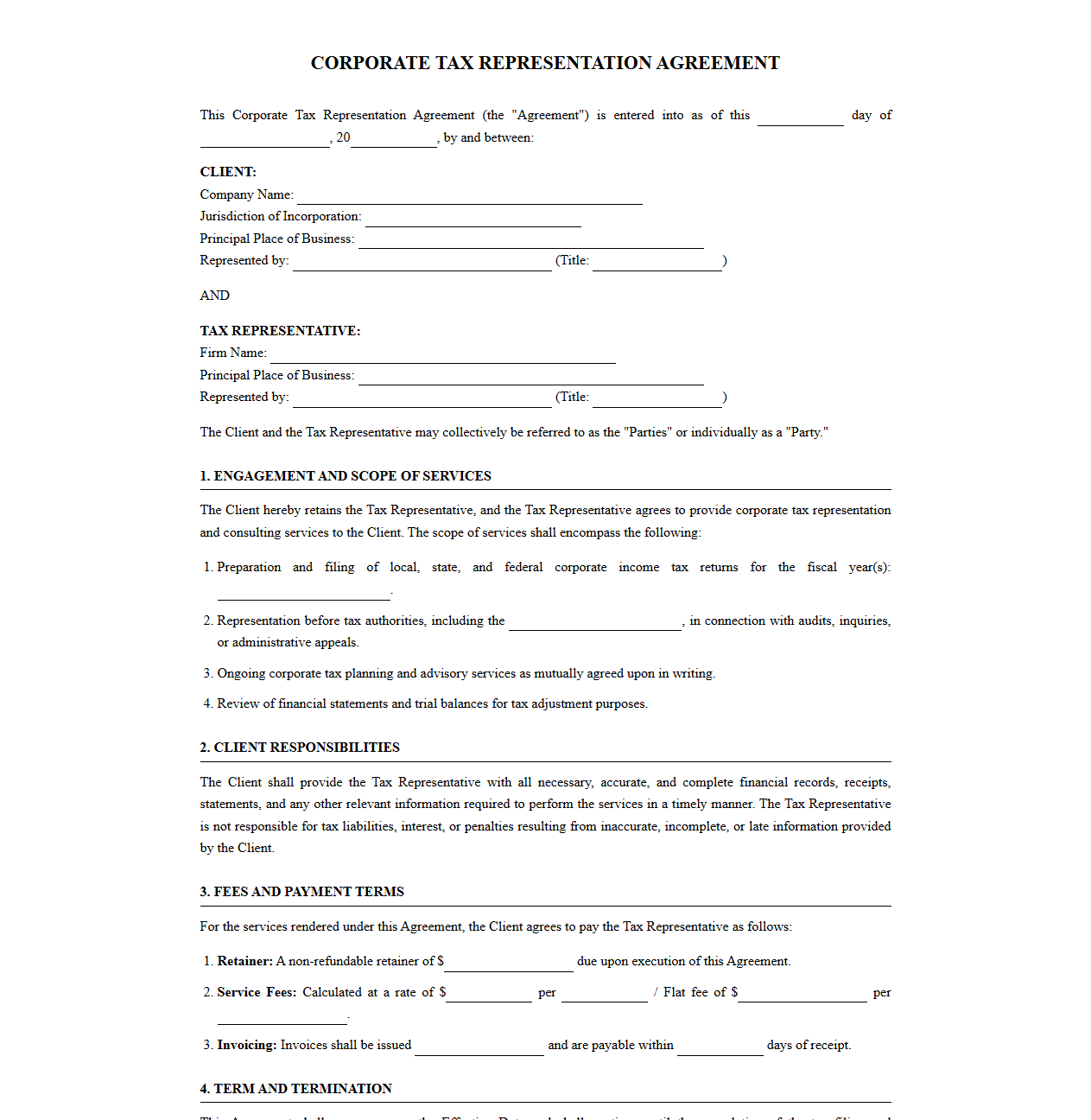 Download: .PDF
The Imperative of Standardizing Corporate Tax Service Agreements
In an era of rapid regulatory shifts, standardizing corporate tax service agreements is no longer optional. Organizations face severe exposure due to inconsistent contract terms, which can lead to compliance gaps, operational friction, and costly legal disputes. By establishing a unified contractual framework, enterprises can mitigate regulatory penalties, class-action liabilities, and operational inefficiencies while ensuring seamless collaboration with external tax advisors.
Defining a Precise Scope of Tax Services
A primary driver of dispute in corporate tax engagements is scope creep. Clearly outlining the boundaries of tax preparation, planning, and representation prevents misunderstandings and aligns expectations from the outset.
- Annual corporate income tax filing and preparation
- Quarterly estimated tax computations and projections
- Ongoing tax advisory, research, and technical consultations
- Audit support and representation before municipal, state, and national tax authorities
Aligning Clauses with Evolving Regulatory Compliance
Tax laws are fluid, requiring agreements to incorporate dynamic compliance clauses that automatically adapt to local, national, and international legislative changes. This keeps both parties protected against sudden regulatory shifts.
"The Service Provider shall perform all services in accordance with prevailing local, state, federal, and international tax laws. In the event of statutory amendments, both parties agree to automatically adjust the service framework to maintain full compliance."
Allocating Liability and Indemnification Risks
Balancing financial responsibility is essential when structuring tax agreements. Clear indemnification clauses dictate who bears the financial burden of errors, interest, or penalties imposed by tax authorities. Establishing liability thresholds capped at twelve months of service fees helps balance risk between the corporation and the service provider.
Integrating Robust Data Security and Confidentiality Protocols
Tax documents contain highly sensitive proprietary financial data. Service agreements must mandate rigorous cybersecurity measures to protect this information from breaches, specifying that all records must be secured using AES-256 encryption standards during transmission and storage under TLS 1.3 protocol safeguards.
Establishing Structured Dispute Resolution Mechanisms
Even with standardized agreements, disagreements can arise. A structured escalation process prevents minor issues from escalating into expensive litigation, protecting the professional relationship and corporate resources.
- Formal written notification outlining the specific dispute details.
- Mandatory good-faith mediation session facilitated by a neutral third party.
- Binding arbitration in accordance with established commercial arbitration rules if mediation fails.
Best Practices for Continuous Agreement Review and Governance
Standardizing agreements is not a one-time task; it requires ongoing governance. Maintaining a cycle of routine updates ensures documents remain aligned with market standards and legal updates. Utilizing proactive compliance management and scheduling regular legal audits will safeguard the organization's long-term financial interests.

Leave a comment