

Facing a federal or state tax audit is inherently stressful, but for many taxpayers, the deepest anxiety stems from exposing sensitive financial records to external representatives. In an era of heightened data vulnerability, balancing the demands of IRS scrutiny with rigorous data security is a complex challenge for practitioners and clients alike.
Establishing a robust protective bridge is essential before sharing any proprietary data. Implementing formal confidentiality agreement templates grants clients immediate peace of mind while legally binding representatives to absolute discretion. However, as a crucial stipulation, these templates must serve as baseline frameworks rather than generic, one-size-fits-all legal counsel.
For example, a standard non-disclosure agreement (NDA) must be customized with specific clauses addressing third-party forensic accountants or joint defense privileges. This article will outline the essential elements of tax representation confidentiality templates, examine critical protective clauses, and provide a roadmap for securing sensitive taxpayer portfolios during an audit.
Tax Audit Confidentiality and Representation Agreement
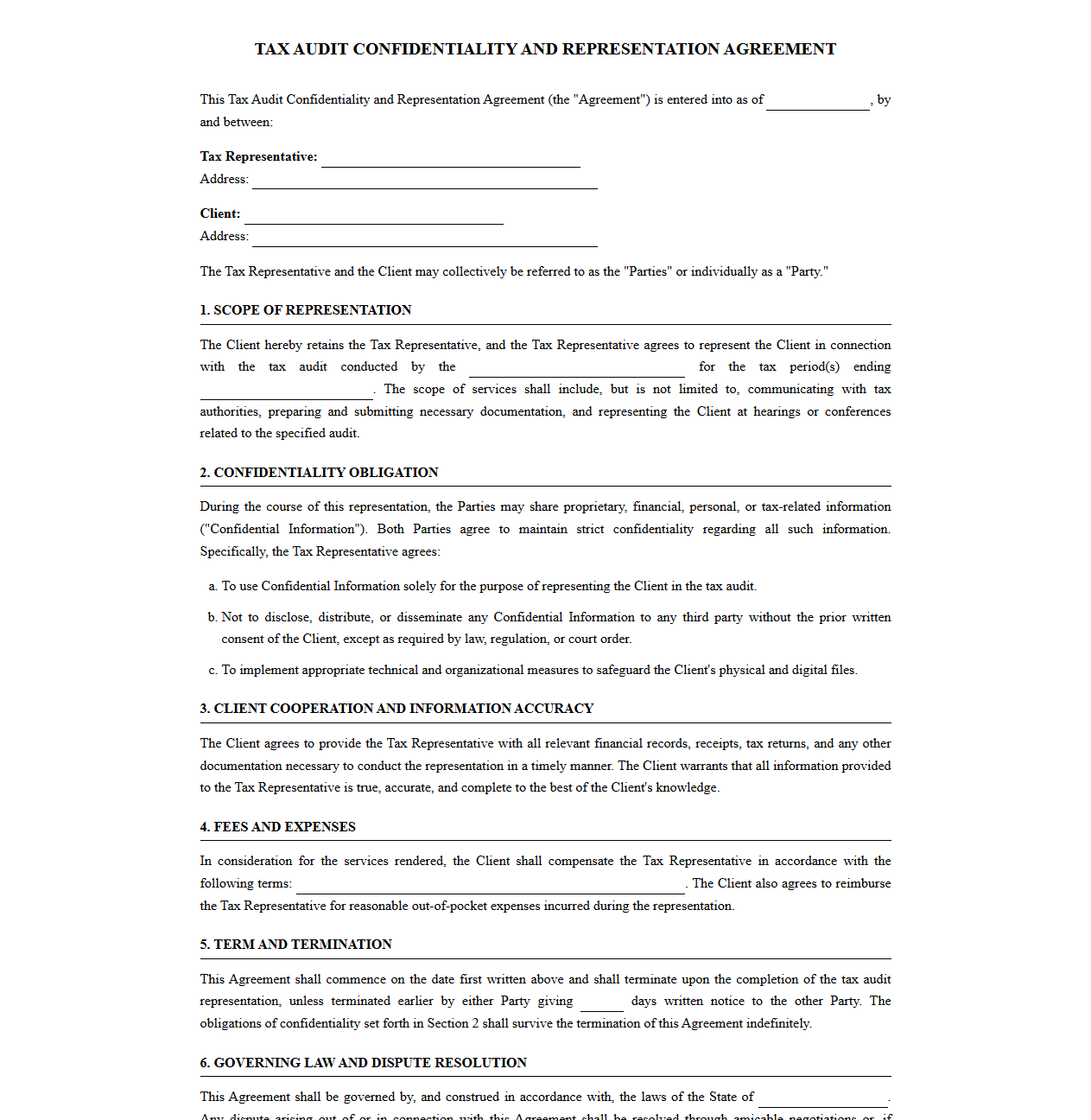 Download: .PDF
Non-Disclosure Agreement for Tax Representation Services
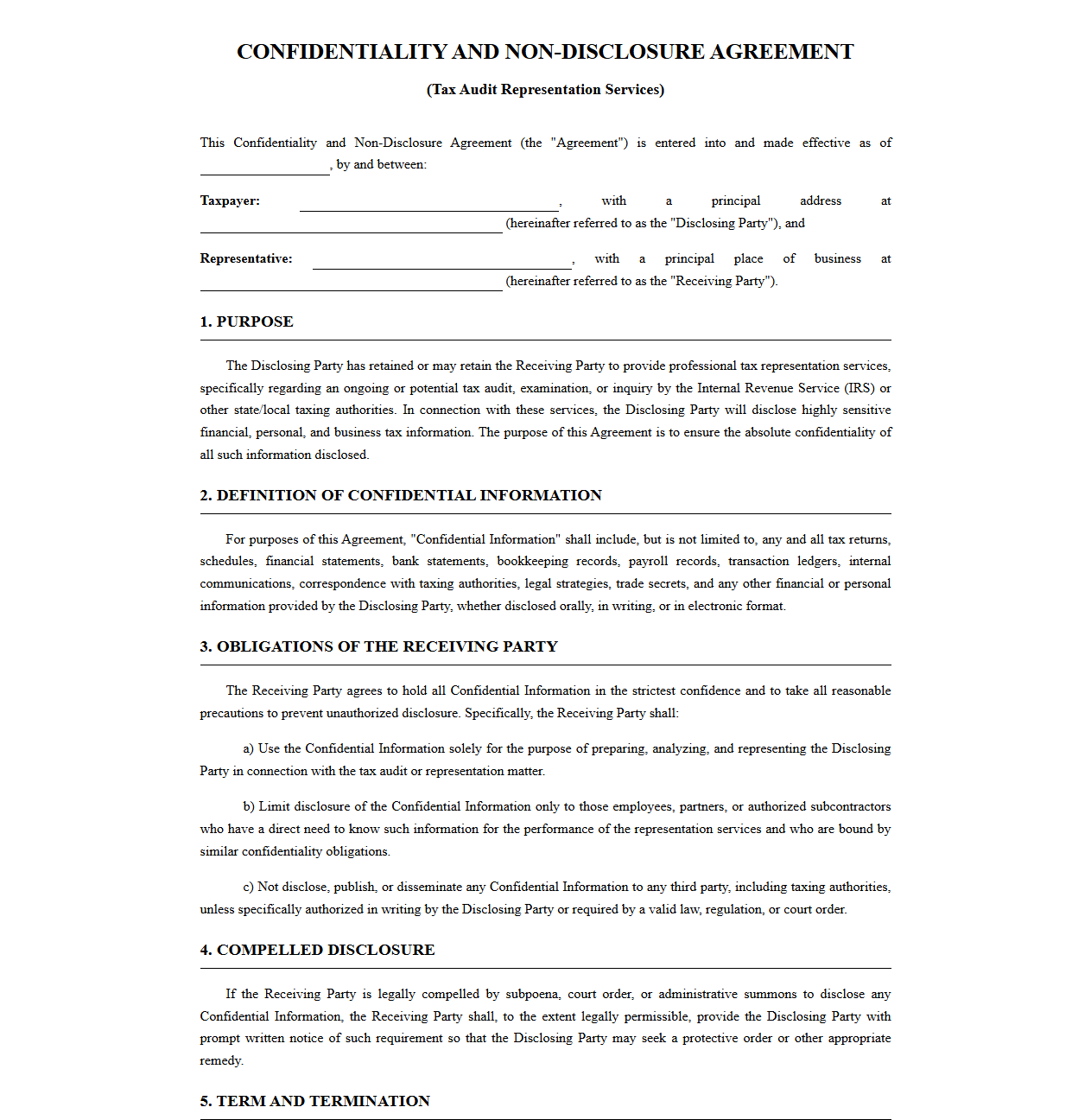 Download: .PDF
Confidential Tax Audit Defense Representation Contract
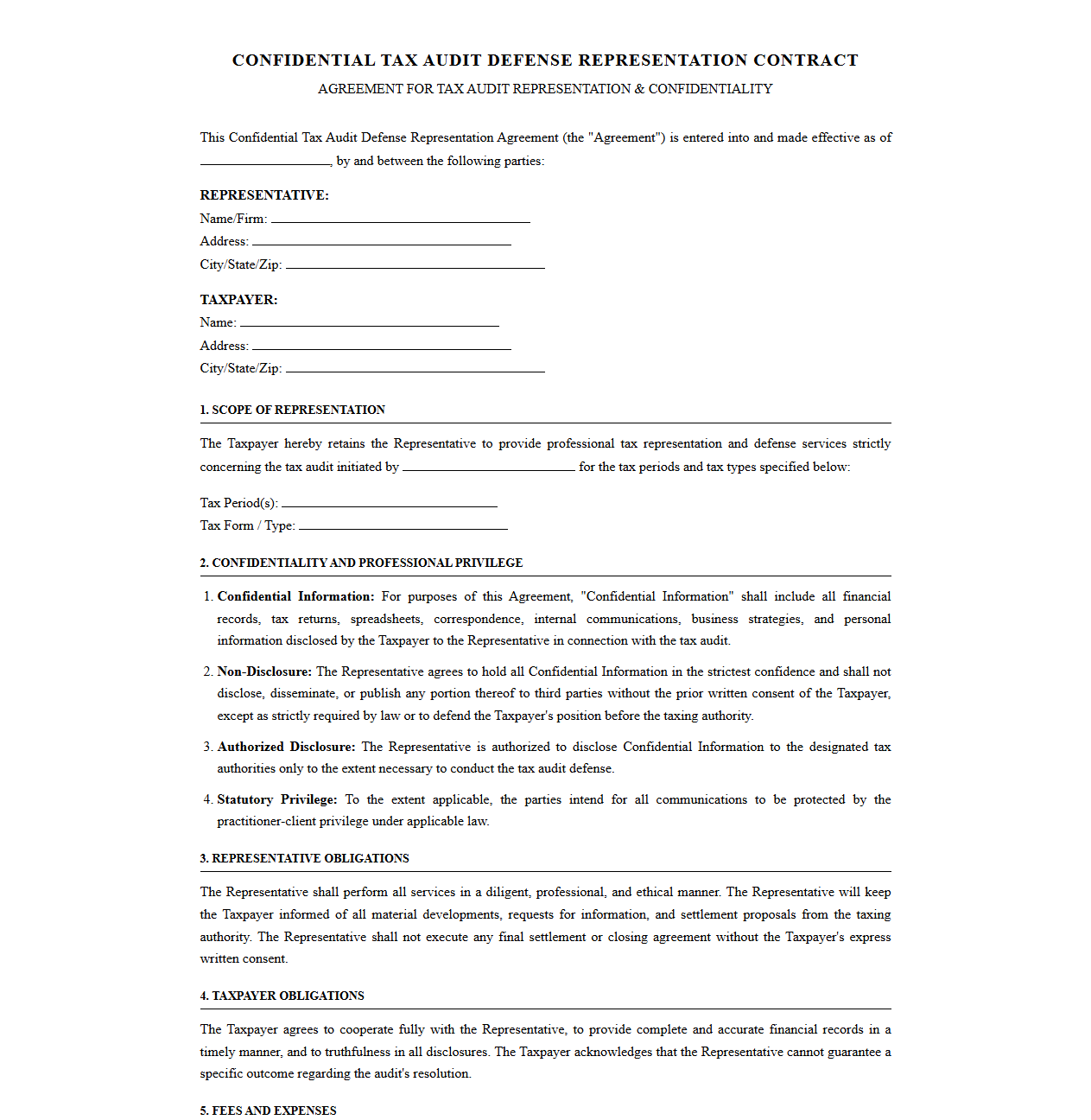 Download: .PDF
Audit Representative Non-Disclosure and Service Agreement
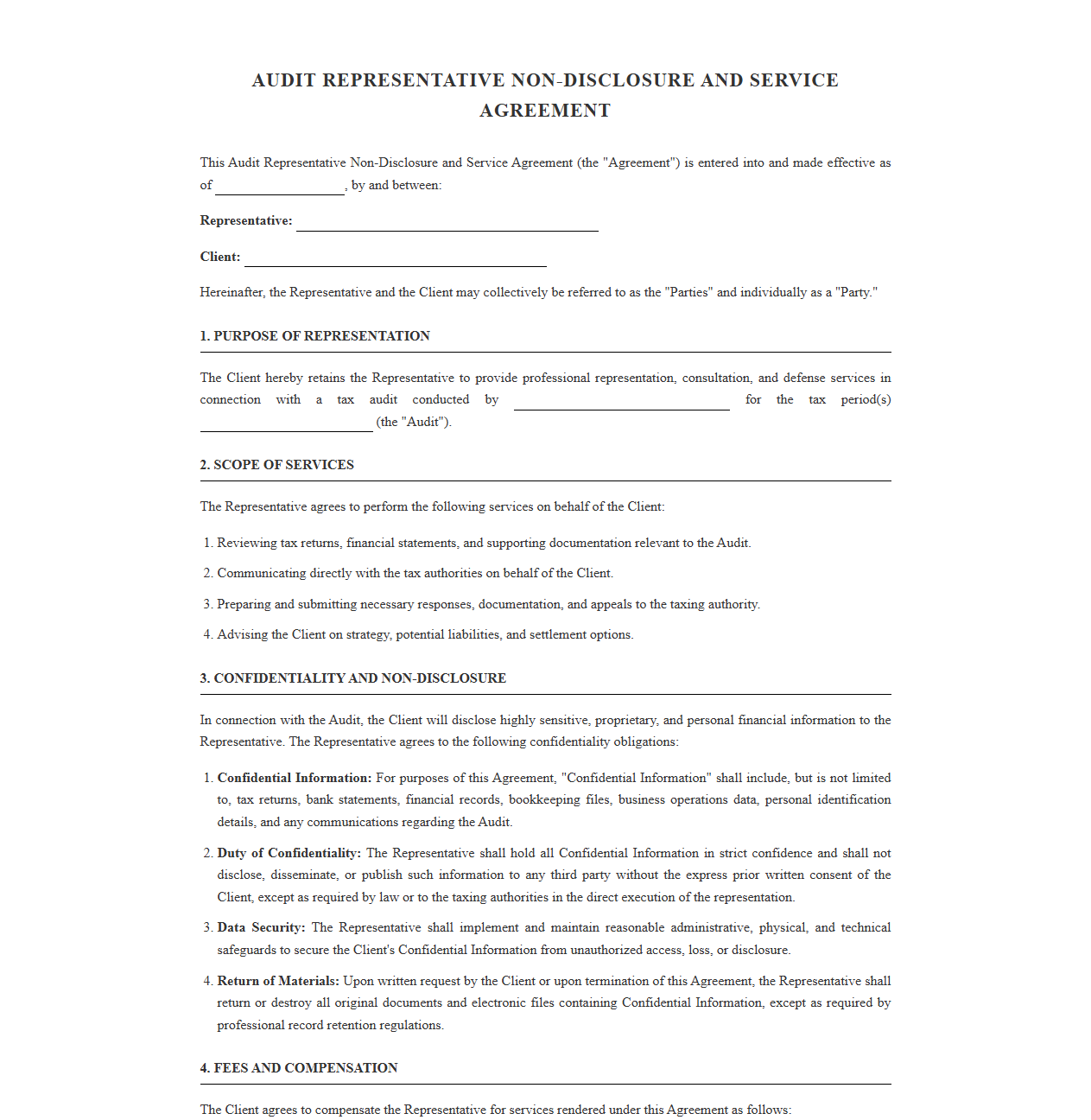 Download: .PDF
Tax Authority Representation Confidentiality Agreement
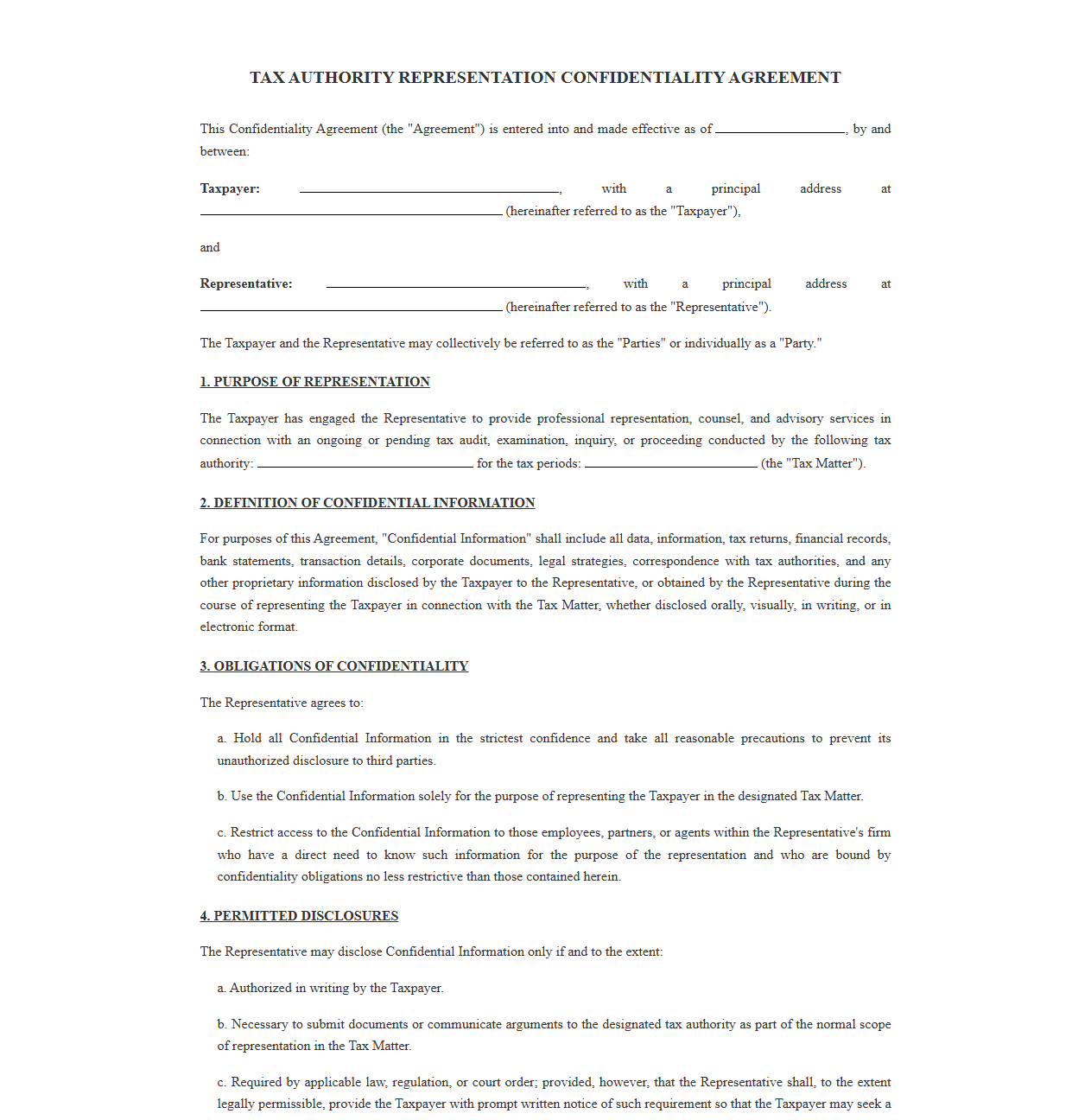 Download: .PDF
Confidentiality Agreement for Tax Audit Support Services
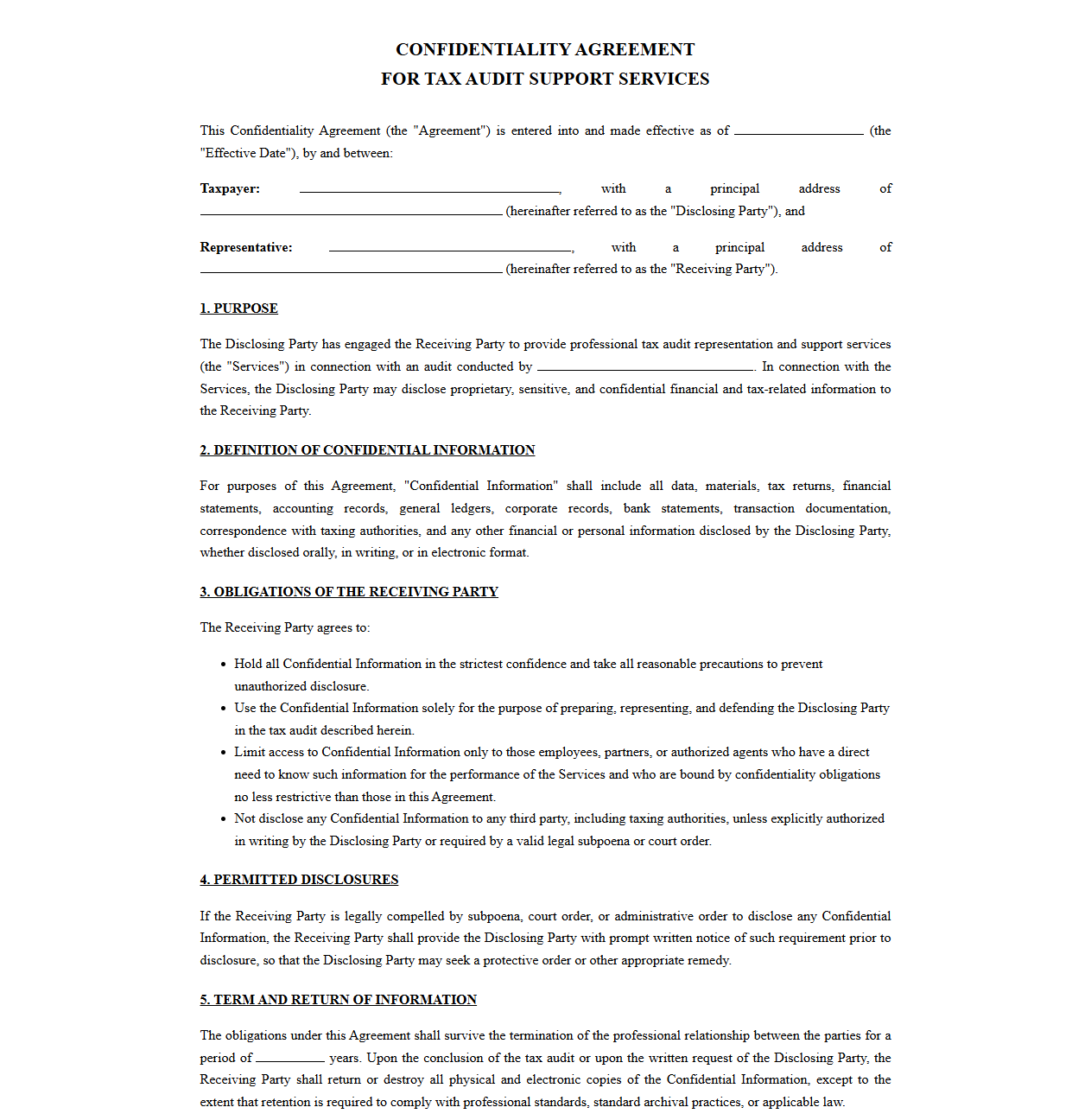 Download: .PDF
Tax Audit Representation Non-Disclosure Agreement
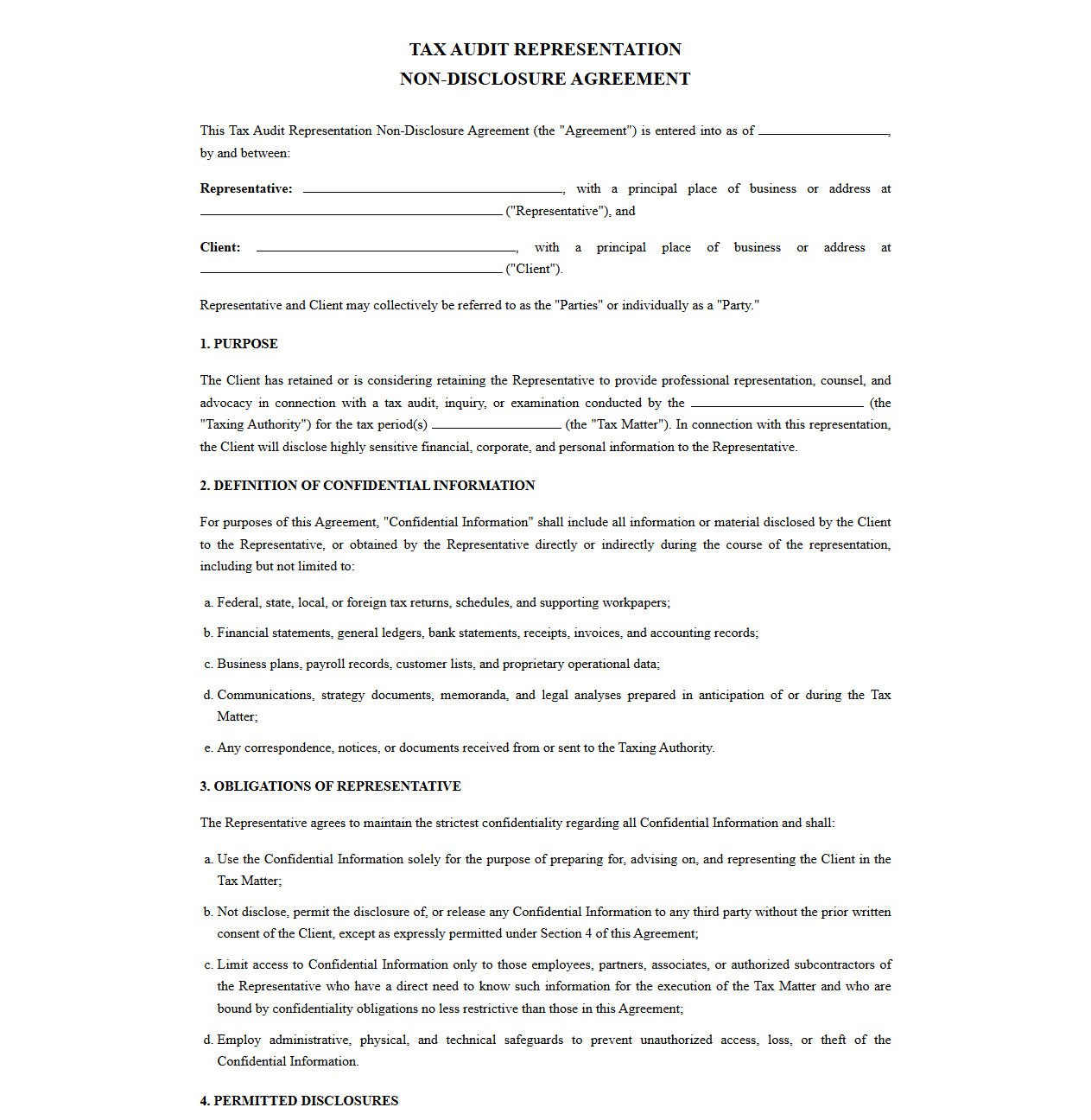 Download: .PDF
Tax Controversy Representative Confidentiality Agreement
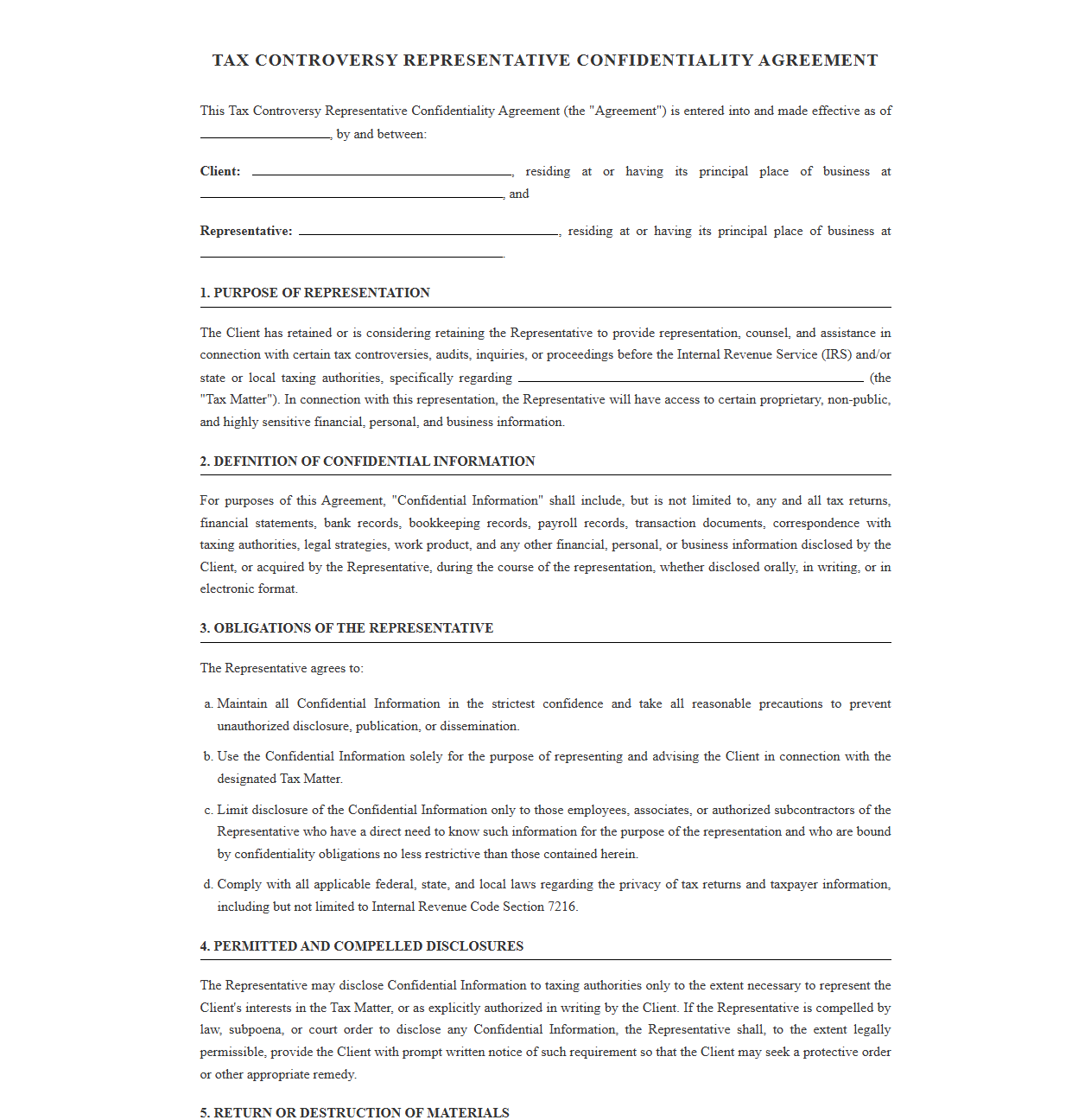 Download: .PDF
The Critical Role of Privacy in Tax Audit Representation
Facing an IRS or state tax audit is one of the most stressful events a taxpayer can experience. During this high-stakes process, you must share highly sensitive financial records, proprietary business strategies, and personal data with your tax representative. Establishing a dedicated confidentiality agreement before sharing this information is paramount. It builds a foundation of trust, ensures your proprietary data remains secure, and legally binds your representative to safeguard your interests against unauthorized exposure during negotiations with tax authorities.
Why Standard NDAs Fail in Tax Controversies
Generic non-disclosure agreements are designed for standard commercial transactions, making them dangerously inadequate for tax controversy representation. These basic agreements often fail to account for the specialized rules governing tax practitioners, such as IRS Circular 230 regulations and specific state accountancy board rules. Standard NDAs lack the precise legal architecture required to protect communications under federal tax laws, leaving taxpayers vulnerable to forced disclosures. Without tax-specific protections, a general NDA may inadvertently waive critical privileges, failing to shield sensitive financial analysis from IRS revenue agents during an active examination.
Essential Clauses for Tax Confidentiality Agreements
To provide robust protection, a professional tax audit confidentiality agreement must contain specific, legally binding provisions tailored to tax practice. Every template should include these core components:
- Definition of Parties and Representative Capacity: Explicitly states that the recipient is acting as a tax representative bound by professional standards.
- Scope of the Audit Representation: Details the specific tax years and tax authorities (IRS, state, or municipal) covered by the agreement.
- The Non-Waiver Clause: Clarifies that disclosing information to the representative does not waive any pre-existing attorney-client or practitioner-client privileges.
- Data Security and Destruction Mandates: Specifies how tax files, tax returns, and supporting schedules will be securely stored and eventually destroyed or returned after the audit concludes.
Defining Taxpayer Confidential Information
A vague definition of what is protected can compromise your position in a legal dispute. A robust agreement must clearly define the boundaries of protected taxpayer data to cover every piece of paper and digital file generated or shared during the audit representation.
"Confidential Taxpayer Information" shall include, but is not limited to, all federal, state, and local tax returns, supporting workpapers, bank statements, general ledgers, payroll records, legal entity documentation, written or oral communications between the taxpayer and the representative, and any correspondence, notices, or summonses issued by the Internal Revenue Service or state taxing authorities.
Permitted Disclosures and IRS Regulatory Exceptions
Confidentiality in tax matters is rarely absolute. The agreement must outline specific regulatory exceptions where disclosure is legally required or permitted.
- IRC Section 7525 Practitioner-Client Privilege
- Applies to communications between a taxpayer and a federally authorized tax practitioner (such as a CPA or Enrolled Agent) to the extent the communication would be privileged if it were between a client and an attorney.
- Compulsory Legal Process and Subpoenas
- Defines the protocol the representative must follow if they receive a court order, summons, or subpoena, requiring them to notify the taxpayer immediately to allow them to seek a protective order.
- Authorized IRS Disclosures
- Permits the representative to share specific financial data with IRS personnel only as authorized by a signed Form 2848 (Power of Attorney) to advance the audit resolution.
Enforcement and Remedies for Breach
An agreement is only as strong as its enforcement mechanisms. If a tax representative breaches their confidentiality obligations, the taxpayer must have access to swift legal remedies to prevent further disclosure and recover damages. In tax matters, once confidential financial data is leaked, the damage to a business's competitive standing or an individual's reputation is often irreparable. Therefore, the agreement should explicitly state that the taxpayer is entitled to seek injunctive relief to stop unauthorized disclosures in real time, alongside provisions for liquidated damages to cover the financial fallout of the breach without the exhausting burden of proving exact monetary loss in court.
Deploying Confidentiality Templates in Your Practice
Tax professionals should seamlessly integrate confidentiality agreements into their standard workflow. Rather than treating confidentiality as a separate, afterthought document, it is best practice to incorporate these clauses directly into your engagement letters or run them as a mandatory bilateral addendum before any client files are uploaded to your secure portal. For those looking to implement this safeguard immediately, you can access our professional, customizable Tax Audit Confidentiality Agreement Template to protect your clients and secure your practice today.

Leave a comment